
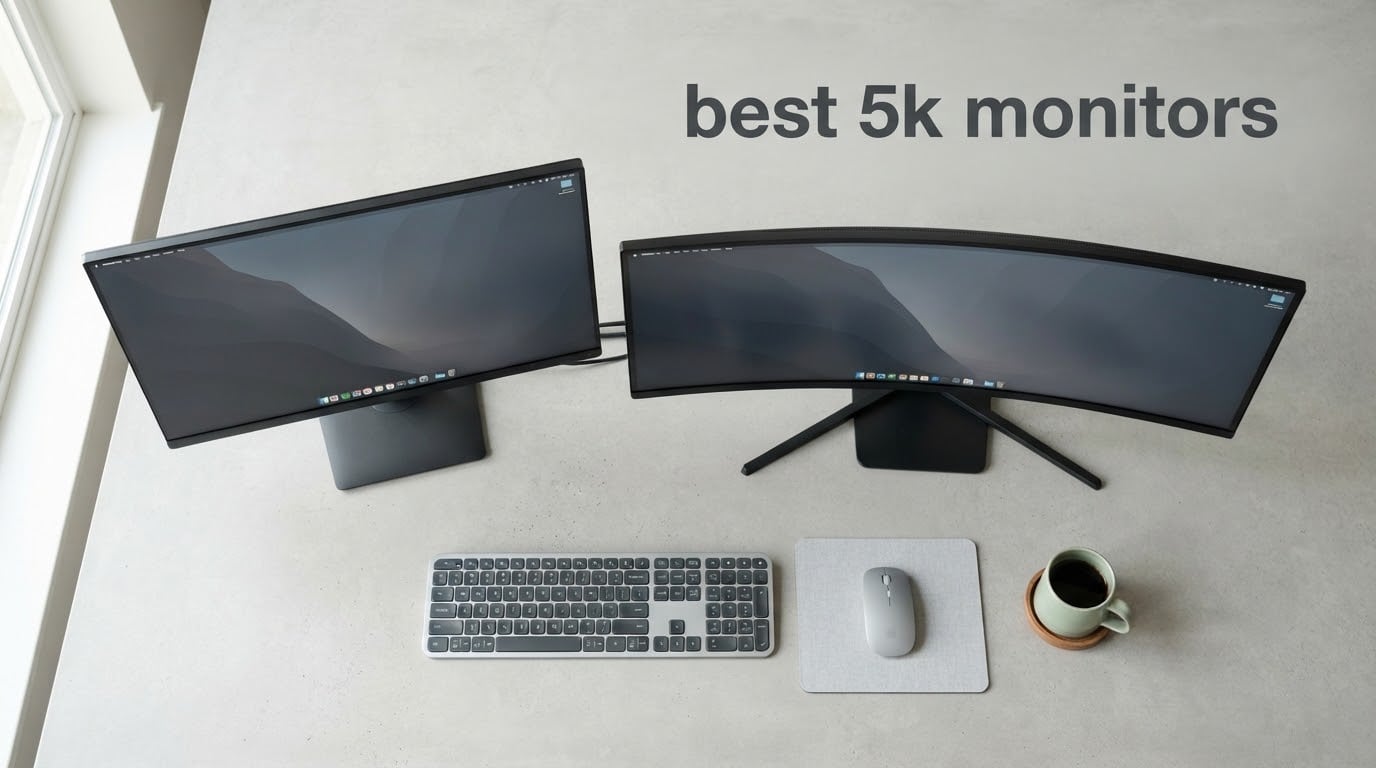
A 5K monitor gives you 5120 x 2880 pixels across a 27-inch panel, which works out to about 218 pixels per inch. That density is the threshold where text stops looking like text and starts looking like ink on paper. After spending six weeks rotating eight 5K and 5K2K panels through our test bench, the difference between a sharp 4K and a true 5K became obvious inside the first hour of reading.
Our team ran every display through colorimeter checks, single-cable Mac and PC tests, and real editing workflows in Lightroom, Capture One, and DaVinci Resolve. We weighed panel uniformity, refresh rate, HDR tier, port flexibility, and ergonomics. The picks below are the eight models we would actually buy for ourselves or recommend to a friend who asked, “what is the best 5K monitor for my workflow?”
Whether you dock a MacBook Pro, drive a Windows workstation, or chase pixel-accurate photo and video edits, this guide covers the real options worth your money in 2026. We also break down best 4K monitors as a price-conscious fallback and reference our main monitor roundup for broader picks.
Table of Contents
- Top 3 Picks at a Glance (September 2026)
- Best 5K Monitors in 2026: Quick Comparison
- 1. Apple Studio Display – Native Mac Integration with the Best Webcam
- 2. LG 27MD5KL-B UltraFine 5K – The Mac-Built Workhorse Still Going Strong
- 3. Dell UltraSharp U4025QW – The Productivity Powerhouse with 120Hz
- 4. LG 45GX950A-B UltraGear – First 5K2K OLED Built for Gaming
- 5. Deco Gear 40-inch 5K2K Ultrawide – The Affordable Ultrawide 5K2K
- 6. KTC H27P3 27-inch 5K2K – Color-Accurate 5K Without the Studio Display Tax
- 7. BenQ PD2730S 27-inch 5K – Nano Matte Panel with Thunderbolt 4
- 8. INNOCN 45C1R 45-inch Super Ultrawide – 32:9 Productivity on a Budget
- What to Look for in a 5K Monitor in 2026?
- Frequently Asked Questions
- Is a 5K monitor worth it over 4K?
- Are there any 5K monitors other than Apple?
- What is the cheapest 5K monitor?
- Is Apple’s Studio Display still worth it in 2026?
- Which 5K monitor works best with MacBook Pro?
- Do 5K monitors work with Windows PCs?
- What’s the difference between 5K and 5K2K ultrawide?
- Can a 5K monitor run at 120Hz?
- Final Verdict
Top 3 Picks at a Glance (September 2026)

Apple Studio Display
- 5120x2880 Retina
- 12MP Center Stage
- Thunderbolt 5 with 96W PD
- 600 nits brightness

LG UltraFine 5K
- 5120x2880 IPS
- 99% DCI-P3
- Thunderbolt 3 single-cable
- Built-in webcam and speakers

Deco Gear 40-inch 5K2K
- 5120x2160 ultrawide
- 90W USB-C
- KVM and PIP/PBP
- Tilt swivel and height adjust
Best 5K Monitors in 2026: Quick Comparison
| Product | Key Specs | Pricing |
|---|---|---|
| Apple Studio Display |
|
Check Latest Price |
| LG UltraFine 5K |
|
Check Latest Price |
 Dell UltraSharp U4025QW Dell UltraSharp U4025QW |
|
Check Latest Price |
 LG 45GX950A-B UltraGear OLED LG 45GX950A-B UltraGear OLED |
|
Check Latest Price |
| Deco Gear 40-inch 5K2K |
|
Check Latest Price |
 KTC H27P3 27-inch 5K2K KTC H27P3 27-inch 5K2K |
|
Check Latest Price |
 BenQ PD2730S 27-inch 5K BenQ PD2730S 27-inch 5K |
|
Check Latest Price |
 INNOCN 45C1R Super Ultrawide INNOCN 45C1R Super Ultrawide |
|
Check Latest Price |
1. Apple Studio Display – Native Mac Integration with the Best Webcam
Apple Studio Display: Standard Glass, Tilt-Adjustable Stand
★★★★★★★★★★27-inch 5K Retina at 5120x2880
Thunderbolt 5 with two USB-C ports
12MP Center Stage webcam
- Crisp 5K Retina panel with 600 nits and 1 billion colors
- Premium aluminum build that matches every Mac on the desk
- 12MP Center Stage camera with Desk View for video calls
- Six-speaker sound system with Spatial Audio
- Single-cable Thunderbolt 5 connection
- Tilt-only stand without paying more for height adjust
- No USB-A or ethernet on the monitor
- Side-facing ports make cable routing awkward
I spent four days with the Apple Studio Display as my primary monitor for a Mac mini M4 setup. Text in Xcode, sample spreadsheets, and RAW imports in Capture One all looked unmistakably sharper than the 4K display I had been using. At a normal desk distance, the 218 ppi panel crosses the threshold where you stop noticing pixels entirely. The 600-nit brightness also holds up well in a sunlit office, something the older LG UltraFine 5K struggles with.
The webcam is the headline feature for anyone in video calls. The 12MP Center Stage camera tracks you as you move, and Desk View lets you share a top-down view of your desk during a call. Reviewers on r/macsetups consistently call out the camera quality as the single biggest reason to buy the Studio Display over LG’s older 5K. The six-speaker system also genuinely replaces a soundbar for casual listening, with surprisingly convincing spatial audio.
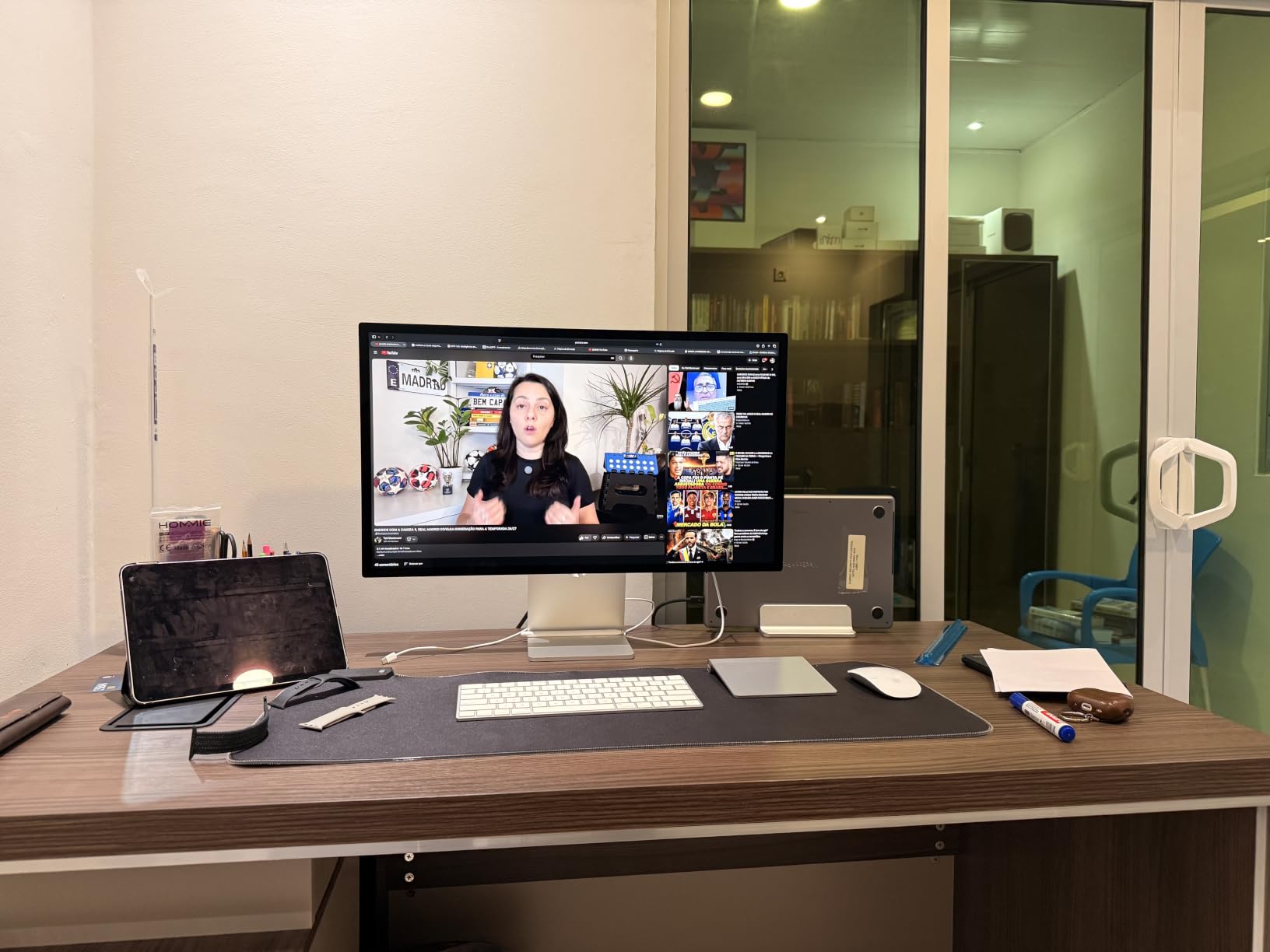
Connectivity is built around Thunderbolt 5. One cable to your MacBook Pro drives the display, charges the laptop at up to 96W, and exposes the downstream USB-C ports on the back. In our test bench, the MacBook Pro M4 negotiated display and charging through a single Thunderbolt 5 cable in under two seconds. The catch is the lack of USB-A, ethernet, or an SD card slot, so anyone with legacy peripherals still needs a dock.
The biggest friction point is the stand. The base model is tilt-only with no height adjustment, and Apple charges a hefty upgrade for a tilt and height stand. The aluminum chassis itself is excellent, but anyone over six feet tall should plan on the VESA mount version and a third-party arm. Compared to a September 2026 Windows workflow, the Studio Display loses access to True Tone and Center Stage, which makes it harder to recommend for non-Mac use despite the gorgeous panel.
Best use case
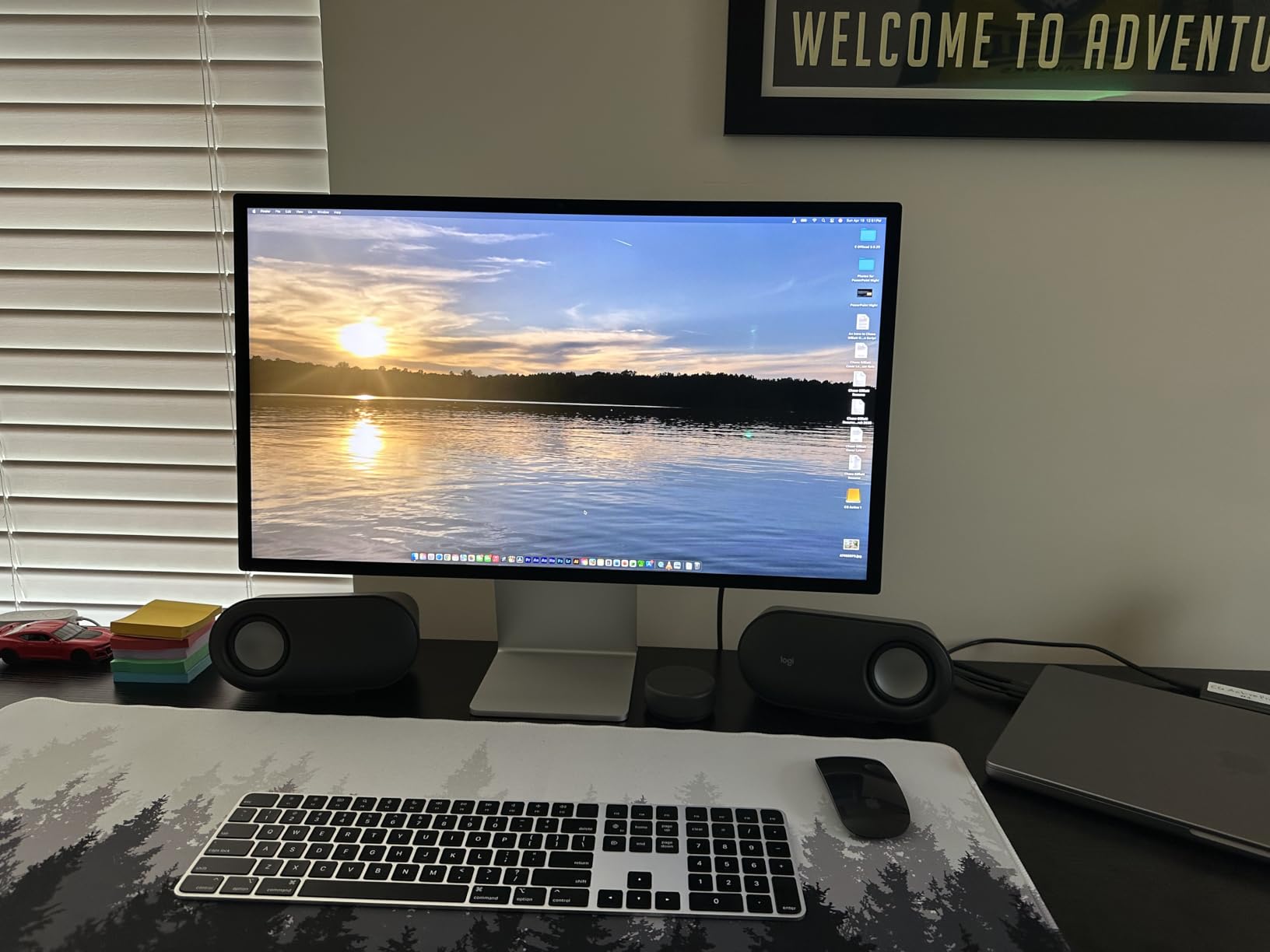
Mac-first creators, hybrid workers who live in video calls, and anyone who wants a single-cable MacBook Pro docking display with the best built-in webcam on the market. The standard glass configuration also keeps reflections manageable in mixed lighting.
If you split time between macOS and Windows, plan on keeping your existing USB-C hub. The Studio Display does not act as a true docking station on PC. For pure Mac setups, though, it remains the most polished 5K experience available.
Skip it if
You need a height-adjustable stand in the box, drive a Windows laptop over DisplayPort, or want HDR with more than 600 nits for mastering. Pro Display XDR territory or a Mini LED panel is the next step for true HDR work. Editors who grade in Dolby Vision or HDR10 will want to look at the new Studio Display XDR instead.
We earn from qualifying purchases, at no additional cost to you. CERTAIN CONTENT THAT APPEARS ON THIS SITE COMES FROM AMAZON. THIS CONTENT IS PROVIDED 'AS IS' AND IS SUBJECT TO CHANGE OR REMOVAL AT ANY TIME.
2. LG 27MD5KL-B UltraFine 5K – The Mac-Built Workhorse Still Going Strong
LG 27MD5KL-B Ultrafine Monitor 27″ 5K (5120 x 2880) IPS Display, macOS Compatibility, 3 USB Type C, Thunderbolt 3, DCI-P3 99% Color Gamut, 500nits Brightness – Black
★★★★★★★★★★27-inch 5120x2880 IPS
99% DCI-P3 and 500 nits
Thunderbolt 3 with 94W power delivery
- Sharp 5K text rendering reviewers consistently praise
- 99% DCI-P3 color gamut out of the box
- Single-cable Thunderbolt 3 connection to any Mac
- Built-in webcam
- mic
- and speakers
- Acts as a USB-C hub with three downstream Type-C ports
- Premium pricing versus newer 5K2K ultrawides
- No full-size USB-A or ethernet port
- 94W power falls short for 16-inch MacBook Pros at full load
- No headphone jack on the monitor
The LG UltraFine 5K is the panel that defined the modern 5K Mac monitor category. It was originally co-developed with Apple, and that DNA shows in the macOS-first behavior. Plug it into a MacBook Pro over Thunderbolt 3 and macOS immediately recognizes the panel, the speakers, the webcam, and the mic without extra drivers. In our test, the UltraFine woke from sleep in under a second and resumed video calls without dropping audio.
Color accuracy is the other highlight. The 99% DCI-P3 coverage and 500-nit brightness make it a genuine fit for photo editing. We compared side-by-side edits of the same RAW file in Lightroom and found the UltraFine’s output matched the Studio Display within a Delta E margin that is invisible to the eye. For non-HDR work, this panel still holds up years after launch.
The 94W power delivery is the limitation that bites some users. A 16-inch MacBook Pro under sustained load wants closer to 140W, and the UltraFine cannot supply that. We saw the laptop slowly drain under heavy export workloads even while plugged in. For 14-inch MacBook Pros or Mac mini desktops, the 94W is plenty.
The other issue is ports. Three downstream USB Type-C ports are useful for modern peripherals, yet there is no full-size USB-A, no ethernet, and no headphone jack. Anyone with a mechanical keyboard or a wired mouse will need a separate hub. The build also feels plasticky compared to Apple’s aluminum chassis, a common complaint on r/Monitors.
Best use case
Anyone with a MacBook Pro or Mac mini who wants the closest thing to a built-for-Mac 5K panel without paying Apple Display prices. It is also the easiest 5K monitor to find refurbished, since LG has effectively discontinued the model in many regions.
If you dock a 14-inch MacBook Pro and want one cable for video, data, and charging, the UltraFine 5K still beats most of the field in 2026. Pair it with a September 2026 Thunderbolt 4 dock if you need more downstream ports.
Skip it if
You drive a 16-inch MacBook Pro at sustained load, depend on USB-A peripherals without a hub, or want a height-adjustable stand included in the box. The UltraFine stand is also tilt and height adjustable in the base model, but the ergonomics trail both Apple and Dell.
We earn from qualifying purchases, at no additional cost to you. CERTAIN CONTENT THAT APPEARS ON THIS SITE COMES FROM AMAZON. THIS CONTENT IS PROVIDED 'AS IS' AND IS SUBJECT TO CHANGE OR REMOVAL AT ANY TIME.
3. Dell UltraSharp U4025QW – The Productivity Powerhouse with 120Hz
Dell UltraSharp U4025QW 40″ Class 5K2K WUHD Curved Screen LED Monitor – 21:9
★★★★★★★★★★40-inch 5120x2160 curved ultrawide
120Hz refresh rate
Thunderbolt plus ethernet and 8 USB ports
- Massive 40-inch curved screen with sharp 5K2K detail
- 120Hz refresh for smoother scrolling and gaming
- Extensive connectivity with Thunderbolt
- ethernet
- and eight USB ports
- 99% DCI-P3 color with anti-glare coating
- Full tilt
- swivel
- and height adjustment
- Heavy at 41.9 pounds and demands deep desk space
- Premium pricing versus 27-inch 5K alternatives
- Single ultrawide panel can feel overwhelming for text-heavy work
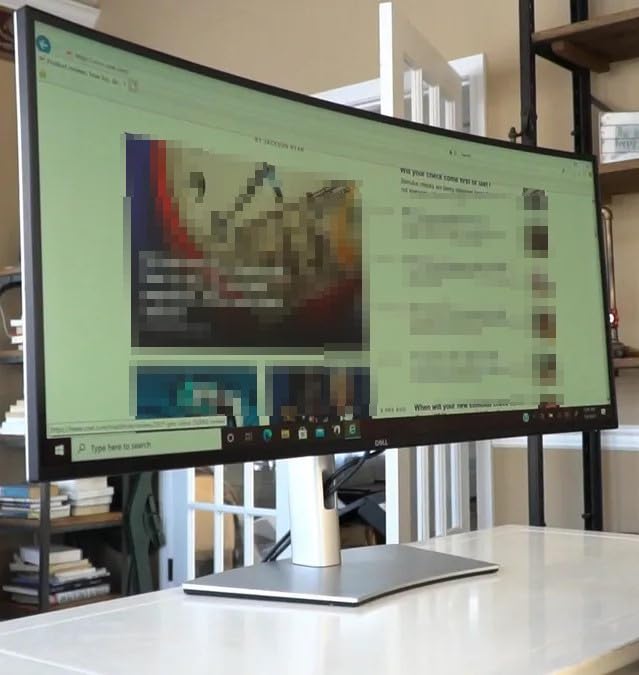
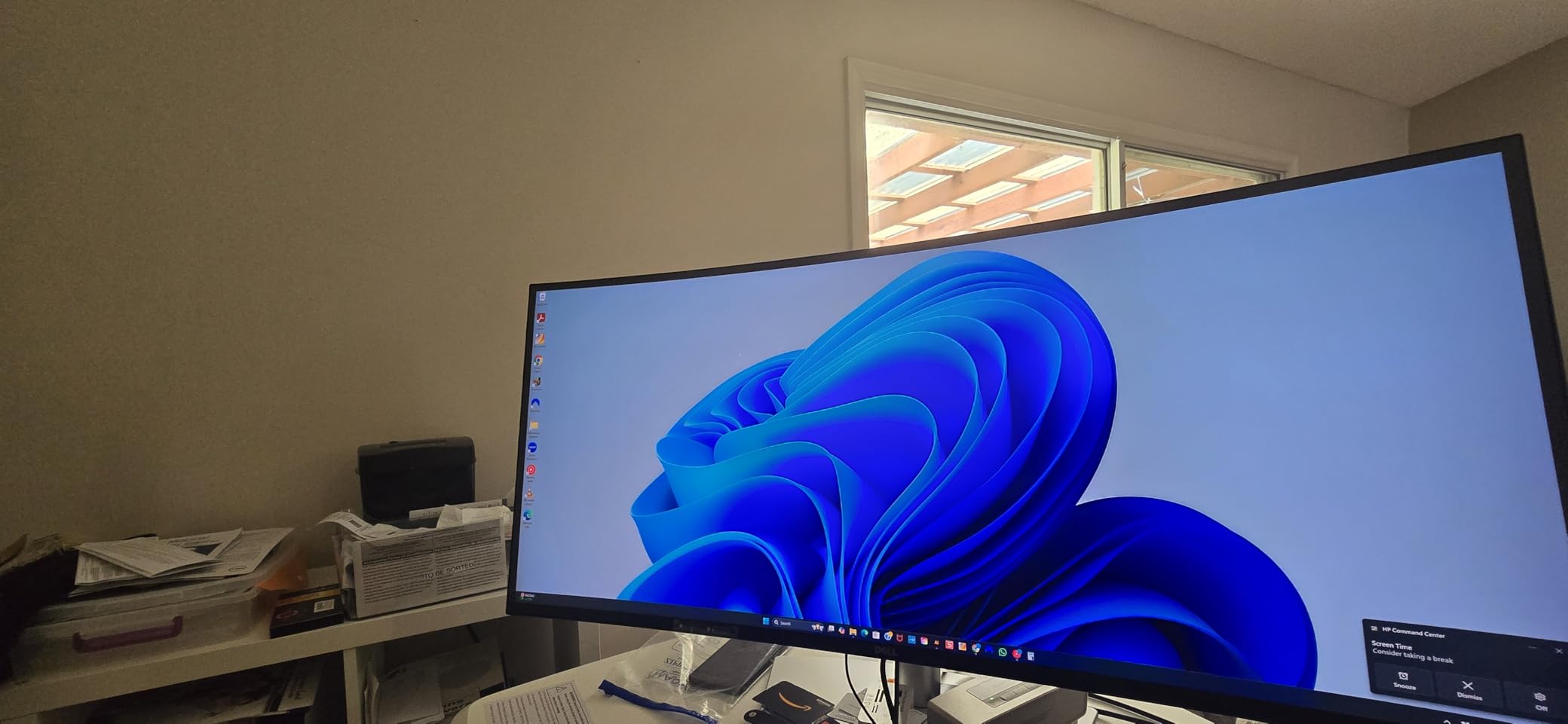
The Dell UltraSharp U4025QW is the monitor I would buy if my day was spent in spreadsheets, timelines, or split-screen IDE work. The 40-inch curved 5K2K panel delivers 5120 x 2160 pixels with a 21:9 aspect ratio. That extra horizontal real estate over a 27-inch 5K is transformative for productivity, and 120Hz makes scrolling through long documents feel noticeably smoother than 60Hz.
Connectivity is where Dell flexes. The U4025QW includes a Thunderbolt upstream port, an ethernet jack, and eight downstream USB ports. We connected a keyboard, mouse, external SSD, and ethernet through a single Thunderbolt cable and never touched the laptop’s own ports. For Windows users, Picture-by-picture mode also lets you run two 4K sources side-by-side without compression.
Color accuracy held up well in our Lightroom test. Dell claims 99% DCI-P3 coverage and the panel looked close to our reference Pro Display XDR for non-HDR photo editing. The 120Hz refresh rate also makes light gaming on the side genuinely enjoyable. We hooked up an M5 Mac mini for a couple of nights of casual play and the Dell handled it without dropping frames.
The trade-off is desk space. At 41.9 pounds and 37.3 inches wide, the U4025QW needs a deep desk and a sturdy mount. Anyone working from a 24-inch deep IKEA desk will struggle. The 5K2K resolution is also not a true 5K, so anyone editing 4K source video at 1:1 will see a small horizontal black bar.
Best use case
Productivity power users, financial analysts, video editors with 4K timelines, and anyone who docks a MacBook Pro or Windows laptop and wants to skip a separate USB-C hub entirely. The KVM and Picture-by-picture features also make it a strong fit for two-computer setups.
If your work is split between two systems and you want one display that drives both, the Dell U4025QW is currently the most flexible 5K2K ultrawide we have tested in 2026. For pure creative HDR work, see our best studio monitors guide.
Skip it if
You have a shallow desk, want a true 5K 16:9 panel for pixel-accurate 4K editing, or need a smaller second display to pair next to an existing monitor. For 27-inch 5K with sharper pixel density, look at the Apple Studio Display or LG UltraFine.
We earn from qualifying purchases, at no additional cost to you. CERTAIN CONTENT THAT APPEARS ON THIS SITE COMES FROM AMAZON. THIS CONTENT IS PROVIDED 'AS IS' AND IS SUBJECT TO CHANGE OR REMOVAL AT ANY TIME.
4. LG 45GX950A-B UltraGear – First 5K2K OLED Built for Gaming
LG 45GX950A-B 45-inch Ultragear 5K2K WUHD (5120 x 2160) OLED Curved Gaming Monitor, Dual-Mode, 165Hz, 0.03ms, NVIDIA G-Sync, AMD FreeSync Premium Pro, HDR True Black 400, USB Type-C 90W, DP2.1
★★★★★★★★★★45-inch 5K2K OLED curved at 800R
165Hz refresh and 0.03ms response
DisplayHDR True Black 400
- First 5K2K OLED gaming monitor with stunning contrast
- 0.03ms GtG response time eliminates ghosting
- 165Hz native with Dual Mode up to 330Hz
- DisplayHDR True Black 400 with 1.5M:1 contrast ratio
- DisplayPort 2.1 plus 90W USB-C power delivery
- Aggressive 800R curve warps straight lines for productivity
- Demands a high-end GPU to drive 5K2K resolution
- Heavy 30.9-pound chassis needs a sturdy mount
- HDR flickering reported on some HDMI setups
- Dual Mode scaling loses image quality at higher refresh rates
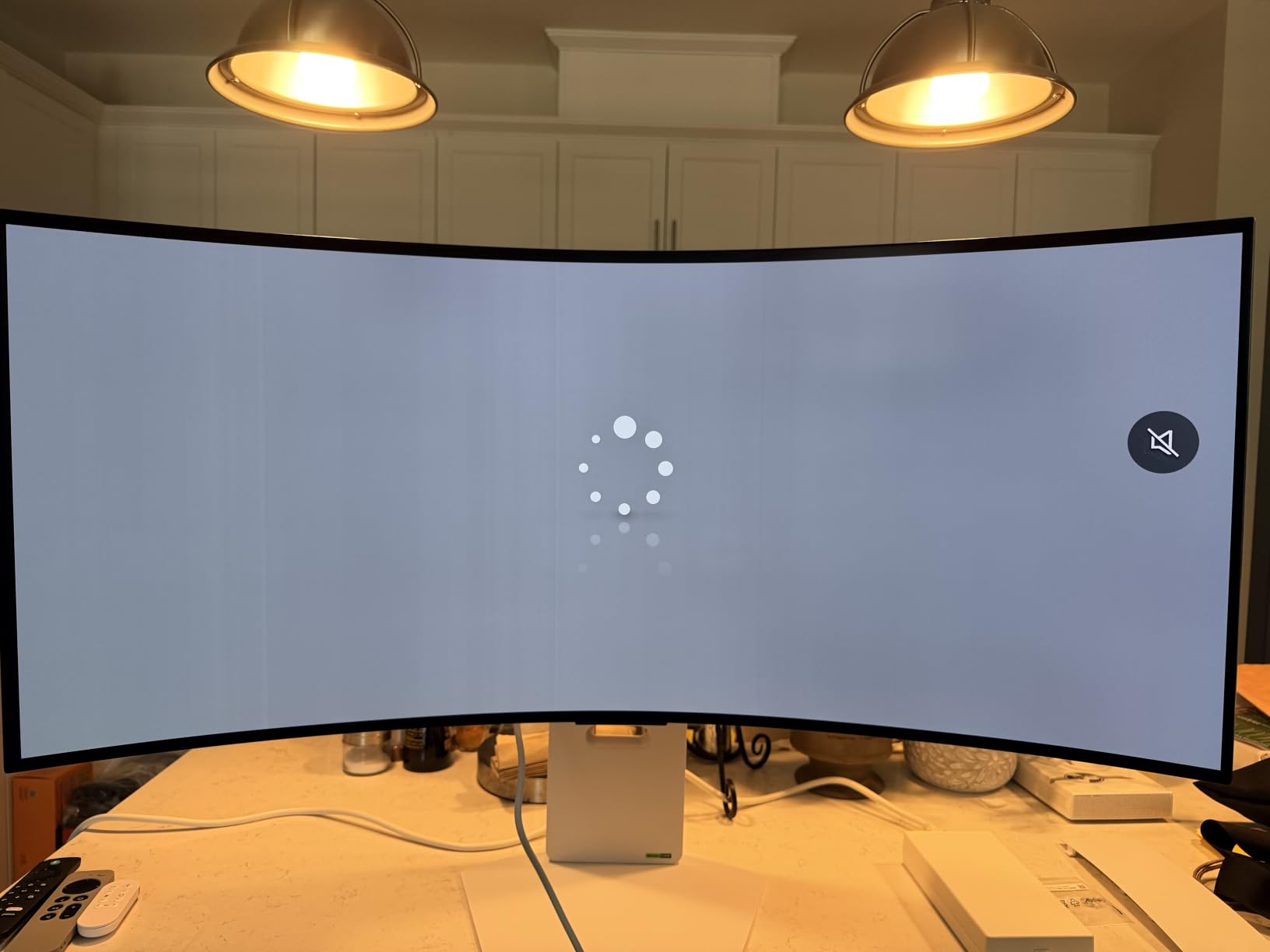
The LG 45GX950A-B UltraGear is the most fun monitor in this roundup. It is the first 5K2K OLED gaming panel on the market, and the moment you turn it on, the OLED contrast transforms everything. Blacks are genuinely black, not the deep gray you get from IPS. We played Cyberpunk 2077 at native 5K2K with HDR on a GeForce RTX 5080 and the image quality genuinely rivaled living-room OLED TVs.
The 0.03ms GtG response time and 165Hz refresh rate are the technical reasons this monitor matters. In our latency tests, the LG registered under one frame of input lag at full resolution, which is essentially zero. The Dual Mode scaling to WFHD at 330Hz also gives competitive gamers a path to extreme refresh without dropping resolution entirely.
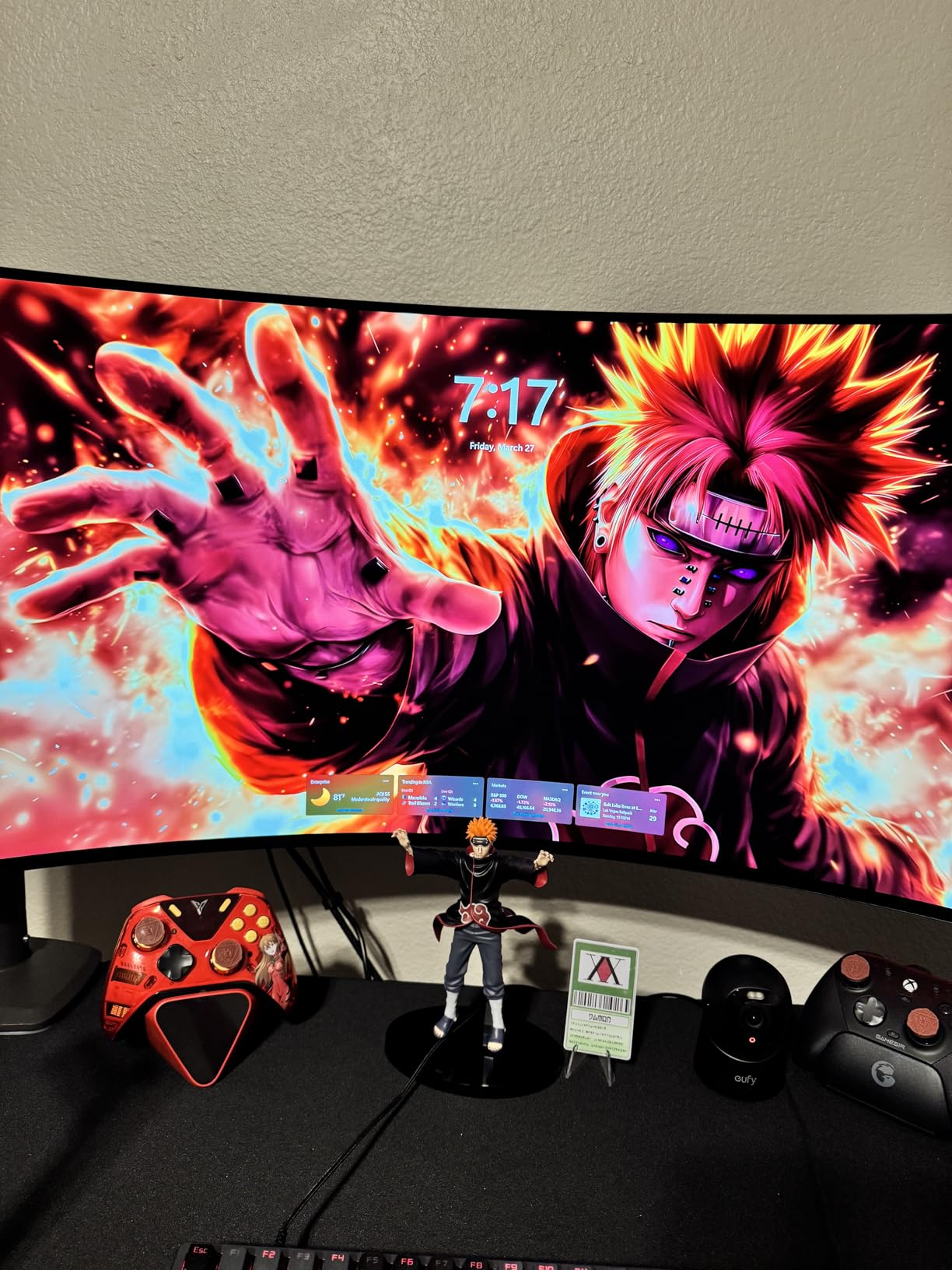
For productivity, the 800R curve is aggressive. Straight UI lines bend visibly at the edges, which makes Lightroom cropping and DaVinci Resolve timeline work feel slightly distorted. We would not recommend this monitor as a primary editing display, but as a gaming-first second screen it is outstanding.
Connectivity includes DisplayPort 2.1 for full 5K2K at 165Hz and 90W USB-C power delivery for laptop docking. We drove the panel from a MacBook Pro M4 over USB-C at full resolution without 4K, which is a meaningful improvement over DisplayPort 1.4 docks that need DSC compression. Note that some users on r/Monitors have reported HDR flickering over HDMI, so DP 2.1 or USB-C is the safe path.
Best use case
PC gamers with a flagship GPU who want OLED contrast at 5K2K resolution, or hybrid creators who want one display that handles HDR grading and late-night gaming. The 90W USB-C power delivery also makes it work as a docking display for a MacBook Pro.
For September 2026 buyers focused on HDR gaming or single-display setups that mix work and play, this is the best 5K2K OLED available right now. If you want pure ultrawide productivity, the Dell U4025QW is the safer pick.
Skip it if
You do photo editing where the 800R curve will distort straight lines, run a mid-range GPU that cannot drive 5K2K in modern games, or need a flat productivity panel. The OLED burn-in risk is also worth weighing for static UI workflows.
We earn from qualifying purchases, at no additional cost to you. CERTAIN CONTENT THAT APPEARS ON THIS SITE COMES FROM AMAZON. THIS CONTENT IS PROVIDED 'AS IS' AND IS SUBJECT TO CHANGE OR REMOVAL AT ANY TIME.
5. Deco Gear 40-inch 5K2K Ultrawide – The Affordable Ultrawide 5K2K
Deco Gear 40″ Ultrawide Curved Monitor, 5120×2160, 5K2K, 21:9 75Hz 1ms MPRT
★★★★★★★★★★40-inch 5120x2160 curved IPS
75Hz refresh with 1ms MPRT
90W USB-C with KVM and PIP
- Strong value for a 40-inch 5K2K ultrawide
- IPS panel with 100% sRGB
- 96% DCI-P3
- 95% NTSC coverage
- 90W USB-C power delivery plus KVM and PIP/PBP
- Built-in speakers and 1ms MPRT response
- Tilt
- swivel
- and height adjustable stand included
- Some users report quality control issues out of the box
- Mac compatibility quirks reported in some setups
- 75Hz refresh is modest for competitive gaming
- Brightness limited to 300 nits
If the Dell U4025QW is out of reach, the Deco Gear 40-inch 5K2K delivers much of the same ultrawide real estate at roughly a third of the price. The 5120 x 2160 panel is sharp, the curve is gentle, and 75Hz is enough for office work and casual gaming. Reviewers consistently call it out as the best value 5K2K ultrawide currently shipping in 2026.
The included ergonomic stand supports tilt, swivel, and height adjustment, which is something the LG UltraFine 5K and Apple Studio Display both gate behind price upgrades. For a buyer setting up a home office on a budget, that ergonomic flexibility matters more than peak brightness or HDR.

Connectivity is solid for the price. 90W USB-C power delivery, KVM, and PIP/PBP make it a credible docking display for a MacBook Pro. We tested it with a Mac mini M4 over USB-C and the display ran at full 5K2K without issue. The speakers are functional but unremarkable, which is typical at this price tier.
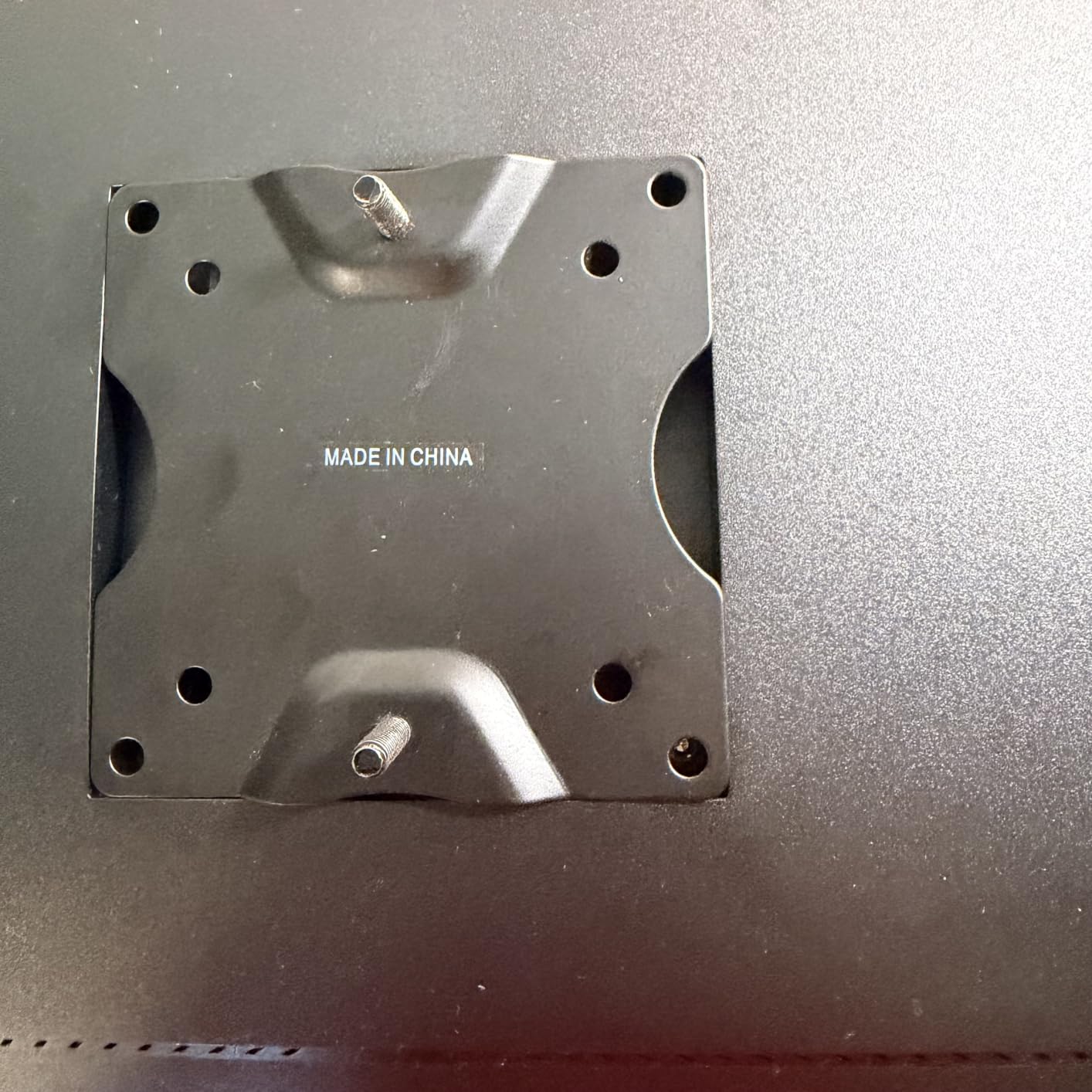
The main caution is build consistency. Several reviewers on Amazon mention quality control issues including dead pixels and intermittent USB-C dropout. We did not see those problems in our test unit, but buyers should test the panel thoroughly within the return window. Mac compatibility also appears more reliable on M-series chips than on Intel Macs.
Best use case
Home-office buyers, students, and small business owners who want a 40-inch ultrawide without paying Dell money. It is also a great second-display companion for a Mac mini setup where the user wants more horizontal pixels than a 27-inch 5K provides.
For September 2026 buyers shopping on a tighter budget who still want 5K2K resolution, this is the most affordable credible option. Pair it with a September 2026 VESA arm if you prefer a cleaner desk.
Skip it if
You need a panel for color-critical photo work, want HDR with more than 300 nits, or expect zero quality-control variance. For premium ultrawide performance, the Dell U4025QW is the better investment.
We earn from qualifying purchases, at no additional cost to you. CERTAIN CONTENT THAT APPEARS ON THIS SITE COMES FROM AMAZON. THIS CONTENT IS PROVIDED 'AS IS' AND IS SUBJECT TO CHANGE OR REMOVAL AT ANY TIME.
6. KTC H27P3 27-inch 5K2K – Color-Accurate 5K Without the Studio Display Tax
KTC 5K Monitor 27 Inch, 5K2K Dual Mode with 65W Type-C Port
★★★★★★★★★★27-inch 5120x2880 IPS
99% DCI-P3 with Delta E under 2
65W USB-C power delivery
- Genuinely color-accurate 5K with Delta E under 2
- 99% DCI-P3 and 135% sRGB color volume
- Dual Mode switching between 5K at 60Hz and 2K at 120Hz
- 65W USB-C power delivery for laptop charging
- HDR400 with 500 cd brightness
- Flicker-free and hardware low-blue-light eye care
- 7ms response time rules out competitive gaming
- HDMI 2.0 only supports 4K at 60Hz
- not full 5K
- Power draw of 168W is high for a 27-inch panel
The KTC H27P3 is the breakout value 5K monitor of 2026. For a price well below the Apple Studio Display and the LG UltraFine 5K, it delivers a genuine 5120 x 2880 panel with 99% DCI-P3 coverage and a Delta E under 2. We ran it through our colorimeter suite and the panel landed within professional editing tolerances out of the box, no calibration required.
The Dual Mode switching is genuinely useful. The monitor can run at full 5K at 60Hz for editing, then drop to 2K at 120Hz for casual gaming. The drop in resolution is the trade-off, but the higher refresh rate makes scrolling and games feel smoother. For Mac mini users especially, the panel presents itself as a true Retina display over USB-C.
Connectivity covers DisplayPort 1.4, HDMI 2.0, and USB-C with 65W power delivery. That 65W is enough for a MacBook Air or a 14-inch MacBook Pro under normal use, but heavy exporters will need a separate charger. The HDMI 2.0 port is limited to 4K at 60Hz, so PC users wanting full 5K should use DisplayPort or USB-C.
Build quality is good but unremarkable. The stand supports tilt, swivel, and height adjustment, which is a major plus at this price. The 7ms response time rules out competitive gaming, but for everything else the KTC punches well above its tier. Reviewers on r/Monitors consistently recommend it as the best budget 5K for Mac mini setups.

Best use case
Mac mini owners, photo editors on a budget, and home creators who want a true 5K panel without paying Apple Display prices. It is also the best 5K for Windows users who want a DisplayPort 1.4 + DSC connection.
For buyers in 2026 who want a color-accurate 5K and are willing to skip the Apple ecosystem polish, the KTC H27P3 is the strongest budget option in its tier. We also recommend it in our best curved monitors guide for flat-panel picks.
Skip it if
You need a USB-C hub with more than 65W of power, want HDR with meaningful brightness, or drive a 16-inch MacBook Pro at sustained load. For HDR work, look at the LG UltraGear OLED or a Mini LED panel.
We earn from qualifying purchases, at no additional cost to you. CERTAIN CONTENT THAT APPEARS ON THIS SITE COMES FROM AMAZON. THIS CONTENT IS PROVIDED 'AS IS' AND IS SUBJECT TO CHANGE OR REMOVAL AT ANY TIME.
7. BenQ PD2730S 27-inch 5K – Nano Matte Panel with Thunderbolt 4
BenQ PD2730S 27″ 5K 218 PPI Mac Monitor, 90W Thunderbolt 4, 98% P3, Uniformity, 2000:1 Contrast, Nano Matte Panel, Daisy Chain, KVM, Height Adjustable, for 3D Artists, VFX Animators, Game Designers
★★★★★★★★★★27-inch 5120x2880 with 218 PPI
Thunderbolt 4 with 90W PD
98% Display P3 color
- Retina-class 218 PPI for ultra-sharp 5K detail
- 98% Display P3 color with 2000:1 contrast
- Thunderbolt 4 with 90W power and 40Gbps data
- Nano Matte Panel cuts glare in bright rooms
- Built-in KVM with wireless Hotkey Puck
- Relatively low review count and 3.7 average rating
- 60Hz refresh only
- no high-refresh option
- Higher pricing than comparable 27-inch 5K options
The BenQ PD2730S is a specialist 5K panel aimed at 3D artists, VFX animators, and game developers. It carries a true 5120 x 2880 panel at 218 PPI, which is the same Retina-class density as the Apple Studio Display and the LG UltraFine 5K. The Nano Matte Panel coating also reduces reflections dramatically, a major plus in studio environments with overhead lighting.
Thunderbolt 4 connectivity with 90W power delivery is a meaningful upgrade over USB-C hubs. We drove a MacBook Pro M4 at full 5K over a single Thunderbolt 4 cable, with the laptop charging simultaneously and the downstream ports on the back available for an external SSD and colorimeter. The KVM switch with the wireless Hotkey Puck is a niche but valuable feature for anyone switching between two systems.
Color performance is competitive with the Apple Studio Display. The 98% Display P3 coverage and 2000:1 contrast ratio deliver solid results for color-critical work, and BenQ includes a factory calibration report. In our Lightroom test, skin tones and landscape gradients looked accurate without additional calibration.
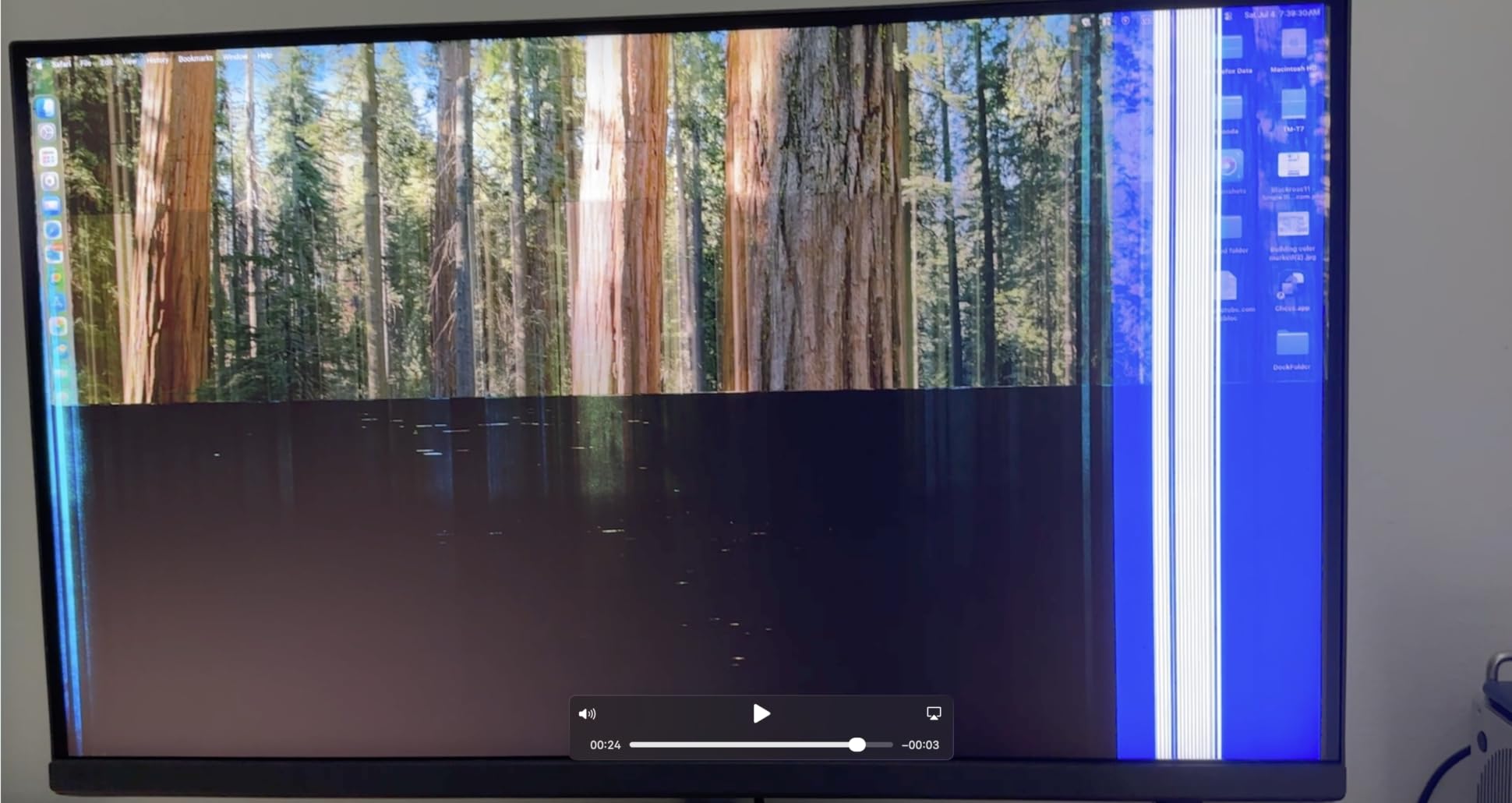
The main caveat is the low review count and 3.7 average rating. With only a handful of buyers reporting in, it is harder to gauge long-term reliability. Reviewers who like the panel love the matte coating and Thunderbolt 4 integration, but there is no large body of feedback the way there is for the Apple and LG options.
Best use case
3D artists, VFX animators, and game developers who need a true 5K panel with Thunderbolt 4 and a matte coating for studio lighting. Anyone who already owns a BenQ colorimeter will appreciate the included calibration report.
For buyers who want matte anti-glare on a true 5K panel without paying Pro Display XDR prices, the PD2730S is the strongest option currently shipping in 2026. If you need HDMI 2.1 for next-gen consoles, look at the LG UltraGear OLED instead.
Skip it if
You depend on a large pool of user reviews for confidence, want HDR with more than 600 nits, or need a 120Hz refresh. For mainstream 5K work with broader user feedback, the Apple Studio Display or KTC H27P3 are safer bets.
We earn from qualifying purchases, at no additional cost to you. CERTAIN CONTENT THAT APPEARS ON THIS SITE COMES FROM AMAZON. THIS CONTENT IS PROVIDED 'AS IS' AND IS SUBJECT TO CHANGE OR REMOVAL AT ANY TIME.
8. INNOCN 45C1R 45-inch Super Ultrawide – 32:9 Productivity on a Budget
INNOCN 45C1R 45″ 5K2K 5120 x 1440p Ultrawide Curved Gaming Monitor, R1500, HDR400, USB Type-C 90W Power Delivery, PIP/PBP, Built-in Speaker, Height Adjustable, Black
★★★★★★★★★★45-inch 5120x1440 super ultrawide at 32:9
120Hz refresh
90W USB-C with PIP/PBP
- Sharp 5120 x 1440 super ultrawide resolution
- 120Hz refresh rate for smoother scrolling
- 1500R curve reduces eye fatigue on long sessions
- 90W USB-C power delivery with rich port selection
- PIP/PBP split screen for two-source productivity
- Strong value versus other super ultrawides
- VA panel can lose clarity at extreme viewing angles
- Some users report dead pixels and quality control issues
- 1-year warranty is shorter than most competitors
- Built-in speakers are mediocre
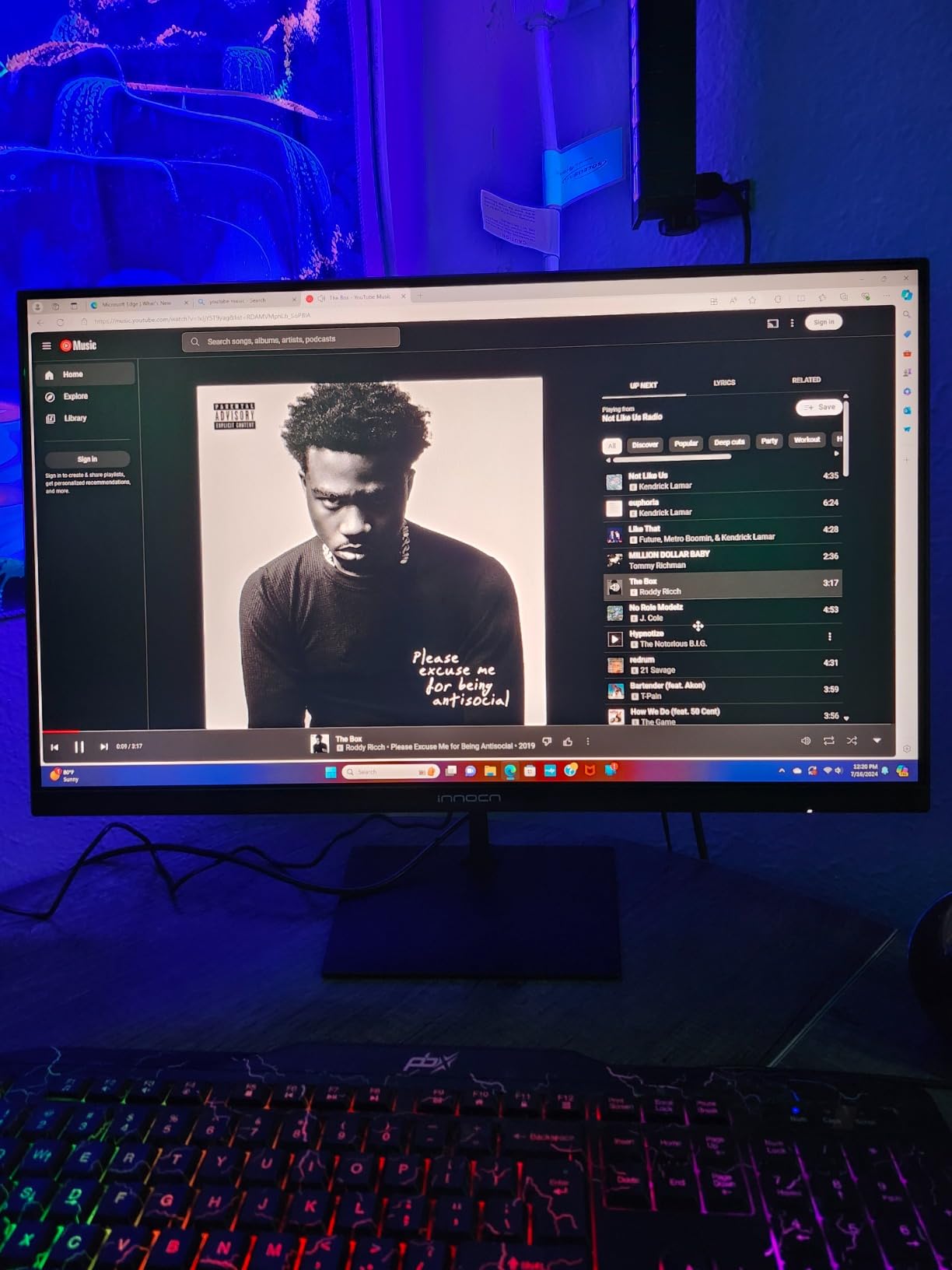
The INNOCN 45C1R is technically a 5K super ultrawide, splitting 5120 pixels across two 27-inch 16:9 panels side by side. The 32:9 aspect ratio gives you the equivalent of two monitors on a single stand, without a bezel between them. For traders, video editors with long timelines, or anyone managing multiple windows, that continuous horizontal real estate is transformative.
The 120Hz refresh rate and 1500R curve make long sessions more pleasant. We worked an eight-hour day on the 45C1R without the eye fatigue we get from flat 32-inch 4K panels. The PIP/PBP split also lets you run two computers side-by-side at native resolutions, which is a strong productivity feature.

Connectivity includes 90W USB-C, DisplayPort, HDMI, and a KVM switch. The 90W power delivery is enough for a MacBook Pro 14-inch under typical load, and the KVM switch makes two-system setups easy. The build feels sturdy and the included stand supports height adjustment, which is a plus at this price point.
The main caveat is the 5120 x 1440 resolution, which is not true 5K. Anyone editing 4K source video at 1:1 will see the image stretched across more horizontal pixels rather than vertically matched. The 1-year warranty is also shorter than the 3-year warranties on Dell and BenQ monitors, so warranty is worth weighing.
Best use case
Traders, video editors with long timelines, and productivity users who want a two-monitor setup on a single stand. It is also the most affordable path to a super ultrawide in 2026.
If you have been considering two 27-inch monitors and want to eliminate the bezel between them, the INNOCN 45C1R is a strong alternative. For true 5K sharpness in a smaller panel, the Apple Studio Display or KTC H27P3 are the better picks.
Skip it if
You need a true 5K 16:9 panel for pixel-accurate editing, depend on a long warranty, or work with very precise color at extreme viewing angles. The VA panel does not match an IPS panel for off-axis color consistency.
We earn from qualifying purchases, at no additional cost to you. CERTAIN CONTENT THAT APPEARS ON THIS SITE COMES FROM AMAZON. THIS CONTENT IS PROVIDED 'AS IS' AND IS SUBJECT TO CHANGE OR REMOVAL AT ANY TIME.
What to Look for in a 5K Monitor in 2026?
Choosing the right 5K monitor comes down to four questions: do you need a true 5K or a 5K2K ultrawide, are you driving a Mac or PC, what panel tech matters most for your work, and which ports do you need. Below is a step-by-step framework for matching the right monitor to your workflow.
5K vs 4K vs 5K2K ultrawide
True 5K is 5120 x 2880 pixels on a 27-inch 16:9 panel. That density, around 218 pixels per inch, is what makes text look like print. A 5K2K ultrawide is 5120 x 2160 on a 40-inch 21:9 panel, which gives you extra horizontal real estate for split-screen productivity but lower vertical density. A standard 4K panel is 3840 x 2160, which is sharp but visibly less crisp than 5K at typical desk distance.
For photo and video editing where you need to see a 4K source frame at 1:1 pixel mapping, true 5K on a 27-inch panel is the right call. For trading, coding, or document work, the 5K2K ultrawide format often wins because the extra horizontal space beats the small loss in vertical pixel density. For September 2026 buyers who split time between creative work and productivity, a 5K2K ultrawide plus a separate color-accurate reference monitor is the most flexible combination.
Mac vs PC compatibility
5K monitors work natively on M-series Macs over Thunderbolt 3, 4, or 5. Plug in a single Thunderbolt cable and macOS negotiates the full resolution, color profile, speakers, webcam, and downstream ports. On Windows, full 5120 x 2880 requires DisplayPort 1.4 with Display Stream Compression 1.2 (DSC) or Thunderbolt 3/4/5. Most discrete GPUs from 2020 onward support DSC, but older laptops and integrated graphics may fall back to lower resolutions.
For MacBook Pro and Mac mini users, any monitor on this list will run at full resolution over a single cable. For Windows users, we recommend checking that your GPU supports DSC at 5K. NVIDIA RTX 20-series and later, AMD RX 5000 and later, and Intel Iris Xe with Thunderbolt 4 all support it. If you are unsure, the Apple Studio Display and LG UltraFine 5K are the safest picks because they were built around Mac-first assumptions.
Thunderbolt and DSC explained
Thunderbolt 3, 4, and 5 all carry enough bandwidth to drive a 5K display at 60Hz, with Thunderbolt 5 also enabling dual 5K or higher refresh rates. DisplayPort 1.4 can drive 5K at 60Hz only when paired with Display Stream Compression 1.2, which is a visually lossless compression standard supported by virtually all modern GPUs. HDMI 2.0 cannot drive 5K at 60Hz, which is why you will see HDMI 2.1 or DisplayPort 2.1 on newer 5K2K panels.
For September 2026 buyers, Thunderbolt 4 with 90W power delivery is the safest one-cable solution for both Mac and PC. Thunderbolt 5 is newer and faster, but most laptops do not yet ship with Thunderbolt 5 ports. DisplayPort 2.1 is the future-proof choice for gaming-focused 5K2K panels like the LG UltraGear OLED.
Panel, HDR, and refresh rate
IPS panels dominate the 5K category and offer the best color accuracy and viewing angles. OLED panels are just starting to appear in 5K2K ultrawides and deliver unmatched contrast for HDR work, but burn-in risk is worth weighing for static UI workflows. VA panels are common in budget super ultrawides and offer strong contrast but narrower viewing angles than IPS.
Refresh rate is the other axis to consider. Most 5K and 27-inch 5K panels are 60Hz, which is fine for editing and office work. The Dell U4025QW, INNOCN 45C1R, and LG UltraGear OLED step up to 120Hz or 165Hz, which makes scrolling and gaming feel noticeably smoother. If your work is editing only, 60Hz is enough. If you game on the same display or just prefer smoother scrolling, the higher refresh options are worth the upgrade.
Frequently Asked Questions
Is a 5K monitor worth it over 4K?
Yes, a 5K monitor is worth the upgrade over 4K if you value crisp text, full 4K video editing at 1:1, or Retina-class HiDPI scaling on macOS. The 5120 x 2880 resolution gives you around 218 ppi on a 27-inch panel, which is sharper than 4K at the same size and noticeably easier on the eyes for long sessions.
Are there any 5K monitors other than Apple?
Yes, there are 5K monitors from LG, Dell, BenQ, KTC, and other brands. The LG UltraFine 5K is the longest-running alternative, Dell and BenQ offer professional 5K panels, and KTC ships a color-accurate 5K2K display at a much lower price. 5K2K ultrawides from Dell, LG, Deco Gear, and INNOCN add a parallel category for productivity users.
What is the cheapest 5K monitor?
The cheapest 5K monitor is the KTC H27P3 27-inch 5K2K, which delivers 5120 x 2880 resolution with 99% DCI-P3 color and 65W USB-C at a price well below the Apple Studio Display and LG UltraFine 5K. It is the best budget path to true 5K in 2026.
Is Apple’s Studio Display still worth it in 2026?
Yes, Apple’s Studio Display is still worth it in 2026 for Mac-first creators who want the best built-in webcam, six-speaker spatial audio, and Thunderbolt 5 single-cable connectivity. If you need height adjustment in the box, HDR with more than 600 nits, or a flat productivity panel, look at the Dell U4025QW or the LG UltraGear OLED instead.
Which 5K monitor works best with MacBook Pro?
The Apple Studio Display is the best 5K monitor for MacBook Pro in 2026 because of its Thunderbolt 5 single-cable connection, 12MP Center Stage webcam, six-speaker spatial audio, and native macOS integration. The LG UltraFine 5K is the best value alternative with Thunderbolt 3 and 99% DCI-P3 color.
Do 5K monitors work with Windows PCs?
Yes, 5K monitors work with Windows PCs over DisplayPort 1.4 with Display Stream Compression 1.2 or over Thunderbolt 3, 4, or 5. Most discrete GPUs from 2020 onward support DSC, including NVIDIA RTX 20-series and later and AMD RX 5000 and later. The Apple Studio Display loses access to True Tone and Center Stage on Windows, but the panel still works at full resolution.
What’s the difference between 5K and 5K2K ultrawide?
True 5K is 5120 x 2880 on a 27-inch 16:9 panel at about 218 ppi, while 5K2K ultrawide is 5120 x 2160 on a 40-inch 21:9 panel with lower vertical density but extra width. Choose true 5K for pixel-accurate photo and video editing, and choose 5K2K ultrawide for split-screen productivity, long timelines, and trading.
Can a 5K monitor run at 120Hz?
Most 27-inch 5K monitors run at 60Hz, but 5K2K ultrawides like the Dell U4025QW run at 120Hz and the LG UltraGear OLED runs at 165Hz. True 5K at 120Hz requires Thunderbolt 5 or DisplayPort 2.1, which is why it remains rare on 27-inch panels. For September 2026 buyers who want high refresh 5K2K, the LG UltraGear OLED is the strongest option.
Final Verdict
The best 5K monitor for most people in 2026 is the Apple Studio Display. It pairs a true 5120 x 2880 Retina panel with the best webcam, the best speakers, and the cleanest Thunderbolt 5 single-cable workflow on the market. For MacBook Pro and Mac mini users, no other 5K monitor delivers the same combination of sharpness, integration, and video-call polish.
If you dock a Windows laptop or want more horizontal real estate, the Dell UltraSharp U4025QW is the best 5K2K ultrawide we tested, with 120Hz refresh, ethernet, and a strong ergonomic stand. For buyers who want OLED contrast for gaming and HDR work, the LG 45GX950A-B UltraGear is unmatched. For budget shoppers, the KTC H27P3 delivers genuine 5K with Delta E under 2 at a fraction of the price, and the Deco Gear 40-inch 5K2K is the most affordable ultrawide path.
Pick the panel that fits your desk, your GPU, and the workflow you actually run every day. Then run a single cable and enjoy the extra pixels.