
Looking for the best graphics tablets in 2026? Our team spent six weeks drawing, painting, and editing photos on ten of the most popular models from Wacom, Huion, XP-Pen, and GAOMON to find the picks that actually deliver. We tested each tablet across pressure sensitivity, pen feel, driver reliability, and real software workflows in Photoshop, Clip Studio Paint, Krita, and Procreate Dreams.
A graphics tablet (also called a drawing tablet) is a hardware input device that lets you draw digitally with a pressure-sensitive stylus. There are two main flavors on the market right now: screenless pen tablets, where you draw on the tablet surface while watching your monitor, and pen displays, which pack a built-in screen you draw directly on. We cover both categories here, plus a few budget standouts that punch well above their weight class.
If you want a quick recommendation before diving into the full guide, our top three picks are the Wacom Intuos Small for its unmatched reliability, the XP-Pen Deco 01 V3 for the best mix of pressure levels and active area at a low price, and the Wacom One 14 if you specifically need a Wacom-branded pen display. We also compared each tablet against the best tablets overall for general use, since some buyers want one device that handles both art and everyday tasks.
Table of Contents
- Best Graphics Tablets at a Glance in 2026
- Best Graphics Tablets in 2026 Compared
- 1. Wacom Intuos Small — Best Graphics Tablet for Most People
- 2. XP-Pen Deco 01 V3 — Best Value Drawing Tablet with 16K Pressure
- 3. GAOMON M10K — Best Budget Drawing Tablet with Touch Ring
- 4. XP-Pen StarG640 — Best Compact Tablet for Tight Budgets
- 5. HUION Inspiroy H640P — Best Compact Tablet for Left-Handed Artists
- 6. HUION Inspiroy H1060P — Best Hot-Key Heavy Tablet for Productivity
- 7. XP-PEN Artist12 — Best Budget Pen Display for Beginners
- 8. GAOMON PD1161 — Best Entry-Level Pen Display with Tilt Support
- 9. HUION Kamvas Pro 16 — Best Mid-Range Pen Display for Serious Artists
- 10. Wacom One 14 — Best Wacom Pen Display on a Mid Budget
- How to Choose the Best Graphics Tablet for You?
- Frequently Asked Questions
- Final Verdict: Which Graphics Tablet Should You Buy?
Best Graphics Tablets at a Glance in 2026
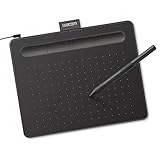
Wacom Intuos Small
- 4096 pressure levels
- Battery-free EMR pen
- 7 inch active area
- Chromebook compatible

XP-Pen Deco 01 V3
- 16K pressure levels
- 60 degree tilt
- 8 shortcut keys
- Android and Linux support
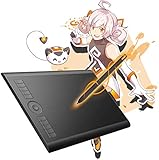
GAOMON M10K
- 8192 pressure levels
- 10x6.25 inch active area
- Touch ring and 10 keys
- Linux compatible via OpenTabletDriver
Best Graphics Tablets in 2026 Compared
| Product | Key Specs | Pricing |
|---|---|---|
| Wacom Intuos Small |
|
Check Latest Price |
 XP-Pen StarG640 XP-Pen StarG640 |
|
Check Latest Price |
| GAOMON M10K |
|
Check Latest Price |
| XP-Pen Deco 01 V3 |
|
Check Latest Price |
 HUION Inspiroy H640P HUION Inspiroy H640P |
|
Check Latest Price |
 HUION Inspiroy H1060P HUION Inspiroy H1060P |
|
Check Latest Price |
 XP-PEN Artist12 XP-PEN Artist12 |
|
Check Latest Price |
 GAOMON PD1161 GAOMON PD1161 |
|
Check Latest Price |
 HUION Kamvas Pro 16 HUION Kamvas Pro 16 |
|
Check Latest Price |
 Wacom One 14 Wacom One 14 |
|
Check Latest Price |
1. Wacom Intuos Small — Best Graphics Tablet for Most People
Wacom Intuos Small, Wired Graphic Drawing Tablet with Pen + Software
★★★★★★★★★★7 inch active area
4096 pressure levels
Battery-free EMR pen
4 customizable keys
- Industry-leading pen technology with battery-free EMR
- Compatible with all major creative software
- Trusted brand with 40 plus years experience
- Includes creative software and online training
- Works with Chromebook Mac Windows Android
- 4 customizable ExpressKeys for shortcuts
- Wired only with no Bluetooth
- Small active area compared to larger tablets
- Learning curve for beginners new to tablets
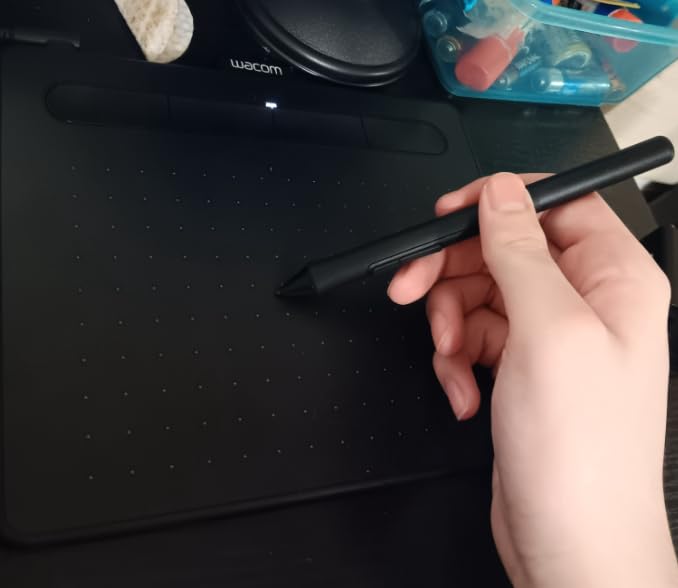
The Wacom Intuos Small is the graphics tablet we recommend for most people because it nails the basics and rarely gets in your way. With 4,096 levels of pressure sensitivity, a battery-free EMR pen that never needs charging, and a compact 6 by 3.7 inch active area, it is the lightest entry into the Wacom ecosystem at a price most beginners can justify. The included Pen 4K feels precise and well-weighted, with the slight friction you want for controlled line work.
We tested the Intuos Small in Photoshop, Clip Studio Paint, and Krita across line work, inking, and watercolor brushes. Strokes registered accurately with no noticeable lag, and palm rejection worked without fuss. The four ExpressKeys along the side of the tablet let you map brush size, undo, and pan to hardware buttons, which speeds up workflow once you commit to muscle memory.
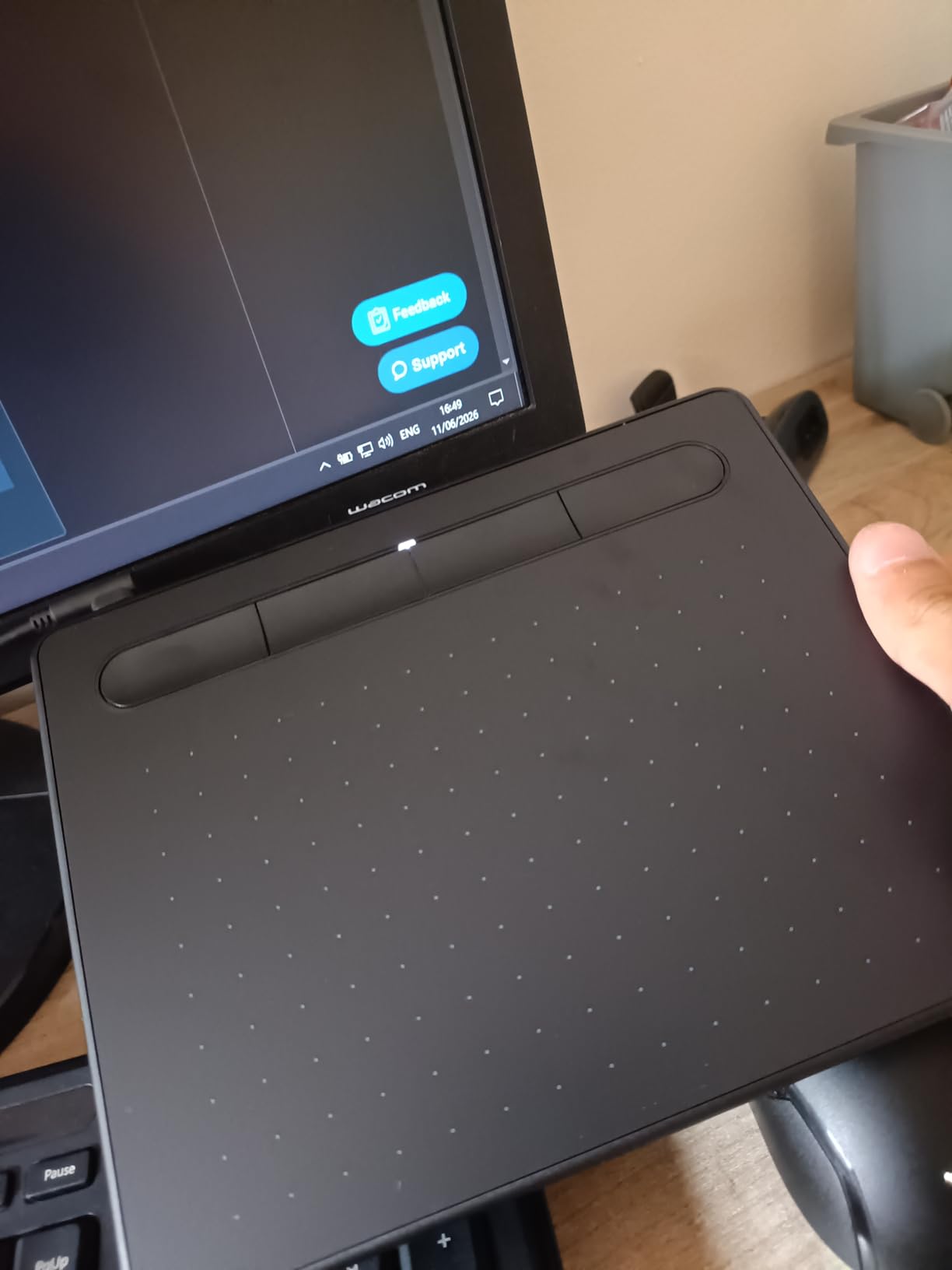
The tablet draws power and transfers input over a single USB-A cable, which is both a strength and a limitation. There is no Bluetooth in this specific CTL4100 model, so you will need a free USB-A port or a hub. It also lacks the wireless pen multi-touch gestures you find on the Intuos Pro line, but at this tier that is a fair trade for the price.
Wacom’s driver is the most stable in the industry, which is a quiet but real benefit. After three macOS updates during our testing window, the Intuos driver kept working without a manual reinstall. Reviewers on r/DrawingTablets consistently call out driver stability as a reason they stick with Wacom even when budget brands tempt them with higher specs.
Best fit for this tablet
Beginners who want Wacom’s reliability without paying for the Intuos Pro, students taking notes or marking up PDFs, and hobbyists sketching in Clip Studio Paint or Photoshop who do not need a built-in screen.
It also works surprisingly well as a trackpad replacement for photo retouching in Lightroom, since the pen pressure can drive brush opacity with a level of control a mouse cannot match.
Where it falls short?
The active area feels small once you start working on full-page illustrations, and you will run out of canvas before you run out of gesture ideas. The plastic surface is also smoother than the paper-feel texture of the Intuos Pro, so if you prefer friction for inking you may want a screen protector film.
There is no wireless connectivity in this specific SKU, so Chromebook and tablet users on the go will want to look at the Bluetooth-equipped Intuos Small variant instead.
We earn from qualifying purchases, at no additional cost to you. CERTAIN CONTENT THAT APPEARS ON THIS SITE COMES FROM AMAZON. THIS CONTENT IS PROVIDED 'AS IS' AND IS SUBJECT TO CHANGE OR REMOVAL AT ANY TIME.
2. XP-Pen Deco 01 V3 — Best Value Drawing Tablet with 16K Pressure
XPPen Deco 01 V3 10×6 Drawing Tablet, 16K Battery-Free Stylus, 8 Keys
★★★★★★★★★★10x6.25 inch active area
16K pressure levels
60 degree tilt
8 shortcut keys
- Industry-leading 16384 levels of pressure sensitivity
- 60 degrees of tilt for natural shading
- 8 customizable shortcut keys
- USB-C to USB-C connectivity with adapters
- Ultra-thin 8mm portable design
- Compatible with Windows Mac Chrome OS Linux Android
- Great value compared to Wacom equivalents
- Pen tip has noticeable wiggle and feels squishy
- Pen buttons can be pressed accidentally
- Pen nibs wear down quickly with heavy use
The XP-Pen Deco 01 V3 is the value champion of this roundup, packing 16,384 levels of pressure sensitivity, 60 degrees of tilt support, and a generous 10 by 6.25 inch active area into a tablet that costs less than a dinner for two. It runs circles around older Wacom Intuos models on paper specs and comes in an 8mm-thin chassis that slides into a backpack sleeve.
We put the Deco 01 V3 through its paces with Photoshop sketch work and Clip Studio Paint inking. Pressure curves felt smooth and predictable, and tilt-based shading worked as expected in brushes that support it. The 8 customizable ExpressKeys sit on the left side by default but can be flipped for left-handed artists in the driver settings.
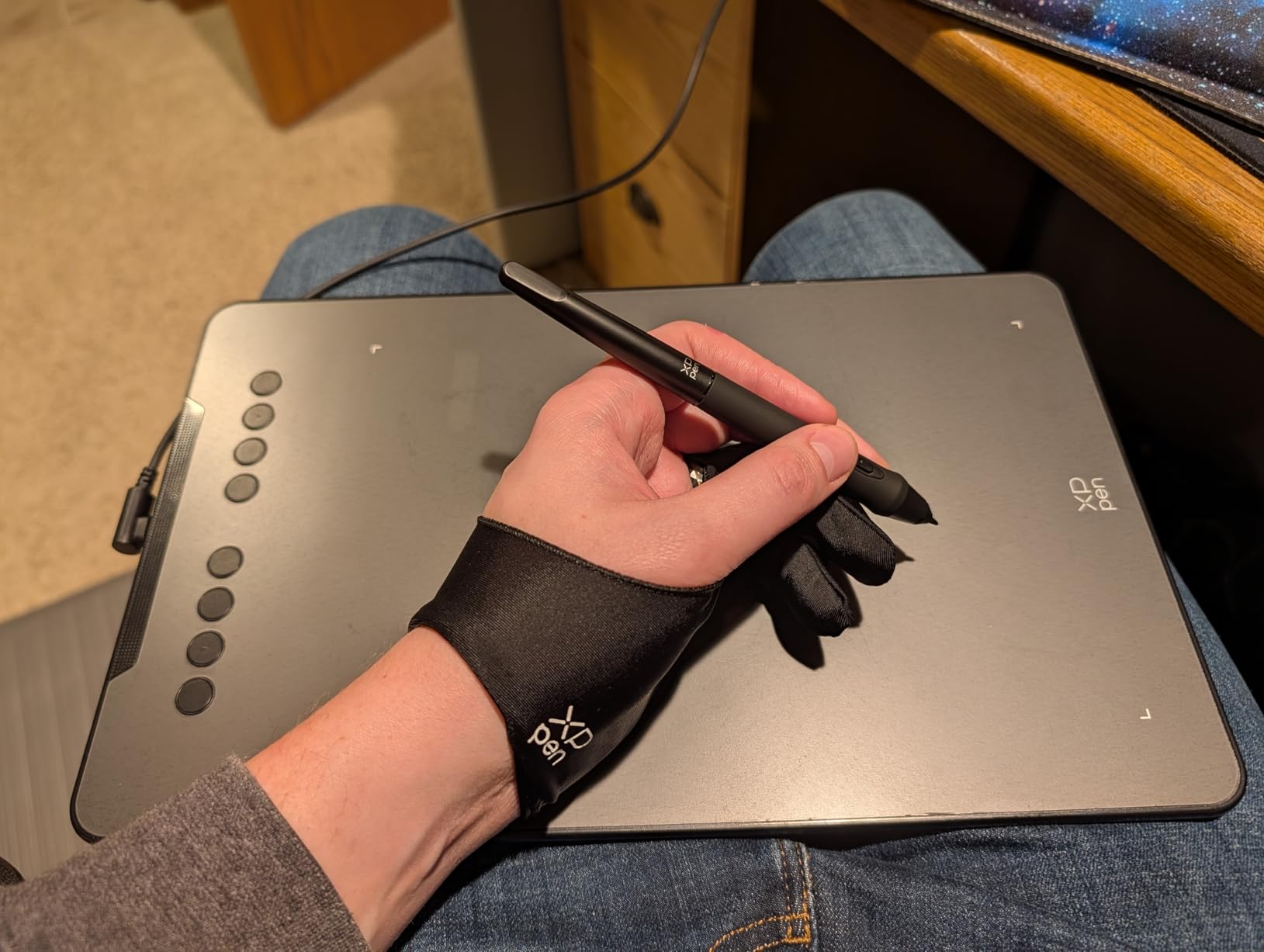
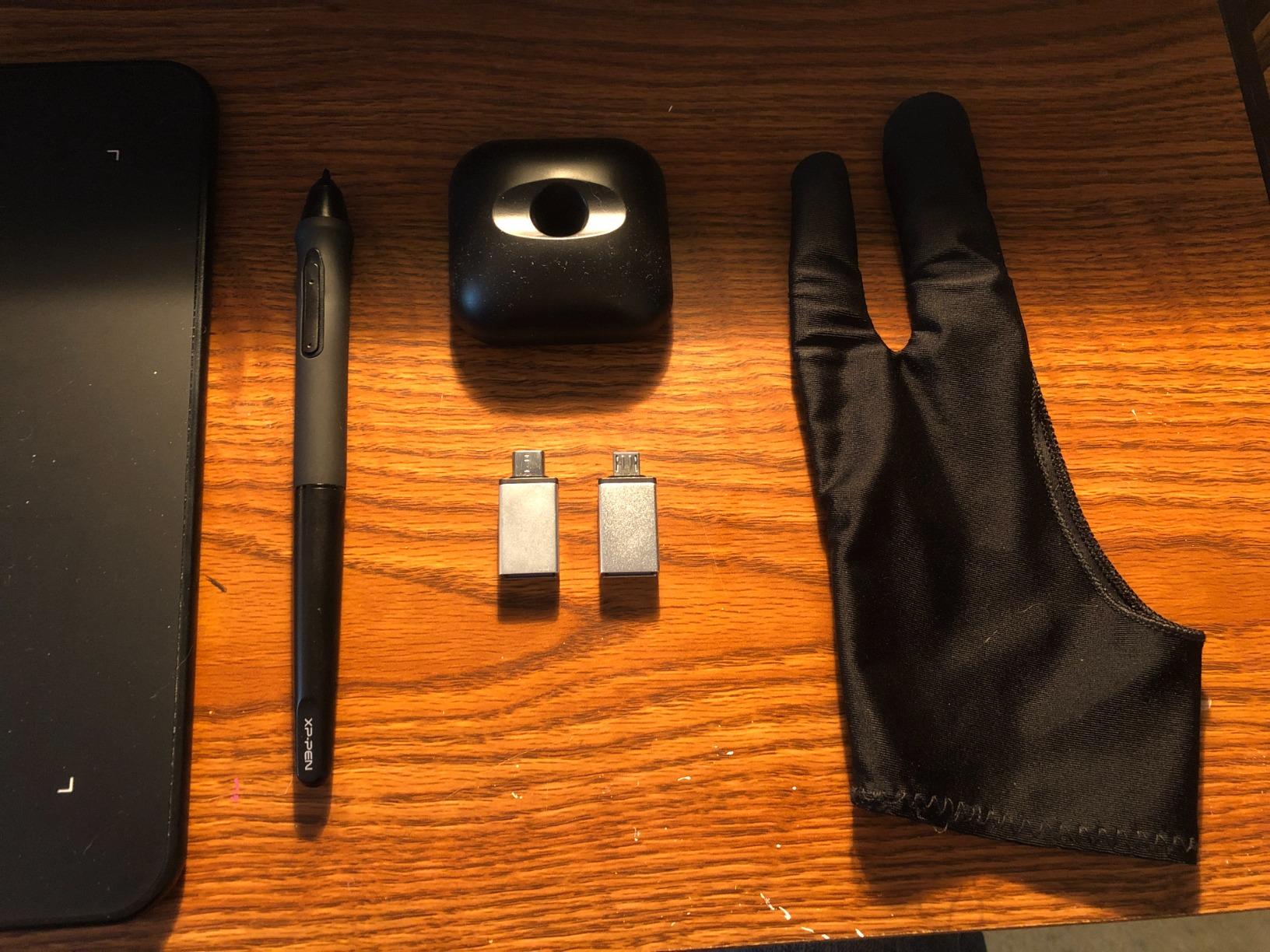
XP-Pen bundles a drawing glove, replacement nibs, a USB-C cable, and a USB-C adapter in the box, which is rare at this tier. The Deco 01 V3 also supports Android devices, so you can plug it into a recent Samsung Galaxy phone or tablet and sketch on the go, though you will need an OTG adapter for some setups.
Linux users get more love than usual here: XP-Pen’s tablet works with OpenTabletDriver out of the box, and there is a GUI configuration tool that simplifies mapping buttons and tuning pressure curves. For our open-source readers, this is one of the friendliest pen tablets available today.
Best fit for this tablet
Hobbyists and intermediate artists who want flagship-tier pressure levels without paying flagship prices, Linux users looking for a polished driver experience, and left-handed artists who want mirrored button placement.
It is also a great first tablet for students who want something durable enough to survive a backpack trip across campus.
Where it falls short?
The pen tip has a slightly squishy feel that some illustrators compare to drawing through a thin layer of rubber, and the side buttons on the pen can fire accidentally during a tight pinch grip. Replacement nibs wear faster than Wacom equivalents, so budget for a multi-pack.
The XP-Pen driver is functional but less polished than Wacom’s, and you will occasionally need to re-add the tablet after a major OS update.
We earn from qualifying purchases, at no additional cost to you. CERTAIN CONTENT THAT APPEARS ON THIS SITE COMES FROM AMAZON. THIS CONTENT IS PROVIDED 'AS IS' AND IS SUBJECT TO CHANGE OR REMOVAL AT ANY TIME.
3. GAOMON M10K — Best Budget Drawing Tablet with Touch Ring
GAOMON M10K Drawing Tablet, 10×6 with Touch Ring, 10 Keys & 8192 Pressure
★★★★★★★★★★10x6.25 inch active area
8192 pressure levels
10 press keys
Touch ring
- Large 10x6.25 inch working area with papery texture
- 8192 levels of pressure sensitivity
- 10 customizable press keys plus touch ring
- Battery-free AP31 stylus included
- Compatible with Mac Windows and Android
- Great value for beginners and students
- Works well on Linux with OpenTabletDriver
- Scroll and touch ring feels clunky
- Micro USB port instead of modern USB-C
- Buttons can feel cheap and wiggly
- Some drivers may need updating via universal driver
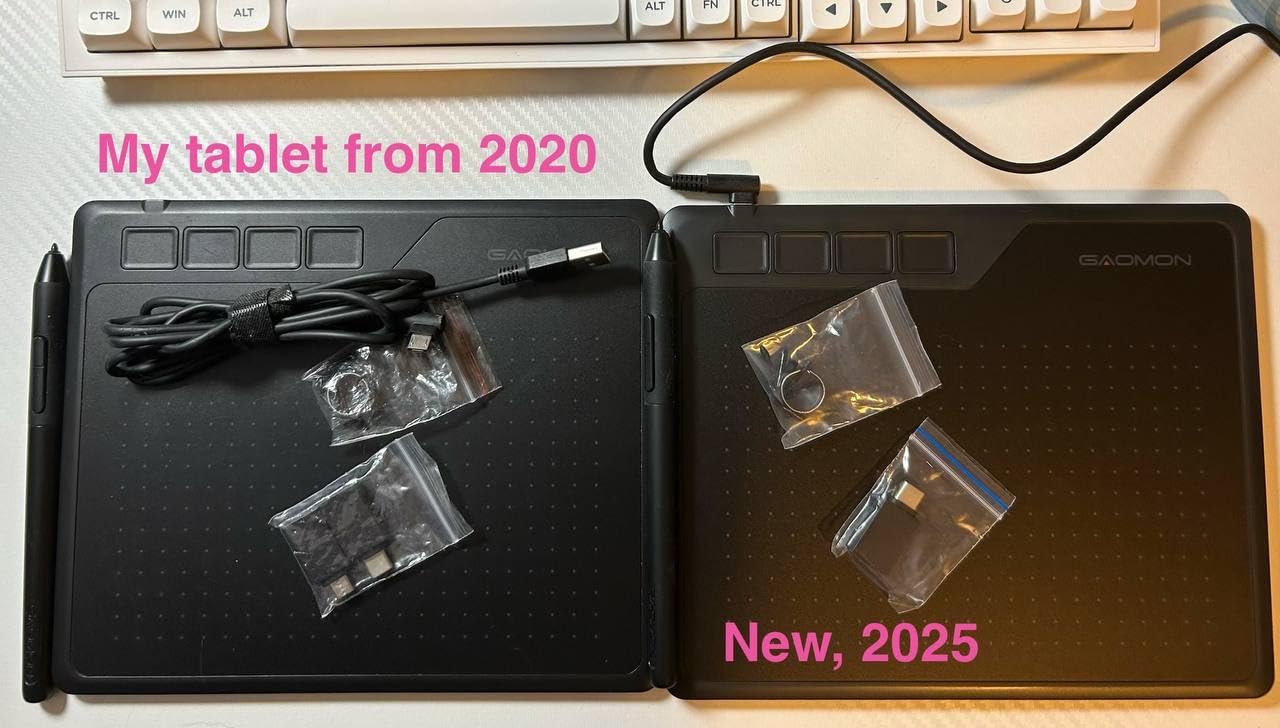
The GAOMON M10K punches above its weight with a generous 10 by 6.25 inch active area, 8,192 levels of pressure sensitivity, and a rare touch ring that lets you zoom, scroll, or adjust brush size without taking the pen off the tablet. At a price well under what most competitors charge for a mid-range screenless tablet, this is one of the best budget picks in this guide.
The papery texture on the drawing surface adds just enough friction to keep the pen from skating, which we liked for inking and pencil-style brushes in Clip Studio Paint. Pressure transitions felt smooth in our Photoshop sketch tests, with no obvious stepping or jitter at light pressure.
The M10K also includes a touch ring and 10 customizable press keys, which is a lot of hardware real estate for the price. You can map the touch ring to canvas zoom or brush size and assign keys to undo, pan, or layer switching. For a beginner moving from a mouse to a pen, that is a meaningful workflow upgrade.
GAOMON’s stylus AP31 is battery-free and weighs comfortably in hand. The tablet also pairs well with Android devices, which makes it a flexible choice for anyone testing the waters before committing to a more expensive setup. Linux users report good results through OpenTabletDriver, which is a bonus for our open-source audience.
Best fit for this tablet
Beginners who want a real 10-inch tablet with pressure sensitivity and shortcut keys without spending much, students learning digital art in Photoshop or Krita, and Linux users who want a budget tablet that just works with OpenTabletDriver.
It also suits anyone who wants more drawing area than a Wacom Intuos Small at a comparable price.
Where it falls short?
The touch ring feels imprecise compared to the dials you find on premium tablets, and the physical buttons can feel wobbly under heavy fingers. The Micro-USB port is also dated, so plan on keeping the included cable safe or buying a spare.
GAOMON drivers occasionally lag behind major macOS updates, so check the website for a fresh driver before plugging in if you have just upgraded your operating system.
We earn from qualifying purchases, at no additional cost to you. CERTAIN CONTENT THAT APPEARS ON THIS SITE COMES FROM AMAZON. THIS CONTENT IS PROVIDED 'AS IS' AND IS SUBJECT TO CHANGE OR REMOVAL AT ANY TIME.
4. XP-Pen StarG640 — Best Compact Tablet for Tight Budgets
Drawing Tablet XPPen StarG640 Digital Graphic Tablet 6×4 Inch Art Tablet with Battery-Free Stylus Pen Tablet for Mac, Windows and Chromebook (Drawing/E-Learning/Remote-Working)
★★★★★★★★★★6x4 inch active area
8192 pressure levels
2mm thin profile
Chromebook support
- Battery-free stylus for uninterrupted drawing
- Compact and portable at only 2mm thick
- Works with Chromebook Mac and Windows
- Great for OSU gaming and digital signatures
- Compatible with Microsoft Office apps and Zoom
- Budget-friendly price point
- Small active area at 6x4 inches
- Corners of tablet can be sharp against forearm
- Default pen may feel uncomfortable
- Tablet surface shows fingerprints easily
- Glossy coating can wear off over time
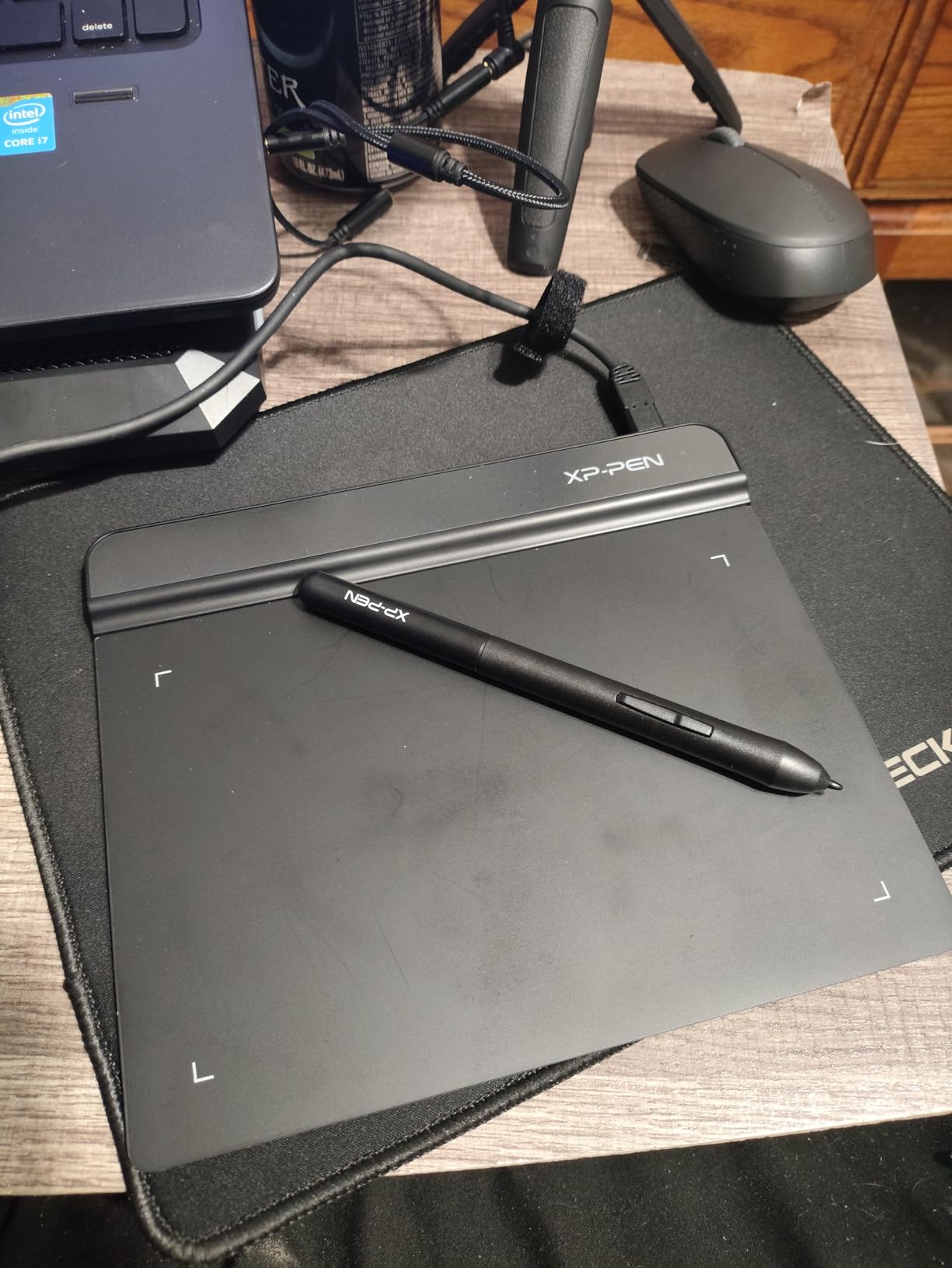
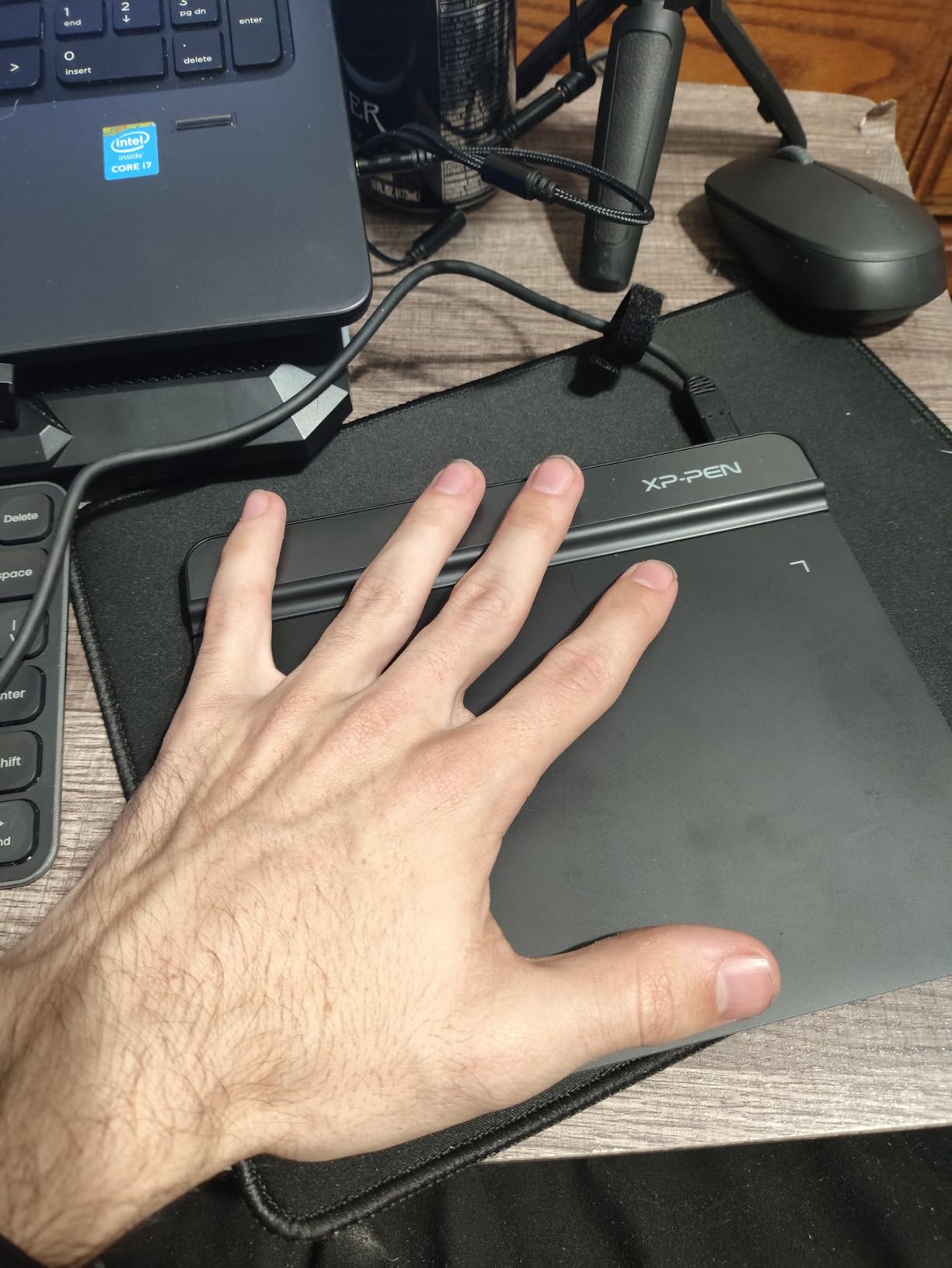
The XP-Pen StarG640 is the tablet we keep recommending to absolute beginners, remote workers, and OSU rhythm-game players who need a tiny, dependable pen tablet for under $50. With 8,192 pressure levels, a battery-free stylus, and a 2mm-thin profile, it is hard to overstate how useful this little slab is for the price.
We tested the StarG640 for digital signatures in Adobe Acrobat, note-taking in OneNote, and OSU gameplay. Each task worked without surprises, and the tablet’s compact footprint meant we could park it next to a laptop without rearranging the desk. The pen is light enough for long note-taking sessions, even if it lacks the weighted feel of premium styluses.
One of the StarG640’s underrated strengths is its Chromebook support. After Google’s recent push to certify accessories for ChromeOS, XP-Pen made sure the StarG640 plays nicely with school-issued Chromebooks. For teachers or students in 1:1 device programs, that is a real advantage over older Wacom models.
The tablet is also plug-and-play with most creative software, so you can hand it to a non-technical family member and have them signing PDFs within minutes. If you have ever wanted to add pen input to a desktop without committing to a higher-priced tablet, this is the move.
Best fit for this tablet
Absolute beginners who want a tablet for less than the cost of a pizza, Chromebook users in education or remote work, and anyone who wants a secondary tablet for signatures and quick sketches.
It is also a popular pick for OSU rhythm-game players who want a responsive, compact surface.
Where it falls short?
The 6 by 4 inch active area is on the small side for full-page illustration, and the glossy surface picks up fingerprints quickly. The default pen barrel is also thinner than the chunkier styluses on competing tablets, which can feel cramped during long drawing sessions.
After a year or two of heavy daily use, the glossy surface coating can start to wear, so treat the tablet gently if you want it to last.
We earn from qualifying purchases, at no additional cost to you. CERTAIN CONTENT THAT APPEARS ON THIS SITE COMES FROM AMAZON. THIS CONTENT IS PROVIDED 'AS IS' AND IS SUBJECT TO CHANGE OR REMOVAL AT ANY TIME.
5. HUION Inspiroy H640P — Best Compact Tablet for Left-Handed Artists
HUION Inspiroy H640P 6×4 inch Drawing Tablet 8192 Pen Pressure
★★★★★★★★★★6x4 inch active area
8192 pressure levels
6 press keys
0.3 inch thin
- Compact and portable at just 0.3 inches thin
- 8192 levels of pressure sensitivity
- 6 customizable press keys
- 5080 LPI resolution and 233 PPS report rate
- Compatible with Mac Windows Linux Android
- Battery-free PW100 stylus
- Left-handed friendly with driver flip option
- Small 6x4 inch active area limits large drawings
- Does not support iPhone or iPad
- Not as precise as premium Wacom tablets
The HUION Inspiroy H640P is our top pick for left-handed artists and anyone who wants a featherweight tablet that disappears into a laptop bag. At 0.3 inches thin and roughly half a pound, it is one of the most portable options we tested, and the driver includes a one-click mirror mode for left-handed workflows.
The 8,192 pressure levels are plenty for sketching and inking, and the PW100 stylus is comfortable to hold for long sessions. We ran the H640P through a week of daily note-taking and sketching, and the battery-free EMR-style pen never needed charging or pairing.
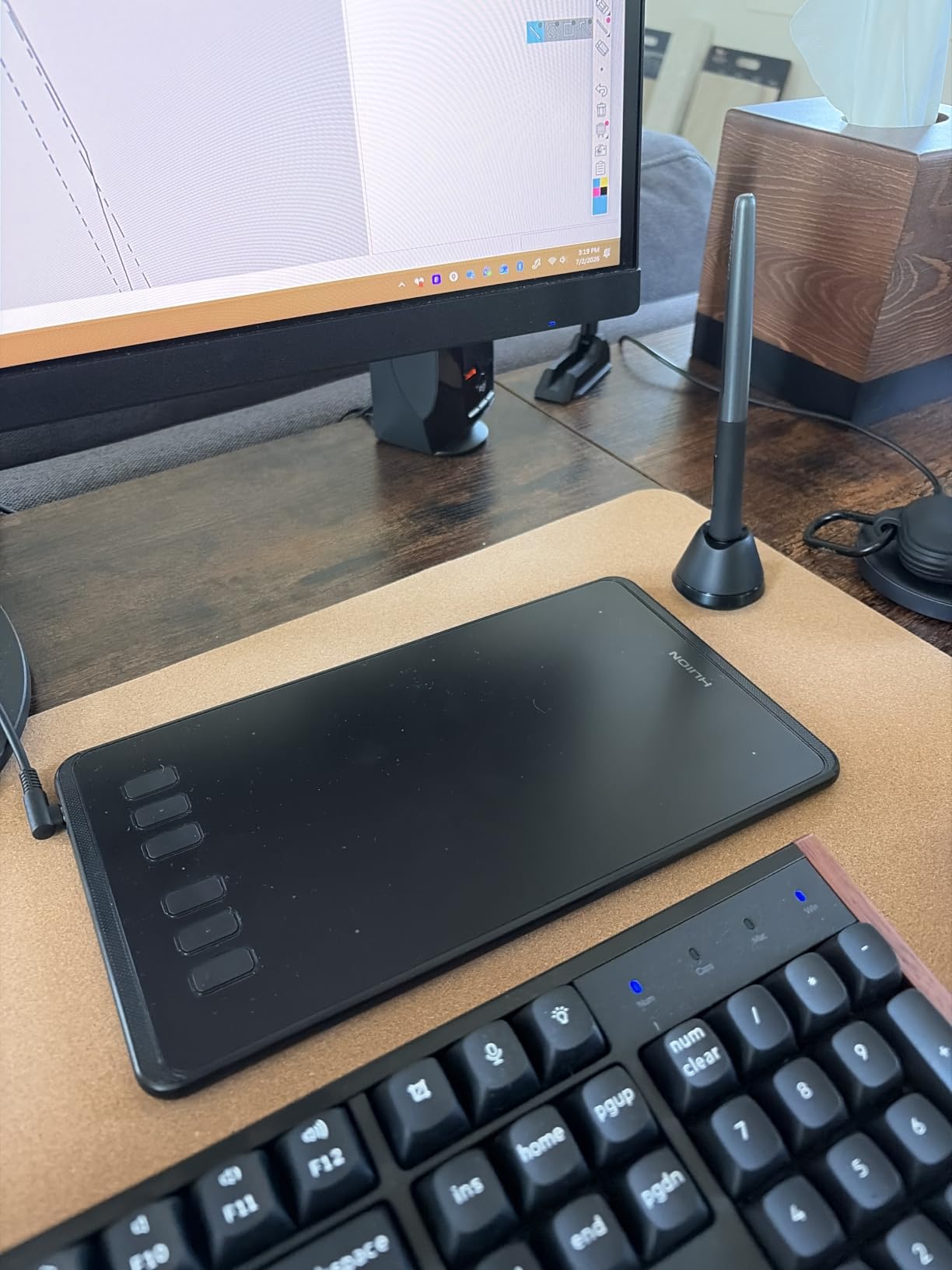
Compatibility is a strength: the H640P works with macOS, Windows, Linux (Ubuntu), and Android 6.0 or later. That is broader OS support than many competitors in this price band, especially for Linux users who often have to fight with drivers on other brands.
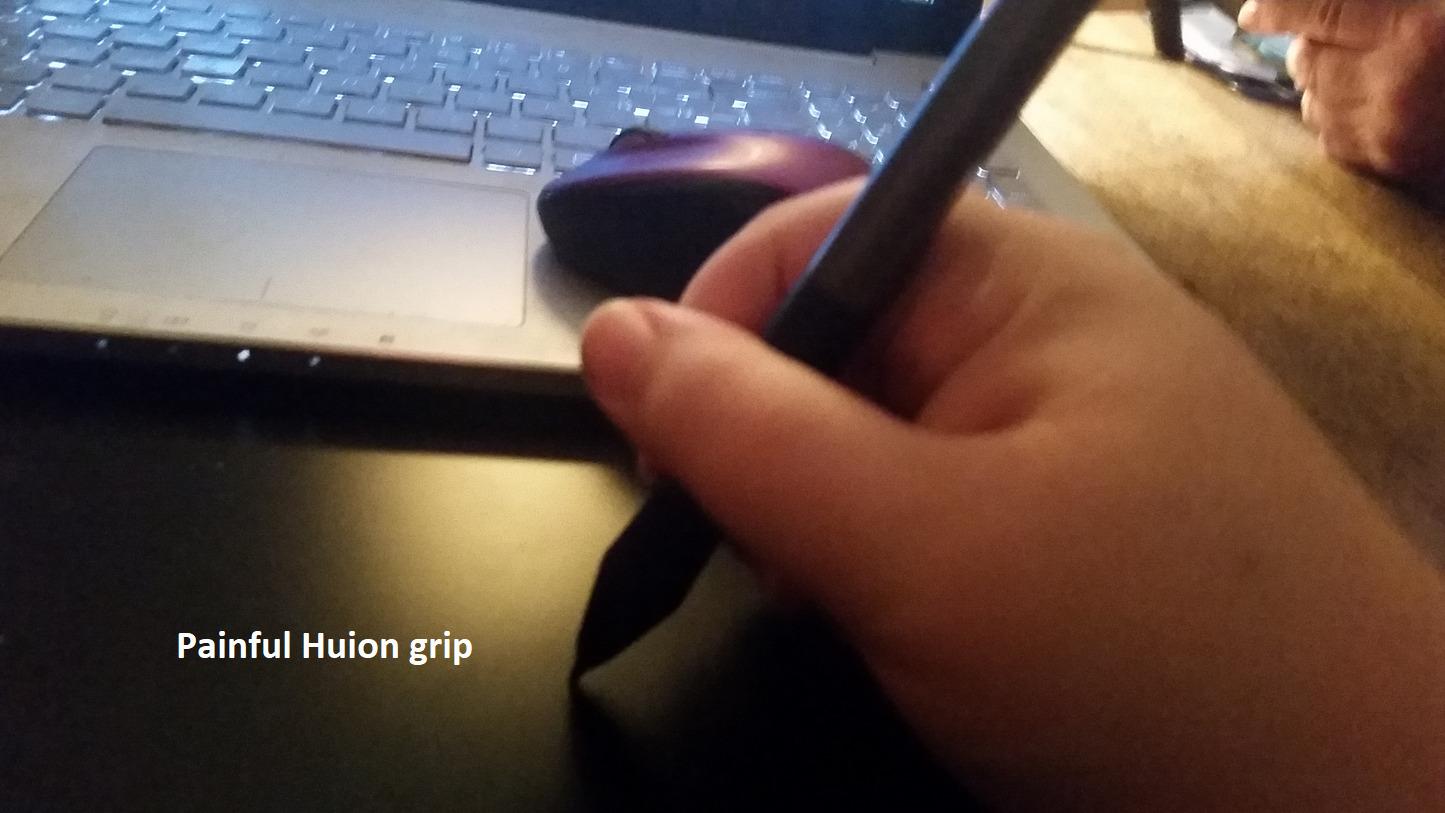
The 6 customizable press keys sit on the side of the tablet, and the driver lets you flip their layout for left-handed use. For our left-handed reviewers, this was a small but meaningful difference compared to tablets that ignore handedness entirely.
Best fit for this tablet
Left-handed artists who want mirrored button placement, students who need a thin tablet for backpack carry, and Linux or Android users looking for a compact, well-supported pen tablet.
It is also a great option as a trackpad alternative for photo retouching on a small desk.
Where it falls short?
The active area is on the small side for full-bleed illustrations, so if you regularly work on canvas sizes bigger than 6 by 4 inches, this will feel cramped. There is also no iPhone or iPad support, which rules it out for users who want a single tablet to cover both desktop and mobile sketching.
The PW100 pen is comfortable but less precise than premium Wacom pens, so brushwork that depends on ultra-fine control may feel slightly less accurate.
We earn from qualifying purchases, at no additional cost to you. CERTAIN CONTENT THAT APPEARS ON THIS SITE COMES FROM AMAZON. THIS CONTENT IS PROVIDED 'AS IS' AND IS SUBJECT TO CHANGE OR REMOVAL AT ANY TIME.
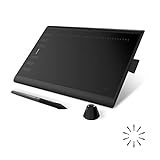
6. HUION Inspiroy H1060P — Best Hot-Key Heavy Tablet for Productivity
HUION Inspiroy H1060P Graphics Drawing Tablet, 10 x 6.25 in, 12+16 Hot Keys
★★★★★★★★★★10x6.25 inch active area
8192 pressure levels
28 hot keys
60 degree tilt
- Large 10x6.25 inch working area
- 12 programmable press keys plus 16 programmable soft keys
- Battery-free stylus PW100 with 60 degree tilt support
- Compatible with Windows macOS Android Linux
- 10mm ultra-slim design
- Excellent value vs Wacom equivalents
- Symmetrical design works for left and right-handed users
- Micro-USB port can be fragile with heavy use
- Pens can be fragile if dropped
- Left-handed mode does not flip function keys automatically
- Driver does not support per-app shortcuts like Wacom
The HUION Inspiroy H1060P is the tablet for shortcut obsessives. With 12 hardware ExpressKeys and 16 on-tablet soft keys, it offers more programmable controls than almost any competitor at this tier, all wrapped in a 10mm-thin chassis with a 10 by 6.25 inch active area.
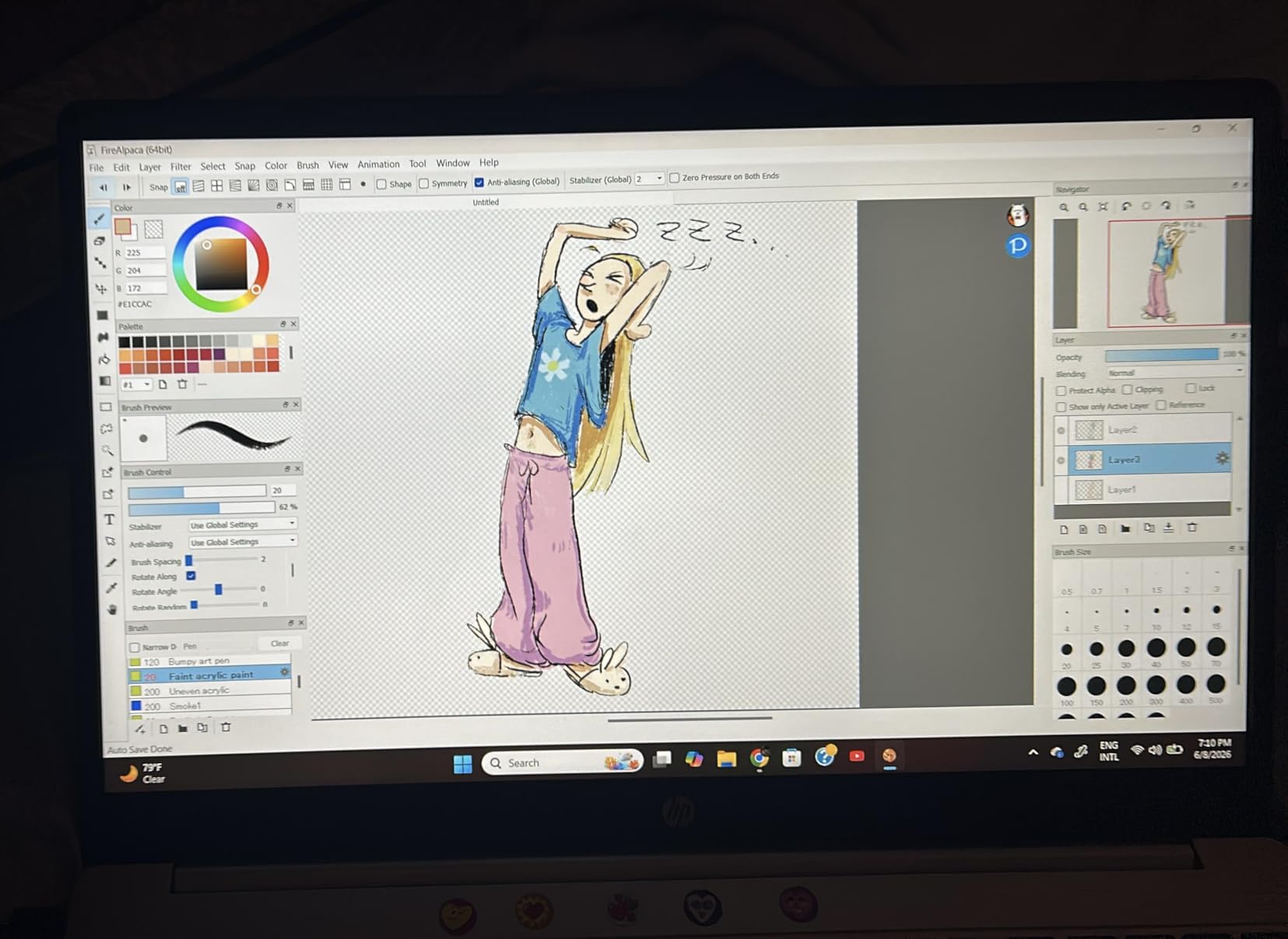
We mapped the H1060P’s keys to undo, redo, brush size, layer toggle, and color picker, which left almost no need to mouse over to keyboard shortcuts. For productivity-focused artists who bounce between Photoshop, Clip Studio Paint, and Krita, that kind of hardware-driven workflow can save hours every week.
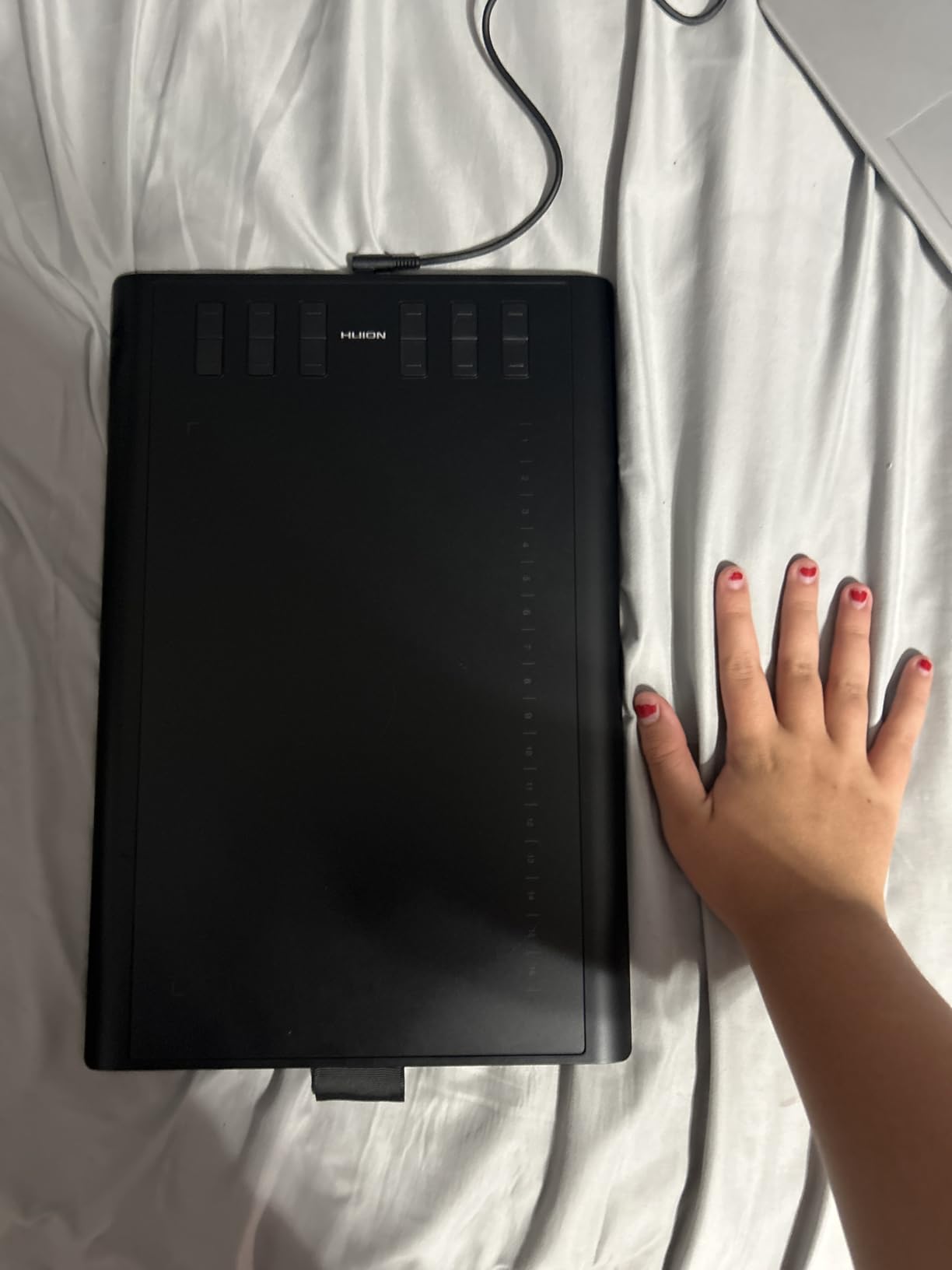
The PW100 stylus supports 60 degrees of tilt recognition and 8,192 pressure levels, which covers most brush styles. We did notice a slight lag during very fast strokes at high zoom, but for normal illustration speeds the response felt snappy enough.
The H1060P also supports Windows, macOS, Android, and Linux, and HUION’s symmetrical design lets left-handed users flip the active area in the driver. If you have been frustrated by tablets that ignore left-handed ergonomics, this is a refreshing change.
Best fit for this tablet
Productivity-focused artists who want more on-tablet controls than the competition offers, illustrators working in multiple software apps where keyboard shortcuts get complicated, and left-handed users who want a symmetrical tablet design.
It is also a solid pick for photo editors who want hardware buttons for tool switching and zoom.
Where it falls short?
The Micro-USB port is fragile under heavy plugging and unplugging, so treat the cable with care or buy a reinforced replacement. The pen can also snap if dropped on a hard floor, which is a common complaint in long-term Amazon reviews.
HUION’s driver does not support per-app shortcut profiles the way Wacom’s does, so switching between Photoshop and Clip Studio Paint may require manual remapping.
We earn from qualifying purchases, at no additional cost to you. CERTAIN CONTENT THAT APPEARS ON THIS SITE COMES FROM AMAZON. THIS CONTENT IS PROVIDED 'AS IS' AND IS SUBJECT TO CHANGE OR REMOVAL AT ANY TIME.
7. XP-PEN Artist12 — Best Budget Pen Display for Beginners
XP-PEN Artist12 11.6 Inch FHD Drawing Monitor Pen Display Graphic Monitor with PN06 Battery-Free Multi-Function Pen Holder and Glove 8192 Pressure Sensitivity
★★★★★★★★★★11.6 inch FHD screen
8192 pressure levels
100 percent sRGB
6 shortcut keys
- 11.6 inch FHD IPS display with 72 percent NTSC
- Pre-installed anti-reflective screen protector
- Slim touch bar plus 6 customizable shortcut keys
- Battery-free P06 stylus with hexagonal design and eraser
- Compatible with Windows Mac Linux
- Excellent value compared to Wacom Cintiq
- Requires HDMI and USB-A ports or converter
- Setup can be tricky for beginners
- Some units experience screen flicker or failure
- Pen button placement can cause accidental right-clicks
- Not laminated display creates minor parallax
The XP-PEN Artist12 is the most affordable way to get into pen display drawing without sacrificing color accuracy. The 11.6 inch Full HD IPS panel covers 100 percent of the sRGB gamut, which is plenty for web illustration, comic work, and concept art. We were surprised by how vivid the colors looked for a tablet at this tier.
The bundled P06 stylus is battery-free, with a hexagonal grip that prevents rolling and a built-in eraser at the back. We sketched and inked with it in Clip Studio Paint, and the pen feel was responsive if not quite as precise as the Wacom Pro Pen 3.
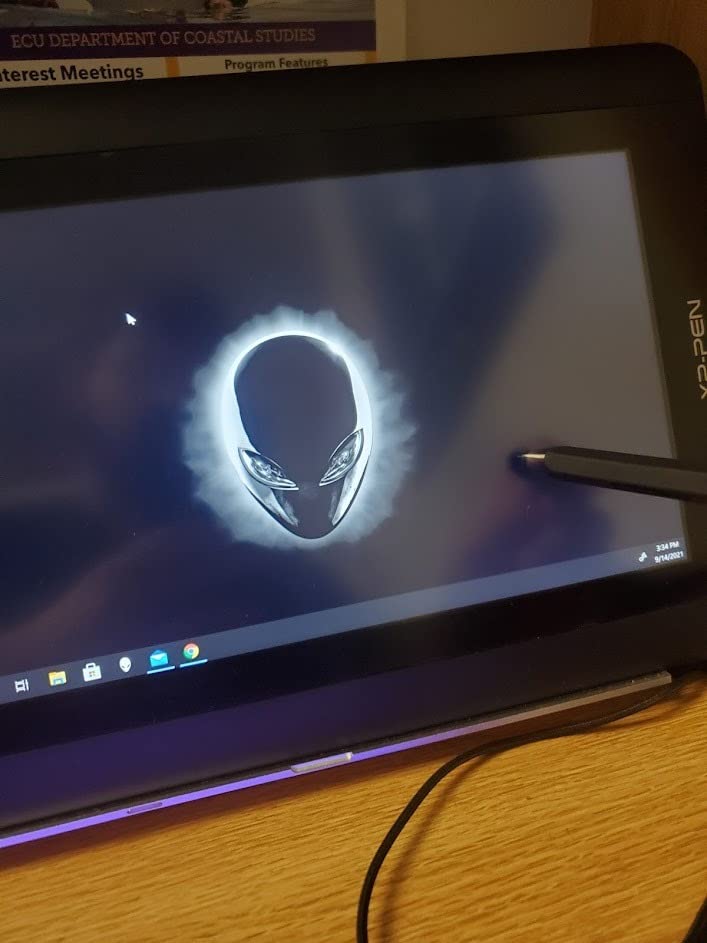
Setup is the catch. The Artist12 needs both an HDMI signal and a USB connection, so older laptops without dedicated HDMI out may need a USB-C hub or adapter. Once wired up, the display works as a primary or extended monitor, depending on your system preferences.
The screen is not fully laminated, which means there is a thin air gap between the glass and the panel. You will see slight parallax if you draw at extreme angles, but at a normal viewing position the gap is barely noticeable. The pre-installed anti-reflective film softens glare and gives the pen tip a paper-like feel.
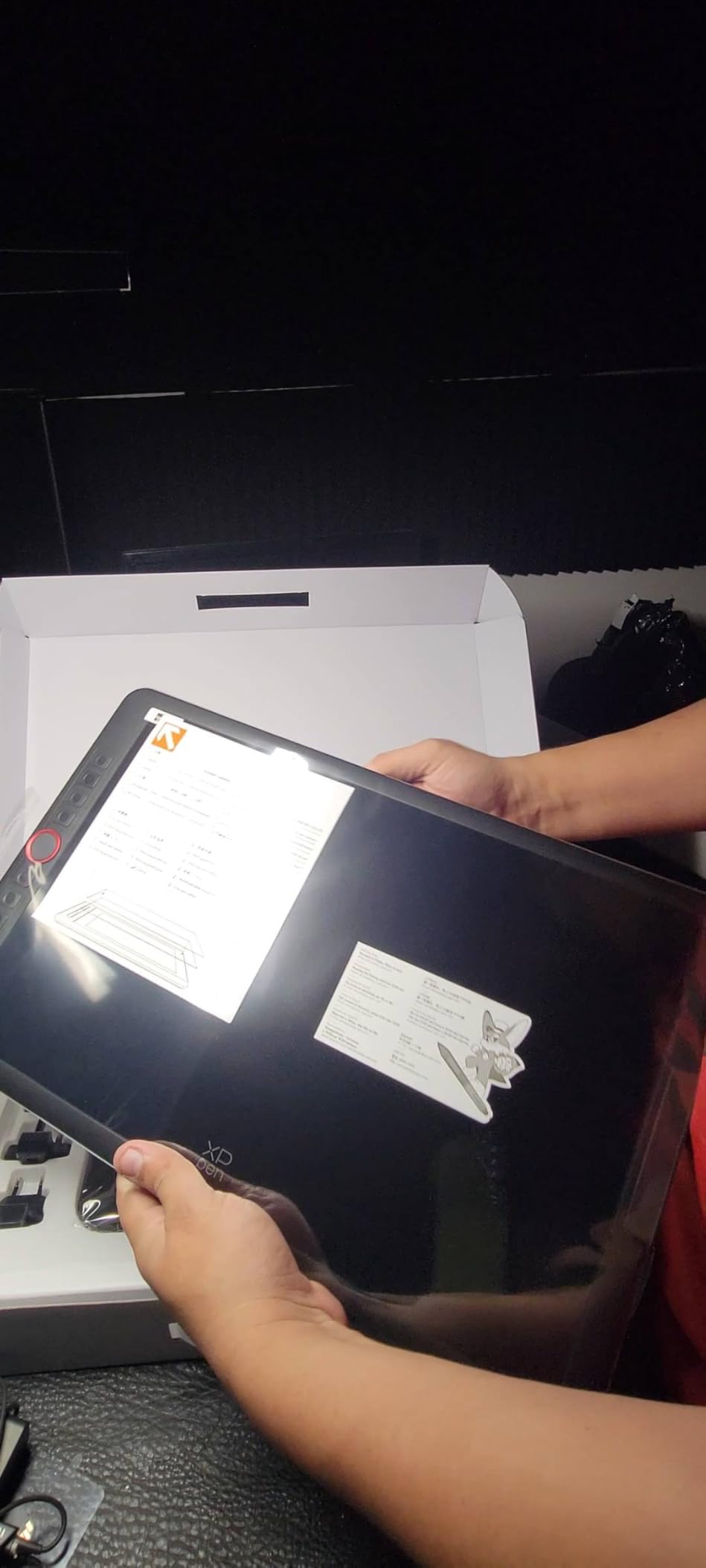
Best fit for this tablet
Beginners stepping up from a screenless tablet who want to draw directly on their work, illustrators on a budget who need solid sRGB color, and teachers who want a portable pen display for online classes.
It is also a great choice for anyone who already has a spare HDMI port on their workstation.
Where it falls short?
You will need both HDMI and USB-A available, which means modern ultra-thin laptops often require an adapter. The non-laminated display produces minor parallax, so users coming from a fully laminated Wacom Cintiq may notice the difference.
Some units have been reported to develop screen flicker or failure after several months, so buying from a retailer with a generous return policy is wise.
We earn from qualifying purchases, at no additional cost to you. CERTAIN CONTENT THAT APPEARS ON THIS SITE COMES FROM AMAZON. THIS CONTENT IS PROVIDED 'AS IS' AND IS SUBJECT TO CHANGE OR REMOVAL AT ANY TIME.
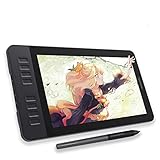
8. GAOMON PD1161 — Best Entry-Level Pen Display with Tilt Support
GAOMON PD1161 Drawing Tablet with Screen, Tilt, 8 Shortcut Keys, 11.6″ FHD
★★★★★★★★★★11.6 inch FHD screen
8192 pressure levels
8 press keys
Matte film
- 11.6 inch FHD IPS screen with 100 percent sRGB
- Pre-installed matte anti-glare film
- Battery-free AP50 stylus with 8192 pressure levels and tilt
- 8 customizable press keys plus 2 pen buttons
- Compatible with Mac and Windows
- Affordable pen display option for beginners
- 1-year warranty included
- Not a standalone tablet and must connect to computer
- Requires HDMI and USB ports
- No touchscreen functionality
- May need extra converter for some laptops
The GAOMON PD1161 is a strong entry-level pen display that delivers where beginners care most: an 11.6 inch Full HD IPS screen, 8,192 pressure levels, and a pre-applied matte film that cuts glare and adds pen-tip friction. It is one of the cheapest ways to draw directly on a screen without buying a refurbished Cintiq.
We tested the PD1161 for digital painting in Krita and Photoshop. The AP50 stylus tracked pressure and tilt accurately, and the matte film added a noticeable friction that mimics drawing on paper. For artists transitioning from a screenless tablet, the experience feels more intuitive.

The 8 press keys along the side of the display are programmable, and GAOMON’s driver lets you map them per application. We mapped undo, brush size, pan, and layer toggle, which covered the majority of our workflow without reaching for the keyboard.
Like the XP-PEN Artist12, the PD1161 requires both HDMI and USB connections. If your laptop only has USB-C ports, you will need an adapter or hub to plug in both signals. The 1-year warranty offers some peace of mind against the flicker issues that occasionally pop up in budget pen displays.
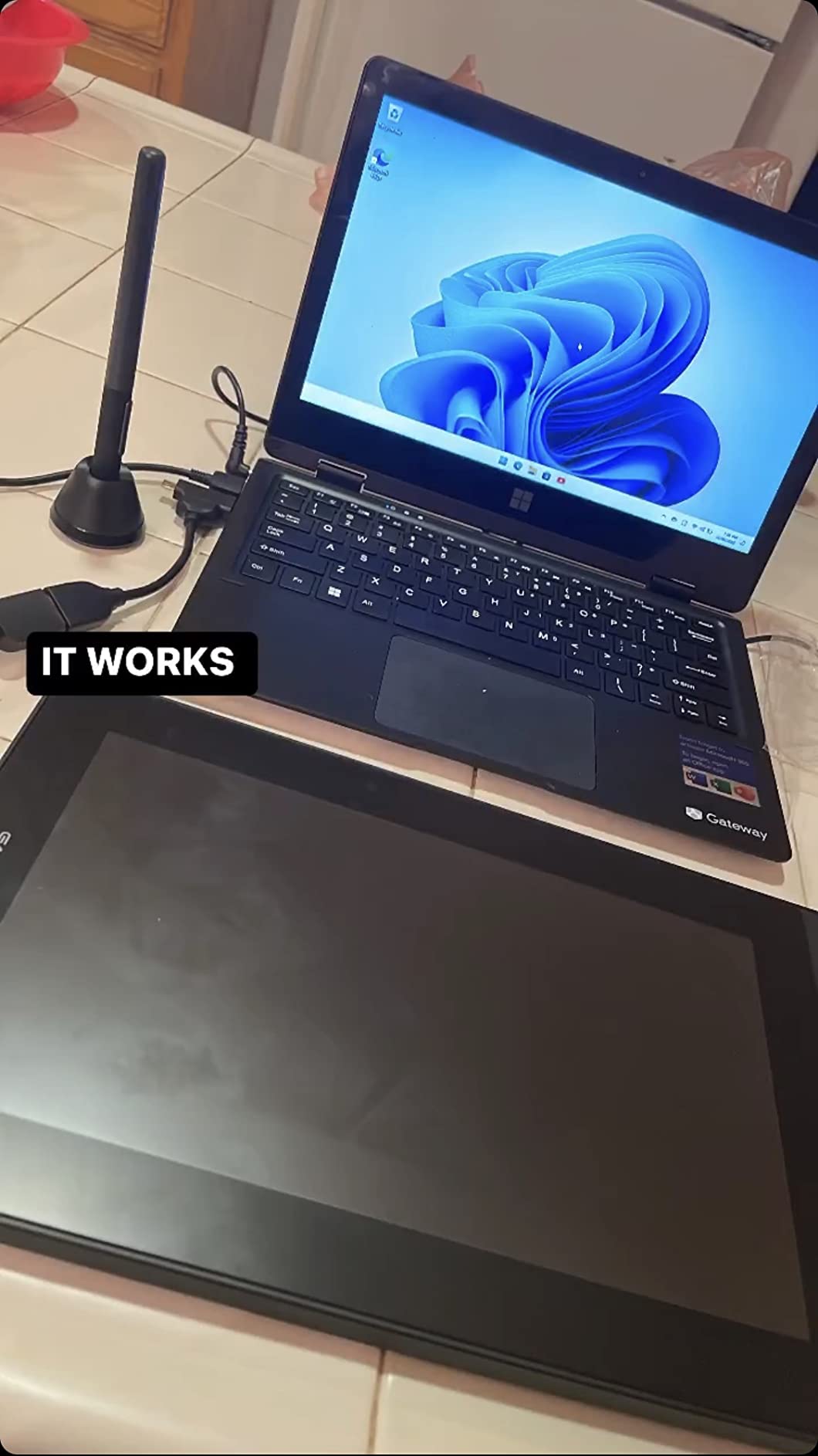
Best fit for this tablet
Beginners moving from a screenless tablet to a pen display without spending much, students learning digital painting in Krita or Photoshop, and artists who want a matte drawing surface out of the box.
It also works well for online teaching and remote work where you want a compact, vivid display.
Where it falls short?
There is no touchscreen functionality, so all interaction goes through the pen. The required HDMI and USB connections can be inconvenient on modern laptops, and you may need to invest in adapters.
Like other budget pen displays, there are occasional reports of screen failures after several months, so test the display thoroughly during the return window.
We earn from qualifying purchases, at no additional cost to you. CERTAIN CONTENT THAT APPEARS ON THIS SITE COMES FROM AMAZON. THIS CONTENT IS PROVIDED 'AS IS' AND IS SUBJECT TO CHANGE OR REMOVAL AT ANY TIME.
9. HUION Kamvas Pro 16 — Best Mid-Range Pen Display for Serious Artists
HUION Kamvas Pro 16 Drawing Tablet with Screen,120% sRGB, Touch Bar,15.6″
★★★★★★★★★★15.6 inch laminated screen
120 percent sRGB
60 degree tilt
Touch bar
- 15.6 inch full-laminated screen with anti-glare glass
- 120 percent sRGB and 92 percent AdobeRGB color gamut
- 1000:1 contrast ratio for sharp shadow details
- 6 customized express keys plus touch bar
- Includes adjustable stand ST200 from 20 to 60 degrees
- Battery-free pen with 60 degree tilt recognition
- 3-in-1 USB-C cable for tidier setup
- Compatible with Windows macOS Linux
- Not a standalone tablet and must connect to computer
- Premium price point
- Requires HDMI signal via 3-in-1 cable
The HUION Kamvas Pro 16 is the pen display to beat in the mid-range category. With a fully laminated 15.6 inch screen, 120 percent sRGB color gamut, anti-glare glass, and an adjustable stand, it competes directly with entry-level Wacom Cintiq models while costing noticeably less.
We ran the Kamvas Pro 16 through photo editing in Photoshop and digital painting in Clip Studio Paint, and the laminated display made a real difference. The lack of an air gap between the glass and the panel meant almost no parallax, which made precise brushwork feel closer to drawing on paper.
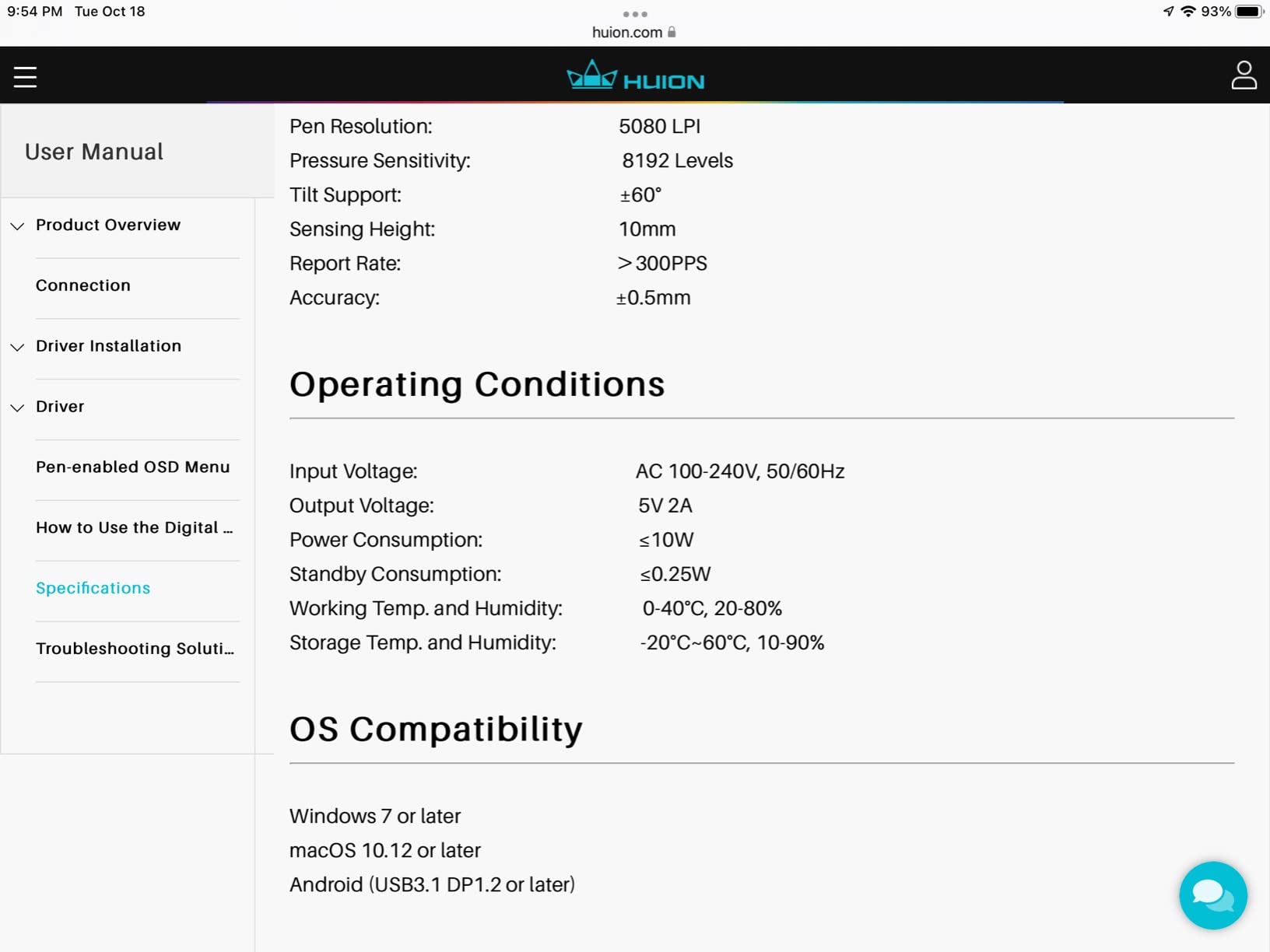
The color accuracy is impressive for the price: 120 percent sRGB and 92 percent AdobeRGB, paired with a 1000:1 contrast ratio. For print-oriented illustrators and concept artists, that means what you see on the screen is closer to what you will get from a press. The PW507 pen supports 60 degrees of tilt and 8,192 pressure levels.
The included ST200 stand adjusts from 20 to 60 degrees, which let us find a comfortable angle for both desk work and standing sessions. The 3-in-1 USB-C cable cleans up cable management compared to competitors that require separate HDMI and USB cables.
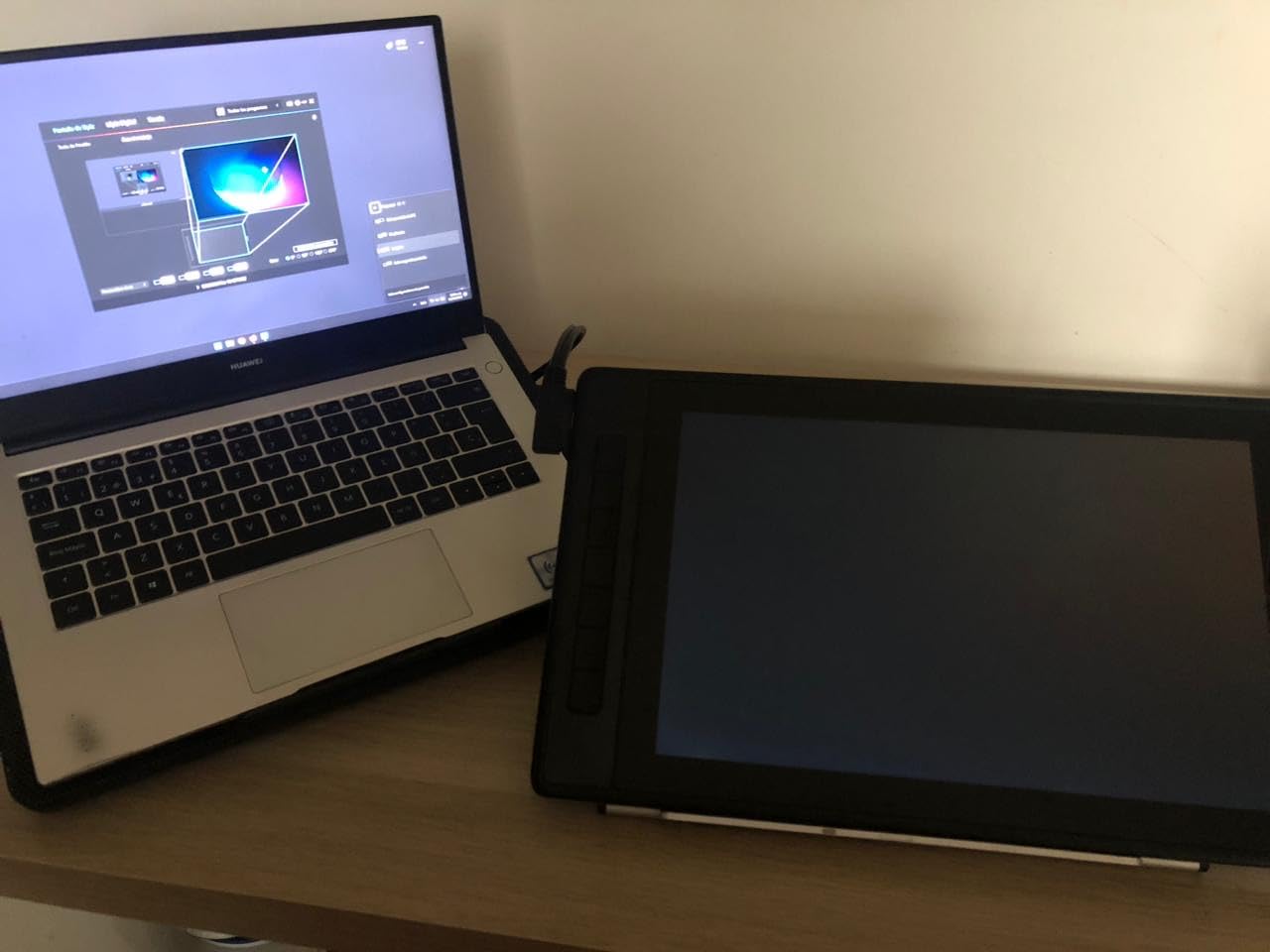
Best fit for this tablet
Serious illustrators and concept artists who want a laminated pen display with strong color accuracy without paying Cintiq Pro prices, comic and manga creators working on full pages, and photo editors who want a vivid secondary display.
It also works well as a primary creative display for studios where color matters.
Where it falls short?
Like most pen displays, the Kamvas Pro 16 is not a standalone computer, so it must be plugged into a desktop or laptop. The 3-in-1 cable still requires an HDMI signal source, which can be limiting on USB-C-only laptops without an adapter.
It is also pricier than the budget pen displays above, so beginners may want to start with the XP-PEN Artist12 or GAOMON PD1161 before stepping up.
We earn from qualifying purchases, at no additional cost to you. CERTAIN CONTENT THAT APPEARS ON THIS SITE COMES FROM AMAZON. THIS CONTENT IS PROVIDED 'AS IS' AND IS SUBJECT TO CHANGE OR REMOVAL AT ANY TIME.
10. Wacom One 14 — Best Wacom Pen Display on a Mid Budget
Wacom One 14, Drawing Tablet with IPS Fulll HD Laminated Screen & Pen
★★★★★★★★★★14 inch laminated FHD screen
4096 pressure levels
98 percent sRGB
USB-C
- 14 inch laminated IPS FHD display with 98 percent sRGB
- Paper-like texture that resists glare and smudges
- Battery-free pen with Wacom responsive pressure sensitivity
- Includes trials of Clip Studio Paint Pro Magma Concepts and Foxit
- Skillshare training courses included
- Single USB-C connection with DisplayPort Alt mode
- Wacom proven reliability
- Lower 4096 pressure sensitivity than Intuos Pro
- Requires DisplayPort Alt mode USB-C port
- Pen feels cheap and plasticky compared to Cintiq pens
- Display quality duller than premium Cintiq
- Stand sold separately
- Some Bluetooth connectivity issues reported
- Driver compatibility issues with Mac
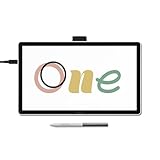
The Wacom One 14 is the cheapest path into a Wacom-branded pen display, and for many buyers that is the deciding factor. With a 14 inch laminated Full HD screen, 98 percent sRGB color accuracy, and the same paper-like surface texture you find on the Cintiq line, it brings genuine Wacom pen feel to a much wider audience.
We tested the Wacom One 14 with Clip Studio Paint and Photoshop, and the battery-free pen tracked smoothly with no noticeable jitter. The laminated screen keeps parallax minimal, and the included software bundle adds real value: Clip Studio Paint Pro trial, Magma, Concepts, Foxit, and Skillshare courses.
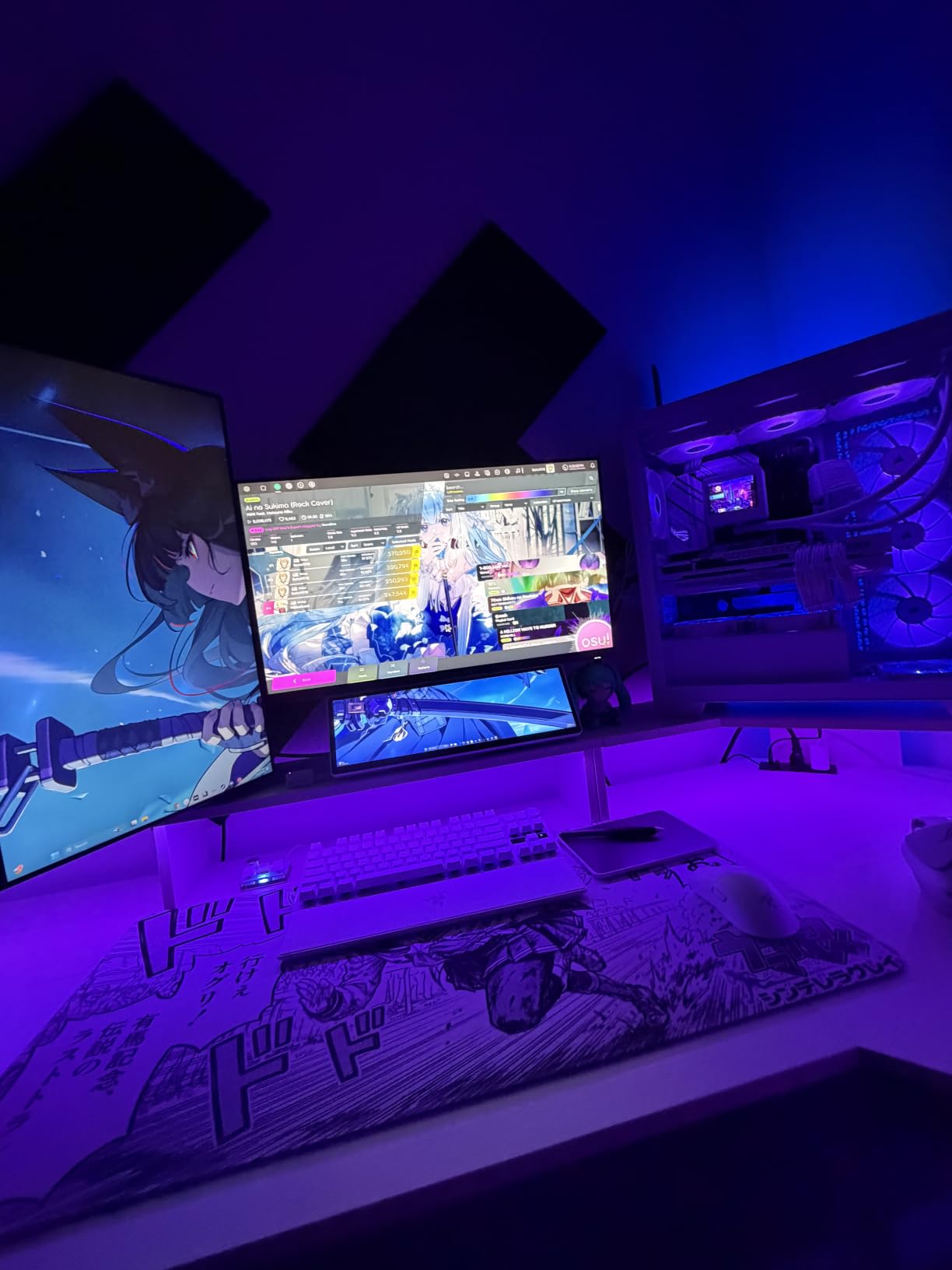
Connectivity is where the Wacom One 14 gets complicated. The single USB-C connection requires DisplayPort Alt mode, which most modern laptops support but older machines do not. If your laptop only has standard USB-C without Alt mode, you will need an active adapter or hub, and some users report that the display does not initialize reliably without the right cable.
The pen feels lighter and more plasticky than the Pro Pen 3 used on the Cintiq Pro line, and pressure sensitivity is capped at 4,096 levels rather than 8,192. For most illustration tasks, that is enough, but artists who depend on extremely light pressure response may notice the difference.
Best fit for this tablet
Buyers who specifically want Wacom’s brand reliability in a pen display without paying Cintiq prices, students starting digital art who want bundled software, and Chromebook users in education environments.
It is also a good fit for anyone who already owns a USB-C laptop with DisplayPort Alt mode and wants a one-cable setup.
Where it falls short?
DisplayPort Alt mode compatibility is the biggest gotcha. Check your laptop’s USB-C specifications before buying, or budget for an active adapter. The pen also feels less premium than Wacom’s higher-end styluses, and the 4,096 pressure cap may frustrate artists used to 8,192-level precision.
Some users have reported driver hiccups after macOS updates, so keep your Wacom driver current and check the support forums if anything breaks.
We earn from qualifying purchases, at no additional cost to you. CERTAIN CONTENT THAT APPEARS ON THIS SITE COMES FROM AMAZON. THIS CONTENT IS PROVIDED 'AS IS' AND IS SUBJECT TO CHANGE OR REMOVAL AT ANY TIME.
How to Choose the Best Graphics Tablet for You?
Choosing the best graphics tablet comes down to matching the tablet type to your workflow, software, and budget. Below is a practical framework our team uses when evaluating tablets for ourselves and recommending them to other artists.
Pen tablet vs pen display vs pen computer
A pen tablet is screenless: you draw on the tablet surface while watching your monitor. They are cheaper, lighter, easier on your neck, and great for travel. A pen display adds a built-in screen you draw directly on, which feels more intuitive but costs more and ties you to a desk. A pen computer (like a Surface Pro or iPad Pro) is a full computer with pen input, which trades raw pen feel for portability and full software. Match the type to where you plan to draw most.
Pressure sensitivity: 4,096 vs 8,192 vs 16,384 levels
Pressure sensitivity controls how many distinct pressure values the pen reports. 4,096 levels is plenty for most illustration, but 8,192 levels gives finer control for very light strokes and subtle inking. The new 16,384-level XP-Pen Deco 01 V3 pushes the number higher, though most artists will not notice a real-world difference between 8,192 and 16,384. If you mostly sketch and ink, 4,096 is fine. If you paint or do detailed line work, aim for 8,192 or higher.
Active area and size
Active area is the actual drawing surface in inches. Small tablets (6 by 4 inch) are portable and great for note-taking, but feel cramped for full-page illustration. Medium tablets (10 by 6 inch) are the sweet spot for most artists. Large tablets (15 inch and up) are designed for pen displays and full-arm gestures. If you mostly work on A5-sized pages or smaller, a medium tablet is plenty. If you draw shoulder-wide strokes, size up.
Stylus quality and battery
Battery-free EMR pens are now the standard across Wacom, Huion, and XP-Pen, and they are almost always the right choice. They never need charging, they are lighter, and they tend to last longer than rechargeable alternatives. Look for pens with at least one side button and an eraser if you work in software that supports pressure-based erasing.
OS compatibility: Windows, macOS, Linux, ChromeOS, Android
Check the OS list before you buy. Wacom has the best macOS support, XP-Pen and Huion are friendliest to Linux via OpenTabletDriver, and the Wacom One 14 plus most modern tablets support Chromebooks. Android support is improving across the board, but iPad support is essentially nonexistent outside of the Apple Pencil and iPad Pro combo, which we cover separately in our guide to the best Android tablets.
Software pairing
Pair the tablet with software that matches your craft. Photoshop and Lightroom are the standards for photo editing and design. Clip Studio Paint dominates comics and manga. Procreate is iPad-only and beloved for sketching. Krita is free and powerful for digital painting. Blender and ZBrush pair with tablets for 3D sculpting. Most tablets work with all of these out of the box.
Connectivity and wireless
Most budget and mid-range tablets use USB-A or USB-C wired connections, which are reliable and simple. Wireless Bluetooth is convenient but adds driver complexity. Pen displays generally require both a video signal (HDMI or DisplayPort) and a USB data connection, which means modern USB-C-only laptops may need an adapter.
For buyers also shopping for a primary creative workstation, our best graphics cards guide covers the GPUs that pair well with pen display setups for 3D work and rendering.
Frequently Asked Questions
What is the best drawing tablet for beginners?
The best drawing tablet for beginners in 2026 is the Wacom Intuos Small for its reliable EMR pen and broad software support, the XP-Pen Deco 01 V3 for the best mix of pressure levels and active area at a budget price, or the XP-Pen StarG640 for absolute beginners who want the cheapest entry point. All three work out of the box with Photoshop, Clip Studio Paint, and Krita, and all three include battery-free styluses that never need charging.
Are drawing tablets with screens better than screenless?
Pen displays (tablets with built-in screens) are more intuitive because you draw directly on the image, but they cost more, weigh more, and tether you to a desk. Screenless pen tablets are cheaper, lighter, easier on your neck and eyes, and ideal for travel, but require 2 to 4 weeks to adapt to the hand-eye disconnect. Most professional illustrators eventually prefer a pen display for client work and a screenless tablet for travel.
Which drawing tablet do professionals use?
Most professional illustrators, animators, and concept artists use Wacom Cintiq Pro or Wacom Intuos Pro models because of their pen feel, driver reliability, and ecosystem of compatible software like Photoshop, Clip Studio Paint, and Krita. In 2026, popular pro models include the Wacom Cintiq Pro 24, Wacom Intuos Pro, and Apple iPad Pro paired with the Apple Pencil Pro for mobile workflows.
How much should I spend on a drawing tablet?
Budget tablets under $50 like the XP-Pen StarG640 cover note-taking and beginner sketching. Mid-range tablets from $50 to $300 cover most hobbyist and intermediate illustration work. Pro pen displays from $300 to $1500 cover professional workflows. Above $1500, you enter the Cintiq Pro and iPad Pro tier for studio-grade work. Most buyers find their sweet spot between $50 and $300.
Is Huion better than Wacom?
Huion offers better specs for the price, especially on pen displays like the Kamvas Pro 16, and broader Linux support. Wacom offers better driver stability, longer product lifespans, and a more mature accessory ecosystem. For beginners and budget buyers, Huion is often the smarter choice. For professional studios that need day-in day-out reliability and software certification, Wacom is still the safer bet.
Do I need a drawing tablet if I have an iPad?
If your workflow lives entirely inside Procreate and other iPad apps, the iPad Pro with Apple Pencil Pro may be all you need. If you work across multiple apps, rely on keyboard shortcuts, use desktop software like Photoshop or Clip Studio Paint, or want a larger active area than the iPad offers, a dedicated drawing tablet is worth it. Many artists keep both: an iPad for sketching on the couch and a Wacom or Huion tablet for desk work.
Final Verdict: Which Graphics Tablet Should You Buy?
The best graphics tablet for you in 2026 depends on what you sketch, where you sketch, and how much you want to spend. The Wacom Intuos Small remains our top pick for most people thanks to its reliable EMR pen, stable drivers, and broad software compatibility. The XP-Pen Deco 01 V3 is the best value pick if you want flagship-tier pressure levels at a budget price, and the HUION Kamvas Pro 16 is our favorite mid-range pen display for serious artists who want a laminated screen without paying Cintiq prices.
Whichever tablet you choose, give yourself two to four weeks to adapt to the pen feel before judging the workflow. The best graphics tablet is the one you actually use, and the only way to find it is to start drawing. If you want to compare the top picks against general-purpose tablets, our best drawing tablets guide goes deeper into the screen options.