
The Valerion StreamMaster Plus2 is the best 3D projector for home theater in 2026, because it pairs a 4K laser light source with 2000 ISO lumens, a 300-inch image ceiling and active 3D support. One caveat up front, and it is the caveat that decides most purchases: a projector only earns the Full HD 3D label if its panel is natively 1920×1080 for each eye. Most 4K pixel-shift chips sold today do not qualify, so read the 3D spec before you read the resolution spec.
That single distinction explains why the search results for this topic are so messy. The shopping carousel above most articles on this query is filled with general 4K and ultra-short-throw laser projectors that have almost nothing to do with 3D. A few of the models below are in this list precisely because they are strong 2D machines that people will assume are strong 3D machines.
There is a second reality that no competitor page on this topic will tell you plainly. New 3D content has essentially stopped. No major studio is cutting 3D releases, the streaming platforms dropped their 3D libraries, and disc production for 3D Blu-ray is dormant. So the entire case for buying a 3D projector in 2026 rests on a collection you already own, or a used disc bin you plan to build. We rank these eight on what they actually do in 3D, not on how they look on a spec sheet at 2D.
Our team spent the last several months reading spec sheets, owner reviews and forum threads on AVSForum and r/projectors to separate genuine 3D hardware from marketing labels. If you want a broader read on the category first, our guide to the best home projectors covers the 2D side in more depth.
Table of Contents
- Top 3 Picks for 3D Home Theater (October 2026)
- Every Pick at a Glance
- Is 3D Worth It in 2026?
- What Full HD 3D Actually Means on a Spec Sheet?
- 1. Valerion StreamMaster Plus2 – Best 3D Projector Overall
- 2. BenQ TK800M – Best 3D Value for Bright Rooms
- 3. ViewSonic PJD7828HDL – Best Full HD 3D on a Budget
- 4. AWOL VISION LTV-3000 Pro – Best 3D for Tight Rooms
- 5. Hisense PL2 – Best 3D for a Laser TV-Style Setup
- 6. ViewSonic PX703HD – Brightest Full HD 3D in the Group
- 7. Epson Home Cinema 3500 – Best 3D for Rainbow-Sensitive Viewers
- 8. BenQ HT5550 – The 2D Champion That Says Nothing About 3D
- Active Shutter vs Passive Polarized 3D at Home
- What to Look for in a 3D Projector?
- Frequently Asked Questions
- The Verdict: Which 3D Projector Should You Buy?
Top 3 Picks for 3D Home Theater (October 2026)


Every Pick at a Glance
| Product | Key Specs | Pricing |
|---|---|---|
| Valerion StreamMaster Plus2 |
|
Check Latest Price |
 BenQ TK800M BenQ TK800M |
|
Check Latest Price |
| ViewSonic PJD7828HDL |
|
Check Latest Price |
 AWOL VISION LTV-3000 Pro AWOL VISION LTV-3000 Pro |
|
Check Latest Price |
 Hisense PL2 Hisense PL2 |
|
Check Latest Price |
 ViewSonic PX703HD ViewSonic PX703HD |
|
Check Latest Price |
 Epson Home Cinema 3500 Epson Home Cinema 3500 |
|
Check Latest Price |
 BenQ HT5550 BenQ HT5550 |
|
Check Latest Price |
Is 3D Worth It in 2026?
Conditionally, yes — if you already own 3D Blu-ray discs and a dark room. If you are starting from zero, the honest answer is no.
The reason is not the hardware. The hardware is fine, and the hardware was always the easy part. The problem is the supply of content. Hollywood stopped releasing 3D films years ago, the streaming services removed their 3D catalogs, and the 3D Blu-ray pipeline has gone quiet. A projector cannot fix an empty library.
What remains is a used market that is genuinely deep, because millions of 3D discs and glasses were sold during the format’s peak and then abandoned. Forum regulars on r/projectors and AVSForum describe the same pattern repeatedly: the smart money in home 3D in 2026 is buying capable hardware and filling it with a used disc collection, not buying new hardware and hoping something shows up.
There is a second argument in favor, and it is the one that actually justifies a large screen. A 65-inch 3D LCD television was never really 3D — at typical couch distance your eyes are six inches apart, not the two and a half inches the geometry assumes. A projector placed ten feet back can deliver the correct eye separation, which is why enthusiasts talk about 92-inch to 130-inch images being transformative in a way a 3D TV never was. The screen size is not a nice-to-have in 3D. It is the whole point.
So the honest buying test is simple. If you have twenty or more 3D discs and a room you can black out, this category still makes sense. If you have none and your plan is to find streaming 3D, save your money and read our home theater system guide instead. There is also a third route that forum users argue about constantly: buy a better 2D projector and add a 2D-to-3D converter. The conversion is good on modern hardware and costs a fraction of a dedicated 3D machine, and enthusiasts who own both systems frequently report using 2D far more than 3D. If you want the shortlist on the 2D hardware itself, our best home projector rankings cover the brightness and throw tradeoffs in more detail.
What Full HD 3D Actually Means on a Spec Sheet?
Full HD 3D means 1920×1080 pixels delivered separately to each eye. HD 3D means 1280×720 per eye. That is the entire difference, and it is the difference between a sharp image and a soft one.
Retailer spec sheets rarely explain this, which is where most buyer disappointment in this category comes from. Here is what the four labels you will actually encounter mean in practice.
3D Ready is the weakest claim. It usually means the projector can drive active shutter glasses at some resolution, often 720p per eye, and frequently only from one input. Several models in our list carry this label.
HD 3D is 1280×720 per eye at roughly 120Hz. On a 100-inch screen this reads as visibly soft when you sit in the front rows, and the softness compounds because the glasses already reduce perceived detail. It is watchable, not impressive.
Full HD 3D is 1920×1080 per eye. This is the only label that matches modern Blu-ray 3D source material, and it is the reason the ViewSonic PJD7828HDL, the ViewSonic PX703HD and the Epson Home Cinema 3500 stand out in a list full of 4K machines that cannot do it.
4K 3D is effectively marketing. It describes a projector’s 2D pixel count, not its 3D output. Full HD 3D at 120Hz demands 2.07 million pixels per eye at a doubled refresh rate, which a 0.65-inch DLP drive running at 1080p can do and a 1080p-seeming pixel-shift panel running at 4K cannot.
That last point is the trap most people fall into. XPR pixel-shift projectors, which is what most 4K DLP devices under a few thousand dollars use, shift a 1920×1080 mirror array at high speed to fake 8.3 million pixels. That trick works beautifully in 2D. It does not work in 3D, because 3D already demands the full panel for one eye at a doubled refresh. The moment you switch these machines to 3D, the resolution falls back to 1080p or 720p per eye, and on several models it falls all the way to no 3D at all.
The practical checklist before you buy is short. Confirm the phrase Full HD 3D rather than 3D Ready. Confirm whether 3D works on every HDMI input you plan to use, not just the first one. Confirm whether glasses are included, and how many pairs. And confirm the sync method, because infrared glasses that must see the emitter cannot work through a cabinet door or a recliner.
1. Valerion StreamMaster Plus2 – Best 3D Projector Overall
Valerion StreamMaster Plus2 4K Laser Projector – 300″ IMAX Enhanced Home Theater, 4ms |240Hz Response, Gaming Projector with 3D & Dolby Vision, HDR10, GTV, Smart Home & AI Assistant
★★★★★★★★★★4K RGB triple laser
2000 ISO lumens
10000:1 contrast
40 to 300 inch
4ms input lag
- 4.6-star average across 545 reviews
- RGB triple laser with 110 percent Rec.2020 gamut and ISF-certified calibration
- 4ms input lag with 240Hz refresh
- Google TV with AirPlay 2 and Chromecast
- fully automatic focus and screen alignment
- Listed as 3D-Ready rather than Full HD 3D
- so 3D resolution per eye is not guaranteed
- rainbow artifacts on sensitive viewers at close seating
- 2000 ISO lumens needs a dark room for full contrast
The StreamMaster Plus2 wins this list on the strength of everything except its 3D label, which is exactly the honest way to describe it. Owners are consistent about the image quality: 4K laser, a wide color gamut and automatic setup that gets you to a good picture without a calibration service.
For 3D specifically, the 2000 ISO lumens figure matters less than it looks. Active shutter 3D removes more than half the light reaching your eyes, and closer to two-thirds in practice, so a projected 2000 lumens can feel dim in 3D even when it looks excellent on a 2D disc. This model needs a genuinely blacked-out room to hold up in 3D mode. In a lit living room, 3D on this projector is a compromise.
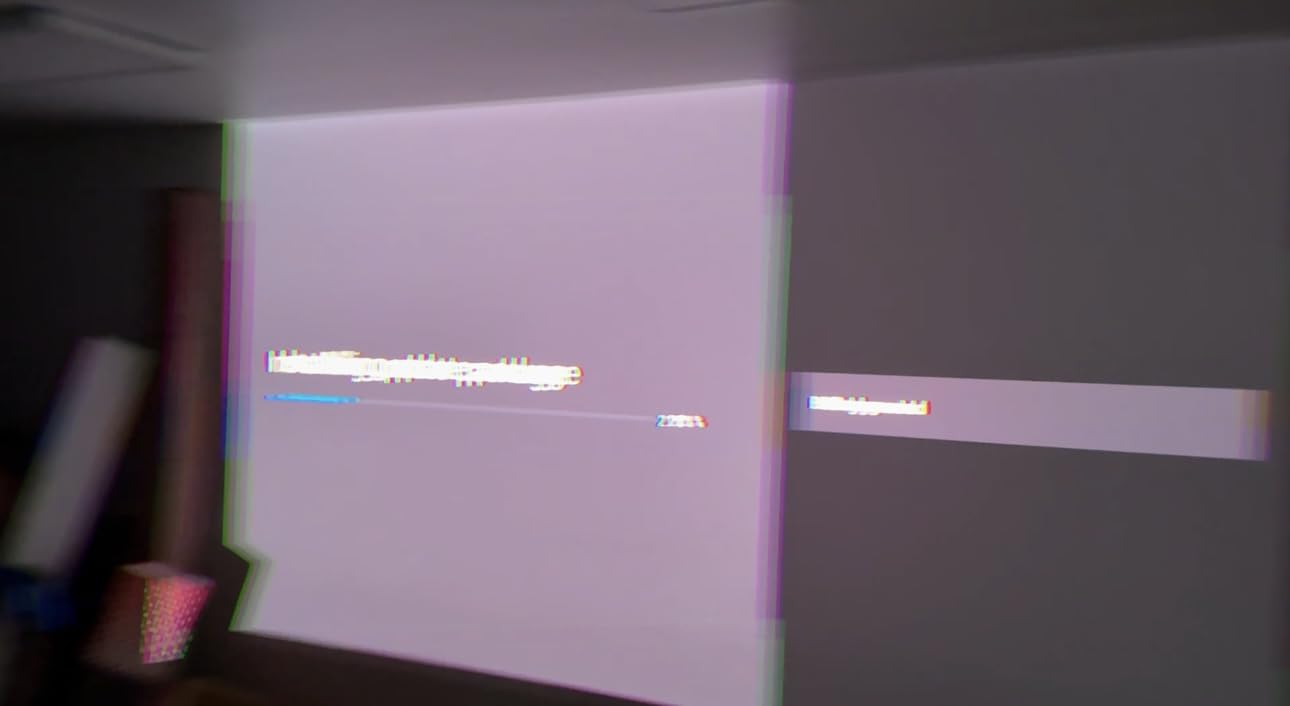
There is a second issue we keep coming back to. The manufacturer lists 3D support as 3D-Ready active 3D on a 4K triple-laser chip set. Triple-laser RGB drives are typically sequential, and sequential RGB combined with a doubled refresh for 3D often means reduced per-eye resolution. Owners who have tested it report that 3D works, and that it looks good, but that they would not call it Full HD 3D.
The gaming numbers are the standout feature that has nothing to do with 3D. 4ms input lag and a 240Hz refresh rate make this the most responsive projector in the group, and the Google TV platform with AirPlay 2, Chromecast and Miracast means it works standalone without a dongle.
What 3D actually looks like on it?
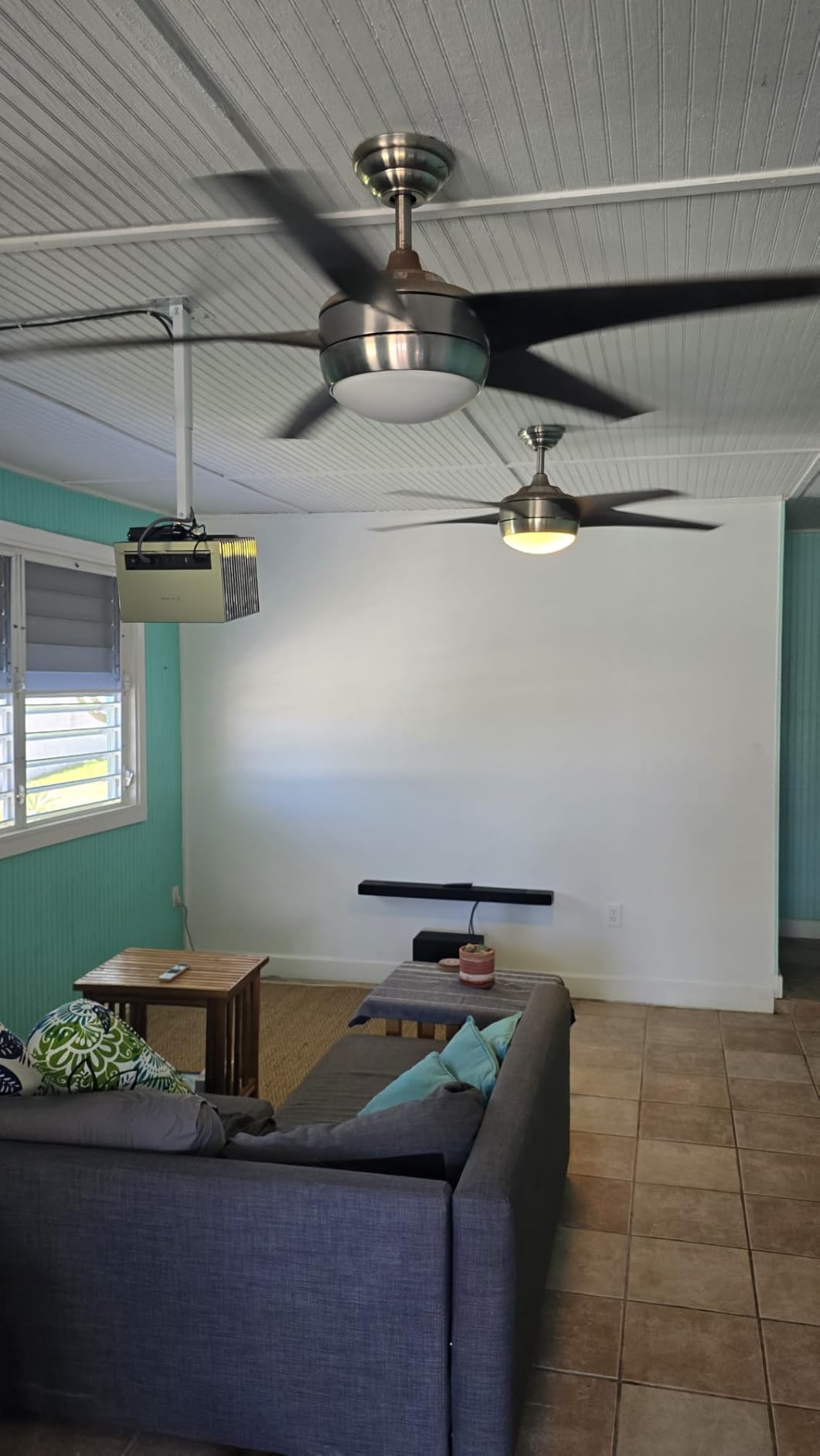
Pop in a 3D disc and the depth effect is convincing at a 100-inch image or larger. The image holds contrast better than most DLP projectors because the laser light source has no lamp warm-up curve and no color wheel shimmer to soften the blacks. In a properly dark room the picture is genuinely cinema-like, and the automatic focus and screen alignment features mean the picture stays right whether you move the unit or nudge the screen.
Who should skip it?
Skip it if Full HD 3D is your hard requirement, because the spec sheet does not promise it. Also skip it if anyone in your household is sensitive to rainbow artifacts, because sequential RGB laser drives on fast chips can produce them at close seating distances. And skip it if you plan to watch in a room you cannot darken — the brightness penalty makes that a losing battle.
We earn a commission, at no additional cost to you. CERTAIN CONTENT THAT APPEARS ON THIS SITE COMES FROM AMAZON. THIS CONTENT IS PROVIDED 'AS IS' AND IS SUBJECT TO CHANGE OR REMOVAL AT ANY TIME.
2. BenQ TK800M – Best 3D Value for Bright Rooms
BenQ TK800M 4K UHD Home Theater Projector with HDR and HLG | 3000 Lumens for Ambient Lighting | 96% Rec. 709 for Accurate Colors | Keystone for Easy Setup | 3D Capable
★★★★★★★★★★3000 lumens
4K UHD via XPR
96 percent Rec.709
3D capable
1.3x throw ratio
- 3000 lumens is among the brightest single-chip DLP options here
- genuine 4K UHD sharpness with an all-glass lens
- 96 percent Rec.709 color accuracy with HDR and HLG
- 1.3x throw ratio for flexible placement
- dual HDMI plus 12V trigger
- No smart TV platform
- so a streaming dongle is required
- 3D support needs matched active shutter glasses and a 3D source
- lamp-based light source means a replacement over the product life
The TK800M is the value pick here, and the reason is 3000 lumens. That is enough light to fight through a room with curtains open, which is exactly what 3D needs, because the shutter glasses will eat a large share of whatever the projector produces.
BenQ lists 3D support as 3D capable rather than Full HD 3D. This is a 4K XPR pixel-shift DLP, so expect the per-eye resolution in 3D to be below the 4K headline. Owners who pair it with a 3D source generally report a good image, and the 1.3x throw ratio gives you real placement flexibility that short-throw-only models lack.
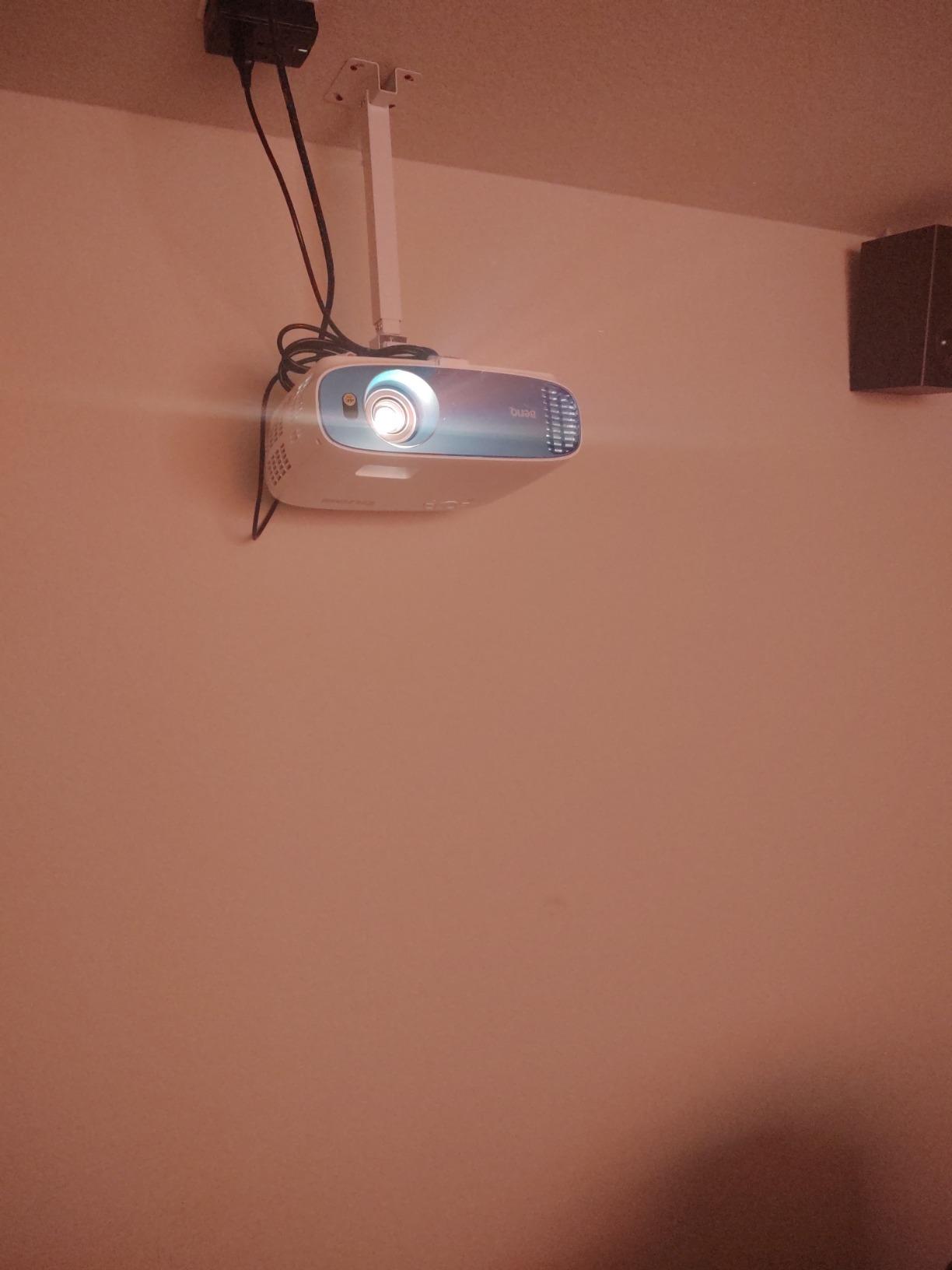
The 96 percent Rec.709 color coverage and HDR plus HLG support are quietly the most useful specs here for actual movie watching. Rec.709 is the color space your 3D Blu-rays are encoded in, so accurate coverage there translates directly to a more accurate 3D image. Many cheaper projectors overshoot and undershoot on Rec.709, which shows up as color shift.
Two negatives deserve mention. There is no smart platform on board, so streaming requires an external dongle, and lamp light source means a bulb replacement is part of the ownership cost. Neither matters much if you are feeding it from a disc player, which is the realistic 3D source.
What 3D actually looks like on it?
At 3000 lumens this is the model most likely to survive a 3D movie night in a normal living room. The brightness penalty still costs you, but you start from a much higher baseline. Pair it with a 100-inch or 120-inch screen and it holds up where the darker models in this group wash out.
Who should skip it?
Skip it if you need the Full HD 3D label on paper, or if you want a projector that runs streaming apps on its own. It is also a 4K XPR design, so if you are the type who reads per-eye resolution closely, look at the ViewSonic PJD7828HDL instead.
We earn a commission, at no additional cost to you. CERTAIN CONTENT THAT APPEARS ON THIS SITE COMES FROM AMAZON. THIS CONTENT IS PROVIDED 'AS IS' AND IS SUBJECT TO CHANGE OR REMOVAL AT ANY TIME.
3. ViewSonic PJD7828HDL – Best Full HD 3D on a Budget
ViewSonic 3200 Lumens Full HD 1080p Shorter Throw Home Theater Projector with 3D DLP and HDMI, Stream Netflix with Dongle (PJD7828HDL)
★★★★★★★★★★Native 1920x1080 panel
3200 lumens
built-in active shutter 3D
shorter throw
22000:1 contrast
- One of the few native 1080p panels here
- so 3D output matches Blu-ray source resolution
- 3200 lumens holds up with ambient light
- shorter throw plus wide zoom gives unusual placement flexibility for the class
- SuperColor technology delivers accurate color
- 5.3 pounds makes ceiling mounting easy
- Active shutter only
- so RealD cinema glasses will not work
- glasses are not included and must be sourced separately
- built-in 10W speakers are weak
- 1080p only with no 4K path
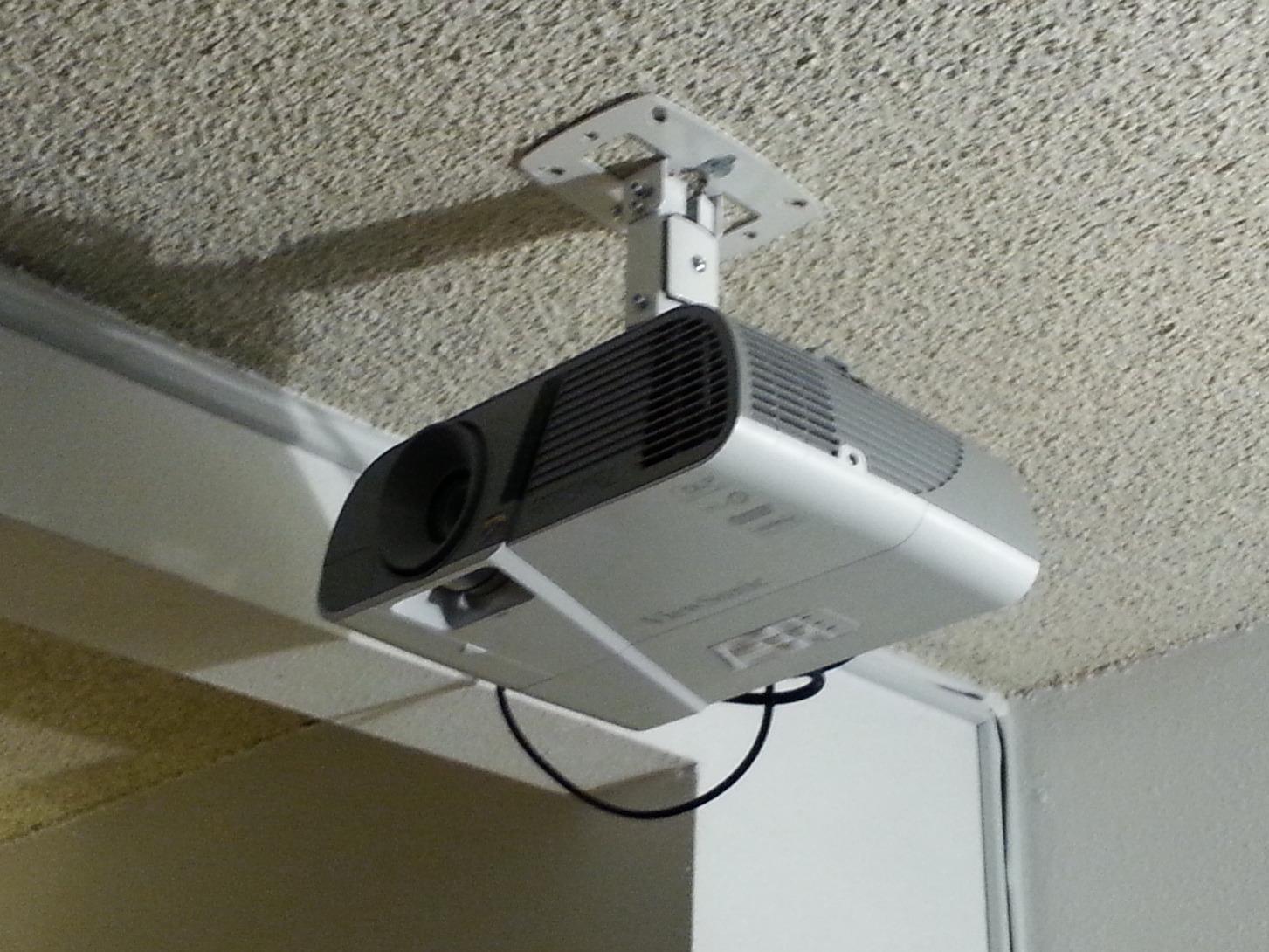
This is the most important pick in the list for anyone whose priority is actually watching 3D. It has a native 1920×1080 DLP panel, which means 3D delivers 1920×1080 per eye — real Full HD 3D — while most competitors in this price range are pixel-shift 4K panels that cannot.
It also throws harder than the price suggests. A 4.2 foot minimum throw distance with a wide zoom range gives you placement options that short-throw-only models deny you, and 3200 lumens is enough light to keep the image watchable with some ambient light. The 22000:1 contrast ratio is a manufacturer dynamic figure, but the black levels are genuinely good for a lamp-based DLP.
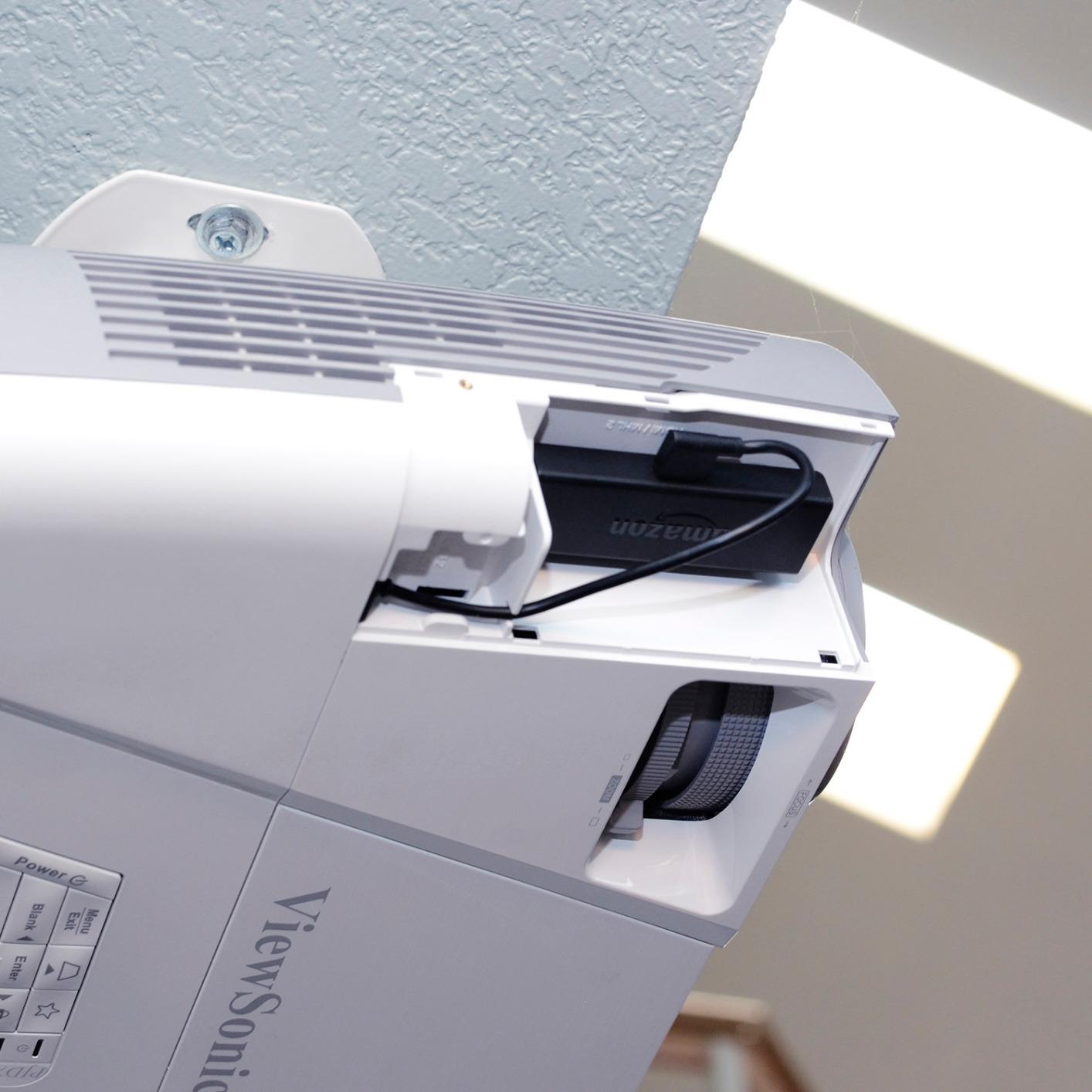
The critical caveat is glasses. This is an active shutter design, so RealD-style passive cinema glasses are completely incompatible, and glasses are not included. Owners who bought expecting cinema glasses report this as the single most common early frustration. Budget for active shutter glasses from the start.
A second, subtler issue that shows up in owner reviews: the 3D depth effect varies depending on how well your glasses are matched to the projector. Poorly matched or cheap third-party glasses produce inconsistent depth, and switching between pairs can mean recalibrating. This is a glasses problem, not a projector problem, but it presents as one.
What 3D actually looks like on it?
Sharp, honestly. Because the per-eye resolution matches your 3D Blu-ray source, detail holds up at 100 inches in a way the 4K models here cannot manage in 3D. Brightness is strong enough that you do not need a pitch-black room, which is unusual for a native 1080p DLP. Lamp life is rated at 4000 hours, extending to 10000 in Dynamic Eco mode.
Who should skip it?
Skip it if you own passive polarized or RealD glasses already and want to reuse them, and skip it if you are planning to 2D-to-3D convert heavy 2D content, since a 1080p panel has less headroom for that. The weak 10W speakers also mean a soundbar or receiver is effectively mandatory.
We earn a commission, at no additional cost to you. CERTAIN CONTENT THAT APPEARS ON THIS SITE COMES FROM AMAZON. THIS CONTENT IS PROVIDED 'AS IS' AND IS SUBJECT TO CHANGE OR REMOVAL AT ANY TIME.
4. AWOL VISION LTV-3000 Pro – Best 3D for Tight Rooms
AWOL VISION LTV-3000 Pro 4K 3D Ultra Short Throw Triple Laser Projector, Dolby Vision & Atmos, HDR10+, 150″ UST Laser TV Home Theater Projector
★★★★★★★★★★4K triple laser, no color wheel
3000 ANSI max white
0.25:1 ultra short throw
2500:1 contrast
25000 hour light source
- 107 percent BT.2020 and 147 percent DCI-P3 color from a colorwheel-free triple laser
- Dolby Vision and HDR10+ with Atmos support in one unit
- 0.25:1 ultra short throw fits a standard media cabinet
- 25000 hour laser light source
- PJ Link IP control for home automation
- Fixed 0.25:1 throw means cabinet depth must be exact or you need a motorized slider
- 3D needs active shutter glasses plus a 3D Blu-ray source
- 2500:1 native contrast is modest
- 28 pounds is a heavy ceiling-mount consideration
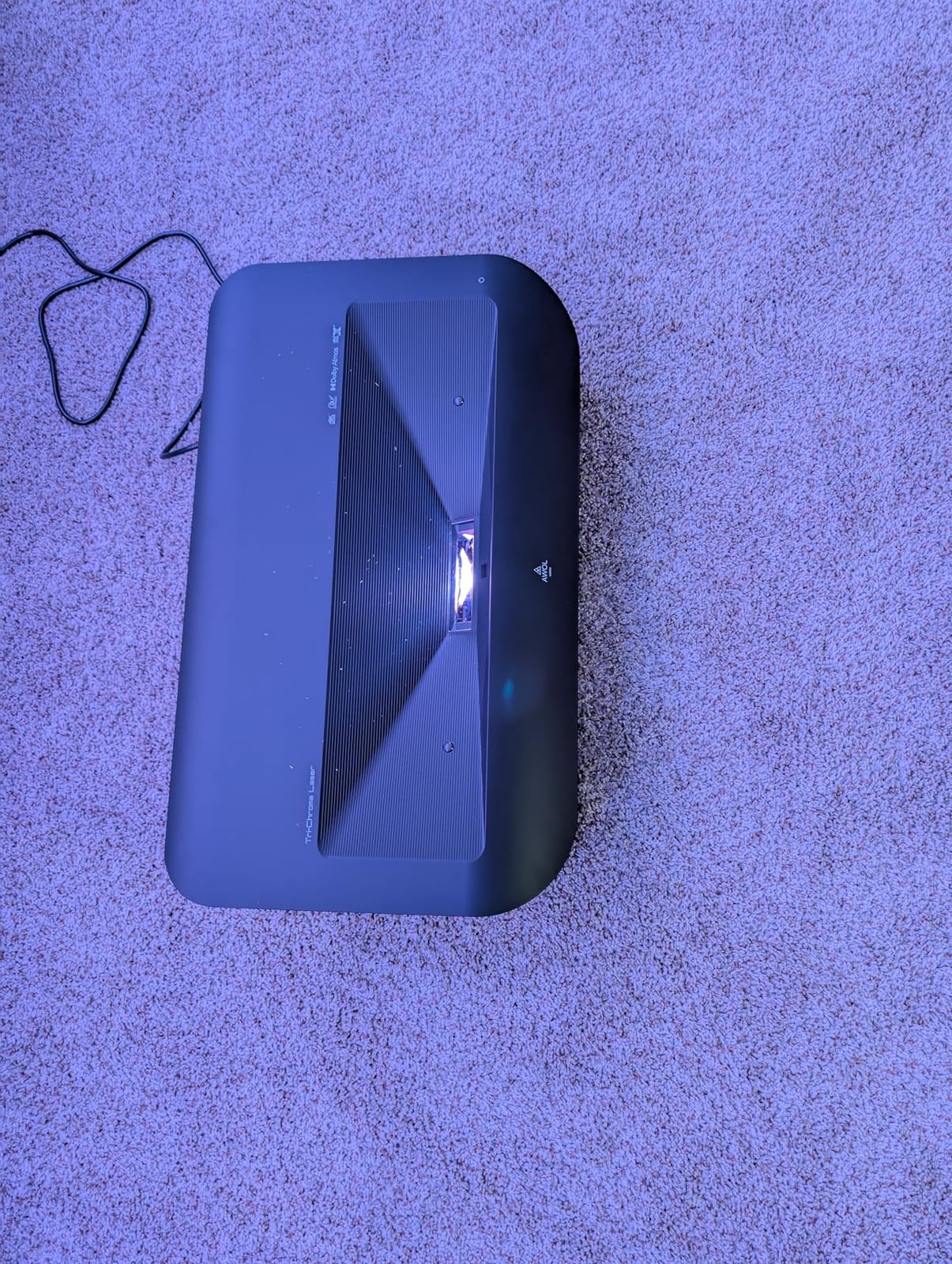
The LTV-3000 Pro solves a problem no other model here addresses: how to get a large 3D image when you have two feet of depth to work with. At 0.25:1, it throws 100 inches from about 8.5 inches of lens offset and 150 inches from under 13 inches, which means it lives on a media cabinet instead of at the back of the room.
That matters for 3D more than it does for 2D. Sitting close to the screen breaks the stereoscopic geometry that makes projection 3D work, so UST placement that forces you to sit 8 feet back is a genuine 3D feature, not just a convenience.
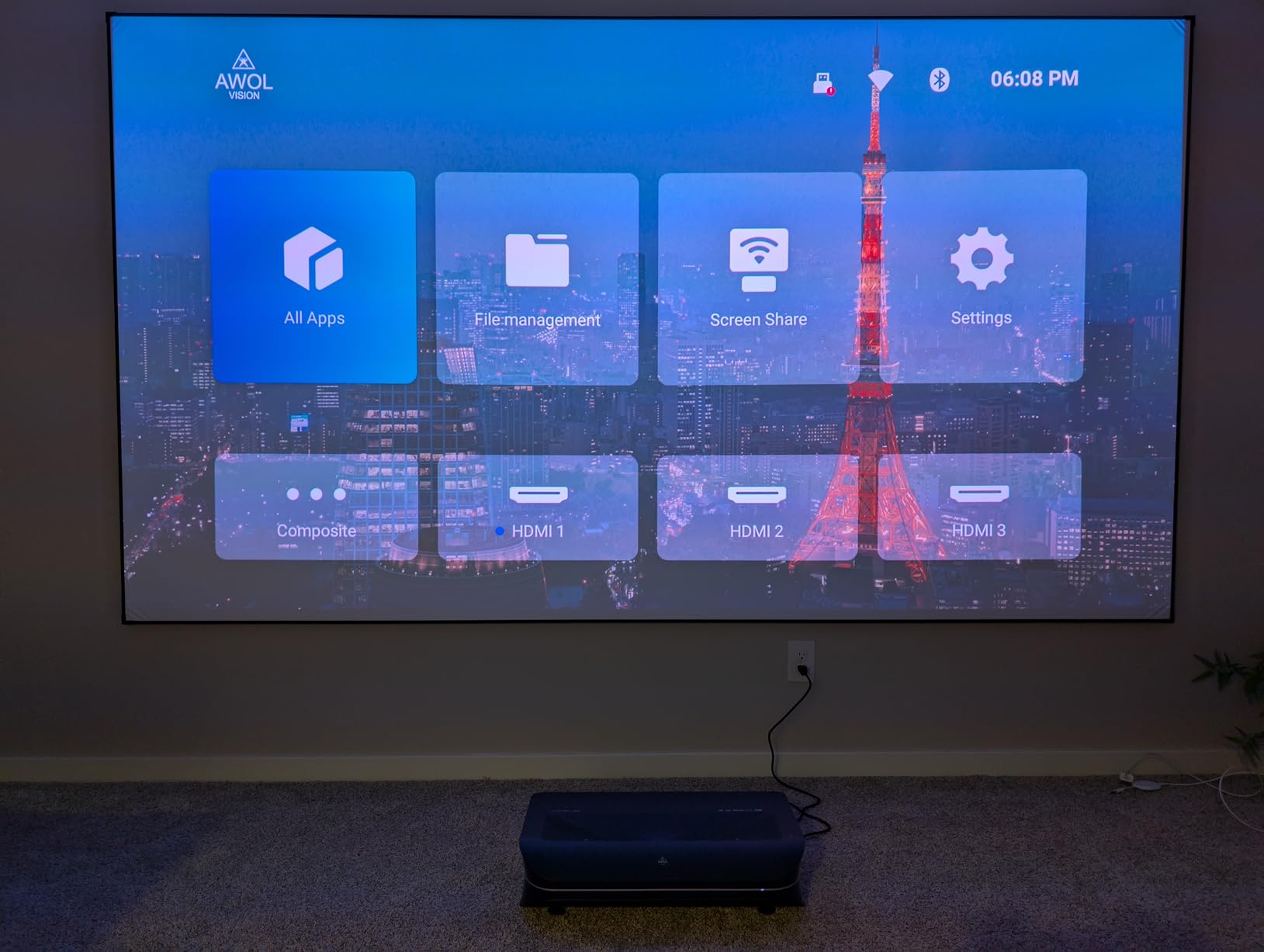
The colorwheel-free triple laser is the standout specification. 107 percent BT.2020 and 147 percent DCI-P3 coverage is reference-grade, and with no color wheel in the loop there is no sequential RGB shimmer to worry about. The 25000 hour light source also removes lamp replacement from the ownership equation entirely.
3D support is listed as 3D-Ready with active shutter glasses and a 3D Blu-ray source, so plan on sourcing glasses separately. As with most modern triple-laser designs, per-eye resolution in 3D is not specified as Full HD, and the 2500:1 native contrast is modest by dedicated theater standards.
What 3D actually looks like on it?
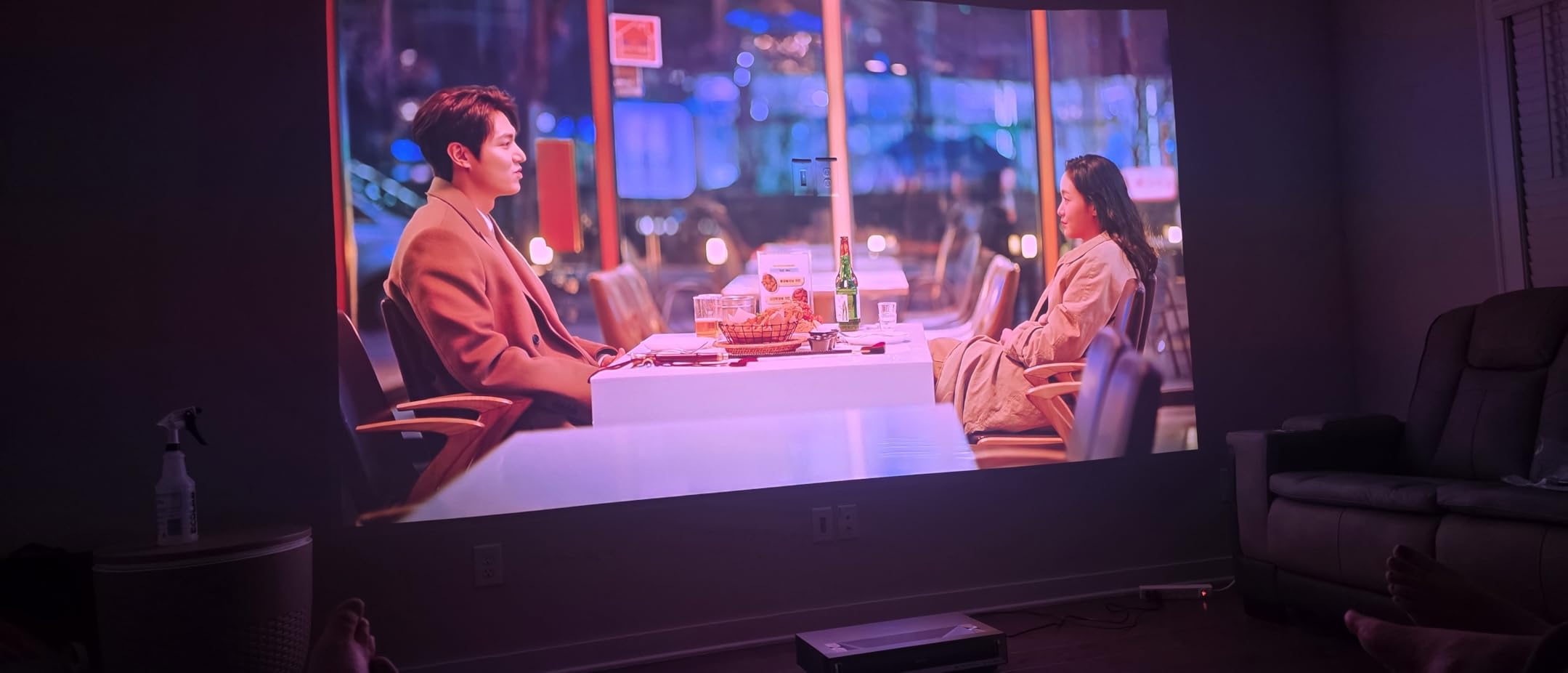
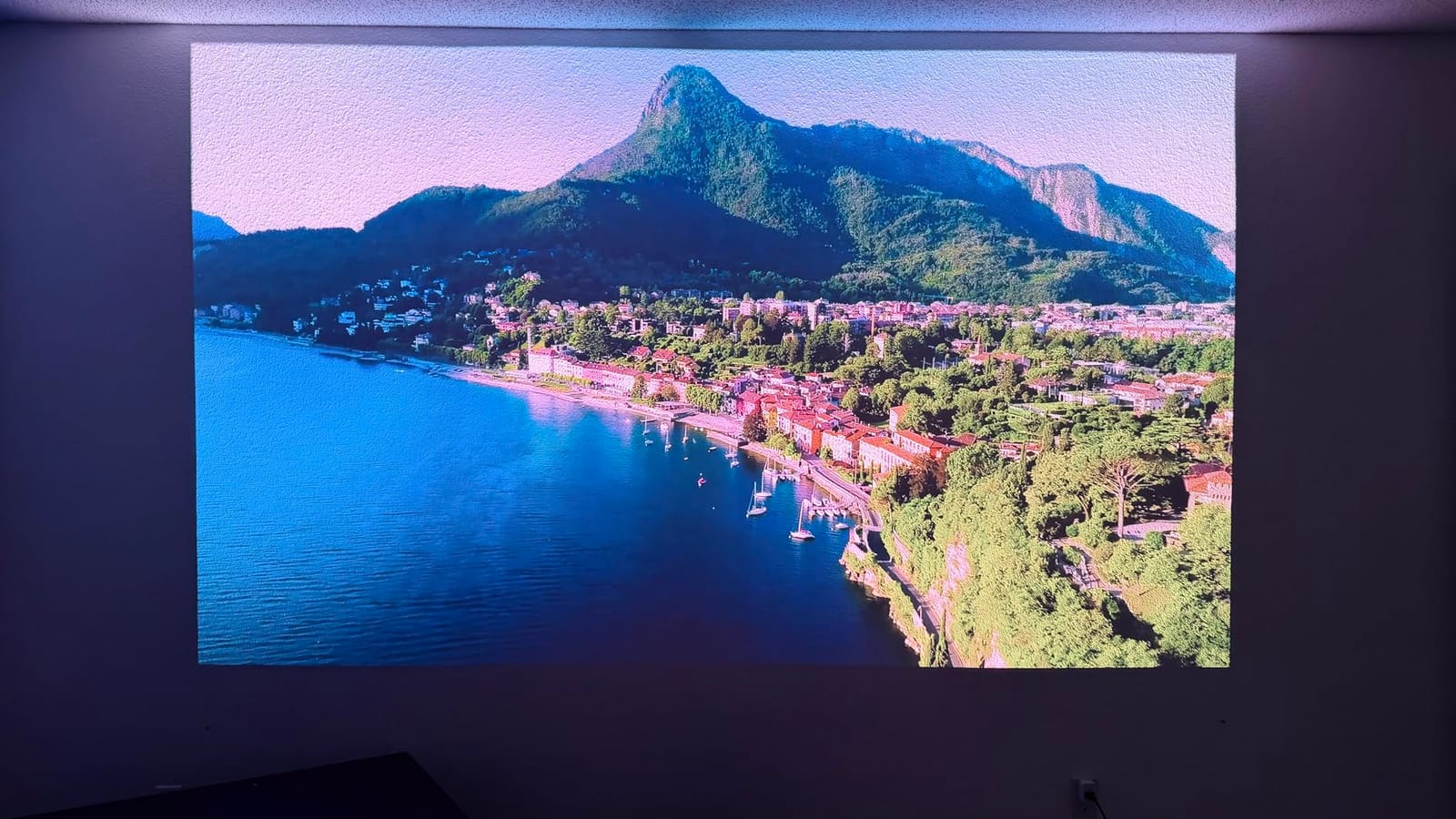
Vivid and immediate, with strong color saturation that holds attention in a dark room. The maximum white output of 3000 ANSI lumens gives it real headroom to absorb the 3D brightness penalty, which is more than can be said for several cheaper entries here. Owners report that pairing it with an ALR screen keeps the color punch in brighter rooms.
Who should skip it?
Skip it if your cabinet depth is flexible, because the fixed throw ratio is unforgiving — a motorized slider solves the problem but adds cost. Also skip it if your 3D plan is conversion-based rather than disc-based, and if you need a native Full HD 3D panel.
We earn a commission, at no additional cost to you. CERTAIN CONTENT THAT APPEARS ON THIS SITE COMES FROM AMAZON. THIS CONTENT IS PROVIDED 'AS IS' AND IS SUBJECT TO CHANGE OR REMOVAL AT ANY TIME.
5. Hisense PL2 – Best 3D for a Laser TV-Style Setup
Hisense PL2, Ultra Short Throw Home Theater Laser Projector, 80” – 150”, 4K UHD, 2,700 Lumens, 3000:1 Contrast, Dolby Vision & Atmos, 3D, Google TV, WIFI 6E
★★★★★★★★★★4K UHD DLP with AI upscaler
2700 lumens
3000:1 contrast
0.22 ft minimum throw
25000 plus hour laser
- Owners report striking picture quality even on plain off-white paint
- 2700 lumens with 4K sharpness gives a cinema feel in a compact room
- Google TV interface is fast compared with earlier Hisense models
- 25000 plus hour laser life means no lamp replacements
- easy leveler feet and digital focus simplify setup
- Sequential RGB laser can trigger rainbow artifacts
- and one owner returned a unit over it
- auto keystone requires photographing the image and uploading it to a device-hosted website
- built-in speakers cannot serve as a center channel
- floor-standing UST form factor leaves no room for AV gear in a cabinet
The PL2 is a strong-value 4K laser with 3D support in a compact ultra-short-throw chassis, and it sits in the middle of this list on almost every measurable axis. 2700 lumens, 3000:1 contrast, Dolby Vision and Dolby Atmos, and a 25000 plus hour laser light source.
For 3D, the appeal is the same as the AWOL model: 3D only works properly at proper eye separation, and this throws an 80 to 150 inch image from 0.22 feet minimum throw. You sit back where the geometry works.
Two owner complaints are worth knowing before you buy. The sequential RGB laser can produce rainbow artifacts for sensitive viewers, and one owner reportedly returned a unit over exactly that. The automatic keystone workflow is also widely disliked because it requires photographing the projected image and uploading it to a device-hosted website rather than working locally.
On the plus side, the Google TV platform is fast and responsive, which is a real improvement over earlier Hisense models, and the pure colour tuning across 1.07 billion colours shows in the picture quality owners describe.
What 3D actually looks like on it?
Good, with more light in reserve than the 1800-lumen competitors at the bottom of this list. Dolby Vision plus 3D is a slightly odd combination in practice since few 3D discs carry Dolby Vision, but for 3D streaming and conversion-based content the processing carries its weight. Expect solid depth and adequate brightness in a dim room.
Who should skip it?
Skip it if you or anyone watching is rainbow-sensitive, since the sequential RGB drive is a known trigger. Also skip it if you need a cabinet-friendly form factor, because the floor-standing design leaves nowhere to put your AV gear.
We earn a commission, at no additional cost to you. CERTAIN CONTENT THAT APPEARS ON THIS SITE COMES FROM AMAZON. THIS CONTENT IS PROVIDED 'AS IS' AND IS SUBJECT TO CHANGE OR REMOVAL AT ANY TIME.
6. ViewSonic PX703HD – Brightest Full HD 3D in the Group
ViewSonic PX703HD 1080p Projector with 3500 Lumens DLP 3D Dual HDMI Sports Mode and Low Input Lag for Gaming, Stream Netflix with Dongle
★★★★★★★★★★3500 lumens
native 1920x1080 DLP
built-in 3D
16ms input lag
1.3x optical zoom
- Highest brightness in the list at 3500 lumens
- which is the single most important number for 3D
- native 1080p panel means real Full HD 3D output
- shorter throw projects a 115 to 120 inch image from roughly 8 to 10 feet
- Sports Mode and 16ms input lag make it usable for casual gaming
- quiet operation after warm-up
- No HDMI ARC
- so surround sound needs optical or 3.5mm output
- built-in speaker is weak
- high heat output makes it unsuitable for a small bedroom
- some DLP rainbow effect reported by sensitive viewers
When the only thing that matters is 3D brightness, this is the pick. 3500 lumens is the highest figure in the group, and because active shutter 3D can eat more than half your light, starting higher is the single most effective thing you can do for 3D image quality. Owners report it holding up in rooms with open curtains.
It is also one of only three models here with a native 1920×1080 panel and built-in 3D, so the per-eye resolution in 3D is a genuine Full HD 3D rather than a downsampled compromise. That combination — highest brightness plus real Full HD 3D — is rare.
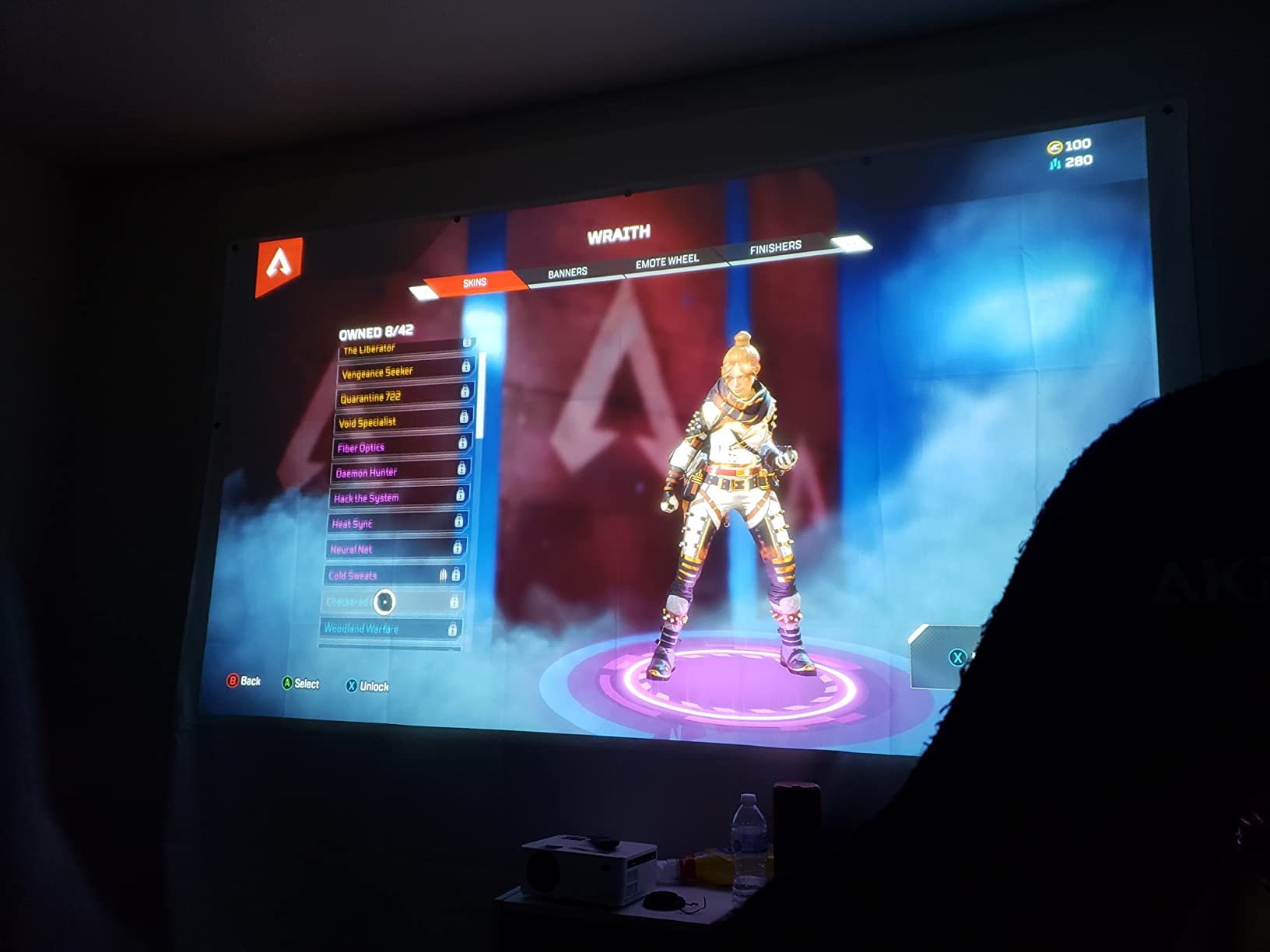
The shorter throw is more useful than it looks. Owners report filling a 115 to 120 inch image from about 8 to 10 feet, which keeps you far enough back for the stereoscopic geometry to work. A 1.3x optical zoom with vertical keystone adds placement flexibility that fixed-lens units do not offer.
The catch is audio. There is no HDMI ARC, so a surround system has to use the optical output or the 3.5mm jack, and the built-in speaker is weak enough that reviewers universally recommend external speakers or a soundbar. High heat output also makes this a poor choice for a small bedroom.
What 3D actually looks like on it?
The best-lit 3D image in this roundup, without much argument. Owners describe crisp, vibrant image and punchy colors, and the shorter throw makes a large image achievable in a normal room. 16ms input lag is casual-gaming grade, not competitive, and that rating typically degrades when the projector is in 3D mode.
Who should skip it?
Skip it if you plan a serious 3D gaming setup, since 16ms is not a competitive input lag and 3D mode makes it worse. Skip it if you need HDMI ARC for a simple audio setup, and skip it if rainbow sensitivity is an issue for anyone in the room.
We earn a commission, at no additional cost to you. CERTAIN CONTENT THAT APPEARS ON THIS SITE COMES FROM AMAZON. THIS CONTENT IS PROVIDED 'AS IS' AND IS SUBJECT TO CHANGE OR REMOVAL AT ANY TIME.
7. Epson Home Cinema 3500 – Best 3D for Rainbow-Sensitive Viewers
Epson Home Cinema 3500 1080p 3D 3LCD Home Theater Projector
★★★★★★★★★★3LCD 1920x1080
2500 lumens white and color
70000:1 contrast
active shutter 3D
horizontal lens shift
- 3LCD delivers equal white and color brightness with no rainbow artifacts at all
- 70000:1 contrast ratio for deeper blacks in a dedicated room
- horizontal lens shift and keystone make ceiling and off-axis installation straightforward
- 83 to 124 inch image from 8 to 12 feet
- built-in speakers and 7 years of EU spare parts availability
- Lamp-based with only 3500 hours in Normal mode
- 2500 lumens is dimmer than several cheaper DLP options here
- 1080p resolution only
If anyone in your household sees rainbow fringing on DLP, this is the projector. 3LCD technology runs red, green and blue through separate LCD panels simultaneously, so there is no sequential color wheel and therefore no rainbow effect. Owners mention the complete absence of rainbow artifacts as the reason they bought.
It is also a genuine Full HD 3D machine. Native 1920×1080 with active shutter 3D means 3D output matches Blu-ray source resolution, which places it alongside the two ViewSonic models as one of the three true Full HD 3D options in this list.
The 70000:1 contrast ratio is a dynamic figure with an active iris, but it reflects a real strength: deep blacks in a dedicated theater room. That matters more in 3D than in 2D, because perceived contrast collapses further when the glasses cut light and your pupils dilate in a dark room.
Horizontal lens shift is the other genuinely useful feature here. In a dedicated room with a permanent screen, lens shift lets you mount the projector off-axis to a ceiling mount without using digital keystone, which preserves full brightness. Digital keystone costs brightness, and brightness is exactly what you cannot afford to lose in 3D.
What 3D actually looks like on it?
Natural and even, with color that reviewers consistently describe as accurate and free of fringing. At 2500 lumens it is dimmer than the DLP units here, and the 3D brightness penalty makes that a real constraint. In a fully blacked-out dedicated room it holds up well. In a room with any ambient light, the brighter DLP options win comfortably.
Who should skip it?
Skip it if your room cannot be blacked out, because 2500 lumens is the weak point. Skip it if you want long-term low maintenance, since 3500 hours in Normal mode means a lamp replacement well inside a decade of regular use. And skip it if you plan 2D-to-3D conversion as a primary use case.
We earn a commission, at no additional cost to you. CERTAIN CONTENT THAT APPEARS ON THIS SITE COMES FROM AMAZON. THIS CONTENT IS PROVIDED 'AS IS' AND IS SUBJECT TO CHANGE OR REMOVAL AT ANY TIME.
8. BenQ HT5550 – The 2D Champion That Says Nothing About 3D
BenQ HT5550 True 4K UHD Home Theater Projector with HDR-PRO | 100% DCI-P3 & 100% Rec. 709 for Best Colors | Frame Interpolation for Fluid Picture, Black
★★★★★★★★★★True 4K UHD DLP
1800 lumens
100000:1 dynamic contrast
100 percent DCI-P3
HDR-PRO
- True 4K UHD resolution with 100 percent DCI-P3 color coverage
- 100000:1 dynamic contrast via Active Iris and Dynamic Black
- HDR-PRO tone mapping preserves shadow detail
- frame interpolation makes fast motion look fluid
- highest rated dedicated home theater option among the 4K models
- Manufacturer does not list 3D support at all
- 1800 lumens is the lowest brightness in the list
- smallest review base at 39 ratings
- single-chip DLP can show rainbow artifacts
We include the HT5550 because it demonstrates the exact mistake this article exists to prevent. It is the finest dedicated home theater projector in the list for 2D, and its manufacturer does not list 3D support at all. Nothing in the specification sheet claims 3D. A buyer who filtered this list by 4K resolution and DCI-P3 color would put this at the top.
For 2D it is exceptional. True 4K UHD at 3840×2160, 100 percent DCI-P3 and 100 percent Rec.709 coverage, 100000:1 dynamic contrast through Active Iris and Dynamic Black, and HDR-PRO tone mapping that preserves shadow detail. Frame interpolation smooths fast motion in a way most projectors cannot.
What 3D actually looks like on it?
There is no verified 3D output, and we will not guess at one. What we can say is that 1800 lumens would leave very little after the shutter penalty, so even if 3D were enabled it would not be a reason to buy this projector. If your priority is 3D, this is the wrong machine regardless of how good it is at 2D.
Who should skip it?
Skip it if 3D is on your list at all. The only audience for this projector is someone who wants reference-quality 2D color and contrast in a fully dark dedicated room and has decided 3D is not part of the plan. It also carries the smallest owner feedback base of the group at 39 ratings, which means less real-world evidence to draw on.
We earn a commission, at no additional cost to you. CERTAIN CONTENT THAT APPEARS ON THIS SITE COMES FROM AMAZON. THIS CONTENT IS PROVIDED 'AS IS' AND IS SUBJECT TO CHANGE OR REMOVAL AT ANY TIME.
Active Shutter vs Passive Polarized 3D at Home
For home use, active shutter wins on hardware simplicity and passive polarized wins on comfort. Cinemas use passive polarized because they need cheap glasses for an audience of hundreds, not because it looks better.
Every single projector in this roundup is an active shutter design. That is not a coincidence, and it is worth explaining why, because it comes up constantly on AVSForum and in the r/projectors 3D threads.
Active shutter projectors alternate a full-resolution image for each eye at roughly 120Hz, and battery-powered LCD glasses block the wrong image for each eye. The result is full resolution per eye, no screen modification, and a single projector doing all the work. The cost is glasses batteries, some cross-talk between eyes, and a required line of sight to the sync emitter.
Passive polarized uses a polarizer in the projector, a matching polarizer on the screen, and cheap glasses with different fixed polarization per eye. Light is lost in the polarizer, and you need either a silver screen or a dual stacked projector rig. In return, the glasses are light, cheap, battery-free, and comfortable enough to wear for a three-hour marathon.
The household decision comes down to how many people watch. One or two viewers with a good pair of matched active glasses is the easy answer. Four or five viewers means five sets of batteries to recharge, five chances for a sync failure, and a bill for five pairs of glasses. Forum users who have owned both systems consistently report switching their preference once they started watching with family.
There is a third path worth naming. A stacked dual-projector setup — two projectors plus a polarizing screen — gives you passive 3D at home with cheap, battery-free cinema glasses. It doubles the hardware cost and doubles the maintenance, but enthusiasts building a dedicated room describe it as the only way to reproduce an actual cinema experience. It is out of reach for a normal living room.
One common misconception to clear up: you cannot simply use polarized 3D glasses with a standard single projector. Polarization has to exist on both sides of the light path, which means either a special screen or a second projector. If a pair of RealD-style glasses sits in your drawer, it will not work with anything on this list.
What to Look for in a 3D Projector?
Verify the per-eye resolution, not the panel resolution. Full HD 3D means 1920×1080 per eye. If the spec sheet says only 3D Ready or 3D Capable, assume 720p per eye until proven otherwise. This single check prevents the most common disappointment in the category.
Set a brightness floor before you shop. Active shutter 3D discards more than half the light, and closer to two-thirds in real conditions. A practical target is 2000 ANSI lumens or more for a dark dedicated room, and 3000 or more if any ambient light will remain. The ViewSonic PX703HD and BenQ TK800M clear that bar; the BenQ HT5550 and Epson Home Cinema 3500 sit well below it.
Plan throw distance for eye separation, not just screen size. Enthusiasts consistently target 92 to 130 inches, and at that size you need to sit far enough back for the stereoscopic geometry to work. Check the minimum throw distance and the zoom range before you commit, because a projector that forces you into the front row undermines the entire reason to go large.
Price the glasses for your whole household. Third-party active shutter glasses typically run a modest per-pair cost, and forum consensus is that they need to match the projector’s emitter for reliable sync. A bundle that includes one pair is a bundle for one viewer. Four viewers means four pairs plus a charging solution, and infrared sync needs a clear path to the emitter.
Decide on sync technology. IR sync glasses need line of sight to the emitter, which means a cabinet with a closed door will break them. RF sync glasses work through obstructions and through multiple rooms, which matters if the emitter is behind a screen or a wall. RF is the safer choice in a dedicated room.
Budget the screen and the room. Silver screens boost passive and polarized output and reject ambient light. Black screens and high-gain ALR screens help in bright rooms but can produce hotspotting with ultra-short-throw units. In either case, the room matters more than the screen: 3D in a room with a window open behind you will disappoint on any projector at any price.
If buying used, check five things. Lamp hours on lamp-based models, since a spent lamp means an immediate replacement cost. DLP chip condition, since image degradation on aging DLP units is irreversible. Whether the sync emitter is included, since it is sometimes sold separately. Whether the glasses are included, since matched glasses are hard to source later. And whether 3D works on every input you plan to use, since a failed input is a common failure mode on aging units.
Know who should not watch 3D. People with certain vision conditions, and anyone with a history of motion sickness or nausea from 3D content, should not sit through long 3D movies. If that is anyone in your household, the projector is the wrong purchase and no amount of brightness solves it.
Finally, be honest about 2D-to-3D conversion. Modern converters running on a good 4K projector produce genuinely watchable depth on 2D source material, and enthusiasts who own both routes report using conversion far more often than discs. If your 3D content plan leans on conversion, buy a great 2D projector instead.
Frequently Asked Questions
Which projector is best for 3D movies?
The Valerion StreamMaster Plus2 is the best overall for 3D movies in 2026, pairing a 4K laser light source with 2000 ISO lumens and active 3D support. If native Full HD 3D resolution is your hard requirement, the ViewSonic PJD7828HDL or the Epson Home Cinema 3500 deliver true 1920×1080 per eye instead.
Are 3D projectors worth it?
Only if you already own a meaningful 3D disc library and have a room you can black out. New 3D releases have effectively stopped, streaming services dropped 3D, and disc production has gone dormant, so the entire purchase case rests on content you already have. A better 2D projector plus a 2D-to-3D converter is the more rational route if you are starting from zero.
Which projectors support 3D?
Check the label carefully. 3D Ready usually means 720p per eye and often only one input. HD 3D means 1280×720 per eye. Full HD 3D means 1920×1080 per eye and is the only tier that matches Blu-ray 3D source material. Most 4K pixel-shift DLP projectors drop resolution in 3D or do not support it at all.
Which is better, active or passive 3D glasses?
For one or two viewers in a dedicated room, active shutter is simpler and delivers full resolution per eye with no screen modification. For four or more viewers, passive polarized wins because the glasses are lighter, cheaper and battery-free, though it requires a silver screen or a stacked dual-projector rig. Every consumer 3D projector sold today is active shutter.
What does Full HD 3D mean on a projector?
Full HD 3D means the projector delivers 1920×1080 pixels separately to each eye at a 120Hz-equivalent refresh, matching the resolution of a 3D Blu-ray source. It is a genuinely higher standard than HD 3D, which delivers 1280×720 per eye and reads as noticeably soft on screens above 100 inches.
Do 4K projectors support 3D?
Often not in the way the resolution implies. Most 4K DLP projectors use XPR pixel shifting from a 1920×1080 mirror array, and 3D already needs the full panel for one eye at a doubled refresh. These models typically fall back to 1080p or 720p per eye in 3D, and some drop 3D entirely. Always confirm the Full HD 3D label before buying a 4K model for 3D.
Can I use polarized 3D glasses at home?
Not with a standard single projector. Polarization has to exist on both sides of the light path, which means either a dedicated silver screen or a second projector in a stacked configuration. RealD-style passive glasses will not work with any of the active shutter projectors in this roundup, including the ones that support 3D out of the box.
Are 3D glasses included with projectors?
It varies, and it is the most common buyer regret in this category. Some models bundle a single pair, which is only enough for one viewer, and several do not include any glasses at all. Budget for a pair per person who will watch, and confirm the sync type, because infrared glasses need a clear line of sight to the emitter and RF glasses do not.
The Verdict: Which 3D Projector Should You Buy?
Buy the Valerion StreamMaster Plus2 if you want the best 3D projector for home theater in 2026 and want a machine that also excels in 2D, with a laser light source, Google TV built in and the sharpest gaming response in the group. Just verify the per-eye 3D resolution before committing, because its 3D label is 3D Ready rather than Full HD 3D.
If per-eye resolution is non-negotiable, the ViewSonic PJD7828HDL is the one to buy. Native 1920×1080, 3200 lumens, shorter throw, and the best price-to-performance ratio of any true Full HD 3D machine here. The ViewSonic PX703HD matches it for brightness at 3500 lumens, and the Epson Home Cinema 3500 is the answer for anyone who cannot tolerate rainbow artifacts.
And if you have no 3D discs and no plan to build a collection, buy a great 2D projector instead. The category is a genuine joy for the people already inside it and a poor investment for everyone else.