
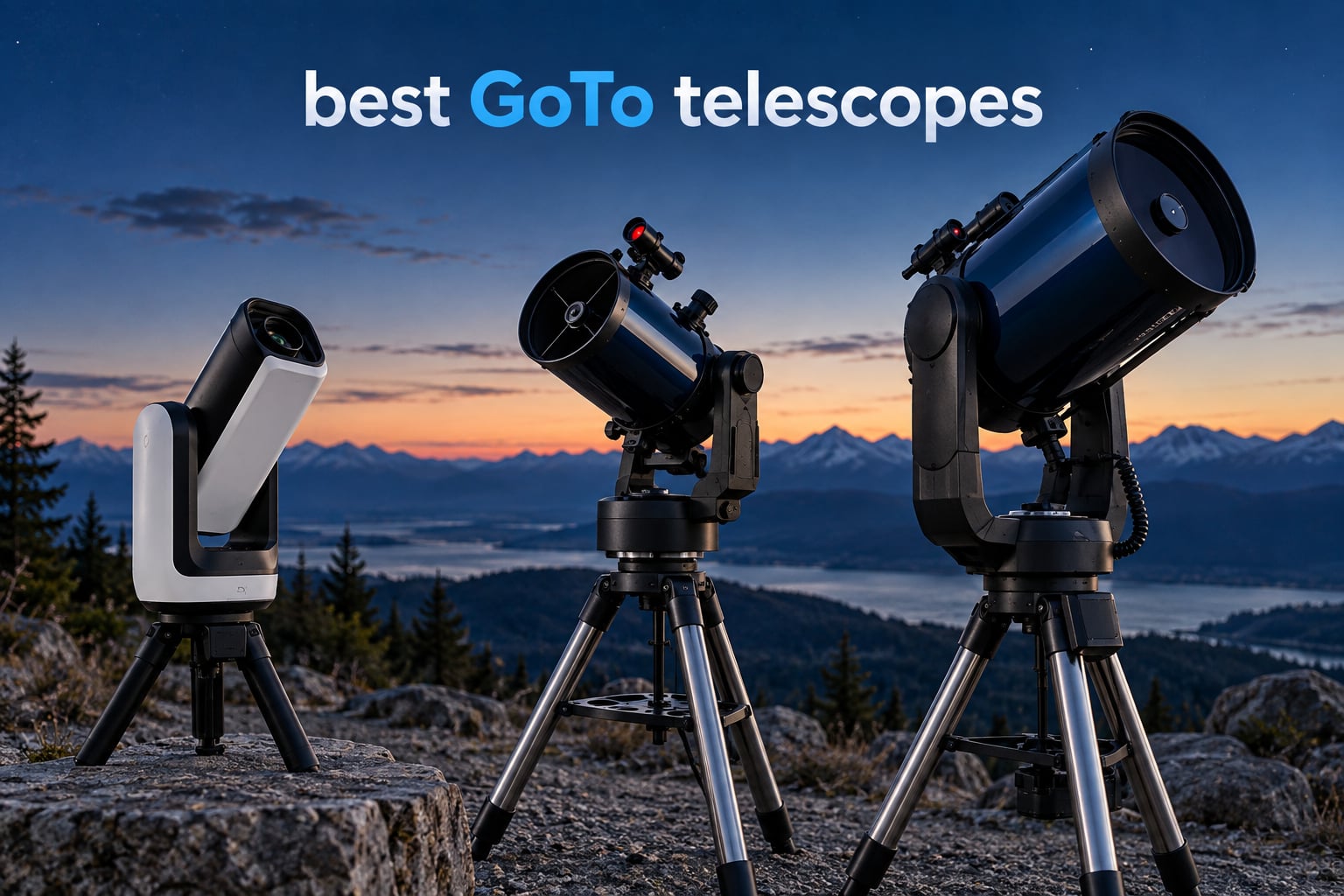
A GoTo telescope does one thing that no amount of aperture can: it points itself. You pick a galaxy from a database of tens of thousands of objects, press go, and the motors swing the tube to the right spot and hold it there while the sky turns. That is the entire pitch, and it is a real one for anyone observing from a balcony, a suburban backyard or a first attempt at the Andromeda Galaxy.
It is also where the marketing gets loose. Plenty of budget computerized telescopes carry a GoTo mount paired with an aperture too small to do anything interesting with the objects it so precisely locates. The best GoTo telescopes in 2026 are the ones where the pointing system and the light-gathering power are matched, so we weighted aperture and pointing accuracy together rather than chasing pointing features alone.
Our overall pick is the Celestron NexStar 8SE, an 8-inch Schmidt-Cassegrain that finally has the light grasp to justify a 40,000-plus object database. Below it sit a Maksutov for planet lovers, three app-driven smart telescopes that weigh between 1.85 and 3.6 pounds, a tabletop GoTo Dobsonian, and a 12-inch light bucket for people with a permanent observing site. If you are still building your first setup, our beginner telescope guide covers the non-computerized alternatives honestly.
Table of Contents
- Top 3 Best Goto Telescopes (October 2026)
- Best GoTo Telescopes at a Glance in 2026
- 1. Celestron NexStar 8SE – Best All-Round GoTo Telescope
- 2. Celestron NexStar 127SLT – Best Value GoTo for Planets
- 3. Celestron 114LCM – Best Budget Motorized Telescope
- 4. DWARFLAB Dwarf Mini – Best Rated Pocket GoTo
- 5. DWARFLAB Dwarf 3 – Best GoTo for Travel and Daylight Use
- 6. ZWO Seestar S30 Pro – Best GoTo for City Skies
- 7. Sky-Watcher Virtuoso GTi 150P – Best Tabletop GoTo Dobsonian
- 8. Sky-Watcher Flextube 300 – Best GoTo for Faint Deep Sky
- Aperture vs GoTo: When Computerized Pointing Is Worth It?
- GoTo vs Push-To vs Manual: Which Pointing System Suits You?
- Do You Have to Align a GoTo Telescope Every Time?
- GoTo Telescopes for Astrophotography: What the Mount Has to Handle?
- Frequently Asked Questions
- What is the best GoTo telescope for a beginner?
- Which GoTo telescope is best for seeing all the planets?
- Do I have to align my telescope every time I use it?
- How long does it take to align a GoTo telescope?
- Do I need an equatorial mount for a GoTo telescope?
- Why is my telescope not focusing?
- Is Celestron still in business?
- Can you use a GoTo telescope in the city?
- Best GoTo Telescope Recommendations in 2026
Top 3 Best Goto Telescopes (October 2026)

Celestron NexStar 8SE
- 8 inch Schmidt-Cassegrain aperture
- 40
- 000 plus object database
- SkyAlign star alignment
- 2032mm focal length

Celestron NexStar 127SLT
- 127mm Maksutov-Cassegrain optics
- 1500mm focal length
- SkyAlign in minutes
- battery powered

DWARFLAB Dwarf Mini
- 1.85 lb grab-and-go body
- plate-solving auto GoTo
- 90-second EQ mode exposure
- built-in stacking
Best GoTo Telescopes at a Glance in 2026
Every scope below slews to a named target on its own. The differences that matter in practice are aperture, how the pointing system is driven, and how much the whole package weighs when you carry it outside.
| Product | Key Specs | Pricing |
|---|---|---|
| Celestron NexStar 8SE |
|
Check Latest Price |
| Celestron NexStar 127SLT |
|
Check Latest Price |
 Celestron 114LCM Celestron 114LCM |
|
Check Latest Price |
| DWARFLAB Dwarf Mini |
|
Check Latest Price |
 DWARFLAB Dwarf 3 DWARFLAB Dwarf 3 |
|
Check Latest Price |
 ZWO Seestar S30 Pro ZWO Seestar S30 Pro |
|
Check Latest Price |
 Sky-Watcher Virtuoso GTi 150P Sky-Watcher Virtuoso GTi 150P |
|
Check Latest Price |
 Sky-Watcher Flextube 300 Sky-Watcher Flextube 300 |
|
Check Latest Price |
1. Celestron NexStar 8SE – Best All-Round GoTo Telescope
Celestron NexStar 8SE Computerized Telescope – Schmidt-Cassegrain
★★★★★★★★★★Aperture: 8 inch Schmidt-Cassegrain
Focal length: 2032mm
Mount: computerized alt-azimuth single fork arm
Database: 40,000+ objects
- 8 inch aperture shows real lunar and planetary detail
- 40000 plus object database with automatic tracking
- SkyAlign needs no star charts
- compact for an 8 inch scope
- expands with Celestron accessories
- Bulky to carry compared with tabletop scopes
- single-arm fork mount is weak for long-exposure imaging
The NexStar 8SE is the scope we keep coming back to because it is the rare case where both halves of the equation work. An 8-inch Schmidt-Cassegrain gathers enough light to make a 40,000-object database worth having, and the single-arm fork mount folds that tube into something you can still walk to the car with. Reviewers describe the same thing we found: setup is fast, slews land where the controller says they will, and the build feels closer to an instrument than a gadget.
SkyAlign is the reason this scope gets used at all. You centre any three bright objects in the eyepiece, without needing to know their names, and the mount works out your position and time from scratch. Owners put the whole alignment in the range of a few minutes, which is the difference between a telescope that gets used weekly and one that sits in a cupboard.
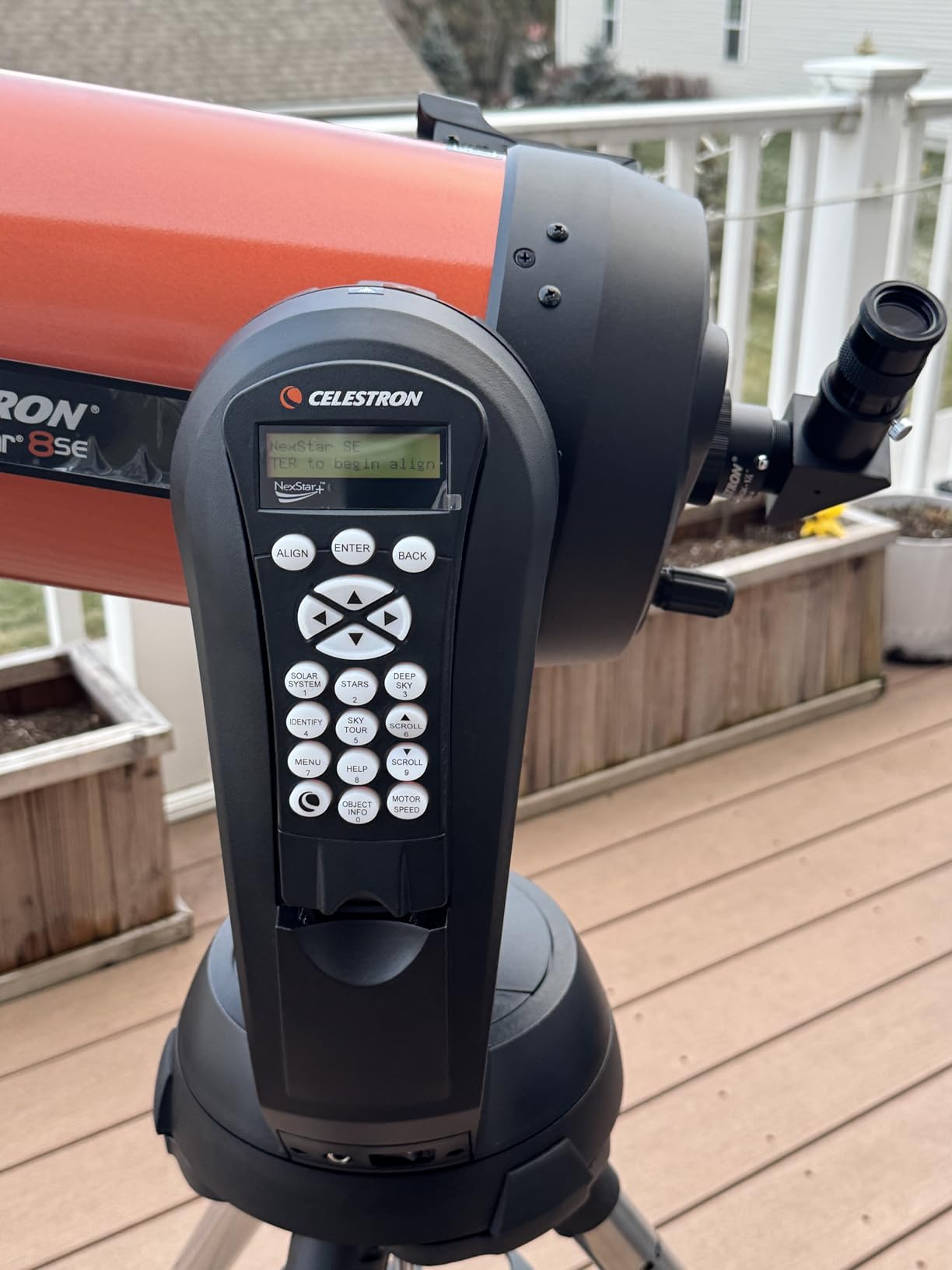
Optically it is a genuinely capable instrument. StarBright XLT coatings on a Schmidt-Cassegrain of this size deliver crisp lunar detail, visible cloud banding on Jupiter and a steady view of globular clusters and brighter galaxies. The 25mm eyepiece gives a 0.75 degree field of view, wide enough that moving objects stay in frame while you watch.
The honest limitation is physical. This is a 10.88 kg package with a 43.2 cm optical tube, and the fork arm has to swing through a large arc to reach low targets. Fine in a garden or a field with a table; a genuine nuisance if the plan is a spontaneous balcony session.
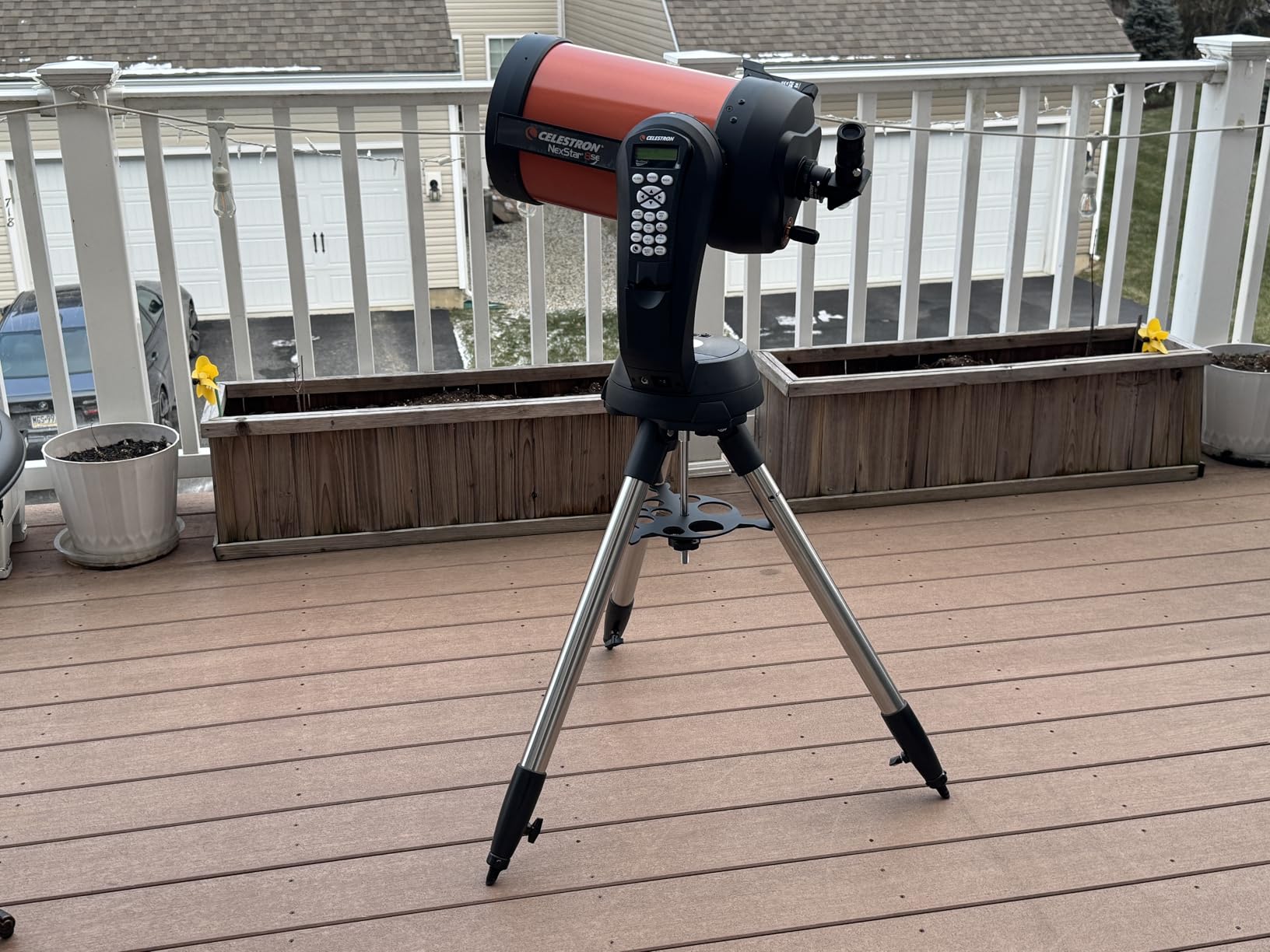
Why the 8SE suits experienced amateurs and patient beginners?
For anyone who has already had a manual scope and run out of things to look at, this is the upgrade that changes the hobby. The database is not a gimmick at this aperture: galaxies that look like smudges in a 4-inch tube resolve into spiral structure, and the tracking keeps them centred while you look.
Astrophotography is where restraint is needed. The single-arm fork mount is stable for visual work and short exposures, but the field rotation inherent in an alt-azimuth design means long frames of a fixed sky region need careful stacking or field de-rotation. Most owners use it for Moon and bright planet shots rather than faint deep-sky integration.
Where the 8SE is the wrong choice?
If storage is tight, or you want a grab-and-go scope you can take out in one hand, an 8-inch fork is the wrong size. The tabletop Dobsonian and the pocket smart scopes later in this list are built for exactly that, and they will show you a good many objects before the weight becomes an issue.
Buyers on astronomy forums also flag the fork as less forgiving when balancing matters, so if deep-sky imaging is the goal rather than a hobby you might try in winter, put the budget toward a larger aperture and a steadier mount instead. Our astrophotography telescope guide covers that territory in more detail.
We earn a commission, at no additional cost to you. CERTAIN CONTENT THAT APPEARS ON THIS SITE COMES FROM AMAZON. THIS CONTENT IS PROVIDED 'AS IS' AND IS SUBJECT TO CHANGE OR REMOVAL AT ANY TIME.
2. Celestron NexStar 127SLT – Best Value GoTo for Planets
Celestron NexStar 127SLT Maksutov-Cassegrain Computerized GoTo Telescope
★★★★★★★★★★Aperture: 127mm Maksutov-Cassegrain
Focal length: 1500mm
Mount: computerized alt-azimuth single fork arm
Database: 40,000+ objects
- High contrast Maksutov views of Saturn and Jupiter
- SkyAlign setup in minutes
- light enough to move to a campsite
- 20mm and 9mm eyepieces included
- Small aperture limits faint deep-sky detail
- fork mount suits visual work rather than long exposures
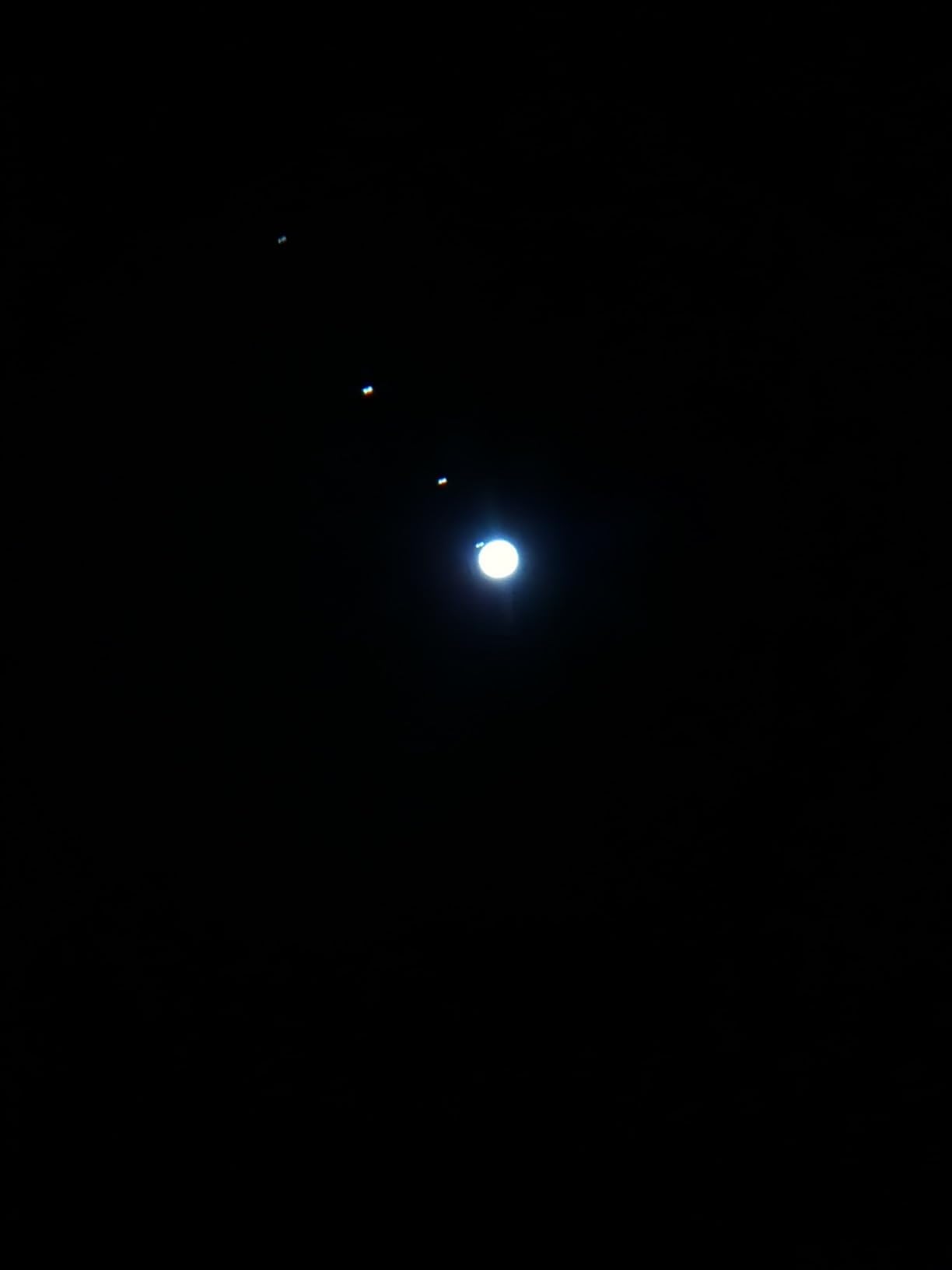
If your interest is planets, the 127SLT is the telescope in this list that keeps earning its place. A Maksutov-Cassegrain of this size produces a smaller, brighter image of Saturn than a short-tube Newtonian of the same aperture, and the high-contrast result on Jupiter and the Moon is the kind of view that converts a casual gift into a habit. It is also one of the most heavily reviewed GoTo telescopes we looked at, with more than a thousand owner accounts to draw on.
The alignment story is the same proven SkyAlign routine, and reviewers consistently describe minutes rather than an evening. Once aligned, the database holds thousands of objects and the motors track them, so the scope does the work while you decide what to look at next.
Portability is the quiet strength here. At 18.1 pounds the whole package moves between a backyard and a campsite without a car boot being involved, and the battery-powered operation means no power lead is required for a typical session. Both 20mm and 9mm eyepieces come in the box, which covers everything from wide lunar views to double stars.
The 1500mm focal length and 1.7 degree field of view give a forgiving setup for beginners, since the target does not leap out of frame when you change eyepieces. A fully coated 127mm aperture is modest next to the 8-inch at the top of this list, and that shows on the faintest galaxies and nebulae under suburban skies.
Why planet and Moon observers should shortlist it?
Contrast is the deciding factor. A Maksutov aperture of 127mm will resolve Saturn’s Cassini Division and the belts of Jupiter on a steady night, and the narrower field makes the image rock solid rather than shimmer-prone. If your list of targets is the Moon, the gas giants and a handful of bright double stars, this is where the money goes furthest.
It also makes a good family scope. The setup is forgiving, the eyepieces are in the box, and the alt-azimuth mount is intuitive for anyone who has never used a telescope at all. Reviewers frequently describe it as the first GoTo that a household ends up passing around.
Where it falls short?
Deep-sky is the ceiling. A 127mm aperture collects enough light to show the Orion Nebula as a fuzzy patch with structure, and most galaxies as smudges, so a large fraction of that 40,000-object database will look underwhelming. If your targets are faint, buy aperture instead.
The fork mount is also a visual platform. Long-exposure imaging on an alt-azimuth fork produces field rotation, so stacking software has to compensate. Treat this as a looking scope with occasional Moon and planet shots, not an imaging rig.
We earn a commission, at no additional cost to you. CERTAIN CONTENT THAT APPEARS ON THIS SITE COMES FROM AMAZON. THIS CONTENT IS PROVIDED 'AS IS' AND IS SUBJECT TO CHANGE OR REMOVAL AT ANY TIME.
3. Celestron 114LCM – Best Budget Motorized Telescope
Celestron 114LCM Computerized Reflector Telescope for Beginners
★★★★★★★★★★Aperture: 114mm Newtonian reflector
Optics: fully coated all-glass
Mount: motorized altazimuth
Database: 4,000 objects
- Motorized GoTo mount locates 4000 objects
- Sky Tour builds a target list for you
- tripod and two eyepieces included
- fully coated all-glass optics
- free Starry Night software
- 114mm aperture is modest for faint deep-sky objects
- motorized altazimuth tracks visually but not for long exposures
- manual focus and a basic hand control
The 114LCM is the most straightforward way into conventional GoTo telescopes, and the interesting part is not the GoTo. It is the Sky Tour button. Press it and the hand control generates a list of the best objects currently above your horizon, which removes the single hardest part of beginner observing: deciding what to point at. Owners treat it as a family-friendly first telescope, and the included tripod, 25mm and 9mm eyepieces and red dot finder mean there is nothing else to buy to get started.
At 13.2 pounds it moves easily around a garden or a campsite, and the fully coated all-glass Newtonian gives bright, contrasty views of the Moon and the planets. The motor tracks visually, which is enough to hold a target steady while both hands are free on the focuser.
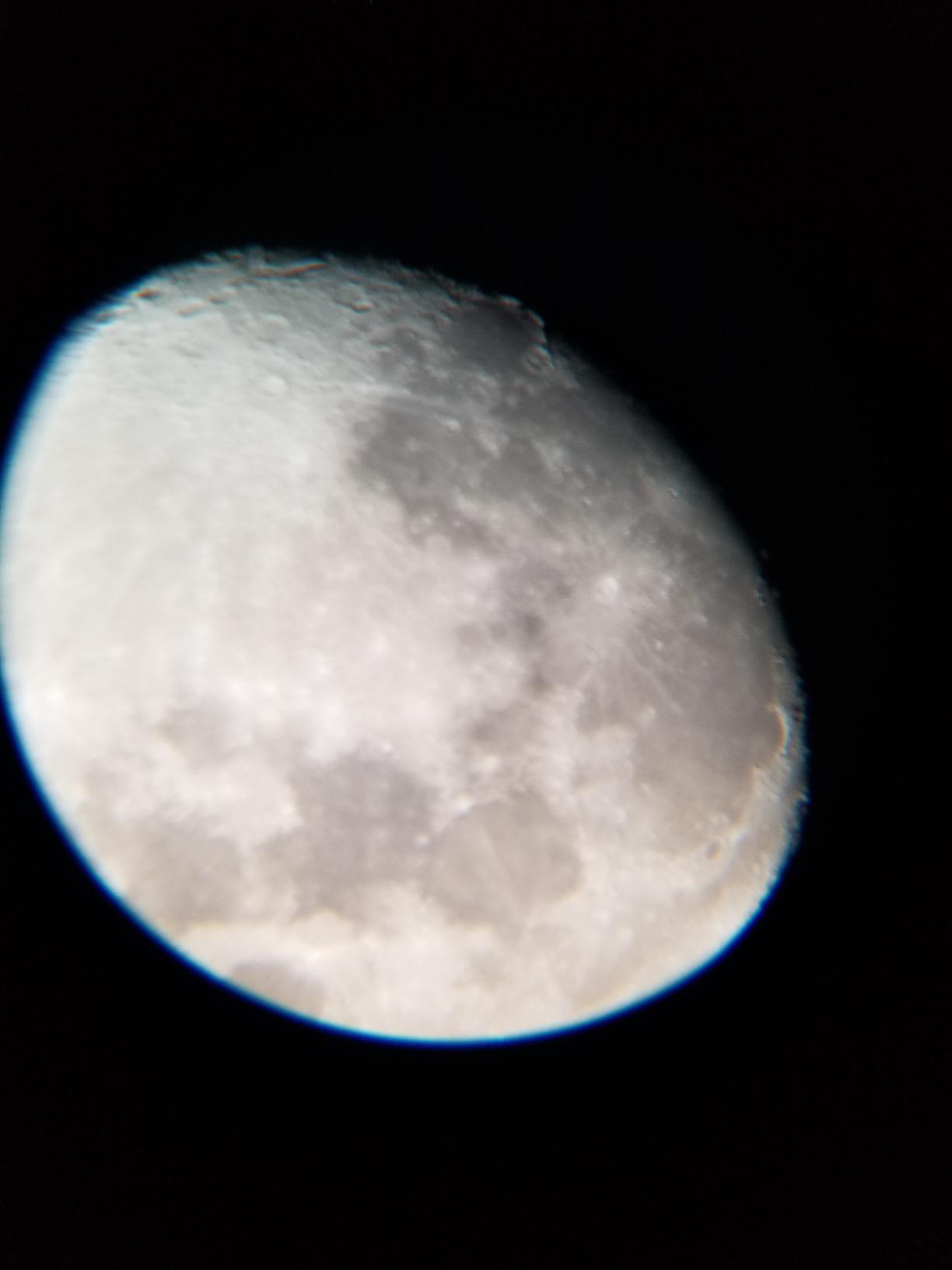
Be realistic about the 4,000-object database though. That is a much shorter list than the 40,000-plus entries on the Celestron forks, and every object on it still has to be visible through 114mm of aperture. The Moon, Jupiter, Saturn, Venus and the Orion Nebula are all within reach; faint galaxies are not.
The manual focus and the basic hand control are the other two limits worth knowing. There is no StarSense camera, no auto-focus and no motorised focuser, so the experience is a step below the SLT and well below the smart telescopes further down.
Why it works as a first computerized telescope?
For a child or an adult who has never looked through a telescope, the guided tour format beats any database. You learn the sky by being walked through it, not by being handed a chart. Many owners report that the first session turned into a monthly habit because of exactly that.
It also has one of the lowest barriers to entry of anything in this roundup that still slews and tracks on its own. If the goal is to see whether astronomy sticks before spending on a bigger scope, this answers the question for the least commitment.
Where the money is better spent?
If you already know you will be observing for years, the aperture ceiling is frustrating. Forum advice consistently steers first-time buyers toward a larger manual Dobsonian, because aperture is what you notice through the eyepiece, and several of the GoTo advantages disappear once you are not hunting for faint targets.
So treat the 114LCM as a stepping stone rather than a destination. It teaches the sky and it works, but every serious upgrade path eventually runs through a bigger aperture or a much longer focal length.
We earn a commission, at no additional cost to you. CERTAIN CONTENT THAT APPEARS ON THIS SITE COMES FROM AMAZON. THIS CONTENT IS PROVIDED 'AS IS' AND IS SUBJECT TO CHANGE OR REMOVAL AT ANY TIME.
4. DWARFLAB Dwarf Mini – Best Rated Pocket GoTo
DWARFLAB Dwarf Mini Smart Telescope – 1.85lb Portable Astronomy Telescope
★★★★★★★★★★Weight: 1.85 lb
Sensor: 1/2.8 inch Sony IMX662
Modes: altazimuth and equatorial
Control: app with plate-solving GoTo
- 1.85 lb grab-and-go body fits a backpack
- plate-solving auto GoTo needs no manual alignment
- equatorial mode reaches 90-second exposures
- built-in stacking and cloud processing
- works under heavy light pollution
- Planets render as featureless discs
- sensor too small for large prints
- Wi-Fi pairing can drop until the app uses home Wi-Fi
- tripod and power bank needed for EQ mode
The Dwarf Mini is by some margin the lightest GoTo telescope in this roundup, small enough to slip into a backpack, and the reason it earns its place is the plate-solving alignment. There is no star-alignment routine, no hand controller and no star charts. You open the app, tap a target, and the scope works out where it is pointing from the image itself.
That changes who these telescopes are for. Owners repeatedly describe stacking good results from a backyard under heavy suburban glow, and the equatorial mode pushes single-frame exposures up to 90 seconds with a built-in light pollution filter, which is where the smart approach starts to pay off on faint nebulae and galaxies.
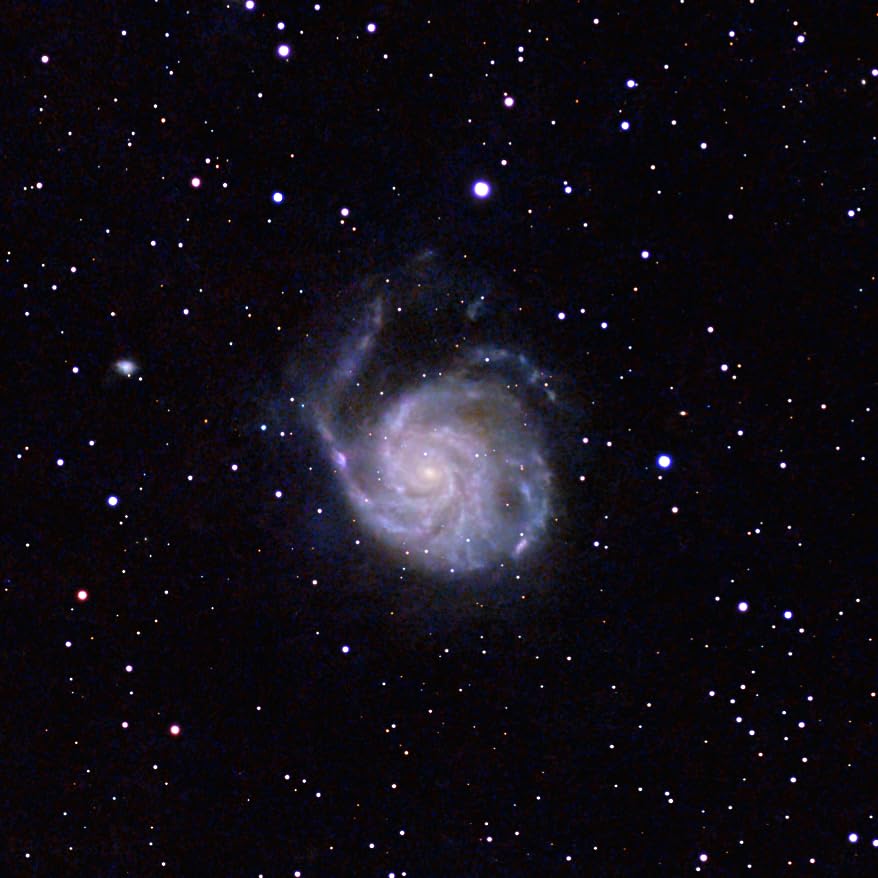
Getting from box to first image takes about three minutes according to the manufacturer, and the app carries a built-in sky atlas so you browse rather than search. The 1/2.8-inch Sony IMX662 sensor with 2.9 micron pixels handles the exposure lengths, and the 360 degree pivot gives you framing freedom without twisting the cable.
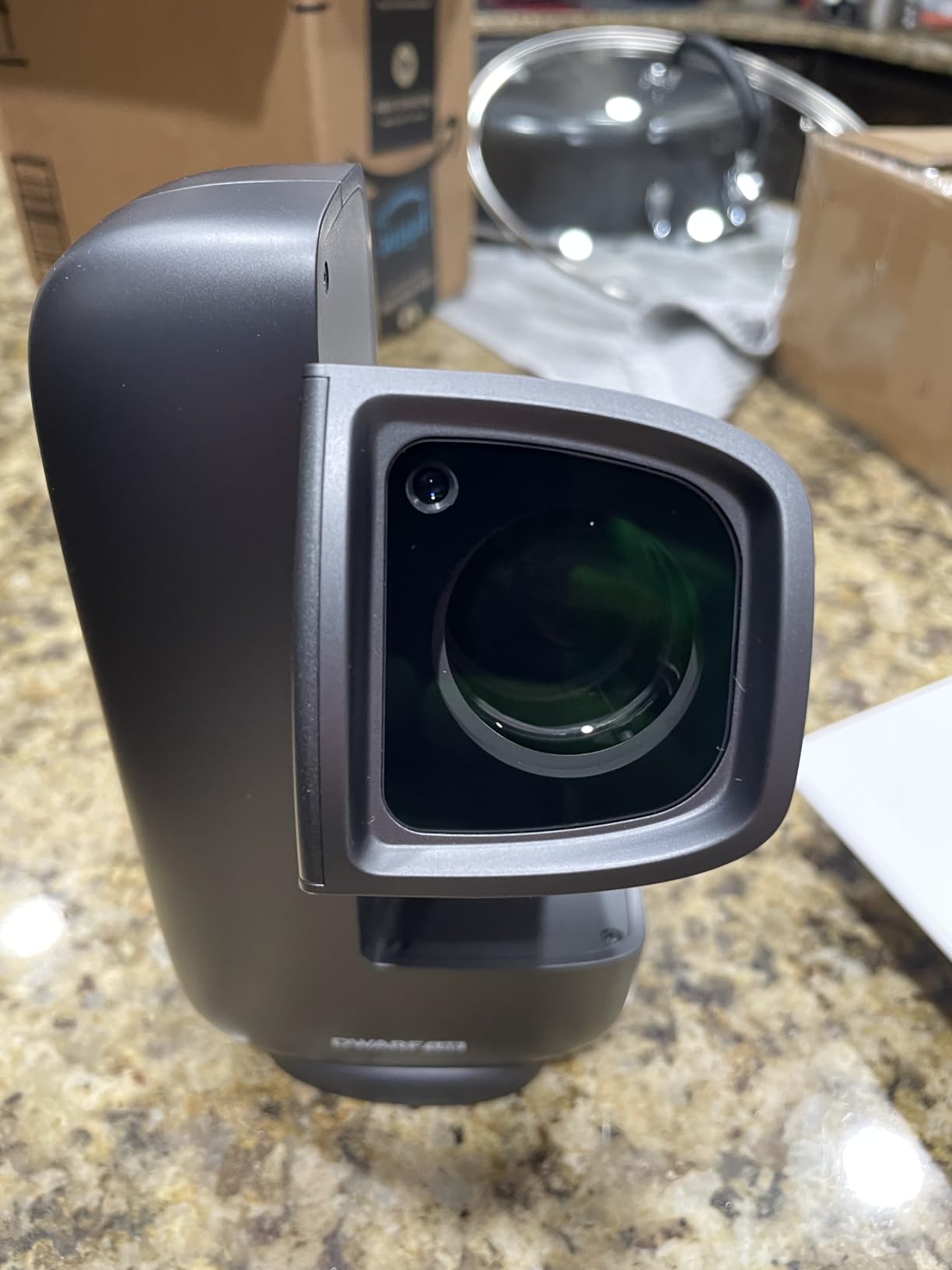
The 2.45 degree field of view is wide enough to frame a large nebula in one shot. The 150mm focal length is short, which is exactly right for deep-sky and wrong for planets: multiple owners note that planets appear as featureless discs, because the sensor was designed for wide-field imaging rather than high magnification.
Why photographers and city observers should shortlist it?
If the goal is finished astrophotography rather than an eyepiece view, the Dwarf Mini handles that workflow without a computer. Built-in stacking plus cloud processing means no computer, no stacking software and no calibration frames, and the 90-second equatorial exposures are the longest single integrations in this roundup.
It is also the easiest scope to justify for travel. At 1.85 lb it is genuinely portable, and the Wi-Fi control means one person can carry it rather than two. A tripod and a power bank are still worth packing for long EQ-mode sessions.
Where it is the wrong tool?
Nobody buys this for planets or for visual observing, and the product itself says so. There is no eyepiece, no lunar crater detail, and no Jupiter banding. If the draw is watching the sky rather than photographing it, the Celestron forks and the tabletop Dobsonian are much better buys.
Two smaller frictions are worth flagging: the Wi-Fi connection sometimes drops until you let the app use your home network, and a few owners report dust inside the lens that cannot be cleaned. Neither is deal-breaking, but both are the kind of detail that smooths out with familiarisation.
We earn a commission, at no additional cost to you. CERTAIN CONTENT THAT APPEARS ON THIS SITE COMES FROM AMAZON. THIS CONTENT IS PROVIDED 'AS IS' AND IS SUBJECT TO CHANGE OR REMOVAL AT ANY TIME.
5. DWARFLAB Dwarf 3 – Best GoTo for Travel and Daylight Use
DWARFLAB Dwarf 3 Smart Telescope, App-Controlled Astrophotography Camera
★★★★★★★★★★Weight: 3 lb
Sensor: 4K tracking
Control: app with auto GoTo
Modes: altazimuth and equatorial
- 3 lb body fits a standard backpack
- dual-lens design covers deep-sky and wide-angle
- 4K auto-tracking keeps frames sharp
- one-tap cloud processing needs no computer
- rated for ages 6 to 98
- Smart sensors are not designed for planetary surface detail
- daytime use limited to telephoto and wide-area capture
The Dwarf 3 is the version of that idea for people whose observing does not stop at nightfall. A dual-lens system pairs a telephoto for deep-sky targets and distant subjects with a wide-angle for Milky Way panoramas and star trails, so the same device covers a birdwatcher in daylight and a galaxy hunter after dark. At 3 lb it fits an ordinary daypack rather than a dedicated case.
Auto-focus and 4K auto-tracking do the tedious parts. Owners credit the tracking with keeping stars and moving subjects sharp, and the one-tap cloud processing as the reason results appear in minutes instead of evenings, since no computer or stacking workflow is involved.
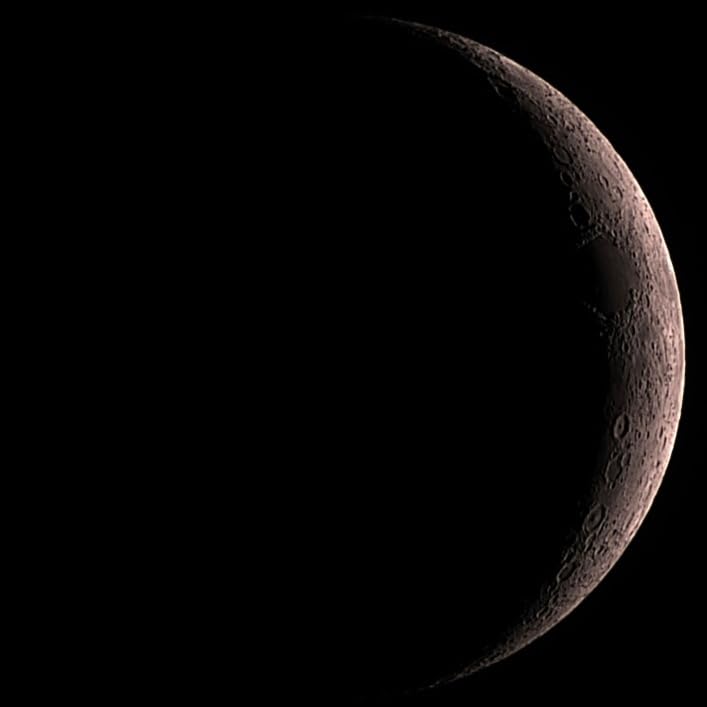
The controls are pitched at a low floor, with the manufacturer quoting a start time of about two minutes and a stated age range from 6 to 98. The carrying bag, magnetic filters and USB-C cable all come in the box, and the app handles target selection and image processing without a hand controller.
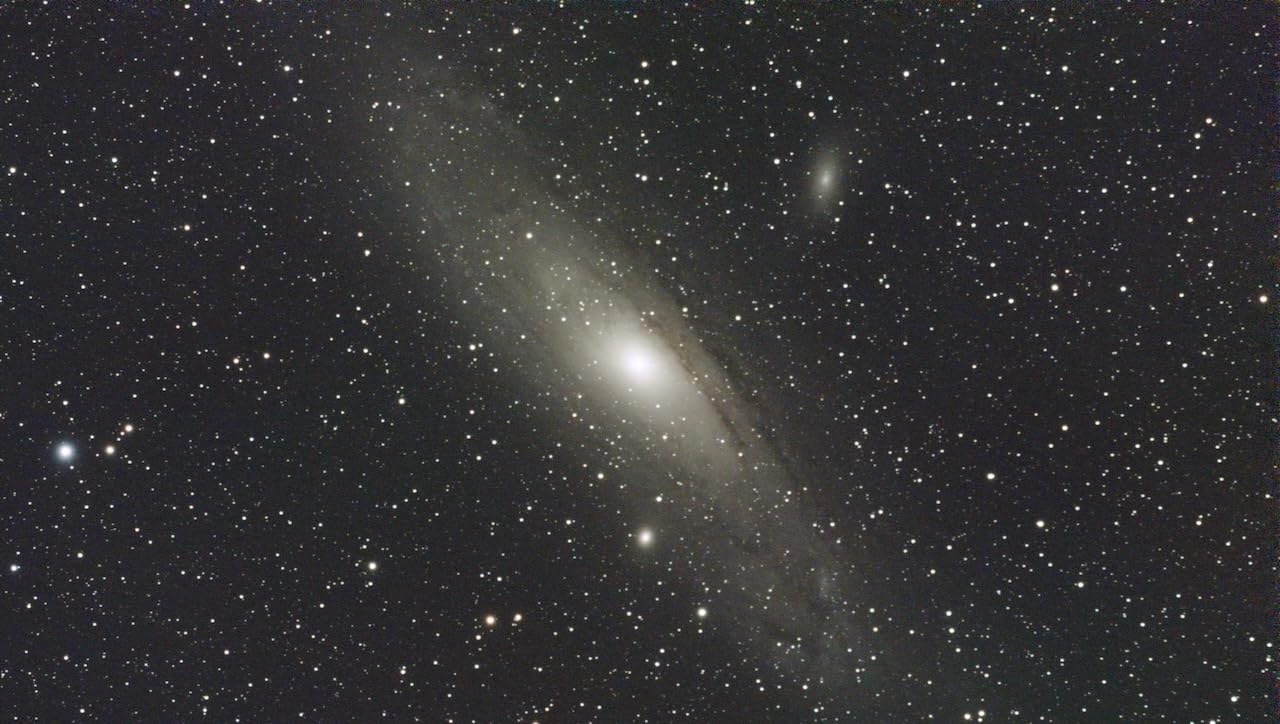
Auto GoTo covers both altazimuth and equatorial modes, which means the scope can make short tracked exposures and then switch to a wide capture. The 35mm objective and 2.56 by 8.74 by 5.59 inch body are still compact enough for a car boot or a carry-on.
Why it earns a place for anyone who travels?
The dual-camera design is the differentiator, not the aperture. Many smart telescopes are night-only instruments, and this one also photographs distant wildlife and wide landscapes in daylight, which roughly doubles the number of sessions you get per year from a single purchase.
It also suits a mixed-ability household. A child can run the app and capture a finished Milky Way frame without adult help, while an experienced user can switch to equatorial mode and take longer integrations when the conditions are right.
Where expectations need adjusting?
Planetary surface detail is out of reach. As with every smart scope in this list, the sensor is matched to wide-field deep-sky and landscape work, so the Moon and planets are targets for capture rather than for surface study. If craters and cloud belts are the goal, use a conventional scope.
Daytime general photography is also limited to the telephoto and wide-angle roles the two lenses were built for. That is a narrower use than the marketing phrasing sometimes suggests, so picture it as an astronomy and long-lens tool rather than a camera.
We earn a commission, at no additional cost to you. CERTAIN CONTENT THAT APPEARS ON THIS SITE COMES FROM AMAZON. THIS CONTENT IS PROVIDED 'AS IS' AND IS SUBJECT TO CHANGE OR REMOVAL AT ANY TIME.
6. ZWO Seestar S30 Pro – Best GoTo for City Skies
ZWO Seestar S30 Pro Smart Telescope, App-Controlled Astrophotography
★★★★★★★★★★Weight: 3.6 lb
Sensor: 4K dual camera
Field of view: 4.6 degrees
Control: app with auto GoTo and tracking
- Power on and go workflow with automatic GoTo
- apochromatic optics plus light pollution filters for urban skies
- 4K dual-camera imaging
- one-tap modes for nebulae galaxies Moon and Sun
- 3.6 lb with anti-dew protection
- Not intended for planetary observation
- device must stay stationary for accurate tracking
- deep-sky quality depends on software settings
The Seestar S30 Pro is built for the observer who does not have dark sky. Apochromatic optics cut colour fringing on bright stars, and the built-in light pollution filters pull usable signal out of urban glow that would defeat a conventional scope in the same garden. That combination is why it is the pick here for anyone observing from a city or a bright suburban street.
The workflow is about as short as this roundup gets: power on, open the app, choose a target. Automatic GoTo and tracking take it from there, and a 4.6 degree field of view covers a large nebula or a rich stretch of the Milky Way in a single frame.
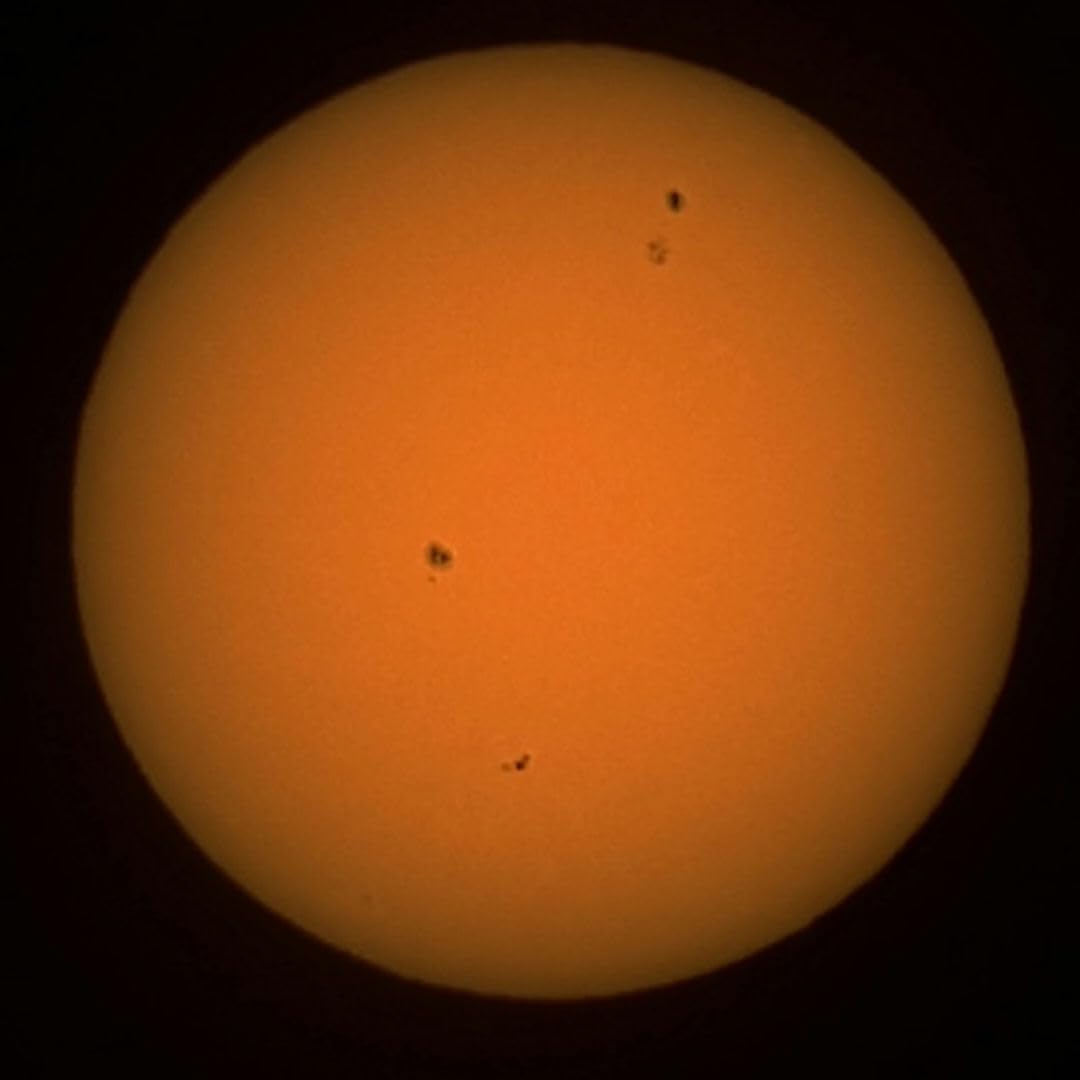
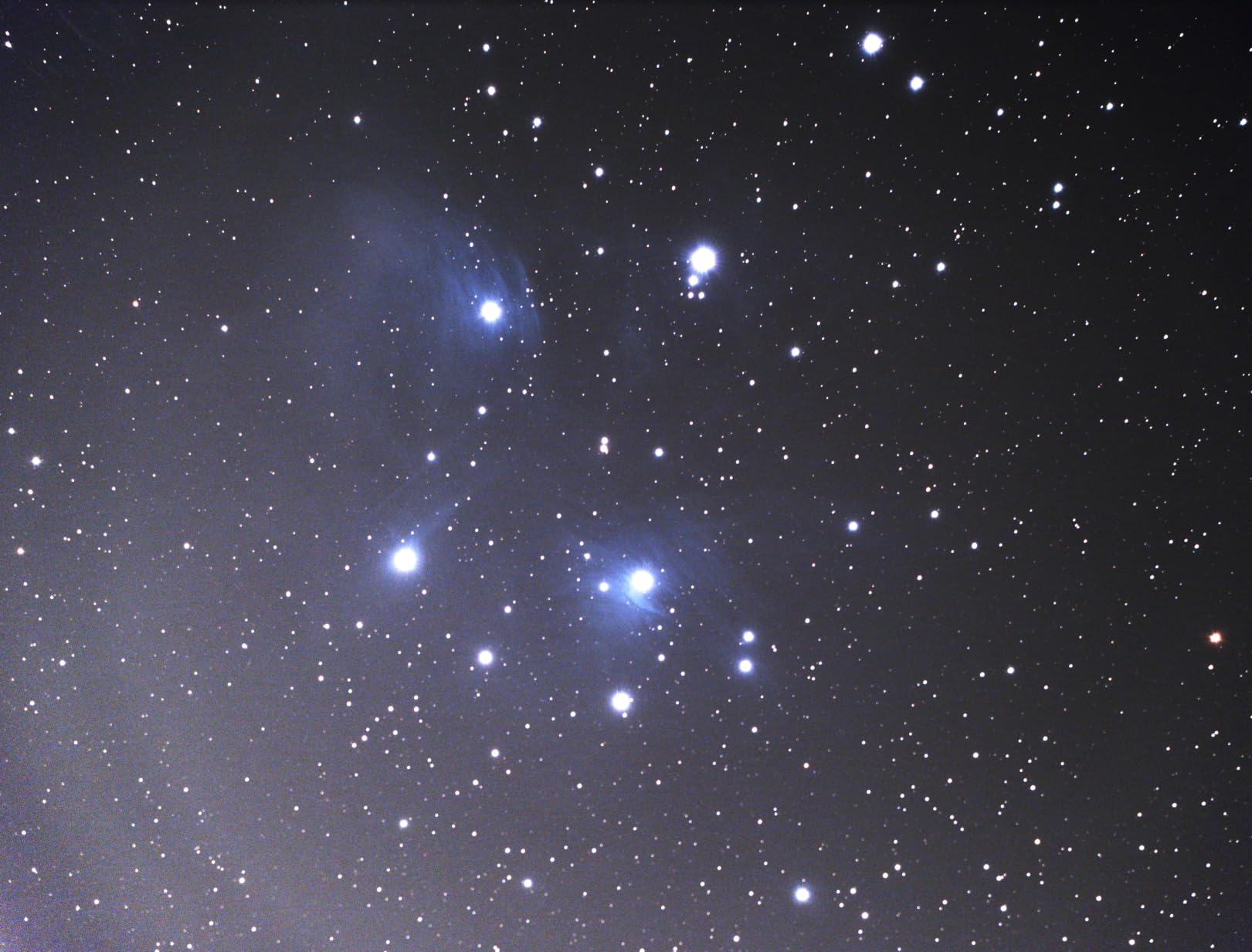
One-tap modes cover the common targets directly, including the Milky Way, star trails, nebulae, galaxies, the Moon and the Sun, with automatic mosaic stitching for wide fields. AI noise reduction and sky/foreground separation handle the processing, and owners point to the combination of capture and processing as the standout feature rather than the optics alone.
At 3.6 lb with anti-dew protection and long-session imaging support, it is built for all-night runs as well as quick trips. A tripod is included, along with a filter, cable and quick start guide, so the box is complete for a first session.
Why light-polluted observers should put it near the top of the list?
GoTo matters most exactly where the sky is worst. A motorised pointing system and filters together do something a manual scope cannot: they make faint objects reachable from a location where those objects are technically above the horizon but effectively invisible. City observers tend to rate this category more highly than dark-sky owners, for that reason.
The Sun and Moon capture modes also add daytime and twilight use that eyepiece-based GoTo scopes cannot offer, which makes it useful for a family that wants a single device for all of it.
Where it will disappoint?
Planetary observation is explicitly not the design target, and no amount of processing changes that. Buy it for nebulae, galaxies and wide-field work, and keep an eyepiece scope on the list if Jupiter is what you actually want to see.
There are two honest conditions on the results. The device has to stay stationary during deep-sky imaging for tracking to hold, and output quality depends on the software settings in the included manual. Owners who read that guidance first get much better frames than those who do not.
We earn a commission, at no additional cost to you. CERTAIN CONTENT THAT APPEARS ON THIS SITE COMES FROM AMAZON. THIS CONTENT IS PROVIDED 'AS IS' AND IS SUBJECT TO CHANGE OR REMOVAL AT ANY TIME.
7. Sky-Watcher Virtuoso GTi 150P – Best Tabletop GoTo Dobsonian
Sky Watcher Sky-Watcher Virtuoso GTI 150P Collapsible Tabletop GoTo Dobsonian Telescope
★★★★★★★★★★Aperture: 150mm f/5 Newtonian
Focal length: 750mm
Mount: altazimuth with built-in Wi-Fi
Control: SynScan Pro app
- 150mm aperture at f/5 gives bright high-contrast views
- built-in Wi-Fi GoTo through the SynScan Pro app
- Freedom Find dual encoders keep alignment when you nudge it by hand
- collapsible tabletop design stores easily
- two Super Plossl eyepieces included
- Altazimuth GoTo mount is for visual observing not long exposures
- 150mm aperture is smaller than 6 inch and 8 inch Dobsonians
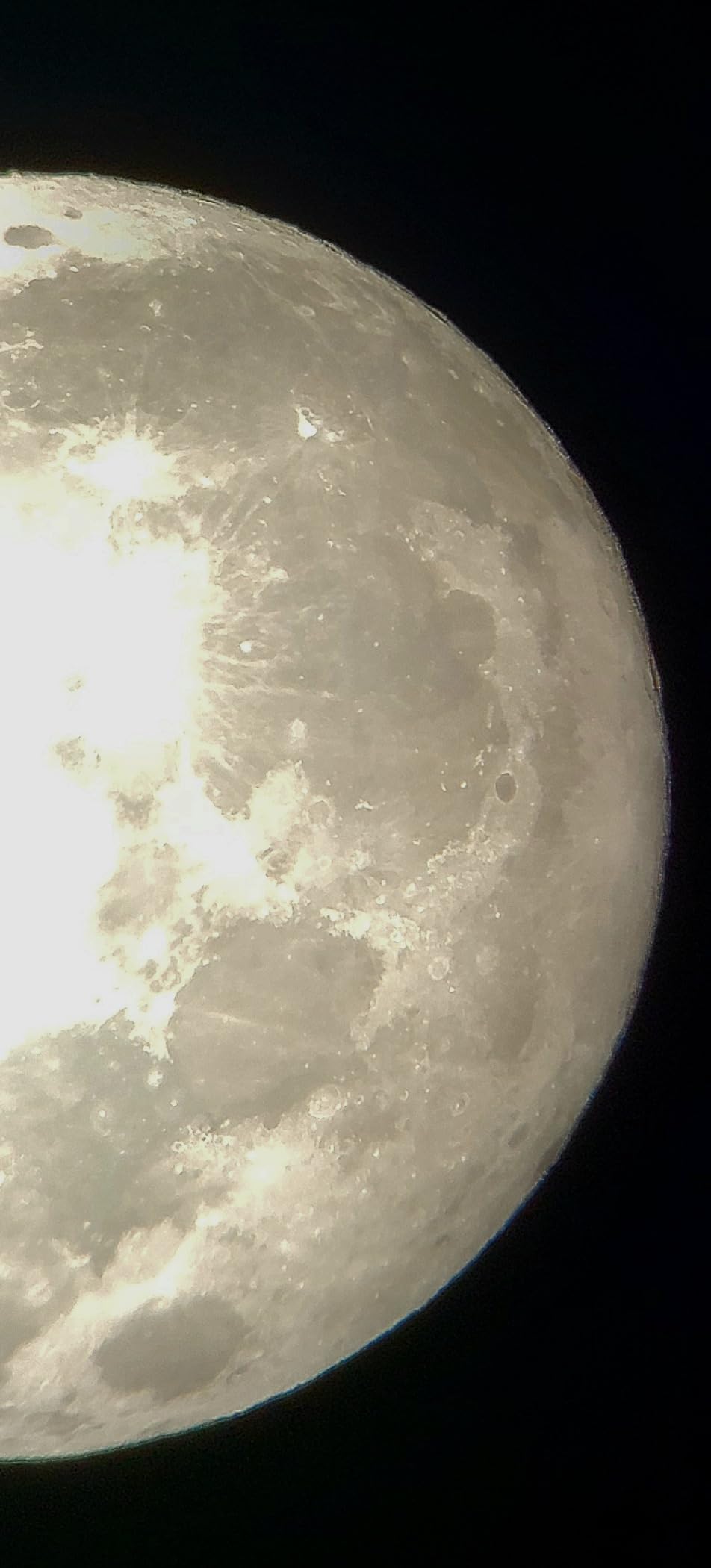
The Virtuoso GTi 150P is the telescope the forums recommend when someone wants a real telescope with real GoTo in a small box. A 150mm aperture at f/5 is a fast light bucket for its size, giving bright, high-contrast views of the Moon, the planets and the brighter deep-sky objects, while the collapsible tube sits on a tabletop base that stores against a wall.
Two design choices separate it from a controller-equipped small Dobsonian. The Wi-Fi is built in, so GoTo runs through the SynScan Pro app with no separate hand controller to buy, and Freedom Find dual encoders let you push the scope by hand to centre a target without losing the alignment you just performed.

That second feature is a real usability win, and owners single it out. Traditional GoTo mounts jam up the moment you nudge the tube, so you re-align. Here the encoders notice the manual movement and correct the model, which means fine centring by hand is a normal part of the workflow rather than an error.
The fast f/5 focal ratio of 750mm also makes the eyepiece choice forgiving. A 0.83 degree field with the included 25mm and 10mm Super Plossl eyepieces covers both wide galaxy fields and planetary detail, and a reflex finder is included.
Why tabletop observers get more than they expect?
Reviewers are consistent about the brightness of the f/5 150mm optic. Planets come out sharp, and the brighter deep-sky targets show structure rather than being featureless smudges, which is not always true at this aperture. It is a genuinely usable instrument rather than a compromise.
It is also the easiest of the conventional GoTo scopes to set up alone. A levelled tabletop base, a power supply, the app and a two-star or plate-solve alignment is the whole routine, and the Wi-Fi removes the hand-controller learning curve that beginners complain about most.
Where it stops short?
Aperture is the honest limit. Six-inch and 8-inch Dobsonians show considerably more on faint galaxies, and the telescope forum consensus is that if you are buying a large Dobsonian anyway, a manual mount is a better spend than GoTo at the same aperture. Choose this for convenience and portability, not for maximum light.
It is also a visual-only platform. The altazimuth GoTo drive tracks well enough to hold a target steady, but long-exposure imaging on an alt-azimuth mount means field rotation, so treat photographs as an occasional extra rather than a goal.
We earn a commission, at no additional cost to you. CERTAIN CONTENT THAT APPEARS ON THIS SITE COMES FROM AMAZON. THIS CONTENT IS PROVIDED 'AS IS' AND IS SUBJECT TO CHANGE OR REMOVAL AT ANY TIME.
8. Sky-Watcher Flextube 300 – Best GoTo for Faint Deep Sky
SkyWatcher Flextube 300 SynScan Dobsonian 12-inch Collapsible Computerized GoTo Large Aperture Telescope (S11820)
★★★★★★★★★★Aperture: 12 inch fully multi-coated
Focal length: 1500mm
Mount: altazimuth SynScan GoTo
Weight: 99.2 lb assembled
- 12 inch aperture gives bright high-contrast views of faint galaxies and nebulae
- collapsible tube keeps collimation
- all-metal gearing on both servo motors
- built-in Wi-Fi smartphone control
- 42000 plus object database with 2 inch Crayford focuser
- Weighs 99.2 lb assembled and needs two people
- collapsing and collimating adds setup time
- 12 inch mirror is slow to reach thermal equilibrium
The Flextube 300 gathers more light than anything else in this roundup by a wide margin. Its 12-inch fully multi-coated borosilicate primary at 94 percent reflectivity, and owners consistently describe views of faint galaxies and nebulae as exceptional in a way the smaller instruments cannot match. If your targets are the dim stuff, aperture is the answer and this is the scope that provides it.
The GoTo side is conventional and well proven. All-metal gearing on both DC servo motors drives a SynScan system with a 42,000-plus object database, built-in Wi-Fi control from a phone or tablet, and a two-inch Crayford focuser with a 1.25-inch adapter and two wide-angle eyepieces in the box.
The collapsible tube is the part that surprises people. A unique strut design lets the optical tube fold down for transport while holding collimation, which is how a 12-inch Dobsonian fits in a car at all. The rating for this model sits below the rest of this list, and the reason is ownership rather than optics: 99.2 pounds fully assembled, split between a 46 lb tube and a 53 lb base.
Setup is the other cost. Collapsing and re-collimating takes longer than rolling out a rigid Dobsonian, and a mirror this size is slow to reach thermal equilibrium, so image quality can drift for a while as temperatures change. Plan for a permanent observing site rather than spontaneous sessions.
Why serious visual observers should focus on the aperture?
At this aperture the GoTo becomes a genuine bonus rather than a substitute for optics. You are not asking a small tube to perform, so the database takes you to targets that would otherwise be invisible, and the drive then holds them steady while you study them. That combination is the best of both halves of the telescope bargain.
The manual-push capability is worth knowing about too, as forum buyers point out. A GoTo Dobsonian can be nudged along by hand for centring, and having a genuine large-aperture Dobsonian here means you can also use it without motors at all if you want a simpler session.
Where it is the wrong choice?
Portability, plainly. Nearly a hundred pounds means two people to move it safely, and the storage problem is real in a home without a garage or a spare room. Any observer who wants grab-and-go sessions will be frustrated by the size within a week.
The thermal settling behaviour also matters in changing conditions, and the collapsible mechanism adds a step that rigid Dobsonians do not have. If your observing spot is a rented city flat with a balcony, this scope is simply the wrong tool, and the budget would be better spent on something you can carry outside on a whim.
We earn a commission, at no additional cost to you. CERTAIN CONTENT THAT APPEARS ON THIS SITE COMES FROM AMAZON. THIS CONTENT IS PROVIDED 'AS IS' AND IS SUBJECT TO CHANGE OR REMOVAL AT ANY TIME.
Aperture vs GoTo: When Computerized Pointing Is Worth It?
The honest answer is that aperture usually wins and GoTo wins in a narrower set of circumstances. Community consensus on astronomy forums is blunt about this: a large manual Dobsonian shows more per unit of money spent than any budget GoTo, and pointing ease is a convenience rather than a quality upgrade. That is worth stating plainly before buying anything with motors in it.
GoTo earns its cost in three situations. The first is light pollution, where galaxies and nebulae are technically above the horizon but effectively invisible, and precise pointing is the only way to reach them at all. The second is shared observing, where a scope that slews to a target keeps children and beginners engaged instead of watching someone hunt through a finder. The third is short sessions: two or three targets before bed, with no intention of learning the sky.
Here is how the eight scopes in this roundup map onto that argument. The 114LCM and 127SLT pair modest apertures with full pointing systems, so they work when you want planets and the Moon located for you. The 8SE and the Flextube 300 are the two that have enough light to make every database entry worth visiting. The Virtuoso GTi sits in between, trading aperture for a package that fits in a cupboard. The three smart telescopes change the question, because they produce images rather than views.
GoTo vs Push-To vs Manual: Which Pointing System Suits You?
There are really three pointing systems, and the cheapest one is not the one sellers push. Manual means you centre objects yourself with a finder, which is why 6-inch and 8-inch Dobsonians dominate beginner recommendations: nothing to learn, nothing to align, and the largest aperture for the money.
Push-to, the family that includes Celestron StarSense technology, keeps a small camera pointed at the sky and beeps when a target is centred so you can push the tube there. It is a middle path with no star alignment at all, though it needs a reasonably dark sky for the camera to identify stars reliably, and it does not track. GoTo is the full version: a database, a slew, and motors that follow the target afterwards.
App-driven smart telescopes add a fourth variant. Rather than aligning to stars, the DWARFLAB and ZWO scopes plate-solve: they look at the actual image and work out where they are pointing, which is why those scopes have no alignment routine to learn. If the alignment step is what has been keeping you out of the hobby, that difference matters more than aperture.
Do You Have to Align a GoTo Telescope Every Time?
Usually yes for a hand-controller GoTo, and it takes minutes rather than evenings. A Celestron fork with SkyAlign needs about three bright objects centred in sequence, which owner reports put at a few minutes on a familiar tripod and a little longer while you are learning where the horizon is. The Virtuoso GTi follows the same pattern, and it also keeps alignment if you nudge the tube by hand thanks to its Freedom Find encoders.
You can usually skip it entirely if the scope does not move. The mount holds its model of the sky until something invalidates it, and on most forks that means resetting the time or moving the telescope, so a scope left set up on a landing pad in the garden will still be aligned the next clear night.
The smart telescopes need no alignment at all, because plate-solving is continuous. Open the app, pick a target, and the scope re-solves as it moves. That single difference is the strongest argument for them if your history with GoTo mounts is frustration.
GoTo Telescopes for Astrophotography: What the Mount Has to Handle?
Visual GoTo and imaging GoTo are different requirements, and the scope you loved for looking is often the wrong one for photographing. The decisive specification is the equatorial mode and the longest exposure the mount can hold without trailing.
Among these eight, the smart scopes lead. The Dwarf Mini reaches 90-second single exposures in equatorial mode with a built-in light pollution filter, and the Dwarf 3 and Seestar S30 Pro both offer altazimuth and equatorial modes with AI stacking handled in the app. All three keep the device stationary for accurate tracking, so they work on a table or a patio table rather than a field.
The conventional scopes are visual platforms. Altazimuth forks and Dobsonian drives hold a target well by eye, but a long exposure of one region of sky rotates the field as the mount tracks, which stacking software can partly correct at the cost of wasted data. The single-arm fork on the NexStar 8SE is stiffer than a small tabletop mount but still not an imaging rig.
If photography is the goal rather than a winter experiment, the smart scopes are simply better tools, and the honest comparison is not against a GoTo telescope at all. The best telescopes for astrophotography guide covers the dedicated mounts and optics that serious imaging needs.
Frequently Asked Questions
What is the best GoTo telescope for a beginner?
The Celestron NexStar 127SLT is the most forgiving entry point, because its Maksutov optics show Saturn and Jupiter with real contrast and SkyAlign setup takes minutes. If your budget stretches, the Celestron NexStar 8SE is the better long-term instrument because the 8-inch aperture makes the object database worth having.
Which GoTo telescope is best for seeing all the planets?
A Maksutov-Cassegrain or a longer-focal-length Newtonian gives the brightest, steadiest planetary images. The Celestron NexStar 127SLT resolves Saturn’s rings and Jupiter’s cloud bands, while the Celestron NexStar 8SE adds enough aperture for the Galilean moons and the lunar terminator. Smart telescopes are not designed for planets at all.
Do I have to align my telescope every time I use it?
On a hand-controller GoTo such as a Celestron fork, yes, and it takes a few minutes rather than an evening. You centre about three bright objects in sequence with SkyAlign. You only need to redo it after moving the scope, resetting the time, or if it is knocked out of position. App-based smart telescopes skip alignment entirely because they plate-solve continuously.
How long does it take to align a GoTo telescope?
Expect roughly three to five minutes for a Celestron SkyAlign routine once you have done it a few times, and closer to ten while you are still learning where the horizon is in your own sky. The Sky-Watcher Virtuoso GTi follows a similar routine through the SynScan Pro app. Plate-solving smart telescopes need no alignment step at all.
Do I need an equatorial mount for a GoTo telescope?
For visual observing, no. Almost every computerized telescope in this roundup is altazimuth, which is simpler, lighter and cheaper, and it tracks targets well enough to look at. You want equatorial behaviour for long-exposure imaging, where field rotation is the problem. The smart telescopes emulate it electronically with an equatorial mode.
Why is my telescope not focusing?
Most cases are three things. A Newtonian reflector needs collimation, which drifts after transport. A Schmidt-Cassegrain or Maksutov has a focus knob that turns a long way before anything changes, so keep turning. And a dew-covered objective or a dirty star diagonal will look like a focus problem when it is really a surface problem.
Is Celestron still in business?
Yes. Celestron has been building telescopes in California since 1960, still lists its California base on product pages, and the scopes in this roundup carry two-year limited warranties with support from its own technicians. The NexStar line is long-running rather than discontinued, which is a good sign for parts and firmware support down the line.
Can you use a GoTo telescope in the city?
That is where GoTo helps most, because it points at faint objects you could never find by eye under city glow. The ZWO Seestar S30 Pro is the strongest pick for urban skies thanks to its light pollution filters and apochromatic optics. A visual scope such as the NexStar 8SE also works, but be realistic about how many deep-sky targets a bright sky will let you see.
Best GoTo Telescope Recommendations in 2026
Start with the Celestron NexStar 8SE. It is the clearest match in this roundup between an 8-inch aperture and a 40,000-plus object database, and that balance is what makes the best GoTo telescopes worth buying instead of a cheaper curiosity. If it is more tube than your life allows, the NexStar 127SLT is the answer, with Maksutov contrast on the planets and a setup routine that takes minutes.
If you want to photograph rather than look, the choice is different. The DWARFLAB Dwarf Mini gives you the longest single exposures and the lightest carry weight in the group, and the ZWO Seestar S30 Pro handles bright urban skies better than anything else here. For a real tabletop telescope with eyepieces, the Sky-Watcher Virtuoso GTi 150P is the compact one, and the Sky-Watcher Flextube 300 is the answer if faint deep-sky objects matter more than moving the telescope at all.
Whatever you pick, the alignment step is the part that puts people off this category. Give it one session on a clear night, and the best GoTo telescopes do the rest.