
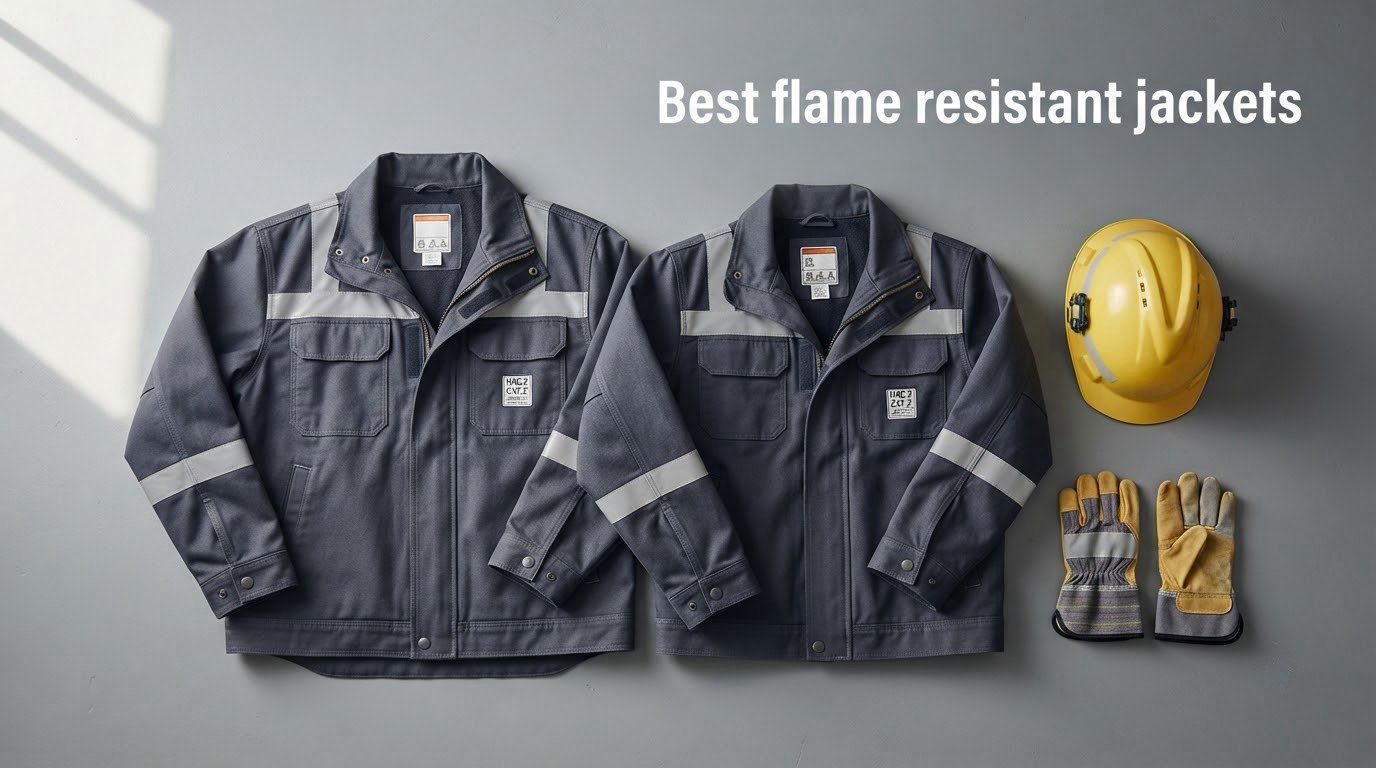
The best flame resistant jackets are not the ones that look the toughest in a catalogue photo. They are the ones whose sewn-in labels tell you exactly what protection you are wearing, in a language your employer, your safety coordinator and your arc flash risk assessment all understand. That is the filter I used across the twelve jackets in this guide, plus what happens to each one after a season of sparks, grinding dust and industrial laundry.
I spent weeks reading specification sheets, care instructions and owner reviews for every jacket below, then cross-checked each claim against the certification mark printed on the garment rather than the marketing copy around it. What follows is a standards-first roundup, because a jacket that is genuinely flame resistant and a jacket that merely looks tough behave very differently when a piece of spatter lands on your forearm.
A word on scope before we start. Flame resistant is not fireproof, no jacket in this list can stop a burn, and every rating printed on a label applies to the garment as sold. Those ratings decline with wear, washing and contamination, which is why the softshell jacket guides on this site make a point of reading the label before trusting any fabric claim. Everything in this roundup is real protective equipment for real hot work, not a survival garment.
Table of Contents
- What Flame Resistant Means (And What It Does Not)?
- The Standards Printed On Your FR Jacket Label
- Top 3 Best Flame Resistant Jackets (October 2026)
- All 12 Flame Resistant Jackets At A Glance
- 1. Black Stallion FN9-30C – Best All-Round FR Welding Jacket
- 2. Lincoln Electric K2985 – Lightweight FR Cotton For Shop Heat
- 3. QeeLink Split Cowhide Leather Jacket – Best For Heavy Spatter
- 4. Viking Journeyman 300D FR Ripstop Jacket – Best For Rain And Hi-Vis Work
- 5. YESWELDER Leather Welding Jacket – Best For Everyday Workshop Use
- 6. Ironcat FR Treated Cotton Sateen Jacket – Best Bought On A Budget
- 7. Carhartt Full Swing Quick Duck Insulated Coat – Best For Deep Cold
- 8. QeeLink NFPA 2112 FR Cotton Welding Jacket – Best For Hot Weather
- 9. BOCOMAL Insulated FR Duck Hooded Coat – Best For High Arc Ratings
- 10. ARCCAPTAIN 11 oz. FR Cotton Welding Jacket
- 11. ARCCAPTAIN Leather Welding Jacket – The Best Rated In The Set
- 12. BOCOMAL FR Hooded Flannel Plaid – CAT2 With A Removable Hood
- How To Choose A Flame Resistant Jacket?
- How To Tell If A Jacket Is Really Flame Resistant?
- Washing And Caring For Flame Resistant Jackets
- Frequently Asked Questions
- Are Carhartt coats flame resistant?
- Is flame resistant the same as fireproof?
- What clothing material is most fire resistant?
- Is CAT 3 FR better than CAT 2?
- Can you wash a flame resistant jacket?
- Do FR jackets lose protection over time?
- What is the best brand of flame resistant workwear?
- What is the best winter jacket for construction workers?
- The Best Flame Resistant Jackets To Buy In 2026
What Flame Resistant Means (And What It Does Not)?
A flame resistant jacket is built from fibres or a fabric finish that self-extinguish and limit the spread of flame, so heat is moved away from your skin and the garment chars rather than melting into it. It slows a flash fire or a spark exposure. It does not prevent a burn, and it is not designed to keep you safe in a structure fire or any fully engulfed fire scenario.
Four words get used interchangeably in workwear marketing, and only one of them is a real technical category. Flame resistant is a performance that a garment either has or does not have, measured by a test standard. Flame retardant usually describes the chemical treatment or the additive used to achieve it, most often on cotton duck. Fire resistant is a loose synonym for flame resistant, and it tells you nothing on its own. Fireproof describes a performance that no clothing fabric achieves, and any seller using it is describing an unachievable claim.
There is a second distinction that trips people up constantly, and it matters if you work around static. Flame resistant means the garment will not fuel a fire. Arc resistant, usually labelled AR, means the garment will not ignite from an electrical arc and carries an arc rating measured in cal/cm2. Multi-hazard garments combine both and are commonly marked AR/FR. A jacket can be one without the other, which is why an FR welding jacket is a poor choice for a lineworker and vice versa.
Finally, FR is one layer of a system. A jacket, a hood, gloves, trousers and a face shield each contribute separately to your thermal protection value, and an unprotected cotton shirt or an uncovered wrist can undo the benefit of a certified coat. Firefighters understand this better than anyone: nobody buys a helmet without the hood.
The Standards Printed On Your FR Jacket Label
Every genuinely certified jacket carries a permanent label stating which tests it passed. These are the ones you will actually meet in US and Canadian workwear, in plain language.
ASTM D6413 is the vertical flame test used on lightweight cotton welding shirts and jackets. It measures afterflame time, afterflame and char length, flame resistance, and it also carries an anti-static option when the fabric is treated for it. Most 9 oz. and 11 oz. FR cotton welder jackets in this roundup are tested to this standard, which covers momentary contact with an open flame, not an arc flash event.
NFPA 2112 is the standard for protective clothing for flash fire, and it is the one most US employers, oil and gas operators and safety programmes actually reference on a purchase order. It requires both flame resistance and heat-transfer performance measured in terms of afterflame, heat flux and heat transfer. A jacket that says NFPA 2112 has been tested to a real flash fire exposure scenario, not just a small open flame.
NFPA 70E is the standard for electrical safety in the workplace, and the one that drives arc flash category decisions. It is what converts a lab test result into a CAT rating a worker can be assigned against.
ASTM F1506 is the performance specification for flame-resistant clothing for protection of industrial personnel against short-duration thermal exposures from fire. Combined with NFPA 70E it produces the familiar HRC or CAT number on the label.
EN ISO 11612 is the European and international standard covering open flame, heat and splatter protection, with flame spread, heat transfer and manikin test results. If you work outside North America this is the mark to look for.
CAN/CGSB-4.2 No.27.10 and ASTM D6413 show up together on Canadian-market rain shells, and CSA Z96-15 plus ANSI/ISEA 107-2015 cover high-visibility performance, which is a separate requirement from flame resistance and can be combined on one garment.
Those standards produce two numbers you will see on arc-rated labels. ATPV, the arc thermal performance value, is the incident energy in cal/cm2 the fabric can be exposed to before a second-degree burn would occur, tested in a lab. The CAT scale wraps it up into four categories, each one representing roughly a doubling of incident energy: CAT 1 at 4 cal/cm2, CAT 2 at 8 cal/cm2, CAT 3 at 25 cal/cm2 and CAT 4 at 40 cal/cm2. A higher CAT rating means the garment is tested for a more energetic event, so yes, CAT 3 is better than CAT 2, but only if your incident energy analysis says you face that much energy. Wearing a CAT 4 coat does not upgrade you to CAT 4 protection; the whole system, including layers, tools and technique, has to match the risk.
If you want the deeper breakdown on fabrics and weatherproofing before you commit, our guides to insulated jackets and hardshell jackets cover the layering and shell decisions that sit underneath the FR layer.
Top 3 Best Flame Resistant Jackets (October 2026)
Black Stallion FN9-30C
- 9 oz. FR treated cotton
- Welder's collar
- Leather-reinforced snaps
- Scribe pocket

Lincoln Electric K2985
- ASTM D6413 9 oz. FR cotton
- Anti-static coating
- Chrome-plated snap cuffs
- 50 wash cycles

QeeLink Split Cowhide Leather
- Split cowhide leather
- Kevlar thread
- Reinforced rivets
- 4 tool pockets
The Black Stallion earns the top slot because of what its label, its fabric weight and its review history all agree on: a 9 oz. FR treated cotton body, a welder’s collar, leather-reinforced snaps and more than 3,400 owner reviews, which makes it the most thoroughly worn jacket in this group. The Lincoln Electric wins on comfort in a warm shop and the only explicitly stated 50-cycle wash life in the set. The QeeLink leather coat is the one to buy when the work involves heavy spatter, grinding and heat that cotton simply will not survive.
All 12 Flame Resistant Jackets At A Glance
| Product | Key Specs | Pricing |
|---|---|---|
| Black Stallion FN9-30C FR Cotton Welding Jacket |
|
Check Latest Price |
| Lincoln Electric K2985 FR Cotton Welding Jacket |
|
Check Latest Price |
| QeeLink Split Cowhide Leather Welding Jacket |
|
Check Latest Price |
 Viking Journeyman 300D FR Ripstop Jacket Viking Journeyman 300D FR Ripstop Jacket |
|
Check Latest Price |
 YESWELDER Leather Welding Jacket YESWELDER Leather Welding Jacket |
|
Check Latest Price |
 Ironcat 9 oz. FR Treated Cotton Sateen Jacket Ironcat 9 oz. FR Treated Cotton Sateen Jacket |
|
Check Latest Price |
 Carhartt Full Swing Quick Duck Insulated Coat Carhartt Full Swing Quick Duck Insulated Coat |
|
Check Latest Price |
 QeeLink NFPA 2112 FR Cotton Welding Jacket QeeLink NFPA 2112 FR Cotton Welding Jacket |
|
Check Latest Price |
 BOCOMAL Insulated FR Duck Hooded Coat CAT4 BOCOMAL Insulated FR Duck Hooded Coat CAT4 |
|
Check Latest Price |
 ARCCAPTAIN 11 oz. FR Cotton Welding Jacket ARCCAPTAIN 11 oz. FR Cotton Welding Jacket |
|
Check Latest Price |
 ARCCAPTAIN Leather Welding Jacket ARCCAPTAIN Leather Welding Jacket |
|
Check Latest Price |
 BOCOMAL FR Hooded Flannel Plaid CAT2 BOCOMAL FR Hooded Flannel Plaid CAT2 |
|
Check Latest Price |
1. Black Stallion FN9-30C – Best All-Round FR Welding Jacket
Black Stallion FN9-30C 30″ 9oz. Navy FR Cotton Welding Jacket, Large
★★★★★★★★★★9 oz. FR treated cotton
Welder's collar
Leather-reinforced snaps
Scribe pocket
- Most thoroughly reviewed jacket in the set
- Lightweight 9 oz. cotton that runs cooler than leather
- Reinforced snaps plus cuff snaps for glove coverage
- Scribe and interior pockets
- Too light for heavy slag or sustained overhead stick welding
- Runs long in the body
- Sleeve length can be short for very long arms
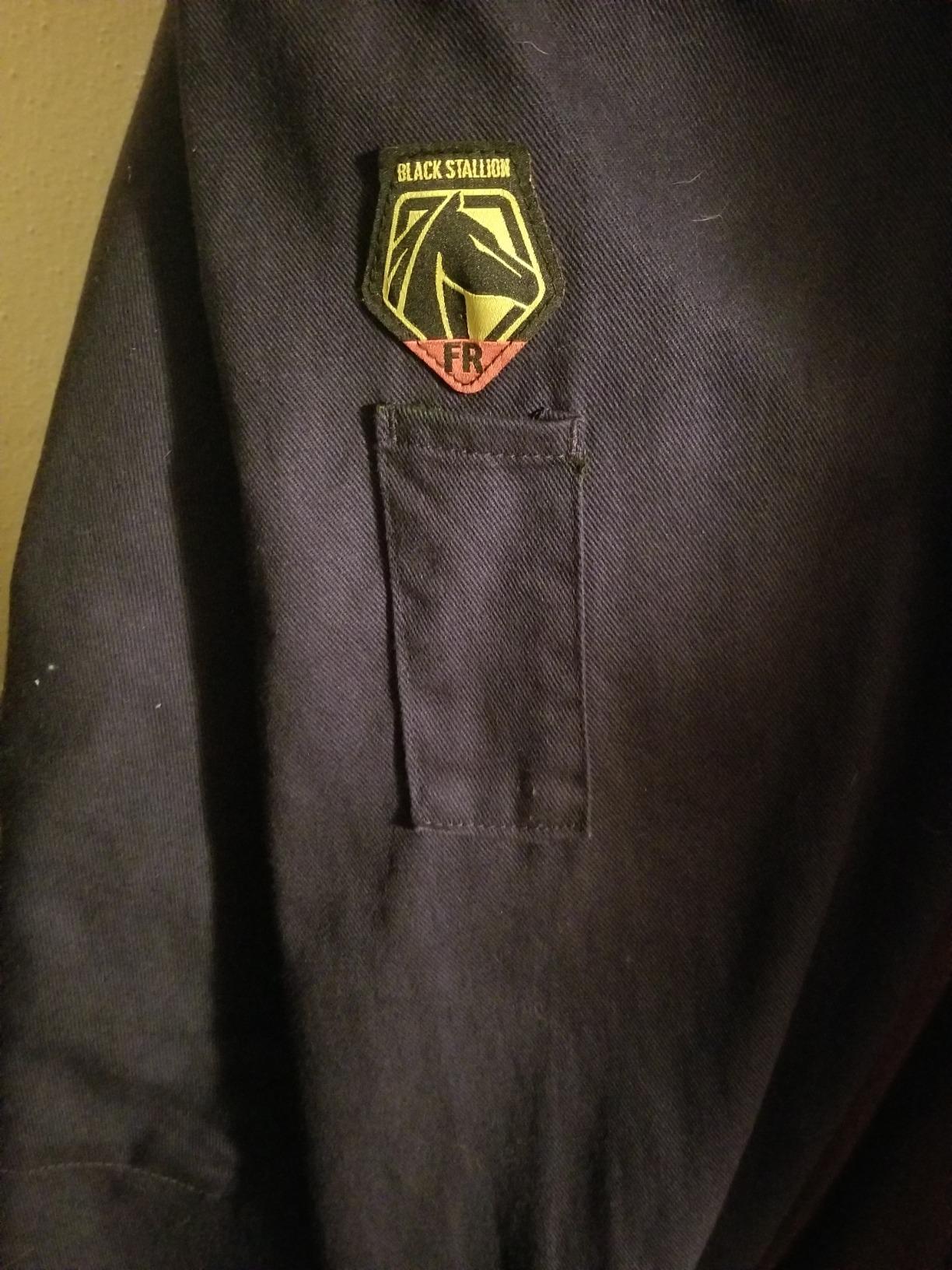
This is the jacket I keep coming back to. The Black Stallion FN9-30C is a 30 inch 9 oz. flame-resistant treated cotton welding jacket, and with more than 3,400 reviews averaging 4.6 stars it is by a wide margin the most battle-tested garment in this guide. Owners describe it as comfortable, well fitted and effective for general spark protection, with a 77 percent five-star share.
What makes it work is that it is not trying to be a hero garment. It is a light-to-medium duty welder’s jacket built around the parts that actually fail first: a welder’s collar for neck protection, six snap buttons with a collar button, and leather reinforcement on all the snaps so they survive being hit with a chip of metal. The scribe pocket for welding pencils, soapstone and paint markers is a small detail that tells you the people who designed it were welders.
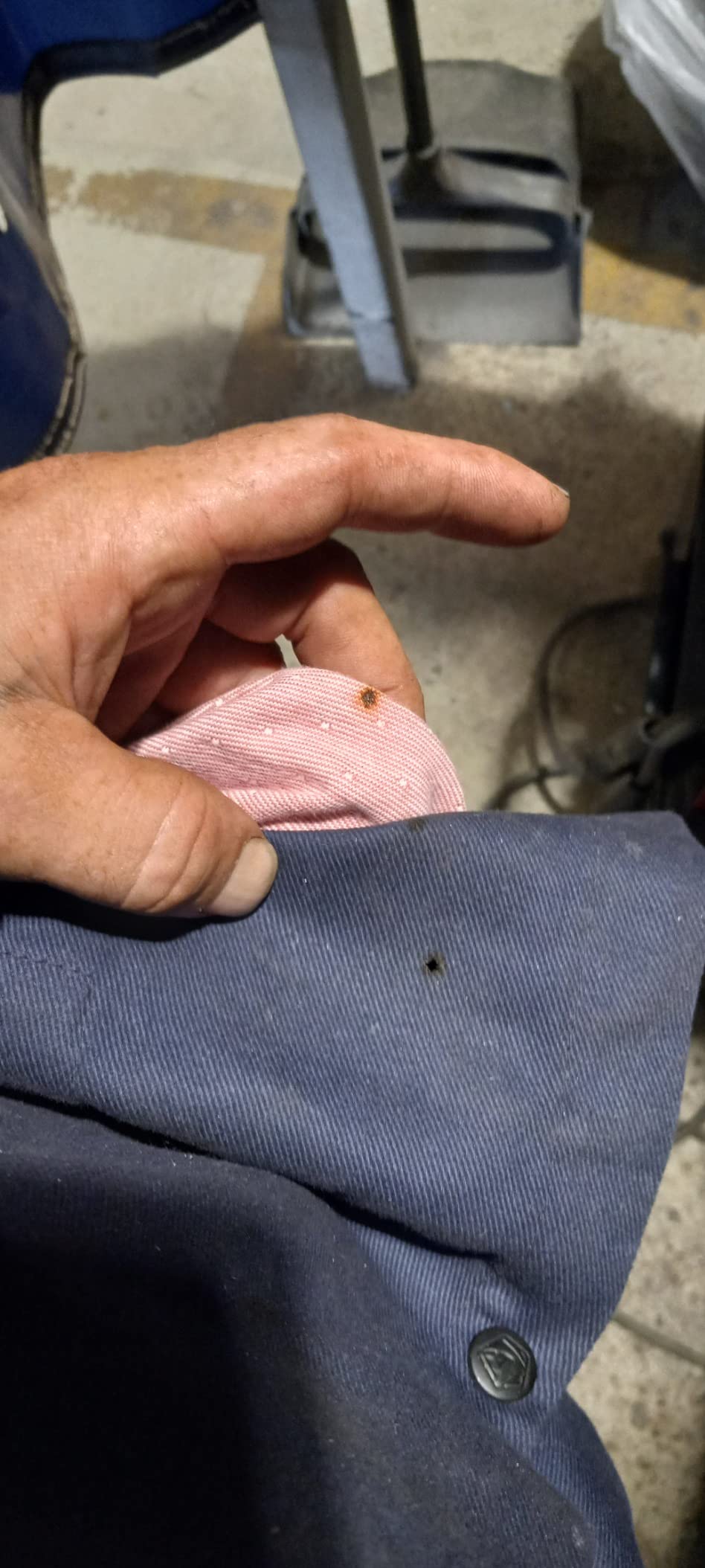
Compared with the leather options in this roundup, 9 oz. FR cotton is dramatically cooler, which matters in a shop in summer. The trade is heat resistance, and the reviews are honest about where the line sits: 9 oz. cotton burns through with heavy slag or overhead stick welding. For MIG and TIG work, general fab shop maintenance and shorter shifts, it holds up well.
Sizing is the one thing to think about before you order. Several owners report the body runs long and suggest sizing down for a regular fit, and a few mention sleeve length being short for very long arms. Both are worth checking against a jacket you already own that fits well.
When This Jacket Is The Right Call?
Pick this one if you are a welder or fab shop technician doing MIG, TIG or general maintenance, you want a certified FR layer that does not make you sweat through a summer shift, and you would rather replace a garment every few years than maintain leather. It is also the safest default recommendation for someone buying their first properly labelled FR jacket, because the fabric weight and the collar design are conservative choices that suit a wide range of spark and spatter exposure.
When To Look Elsewhere?
Skip it if your work involves sustained overhead stick welding, heavy slag, or grinding where sparks come at you hot and fast for hours. In that case the leather jackets in this guide are a better match. If you work on energised equipment and need an arc rating rather than a flame rating, this is the wrong category entirely and you need an ASTM F1506 labelled garment with a CAT number on it.
We earn a commission, at no additional cost to you. CERTAIN CONTENT THAT APPEARS ON THIS SITE COMES FROM AMAZON. THIS CONTENT IS PROVIDED 'AS IS' AND IS SUBJECT TO CHANGE OR REMOVAL AT ANY TIME.
2. Lincoln Electric K2985 – Lightweight FR Cotton For Shop Heat
Lincoln Electric Premium Flame Resistant (FR) Cotton Welding Jacket | Comfortable | Black | Medium | K2985-M
★★★★★★★★★★ASTM D6413 9 oz. FR cotton
Anti-static finish
Chrome snap cuffs
50 commercial washes
- Breathable build that reduces heat buildup
- Flip-up collar blocks arc rays and spatter
- Snap cuffs close wrist and forearm gaps
- Machine washable for 50 commercial cycles
- Light cotton is limited against heavy slag or long overhead work
- Only one internal pocket
The Lincoln Electric K2985 is a name you will recognise, and it is a long-running fixture in welder’s supply stores for a reason. It is 9 oz. ASTM D6413 compliant FR black cotton with an anti-static coating, and at 4.6 stars across more than 2,700 reviews it holds a 76 percent five-star share. That is a well-worn garment, not a new listing that has not been tested yet.
The design priority here is airflow. The technical description calls out lightweight breathable FR material for consistent airflow, which is the single most common complaint about FR cotton, and the flip-up collar is specified for neck protection from arc rays, spatter and sparks. Chrome-plated metal snaps at the cuffs seal the wrist gap, which is one of the places sparks reliably find a route in.
What separates it from other 9 oz. cotton jackets is the stated wash life: machine washable for up to 50 commercial cycles while retaining its FR properties. That is a concrete number rather than a vague durability claim, and it makes this a good choice for a shop with an industrial laundry, where a treated cotton jacket is going to be washed every week.
What You Are Choosing Here?
This is the jacket for a person who works in a warm shop, moves between workstations, and wants FR protection that does not add to the heat problem. Owners single out breathability, collar coverage and washability as the reasons they keep buying it. It suits students, hobby welders doing weekend garage work, maintenance techs and anyone in a small fab shop without climate control.
Limits Worth Knowing
Like the other 9 oz. cotton jackets here, it is aimed at general welding rather than heavy slag or extreme radiant heat exposure. The single large inside pocket is also the only storage, so if you carry tools, a scribe pocket is something you will miss. Plan on the same sizing check as any work jacket: measure a coat you like and compare, because the brand does not offer a true short or tall length across the range.
We earn a commission, at no additional cost to you. CERTAIN CONTENT THAT APPEARS ON THIS SITE COMES FROM AMAZON. THIS CONTENT IS PROVIDED 'AS IS' AND IS SUBJECT TO CHANGE OR REMOVAL AT ANY TIME.
3. QeeLink Split Cowhide Leather Jacket – Best For Heavy Spatter
Leather Welding Work Jacket by QeeLink – Flame-Resistant Heavy Duty Split Cowhide Leather (Large)
★★★★★★★★★★Split cowhide leather
Heat-resistant Kevlar thread
Corrosion-resistant rivets
4 tool pockets
- Thick leather shrugs off spatter and heavy slag
- Construction wears in rather than out
- Four pockets with sleeve soapstone holders
- Adjustable neck cuffs and waist
- Not excessively hot for leather
- Runs small
- size up one or two
- Strong tanning odour on arrival
- Hook-and-loop and snap closure takes practice
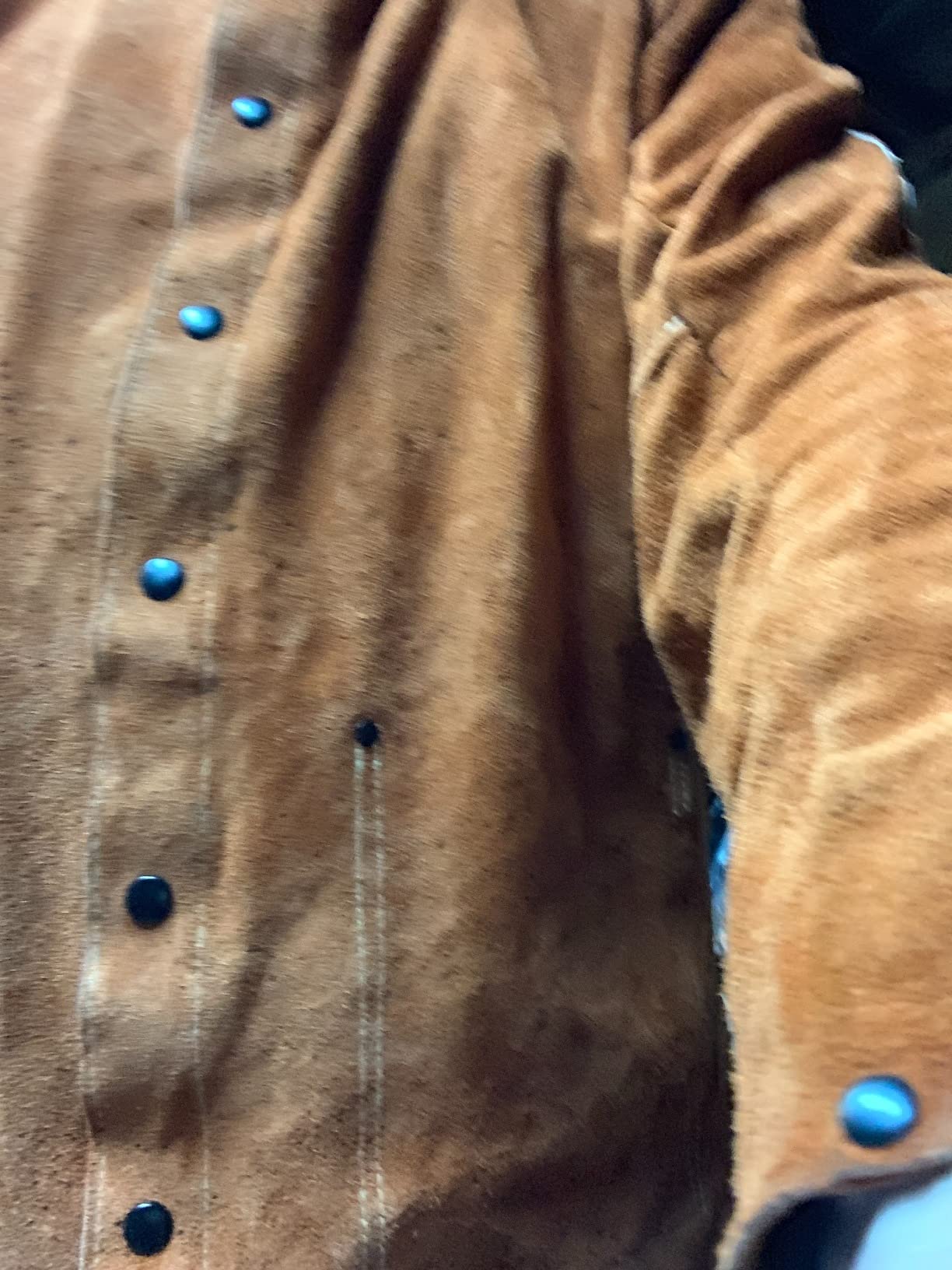
When cotton is not enough, this is the category. The QeeLink jacket is heavy-duty heat and flame-resistant split cowhide leather sewn with heat-resistant US Kevlar thread, with corrosion-resistant rivets placed in the high-stress areas. It holds a 4.6 rating across more than 2,000 reviews and a 77 percent five-star share, and the dominant themes in the reviews are genuine heat and spatter protection plus sturdy construction.
Leather works here for a reason that is worth understanding: it does not self-extinguish the way treated cotton does, it simply does not ignite. That makes it a genuinely strong answer to sustained radiant heat and spatter, at the cost of weight and heat load on the wearer. Reviewers repeatedly note that it is not excessively hot for a leather jacket, which is the fairest thing anyone can say about cowhide in a hot shop.

The details are what separate this from a generic welder’s coat. There is a large inside pocket, a large outside pocket, and two soapstone pockets per sleeve, which sounds like overkill until you have welded and needed both hands. Adjustable neck, cuffs and waist close the entry points that sparks use, and the package weighs 4.41 pounds, so you know what you are carrying before the first weld.
Owners also use it beyond welding. Shipyards, blacksmithing, foundry work and auto repair all show up repeatedly in the reviews, because the same heat and spatter resistance applies. The construction is described as wearing in rather than out, which is the opposite complaint to the one most FR garments attract.
Who This Suits Best?
Choose this jacket if you weld heavy fabrication, repair large equipment, do foundry or shipyard work, or spend your days grinding and cutting where sparks are constant and hot. It is also the practical answer for anyone who has already had a cotton jacket burn through and would rather solve the problem once. The four-pocket layout and adjustable closures suit people who work alone and need their tools on them.
What To Watch Out For?
Sizing runs small. Several buyers recommend going up one or two sizes, and this is the most common adjustment in the reviews. Fresh tan leather also arrives with a strong odour that needs a few days of airing out. The hook-and-loop plus snap front closure is a deliberate design to keep debris out, but it does take a little getting used to compared with a simple snap front.
We earn a commission, at no additional cost to you. CERTAIN CONTENT THAT APPEARS ON THIS SITE COMES FROM AMAZON. THIS CONTENT IS PROVIDED 'AS IS' AND IS SUBJECT TO CHANGE OR REMOVAL AT ANY TIME.
4. Viking Journeyman 300D FR Ripstop Jacket – Best For Rain And Hi-Vis Work
Viking Journeyman Men’s 300D FR Ripstop Jacket, Black – X-Large
★★★★★★★★★★FR 300D ripstop poly
Waterproof with storm flap
CSA and ANSI hi-vis
Hood and vents
- Blocks wind and heavy rain while staying FR
- Reflective chest straps for roadside work
- Roomy cut that layers over warm clothing
- Durable ripstop that resists tearing
- Unlined shell with no insulation
- Non-standard zipper side for US wearers
- Fiddly storm-flap velcro
- Generous fit
- some size down
The Viking Journeyman answers a problem most of this roundup ignores: what do you wear when the flame risk is real and the weather is worse. It is an FR-treated 300 denier trilobal ripstop polyester with PU backing, fully waterproof, tested to CAN/CGSB-4.2 No.27.10 and ASTM D6413 for momentary contact with open flame. It scores 4.6 stars across more than 1,600 reviews with an 80 percent five-star share.
What stands out is the combination of flame and visibility compliance. The jacket is CSA Z96-15 Class 1-Level 2 and ANSI/ISEA 107-2015 Type O Class 1 compliant with reflective chest straps, so it carries both ratings in one garment. For utility, roadside and pipeline work where visibility is as important as flame resistance, that pairing is rare and useful.
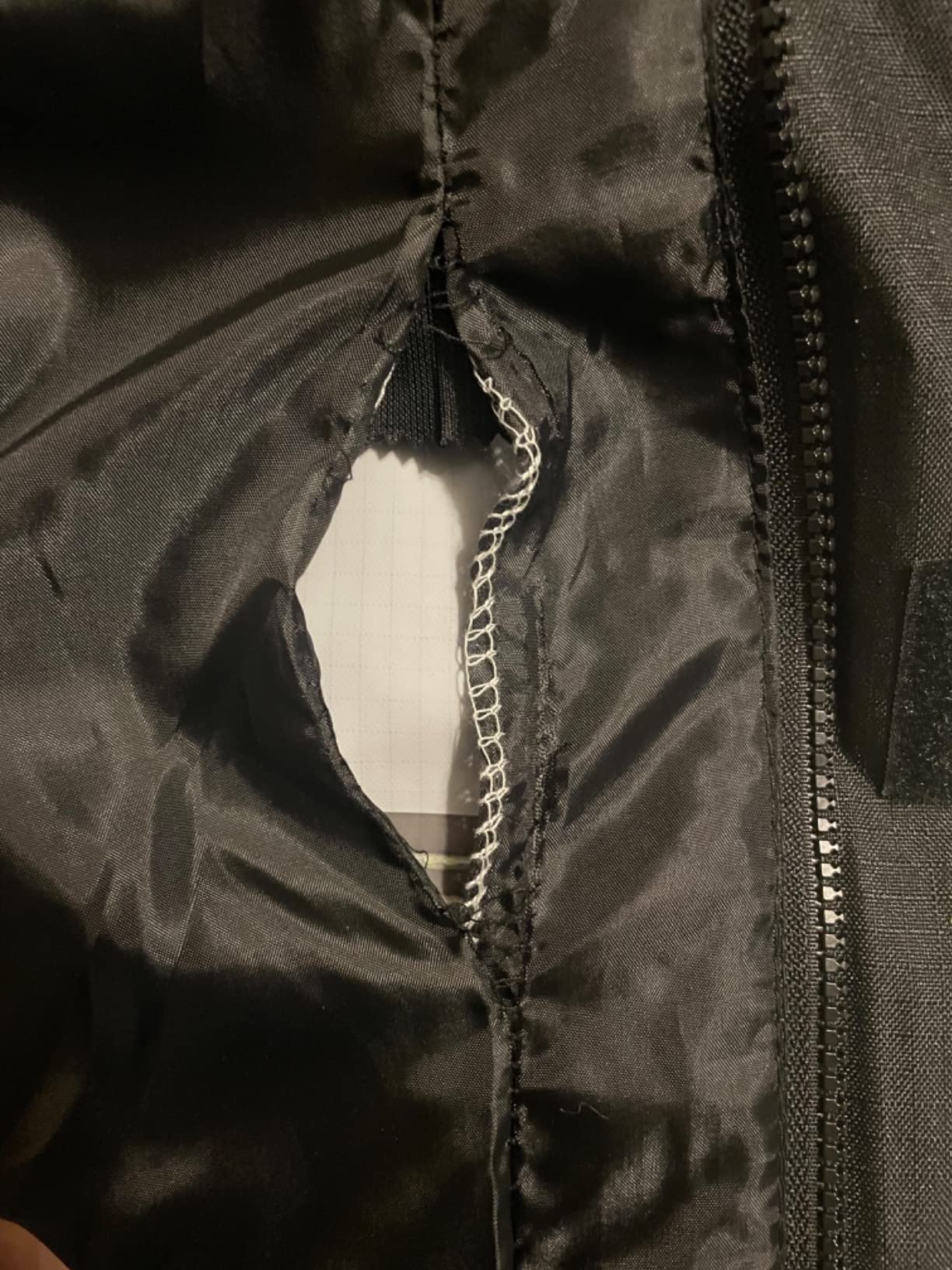
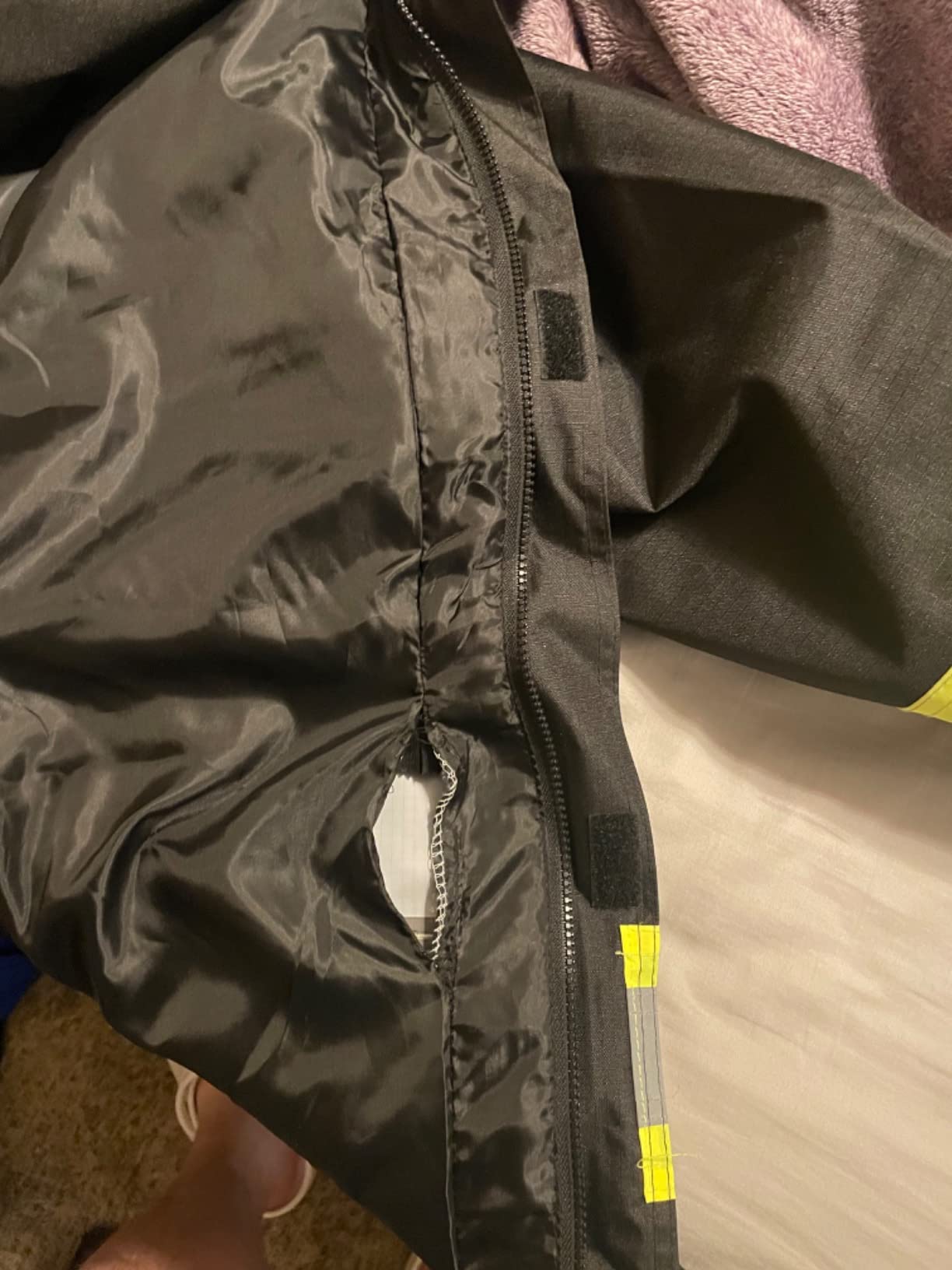
Construction details are practical rather than decorative. A detachable Stormblaster hood, a fleece-lined collar, a storm-flap zipper, zippered pockets, front and back vents for heat release, and hook-and-loop wrist adjusters. Reviewers describe a roomy cut that layers easily over warm clothing, and a smooth interior fabric that makes it quick to put on and off, which matters when you are getting in and out of a truck all day.
One caution on waterproofing and FR: a membrane or coating changes how a garment behaves in a flame exposure, so always defer to the manufacturer’s certification rather than assuming a waterproof shell carries the same rating as a dry FR fabric. In this case the label covers it explicitly.
Best Use Cases
This is the jacket for outdoor crews working in rain, wind and cold coastal conditions, particularly where high visibility matters. It layers over an insulated FR layer without binding at the shoulders. Buyers treat it as an industrial-grade FR rain shell rather than a winter coat, and for a lineman or pipeline worker in a wet climate that is exactly the right mental model.
Where It Falls Short?
It is a shell with no insulation, so in genuinely cold weather you need layers underneath and the warmth ceiling is low. The zipper pulls on a non-standard side for US men’s jackets, which some buyers find awkward. The storm-flap velcro strips are fiddly to open and re-stick, and the fit runs generous enough that several reviewers size down.
We earn a commission, at no additional cost to you. CERTAIN CONTENT THAT APPEARS ON THIS SITE COMES FROM AMAZON. THIS CONTENT IS PROVIDED 'AS IS' AND IS SUBJECT TO CHANGE OR REMOVAL AT ANY TIME.
5. YESWELDER Leather Welding Jacket – Best For Everyday Workshop Use
YESWELDER Leather Welding Jacket
★★★★★★★★★★Heavyweight split cowhide
Cotton lining
Kevlar double stitching
Six pockets
- Thick leather blocks sparks and heat without restricting movement
- Stitching holds up over repeated sessions
- Soft cotton lining for all-day wear
- Works for cutting grinding and general shop work
- Runs big
- size down for slim wearers
- No sleeve soapstone holder
- Sizing varies between colour variants
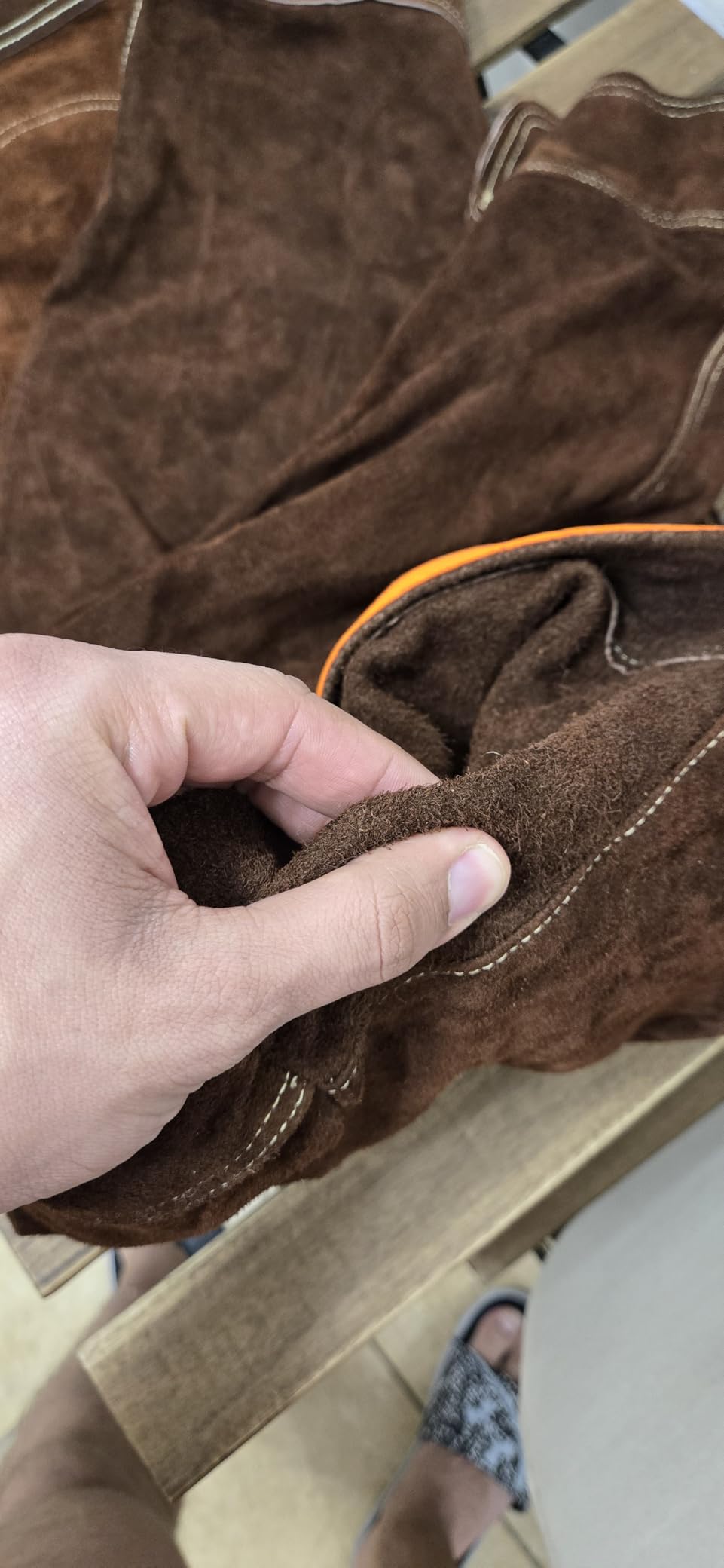
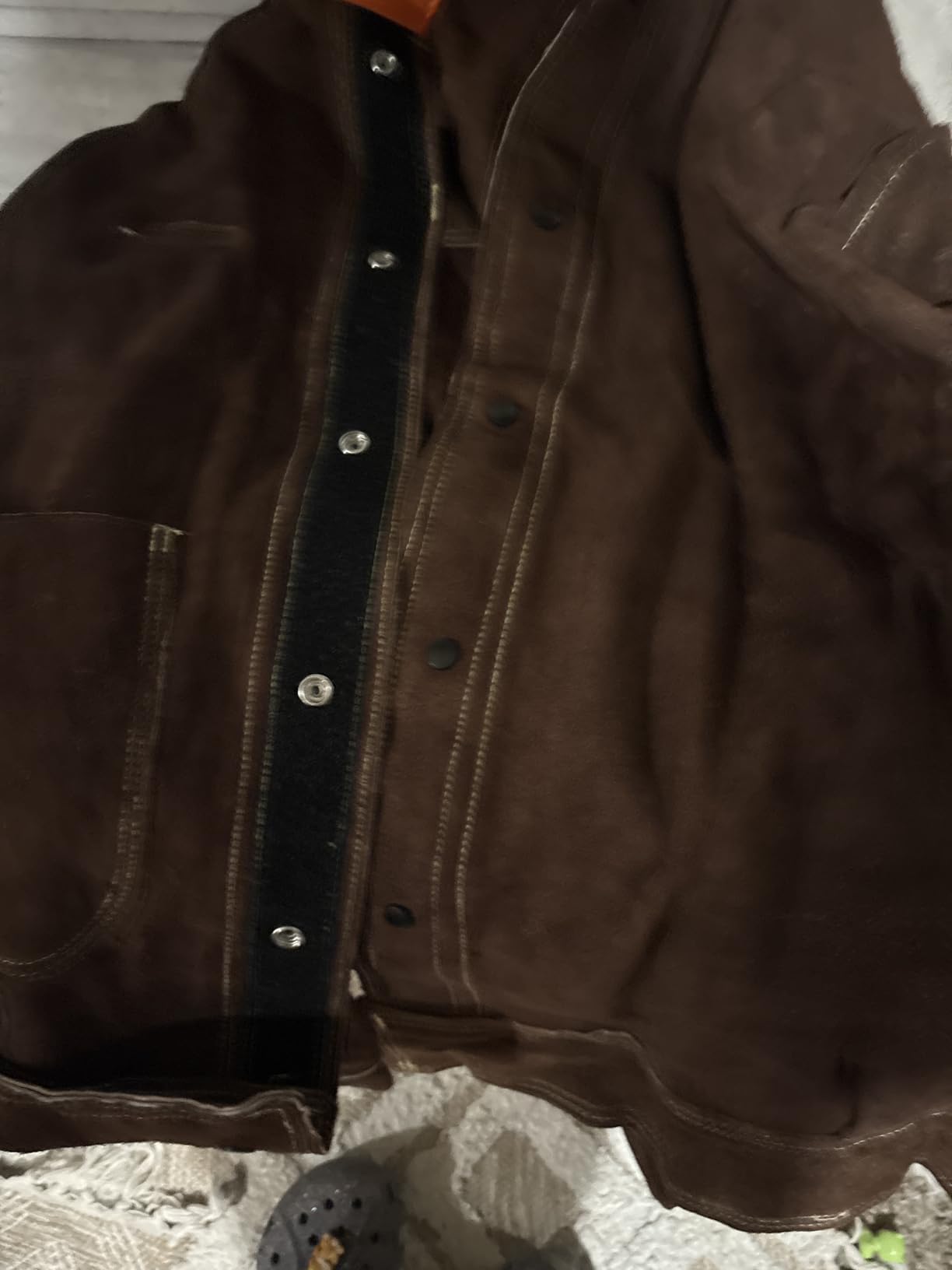
The YESWELDER is the most frequently worn leather jacket in this group after the QeeLink, with 4.6 stars across more than 1,400 reviews and a 79 percent five-star share. It is 100 percent leather with a cotton lining, double stitched with US Kevlar thread, finished with copper-plated buttons, and it carries six pockets including a dedicated tool pocket.
What reviewers emphasise is thickness combined with comfort. The soft, breathable cotton lining is called out for all-day wear, and the leather is praised for blocking sparks and heat without restricting movement. That combination is the deciding factor for anyone who wears a welding jacket as a general workshop coat rather than dedicated PPE for a welding bay.
It is also the most widely applicable leather option here. The reviews mention MIG and TIG work, cutting, grinding, shipyards, auto repair and gas work, and one buyer describes using it for motorcycle riding, which tells you how far the heat and abrasion resistance reaches. The stand-up band collar and soft lining cover the neck and body, and the part number is AP-7130.
Reasons To Pick This One
Buy it if you want one jacket that handles welding, fabrication, grinding and general shop work without changing garments. Six pockets is the best pocket count in this roundup, so if you carry pliers, a marker, a tape and a spanner on your body rather than on a cart, that layout matters. The cotton lining also makes it more tolerable through a long shift than an unlined hide.
Sizing And Care Notes
Fit is the dominant theme in the reviews and it runs the opposite way to most leather welder’s jackets: big. Many buyers size down, while one large-frame reviewer found the XL far too small, so measure against a garment you already own. There is no dedicated soapstone holder on the sleeve, sleeve length can be long on some body types, and sizing varies noticeably between colour variants. Care is hand wash only.
We earn a commission, at no additional cost to you. CERTAIN CONTENT THAT APPEARS ON THIS SITE COMES FROM AMAZON. THIS CONTENT IS PROVIDED 'AS IS' AND IS SUBJECT TO CHANGE OR REMOVAL AT ANY TIME.
6. Ironcat FR Treated Cotton Sateen Jacket – Best Bought On A Budget
Ironcat FR Treated Cotton Sateen Jacket, 9 oz., Anodized Snaps, Interior Pocket, Pop-up Welders Collar, Scribe Pocket, Green, X-Large (7050/XL)
★★★★★★★★★★9 oz. FR cotton sateen
Anodized reinforced snaps
Pop-up welder's collar
Scribe pocket
- Lightweight and still blocks sparks and light flame exposure
- Pop-up collar keeps sparks out under the helmet
- Interior pocket for secure storage
- Strong value for the money
- Inner elbow seams can snag weld beads
- Occasional broken front snap
- Runs large so size up
- Treated cotton smells strong on arrival
The Ironcat is the most substantial-looking 9 oz. jacket in the roundup and the one that gets recommended most often for a first certified FR purchase on a tight budget. It is 9 oz. green cotton sateen, FR treated, with anodized snaps reinforced with leather to resist corrosion and to prevent flashback, and it scores 4.4 stars across 670 reviews.
The hardware is the differentiator. Anodized snaps with leather reinforcement are a specific answer to a specific problem: corroding and shattering near a welding arc. The black pop-up welder’s collar with snap closure keeps sparks out from under a welding helmet, which is the single most useful feature on a welder’s jacket, and there is an interior lower pocket plus a scribe pocket.
It is made by WestChester Protective Gear and aimed at steel mills, shipyards, manufacturing and gas welding, and it comes in a wide range of colours and sizes, which is unusually good for an FR garment where most brands offer a narrow palette.
Where It Earns Its Place?
Owners find it does the job for light-to-medium welding and value the price strongly. If you are outfitting a crew, teaching a class, or buying your own first FR jacket without a large purchase order behind it, this is the sensible starting point. The pop-up collar and reinforced snaps are the parts that will matter daily, and they are the parts most budget jackets cut.
The Honest Limitations
This is the jacket with the widest spread of experiences, and it has the lowest five-star share in the set at 71 percent. Fabric thinness is the recurring theme: it offers limited protection against heavy slag. Inner elbow seams can snag weld beads and eventually tear. Sizing runs large so many buyers size up, treated cotton arrives with a strong chemical smell that needs airing out, and a few units have turned up with a broken front snap. Check the snaps on arrival.
We earn a commission, at no additional cost to you. CERTAIN CONTENT THAT APPEARS ON THIS SITE COMES FROM AMAZON. THIS CONTENT IS PROVIDED 'AS IS' AND IS SUBJECT TO CHANGE OR REMOVAL AT ANY TIME.
7. Carhartt Full Swing Quick Duck Insulated Coat – Best For Deep Cold
Carhartt Men’s Flame Resistant Full Swing® Relaxed Fit Quick Duck Insulated Coat, Carhartt Brown, X-Large
★★★★★★★★★★8.5 oz. Quick Duck canvas
150 g Thinsulate Platinum
Bi-swing back
Flex Elbow
- Exceptionally warm for northern and oil field climates
- FR protection for welding grinding and shop work
- Bi-swing back and flex elbows for full range of motion
- Duck canvas with room to layer
- Proper men's cut
- Runs large
- most buyers size down
- Some units arrive with a twisted sleeve liner
- Metal zipper quality questioned
- Too warm indoors for long
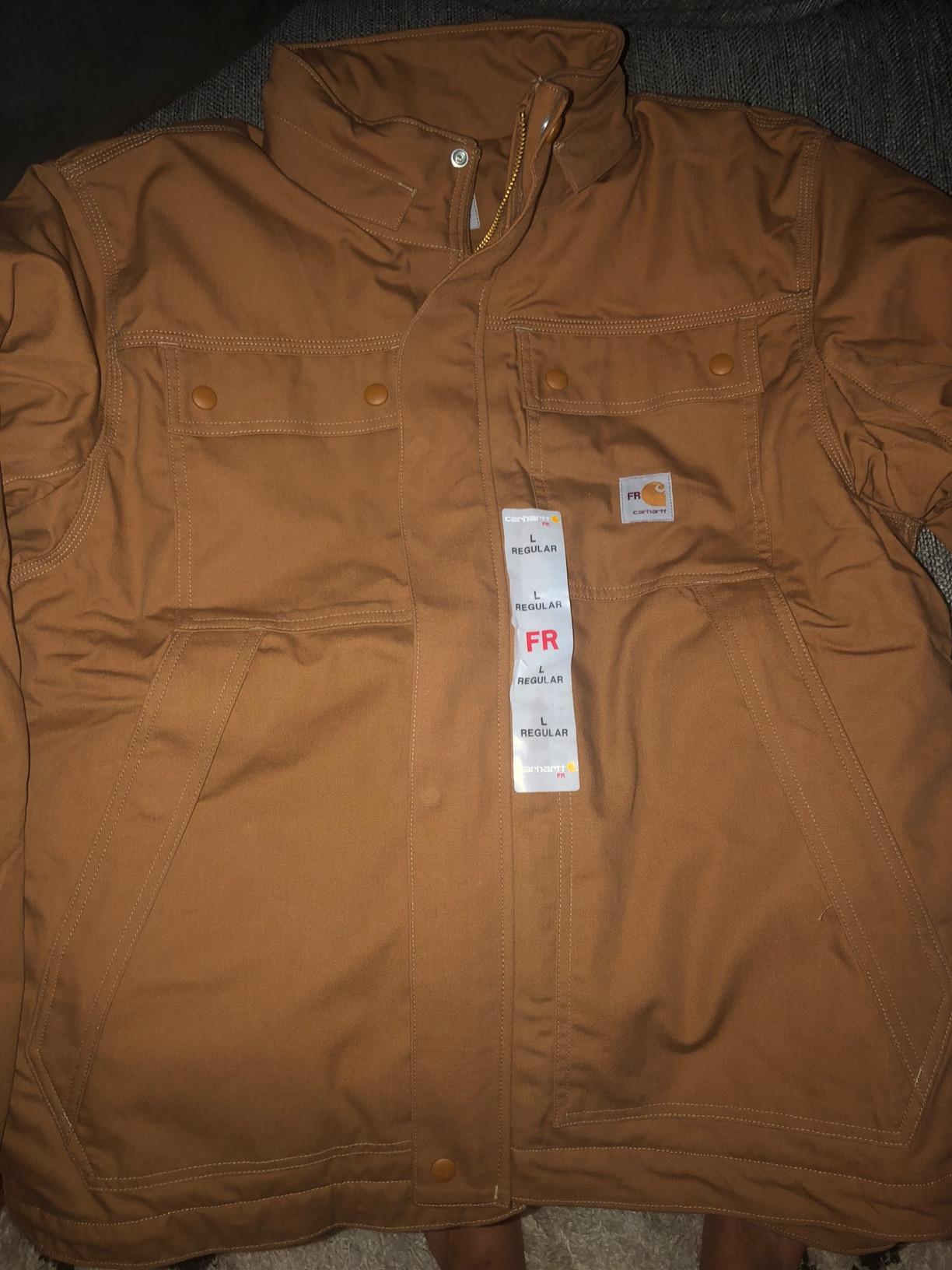
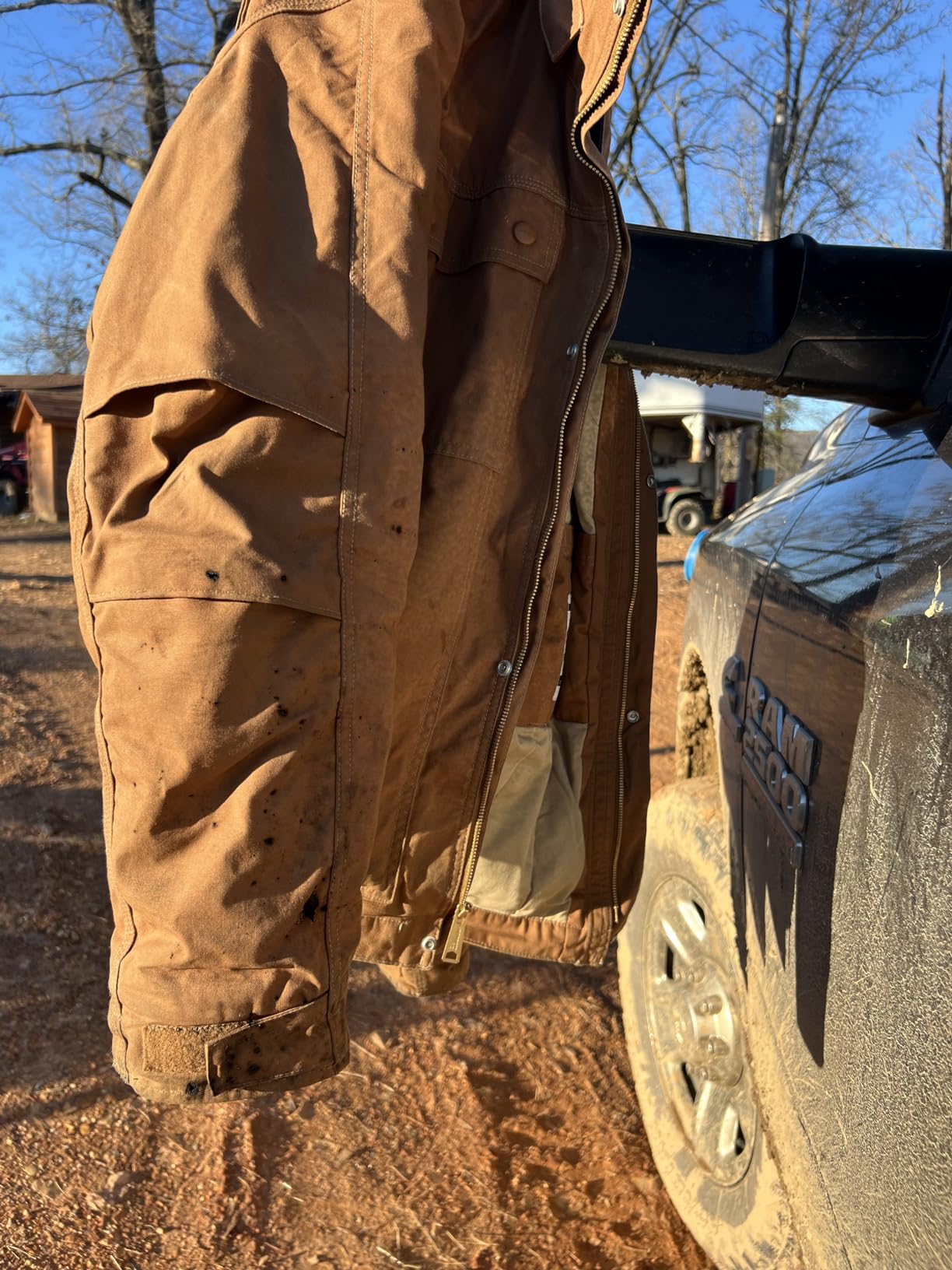
Carhartt is the default answer for most people in this category, and the Full Swing Quick Duck Insulated Coat is the reason that default exists. It is 8.5 oz. Quick Duck in 88 percent cotton and 12 percent nylon with a Rain Defender durable water repellent finish, insulated with 150 grams of 3M Thinsulate Platinum, and it scores 4.6 stars across 469 reviews with a 79 percent five-star share.
Owners in Minnesota, North Dakota and the oil fields describe it as the warmest coat they own, which is the single most common theme in the reviews. The duck canvas is described as 20 percent lighter than heavier outerwear while staying equally warm, so you get the warmth without the full weight of a traditional insulated work coat. The FR rating is treated as real protection in welding, grinding and shop work, not a marketing stamp.
The articulation is what makes it usable on a job rather than only in a car park. A Mighty Back bi-swing panel between the shoulders gives instant recovery when you reach overhead or crouch, and the Flex Elbow construction reduces restriction through a full shift of repetitive work. It is also a proper men’s cut rather than a unisex pattern, which matters more than it sounds for shoulder movement and sleeve length.
The Case For A Heavy Insulated FR Coat
This is the pick for cold outdoor and shop work: winter construction, oil field work in the northern states, offshore, and utility crews working through a Canadian or upper Midwest winter. The 150 gram insulation plus a heavy duck shell handles genuinely severe cold, and the canvas has enough room to layer a sweatshirt underneath. Multiple utility pockets including an arm pocket keep the essentials on you.
Where It Falls Down?
Two things to plan around. It runs large, and the consensus instruction is to size down. And it is, by design, too warm to wear indoors for long, which is exactly the complaint that should stop you buying it for year-round or southern work. Isolated reports mention a unit arriving with a twisted inner sleeve liner that blocked the arm, and some owners question the metal zipper quality. Check the garment before you rely on it in winter.
We earn a commission, at no additional cost to you. CERTAIN CONTENT THAT APPEARS ON THIS SITE COMES FROM AMAZON. THIS CONTENT IS PROVIDED 'AS IS' AND IS SUBJECT TO CHANGE OR REMOVAL AT ANY TIME.
8. QeeLink NFPA 2112 FR Cotton Welding Jacket – Best For Hot Weather
QeeLink Welding Jacket – Premium Flame Resistant (FR) Cotton Welding Clothes – Light Weight Welder Jacket for Men & Women (X-Large, Black)
★★★★★★★★★★NFPA 2112 certified 9 oz. cotton
Anti-static treatment
Kevlar thread
Adjustable snap cuffs
- Lightweight and breathable in hot weather
- Thicker than comparable lightweight jackets
- Handles plasma cutting MIG and grinding
- Machine washable with no reported loss of performance
- Unisex sizing S to 4XL
- Runs small
- several buyers recommend sizing up two
- Can burn through with sustained work or larger sparks
- Not for angle grinder sparks or direct flames
- Top button may not close even when sized up
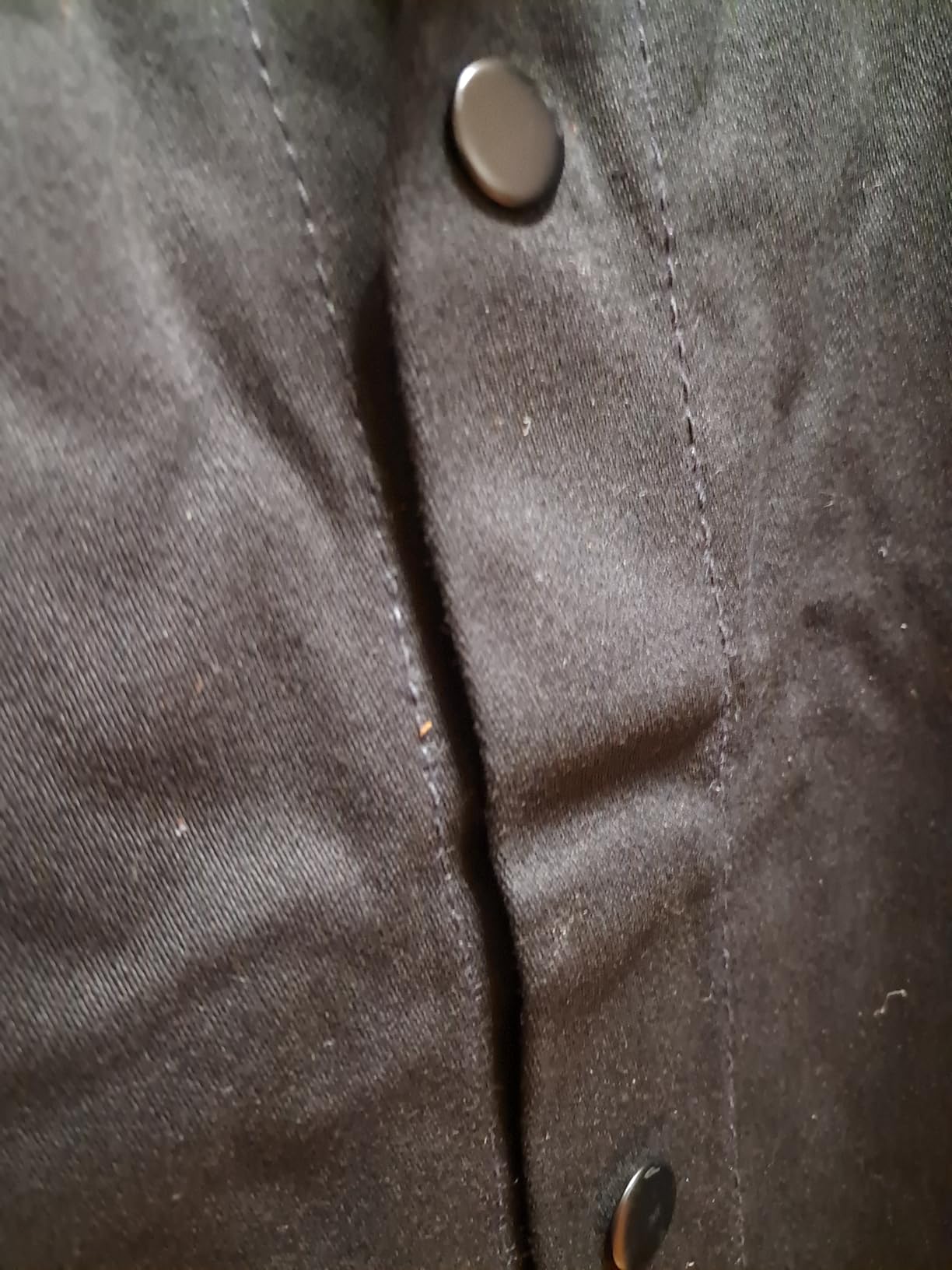
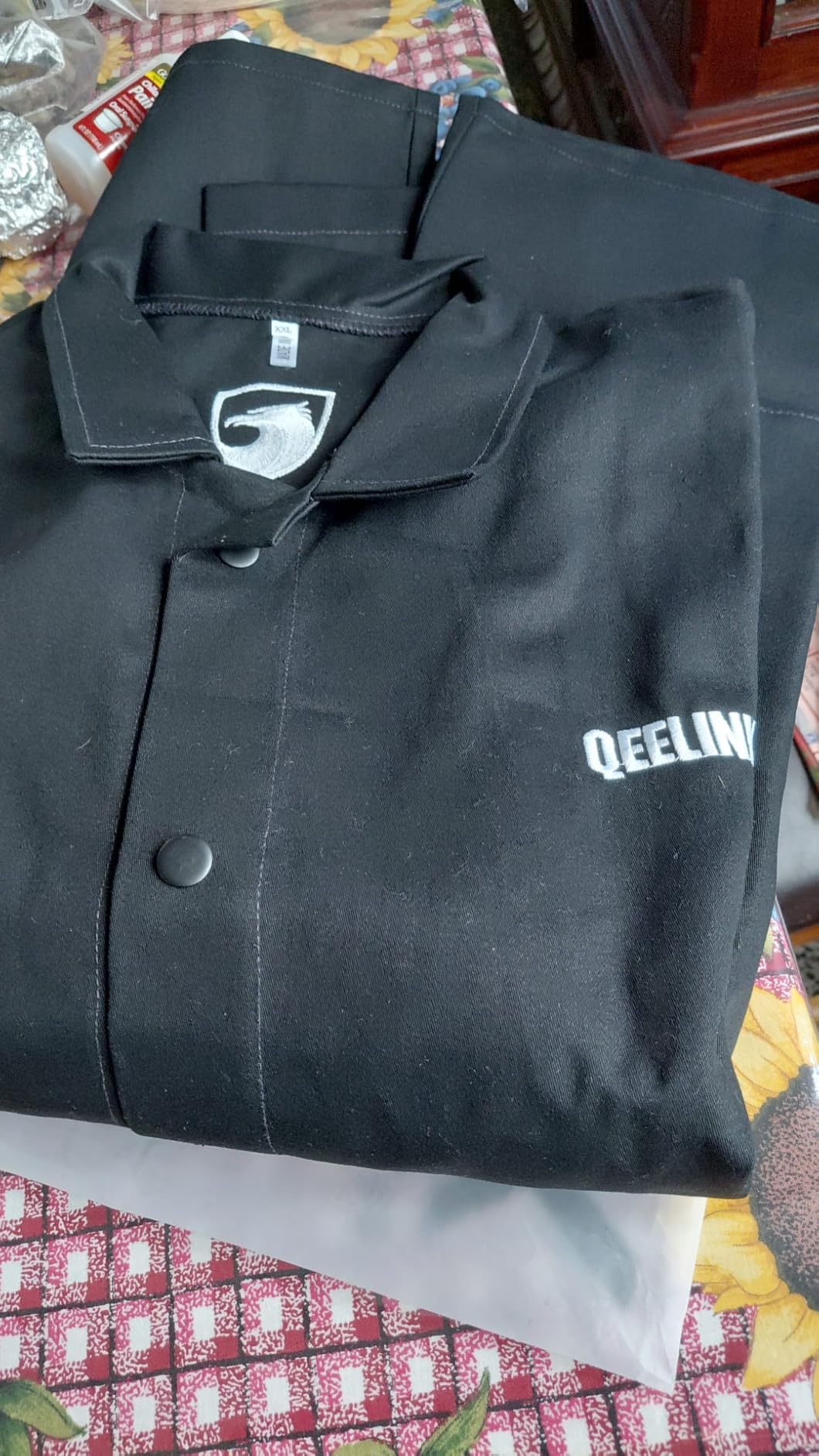
Most FR jackets are designed for cold weather, which is the single biggest complaint in this category and the reason the QeeLink NFPA 2112 jacket is in this guide. It is 9 oz. flame-resistant cotton with anti-static technology, certified to NFPA 2112, and the reviews position it squarely as a summer and hobby welder’s jacket: 74 percent five-star across 458 reviews, with strong praise for breathability, washability and value.
NFPA 2112 is a meaningful certification to have on a lightweight jacket, because it is the flash fire standard rather than the lighter vertical flame test. The construction details back it up: stainless steel snaps with an anti-release design, snap-button adjustable cuffs that keep sparks and debris out of the sleeves, and heat-resistant US Kevlar thread throughout. The manufacturer states plainly that it is rated for brief, intermittent exposure to sparks, spatter and radiant heat and is not for arc flash or firefighting.
Owners report it handles plasma cutting, MIG and grinding without marking the fabric, and being machine washable with no loss of performance reported. Unisex sizing runs S to 4XL, and the stitched-on logo embroidery makes it look more like a branded jacket than generic FR gear.
Who Should Buy This?
If you weld in a hot climate, work in a garage without climate control, or need a certified FR layer that is not going to cook you in July, this is the pick. It also suits students, hobby welders and anyone splitting time between welding and other work who wants one garment that can be washed at home. The anti-static treatment adds a protection layer that plain FR cotton does not claim.
Limits To Plan Around
Sizing runs small here, and several buyers recommend going up two sizes, though the top button may still not close even then. Protection is thin by design: reviewers warn it can burn through with sustained work or larger sparks, and specifically that it is not protective against angle grinder sparks or direct flames. Treat it as an intermittent-exposure garment, which is exactly what the manufacturer states.
We earn a commission, at no additional cost to you. CERTAIN CONTENT THAT APPEARS ON THIS SITE COMES FROM AMAZON. THIS CONTENT IS PROVIDED 'AS IS' AND IS SUBJECT TO CHANGE OR REMOVAL AT ANY TIME.
9. BOCOMAL Insulated FR Duck Hooded Coat – Best For High Arc Ratings
BOCOMAL FR Jacket Insulated Flame Resistant Duck Hooded Coat Outwear CAT4
★★★★★★★★★★CAT4 with 53 cal per cm2
NFPA 2112 70E and F1506
10.5 oz. duck
FR fleece lining
- Genuine CAT4 arc rating stands out in this category
- Thick and warm enough for severe cold
- Roomy durable pockets and a well-lined hood
- FR protection retained through up to 100 washes
- Soft interior feel
- Heavy and bulky
- especially in smaller sizes
- Limited arm swing for some buyers
- Sizing depends on your layering plan
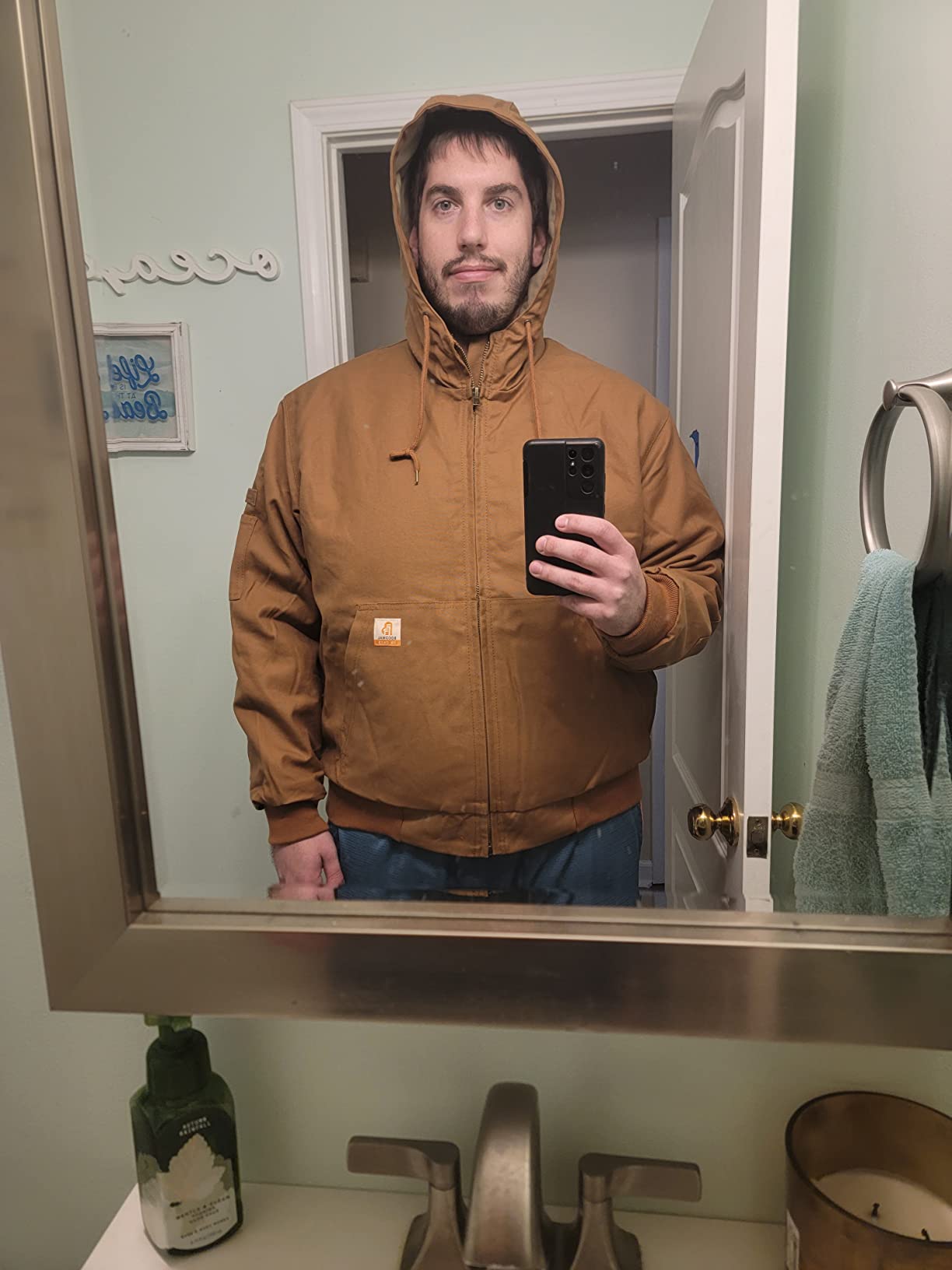
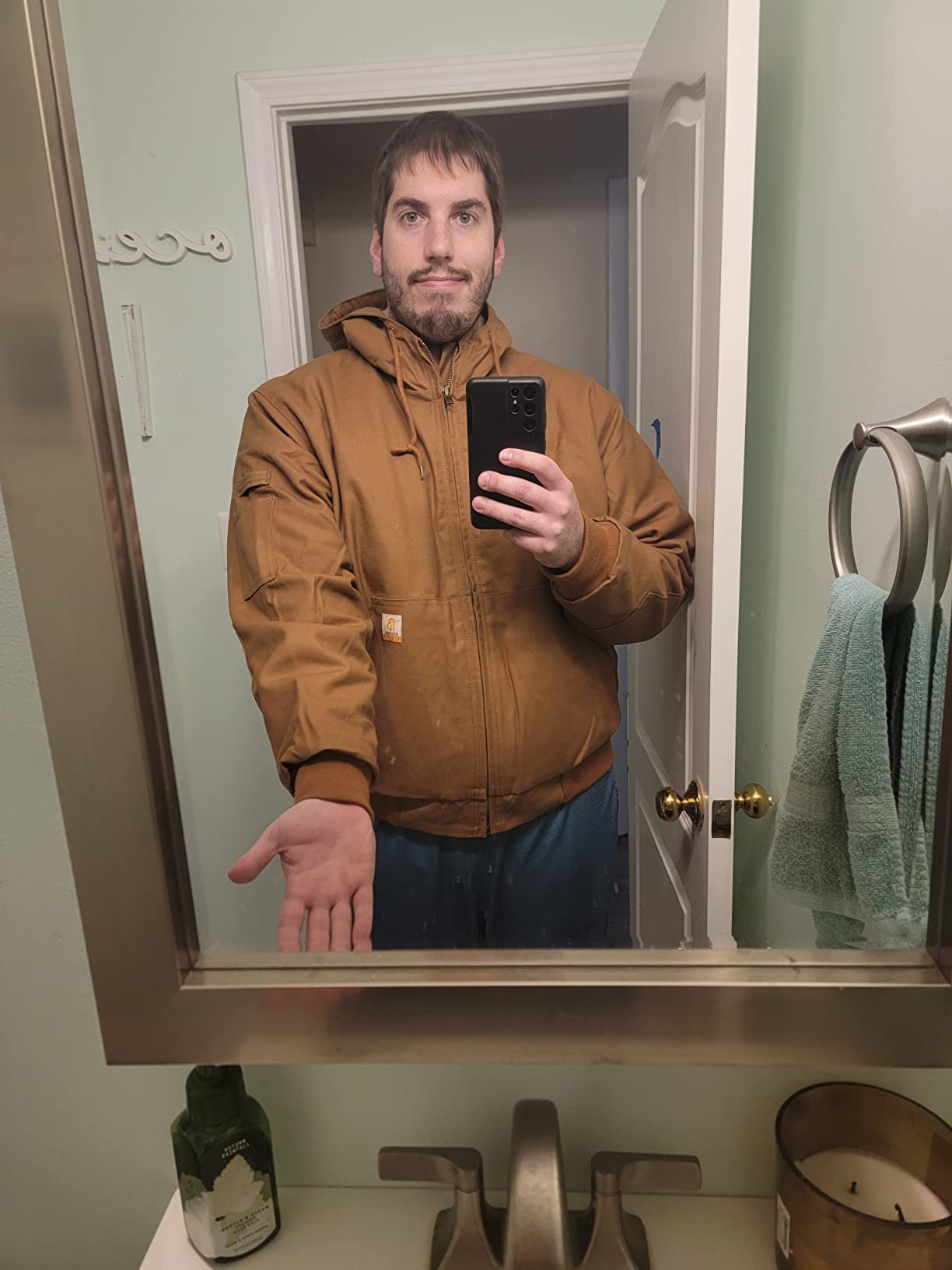
This is the only jacket here with a CAT4 arc rating, and that single fact puts it in a different category from every other 9 oz. cotton welder’s coat in this guide. The BOCOMAL is labelled as meeting or exceeding HRC4 / CAT4 with an ATPV of 53 cal/cm2, and it complies with NFPA 2112 (2012), NFPA 70E and ASTM F1506.
The construction supports the rating. A 10.5 oz. cotton canvas duck shell that is FR treated, water, oil and stain repellent, lined with 8.5 oz. FR cotton fleece over a 180 gram modacrylic and cotton quilt lining, closed with a flame-retardant front zipper, with a drawstring hood, rib-knit cuffs and waistband, a kangaroo front pocket and two inside hook-and-loop pockets. FR performance is stated as retained through up to 100 washes, which is the highest wash figure quoted in this roundup.
Owners in Wyoming and northern states approve of the warmth for severe cold, and compare the canvas and interior feel favourably to Dickies and Carhartt. If you are looking at premium branded FR coats, the reviews describe this as good value against them.
When The CAT4 Rating Matters?
A CAT4 / 53 cal rating is for workers whose incident energy analysis puts them in the highest arc flash exposure band, which in practice means live electrical work, some industrial and manufacturing roles, and utility environments where a fault can produce extreme energy. If your risk assessment demands CAT4, this is the only jacket in this guide that states it, and you should not substitute a CAT2 garment because it feels the same. Reviewers note it also works well as a general cold-weather construction coat.
Where Bulk Becomes A Problem?
The same construction that delivers the rating and the warmth is heavy and bulky, especially in smaller sizes. Several reviewers report limited arm swing, with some unable to raise their arms above the chest, which rules it out for fine-position overhead work. Sizing up or down depends entirely on how many layers you plan to wear underneath, so decide your layering before you order.
We earn a commission, at no additional cost to you. CERTAIN CONTENT THAT APPEARS ON THIS SITE COMES FROM AMAZON. THIS CONTENT IS PROVIDED 'AS IS' AND IS SUBJECT TO CHANGE OR REMOVAL AT ANY TIME.
10. ARCCAPTAIN 11 oz. FR Cotton Welding Jacket
ARCCAPTAIN Welding Jacket, 11oz Flame Resistant Cotton Welding Jackets
★★★★★★★★★★11 oz. NFPA 2112 FR cotton
Reflective strips
Two-level cuffs
Four pockets
- Thick 11 oz. cotton deflects sparks effectively
- Reflective strips for low-light and night work
- Snaps work while wearing gloves
- Professional look with true-to-size fit
- Runs snug and can stay tight for large wearers
- Not breathable and overheats in warm weather
- Sleeves run long for some body types
- Occasional stitching and pocket failures
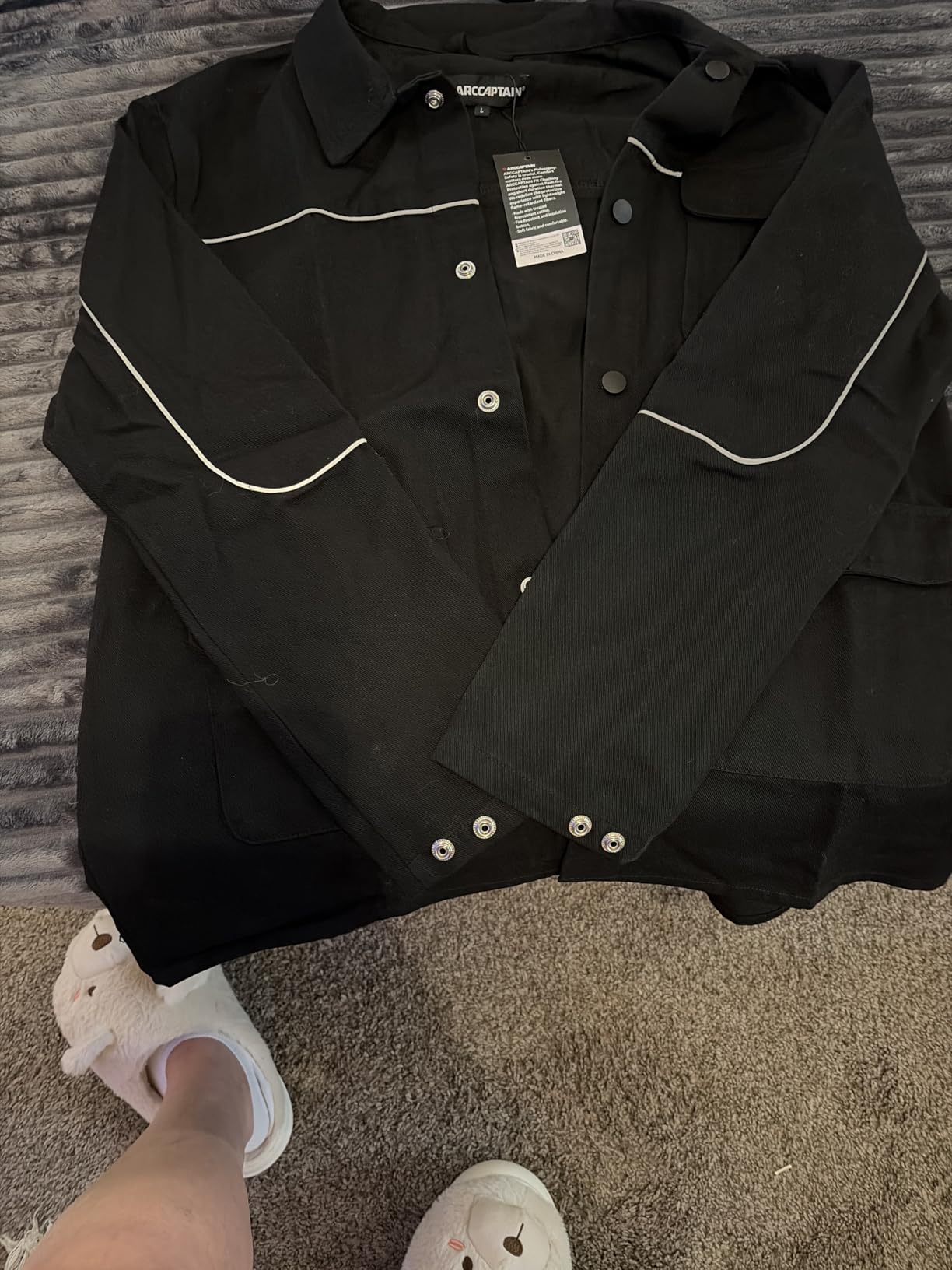
The ARCCAPTAIN is the heaviest of the NFPA 2112 certified cotton jackets in this roundup at 11 oz. or 310 g, and the reflective strips on the front and back are the feature nobody else here offers in a certified cotton welder’s jacket. It is NFPA 2112 certified for MIG, TIG welding and cutting, and it holds 4.3 stars across 322 reviews with 71 percent five-star.
Functional design is the theme. Snap-button closure operable with gloves is a small but meaningful detail, because you will be in a helmet and gauntlets when you need it. Two-level adjustable cuffs seal out slag and debris, and there are four multi-purpose pockets including an inner pocket and a pen holder. Sizes run S to 4XL, which is broader coverage than most certified welder’s jackets offer.
Functionality is well regarded in the reviews, with strong spark deflection, glove-friendly snaps and the reflective strips specifically appreciated for low-light workshops and night repairs.
Best For Night And Low-Light Shifts
The reflective strips are the reason this earns a place. Night repairs, roadside callouts, poorly lit maintenance bays and early-morning site work all benefit, and combined with the heavier 11 oz. fabric it deflects sparks more effectively than the 9 oz. cotton options here. If you want one certified cotton jacket that handles both day welding and low-light work, this is the most complete answer in the set.
Fit And Heat Complaints
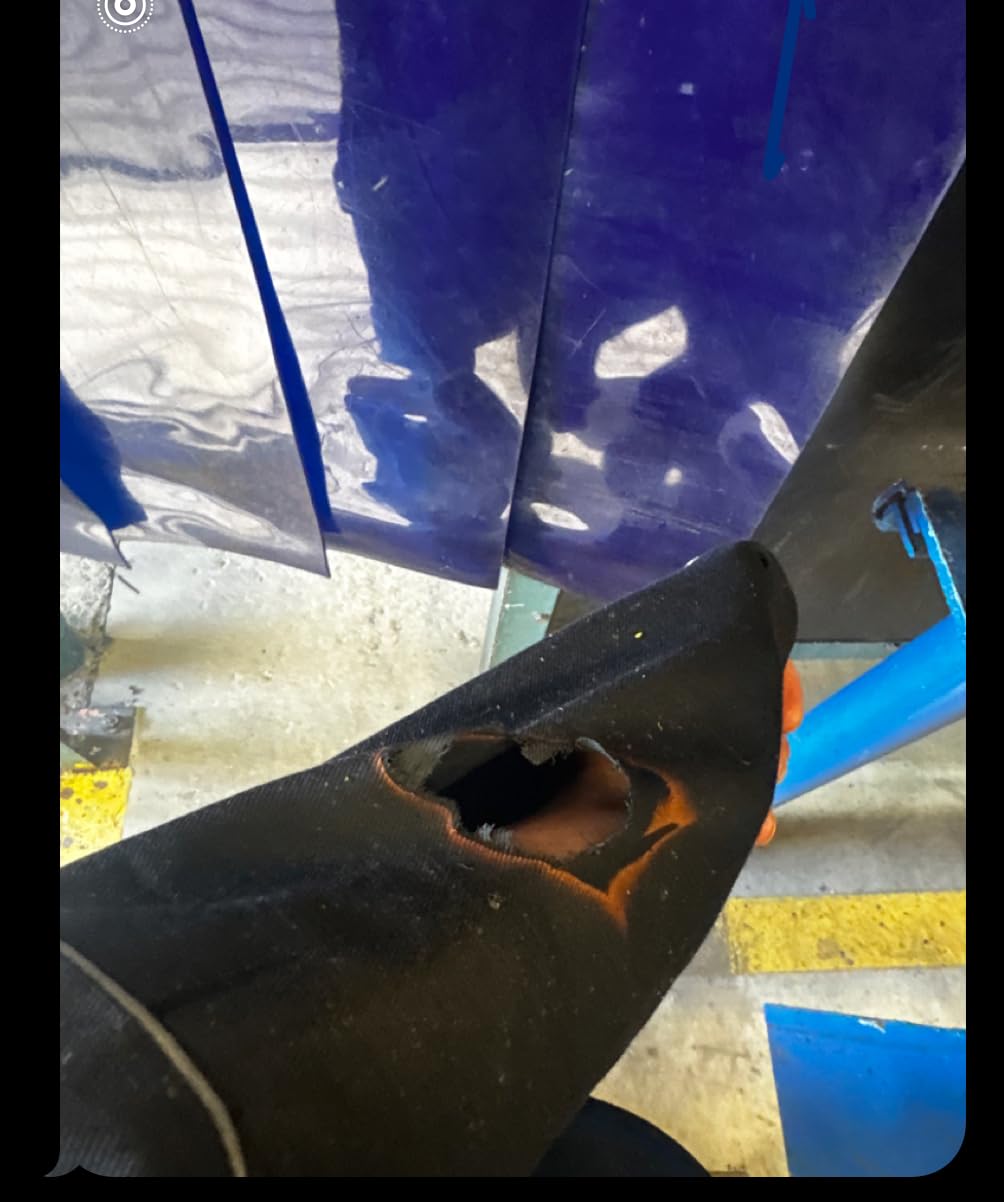
This is the lowest-rated jacket in the roundup at 4.3, and the reasons are comfort and fit rather than protection. It runs snug, so large wearers should size up and may still find it tight. It is not breathable, and buyers warn specifically about overheating in warm weather. Sleeves run long for some body types, and there are occasional reports of stitching and pocket failures plus units arriving dirty, used or missing tags. Inspect the garment on arrival.
We earn a commission, at no additional cost to you. CERTAIN CONTENT THAT APPEARS ON THIS SITE COMES FROM AMAZON. THIS CONTENT IS PROVIDED 'AS IS' AND IS SUBJECT TO CHANGE OR REMOVAL AT ANY TIME.
11. ARCCAPTAIN Leather Welding Jacket – The Best Rated In The Set
ARCCAPTAIN Leather Welding Jacket, FR Welder Jacket for Men Women
★★★★★★★★★★Heavy cowhide leather
Kevlar double stitching
Velcro stand-up collar
Four pockets
- Best customer satisfaction in the set at 83 percent five-star
- Heavy cowhide gives strong heat and spark protection
- Kevlar double stitching resists tearing
- Breathable cotton lining for long shifts
- Four well-distributed pockets
- Unisex sizing may run close for larger wearers
- Leather can be stiff before break-in
On pure owner satisfaction this is the jacket to beat, and it is the one product in this roundup with the highest average rating at 4.7 stars. The ARCCAPTAIN leather jacket holds an 83 percent five-star share and only 1 percent one-star across 224 reviews, which is the most concentrated positive feedback of any jacket here.
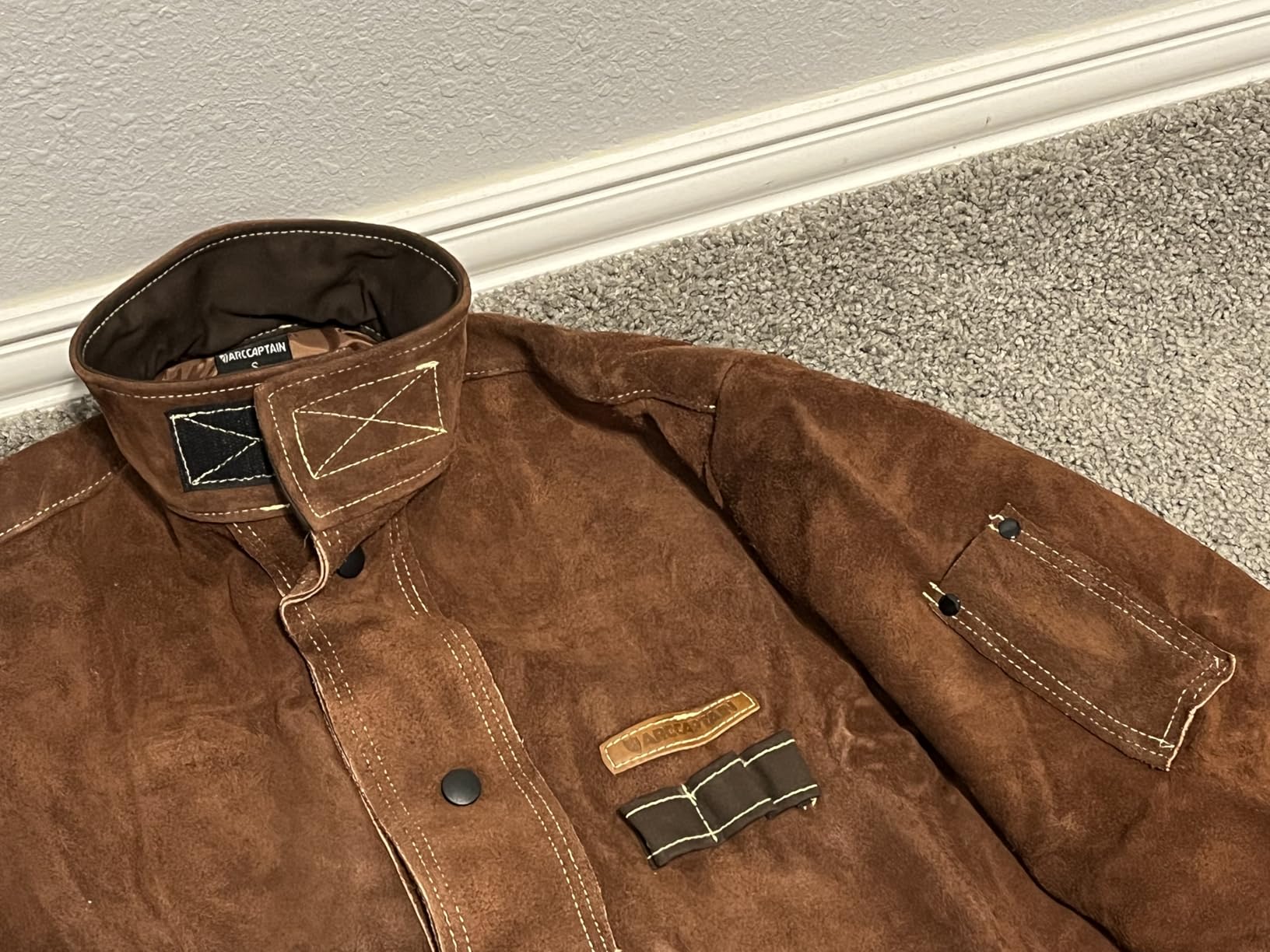
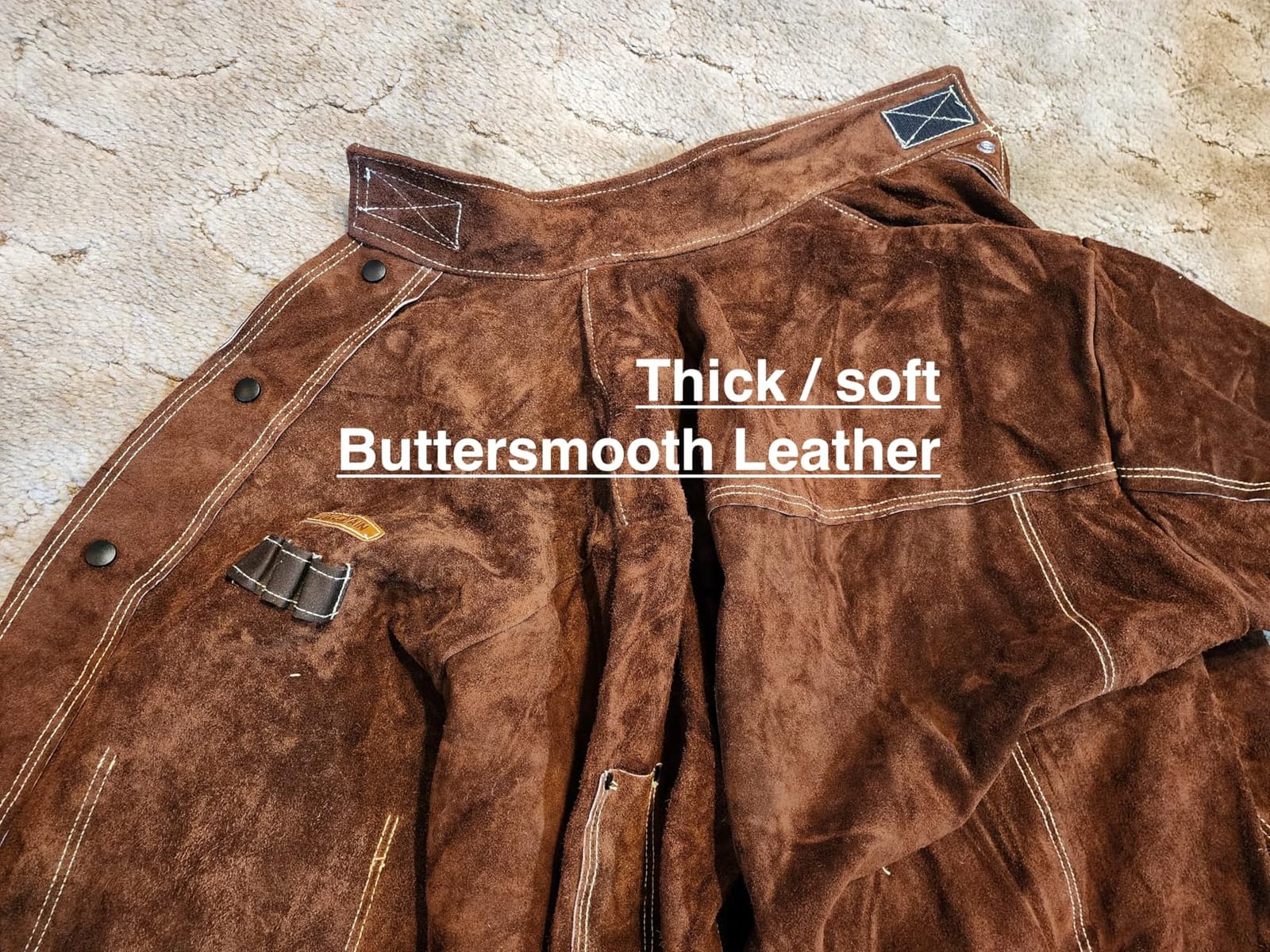
It is 100 percent heavy-duty cowhide leather with 310 g FR fabric and a breathable cotton lining, double stitched with Kevlar thread, and fitted with oil-plated buttons that have a gasket layer to reduce rust. The cotton-lined stand-up collar has an adhesive Velcro spark protection closure, adjustable cuffs block spark splash, and the pockets are distributed properly: an extra-large outer pocket, a large inner pocket, a chest pencil pocket and an arm-side pocket.
The soft moisture-wicking cotton lining on the shoulders and sleeves is what reviewers point to for long shifts, and the oil-plated gasketed buttons are a sensible answer to the rust and detachment problems that plague leather welder’s jackets. Buyers emphasise genuine cowhide protection and Kevlar stitching, with very few recurring complaints beyond normal fit variance.
Where The Cowhide Pays Off?
Choose this for sustained hot work, heavy grinding, fabrication and general shop use where sparks are frequent. Cowhide does not self-extinguish the way treated cotton does, it simply does not ignite, so it is the right answer to radiant heat and spatter. The double-stitched Kevlar construction resists tearing under high-intensity work, and the four-pocket layout is enough to work from without a cart. It is also unisex, so it works as shared shop PPE.
Minor Trade-Offs
There are only two consistent caveats, and neither is serious. Unisex sizing means larger wearers may find the fit close, so check the measurements rather than assuming your usual size works. And like any new hide, it can be stiff before break-in, which improves quickly with wear. If you need the very highest rating on this list, this is the jacket with it.
We earn a commission, at no additional cost to you. CERTAIN CONTENT THAT APPEARS ON THIS SITE COMES FROM AMAZON. THIS CONTENT IS PROVIDED 'AS IS' AND IS SUBJECT TO CHANGE OR REMOVAL AT ANY TIME.
12. BOCOMAL FR Hooded Flannel Plaid – CAT2 With A Removable Hood
BOCOMAL FR Hooded Shirts Button Down Heavyweight Flannel Plaid Jackets CAT2
★★★★★★★★★★8.5 oz. FR twill flannel
CAT2 with 11 cal per cm2
Removable FR hood
Prewashed
- Warm and durable for cold industrial work
- Prewashed and preshrunk so it holds size
- Soft on both sides for all-day comfort
- Genuine CAT2 and NFPA 2112 compliance
- Removable water-repellent hood
- Plaid looks better than typical workwear
- CAT2 is below the CAT4 level higher-hazard electrical work needs
- Removable hood adds bulk and heat
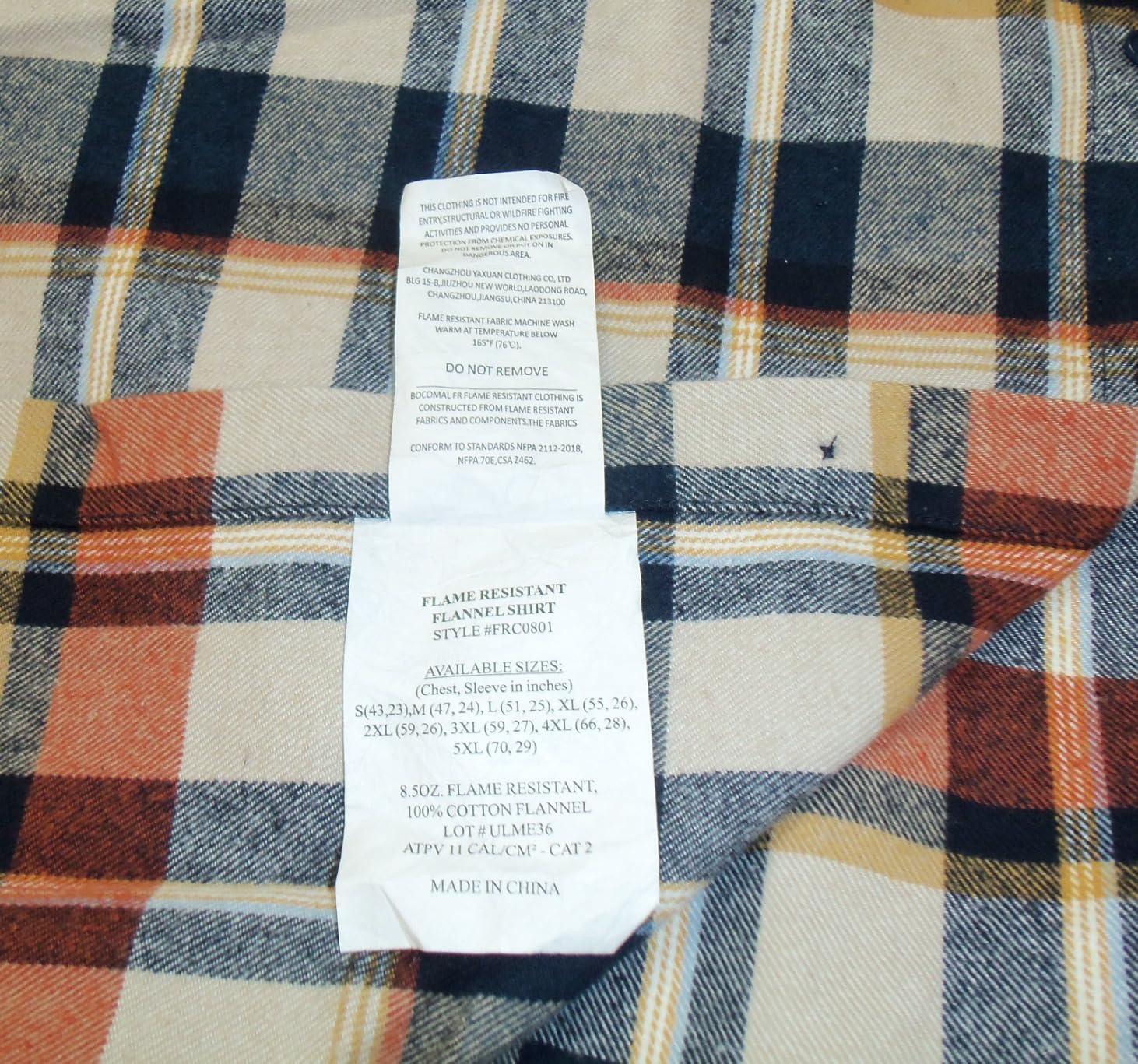
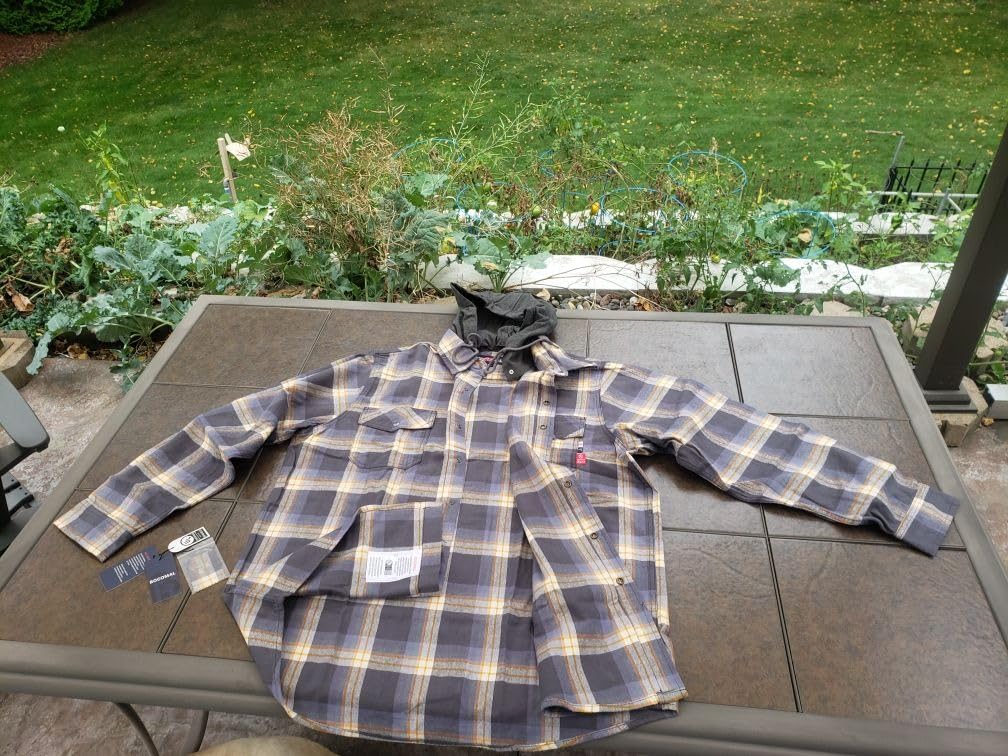
This is the odd one out and it earns its place for a specific reason: it is the only jacket here that doubles as normal clothing. The BOCOMAL FR hooded flannel is 8.5 oz. cotton twill plaid flannel, treated on both sides, and it scores 4.7 stars across 385 reviews with an 82 percent five-star share.
It carries real certification, not a decorative claim. The label states HRC2 / CAT2 with an ATPV of 11 cal/cm2, compliance with NFPA 2112 (2012), NFPA 70E and ASTM F1506, and it is UL classified CAT II. The removable hood is a double-layer cotton knit with a water-repellent finish, the buttons are FR and stitched with FR sewing thread, and there is a clear FR tag on the front plus a neck tag with UL certification information. FR performance is stated as retained through up to 100 washes.
Owners like that it is prewashed and preshrunk so it holds its size and stays wrinkle-free, soft on both sides for all-day comfort, and that the plaid simply looks better than typical workwear. That combination is why the badge is what it is.
Who This Actually Suits?
Think plant and warehouse staff, ground-level operations crews, mechanics, and anyone who needs a certified FR layer they can wear to the pub afterwards without changing. For cold industrial work in a building rather than an exposed site, an 8.5 oz. heavyweight flannel with a removable hood is a genuinely warm and comfortable option. It also works for ministry, fraternity and off-duty FR apparel where appearance matters.
The Rating You Have To Accept
CAT2 with 11 cal per cm2 is a real arc rating for lower-hazard roles, and it is well below the CAT4 level needed for higher-hazard electrical and welding work. If your incident energy analysis calls for CAT3 or CAT4, this is not a compliant choice, no matter how good it looks. The hood also adds bulk and can be warm in hot conditions, so it is a cool-weather garment.
We earn a commission, at no additional cost to you. CERTAIN CONTENT THAT APPEARS ON THIS SITE COMES FROM AMAZON. THIS CONTENT IS PROVIDED 'AS IS' AND IS SUBJECT TO CHANGE OR REMOVAL AT ANY TIME.
How To Choose A Flame Resistant Jacket?
Start with your incident energy risk, not the fabric. Ask whoever runs your safety programme or your incident energy analysis what the arc flash category at your task is, then buy a garment whose printed CAT rating meets or exceeds it. Do not work up from the garment you happen to like. If your work has no arc flash exposure and is welding, spatter and open flame, an ASTM D6413 or NFPA 2112 jacket is the right category and you can ignore arc ratings entirely.
Then match the season, which is where most buyers get this wrong. The loudest complaint in the reviews and on tradespeople forums is heat, not cold. Nine ounce FR cotton is the right weight for a warm shop, a garage, or summer field work. Ten ounce to 10.5 ounce duck is the all-season compromise that still handles welding heat. Anything insulated, like the 150 gram Thinsulate models, is a three-season or winter garment and becomes a liability indoors on a 90 degree day. If you genuinely work year round in the same region, plan on two jackets, a light FR layer and a cold-weather FR layer, rather than trying to find one that does both.
Understand the fabric tradeoffs before you commit. Cotton duck is heavy, affordable in the used market, breathable, and naturally limits heat transfer, but it is the heaviest option. Treated cotton sateen is lighter and cheaper to move in, at the cost of thinner protection. Split cowhide leather is the strongest against sustained radiant heat and spatter and the weakest for comfort in heat. FR-treated ripstop polyester, like the Viking shell, is the lightest and best for rain, and it layers over anything. Aramid and Nomex blends are the premium option where both heat resistance and low weight matter, and FR modacrylic insulation is the standard fill inside insulated FR coats because it stays flame resistant rather than melting.
Look at the closure and cuff system, because that is where protection is quietly lost. A pop-up or stand-up welder’s collar keeps sparks from dropping in under your helmet. Rib-knit cuffs, snap-adjustable cuffs or two-level cuffs close the wrist gap, and this matters more than almost any other feature because sparks travel along the arm. A storm flap over a zipper stops sparks travelling down the front of the jacket. Check that the snaps are leather-reinforced or anodised if you are near a live arc.
Then sort out sizing, which is the most common source of disappointment in the reviews. Across this roundup, jackets run large, run small or vary by colour variant, and there is no consistent pattern between brands. Measure a jacket you already like, chest and sleeve, and compare against the size chart before ordering. If you are a big-and-tall wearer or need a tall length, check sizes early, because FR garments carry a far narrower size run than general workwear. Several of the jackets here offer S to 4XL, which helps, but true tall and extra-tall lengths are uncommon.
Finally, think about what goes underneath. For arc flash, the whole system matters: the undershirt, the trousers, the hood and the gloves all contribute to your thermal protection value, and an ordinary cotton layer can raise the risk of ignition. If you need arc protection, buy a matched system from one manufacturer rather than assembling one from different brands. For the general layer question, our softshell and fleece roundup covers what to wear under and between the FR layers without compromising them.
How To Tell If A Jacket Is Really Flame Resistant?
Check five things, in this order, before you commit to anything.
One: find the permanent label. Genuine FR garments carry a sewn-in or printed label stating the standard, usually inside the pocket bag, inside the back neck, or at the side seam. Look for NFPA 2112, NFPA 70E, ASTM F1506, ASTM D6413, EN ISO 11612 or CAN/CGSB-4.2. If a jacket has no certification label anywhere, treat it as unverified regardless of what the listing says.
Two: look for the arc rating where you need one. If you work on energised equipment, the label must state an ATPV in cal/cm2 or a CAT number. A jacket with NFPA 2112 but no arc rating is a flash fire garment, not an arc flash garment.
Three: check the manufacturer and the model number. Real FR lines come from manufacturers that test and certify, and most print a style number. The model numbers in this roundup include FN9-30CL-P for the Black Stallion, K2985 for the Lincoln Electric, AP-7130 for the YESWELDER, and 102182 for the Carhartt Full Swing. A searchable model number that returns a manufacturer page with a certification statement is a very good sign.
Four: verify the hardware and thread. Leathers should be sewn with heat-resistant thread such as Kevlar, and snaps should be anodised or leather-reinforced. Plain cotton thread and bare plated snaps are both warning signs on a garment meant to take sparks.
Five: be suspicious of the language. A listing that says fireproof, non-flammable or fire resistant without a standard number is using marketing words instead of a certification. So is heavy duck canvas with no label at all, which is the exact look-alike problem tradespeople raise: a jacket that behaves like a work jacket and gives you no evidence of flame resistance. When in doubt, ask the manufacturer for the certification documentation before you buy, and keep it with your safety records.
Washing And Caring For Flame Resistant Jackets
Treated FR cotton is a chemical finish, and that finish is what most home laundering destroys. Ordinary detergent, fabric softener, dryer heat, bleach and dry cleaning can permanently break down the flame resistance of a treated garment without any visible change. You will not be able to tell by looking at the jacket. This is the single most damaging piece of advice in this guide: follow the care label, and if it says industrial laundry only, treat that as a real instruction rather than a suggestion.
Where home washing is permitted, wash in warm water with a mild detergent that has no softener in it, and never add a dryer sheet. Tumble dry low or line dry, because high heat is the other thing that degrades a treated finish. Some FR garments are prewashed and preshrunk, which is helpful, but prewashed does not mean immune to shrinkage. Two of the jackets here state explicit wash lives: the Lincoln Electric K2985 is rated for up to 50 commercial cycles, and the BOCOMAL models are stated as retaining FR performance through up to 100 washes. Treat those as the ceiling, not the target.
Leather wants the opposite treatment. The YESWELDER is hand wash only, and cowhide in general needs conditioning rather than machine washing, with leather conditioner applied sparingly to keep the hide supple. Leather also stores water, so never put a welding jacket on a hot burner or next to a forge to dry it off. Air it away from direct heat instead.
Two more habits matter more than they sound. Wash FR garments separately from your normal laundry, because detergent residue and softener transfer is exactly what ruins them. And inspect your jacket at the start of every shift: frayed seams, thin spots at the elbows, worn cuffs, holes and contamination are all reasons to take it out of service. A worn FR jacket gives false confidence, and the protection you have left is not the protection on the label. If you want a general framework for what to look for when a garment reaches the end of its life, the care sections in our insulated jacket guide apply.
Frequently Asked Questions
Are Carhartt coats flame resistant?
Some Carhartt coats are, and not all of them are. Carhartt sells a specific flame resistant line built on FR duck canvas and rated to standards such as NFPA 70E and NFPA 2112, and those garments carry sewn-on FR and NFPA labels. The Full Swing Quick Duck Insulated Coat in this roundup is one of them. Standard Carhartt duck chore coats and work jackets are not flame resistant, so check the label inside the pocket bag or at the back neck for a standard number before you rely on it.
Is flame resistant the same as fireproof?
No, and the difference matters. Flame resistant means the garment self-extinguishes and limits the spread of flame, so it slows a burn rather than preventing one. No clothing fabric is fireproof, and flame resistance is lost over time through wear, washing and contamination. Never treat an FR jacket as protection for an engulfed fire or a fully involved structure fire.
What clothing material is most fire resistant?
Split cowhide leather is the hardest-wearing answer to radiant heat and spatter, and it does not ignite. Aramid blends such as Nomex give the best combination of heat resistance and low weight. Treated cotton duck is the most common workwear answer because it is breathable, durable and naturally limits heat transfer. FR-treated ripstop polyester is the lightest and best in rain. No single material wins everywhere, which is why the use case decides the fabric.
Is CAT 3 FR better than CAT 2?
Yes, in the sense that it is tested for a more energetic arc event. The categories wrap an arc thermal performance value: CAT 1 is 4 cal/cm2, CAT 2 is 8 cal/cm2, CAT 3 is 25 cal/cm2 and CAT 4 is 40 cal/cm2. But a higher rating does not protect you if your incident energy analysis does not require it, and wearing a CAT 4 coat does not make you a CAT 4 worker. Match the rating to the risk assessment and match the whole system, not one garment.
Can you wash a flame resistant jacket?
Sometimes, and the care label decides. On treated FR cotton, ordinary detergent, fabric softener, bleach, dryer sheets and high dryer heat can permanently destroy the flame resistance with no visible change, so wash in warm water with a mild detergent that contains no softener, dry low, and wash it separately from your normal laundry. If the label specifies industrial laundering only, that instruction is part of the garment’s certification. Never dry a leather welding jacket on a burner or a forge.
Do FR jackets lose protection over time?
They do, and that is normal and expected. Treated cotton loses its finish through washing and ageing, and any FR garment degrades through abrasion, UV exposure, repeated washing, and contamination from oils, solvents and dirt. Two jackets in this roundup state explicit wash lives, up to 50 commercial cycles and up to 100 washes. Inspect for thin spots, worn cuffs and frayed seams and take a jacket out of service when it reaches that point, because a worn FR jacket gives false confidence.
What is the best brand of flame resistant workwear?
There is no single best brand, only the right certification for your risk. The brands with the strongest reputations in this category include Carhartt, Ariat, Portwest, Bulwark, DragonWear, Black Stallion, Lapco, Tyndale, Berne and OccuNomix, and all of them cover multiple industries with different fabric weights and ratings. Judge a specific jacket by its printed certification, fabric weight, closure system and wash life rather than by the logo on the chest.
What is the best winter jacket for construction workers?
For cold outdoor construction in most climates, a heavier insulated FR work coat with a duck canvas shell is the answer, and the Carhartt Full Swing Quick Duck Insulated Coat is the pick in this roundup for its warmth, articulation and duck canvas durability. For genuinely severe cold, a heavier shell with more insulation is worth the extra bulk. For wet cold weather, layer an FR rain shell such as a ripstop model over the insulated coat rather than choosing one jacket for both jobs.
The Best Flame Resistant Jackets To Buy In 2026
The best flame resistant jacket for most people reading this is the Black Stallion FN9-30C, because it pairs a legible certification with a conservative 9 oz. FR cotton weight, a welder’s collar, reinforced snaps and the most extensive owner history in the category. If your work is heavier than general welding, the QeeLink split cowhide leather jacket is the right answer to spatter and radiant heat. If heat is your problem rather than cold, the QeeLink NFPA 2112 cotton jacket is built for exactly that. And if you work on energised equipment, the BOCOMAL CAT4 coat is the only jacket here that states the rating your risk assessment may demand.
Whichever one you choose, read the label rather than the listing, buy the CAT rating your analysis calls for, and follow the wash instructions, because a treated FR cotton jacket destroyed by fabric softener is worse than useless since it looks identical. If you want a second opinion on the layering underneath, our motorcycle jacket roundup covers abrasion-resistant outerwear for people who also ride to the job.