

If you have ever typed “stroller for seniors” into a search box, you already know the problem: the results fill up with baby strollers, jogging strollers and dog carriers. None of them are what you meant. The best strollers for seniors in the real world are usually listed under a different name, and once you know that name the buying process gets much easier.
So let me clear up the vocabulary first. For a human adult who cannot comfortably walk far, the equipment you are shopping for is a transport chair, an attendant wheelchair, or a special needs stroller. It is a compact, folding wheelchair that a caregiver pushes from behind, usually with a seat the user can rest in. Every product I reviewed below is in that family.
I spent several weeks working through specs, weight limits, seat dimensions and owner reviews for ten of these chairs, and put them through the questions that actually decide a purchase: Can the user sit in it comfortably for two hours? Can the pusher brake it with one hand? Will the wheels survive the sidewalk outside this house? Does it fold into the trunk?
Table of Contents
- What Is an Adult Stroller Actually Called?
- Top 3 Best Strollers For Seniors (October 2026)
- All 10 Strollers for Seniors Compared
- How We Chose?
- The Ten Reviews
- 1. Medline Ultra Lightweight Transport Wheelchair – Best Overall Pick
- 2. Medline Transport Wheelchair with 12-Inch Wheels – Best Value
- 3. Drive Medical Lightweight Expedition Transport Chair – Best for Rough Ground
- 4. Drive Medical Folding Transport Wheelchair – Steel Frame Workhorse
- 5. Drive Medical Duet Transport Wheelchair and Rollator – Walk Then Sit
- 6. WHLICKS Transport Chair with Telescopic Handle – 350 Pound Capacity
- 7. FlyingJoy 2-in-1 Rollator and Transport Chair – Widest Height Range
- 8. Vive Mobility Walker Wheelchair Combo – Lifetime Guarantee
- 9. NOVA Ultra Lightweight Transport Wheelchair – Quick-Release Fold
- 10. WEYRAL Portable Transit Travel Wheelchair – Spring Suspension Ride
- How to Choose a Stroller for a Senior?
- 1. Weight capacity is a gate, not a guideline
- 2. Seat geometry decides whether the chair gets used
- 3. Pusher ergonomics, the ignored purchase factor
- 4. Match the wheels to the actual ground
- 5. Folding and storage, measured before you buy
- 6. Brakes and anti-tip geometry
- 7. Indoor and outdoor, and the honest middle ground
- Where to Buy and What Paperwork to Have Ready?
- Care, Maintenance and How Long These Last
- When a Stroller Is the Wrong Choice?
- Frequently Asked Questions
- The Best Strollers for Seniors in 2026: Final Verdict
What Is an Adult Stroller Actually Called?
An adult stroller is officially a transport chair or an attendant wheelchair, and in heavier-duty forms a special needs stroller. A rollator with a seat is the same idea when the user pushes it themselves. These carry adult loads, so weight limits run from 250 pounds to 350 pounds, against roughly 65 pounds for a standard baby stroller.
A second category, the rollator, is a walking frame with wheels and a seat. A user walks it independently, then sits when tired. Several picks below convert between the two, which is why you will see “2-in-1” in the listings.
Top 3 Best Strollers For Seniors (October 2026)
Three stood out once I had the full spec sheets side by side. The Medline Ultra Lightweight wins on weight and rating, the 12-inch wheel Medline wins on value and outdoor handling, and the Drive Medical Expedition wins on hand brakes and rough ground.
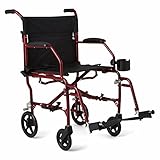
Medline Ultra Lightweight Transport Chair
- 15 lb folding aluminum frame
- 300 lb weight capacity
- 19 x 16 inch seat
- 8-inch rear wheels

Medline Transport Chair with 12-Inch Wheels
- 300 lb capacity
- 12-inch rear wheels
- Hand brakes plus wheel locks
- 19 x 16 inch seat
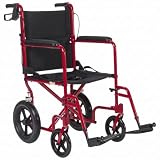
Drive Medical Expedition Transport Chair
- 19 lb aluminum frame
- 12-inch rear wheels with curb assist
- Loop-lock hand brakes
- Rear-lever fold
All 10 Strollers for Seniors Compared
This table is the fast version. The full reasoning for each chair follows underneath.
| Product | Key Specs | Pricing |
|---|---|---|
| Medline Ultra Lightweight Transport Wheelchair |
|
Check Latest Price |
| Medline Transport Wheelchair with 12-Inch Wheels |
|
Check Latest Price |
| Drive Medical Lightweight Expedition Transport Chair |
|
Check Latest Price |
 Drive Medical Folding Transport Wheelchair Drive Medical Folding Transport Wheelchair |
|
Check Latest Price |
 Drive Medical Duet Transport Wheelchair and Rollator Drive Medical Duet Transport Wheelchair and Rollator |
|
Check Latest Price |
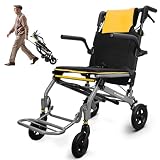 WHLICKS Transport Chair with Telescopic Handle WHLICKS Transport Chair with Telescopic Handle |
|
Check Latest Price |
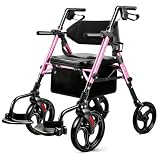 FlyingJoy 2-in-1 Rollator and Transport Chair FlyingJoy 2-in-1 Rollator and Transport Chair |
|
Check Latest Price |
 Vive Mobility Walker Wheelchair Combo Vive Mobility Walker Wheelchair Combo |
|
Check Latest Price |
 NOVA Ultra Lightweight Transport Wheelchair NOVA Ultra Lightweight Transport Wheelchair |
|
Check Latest Price |
 WEYRAL Portable Transit Travel Wheelchair WEYRAL Portable Transit Travel Wheelchair |
|
Check Latest Price |
How We Chose?
I scored every chair on six criteria in this order, and I weighted them the way families actually buy.
Weight capacity margin. The published limit matters, but so does the gap between the limit and the user. A 300-pound chair carrying a 280-pound person is close to a safety gate, and seat width becomes the real constraint before the frame gives out.
Seat geometry. Seat width and depth, backrest angle, whether the armrests get the user close to a table, and whether the footrests actually support the legs. Forum complaints about strollers for adults almost always come back to this rather than the wheels.
Pusher ergonomics. Handle height relative to the person pushing, how much hand strength the brake needs, and whether the brake locks without the pusher bending to the floor. This is the single most under-discussed factor in this category.
Wheel and terrain match. 8-inch casters are for smooth floors and level paths. 11-inch and 12-inch wheels with suspension handle cracks, curbs and gravel. Almost no buyer is told this before they buy.
Folding and carrying. The folded package matters if the chair shares a trunk with a car seat, or a closet with a vacuum.
Track record. Review volume and age tell you whether the frame, casters and hardware hold up. A chair with 12,000 reviews across fifteen years is a different bet than one with 300 reviews across one.
The Ten Reviews
1. Medline Ultra Lightweight Transport Wheelchair – Best Overall Pick
Medline Ultra Lightweight Transport Wheelchair for Adults, Foldable, 19-Inch Seat Width, Red Frame, Black Upholstery
★★★★★★★★★★15 lb folding aluminum frame
300 lb weight capacity
19 x 16 inch seat
8-inch rear wheels
- Lightest frame in the group at roughly 15 pounds
- 19-inch wide seat suits a wide range of body sizes
- Desk-length angled armrests let the user sit at a table
- Swing-away locking adjustable footrests clip on and off
- No assembly required
- Requires an attendant since the user cannot self-propel
- 8-inch wheels catch in cracks between paving stones
- Low handlebar for a pusher over 6 feet tall
- Canvas sling seat wants an added cushion for long outings
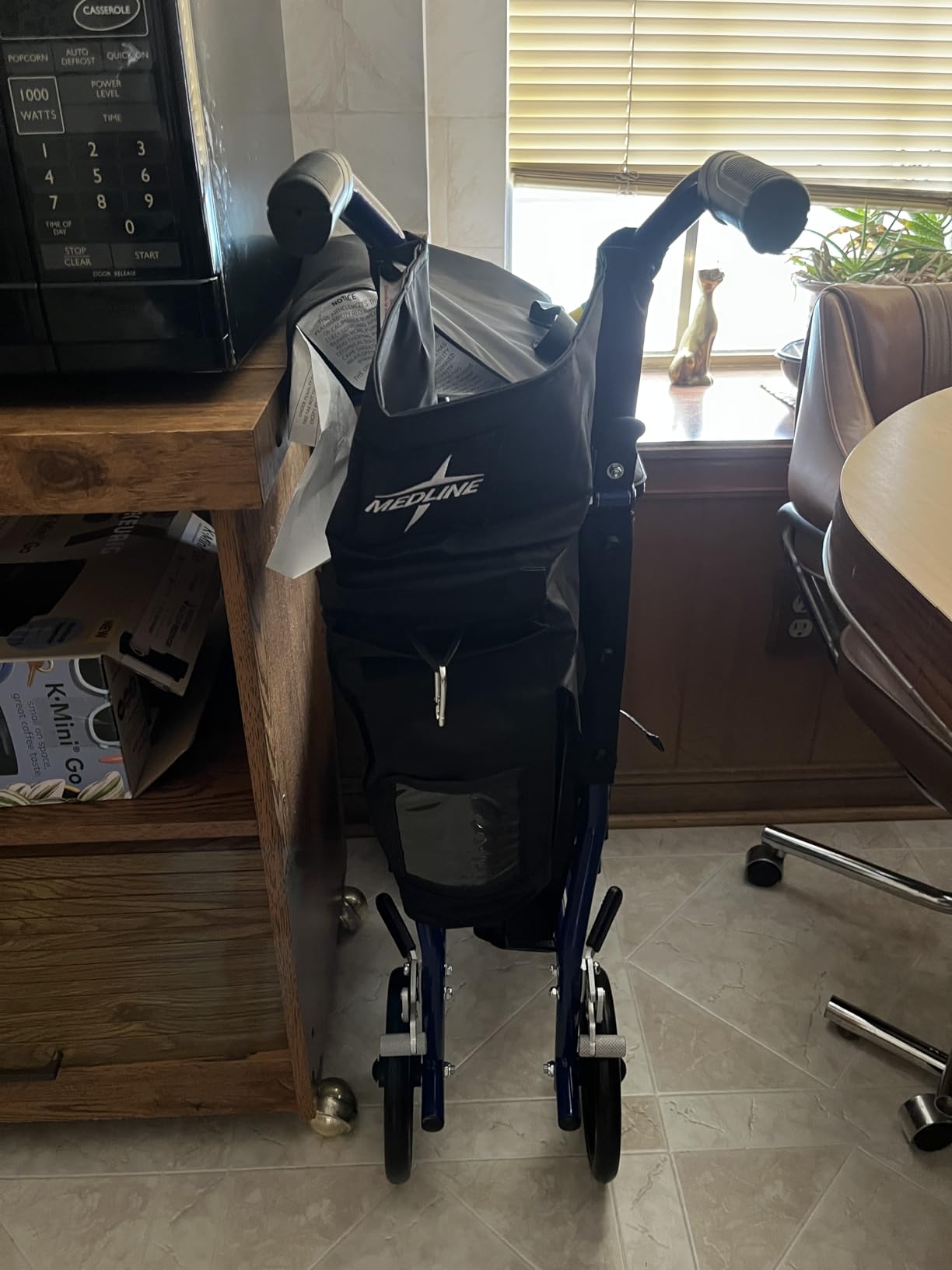
This is the chair I keep coming back to. The frame weighs roughly 15 pounds, which means a caregiver with arthritic hands can lift it into a trunk with one arm instead of heaving it, and that single fact changes how often the family actually uses it.
The capacity is listed at 300 pounds, and the 19-inch-wide by 16-inch-deep seat is one of the more generous dimensions in this roundup. The desk-length cushioned armrests angle forward so the user can roll up to a restaurant table, which is a small detail that removes an entire category of awkwardness.
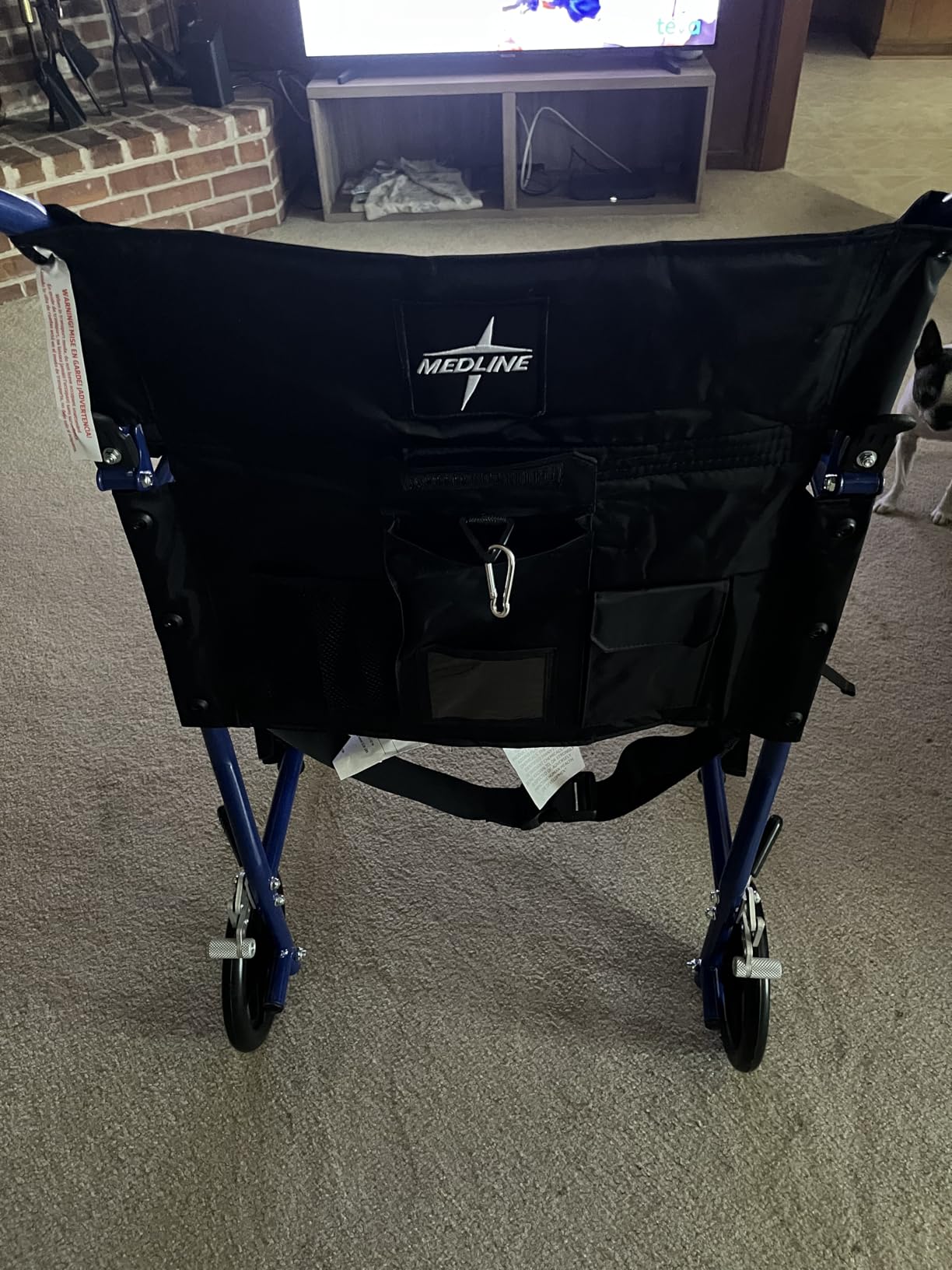
Owners report it surviving cobblestones, gravel paths and cruise boarding ramps, and the nylon upholstery wipes clean. The cup holder and rear seat pocket are the kind of thing nobody lists as a feature and everybody notices on day three.
The limits are honest ones. As a transport chair it needs a pusher, full stop. The 8-inch rear wheels will find every gap between paving stones, and the handlebar height is low for anyone tall. Add a seat cushion before a long day out.
Who this chair suits best?
A senior who tires on a walk but does not need postural support beyond a standard backrest, pushed by a partner or adult child who is not much heavier than 150 pounds themselves. It also works well for clinic visits, grocery runs and airport terminals, anywhere the surfaces are smooth and the distance is short.
If the user can only walk a short distance but can still hold themselves upright, this is the correct starting point. The seat is upright, the fold is fast, and nothing about it looks like medical equipment once it is in a trunk.
Who should skip it?
Skip this if the pusher is tall and pushing all day, because the low handlebar will show up in their shoulders within a few weeks. Skip it if the route involves gravel, grass or a street with broken pavement, where 8-inch casters catch. Also skip it if the user needs trunk control, since the sling seat offers no lateral support.
We earn a commission, at no additional cost to you. CERTAIN CONTENT THAT APPEARS ON THIS SITE COMES FROM AMAZON. THIS CONTENT IS PROVIDED 'AS IS' AND IS SUBJECT TO CHANGE OR REMOVAL AT ANY TIME.
2. Medline Transport Wheelchair with 12-Inch Wheels – Best Value
Medline Lightweight Foldable Transport Wheelchair with Handbrakes and 12-Inch Wheels, Red Frame, Black Upholstery
★★★★★★★★★★300 lb weight capacity
12-inch rear wheels
Hand brakes and rear wheel locks
19 x 16 inch seat
- 12-inch rear wheels roll over cracks and uneven pavement
- Hand brakes give the caregiver quick stopping and locking
- 19-inch seat suits a wider range of body sizes
- Folds compactly for a car backseat or trunk
- No assembly required
- Handlebar height is low for a caregiver over about 6 feet
- Threshold above roughly a quarter inch requires tilting
- Some buyers report a footrest clamp that does not hold securely
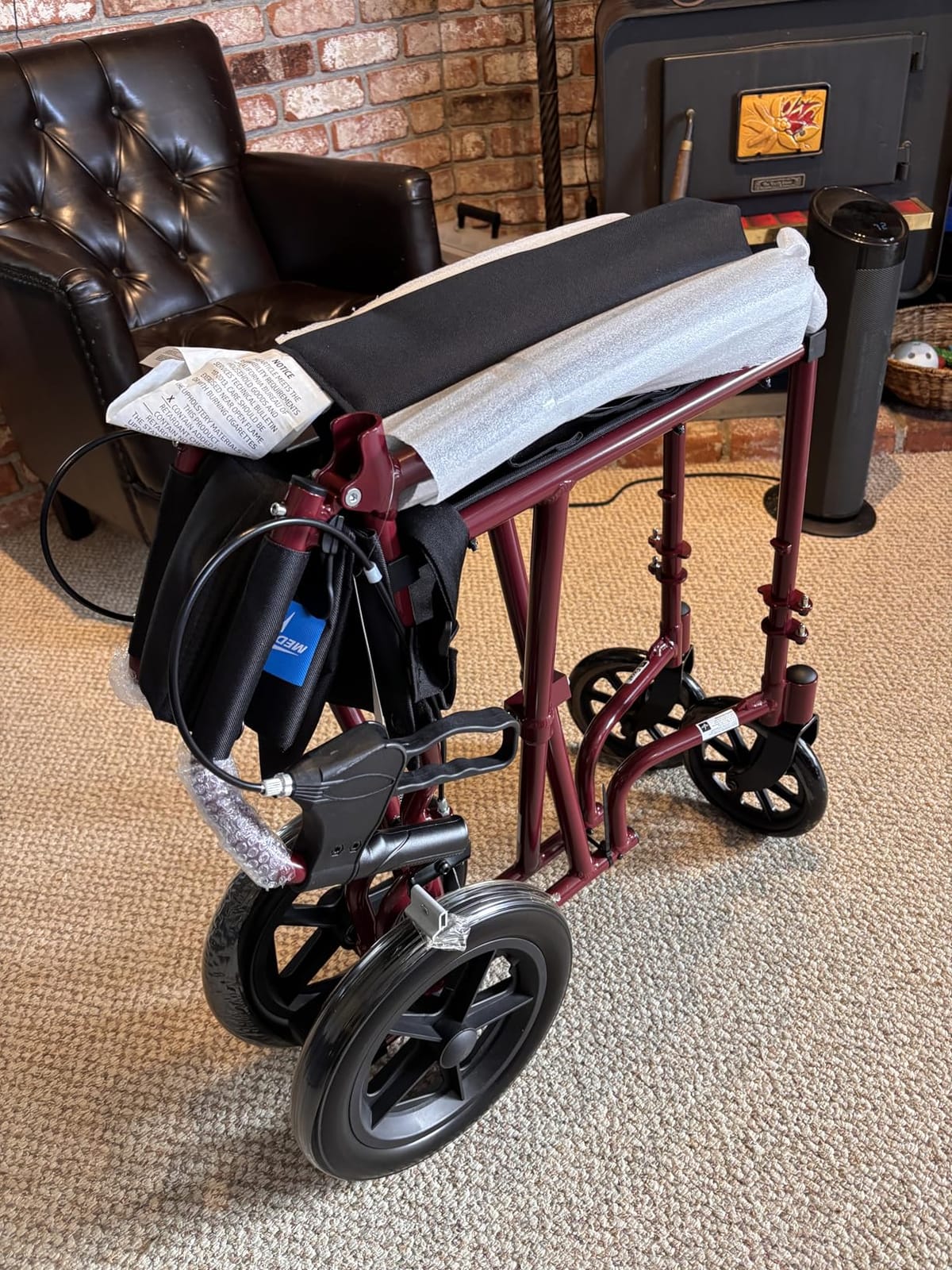
If you are going to buy one chair and nothing else, this is the one I would point at. The 12-inch rear wheels are the whole story. They roll over the uneven stuff that stops smaller casters dead, and the difference on a neighborhood sidewalk with a few settled patches is dramatic.
The braking is also a step up. There are easy-to-squeeze hand brakes for the pusher, plus rear-wheel manual locking brakes for when the chair is parked and the user is transferring. Having both matters, because a single brake system that you cannot engage without kneeling down is a real problem at a clinic door.
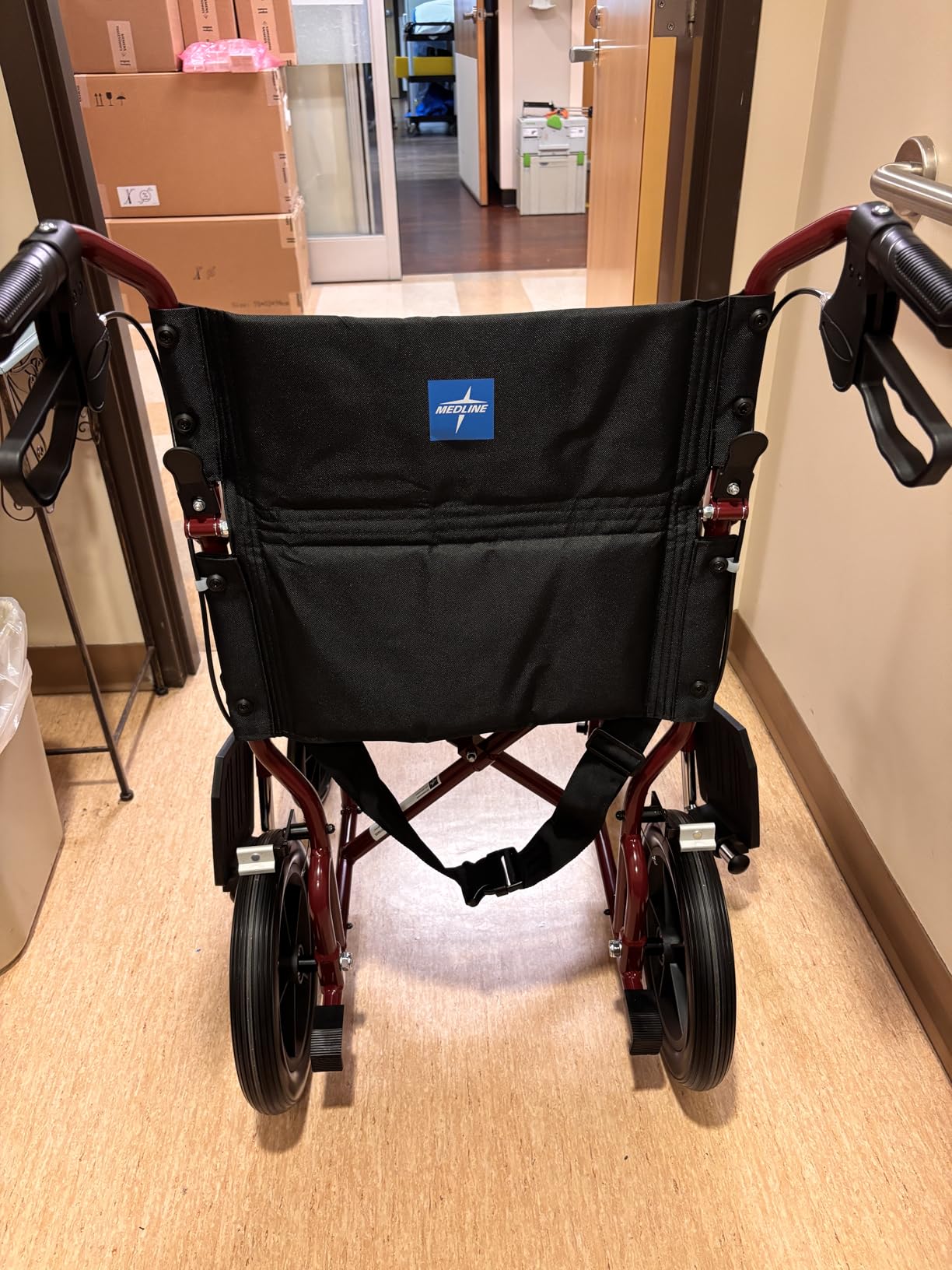
The frame is listed at 26 pounds in the specifications and 22 pounds in the product weight field, so treat it as a mid-20s pound chair rather than an ultralight. In exchange you get a sturdier feel and a seat that does not flex.
Owners like the full-length cushioned armrests and the 19 by 16 inch seat, and the swing-away detachable footrest takes seconds to move out of the way. The recurring complaint is pusher ergonomics: tall caregivers report shoulder strain, which is a fit problem rather than a defect.
Why the bigger wheels are worth it?
Wheel diameter is the least glamorous spec on the page and the one that changes daily life most. A 12-inch rear wheel rolls over a quarter-inch threshold, a settled sidewalk crack and a curb edge that an 8-inch caster will stop dead against. For a user with limited grip strength, a chair that keeps stopping is a chair that ends up unused.
The trade-off is bulk. Bigger rear wheels mean a wider frame and a slightly larger folded footprint, so measure your doorway and your trunk before you commit. For anyone living in an apartment, that measurement is as important as the weight limit.
Who should skip it?
Skip it if the primary pusher is over about 6 feet tall and the walks are long, since the handlebar is fixed and low. It is also the wrong pick for narrow elevators or very small car trunks, and for surfaces with regular steps, which the review data shows these wheels do not climb without a tilt.
We earn a commission, at no additional cost to you. CERTAIN CONTENT THAT APPEARS ON THIS SITE COMES FROM AMAZON. THIS CONTENT IS PROVIDED 'AS IS' AND IS SUBJECT TO CHANGE OR REMOVAL AT ANY TIME.
3. Drive Medical Lightweight Expedition Transport Chair – Best for Rough Ground
Lightweight Expedition Transport Wheelchair with Hand Brakes, Red
★★★★★★★★★★19 lb aluminum frame
12-inch rear wheels with curb assist
Loop-lock hand brakes
Rear-lever fold
- 12-inch wheels roll over bumps cracks and rough pavement
- Locking loop hand brakes avoid bending down to park
- 19-pound frame light enough for an older caregiver to lift
- Folds flat to fit a sedan trunk or behind a third row
- Footrests are the only assembly step
- Hand brakes lock only while the handles are squeezed
- Front casters are the weakest point in rough use
- Folded footrests need separate unlatching
- Narrower push handles raise the center of gravity
The word Expedition in the name is doing real work. The 12-inch rear wheels carry curb assist technology, and owners upgrading from an 8-inch chair consistently point to the wheels and the hand brakes as the two features that justified the switch.
The loop-lock hand brakes are the part I like most for a caregiver. Squeeze the loop and the chair slows; squeeze fully and it locks in place. You can park the chair next to a bench, a car door or a toilet without squatting down, which is exactly the situation where a low wheel-lock lever gets abandoned.

At 19 pounds, the frame is light enough for an older caregiver to lift into an SUV unaided. The rear-lever folding system drops it flat, and the folded package fits behind a third-row seat or in a sedan trunk. Assembly is quick, with the fold-down footrests as the only attachment step.
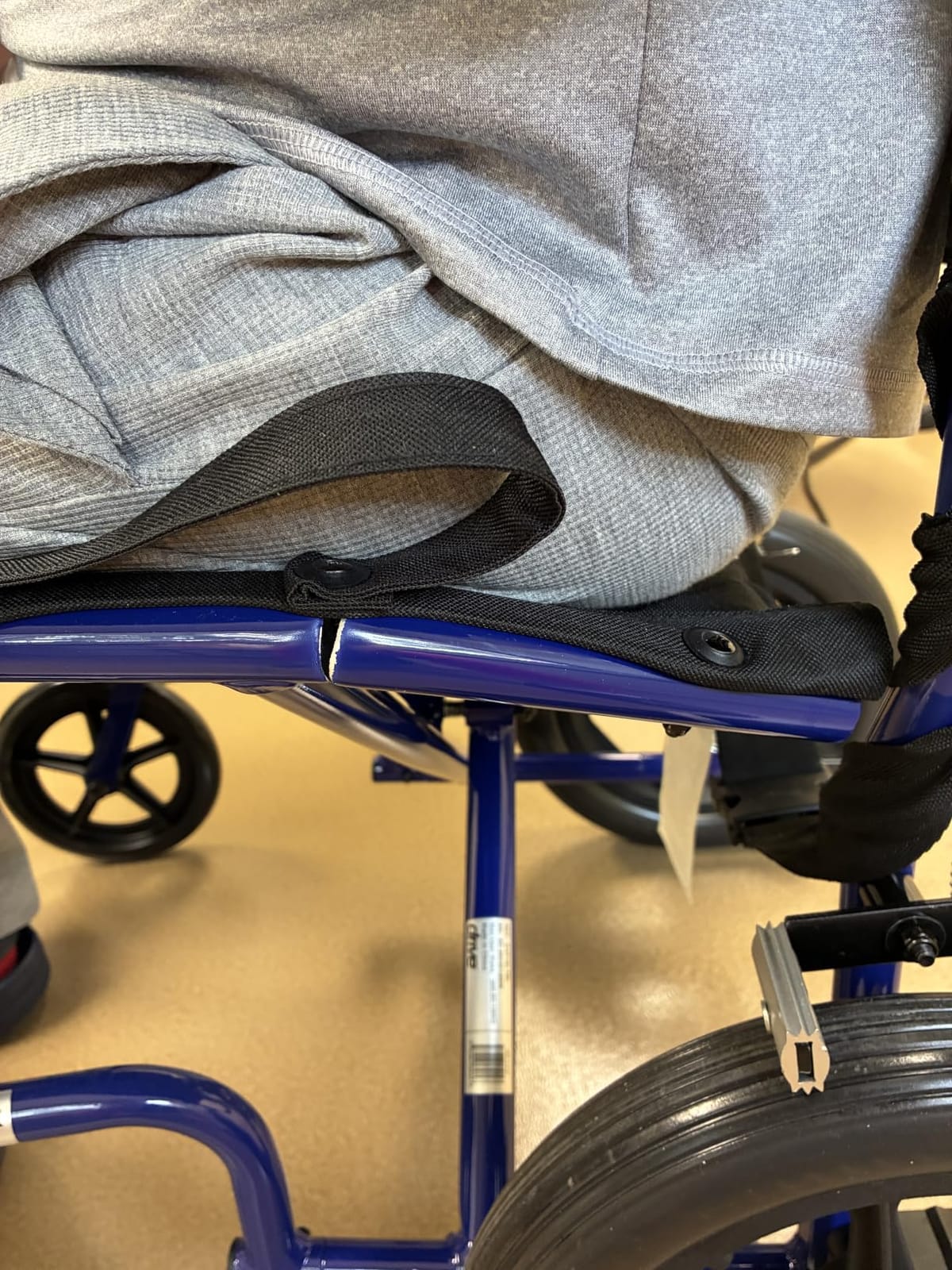
There is a catch on the brakes worth understanding before you buy: the lock engages when the push handles are squeezed down, and there is no separate wheel-lock lever. The same design means the front casters are the component most likely to fail on rough urban pavement, and a small number of owners have reported exactly that.
What rough ground means in practice?
Rough ground in a real neighborhood is not mountain terrain. It is a neighborhood with concrete slabs that have shifted, a park path with tree roots, a hospital approach with a strip of gravel, and a curb at every driveway. A chair with curb-assist wheels and suspension absorbs those; a chair with small hard casters rattles and eventually stops.
If your daily route includes any of that, this is the chair to test on the actual route before you commit. Push it yourself over the worst part of the walk and see how the user responds. The user will tell you within two blocks whether the ride is comfortable.
Who should skip it?
Skip it if you need a positive lock that survives a bumpy slope, because the loop-lock depends on handle pressure and is not designed for that. Also skip it if your caregiver will handle a very heavy user and the narrow push handles feel unstable to them, and skip it if you want a seat better than a basic canvas sling, which needs a cushion for long days.
We earn a commission, at no additional cost to you. CERTAIN CONTENT THAT APPEARS ON THIS SITE COMES FROM AMAZON. THIS CONTENT IS PROVIDED 'AS IS' AND IS SUBJECT TO CHANGE OR REMOVAL AT ANY TIME.
4. Drive Medical Folding Transport Wheelchair – Steel Frame Workhorse
Drive Medical Folding Transport Wheelchair, Swing-Away Footrest, Silver
★★★★★★★★★★26 lb steel frame
17-inch padded nylon seat
8-inch wheels
Swing-away footrests
- Steel frame holds up over years of travel use
- Light enough for one caregiver to lift into a trunk
- Padded seat and armrests stay comfortable on long outings
- Rear tilt bars help clear curbs and bumps
- Seat wipes clean and folds flat
- 17-inch seat runs small for larger users
- Wheel locks sit low and require bending to engage
- Front wheels can foul the footrests when reversing
- No storage pockets or footrest bag included
This is the oldest design in the group, first listed in 2007, and that is exactly why I like it. Steel does not fatigue the way aluminum eventually does, and with more than 10,000 reviews describing years of travel use including cobblestones and cruise ships, there is a very large body of evidence that this frame holds together.
The padded 17-inch nylon seat and padded armrests are more comfortable than the sling seats on most ultralight chairs, and the upholstery wipes clean, which matters more than it sounds if the user has continence issues. The rear tilt bars let a caregiver pitch the chair forward to clear a curb without lifting the front wheels.

At 26 pounds it is heavier than the aluminum models, but it is still a one-person lift into a sedan trunk, and the owner reports suggest that trade is worth making for anyone planning a long ownership. Seat belt included, fold-flat backrest, swing-away footrests.
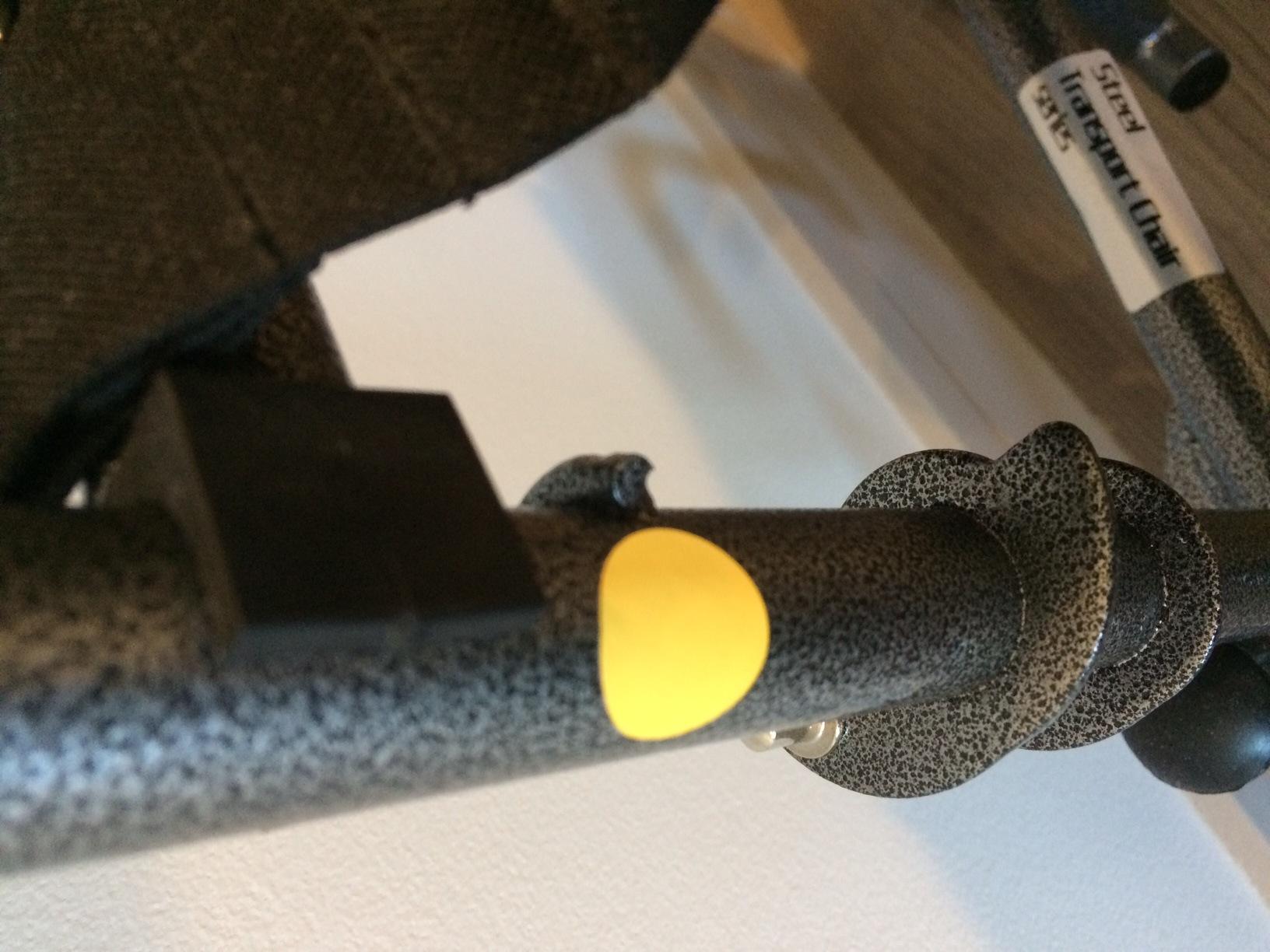
The most repeated complaint is fit, and it is a specific one: the 17-inch seat is smaller than the 19-inch seats the Medline chairs offer, and heavier users describe it as confining. The second complaint is that the wheel-lock levers sit low, so engaging them means bending to the floor.
When a steel frame is the right call?
Steel frames are heavier and they do not fold as small, and in exchange they tolerate abuse, rough surfaces and heavy daily use in a way the ultralight aluminum chairs do not. If the chair will live in a garage, get banged through a hallway and pushed down a gravel driveway every day, the extra weight is a small price for the frame surviving it.
There is a durability lesson in the wider owner community too. In a long-running thread on r/SpecialNeedsChildren, one user described nine years of reliable use from a large adaptive stroller, adding simply that it is big but works great. That is the pattern these steel-frame chairs follow: less convenient, much longer-lived.
Who should skip it?
Skip it if the user is a heavier adult, because the 17-inch seat is the limiting factor before the weight capacity ever becomes one. Also skip it if storage space is tight, since the folded steel frame is bulkier than an aluminum fold, and if the caregiver has back or shoulder problems, because 26 pounds in steel is a different lift than 26 pounds in aluminum.
We earn a commission, at no additional cost to you. CERTAIN CONTENT THAT APPEARS ON THIS SITE COMES FROM AMAZON. THIS CONTENT IS PROVIDED 'AS IS' AND IS SUBJECT TO CHANGE OR REMOVAL AT ANY TIME.
5. Drive Medical Duet Transport Wheelchair and Rollator – Walk Then Sit
Drive Medical Duet Folding Transport Wheelchair and Rollator, Black
★★★★★★★★★★20 lb frame
300 lb capacity
Walk and ride conversion
Folds to 10.4 inches wide
- Two devices in one without buying two products
- Backrest flips front to back in a single step
- Folds compactly and stands upright on its own
- Removable armrests and footrest in rollator mode
- Large removable under-seat storage pouch
- Heavier than a dedicated transport chair at 20 pounds
- 8-inch casters are not built for rough terrain
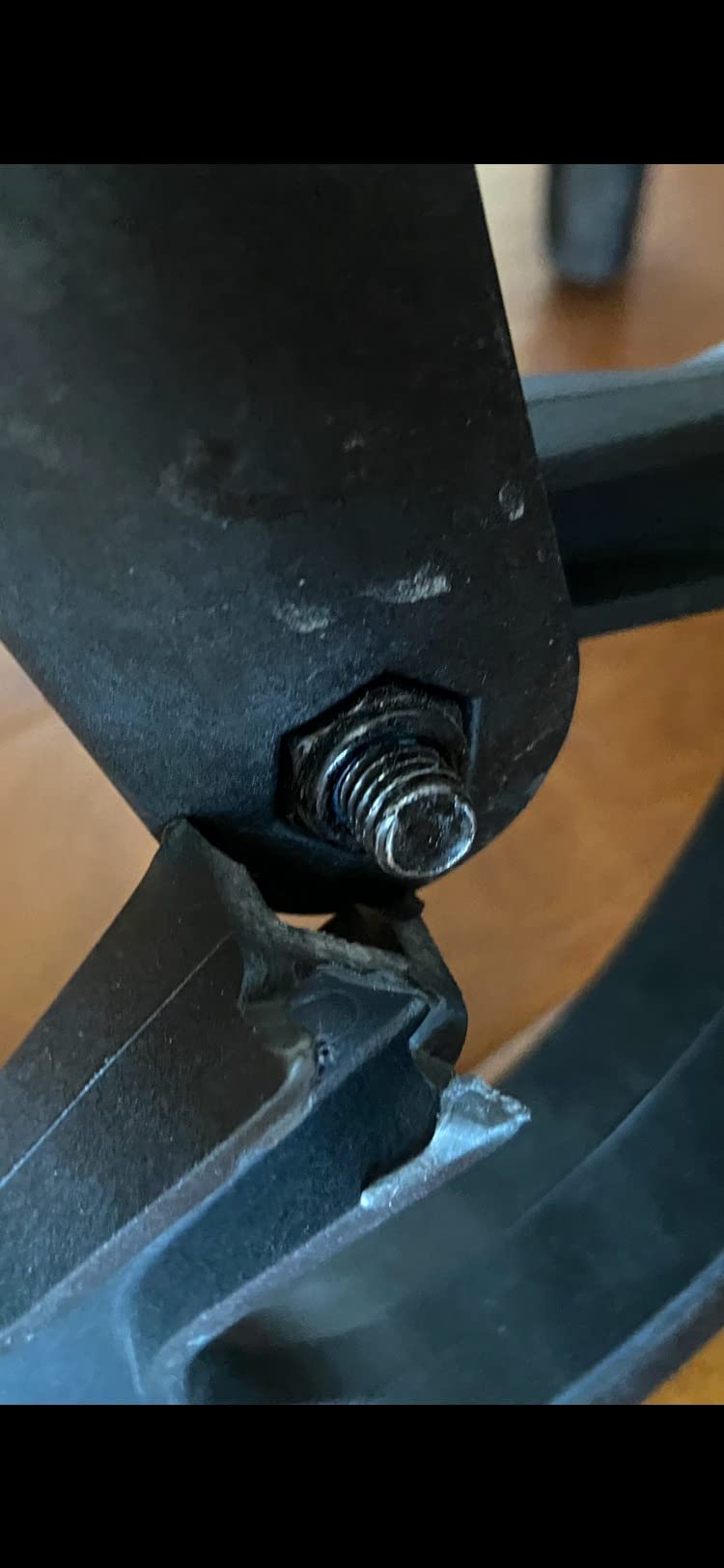
- Conversion takes practice and the hardware needs care
The Duet answers a question most families only realize they have: what happens at minute twenty of a walk when the user is tired but does not want to be carried? The user rolls it themselves as a rollator while they have energy, then the backrest flips from front to back and a family member pushes it as a transport chair for the rest of the outing.
That single mechanism is the whole product. The locking flip-up armrests and flip-down footrest lift off entirely in rollator mode, and the large removable under-seat pouch means the same storage works either way.

The folded package is listed at 34.2 by 24.4 by 10.4 inches, and the chair stands upright when folded, so it parks against a closet wall instead of lying in a heap. The 8-inch casters have locking brakes for parking.
The 4.2 rating among more than 4,000 reviews reflects a specific tradeoff. Reviewers credit the flexibility, the upright fold and the accessories, and they mark it down for the 20-pound weight and 8-inch casters, which are far less forgiving outdoors than the 12-inch models above.
Why walk-then-ride beats picking one function?
A single-purpose transport chair removes the user’s independence by default. They either walk unsupported until they cannot, or they sit from the first minute. For a senior who wants to keep walking but needs a seat available, the conversion is not a gimmick, it is the feature.
It also solves the equipment budget problem. A separate rollator and a separate transport chair is two purchases and two storage problems. The Duet is one. If your user genuinely can self-propel the rollator portion, that flexibility is worth more than the lighter weight you give up.
Who should skip it?
Skip it if the user cannot safely manage a rollator at all, because the armrests and footrest have to come off and the conversion needs practice. Skip it for outdoor routes with gravel or broken pavement, given the 8-inch casters. And skip it if the caregiver must lift the chair frequently, since 20 pounds with a bulky rollator frame is more than 20 pounds of transport chair.
We earn a commission, at no additional cost to you. CERTAIN CONTENT THAT APPEARS ON THIS SITE COMES FROM AMAZON. THIS CONTENT IS PROVIDED 'AS IS' AND IS SUBJECT TO CHANGE OR REMOVAL AT ANY TIME.
6. WHLICKS Transport Chair with Telescopic Handle – 350 Pound Capacity
Wheelchairs for Adults Transport Chair Lightweight Foldable with Telescopic Handle,17″ Width Compact Portable Folding Travel Wheel Chairs for Seniors
★★★★★★★★★★20 lb aluminum frame
350 lb weight capacity
Folds to 21 x 10 x 34 inch
Telescopic rolling handle
- 350-pound capacity in a 20-pound chair
- Three-second fold to a 21 x 10 x 34 inch package
- Telescopic handle lets one person roll it instead of lifting it
- Shock-absorbing springs smooth out bumps and cracks
- Rotatable waterproof armrests simplify transfers
- Newer listing with a much smaller review base
- Two seat-width variants so sizing needs checking
- Stiffer ride and a shorter durability record than steel frames
This is the heaviest-capacity chair in the roundup at a listed 350 pounds, and it does it on a frame the manufacturer puts at 20 pounds. For a user above 300 pounds, that combination is genuinely rare and it is the reason this chair made the list despite a much smaller review base than the older models.
The telescopic pull handle is the sleeper feature. It retracts for storage and extends for pulling, so a single person can roll the chair through an airport terminal or a parking garage instead of carrying it. The frame folds and unfolds in about three seconds to 21 by 10 by 34 inches, which is a genuinely small package.
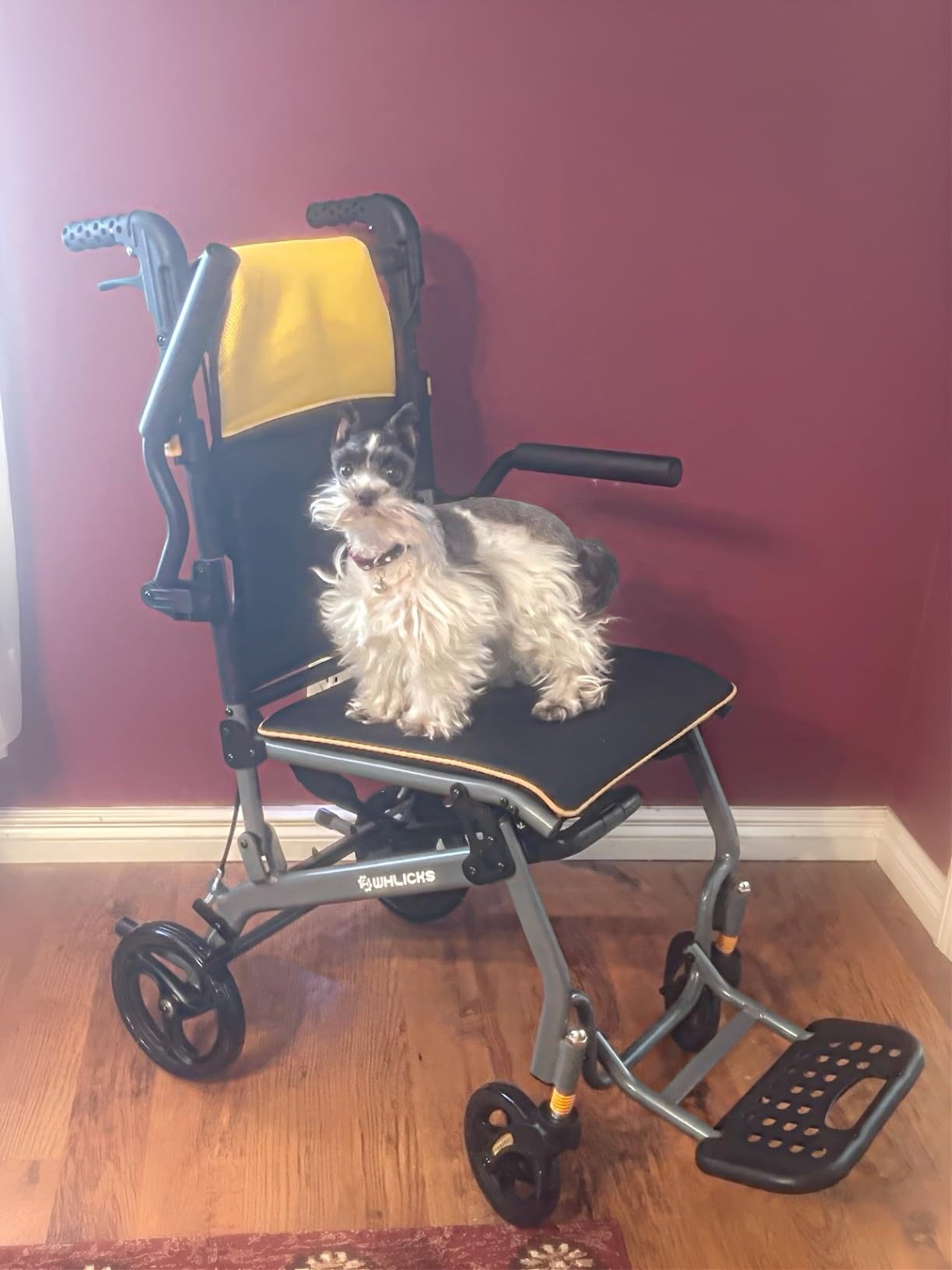
The non-slip breathable push handles include a brake and a parking trigger, so the caregiver brakes by hand rather than by reaching down. PU tires, 360-degree swivel front wheels and shock-absorbing springs at the front end are what make small wheels tolerable on cracked sidewalks.
Be honest about the tradeoffs. The 4.2 rating across 337 reviews is a shallower record than the 12,000-review models, and owners describe a stiffer ride than the suspension-equipped chairs. There are also 16.5-inch and 17-inch seat variants, so check the width before you order.

Reading a 350-pound capacity correctly
A weight limit is a hard gate, not a target. It tells you the maximum load the frame, brakes and axles are rated for, and exceeding it is a safety problem rather than a durability problem. So the right question is not whether the chair is heavy-duty, it is whether the seat width and backrest still support the person at that weight.
A 17-inch seat carrying 340 pounds is a different proposition from a 17-inch seat carrying 170 pounds. Body shape, hip width and how long the person sits all matter. If the user is over 300 pounds, sit them in the chair in a showroom before buying, and confirm the backrest gives them shoulder and back support rather than pushing them forward.
Who should skip it?
Skip it if you want the deepest long-term track record, since this listing is newer and the hardware has not been proven over a decade. Also skip it if the user is a smaller adult who wants a comfortable fit, because a large chair with a wide seat can leave a short user unsupported. Anyone planning heavy daily outdoor use should weigh the stiffer ride.
We earn a commission, at no additional cost to you. CERTAIN CONTENT THAT APPEARS ON THIS SITE COMES FROM AMAZON. THIS CONTENT IS PROVIDED 'AS IS' AND IS SUBJECT TO CHANGE OR REMOVAL AT ANY TIME.
7. FlyingJoy 2-in-1 Rollator and Transport Chair – Widest Height Range
2-in-1 Rollator Walker Transport Wheelchair Combo for Seniors with seat
★★★★★★★★★★300 lb capacity
Handles adjust 33.5 to 40 inch
3-mode braking
10-inch front airless tires
- Converts from rollator to transport chair in seconds
- 10-inch front and 8-inch rear airless tires handle grass and gravel
- Three-mode braking works with limited hand strength
- Handle and seat adjustment fits users from 5 foot 1 inch to 6 foot 4 inch
- Folds flat in one second with a built-in lock
- Heavier and bulkier than a dedicated transport chair at nearly 25 pounds
- Folded package is taller and narrower
- Still requires assembly steps despite tool-free setup
The handle adjustment on this one is unusually wide, running from 33.5 to 40 inches, with the seat adjustable from 20.8 to 22.8 inches. That range covers users from roughly 5 foot 1 inch to 6 foot 4 inch, which means a household with two different-height caregivers can both push it properly. Handle height is the fix for pusher shoulder strain, and this is the chair where it is genuinely solved.
Conversion works by flipping the backrest and attaching the footrests. The 3-mode brake system offers Free, Slow and Stop, and that middle mode is the one that matters for a user with hand weakness, because it lets the caregiver slow a descent on a ramp without fully stopping.
The 10-inch front and 8-inch rear airless tires handle grass, gravel and cracked sidewalk without the flats that plague small pneumatic tires on a stroller, and the triangular anti-tip brace adds stability on a slope. The waterproof PU seat over a wooden frame with high-density foam is more comfortable than a sling, with a 7.7-inch breathable backrest.
It folds flat in about a second to 33.5 by 14.6 by 35.3 inches with a built-in lock, arrives 95 percent assembled with tool-free push-button assembly, and includes a removable under-seat basket with dividers, a hidden pouch, a cup holder and a cane or umbrella holder. Reflective strips improve visibility on evening walks.
When handle height decides the purchase?
Shoulder and wrist strain in a caregiver is the most predictable failure point in this whole category, and it is nearly always a handle height problem. A handle that sits at 33 inches forces a tall person to push down and forward all day. A handle that reaches 40 inches lets a short person push level. When the two people sharing the pushing duties are 18 inches apart in height, an adjustable handle is worth more than a lighter frame.
The same logic applies to the seat height. A user who cannot get their feet flat on the ground cannot stand up from the chair independently, which quietly turns a mobility aid into a transfer problem for whoever is nearby.
Who should skip it?
Skip it if trunk or closet space is the binding constraint, since the folded package is narrower but taller than a dedicated transport chair. It is also heavier than a single-purpose chair and it is built for mixed-surface work rather than pure indoor use. For users who need true self-propulsion, this is not a self-propelling chair in either mode.
We earn a commission, at no additional cost to you. CERTAIN CONTENT THAT APPEARS ON THIS SITE COMES FROM AMAZON. THIS CONTENT IS PROVIDED 'AS IS' AND IS SUBJECT TO CHANGE OR REMOVAL AT ANY TIME.
8. Vive Mobility Walker Wheelchair Combo – Lifetime Guarantee
Vive Walker Wheelchair Combo – Rollator Transport Chair for Seniors
★★★★★★★★★★21 lb frame
300 lb weight capacity
Folds to 28.5 x 11.4 x 33 inch
Adjustable padded handles
- Converts from rollator to transport chair for variable energy levels
- Folds to a slim 28.5 x 11.4 x 33 inch package
- Padded backrest and height-adjustable ergonomic handles
- Storage bag and integrated cane holder included
- Lifetime guarantee and available replacement parts
- Heavier than a dedicated transport chair at roughly 21 to 24 pounds
- Only offered in a single Ocean Blue colorway
- Assembly is still required after delivery
The folded package is the headline here. At 28.5 by 11.4 by 33 inches this is one of the narrower folds in the roundup, which means it fits a small closet, a tight trunk or the space behind a front door where a transport chair usually has nowhere to go. If you live in an apartment, that dimension decides more than the weight does.
The other differentiator is the lifetime guarantee combined with genuinely available replacement parts. For equipment a family expects to keep for years, knowing a caster or a brake pad can be ordered separately changes the ownership calculation completely. It is the same logic as the nine-year ownership report in r/SpecialNeedsChildren, where a long-serving adaptive stroller was still going strong because parts and the frame held up.
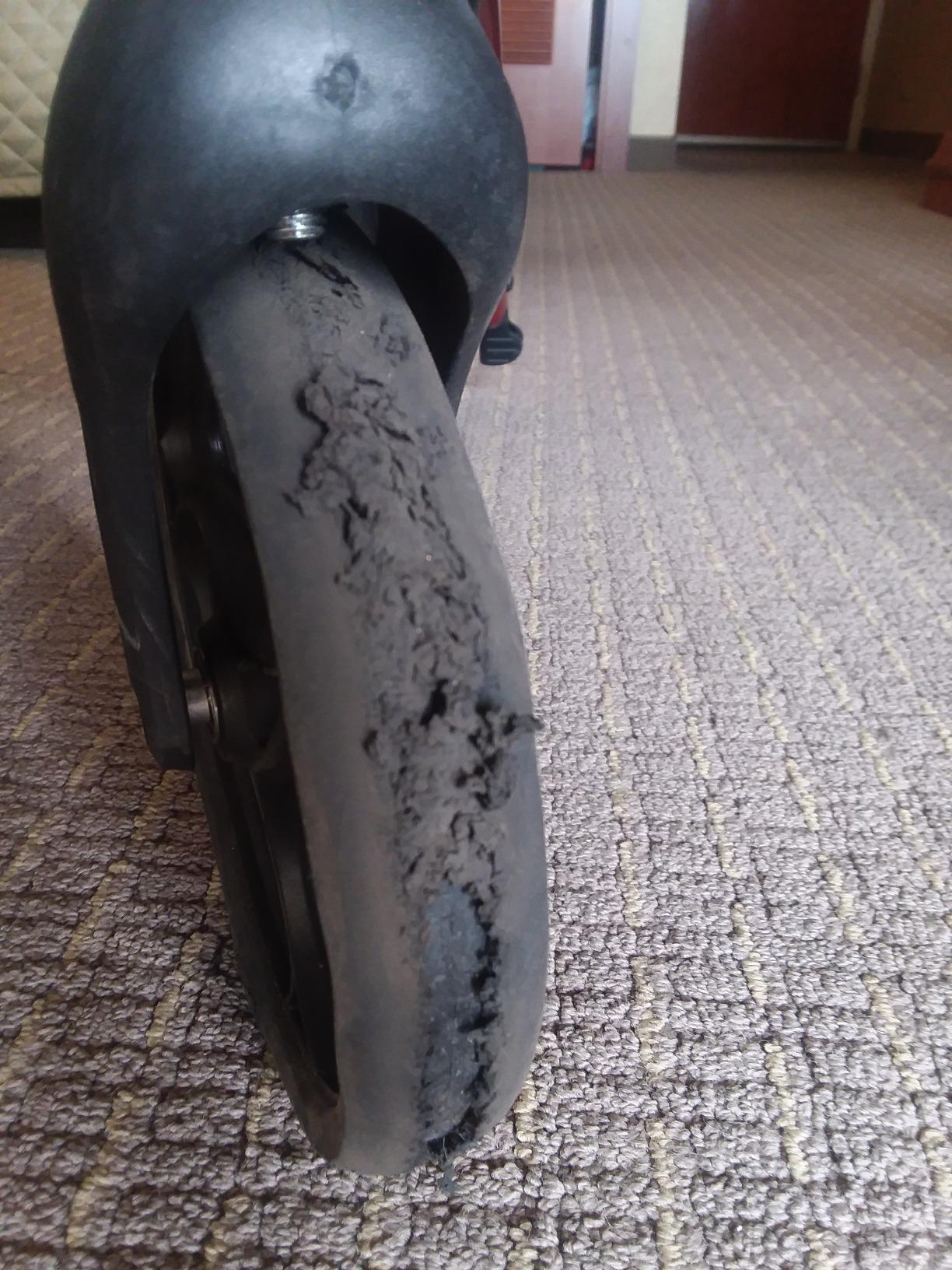
The 21-pound frame carries a 300-pound capacity. The roomy seat, soft padded backrest, adjustable footrests and ergonomic height-adjustable handles are the comfort features, and a storage bag plus an integrated cane holder come in the box. The frame arrives partially pre-assembled and the listed setup time is about five minutes with the step-by-step video.
The complaints are consistent and unexciting: it is heavy for its class, it comes in exactly one color, and assembly is still required. None of those is a dealbreaker unless aesthetics are driving the purchase, which for mobility equipment they rarely are.

What a lifetime guarantee actually tells you?
A lifetime guarantee is only as good as the parts supply behind it, so the two claims should be read together. A manufacturer that guarantees a frame for the lifetime of the product and also stocks replacement casters, brake handles and footrests is making a statement about the next decade, not the first purchase.
That matters because the failure points on any of these chairs are consumables. Wheels wear, brake cables stretch, footrest clamps crack, upholstery tears. On a product without a parts channel, the first real failure ends the ownership. On one with a channel, it is an afternoon and a small part.
Who should skip it?
Skip it if you need a choice of colors, because this is a single colorway. Skip it if the caregiver must lift the chair into a car frequently, since at roughly 21 to 24 pounds it is at the wrong end of the weight range. And skip it for outdoor routes with loose gravel, where a dedicated 12-inch-wheel chair serves better.
We earn a commission, at no additional cost to you. CERTAIN CONTENT THAT APPEARS ON THIS SITE COMES FROM AMAZON. THIS CONTENT IS PROVIDED 'AS IS' AND IS SUBJECT TO CHANGE OR REMOVAL AT ANY TIME.
9. NOVA Ultra Lightweight Transport Wheelchair – Quick-Release Fold
NOVA Ultra Lightweight Transport Wheelchair for Adults, Foldable Travel Wheelchair with 19” Seat Width, Compact Design, Easy to Carry, Blue
★★★★★★★★★★18.75 lb frame
300 lb weight capacity
Quick-release fold-down backrest
18-inch wide seat
- Under 19 pounds while still supporting 300 lb
- Quick-release backrest collapses the chair in seconds
- Padded desk arms let the user roll up to a table
- Adjustable seat belt up to 41 inches and rear wheel locks
- Push-button adjustable swing-away footrests
- 8-inch wheels suit only smooth level surfaces
- 18-inch seat is narrower than the 19-inch Medline seats
- Higher cost than comparable ultralight models
- Smaller review base than the big-name alternatives
This chair earns its place on one specific mechanism: the quick-release fold-down backrest. Instead of a sequence of levers, you pull a release and the back drops flat, which means a caregiver can collapse the chair at a car door in the time it takes to open it. For anyone doing transfers in parking lots and clinic car parks, that speed is a genuine safety gain.
At an 18.75-pound frame with a 300-pound capacity, it holds one of the two highest average ratings in this roundup at 4.6, though across a smaller pool of 196 reviews. The padded desk arms let the user sit at a table, and the seat belt adjusts up to 41 inches, which is unusually generous.
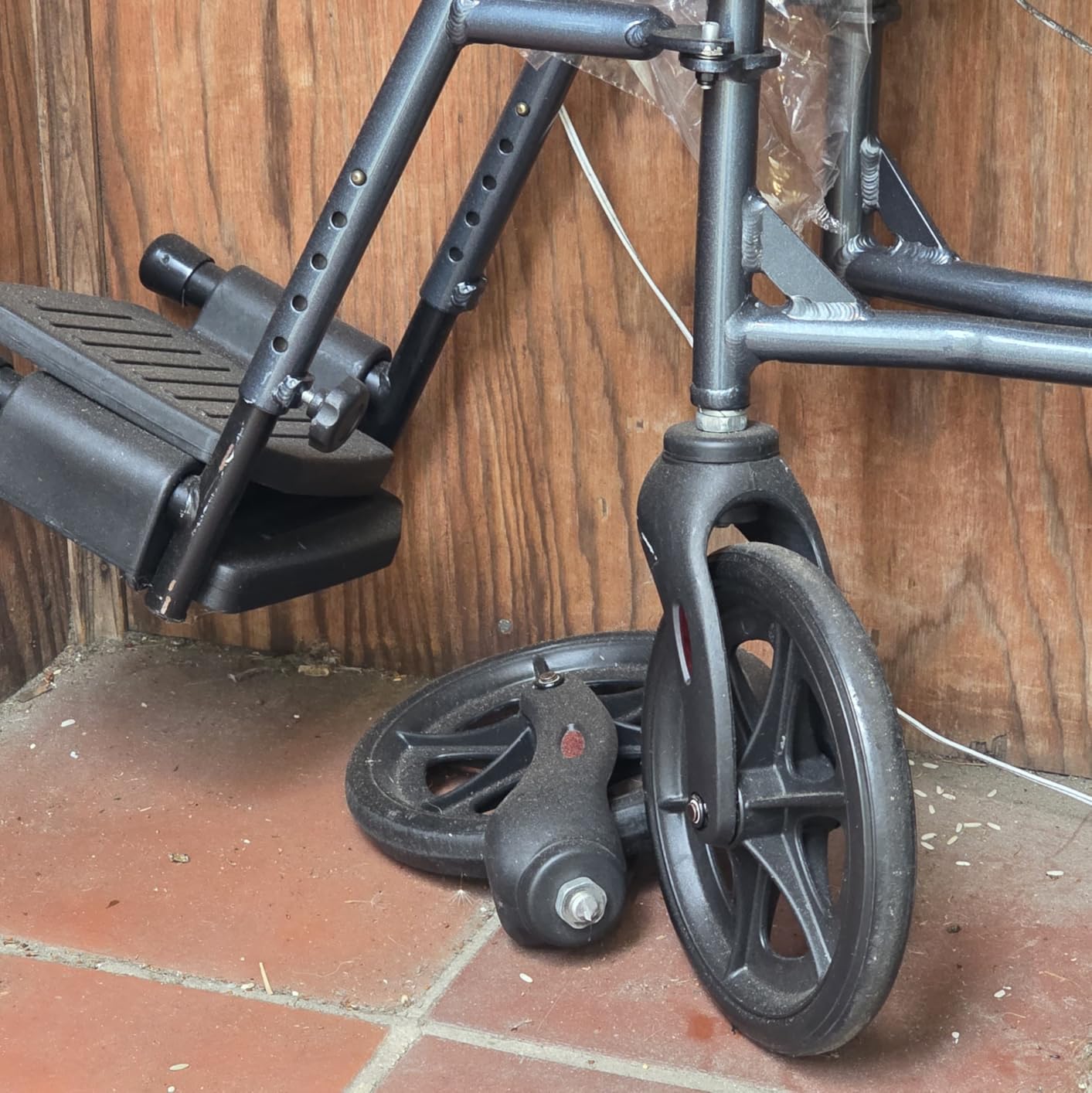
The swing-away push-button footrests adjust without tools, and the listed folded dimensions come in at 37.5 by 19 by 23 inches. First listed in 2012, the design has had a long time to settle, and the model is offered in red, blue and black.
The reservations are all about spec sheet tradeoffs rather than defects. The 8-inch wheels are for smooth, level surfaces. The 18-inch seat is narrower than the 19-inch seats on the Medline chairs, and it costs more than comparable ultralight models from Drive Medical and Medline.
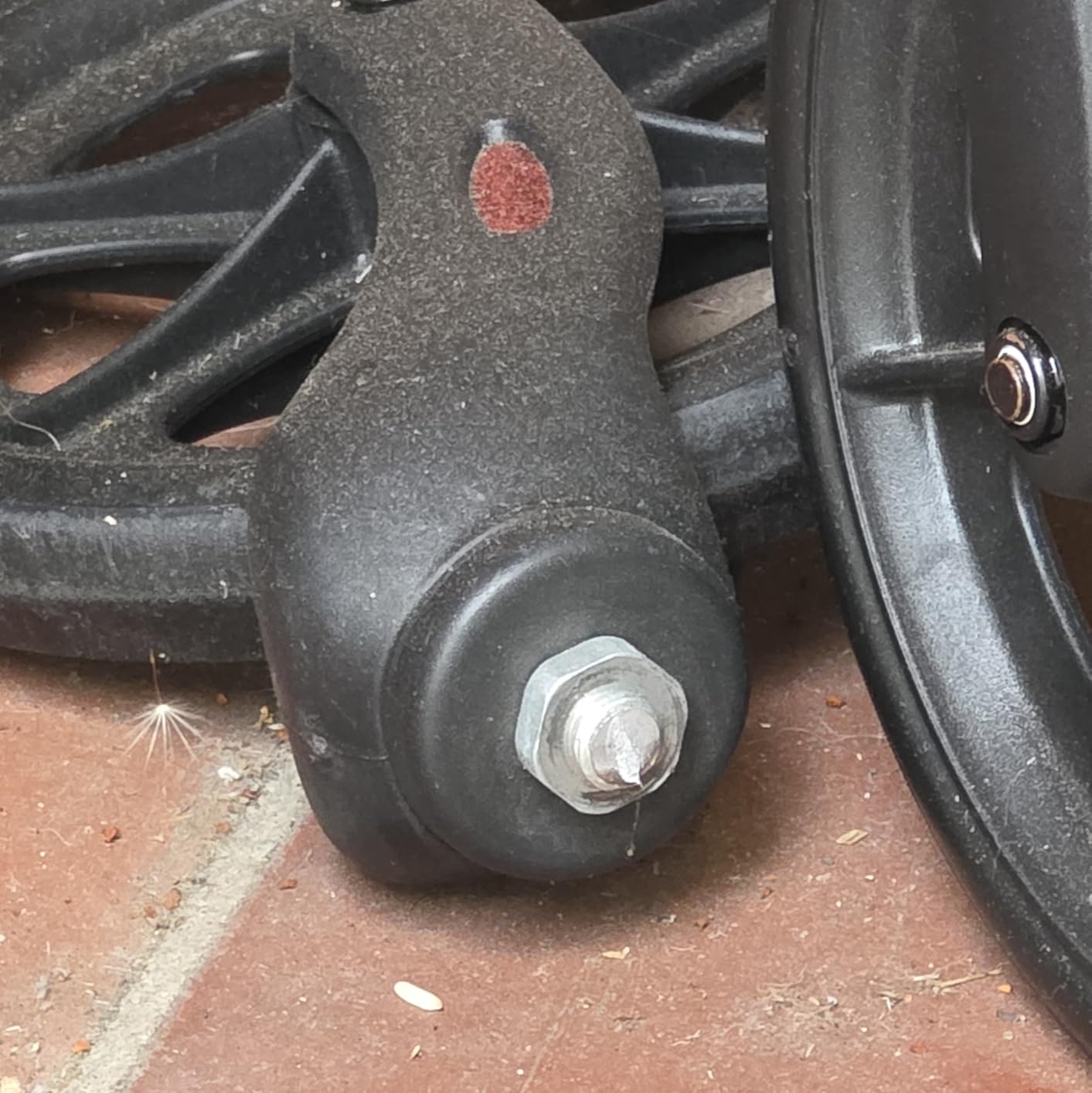
Why fold speed beats fold compactness?
Most people compare folded volume, and in some situations that is the wrong number. A caregiver with limited strength is not trying to save 3 inches of trunk space. They are trying to complete a task one-handed, in a parking lot, without sitting on a curb to reassemble the chair afterward.
A single-release fold reduces that task to two actions: release, drop. It also matters for airline and rail travel, where the person handling the chair is often not the person who owns it and has never seen the mechanism before. Anything that needs a written instruction is slower in the hands of a stranger.
Who should skip it?
Skip it if your routes include gravel, grass or broken pavement, because 8-inch wheels are not built for it. Also skip it if the user is a broader adult and you can get a 19-inch seat elsewhere for the same money, and skip it if having replacement parts and a long warranty history matters more to you than the fastest fold.
We earn a commission, at no additional cost to you. CERTAIN CONTENT THAT APPEARS ON THIS SITE COMES FROM AMAZON. THIS CONTENT IS PROVIDED 'AS IS' AND IS SUBJECT TO CHANGE OR REMOVAL AT ANY TIME.
10. WEYRAL Portable Transit Travel Wheelchair – Spring Suspension Ride
Super Lightweight Portable Transit Travel Wheelchair, Upgraded Folding Transport Wheelchairs (Weight 24lbs) for Adults and Seniors, Come with Telescopic Handle and Travel Bag
★★★★★★★★★★24 lb aluminum frame
11-inch spring-damped rear wheels
Reclining backrest
Integrated handbrake
- Built-in spring suspension and 11-inch wheels give the smoothest ride here
- Rear step bar lets the caregiver tip the front wheels over bumps
- Reclining backrest helps users who tire easily
- Telescopic handle tucks under the seat when not needed
- Carry bag included for gate-checking
- Heaviest chair here at about 24 to 27 pounds
- Folding is awkward and the wheels must be removed first
- Thin cushion and some reports of plastic hardware breaking
- Some units arrived with bent or misaligned wheel brakes
The ride is the reason to look at this chair at all. The 11-inch rear honeycomb wheels work with spring damping, and several owners call it the smoothest travel chair they have used. If the user has back pain or tires quickly on smooth surfaces, a reclining backrest plus suspension is a combination nothing else here matches.
Other details work well too. The integrated handbrake and adjustable seat belt are sensibly placed, the rear step bar gives the caregiver a way to tip the front wheels over obstacles, and the upgraded telescopic handle hides under the seat when it is not being used rather than sticking out.
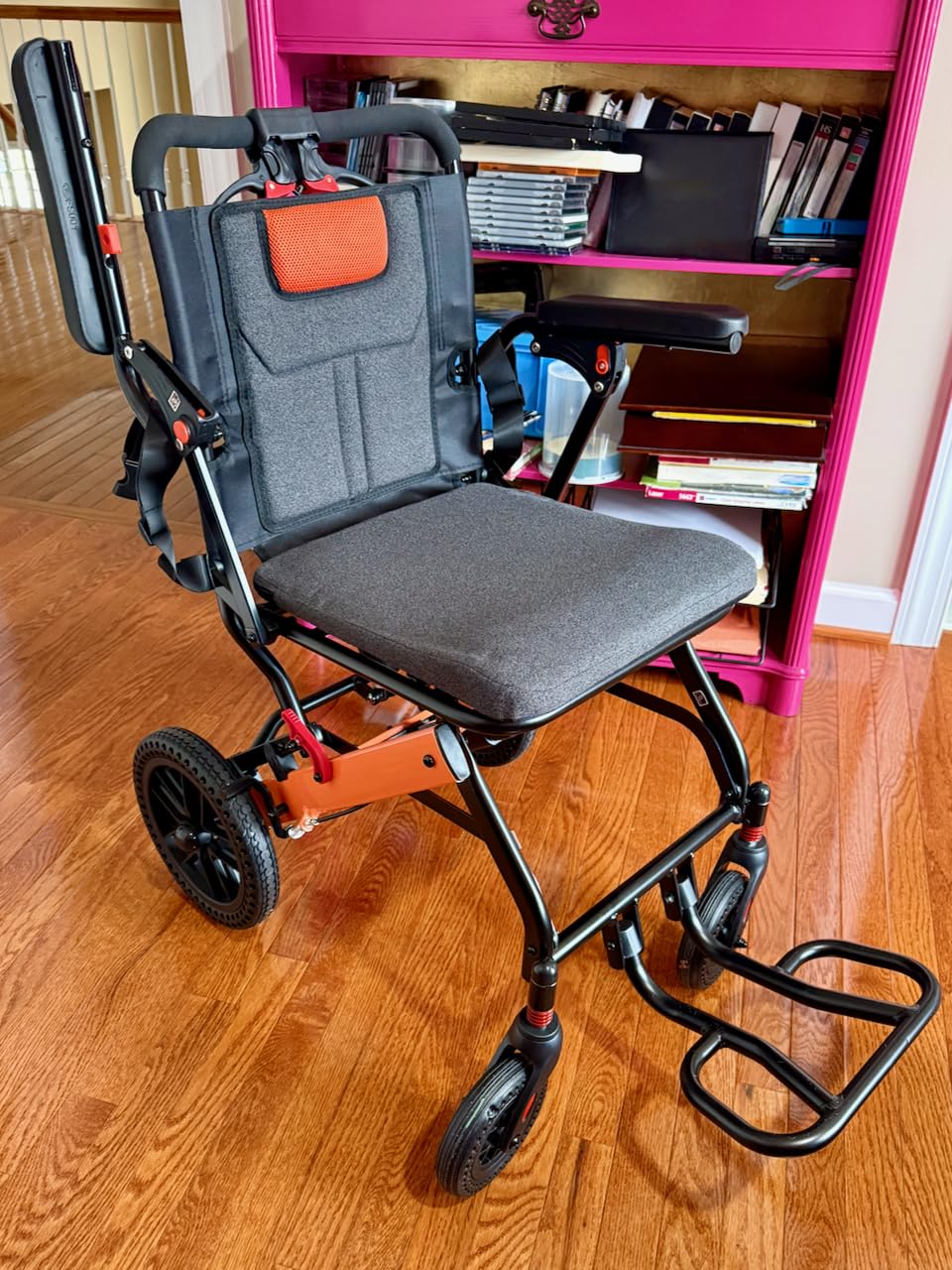
It is also set up for travel specifically, with folding for car trunk and airplane cabin stowage and a carrying bag included for gate-checking. The tower-shaped frame with thickened tubing is described as waterproof, wear-resistant and corrosion-resistant, and the turning radius is small for tight doorways.
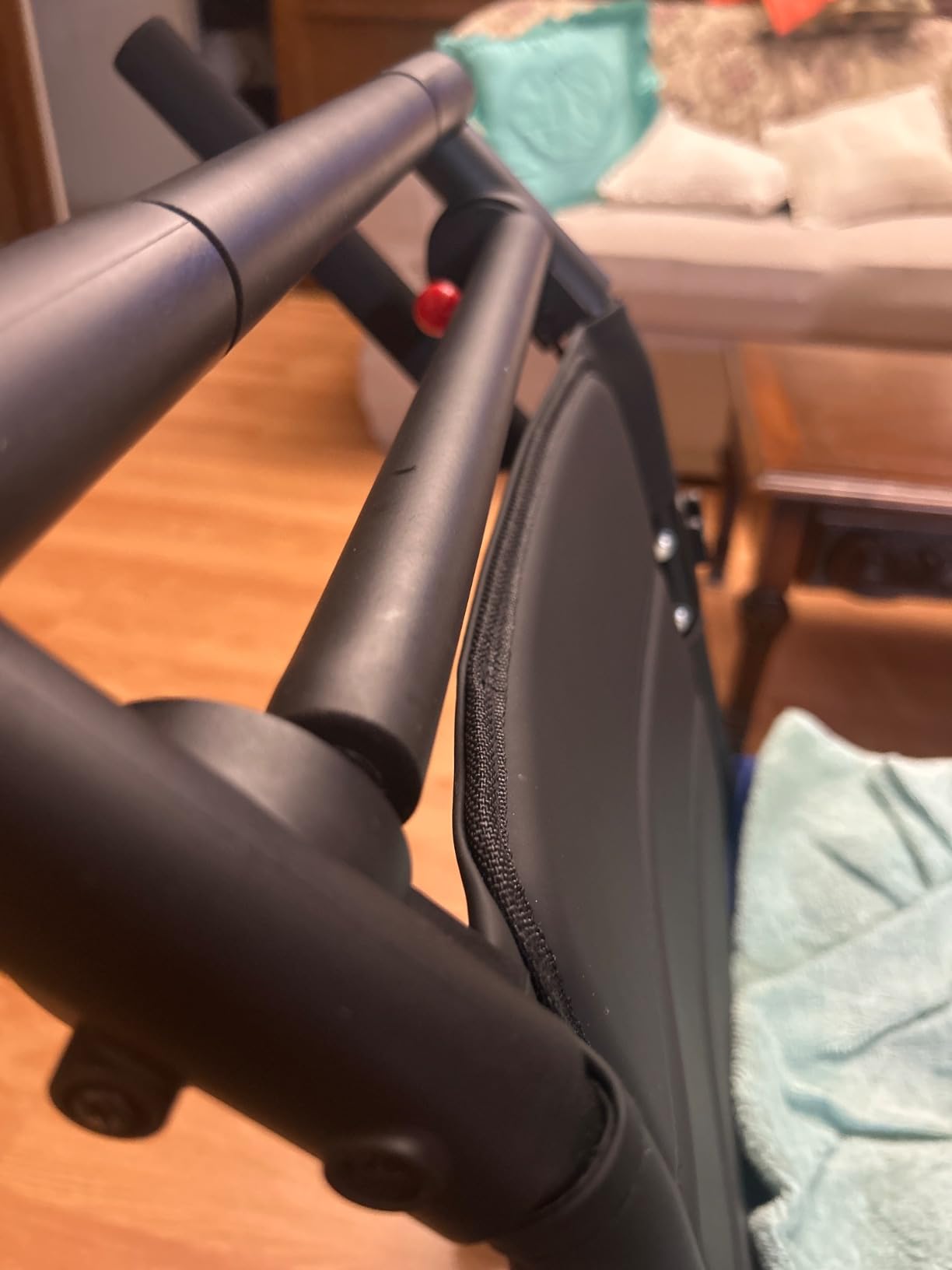
At a 4.1 rating it sits lowest in the roundup, and the reasons are concrete. The frame is listed at 24 pounds in one field and 26.7 in another, making it the heaviest chair here. The fold is awkward: the large wheels come off first, the release is not intuitive, and there is little to grip. One owner reported plastic components and hardware breaking within days.
When suspension justifies the weight?
Spring damping and 11-inch wheels solve a specific problem, and they pay for it in weight. A user with chronic back pain, a recent surgery or a condition that makes vibration painful will feel the difference on a long street far more than the extra 8 pounds in the frame. For everyone else, that weight is pure cost.
The folding procedure is the real concern. Any chair that requires wheel removal before folding is a chair that will frustrate a caregiver in a hurry, and it is the reason I would not recommend this as a first purchase without trying the fold in person. Inspect the chair on arrival too, since some owners reported bent or misaligned wheel brakes from thin packaging.
Who should skip it?
Skip it if folding and carrying frequency is high, because wheel removal is a poor experience. Skip it if the user is a broader adult, since the narrow seat does not suit adults over roughly 150 pounds according to owner reports. And skip it if you are buying a chair expected to last a decade without a strong reason to prefer the suspension over a lighter, simpler frame.
We earn a commission, at no additional cost to you. CERTAIN CONTENT THAT APPEARS ON THIS SITE COMES FROM AMAZON. THIS CONTENT IS PROVIDED 'AS IS' AND IS SUBJECT TO CHANGE OR REMOVAL AT ANY TIME.
How to Choose a Stroller for a Senior?
Work through these seven criteria in order. The first two are safety and fit gates, and the rest decide whether the chair gets used every day or abandoned in a closet by month three.
1. Weight capacity is a gate, not a guideline
Every chair in this roundup is rated between 300 and 350 pounds, which covers most adults. But the capacity is meaningless without seat width and depth to match. A user at the top of a weight limit in a narrow seat will slide forward, lose back support and start sliding down over an afternoon. If the user is a heavier adult, look for a 19-inch seat or wider rather than just a higher number.
Never exceed the published limit. Exceeding it affects braking distance, frame fatigue and wheel integrity, and none of those fail politely.
2. Seat geometry decides whether the chair gets used
This is the factor people skip and regret. Ask four questions. How wide is the seat at the hips? How deep, so the legs are supported rather than dangling? Does the backrest hold the user upright or does the user slide forward? And can the armrests angle or flip away so the user can get close to a table?
In owner discussions about adult strollers, the complaint is almost never about wheels or weight. It is that standard seats do not accommodate longer legs, wider hips or poor trunk control. Ask whether the user needs lateral trunk support, a headrest or a positioning wedge, because a plain sling seat will not provide any of that and no adjustment will add it later.
3. Pusher ergonomics, the ignored purchase factor
Measure the height of the person who will push most often and compare it to the handle height. A handle well below the pusher’s natural elbow means pushing down all day, which shows up in the shoulders within weeks. The chairs with adjustable handles, like the FlyingJoy and the Vive, solve this properly and are worth choosing for it.
Then test the brake with the weaker of the two hands. Loop-handle brakes that lock by squeezing are fast and require no bending. Low wheel-lock levers require kneeling, and in a parking lot at dusk a kneeling caregiver is a fall risk.
4. Match the wheels to the actual ground
8-inch casters are for smooth, level surfaces: hallways, elevators, clinic interiors, mall floors. 11-inch and 12-inch rear wheels with spring or curb assist are for sidewalks, parks, gravel approaches and anything with a curb.
Walk the route the chair will actually cover and note the worst 20 yards. That is the surface that decides the wheel size. If it is smooth, save the weight and choose small casters.
5. Folding and storage, measured before you buy
Measure the trunk, the closet and the doorway of the room it will live in. Then look at the folded dimensions, not the open ones. The WEYRAL needs its wheels removed before it folds; the Vive folds to 11.4 inches wide; the WHLICKS folds to 21 by 10 by 34 inches in about three seconds. Those are very different mornings for the same person.
6. Brakes and anti-tip geometry
Look for two braking functions if the chair will ever be parked: a caregiver hand brake for slowing and a parking lock for transfers. Check that the lock is reachable without bending. On slopes and ramps, look for a frame with an anti-tip brace, and learn the difference between a brake that locks under handle pressure and a true wheel lock.
7. Indoor and outdoor, and the honest middle ground
The best all-round choice for a neighborhood with a normal sidewalk is a 12-inch-wheel chair with hand brakes, such as the Medline 12-inch model or the Drive Medical Expedition. Buy small casters only if the route is genuinely indoor. Buy 11-inch spring-damped wheels only if vibration and comfort genuinely matter enough to accept the heaviest frame in the group.
Where to Buy and What Paperwork to Have Ready?
Where you buy affects price, service and paperwork more than most buyers expect, and the right channel depends on whether insurance is involved.
A durable medical equipment (DME) supplier is a business accredited to sell covered mobility equipment and to bill insurance directly. If a physician or occupational therapist has written a mobility recommendation, going through a DME supplier is usually the only route to any coverage at all. Medicare DME benefits, where they apply, generally flow through suppliers rather than general retailers.
General online retailers are the right choice when you are paying out of pocket with no paperwork. The advantage is straightforward comparison and a straightforward return process. The disadvantage is that returns on a bulky chair, and repairs afterward, are the retailer’s problem rather than a local technician’s.
Before you pay anywhere, get three answers in writing. What is the return window, and does it apply to a chair that has been assembled and loaded into a car? What is the warranty length and which parts are covered? Which replacement parts can you order separately, and where do you order them from? A local supplier who answers the third question well is usually worth choosing even when a listing looks identical.
Have the user’s current weight, the width of their hips, the distance of a typical outing, and the surfaces involved written down. It turns a vague conversation into a spec sheet, and it lets a supplier quote without a second visit.
Care, Maintenance and How Long These Last
These chairs are simple machines and they respond to basic care with years of extra service.
Check tire pressure and surface condition monthly if the tires are pneumatic, and look for cuts on airless PU tires that could trap debris in the fork. Wipe the frame and the seat fabric regularly; most of these seats are wipe-clean nylon or waterproof PU, and grime in a folding joint works like an abrasive.
Pay attention to the folding joint specifically, since that is where every failure in this category starts. If the fold feels gritty, the release lever is sticking or the chair does not open and close smoothly, clean and lubricate the hinge before anything fails. Do not force it.
Brake cables and hand-brake handles stretch with use. If a brake feels vague rather than firm, replace the cable before it becomes a safety problem. Wheel-lock levers that need excessive force are usually a cable tension issue, not a broken mechanism.
On longevity, the honest expectation is years rather than months for a steel frame and a year or several for an aluminum ultralight used hard. The nine-year ownership report in r/SpecialNeedsChildren, where a user described a large adaptive stroller that still worked great after all that time, is a real data point about large adaptive frames. The pattern is consistent: bigger and heavier frames last longer, lighter convenience frames need replacing sooner.
Replace rather than repair when a frame weld cracks, when a wheel fork develops play at the axle, or when a brake handle no longer locks reliably. Those three failures affect stability under load, and no amount of parts swapping fixes them.
When a Stroller Is the Wrong Choice?
Sometimes the transport chair is not the answer, and buying one anyway wastes money and adds a burden to the household.
A rollator without a transport chair conversion is better when the user walks reliably and independently with a stable base and just needs a seat when they stop. A dedicated rollator is lighter and narrower than any of the 2-in-1 units here.
A self-propelling manual wheelchair is better when the user wants to move independently over distance without a pusher at all. The chairs in this roundup are attendant-pushed by definition, and no amount of adjustment changes that.
A mobility scooter is better when outdoor distance matters more than terrain, or when standing transfers are the primary concern. A scooter is far less dependent on a caregiver, and it handles a wider range of surfaces with less effort, at the cost of bulk and transportability.
A power wheelchair is worth discussing with an occupational therapist when the user cannot push any chair at all over a meaningful distance. For many long-distance needs, a properly prescribed power chair costs less in caregiver strain over a year than any repeated pushing.
If the primary problem is fatigue rather than balance or weakness, the 2-in-1 rollator combos in this list are the pragmatic middle ground. If it is balance, postural control or a specific medical condition, start with an occupational therapy assessment before you buy anything.
Frequently Asked Questions
What is the best stroller for seniors?
The best stroller for seniors is an adult transport chair or attendant wheelchair with a 300-pound-or-higher capacity, a seat at least 19 inches wide, and wheels matched to the terrain. Our top pick is the Medline Ultra Lightweight Transport Wheelchair for its 15-pound folding frame and 19 by 16 inch seat, while the Medline 12-inch wheel model is the better choice for uneven sidewalks.
What are some good strollers for disabled adults?
Good options for disabled adults include the Medline Ultra Lightweight Transport Wheelchair for indoor use and single-caregiver lifting, the Drive Medical Lightweight Expedition Transport Chair for rough ground with its 12-inch curb-assist wheels, and the Drive Medical Duet for users who can walk independently but tire. Users above 300 pounds should look at the 350-pound-capacity frames.
What is an adult stroller called?
An adult stroller is called a transport chair, an attendant wheelchair, or a special needs stroller. A rollator with a seat is the same category when the user pushes it themselves. Adult-rated equipment carries 250 to 350 pounds, against roughly 65 pounds for a standard baby stroller.
Is a rollator better than a stroller for seniors?
A rollator is better when the user walks independently and simply needs a seat when they stop, because it is lighter and narrower. A transport chair is better when the user needs continuous support, cannot self-propel, or tires quickly. The 2-in-1 units in this roundup convert between the two, which is often the most practical answer.
What weight capacity do I need for a stroller?
Choose a capacity at least 50 pounds above the user weight, because weight limits are hard safety gates rather than targets. Most adult transport chairs are rated 300 pounds and the heaviest-capacity frames reach 350 pounds. Seat width matters more than capacity at high weights, so a broader seat is a better investment than extra capacity for a heavier user.
Does Medicare cover a special needs stroller for adults?
Coverage depends on your plan and state, and it usually requires a physician or occupational therapist recommendation plus purchase through an accredited durable medical equipment supplier. General online retailers cannot bill insurance. Talk to a DME supplier before you buy, and get a return policy and parts availability in writing regardless of how you pay.
The Best Strollers for Seniors in 2026: Final Verdict
Start with the Medline Ultra Lightweight Transport Wheelchair if you want the easiest chair to lift, store and push, and if your routes are mostly smooth. It is the lightest frame here, it holds a 300-pound capacity, and it carries one of the highest average ratings in the group.
Choose the Medline Transport Wheelchair with 12-Inch Wheels if sidewalks, curbs or park paths are part of the routine, because wheel diameter is the spec that determines whether a walk gets abandoned after a month. Add the Drive Medical Lightweight Expedition Transport Chair if the pusher wants hand brakes that lock without kneeling down.
For a user who can still walk, the Drive Medical Duet and the FlyingJoy 2-in-1 keep independence through the first half of an outing and provide a seat for the second half. For heavier adults, the WHLICKS chair is the only frame here rated to 350 pounds.
Whatever you choose, test it on your real route before you commit, and check the seat width against the user rather than the weight limit against the number. That one measurement prevents more disappointment than any other. If you are still comparing strollers generally, our guides to the best overall strollers and best travel strollers cover the surrounding categories, while our jogging stroller picks are worth a look only for a very specific active user.