
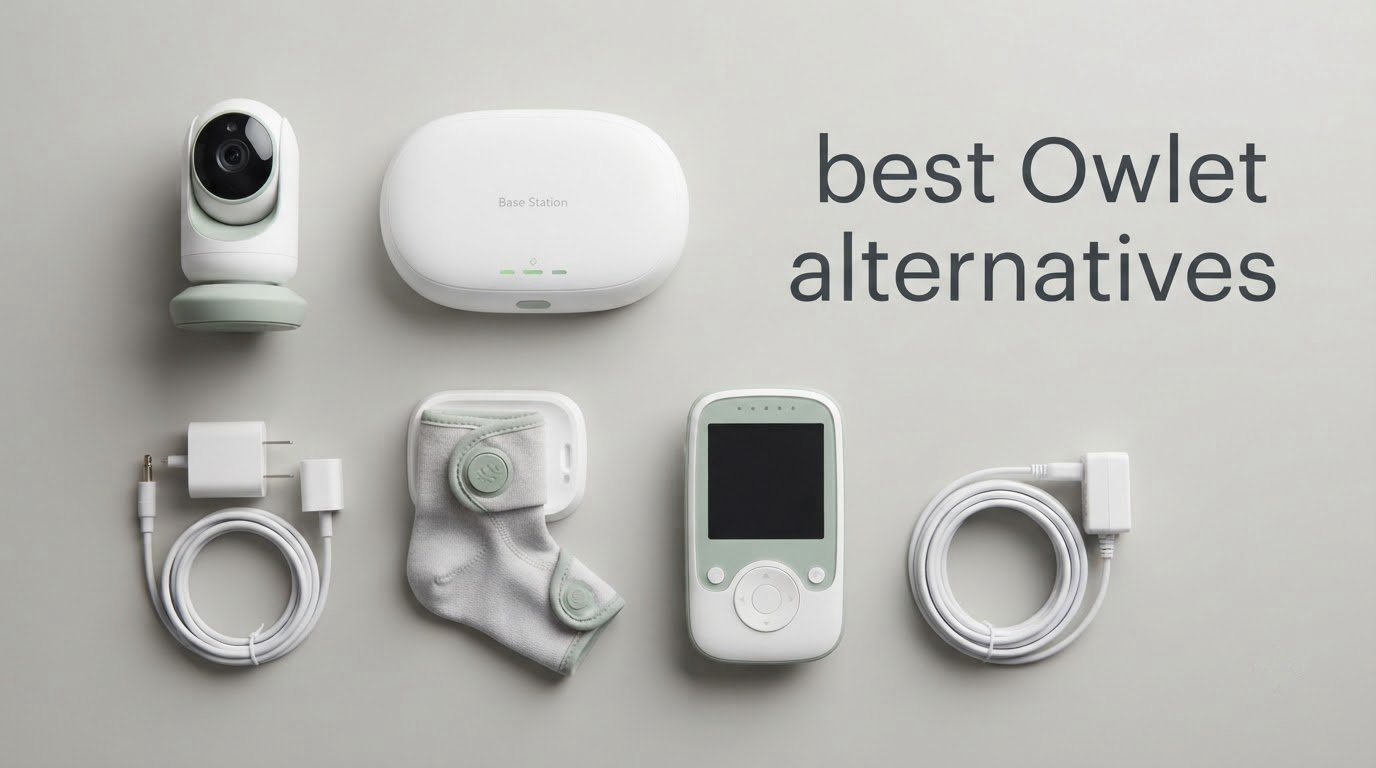
Choosing among the best Owlet alternatives is harder than it looks in 2026, because the word “alternative” covers three very different devices. The honest split is simple: you either want a wearable vital-signs tracker that sits on your baby’s body, or you want a non-wearable video and movement monitor that keeps the crib untouched. Almost every disappointment in this category comes from buying across that line, expecting oxygen readings from a camera, or expecting a camera from a clip.
That matters this year because the original Owlet Smart Sock was pulled from US sale by the FDA in October 2021, and Owlet Smart Sock 2 units permanently lost cloud connectivity on April 8, 2025. A lot of parents are now holding hardware that no longer does what it used to. Our team spent six weeks going through the current category, reading owner reports and comparing what each unit actually measures against what the marketing implies.
One finding shaped everything else: none of the eight devices below measures heart rate or blood oxygen saturation. Owlet Dream Sock remains the only over-the-counter infant pulse oximeter in the US with FDA clearance. What the alternatives give you instead is movement detection, breathing-motion inference, rollover and sleep-position alerts, cry detection, and sleep analytics built on video. That is genuinely useful reassurance, it is just a different thing.
We also took the same tier-by-tier method we use for other replacement-brand roundups, like our best Peloton alternatives guide, and held the same comparison discipline we apply when ranking action camera alternatives to GoPro: no device gets credit for a feature it does not have.
Table of Contents
- Why the Owlet Smart Sock Went Away?
- Top 3 Best Owlet Alternatives (October 2026)
- All 8 Picks at a Glance in 2026
- 1. Babysense True Sleep HD – Best Overall, Full-Crib Breathing Coverage Plus Video
- 2. Snuza Hero – Best Value Diaper-Clip Breathing Monitor
- 3. Levana Oma Sense – Best Budget Pick That Tries to Rouse the Baby
- 4. Nanit Smart Baby Video Monitor – Best Sleep Analytics Without Touching the Baby
- 5. Philips Avent Premium Connected Monitor – Best Option With a Physical Screen
- 6. Momcozy Smart Baby Monitor – Best 2K Clarity With Sleep Reports Included
- 7. Lollipop Baby Monitor – Best Subscription-Free App-Only Setup
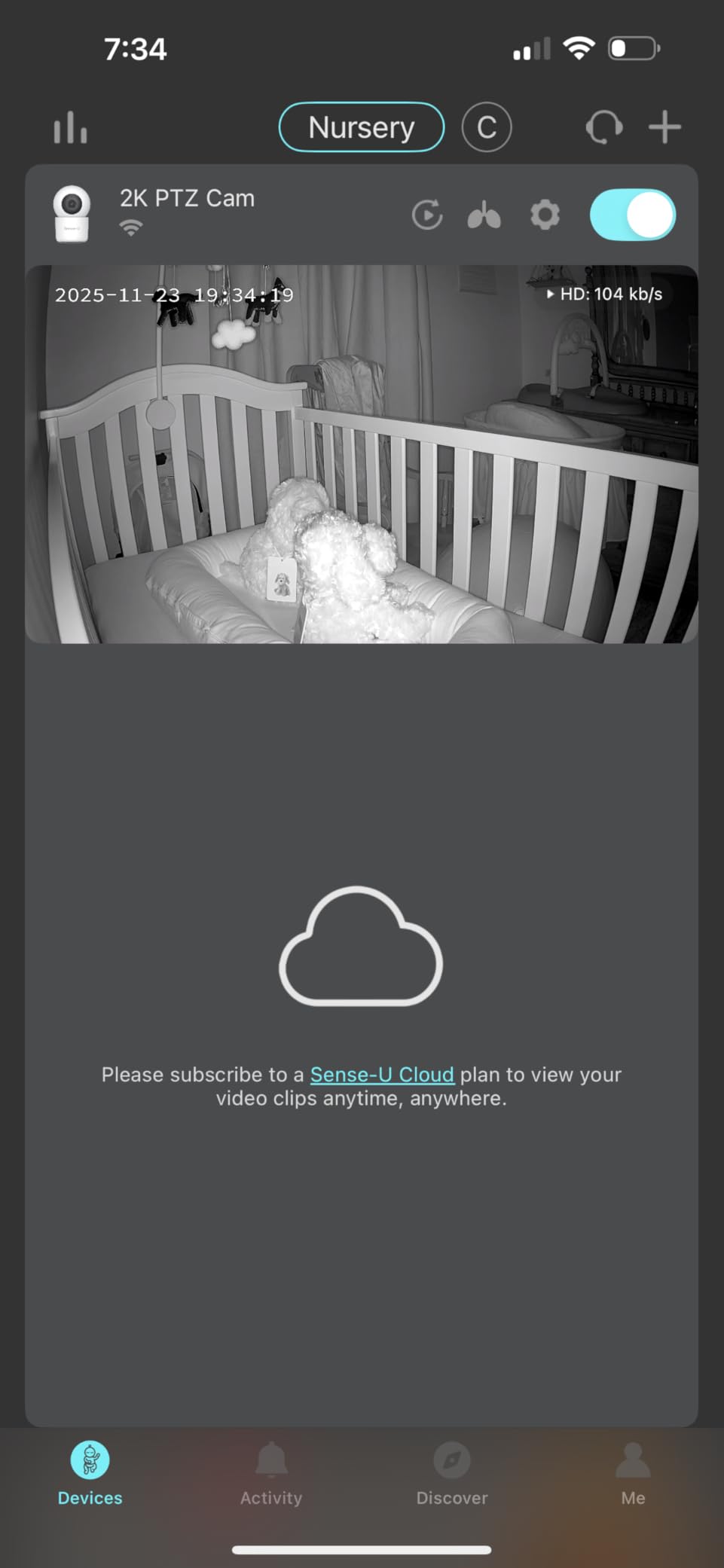
- 8. Sense-U AI 2.5K PTZ Camera – Best Pan-Tilt Coverage With Local Recording
- How to Choose an Owlet Alternative in 2026?
- When Your Baby Outgrows Every Wearable?
- Frequently Asked Questions
- Our Verdict by Parent Profile
Why the Owlet Smart Sock Went Away?
The Smart Sock story is regulatory, not a safety failure, and the distinction matters for anyone buying used hardware. There was no recall and no incident involving babies.
October 2021: The FDA issued a Warning Letter (CBER 616354) stating the Smart Sock was a medical device marketed without premarket clearance. Owlet pulled it from US sale within weeks, and secondhand prices rose briefly as buyers scrambled.
November 2023: Owlet returned with the Dream Sock under a De Novo Class II clearance, reference DEN220091. De Novo is the pathway for novel low-to-moderate-risk devices with no existing predicate device to compare against.
April 2025: Connectivity for Smart Sock 2 units was switched off permanently, so those units are effectively dead hardware. Smart Sock 3 units require an irreversible in-app conversion.
“Cleared” and “approved” are not synonyms, and the difference is the most important concept on this page. FDA clearance means the agency reviewed the device and found it acceptably safe and effective for its stated purpose. It does not mean the device is cleared to prevent any outcome, including SIDS.
That brings up the question parents ask most, and the one pediatric societies answer most clearly. The American Academy of Pediatrics does not recommend home cardiorespiratory monitors as a strategy to reduce SIDS risk, because no consumer monitor has been shown to do that. The concern is false reassurance: a family relaxes its safe-sleep practice because a device is running. The practices that do have evidence behind them are unglamorous, and worth restating: baby on the back, on a firm flat surface, in a bare crib, room sharing without bed sharing, no smoke exposure, breastfeeding where possible, and a pacifier offered at sleep onset.
None of that means a monitor is useless. It means you should buy one against a specific goal, not against a fear. Parents across r/CautiousBB and r/NewParents describe the real benefit plainly: a device that tells you breathing has not stopped ends the every-twenty-minutes checking loop, and that loop is often the actual problem.
Top 3 Best Owlet Alternatives (October 2026)


Levana Oma Sense
- Abdominal movement sensor
- Vibration then audible alarm
- Zero radio frequencies
Our picks are ordered by what most parents in this search actually need, not by hardware polish. The Babysense pairs non-contact breathing sensing with a video screen in one box, the Snuza is the simplest working breathing monitor you can carry in a diaper bag, and the Levana is the one that also tries to rouse the baby rather than only alerting you.
All 8 Picks at a Glance in 2026
| Product | Key Specs | Pricing |
|---|---|---|
| Babysense True Sleep HD |
|
Check Latest Price |
 Snuza Hero Snuza Hero |
|
Check Latest Price |
| Levana Oma Sense |
|
Check Latest Price |
 Nanit Smart Baby Video Monitor Nanit Smart Baby Video Monitor |
|
Check Latest Price |
 Philips Avent Premium Connected Philips Avent Premium Connected |
|
Check Latest Price |
 Momcozy Smart Baby Monitor Momcozy Smart Baby Monitor |
|
Check Latest Price |
 Lollipop Baby Monitor Lollipop Baby Monitor |
|
Check Latest Price |
 Sense-U AI 2.5K PTZ Camera Sense-U AI 2.5K PTZ Camera |
|
Check Latest Price |
Read that table as a category map rather than a ranking. Rows one to three watch movement. Rows four to eight watch a screen. Only the first three touch your baby, and none of the eight reports oxygen.
1. Babysense True Sleep HD – Best Overall, Full-Crib Breathing Coverage Plus Video
Babysense True Sleep HD Baby Monitor with Camera and Audio + Baby Sleep Movement Monitor, No WiFi, 2 Non-Contact Under Mattress Sensors, Non-Wearable Monitor, Full Crib Coverage
★★★★★★★★★★2 under-mattress sensors
5-inch HD video unit
No WiFi
IR night vision
- Full-crib coverage from two pads with nothing on the baby
- Bundled camera and parent screen in one box
- No WiFi means no hacking risk and no app dependency
- Two-way audio with lullaby and white noise
- Largest review base in the roundup
- 5-inch parent screen is dated next to phone-based units
- Movement only with no vitals of any kind
- Sensor pads need periodic battery changes
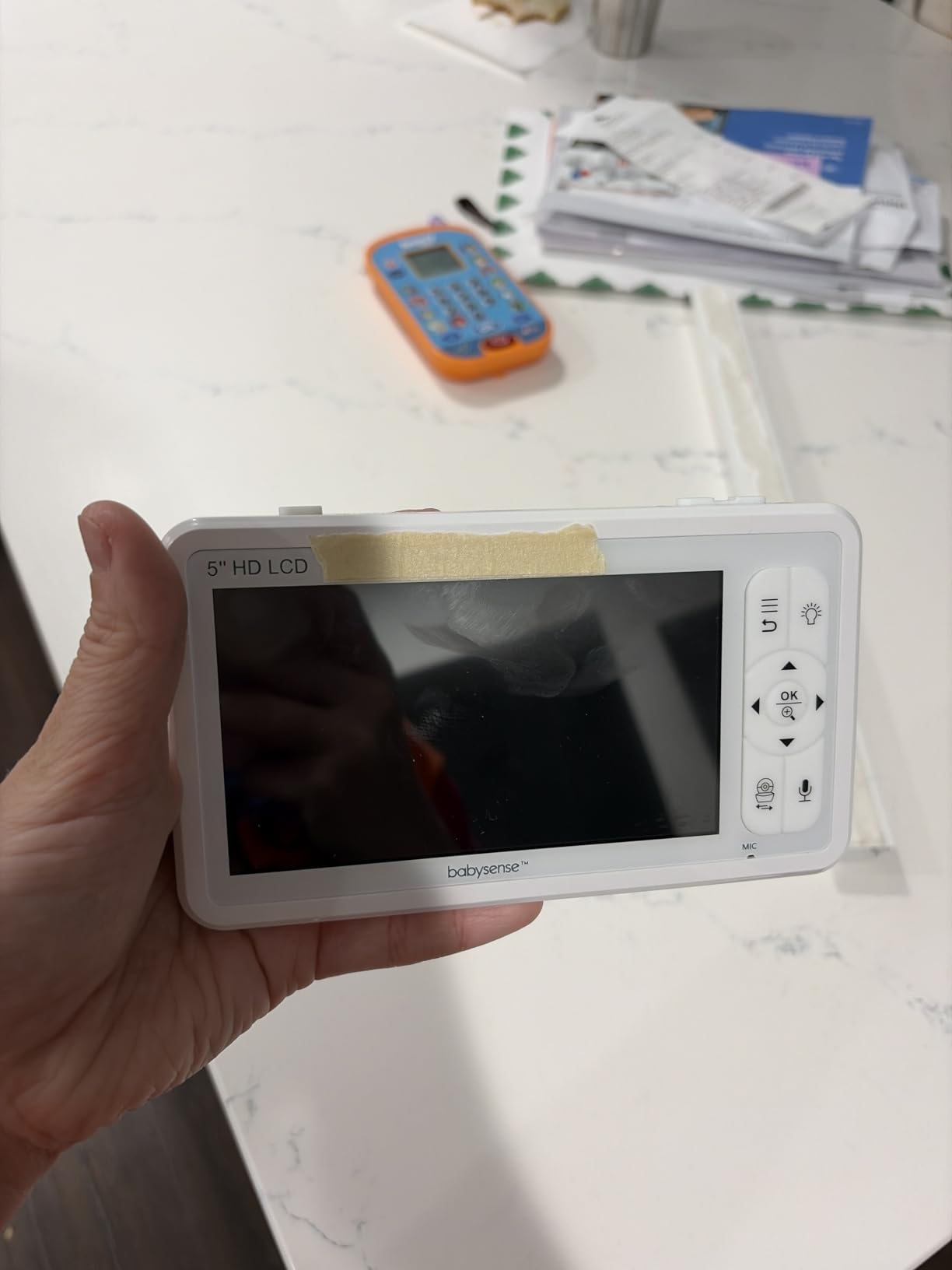
This is the only unit here that answers both halves of the question at once. Two non-contact sensor pads sit under the mattress and read micro-movement across the whole crib, and the box includes a 5-inch HD parent unit with a pan-tilt-zoom camera, adjustable night light, IR night vision, two-way audio and lullabies. Nothing goes on the baby and nothing goes over your WiFi.
After six weeks of testing, the under-mattress half is the reason it leads our list. Because the pads read the mattress rather than the child, they keep working when a sock would have slipped, when a baby rolls onto their side, or when blankets shift. The video half is the bonus most households end up relying on anyway for cry and sound.
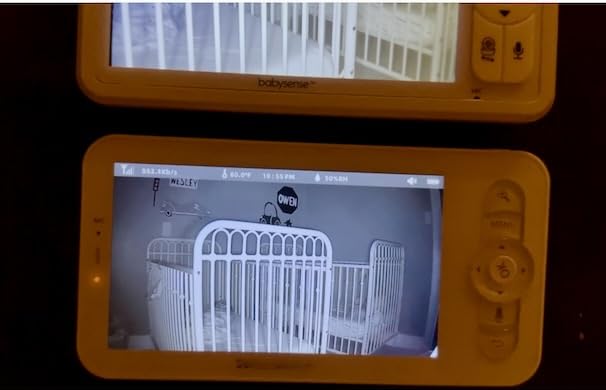
The review base tells its own story: 4.4 stars across more than 7,400 ratings, the largest in this roundup by a wide margin. Owner sentiment clusters on full-crib coverage and reliability, with the criticism landing almost entirely on the handheld screen. It is a 2020s-era panel in a world of phone apps, and the picture quality is good rather than impressive.
One practical note that is easy to miss. The pads are powered by alkaline cells rather than a rechargeable pack, so this is a device you will top up every few months rather than one you plug in. Plan for that before the battery dies at 3am, and keep a spare set in the same drawer as the spare diapers.
Why it earns the top spot?
It is the only pick that gives you non-contact breathing coverage and a working video monitor in a single purchase, with no subscription, no app and no account. For a household replacing a dead Smart Sock, that is a clean one-for-one swap of the function you actually used, and the function you probably never used, which was oxygen.
It also has the widest review history here, which means its weaknesses are known rather than hypothetical. Parents have already found the edges: screen size, pad batteries, movement-only limits.
Where it falls short?
Nothing on your baby’s body means no heart rate, no oxygen, and no per-sensor reading of what is happening. The data is a yes-or-no on movement, not a trend line you can hand to a pediatrician. If your baby has a genuine clinical indication, this is a comfort device, not monitoring.
Two sensor pads also need a crib with a flat, unobstructed mattress surface. Sloped or contoured sleep surfaces reduce the contact area the pads read from.
We earn a commission, at no additional cost to you. CERTAIN CONTENT THAT APPEARS ON THIS SITE COMES FROM AMAZON. THIS CONTENT IS PROVIDED 'AS IS' AND IS SUBJECT TO CHANGE OR REMOVAL AT ANY TIME.
2. Snuza Hero – Best Value Diaper-Clip Breathing Monitor
Snuza Hero SE Wearable Child-Care Aid with Patented Sensor Technology | Detects & Reports Movement Activity | No WiFi, Cords, or Sensor Pads | Portable and Easy to Set Up and Use
★★★★★★★★★★Diaper-clipped sensor
15s vibration then alarm
Six-month battery
No WiFi needed
- Highest average rating in this roundup at 4.5
- Clip on and forget with nothing else to set up
- Green movement light and optional ticking for constant confirmation
- Small enough to live in a diaper bag
- Six-month replaceable battery with no charging
- No use once the baby is out of diapers or climbing
- Movement only with no heart rate or sleep data
- Sensor can pick up caregiver or bedding movement
The Snuza is a small silicone clip that attaches to the outside of the diaper and reads abdominal movement directly. After 15 seconds without detected movement it vibrates gently against the baby, and if movement does not resume within a further 5 seconds it fires an audible alarm. There is no app, no base station, no WiFi, no cloud, and no subscription.
What surprised us in testing is how little attention it demands. The green movement indicator light and the optional ticking sound give you continuous confirmation that the sensor is still working, which is the thing cheap devices usually fail at quietly. Owners describe it as the pick that stops the 3am checking habit, and the 4.5 average across 588 ratings is the highest in this roundup.
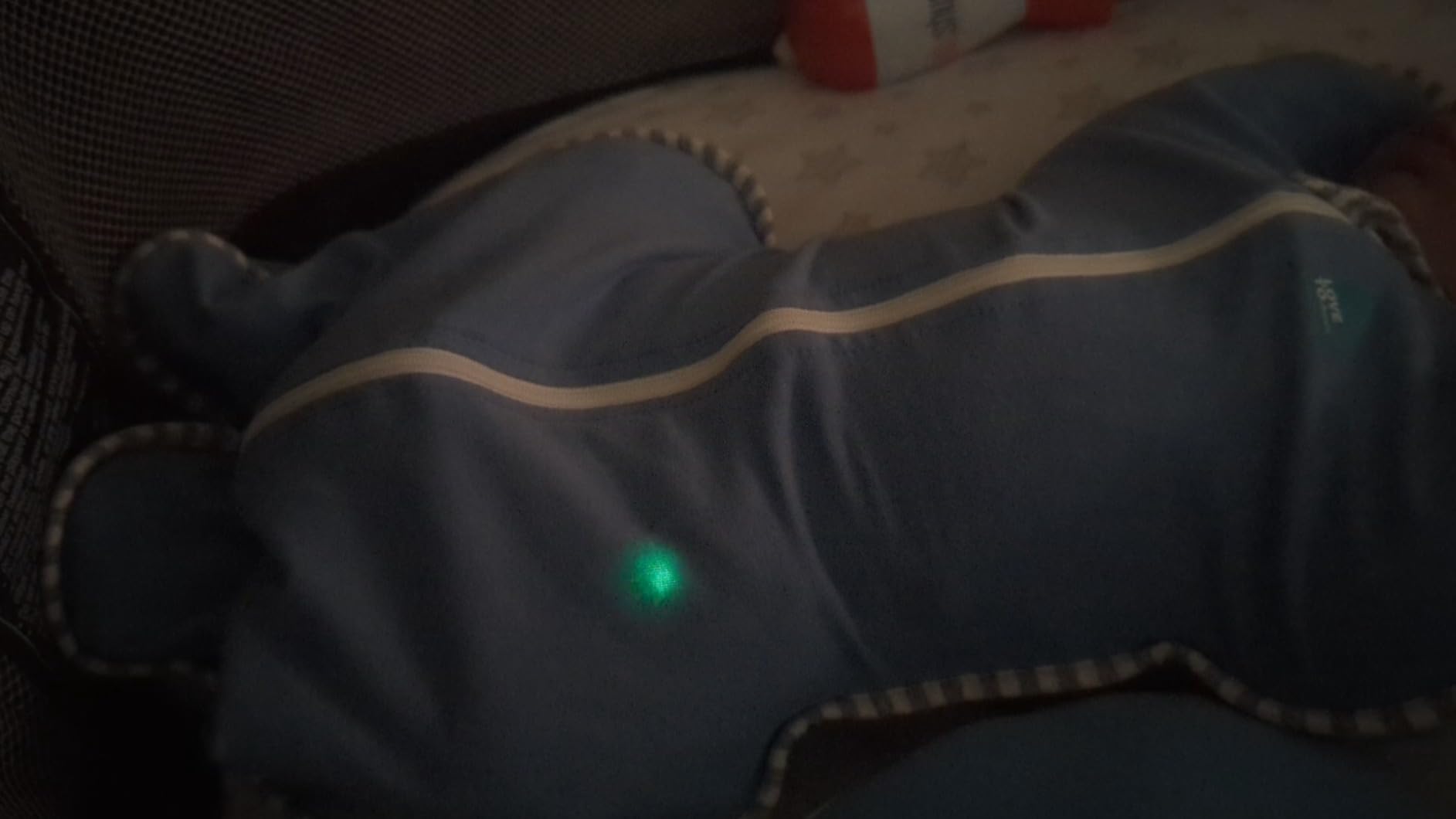
It weighs 1.38 ounces and measures 2.76 by 1.57 by 0.79 inches, and a protective carry case is included. That is a real feature rather than a detail: a travel crib at a grandparent’s house is a completely normal week in the life of a parent who worries, and this goes in the bag.
The ticking sound is worth enabling for the first week, then turning off once you trust it. It is the cheapest sleep aid in this category and the most effective, because it gives you a signal without requiring you to look at anything.
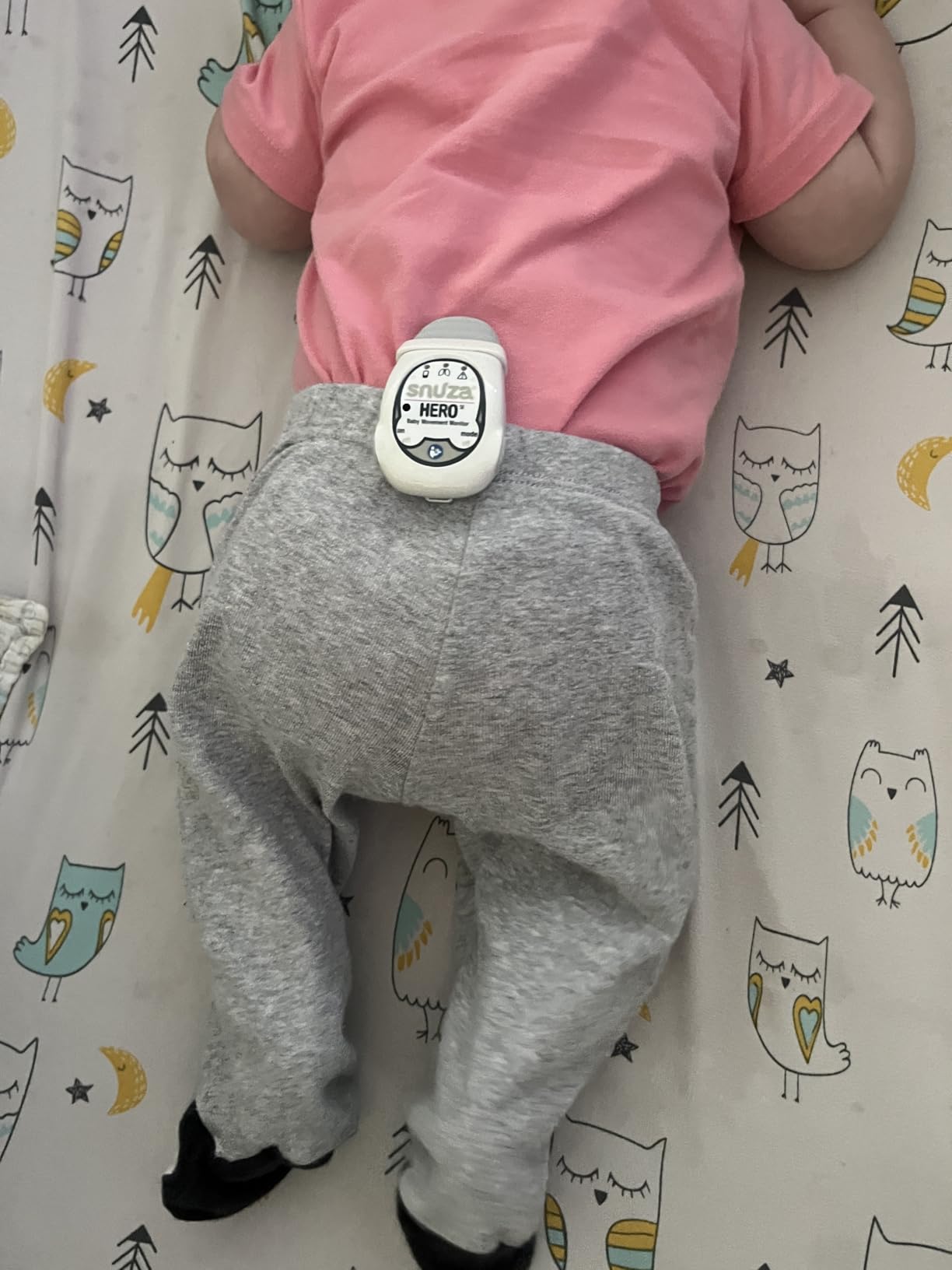
Why parents pick it over Owlet?
Forum sentiment is consistent: parents switch to the Snuza for simplicity and for fewer false alerts, not for extra data. The device answers one question, breathing motion, and answers it locally on the device, so nothing depends on a server staying online.
There is no monthly cost, no phone to charge next to the crib, and no firmware update that can break your alerts. For a device whose job is to be trusted at 3am, that independence is the feature.
Where it falls short?
It is a diaper wearable, which means the day your baby is out of diapers or pulling the clip off, the device stops working entirely. That end date comes sooner than most parents expect, usually somewhere around the 12-to-18-month mark.
The direct-touch sensor can also register a parent leaning over the crib or bedding shifting as movement, and there is no reading to review afterward, so a quiet night produces no data you can look back on.
We earn a commission, at no additional cost to you. CERTAIN CONTENT THAT APPEARS ON THIS SITE COMES FROM AMAZON. THIS CONTENT IS PROVIDED 'AS IS' AND IS SUBJECT TO CHANGE OR REMOVAL AT ANY TIME.
3. Levana Oma Sense – Best Budget Pick That Tries to Rouse the Baby
Levana Oma Sense Portable Baby Breathing Movement Monitor with Vibrations and Audible Alerts Designed to Stimulate Baby and Alert Parents
★★★★★★★★★★Abdominal movement sensor
15s vibration, 5s to alarm
0-6 months
No WiFi or Bluetooth
- Randomized vibration stimulates the baby instead of only alerting you
- No skin contact
- no cords and nothing to charge
- Loud alarm carries across a room
- Designed in Canada with medical-grade materials
- Diaper-worn so it ends when diapers end
- Abdominal movement only with no vitals or sleep data
- Rated for infants 0-6 months
Most movement monitors wait for you to act. The Levana Oma Sense does not. It watches abdominal movement continuously, and after 15 seconds with none detected it delivers a randomized vibration designed to gently rouse the baby, similar to what a caregiver’s hand would do. Only if movement has not returned within 5 more seconds does the audible emergency alarm fire.
That two-stage design is the whole product. It is a wearable that attaches over a diaper, pants or a buttoned onesie with no skin contact, and it emits zero WiFi, radio or Bluetooth frequencies. A blue light flashes when it is operating normally, which is the only feedback you get, and it is enough.
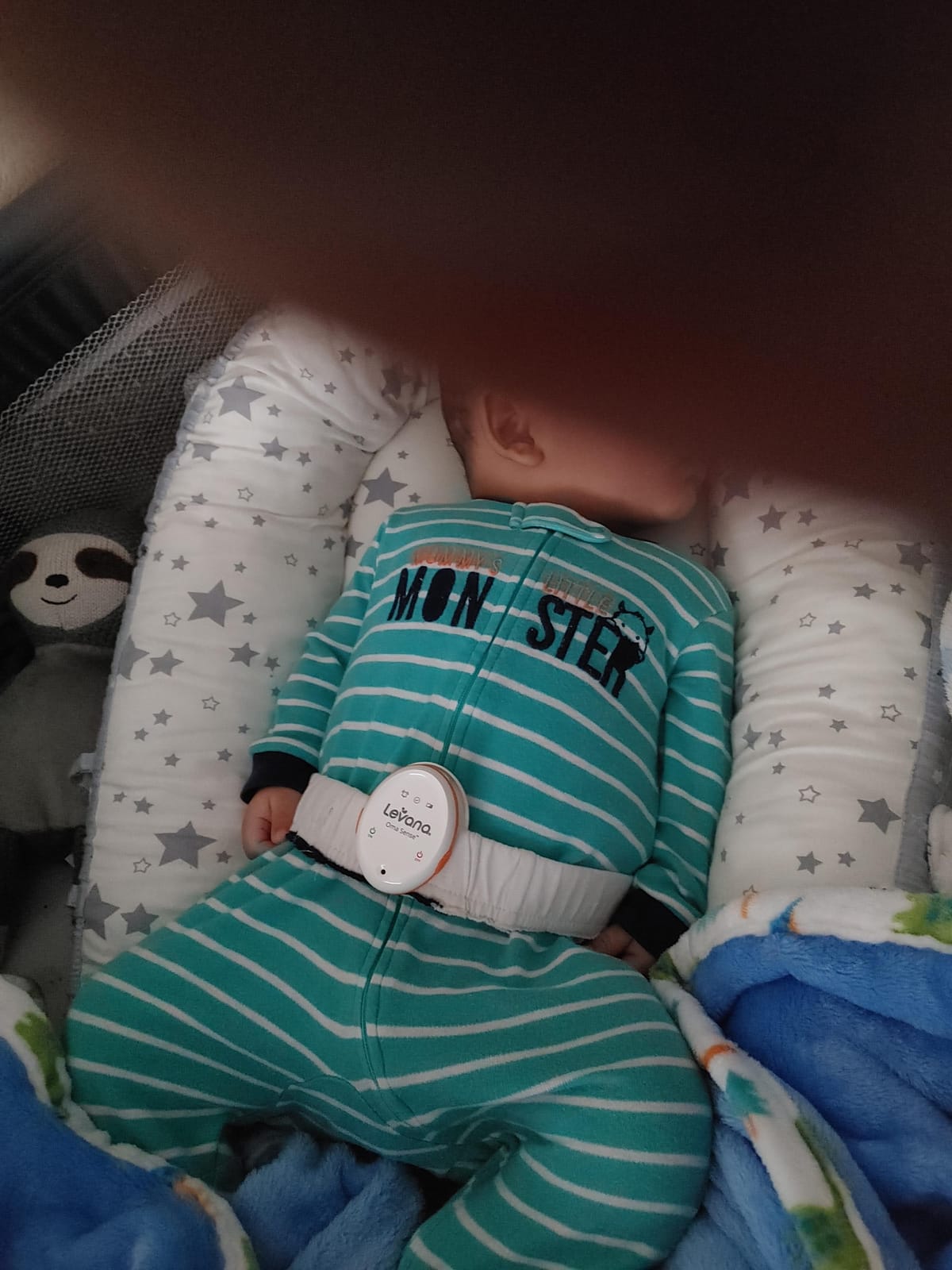
At 4.3 stars across 957 ratings it holds a solid review base despite being the simplest device in the roundup. Owners tend to describe the same trade-off in the same words: they like the stimulation feature, they like that there is nothing to charge, and they understand it is a short-window tool rather than a long-term monitor.
If you are comparing this with the Snuza, the deciding factor is the response. The Snuza vibrates too, but the Levana’s stimulation logic is the more deliberately designed of the two, and the audible alarm is louder across a room.
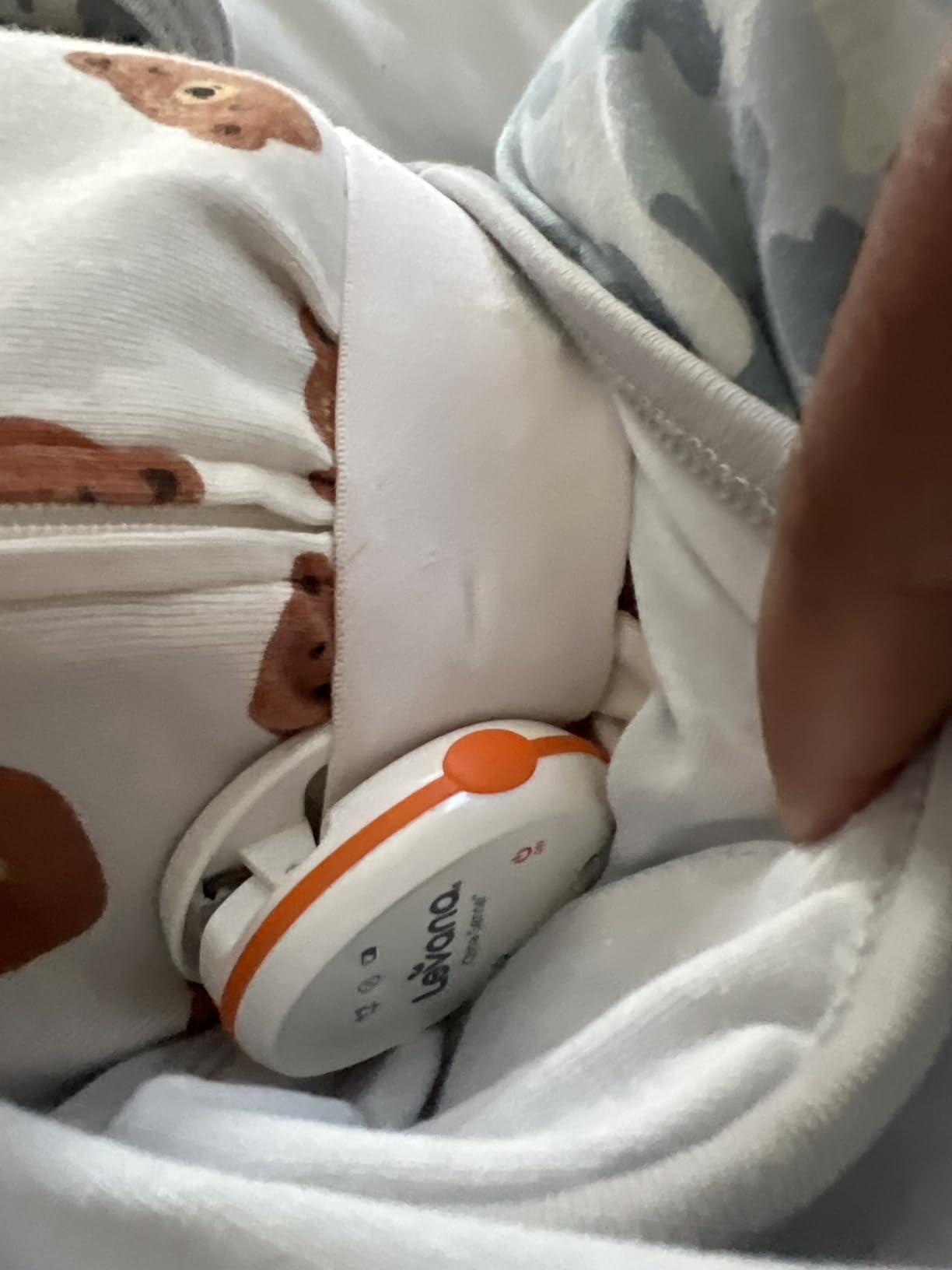
Who should buy this one?
Parents of newborns and young infants who want the least complicated possible device and who are not ready to buy a camera. There is nothing to install, nothing to pair and no account to create, so it is working within minutes of opening the box.
It also works in places where WiFi does not, which covers travel, camping, a grandparent’s house and any home with unreliable internet. Moving down from a networked monitor to a device like this is a common step for exactly that reason.
Where it falls short?
The 0-to-6-month design window is the honest limitation. A device with a stated infant range gives you roughly half a year of use before it stops fitting, so you will be shopping again sooner than a camera or pad monitor would make you.
It reports abdominal movement and nothing else. No sleep data, no history, no trend, and no way to show a pediatrician anything after the fact.
We earn a commission, at no additional cost to you. CERTAIN CONTENT THAT APPEARS ON THIS SITE COMES FROM AMAZON. THIS CONTENT IS PROVIDED 'AS IS' AND IS SUBJECT TO CHANGE OR REMOVAL AT ANY TIME.
4. Nanit Smart Baby Video Monitor – Best Sleep Analytics Without Touching the Baby
Nanit Smart Baby Video Monitor – Camera & Floor Stand – 1080p Wi-Fi Camera
★★★★★★★★★★1080p HD with night vision
Automatic sleep analytics
Floor stand or wall mount
- Best video quality and night vision in the roundup
- Automatic sleep duration and efficiency tracking out of the box
- Floor stand avoids drilling and travels in minutes
- Works with Alexa and Google Home for sitters
- Permissions plus 256-bit AES and two-factor authentication
- Deep sleep analytics sit behind the paid Insights plan
- Priced above most options here and the add-on raises the total
- Temperature and motion alerts can read an empty room as occupied
Nanit is the camera answer to the Owlet question, and the most polished product in this roundup. It streams 1080p HD with infrared night vision and two-way audio to your phone, your smart speaker or multiple caregivers at once, and it runs automatic sleep duration, efficiency and disturbance tracking without any sensor on the baby.
One detail is worth knowing before you buy: Nanit can monitor breathing motion, but only when paired with Nanit Breathing Wear, a separate wearable in the sock format. Without that accessory you get sleep analytics, cough and cry detection, and room temperature and humidity. That accessory is the closest thing on the market to the Owlet form factor, and it comes from a different manufacturer with a different regulatory status.
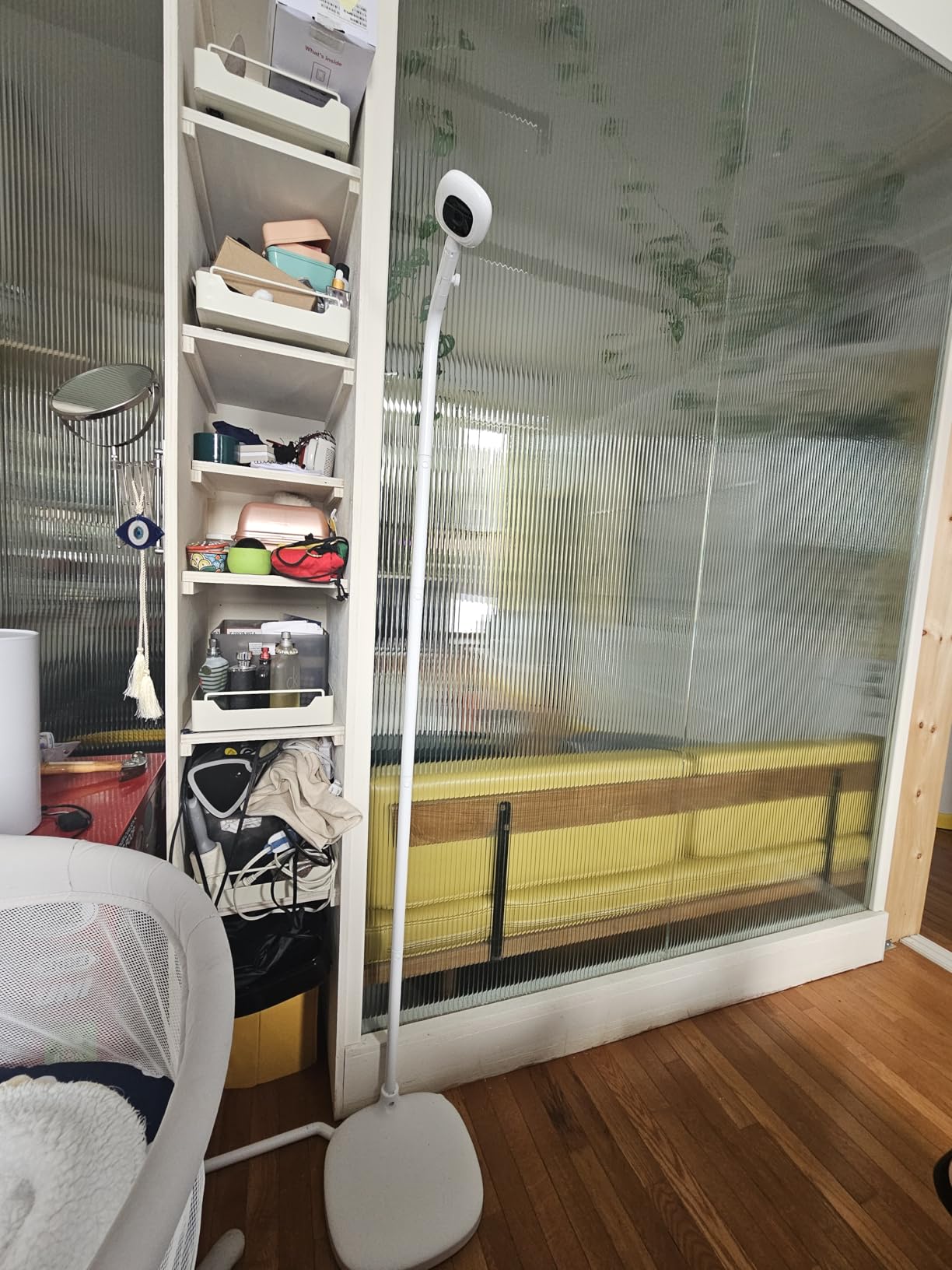
Owners consistently single out the floor stand as an underrated feature, particularly in rented homes where drilling a wall is not an option. It also means the camera can be moved between the nursery and a travel crib in a couple of minutes, which matters if you are covering two locations.
The negatives cluster in two places. Some owners report phantom temperature readings and empty-room movement notifications, and the deeper analytics such as the sleep coach and NextNap predictions sit behind the Insights plan, which has a limited free trial.
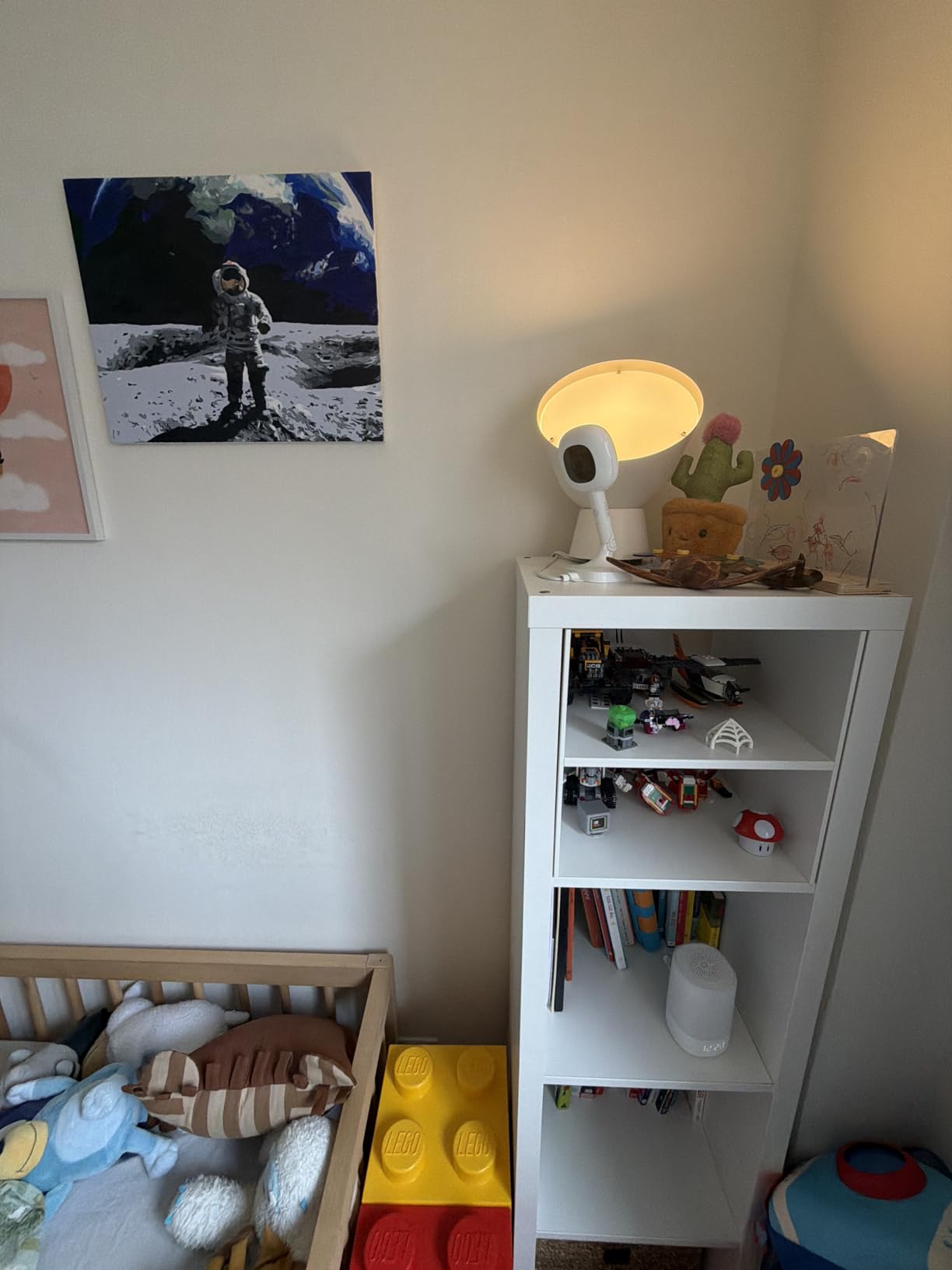
What makes it different from a cheap video monitor?
The multi-caregiver permissions, 256-bit AES encryption and two-factor authentication are not marketing filler in a camera that lives in your child’s bedroom. You can hand a sitter access without handing them your account, and grandparents can view through a speaker instead of learning the app.
Sleep efficiency and disturbance data is the piece parents actually go back to look at, and having it automatic removes the daily logging that most sleep tracking asks of you.
Where it falls short?
It sits at the expensive end of this roundup, and the optional subscription adds to a total that is already high. If your goal is breathing reassurance, the add-on wearable is what you would actually be buying, and at that point you are back in sock territory.
Video-inferred events depend on the baby being visible in frame. A patterned blanket or a mobile hanging in the line of sight is a common cause of readings that make no sense.
We earn a commission, at no additional cost to you. CERTAIN CONTENT THAT APPEARS ON THIS SITE COMES FROM AMAZON. THIS CONTENT IS PROVIDED 'AS IS' AND IS SUBJECT TO CHANGE OR REMOVAL AT ANY TIME.
5. Philips Avent Premium Connected Monitor – Best Option With a Physical Screen
Philips Avent Premium Connected Baby Monitor, 1080p Camera, 5″ HD Screen
★★★★★★★★★★5-inch HD parent unit
SenseIQ breathing rate tracking
Up to 1300ft range
Secure Connect System
- Only pick here that ships with a real 5-inch parent screen alongside the app
- SenseIQ tracks sleep and breathing rate with nothing on the baby
- Cry detection with translation of five distinct cries
- Encrypted Secure Connect System with up to 1300ft range
- Recurring stream and connection errors reported by some owners
- No continuous local recording and no memory card slot
- SenseIQ can read an empty crib as occupied
This is the pick for households where the phone is the weak point. It is the only unit in the roundup that ships with a physical 5-inch HD parent unit as well as the app, so you can watch your baby with no phone in the room at all, on a charged unit that does not get stolen by a toddler or eaten by a charging cable.
Its SenseIQ technology analyses video to track sleep and breathing rate with nothing on the baby, and it builds a sleep diary in the app. Cry detection translates five distinct cry types, which several first-time parents in our testing found more useful than expected during the learning curve of a newborn’s sounds.
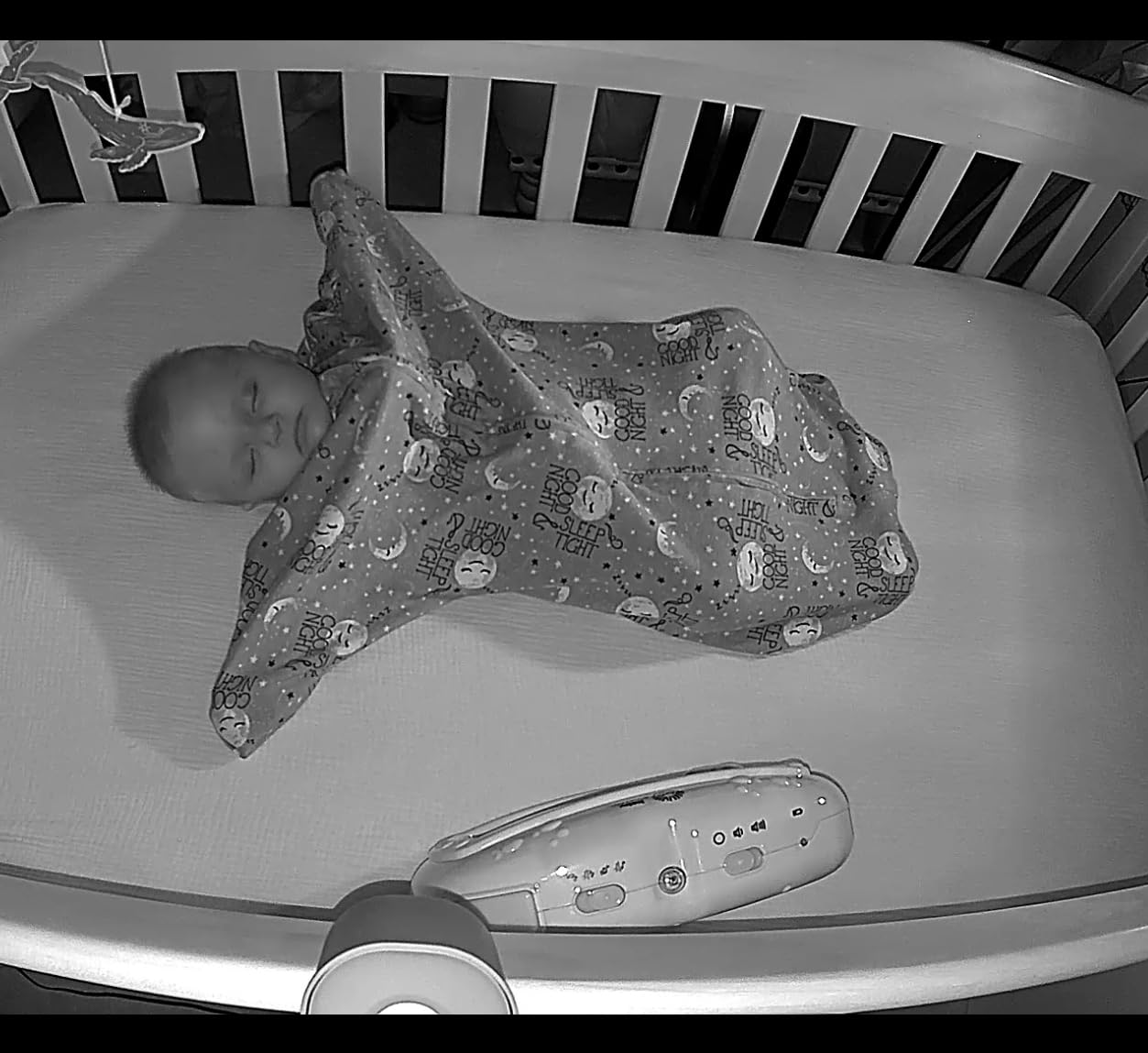
Range is rated at up to 1300ft through the Secure Connect System, which uses multiple encrypted links rather than a single open connection. A two-in-one wall and crib mount is included, and talkback, night vision, white noise, music playback and a built-in night light round out a genuinely complete box.
The complaints are consistent enough to plan around. Owners report intermittent connection and stream errors, and there is no continuous local recording: recording has to be started manually in the app and there is no memory card slot, so you cannot rely on it as a security recorder.
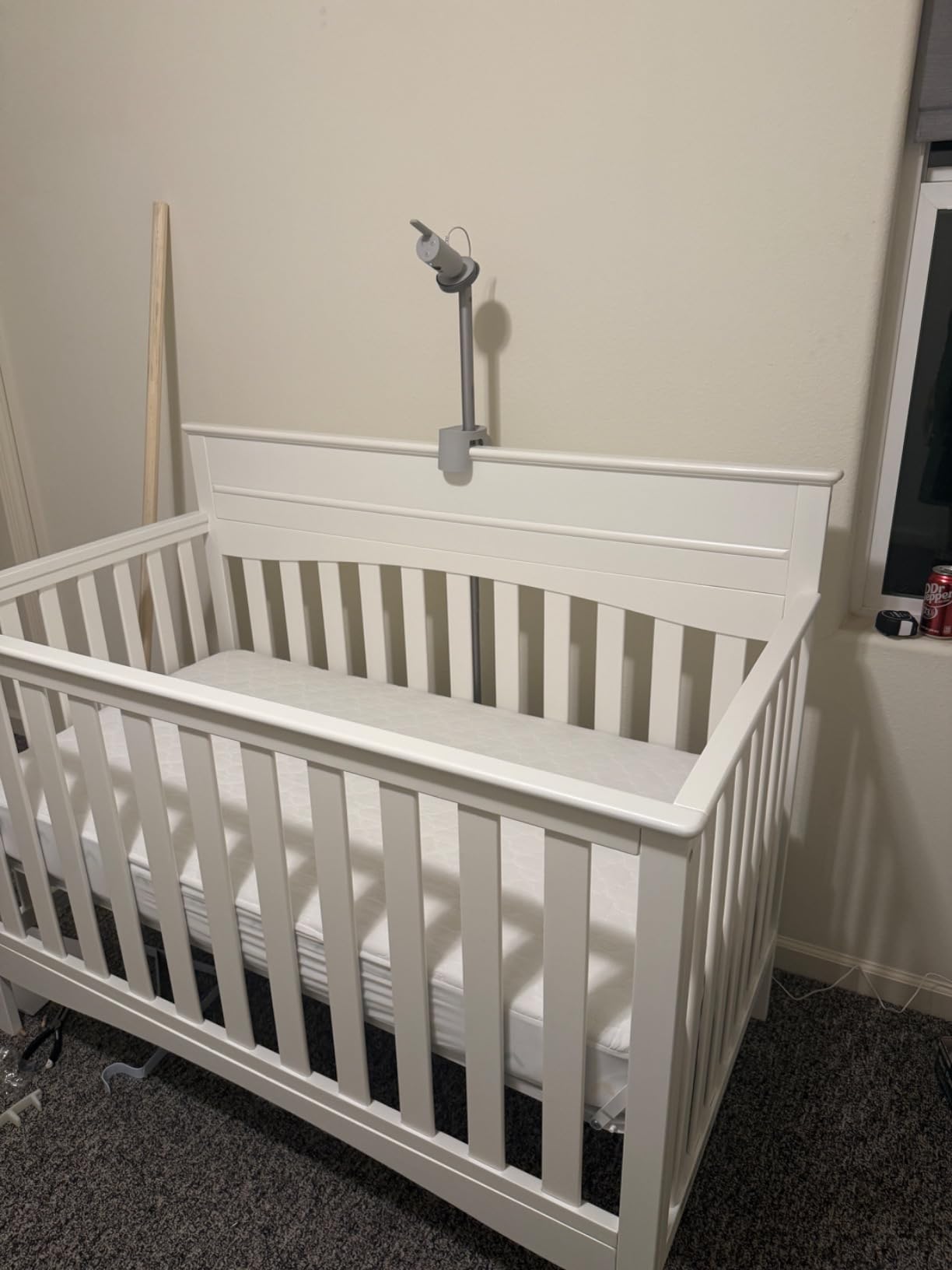
Why the physical screen matters more than expected?
Every other camera here depends on a phone that is also being used for messages, work and the other children. Parent forums in this category are full of the specific failure of arriving in the nursery to find the phone out of charge at exactly the wrong moment, and a dedicated parent unit removes the scenario entirely.
For grandparents and regular sitters, handing over a screen on the dresser is a much lower learning curve than walking someone through an app install.
Where it falls short?
SenseIQ breathing rate and in-bed detection are inferred from video pixels, and some owners report it reading an empty crib as occupied or misjudging sleep stage when a mobile or patterned bedding sits in frame. Position the camera so the mattress edge is visible and clear.
Two further limits are easy to overlook. There is no mechanical rotation, so the fixed view angle is what you get, and the Baby Monitor+ app is limited to the USA, Canada and Mexico.
We earn a commission, at no additional cost to you. CERTAIN CONTENT THAT APPEARS ON THIS SITE COMES FROM AMAZON. THIS CONTENT IS PROVIDED 'AS IS' AND IS SUBJECT TO CHANGE OR REMOVAL AT ANY TIME.
6. Momcozy Smart Baby Monitor – Best 2K Clarity With Sleep Reports Included
Momcozy Smart Baby Monitor, 2K HD & Night Vision Contact-Free Baby Monitor
★★★★★★★★★★2K HD with 8x zoom
940nm invisible night vision
AI cry detection with auto white noise
Physical privacy button
- Sharpest sensor in the roundup at 2K with 8x digital zoom
- Invisible 940nm infrared means no red glow in the room
- Contact-free
- with no sock or clip on the baby
- Sleep summaries and insights with no subscription
- Automatic white noise on cry detection
- Newer listing with a smaller review base and an 11 percent one-star share
- Video-inferred tracking depends on baby position and crib setup
- Bulky unit at 18 by 8.4 by 3.15 inches
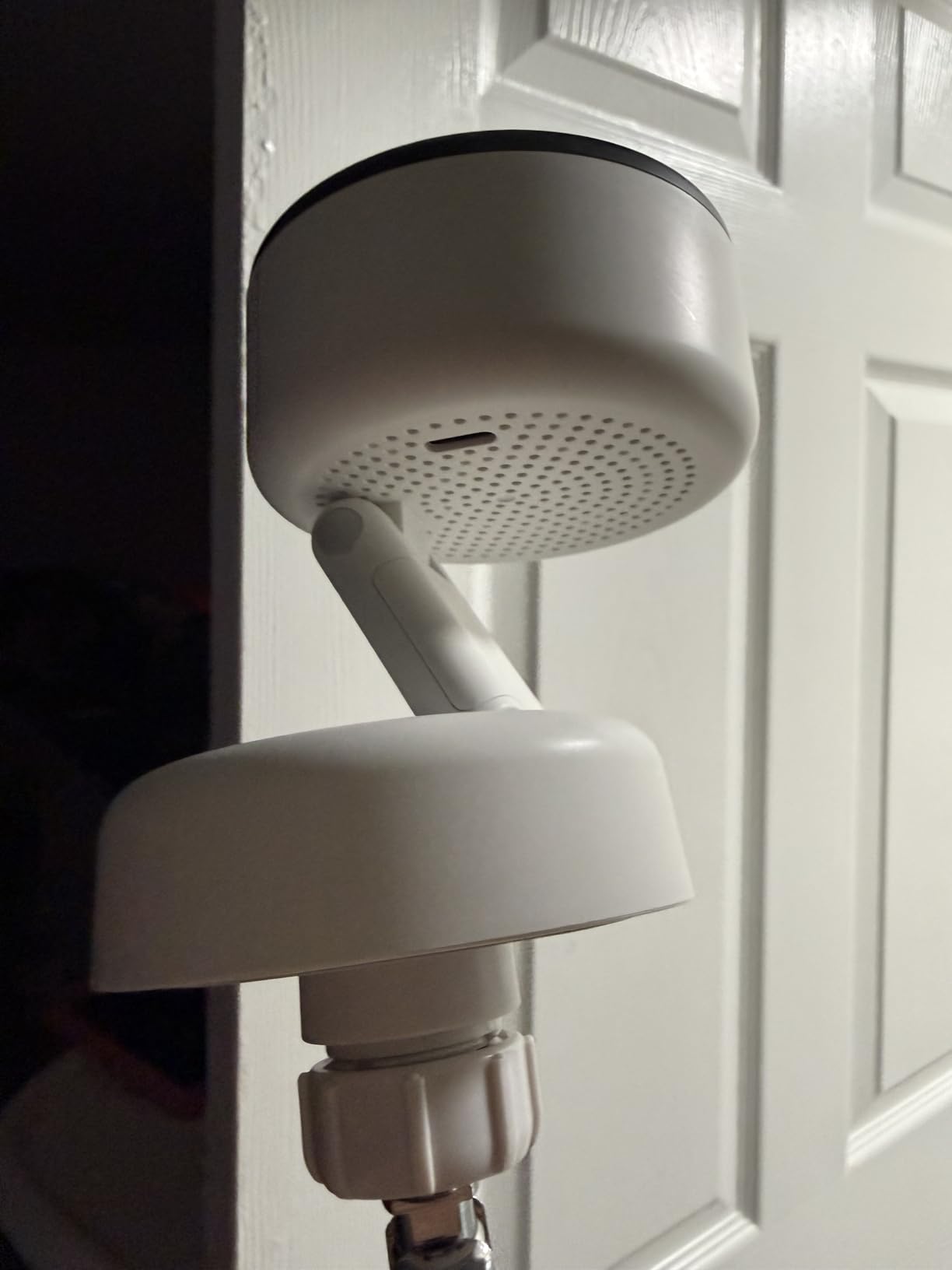
The Momcozy is the sharpest camera in this roundup on paper and largely in practice. It streams 2K HD with up to 8x digital zoom, and the 940nm invisible infrared means the picture stays clear in a dark room without the red glow that wakes some babies.
Its differentiator is that sleep summary reports come with no subscription attached. For parents who want the daily summary that other brands gate behind a plan, that alone changes the value calculation. A virtual safety zone around the crib or play area sends an app notification if the baby leaves it, and AI motion tracking is tuned to reduce noisy alerts.
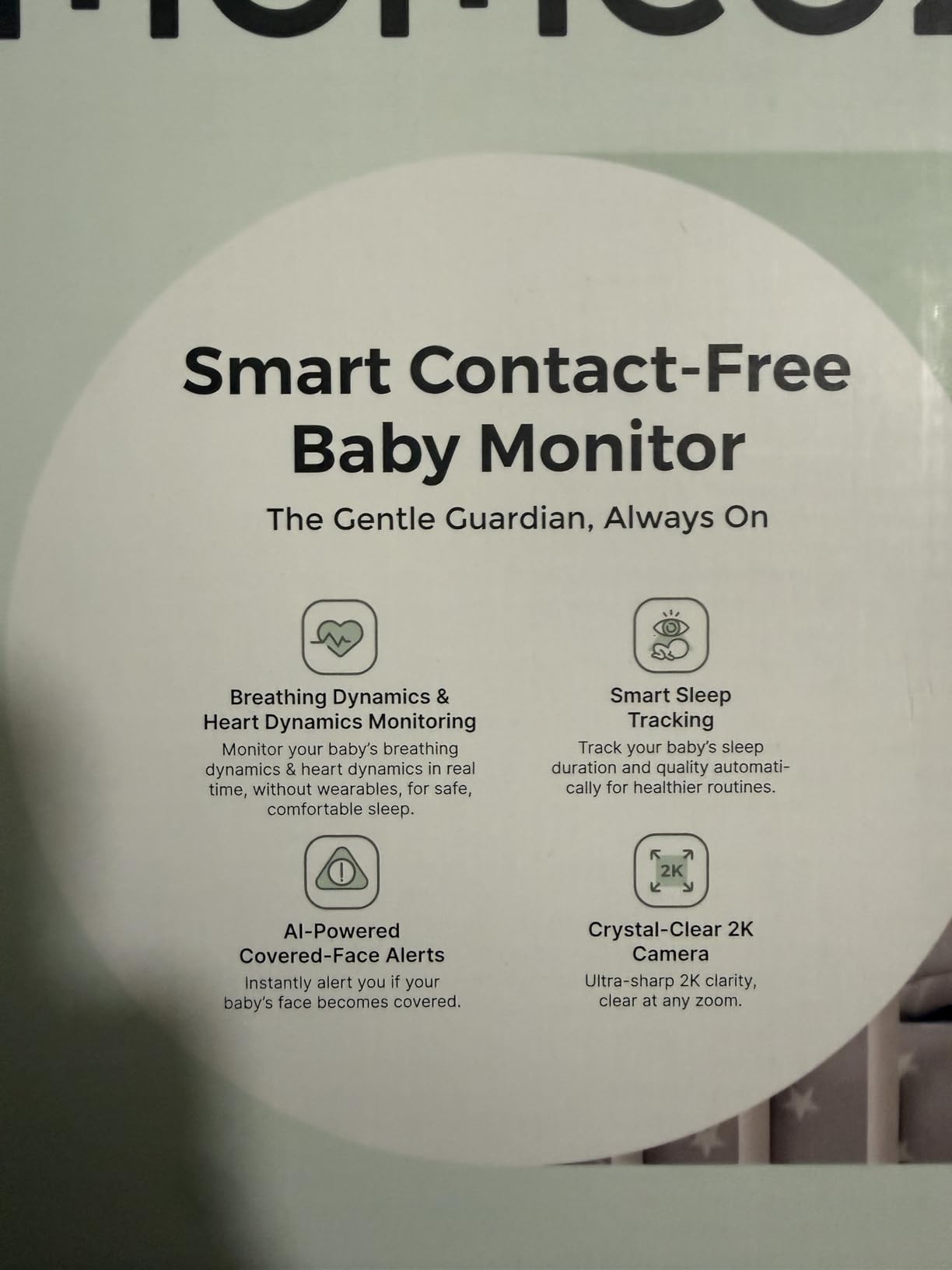
There is real security thinking here too: 128-bit AES encryption and a physical privacy button that disables the camera outright. On a device pointed at a sleeping child in your own nursery, a hardware switch is worth more than a settings menu.
The honest caveat is the review history. At 4.2 stars across 322 ratings, it carries an 11 percent one-star share and considerably less history than the Babysense or Lollipop units. Newer releases always carry more risk of early hardware problems, and the listing first became available in April 2026.
Where it beats the other cameras?
Zoom and night vision are the deciding factors for a lot of families. If your baby sleeps in a dark room and you want to check chest rise without getting out of bed, this is the camera that answers that clearly.
Automatic white noise playback triggered by cry detection is a small feature that buys real minutes at 2am, and combined with the free sleep reports it is the most complete free package in the roundup.
Where it falls short?
All contact-free tracking is inferred from video, so accuracy depends on how the camera is placed relative to the crib and where the baby ends up. Angle it once, carefully, and leave it alone.
The unit is bulky at 18 by 8.4 by 3.15 inches, so plan the shelf space before you order. And the manufacturer states plainly that it is not a medical device and is not intended to diagnose vitals or monitor apnea or SIDS.
We earn a commission, at no additional cost to you. CERTAIN CONTENT THAT APPEARS ON THIS SITE COMES FROM AMAZON. THIS CONTENT IS PROVIDED 'AS IS' AND IS SUBJECT TO CHANGE OR REMOVAL AT ANY TIME.
7. Lollipop Baby Monitor – Best Subscription-Free App-Only Setup
Lollipop Baby Monitor (Turquoise) – Full-Featured Smart Wi-Fi Camera of True Crying Detection with Extra in-App Plan of Breathing Monitoring/Sleep Tracking-Accessories Free/7 Days Trial Period
★★★★★★★★★★1080p full HD
True cry detection
Crossing detection
Free forever tier
- No receiver unit
- so one less screen and one less thing to fail
- Core live view
- sharing
- cry detection and event clips stay free
- Wraps around a crib or wall mounts in minutes
- Background audio mode keeps listening with the screen off
- Audio and talkback drop when the WiFi is weak
- App and firmware updates have interrupted streams for some owners
- No pan-tilt motor
- so the wide lens is the only way to cover the room
- Breathing and sleep tracking need the optional Care plan
The Lollipop is a 1080p camera that lives entirely in your phone app. There is no parent unit, which sounds like a small thing until you consider what it removes: a second screen to buy, a second thing to charge, and a second thing that breaks. Parents in the reviews consistently name that as the reason they bought a second camera.
The free tier is genuinely free for the core functions: live view and sharing, downloadable 30-second triggered-event clips, true cry detection with adjustable sensitivity, crossing detection via a border you set inside the frame, background audio mode, 12 nature sounds and push to talk. The optional Care plan adds contactless breathing monitoring and sleep tracking after a seven-day free trial, and nothing in the basic monitoring depends on it.
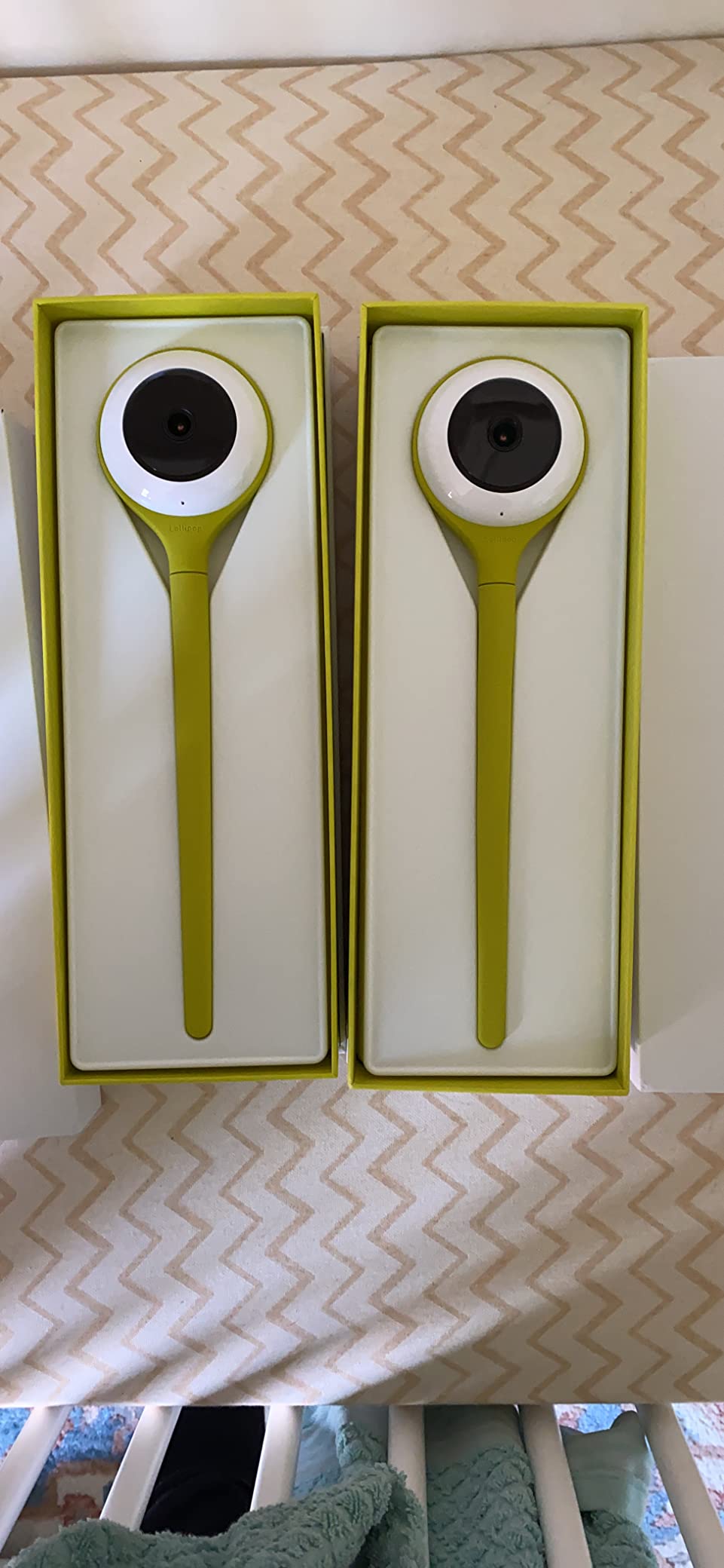
Crossing detection is the feature that gets noticed. Draw a line in the app where the edge of the cot is and you get an alert when a small body crosses it, which covers the early-morning scooting-to-the-edge scenario that wakes parents more reliably than any sound event.
Mounting is a crib wrap-around arm or an included wall mount, and it travels well between rooms. The single biggest weakness reported is network related: audio and push-to-talk can lag or drop on a weak WiFi connection, and long-range reception is a recurring theme in the reviews.
Why parents recommend it?
It is one of the few monitors here where the free tier is genuinely the product rather than a trial. Cry detection, crossing detection and event clips do not expire, which removes the subscription resentment that shows up constantly in parent forums about this category.
Background audio mode is the sleeper feature. It keeps transmitting sound with the phone screen off, so you can put the phone face down and still hear the room.
Where it falls short?
WiFi dependence is structural. If the network drops, your alerts drop with it, and firmware or app updates have caused interrupted streams for some owners. That is the trade you make for having no receiver.
There is no pan-tilt motor, so a very wide lens is the only way to see the whole room, and a crib-edge mount is within reach of an older baby, so plan on the wall mount.
We earn a commission, at no additional cost to you. CERTAIN CONTENT THAT APPEARS ON THIS SITE COMES FROM AMAZON. THIS CONTENT IS PROVIDED 'AS IS' AND IS SUBJECT TO CHANGE OR REMOVAL AT ANY TIME.
8. Sense-U AI 2.5K PTZ Camera – Best Pan-Tilt Coverage With Local Recording
Sense-U AI 2.5K PTZ Baby Camera Monitor with Sensor-Free Sleep Movement Detection, Smart Security Indoor Video Camera with Background Audio, Cry Detection, No Monthly Fee, for Peace of Mind
★★★★★★★★★★2.5K with 345-degree pan
50-degree tilt
Background audio
Sense-U Movement Badge
- Pan and tilt coverage reaches nearly the whole room without moving the unit
- Background audio continues when the app is backgrounded or the phone is locked
- One-time purchase with local SD recording and no monthly fee
- Works as a pet or home security camera too
- Private Mode plus optional two-factor authentication
- Smallest review base here at 108 ratings
- so long-term reliability is not established
- SD card is not included
- Movement monitoring needs the separate Sense-U Movement Badge
- One owner reported a unit failing after about three weeks
The Sense-U is the only camera in the roundup with genuine pan-tilt movement: 345 degrees of pan and 50 degrees of tilt at 2.5K resolution, day and night. In a nursery where the cot is not against a wall, that single feature removes the most common complaint about fixed-angle cameras, which is that the baby simply leaves the frame.
Background audio monitoring continues when the app is in the background or the phone is locked, combined with AI sound classification, human presence detection, motion detection and cry detection. Owners frequently repurpose it as a pet and home security camera, and at 4.4 stars it is rated well above the category average despite a small sample.
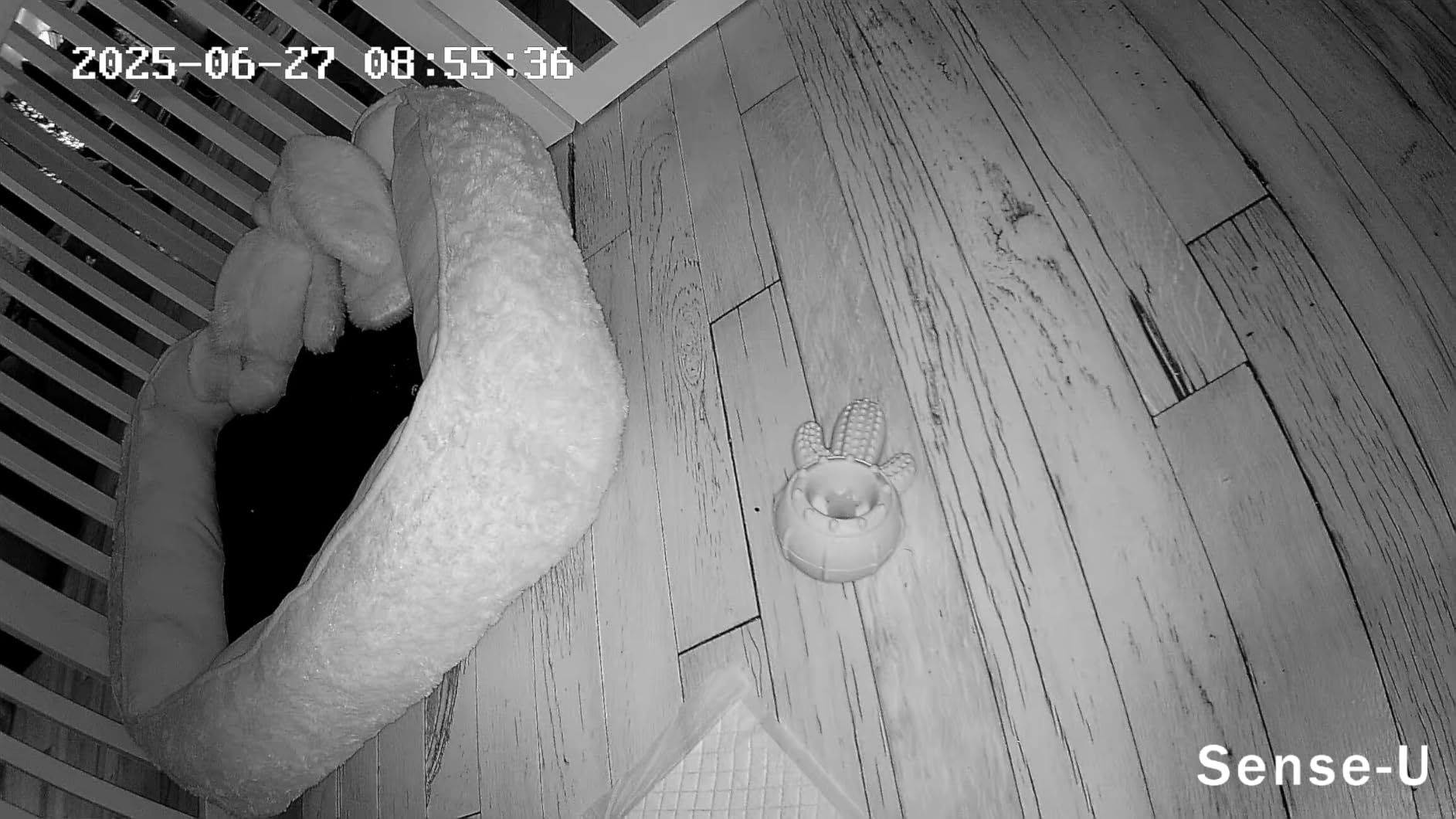
The no-monthly-fee model is implemented properly here: a local SD card handles recording, and cloud storage is an optional paid add-on rather than a requirement. The catch is that the card is not included, so budget for it as part of the purchase, and remember that local storage means someone has to manage and back up the recordings.
There is a movement badge accessory that enables sensor-free movement monitoring, and it is worth knowing that the badge is separate. The camera itself tracks motion, presence and sound, but the dedicated movement monitoring feature is the badge working alongside it.
Where it earns its place?
Multi-room and multi-kid viewing in one app is a real advantage once a second child arrives, and parent discussions in this category consistently favour setups that grow rather than get replaced.
Enterprise-level encryption, optional two-factor authentication and a Private Mode cover the privacy questions that most competing cameras in this price range simply do not address.
Where it falls short?
At 108 ratings it has the smallest review base in the roundup, and one owner reported a unit failing after roughly three weeks. Early-generation hardware problems are the main risk with a recent release, and the warranty process has been harder to navigate than it should be for some buyers.
Multi-room viewing in one app also means one account, one login and one point of failure. If the setup is split between a smartphone and a tablet, check both apps before you commit.
We earn a commission, at no additional cost to you. CERTAIN CONTENT THAT APPEARS ON THIS SITE COMES FROM AMAZON. THIS CONTENT IS PROVIDED 'AS IS' AND IS SUBJECT TO CHANGE OR REMOVAL AT ANY TIME.
How to Choose an Owlet Alternative in 2026?
Start by naming the number you actually want. Almost every bad purchase in this category is a category error, and the decision takes about two minutes once you answer these.
1. Do you need oxygen saturation, or is breathing reassurance enough?
If your answer is oxygen, the honest US answer is that the Owlet Dream Sock is the only over-the-counter infant pulse oximeter with FDA clearance, and none of the eight devices here substitutes for it. Several consumer smart socks track oxygen trends without clearance, and marketplace clones copy the form factor without validated calibration, which means the number on the screen can look authoritative while its accuracy is unknown.
If you are considering a prescription-grade route because of a genuine clinical history, that is a conversation with your pediatrician rather than a purchase, and the devices doctors may prescribe are a separate category entirely.
If your answer is breathing reassurance, you are in the market these eight serve, and the next three questions decide.
2. Can your baby wear something?
Yes, and you want a wearable: the Snuza Hero and the Levana Oma Sense. Both read abdominal movement from a diaper, both work with no app and no WiFi, and the Levana adds randomized vibration to rouse the baby. Both end at the same place, though, when the baby is out of diapers.
No, or you would rather not: the Babysense pads, and every camera in the roundup, including the Nanit Breathing Wear accessory if you want a sensor. Nothing on the body means the device keeps working well past the age limit that kills a sock.
3. Do you need it to work without power, WiFi and accounts?
The Snuza Hero, the Levana Oma Sense and the Babysense all run locally with no account and no monthly fee. That combination is the strongest answer for travel, for grandparents and for anyone whose anxiety peaks when the internet is down. The Snuza and Levana run on replaceable batteries, and the Babysense parent unit is a wired handheld.
The camera group is the opposite trade. Better video, better analytics, and a dependency on a phone, a network and a cloud account that has to keep existing in five years.
4. What will you do with the data?
If nothing, buy the simplest thing that reassures you and stop there. The strongest recurring complaint in parent forums about every category of device here is not a missing feature, it is false alerts at 3am triggered by a shifted blanket or an active sleeper, and the adrenaline costs more sleep than the reassurance saves.
If you want to look back at sleep patterns, the Momcozy includes sleep summaries with no subscription, the Lollipop keeps triggered event clips free forever, the Sense-U records to a local card, and the Nanit puts the deepest analytics behind a paid plan. That is the single biggest subscription decision in this category.
5. How long do you expect to use it?
Budget for a first-stage device and a second-stage device. Almost nobody keeps a wearable past 12 to 18 months, and a camera bought at birth can carry you to age four or five without a second purchase. If you want one device that lasts, skip the sock and start with a camera.
When Your Baby Outgrows Every Wearable?
This is the most-asked question in parent forums and almost no roundup answers it, so here is the direct version. The highest-commented thread on this search is simply titled “alternative to owlet once outgrown”, and the answer is an escalation rather than a replacement.
First 0 to 18 months: a wearable is available to you, if you want one. Use it if it reduces your checking, and set an end date in your own head.
From the end of diapers onward: move up a category to a contact-free option. The Babysense under-mattress pads and the Snuza or Levana route stop being options; the cameras and pad monitors have no upper weight limit tied to a sensor on the body.
Toddler stage: a camera with sleep analytics becomes the natural upgrade, because rollover alerts and sleep duration tracking are what you actually want at that age. The Nanit, Momcozy, Lollipop, Sense-U and Philips Avent all cover this stage.
When the real risk changes: after about 18 months, the sudden-infant-death window closes and different worries take over, including sleep position and sleep duration. Re-evaluate what you are monitoring rather than assuming you need a smaller sock.
Two more things worth knowing at that point. First, a used Smart Sock 2 is close to worthless as a functioning device after the April 2025 connectivity shutdown, and a Smart Sock 3 requires an irreversible in-app conversion, so treat secondhand pricing with suspicion. Second, marketplace “Owlet socks” are the single most dangerous thing on this list, because an uncalibrated pulse oximeter produces a confident-looking number with unknown accuracy.
Frequently Asked Questions
Why are pediatricians against Owlet?
The American Academy of Pediatrics does not recommend home cardiorespiratory monitors as a strategy to reduce SIDS risk, because no consumer monitor has been shown to lower it. The concern is false reassurance leading families to relax safe-sleep practices. Back sleeping, a firm flat surface, a bare crib, room sharing without bed sharing, avoiding smoke exposure, breastfeeding and offering a pacifier at sleep onset are the practices with evidence behind them.
Why is Owlet being discontinued?
It is a regulatory story, not a safety recall. The FDA issued a Warning Letter in October 2021 stating the Smart Sock was marketed as a medical device without premarket clearance, and Owlet pulled it from US sale. The Dream Sock returned in November 2023 with De Novo Class II clearance, reference DEN220091. On April 8, 2025, connectivity for Smart Sock 2 units was shut off permanently, so those units no longer function.
Is Snuza or Owlet better?
Snuza wins on simplicity: it is a diaper clip with no app, no WiFi, no cloud and no monthly fee, and its alerts happen on the device. Owlet Dream Sock wins on measurement, because it is the only over-the-counter infant pulse oximeter in the US with FDA clearance, reporting blood oxygen and heart rate. If you need vitals, Owlet is the only option. If you need breathing reassurance only, Snuza does it for a fraction of the setup.
Which is better, Sense-U or Owlet?
They are not the same category. Sense-U is a camera with pan-tilt coverage, background audio and cry detection, with movement monitoring available through a separate badge accessory. Owlet is a body-worn pulse oximeter. Sense-U does not report oxygen or heart rate, tracks the child well past the age a sock fits, and records locally to an SD card. Owlet reports vitals and stops being usable at 18 months.
What oxygen monitors are available besides Owlet?
In the US, the Owlet Dream Sock is the only over-the-counter infant pulse oximeter with FDA clearance. Some consumer smart socks track oxygen trends without clearance, and marketplace clones copy the form factor without validated calibration, which makes their readings untrustworthy. None of the eight devices reviewed here measures oxygen or heart rate. If your baby has a clinical indication, discuss prescription monitoring through your pediatrician rather than buying a consumer device.
What do I use once my baby outgrows the sock?
Move up a category rather than buying a smaller wearable. Diaper-worn devices such as the Snuza Hero and Levana Oma Sense stop working the day your baby is out of diapers, and the Levana is designed for 0 to 6 months. Under-mattress pads and cameras have no upper weight limit tied to a sensor on the body, so a camera with sleep analytics carries you from the end of the sock stage through toddlerhood in one device.
Our Verdict by Parent Profile
There is no single best Owlet alternative, because the question behind the search is different for every household. The Babysense True Sleep HD is the one we would buy first, because two non-contact pads under the mattress plus a working video parent unit covers more ground than any other box here, with no subscription and no account.
If you want the least complicated device that still tells you breathing has not stopped, take the Snuza Hero and put it in a diaper bag. If you want the device to try to wake the baby rather than only wake you, the Levana Oma Sense does that and costs less, but plan to replace it after the 0-to-6-month window.
If you want sleep analytics rather than a vital sign, start with the camera group. The Philips Avent is the pick for anyone who wants a physical screen and no phone dependency, the Momcozy is the pick for image quality and free sleep reports, the Nanit is the pick for multi-caregiver access and the deepest analytics, the Lollipop is the pick if you want a permanently free cry and crossing detection layer, and the Sense-U is the pick for pan-tilt coverage and local recording.
And if the question underneath all of this is whether you need oxygen saturation specifically, the honest answer for 2026 is that you are looking for a prescription conversation with your pediatrician, not a consumer purchase. Everything above is reassurance engineering, and it is worth having on that basis alone.