
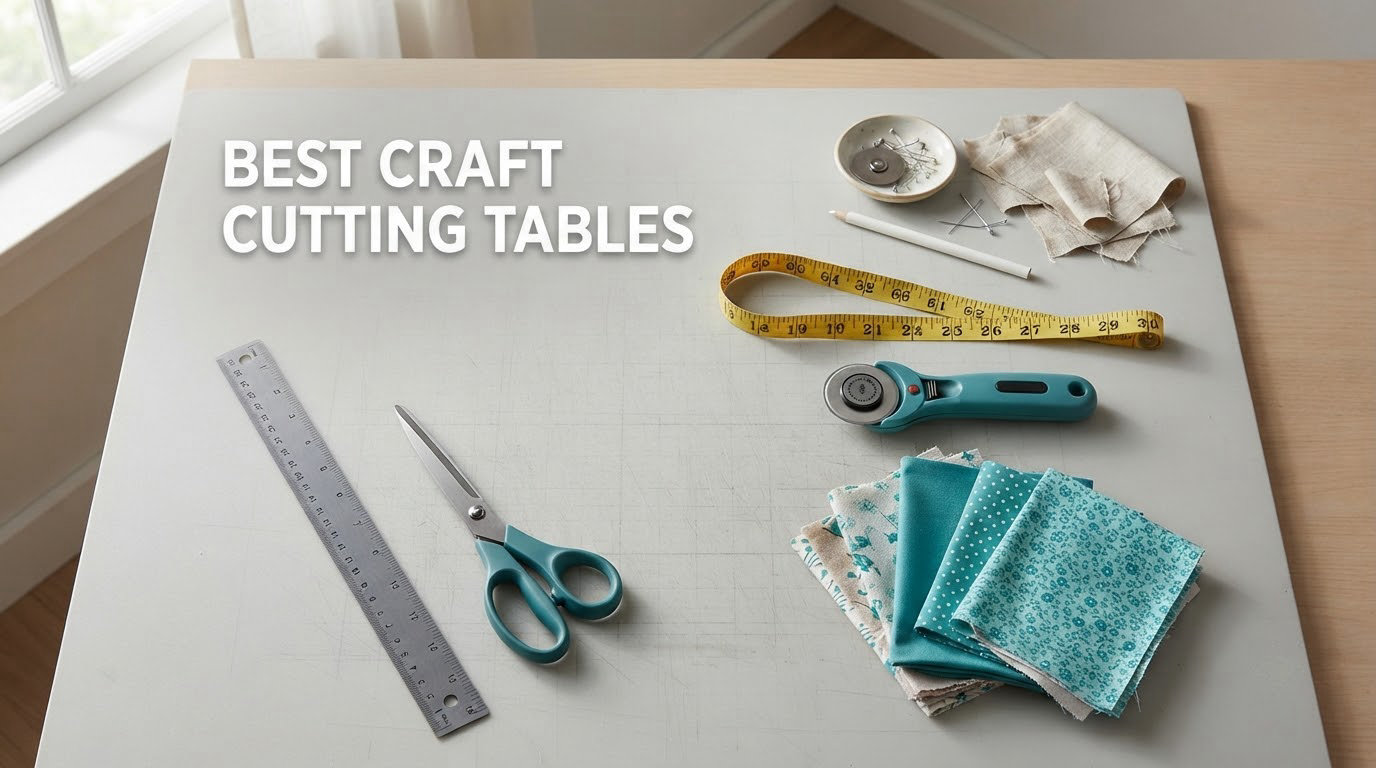
The most common complaint in sewing forums is not about fabric or machines. It is about the table. People cut a quilt back at a 29 inch dining table, spend forty minutes leaning over it, and end the session with a sore lower back. Others give up and cut on the floor, which trades back pain for knee pain. The fix is a dedicated craft cutting table, sized so your fabric lays flat and your arms push down instead of your spine bending.
Here is our short answer. The best fabric cutting table for most people is the Sauder drop-leaf sewing cart. It rolls anywhere on casters, holds 75 pounds, expands by roughly 16 inches when you need more surface, and it looks like furniture rather than workshop equipment. Seven more options follow, from a 40.5 inch portable table for tiny rooms to a 60 inch island for a dedicated quilting space.
Before the picks, one scope note. This guide covers cutting tables for fabric, quilting, blocking, and craft media such as leather, foam, felt and vinyl. It is not a woodworking bench guide, and a machinist bench is overkill if your largest cut is a 60 inch quilt back. We compared eight tables on height, work surface, load rating, storage, folded footprint and build material.
Table of Contents
- Top 3 Craft Cutting Tables (October 2026)
- Craft Cutting Tables at a Glance in 2026
- How We Chose These Cutting Tables?
- 1. Sauder Drop-Leaf Sewing Cart – Best Overall for Fabric Cutting
- 2. Best Choice Products Folding Craft Station – Best Budget Pick for Small Rooms
- 3. Sew Ready Foldable Cutting Grid Table – Best for Quilting and Wide Yardage
- 4. Sew Ready Folding Multipurpose Sewing Table – Best Value for a Dual-Purpose Desk
- 5. GIANTEX 62.5 Inch Folding Sewing Table – Best Storage in a Folding Frame
- 6. Sew Ready Portable Foldable Table – Best for Closets and Tiny Rooms
- 7. Sauder Craft Pro Series Craft Table – Best for a Dedicated Craft Room
- 8. COSTWAY 62.5 Inch Foldable Sewing Table – Best for Heavy Machines
- How Tall Should a Craft Cutting Table Be?
- How Big Should a Cutting Surface Be?
- Folding vs Fixed Tables and Rotary Cutter Stability
- Cutting Tables for Back Pain, Arthritis and Small Rooms
- Cutting Beyond Fabric and Building Your Own Table
- Rotary Cutter Safety on Any Table
- Buying Tips
- Frequently Asked Questions
- Conclusion
Top 3 Craft Cutting Tables (October 2026)
These three cover the most common buying situations: an all-round pick, a low-cost first table, and the widest dedicated cutting surface.
Sauder Drop-Leaf Sewing Cart
- Drop-leaf adds about 16 inch of surface
- 75 lb capacity
- Five-year parts warranty

Best Choice Products Folding Station
- Folds to a 23 inch side table
- Two peg rows and two trays
- Lockable casters

Sew Ready Foldable Cutting Grid Table
- 58.75 x 36.5 inch grid top
- Adjusts 30.25 to 38.75 inch
- Ten-year limited warranty
Craft Cutting Tables at a Glance in 2026
Every table below is listed with the work surface that decides how much fabric you can cut in one pass. Depth matters more than most buyers expect, because a mat that overhangs the edge is a mat that catches and twists.
| Product | Key Specs | Pricing |
|---|---|---|
| Sauder Drop-Leaf Sewing Cart |
|
Check Latest Price |
| Best Choice Products Folding Craft Station |
|
Check Latest Price |
| Sew Ready Foldable Cutting Grid Table |
|
Check Latest Price |
 Sew Ready Folding Multipurpose Sewing Table Sew Ready Folding Multipurpose Sewing Table |
|
Check Latest Price |
 GIANTEX 62.5 Inch Folding Sewing Table GIANTEX 62.5 Inch Folding Sewing Table |
|
Check Latest Price |
 Sew Ready Portable Foldable Table Sew Ready Portable Foldable Table |
|
Check Latest Price |
 Sauder Craft Pro Series Craft Table Sauder Craft Pro Series Craft Table |
|
Check Latest Price |
 COSTWAY 62.5 Inch Foldable Sewing Table COSTWAY 62.5 Inch Foldable Sewing Table |
|
Check Latest Price |
How We Chose These Cutting Tables?
We did not hands-on test these eight tables, and we would rather say so than dress up a spec sheet as experience. Everything here comes from manufacturer listings, published specifications, and the patterns that show up across thousands of owner reviews. Five criteria drove the ranking.
Work surface in both directions. Width decides how many yards you can square up in one pass. Depth decides whether a 24 by 36 inch cutting mat lays flat or overhangs.
Height against your body. A fixed 28 to 30 inch table suits a seated user. Adjustable or standing-height tops around 36 inches remove the waist bend.
Load rating and frame material. Published capacities tell you how hard you can push a rotary cutter. Steel frames and thick tops hold up; thin chipboard flexes.
Folded footprint and casters. If the table lives in a shared room, it has to collapse and roll. Six casters with locks is the pattern to look for.
Storage that is actually reachable. Drawers and bins under the surface beat a cabinet that swallows notions whole.
1. Sauder Drop-Leaf Sewing Cart – Best Overall for Fabric Cutting
Sauder Miscellaneous Storage Sewing Cart, Drop-Leaf Craft Table, Sewing Table with Storage – Soft White Finish
★★★★★★★★★★38.5 x 19.5 in top, 28.5 in high
Raised-panel doors, 3 compartments
75 lb capacity
- Rolls on casters with two locking wheels
- Drop-leaf adds roughly 16 inches of surface
- Two bins plus a hidden shelf for a machine
- Finished like real furniture
- 5-year parts warranty
- About two hours to assemble
- easier with two people
- Soft white finish shows fingerprints
- Heavy at 68.9 pounds to reposition
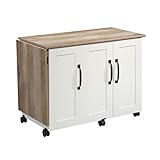
This is the table we keep coming back to. It is engineered wood with a raised-panel door, three compartments, three shelves, and a rated capacity of 75 pounds, which is more than enough for a machine, a stack of yardage, and your own forearm pressing down on a ruler. At 38.5 by 19.5 inches the top suits trimming blocks and garment pieces, and the drop leaf adds roughly 16 inches when you unfold it.
Height is 28.5 inches, so this is a seated table. For someone cutting at a dining table today, that is barely a change, which is exactly why we like it. It is furniture that belongs in a guest room, and it rolls on casters with two locking wheels so you can pull it out only when a project is running.
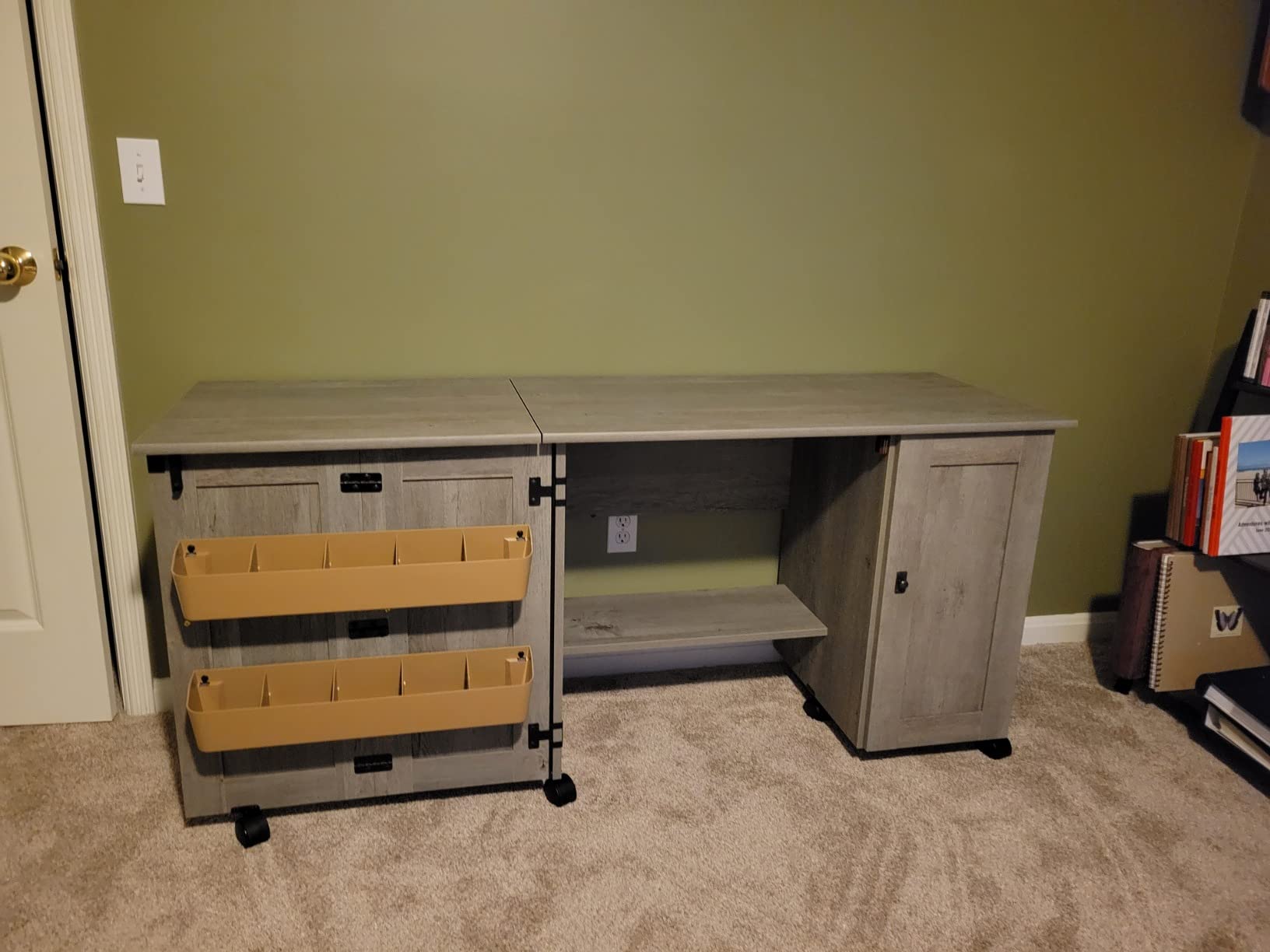
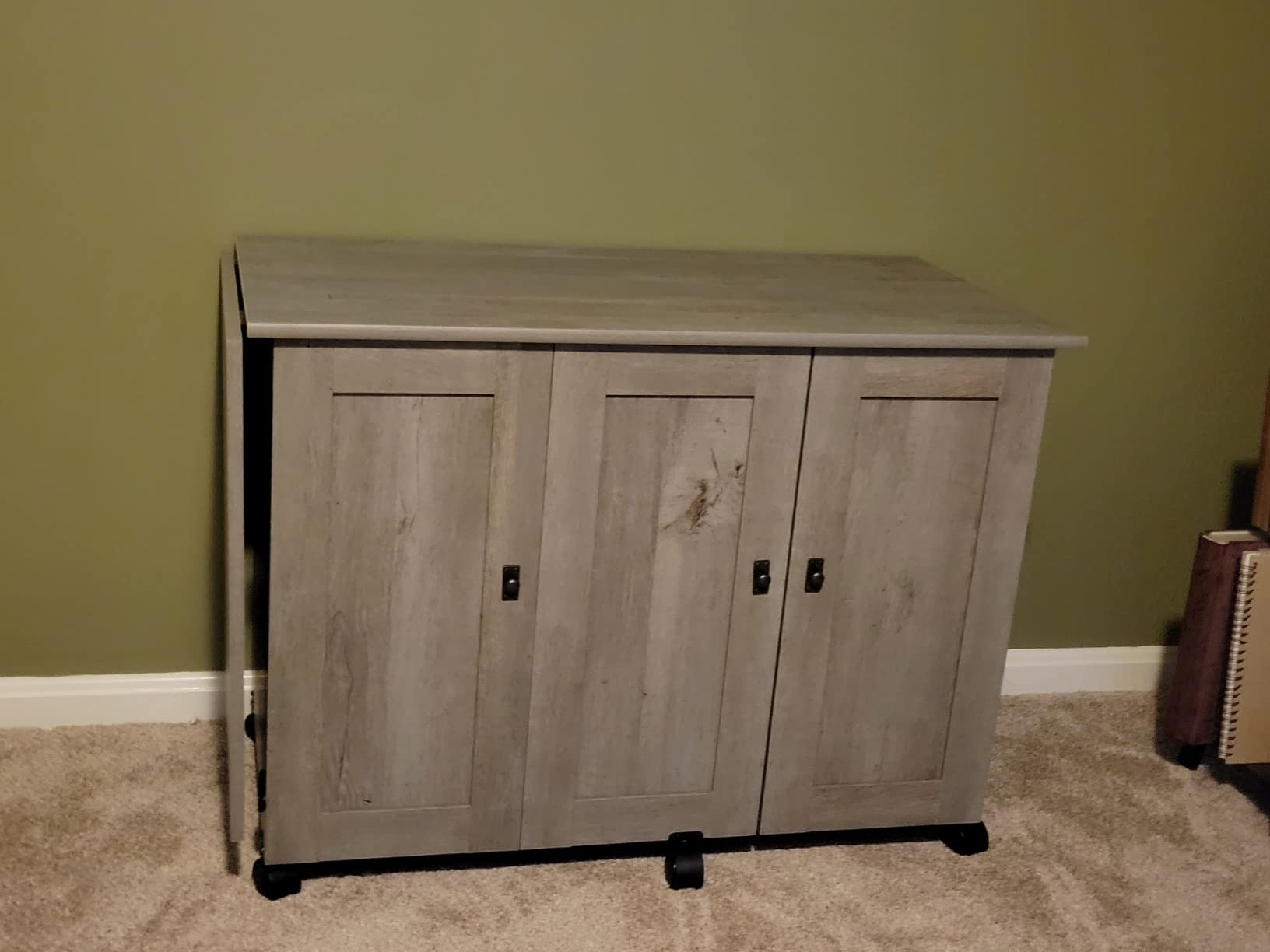
Owner reviews are unusually consistent for this model. The five-star share sits at 76 percent, and the recurring theme is that people bought it expecting a flat pack cart and got something that reads as a real sideboard. Storage reviewers point to the two bins on the inside of the front door and the hidden shelf sized for a sewing machine, plus adjustable shelving in the cabinet compartment for supplies of different heights.
The warranty is a 5 year parts warranty, which is a decent signal for a cart in this class. One reviewer rebuilt the entire unit after it was damaged in a move, and the assembly instructions ship with a video link, both of which suggest a build that is more substantial than the price implies.
Who this table suits?
This suits a sewist working out of a spare room or a converted closet who wants a cutting surface that does not look like a workshop. Two people in a household can share it. Because it is wheeled and locks in place, you can cut, then push it back against the wall and put a laptop on top.
It also suits anyone who wants storage and cutting in one object rather than a bare table plus a separate shelving unit. The bins hold notions, thread and small tools at reach height, which beats a stack of totes you have to move every time you sit down.
Where it falls short?
The honest weakness is the 19.5 inch depth. A 24 by 36 inch cutting mat will not lay flat on the closed top, so you need the leaf up, and a raised leaf is not ideal for a wide rotary cut. Reviewers also report the drop-leaf hinge loosening with use and note that the leaf needs support underneath if left raised for long stretches.
Assembly runs around two hours and is easier with a second person. The soft white finish is the most-complained cosmetic detail, since fingerprints and smudges show on it readily. At 68.9 pounds, moving it on stairs takes two people.
We earn a commission, at no additional cost to you. CERTAIN CONTENT THAT APPEARS ON THIS SITE COMES FROM AMAZON. THIS CONTENT IS PROVIDED 'AS IS' AND IS SUBJECT TO CHANGE OR REMOVAL AT ANY TIME.
2. Best Choice Products Folding Craft Station – Best Budget Pick for Small Rooms
Best Choice Products Folding Sewing Table Multipurpose Craft Station & Side Desk with Compact Design, Wheels, Shelves, Storage Trays, Pegs, Magnetic Doors, Metal Doorknobs – White
★★★★★★★★★★46 x 14.75 in open, 23 in closed
30.5 in high
Two peg rows, two trays, one shelf
- Folds and rolls into a compact side table
- Two peg rows plus two storage trays
- Lockable wheels and magnetic door catches
- Wide range of nine finishes
- Narrow 14.75 inch depth limits large quilting
- Only one interior shelf for bulk storage
- MDF is less durable over long heavy use
This is the table to buy if the room is the problem. It opens to 46 by 14.75 inches at 30.5 inches high and folds down to 23 by 14.75 by 31 inches, which means it becomes a side table against a wall rather than a permanent fixture. The build is MDF with metal hinges, and the listing calls out a wobble-free experience, lockable wheels and magnetic door locks so supplies do not spill when you move it.
Storage is the reason to like it. Two rows of pegs hold scissors, pins and yarn, and two attached trays plus one large interior shelf cover notions. A 60 day warranty via the seller return centre is the thinnest coverage in this group, so treat it as a first table rather than a lifetime purchase.
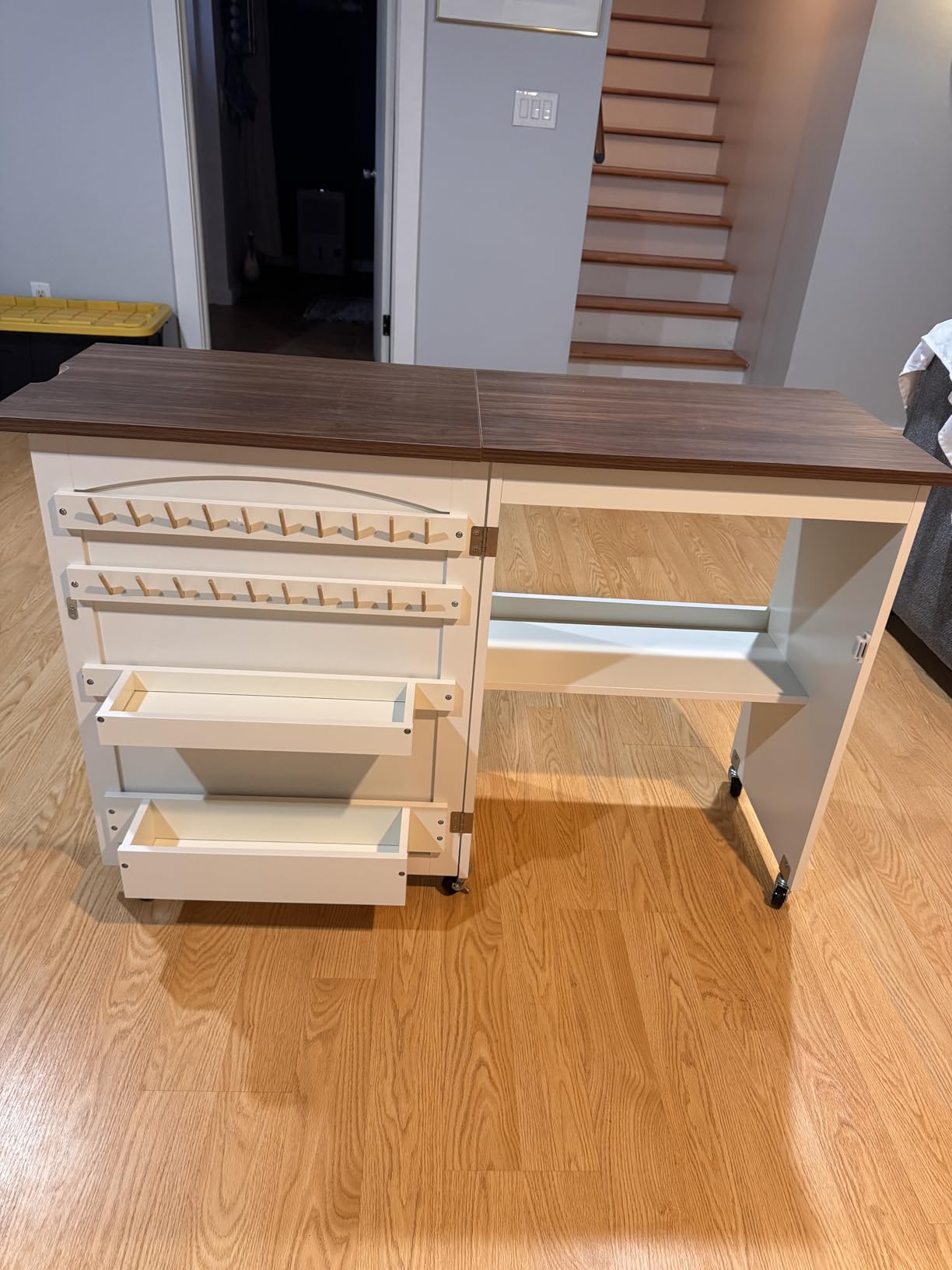
The rating lands at 4.2 across more than four thousand reviews, with 65 percent five-star. Buyers consistently describe it as an affordable compact station for a small room and single out the fold-away design and pegboard storage as the value drivers. The narrow work surface is what holds the rating down, and it is a real constraint rather than a nitpick.
Finishes run wide, including walnut, espresso, pink and light blue, so it can match an existing room rather than forcing a new look. At 41 pounds it is one of the lighter units here, which matters when you are moving it between rooms on a regular basis.
Who this table suits?
Apartment sewists, students, and anyone sharing one room between a sofa and a craft habit. If your projects are garments, accessories, bags and small quilts, the 46 inch length is genuinely workable for trimming and cutting strips. The pegboard also makes it a decent general craft station for scrapbooking or card making.
It suits people who want to start without a large commitment. Buy this, learn what height you actually like to work at, and upgrade later if you outgrow it.
Where it falls short?
Do not buy it to cut wide yardage. A 14.75 inch depth means a standard 24 by 36 inch mat overhangs badly, and a quilt back will hang off the edge. Single interior shelf means bulk fabric storage is limited, and MDF is a softer material that wears faster than solid wood under heavy daily use.
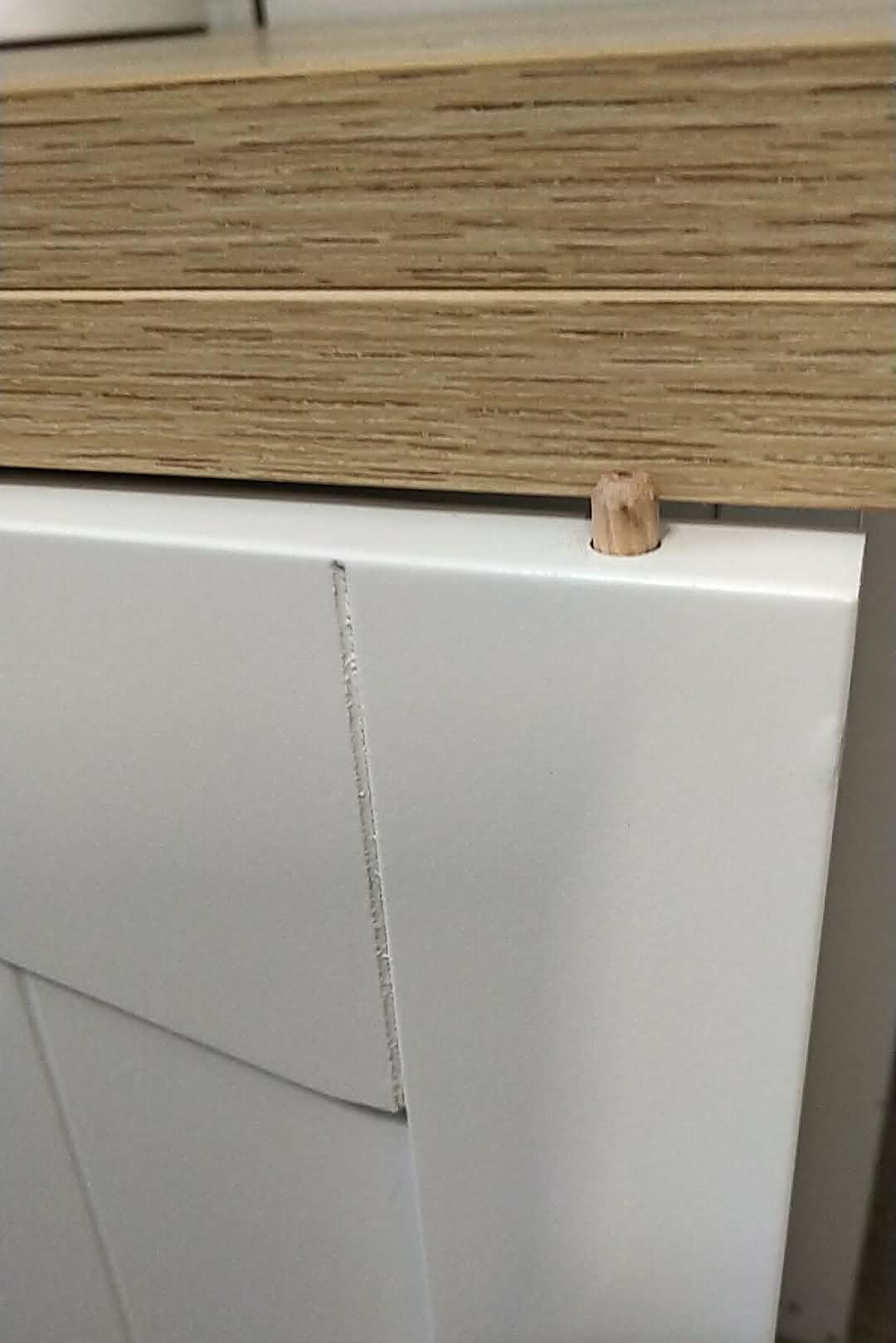
There is also a visible share of one-star reviews citing durability and assembly concerns, which is the trade you accept at this end of the market.
We earn a commission, at no additional cost to you. CERTAIN CONTENT THAT APPEARS ON THIS SITE COMES FROM AMAZON. THIS CONTENT IS PROVIDED 'AS IS' AND IS SUBJECT TO CHANGE OR REMOVAL AT ANY TIME.
3. Sew Ready Foldable Cutting Grid Table – Best for Quilting and Wide Yardage
Sew Ready Foldable Hobby and Cutting Grid Table, White, 58.75 x 36.5 Inch
★★★★★★★★★★58.75 x 36.5 in grid top
Adjusts 30.25 to 38.75 in high
Two mesh drawers, one shelf
- Widest cutting surface in the group
- Height range covers sitting and standing
- Two slide-out mesh drawers plus a lower shelf
- Folds flat and rolls on six casters
- 10-year limited warranty
- Printed grid shows cutting marks over time
- Folded frame is bulky to reposition
- Fewer storage options than a cabinet table
This is the only table in the group built specifically for cutting, and the difference is obvious in the numbers. The work surface is 58.75 by 36.5 inches, the widest in the roundup, and it carries a printed grid with inch and centimetre markings, radial lines and angle guides. That grid is not decoration. It is what lets you square a quilt back without a separate ruler and re-measuring everything twice.
Height adjusts from 30.25 to 38.75 inches, which is the single most useful feature in this list. At the low end it is a sitting table for trimming blocks. Push it up and you are cutting standing, which is the position most back-pain advice points toward. The frame is powder-coated steel with locking casters, and it folds flat for storage.
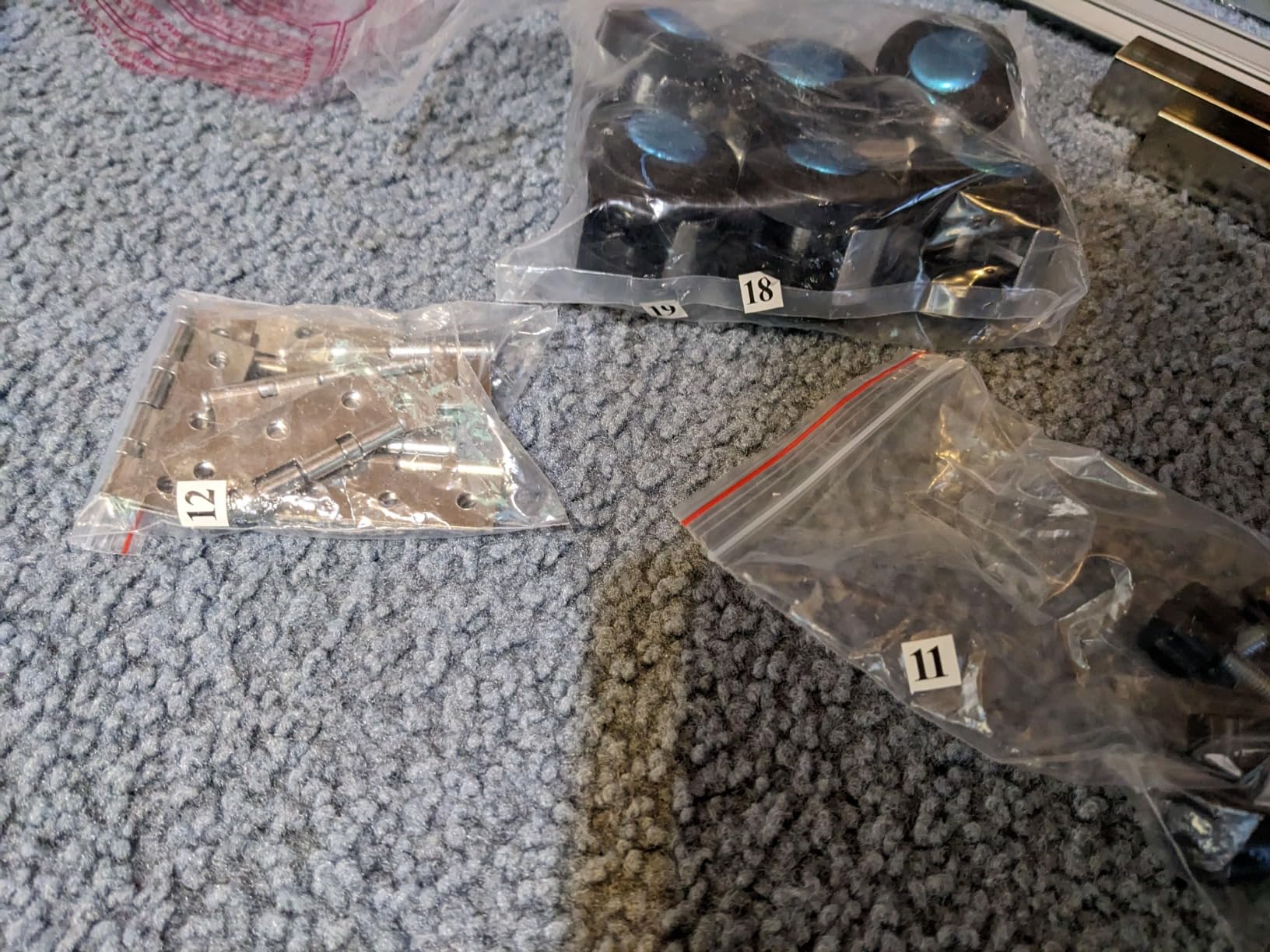
Ratings are 4.6 from more than thirteen hundred reviews with a 78 percent five-star share, and reviewers consistently single out the printed grid, the sheer cutting area and the height range. Storage is two slide-out mesh drawers and a lower shelf, which is less than a cabinet table but keeps fabric, tools and supplies within reach while you work.
The warranty is a 10 year limited warranty, the longest in this group and a reasonable proxy for build confidence. Care instructions are simple, wipe with a dry cloth.
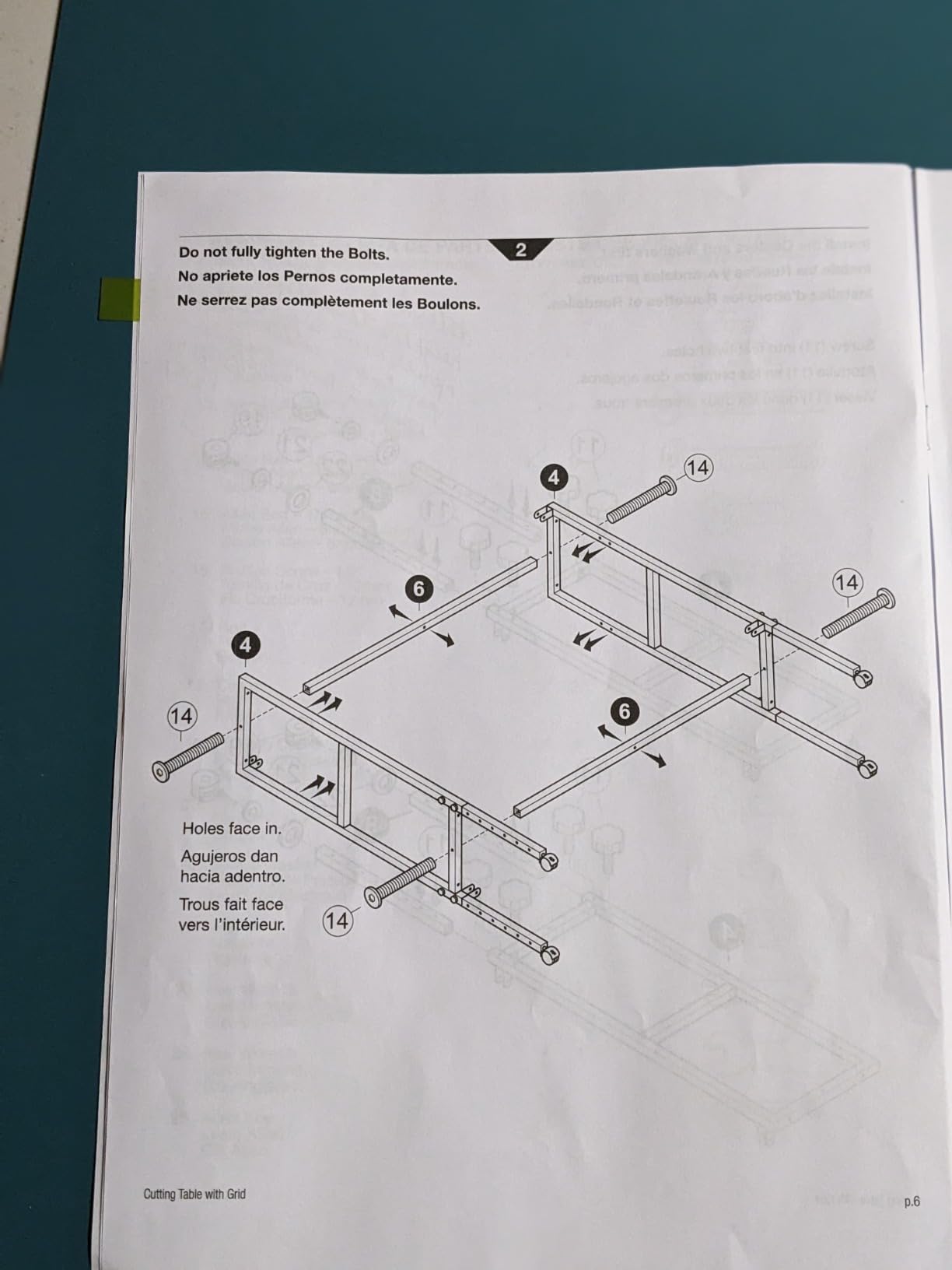
Who this table suits?
Quilters cutting a queen or king quilt back in one piece. The 36.5 inch depth means a 24 by 36 inch self-healing mat lays flat with room to spare, so you can roll fabric across the surface without the edge catching. It also suits anyone who wants to stand while cutting, or who shares a table between sitting and standing work.
It suits people with a small or shared room too, because the fold-flat frame and six casters let you park it against a wall between sessions. If the bulk is not too heavy, one person can do it.
Where it falls short?
The printed grid is a wear item. Reviewers note it can pick up cutting marks over years, and unlike a plain surface it cannot be sanded or refinished. The heavier frame also makes the folded unit bulkier and heavier to reposition than the lighter carts in this roundup, which is the real cost of buying a rigid steel cutting station.
Storage is modest by comparison. If your craft life is 60 percent notions and 40 percent fabric, a cabinet-style table serves you better.
We earn a commission, at no additional cost to you. CERTAIN CONTENT THAT APPEARS ON THIS SITE COMES FROM AMAZON. THIS CONTENT IS PROVIDED 'AS IS' AND IS SUBJECT TO CHANGE OR REMOVAL AT ANY TIME.
4. Sew Ready Folding Multipurpose Sewing Table – Best Value for a Dual-Purpose Desk
Sew Ready Folding Multipurpose Sewing Table – 47.5″ W x 28″ D Foldable White Hobby and Sewing Machine Table with Adjustable Shelf – Can Also Be Used as Computer Desk
★★★★★★★★★★47.5 x 28 in top at 30 in high
Six-position machine shelf
Locking fold-in legs
- Wide 47.5 inch tabletop
- Platform shelf adjusts to six machine base heights
- Locking fold-in legs for safe storage
- Floor levelers steady uneven surfaces
- Doubles as a computer or writing desk
- No storage beyond the single shelf
- 20 lb shelf limit is low for heavy machines
- Highest one-star review share in this group
This one solves a different problem. It is a folding table first, with a 47.5 by 28 inch top at 30 inches high, an alloy steel powder-coated frame, and fold-in legs that lock. The platform shelf is 22 by 10.5 inches and adjusts to six sewing machine base heights, so it works as a sewing station and as a desk for writing or a computer.
Two details matter more than they look. The top is 1 inch thick, and the usable surface diagonal is listed at 55.9 inches, which gives you more usable cutting area than the raw numbers suggest on a rectangular top. Four floor levelers steady it on uneven surfaces, a small thing that stops a rocking frame from turning a straight rotary cut into a wandering one.
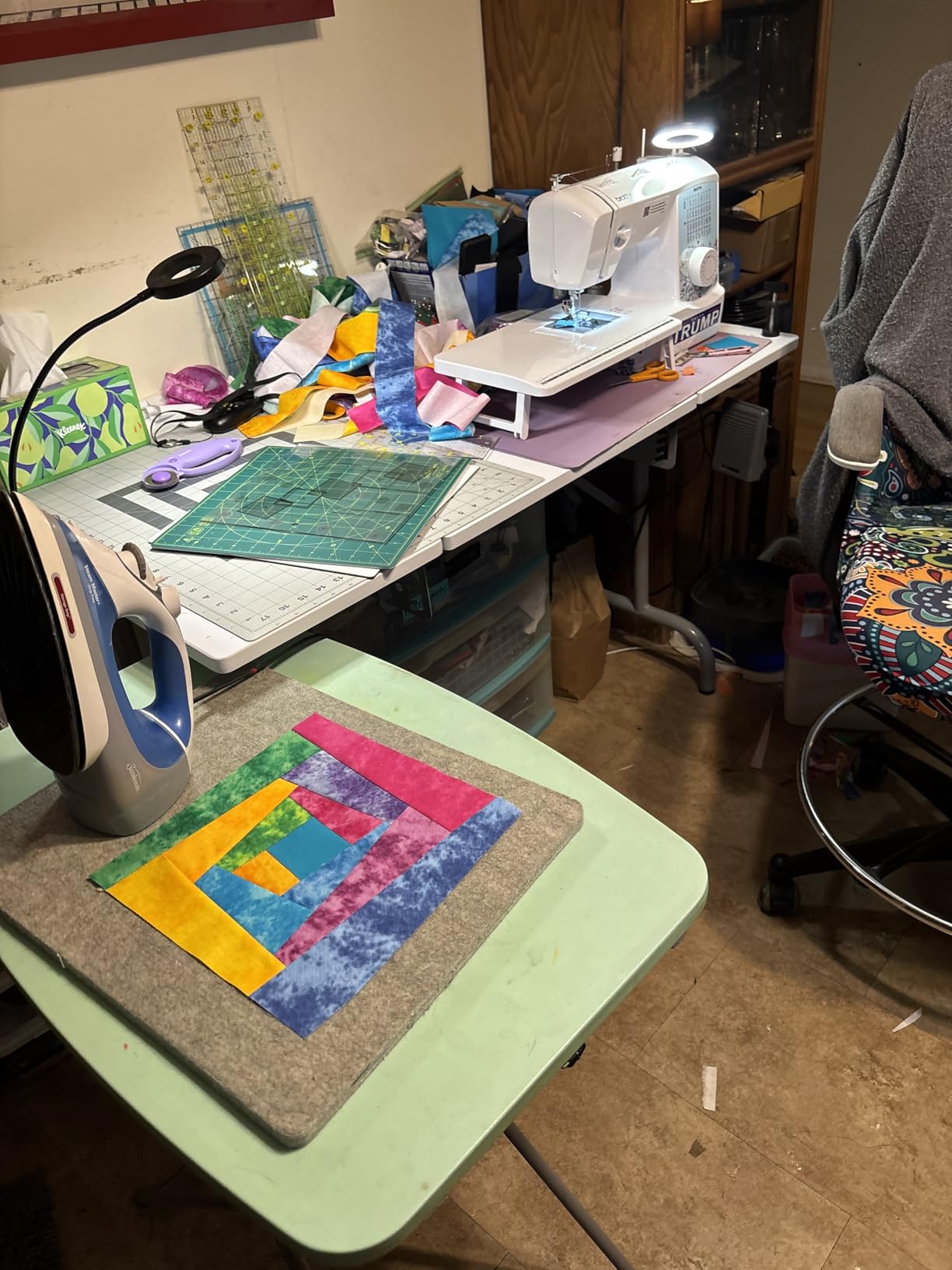
The rating is 4.0 with 61 percent five-star, and it carries the largest one-star share in this roundup at 13 percent. Recurring complaints are the absence of storage, a shelf rated to 20 pounds, and occasional build or finish issues. Assembly is recommended for two people and needs only a screwdriver.
Buyers still rate the value highly, and the honest reading is that you are buying a wide, sturdy, foldable surface rather than a storage solution.
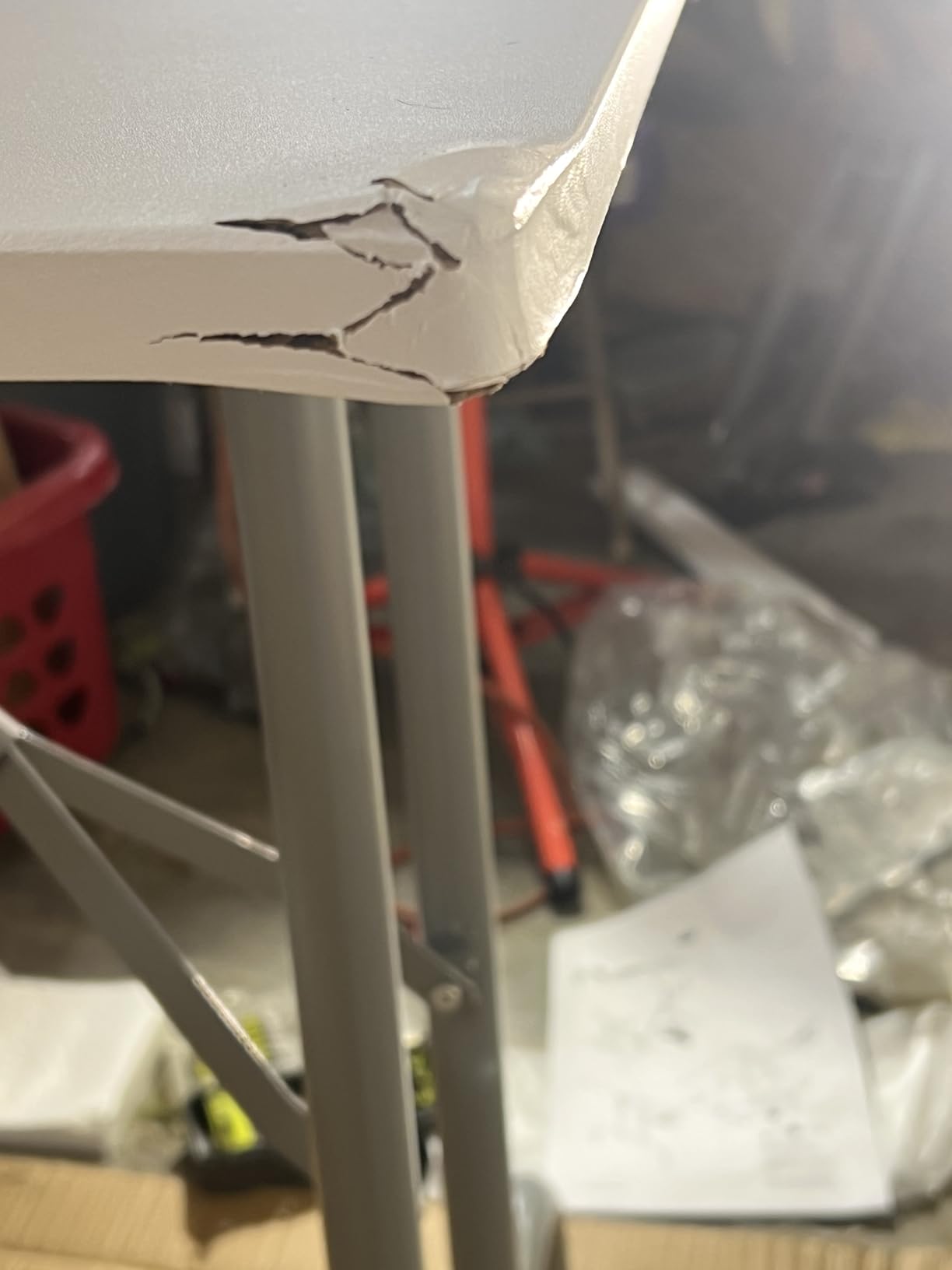
Who this table suits?
Anyone whose cutting needs stay under roughly 24 inches of fabric and who also needs a desk. The dual use is real, not marketing. A 47.5 inch top is wide enough to spread out a garment pattern, block a sweater, or trim a binding strip without hanging off the edge.
It suits people in rented rooms, since the legs lock and the whole thing collapses to a flat panel against a wall or into a closet.
Where it falls short?
There is no storage beyond the single machine shelf, and its 20 pound weight limit rules out heavier machines. Do not plan to stack fabric bins on the top during a cut, because that is exactly the load case a folding steel frame handles worst.
The 4.0 rating and the one-star share are worth weighing if you are hard on your gear. If you need storage or a wider surface, step up rather than saving money here.
We earn a commission, at no additional cost to you. CERTAIN CONTENT THAT APPEARS ON THIS SITE COMES FROM AMAZON. THIS CONTENT IS PROVIDED 'AS IS' AND IS SUBJECT TO CHANGE OR REMOVAL AT ANY TIME.
5. GIANTEX 62.5 Inch Folding Sewing Table – Best Storage in a Folding Frame
GIANTEX 62.5″ Large Folding Sewing Table with Storage Cabinet & Shelves
★★★★★★★★★★62.5 in open, 38.5 in folded
29.5 in high
Three bins, one shelf, side cabinet
- Folds a 62.5 inch surface down to 38.5 inches
- Three hidden bins plus an interior shelf and side cabinet
- Six casters with two locking wheels
- Strong hinges and a thick top panel
- Twelve size and colour variants
- 70 pounds is heavy to reposition
- Thin drawer bottoms need a shelf liner
- Assembly takes a couple of hours with a helper
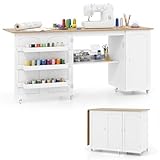
This is the storage answer in a folding frame. It opens to 62.5 by 20 inches at 29.5 inches high and folds down to a 38.5 by 20 by 29.5 inch cabinet. That open width is enough to lay out a full quilt back, and the 20 inch depth is workable for strips and borders. Storage runs to three hidden bins, one interior shelf, and a side cabinet with an adjustable shelf for items of different heights.
It rolls on six casters, two of which lock, so you can move the whole station to whichever wall the light is best in and lock it there before a cut. The engineer wood top panel is thick, and the manufacturer claims stability when the top is extended rather than sagging.
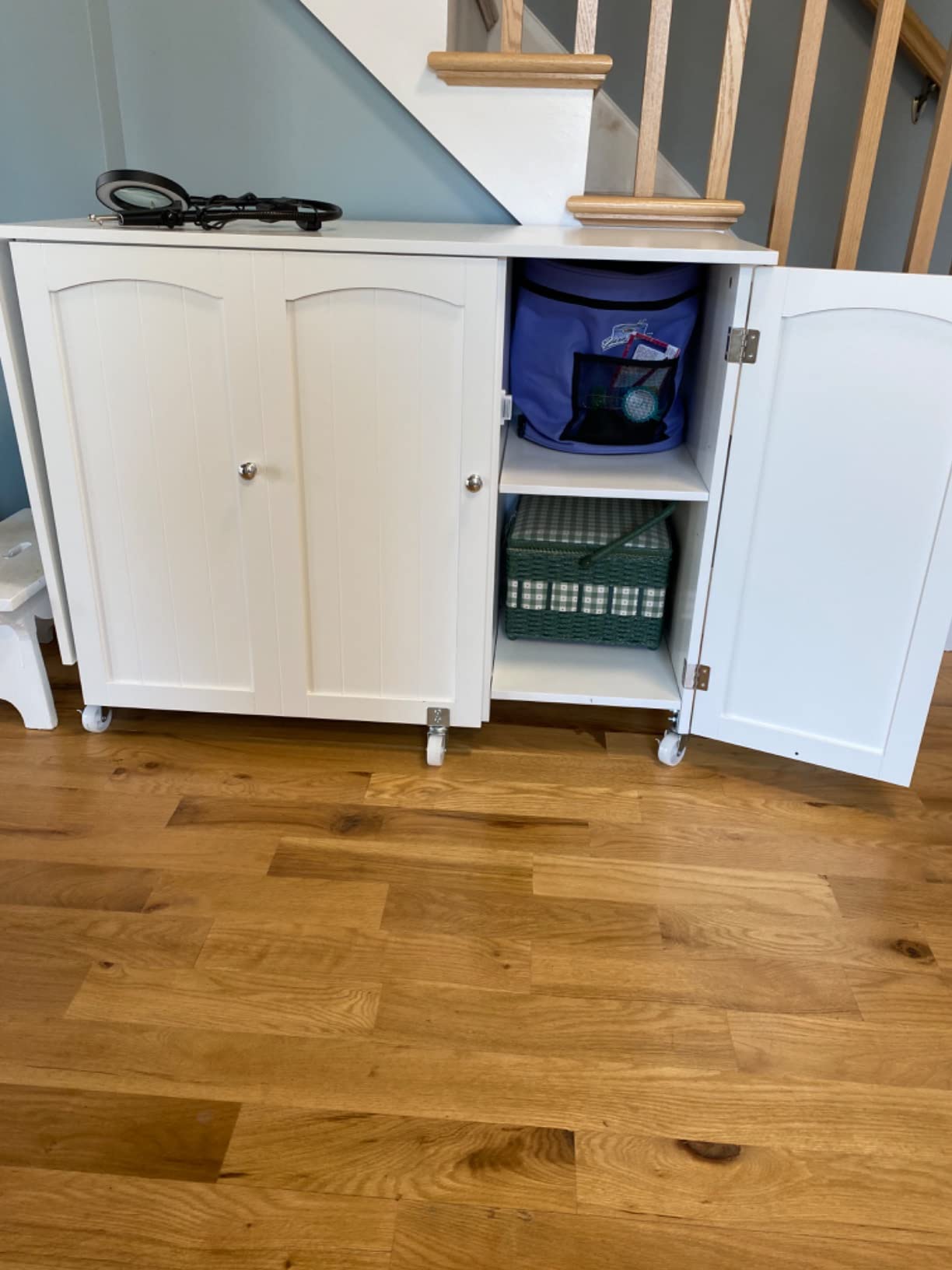
Ratings sit at 4.3 across more than eleven hundred reviews with 68 percent five-star. The dominant sentiment is a functional, attractive cabinet that folds flat, rolls on locking casters, and holds a machine plus supplies. The recurring drawbacks are weight, thin drawer bottoms, and the need for careful assembly with a second pair of hands.
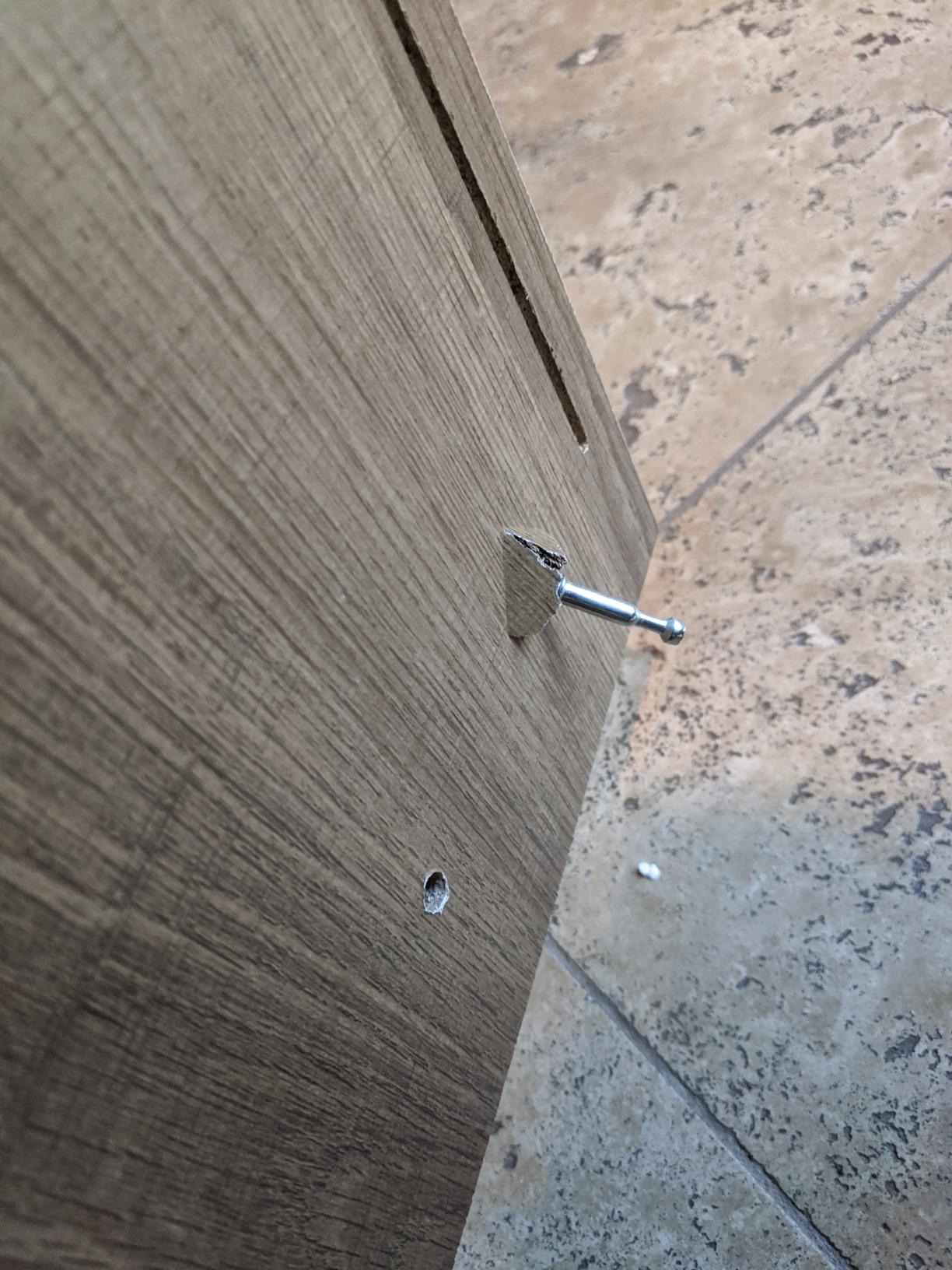
A small number of reviews report cracked panels or screws that did not line up with their holes, so inspect the panels on arrival. The unit itself weighs 70 pounds.
Who this table suits?
Quilters and garment makers who carry a lot of supplies and want them in the same footprint as the cutting surface. Folding the top away turns the storage cabinet into a tidy piece of furniture, which makes it a better fit for a living room or a shared bedroom than a fixed table.
It suits people who cut in bursts, because a 20 inch deep surface plus a 62.5 inch span covers most cutting and trimming without a separate mat table.
Where it falls short?
At 70 pounds it is not a table you reposition daily without thinking about it. Thin cardboard-like drawer bottoms mean you should line them with shelf liner before loading notions, or the board will bow.
Assembly is a couple of hours and the door and top are much easier with a helper. A few reviewers also flag cracked panels and misaligned screw holes on delivery, so check before you build.
We earn a commission, at no additional cost to you. CERTAIN CONTENT THAT APPEARS ON THIS SITE COMES FROM AMAZON. THIS CONTENT IS PROVIDED 'AS IS' AND IS SUBJECT TO CHANGE OR REMOVAL AT ANY TIME.
6. Sew Ready Portable Foldable Table – Best for Closets and Tiny Rooms
Sew Ready Portable Foldable Sewing Table, 40.5″ Wide Top, Silver/White
★★★★★★★★★★40.5 in top at 28.25 in high
24 lb unit weight
Fold-flat legs, two wheels
- Arrives fully assembled with no tools needed
- Lightest unit here at 24 pounds
- Lifetime warranty
- Top carries an inch and cm measurement sticker
- Compact 40.5 inch top for small rooms
- Smallest work surface of the folding tables
- No storage beyond the machine shelf
- Thinner 0.5 inch top than other models
The simplest table here, and the one that gets out of the way fastest. The top is 40.5 inches wide at 28.25 inches high, with fold-in legs and two wheels, so it folds flat and rolls. It arrives fully assembled, which means no build time at all. That single fact is why it wins with people working out of a closet or a corner of a studio flat.
There is an adjustable sewing machine shelf at 17.75 by 7.5 inches, and the top carries an inch and centimetre measurement sticker for quick layout. The working surface diagonal is listed at 45.5 inches, and the recommended maximum weight is 50 pounds. Four levelers steady uneven floors.
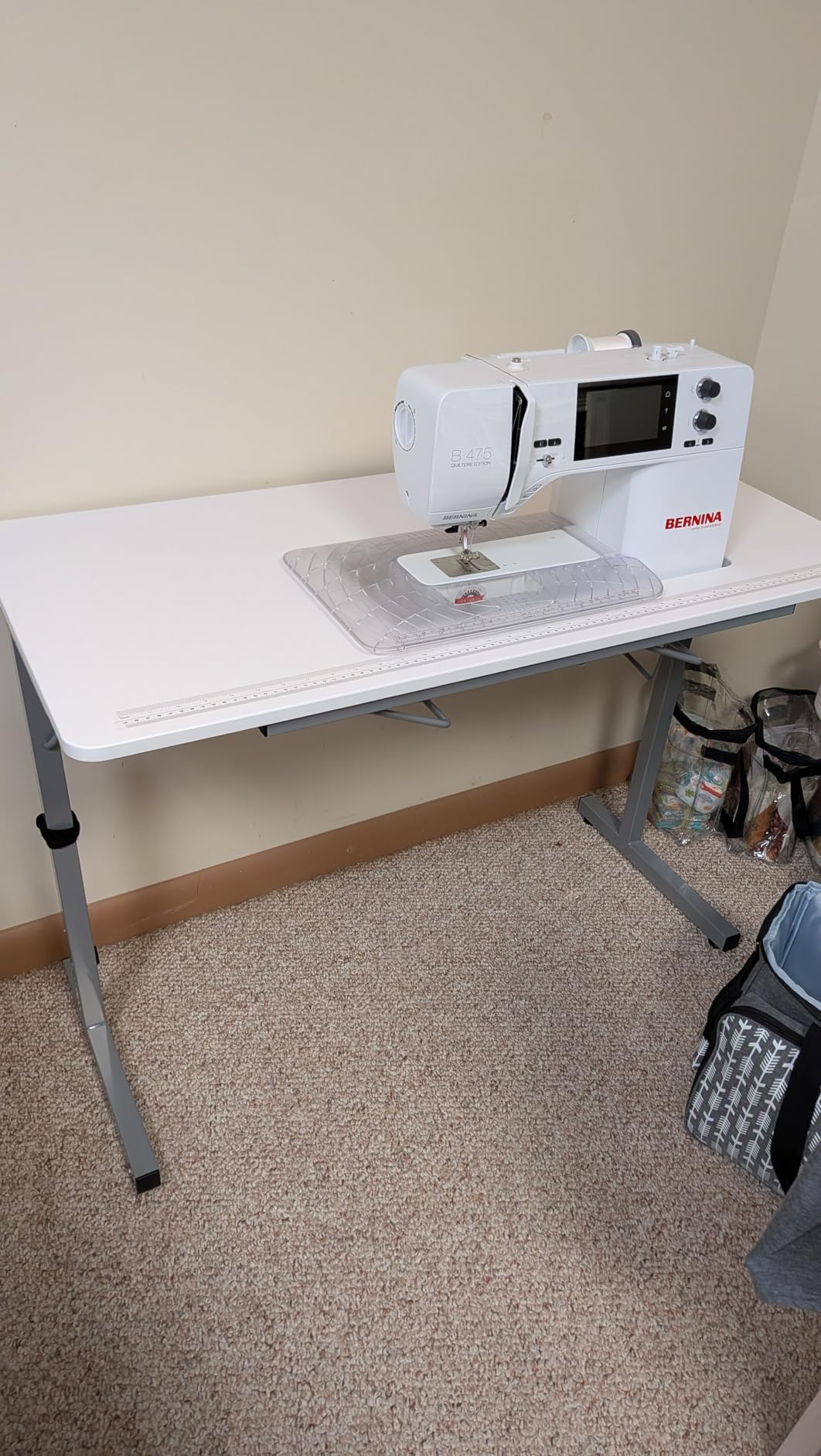
The warranty is a lifetime warranty, the strongest in this group, and the 4.6 rating comes with a 79 percent five-star share, the highest proportion of top marks here. Reviewers are consistently pleased that there is nothing to assemble and that the table folds flat and stores in a closet.
The only limitation owners repeat is size. The 40.5 inch top is compact, so large quilting is out of scope. This is a trimming and small-project table.
Who this table suits?
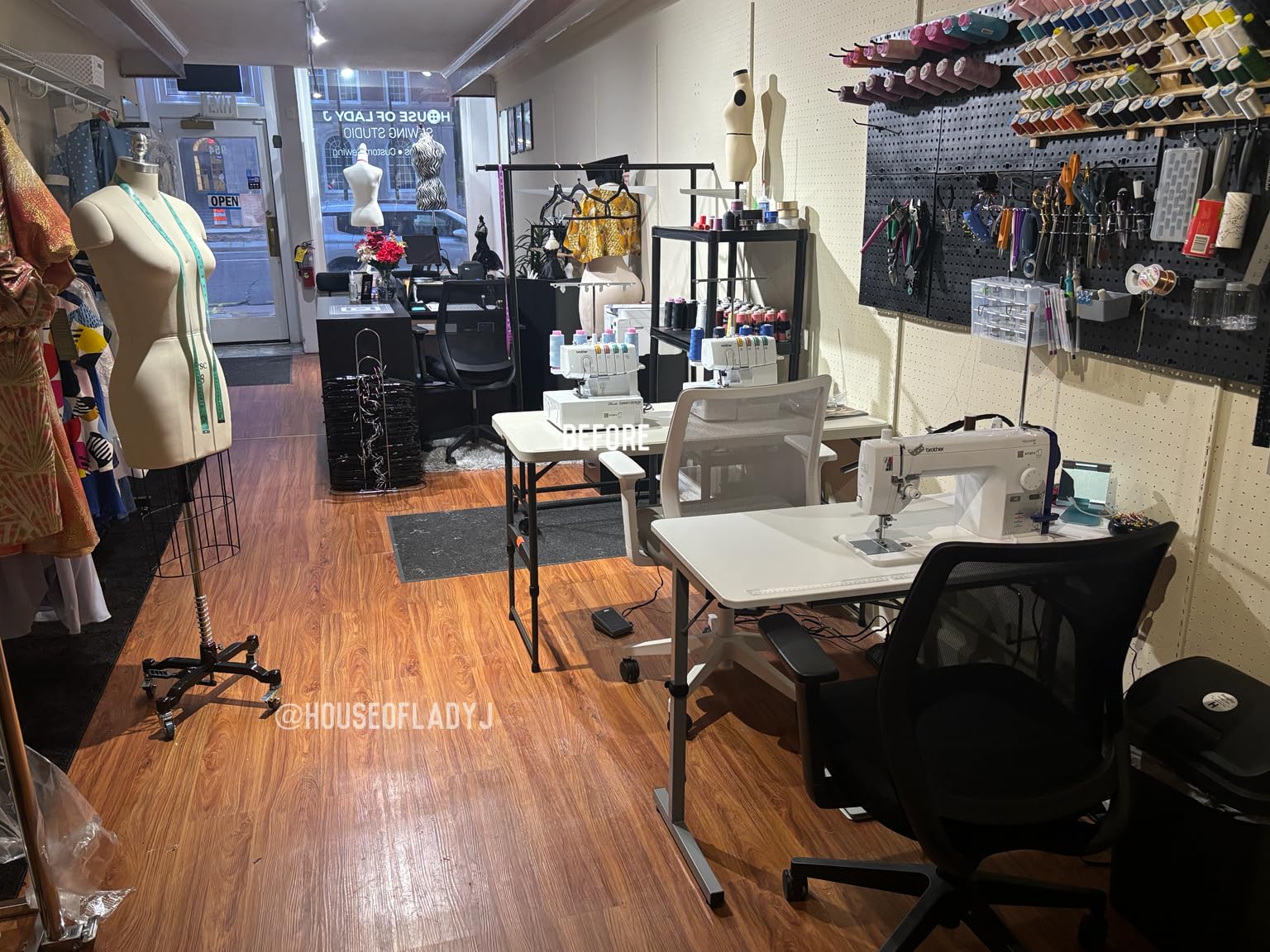
Small-space makers, students in dorms or flats, and anyone who needs a second surface that appears in thirty seconds and disappears just as fast. At 24 pounds it is the only table in this roundup one person can comfortably carry between rooms.
It also suits anyone buying their first dedicated craft surface who wants zero assembly risk, since there is nothing to build or misalign.
Where it falls short?
The 40.5 inch top is the smallest work surface among the folding tables here, and the 0.5 inch top thickness is thinner than the heavier models in the same line. There is no storage beyond the machine shelf, so notions live in a tote beside the table rather than in it.
If you routinely cut a quilt back in one piece, this is the wrong size and no amount of rearranging will fix it.
We earn a commission, at no additional cost to you. CERTAIN CONTENT THAT APPEARS ON THIS SITE COMES FROM AMAZON. THIS CONTENT IS PROVIDED 'AS IS' AND IS SUBJECT TO CHANGE OR REMOVAL AT ANY TIME.
7. Sauder Craft Pro Series Craft Table – Best for a Dedicated Craft Room
Sauder Craft Pro Series Craft Table/ Pantry cabinets, White finish
★★★★★★★★★★60 x 30 in top at 36 in high
Three removable drawers, six shelves
164.5 lb unit weight
- Largest dedicated craft surface here at 60 x 30 inches
- Three removable drawers reachable from both sides
- Six open shelves for craft and hobby storage
- Finished to furniture standard
- Heat- and scratch-resistant surface
- Fixed base
- so it is not portable or collapsible
- Very heavy at 164.5 pounds
- Two-person assembly for a piece this size
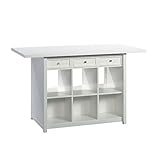
This is the one to buy when a room belongs to crafting and never has to become a dining table again. The surface is 60 by 30 inches at 36 inches high, which is genuinely standing height, and the engineering wood top is listed as heat and scratch resistant. At 60 by 30 it is the largest dedicated craft surface in this roundup, and the depth means a 24 by 36 inch mat lays flat with room to spare on all sides.
Storage is the real argument. There are three removable drawers accessible from both sides, plus six open shelves. Drawers you can reach from either side matter more than they sound, because a quilter often works around the table rather than from one side. The piece is rated to seat four, so it works as a work island or a craft table with company.
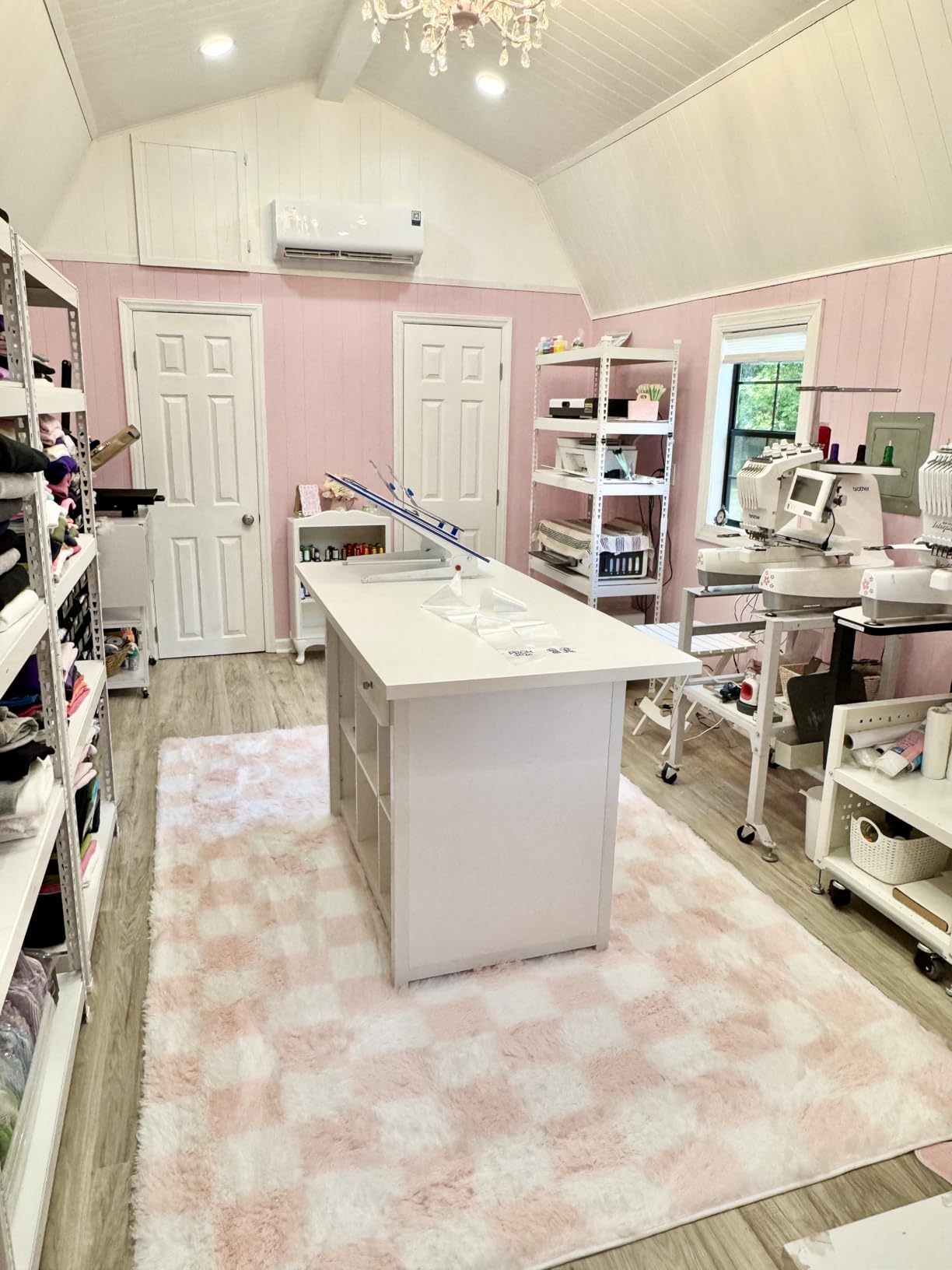
The rating is 4.7 with 87 percent five-star, the highest satisfaction score in this group. Owners consistently praise the large finished surface, the generous drawer and shelf storage, and a look that blends with ordinary home furnishings. Care is straightforward, wipe with a dry cloth, and the warranty is a 5 year parts warranty.
The single consistent caveat is cost, followed by size. At 164.5 pounds on a fixed base, this is furniture. It is not going anywhere.
Who this table suits?
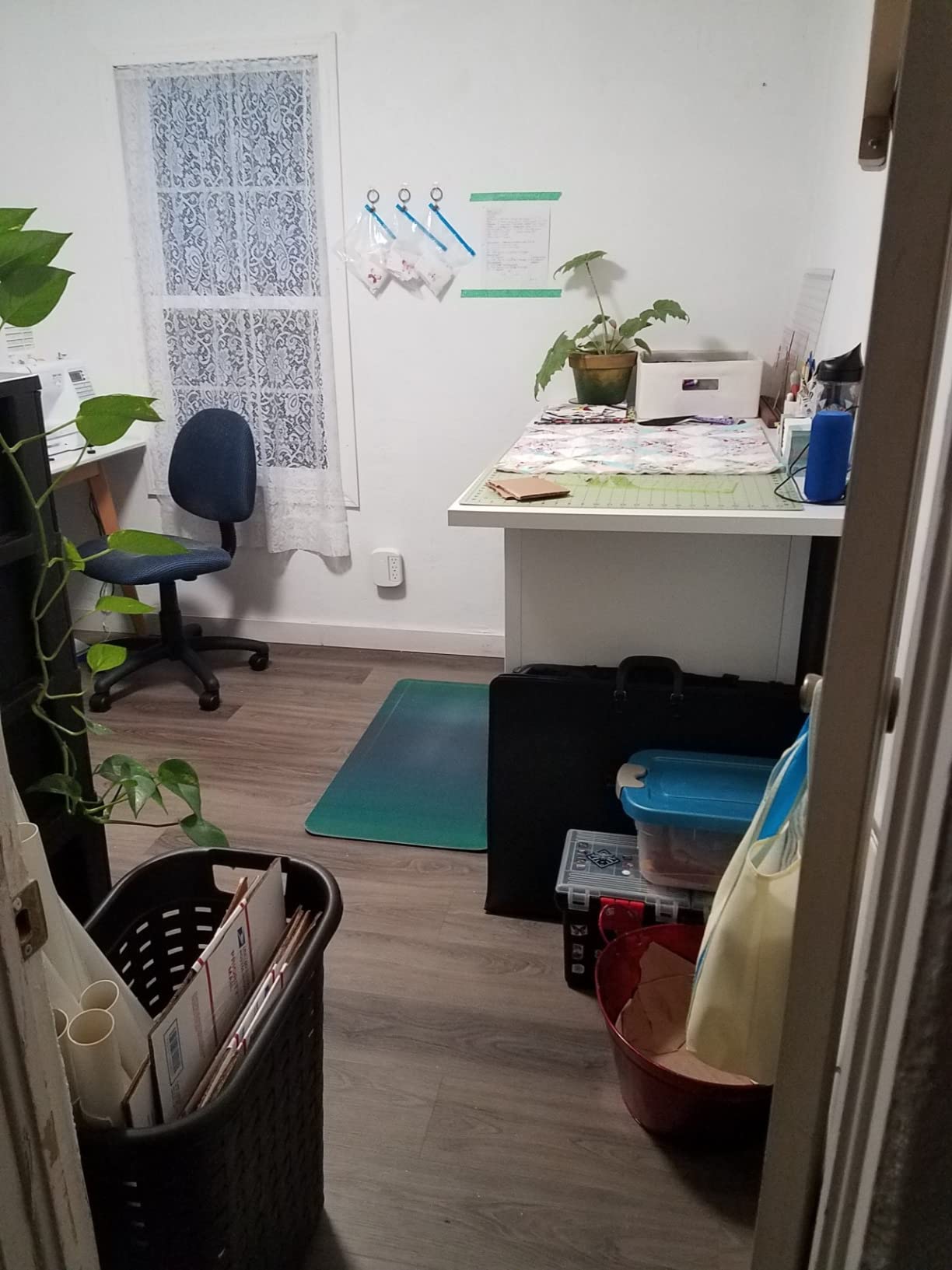
Dedicated quilting and craft rooms, and anyone who cuts and sews at the same station. The 36 inch height is a standing working height, which suits sewists with back problems who cannot bend at a 29 inch dining table for long stretches.
It suits people who store supplies rather than totes. Six open shelves and three removable drawers hold fabric, notions, and machines in a way a folding table cannot match.
Where it falls short?
It is the heaviest item in this roundup at 164.5 pounds with a fixed base, so it is a bad fit for renters, small rooms, or anyone who needs the floor space back on a schedule. Assembly needs two people at that size.
It is also the most expensive option by a wide margin, which is a difficult thing to justify for trimming and binding. If your cutting is occasional, the money is better spent elsewhere.
We earn a commission, at no additional cost to you. CERTAIN CONTENT THAT APPEARS ON THIS SITE COMES FROM AMAZON. THIS CONTENT IS PROVIDED 'AS IS' AND IS SUBJECT TO CHANGE OR REMOVAL AT ANY TIME.
8. COSTWAY 62.5 Inch Foldable Sewing Table – Best for Heavy Machines
COSTWAY 62.5″x 20″ Foldable Sewing Table w/Storage Shelves, Natural & White
★★★★★★★★★★62.5 in open, 38.5 in folded
29.5 in high
165 lb total load capacity
- Rated to hold 165 pounds in total
- 62.5 inch drop-leaf surface folding to 38.5 inches
- Single door cabinet with three hidden bins
- Shelf adjusts to three positions
- Six universal wheels with two locks
- Thin chipboard panels can wobble
- Small shelf screws loosened for some buyers
- Instructions lack detail and parts need sorting
This is the one to look at if your sewing machine is heavy. The published total load capacity is 165 pounds, the highest rating in this group, and reviewers specifically call it out as suitable for a heavy machine such as a Luminaire. The table opens to 62.5 by 20 by 29.5 inches and folds to 38.5 by 20 by 29.5 inches, so the same unit serves as a work surface and a storage cabinet.
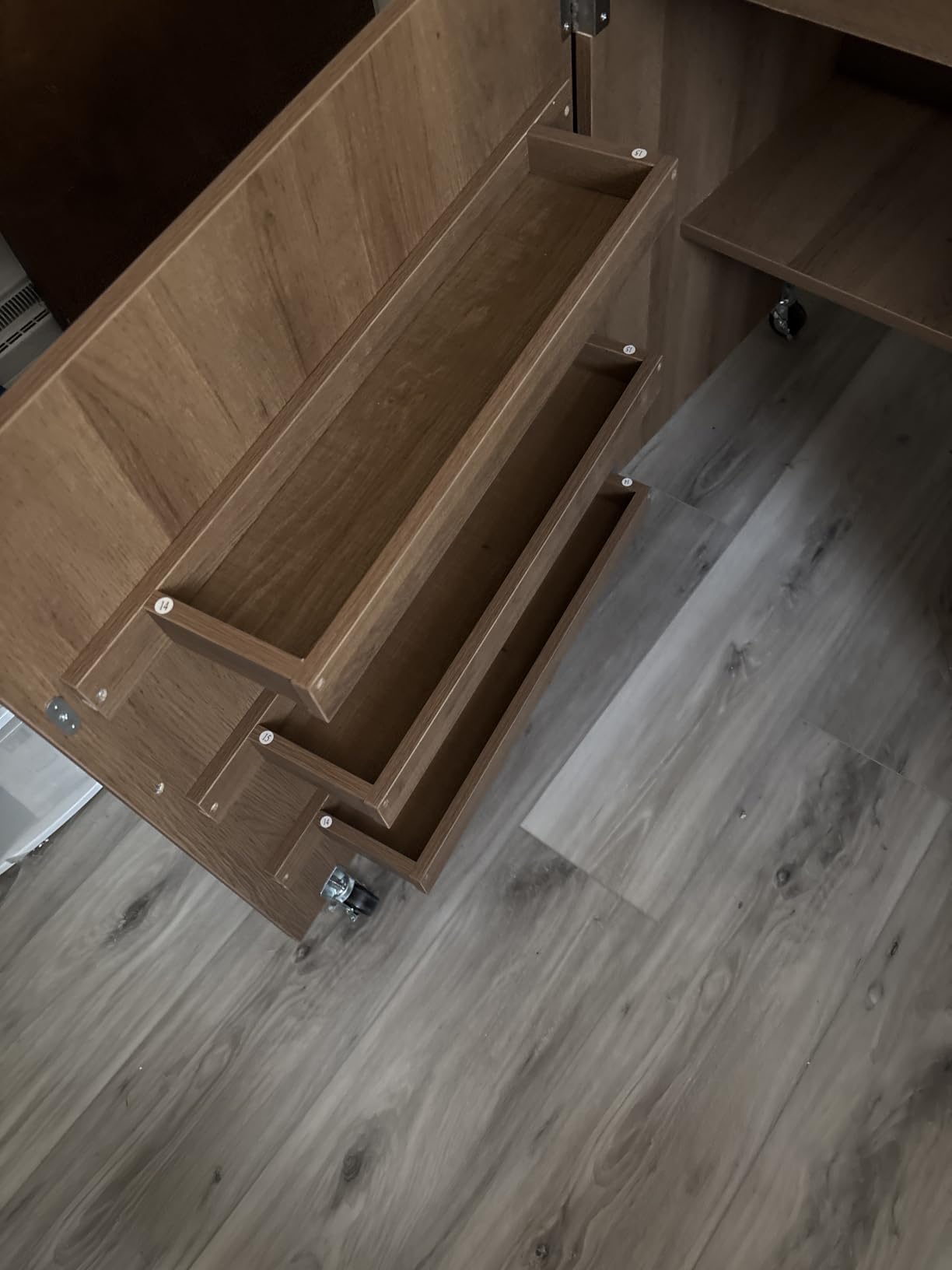
Storage is a single door cabinet with three hidden bins and a bottom open shelf, and the interior shelf adjusts to three positions, roughly 2.5 inches of travel, for different storage heights. Six universal wheels with two locks, a magnetic door catch and solid metal hinges complete the hardware.
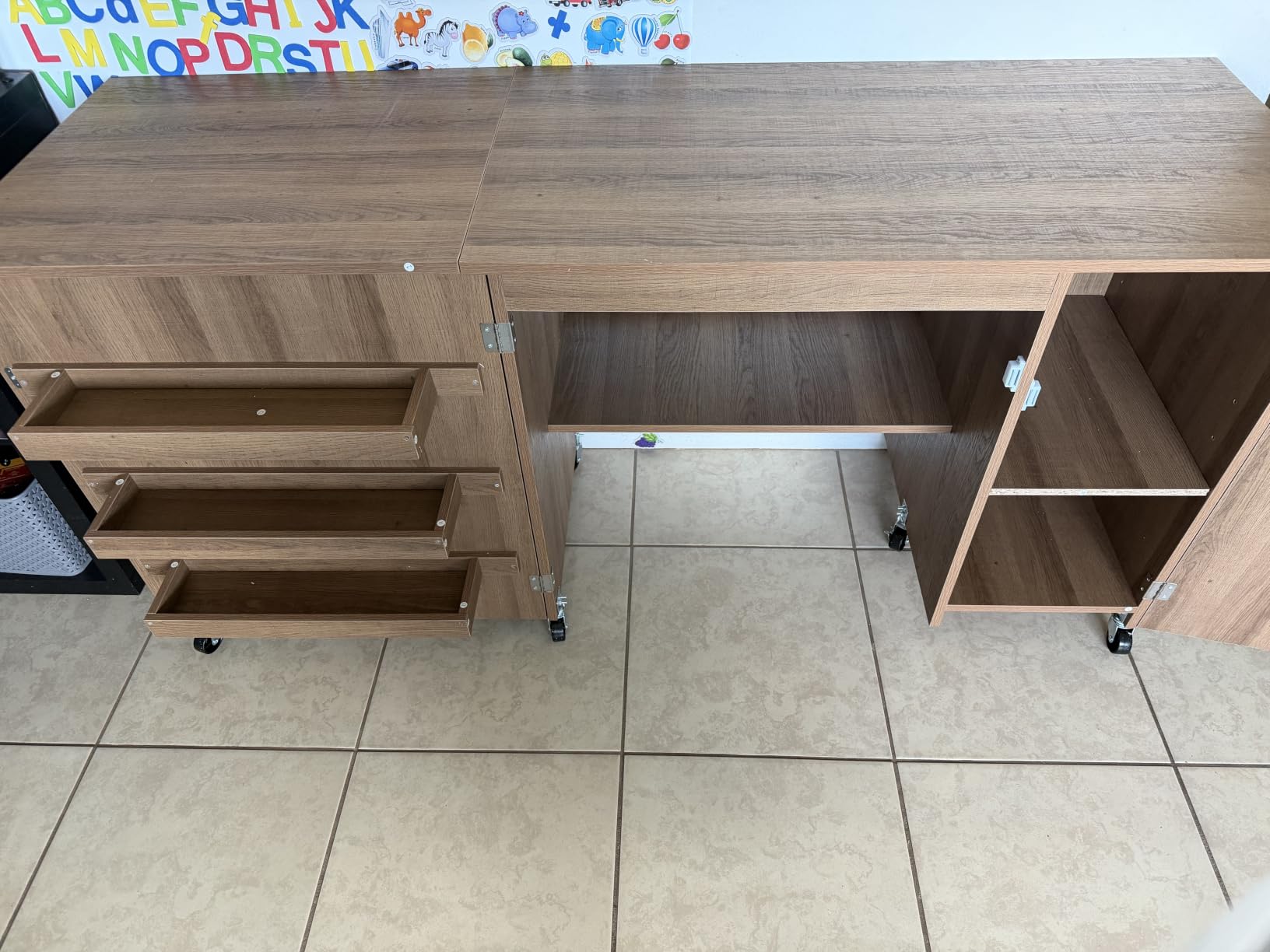
The rating is 4.1 from 159 reviews, the smallest review base here, and it is the lowest rated of the folding cabinets. Buyers are satisfied with the size, the fold-flat format and the storage volume. The critical reviews focus on build quality rather than design, specifically thin chipboard causing wobble and small screws loosening in the internal shelves.
There is also no support at the rear corner of the raised extension, so place weight over the main cabinet section rather than the far corner of the open top. The seller is reported to replace missing or defective hardware quickly.
Who this table suits?
Sewists with a heavy machine who need one piece of furniture to hold the machine, the supplies, and a cutting surface. The 165 pound rating buys headroom that the other cabinets in this roundup do not promise.
It also suits anyone who wants a fold-flat table with a furniture-like painted finish in a mixed-use room, and who is comfortable tightening the occasional shelf screw.
Where it falls short?
Thin chipboard panels make the unit wobble for some users, and wobble is the enemy of a straight rotary cut. A few owners report assemblies coming apart after a few months, particularly when the table is wheeled around frequently, and internal shelf screws have loosened often enough that at least one buyer used glue.
The instructions are described as lacking detail, with parts needing sorting ahead of time, and the unsupported rear corner of the extension limits how much you can load at the far end. If stability under a fast rotary cut matters more than fold-away storage, the fixed Craft Pro table is the safer buy.
We earn a commission, at no additional cost to you. CERTAIN CONTENT THAT APPEARS ON THIS SITE COMES FROM AMAZON. THIS CONTENT IS PROVIDED 'AS IS' AND IS SUBJECT TO CHANGE OR REMOVAL AT ANY TIME.
How Tall Should a Craft Cutting Table Be?
Height is the decision that determines whether you keep sewing or quietly go back to the floor mat. The rule is simpler than most guides make it: the surface should sit roughly level with your lower ribcage when you stand upright, or level with your elbows when you sit. Working height for cutting is slightly higher than working height for sewing, because a rotary cutter adds downward pressure you do not apply at a machine.
Under 5 foot 2 inches: aim for a surface between 32 and 34 inches. A 30 inch table will feel high while seated, and standing at 30 inches is worse.
5 foot 2 inches to 5 foot 7 inches: 34 to 36 inches is the comfortable band. A 36 inch fixed top or a table that adjusts into the mid 30s works well.
5 foot 8 inches to 6 feet: 36 to 38 inches. Here a height-adjustable or folding grid table beats any fixed 30 inch cart.
Over 6 feet: 38 inches and up, which means a standing-height surface rather than a seated one.
Only one table in this roundup genuinely covers both ends. The Sew Ready grid table adjusts from 30.25 to 38.75 inches, which spans the entire range above. Everything else is fixed, which is fine if you already know your number and wrong if you are guessing.
How Big Should a Cutting Surface Be?
Buyers measure width and ignore depth, then wonder why the mat keeps sliding. The self-healing mat is the unit of measurement that matters. A 24 by 36 inch mat needs at least 36 inches of table depth before you add any fabric on the leading edge, and a 35 by 70 inch connecting mat needs two tables side by side or a surface wider than 70 inches.
That is where the group splits cleanly. The Sew Ready grid table at 58.75 by 36.5 inches is the only one with enough depth for a 24 by 36 inch mat to sit flat with fabric slide room. The 60 by 30 inch Craft Pro table gives up three inches of depth but buys ten more inches of width, so a mat still overhangs slightly.
The two 62.5 inch cabinets and the 58.5 inch drop leaf are wide but only 20 inches deep. They are excellent for cutting long strips and squaring a quilt back along its length, and awkward for rotary work where the mat must lie flat. The 46 inch folding station and the 40.5 inch portable table sit at the small-project end, and neither is meant to compete with a mat at all. If you are still choosing a surface, our roundup of the best cutting boards covers the board side of the job.
Folding vs Fixed Tables and Rotary Cutter Stability
A folding table is not automatically worse, but you should know where its limits are before you push a rotary cutter across it. Published load ratings are the clearest signal available.
20 pounds is the stated limit on the folding sewing table machine shelf, low for anything but a light machine.
50 pounds is the recommended maximum on the portable foldable table top, and it has the thinnest top here at 0.5 inch.
75 pounds is the capacity on the drop-leaf cart, with a 1 inch thick top on the folding table model.
165 pounds is the total load on the foldable cabinet, the highest in this group.
164.5 pounds is the unit weight of the fixed Craft Pro table, which is another way of saying it will not move.
Two habits do more for stability than any table choice. Lock the casters before every cut, and cut over the main frame rather than a raised drop leaf. On the foldable cabinets, keep weight off the far corner of the extension, which is unsupported on the COSTWAY model and light on the GIANTEX. If you want a flat work surface rather than a fold-away one and still need room, our guide to the best manicure tables covers the narrow single-purpose end of the market, and a fixed stainless work surface of a different class is covered in our best commercial steam tables roundup.
Cutting Tables for Back Pain, Arthritis and Small Rooms
Back and joint pain is the most repeated reason people go looking for a cutting table in the first place. Sewists with spinal arthritis describe cutting at dining table height as something they can only tolerate for so long, and floor cutting mats get blamed for sore knees and necks. The fix is the same in both cases, and it is height plus surface rather than a special product.
Two approaches work. Stand more, which means a surface in the 36 to 38 inch band so your arms push down rather than your back bending. Or reduce the bending angle, which means a shallower cabinet-style table that brings the work closer to your knees. The Craft Pro table at 36 inches serves the first case. The drop-leaf cart and the foldable cabinets at 28.5 to 29.5 inches serve the second, since a seated user with joint problems often finds a low, close surface easier to work at than a high one.
For small and shared rooms, the decision is footprint. A table that folds to 23 by 14.75 inches and becomes a side table solves the conflict entirely, and that is the case the Best Choice Products station is built for. A 70 pound cabinet that folds to 38.5 by 20 inches frees a different amount of floor space, and the portable 40.5 inch table stores flat in a closet. Measure the room, not just the table.
Cutting Beyond Fabric and Building Your Own Table
Craft cutting is not all fabric. Leather and faux leather, EVA foam, felt, vinyl and iron-on material for a Cricut all put different demands on a surface. Thin media wants a flat, slightly grippy top, and a printed grid surface grips vinyl better than bare melamine does. Dense media such as leather and thick foam adds load, so a heavier frame and a higher load rating matter more here than the grid does. The 165 pound rated cabinet is the one we would choose for leather, and the grid top is the better choice for vinyl and adhesive film.
If your existing dining table is already stable and wide enough, the cheapest test is a set of furniture risers. It raises the surface to a standing cutting height and tells you in a week whether standing solves your back pain, before you commit to a dedicated table.
Building your own is a weekend project with three methods worth knowing.
Use a hollow-core door as the top. It is light, wide and already flat, and it fits on a frame built from stock legs and casters. Line the underside with a batten so it does not flex across the middle.
Build a self-healing top on particle board. Cut 3/4 inch board to size, stretch 100 percent wool batting over it, cover with a clean cotton towel, and glue the layer flat. It recovers from cuts instead of holding them.
Add a lower shelf to any existing table. Brackets and a board screwed between the legs turn dead space under a table into fabric storage, which is the part most dedicated tables charge you for.
Whichever route you take, finish the surface before you cut on it. If your work leans toward set tables rather than builds, our roundups of the best grill tables and best changing tables cover fixed-height surfaces from other angles.
Rotary Cutter Safety on Any Table
A rotary cutter is a loaded disc on a handle, and the injuries it causes are predictable. Six rules cover nearly all of them.
Keep both hands on the tool. One hand on the grip, one on the safety catch. Never reach across the blade path to hold fabric.
Push the cutter away from your body, never pull it back toward you.
Cut over the frame or the main top, never over an unsupported drop leaf or extension corner.
Use a sharp blade. A dull blade forces pressure, and pressure is what causes slips.
Lock the casters before you start, and never cut while the table is still moving.
Put the cutter down with the blade covered before you reach for a ruler, a pin, or a coffee cup.
Buying Tips
Measure your mat first. Buy a table that takes a 24 by 36 inch mat flat, not one that takes it with a corner hanging off.
Decide sitting or standing before you buy. Adjustable height beats a fixed guess, and only one table here adjusts across the full range.
Count casters and locks. Six casters with two locking wheels is the pattern that stays put. Two wheels is a carry, not a workstation.
Check the load rating, not just the top thickness. A thick chipboard top still flexes, and flex ruins a straight cut.
Fold it away if the room is shared. A table that collapses to a side table removes the most common reason a craft corner gets banned.
Budget for assembly help. Most reviews of these units mention a second pair of hands, and the alternative is arriving at the conclusion after a long assembly.
Frequently Asked Questions
What is the best fabric cutting table?
For most people the best fabric cutting table is a wide surface between 48 and 60 inches that puts a 24 by 36 inch self-healing mat flat and holds a rotary cutter steady. Our top pick is the Sauder drop-leaf cart for its 38.5 by 19.5 inch top, 75 pound capacity and rolling casters, while dedicated quilters should prefer a 58.75 by 36.5 inch grid top with height adjustment.
How tall should a cutting table be?
Aim for the surface to sit level with your lower ribcage standing, or level with your elbows seated. In practice that is 32 to 34 inches for users under 5 foot 2 inches, 34 to 36 inches for most adults, and 36 to 38 inches for taller users. Cutting height sits slightly higher than sewing height because a rotary cutter adds downward pressure.
What size cutting mat fits a cutting table?
A 24 by 36 inch self-healing mat needs a table at least 36 inches deep so it lies flat with room for the fabric to slide. A 35 by 70 inch connecting mat needs a surface wider than 70 inches, or two tables placed side by side. Any table shallower than 36 inches means the mat overhangs, which is why wide but shallow cabinets suit strips better than rotary work.
Should a cutting table be adjustable height?
Yes, if you are between sizes, if you share the table between sitting and standing work, or if back or joint pain is your reason for looking. Adjustable height removes the guesswork permanently. If you already know your ideal height, a well-built fixed table is stiffer and usually cheaper, so adjustability matters less once you have measured.
Is a folding cutting table sturdy enough for rotary cutting?
It can be, provided you respect the published load rating. A thick engineered wood or steel frame with locking casters handles fast rotary cuts fine. Thin chipboard and unsupported extension corners do not, which is the source of most wobble complaints. Lock the wheels before cutting, and cut over the main frame rather than a raised leaf.
How to make your own cutting table for sewing?
Three builds are popular. Use a hollow-core door on a frame of stock legs and casters, battened underneath to stop flex. Or cut 3/4 inch particle board to size and stretch wool batting over it with a cotton towel glued on top for a self-healing surface. Or add a bracketed lower shelf to an existing table to turn dead space into fabric storage.
Conclusion
The Sauder drop-leaf sewing cart is our pick for the best craft cutting table in 2026, because it rolls, holds 75 pounds, expands when you need room, and disappears into a corner when you do not. Buy the Best Choice Products station if the room is tiny and the budget is tight. Buy the Sew Ready grid table if you quilt wide yardage or want to cut standing, and step up to the Sauder Craft Pro table only when a room is genuinely yours.
One last thing. Whatever you buy, put the casters on and a mat on the surface before the first cut, and take a few minutes to get the height right. The table matters, but the habit matters more.