
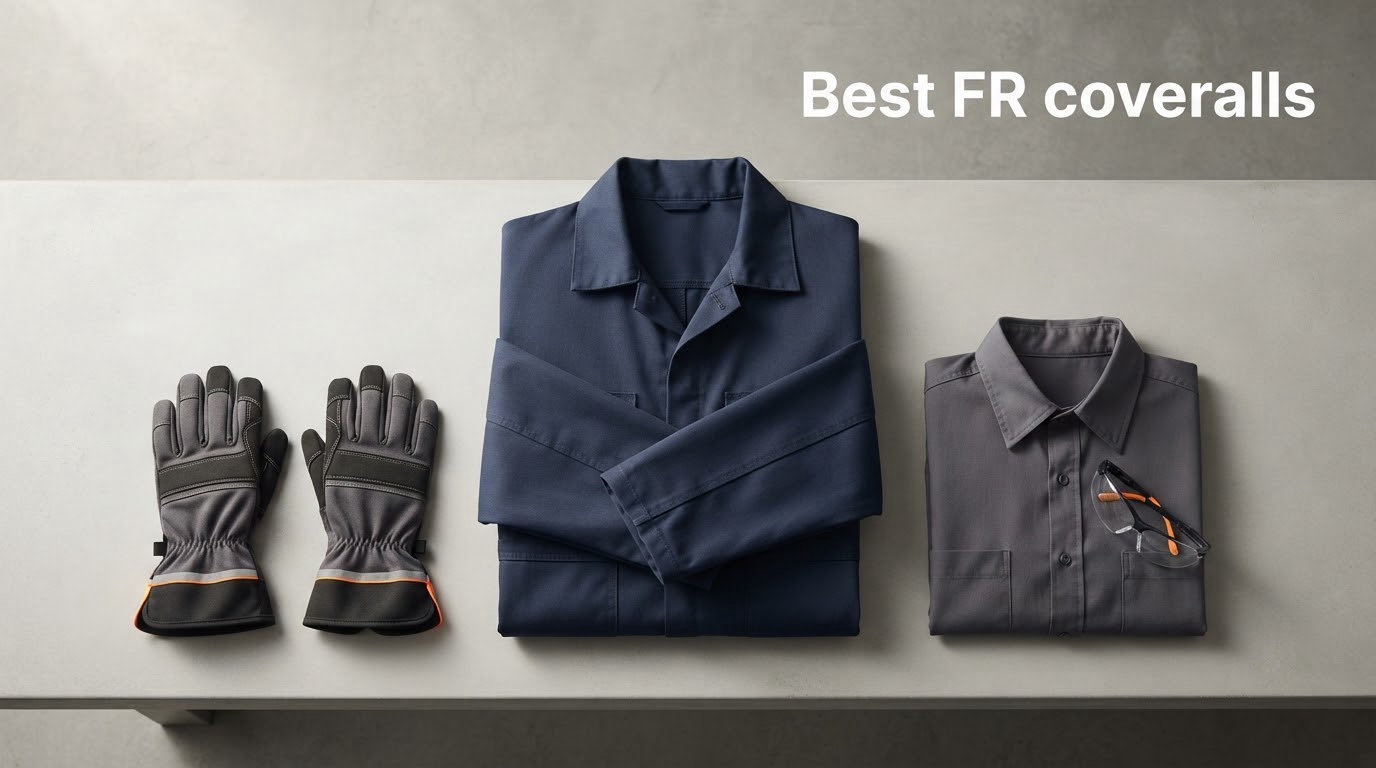
FR coveralls are flame-resistant work garments made from fabrics that self-extinguish when they contact a flame, so the garment cannot become the ignition source. They are built either from inherently flame-resistant fibres such as aramid, or from ordinary cotton or nylon with a durable flame-resistant finish, and they carry certifications such as NFPA 2112 for flash fire and NFPA 70E for arc flash. Welders, oilfield crews, refinery operators and electrical linemen wear them every shift.
Picking the wrong one is a real problem, not a comfort complaint. A coverall with no certified rating, or one whose flame resistance has been washed out by a treated finish, will still look identical on day 400. The difference lives on the label, in the fabric weight, and in the arc thermal performance value printed on the spec sheet.
We spent several weeks comparing the twelve best FR coveralls on the market against the criteria that actually decide whether a garment works on a job site: stated CAT level, ATPV, fabric weight, whether the flame resistance is inherent or treated, construction details at the stress points, and verified buyer reports about how the garment holds up after months of kneeling, grinding sparks and industrial laundering. Twelve products, one rule: if a listing does not state a standard, we say so instead of assuming it is compliant.
One thing to clear up before we get into the picks. Brands change fabric platforms and certification between model years, and marketplace listings copy old spec sheets. Every rating and standard quoted in this roundup comes from the listing data as supplied, and your site-specific hazard assessment governs what you are required to wear. Your employer, your jurisdiction and your industry standard are the final word, not this page.
Table of Contents
- Top 3 Best Fr Coveralls (October 2026)
- Best FR Coveralls at a Glance in 2026
- 1. Bulwark FR Midweight Excel Classic Coverall – the one that survives a working life
- 2. Carhartt 101017 Flame-Resistant Classic Twill Coverall – big brand, stated standards, no mystery
- 3. Just In Trend Flame-Resistant Hi-Vis Coverall – the clearest certified spec sheet here
- 4. Just In Trend Flame-Resistant 7 oz Coverall – the same certified spec sheet without the tape
- 5. Bulwark FR Midweight Excel Premium Coverall – CAT 2 with the arc number printed on it
- 6. Portwest FR94 Iona Flame-Resistant Coverall – built for utility crews working around traffic
- 7. ATERET 7 oz Flame-Resistant Cotton Coverall – pure cotton that will not melt onto you
- 8. Bulwark FR Lightweight Nomex Premium Coverall – the real aramid, and the compromise nobody mentions up front
- 9. BOCOMAL Lightweight Stretch Ripstop Flame-Resistant Coverall – when the job involves water
- 10. Lapco FR Economy 7 oz Cotton Twill Coverall – the size range is the story
- 11. Carhartt Women’s Flame-Resistant Rugged Flex Relaxed Fit Twill Coverall – a real option for women, finally
- 12. MAGID Dual-Hazard 7 oz Flame-Resistant Coverall – built for an industrial laundry
- How Flame Resistance Actually Works: Inherent vs. Treated?
- CAT 2 vs. CAT 3: Which Protection Level Do You Actually Need?
- Choosing Fabric Type and Fabric Weight
- Coveralls vs. Bib Overalls vs. FR Shirt and Pants
- Fit, Sizing, and Length: What to Expect?
- How to Verify a Coverall Is Actually Flame Resistant?
- How to Wash FR Coveralls Without Killing the Protection?
- Frequently Asked Questions
- Final Verdict: The Best FR Coveralls by Trade
Top 3 Best Fr Coveralls (October 2026)

Bulwark Midweight Excel FR
- Midweight FR coverall
- Durable zippers and snaps
- Regular tall and long lengths


Just In Trend FR 7oz Twill
- 7 oz 88/12 cotton-nylon
- CAT 2 at 12 cal/cm2
- 2-way YKK brass FR zipper
Best FR Coveralls at a Glance in 2026
Before the individual reviews, here is the whole lineup on one page. Read the ATPV column first: it is the number that tells you how much incident energy a garment can absorb before the fabric allows a second-degree burn, measured in calories per square centimetre. Everything else is comfort, storage and durability.
| Product | Key Specs | Pricing |
|---|---|---|
| Bulwark Midweight Excel FR |
|
Check Latest Price |
 Carhartt 101017 FR Twill Carhartt 101017 FR Twill |
|
Check Latest Price |
| Just In Trend FR Hi-Vis |
|
Check Latest Price |
| Just In Trend FR 7oz Twill |
|
Check Latest Price |
 Bulwark Excel Premium Bulwark Excel Premium |
|
Check Latest Price |
 Portwest FR94 Iona Portwest FR94 Iona |
|
Check Latest Price |
 ATERET FR-Treated Cotton ATERET FR-Treated Cotton |
|
Check Latest Price |
 Bulwark Lightweight Nomex Bulwark Lightweight Nomex |
|
Check Latest Price |
 BOCOMAL FR Ripstop BOCOMAL FR Ripstop |
|
Check Latest Price |
 Lapco FR Economy 7oz Lapco FR Economy 7oz |
|
Check Latest Price |
 Carhartt Women’s Rugged Flex Carhartt Women’s Rugged Flex |
|
Check Latest Price |
 MAGID Dual-Hazard 7oz MAGID Dual-Hazard 7oz |
|
Check Latest Price |
1. Bulwark FR Midweight Excel Classic Coverall – the one that survives a working life
Bulwark FR Men’s Flame Resistant 9 oz Twill Cotton Classic Coverall with Hemmed Sleeves, Navy, 44
★★★★★★★★★★Midweight flame resistant coverall
Made in United States
Regular, tall and long lengths
2.86 lb
- Holds up against welding sparks
- grinding spray and arc UV with no burn-through reported
- Zippers and snaps survive shop wear
- Regular
- tall and long length options
- Size chart runs small so many buyers size up
- Fabric does not breathe and feels hot above roughly 70F
- Machine drying can degrade seams
This is the coverall we would hand to someone starting a shop or welding job with no idea what they are doing yet. It has more than a thousand verified buyer ratings behind it, and the pattern in those reviews is consistent: people buy it as a replacement for a more expensive brand, it gets washed constantly, and it keeps going. The midweight fabric is the reason. It is thick enough to survive abrasion from metal and concrete without going thin at the knee and seat.
Buyers doing grinding and welding work report holding up against sparks and arc UV exposure without burn-through, and the hardware, zippers and snaps are singled out repeatedly as shop-durable. The regular, tall and long length options matter more than they sound like they should, because a garment that fits badly over boots fails the layering test before it ever gets tested by heat.
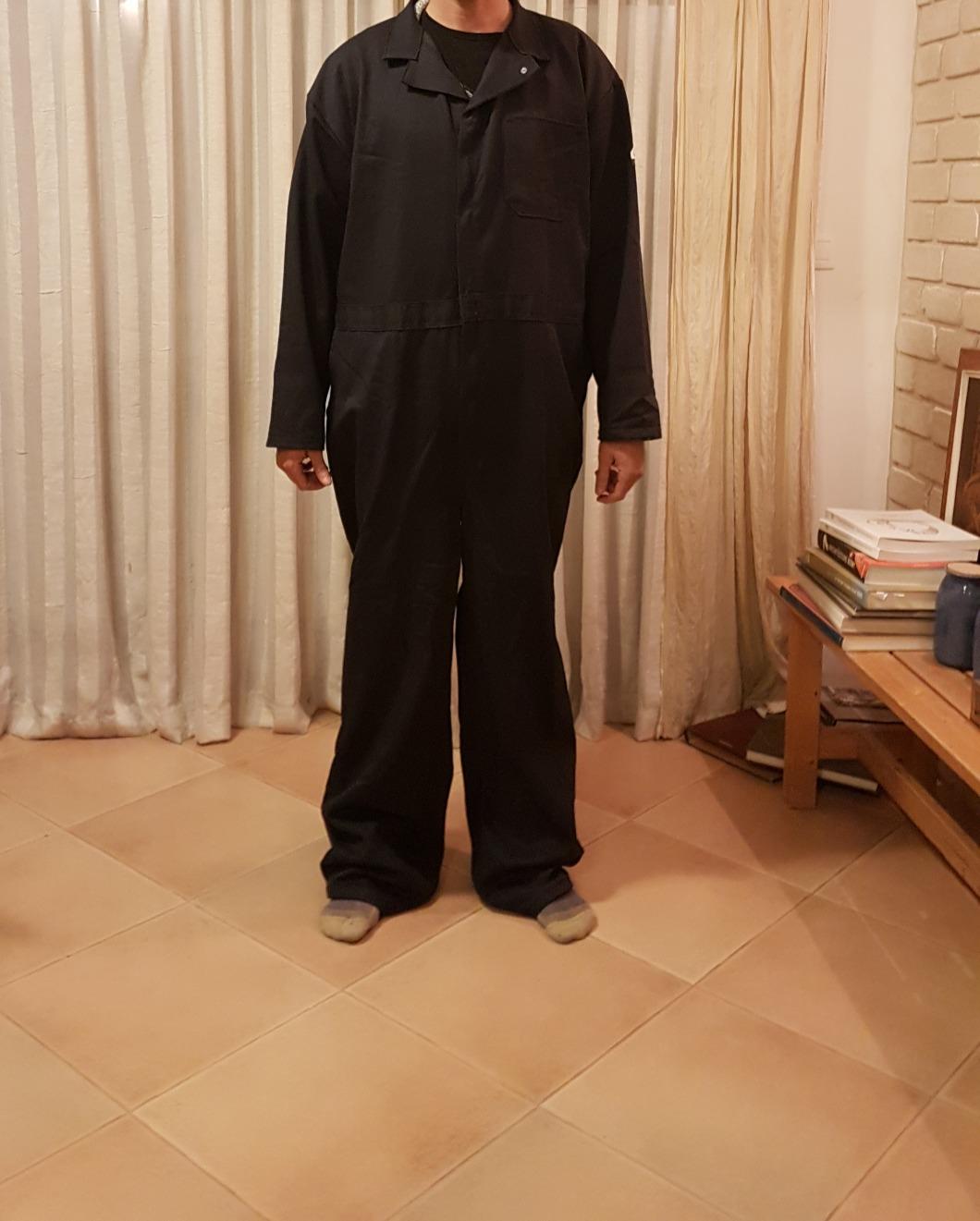
Construction-wise this is a midweight garment rather than a heavy duck, which puts it in the middle of the heat spectrum. It is noticeably warmer than the 6 oz and 7 oz twills in this roundup, and that warmth is the single most common complaint alongside sizing. Our advice is to treat it as a cool-weather shop garment and not as a summer option.
Two things to know before you order. The size chart runs small or is inconsistent for a lot of buyers, so plan on going up a size and check whether the length option matches your height. And skip the machine dryer where you can, because buyers report seam degradation from tumble drying. The listing states flame-resistant construction and US manufacture but does not print a CAT level or ATPV on the product data, so confirm the certification with the label inside the garment before it goes onto a controlled site.
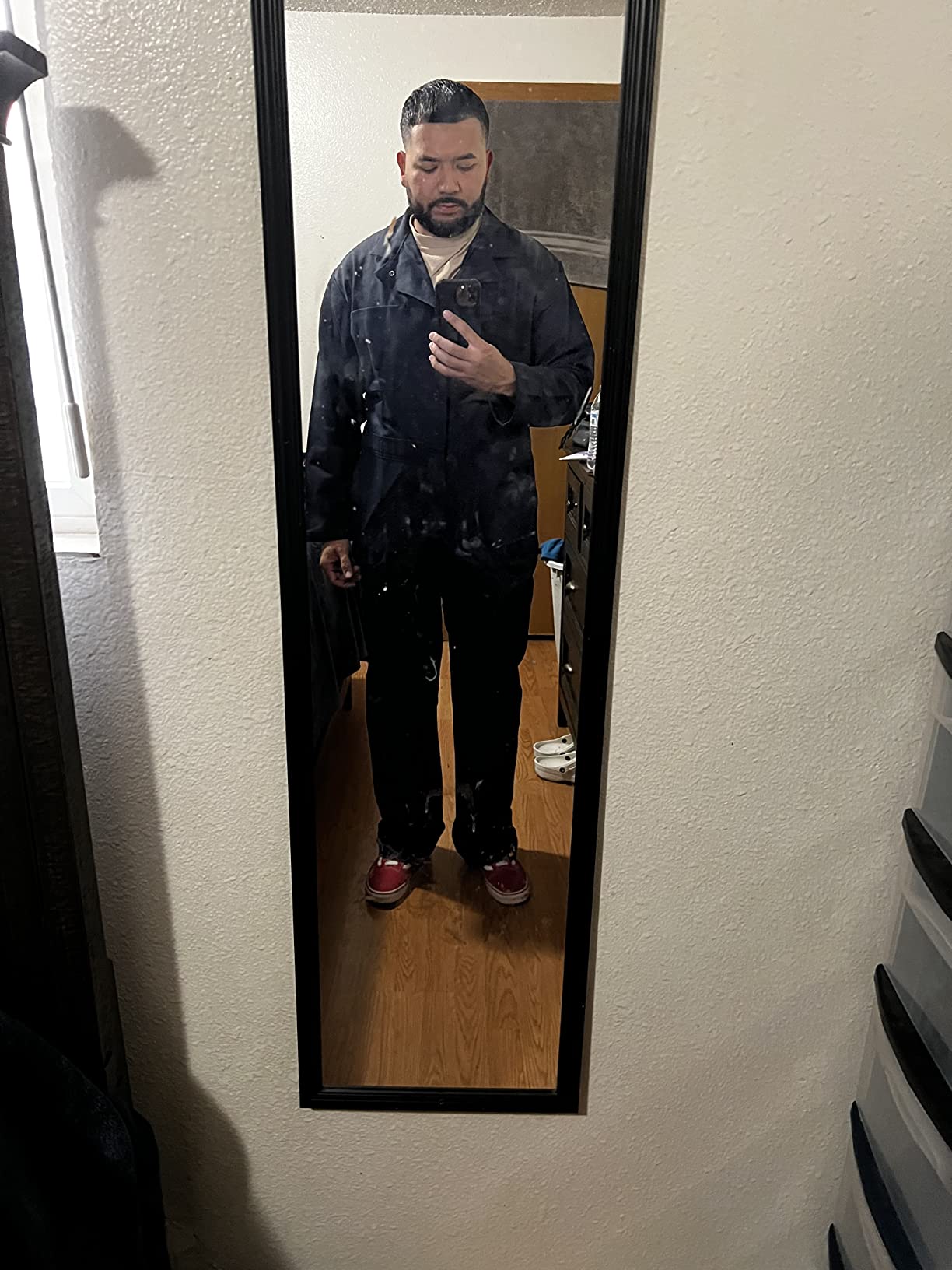
Who this suits?
Shop welders, fabricators and maintenance techs who want a single coverall that handles sparks, grinding dust and UV exposure without being the most expensive thing on site. It suits anyone who wears one garment for every task rather than switching between a welding coverall and a lighter utility layer.
It also suits buyers who have been burned by sizing elsewhere. Because the length range is broad, you can usually find a fit that layers over a base layer and still tucks cleanly into work boots.
Who should skip it?
Skip it if you work outdoors in summer heat or inside a plant where there is no ventilation. Buyers consistently report that the fabric does not breathe and that it becomes uncomfortable above roughly 70F, and a garment you take off halfway through a shift is not protection.
Also skip it if you need a documented arc flash number for a PPE audit. This model’s product data does not state a CAT level, so a spec-driven purchasing rule should look at the Bulwark Excel Premium model further down instead.
We earn a commission, at no additional cost to you. CERTAIN CONTENT THAT APPEARS ON THIS SITE COMES FROM AMAZON. THIS CONTENT IS PROVIDED 'AS IS' AND IS SUBJECT TO CHANGE OR REMOVAL AT ANY TIME.
2. Carhartt 101017 Flame-Resistant Classic Twill Coverall – big brand, stated standards, no mystery
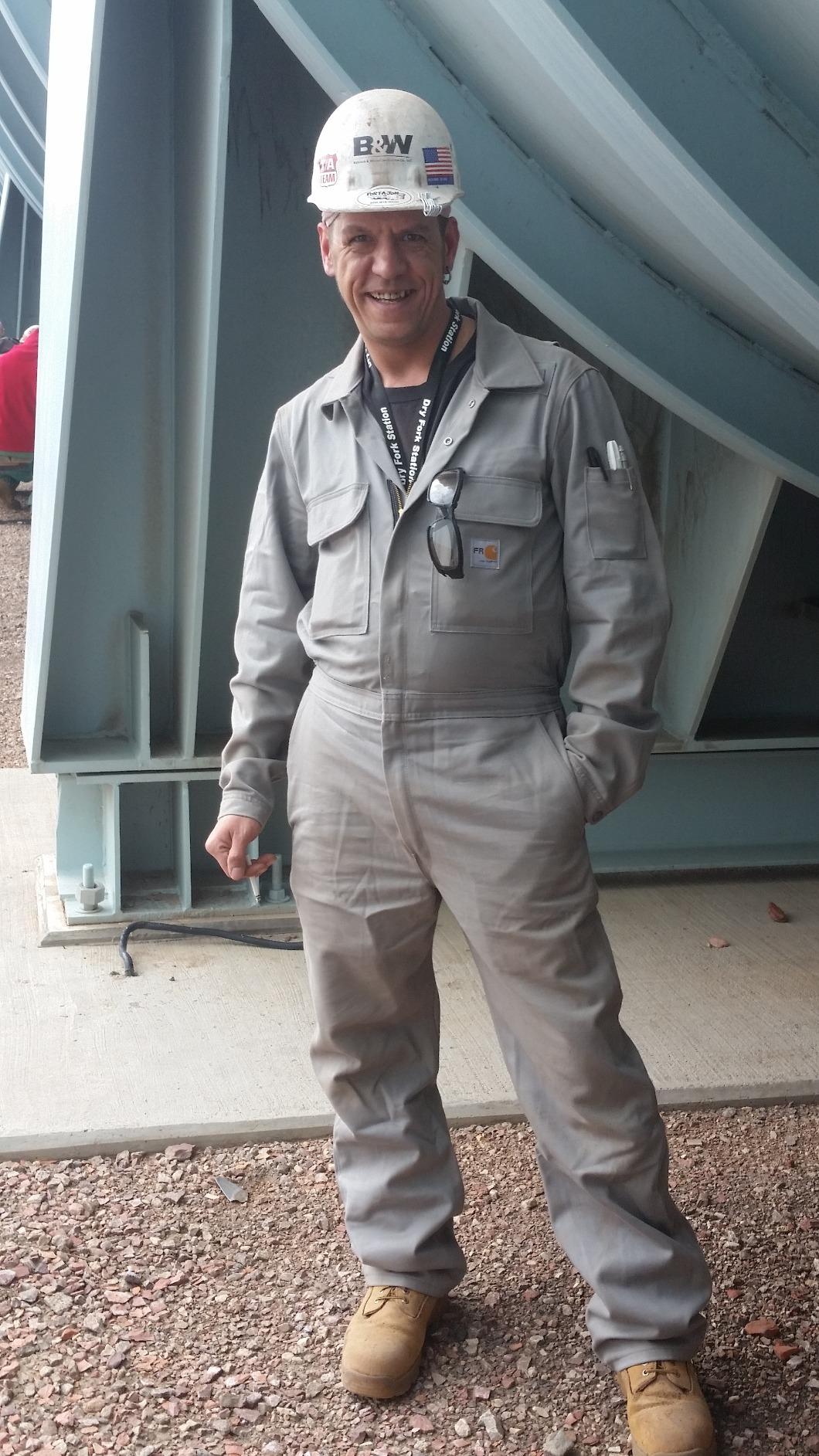
Carhartt Men’s FR Traditional Twill Coverall, Khaki, 36
★★★★★★★★★★Meets NFPA 70E and NFPA 2112
Nomex FR zipper tape
Heavy cotton twill
Model 101017
- Heavy
- thick cotton twill that resists wear and holds seams
- Engineered pass-through pockets plus deep patch pockets
- Cuff snaps tighten sleeves enough to wear over gloves
- Wide size selection including short and tall lengths
- Size chart is inaccurate and most buyers order up one to two
- Front zipper looks and feels flimsy
- No ankle or leg cuff zippers
Carhartt is the reason a lot of people end up here, and this is the model that earns the reputation. Roughly a thousand verified ratings, a thick cotton twill that holds its seams, and a pair of pass-through pockets that let you reach jeans pockets underneath without stripping the outer layer. The cuff snaps are genuinely useful: they cinch the sleeve down over a glove cuff so a sleeve does not catch a spark on the way through.
Buyers describe it as a proven replacement for premium workwear brands, and the durability reports are the strongest part of the feedback. The pocket design gets called out specifically, and the twill holds up to repeated wash cycles that would wreck a lighter garment. For a garment that will be laundered by an industrial service rather than by hand, that matters.
The technical details on this listing are the part we care about most: Nomex FR zipper tape, and stated compliance with NFPA 70E and NFPA 2112. That matters because zipper tape is a real failure point. A garment can be certified fabric with a standard polyester zipper running straight up the front, and that tape is a strip of ordinary material sitting against your chest. This one is not.
The honest complaint list is short and specific. The front zipper feels flimsy for a garment at this level, there are no ankle or leg cuff zippers so you cannot boot the pant leg over tall boots without blousing, and the size chart is inaccurate enough that most buyers order one or two sizes up. The twill also runs hot in warm weather and shrinks slightly with washing, so size for the shrink.
Who this suits?
General shop and maintenance work where the job changes daily and you want one garment that handles fabric, sparks and grime. It is a sensible pick for a company standardising on a widely available brand, because replacement sizing is easier when the same model exists across the whole crew.
It also suits buyers who want named standards on the record rather than a vague flame-resistant claim. NFPA 70E and NFPA 2112 both appear in the technical details, which is what an auditor wants to see.
Who should skip it?
Skip it if you wear tall boots and want a clean tucked or bloused cuff. Without leg zippers, getting the pant out of the way when kneeling in mud is a daily annoyance that never improves.
Skip it if heat is your main problem. Thick twill in a non-air-conditioned shop is a lot of garment, and buyers report it runs hot and shrinks on the first few washes. For indoor plant work in a hot climate, the 7 oz models in this roundup are a better starting point.
We earn a commission, at no additional cost to you. CERTAIN CONTENT THAT APPEARS ON THIS SITE COMES FROM AMAZON. THIS CONTENT IS PROVIDED 'AS IS' AND IS SUBJECT TO CHANGE OR REMOVAL AT ANY TIME.
3. Just In Trend Flame-Resistant Hi-Vis Coverall – the clearest certified spec sheet here
Flame Resistant FR High Visibility Hi Vis Coverall – 88% C/12% N (Medium, Black)
★★★★★★★★★★7 oz 88/12 cotton-nylon twill
CAT 2, ATPV 12 cal/cm2
2-inch FR tape, ANSI 107 Class 3
UL certified
- Combines flame resistance with high-visibility reflective tape
- UL certified and CAT 2 rated at 12 cal/cm2
- Heavy-duty YKK brass FR zipper and action back
- 8-pocket layout with hammer loop and pen slot
- Fabric is light and loose
- better suited to cooler weather than hot conditions
- Brand recommends sizing up when layering or for industrial laundering
Almost every listing in this category hands you a vague flame-resistant claim. This one does not. The spec sheet states 88 percent cotton and 12 percent nylon twill at 7 ounces per square yard, mercerised, a two-inch FR reflective tape meeting ANSI/ISEA 107 Class 3, an HRC/CAT 2 rating at 12 calories per square centimetre ATPV, and UL certification under NFPA 2112 and ASTM F1506 including the D6413 and F1959 tests. That is a complete compliance record, and it is the reason this garment takes our top-rated slot rather than a more famous brand.
Those 12 calories per square centimetre is the highest ATPV among the certified garments we list here, which puts it at the upper end of what CAT 2 covers. The reflective tape is sewn on and FR-rated, not a cheap strip of silver vinyl that peels after a month. It is also the reason this is a two-in-one garment: on a road, a rig site or a night shift, you do not have to choose between being seen and being protected.
The pocket layout is unusually complete for a 7 oz garment, with chest, front, hip, utility and arm pockets plus a hammer loop and a dedicated pen slot. Owners rate the reflective tape and the brass YKK zipper highly, and the YKK closure being the weak point in FR garments is worth noting: a metal zipper can be FR-taped, a cheap coil zipper cannot.
Who this suits?
Road crews, gas utility and pipeline work, night-shift maintenance and any site where a supervisor or safety officer requires high visibility and flame resistance on the same garment. The ANSI Class 3 tape and the CAT 2 rating are both stated, which is exactly what a purchasing rule needs.
It also suits buyers who want one garment for cool or mild weather rather than a heavy duck. At 7 ounces it sits in the middle of the weight range in this roundup and is lighter than either Bulwark midweight model.
Who should skip it?
Skip it if you work in genuinely hot conditions. The fabric is light and loose, which owners report suits cooler weather far better than summer heat, and a loose 7 oz twill still traps air on a refinery round.
Also plan for the sizing advice on the label. The brand recommends sizing up when layering or when the garment goes through industrial laundering, and that advice is about pre-shrinkage, not about the fit being wrong.
We earn a commission, at no additional cost to you. CERTAIN CONTENT THAT APPEARS ON THIS SITE COMES FROM AMAZON. THIS CONTENT IS PROVIDED 'AS IS' AND IS SUBJECT TO CHANGE OR REMOVAL AT ANY TIME.
4. Just In Trend Flame-Resistant 7 oz Coverall – the same certified spec sheet without the tape
Flame Resistant FR Coverall – 88% C / 12% Nylon (Medium, Light Grey)
★★★★★★★★★★7 oz 88/12 cotton-nylon twill
CAT 2, ATPV 12 cal/cm2
UL certified NFPA 2112
2-way YKK brass FR zip
- Certified flame and arc protection at a low price point for a CAT 2 garment
- Lightweight 7 oz twill stays comfortable for full-shift wear
- Action back pleats and elastic side waist improve mobility
- 8-pocket configuration with pen slot and hammer loop
- Lightweight fabric offers limited thermal protection for high-heat work
- Brand advises sizing up when worn over other garments or industrially laundered
Strip the reflective tape off the previous pick and you get this, which is the plain-jane version of the same certified platform. Same 7 ounce 88/12 cotton-nylon mercerised twill, same CAT 2 rating at 12 calories per square centimetre, same UL certification under NFPA 2112 and ASTM F1506, same two-way YKK brass FR zipper. It also adds a three-point labelling system on the garment, which sounds like a small thing until you are trying to identify a washed coverall in a bag of forty.
Buyers rate it as a strong value CAT 2 coverall with genuine UL certification rather than a marketing claim, and the feedback centres on lightweight comfort and the pocket system. The action back pleats and the elastic inserts at the side waist are the features that keep it wearable through a full shift rather than just technically compliant on paper.
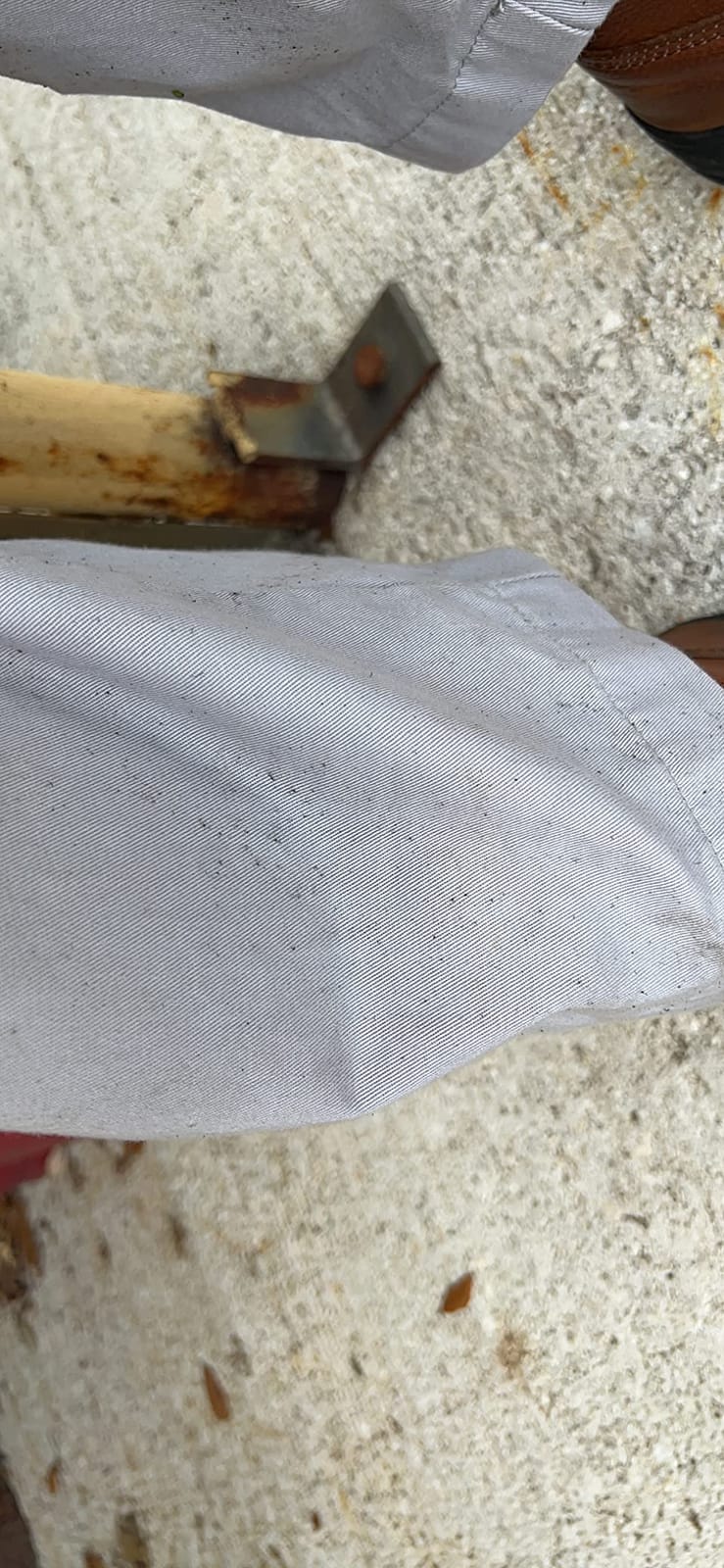
Construction details line up with the rest of the platform: side vents, an elastic waist, and an eight-pocket configuration. Side vents are worth calling out because they are what lets you reach overhead or squat without the hem riding up and exposing skin at the small of your back, which is one of the more common ways an FR garment is compromised in the field.
There is no getting around the trade-off. This is a lightweight fabric, and owners say plainly that it offers limited thermal protection for high-heat work. If your hazard is a flash fire with a high heat release rate, a 7 ounce twill is the wrong weight. If your hazard is arc flash or a lower-energy flash, the 12 calorie rating is genuinely strong and the comfort tradeoff is worth it.

Who this suits?
Electricians, facilities maintenance and general industrial work where the exposure is arc flash rather than a large hydrocarbon fire. A 12 calorie ATPV with UL certification is a defensible specification, and this is the least expensive way in this roundup to get one.
It also suits crews who work indoors in a controlled environment year round and would rather not wear a heavy garment in a building that already has air conditioning.
Who should skip it?
Skip it for hot outdoor work, refinery service or anything involving sustained radiant heat. Lightweight fabric is a comfort choice, and comfort and thermal protection are in direct tension.
Also skip it if you need visibility. There is no reflective tape on this model, so it is not a substitute for a hi-vis garment on a roadside or a night site. Take the taped version instead.
We earn a commission, at no additional cost to you. CERTAIN CONTENT THAT APPEARS ON THIS SITE COMES FROM AMAZON. THIS CONTENT IS PROVIDED 'AS IS' AND IS SUBJECT TO CHANGE OR REMOVAL AT ANY TIME.
5. Bulwark FR Midweight Excel Premium Coverall – CAT 2 with the arc number printed on it
Bulwark FR Men’s Midweight Excel FR Premium Coverall, Red, 40
★★★★★★★★★★CAT 2 FR/AR, ATPV 11 cal/cm2
UL certified NFPA 2112
Nomex taped break-away zip
Action back
- CAT 2 arc rating of 11 cal/cm2 with UL NFPA 2112 certification
- Break-away Nomex taped brass zipper built for industrial work
- Side vents and deep-pleated action back for mobility
- Higher 5-star share than other Bulwark models
- Runs small so some buyers need a size up
- Midweight fabric can feel warm in hot industrial environments
This is the Bulwark to buy if your purchasing paperwork needs a number on it. The technical details state a CAT 2 flame-resistant and arc-rated garment with an ATPV of 11 calories per square centimetre, UL certified to NFPA 2112, with fabric made in the USA. The 11 calorie figure sits in the middle of the CAT 2 band rather than at the top of it, which is the honest position for a midweight garment and exactly the kind of precision a spec-driven buyer wants.
The closure is the detail that separates the Premium line from the Classic. You get a two-way concealed Nomex taped brass break-away zipper, plus a concealed snap at the top of the zipper at the neck. A taped brass zip is the correct construction for an FR garment: the tape is part of the certified assembly rather than an add-on, and break-away means the zipper gives way under force instead of dragging the wearer.
Buyers report consistent five-star feedback for the arc protection, the taped zipper and a comfortable action back, and this model has the highest proportion of five-star ratings of the Bulwark range. Side vents and a deep-pleated action back do the mobility work that lets you work in it rather than merely own it.
Who this suits?
Electrical utility and substation work, and any buyer with a PPE audit that requires a stated ATPV rather than a claim of flame resistance. The break-away taped zipper and the concealed neck snap are features that only matter in real industrial use, and both are present.
It is also a good choice for a cold or temperate site where midweight is the right call and hot-weather lightness is not a requirement.
Who should skip it?
Skip it if you are working in heat. Midweight fabric on a hot industrial floor is a genuine issue, and owners say so directly. Pick a 6 or 7 ounce garment instead and accept a lower ATPV if the hazard assessment allows it.
Skip it if you are between sizes and hoping. This runs small, and so does the Classic. Order up and check the length option, because a midweight that is too short in the leg is a garment that rides up when you kneel.
We earn a commission, at no additional cost to you. CERTAIN CONTENT THAT APPEARS ON THIS SITE COMES FROM AMAZON. THIS CONTENT IS PROVIDED 'AS IS' AND IS SUBJECT TO CHANGE OR REMOVAL AT ANY TIME.
6. Portwest FR94 Iona Flame-Resistant Coverall – built for utility crews working around traffic
Portwest FR94 Iona Flame Resistant Coverall
★★★★★★★★★★Bizflame 88/12 dual-hazard fabric
ATPV 8.2 cal/cm2, arc category 2
Sewn-on FR reflective tape
- Dual-hazard protection against radiant and convective heat
- Sewn-on FR reflective tape on shoulders
- arms and legs
- Eight pockets and a durable two-way brass zip
- Abrasion and tear-resistant fabric with an action back
- ATPV of 8.2 cal/cm2 is below the 11 to 12 cal/cm2 CAT 2 options
- Reflective tape adds cost and stiffness versus a plain FR coverall
The Portwest FR94 Iona is the one to look at if you work near moving traffic and a reflective vest is currently a separate layer you have to keep straight. The reflective tape is sewn onto the shoulders, arms and legs and is itself flame resistant, which means the visibility feature is part of the certified garment instead of something strapped on top of it. Owners in utility, rail and industrial maintenance roles rate it 4.4 for that reason.
The fabric is Bizflame 88/12, a dual-hazard blend of 88 percent cotton and 12 percent nylon, described as offering protection against both radiant and convective heat. That dual-hazard language matters in utility work because your exposure is often not a single clean scenario. The technical details state an ATPV of 8.2 calories per square centimetre with an HAF of 69.1 percent, ASTM F1506 arc category 2, and compliance with both NFPA 2112 and NFPA 70E.
Construction is solid: eight pockets, a durable two-way brass zip, and an action back for movement. Abrasion and tear resistance is called out by owners, and for line work and rail maintenance the tape placement on the arms is what makes the garment visible from a cab rather than only from a distance.
Who this suits?
Utility linemen, telecom crews, rail maintenance and any worker who needs flame resistance and visibility without two garments. The sewn-on FR tape means the reflective element survives industrial laundering instead of peeling off in the wash.
It suits sites where the exposure is a mix of radiant heat from equipment and a lower-energy flash rather than a high-heat-release hydrocarbon event.
Who should skip it?
Skip it if your arc flash assessment demands the upper end of CAT 2. At 8.2 calories per square centimetre this sits at the lower end of the category, and the reviews themselves flag that against the 11 and 12 calorie alternatives. Higher ATPV garments exist in this roundup for a reason.
Also consider that the tape makes the garment stiffer and heavier than a plain FR coverall. In a hot indoor environment you are carrying the visibility requirement all day, and that cost shows up as comfort.
We earn a commission, at no additional cost to you. CERTAIN CONTENT THAT APPEARS ON THIS SITE COMES FROM AMAZON. THIS CONTENT IS PROVIDED 'AS IS' AND IS SUBJECT TO CHANGE OR REMOVAL AT ANY TIME.
7. ATERET 7 oz Flame-Resistant Cotton Coverall – pure cotton that will not melt onto you
ATERET Flame-Resistant Coverall, 7 oz. 100% FR-Treated Cotton
★★★★★★★★★★7 oz 100% FR-treated cotton
CAT 2, ATPV 8 cal/cm2
UL NFPA 2112-2018 certified
No melting drops
- Soft
- skin-friendly 100% FR-treated cotton that avoids synthetic discomfort
- Holds flame resistance through 50-plus washes with minimal shrinkage
- Good value among certified CAT 2 coveralls
- Sizes S through 6XL
- Runs hot to work in during summer months
- Arms and legs run long
- inconsistent sizing between colorways
Most FR garments in this category are blends with a synthetic component, and synthetics are the part that melts and sticks to skin in a flash fire. This one is 7 ounce 100 percent FR-treated cotton with no melting drops, and buyers consistently single out the softness as the reason they keep buying it. On a long shift, a garment that does not feel like sandpaper against your arms is a real quality of life difference.
The certification record here is one of the better documented. Technical details state NFPA 2112 and ASTM F1959 compliance, a CAT/HRC 2 rating with an ATPV of 8 calories per square centimetre, and UL certification to NFPA 2112-2018. For a treated cotton garment, the number that should interest you most is the wash durability: the listing states flame resistance holds beyond 50 wash cycles with minimal shrinkage.
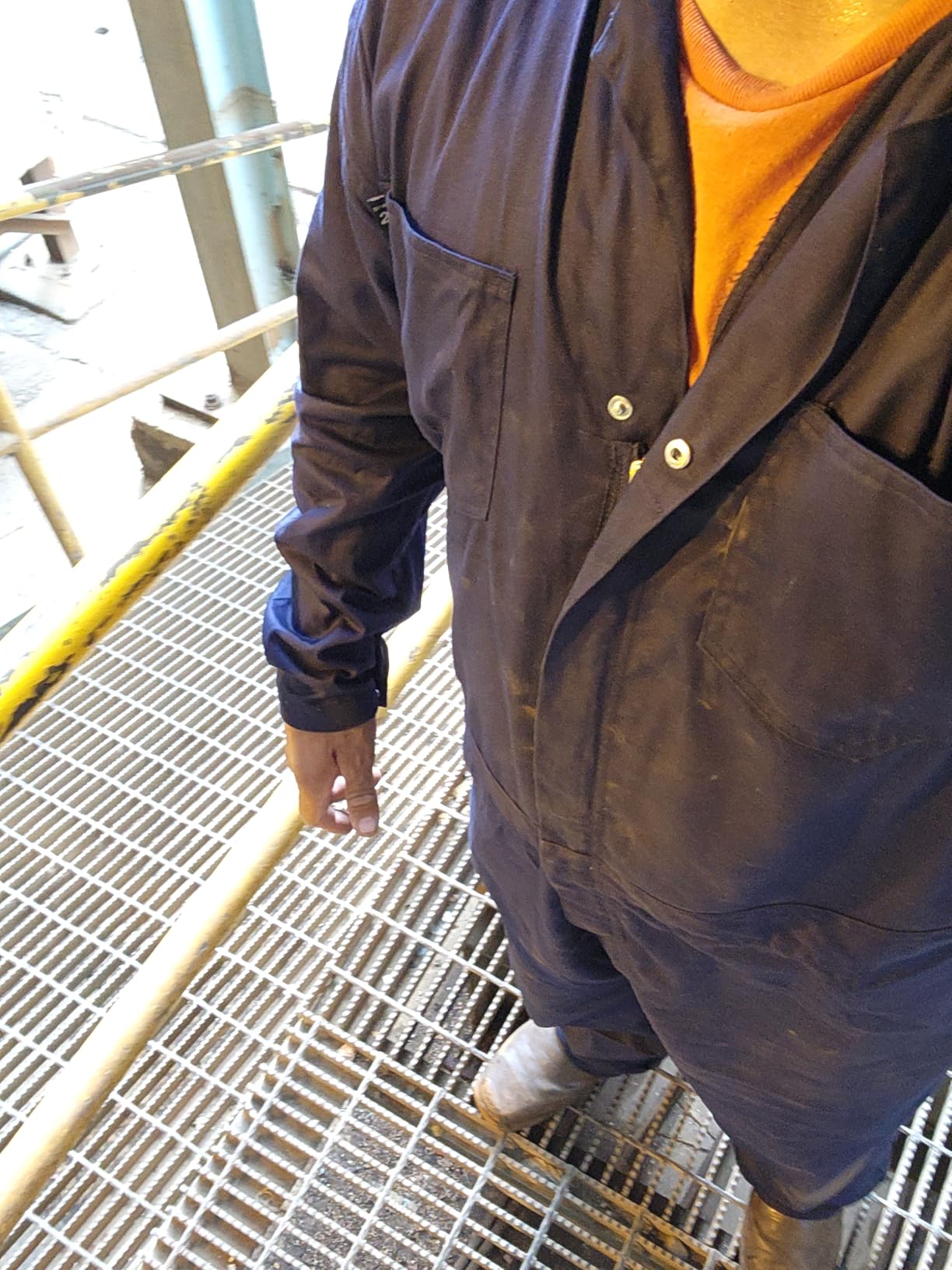
That figure is the whole argument for treated cotton done properly. A durable flame-resistant finish bonded correctly to the fibre is not a consumable that disappears after a month, and 50-plus cycles is roughly a year of weekly industrial laundering. The six-pocket layout with an elastic waist and a heavy-duty buckle is simple, and the size range runs S through 6XL.
Who this suits?
Anyone who cannot get on with a synthetic blend against bare skin, and anyone who needs 100 percent cotton for a site or client specification. Cotton also breathes better than most aramid and modacrylic blends in dry heat.
It suits employers running an industrial laundry service, because the stated wash durability and the low shrinkage are what keep a fleet of these in rotation instead of being replaced every season.
Who should skip it?
Skip it for summer field work. Owners report that it runs hot, and treated cotton at 7 ounces is not a hot-climate garment no matter how soft it feels in the hand.
Also plan for the length. Arms and legs run long across this listing, and sizing is inconsistent between colorways, so expect to blouse over boots or alter the legs. If you are between sizes, buy the one you want to shrink into rather than the one that fits perfectly off the shelf.
We earn a commission, at no additional cost to you. CERTAIN CONTENT THAT APPEARS ON THIS SITE COMES FROM AMAZON. THIS CONTENT IS PROVIDED 'AS IS' AND IS SUBJECT TO CHANGE OR REMOVAL AT ANY TIME.
8. Bulwark FR Lightweight Nomex Premium Coverall – the real aramid, and the compromise nobody mentions up front
Bulwark FR mens Flame Resistant 4.5 Oz Nomex Iiia Premium overalls and coveralls workwear apparel, Tan, 50 US
★★★★★★★★★★93 percent Nomex aramid with Kevlar
CAT 1, ATPV 4.4 cal/cm2
UL certified to NFPA 2112
- Pure aramid Nomex and Kevlar blend that will not melt
- Lightweight enough for summer industrial work compared with cotton FR
- Break-away taped brass zipper and lay-flay collar for comfort
- Premium Bulwark construction with a wide colour and size range
- CAT 1 rating at 4.4 cal/cm2 is below CAT 2 arc flash protection
- Premium price for a garment rated below the CAT 2 garments listed here
- Lowest Bulwark rating at 4.1 with a 10 percent one-star share
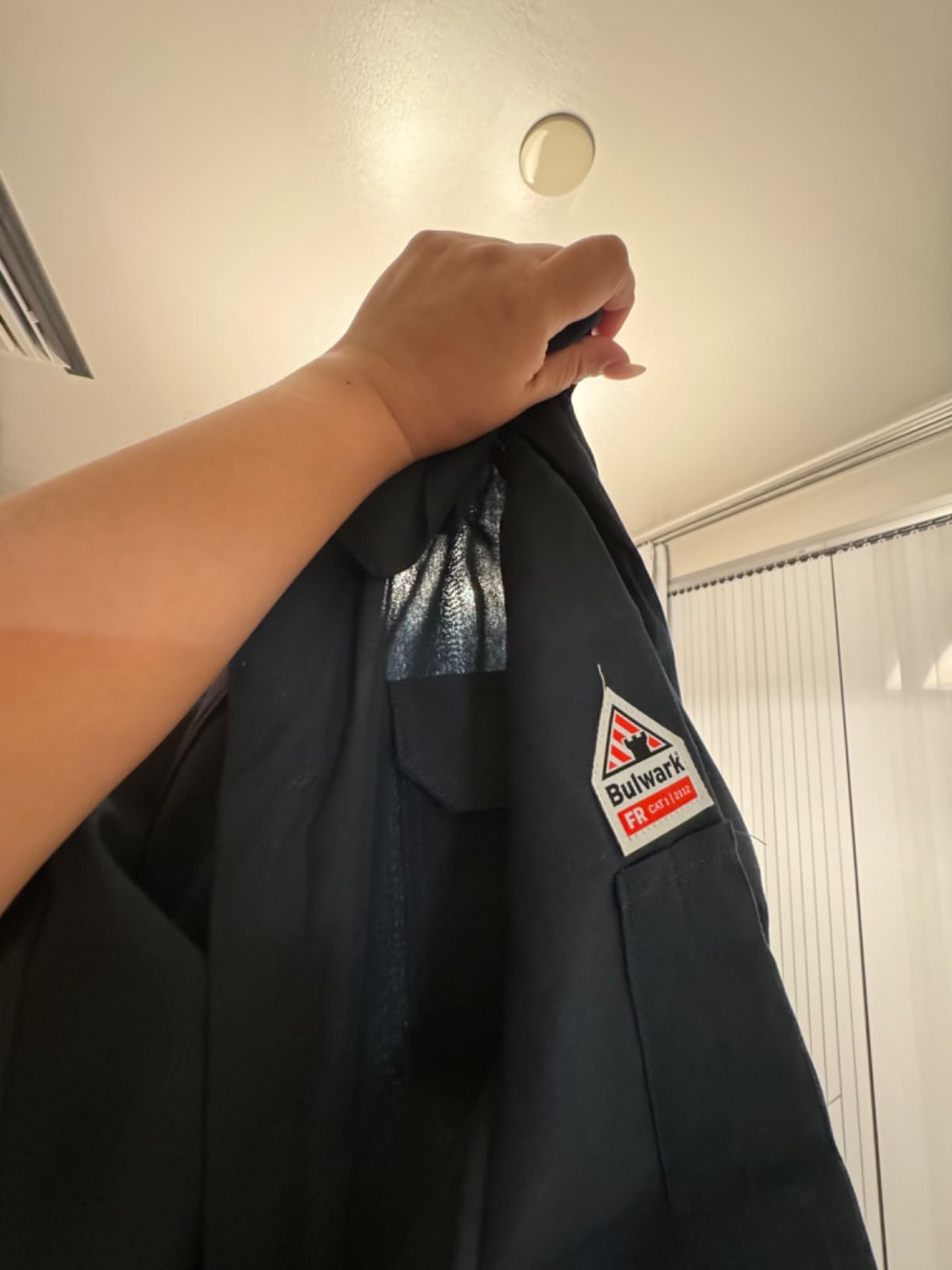
Every other garment in this roundup is cotton, a cotton blend, or a treated synthetic. This one is 93 percent Nomex aramid, 5 percent Kevlar aramid and 2 percent other fibre, which means the flame resistance is inherent to the fibre itself. It will not melt, and it cannot be washed out of the garment, because there is no chemical finish to strip. That is the strongest safety argument on this page, and it is the reason we included it.
The second argument is heat. Owners value the low weight for hot industrial environments compared with cotton FR, and a 4 calorie-per-square-centimetre garment that is genuinely lighter than a 7 ounce twill is a real advantage on a Gulf platform or a furnace floor. The closure is a two-way concealed Nomex taped brass break-away zipper, the collar is a two-piece lay-flay design that sits flat under a harness strap, and you get a deep-pleated action back with elastic waist inserts.
Now the part sellers bury. The technical details state a CAT 1 FR/AR garment with an ATPV of 4.4 calories per square centimetre, UL certified to NFPA 2112. CAT 1 is the bottom of the arc flash scale, and it sits below every CAT 2 garment in this roundup. If your hazard assessment calls for CAT 2, this garment does not meet it, no matter how good the fibre is.
That shows up in the rating. At 4.1 it is the lowest-scoring Bulwark we list, with a 10 percent one-star share, and the review summary attributes that directly to buyers who expected CAT 2 arc flash protection at this price. Paying a premium for the lowest arc rating in the roundup is exactly the situation where you need a hazard assessment document in front of you.
Who this suits?
Hot-climate industrial work where heat, not arc energy, is the limiting factor. Inherent aramid also suits anyone who launders at home, because the protection does not depend on how carefully the garment is washed or what detergent goes in the machine.
It is a sensible pick for refinery and furnace-adjacent work where the exposure is radiant heat and a garment that will not melt is the priority over a stated CAT number.
Who should skip it?
Skip it if you are an electrician or work on energised equipment. At CAT 1 and 4.4 calories per square centimetre, this is below the standard CAT 2 requirement that most arc flash programmes specify, so the arc rating does not match the job.
Skip it if a treated cotton coverall would do the job. The inherent advantage is real, but you pay more for the fibre, and the reviews show buyers regretting that when they needed an arc number rather than a fibre.
We earn a commission, at no additional cost to you. CERTAIN CONTENT THAT APPEARS ON THIS SITE COMES FROM AMAZON. THIS CONTENT IS PROVIDED 'AS IS' AND IS SUBJECT TO CHANGE OR REMOVAL AT ANY TIME.
9. BOCOMAL Lightweight Stretch Ripstop Flame-Resistant Coverall – when the job involves water
BOCOMAL FR Coveralls men Lightweight Strecth RipStop Flame Resistant CAT2
★★★★★★★★★★6 oz FR cotton ripstop
CAT 2, ATPV 8.0 cal/cm2
NFPA 2112 and NFPA 70E
FR zipper with UL labelling
- 6 oz ripstop with a water-repellent finish suits wet and cold industrial work
- Comfortable and cool enough for classroom and field welding use
- Exceptionally functional pocket layout with two tool pockets on the right leg
- Pass-through pockets allow access to jeans pockets underneath
- No cargo pockets compared with the brand's FR pants
- Back pockets wear through quickly and are shallower than typical
- Inseam measures shorter than listed because of preshrinking
Ripstop is the answer when the job is wet, and that includes a lot of field service work, wash-down areas and anything outdoors in weather. This is 6 ounce cotton ripstop with a water-repellent and stain-resistant finish, the lightest fabric in this roundup alongside the Carhartt women’s model. The weave means a small tear does not become a large one, and the finish means the fabric does not soak through in the first ten minutes.
The certification is stated rather than implied: CAT 2 and HRC 2 rated at an ATPV of 8.0 calories per square centimetre, meeting NFPA 2112 and NFPA 70E ASTM F1506, with an FR zipper and UL certification labelling. The pass-through pockets are the feature owners like best, because they let you reach a phone or a wallet in a trouser pocket without taking the coverall off, which matters in weather.
Comfort is the win here. Owners using it for classroom and field welding describe it as cool enough to wear all day, and welders in particular like a garment that moves. The 6 ounce weight is why. At that weight you are getting protection and breathability rather than protection and insulation.
The complaints are specific and worth weighing. There are no cargo pockets, which is a real loss for a welder who needs to carry spatter caps or a soapstone. The back pockets are shallow and wear through quickly, and the pen slot is not separated from the chest pocket so pens can slip into the bottom. Inseams also measure shorter than listed because the garment is preshrunk, so measure before you order.
Who this suits?
Welders doing light fabrication or field repair work, field service technicians, and anyone who needs FR that will not add to the heat load. The water-repellent finish also makes it a sensible pick for wash-down and damp environments.
It suits buyers who want pass-through pockets more than they want cargo storage, and who would rather have a 6 ounce garment they wear every day than a 9 ounce one they take off at lunch.
Who should skip it?
Skip it for heavy stick or flux-core welding with a 6010 electrode on thick section. The reviews flag that a CAT 2 rating is not appropriate for that exposure, which makes sense: the radiant heat flux from heavy welding is a different hazard from an arc flash event, and a light ripstop is not built for standing in front of it.
Skip it if you need cargo storage or durable rear pockets. Two of the four recurring complaints are about pockets, and pockets are where a coverall either works or does not.
We earn a commission, at no additional cost to you. CERTAIN CONTENT THAT APPEARS ON THIS SITE COMES FROM AMAZON. THIS CONTENT IS PROVIDED 'AS IS' AND IS SUBJECT TO CHANGE OR REMOVAL AT ANY TIME.
10. Lapco FR Economy 7 oz Cotton Twill Coverall – the size range is the story
Lapco FR CVEFR7GY-XL RG Flame Resistant Economy Coveralls, 100% Cotton Twill with Moisture Management, HRC 2, NFPA 70E, 7 oz, X-Large Regular, Gray
★★★★★★★★★★7 oz 100 percent cotton twill
HRC 2 and NFPA 70E compliant
Zippered front and back pockets
- Lightweight 100% cotton twill with moisture management for warm conditions
- Secure zippered front and back pockets protect valuables on the job
- Full size range including short and tall lengths up to 6XL
- Machine washable and tumble dry low for simple care
- Economy construction means fewer premium features than brand-name FR coveralls
- This listing is the gray colourway with other colours sold separately
Most of the problems we have hit in this category come down to a body not served by the size run. This one is built the other way round, with short and tall lengths running up to 6XL, which makes it the pick for anyone who has ever bought a coverall and found the sleeves a foot too long or the shoulders two sizes down from the trouser waist.
The fabric is 7 ounce 100 percent cotton twill with a moisture-management finish, described as lightweight, and it is HRC 2 and NFPA 70E compliant. The features are deliberately modest and the good ones are the practical ones: two patch chest pockets, two back patch pockets, a pencil pocket on the left arm, and zippered front and back pockets that keep a phone or a wallet from ending up on the ground when you bend down.
Buyers rate it a solid 4.3 and value the lightness, the secure zippered storage and the size range. Care is simple, which matters more than it sounds: machine wash and tumble dry low, no special industrial process required to keep the garment in rotation.
Who this suits?
Crews and individuals who need a consistent fit across a wide range of body types and heights, including larger sizes and short lengths. If sizing has been the thing that stopped you buying FR coveralls before, this is the model to look at.
It suits workplaces that launder garments on site rather than sending them out, because the care instruction is domestic-grade and the compliance rating covers the arc hazard rather than a specialist process.
Who should skip it?
Skip it if you want the premium construction features. Economy construction here means fewer of the details that make a garment last, such as a taped break-away brass zipper or an action back, and buyers say so plainly in the reviews.
Skip it if the colour matters to your site standard. This particular listing is the gray colourway, and other colours are separate listings with their own sizing, so check that the length and size you need exists in the colour your employer requires.
We earn a commission, at no additional cost to you. CERTAIN CONTENT THAT APPEARS ON THIS SITE COMES FROM AMAZON. THIS CONTENT IS PROVIDED 'AS IS' AND IS SUBJECT TO CHANGE OR REMOVAL AT ANY TIME.
11. Carhartt Women’s Flame-Resistant Rugged Flex Relaxed Fit Twill Coverall – a real option for women, finally
Carhartt Women’s FR Rugged Flex™ Coverall, Dark Navy, Small
★★★★★★★★★★7 oz cotton, nylon, polyester and spandex twill
Rugged Flex stretch technology
Snap chest and pass-through pockets
- The only women's-specific flame-resistant coverall in this roundup
- Rugged Flex stretch fabric allows easier bending and reaching
- Snap-closed chest and pass-through pockets keep items secure
- Relaxed fit works over work boots and layered clothing
- Stretch blend is less heat-resistant than pure aramid or FR cotton
- Limited colour choice compared with men's FR coveralls
- No CAT level or ATPV stated in the product data
Finding a flame-resistant coverall cut and sized for women is the single hardest part of this category, and the fact that this is the only women’s-specific option among twelve products says more about the market than any review score. Women’s FR coveralls are a live search term precisely because they are hard to find. Most women end up buying a men’s garment and living with the fit, or wearing a non-compliant garment over a compliant layer.
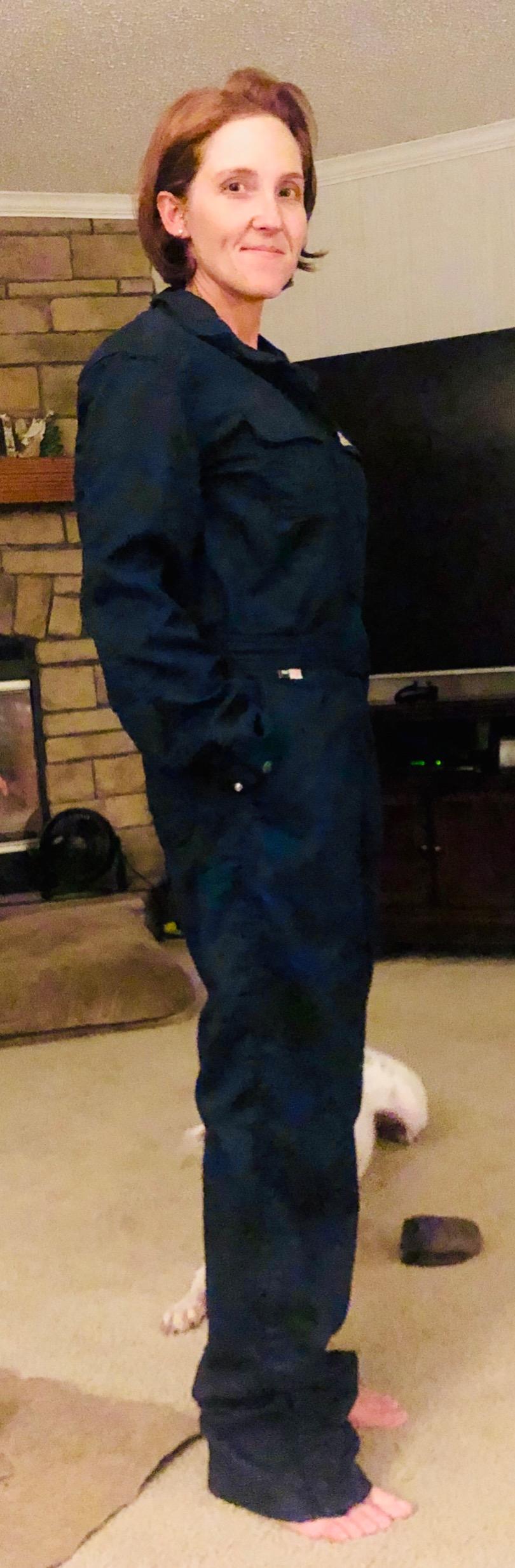
The approach here is stretch. The fabric is 7 ounce twill made of 87 percent cotton, 7 percent high-tenacity nylon, 5 percent polyester and 1 percent spandex, using Carhartt’s Rugged Flex technology. That spandex content is what lets you bend, reach overhead and squat in a garment that is otherwise a conventional twill, and buyers point to the ease of movement as the reason for the rating.
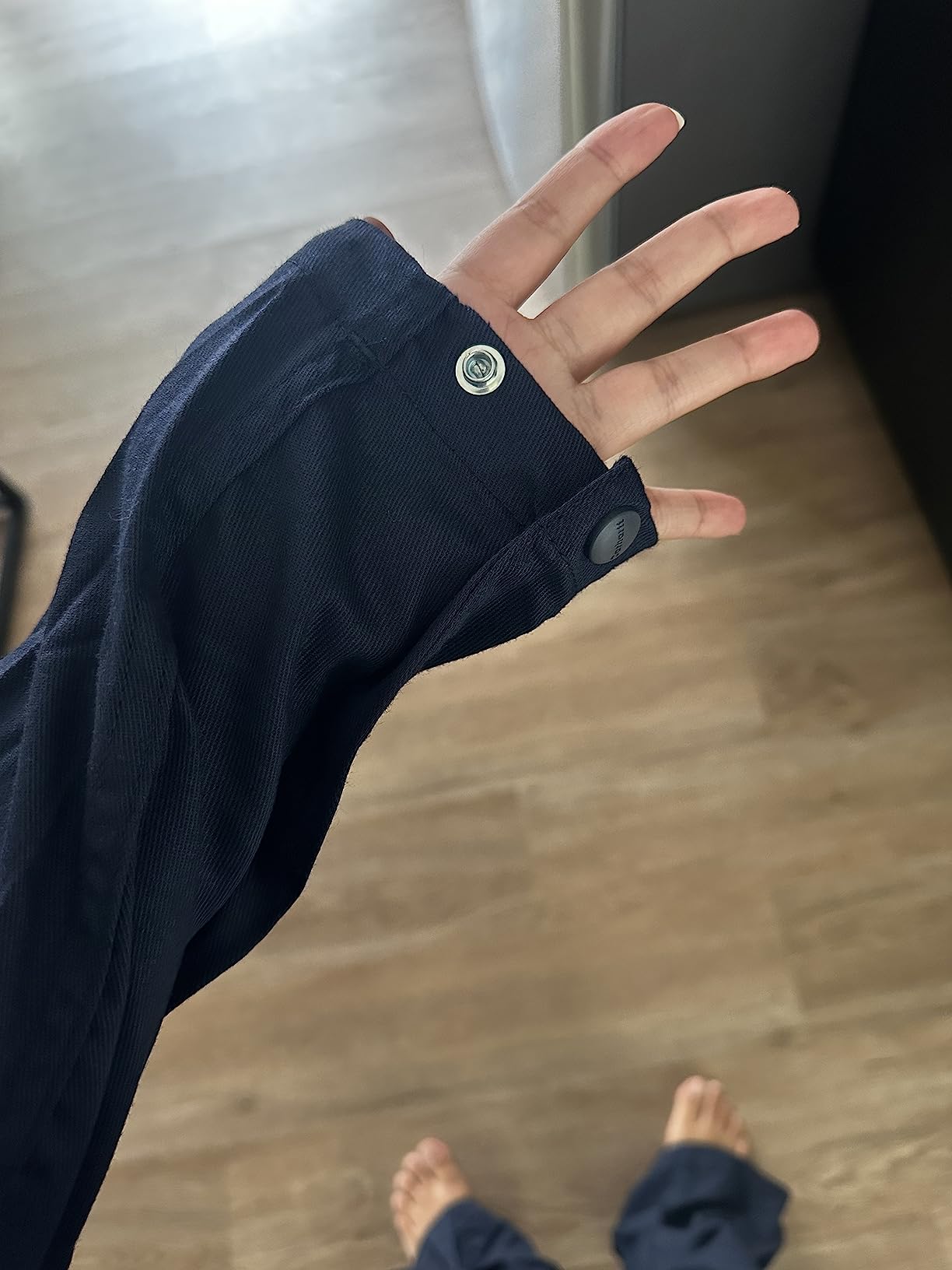
The details are sensible: a stand-up collar with snap closure, two snap-closed chest pockets, and two side-entry pass-through pockets with snap closures so nothing falls out when you are bent over a panel. The relaxed fit is designed to work over work boots and layered clothing, which is the correct starting point for anyone who works outdoors in shoulder seasons.
Two caveats you should weigh. First, the stretch blend is less heat-resistant than pure aramid or FR cotton, so this is not the garment for a high heat release flash fire exposure. Second, and more importantly, this product data does not state a CAT level, an ATPV value, or a named NFPA standard. We are not going to fill that gap with an assumption. If you need certified protection, check the inside label and the manufacturer documentation for the current model year before you wear it on a controlled site.
Who this suits?
Women entering welding, utility, oilfield or industrial maintenance work who have been forced into a men’s cut. A garment designed around a women’s fit, with stretch for movement and a relaxed cut that layers properly, solves problems that a larger men’s size does not.
It also suits anyone who finds rigid FR garments restrictive. The Rugged Flex construction is the point of the product, and for work that involves a lot of crouching, reaching and climbing, that is worth more than another pocket.
Who should skip it?
Skip it if you need a documented arc rating today. The product data does not state one, and a stretch blend with only seven percent nylon is not a construction we would assume certified without seeing the label.
Skip it if you work in high heat. A stretch blend with polyester and spandex is a compromise for comfort and movement, and that compromise costs you something in thermal protection. For a documented high-heat exposure, an inherent aramid garment is the safer specification.
We earn a commission, at no additional cost to you. CERTAIN CONTENT THAT APPEARS ON THIS SITE COMES FROM AMAZON. THIS CONTENT IS PROVIDED 'AS IS' AND IS SUBJECT TO CHANGE OR REMOVAL AT ANY TIME.
12. MAGID Dual-Hazard 7 oz Flame-Resistant Coverall – built for an industrial laundry
MAGID Dual-Hazard 7 oz. Flame-Resistant 88/12 Coveralls, 1 Pair, CBN65DH
★★★★★★★★★★7 oz 88/12 cotton-nylon
UL certified NFPA 2112, CAT 2, ATPV 9.5 cal/cm2
Laundry friendly
- Dual-hazard CAT 2 flame and arc protection at 9.5 cal/cm2 ATPV
- Industrial laundry friendly and holds flame resistance over repeated washes
- Seven-pocket layout including a dedicated utility pocket
- Breathable 88/12 cotton-nylon blend comfortable for all-day wear
- Sizing runs inconsistent between the gray
- navy and khaki colourways
- Lowest average rating in this roundup at 4.1
Flame-resistant garment programmes usually fail in the laundry, not in the purchase order. A treated cotton coverall that goes through an industrial wash cycle every week with the wrong chemistry will lose protection long before it wears out, and the specification sheet back at the office will still claim CAT 2. This model is built for that environment explicitly: the product data states it is commercial industrial laundry friendly, retains its shape and its flame resistance after repeated laundering, and is machine washable.
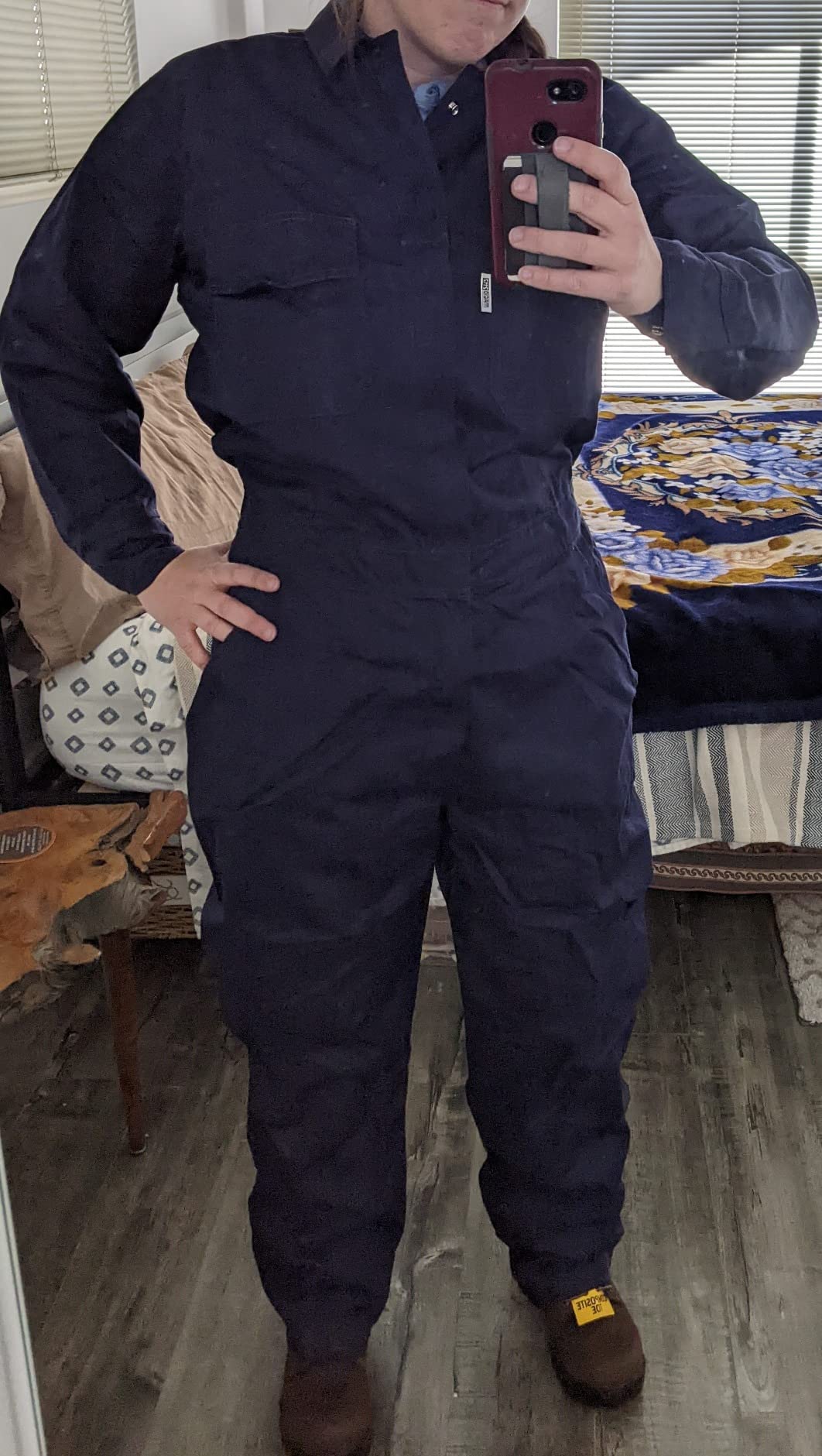
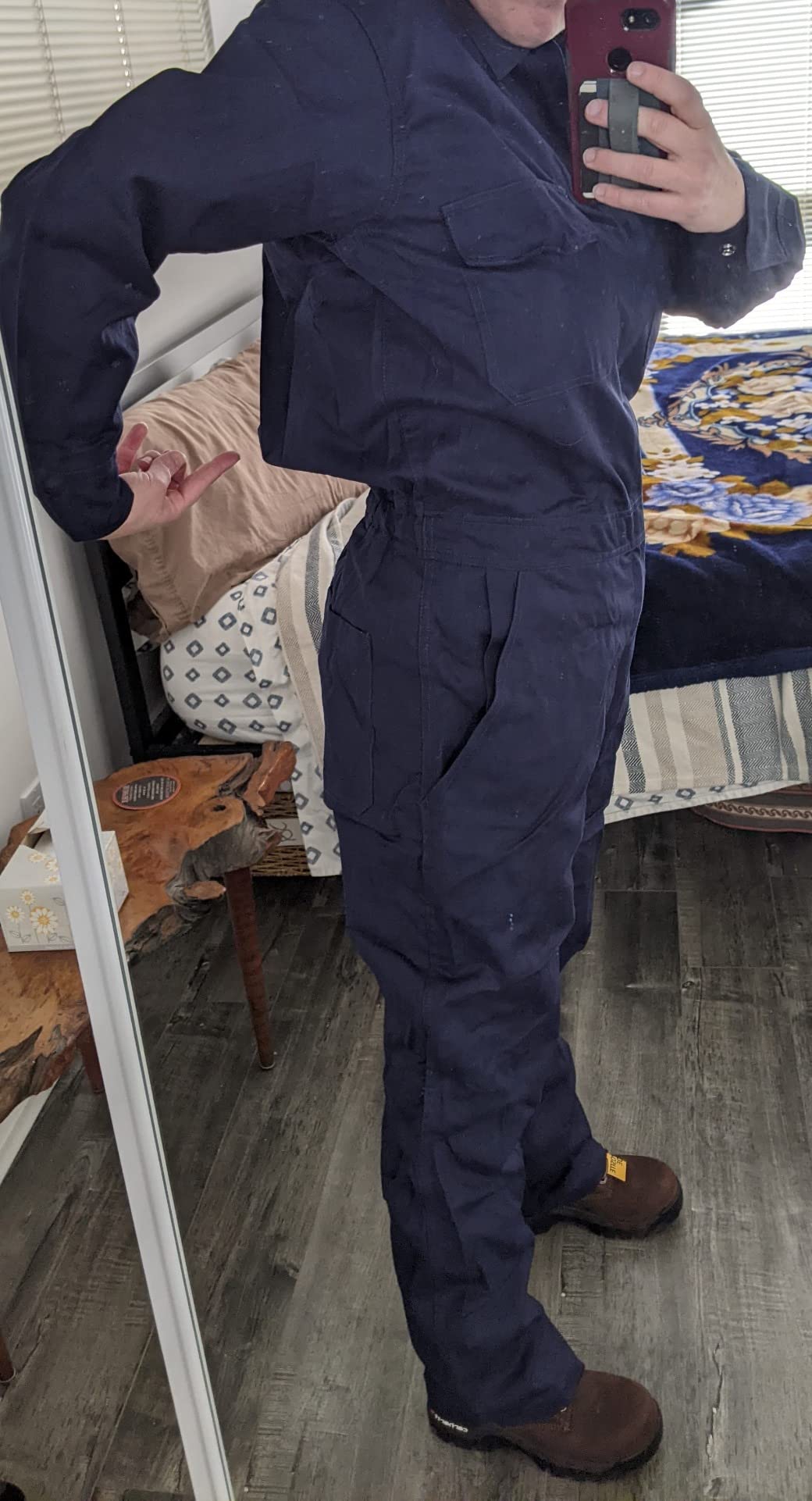
On certification it is properly documented: UL certified to NFPA 2112 for flash fire protection, NFPA 70E CAT 2 compliant, with an ATPV of 9.5 calories per square centimetre, in a 7 ounce 88 percent cotton and 12 percent nylon fabric. The closure is a heavy-duty brass zipper with an elastic waistband, and the pocket count is seven, including two hip, two pass-through, two chest, two back and a dedicated utility pocket.
Buyers recognise the certification and the laundry durability, which is exactly what they are paying for. The scoring is the weak point: at 4.1 it is the lowest average in this roundup, and the review summary points to a fit inconsistency across sizes and colours that shows up in a 15 percent three-star share. Buying the size you already wear in a different colour of the same model is the practical workaround.
Who this suits?
Employers running a commercial industrial laundry service, or any wearer whose garments are washed by someone else. The stated laundering durability is the reason this garment is on the list rather than a better-reviewed one, because a fleet of coveralls has to survive that process to be worth buying.
It also suits buyers who need dual-hazard coverage in a single garment, since the CAT 2 rating at 9.5 calories per square centimetre covers both flash fire and arc flash in one item.
Who should skip it?
Skip it if your rating is driven by fit rather than laundry. Sizing runs inconsistent between the grey, navy and khaki colourways, and at 4.1 this is the lowest-rated garment we list. If you cannot try it on, order from a seller with a straightforward return process.
Skip it if you need the highest ATPV available. At 9.5 calories per square centimetre it sits in the lower half of CAT 2, and the 11 and 12 calorie garments in this roundup are the ones to shortlist if your assessment lands near the top of the category.
We earn a commission, at no additional cost to you. CERTAIN CONTENT THAT APPEARS ON THIS SITE COMES FROM AMAZON. THIS CONTENT IS PROVIDED 'AS IS' AND IS SUBJECT TO CHANGE OR REMOVAL AT ANY TIME.
How Flame Resistance Actually Works: Inherent vs. Treated?
FR fabric does not put out fire and it does not stop you burning. What it does is slow the garment from igniting and cause it to self-extinguish once the flame source is removed, which buys you the seconds that determine whether a flash fire becomes a second-degree burn. That distinction explains why the two ways of making a fabric flame resistant are not interchangeable.
Inherent flame resistance comes from the fibre itself. Aramid fibres such as Nomex and Kevlar do not ignite readily and do not melt, so the property is part of the material for the entire life of the garment. You cannot wash it out, you cannot dry it out, and you cannot accidentally destroy it with the wrong detergent. The cost is higher and the weight tends to be higher, which is the trade the Bulwark Nomex model makes.
Treated flame resistance is a chemical finish bonded to an ordinary cotton or nylon fibre. Done well, it lasts. Done badly, or washed badly, it fades. A treated cotton coverall can lose a meaningful share of its protection over its working life if it is repeatedly washed with fabric softener, bleach or starch, and the garment will look and feel identical when it has.
Inherent FR: aramid and modacrylic fibres. Cannot be washed out. Higher cost, usually a more technical feel, and in this roundup it is the Bulwark Nomex model at 93 percent Nomex with Kevlar.
Treated FR: cotton, cotton duck, twill, denim and cotton-nylon blends with a durable flame-resistant finish. Softer and cheaper, and every one of the garments in this roundup other than the Nomex model falls into this group, including the ATERET cotton with its stated 50-plus wash cycle durability.
What this means when you buy. Treat the label as a consumable indicator, not a permanent property. Check the number of washes the garment is rated for, use the care instructions, and replace it when that number is reached. And if the garment will be washed by an industrial service rather than by you, ask the service what chemistry they use before you buy, because that conversation decides how long the garment protects you.
CAT 2 vs. CAT 3: Which Protection Level Do You Actually Need?
No, CAT 3 is not better than CAT 2. It is a higher number because it is meant for a higher-energy exposure, and buying it when you do not need it means paying more for a heavier, hotter garment that is harder to wear and therefore less likely to be worn properly. Most oilfield and general industrial flash fire work is CAT 2. CAT 3 is for higher-energy arc flash and heavier thermal environments.
The arc flash categories run from CAT 1 to CAT 4, each with a range of incident energy measured in calories per square centimetre. CAT 1 starts at 4, CAT 2 covers 8 to 25, CAT 3 covers 25 to 40, and CAT 4 starts at 40. The ATPV printed on a garment tells you the tested value, and the category tells you the band. A garment tested at 12 calories sits in CAT 2, which is why the 7 ounce garments at 12 calories and the 11 calorie Bulwark are the same answer to a different question than a 4.4 calorie garment.
Two distinctions to keep straight. NFPA 2112 governs flash fire, the hydrocarbon flame exposure an oilfield or refinery worker faces, and it is tested to ASTM F1930. NFPA 70E governs arc flash for electrical work, tested to ASTM F1506. A garment can be dual-hazard, and several in this roundup are, but a CAT rating alone does not tell you which standard it was tested to. A garment that is CAT 2 under NFPA 70E is not automatically certified for flash fire.
And the last piece: arc flash ratings do not stack. Wearing two CAT 2 garments does not give you a CAT 3 garment, and an insulated liner that is not itself FR-rated does not upgrade the shell. The rating on the outer garment is the rating you have.
Choosing Fabric Type and Fabric Weight
Fabric weight is the decision that determines whether you will actually wear the garment on a hot day, so it deserves as much attention as the certification. Weights in this roundup run from 6 ounces per square yard at the light end to midweight constructions, and the difference is a working shift of noticeable discomfort.
6 oz cotton ripstop: the lightest option here. Best for hot indoor work, light welding and field service, and it often carries a water-repellent finish. The least thermal protection of the group.
7 oz cotton twill and 7 oz 88/12 cotton-nylon: the sweet spot for most industrial work. Breathable enough for a full shift, still substantial enough for arc flash work, and the most common weight in this roundup. The 12 calorie and 11 calorie garments both sit here.
7 oz stretch twill: the same weight with spandex added for movement. A comfort and fit advantage that costs some heat resistance.
Midweight constructions: the warmest option here, appropriate for cool shops and temperate outdoor work. Bulwark’s Classic and Premium models sit at this weight and buyers consistently report heat as the trade-off.
Inherent aramid: weight is comparable to a light cotton garment, but the fibre is different in feel and it is the only construction in this roundup that cannot lose its protection in the wash.
On fibre type, cotton and cotton blends dominate because they are comfortable, cheap and easy to launder, which is why they are treated rather than inherently flame resistant. Aramid does not melt and does not need a finish, but it costs more and does not breathe as well. Modacrylic sits in between and is common in European FR workwear, though none of the twelve products here uses it.
Coveralls vs. Bib Overalls vs. FR Shirt and Pants
This trips people up constantly, because most of the search results for coveralls are actually bib overalls. A coverall is a single garment with a full-length front zipper running from the chest to the ankle, so it comes off in one movement and leaves nothing behind. A bib overall has no front closure below the waist: it straps over the shoulders and fastens to the waist of trousers, so the shirt underneath is a separate garment.
Field preference splits on this, and it is worth naming rather than pretending there is one answer. The case for a full coverall is that there is no exposed skin at the waist when you climb, kneel or reach overhead, which is exactly the moment a flash fire catches. The case for a bib with a separate FR shirt is that you can take the shirt off at lunch, change it when it is soaked with sweat, and reuse it for weeks, while the bib takes the abuse.
For arc flash work, a full coverall is the safer default because the rating applies to the whole garment rather than to two pieces you might eventually mix. For refinery and oilfield work in heat, many crews prefer a bib and a change of shirts because the weight and the washing burden are lower. Whichever you pick, the shirt underneath a bib should be FR too, and the rating you rely on is the rating on the outermost layer.
Fit, Sizing, and Length: What to Expect?
Sizing is the most common complaint across all twelve products, and it is worth being blunt about why. Most coveralls are graded from a workwear block cut for a standing worker, and the measurements reflect a body in a static position rather than one kneeling, reaching or squatting. Nearly every listing in this roundup carries an instruction to size up, and the reasons are specific: layering over a base layer, industrial laundering shrinkage, and the fact that a stretched garment sits differently on a body that moves.
Length matters as much as size. Regular, Tall and Short lengths exist because an inseam that is ten inches too long is a trip hazard and a pooling hazard, and an arm that rides up to the elbow exposes skin in a flash fire. If you are tall or short, choose the length option rather than buying a larger or smaller size, because it keeps the chest and sleeve measurements correct.
For fit, plan to size up one to two sizes if you wear a thermal base layer in winter, and expect the garment to sit looser than a shirt even after you size up. Overlapping sleeves that reach the knuckles and a hem that stays at the hip when you raise your arms are the two checks to make when the garment arrives. Where a listing does not state a length option, measure the inseam of a garment you already own and compare before you order.
How to Verify a Coverall Is Actually Flame Resistant?
Marketplace listings are full of garments described as flame resistant with no certification behind the description, and visual inspection at a glance will not separate a compliant coverall from a cotton one dyed khaki. Here is what to check, in order.
1. Find the label and read the standard. A compliant FR garment carries a permanent label stating the standard it was tested to, usually NFPA 2112 for flash fire, NFPA 70E or ASTM F1506 for arc flash, and the ATPV value in calories per square centimetre. A tag that says only flame resistant, fire resistant or FR is not a certification.
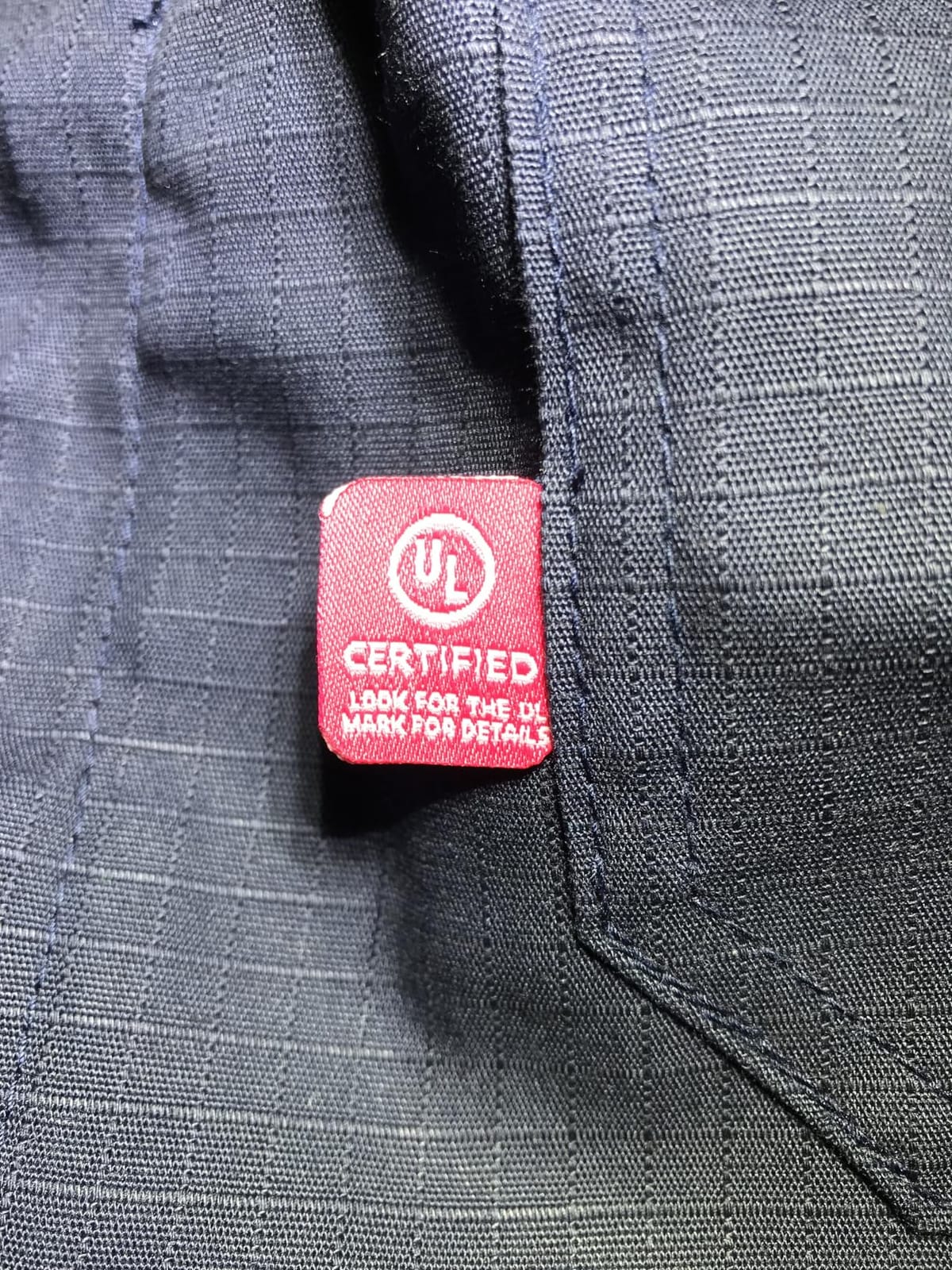
2. Check for a UL or other third-party mark. Several garments in this roundup state UL certification, which means an independent lab tested the specific fabric and garment construction rather than the fibre alone. That is the strongest evidence you can get from a label.
3. Verify the ATPV against your hazard assessment. If your assessment requires CAT 2, a garment rated below 8 calories per square centimetre does not meet it, however well made it is. This is the step that catches expensive mistakes, because a garment can sit at a premium price point and still carry the lowest arc rating in the group.
4. Check the zipper and the stitching. Look for FR zipper tape rather than a bare coil zipper, and look at the stress points. Triple-needle stitching and bar tacks at the pocket corners and underarm seams are the markers of a garment built for work. A garment with a single-needle seam at the underarm is a garment that will open at the underarm in six months.
5. Confirm the model year. Certification belongs to a specific garment, at a specific fabric weight, in a specific model. If the listing does not name a model number or does not state the fabric weight in ounces, ask the seller for the current spec sheet before you rely on the garment.
How to Wash FR Coveralls Without Killing the Protection?
Washing is where treated FR garments are most often damaged, and the damage is invisible from the outside. The rules are short and worth following exactly.
Wash FR coveralls in warm or hot water with a mild detergent. Use a liquid detergent rather than powder where you can, because powder leaves residue in the fibres. Tumble dry on low. Skip the fabric softener entirely, since the surfactants bind to the flame-resistant finish and coat it, and skip bleach and starch for the same reason.
Do not dry treated FR garments on a direct radiator or on a high heat setting. High heat degrades cotton fibres generally, and it degrades the finish faster. Do not iron the flame-resistant side aggressively, and do not use a garment on a welding bench where you would be grinding sparks across the fabric if a less expensive garment would do the same job.
If an industrial laundry handles your garments, ask what process they use and get it in writing. Commercial industrial laundry friendly, stated on the MAGID garment in this roundup, is a specific claim worth holding a supplier to. And track the wash count, because a treated coverall has a rated number of cycles and a garment at 55 washes is not the garment your spec sheet describes.
Frequently Asked Questions
What is the best FR brand?
Bulwark, Carhartt, Portwest, Lapco and MAGID all appear in this roundup with documented certification, and each leads in a different area. Bulwark leads on construction detail and mobility, Carhartt on proven heavy twill durability, Portwest on dual-hazard fabric with sewn-on FR reflective tape, and MAGID on industrial laundry durability. There is no single best brand, because the right answer depends on your hazard assessment, your climate and your laundering process rather than on the label on the pocket.
Is CAT 3 FR better than CAT 2?
No. CAT 3 covers a higher incident energy range, 25 to 40 calories per square centimetre, than CAT 2 at 8 to 25, so it is only the correct choice where your hazard assessment identifies that exposure. Most oilfield and general industrial flash fire work is CAT 2. Choosing CAT 3 unnecessarily means a heavier, hotter, more expensive garment that is harder to wear, and a garment you find uncomfortable is one you take off on shift.
Do welders need flame resistant clothing?
Welding exposure is usually driven by radiant heat, sparks and spatter rather than by a full flash fire event, so welding FR is typically a lighter weight with higher breathability than the heavy garments worn on an oilfield rig. Light FR garments do exist and several are in this roundup. The exception is heavy stick or flux-core work, where the radiant heat flux is high enough that a light garment is not appropriate. Your employer and site hazard assessment govern the requirement.
What are the warmest FR coveralls?
For FR specifically, the warmest choices are the midweight and heavy constructions rather than insulated ones, because an insulating liner that is not itself flame resistant will compromise the garment it is worn under. The midweight Bulwark models are the heaviest in this roundup, and the 9 ounce 88/12 and duck constructions common in the wider market are warmer still. If you need real cold-weather protection, the liner must be FR rated in its own right, and arc flash ratings do not stack.
What is the best brand for men’s coveralls?
Within FR, Carhartt and Bulwark are the strongest general choices for men, and the choice comes down to weight and construction rather than brand alone. Carhartt suits a heavy cotton twill with stated NFPA 70E and NFPA 2112 compliance, while Bulwark suits a midweight garment with taped break-away hardware and, in the Premium model, a printed ATPV. General workwear brands are not automatically flame resistant, so verify the label on any garment you buy.
What does NFPA 2112 mean?
NFPA 2112 is the standard for flame-resistant protective clothing worn to protect against flash fire, the brief flame exposure a worker can encounter from a hydrocarbon fuel fire. It is tested to ASTM F1930 and covers the fabric, seams and trim of the garment. It is a different hazard from arc flash, which is governed by NFPA 70E and tested to ASTM F1506, and a garment certified only to one standard is not automatically certified to the other.
What is ATPV?
ATPV is the Arc Thermal Performance Value: the amount of incident energy in calories per square centimetre a garment can absorb before the wearer risks a second-degree burn. It is measured in a test on the finished garment rather than the fabric alone. A garment tested at 12 cal/cm2 falls in arc flash category 2, which spans 8 to 25 cal/cm2. The number on the label is the one your hazard assessment should be checked against.
Can you wash flame resistant coveralls?
Yes, but the care rules matter, particularly for treated cotton and cotton blends. Wash in warm or hot water with a mild detergent, and never use fabric softener, bleach or starch, because those products coat the flame-resistant finish and reduce it. Tumble dry on low rather than high heat. Inherent aramid garments are unaffected by detergent choice. Always follow the care label on the specific garment, since wash-cycle ratings differ between models.
Final Verdict: The Best FR Coveralls by Trade
There is one winner, and it depends on the hazard rather than the shopping list. For most work, the Bulwark FR Midweight Excel Classic is the best FR coverall you can buy: more than a thousand verified ratings, midweight fabric that survives sparks and grinding, and the broadest length range in the roundup. If your paperwork needs a printed arc number, the Bulwark Excel Premium at 11 calories per square centimetre and UL certified to NFPA 2112 is the one to spec.
By trade: electricians and facilities maintenance should start with the 7 ounce 88/12 cotton-nylon garments at 12 calories per square centimetre, and utility crews who also need visibility should take the taped version. Road, pipeline and night work suits the Portwest FR94 Iona with its sewn-on FR reflective tape. Refinery and oilfield crews who want 100 percent cotton that will not melt onto them should look at the ATERET, and employers running an industrial laundry should pick the MAGID for its stated laundering durability. Lightweight hot-weather and field welding work suits the BOCOMAL ripstop, and the Bulwark Nomex aramid is the pick when heat is the limit and the protection must be inherent. For women, the Carhartt Rugged Flex is currently the only purpose-built option we found, and you should verify its certification label before relying on it.
Whatever you choose, check the ATPV against your hazard assessment before the garment reaches the site, keep the care rules, and replace treated garments when they reach their rated wash count. A certification is a specification attached to a specific garment, not a promise that survives a bad wash cycle.