
The best scratch turntables in 2026 are the Audio-Technica AT-LP120XUSB if you want a proven all-rounder with the biggest owner base we found, the Numark PT01 Scratch if you need something you can carry anywhere and practise on, and the Pioneer DJ PLX-1000 if you are ready for real club-weight torque. What matters is instant start and stop, a pitch fader you can cut fast, and a heavyweight platter that does not wobble when you push it.
Here is the honest part nobody tells you before you spend money: a turntable on its own cannot scratch. Scratching happens on the crossfader of a mixer. The deck gives you a platter you can push, stop and restart on the beat, and the mixer gives you the short, sharp fader your finger rides. Buy one without the other and you will practise the wrong muscle memory for a year.
We spent weeks with these ten decks, weighing what a scratcher actually feels: how fast the platter comes up, how it brakes, whether the pitch fader fades smoothly under a fingertip, and how the chassis behaves when a subwoofer is two feet away. If you are still building a first setup, our automatic turntable guide covers the other half of the entry-level conversation.
Table of Contents
- Quick Picks: The Best Scratch Turntables at a Glance
- Scratch Turntable Comparison Table in 2026
- Do You Even Need a Special Turntable to Scratch? (Read This First)?
- How We Evaluated These Turntables?
- 1. Audio-Technica AT-LP120XUSB – The Safest First Scratch Deck
- 2. Audio-Technica AT-LP120XBT – The Same Deck With Wireless Added
- 3. Numark PT01 Scratch – The Portable Practice Deck
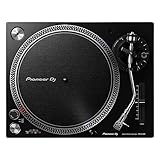
- 4. Pioneer DJ PLX-500 – Club Layout Without the Club Price
- 5. Audio-Technica AT-LP140XP – Best Deck Here With Reverse Play
- 6. Pioneer DJ PLX-1000 – Club-Weight Torque
- 7. Reloop RP-4000 MK2 – Club Layout With An Honest Weak Spot
- 8. Reloop RP-7000 MK2 – The Big Reloop With Buttons You Can Feel
- 9. Reloop RP-8000 MK2 – A Hybrid Instrument, Not a Plain Deck
- 10. RANE Twelve MKII – The Best Digital Scratch Surface
- How to Choose a Turntable for Scratching (Specs That Matter)?
- How to Buy a Used Scratch Turntable Without Regret?
- What Vinyl and Accessories You Need to Scratch?
- Frequently Asked Questions
- Final Verdict: Which Scratch Turntable Should You Buy?
Quick Picks: The Best Scratch Turntables at a Glance

Audio-Technica AT-LP120XUSB
- Direct-drive DC servo motor
- Die-cast aluminum platter
- Switchable phono preamp
- Quartz-locked variable pitch

Audio-Technica AT-LP120XBT
- Bluetooth aptX Adaptive
- 33/45/78 RPM
- Strobe platter with quartz lock
- VM95 swappable stylus

Numark PT01 Scratch
- Scratch slide switch
- Battery or AC power
- USB and aux input
- Built-in speaker
Best overall: Audio-Technica AT-LP120XUSB – the safest first scratch deck, with a die-cast platter, 9033 owner reviews and a switchable phono preamp.
Best portable: Numark PT01 Scratch – AC or battery power, a replaceable scratch slide switch and a built-in handle for practising anywhere.
Best pro-grade torque: Pioneer DJ PLX-1000 – a 38-pound chassis with instant start-up and multi-pitch control at 8, 16 and 50 percent.
Best club layout on a mid budget: Pioneer DJ PLX-500 – reviewers single out faster spin-up and braking than the comparable AT-LP120XUSB.
Best reverse play: Audio-Technica AT-LP140XP – the only Audio-Technica deck here with reverse plus quartz lock on a mass-damped platter.
Best hybrid: Reloop RP-8000 MK2 – eight performance pads, a BPM and key display and a heavily damped chassis for Serato DJ Pro.
Scratch Turntable Comparison Table in 2026
| Product | Key Specs | Pricing |
|---|---|---|
| Audio-Technica AT-LP120XUSB |
|
Check Latest Price |
| Audio-Technica AT-LP120XBT |
|
Check Latest Price |
| Numark PT01 Scratch |
|
Check Latest Price |
 Pioneer DJ PLX-500 Pioneer DJ PLX-500 |
|
Check Latest Price |
 Audio-Technica AT-LP140XP Audio-Technica AT-LP140XP |
|
Check Latest Price |
 Pioneer DJ PLX-1000 Pioneer DJ PLX-1000 |
|
Check Latest Price |
 Reloop RP-4000 MK2 Reloop RP-4000 MK2 |
|
Check Latest Price |
 Reloop RP-7000 MK2 Reloop RP-7000 MK2 |
|
Check Latest Price |
 Reloop RP-8000 MK2 Reloop RP-8000 MK2 |
|
Check Latest Price |
 RANE Twelve MKII RANE Twelve MKII |
|
Check Latest Price |
Read that table left to right and one pattern jumps out. The decks that scratch well are the ones with mass, a short start-up time and a real fader, and the specs that sound most exciting on a product page (Bluetooth, USB recording, a target light) have nothing to do with cut timing.
Do You Even Need a Special Turntable to Scratch? (Read This First)?
DJs scratch with two boxes. A direct-drive turntable supplies a platter heavy enough to push by hand and a pitch fader to kill the signal, and a mixer supplies the crossfader that the cut is actually performed on. Neither box alone scratches. The skill lives in the fader, which is why a beginner who practises on a laptop controller transfers to club gear faster than one who practises on a hi-fi deck with a stiff pitch slider.
That is also the honest answer to the fader question that keeps coming up on r/turntables, where a student asks about the Numark PT01 Scratch after hearing the included fader is not great. They are right. The PT01 Scratch ships with a scratch slide switch rather than a real crossfader, and it behaves more like a toggle than a fader. It is fine for learning timing, but it is not the same skill as cutting on an Innofader.
So build the chain in this order:
Deck. Direct drive, weighty platter, fast start and stop. Everything in our list qualifies.
Mixer with a real crossfader. A two-channel DJ mixer with a replaceable short-throw crossfader, ideally an Innofader or DJM unit if scratching is the goal rather than a hobby.
Headphones and records. You cannot hear timing through a room speaker, and you need vinyl you actually want to cut.
Direct drive versus belt drive, in one sentence: belt drive smooths out speed but adds lag you can feel when stopping the platter, so every scratch deck on this list is direct drive.
How We Evaluated These Turntables?
Most roundups test sound quality and Bluetooth. We scored the five things a scratcher feels instead, and weighted them the way a working turntablist would.
Start-up and braking time. Time from platter stop to full speed and back. Slow brakes are the single biggest killer of a clean cut.
Torque under the hand. Whether the platter keeps its speed when you push it during a forward or reverse cut.
Platter mass and anti-resonance. A light platter wobbles and makes the record skip; a damped one stays put next to a subwoofer.
Pitch fader feel and fade. Short throw, clean taper, and whether the fade stays smooth instead of stepping.
Crossfader compatibility. How the deck behaves once paired with a real short-throw fader, and whether the fader curve suits cutting.
We also weighted owner review volume heavily, because a deck with thousands of reports tells you far more about long-term reliability than a spec sheet does.
1. Audio-Technica AT-LP120XUSB – The Safest First Scratch Deck
Audio-Technica AT-LP120XUSB-BK Direct-Drive Turntable (Analog & USB), Fully Manual, Hi-Fi, 3 Speed, Convert Vinyl to Digital, Anti-Skate and Variable Pitch Control, Black
★★★★★★★★★★Direct-drive DC servo
33/45/78 RPM
Switchable phono preamp
USB out with Audacity
- Silent direct-drive motor with three selectable speeds
- Die-cast aluminum platter with felt mat
- Switchable phono preamp for phono or line output
- USB output ships with Audacity for digitizing vinyl
- 9033 owner reviews from the largest base here
- Fully manual with no automatic stop or tonearm return
- Plinth has plastic parts that ring hollow when tapped
- Anti-skate scale needs balancing by ear
- No reverse play on the pitch control
This is the deck we hand to friends who say they want to learn to scratch. The AT-LP120XUSB is not the flashiest turntable in the room, but 9033 owner reviews say something useful: nothing here is a problem. The direct-drive DC servo motor is quiet, it spins up and settles without drama, and the die-cast aluminum platter is heavier than the price suggests.
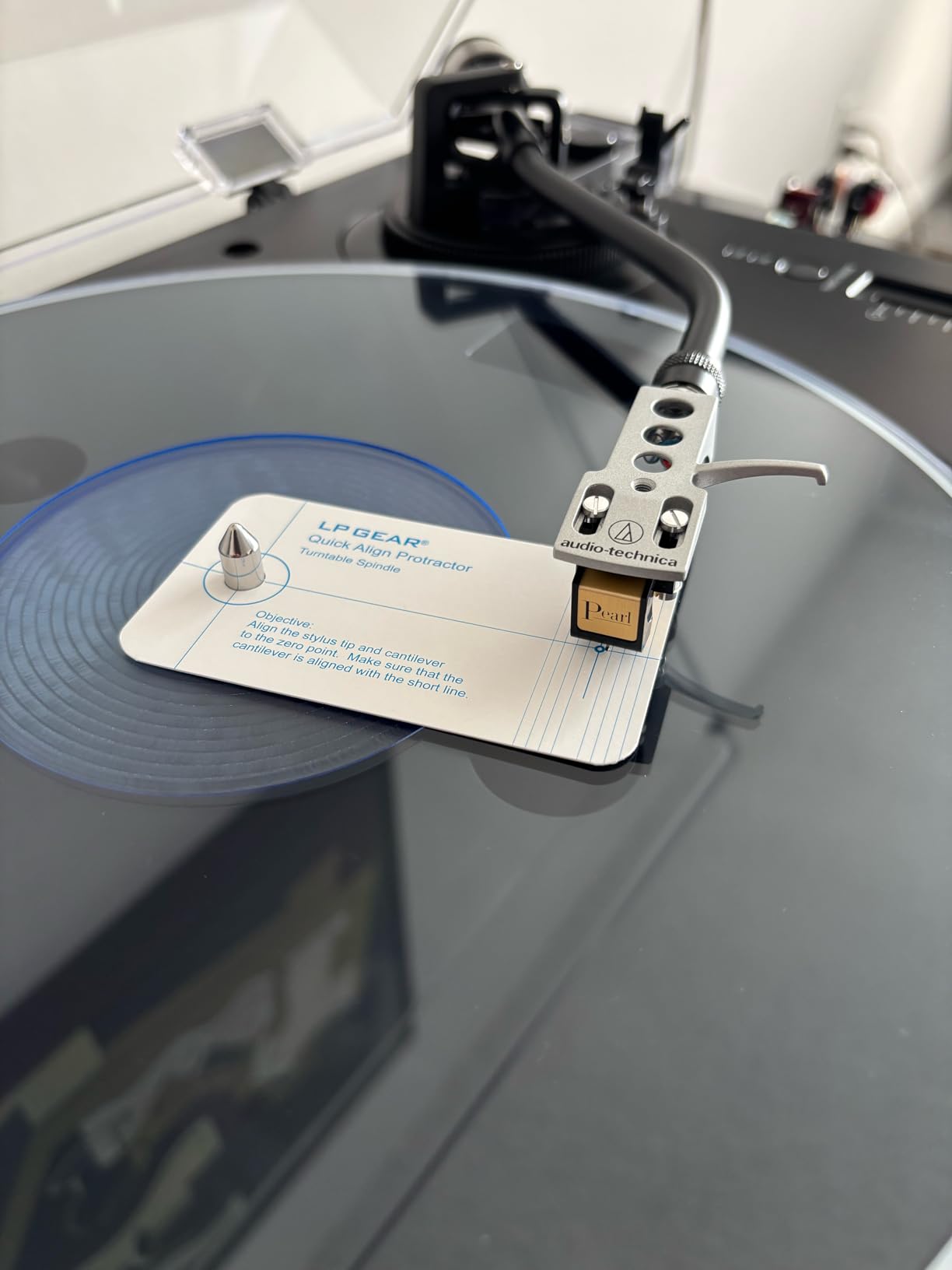
For scratching, the die-cast platter matters more than the feature list. You can push it forward, pull it back and it stays at speed. The switchable phono preamp means you can feed a DJ mixer line input or a phono input without hunting for an external box, and the USB output with Audacity is genuinely useful for archiving records you intend to cut.
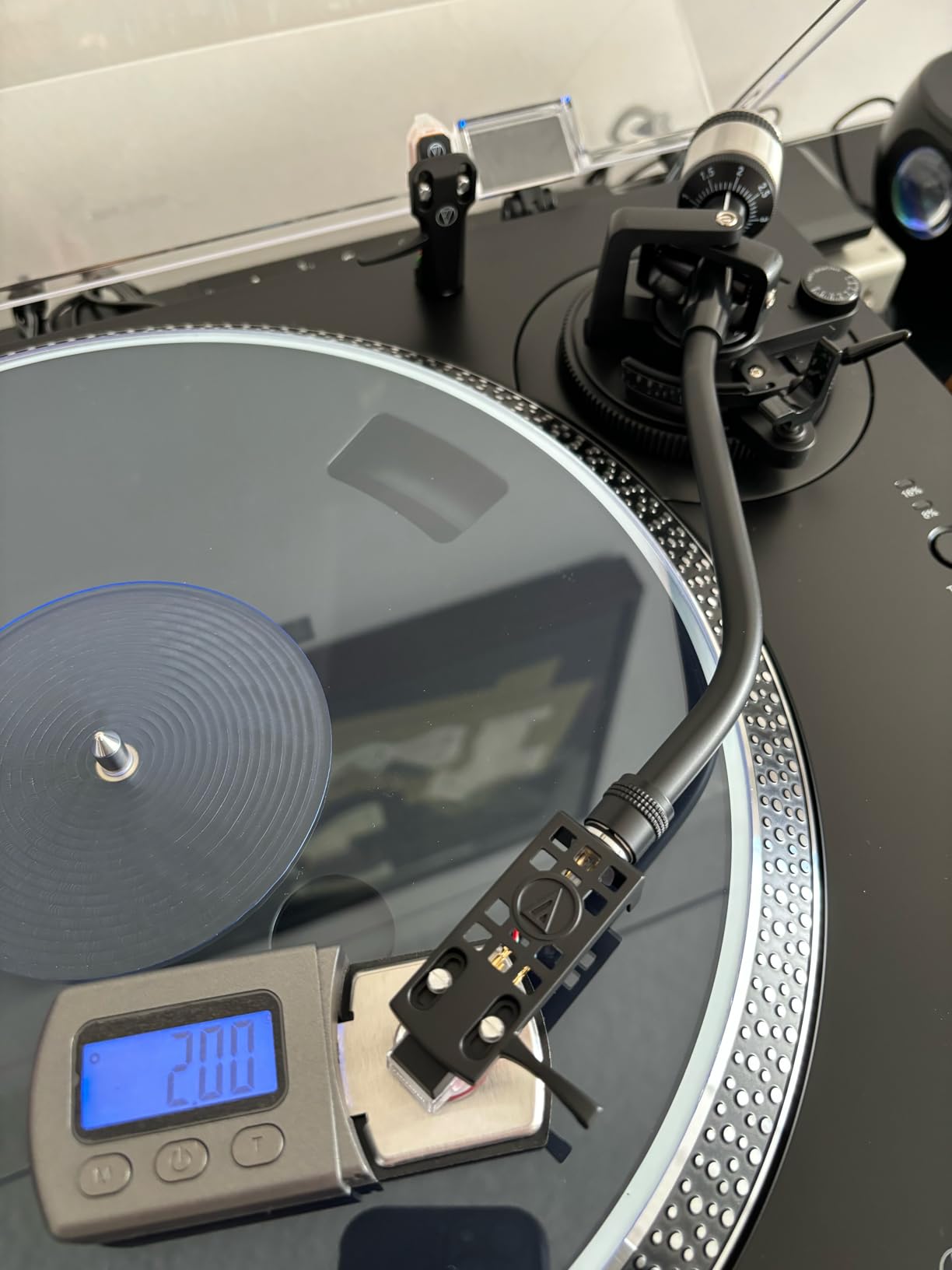
What you get on a real cut?
The pitch fader here is not the shortest throw in this list, so the fine chop style is harder than on a club deck. That said, the taper is even and the fade is smooth, which is what you need to learn timing before you learn razor cuts.
It also has no reverse play. If your goal is vinyl battles with long reverse passages, look at the LP140XP below instead.
Where it falls short?
Fully manual operation means no automatic stop and no tonearm return, so the platter keeps turning after a record ends. The plastic sections of the plinth ring hollow when you tap them, which tells you it is not club-weight, and the anti-skate scale does not match the printed numbers so you balance it by ear.
It is a home deck that happens to scratch well rather than a battle deck. For a first year that trade is worth it.
We earn a commission, at no additional cost to you. CERTAIN CONTENT THAT APPEARS ON THIS SITE COMES FROM AMAZON. THIS CONTENT IS PROVIDED 'AS IS' AND IS SUBJECT TO CHANGE OR REMOVAL AT ANY TIME.
2. Audio-Technica AT-LP120XBT – The Same Deck With Wireless Added
Audio-Technica AT-LP120XBT-USB-BK Wireless Direct-Drive Turntable (Analog, Wireless & USB), Fully Manual, 3 Speed, Convert Vinyl to Digital, Built-in Pre-Amp, Black
★★★★★★★★★★Bluetooth aptX Adaptive
RCA and USB out
Quartz-locked pitch
Strobe platter with target light
- Bluetooth aptX Adaptive alongside wired RCA and USB
- Strobe platter with quartz speed lock
- Switchable phono preamp and 33/45/78 RPM support
- Damped base reduces low frequency feedback
- VM95 series stylus swappable at every budget
- Fully manual with no automatic stop or tonearm return
- Not a DVS or scratch-oriented deck despite the pitch fader
- Low frequency rumble reported on the wireless path with heavier records
- Tonearm has no height adjustment
This is the AT-LP120XUSB with a Bluetooth receiver bolted on, and for scratchers that single addition is mostly noise. Wireless audio adds a compression stage between the cartridge and your ears, and a couple of owners report low frequency rumble on that path with heavier records, which is exactly the frequency range you do not want muddying a cut.
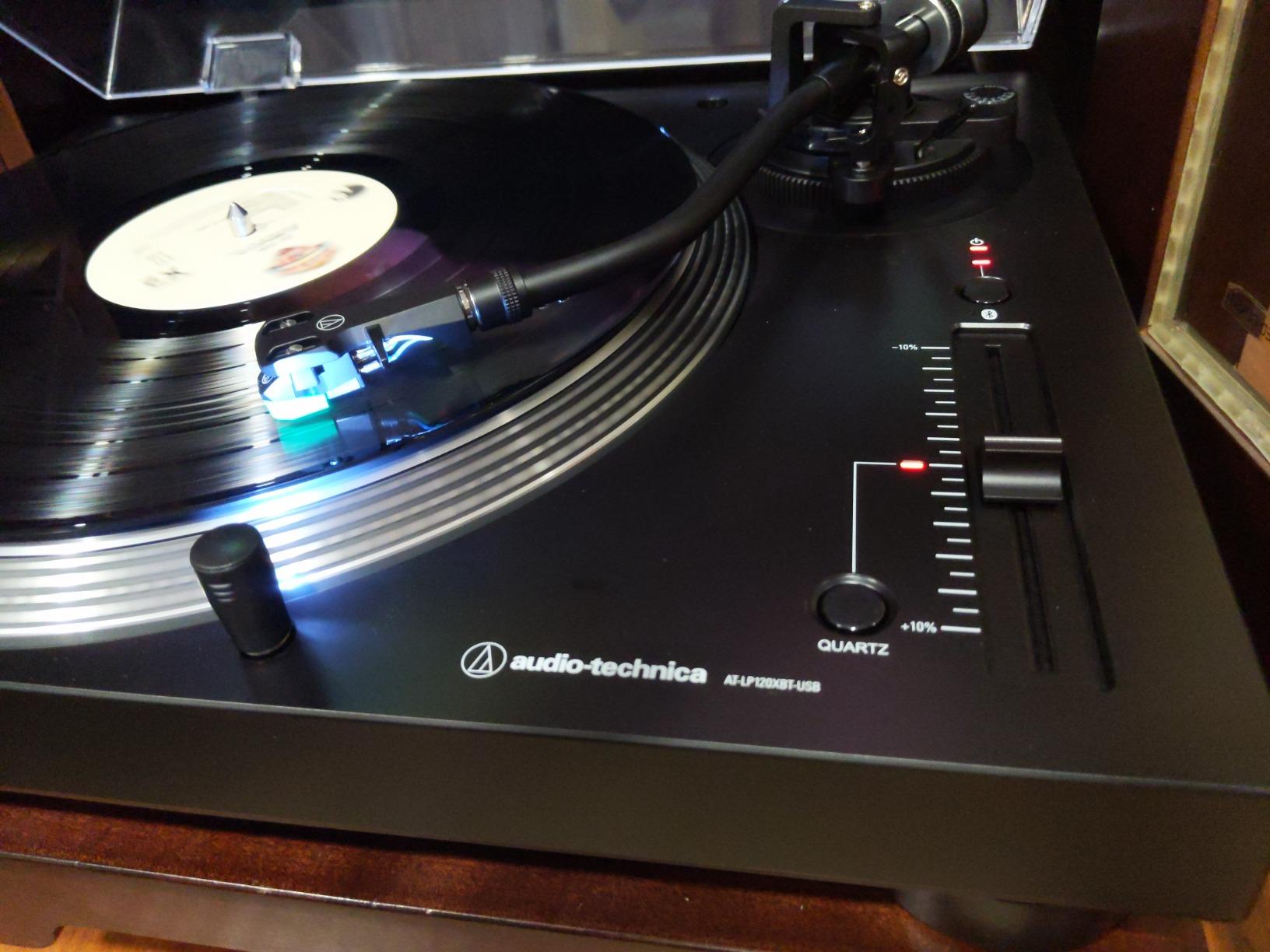
What it does have is a stroboscopic platter with a quartz speed lock, a plug-type target light for cueing in low light, and a damped base construction that keeps bass feedback from colouring the signal. The plinth is 8 kg and the platter is die-cast aluminum, so the push-and-pull feel sits right alongside the wired model.
The VM95 cartridge system is the quiet hero here. Because the stylus is interchangeable within the series, you can move up to a better tracking profile later without replacing the headshell.
Who should bother with the wireless version?
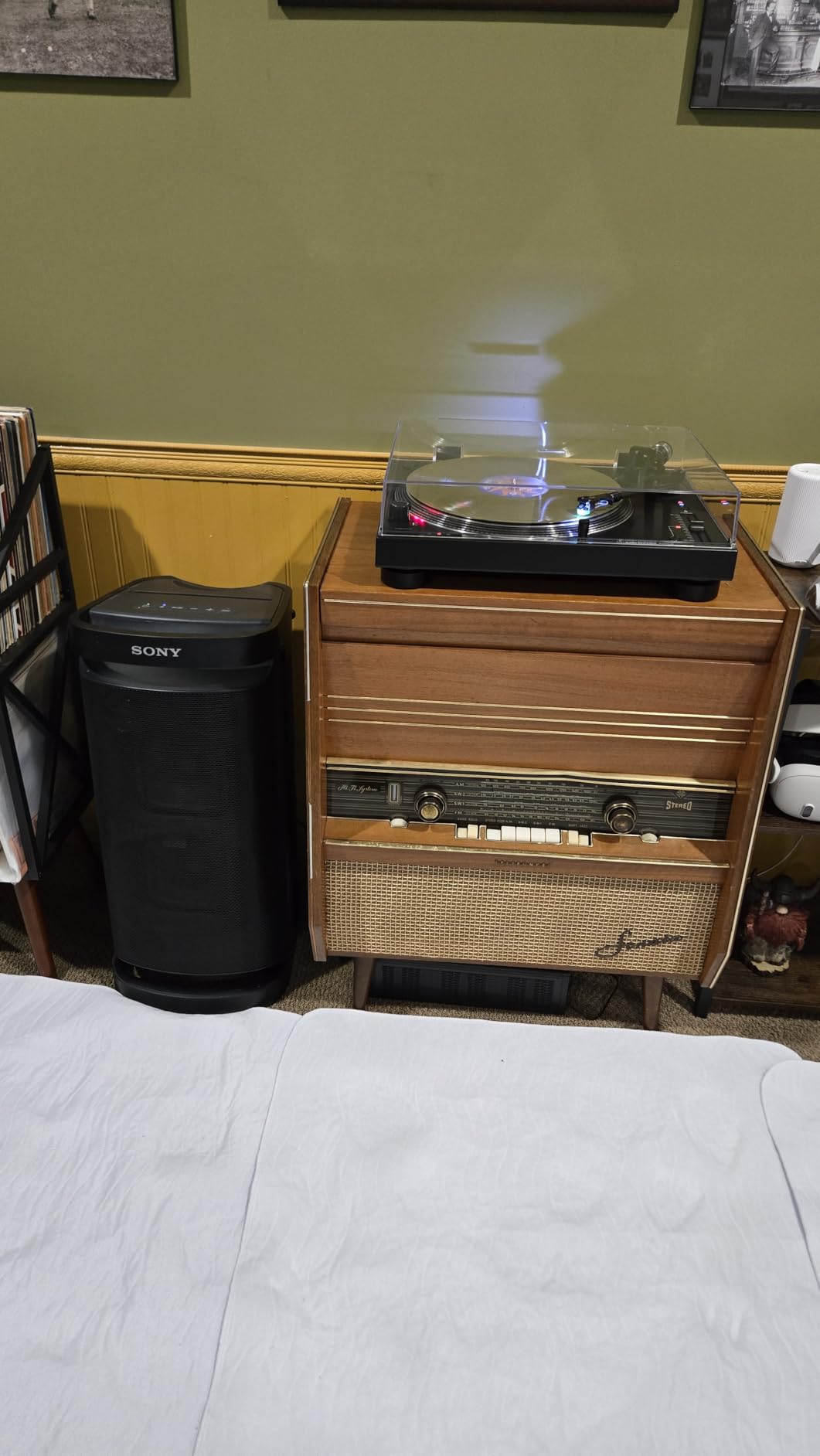
If your setup moves between a laptop, a speaker and a mixer, the Bluetooth path saves cable swapping, and the wired RCA and USB outputs are still there when you want them. The 33, 45 and 78 RPM coverage is the one scratch-adjacent advantage over the wired LP120X, and its damped base helps in a small room where a subwoofer sits close.
Where it falls short?
It is a listening deck with a pitch fader, not a scratch deck. There is no reverse play, the tonearm lacks height adjustment, and the rumble reports on the wireless path are the reason we would run this wired into a mixer and only use Bluetooth as a backup.
Buyers also flag the supplied plastic 45 RPM adapter as low quality, which is a one-minute swap for a better one.
We earn a commission, at no additional cost to you. CERTAIN CONTENT THAT APPEARS ON THIS SITE COMES FROM AMAZON. THIS CONTENT IS PROVIDED 'AS IS' AND IS SUBJECT TO CHANGE OR REMOVAL AT ANY TIME.
3. Numark PT01 Scratch – The Portable Practice Deck
Numark PT01 Scratch Portable DJ Turntable
★★★★★★★★★★Battery or AC powered
Scratch slide switch
USB and aux input
Built-in speaker and handle
- Runs on AC adapter or six D batteries
- Adjustable replaceable scratch slide switch for left and right handed play
- USB interface plus aux input and headphone output
- Built-in speaker and carrying handle make it self contained
- Low risk first deck with plenty of community mods
- Included crossfader feels flimsy and behaves like a toggle
- Lightweight plastic platter can buckle and skip under hard scratching
- Onboard speaker sound is modest
- Lid latch can snap if carried by the cover
The PT01 Scratch is the only deck here you can genuinely take anywhere, and for a beginner that changes how often you practise. It runs on AC or six D batteries, has a carrying handle, comes with its own dust cover and slipmat, and has a built-in speaker so you do not need anything else to hear a cut.
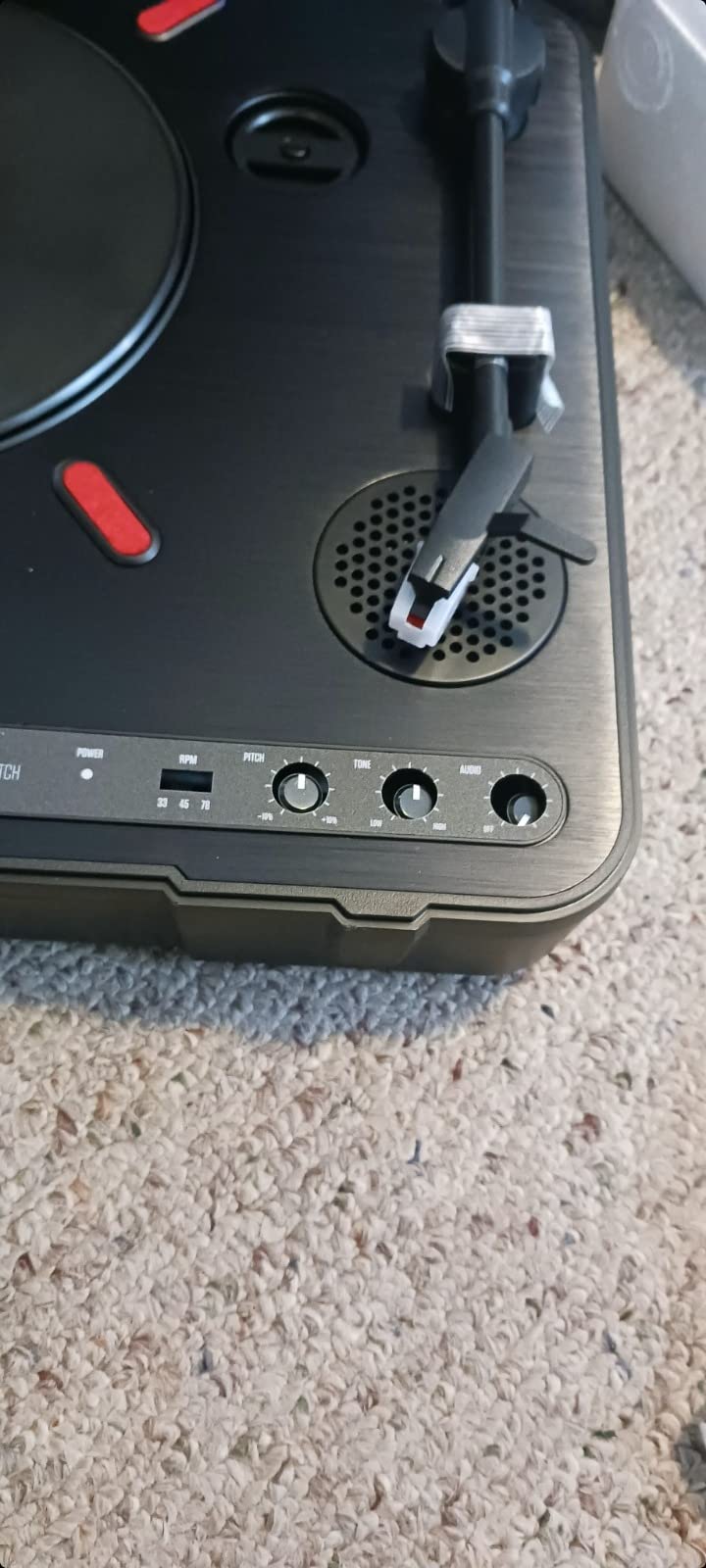
The scratch slide switch is adjustable for left or right handed play and user replaceable, which is clever, because the included one is the weakest part. Owners routinely swap it. There is also a USB interface for recording sessions and a 1/8 inch aux input so you can play beats from a phone while you practise.
None of that changes the core limitation. The switch behaves more like a toggle than a crossfader, so timing habits formed on it take work to transfer to a club mixer.
Best used as a travel practice rig
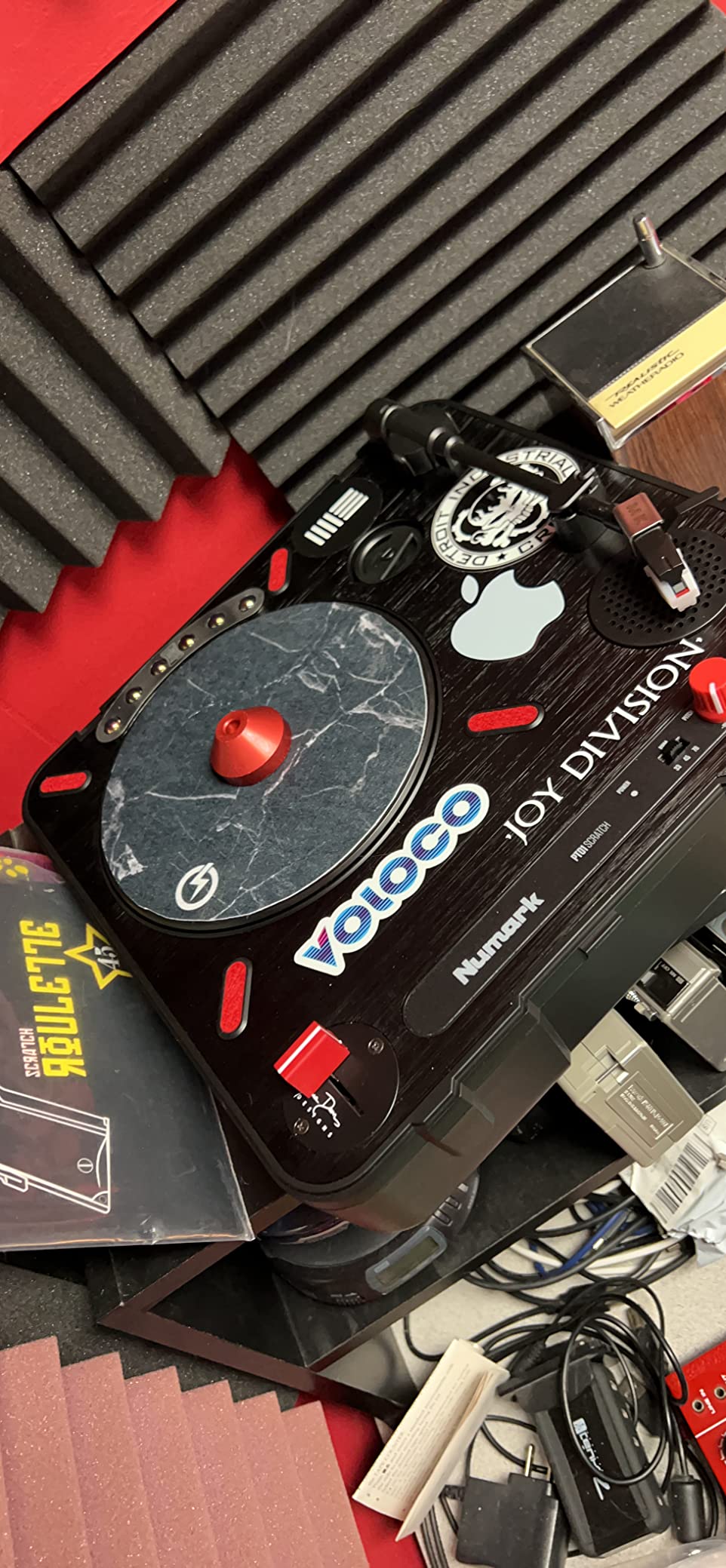
Dorm rooms, balconies, a friend’s flat, a busking case. Six D batteries and a handle solve every one of those. The built-in speaker is only ever good enough to check your timing, but for that job it is enough, and the aux input means you can cut over a phone track without any other gear.
The community mod scene is an argument in its favour. Replacement faders, battery upgrades and stability mods are all widely documented, so a used one is a weekend project rather than a write-off.
Where it falls short?
The plastic platter is light and can flex under aggressive scratching, which shows up as needle skip, and owners also report the cover latch snapping if you carry the unit by the lid. Backcueing with the supplied 45 adapter is impractical and there is no platter start or stop control.
Treat it as a practice deck, not a performance deck. If you need a real fader, a mixer is the only answer.
We earn a commission, at no additional cost to you. CERTAIN CONTENT THAT APPEARS ON THIS SITE COMES FROM AMAZON. THIS CONTENT IS PROVIDED 'AS IS' AND IS SUBJECT TO CHANGE OR REMOVAL AT ANY TIME.
4. Pioneer DJ PLX-500 – Club Layout Without the Club Price
Pioneer DJ PLX-500 Direct Drive Turntable
★★★★★★★★★★Club-style direct drive
Adjustable tonearm height
USB output
Adjustable feet and voltage select
- Spins up and stops faster than the comparable AT-LP120XUSB per reviewers
- Adjustable tonearm height opens up cartridge upgrades
- Heavy stable chassis with adjustable feet
- USB output plus switchable phono and line out
- 110V and 220V selector switch under the platter
- RCA output cable is permanently attached and short
- No ground terminal on the deck
- No automatic tonearm return
- Built-in preamp is usable but modest
The PLX-500 is the layout that teaches club habits. Start and stop buttons sit where a working DJ expects them, the pitch reset is a single press, and the feet have long travel so you can level the deck on a wobbly table. At 12.7 kg it stays planted when you lean on it.
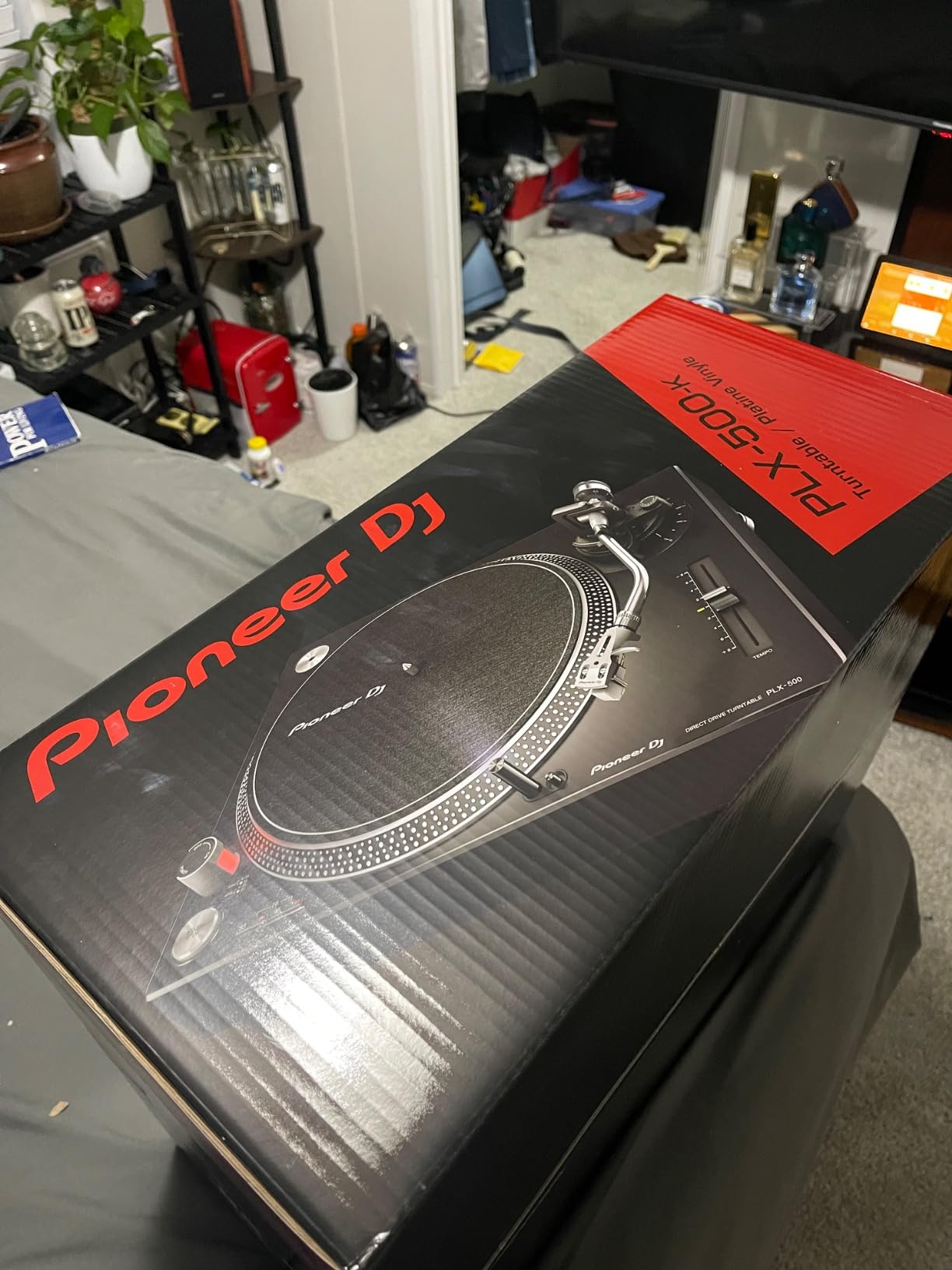
Owners consistently single out two things. The motor spins up and brakes faster than the AT-LP120XUSB at a similar tier, which is exactly what a cut needs, and the tonearm height adjustment is a feature the AT-LP120XUSB dropped, letting you correct vertical tracking angle before moving up to a better cartridge.
The USB output lets you record vinyl to a computer, and the phono and line switch covers most amp and mixer hookups.
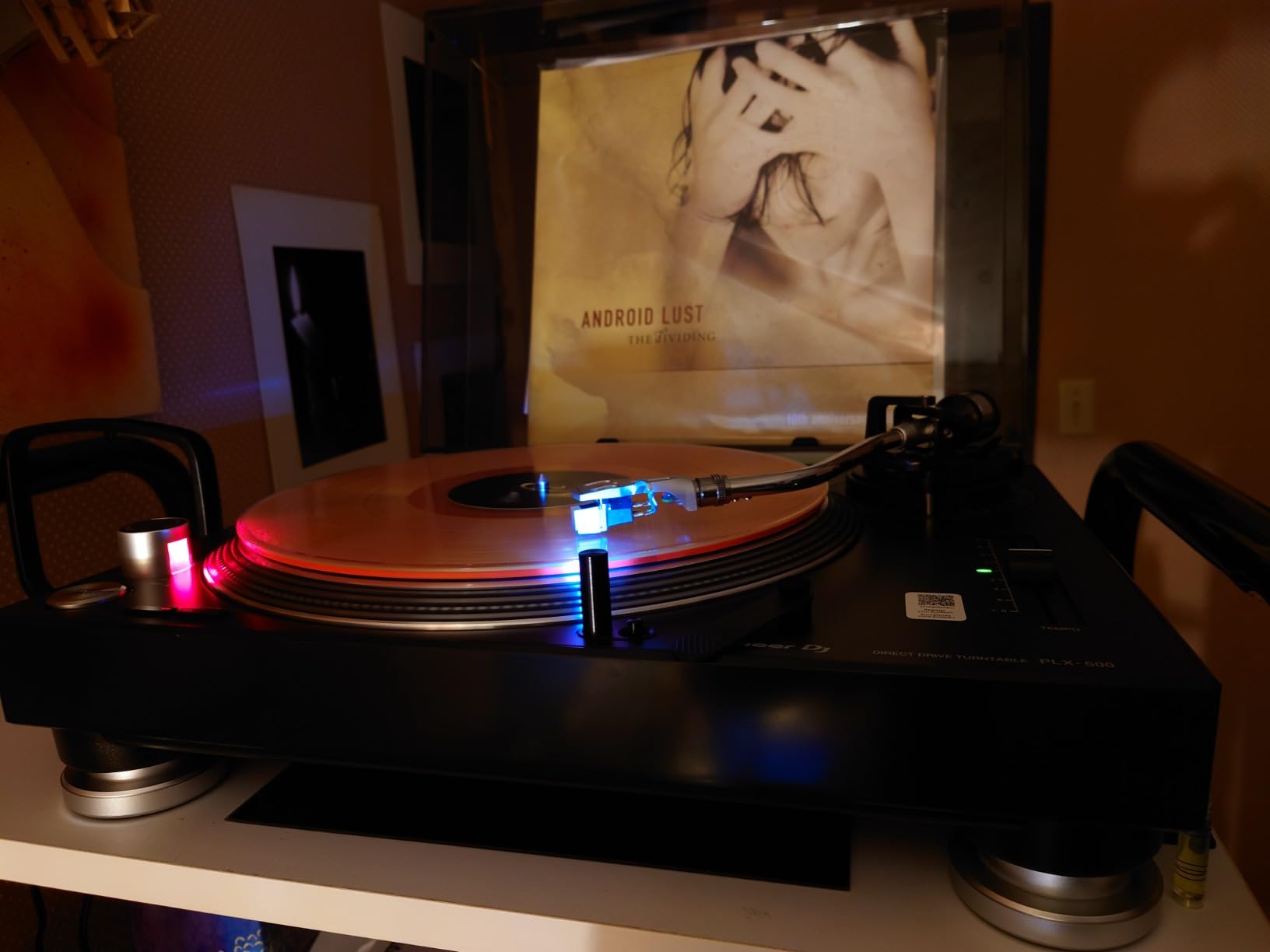
Why reviewers rate it above the AT-LP120XUSB?
It is not a sound-quality contest. It is response and layout. A faster brake means your reverse cut lands on the beat, and the club layout means that when you eventually rent a PLX-1000 or a Technics in a venue, nothing is in a new place.
The adjustable feet also matter in a small flat. A deck that rocks under a hard push makes timing corrections twice as hard.
Where it falls short?
The RCA output cable is permanently attached and short, and there is no ground terminal on the deck, which is friction when you want a longer run to a mixer. There is no automatic tonearm return, and the built-in preamp is fine but noticeably below a good external unit.
Owners also report low frequency feedback from nearby subwoofers, since the vibration isolation is limited. Keep it off a sub cabinet.
We earn a commission, at no additional cost to you. CERTAIN CONTENT THAT APPEARS ON THIS SITE COMES FROM AMAZON. THIS CONTENT IS PROVIDED 'AS IS' AND IS SUBJECT TO CHANGE OR REMOVAL AT ANY TIME.
5. Audio-Technica AT-LP140XP – Best Deck Here With Reverse Play
Audio-Technica AT-LP140XP-BK Direct-Drive Professional DJ Turntable, Hi-Fi, Fully Manual, 3 Speed, High Torque Motor
★★★★★★★★★★High-torque servo motor
Reverse play and quartz lock
Mass-damped die-cast platter
VTA tonearm
- Only deck in this group with reverse play plus quartz lock
- High-torque direct-drive servo motor with speed stabilisation
- Mass-damped anti-resonance die-cast aluminum platter
- Tonearm height adjustment and plug-in target light
- Handles mono and 78 RPM cartridges
- Tonearm lift is clunky and feels flimsy
- Feet do not isolate bass feedback well
- Included AT-XP3 cartridge is a serviceable starting point
- Blue target light is more decorative than useful
Reverse play is the spec that separates this deck from every other AT in the range, and for scratching it is not a novelty. Reverse cuts, backspin phrases and long wow-style passages all need a platter that will run backwards under control, and very few decks in this price bracket do it.
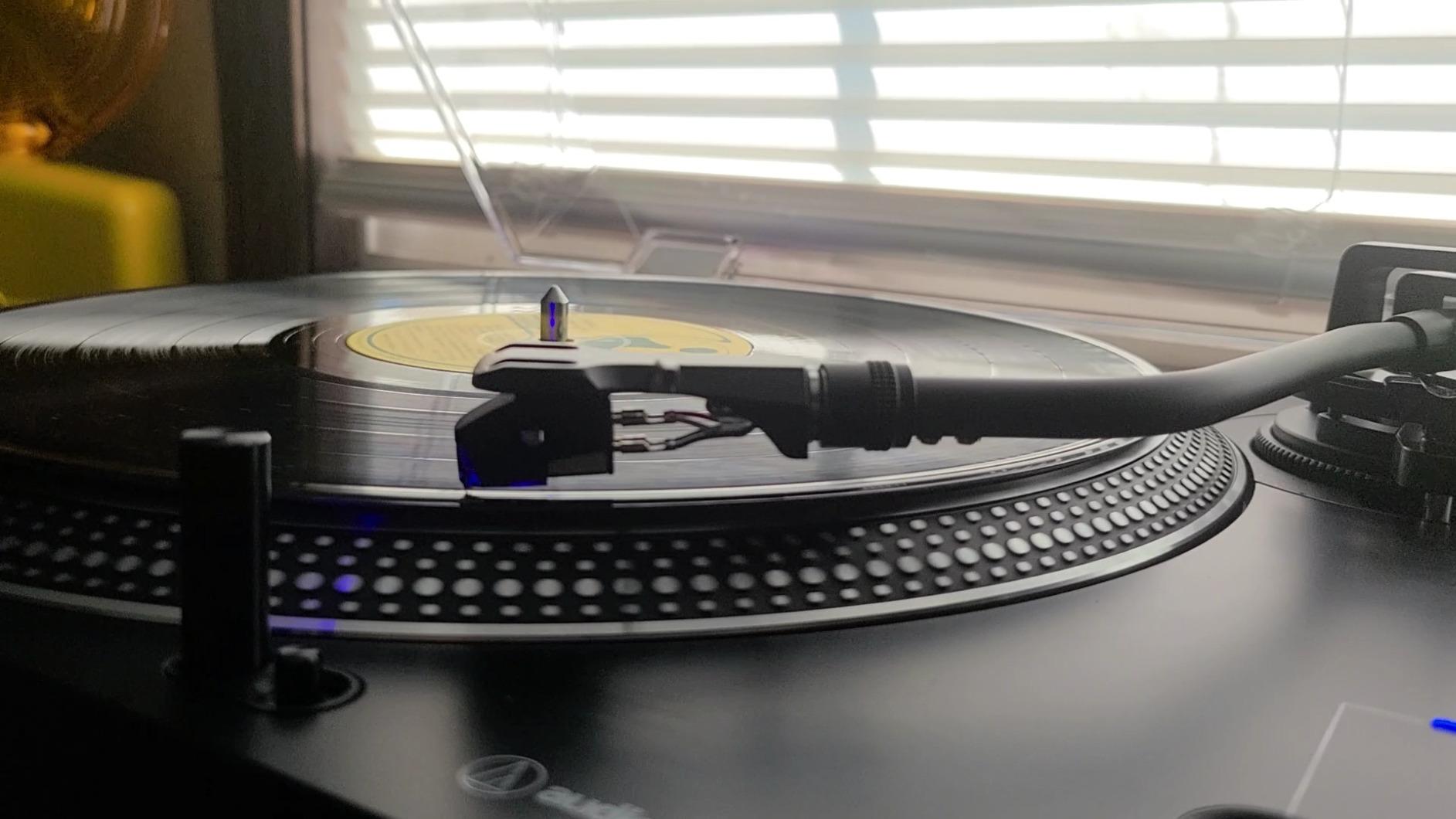
The rest of the package is built for the same job. A high-torque direct-drive servo motor with speed stabilisation, a professional anti-resonance mass-damped die-cast aluminum platter, and quartz lock so the pitch fader snaps back to exactly zero when you let go of it.
Owners also praise the sound for the money. It takes mono and 78 RPM cartridges well, which is unusual for a deck sold as a DJ unit, and the balanced S-shaped tonearm has height adjustment, so cartridge upgrades are straightforward.
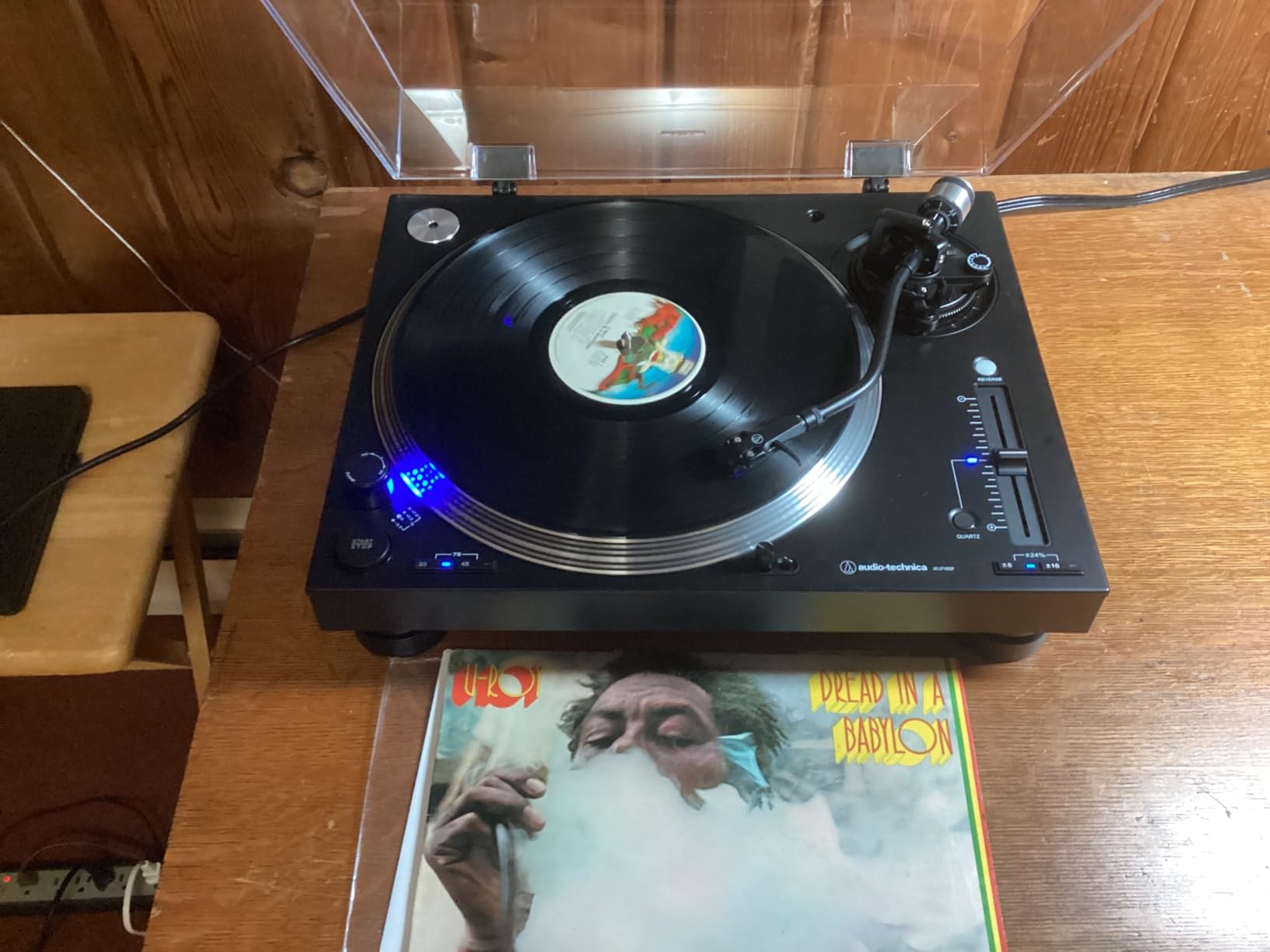
When reverse is the reason to buy?
If you are working on routines that use backspin, the LP140XP removes a compromise you would otherwise accept forever. Combined with quartz lock, it also gives a pitch reset precise enough to trust when matching two turntables.
It is the only AT model here with a 12 year warranty on the box, which is a decent signal about the motor.
Where it falls short?
The tonearm lift is the most repeated complaint in the reviews. It feels clunky and flimsy, and some owners think it devalues the deck. Under a bass-heavy room the feet pass feedback into the chassis, so isolate it or accept some rumble.
The included AT-XP3 cartridge is an entry point rather than a star, and the blue target light looks better than it cues.
We earn a commission, at no additional cost to you. CERTAIN CONTENT THAT APPEARS ON THIS SITE COMES FROM AMAZON. THIS CONTENT IS PROVIDED 'AS IS' AND IS SUBJECT TO CHANGE OR REMOVAL AT ANY TIME.
6. Pioneer DJ PLX-1000 – Club-Weight Torque
Pioneer DJ PLX-1000 Professional Direct-Drive Turntable, Black
★★★★★★★★★★Instant high-torque start-up
38 pound chassis
8/16/50 percent multi-pitch
DVS-ready outputs
- High-torque direct drive with instant stable start-up
- Heavy high-rigidity chassis that resists vibration
- Multi-pitch control with 8/16/50 percent ranges and a reset button
- Removable RCA output and ground wire for DVS setups
- VTA adjustment and quick-release headshell
- Cartridge not included
- No built-in phono preamp so a phono stage or mixer is required
- No 78 RPM speed and no hinged dust cover
- Electrical hum reported on a small number of models
The PLX-1000 is where the argument stops being about torque. At 38 pounds with a high-rigidity chassis, you can lean into the platter during a hard cut and it does not move, and the high-torque direct drive delivers the instant start-up that separates a landed cut from a near miss.
The multi-pitch control is a working DJ feature rather than a hi-fi one. 8, 16 and 50 percent ranges with a reset button cover everything from tight key matching to half-drum speed practice, and the removable RCA output plus ground wire mean it can carry a DVS signal when you move to hybrid sets.
Owners describe it as dead quiet with no audible tonearm bearing noise, and the quick-release headshell plus VTA adjustment make cartridge changes painless.
What you gain moving up to it?
Brake authority. On a lighter deck, stopping the platter late is a timing error you can hear. On this one, the platter stops when you tell it to, and that single change makes every technique you practise cleaner from day one.
The 8/16/50 percent pitch ranges also open up slow scratch and half-speed battle practice that smaller ranges cannot reach.
Where it falls short?
It ships without a cartridge, and there is no built-in phono preamp, so you need both a cartridge and a phono input on your mixer. There is no 78 RPM speed and no hinged dust cover, which matters if you own 78s.
A small number of models arrived with electrical hum that needed a return, and some buyers think the external plastic finish does not match the tier. Neither is common, but both are worth checking on arrival.
We earn a commission, at no additional cost to you. CERTAIN CONTENT THAT APPEARS ON THIS SITE COMES FROM AMAZON. THIS CONTENT IS PROVIDED 'AS IS' AND IS SUBJECT TO CHANGE OR REMOVAL AT ANY TIME.
7. Reloop RP-4000 MK2 – Club Layout With An Honest Weak Spot
Reloop RP-4000 MK2 Professional High Torque Turntable System
★★★★★★★★★★Quartz direct drive
Ortofon OM cartridge included
8 percent pitch fader
S-shaped tonearm
- Includes an Ortofon OM pickup and headshell so no cartridge purchase is needed
- Pro DJ control layout at a lower tier
- Quartz-driven motor keeps speed steady for casual play
- Workable for home listening and light DVS sessions
- Motor torque is weaker than advertised with slow 1 to 3 second start and stop times
- Platter surface is not smoothly finished and feels gritty
- Loose buttons and sliders
- Hardwired RCA and power cables
- Weak vibration isolation passes bass feedback into the cartridge
RP-4000 MK2 divides opinion sharply, because it serves two different jobs. As a home and light DVS deck with a bundled Ortofon pickup it is well liked. As a scratch deck, the complaints repeat: reviewers report start and stop times of one to three seconds, and say that makes backspin and forward cueing a real struggle.
That is not a small complaint. A slow brake is the difference between a clean cut and a late one every single time.
Where it still works?
The bundled Ortofon OM pick-up and headshell mean you can plug it into a mixer and start playing records immediately with nothing else to buy. The quartz-driven motor holds speed steadily for listening and light mixing, and the pro layout keeps your muscle memory pointed at the right controls.
If you are digitising a collection or practising beatmatching, that is enough. The 8 percent pitch range covers standard tempo work.
Why we rank it low for scratching?
The slow start and stop times are the whole story. Add loose buttons and sliders, a gritty platter surface and hardwired cables that complicate repair, and this is a deck you tolerate rather than one you practise on daily.
Its vibration isolation is also weak, so bass feedback reaches the cartridge. In a room with a subwoofer nearby, expect a dirty signal.
We earn a commission, at no additional cost to you. CERTAIN CONTENT THAT APPEARS ON THIS SITE COMES FROM AMAZON. THIS CONTENT IS PROVIDED 'AS IS' AND IS SUBJECT TO CHANGE OR REMOVAL AT ANY TIME.
8. Reloop RP-7000 MK2 – The Big Reloop With Buttons You Can Feel
Reloop RP-7000 MK2 Professional Upper Torque Turntable System, Black
★★★★★★★★★★Power-Torque direct drive
Extra-heavy rigid body
Forward and reverse play
Universal SME mount
- Power-Torque drive delivers convincing start
- stop and backspin
- Extra-heavy high-rigidity body for damping and isolation
- Separate start and stop button plus forward and reverse play buttons
- Height-adjustable tonearm base and anti-skate
- Universal SME connection broadens cartridge choice
- Cartridge is not included
- Build finish falls short of the price with plastic feeling surfaces
- Needs an external phono preamp or a mixer phono input
- Heavy chassis is awkward to move between setups
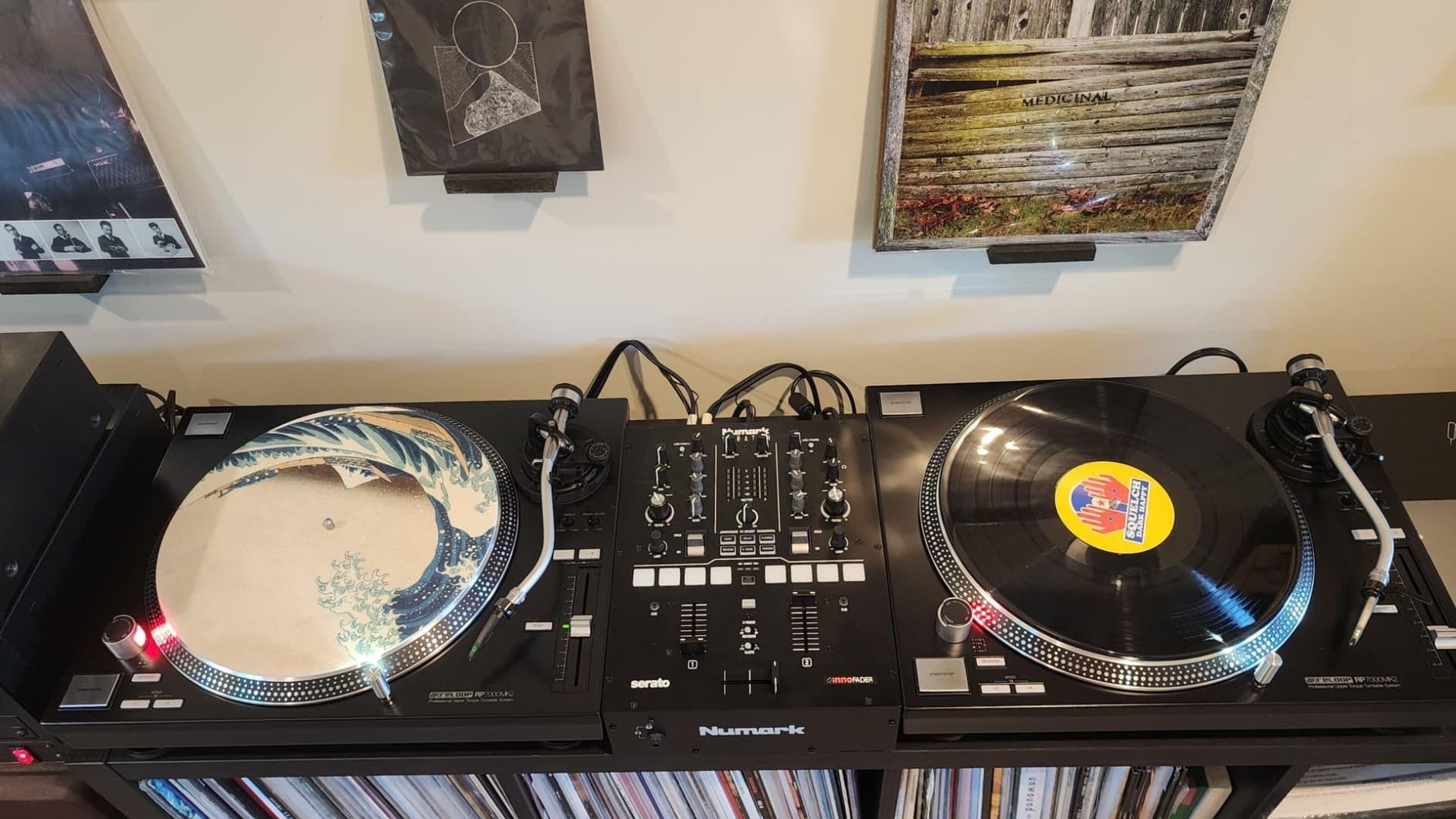
The RP-7000 MK2 is a club deck with a different control philosophy from the Technics and Pioneer crowd. You get a separate start and stop button plus dedicated forward and reverse play buttons, which means you can trigger a reverse without flipping a switch while the pitch is up.
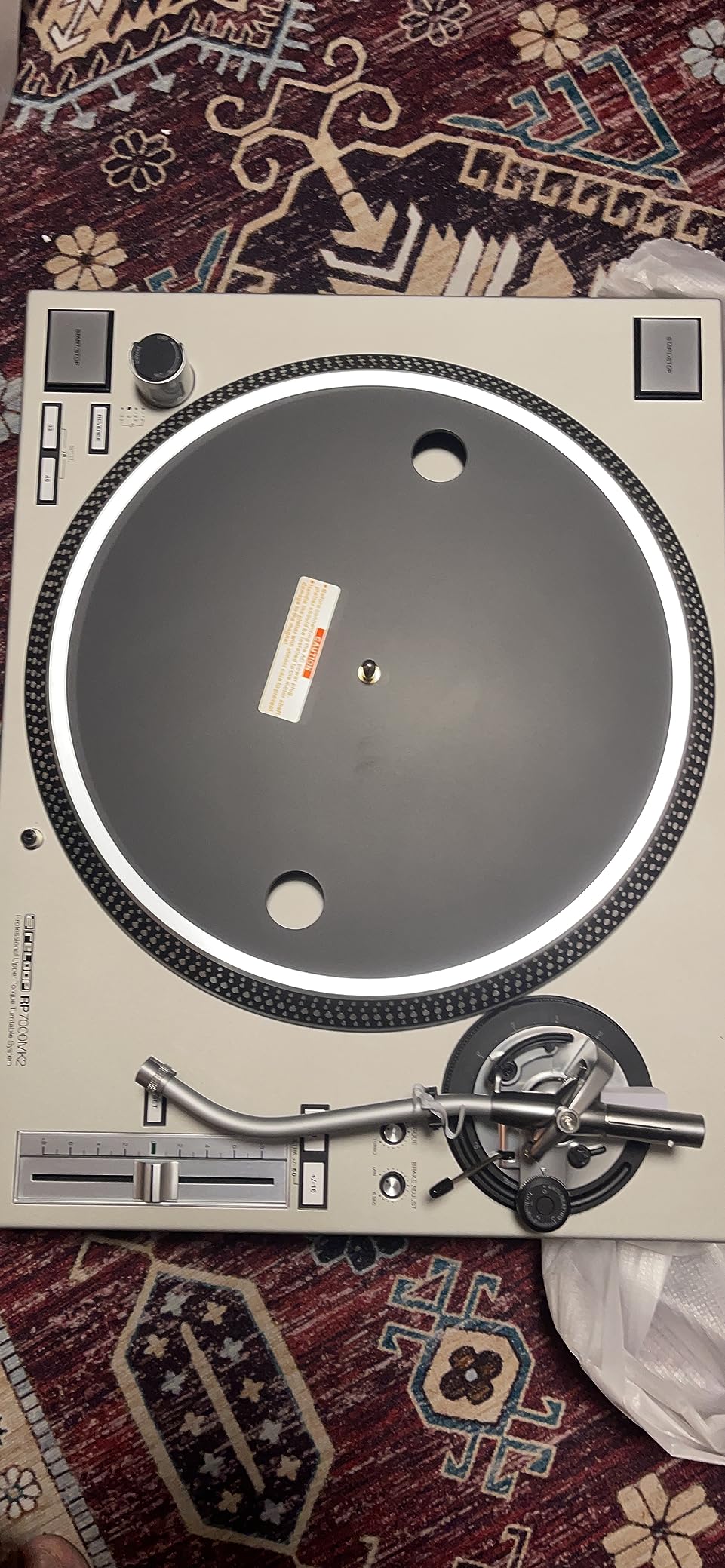
Owners rate the Power-Torque drive as convincing for start, stop and backspin, and the extra-heavy high-rigidity body does damp vibration properly. At 11.2 kg it is a two-hand carry, which is a fair trade for stability.
The height-adjustable tonearm base with anti-skate and the universal SME connection make it easy to fit a cartridge suited to scratching.
Why DJs keep recommending it?
It ranks at the top of its sales category, and the reason is the control set. Having reverse on a dedicated button changes how you build a routine, and the extra mass means a hard forward cut does not push the deck out of position.
For a battler who wants control surfaces rather than a single pitch fader, that combination is rare in this bracket.
Where it falls short?
No cartridge is included, so the effective cost is higher than the badge suggests, and you need an external phono preamp or a mixer with a phono input. Owners regularly call the build finish out of step with the price tier, pointing at plastic-feeling surfaces.
This deck also carries the biggest share of one-star reviews in this group, so read the negatives before you commit.
We earn a commission, at no additional cost to you. CERTAIN CONTENT THAT APPEARS ON THIS SITE COMES FROM AMAZON. THIS CONTENT IS PROVIDED 'AS IS' AND IS SUBJECT TO CHANGE OR REMOVAL AT ANY TIME.
9. Reloop RP-8000 MK2 – A Hybrid Instrument, Not a Plain Deck
Reloop Upper Torque Hybrid Turntable Instrument RP-8000-MK2
★★★★★★★★★★Eight performance pads
Built-in BPM and key display
Heavily damped chassis
Serato DJ Pro ready
- Eight performance pads with colour coded modes including platter play
- Built-in screen shows BPM and key with ultra-pitch setting
- Very heavy well damped chassis for stable low noise playback
- Users report better build and finish than the lower Reloop models
- Works across a wide range of DJ software including Serato DJ Pro
- Cartridge and dust cover not included
- Awkward power switch placement for a two-deck setup
- Some models arrived with a UK style power cable
- Chemical plastic odour reported by some owners
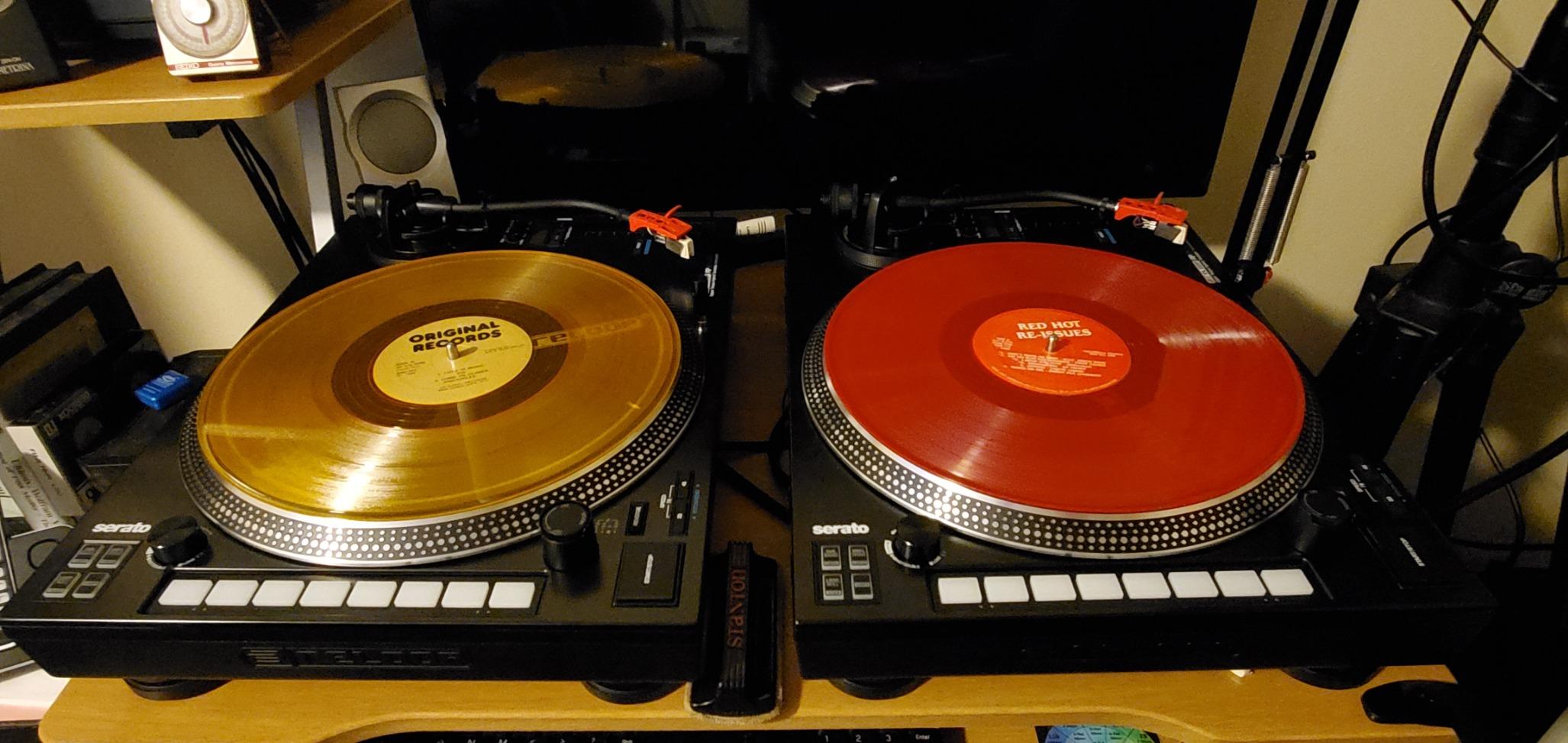
It is a different object from the nine decks around it. It is a hybrid instrument built for Serato DJ Pro, with eight performance pads, a display showing BPM and key, and a chassis reinforced with extra metal, rubber and moulding compound for vibration damping.
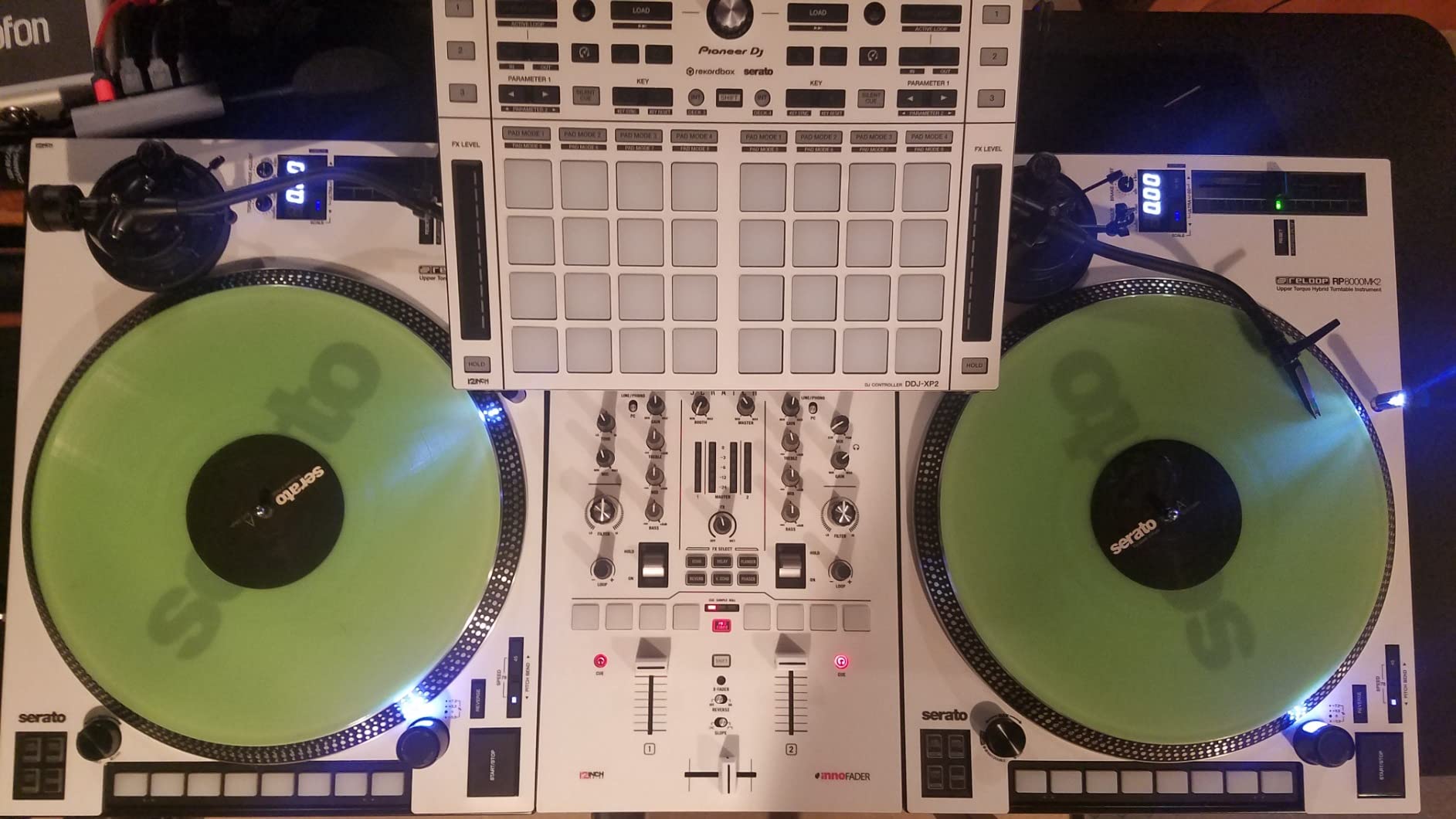
Platter play mode is the feature that catches people. The pads can drive platter speed, so you can bend a record musically and freeze it mid-phrase rather than treating the platter purely as a scratching surface. For a scratcher building live routines rather than battling, that is genuinely useful.
Owners also rate the damping and the finish above the lower Reloop models, and the wide software support means it is not locked to one ecosystem.
Who it suits?
Hybrid DJs who play vinyl and digital in the same set, and scratchers who want to trigger samples and loops from the deck itself. The BPM and key display saves a laptop screen and keeps your head up during a live routine.
The heavily damped chassis also means it behaves in a loud room, which is where a lot of hybrid work happens.
Where it falls short?
Neither a cartridge nor a dust cover is included, so budget for both. The power switch placement is awkward when you run two decks, there is no storage slot for a 45 adapter, and some owners report a chemical plastic odour that never fully dissipates.
It is also among the least reviewed decks here at 130 ratings, so the long-term picture is thinner than for the AT and Pioneer models.
We earn a commission, at no additional cost to you. CERTAIN CONTENT THAT APPEARS ON THIS SITE COMES FROM AMAZON. THIS CONTENT IS PROVIDED 'AS IS' AND IS SUBJECT TO CHANGE OR REMOVAL AT ANY TIME.
10. RANE Twelve MKII – The Best Digital Scratch Surface
RANE Twelve MKII Motorized DJ Turntable
★★★★★★★★★★12 inch motorized control disc
5.0 kfcm motor
DVS and USB MIDI
8 hot-cue triggers
- Full 12 inch motorized acrylic control disc feels closer to real vinyl than smaller controllers
- 5.0 kfcm high-torque motor with high and low torque adjust and 3600 ticks of resolution
- Works with Serato DJ Pro
- Traktor and Virtual DJ via DVS and USB MIDI
- OLED screen plus 8 hot-cue triggers and a dual-mode touch strip
- Requires DJ software and a computer to be useful
- Scratch feel differs from an analog vinyl deck
- No phono preamp or cartridge for analog only use
- Bulkier than a compact MIDI controller
Owners who moved up from smaller controllers consistently say the 12-inch motorized disc is the closest digital experience to a real turntable. A full size black acrylic control disc driven by a 5.0 kfcm motor with adjustable high and low torque behaves far more like a record than a jog wheel, and the 3600 ticks of resolution make the movement precise rather than approximate.
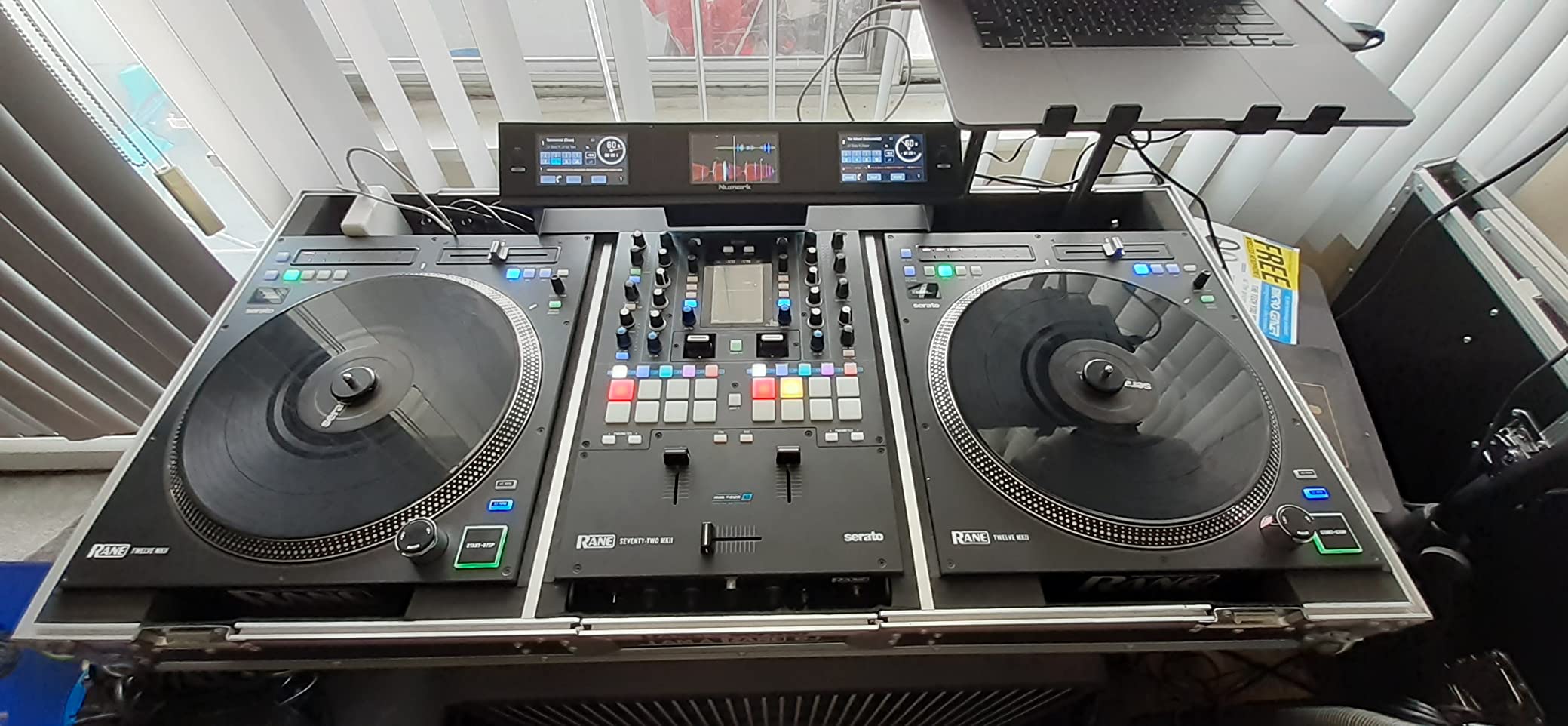
It is also genuinely multi-platform. DVS and USB MIDI control covers Serato DJ Pro, Traktor and Virtual DJ, the pitch offers 8, 16 and 50 percent ranges with a dual-resolution detented slider, and the OLED screen shows BPM and control status so you are not staring at a laptop.
For scratching without hauling vinyl, this is the closest thing to a real deck that still plugs into a computer.
Where it beats a vinyl deck?
Scratching on timecode vinyl means the sound comes from the software, so there is no surface noise, no worn record and no risk of a cracked jump track in front of a crowd. The 8 hot-cue triggers and the touch strip put sample and search control under your hand, and the detented pitch slider gives you repeatable positions.
For anyone who wants to develop a routine without a crate of vinyl, that is a real advantage.
Where it falls short?
It needs DJ software and a computer or the SEVENTY-TWO MKII to do anything, and the scratch feel still differs from analog vinyl. There is no phono preamp or cartridge, and at 22.7 pounds it is bulkier than a compact MIDI controller.
It is a specialist tool. If your scratching happens in front of a crowd on a real record, it complements a deck rather than replacing one.
We earn a commission, at no additional cost to you. CERTAIN CONTENT THAT APPEARS ON THIS SITE COMES FROM AMAZON. THIS CONTENT IS PROVIDED 'AS IS' AND IS SUBJECT TO CHANGE OR REMOVAL AT ANY TIME.
How to Choose a Turntable for Scratching (Specs That Matter)?
Most spec sheets bury the numbers that decide whether a deck scratches. Here is the short list, in priority order.
Start-up and braking torque. The single most important spec. A deck that takes two seconds to stop will make every late cut. Look for a high-torque motor and, ideally, adjustable start and stop torque.
Platter mass and anti-resonance. Heavy platters resist being pushed. Mass-damped die-cast aluminum platters are the norm on anything serious.
Pitch fader feel. Short throw and a smooth fade. Wider pitch ranges plus a pitch reset are what let you match two decks or practise half-speed.
Reverse play. Not universal. If your routines use backspin, check this box first.
Serviceable parts. Replaceable crossfaders, headshells, styluses and cables decide whether a deck lasts or ends up in a skip.
Now for what to ignore. Bluetooth adds a compression stage and a possible rumble path. USB recording is for archiving, not for cutting. A built-in phono preamp saves money but has no effect on how the platter feels. And tonearm quality, which beginners fixate on, is almost irrelevant to scratching: rest it or remove it and you will never use it.
One more thing worth knowing before you buy. On r/DJs and r/Beatmatch, the Vestax, Stanton T100 and Gemini PDT battle decks get recommended constantly for pure scratching, and none of them appear on typical roundups. They are worth researching if battling is the goal, but the ten decks here are the ones with verifiable owner records.
How to Buy a Used Scratch Turntable Without Regret?
A used club deck is the cheapest route into proper torque, because these things were built to be transported and hit for a decade. The inspection takes ten minutes if you know what to look for.
Do the strobe check. Watch the platter edge under the strobe light with the pitch fader centred. Dotted bands should hold still. If the pattern crawls, the motor is not holding speed.
Time the start and stop. Press start and press stop. Anything over about half a second to reach speed or a second to brake is a deck you will fight.
Push the platter. Push it sideways while running, then nudge it forward and back. Any wobble, rattle or speed dip means a worn bearing or a bent platter edge.
Test the pitch fader for drift. Push it to each end, hold for a few seconds and release. It should return to centre. A fader that stays off-centre will slowly pull your whole set out of time.
Listen for rumble. Play a record with the volume up and your ear near the plinth. Worn bearings and motor isolation failures are audible as low frequency noise.
Check what is missing. Dust cover, headshell, RCA cables, power lead and cartridge. Missing the headshell or a hardwired cable is a bad sign about how it was treated.
Used-market anxiety is the most common thread on r/Beatmatch and r/turntables, and it is mostly about condition rather than model. Condition tells you far more than the badge on the box.
What Vinyl and Accessories You Need to Scratch?
You need far less than you think, and less than a product page implies. A slipmat, a cartridge that can take a beating, and records worth cutting.
Cartridge. A scratch-rated cartridge with a spherical or conical stylus and a robust cantilever will survive beat scratches that destroy a delicate elliptical. The Ortofon Scratch range and Shure M44-7 are the names turntablists reach for. If your deck shipped without one, budget for it separately, as the PLX-1000, RP-7000 MK2 and RP-8000 MK2 all do.
Vinyl. Start with 12-inch pressings. They have more surface to work with, they are cheaper at the crate, and a 7-inch record gives you roughly half the runtime, which bites during a routine.
Tonearm. Rest it or lift it off entirely. Tonearm quality changes nothing about a cut, and a floating arm over the platter while you push the record is a rattle waiting to happen.
Slipmat. The felt mats that ship with these decks are fine. A heavier or higher-grip mat is a cheap way to stop a record sliding on a long reverse, though it changes the feel of your cuts, so change it deliberately.
Frequently Asked Questions
What is the best scratch turntable for 2026?
The Audio-Technica AT-LP120XUSB is the best scratch turntable for most people in 2026, because the die-cast aluminum platter holds speed when pushed and 9033 owner reviews describe few real problems. Choose the Pioneer DJ PLX-1000 for genuine club-weight torque, or the Numark PT01 Scratch if portability matters more than fader quality. All three need a mixer with a real crossfader.
What is considered the best turntable of all time?
The Technics SL-1200 line is the answer most working DJs give, and the MK7 is the current production version. It has been the club standard since the early 1970s, and enthusiasts still argue about older machines like the SP-10, EMT, Denon DP100M and Kenwood L-07D in audio forums. The PLX-1000 is the closest modern rival on torque.
What do DJs use to scratch?
DJs scratch with a direct-drive turntable paired with a mixer that has a short-throw crossfader, usually an Innofader or DJM unit. The deck gives you a heavy platter to push and a pitch fader to cut the signal; the mixer gives you the fader your finger rides. A turntable on its own cannot scratch, and the scratch switch on portable decks is only a practice compromise.
What is the best portable scratch turntable?
The Numark PT01 Scratch is the most practical portable option, running on AC power or six D batteries with a carrying handle, built-in speaker and a replaceable scratch slide switch. The Stanton STX is worth considering if a real Innofader feel matters more than size. Either way, the built-in switch is not a proper crossfader, so skills take time to transfer.
Do I need a mixer to scratch?
Yes. A mixer is where the crossfader lives, and the crossfader is the instrument you actually perform on. A turntable on its own lets you practise moving the record but not cutting sound. Budget for a two-channel DJ mixer with a replaceable short-throw fader, plus headphones, before you buy any deck.
Is the Numark PT01 Scratch good for learning to scratch?
It is good for learning timing, and the community mod scene makes it easy to keep alive, but owners consistently report the included crossfader feels flimsy and behaves more like a toggle. That means short cuts transfer to a club mixer less cleanly than they would from a real fader. Treat it as a travel practice deck, not a performance deck.
Final Verdict: Which Scratch Turntable Should You Buy?
Start with the Audio-Technica AT-LP120XUSB. It has the weight, the layout and the owner history to carry you through a year of practice, and nothing on its spec sheet will stop you mid-routine. Add a two-channel DJ mixer with a short-throw fader and you have a complete scratch setup.
Move up to the Pioneer DJ PLX-1000 when slow brakes start limiting your cuts, or to the Audio-Technica AT-LP140XP the day you need reverse play and nothing else in the range offers it. Pick the Numark PT01 Scratch if your only option is practising in places a club-weight deck cannot go, and treat the RANE Twelve MKII as a complement rather than a replacement if you want to scratch without vinyl in the case.
Whatever you choose, buy the mixer at the same time. These are the best scratch turntables in 2026, and the deck is only half of the instrument.