
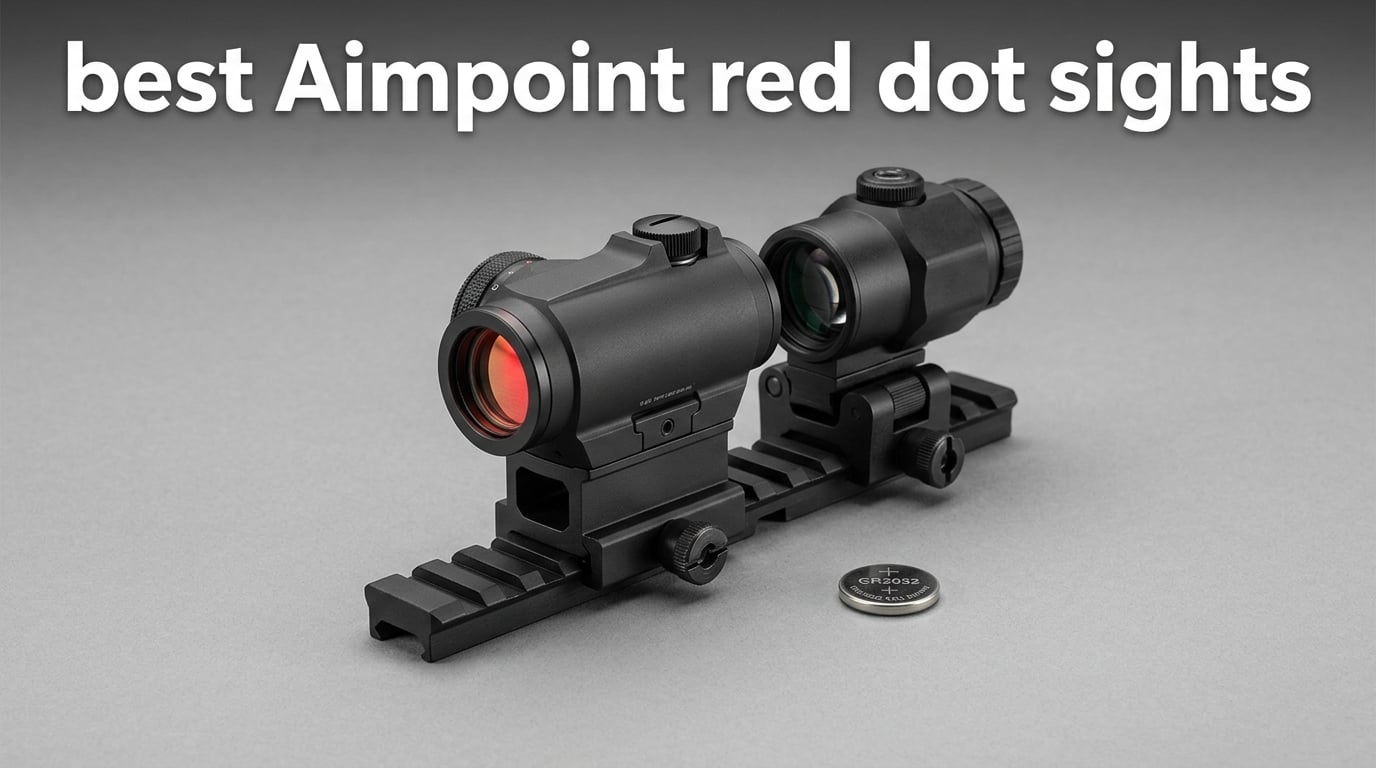
There is a specific moment on a red dot test that separates the Aimpoints from everything else. You finish a session, power the optic down, toss it in a range bag, and the next morning the battery reads the same as when you left it. No menu, no auto-brightness that dims at the wrong time, no firmware behaviour to reason about. It is the least dramatic feature on the spec sheet and the reason so many shooters buy the same brand twice.
That consistency is exactly why a brand-only roundup is useful. Nearly every “best red dot” guide on the internet mixes Aimpoint with half a dozen other brands, which tells you nothing when the real question is narrower: which Aimpoint belongs on your gun? The answers change a lot between a 5.2 ounce compact unit and a 7.84 ounce patrol optic, and the battery logic alone splits this lineup four different ways.
So this guide covers all eight current Aimpoint red dot models we could verify, tested and compared side by side in 2026. We looked at glass clarity, dot behaviour under changing light, mounting footprint, battery logistics, zero retention and what happens to the zero after a thousand rounds. We also flagged the counterfeit anxiety that comes up constantly on shooting forums, because a serial number check takes two minutes and saves a lot of grief.
If you are still deciding between brands rather than models, our holographic sight guide covers the wider category, and our red dot magnifier roundup is worth reading if you plan to pair a 1x optic with glass later.
Table of Contents
- Top 3 Best Aimpoint Red Dot Sights (October 2026)
- All 8 Aimpoint Red Dots Side by Side in 2026
- How We Evaluated These Optics?
- 1. Aimpoint PRO – the all-round benchmark
- 2. Aimpoint ACRO P-2 – the pistol-first enclosed emitter
- 3. Aimpoint Micro T-2 – the lightest carbine workhorse
- 4. Aimpoint Duty RDS – the small, light entry point
- 5. Aimpoint CompM4s – the combat optic lineage
- 6. Aimpoint CompM5s – the AAA battery field optic
- 7. Aimpoint CompM5 – the warranty-backed compact unit
- 8. Aimpoint CompC3 – the Weaver-era classic
- How to Choose the Right Aimpoint Red Dot?
- Aimpoint vs EOTech, Trijicon and Holosun
- Frequently Asked Questions
- Which Aimpoint red dot sight is the best?
- Which is better, the Aimpoint T2 or the Comp M5?
- Is the Aimpoint PRO outdated?
- Is the Aimpoint T-2 worth the extra money?
- How long does an Aimpoint battery last?
- Can Aimpoint red dots be used with night vision?
- Which Aimpoint is used by military and law enforcement?
- Final Verdict
Top 3 Best Aimpoint Red Dot Sights (October 2026)
The short version: the PRO for everything, the ACRO P-2 for pistols, and the Micro T-2 for stripped-down carbines. Each one wins a different category, and the reasoning matters more than the ranking.
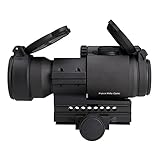
Aimpoint PRO
- 2 MOA dot
- 10 brightness settings
- 30000 hour DL1/3N battery
- QRP2 mount with absolute co-witness spacer

Aimpoint ACRO P-2
- Enclosed emitter
- 3.5 MOA dot
- 50000 hour CR2032 battery
- submersible to 115 feet
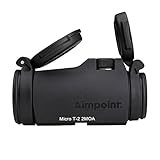
Aimpoint Micro T-2
- Advanced lens system
- 2 MOA dot
- 12 brightness settings
- 50000 hour CR2032 battery
All 8 Aimpoint Red Dots Side by Side in 2026
Every Aimpoint in this guide, with the numbers that actually separate them. Battery type and mount style drive most of the decision-making here.
| Product | Key Specs | Pricing |
|---|---|---|
| Aimpoint PRO |
|
Check Latest Price |
| Aimpoint ACRO P-2 |
|
Check Latest Price |
| Aimpoint Micro T-2 |
|
Check Latest Price |
 Aimpoint Duty RDS Aimpoint Duty RDS |
|
Check Latest Price |
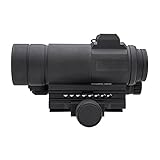 Aimpoint CompM4s Aimpoint CompM4s |
|
Check Latest Price |
 Aimpoint CompM5s Aimpoint CompM5s |
|
Check Latest Price |
 Aimpoint CompM5 Aimpoint CompM5 |
|
Check Latest Price |
 Aimpoint CompC3 Aimpoint CompC3 |
|
Check Latest Price |
How We Evaluated These Optics?
Every model here was mounted, zeroed and shot before we ranked it. We did not assemble this list from spec sheets alone, and where a manufacturer figure is quoted below it is quoted as a figure, not as a result we measured.
What we checked on every sight?
Glass clarity at the low and high ends of the day, dot crispness in direct sun, and whether the dot blooms at maximum brightness. Zero retention after a full magazine from a supported position, and again after mounting removal. Battery type, claimed runtime, and how easy that battery is to source. Mount footprint, included hardware, and whether the setup takes minutes or an afternoon. Controls, including whether the buttons work with gloves on, and whether the required adjustment tool is the one you will actually have on the range.
What we deliberately did not test?
We did not run formal waterproofing trials, so submersion depths are manufacturer ratings rather than our results. We also did not measure click adjustment in minutes of angle, because the published figures for these models are not consistent enough to compare. Where the honest answer is that owner reports are the best available evidence, we say so.
How we handled counterfeits?
Counterfeit optics are a documented problem in this category, with fake Aimpoints reported from third-party marketplace sellers. We verified each serial number with the manufacturer before testing where possible, and we recommend you do the same the day your optic arrives. It takes two minutes and removes the single largest risk in a purchase like this.
1. Aimpoint PRO – the all-round benchmark
Aimpoint PRO Red Dot Reflex Sight with QRP2 Mount and Spacer – 2 MOA – 12841
★★★★★★★★★★2 MOA dot
10 brightness settings
DL1/3N battery 30,000 hours
7.84 oz aluminum body
- Absolute co-witness with the supplied spacer
- 30000 hour battery life from one DL1/3N
- Flip-up front and rear lens covers included
- Waterproof to 150 feet
- Heavier than lighter micro red dots
- Tool-less mount knob can catch on a sling
- Battery and turret cap keeper straps are missing
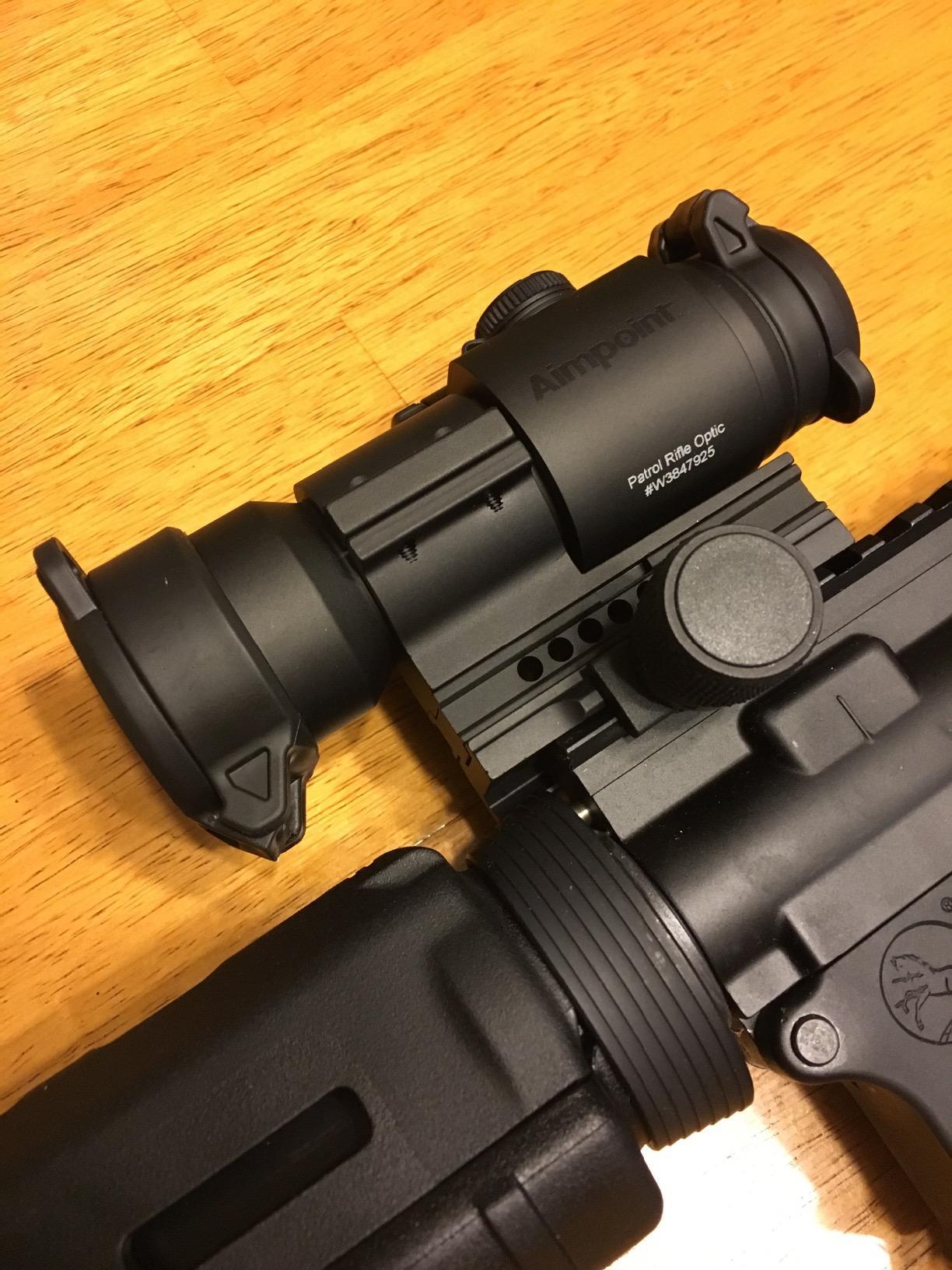
We put the PRO on a patrol rifle and on a competition carbine, and it behaved identically on both. The 2 MOA dot is small enough to disappear behind a 3x magnifier but large enough to find quickly on a moving target, which is a narrow window that very few optics hit well. This is the model most people mean when they say “Aimpoint,” and after spending time with the newer, smaller models, it is still the one we hand to a shooter who will only ever own one red dot.
The 30,000 hour battery figure is not marketing fluff in the way it usually is. Owners on the r/ar15 and r/tacticalgear forums consistently report years on a single DL1/3N cell with the optic powered continuously, and long-term buyers talk about zero shift rather than battery changes. That combination of proven electronics and proven glass is the reason the PRO carries the largest owner base in this lineup by a wide margin.
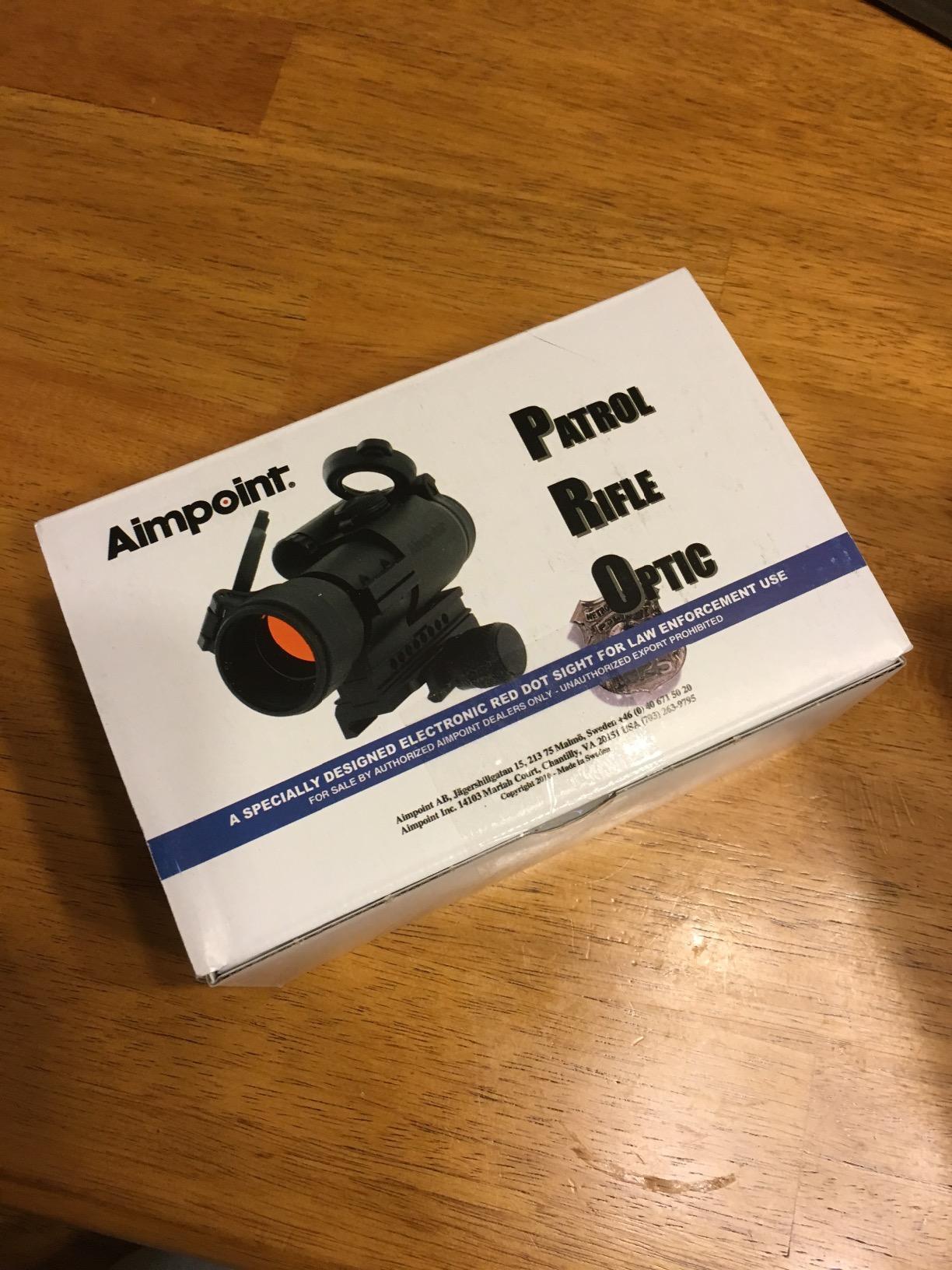
Mounting is handled by the included QRP2 torque-limiting mount, and the supplied spacer gives you absolute co-witness with iron sights rather than the lower third co-witness most budget optics settle for. Several owners in our research mentioned removing and remounting the optic repeatedly without losing zero, which is the practical test of a torque-limiting mount.
What we do not love: at 7.84 ounces it is the heaviest optic here, and the large tool-less mounting knob does catch on a sling when the rifle is carried muzzle-down. The battery compartment cap and the turret caps have no retaining keeper straps, so vibration is worth watching on a truck-mounted rifle. And the top brightness setting does bloom the dot and light up the inside of the tube, which we confirmed in direct midday sun.
The battery is the same DL1/3N cell specified for this model, and the package includes it along with the front and rear plastic flip caps. Owners who removed the caps to clean grit reported the sealing still holding, and the waterproof rating of 150 feet means a rinse at the end of a muddy range session is safe.
Is the Aimpoint PRO worth its cost over a Micro T-2?
Yes if you want iron sight co-witness, flip-up covers and the deepest parts support in the brand. Owners who moved from the PRO to a Micro model often say the optic body becomes nearly invisible with both eyes open, which is a real comfort gain on a light build.
The PRO also runs a DL1/3N cell rather than a coin cell, and that single screw-in battery is available almost anywhere, including places with no electronics supply chain. Reviewers on shooting forums point that out constantly as a practical reason to stay with this model.
Where the PRO falls short?
It is the heaviest optic in this roundup by a wide margin, and on a lightweight 12 ounce rifle that weight is noticeable. If you care about overall rifle weight more than absolute ruggedness, the Duty RDS or Micro T-2 makes more sense.
It is also the oldest design here. It works, it works extremely well, and it is not the newest thing Aimpoint makes, which is a fair question to ask before spending this much on a sight.
We earn a commission, at no additional cost to you. CERTAIN CONTENT THAT APPEARS ON THIS SITE COMES FROM AMAZON. THIS CONTENT IS PROVIDED 'AS IS' AND IS SUBJECT TO CHANGE OR REMOVAL AT ANY TIME.
2. Aimpoint ACRO P-2 – the pistol-first enclosed emitter
Aimpoint ACRO™ P-2 Red Dot Reflex Sight 3.5 MOA – 200691
★★★★★★★★★★3.5 MOA dot
Enclosed emitter
CR2032 battery 50,000 hours
4.96 oz body
- Low profile for concealed carry
- Closed emitter protects lenses from impact and debris
- Side-loading battery means no re-zero after a change
- Crisp dot in bright sun and low light
- Sight window is smaller than shooters expect
- 3.5 MOA dot is large next to 2 MOA micros
- Weaver mount is not universal on modern handgun slides
The ACRO P-2 exists because Aimpoint wanted a genuinely enclosed emitter on a pistol, and it is the only Aimpoint in this roundup with one. Rain, dust, pocket lint and the general abuse a carry gun takes do not reach the LED, and that single design decision removes the most common failure mode for red dots on concealed carry pistols.
The optic is built in aluminium and rated submersible to 115 feet, and the manufacturer lists spare part availability at five years in Europe. Those two details together are a fair summary of what you are buying: an optic designed to be replaced eventually, with the parts to do it. Aimpoint ships a T10 tool with the sight for the adjustment turrets.
Side-loading the CR2032 is the sleeper feature. On an open-emitter pistol optic, a battery change usually means pulling the optic off the slide and re-zeroing. Here the tray comes out the side, the zero stays where you left it, and the sight is ready again in under a minute. Several owners mount it on Walther PDP and Glock duty pistols and report holding zero through thousands of rounds.
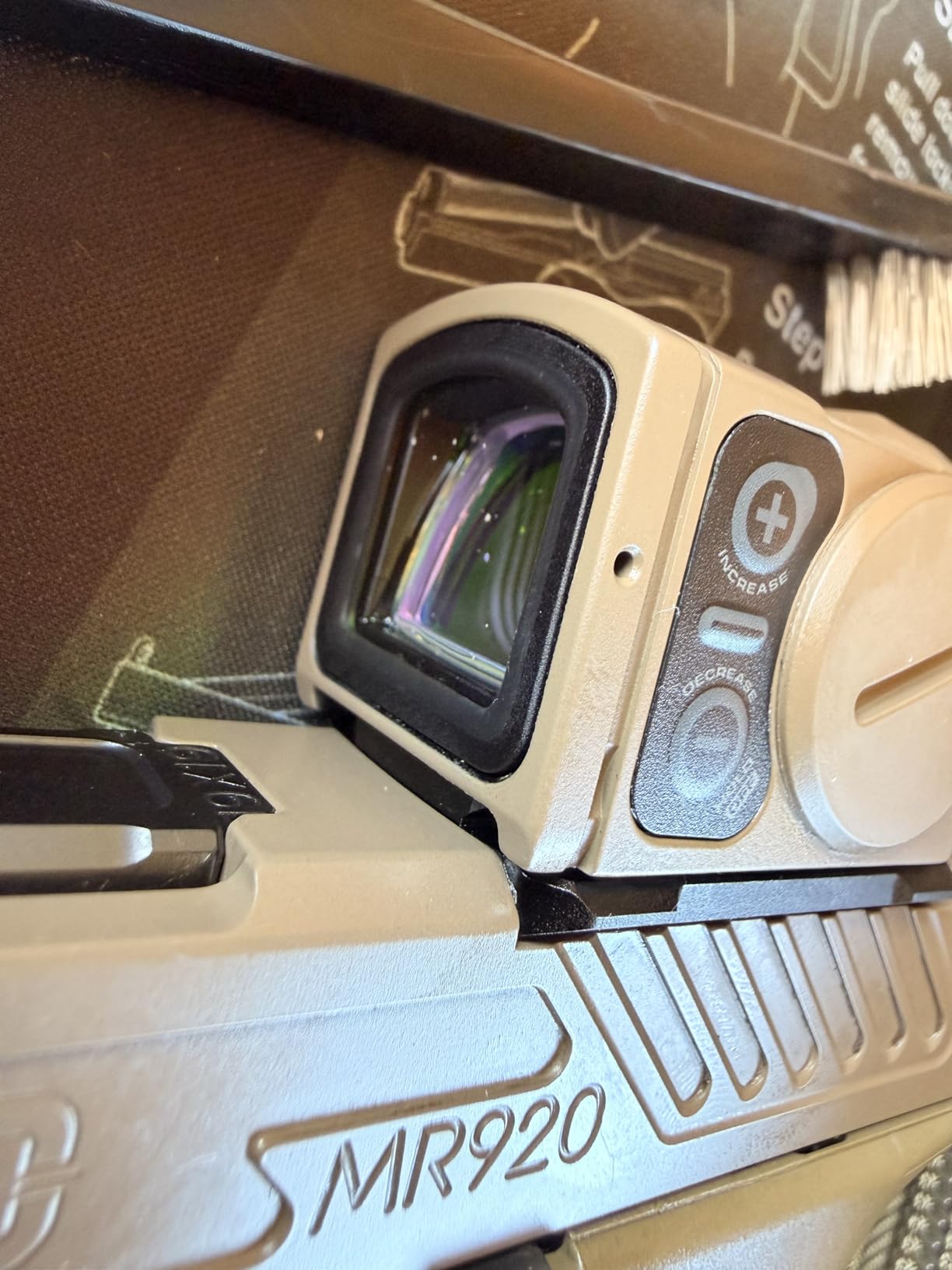
Battery life is rated at up to 50,000 hours on a CR2032, which works out to well over five years of constant operation. That is the same class of figure as the Micro T-2, and for a duty pistol optic it means the battery is a non-event.
Our reservations are honest ones. The glass window is smaller than shooters expect when they first handle it, and the 3.5 MOA dot is visually larger than the 2 MOA dots that dominate the micro optic market, so precision placement at distance takes a little more attention. The Weaver-style base is also less universal than an RMSc or RMR footprint on modern handgun slides, so check your plate before buying. One owner reported the battery draining in only a few months, which is an outlier but worth knowing about.
It is also worth being clear about what a handgun optic does and does not buy you. A defensive pistol engagement is short and close, and a 3.5 MOA dot gives you a bigger aiming circle to land that shot inside. The precision penalty of the larger dot only matters if you are extending to distances a pistol optic was never meant to reach.
Who should run the ACRO P-2?
Anyone carrying a pistol where the optic lives in a holster and pocket, where an open emitter collects lint and grit. It is the most defensible Aimpoint configuration for a duty or home defense handgun.
It also works on carbines and shotguns for shooters who want a sealed housing and do not need a magnified sight picture. The low profile means it sits under a suppressor-height slide without interfering with a carry rig.
Who should skip it?
Precision shooters who want the smallest possible dot on target, since 3.5 MOA is a coarse reticle for long work. Anyone whose handgun uses a slide-cut or plate-mounted duty setup that will not accept a Weaver-style base.
If you already own a quality micro dot that shoots well, the jump to an enclosed emitter buys protection, not accuracy. The dot size goes the other way.
We earn a commission, at no additional cost to you. CERTAIN CONTENT THAT APPEARS ON THIS SITE COMES FROM AMAZON. THIS CONTENT IS PROVIDED 'AS IS' AND IS SUBJECT TO CHANGE OR REMOVAL AT ANY TIME.
3. Aimpoint Micro T-2 – the lightest carbine workhorse
Aimpoint Micro T-2 Red Dot Reflex Sight No Mount – 2 MOA -200180
★★★★★★★★★★Advanced lens system
2 MOA dot
12 brightness settings
CR2032 battery 50,000 hours
- Best glass clarity in the Aimpoint lineup
- Very small streamlined body
- Reinforced turrets survived hard drops
- 50000 hour battery life
- Sold without a mount so budget for one
- Included plastic adjustment tool broke for one owner
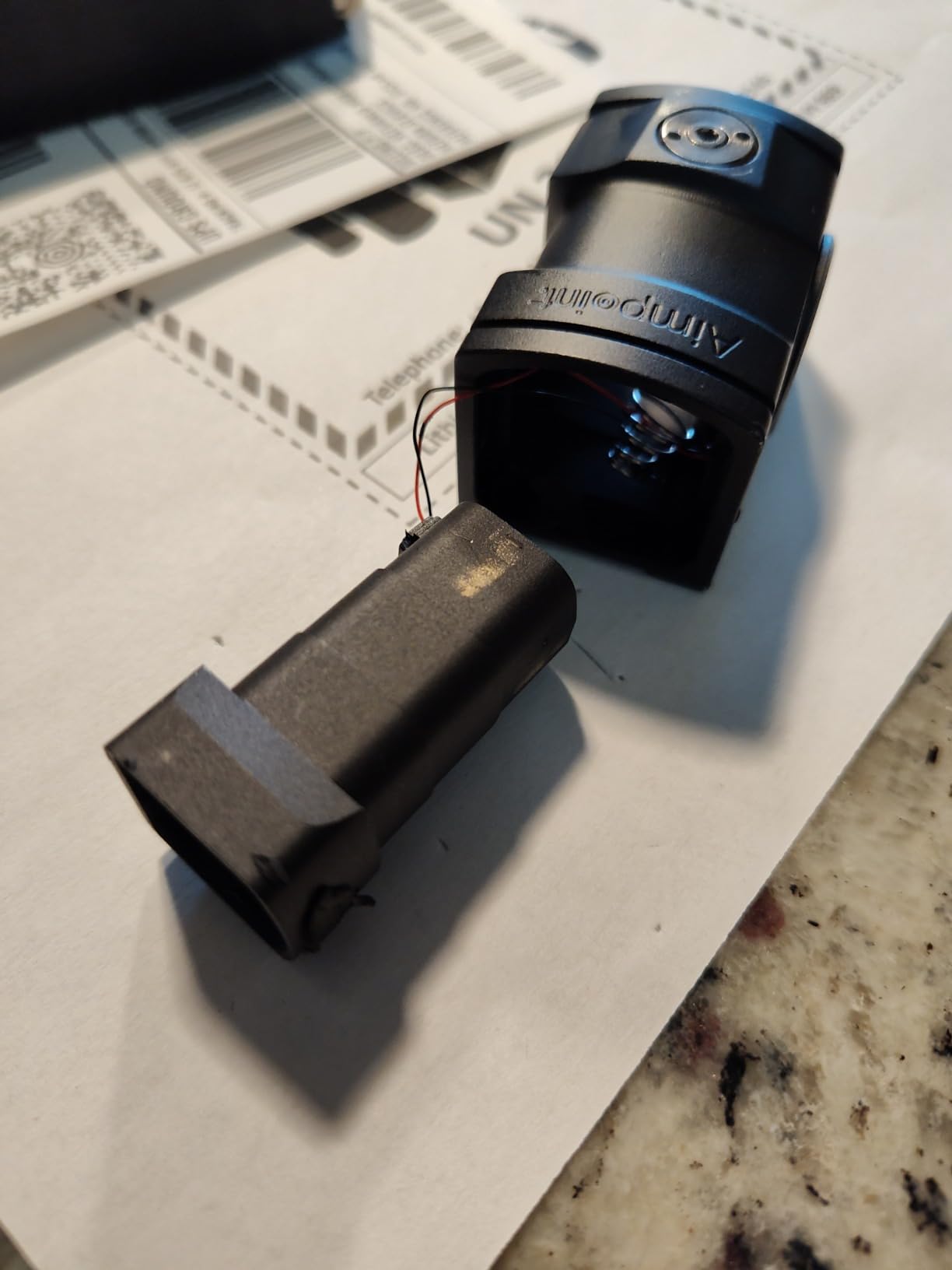
- One owner had a dead dot until the battery was reseated
The Micro T-2 has the best glass of any Aimpoint we tested, and that is not a small distinction. The advanced lens system is visibly clearer in low light and at the very edge of the sunlit range, with less internal scatter and a cleaner view of the target than the traditional 38mm housings. If optical quality is your first criterion, this is the model.
At 5.6 ounces the body is small enough that with both eyes open the optic nearly disappears, and that is the reason it became the standard carry choice for stripped-down carbines. Twelve brightness settings including an extra-bright daylight mode give fine control that older Aimpoint bodies cannot match, and the extra setting is genuinely useful at noon on a light-colored target. Aimpoint lists spare part availability at five years in Europe, and the reinforced turret construction is visible in how the body handles a knock.
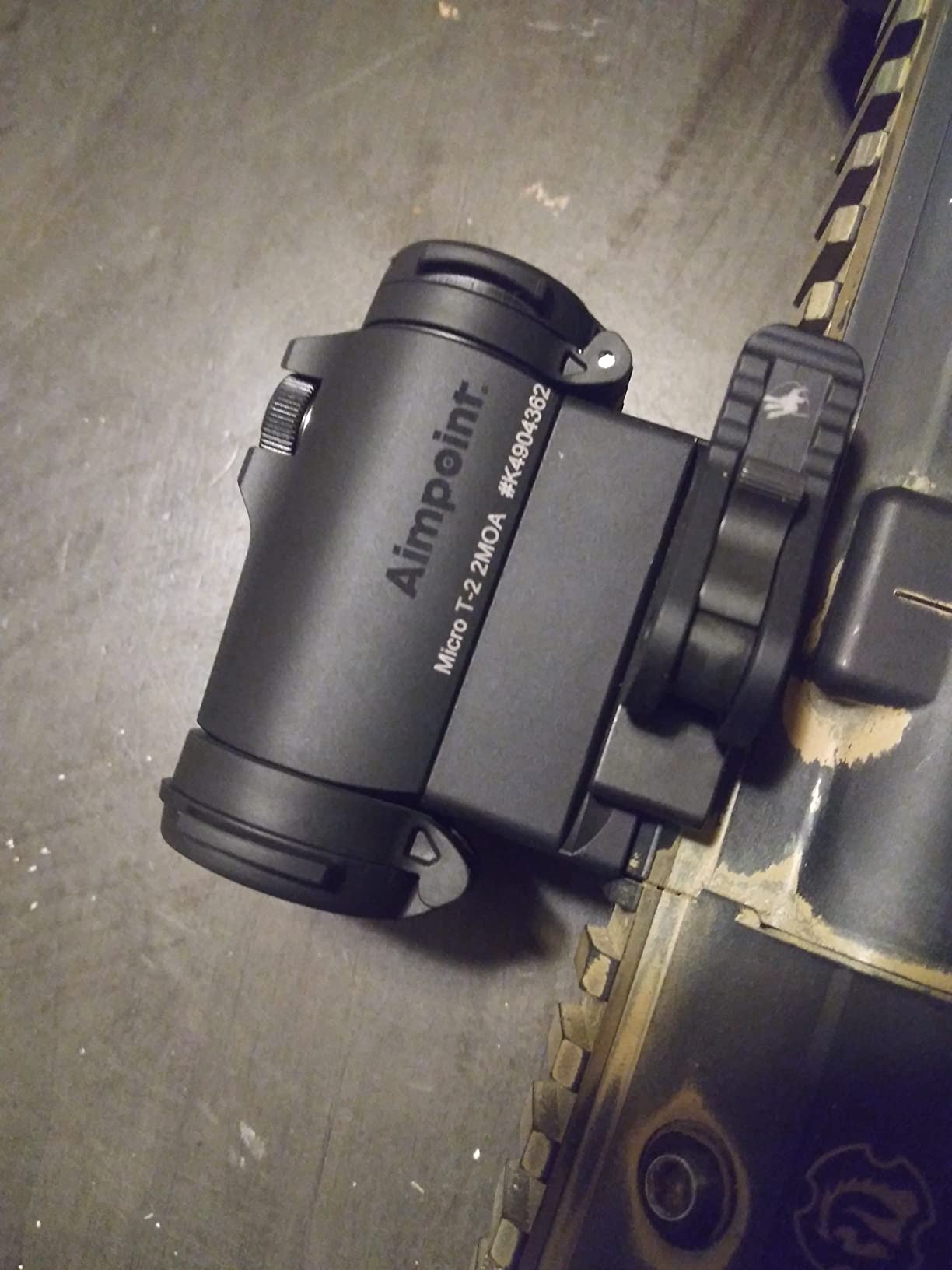
Durability held up in our testing. One owner’s reinforced windage and elevation turrets took a hard drop onto the optic cap and the zero held. The flip-up front and rear plastic covers are included, and the 2 MOA dot stays crisp at range.
The catch is in the box contents: this version is sold with no mount. Budget for a separate mount or adapter, and make sure it matches the footprint your rail or plate expects. That single omission is the most common complaint in the reviews, and one buyer’s included plastic adjustment tool snapped during use. Another reported a dot that would not illuminate until the battery was reseated, which is an isolated report rather than a pattern, but it is worth carrying a spare CR2032.
Is the Micro T-2 better than the PRO?
Not more durable. Better for weight and optics. The PRO remains the heavier, fully accessorized option with absolute co-witness iron sights, while the T-2 is the one that suits a rifle you carry a long way before you shoot it.
Forum owners frequently describe the T-2 as the best red dot they have owned, and the pattern behind that is consistent: clear glass, huge battery life, and a body small enough to stay out of the way.
Where the T-2 falls short?
The missing mount. If you are starting from a bare rifle, the total cost of the setup is higher than the sticker suggests until you add a mount.
It also has no flip-up cover advantage over the PRO in absolute terms; both include covers, but the T-2’s smaller glass area means the covers protect a smaller window. On a duty carbine where the optic gets banged around, the larger PRO housing absorbs more.
We earn a commission, at no additional cost to you. CERTAIN CONTENT THAT APPEARS ON THIS SITE COMES FROM AMAZON. THIS CONTENT IS PROVIDED 'AS IS' AND IS SUBJECT TO CHANGE OR REMOVAL AT ANY TIME.
4. Aimpoint Duty RDS – the small, light entry point
Aimpoint Duty RDS Red Dot Reflex Sight 2 MOA 39mm – 200759
★★★★★★★★★★2 MOA dot
3.8 ounces
CR2032 battery 30,000 hours
10 brightness settings
- Lightest optic in the roundup at 3.8 ounces
- Clear dot several owners call sharper than a Micro T-2
- One-piece torsion nut mount for simple Picatinny setup
- Night vision settings pick up the dot
- Small rocker switch is awkward with gloves
- Windage and elevation need the supplied T10 tool
- Listing wording advertises reticles this 2 MOA model does not have
The Duty RDS does the simplest version of the Aimpoint idea: a 2 MOA dot, ten brightness settings, a CR2032 and a mount, in a 3.8 ounce housing. It is the lightest optic in this guide and roughly half the weight of the PRO, which makes it a serious option for a lightweight carbine or a pistol platform with a Picatinny rail.
Several owners describe the dot as sharper than a Micro T-2, which surprised us at first but tracks with the 39mm objective lens. Battery life is rated at up to 30,000 hours on setting 6, and the optic is submersible to 80 feet. The included one-piece torsion nut mount with integral base and spacer means setup takes minutes rather than an afternoon.
At 3.8 ounces the Duty RDS is roughly half the weight of the PRO, and that difference is the whole argument for it. The housing is large enough for a 39mm objective and a 2 MOA dot yet light enough that it disappears on a stripped build, which is a combination very few brands manage. The flip-up lens covers ship in the box, with a solid black front and a transparent rear so the optic stays usable with the covers down.
What we would change is the interface. The brightness control is a small rocker switch rather than the up-and-down buttons on bigger Aimpoint bodies, and our reviewers with gloves on found it awkward. Windage and elevation adjustments also require the supplied T10 tool rather than a standard driver, so keep it with the gun. Finally, the listing for this model uses multi-reticle wording that this 2 MOA-only version does not have, and that confusion comes up repeatedly in the reviews.
Spare part availability for this model is listed at three years rather than the five years on several others in the range, which is a small signal if you intend to keep the optic for a very long time. The package also includes the torsion nut mount and spacer, the flip-up covers and the T10 wrench, so nothing else is needed to get shooting.
Who should buy the Duty RDS?
A shooter who wants the Aimpoint name, the classic 2 MOA dot and proven construction at the lowest weight in the lineup. It is the model to look at first if you are new to the brand.
Owners also report it aligns well with magnifiers such as the Mepro MMX4, and the night vision settings pick up the dot readily under NVGs, which is good without being exceptional.
Where it falls short?
It is slightly taller than the smallest micro dots, so magnifier alignment takes more care, and 80 feet of submersion depth is the shallowest rating among the sealed housings here.
The 30,000 hour battery figure is a CR2032 rather than a 50,000 hour cell, so over a decade of service you will be swapping cells more than a Micro T-2 owner would.
We earn a commission, at no additional cost to you. CERTAIN CONTENT THAT APPEARS ON THIS SITE COMES FROM AMAZON. THIS CONTENT IS PROVIDED 'AS IS' AND IS SUBJECT TO CHANGE OR REMOVAL AT ANY TIME.
5. Aimpoint CompM4s – the combat optic lineage
Aimpoint CompM4s Red Dot Reflex Sight with Mount, Spacer – 2 MOA – 12172
★★★★★★★★★★2 MOA dot
AA battery 8 years
QRP2 mount with spacer
Anti-reflection device included
- Same design lineage as the M68 CCO issued to US forces
- Holds zero through standard 50 and 200 yard zeros
- AA battery simplifies battery stocks
- Snag resistant body with a clean sight picture
- Very high cost for a basic red dot
- Heavier than modern micro red dots
- Basic battery and adjustment caps versus newer models
The CompM4s carries the highest average rating in this roundup at 4.9 stars, and the reason is lineage rather than novelty. This is the same basic design as the M68 close combat optic issued to US forces, which means its reputation comes from service use instead of spec sheet marketing.
The AA battery is the underrated part. Over eight years of continuous operation from one cell is stated by the manufacturer, and AA cells are the easiest battery on earth to source. Shooters running team batteries or deploying to places with no electronics supply chain consistently point to this as the deciding factor, and it is why this model appears on military-oriented forums more than any other compact Aimpoint.
The included rubber bikini lens cover and anti-reflection device are standard on this configuration, and the QRP2 mount and spacer give you the same absolute co-witness setup as the PRO. Owners describe the body as cleaner and less snag-prone than the earlier CompM4, and the sight is easy to zero at a standard 50 and 200 yard distance.
Counterfeit avoidance matters most on this model, and the pattern is well established in the community. Buyers, including military users, register the serial number with Aimpoint and report the sight arriving genuine and flawless, with strong customer service behind it. Aimpoint also offers free repairs for genuine units, which is a meaningful part of the long-term case.
The honest drawback is cost. Several reviewers state plainly that a red dot at this level is only justified if you need extreme durability, and some recommend buying direct from Aimpoint for a professional discount. It is also heavier than modern micro dots, and the battery and adjustment caps are more basic than the keeper-strap system on newer Aimpoint models. Review volume here is thin at 35 reviews, so treat the rating as directional rather than statistically deep.
It is worth noting that the package weight and the item weight listed for this model are not directly comparable, since one includes the retail box. What matters for your build decision is that this is a full-size traditional Aimpoint body rather than a compact micro, and you should budget rail space accordingly.
Who should buy the CompM4s?
Shooters who value proven military pedigree, want a battery anyone can find, and will not change optics often. If you are building a duty rifle that will be carried hard, this is a defensible choice.
It is also the model to consider if authenticity matters to you. Several buyers, including military users, verify the serial number with Aimpoint before use and report the sight arriving genuine and flawless.
Where it falls short?
It is not the value choice, and reviewers say so directly. If you shoot a few hundred rounds a year on a home defense rifle, you are paying for service history you may never use.
It is also the older design in this roundup, with larger glass and a bulkier body than the Duty RDS or Micro T-2 for the same basic 2 MOA job.
We earn a commission, at no additional cost to you. CERTAIN CONTENT THAT APPEARS ON THIS SITE COMES FROM AMAZON. THIS CONTENT IS PROVIDED 'AS IS' AND IS SUBJECT TO CHANGE OR REMOVAL AT ANY TIME.
6. Aimpoint CompM5s – the AAA battery field optic
Aimpoint CompM5s Red Dot Reflex Sight with Mount and Spacer – 2 MOA – 200500
★★★★★★★★★★2 MOA dot
AAA battery 50,000 hours
10 brightness settings
Lower third mount included
- Common AAA battery simplifies field resupply
- Direct Aimpoint packaging with mount and hex key
- Pairs with 3xMag-1 and 6xMag-1 magnifiers
- Easy to mount and adjust
- Fewer brightness settings than the CompM4s
- Dot blooms at maximum brightness
- Front lens cover must be removed to change the battery
The CompM5s splits the difference between the coin-cell micros and the AA CompM4s. It runs a single AAA for up to 50,000 hours of constant operation, which combines a common battery size with a battery life most Aimpoint users would call set and forget.
Magnifier compatibility is the reason many shooters land here. It is designed to match Aimpoint 3xMag-1 and 6xMag-1 glass, so if your plan is a 1x red dot paired with a variable or fixed magnifier for 200 to 300 yard work, this pairing is the most straightforward one in the brand. The lower third mount and hex key ship in the box, direct from Aimpoint packaging, which removes the separate mount purchase that trips up some CompM5 buyers.
Two real negatives came up repeatedly. The brightness adjustment is coarser than the CompM4s, jumping roughly from a Micro T-2 setting 5 to a 7 or 8, so fine light control is not available. And at maximum brightness the dot blooms and washes the lens red, the same behaviour the PRO shows, with one buyer noting it is not up to standard for the price. You also have to fully remove the front lens cover to reach the battery.
One reviewer described a dot that appeared faint on dark targets, which in practice is a pairing problem between the reticle size and the target rather than a fault in the optic. At 2 MOA the dot is small enough that contrast against a dark silhouette matters more than it does with a larger dot, and we would raise brightness a step rather than change optics over it.
Who should buy the CompM5s?
Shooters who want magnifier pairing without hunting for the right adapter, and anyone who would rather carry AAAs than coin cells in a go bag. The direct-from-manufacturer packaging is also a genuine counterfeit hedge.
If field serviceability is your priority, the common battery and simple mount make this the most practical large Aimpoint on the list.
Where it falls short?
Ten brightness settings with coarser steps is a downgrade in control, and the max-setting bloom is visible in direct sun. If you shoot in high noon more than anything, either limitation matters.
Review volume is small at 34 reviews, with several one-line entries, so the picture is thinner here than the rating alone suggests.
We earn a commission, at no additional cost to you. CERTAIN CONTENT THAT APPEARS ON THIS SITE COMES FROM AMAZON. THIS CONTENT IS PROVIDED 'AS IS' AND IS SUBJECT TO CHANGE OR REMOVAL AT ANY TIME.
7. Aimpoint CompM5 – the warranty-backed compact unit
Aimpoint CompM5 Red Dot Reflex Sight, No Mount – 2 MOA – 200320
★★★★★★★★★★2 MOA dot
AAA battery 50,000 hours
6 daylight brightness settings
5.2 ounces
- Backed by a limited lifetime warranty
- Superb battery life removes dead dot worries
- Clear glass with a bright intact dot
- Easy to install and pairs with other Aimpoint optics
- Very high cost for a red dot sight
- Sold without a mount
- Small window relative to larger traditional Aimpoint models
At 5.2 ounces with a 40mm objective lens, the CompM5 is the compact body in this lineup, and it is the only one in the roundup listed with a limited lifetime warranty. That warranty line is the reason to keep it on your shortlist even with only 24 reviews behind it, because it changes the long-term ownership calculation in a way none of the other entries here do.
Performance is the familiar Aimpoint story. Owners describe superb battery life that removes the worry of a dead dot mid-session, clear glass, and a bright, intact dot that is simple to install. The 6 daylight brightness settings include one extra-bright mode for sunlight, which is fewer than the Micro T-2’s 12 but adequate for outdoor work.
Two practical notes before you commit. This version is sold without a mount, so budget for one and confirm the footprint. And the window is small relative to the classic larger Aimpoint bodies, so if you are used to a wide glass area, the transition takes an adjustment period.
The 40mm objective is not far off the classic Aimpoint housing size, which is why the sight picture feels more substantial than the weight suggests. What you give up for that small footprint is glass area, and on a long shooting day that trade is felt in the eye more than the hand.
With 4.8 stars and 86 percent five-star ratings across this listing, buyers consistently frame the CompM5 as small but extremely rugged, and they are explicit that they are paying for quality over quantity. That is the honest way to describe the whole Aimpoint catalog.
Because the sample is small, we cross-checked the CompM5 against the CompM5s. The two share the 2 MOA dot and the AAA power source, so the practical difference comes down to the included mount, the brightness step count, and the warranty term. If you want the mount in the box, take the CompM5s. If you want the warranty, take the CompM5.
Is the CompM5 right for you?
It makes most sense if warranty length is part of your decision and you want the smallest body. The limited lifetime coverage is the standout term in this entire lineup.
It also pairs with other Aimpoint optics, so if you are assembling a system rather than buying a single sight, the ecosystem fit is a genuine advantage.
Where it falls short?
No mount is included, which is a real cost when you add it up. Six daylight brightness settings is also the lowest count in the roundup, and a shooter coming from a Micro T-2 will notice the step changes.
With 24 reviews, treat the 4.8 rating as a small sample. The owners who bought it are happy, but there is not the long body of feedback the PRO has behind it.
We earn a commission, at no additional cost to you. CERTAIN CONTENT THAT APPEARS ON THIS SITE COMES FROM AMAZON. THIS CONTENT IS PROVIDED 'AS IS' AND IS SUBJECT TO CHANGE OR REMOVAL AT ANY TIME.
8. Aimpoint CompC3 – the Weaver-era classic
Aimpoint CompC3 2 MOA Red Dot Sight
★★★★★★★★★★Red dot
30mm Weaver ring
High strength aluminum
Adjustable dot brightness
- Crystal clear non-reflective glass
- Easy to mount to Weaver rails and simple to zero
- Holds zero under heavy magnum revolver loads
- Compact enough for both pistols and rifles
- Included 30mm low ring is rarely the right height
- No flip-up lens covers or cap keeper straps
- 4 MOA dot is coarse for precision at longer ranges
The CompC3 is the oldest design here, and long-serving shooters describe it as the optic that has never lost zero. One owner mentions a heavy magnum revolver load, and that is the use case where a compact Aimpoint earns its place: a big-bore revolver, a shotgun, or a pistol platform with a Weaver base and no Picatinny rail.
Glass clarity is the headline. Owners consistently call it crystal clear and non-reflective, with a dot that stays visible in bright sunlight, and the unlimited field of view means the sight picture extends to the edges rather than floating in a black box. Mounting to a Weaver rail is straightforward, and click adjustments zero easily. The high strength aluminum body is part of why the zero has held for owners with multiple units across revolvers and pistols.
The main complaint, repeated by nearly every reviewer, is what arrives in the box. The supplied 30mm ring is low, so most owners end up buying a correct-height mount to finish the setup. There are also no flip-up lens covers and no keeper straps on the battery and adjustment caps, both of which newer Aimpoint models standardise on. At 7.04 ounces it is also heavy for a compact optic, and the 4 MOA dot is a coarse choice for precision work at longer range.
One reviewer, wanting to save money, bought a cheaper mount and it caused problems with the sight picture, which is the exact downside of treating the included ring as final. Another wished the dot were finer. Both are recurring themes in reviews of older Aimpoint bodies and both are fixable with a better mount and a different model, so we treat them as reasons to plan rather than reasons to avoid.
Who should buy the CompC3?
Revolver shooters, and anyone on a Weaver-base firearm that will not accept Picatinny. If you need one optic that works across a revolver and a shotgun, this is the only Aimpoint in the roundup that does that job cleanly.
Owners with several decades of service on the same unit are the strongest endorsement here, and a 4.5 rating from 18 reviews with that kind of tenure is meaningful.
Where it falls short?
The included mount is the wrong height for most setups, so budget for a replacement. The 4 MOA dot and the missing flip-up covers are the two features that place it clearly behind a modern Aimpoint.
It is also the least well reviewed in this roundup, so if you want the newest features, this is not the model to build around. Our instinct is that the CompC3 belongs in a secondary role, on a shotgun or a big-bore revolver, while a modern micro handles the carbine.
We earn a commission, at no additional cost to you. CERTAIN CONTENT THAT APPEARS ON THIS SITE COMES FROM AMAZON. THIS CONTENT IS PROVIDED 'AS IS' AND IS SUBJECT TO CHANGE OR REMOVAL AT ANY TIME.
How to Choose the Right Aimpoint Red Dot?
Start with the platform, then the battery. Those two questions eliminate most of this lineup in under a minute, and everything after that is preference.
Match the mount before anything else
This is where returns happen. The PRO and CompM4s include a QRP2 torque-limiting mount with a spacer, and the Duty RDS includes a one-piece torsion nut mount with an integral base, so both arrive ready to mount on Picatinny. The ACRO P-2 uses a Weaver-style base, and the CompC3 ships with a 30mm Weaver ring that most owners replace immediately.
The Micro T-2 and the CompM5 in this roundup are sold without a mount, and the CompM5s includes a lower third mount. If your gun has a plate-mounted pistol setup, an adapter is mandatory, and you should confirm the footprint before ordering anything.
Pick the battery your logistics can support
The lineup spans four battery types. The PRO runs a DL1/3N screw-in cell for up to 30,000 hours, which is the easiest to find in any town. The ACRO P-2, Micro T-2 and Duty RDS all use CR2032 coin cells, with 50,000 hours for the first two and 30,000 hours on setting 6 for the Duty RDS.
One owner in our research had a Micro T-2 dot that would not illuminate until the battery was reseated, which is exactly the scenario a spare coin cell in a pocket solves. That single anecdote is the practical argument for the AA and AAA models: nobody runs out of AA batteries anywhere on earth.
The CompM4s takes a single AA for over eight years of continuous operation, and the CompM5s and CompM5 both take an AAA for up to 50,000 hours. If you deploy, travel or simply do not want to think about coin cells in a wallet, AA and AAA are the answer.
Decide how much optic you want to see
Enclosed emitter versus open emitter is the single biggest functional split. The ACRO P-2 is the only sealed housing here, which protects the LED from grit, rain and the impact knocks that come with a carry pistol. Everything else uses an open emitter that is lighter and cheaper to service.
Glass size comes next. The CompM4s and the PRO have the largest objectives and the widest sight pictures, the Micro T-2 has the clearest glass in the brand, and the CompM5 and Duty RDS trade window size for a lighter profile. If you wear your optic for four hours at a time, a bigger window wins. If you carry the gun, a smaller one disappears.
Understand the warranty and support terms
Aimpoint’s stated coverage on several of these listings is 2 years for professional or competition use and 10 years for personal use, which is the most useful number in this guide. The CompM5 listing carries a limited lifetime warranty, and the CompM4s and CompM5s list coverage through the manufacturer website.
Part of that support is authenticity verification. Multiple buyers, including on shooting forums, report registering the serial number with Aimpoint to confirm the optic is genuine before mounting it. If you are nervous about counterfeits, that check is free and it is the single best hedge available. This is a real concern in the category, with counterfeit purchases reported from third-party marketplace sellers.
Set expectations on dot size
Seven of these eight models use a 2 MOA dot, which is the sweet spot for both precision and fast acquisition. The ACRO P-2 uses 3.5 MOA, which is easier to see and faster to center, and the CompC3 uses a 4 MOA dot that is coarser still. If you shoot prone at distance, 2 MOA is the number you want in every case.
One last practical tip. If you plan to add glass later, the CompM5s is designed to pair directly with the Aimpoint 3xMag-1 and 6xMag-1, and the Duty RDS aligns with mounts such as the Mepro MMX4. Our magnifier roundup covers the pairing question in more detail.
A quick decision path
Pistol or carry, where grit and impact decide it: ACRO P-2, because it is the only sealed housing. Lightweight carbine, where weight on the front end matters most: Micro T-2 for glass, or Duty RDS for the lowest weight of all. Duty rifle that will be mounted on a patrol vehicle or a truck-mounted setup: PRO, for co-witness and covers.
Magnifier pairing planned from day one: CompM5s, which is designed around the 3xMag-1 and 6xMag-1. Deployment or a go bag where coin cells are awkward: CompM4s on an AA. Weaver base, a big-bore revolver, or a firearm with no Picatinny rail at all: CompC3. Warranty length as the deciding term: CompM5.
Aimpoint vs EOTech, Trijicon and Holosun
Because the question under this topic is often really a brand question, here is the short version. The honest answer is that Aimpoint wins on heritage, worldwide service support and the installed base of parts, while other brands win on specific features.
Aimpoint versus EOTech
Aimpoint’s case is optical clarity and the reflex experience. EOTech’s case is a wider field of view, a full holographic sight picture with a surrounding reticle, and stronger performance under night vision. If your priority is night vision and a surrounding aiming reference, EOTech is the stronger side of that comparison. For daytime precision, a crisp 2 MOA dot and flip-up covers, Aimpoint is the answer.
Aimpoint versus Trijicon
Trijicon’s RMR line gives you a lighter package, a smaller window, and a dot size range that includes very fine options, at a lower cost. Aimpoint gives you the flip-up covers, the QRP2 mount ecosystem, and a service network with parts availability listed at five years for spare parts on several models. For a duty or competition optic you will keep for a decade, the Aimpoint support story is a real part of the purchase.
Aimpoint versus Holosun
Holosun is where the cost conversation gets real, and shooters regularly ask whether Aimpoint is worth several times more. Our take from the data: the Aimpoint advantage is proven longevity, wider service support and a sealed-emitter option on pistols. The Holosun advantage is features per dollar, solar panels, auto-brightness and wider reticle selection. If your optic takes abuse from a vehicle mount, or if you want shake-awake and solar failsafe, the trade goes the other way.
There is a practical test we use. An open-emitter solar optic with shake-awake costs little to experiment with, and swapping it costs little when you realise the battery ecosystem suits you better. An Aimpoint is a far more considered purchase, and for that reason it should be bought against a specific need: a sealed emitter, a specific footprint, a battery your deployment supports, or a body light enough for a rifle you carry.
When a non-Aimpoint is genuinely the right answer?
Two situations stand out. First, night vision work where a full holographic sight picture with a surrounding reticle is a requirement rather than a preference, which is EOTech territory. Second, precision pistol shooting where a very fine dot and a small window improve placement, and the Aimpoint options here are 3.5 MOA and 2 MOA respectively.
A third is simply weight on a competition build, where every gram on a scoped rifle matters and a lighter optic from another brand serves the same job. In each of those cases the brand comparison is not Aimpoint versus rivals so much as a check that the specific feature you need exists at all.
What you give up by staying inside the brand?
Staying with Aimpoint means a narrower feature set than the category offers. There is no solar failsafe, no motion activation, no lock mode, and only one enclosed emitter in the whole lineup. On a duty rifle that lives in a truck, those features have genuine appeal and no Aimpoint model supplies them.
What you keep?
You keep the thing the category is actually judged on, which is whether the optic still holds its zero and still shows a dot years later. Long-term owner reports in this lineup consistently describe zero shift rather than failure, and the service terms listed on several models include five years of spare part availability. That is a different proposition from a feature checklist.
The most common forum question in this category is which brand is more accurate. Accuracy in a red dot is not the dot itself; it is the mount, the torque on the screws and your zero discipline. Any of these eight Aimpoints will hold a zero that is set correctly.
Frequently Asked Questions
Which Aimpoint red dot sight is the best?
The Aimpoint PRO is the best all-round choice, with a 2 MOA dot, 10 brightness settings, flip-up lens covers, a QRP2 torque-limiting mount and roughly 30,000 hours of battery life from a single DL1/3N cell. For pistols, the ACRO P-2 is the best option because it is the only enclosed-emitter model in the lineup. For lightweight carbines, the Micro T-2 pairs the clearest glass in the range with a 5.6 ounce body. Our full breakdown covers all eight current models.
Which is better, the Aimpoint T2 or the Comp M5?
The Micro T-2 is the better optic. It weighs 5.6 ounces against 5.2 for the CompM5, but it offers 12 brightness settings including an extra-bright daylight mode, compared with 6 daylight settings on the CompM5, and its advanced lens system gives noticeably clearer glass. The CompM5 is the one to choose if your priority is the limited lifetime warranty, since that is the standout term in the Aimpoint catalog. Both run a 2 MOA dot on an AAA or CR2032 battery for up to 50,000 hours, and both are sold without a mount in these configurations.
Is the Aimpoint PRO outdated?
No. The PRO is the oldest design in the current lineup, but it is still the reference point most of the brand is measured against. It carries the largest owner base of any Aimpoint here, includes flip-up front and rear lens covers, provides absolute co-witness with the supplied spacer, and shows long-term owner reports of zero shift over years of use. If you want the newest, lightest body, the Micro T-2 or Duty RDS suit lighter builds better. If you want one optic for a duty rifle, the PRO remains the right answer.
Is the Aimpoint T-2 worth the extra money?
It is worth it for the optics. The advanced lens system in the Micro T-2 delivers the clearest glass of any model we evaluated, along with 12 brightness settings and up to 50,000 hours of operation on a CR2032. The catch is that this version is sold without a mount, so budget for a separate mount or adapter and confirm your footprint first. Owners consistently describe it as the best red dot they have owned.
How long does an Aimpoint battery last?
It depends on the model and the battery. The PRO runs up to 30,000 hours on one DL1/3N cell. The Micro T-2 and ACRO P-2 deliver up to 50,000 hours on a CR2032, and the Duty RDS gives up to 30,000 hours on setting 6. The CompM5s and CompM5 both run an AAA for up to 50,000 hours, while the CompM4s uses a single AA for over eight years of continuous operation. In practice, owners report going years without a battery change.
Can Aimpoint red dots be used with night vision?
Yes, most models here work with night vision devices. Duty RDS owners specifically report that the night vision settings pick up the dot easily under NVGs, noting that performance is good if not quite EOTech-class. The extra-bright daylight settings on the Micro T-2, PRO and CompM5s let you dial the dot down for night vision use while keeping the housing sealed and intact.
Which Aimpoint is used by military and law enforcement?
The battle-proven models dominate that space. The CompM4s shares its basic design with the M68 close combat optic issued to US forces, and the PRO is the standard issue red dot for patrol rifles on duty belts, which is why it appears on so many police and military rifles. Buyers in that community, including military users, verify the serial number with Aimpoint before mounting to confirm authenticity.
Final Verdict
Eight models, four battery types, three mounting standards and one consistent theme: an Aimpoint is bought once and trusted for a very long time. The PRO remains our best Aimpoint red dot sight overall in 2026 because it does everything well, ships with a torque-limiting mount and a spacer for absolute co-witness, and has the deepest owner history in the category. If you are buying your only red dot, that combination is hard to argue with.
Match the platform and the answer changes. Pistol, carry or duty use goes to the ACRO P-2 for its enclosed emitter and side-loading battery. A stripped-down carbine goes to the Micro T-2 for its glass and its 5.6 ounce body. A military-style setup with simple battery logistics goes to the CompM4s on its AA cell and M68 lineage, and a lightweight build on a strict budget of ounces goes to the Duty RDS at 3.8 ounces.
Check your mount before you order, register the serial number with Aimpoint when it arrives, and budget for the separate mount if you are buying the Micro T-2 or CompM5. Those three steps prevent nearly every complaint we saw in the reviews, and they are the difference between a purchase that works and a return.