
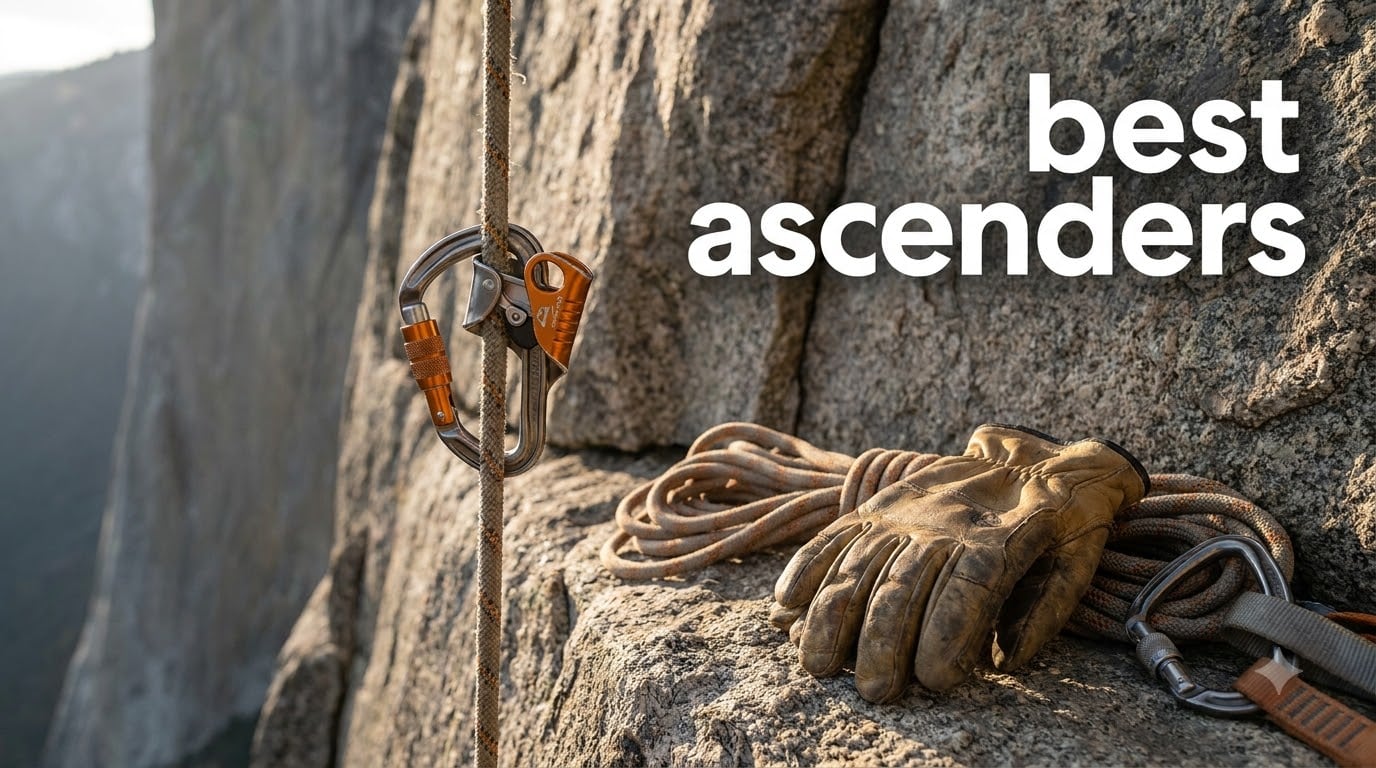
Finding the best ascenders comes down to one question: what are you actually climbing? A big wall climber jumaring fixed lines on El Capitan needs a completely different tool than a saddle hunter easing up a lineman rope or an arborist running single rope technique into a canopy. I have spent seasons swapping between these devices on walls, glaciers, and tree lines, and the differences that look tiny on a spec sheet become obvious about 200 feet off the deck.
An ascender is a mechanical rope clamp that slides freely upward and locks the moment you weight it. Inside every one of them is a spring-loaded toothed cam that bites the rope under load, then releases when you lift the device or pull the trigger. That simple mechanism is what turns a hanging rope into a ladder, whether you are jumaring a pitch, hauling a pig, or escaping a crevasse.
The market splits into four families, and mixing them up is the number one mistake new buyers make. Handled ascenders like the Petzl Ascension are built for long vertical ascents. Handleless clamps like the Wild Country Ropeman are minimalist rope grabs for hauling, self-rescue, and backup. Chest and foot ascenders round out a rope-walking system. Progress capture devices double as pulleys for hauling and top rope solo work.
For this guide I compared 10 models across rope compatibility, weight, cam behavior on wet or frozen cords, glove friendliness, and long-term durability. I leaned on my own miles plus hundreds of owner reports from climbers, cavers, arborists, and hunters who have run these tools for years. If you also climb for hunts, our hunting gear guide covers the cold-weather side of that world.
Table of Contents
- Top 3 Picks for the Best Ascenders in 2026
- Best Ascenders At a Glance (August 2026)
- 1. Petzl Ascension (Right Hand) – The Handled Ascender Benchmark
- 2. Wild Country Ropeman 1 – The Minimalist Clamp Everyone Owns
- 3. NewDoar Hand Ascender – The Budget Pick That Punches Up
- 4. Petzl Croll – The Chest Ascender That Anchors a System
- 5. Petzl Tibloc – The 35-Gram Insurance Policy
- 6. Wild Country Ropeman 4 – The Clamp That Also Grabs Slings
- 7. Kong Modern Handled Ascender – The Dirty Rope Specialist
- 8. CAMP Turbo Chest Ascender – The Premium Roller Upgrade
- 9. Weaver Arborist HAAS Velox – The Knee Ascender for Tree Work
- 10. Petzl Ascension (Left Hand) – Completing the Pair
- How We Evaluated These Ascenders?
- Buying Guide: How to Choose the Best Ascender?
- Frequently Asked Questions
- Final Verdict on the Best Ascenders
Top 3 Picks for the Best Ascenders in 2026

Petzl Ascension (Right Hand)
- Ergonomic molded handle
- Self-cleaning toothed cam
- 165 g
- Works with thick gloves

Best Ascenders At a Glance (August 2026)
Here is the full field, ranked roughly by how well each one serves its intended job. Every model below is covered in detail in the reviews that follow.
| Product | Specs | Action |
|---|---|---|
| Petzl Ascension (Right Hand) |
|
Check Latest Price |
 Wild Country Ropeman 1 Wild Country Ropeman 1 |
|
Check Latest Price |
| NewDoar Hand Ascender |
|
Check Latest Price |
 Petzl Croll Chest Ascender Petzl Croll Chest Ascender |
|
Check Latest Price |
 Petzl Tibloc Petzl Tibloc |
|
Check Latest Price |
 Wild Country Ropeman 4 Wild Country Ropeman 4 |
|
Check Latest Price |
 Kong Modern Handled Ascender Kong Modern Handled Ascender |
|
Check Latest Price |
 CAMP Turbo Chest Ascender CAMP Turbo Chest Ascender |
|
Check Latest Price |
 Weaver HAAS Velox Sling Weaver HAAS Velox Sling |
|
Check Latest Price |
 Petzl Ascension (Left Hand) Petzl Ascension (Left Hand) |
|
Check Latest Price |
1. Petzl Ascension (Right Hand) – The Handled Ascender Benchmark
Petzl Ascension Ascender – Yellow – Right
Handled ascender
165 g
Toothed cam with self-cleaning slot
Right hand
Pros
- Ergonomic handle stays comfortable with gloves on
- Keeps working on frozen muddy or wet rope
- Self-cleaning cam slot cuts maintenance
- Doubles well for hauling
Cons
- Big hands may scuff knuckles on the handle
- Left and right versions feel nearly identical in use
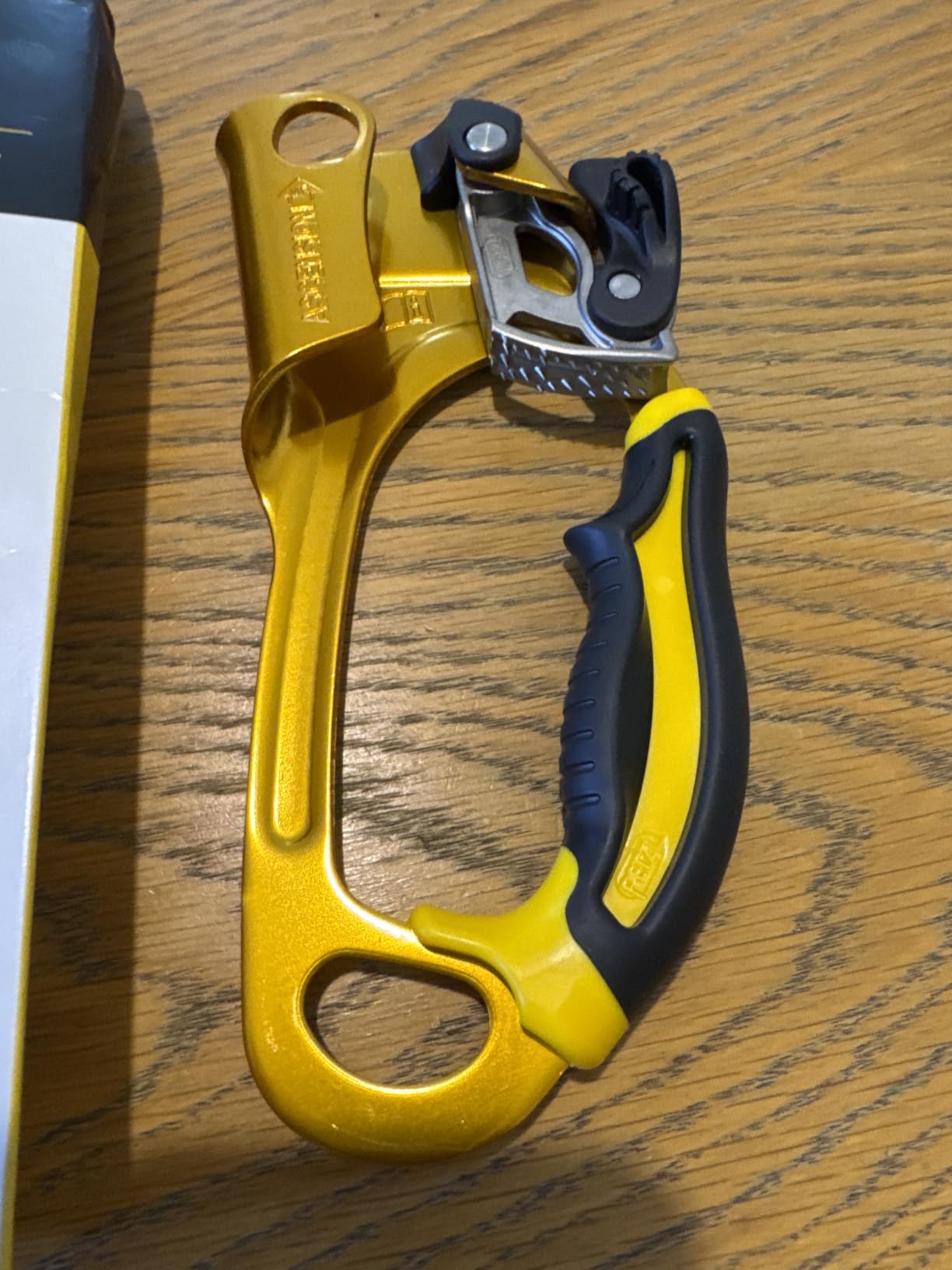
The Ascension is the ascender I judge everything else against, and it is the best ascender pick in this guide for serious rope climbing. The handle is sculpted so your whole hand shares the load instead of two fingers doing all the pulling. On a 20-pitch day that difference is bigger than any spec on the chart.
The upper section is wide enough to grip with two hands when you need real power, like boosting a haul bag past a roof. The wide opening also means the handle still works with thick winter gloves, which is where cheaper handles turn into a struggle. Owners report years of use on soaking wet 10 mm ropes in slot canyons and deep caves without a hiccup.
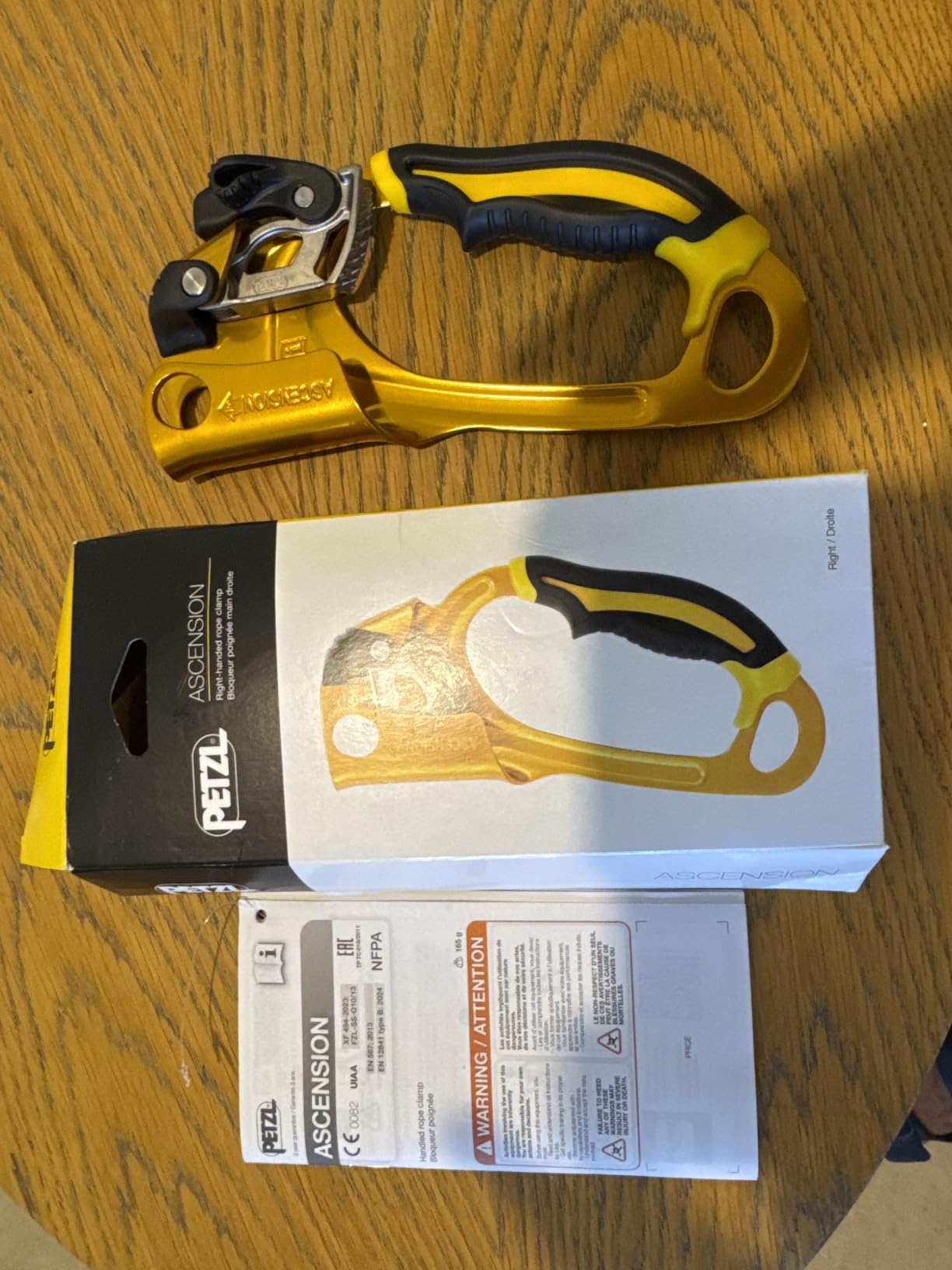
Technically, the toothed cam has a self-cleaning slot that pushes grit and ice out as it closes, so the grip stays reliable in adverse conditions. The safety catch is fully integrated into the body, which prevents the snagging that older designs were known for. The lower hole is sized to fit two carabiners for connecting a sling or etrier cleanly.
The honest downsides are small. If you have large hands, your knuckles can scuff the handle frame during a full pull. And interestingly, several owners note the left and right distinction is minimal in practice, which matters if you are deciding whether to buy a matched pair.
Which rope sizes and gloves does it handle
It handles the common single rope range and grips reliably on everything from static canyon cords to swollen wet dynamic lines. The wide opening was designed specifically for gloved hands, so winter alpine starts are not a problem.
Do you need the left version too
For full rope walking you want two ascenders, one per hand, plus a chest or foot unit. If you only jumar occasionally, one right-hand unit and a compact clamp like the Tibloc covers far more situations for less money.
2. Wild Country Ropeman 1 – The Minimalist Clamp Everyone Owns
Wild Country Ropeman 1 Ascender – Blue – One Size
Handleless rope clamp
2.19 oz (62 g)
10-13 mm ropes
CE EN567 and UIAA 126
Pros
- Highest rated model here at 4.9 stars
- Flat cam releases easily under light loads
- Forged sideplates are strong and light
- Does not chew up rope sheaths
Cons
- No support for skinny 8 mm cords
- Costs more than basic clamps
The Ropeman 1 has been Wild Country’s bestselling ascender for a decade, and at 4.9 stars with over 1,100 reviews it is the highest-rated device in this lineup. Mine lives on my haul loop and gets used more often than any ascender I own, just not always for ascending.
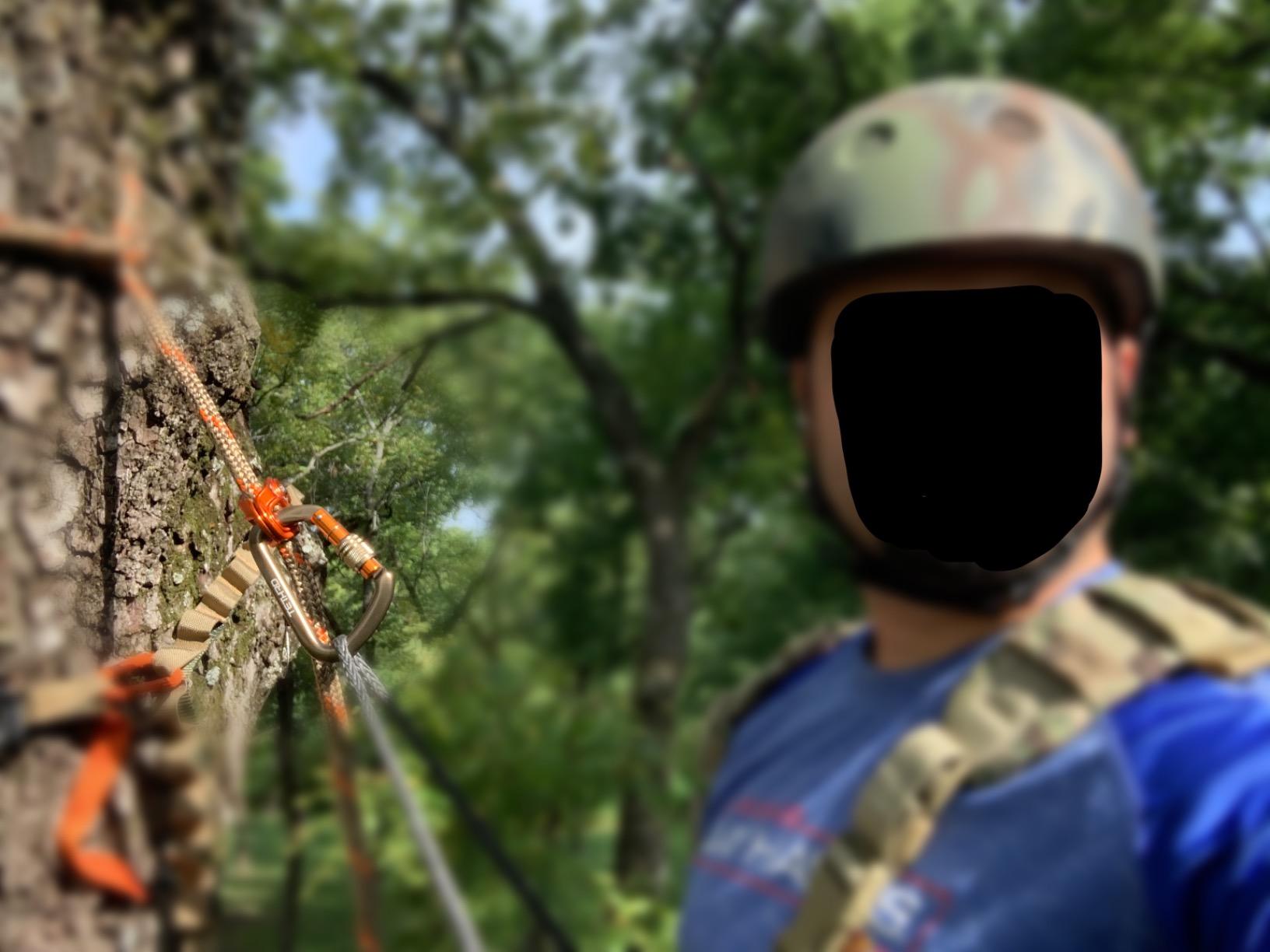
Where it shines is smoothness under low load. The flat cam profile lets you slide it up the rope with one hand and release it without a fight, something toothed handled cams struggle with when they are barely loaded. Saddle hunters describe replacing their Prusik knots with it and never looking back, because adjusting position goes from a wrestling match to a thumb flick.
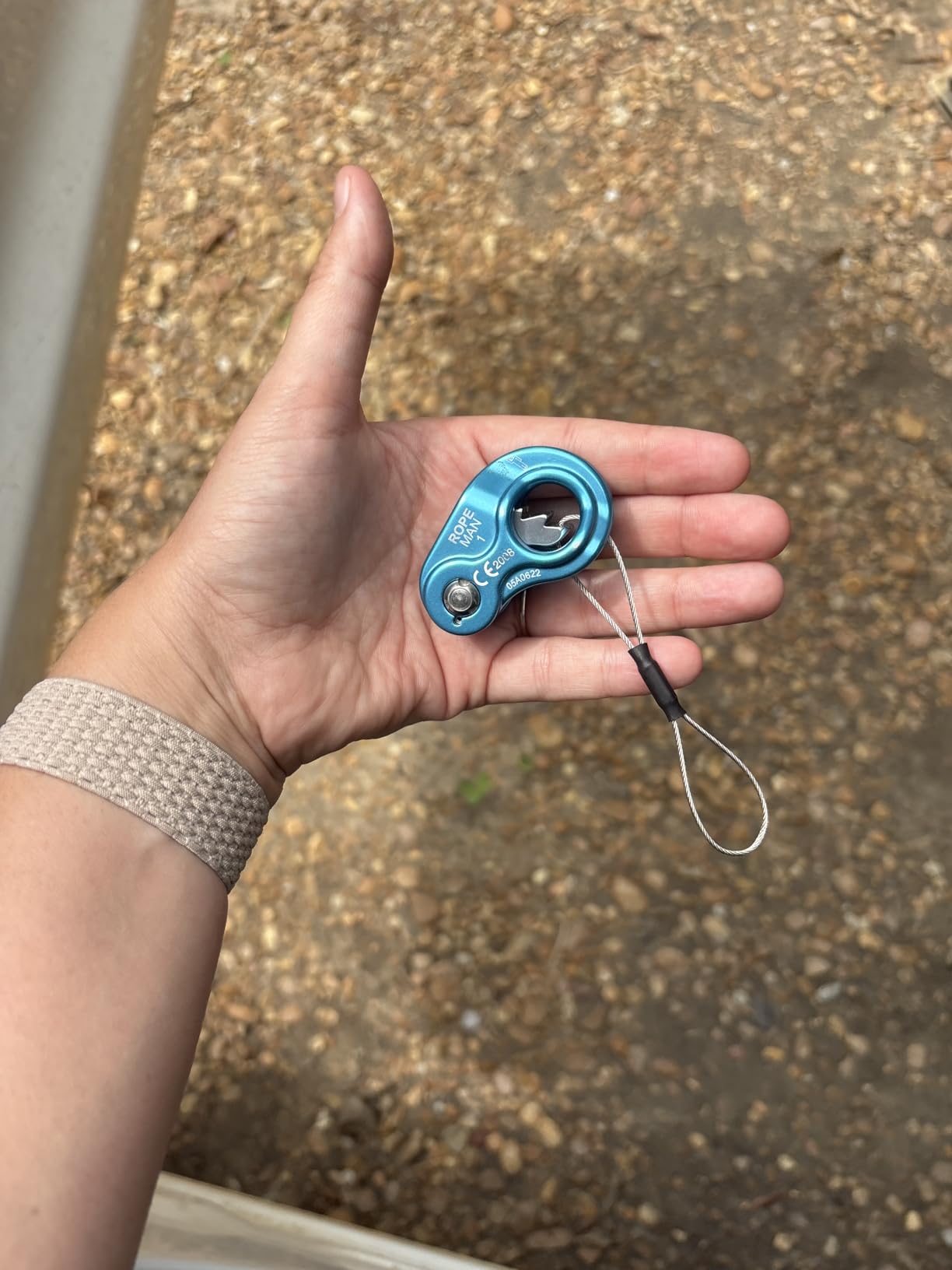
The forged sideplates are the engineering story here. Forging aligns the metal, so the plates are stronger than a stamped equivalent while keeping the whole unit at 62 grams. The wire lock keeps the rope captive without adding a clunky gate.
The real limitation is rope diameter. It is rated for 10-13 mm, so the growing crop of skinny 8 mm static and canyon cords simply will not work with it. If your world includes thin cords, skip down to the Ropeman 4 below.
Hauling and rescue use
It is certified to CE EN567 and UIAA 126, and it slots into Z-rig hauling systems, self-rescue sequences, and progress capture without adding meaningful weight. Think of it as a system component rather than a standalone climbing tool.
Hunting and rigging crossover
This is the model that dominates saddle hunting forums, because one-handed operation on a lineman rope is the whole game. Pair it with our guide to hunting gear for cold-weather setups where gloves make trigger work difficult.
3. NewDoar Hand Ascender – The Budget Pick That Punches Up
NewDoar Right Hand Ascender Rock Climbing Tree Arborist Rappelling Gear Equipment CE Certified Rope Clamp for 8~13MM Rope(Blue-Right)
Handled ascender
8-13 mm rope
UIAA and CE certified
8.5 kN breaking strength
Pros
- Certified UIAA and CE at a budget price
- Vulcanized rubber handle grips well
- Stainless cam resists rust
- Handles a wide 8-13 mm rope range
Cons
- Handle materials feel less premium
- Attachment holes are smaller than Petzl's
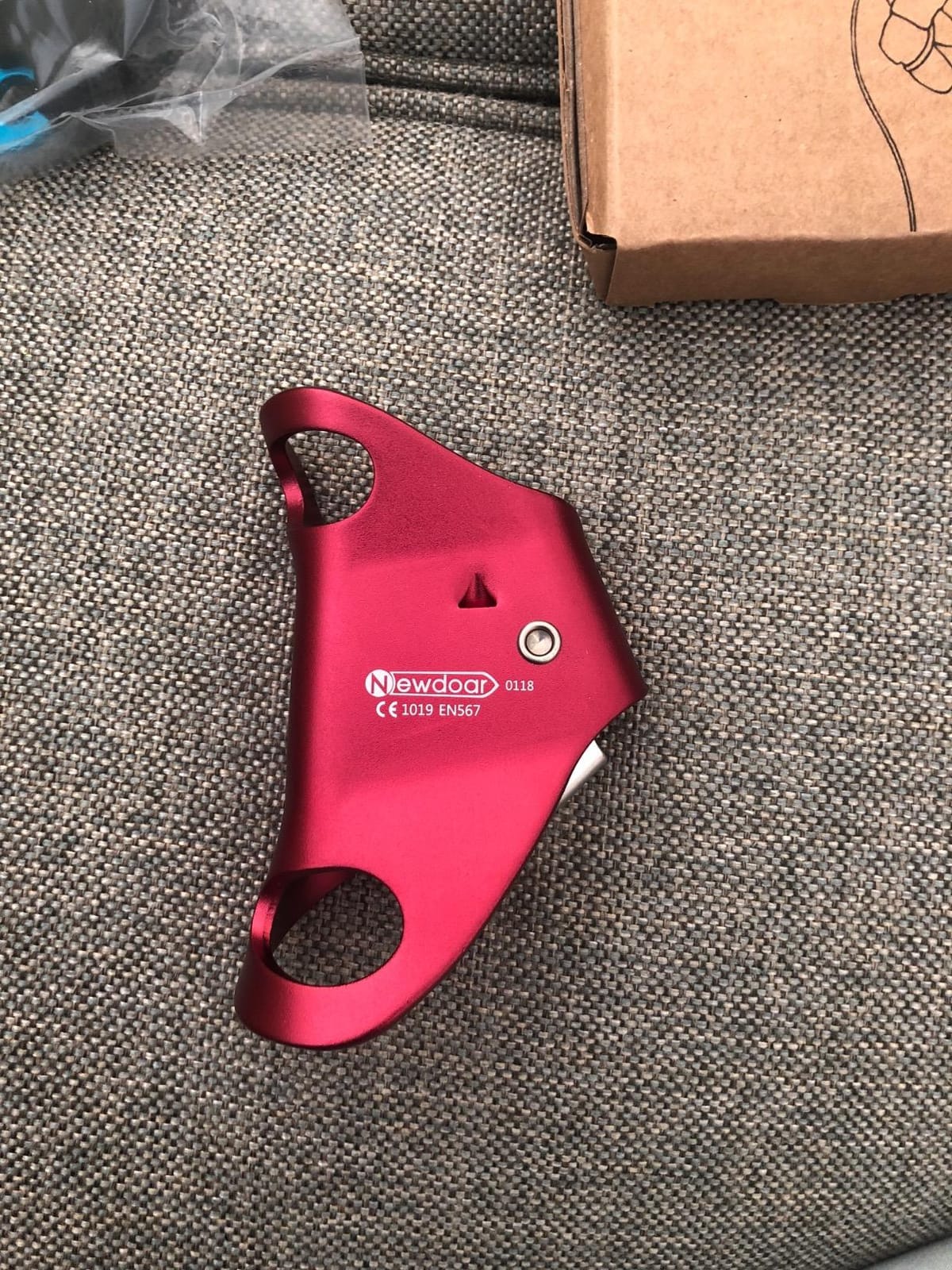
I will admit I was skeptical of a budget handled ascender carrying real safety claims. Then I checked the certification mark, put it on rope, and ran it through the same paces as the Petzl. For the money, this is the best ascender value in the guide, full stop.
The frame is aluminum alloy with a stainless steel cam that has shown zero rust after wet sessions. The rubber handle is genuinely comfortable, with a vulcanized surface that stays grippy with sweaty or gloved hands. It is not as sculpted as the Ascension, but it is close enough that most recreational climbers will never feel the difference.
The spec sheet is more complete than most at this price. It is certified to EN 567:2013 with a listed breaking strength of 8.5 kN, a tension rating of 4 kN, and a 140 kg working limit. Rope range runs 8-13 mm, which covers static lines, dynamic singles, and arborist cords in one device.
The compromises are in the details. The attachment holes are smaller than Petzl’s, so fattened carabiners can crowd the connection point. And the handle uses more plastic in its construction, which is fine functionally but does not feel as tank-like over the long haul.
Is the certification legitimate
It carries an actual UIAA and CE certification number, not just a claim in the listing. That puts it ahead of most no-name clamps, and it is why I am comfortable recommending it for real climbing rather than garage use only.
Who buys this one
With over 1,500 reviews, the buyer pool is huge: tree workers, roofers, gym climbers building a first kit, and arborists who want a beater unit. If you are starting from zero, this plus a Ropeman covers an enormous range of jobs.
4. Petzl Croll – The Chest Ascender That Anchors a System
Petzl CROLL Ventral Chest Ascender for Rope Ascents – Large (8-13 mm)
Ventral chest ascender
8-13 mm ropes
Stainless wear plate
Self-cleaning cam
Pros
- Keeps your body upright for efficient ascents
- Stainless wear plate survives heavy use
- Wide groove handles stiff swollen ropes
- Pairs with the Ascension for a full kit
Cons
- Needs a break-in period before hard use
- Thumb lever could be larger
The Croll is the benchmark ventral chest ascender, and no serious rope-walking system feels complete without something in this slot. It attaches at your harness tie-in point and slides up the rope as you stand, keeping your body upright instead of leaving you dangling like a flag.
Paired with the Ascension in one hand and a foot loop, it turns ascending into a natural walk. Cavers on long vertical pitches praise exactly that combination, because it converts brutal arm pulling into leg-driven movement. The one-handed opening makes mid-rope installation quick when you need to pass a knot or a deviation.
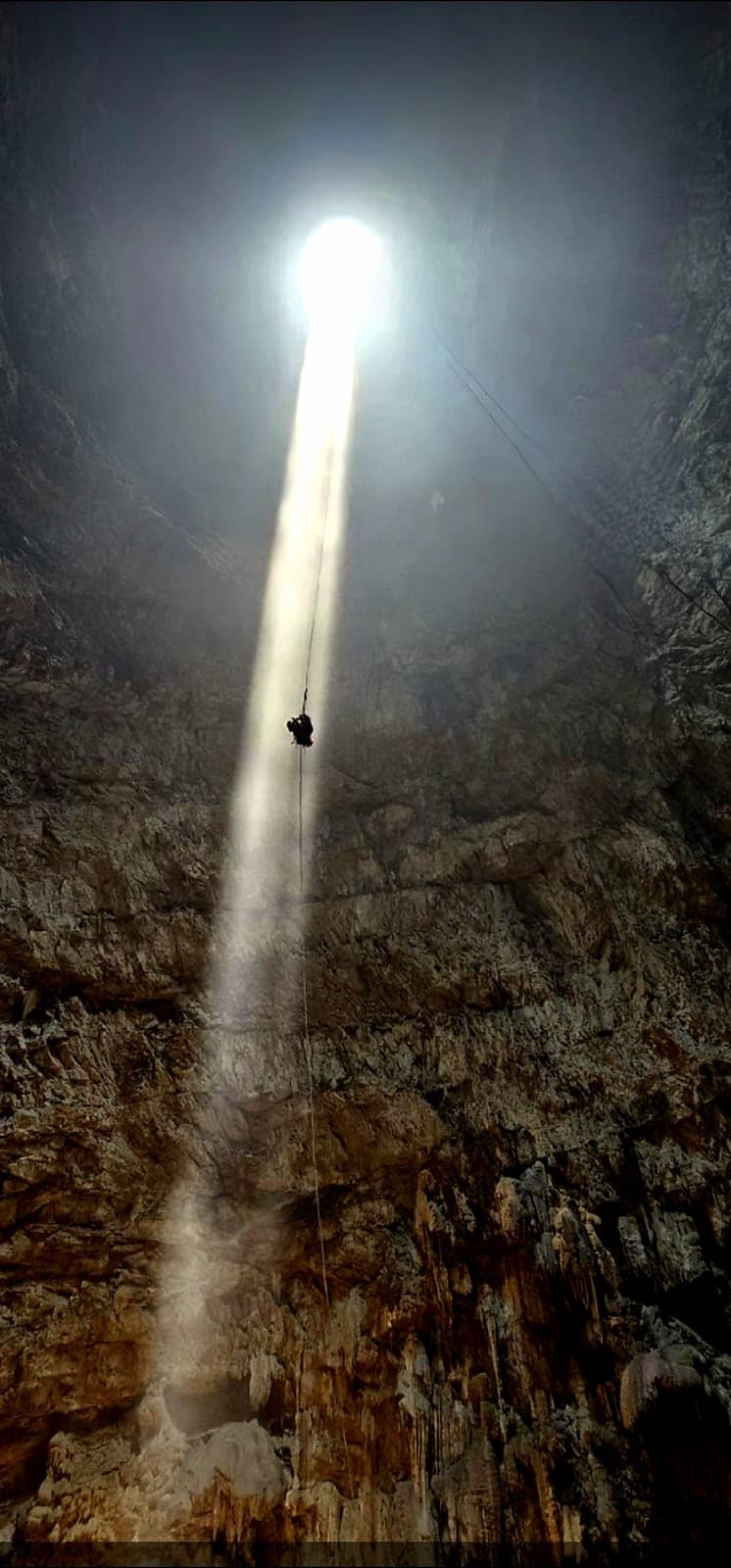
Petzl fits the Croll with a stainless steel wear plate where the rope runs, which is the surface that normally erodes first on a chest unit. The wide rope groove reduces friction and handles stiff or swollen ropes that choke narrower devices. Like the Ascension, the toothed cam uses a self-cleaning slot for frozen or muddy conditions.
Two things to know before buying. It needs a short break-in period before it glides smoothly, so do not judge it on day one. And the listing weight reads oddly heavy, likely reflecting packaged rather than device weight, but the steel plate does make it heftier than a minimalist clamp.
How it fits into a full setup
You connect it to the central point of your harness with a locking carabiner and stack it under your hand ascender. It only works as part of a system, so budget for the companion pieces rather than expecting a standalone tool.
Small or large version
The large version covers 8-13 mm ropes, and Petzl also offers a small version for 8-11 mm cords. If you primarily run thin alpine or canyon lines, the small version keeps the cam wrapped tighter for better grip.
5. Petzl Tibloc – The 35-Gram Insurance Policy
PETZL TIBLOC Ultra-Compact Emergency Ascender – Orange
Ultra-compact emergency ascender
35 g
8-11 mm single ropes
Stainless cam
Pros
- Weighs almost nothing at 35 g
- Disappears into a pack or on a harness
- Instant engagement using your carabiner
- Doubles as progress capture in a Z-rig
Cons
- Finicky to release and slide downward
- Not built for sustained ascending
- Takes practice to use smoothly
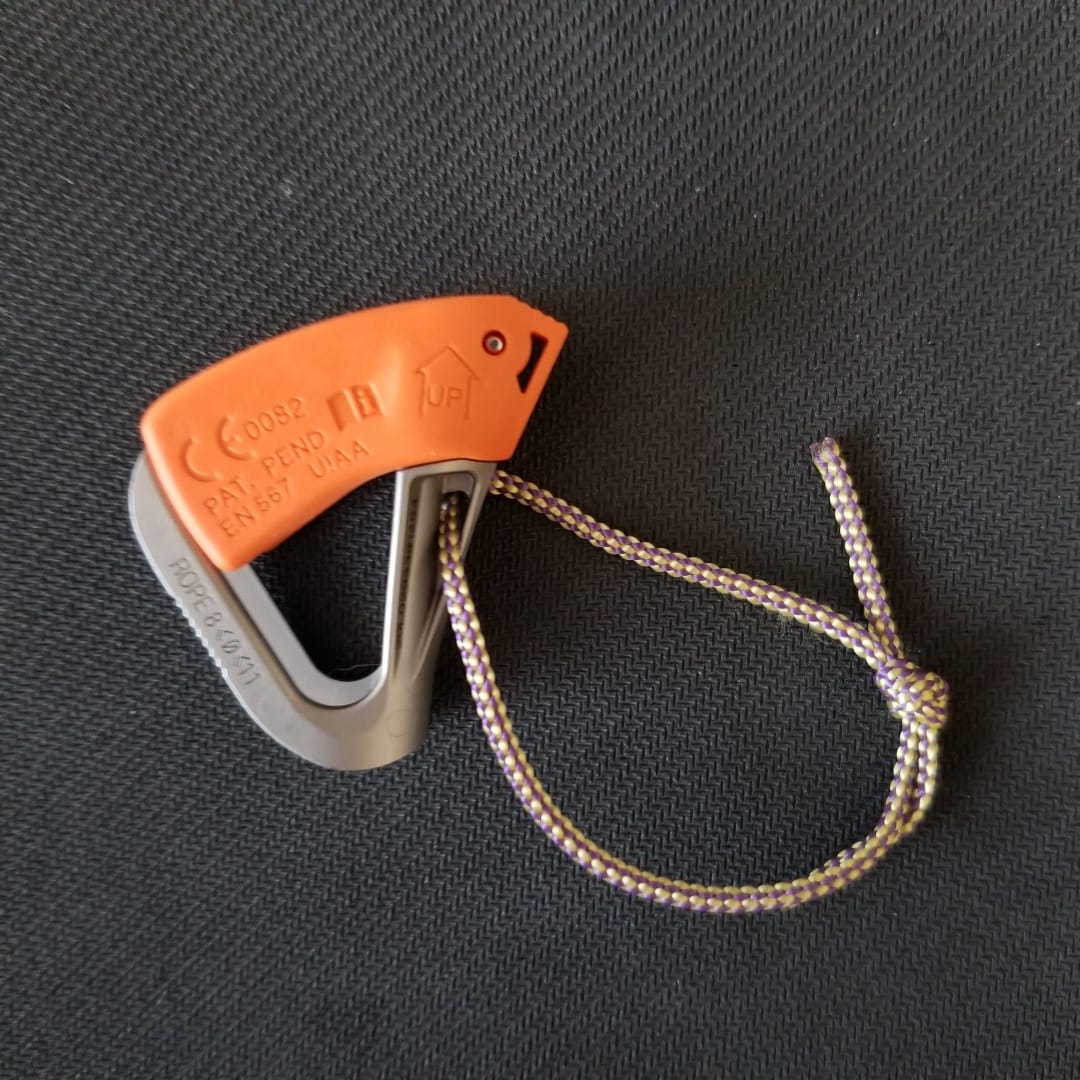
The Tibloc is the ascender you forget you own until the day it saves you. At 35 grams it is essentially weightless, which is why so many climbers describe it as the piece that is always on the harness. Mine lives next to my extra locking biner and has bailed me out of more than one stuck-rope situation.
The clever part is the mechanism: there is no handle and no trigger. You clip a carabiner through the body, and that carabiner presses the rope against the angled teeth to engage instantly. It replaces a friction knot, works as progress capture in a 3:1 Z-rig, and grips even on frozen or icy cord.
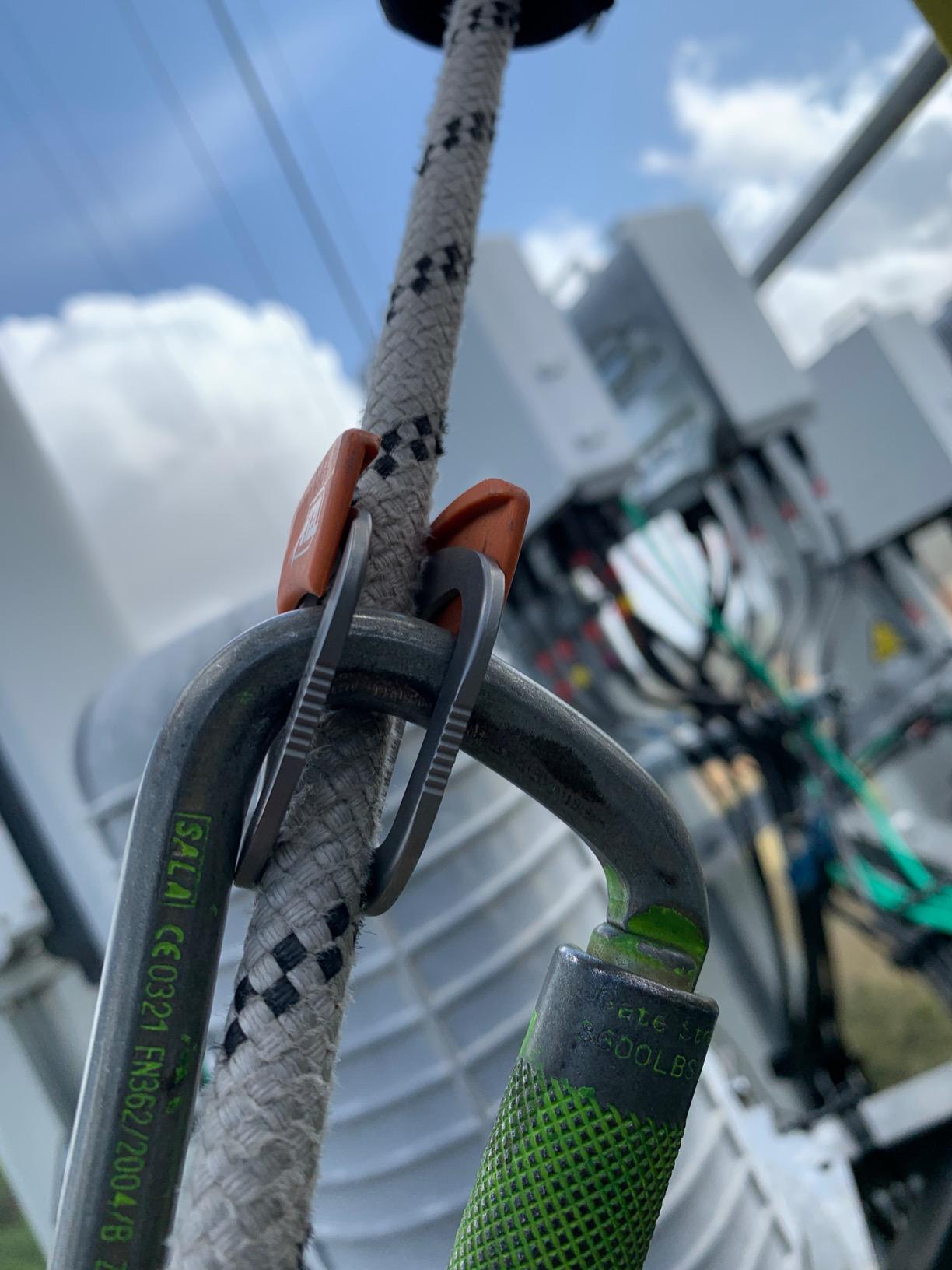
Be clear about the role it plays. It is rated for 8-11 mm single ropes and it is not designed for sustained ascending as a primary device. Wilderness SAR teams and arborists carry it as a backup, and multiple reviewers report it caught them during real falls.
The tradeoff is finesse. Releasing it and sliding it back down the rope takes a feel you only build with practice, and doing it wrong is frustrating. Spend ten minutes in a low-consequence setting before you ever need it for real.
What size carabiner do you need
A standard oval or D-shaped locking carabiner is the intended tool, and the rope diameter markings on the body show correct installation at a glance. Thicker bar stock can sit awkwardly, so check fit before you commit it to your emergency kit.
Emergency and self-rescue roles
It excels at escaping a belay, ascending a fixed line after a retreat, or adding progress capture to a haul. As a bonus, it makes a far more reliable backup than a tired Prusik loop in icy conditions where knots slip.
6. Wild Country Ropeman 4 – The Clamp That Also Grabs Slings
Wild Country Ropeman 4 Ascender – Black – One Size
Handleless rope clamp
2.43 oz (69 g)
8-13 mm ropes
Also grabs 10-15 mm slings
Pros
- Covers skinny 8 mm through 13 mm ropes
- Also grabs flat and tubular slings
- Improved sideplate stops rope sticking
- Certified to EN and UIAA standards
Cons
- Teeth compress 8 mm rope noticeably
- Shiny finish is not hunting friendly
- Owners add a Prusik above for redundancy
The Ropeman 4 fixes the single biggest complaint about the Ropeman 1: rope range. It grips everything from 8 mm static cord to 13 mm rigging rope, and it even grabs 10-15 mm flat and tubular webbing. That last part sounds minor until you need to ascend a sling in a pinch.
Owners running 8 mm lineman ropes report no slippage, while the same device moves smoothly on 13 mm arborist cord. Wild Country also redesigned the sideplate so the rope stops getting pinched at the border, a small fix that removes a real daily annoyance.
Certification is comprehensive: EN 492, EN 12275, EN 567, and UIAA 126. The body is aluminum with a stainless axle and wire, and the whole thing weighs 69 grams. One-handed operation is on par with the Ropeman 1, which is to say excellent.
Two honest cautions. On 8 mm rope the teeth compress the sheath visibly when set, so expect some squash on thin cords. And several experienced owners run a Prusik above it as redundancy, which is smart practice for any toothed clamp in a life-support role.
Saddle hunting and lineman rope use
This is the favorite in tree stand forums precisely because it handles the 8-9 mm ropes hunters favor. If your climbing and hunting worlds overlap, this is the one clamp that serves both without compromise.
When to choose it over the Ropeman 1
Pick the 4 if you touch anything under 10 mm or ever need to grab webbing. Pick the 1 if you live entirely on 10-13 mm rope, since its flat cam is slightly kinder to sheaths under light loads.
7. Kong Modern Handled Ascender – The Dirty Rope Specialist
Kong Chest Ascender, Assorted Colors
Handled ascender
7.2 oz (204 g)
Alloy steel body
Multiple colorways
Pros
- Cam mechanism is superbly machined
- Shrugs off clay-encrusted and dirty ropes
- Stands up to years of weekly hard use
- Comfortable secure handle
Cons
- Trigger can feel too loose
- Cam occasionally catches at the closing border
- Stock is often very limited
Kong does not get the shelf space Petzl and Black Diamond enjoy in the US, but the Modern is a legitimately excellent handled ascender with a cult following among cavers. The Italians build it from alloy steel, which makes it heavier than the aluminum competition at 204 grams but essentially indestructible.
The standout is the cam. It is machined and finished to a level that owners consistently call out, and it keeps gripping on clay-encrusted, muddy rope that turns other cams into a slip risk. One reviewer logged weekly cave use for three years before retiring it, which is a durability data point you rarely see outside professional use.
The handle design gives a secure grip for long vertical caving pitches, and the one-handed operation works fine with practice. It comes in blue plus red and black/white colorways, which is a nice change from the sea of yellow and orange.
The imperfections are quality-control flavored rather than structural. Some units arrive with a trigger that feels loose, and the cam can occasionally catch at the border when closing. Neither is a dealbreaker, but check yours when it arrives.
Caving and muddy conditions
This is the pick if your ropes regularly meet mud, clay, or grit. The steel body tolerates abuse and the cam self-clears debris better than most, which is exactly what a below-ground environment demands.
Weight tradeoff for alpine use
At 204 grams it is the heaviest handled option here. For expedition counting every gram, an aluminum unit makes more sense; for weekend vertical caving, the durability is worth the scale weight.
8. CAMP Turbo Chest Ascender – The Premium Roller Upgrade
CAMP Turbo Chest Ascender Black
Chest ascender
111 g
Dual roller rope interface
Doubles as a locking pulley
Pros
- Two rollers make rope feed exceptionally smooth
- Keeps rope captured during pendulums
- Lockable opening simplifies attachment
- Removable pull cord works with gloves
Cons
- Small review base so far
- Priced above basic chest units
- Stock runs low
The CAMP Turbo holds a perfect 5.0 rating, and after running one on a rope-walking system I understand the enthusiasm. Its party trick is a pair of proprietary rollers at the rope interface, so the rope rides on rolling surfaces instead of grinding across fixed plates. The difference in smoothness is immediately obvious.
The second clever bit is the profiled closure that keeps the rope aligned with the body and rollers even during pendulums and traverses. On conventional chest ascenders, a swinging traverse can let the rope walk out of the groove and stall you mid-pitch. The Turbo simply does not have that failure mode.
Practical touches pile up. The opening mechanism locks and makes attachment far less fiddly, a removable pull cord lets you operate it with gloves on, and thicker body plates resist the wear that shifting connectors cause over time. CAMP also rates it as a locking pulley for light hauling up to 50 kg.
The caveats are statistical rather than mechanical. With only 12 reviews the sample is small, and stock is often thin. But when the consensus says a reviewer will never go back to a normal chest ascender, that tells you the design is doing something right.
Is it worth it over the Croll
If you climb long pitches on a rope-walking system regularly, yes, the rollers save real energy across a day. For occasional crevasse-rescue duty or short fixed lines, the Petzl Croll does the same core job for less outlay.
Hauling duty as a bonus
Its locking pulley mode is rated for loads up to 50 kg, so it can serve double duty on light hauls. That is not a substitute for a dedicated progress capture pulley, but it is a useful second life for a device you already carry.
9. Weaver Arborist HAAS Velox – The Knee Ascender for Tree Work
Weaver Arborist HAAS Velox Nylon Foot Ascender Sling for Tree Climbing
Knee-foot ascender sling
30 inches of bungee travel
Sealed bearing cam block
Zero setup design
Pros
- Makes single rope climbing dramatically easier
- Zero setup so multiple climbers can share it
- Bungee replacement takes under 5 minutes
- Sealed bearings keep rope moving smoothly
Cons
- Bungee wears out and will need replacing
- Ties on rather than clipping which divides opinion
- Premium price for a single component
The HAAS Velox is the odd one out in this list because it is not a hand or chest ascender at all. It is a knee ascender system: a cam block on a bungee sling that captures your knee’s upward motion so every step up the rope gets returned to you automatically. For arborists on single rope technique, it changes the entire feel of a climb.
Users consistently call it one of the best knee ascenders on the market, and the phrase that sticks is how much easier climbing becomes. The 30 inches of in-line bungee elongation absorbs shock and eliminates the dead spots where a standard knee ascender stops returning. The snap tied above the ascender extends up to 30 inches, which is what removes those stalls.
Construction is top shelf throughout. The cam block is machined aluminum with stainless steel sealed bearings, so the rope glides instead of dragging. A built-in friction saver mechanism reduces wear where the system contacts the rope, and the bungee can be replaced tool-free in under five minutes.
The weak link is the bungee itself. Owners report it can break with routine use over a season or two, which is why the tool-free replacement matters so much. Budget for replacement bungee as a consumable rather than a defect.
Is it right for rock climbing
Not really. This is a single rope technique tool built for canopy work and long ascents into trees. Rock climbers jumaring walls get similar function from a foot ascender plus chest unit at lower cost.
Setup and sharing between climbers
The zero-setup design means no per-climber adjustment, so a crew can pass it around the same day. Note that it ties on rather than clips, which some climbers love and others find slower to deploy in the tree.
10. Petzl Ascension (Left Hand) – Completing the Pair
Petzl Ascension Ergonomic Handled Ascender – Left Hand (Tactical All-Black)
Left-side handled ascender
165 g
Dual-density handle
Wide lower hole for two carabiners
Pros
- Dual-density handle with index finger support
- One-handed release even with gloves
- Integrated safety catch prevents snagging
- Matches the right version perfectly
Cons
- Often hard to find in stock
- Left variant usually costs more
- Fewer reviews than the right-hand version
This is the same excellent Ascension, mirrored for left-hand use. If you are building a proper two-hand jumaring system for big walls or long fixed lines, this is the second half of that pair, and it behaves identically to the right-hand version I ranked first.
The molded dual-density handle includes an index finger support area that improves pulling efficiency on long ascents. The wide lower hole accepts two carabiners, which keeps your etrier and tether organized instead of stacked. One-handed operation carries over, including with gloves.
Feedback from left-handed users is uniformly positive, with mast climbers, tree workers, and solar installers describing it as well-built and trustworthy. Those trades matter here because they climb rope daily, not seasonally, so their equipment survives a level of scrutiny weekend use never reaches.
Practical warnings: stock is frequently limited, sometimes to single units, and the left variant tends to carry a price premium over the right. The smaller review pool, just over 50 reviews, reflects lower sales volume rather than lower quality.
Who actually needs the left version
You need it if you plan to jumar with two handled ascenders, which is standard for big wall climbing and long fixed-line ascents. If you only own one hand ascender, right-hand versions are easier to find and usually cheaper.
Left versus right in practice
The two versions differ only in mirror image, and some owners say the distinction feels minimal in the field. For a matched pair, buy both; for a single unit, choose the hand you naturally pull with.
How We Evaluated These Ascenders?
I did not drop these off a cliff and call it testing. Instead, I combined my own time on rope with the most credible signal available today: long-term owner reports from people who depend on these tools professionally.
That meant digging through threads on r/Mountaineering, r/TreeClimbing, r/climbing, and caving forums, plus detailed Amazon reviews from arborists, wilderness SAR volunteers, and big wall climbers. A caver who used one ascender weekly for three years tells you more about durability than any first-impression review can.
Each model was scored on six criteria: cam reliability on wet, frozen, or muddy rope; ease of one-handed operation including with gloves; rope diameter range; weight relative to its category; certification status; and long-term durability signals. Where a weakness appeared repeatedly across unrelated reviewers, like the Ropeman 1’s 8 mm incompatibility or the Velox bungee wear, it went into the cons without softening.
One honesty note. I could not independently load-test breaking strengths, so I treated manufacturer ratings and certification numbers as reported facts rather than verified measurements. That is exactly why certification marks matter so much in this category.
Buying Guide: How to Choose the Best Ascender?
Choosing the best ascenders for your kit means matching the tool to the terrain, the rope, and your hands. Work through these factors in order and the shortlist shrinks fast.
The four types of ascenders
Handled ascenders are for long vertical ascents where grip comfort matters, think big wall jumaring and caving. Handleless clamps like the Ropeman series are minimalist rope grabs for hauling, self-rescue, and backup duty. Chest ascenders like the Croll and Turbo sit at your harness and keep you upright in a rope-walking system. Foot and knee ascenders, including systems like the HAAS Velox, capture leg motion so you climb with your legs instead of your arms.
Most complete systems combine three types: one handled, one chest or foot, and one emergency clamp. Buying a single tool and expecting it to do all three jobs is how climbers end up exhausted 100 feet up.
Left vs right handed ascenders, finally explained
This confuses more beginners than anything else, so here is the plain version. Handled ascenders are molded for a specific hand, and the grip is angled so the handle faces your body when you pull. If you jumar with two hand ascenders, you need one of each.
If you own only one, choose your dominant pulling hand. Right-hand versions are produced in larger numbers, so they are easier to find and usually cheaper, which explains the price gap you sometimes see between the two Petzl Ascension variants.
Handleless clamps and chest units have no handedness at all, which is one reason minimalists prefer them. One more nuance from owners: some say the left and right distinction is barely noticeable in actual use, so do not overthink a single purchase.
Rope diameter compatibility
This is the number one source of buyer’s remorse, so check your rope’s tag before anything else. The Ropeman 1 covers 10-13 mm and genuinely will not grip an 8 mm cord. The Ropeman 4 and NewDoar both span 8-13 mm. The Petzl Tibloc is limited to 8-11 mm single ropes, and the Croll large version covers 8-13 mm.
Skinny rope popularity keeps climbing, and that trend is exactly why the Ropeman 4 exists. If you run 8 or 9 mm static lines for canyoneering, alpine work, or saddle hunting, treat anything rated only from 10 mm up as off the list. Also remember that wet rope swells, so a rope near the top of a device’s range can behave differently after a soaking.
Certifications: UIAA, CE, and EN explained
Look for EN 567, the European standard for rope clamps, and UIAA 126, the international mountaineering federation equivalent. The Ropeman 1 carries both, the NewDoar carries UIAA and CE certification with a printed number, and the Ropeman 4 stacks EN 492, EN 12275, EN 567, and UIAA 126.
Certification matters because it means an independent body tested the device, not just the brand’s own lab. If a listing shows no certification mark at all, treat it as gear for pulling cargo, not for holding a human. That single filter removes most of the risky options on any marketplace.
Weight, size, and where it lives on your harness
Weight matters in proportion to how often you carry the tool versus use it. A 35 gram Tibloc you never notice is perfect insurance, while a 204 gram Kong Modern earns its weight only if you use it constantly. Alpine climbers feel every gram; arborists care more about durability than scale numbers.
Think about storage too. Minimalist clamps vanish on a gear loop, while handled ascenders need a dedicated spot or they clutter your harness. If you move between climbing and hunting seasons, compact clamps pack into a kit bag far more politely.
Maintenance and care, the gap nobody covers
Nobody else writes about this, which is strange because ascender life spans depend on it. Rinse devices in clean warm water after exposure to mud, salt, or canyon grit, then let them air dry away from direct heat. Never lubricate the cam with oil, because lube turns a self-cleaning cam into a grit magnet.
Inspect three spots regularly: the cam teeth for wear or flattening, the rope channel for gouging, and any springs or wires for deformation. Retire a device immediately if teeth look rounded or the body shows a groove worn into the rope path. Store everything dry and out of sunlight, and log how many hard seasons each unit has seen.
One habit worth stealing from SAR teams: after any gritty or muddy session, work the cam open and closed twenty times under running water. It is tedious and it works, and it is a big part of why some owners get a decade from a device others destroy in a season.
Common mistakes to avoid
The classic error is holding the cam open while ascending, which turns your ascender into a shiny falling object. The second is using a toothed clamp as a sole means of protection on a traverse, where a fall can saw the sheath. Always add a backup, whether that is a Prusik above a Ropeman 4 or a second device in a rope-walking system.
The third is ignoring load ratings. Ascenders are built for body-weight loads, not shock loads, so never count on one to catch a leader fall. Respect the working load limit printed in the instructions and the device becomes one of the most reliable tools you own.
Frequently Asked Questions
How many ascenders do I need?
For full rope ascents you need three points of contact: one handled ascender, one chest or foot ascender, and an etrier or foot loop. For occasional fixed-line use or emergency backup, a single compact clamp like the Petzl Tibloc or Wild Country Ropeman is enough.
Do foot ascenders damage rope?
A properly matched foot ascender does not damage rope any more than a hand ascender, since both use the same style of toothed cam. Damage happens when the rope diameter is below the device’s rated range or when the cam drags under load, so check compatibility and keep the cam clean.
What is the best foot ascender?
For tree climbing and single rope technique, the Weaver Arborist HAAS Velox knee-foot system is the strongest pick in this guide thanks to its sealed bearing cam block and 30 inches of bungee travel. Rock climbers wanting similar efficiency usually get a simple foot ascender plus a chest unit like the Petzl Croll.
What is the best descender for rock climbing?
Descenders are a separate tool category, and no ascender doubles as one. Most climbers use an assisted-braking device or a figure-eight for rappelling, while cavers favor rack-style descenders for long pitches. If your main goal is ascending, the picks in this guide are the right place to start.
Do I need a left and a right ascender?
Only if you jumar with two handled ascenders, which is standard for big wall climbing and long fixed lines. A single right-hand unit plus a compact clamp covers most other uses, and right-hand versions are easier to find and usually cheaper.
Final Verdict on the Best Ascenders
After comparing all 10 models, the Petzl Ascension stands as the best ascender overall for handled climbing, with the Wild Country Ropeman 1 as the highest-rated minimalist clamp and the NewDoar as the value pick that actually carries certification. Tree workers should look hard at the HAAS Velox, and every kit has room for a 35 gram Tibloc.
Match the tool to your rope diameter first, your discipline second, and your budget third. That order prevents nearly every common buying mistake.
If you are building a full system this year, start with one handled ascender and one compact clamp, then add a chest unit once you know you need it. Check current stock on the top picks above before your next trip, and get some low-stakes practice in before you ever hang your full weight on a new device.