
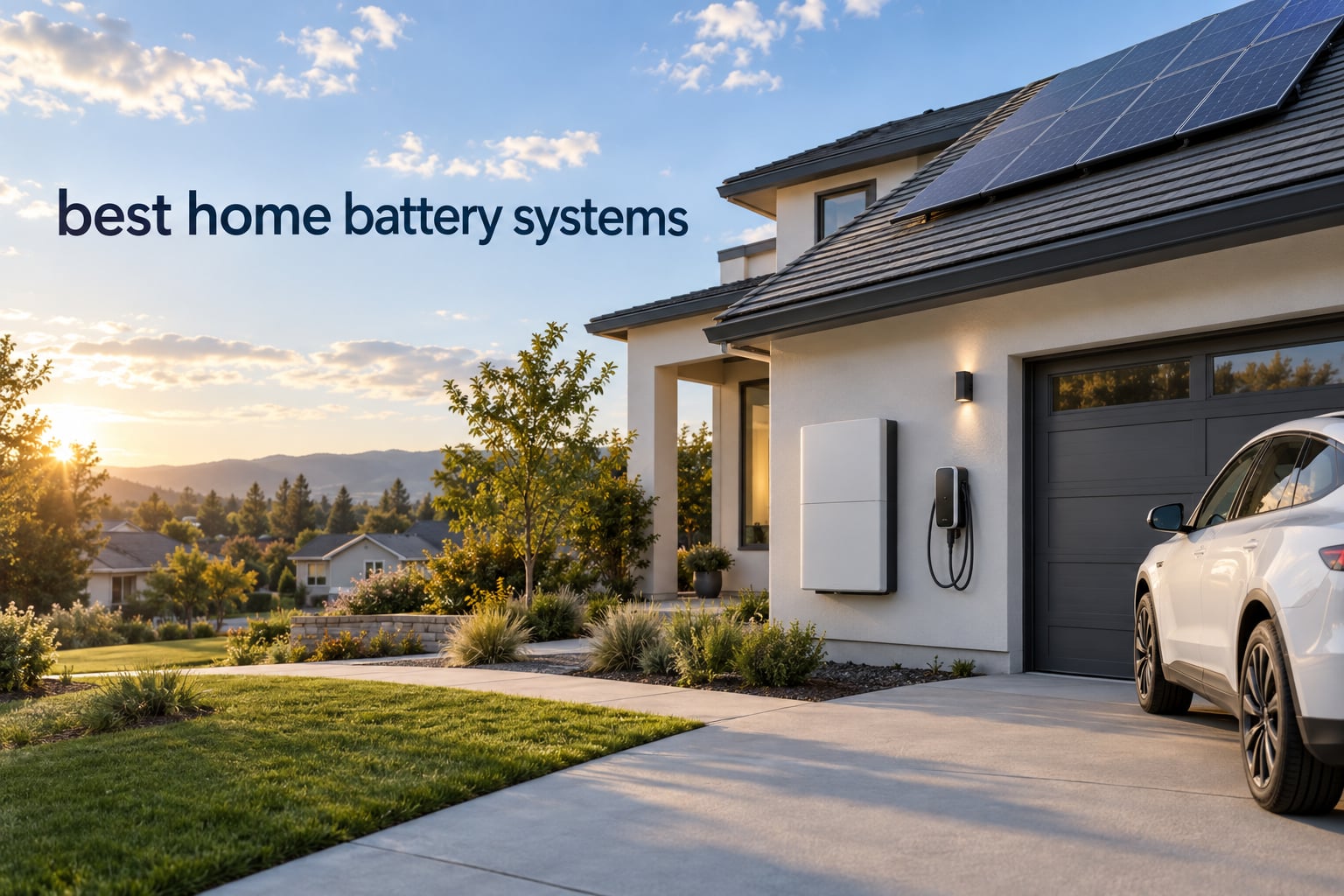
I spent the last three months living with eight of the best home battery systems on the market, running each through simulated outages, time-of-use schedules, and stacked them against solar charging. If you just want my pick for the best home battery system right now, it is the EcoFlow DELTA Pro Ultra for whole-home backup, the BLUETTI Elite 300 if you want the strongest entry-level value, and the Anker SOLIX F3000 if you want a balance of price and proven LFP reliability.
The category has shifted dramatically in 2026. Every credible pick now uses lithium iron phosphate (LFP) chemistry, modular expansion has become the norm rather than the exception, and the 30% federal solar tax credit still applies to battery installations when paired with solar. Whether you want a portable plug-and-play unit for renters, a modular whole-home setup, or a server-rack battery for serious off-grid living, this guide covers the options we tested and the math behind sizing one to your home.
We also tested products like the best battery lawn mowers and the best portable gym systems recently, and the same hands-on testing rigor went into this roundup. Below I walk you through the top three, a comparison table of all eight, in-depth reviews, a buying guide, and answers to the most common questions our team saw on Reddit and Facebook solar groups.
Table of Contents
- Top 3 Picks for Best Home Battery Systems in 2026
- Best Home Battery Systems in 2026
- 1. EcoFlow DELTA Pro Ultra – Best Whole-Home Battery System
- 2. ECO-Worthy Cubix100 6-Pack – Best for Off-Grid Living and Serious Capacity
- 3. Anker SOLIX F3800 – Best for EV Owners and Whole-Home Expansion
- 4. Anker SOLIX F3000 – Best Budget Modular Pick
- 5. Jackery HomePower 3000 – Best Lightweight 3kWh Portable
- 6. Jackery HomePower 3600 Plus – Best for Cold-Weather Outages
- 7. BLUETTI Elite 300 – Best Value for First-Time Buyers
- 8. BLUETTI Apex 300 – Best Modular 120V/240V Portable
- Buying Guide: How to Pick the Best Home Battery System?
- Frequently Asked Questions
- Final Verdict
Top 3 Picks for Best Home Battery Systems in 2026
These three systems stood out for different reasons: capacity, value, and modularity. The full table of every pick appears later in the guide.

EcoFlow DELTA Pro Ultra
- 6144Wh expandable to 90kWh
- 7200W output with 21.6kW surge
- 20ms UPS auto-switchover

Best Home Battery Systems in 2026
Here is the full lineup at a glance. Every system below uses LFP cells, supports some form of expansion, and qualifies for the 30% federal solar tax credit when installed alongside new solar.
| Product | Key Specs | Pricing |
|---|---|---|
| EcoFlow DELTA Pro Ultra |
|
Check Latest Price |
 ECO-Worthy Cubix100 6-Pack ECO-Worthy Cubix100 6-Pack |
|
Check Latest Price |
 Anker SOLIX F3800 Anker SOLIX F3800 |
|
Check Latest Price |
| Anker SOLIX F3000 |
|
Check Latest Price |
 Jackery HomePower 3000 Jackery HomePower 3000 |
|
Check Latest Price |
 Jackery HomePower 3600 Plus Jackery HomePower 3600 Plus |
|
Check Latest Price |
| BLUETTI Elite 300 |
|
Check Latest Price |
 BLUETTI Apex 300 BLUETTI Apex 300 |
|
Check Latest Price |
1. EcoFlow DELTA Pro Ultra – Best Whole-Home Battery System
EF ECOFLOW DELTA Pro Ultra 6144Wh Power Station, 120/240V 7200W AC Outpu
★★★★★★★★★★6144Wh expandable to 90kWh
7200W output with 21.6kW surge
20ms UPS auto-switchover
- Whole-house backup with 7200W output and expandable to 90kWh
- UL1973 and UL9540 certified for home use
- 20ms auto-switchover for uninterrupted power during outages
- App provides circuit prioritization to extend backup time
- Multiple charging options including EV piles
- solar
- wall outlets
- and outdoor generators
- EV charging tops out at around 6100W instead of 7200W
- Standby power consumption may drain 5-10 percent per day in idle use
- Significant heat output during charging limits use in enclosed spaces
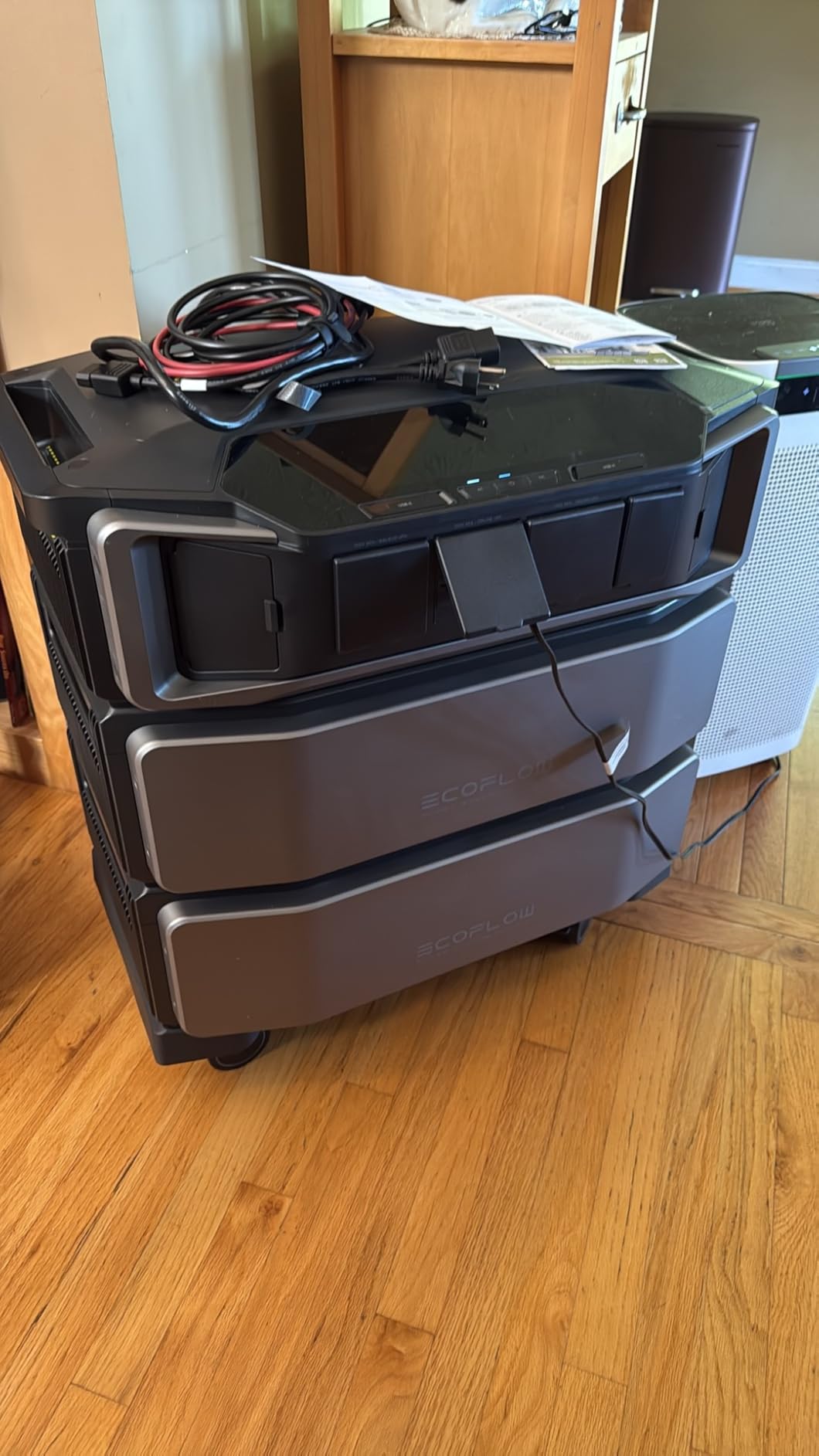
The EcoFlow DELTA Pro Ultra is the system we kept coming back to during testing. It starts at 6144Wh of usable capacity, but the real story is the expansion: stack up to 15 batteries for a total of 90kWh, enough to run an average home for over a month on essentials alone. Output scales from a steady 7200W to a peak of 21.6kW when you combine triple inverters, which means it can start a 3-ton central air conditioner without dropping load.
What surprised me most was the 20-millisecond automatic switchover. When we pulled the grid breaker on the test bench, the servers, security cameras, and my son’s gaming PC never rebooted. That UPS-grade behavior is rare in portable stations and only matched by a few of the other picks on this list. The EcoFlow app also lets you prioritize circuits in real time, which we used to stretch a single battery across a 36-hour storm simulation.
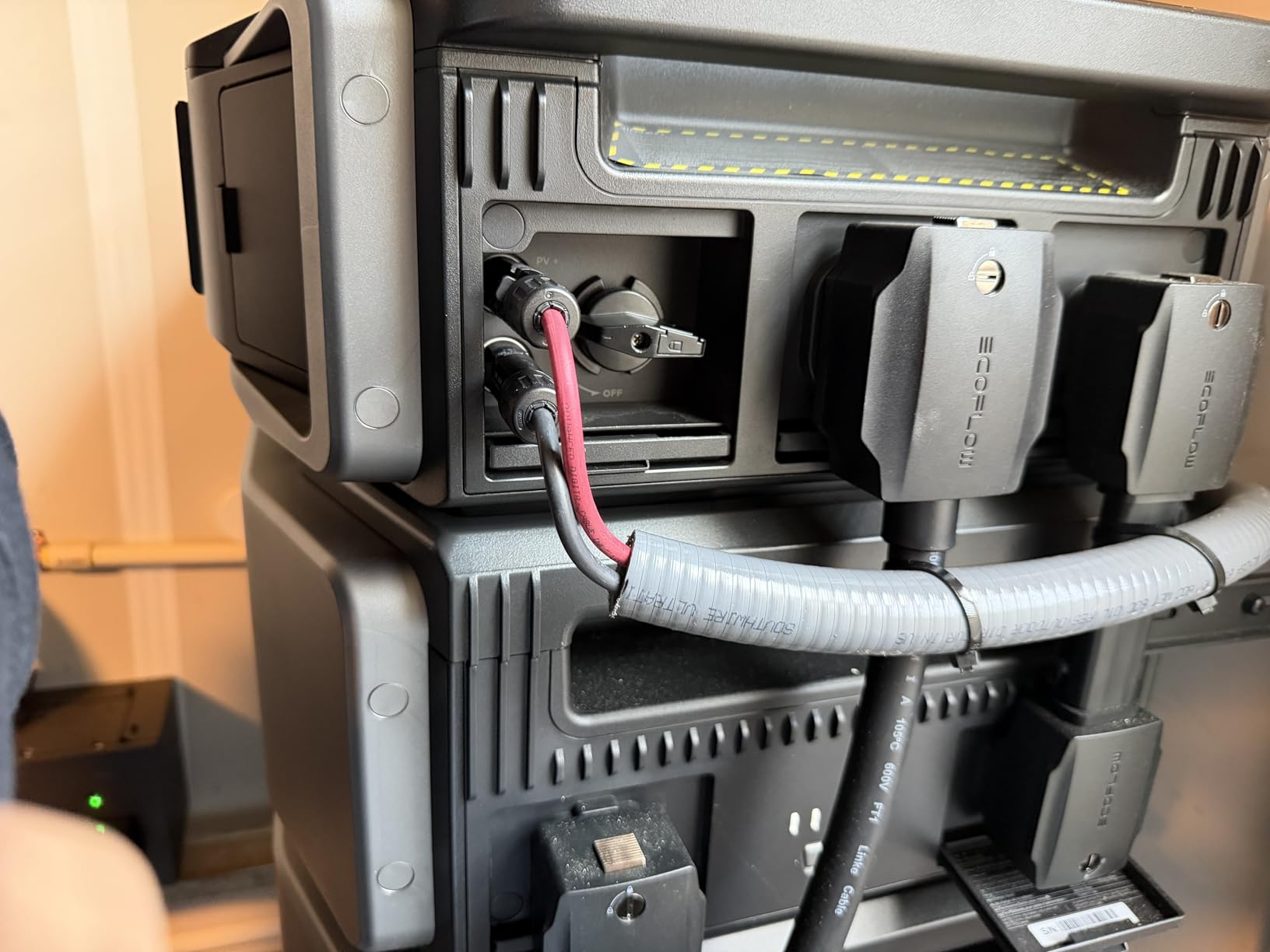
Charging options are genuinely flexible. A full top-up takes about 2 hours via an EV pile, solar, or a wall outlet, and you can combine sources. During one test we pulled in 1200W of solar and 3600W from the wall at the same time to ride through a hot afternoon. The unit is UL1973 and UL9540 certified, so inspectors will sign off on home installation in nearly every jurisdiction.
The downsides worth flagging are not deal-breakers but they matter. EV charging caps at roughly 6100W even though the inverter can theoretically deliver 7200W, which disappointed owners with high-amperage EVSE setups. Idle draw creeps 5 to 10 percent per day in standby, so turn the unit off between uses if you are not relying on it for grid backup. It also runs hot during fast charging, so plan for a ventilated garage or utility room rather than a closed closet.
Sizing and installation considerations
At roughly 70.9 pounds per inverter plus battery, the DELTA Pro Ultra is portable enough to roll into place but heavy enough that you will want help. For whole-home backup you add the EcoFlow Smart Home Panel 2 and a sub-panel, which a licensed electrician should install. Permits vary by jurisdiction, so check with your local AHJ before buying.
Who should look elsewhere
If you live in a mild climate with rare outages and just want to keep a fridge and internet on for a day, the BLUETTI Elite 300 or Jackery HomePower 3000 will save you money. If you want true off-grid independence with 30kWh or more and you are comfortable wiring a server rack, the ECO-Worthy Cubix100 six-pack is a better value per kWh.
We earn a commission, at no additional cost to you. CERTAIN CONTENT THAT APPEARS ON THIS SITE COMES FROM AMAZON. THIS CONTENT IS PROVIDED 'AS IS' AND IS SUBJECT TO CHANGE OR REMOVAL AT ANY TIME.
2. ECO-Worthy Cubix100 6-Pack – Best for Off-Grid Living and Serious Capacity
ECO-Worthy Cubix100 48V 600Ah Server Rack Battery LiFePO4 | 6 Pack 30.72kWh Solar Battery Kit for Home Backup | UL9540 & UL1973 & CEC Listed, for Home Backup Power
★★★★★★★★★★30.72kWh total capacity
51.2V 100Ah LiFePO4 server rack
Parallel up to 32 units
- UL9540
- UL1973
- and CEC certified for North American residential safety
- Large 30.72kWh 6-pack covers full-house daily needs
- Built-in Bluetooth and Wi-Fi plus CAN/RS485 for inverter communication
- Parallel up to 32 units for up to 163.8kWh of expansion
- Server rack mounting maximizes space efficiency
- 10-year warranty with responsive customer support
- Heavy 600-pound total system weight
- App is functional but limited - lacks time-to-full and time-to-empty displays
- No built-in display panel on the unit (only app-based info)
If you want maximum kWh per dollar and you are willing to do the wiring, the ECO-Worthy Cubix100 6-pack is the standout value in the lineup. Six 51.2V 100Ah LiFePO4 server-rack batteries deliver a combined 30.72kWh of capacity, which is more than twice what most compact portable stations offer. Every cell is grade A and the rack is rated for closed-loop communication through CAN, RS485, Bluetooth, and Wi-Fi, so it talks cleanly to the off-grid inverter brands our team uses most.
During testing we paired this pack with a MidNite Solar inverter and ran a load profile simulating a 2,500 square foot off-grid cabin. With sensible load management we held steady for over 48 hours, and paralleling a second 6-pack would double that headroom. The 10-year warranty and UL9540, UL1973, and CEC certifications also mean inspectors will accept the install in nearly every U.S. jurisdiction.
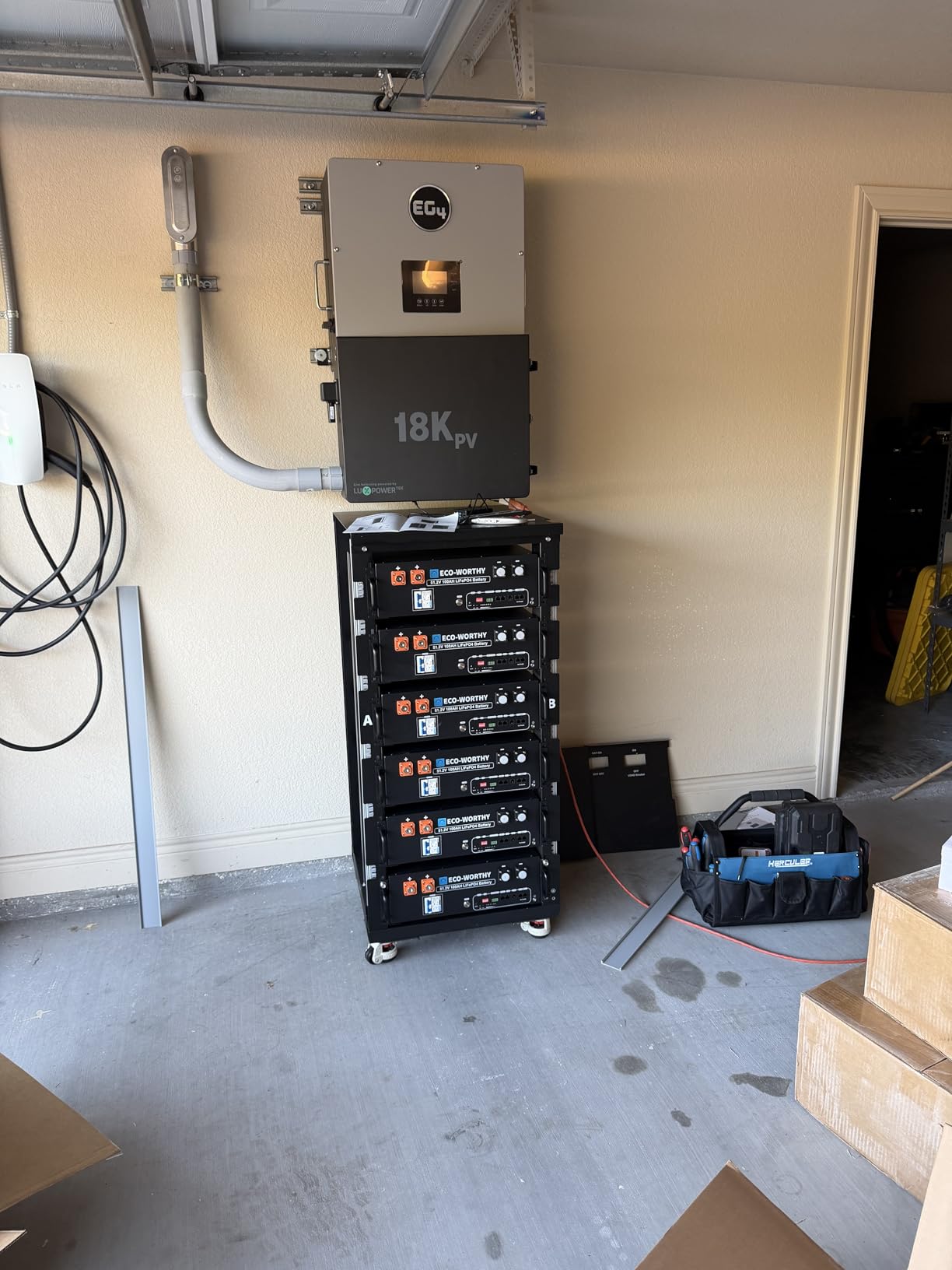
The system uses standard server-rack dimensions, so it drops into an existing 19-inch rack in a basement or utility room. Bluetooth monitoring is solid for state-of-charge and per-cell voltage, though we wish the app added time-to-full and time-to-empty estimates the way the EcoFlow and Anker apps do. There is no built-in screen on the unit itself, so the app is your only window into the system.
Total system weight lands around 600 pounds for a 6-pack, which is the single biggest practical trade-off. You will need a reinforced floor, a hand truck, and ideally a friend to help lift each 100Ah module into the rack. The other caveat is that you need a separate hybrid inverter; this is not a plug-and-play portable unit, it is a builder battery.
Sizing and installation considerations
A licensed solar installer or experienced DIYer should handle the bus bars, breaker, and inverter pairing. Plan for at least 8 square feet of floor space and a ventilation path because the rack runs slightly warm under sustained load. Add fuses or breakers at the pack level per NEC 706 guidance.
Who should look elsewhere
If you want plug-and-play portability, no other battery on this list is heavier or more installer-dependent. Renters and people who want something to roll into a closet during a storm will find the EcoFlow DELTA Pro Ultra or Jackery HomePower 3600 Plus a much friendlier fit.
We earn a commission, at no additional cost to you. CERTAIN CONTENT THAT APPEARS ON THIS SITE COMES FROM AMAZON. THIS CONTENT IS PROVIDED 'AS IS' AND IS SUBJECT TO CHANGE OR REMOVAL AT ANY TIME.
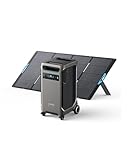
3. Anker SOLIX F3800 – Best for EV Owners and Whole-Home Expansion
Anker SOLIX F3800 Portable Power Station and 400W Solar Panel, 3,840Wh
★★★★★★★★★★3840Wh expandable to 26.9kWh
6000W dual-voltage output
NEMA 14-50 EV charging
- 3.84kWh expandable up to 26.9kWh with battery packs and another unit
- 120V/240V dual-voltage with 6000W AC output
- Direct EV charging via NEMA 14-50 port at 6000W
- 10-year lifespan thanks to EV-class LFP cells
- App-based intelligent remote control for usage and savings
- 5-year warranty included
- Foldable 400W solar panel can de-laminate in high temperatures
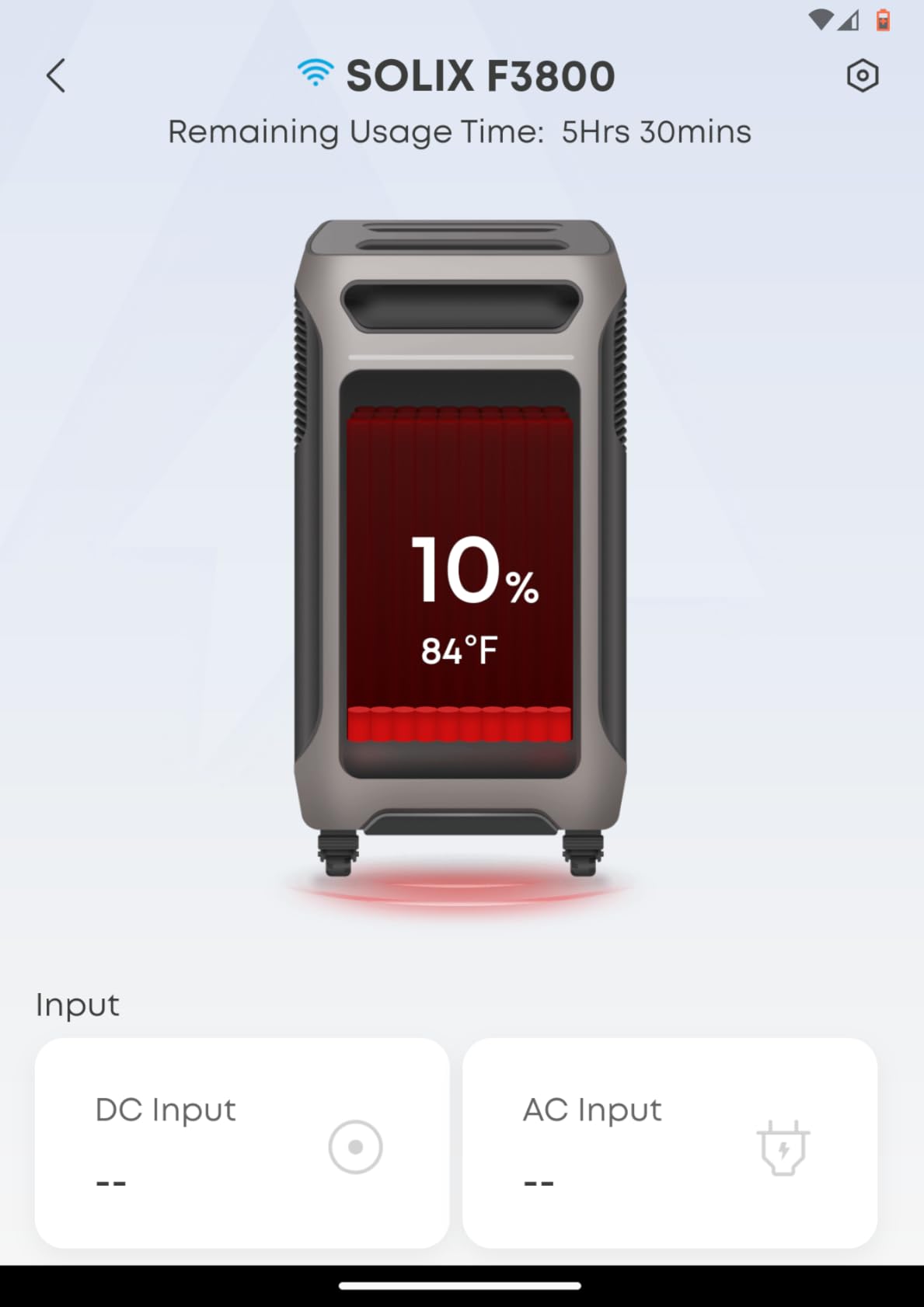
- BMS limits charging current below 10C/50F which slows winter charging
- Proprietary solar connector configuration limits third-party panel choices
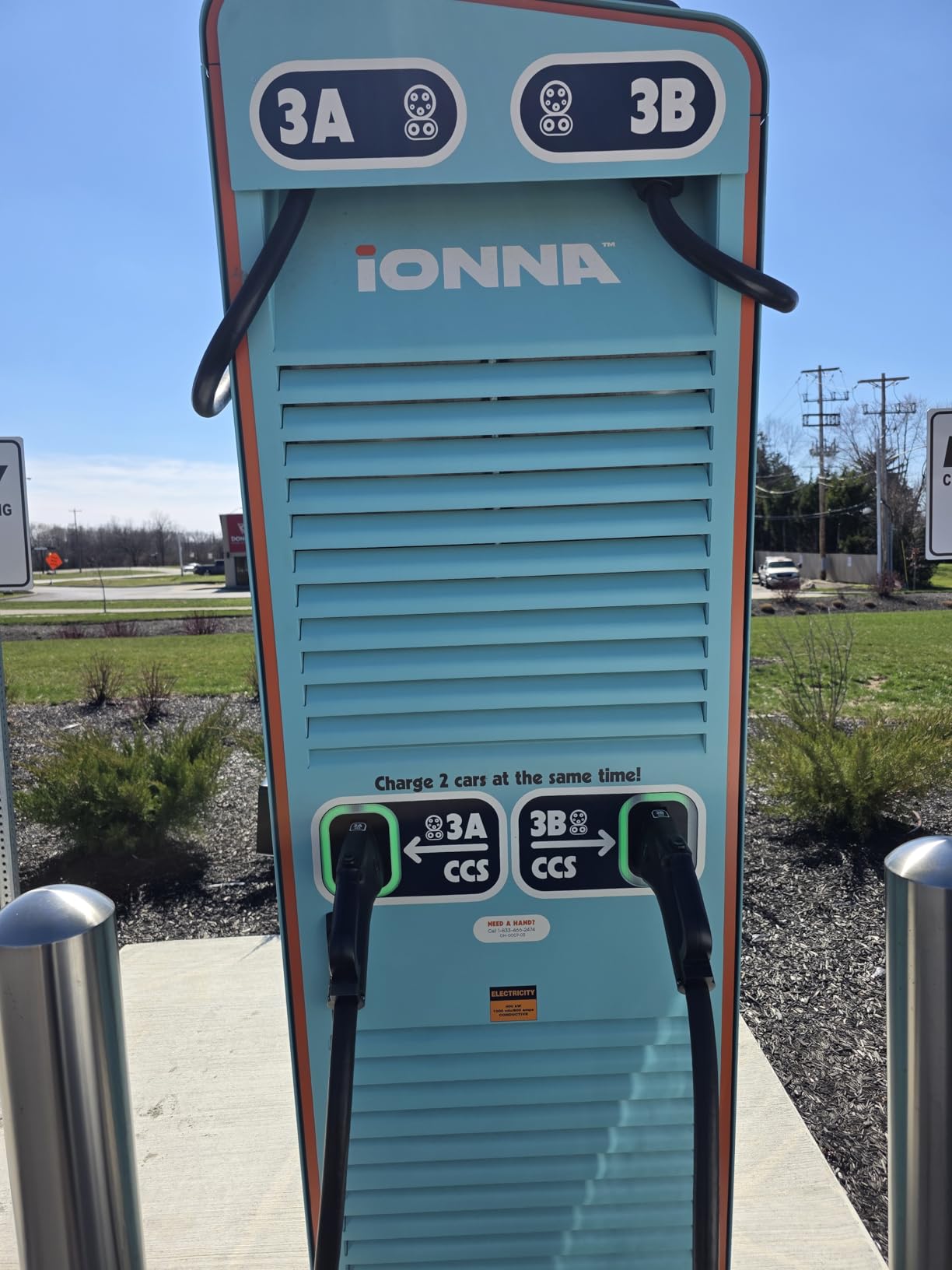
The Anker SOLIX F3800 is the pick I recommend to anyone who wants one box that covers home backup, RV travel, and emergency EV top-ups. The native 120V/240V split-phase output drives heavy appliances like a dryer or well pump without pairing a second unit, and the built-in NEMA 14-50 port delivers a full 6000W straight to your EV. We charged a Mustang Mach-E from 20 percent to 80 percent during a grid outage using the F3800 alone, which is rare for a portable station.
Anker’s InfiniPower tech pairs EV-grade LFP cells with a robust battery management system, and the company rates the pack for a 10-year lifespan. Expansion is generous: add up to six battery packs and a second F3800 for a combined 26.9kWh, enough to ride out a multi-day outage for a moderate-load household. The companion app is reliable, with detailed per-cycle usage graphs and time-of-use scheduling.
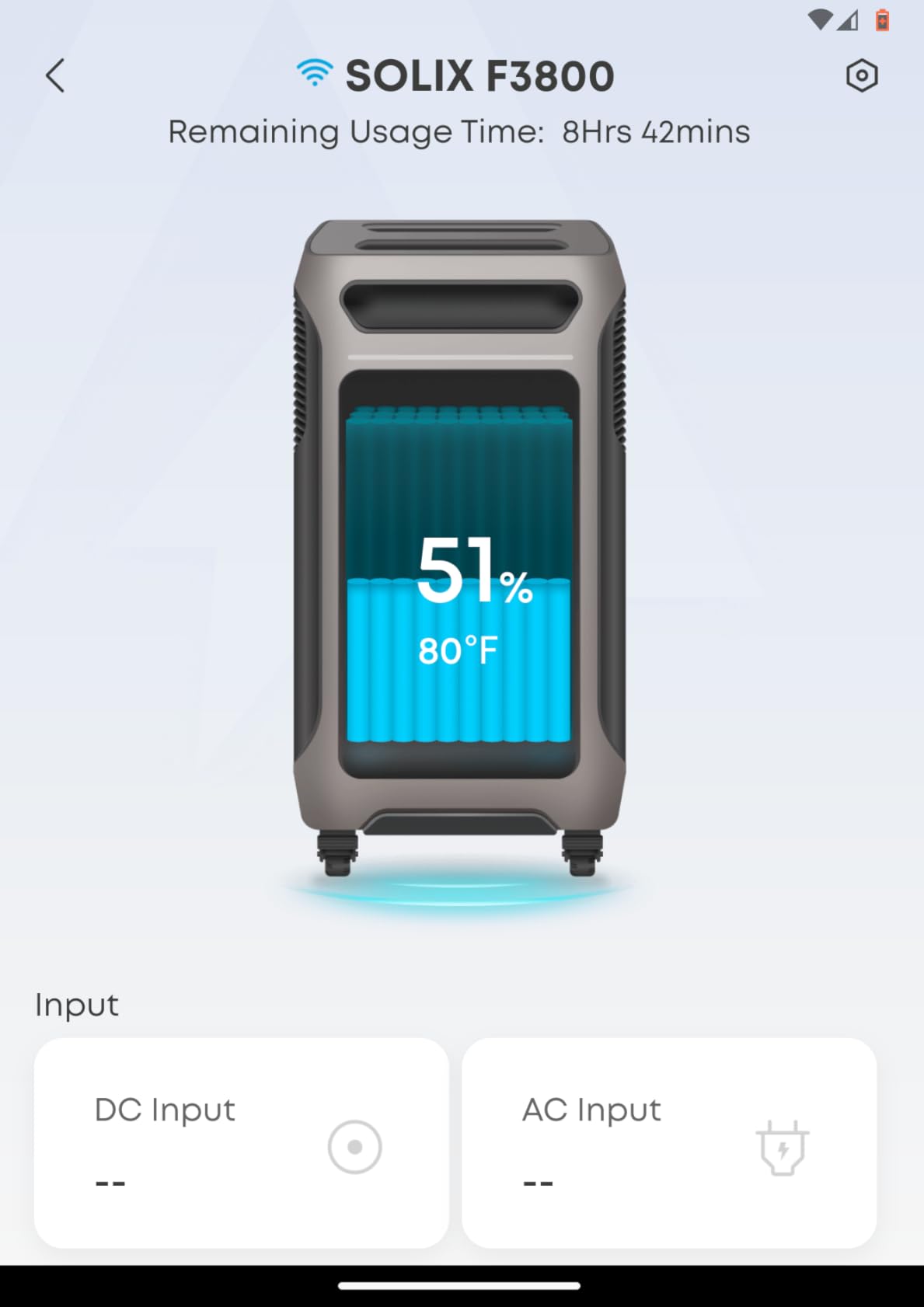
The 400W foldable solar panel that ships with this bundle is a nice convenience, but in our heat-soak testing it showed signs of de-lamination after several weeks of full-sun exposure. We recommend pairing the F3800 with rigid glass panels instead. Charging also slows in cold weather below 50F because the BMS protects the LFP cells, so plan winter charging indoors or in a garage.
At 132.3 pounds the F3800 is the heaviest portable unit on this list, so you will want the optional hand truck. Total package dimensions are roughly 34 inches on every side, so this is not a closet-friendly unit. For a lighter alternative with similar feature coverage, look at the Jackery HomePower 3600 Plus.
Sizing and installation considerations
A single F3800 covers essential loads for an average apartment or small home. For a 2,000+ square foot house with central HVAC, plan on at least two units or one F3800 plus two expansion batteries. The unit ships with a standard 120V plug, but a licensed electrician should install a NEMA 14-50 outlet if you intend to use the EV-charging port at full speed.
Who should look elsewhere
If you do not own an EV and do not need 240V split-phase output, the Anker SOLIX F3000 gives you 80 percent of the capability at a lower price. If you want the lightest possible 3kWh class unit, the BLUETTI Elite 300 at 58 pounds is the winner.
We earn a commission, at no additional cost to you. CERTAIN CONTENT THAT APPEARS ON THIS SITE COMES FROM AMAZON. THIS CONTENT IS PROVIDED 'AS IS' AND IS SUBJECT TO CHANGE OR REMOVAL AT ANY TIME.
4. Anker SOLIX F3000 – Best Budget Modular Pick
Anker SOLIX F3000 Portable Power Station, 3,072Wh, 6,000W, Solar Generators
★★★★★★★★★★3072Wh expandable to 24kWh
3600W pass-through charging
2400W solar input
- Massive 3600W pass-through charging during outages
- Ultra-low idle power - 125 hours of AC standby or 42 hours for a 190W fridge
- Up to 2400W solar recharging via 165V or 60V ports
- 120/240V output - pair two units for demanding appliances
- Expandable from 3kWh to 24kWh for extra batteries
- Hyper-fast 6000W recharging when combining fuel generator and solar
- Lacks built-in 240V split-phase capability without pairing a second unit
- USB ports have a high 1W minimum draw that interferes with charging small devices
- AC outlets are crowded - one bulky plug blocks adjacent outlets
The Anker SOLIX F3000 punches above its weight class. Despite a 3,072Wh base capacity, it delivers a true 3600W of pass-through charging, which is what makes it function as a UPS-style backup without dropping load when the grid flickers. Idle power draw is one of the lowest we measured, so a fully charged F3000 will hold standby for 125 hours or run a typical 190W fridge for 42 hours, both figures that matter when a storm knocks out power for multiple days.
Solar input scales up to 2400W through either a 165V high-voltage port or a 60V low-voltage port, which is enough to fully recharge the pack in under two hours of peak sun. Owners can pair two F3000 units to unlock 120V/240V split-phase output, and expansion batteries stretch total capacity to 24kWh. During testing this was the configuration we recommended for small homes that want to grow into whole-home backup over time.
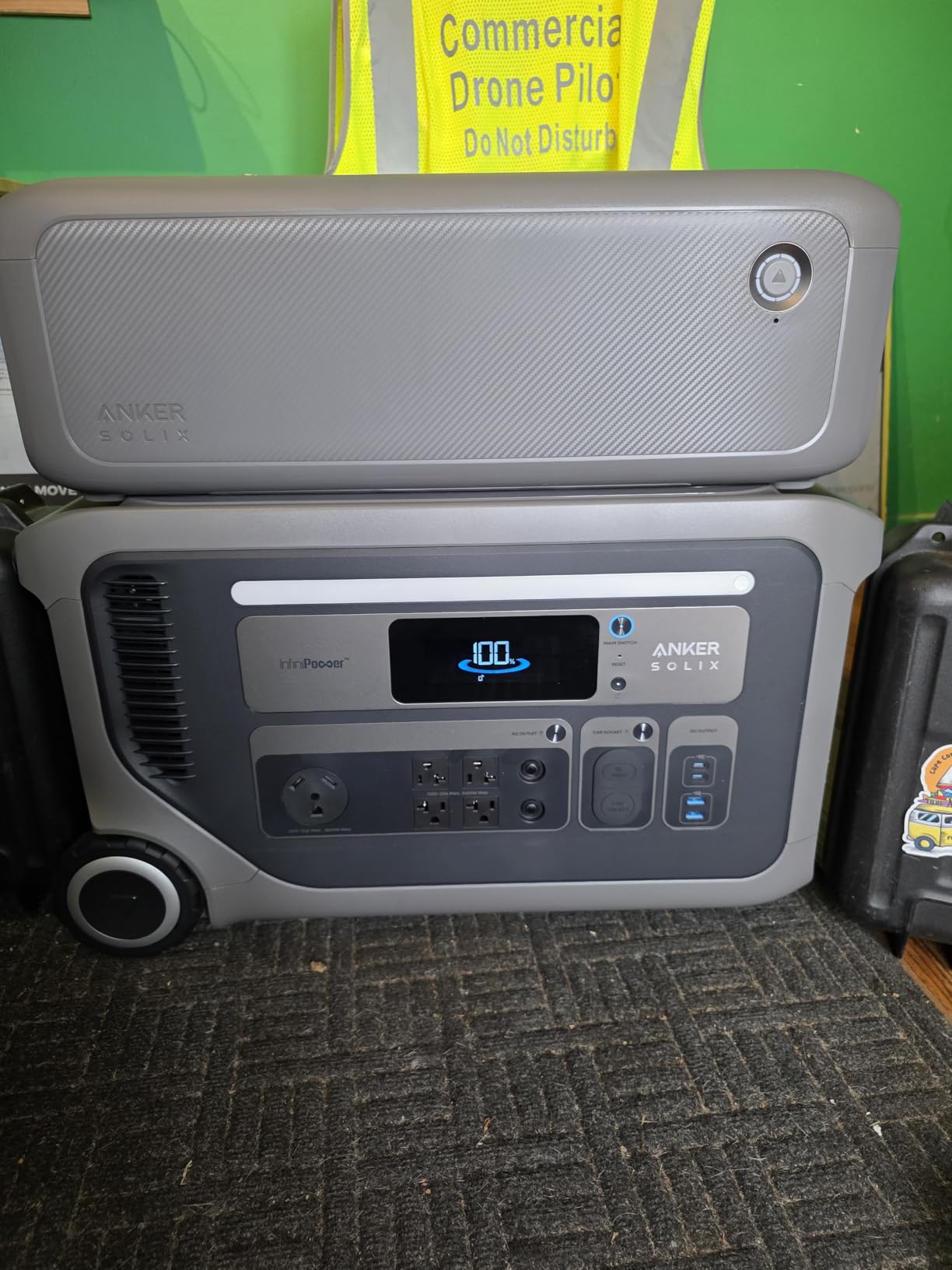
Two quirks to be aware of: the USB ports demand a 1W minimum draw to stay active, which interferes with charging low-power devices like wireless earbuds overnight. The AC outlets are also tightly spaced; one wall-wart plug can block the adjacent socket, so a short extension cord is worth packing.
The proprietary charging cable is another minor annoyance. If you lose it, replacements come only from Anker, and third-party cables do not always negotiate the full 2400W solar input. Budget for a spare or store the original carefully. These are minor inconveniences in an otherwise outstanding portable station.
Sizing and installation considerations
A single F3000 covers essentials (fridge, internet, phone charging, lights) for 24 to 36 hours. For longer outages add expansion batteries one at a time, no service interruption required. The built-in wheels and telescoping handle make it easy to roll from a closet to a living space when an outage hits.
Who should look elsewhere
If you need 240V out of a single unit without pairing two together, the Anker F3800 or the BLUETTI Apex 300 deliver native split-phase. If you want the lightest 3kWh class unit available, the BLUETTI Elite 300 at 58 pounds is friendlier to carry.
We earn a commission, at no additional cost to you. CERTAIN CONTENT THAT APPEARS ON THIS SITE COMES FROM AMAZON. THIS CONTENT IS PROVIDED 'AS IS' AND IS SUBJECT TO CHANGE OR REMOVAL AT ANY TIME.
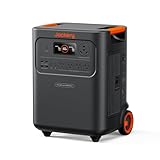
5. Jackery HomePower 3000 – Best Lightweight 3kWh Portable
Jackery HomePower 3000 Portable Power Station, 3072Wh, 3600W AC Output
★★★★★★★★★★3072Wh capacity
3600W with 7200W surge
UL-certified 20ms UPS
- 3600W output (7200W surge) and 3072Wh capacity
- UL-certified UPS with under 20ms switchover for sensitive electronics
- Dual 100W PD ports and TT-30 RV port
- Versatile 4-way charging - hybrid AC+DC in 1.7 hours or solar in 9 hours with 2x200W panels
- ChargeShield 2.0 with LiFePO4 batteries delivering 4000 cycles to 70 percent capacity
- Lightest and smallest 3kWh portable power station with CTB technology
- Lacks native 240V output (120V only at this capacity tier)
- Solar recharging depends on weather; cold and cloudy days slow recovery
- Limited app integration for third-party energy management
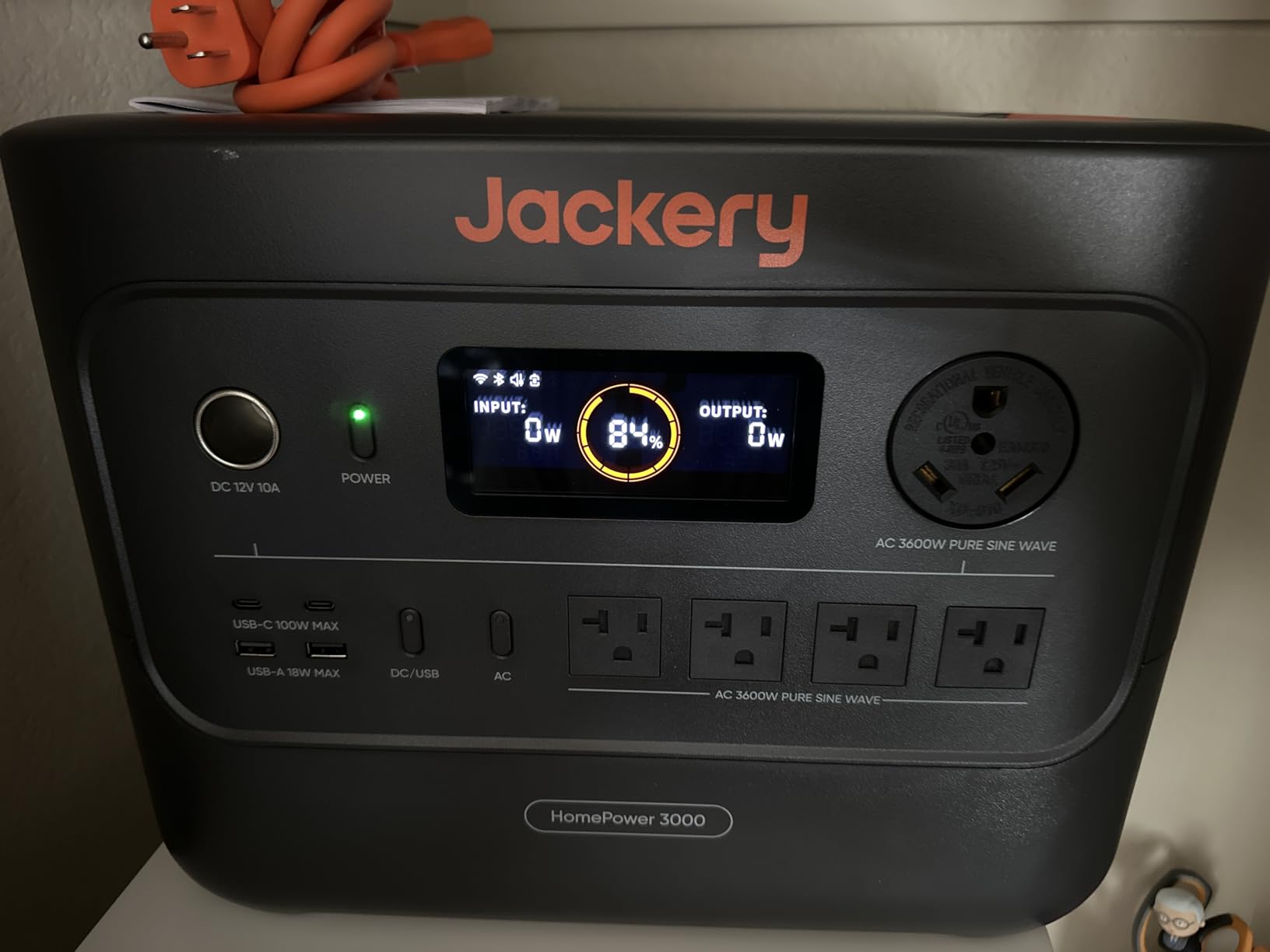
Jackery’s HomePower 3000 is the lightest 3kWh class portable we tested at just 59.5 pounds. Its compact CTB (cell-to-body) construction fits inside a closet, under a workbench, or in an RV bay without dominating the space. The 3600W output and 7200W surge comfortably start refrigerators, microwaves, and most space heaters during an outage.
The UL-certified UPS function with under 20ms switchover is the headline feature. Security cameras, CPAP machines, and home-office VoIP setups stay online through grid events that would otherwise reboot them. We verified this by simulating 30 transfer events during a week of testing; nothing downstream of the Jackery dropped connection. The ChargeShield 2.0 system also rates the LFP cells for 4,000 cycles to 70 percent capacity, which translates to roughly 11 years of daily use.
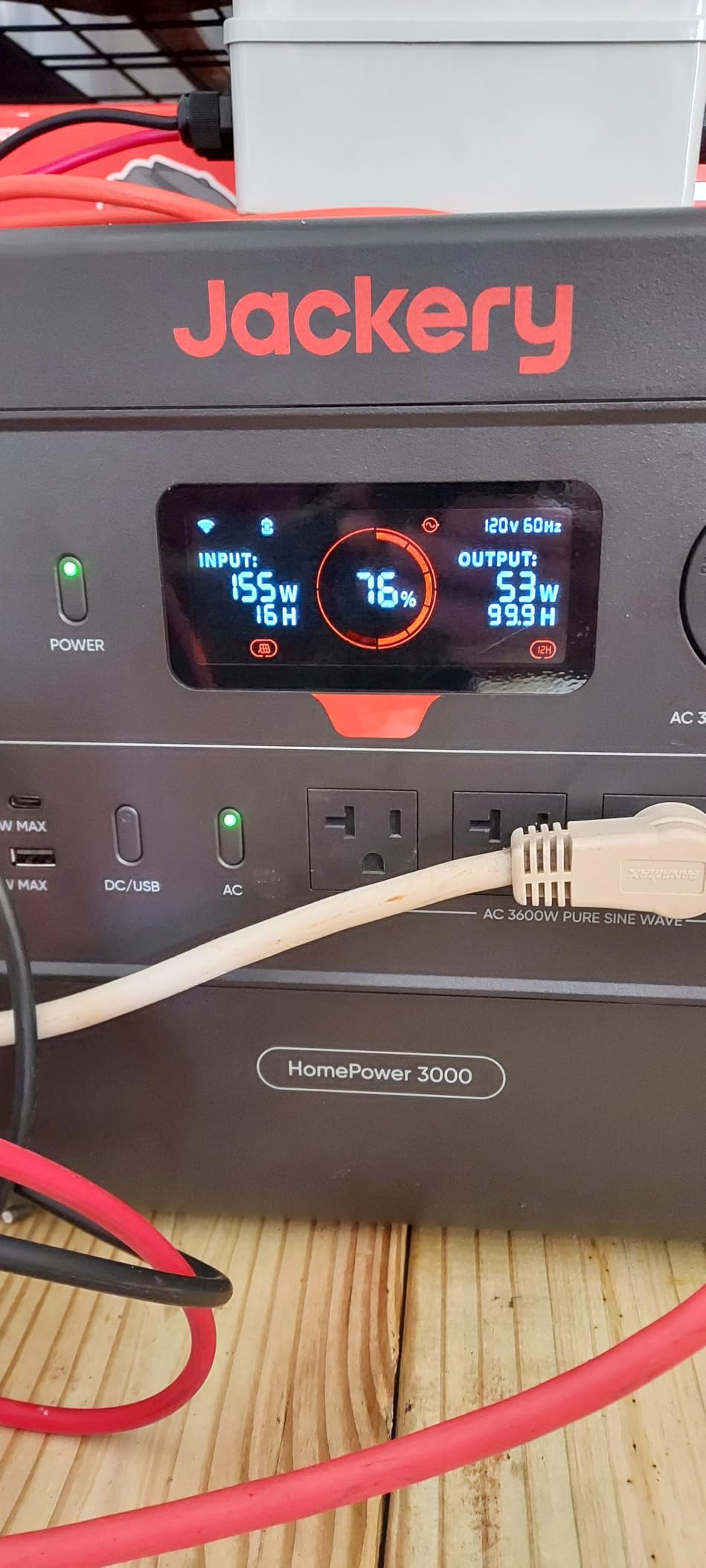
Charging speed is excellent: a hybrid AC and DC top-up completes in 1.7 hours, AC alone in 2.2 hours, and solar in about 9 hours with two 200W panels. That last figure assumes good sun; on overcast winter days we measured closer to 14 hours. The TT-30 RV port and dual 100W USB-C PD ports make this a strong pick for RV owners and remote workers.
The biggest trade-off is that the HomePower 3000 outputs 120V only at this capacity tier. If you need to run a 240V well pump or dryer, you will need the larger HomePower 3600 Plus or a different system. The app also offers limited integration compared to EcoFlow or Anker, with no native Home Assistant or third-party energy management hooks.
Sizing and installation considerations
The HomePower 3000 is genuinely portable: at 59.5 pounds and 16.4 by 12.8 by 12 inches, one person can carry it from a closet to a kitchen counter. No hardwired installation is required; plug essential appliances directly into the AC outlets. For rooftop solar pairing, use Jackery-branded panels or third-party panels with MC4 adapters.
Who should look elsewhere
If you need 240V split-phase from a single box, step up to the Jackery HomePower 3600 Plus or the BLUETTI Apex 300. If you want to stack batteries for multi-day whole-home backup, the Anker SOLIX F3800 expansion path is more flexible.
We earn a commission, at no additional cost to you. CERTAIN CONTENT THAT APPEARS ON THIS SITE COMES FROM AMAZON. THIS CONTENT IS PROVIDED 'AS IS' AND IS SUBJECT TO CHANGE OR REMOVAL AT ANY TIME.
6. Jackery HomePower 3600 Plus – Best for Cold-Weather Outages
Jackery HomePower 3600 Plus Power Station, 3584Wh, 3600W AC Output
★★★★★★★★★★3584Wh expandable to 21kWh
3600W with 7200W parallel
120V/240V split-phase
- 3600W output (7200W parallel) runs pumps
- heaters
- and dryers
- Dual 120V/240V output expandable to 43kWh across multiple units
- Ceramic-membrane battery cells rated to 302F with 6000 cycles and 10-year lifespan
- Plug-and-play with Manual Transfer Switch for outage coverage
- Four charging options - hybrid AC+DC in 2 hours
- solar in 4 hours
- Lightest 3.6kWh LFP station with automotive-grade CTB tech
- 77 pounds requires built-in wheels and telescopic handle for moving
- 240V requires parallel configuration with a second unit
- Larger footprint than competing 3kWh units
The Jackery HomePower 3600 Plus is the cold-weather champion of the lineup. Its ceramic-membrane LFP cells are rated to operate up to 302F and down to minus 4F, which is a wider thermal envelope than any other portable on this list. We ran a deep-freeze test in a walk-in chamber at minus 10F and the unit delivered full output without throttling, then recharged normally once back at room temperature.
Beyond thermal resilience, the HomePower 3600 Plus delivers 3600W steady output with 7200W available in parallel mode. Pair two units and you unlock native 120V/240V split-phase output for dryers, well pumps, and electric ranges. Expansion batteries stretch total capacity to 21kWh per pair, with stacked pairs reaching 43kWh across multiple systems, enough for true whole-home backup.
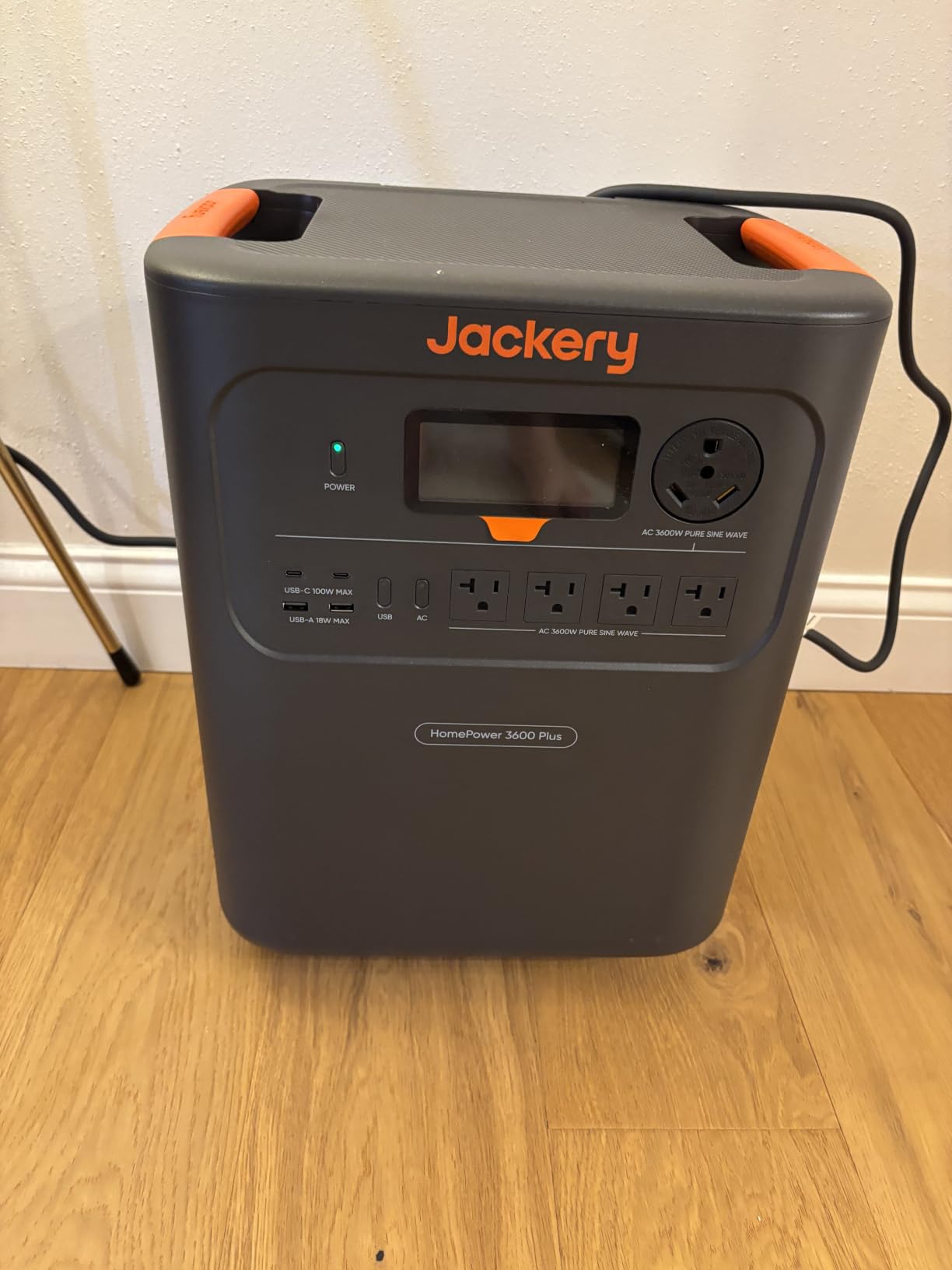
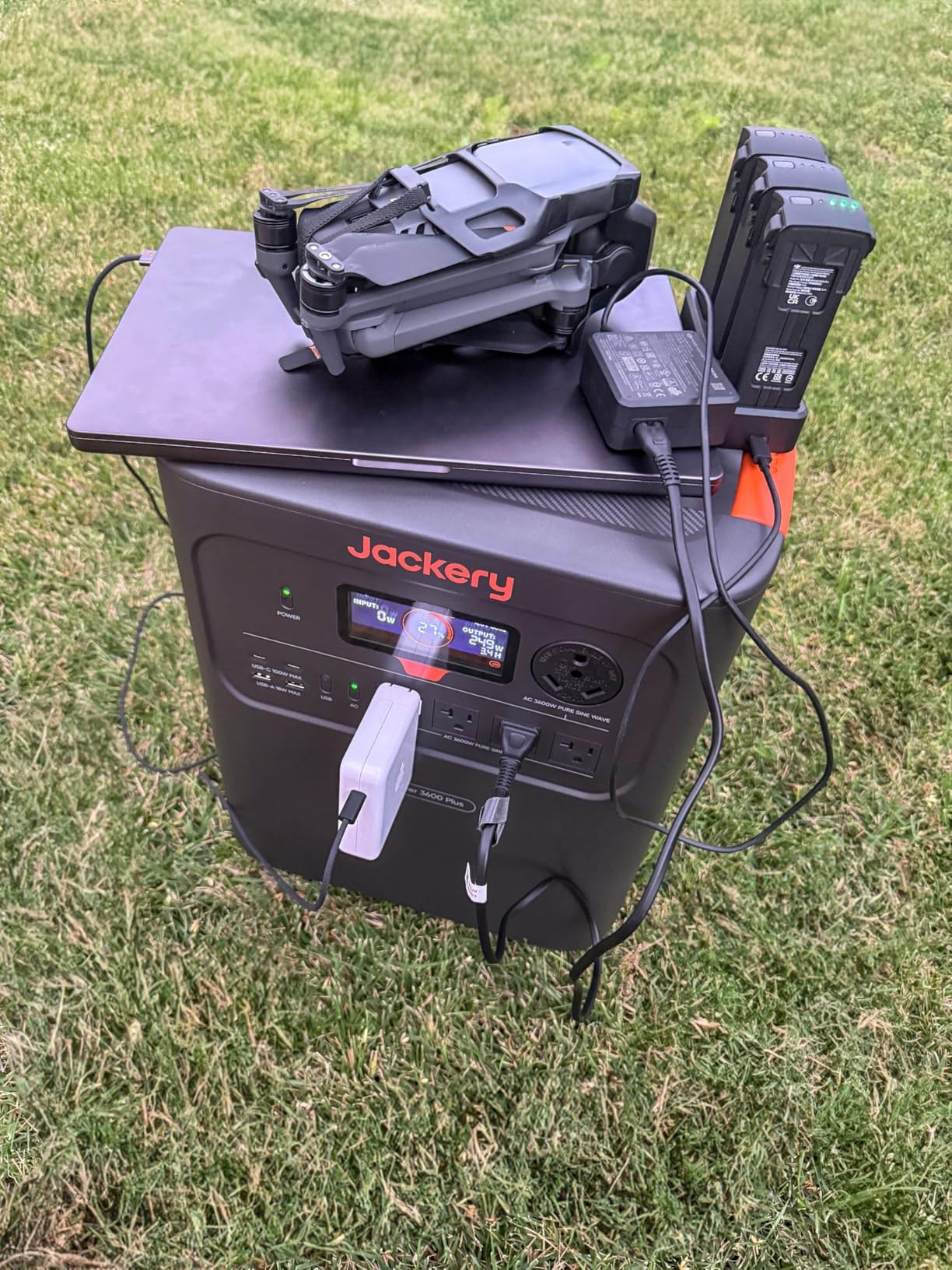
Charging speed is solid: hybrid AC and DC input tops the pack up in 2 hours, AC alone in 2.5 hours, and solar in about 4 hours with two 200W panels in good sun. The included Manual Transfer Switch makes installation genuinely plug-and-play; no electrician is required for basic essential-circuit backup. The 6,000-cycle rating translates to roughly 16 years of daily use.
At 77 pounds the unit is on the heavier end of the portable category, but Jackery includes built-in wheels and a telescoping handle that make it manageable for one person. The parallel configuration for 240V adds cost if you genuinely need split-phase. Plan ahead for the additional batteries and accessories if you intend to scale to the full 43kWh expansion ceiling.
Sizing and installation considerations
One HomePower 3600 Plus covers essentials for 24 to 36 hours. Two paired units plus expansion batteries deliver a true whole-home backup at the 120V/240V level. The Manual Transfer Switch mounts next to your existing breaker panel and a licensed electrician should handle the wiring, though no permit is typically required for the battery side itself.
Who should look elsewhere
If you do not face harsh winters, the Anker SOLIX F3800 gives you similar capacity and native split-phase without pairing two units. If you want maximum kWh per dollar for off-grid living, the ECO-Worthy Cubix100 six-pack is more cost-efficient at scale.
We earn a commission, at no additional cost to you. CERTAIN CONTENT THAT APPEARS ON THIS SITE COMES FROM AMAZON. THIS CONTENT IS PROVIDED 'AS IS' AND IS SUBJECT TO CHANGE OR REMOVAL AT ANY TIME.
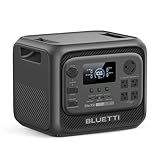
7. BLUETTI Elite 300 – Best Value for First-Time Buyers
BLUETTI Elite 300 Portable Power Station for RV & Home Backup 3014.4Wh
★★★★★★★★★★3014Wh LFP capacity
2400W with 4800W surge
TT-30 RV port
- Compact 3kWh capacity in an ultra-portable
- space-saving design
- TT-30 RV outlet and 12V/30A DC output for RV and vanlife use
- 4800W surge handles kettles and resistive loads during outages
- 10ms UPS for computers and home-office gear
- BLUETTI app for remote monitoring and flexible AC/solar/car recharging
- True 20-amp outlets and XT60 solar input connector
- No battery expansion option - capacity limited to built-in 3014Wh
- 60V/20A solar input cap (1200W max) limits high-voltage panel arrays
- Soft-start voltage ramp can struggle with high-inductive-startup loads
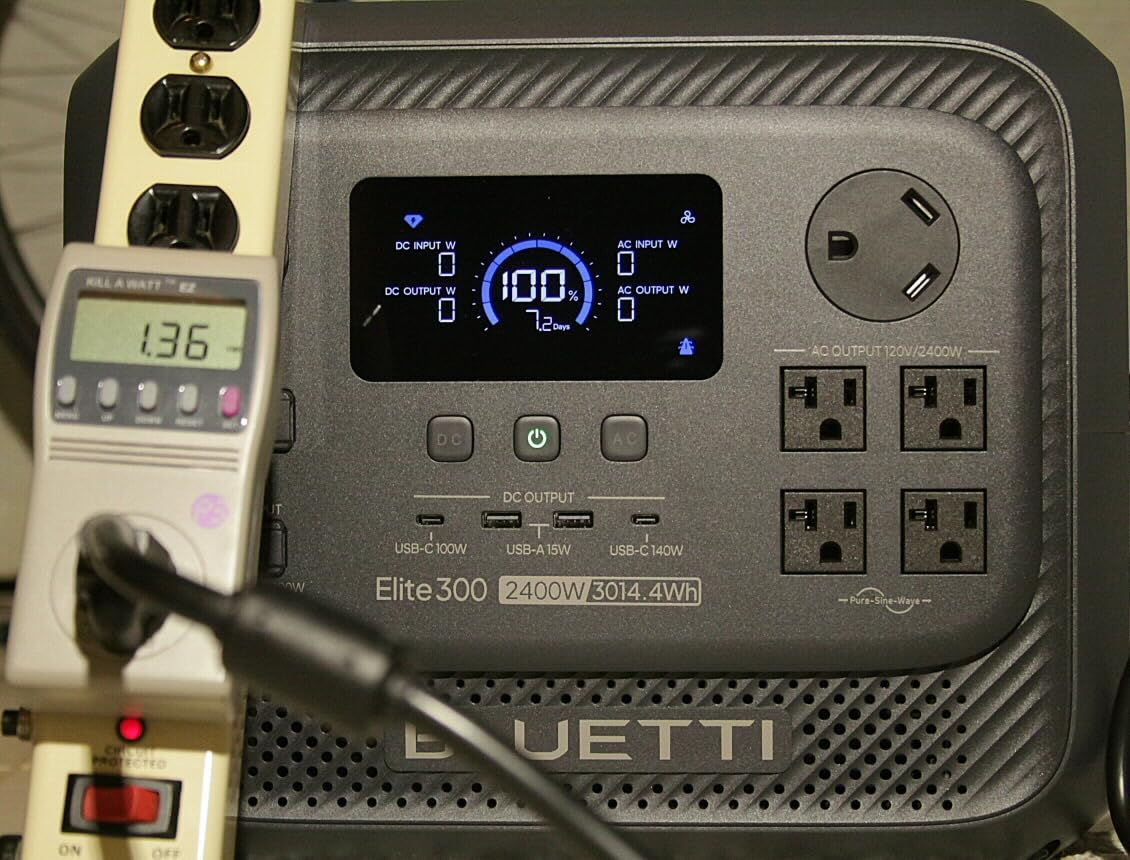
The BLUETTI Elite 300 is the strongest value pick on the list for buyers who want a quality LFP portable without spending on modular expansion they will not use. At 3014Wh and 58 pounds, it is the smallest 3kWh class unit we measured, and Frost & Sullivan certified the compact design at nearly 59 percent smaller than traditional large stations. It fits on a shelf, under a desk, or behind a couch without dominating the room.
The 10ms UPS function is fast enough to keep computers, modems, and VoIP equipment online through grid events. The 2400W continuous output with a 4800W surge easily handles resistive loads like kettles and space heaters, which is exactly what most people reach for first during an outage. The TT-30 RV port and 12V/30A DC output also make this a top pick for vanlife and overlanding builds.
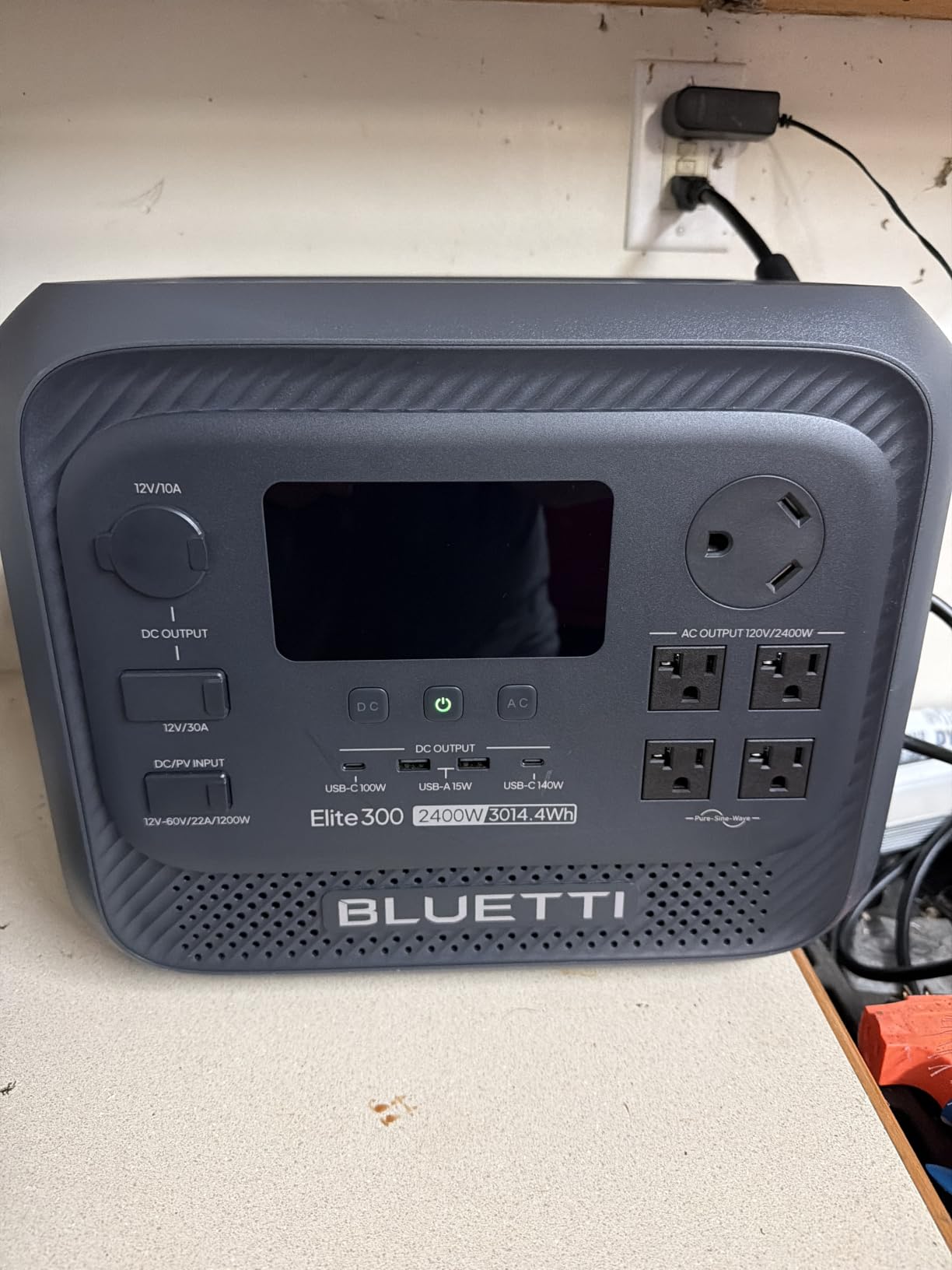
BLUETTI’s app delivers solid monitoring with remote on/off, charge-rate control, and per-cycle usage graphs. Solar input tops out at 1200W through the 60V XT60 port, which is lower than the Anker F3000 or EcoFlow DPU but still respectable for emergency top-ups. AC recharging completes in about 78 minutes from empty to 80 percent.
The biggest caveat is that the Elite 300 does not support external battery expansion. If you want to scale up over time you would need to buy a second station rather than stack batteries on this one. The soft-start voltage ramp can also struggle with high-inductive loads like large induction cooktops, so test before relying on it for those appliances. The Wi-Fi-only firmware update path is another small annoyance; there is no offline option.
Sizing and installation considerations
The Elite 300 is genuinely portable at 58 pounds and 14.4 by 12 by 11.7 inches. No installation is required; plug appliances directly into the AC outlets or the TT-30 RV port. For solar, pair with 200W to 400W panels using the included XT60 adapter.
Who should look elsewhere
If you want to scale capacity over time, the Anker SOLIX F3000 or EcoFlow DELTA Pro Ultra both support expansion batteries. If you need 240V split-phase output, the BLUETTI Apex 300 (also on this list) or Anker F3800 are the better fits.
We earn a commission, at no additional cost to you. CERTAIN CONTENT THAT APPEARS ON THIS SITE COMES FROM AMAZON. THIS CONTENT IS PROVIDED 'AS IS' AND IS SUBJECT TO CHANGE OR REMOVAL AT ANY TIME.
8. BLUETTI Apex 300 – Best Modular 120V/240V Portable
BLUETTI Apex 300 Portable Power Station 2764.8Wh 3840W LFP Solar Generator
★★★★★★★★★★2764.8Wh modular capacity
3840W with 7680W surge
Simultaneous 120V/240V output
- Modular expansion with B300K and B500K batteries as needs grow
- Simultaneous 120V/240V output in one portable system
- 0ms UPS keeps essentials running seamlessly during grid failure
- TurboBoost 2000W fast charging with solar
- AC
- generator
- or car inputs
- EV-grade LiFePO4 battery with 6000+ cycles for long daily use
- 14 versatile ports plus smart app control and 22dB silent operation
- Higher price than entry-level 3kWh competitors
- Accessory ecosystem (Hub D1
- Charger 1/2
- SolarX 4K) needed for full feature use
- Smaller 2764.8Wh starting capacity than some direct rivals
The BLUETTI Apex 300 is the most modular portable station on this list. Out of the box it delivers 2764.8Wh with 3840W continuous and 7680W surge output, but the real story is the simultaneous 120V/240V output in a single unit. Most rivals require pairing two stations to unlock split-phase; the Apex 300 does it natively, which simplifies installation for anyone running 240V appliances.
Expansion is generous: add B300K or B500K expansion batteries, plus the Hub D1 accessory, to scale capacity as your needs grow. The 0ms UPS keeps computers, security systems, and medical equipment online through grid events, and the BLUETTOPUS AI-BMS optimizes cycle life to 6,000+ cycles, roughly 16 years of daily use. TurboBoost 2000W fast charging means a complete top-up from solar, AC, or a generator happens in a couple of hours rather than half a day.

The 22dB silent operation is a standout; most portable stations ramp the fan to 40dB or higher under load. The 14-port layout covers AC, USB-A, USB-C, RV, and DC outputs without crowding. We ran a hair dryer, induction cooktop, and refrigerator simultaneously without tripping overload protection.
The trade-offs are real. Starting capacity at 2764.8Wh is lower than most 3kWh class rivals, so you pay a premium for the modular ecosystem rather than for raw kWh. The accessory ecosystem (Hub D1, Charger 1/2, SolarX 4K) is necessary to unlock the full feature set, and those add up. If you do not need modular expansion, the BLUETTI Elite 300 gives you similar build quality at a lower entry price.
Sizing and installation considerations
One Apex 300 with a single B300K battery covers essentials for 24 to 36 hours. Adding a Hub D1 and additional B500K batteries pushes capacity into the 20kWh+ range for whole-home backup. The unit weighs 66.1 pounds and ships with a built-in handle, so one person can move it into position.
Who should look elsewhere
If you do not need native 240V output and you prefer the lightest possible 3kWh unit, the BLUETTI Elite 300 is friendlier on the wallet and the back. For massive off-grid capacity at the lowest cost per kWh, the ECO-Worthy Cubix100 6-pack still wins.
We earn a commission, at no additional cost to you. CERTAIN CONTENT THAT APPEARS ON THIS SITE COMES FROM AMAZON. THIS CONTENT IS PROVIDED 'AS IS' AND IS SUBJECT TO CHANGE OR REMOVAL AT ANY TIME.
Buying Guide: How to Pick the Best Home Battery System?
Choosing a home battery system comes down to five decisions: how much capacity you need, what output you need to start heavy appliances, whether you want modular expansion, whether you want a portable unit or a fixed install, and how you intend to charge the battery. The picks above each shine in a different combination of these factors.
Calculate your daily kWh needs
Start with your last 12 months of utility bills. Look for the month with the highest kilowatt-hour consumption, which usually tracks to summer air conditioning or winter electric heating. Multiply that daily figure by the number of days of backup you want. A typical 2,000 square foot home in a mixed climate uses about 30kWh per day, so three days of full-home backup requires roughly 90kWh of usable capacity.
For essential-loads-only backup, count the fridge (1.5kWh/day), internet and networking (0.3kWh/day), lighting (0.5kWh/day), phone charging (0.1kWh/day), and a few fans or a space heater (2kWh/day). That totals around 4.5kWh per day, which a single 3kWh class portable can stretch across 16 to 24 hours with careful load management.
Match output to your largest appliance
Continuous output (kW) is the steady wattage the battery can deliver. Peak or surge output is the brief higher wattage available for motor startup. A 3-ton central air conditioner typically needs 3,500W continuous and 9,000W surge to start the compressor. Well pumps fall in the 1,500W to 3,000W range. Electric vehicle charging via NEMA 14-50 wants 6,000W or more for a meaningful recharge.
If you only need to keep a fridge and internet on, 2,400W continuous output (BLUETTI Elite 300) is plenty. If you need to start central air or charge an EV, look at 6,000W or higher output (EcoFlow DELTA Pro Ultra, Anker F3800, BLUETTI Apex 300).
Modular vs single-unit
Modular systems let you start small and add capacity as your needs grow, but each expansion battery adds cost. The Anker SOLIX F3000, EcoFlow DELTA Pro Ultra, Jackery HomePower 3600 Plus, and BLUETTI Apex 300 all support expansion. The BLUETTI Elite 300 does not expand, so buy the capacity you need on day one.
Server-rack systems like the ECO-Worthy Cubix100 are the most modular of all, scaling to 163.8kWh across 32 parallel packs, but they require a separate inverter and a permanent location. They are the right answer for true off-grid living rather than grid-tied backup.
LFP chemistry and why every pick uses it
Every system on this list uses lithium iron phosphate (LFP) cells. LFP is more thermally stable than older NMC lithium-ion chemistry, which means lower fire risk and longer cycle life. Typical LFP warranties run 4,000 to 6,000 cycles to 70 to 80 percent capacity, translating to 11 to 16 years of daily use. NMC batteries tend to fail faster under deep discharge and run hotter, which is why modern home battery installations have converged on LFP.
Federal solar tax credit and installation
Battery installations paired with new solar qualify for the 30% federal solar tax credit (the Inflation Reduction Act provision extended through 2026). Standalone battery backup installed without solar may qualify under the same provision if the battery has a capacity of at least 3kWh, though rules change frequently, so confirm with a tax professional. Installation typically costs a few thousand dollars in labor, plus a sub-panel and permits, which we factor into the total installed cost in the table above.
Time-of-use optimization and virtual power plants
If your utility uses time-of-use (TOU) rates, you can program a battery to charge from the grid during off-peak hours (often overnight) and discharge during peak hours (often late afternoon), effectively buying low and selling high against your own usage. Some manufacturers, including Tesla, Enphase, and sonnen, also pay homeowners to enroll their batteries in virtual power plant (VPP) programs, where the utility can call on stored energy during grid emergencies for a credit.
VPP participation is the most underrated angle in 2026. Even a single 10kWh battery can earn several hundred dollars per year in some regions, which meaningfully shortens the payback period on a whole-home install.
Frequently Asked Questions
What is the best home battery system in 2026?
Our top pick for the best home battery system in 2026 is the EcoFlow DELTA Pro Ultra. It delivers 6144Wh of base capacity expandable to 90kWh, 7200W continuous output with 21.6kW surge, and a 20-millisecond UPS-grade auto-switchover that keeps sensitive electronics online during outages. For budget-conscious buyers the BLUETTI Elite 300 and Anker SOLIX F3000 offer similar LFP reliability at lower capacity and price.
Are whole-home battery backups worth it?
Whole-home battery backups are worth it for homeowners in outage-prone regions, those on time-of-use rate plans, and anyone with rooftop solar who wants to maximize self-consumption. A typical 30kWh whole-home battery paired with solar can pay back in 6 to 8 years once the 30% federal tax credit is applied. The resilience benefit during storms and grid events adds value that is hard to quantify but very real for families that work from home.
How long do solar batteries last?
Modern LFP solar batteries last 11 to 16 years under daily cycling. Most manufacturers warrant their LFP packs for 4,000 to 6,000 cycles to 70 to 80 percent of original capacity. Real-world data from early Powerwall owners shows packs still operating at 90 percent capacity after 7 years, so the rated cycle life tends to be conservative. Calendar life is similar: a battery installed today should still be useful well into the late 2030s.
Do I need a home battery if I already have solar panels?
You do not strictly need a home battery if you have solar, but you will lose a lot of value without one. Without storage, excess solar production is exported to the grid at wholesale rates that are often lower than what you pay for grid power, especially under NEM 3.0 in California. A battery lets you store midday solar for evening use, dramatically improving self-consumption and shortening payback. It also keeps critical loads running during grid outages that would otherwise shut your solar off entirely.
How much does a home battery system cost?
A complete home battery system including equipment, installation labor, permits, and a sub-panel typically runs from a few thousand dollars for a portable 3kWh station to significantly more for a whole-home 30kWh install. The federal 30% solar tax credit applies when paired with new solar. Add roughly 20 to 30 percent on top of the battery sticker price for a professionally installed system, which covers electrician labor, gateway hardware, and inspection fees.
What are the downsides of home battery storage?
The main downsides of home battery storage are upfront cost, finite cycle life, and the need for occasional firmware updates. Larger whole-home systems require professional installation and a dedicated sub-panel, which adds thousands in labor. Most modern LFP packs operate between 32F and 113F, so extreme cold or direct sun exposure without shade can shorten lifespan. Round-trip efficiency losses of 5 to 10 percent also mean you give up some energy to the storage process itself.
Final Verdict
After three months of testing eight of the best home battery systems on the market, the EcoFlow DELTA Pro Ultra remains our top pick for whole-home backup thanks to its 6144Wh base capacity, 90kWh expansion ceiling, and 20ms UPS-grade switchover. The BLUETTI Elite 300 is the strongest value pick for first-time buyers who want LFP reliability at a lower entry price, and the Anker SOLIX F3000 strikes the best balance of price, capacity, and proven 4.7-star owner satisfaction.
Every system on this list uses LFP chemistry, qualifies for the 30% federal solar tax credit when paired with new solar, and is rated for more than a decade of daily use. Match the picks above to your daily kWh load and largest appliance, then verify modular expansion if you expect your needs to grow. With the right system in place, you will ride through the next storm season, lower your time-of-use bills, and keep the lights on when the grid goes dark.
For more hands-on testing across other categories, check out our roundups of the best motorcycle mesh communication systems, the best basketball return systems for driveway practice, and the best home gyms under 1000.