
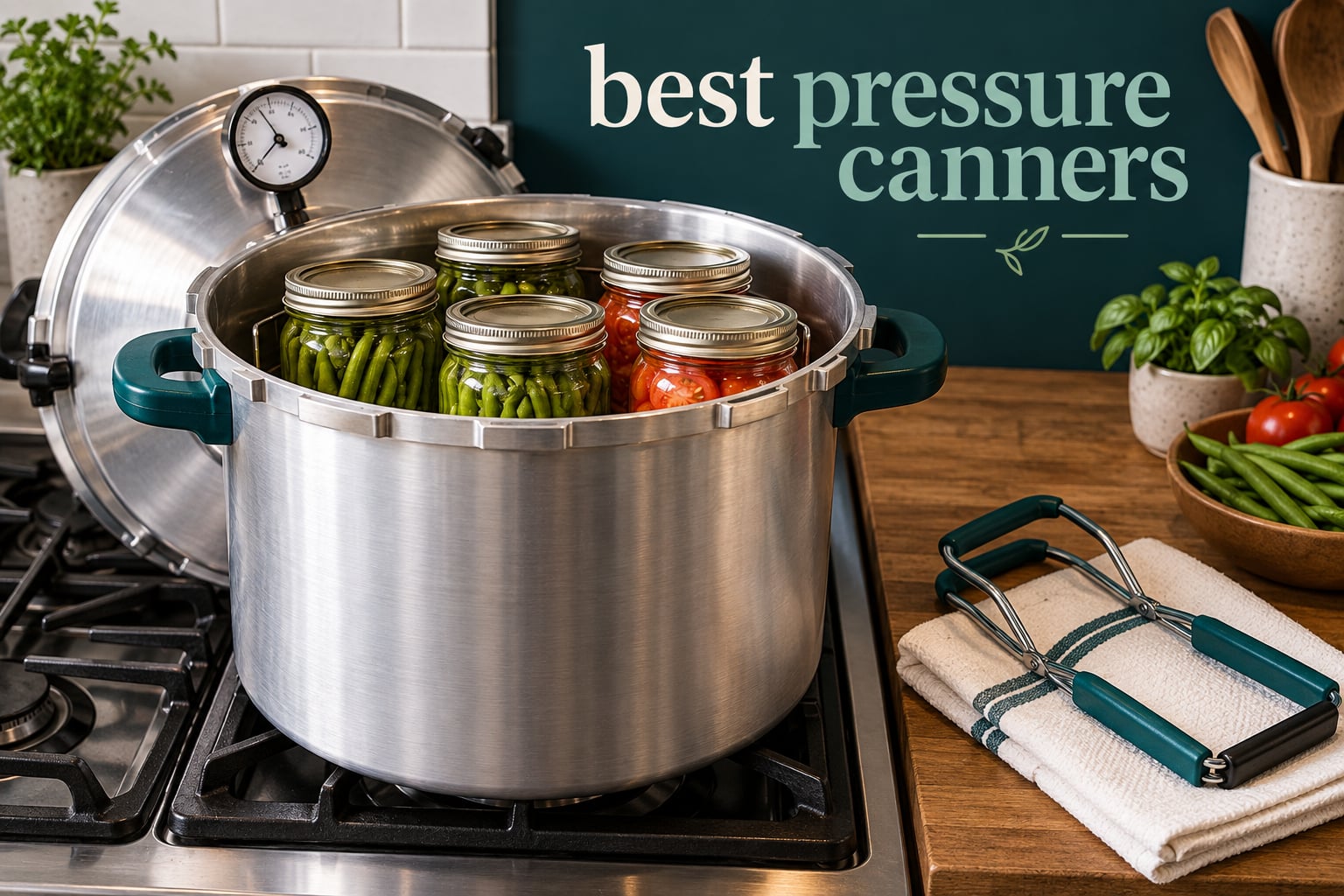
The best pressure canners are the pots that get low-acid food above 240 degrees Fahrenheit and hold it there, which is the only way to destroy the Clostridium botulinum spores that survive a boiling water bath. If you have a garden, a farmers market habit, or a freezer full of green beans you never want to think about again, this is the equipment that turns a seasonal harvest into shelf-stable jars.
Our team has been putting stovetop and electric canners through real batches for years, and this roundup reflects what we found: which ones hold pressure without babysitting, which ones survive a decade of seasons, and which ones quietly fail a seal when you are not looking. Every pick below is a canner sold and used for home food preservation, not a pressure cooker with a canning sticker on the box.
Two rules shape everything we recommend. First, follow the processing times in your recipe or in the National Center for Home Food Preservation guidance rather than any number you find in a review. Second, if you are new to this, the dial gauge on a mainstream canner is the safest starting point because it shows you the pressure you are actually holding. The budget and weighted-gauge options come later, once you trust your own process.
Table of Contents
- Top 3 Pressure Canner Picks for 2026 (October 2026)
- All Ten Pressure Canners at a Glance
- 1. Presto 01781 23-Quart Pressure Canner and Cooker
- 2. All American 1930 10.5-Quart Pressure Cooker/Canner (910)
- 3. T-fal 22-Quart Aluminum Pressure Canner
- 4. Presto 01784 23-Quart Induction Compatible Pressure Canner
- 5. Presto 01755 16-Quart Aluminum Pressure Canner and Cooker
- 6. NESCO NPC-9 Smart Electric Pressure Canner
- 7. Granite Ware 20-Quart Pressure Canner, Cooker and Steamer
- 8. WantJoin 23-Quart Aluminum Pressure Cooker and Canner
- 9. MIRRO 22-Quart Pressure Canner with 5, 10 and 15 PSI Regulators
- 10. Zavor DUO 8-Piece Pressure Canning Set
- How to Choose the Best Pressure Canner for Your Kitchen?
- Capacity and jar sizing: how many jars per batch?
- Stovetop compatibility: gas, coil, smooth top and induction
- Dial gauge vs weighted gauge
- Gasket seal vs metal-to-metal seal
- Pressure canner vs pressure cooker vs water bath
- Altitude adjustments above 1000 feet
- A simple maintenance calendar
- Troubleshooting four common failures
- The accessories you actually need
- Frequently Asked Questions
- Final Verdict: The Best Pressure Canners of 2026
Top 3 Pressure Canner Picks for 2026 (October 2026)

Presto 01781 23-Quart
- Holds 7 quarts or 20 pints
- Deluxe dial gauge
- 12-year limited warranty
All American 1930 10.5-Quart
- Metal-to-metal seal
- No rubber gasket to replace
- Holds 4 quart or 7 pint jars
Our top three cover the three situations that come up most often. The Presto 01781 is the one we hand to almost anyone: a 23-quart body, a real dial gauge, and a 12-year warranty behind it. The All American 1930 is the one to buy if you plan to keep a canner for decades, because its seal does not depend on a rubber ring. The T-fal is the one that makes sense if the budget is the first question, though you should read its pressure-control notes before committing.
All Ten Pressure Canners at a Glance
| Product | Key Specs | Pricing |
|---|---|---|
| Presto 01781 23-Quart Pressure Canner and Cooker |
|
Check Latest Price |
| All American 1930 10.5-Quart Cooker/Canner |
|
Check Latest Price |
 T-fal 22-Quart Aluminum Pressure Canner T-fal 22-Quart Aluminum Pressure Canner |
|
Check Latest Price |
 Presto 01784 23-Quart Induction Pressure Canner Presto 01784 23-Quart Induction Pressure Canner |
|
Check Latest Price |
 Presto 01755 16-Quart Pressure Canner and Cooker Presto 01755 16-Quart Pressure Canner and Cooker |
|
Check Latest Price |
 NESCO NPC-9 Smart Electric Pressure Canner NESCO NPC-9 Smart Electric Pressure Canner |
|
Check Latest Price |
 Granite Ware 20-Quart Pressure Canner Granite Ware 20-Quart Pressure Canner |
|
Check Latest Price |
 WantJoin 23-Quart Pressure Cooker and Canner WantJoin 23-Quart Pressure Cooker and Canner |
|
Check Latest Price |
 MIRRO 22-Quart Pressure Canner MIRRO 22-Quart Pressure Canner |
|
Check Latest Price |
 Zavor DUO 8-Piece Pressure Canning Set Zavor DUO 8-Piece Pressure Canning Set |
|
Check Latest Price |
Capacity is the column that decides most purchases. Anything under 15 quarts forces you into four or five loads before you can put up a season of green beans, and anything over 20 quarts gets heavy enough that you load it where it sits on the stove.
1. Presto 01781 23-Quart Pressure Canner and Cooker
Presto 01781 23-Quart Pressure Canner and Cooker
★★★★★★★★★★21.8 liter capacity
Fits 7 quarts 20 pints or 26 half-pints
Weighs 12 pounds
12-year limited warranty
- Fits 26 half-pints 20 pints or 7 quarts per load
- Dial gauge covers the full processing range
- Works on gas and smooth-top ranges
- Also functions as a water bath canner and pressure cooker
- Needs constant heat adjustment to hold pressure
- Light body compared with cast aluminum canners
- Rubber gasket needs periodic replacement
This is the canner we reach for first, and it has been the most commonly recommended starter pot in the canning community for years. At 12 pounds empty it is light enough to walk from the counter to the stove with a full load, which matters more than any spec on the box.
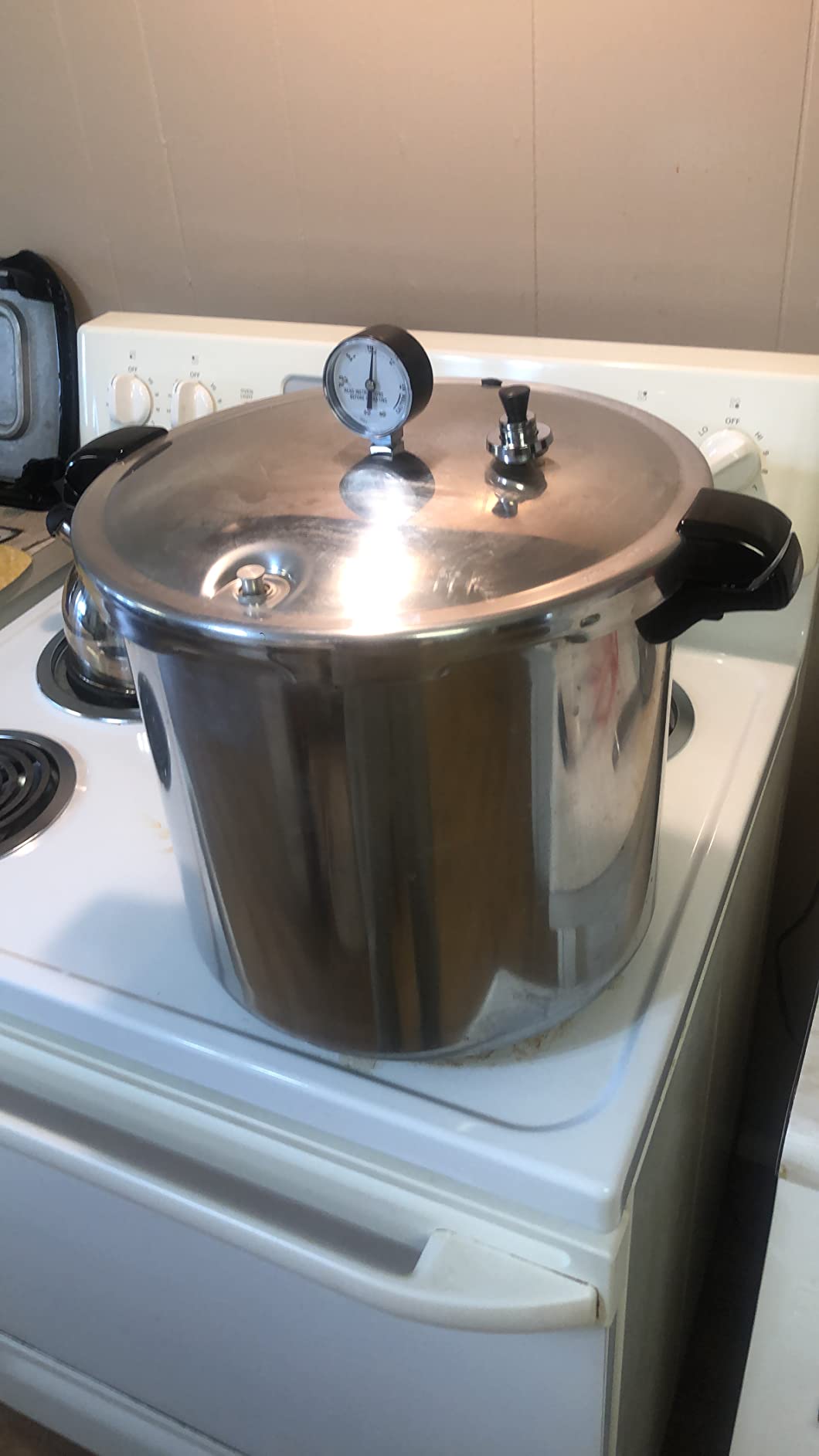
The deluxe dial gauge is the reason to spend your attention here. A weighted jiggler only tells you that pressure is somewhere in the right zone, while a dial lets you watch for a drop below 10 PSI and adjust the flame instead of guessing. Caners posting on r/Canning point to this model as the default first canner for exactly that reason.
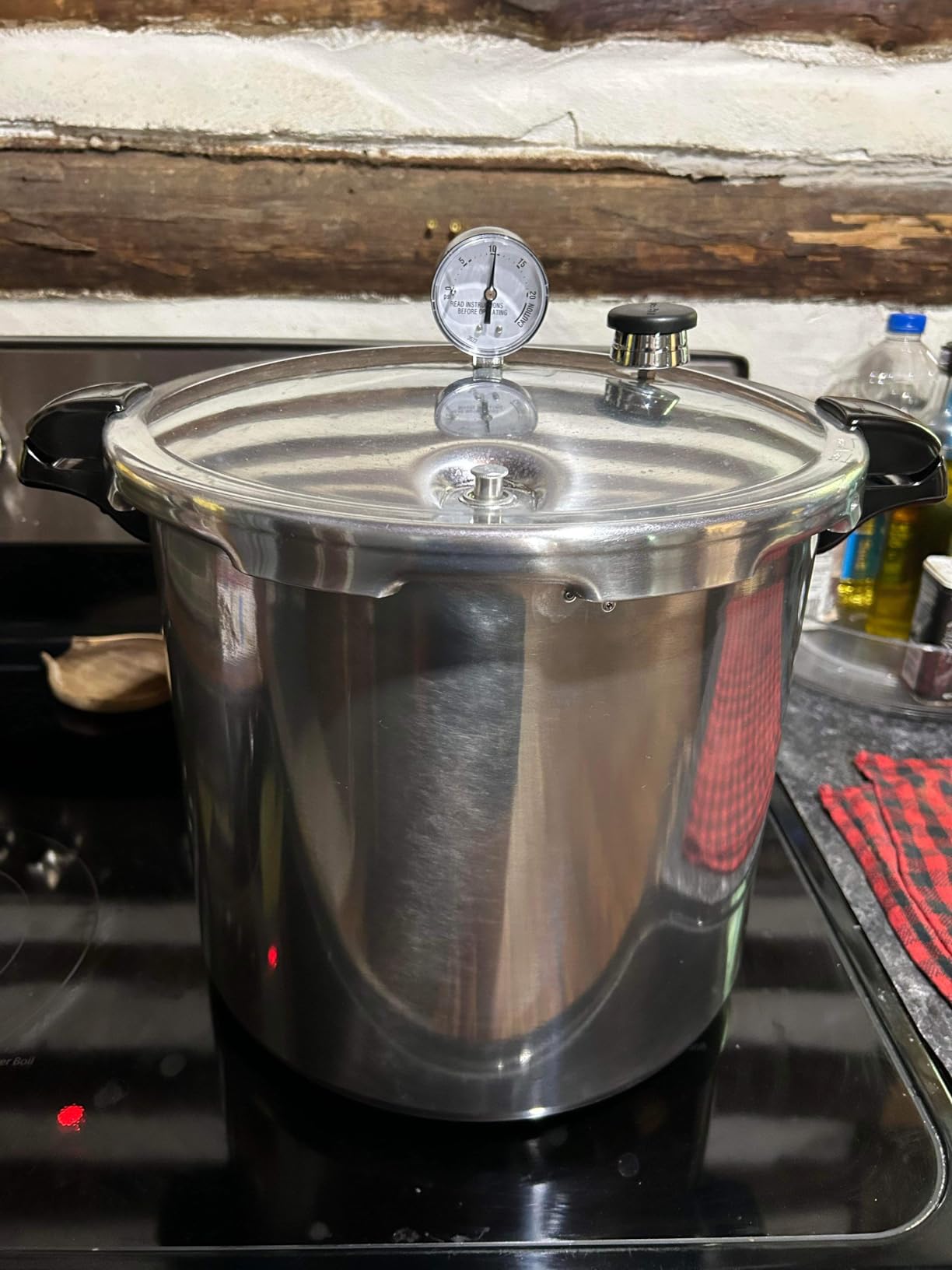
Heat-up is quick because the body is warp-resistant heavy-gauge aluminum, and it moves between a gas burner and a smooth-top electric element without the long waiting period cast aluminum imposes. Reviewers mention years of weekly use, which is the strongest durability signal a kitchen tool can have.
Owners also like that it doubles as a large pressure cooker. A rack of chicken stock or a pot of beans takes barely more attention than the canning batches, so the machine earns its counter space twice a week instead of three times a year.
The honest drawback is supervision. This canner cannot throttle itself, so when the pressure needle starts to drift you have to turn the burner, and a distracted ten minutes on a gas range can mean a batch that missed its processing time.
What you get in a single load?
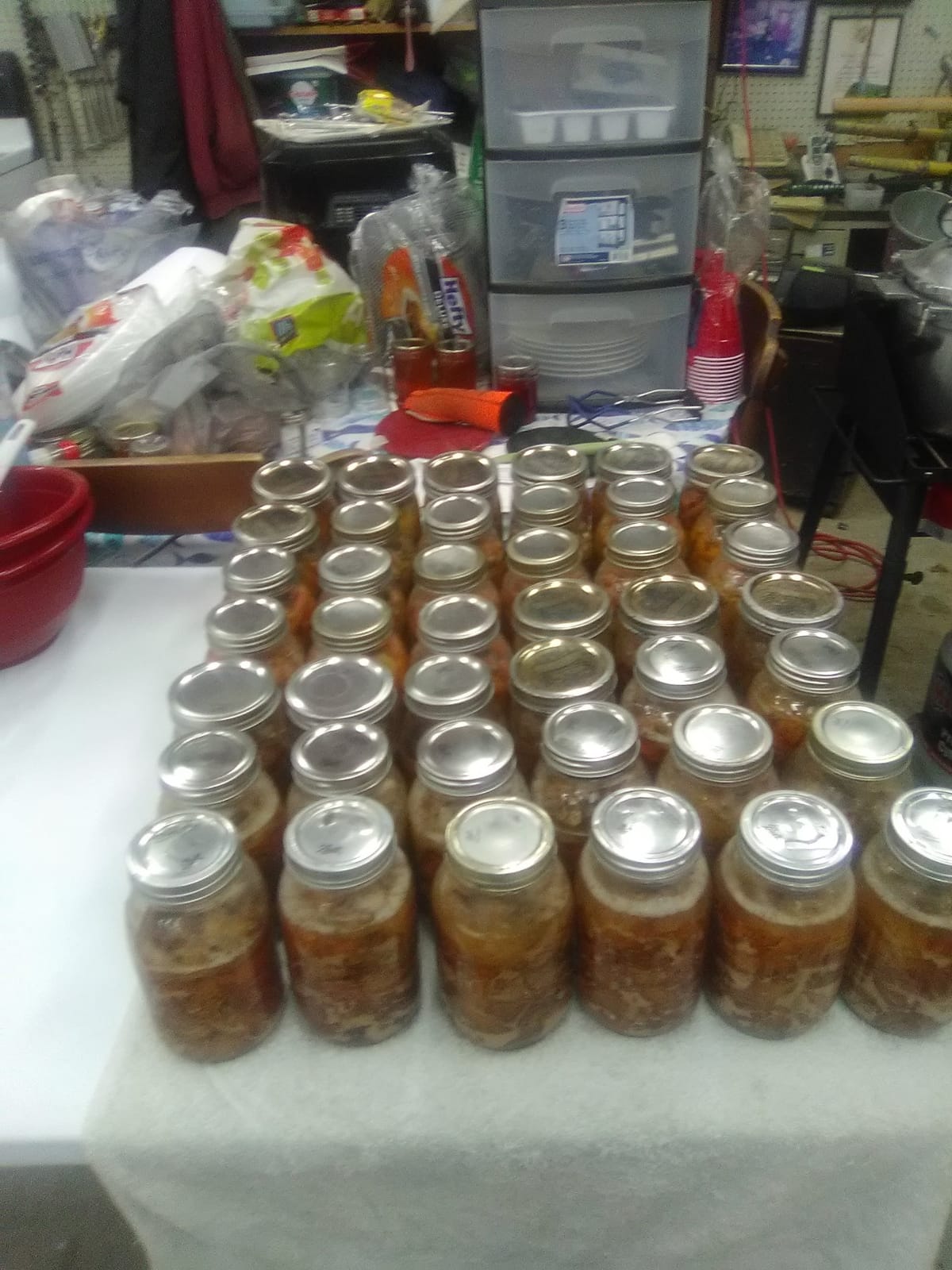
Seven quart jars, twenty pints, or twenty-six half-pints depending on jar size. That is a full Saturday of work for a typical family garden, and the canning rack included in the box is the one you need.
The 76-page instruction and recipe booklet is unusually useful for a first-timer. It covers venting, headspace, and load patterns in plain language, and it doubles as a pressure-cooking reference once the canning season closes.
Where it falls short?
The gasket is a consumable. It dries out between seasons if you store the lid loosely, and a degraded gasket is the most common reason a lid will not build pressure in the first place.
The plastic handles feel thin next to a phenolic-handled cast aluminum canner, and the aluminum body will not heat on an induction range without a steel plate between it and the burner.
We earn a commission, at no additional cost to you. CERTAIN CONTENT THAT APPEARS ON THIS SITE COMES FROM AMAZON. THIS CONTENT IS PROVIDED 'AS IS' AND IS SUBJECT TO CHANGE OR REMOVAL AT ANY TIME.
2. All American 1930 10.5-Quart Pressure Cooker/Canner (910)
All American 1930: 10.5qt Pressure Cooker/Canner (The 910) – Exclusive Metal-to-Metal Sealing System – Easy to Open & Close – Suitable for Gas, Electric, or Flat Top Stoves – Made in the USA
★★★★★★★★★★9.94 liter capacity
Holds 4 quart or 7 pint jars
Weighs 14.8 pounds
Made in the USA
- Metal-to-metal seal removes the gasket from the equation
- Replacement parts and US service still available after decades
- Machined weighted regulator and readable steam gauge
- Easy-open cover with a cool top handle
- Small batch size means more stove time
- Very heavy so it is filled on the stove
- Long heat-up and cool-down for the batch size
The All American 910 is the oldest and most-copied design in home canning, and owners describe it as the benchmark everything else gets measured against. What separates it is the sealing system: the lid clamps metal against metal, so there is no rubber gasket to stretch, dry out, or throw away.
That single design choice changes the ownership experience. Canners pass these down through generations, and replacement parts plus US-based service are still available for units bought decades ago, which is a claim almost no other kitchen appliance in this category can make.
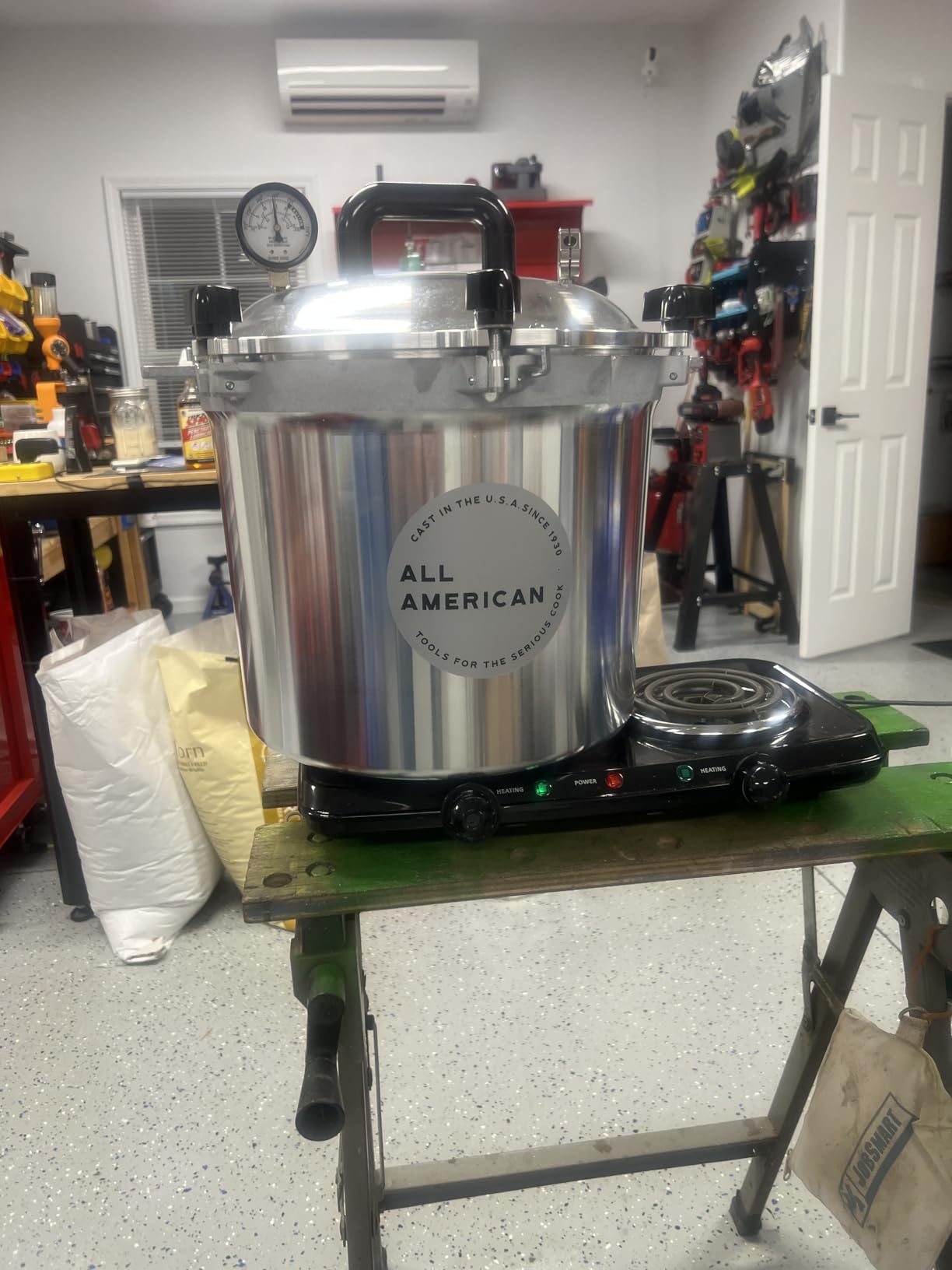
At 10.5 quarts it holds roughly four quart jars or seven pints, so a full 23-quart Presto load becomes three trips through this pot. For a serious homesteader putting up fifty or more jars a season, that trade is worth it. For a single apartment kitchen, it is not.
Weighing 14.8 pounds empty, it is heavy enough that you should load and unload it on the stove rather than carrying a full pot across a room. Plan your counter space accordingly, and put your canning rack on the burner before you start.
One small mechanical annoyance shows up often in reviews: the lid can stick after a full depressurization. A thin film of olive oil on the sealing ridge before you close it prevents the problem entirely.
Why the gasket-free seal matters?
There is no rubber ring to inspect, soak, or replace on a schedule, which removes the single most common reason a pressure canner fails to build pressure. It also means the seal does not depend on how the pot was stored over the winter.
The clamp lock uses positive-action locks rather than a threaded or bayonet fit, so a slightly misaligned lid is easier to notice and correct than on a gasket-sealed pot.
Where it falls short?
The batch size is genuinely small, and long heat-up and cool-down times on a small load can add up across a season. Plan on a hot burner and steady heat, not a quick simmer.
A screw-in rubber over-pressure release seal is still a consumable part on this unit, so gasket-free does not mean maintenance-free. It just means far less of it.
We earn a commission, at no additional cost to you. CERTAIN CONTENT THAT APPEARS ON THIS SITE COMES FROM AMAZON. THIS CONTENT IS PROVIDED 'AS IS' AND IS SUBJECT TO CHANGE OR REMOVAL AT ANY TIME.
3. T-fal 22-Quart Aluminum Pressure Canner
T-fal 22-Quart Aluminum Pressure Canner, 3 PSI Settings, Home Canning, Includes Racks & Canning Guide, Large Capacity, Pressure & Water Bath Canning for Vegetables, Meats, Seafood & Fruits, Silver
★★★★★★★★★★22-quart capacity
Fits 7 quarts 18 pints or 24 half-pints
Weighs 14.8 pounds
One-year warranty
- Large batch size at the entry level
- Two racks allow double stacking for small jars
- Handles both pressure and water bath canning
- Step-by-step canning guide included
- Does not always hold a steady 15 PSI before venting
- Gasket can leak and need re-seating
- Bulky footprint that is hard to move full
The T-fal answers the question we hear most from first-time canners: can you start without a large commitment? At 22 quarts it processes up to seven quart jars or eighteen pints per load, and the two included racks let you double-stack pints and half-pints for real throughput.
It also handles boiling-water canning for jams, jellies, pickles, and fruit, so one pot covers both the low-acid and high-acid sides of a season’s work. The steam release valve is positioned for a beginner’s hand, and the step-by-step guide walks through a first batch without assuming experience.
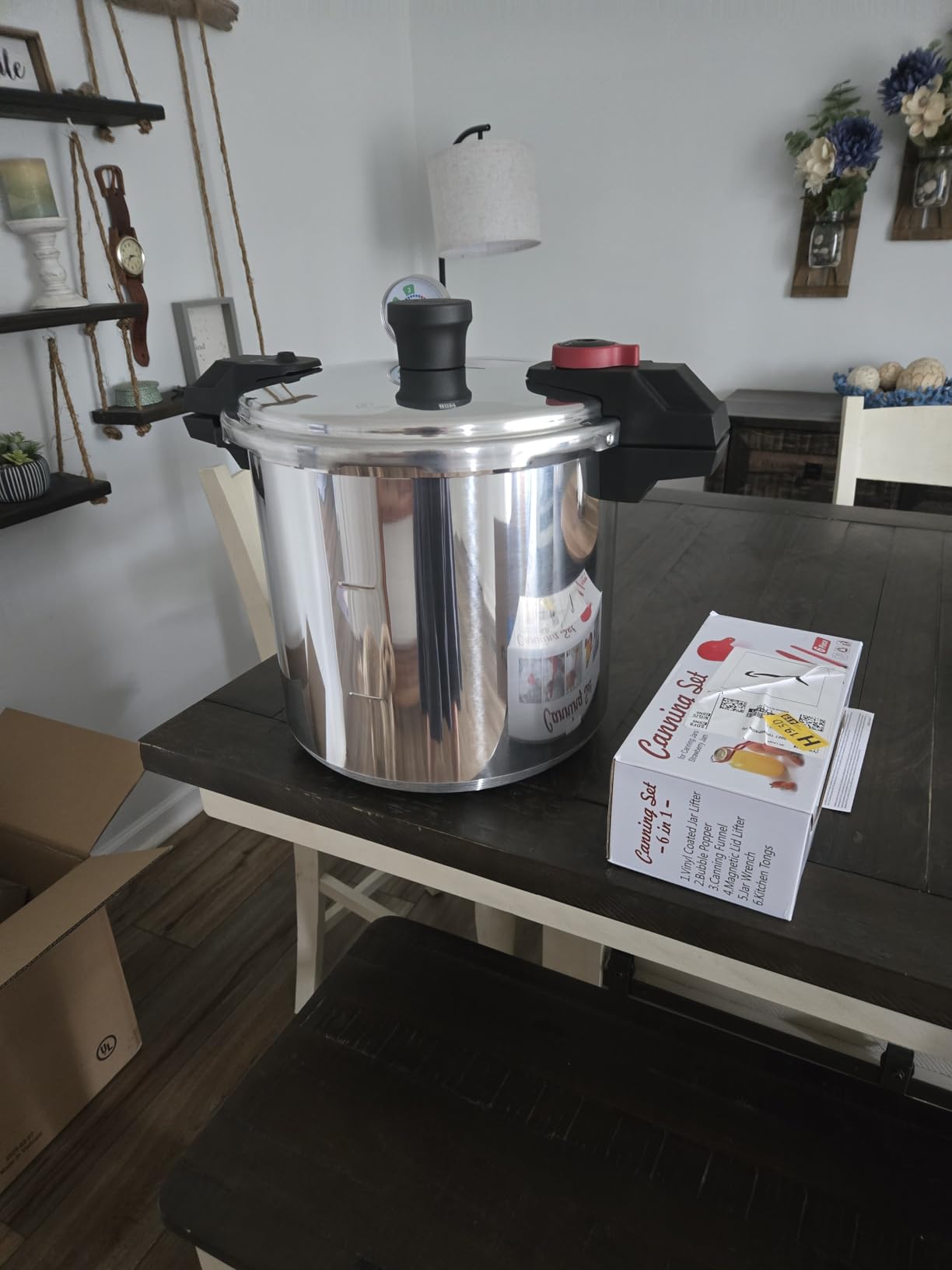
Where we would temper expectations is pressure control. A number of owners report that the unit can begin venting before it reaches a steady 15 PSI, and that the gasket occasionally needs to be re-seated after a depressurization. If the vent is losing pressure early, the flame is usually the fix rather than the pot.
Two other practical notes: the printed manual is thin on troubleshooting compared with the Presto booklet, and the aluminum interior will discolor with use, particularly around acidic batches.
Its 19.33 by 15.39 inch footprint is the widest in this group, so measure the cabinet above your stove before you commit. It is not easy to move once it is full.
When the batch size is the deciding factor?
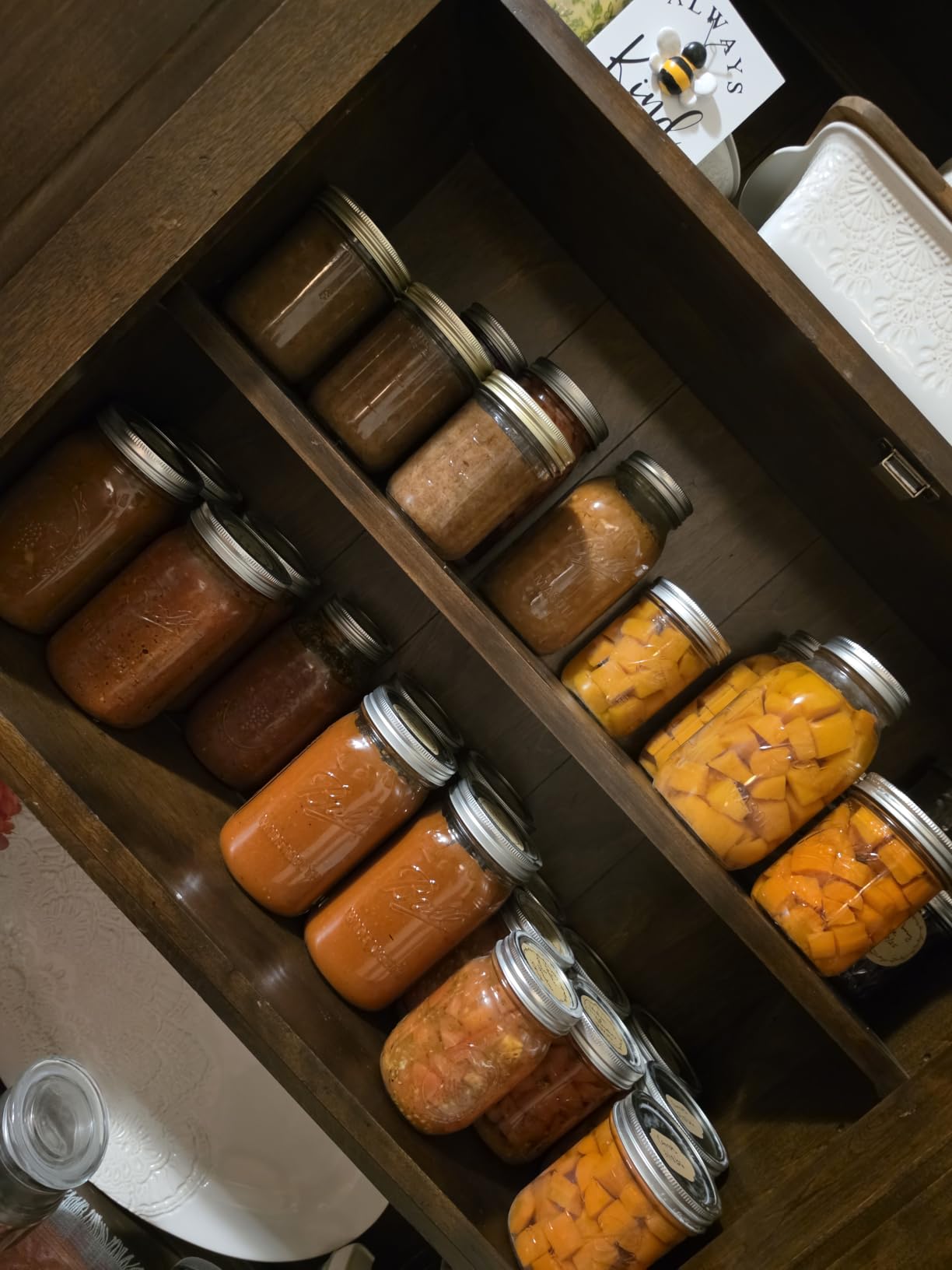
Double-stacking with the included racks is the feature experienced canners notice first. When you are processing twenty-four half-pints instead of twelve, the bottleneck on a harvest weekend is throughput, not pot size.
Gas and electric coil cooktops are both supported, and the wide flat base sits steadily on a standard burner. It is not built for induction.
Where it falls short?
The gauge markings are not a true PSI reading, and a few reviewers point that out directly. Treat the dial as a trend indicator and follow your recipe’s processing time rather than trusting a specific needle position.
A one-year warranty is shorter than most in this roundup. That matters less for a canner than it would for a blender, but it is worth factoring in if you are buying on longevity alone.
We earn a commission, at no additional cost to you. CERTAIN CONTENT THAT APPEARS ON THIS SITE COMES FROM AMAZON. THIS CONTENT IS PROVIDED 'AS IS' AND IS SUBJECT TO CHANGE OR REMOVAL AT ANY TIME.
4. Presto 01784 23-Quart Induction Compatible Pressure Canner
Presto 01784 23-Quart Induction Compatible Pressure Canner
★★★★★★★★★★23 liter capacity
Stainless clad induction base
Fits 7 quarts 20 pints or 26 half-pints
12-year limited warranty
- The practical answer for induction and glass-top cooking
- Even quick heating from the thicker clad base
- Cover lock blocks opening until pressure drops
- Locking arrows make alignment obvious
- Heavier than the standard 01781 model
- Includes one 15 lb regulator and one rack
- Extra plates needed for two layers of small jars
If your kitchen has an induction range or a glass cooktop, this is the model that removes the single most common complaint about pressure canners. The stainless steel-clad base is magnetic, so the pot actually heats instead of sitting on the burner conducting nothing.
Everything else stays familiar: the same 23-quart body, the same air vent and cover lock, and the same jar capacity of seven quarts, twenty pints, or twenty-six half-pints. Owners who switched to induction describe it as the working solution after testing several bare-aluminum models that simply never came up to pressure.
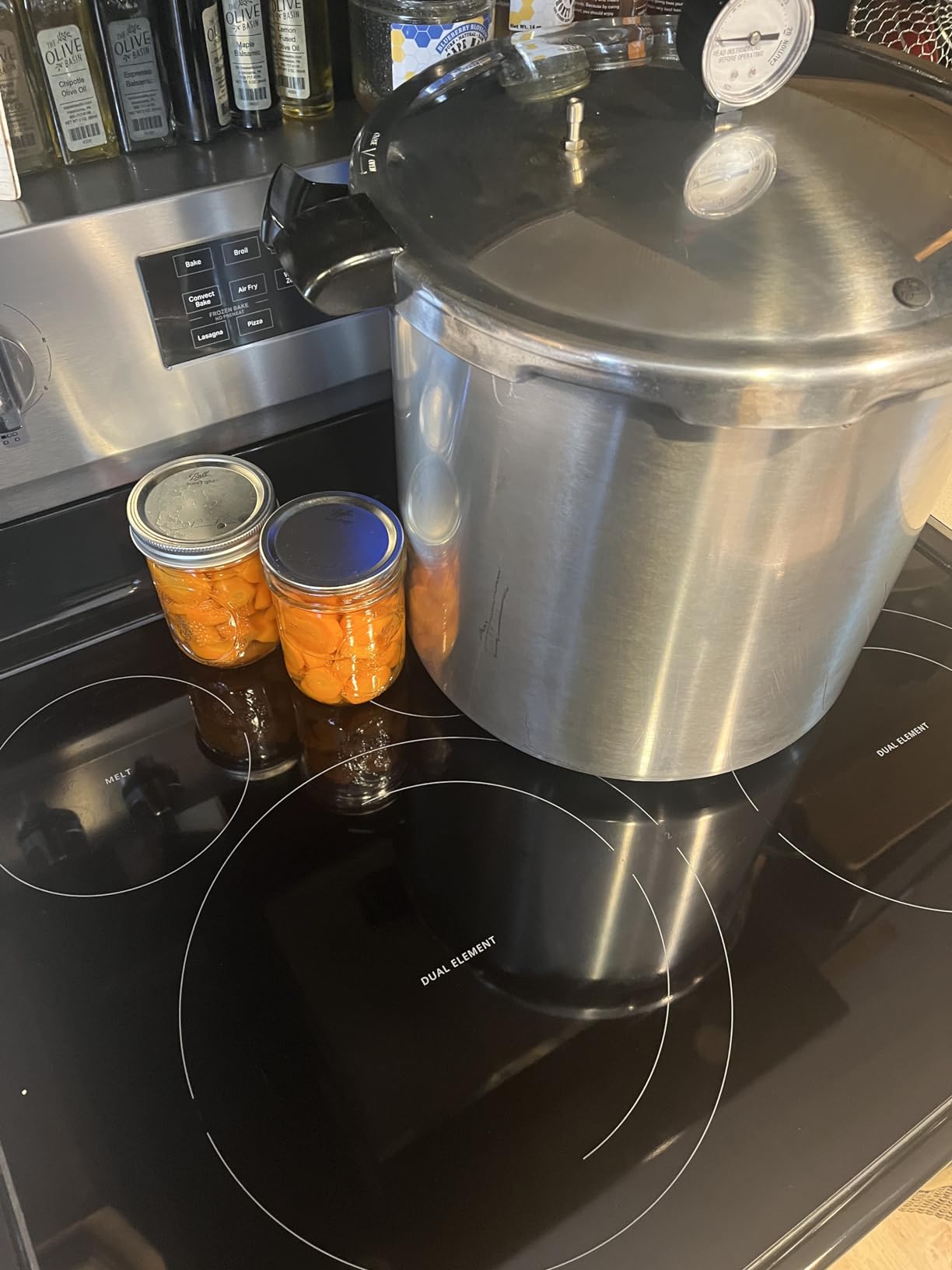
The cover lock is a genuine safety feature rather than a marketing line. It physically prevents the lid from being turned until steam pressure has fully dropped, which is exactly the moment beginners are tempted to rush.
Arrows printed on the lid and the pot rim make correct alignment easy to see, and the thicker base gives more even heat than a bare aluminum bottom, which matters for a batch that sits at pressure for ninety minutes.
The catch is what is not in the box. You get one 15 lb weighted regulator and a single rack, so anyone wanting adjustable pressure for water-bath work or two layers of pints needs to buy the OEM regulator and extra canning plates separately.
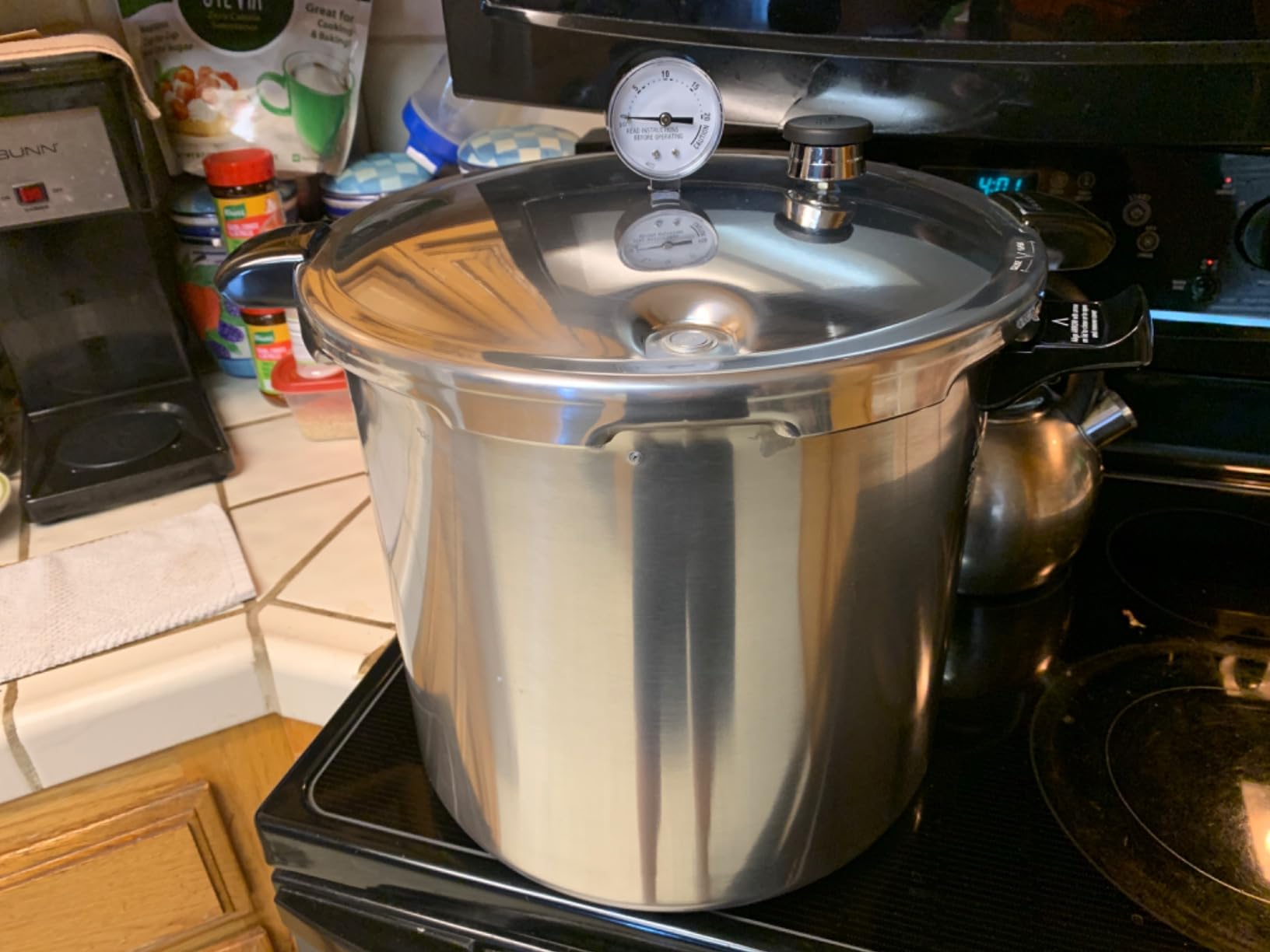
Why induction changes the decision?
A bare aluminum canner on an induction burner either does nothing or sits there conducting heat from a small pot placed on top of it, which is an unapproved workaround. The clad base is the clean answer.
It also works unchanged on gas, electric coil, and smooth-top ranges, so induction households are not trading away compatibility with a second stove.
Where it falls short?
It is heavier than the standard 01781, and the extra weight compounds when the pot is full. If you have a dedicated canning burner, the difference matters less.
Buying the extra regulator and canning plates is effectively part of the cost of the setup if you plan to can more than one layer of small jars. Budget for those parts before your first batch.
We earn a commission, at no additional cost to you. CERTAIN CONTENT THAT APPEARS ON THIS SITE COMES FROM AMAZON. THIS CONTENT IS PROVIDED 'AS IS' AND IS SUBJECT TO CHANGE OR REMOVAL AT ANY TIME.
5. Presto 01755 16-Quart Aluminum Pressure Canner and Cooker
Presto 01755 16-Quart Aluminum Pressure Canner and Cooker
★★★★★★★★★★16-quart capacity
Weighs 10.5 pounds
Air vent and cover lock
Serves as pressure cooker and water bath canner
- Manageable size and weight for a home kitchen
- Works well on smooth-top and glass cooktops
- Three visible confirmations that pressure is managed
- Instruction and recipe booklet included
- Lid can be very hard to remove if the seal is not oiled
- Not induction compatible
- Includes only a 15 lb regulator
The 01755 is the answer when a 23-quart pot feels like more equipment than a household needs. Sixteen quarts is a real batch of pints and half-pints, and at 10.5 pounds empty it is light enough to carry a full load across a room without much effort.
It runs on smooth-top and glass cooktops without the scratching complaints that show up with bare aluminum on glass, and owners consistently report stable 15 PSI across repeated batches. That steadiness is what you want from a smaller pot with less thermal mass.
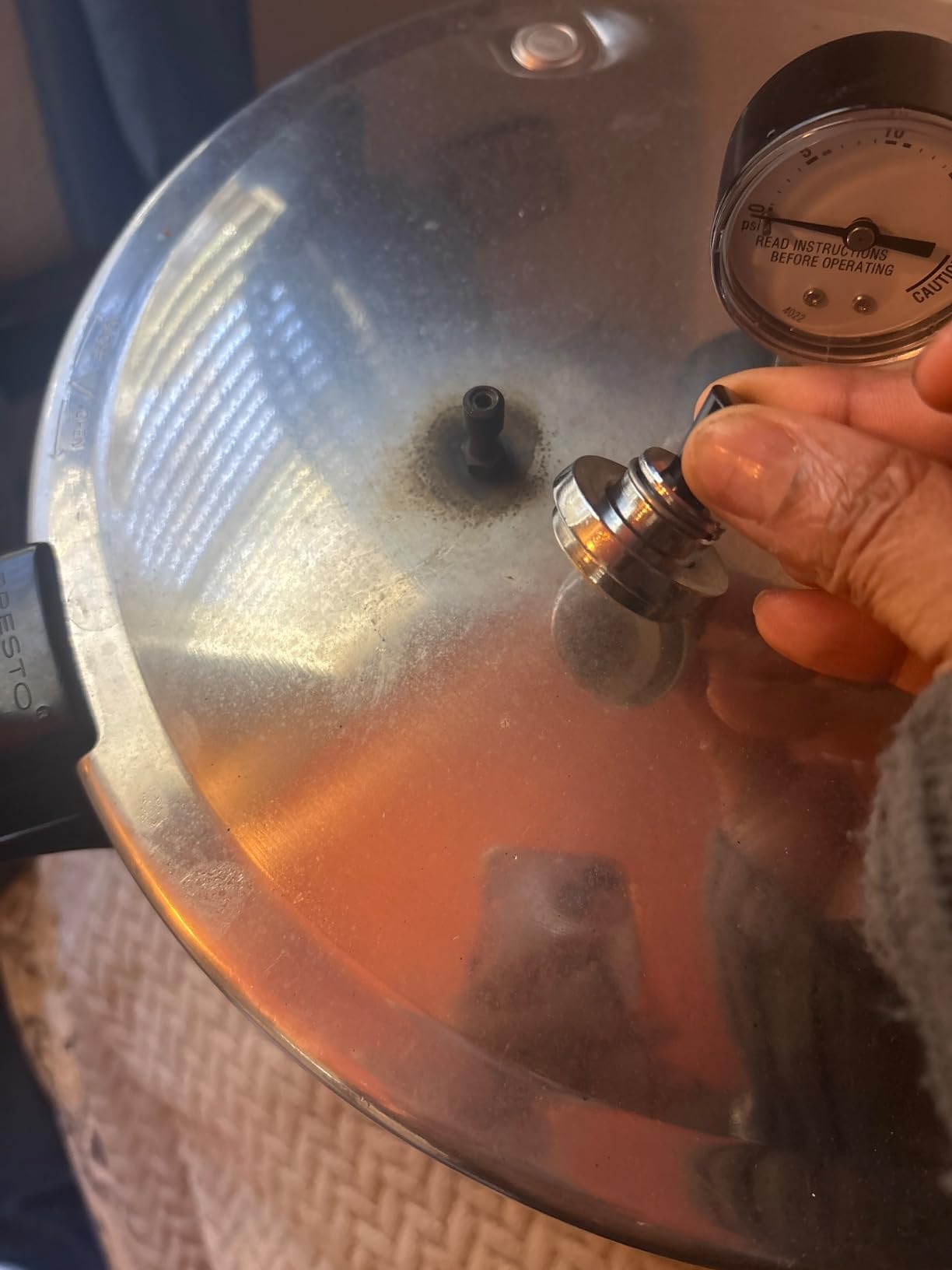
The air vent and cover lock give three separate visual confirmations that pressure is being managed, which is a nice safety margin for a canner you may be running while doing other kitchen work.
It doubles as a water-bath canner, so jams, jellies, and pickles come out of the same pot. For an apartment or a small kitchen, that consolidation is a real saving on space.
Aluminum parts will darken over a few seasons unless you add a splash of vinegar to the water, a habit experienced owners pick up quickly and then keep for life.
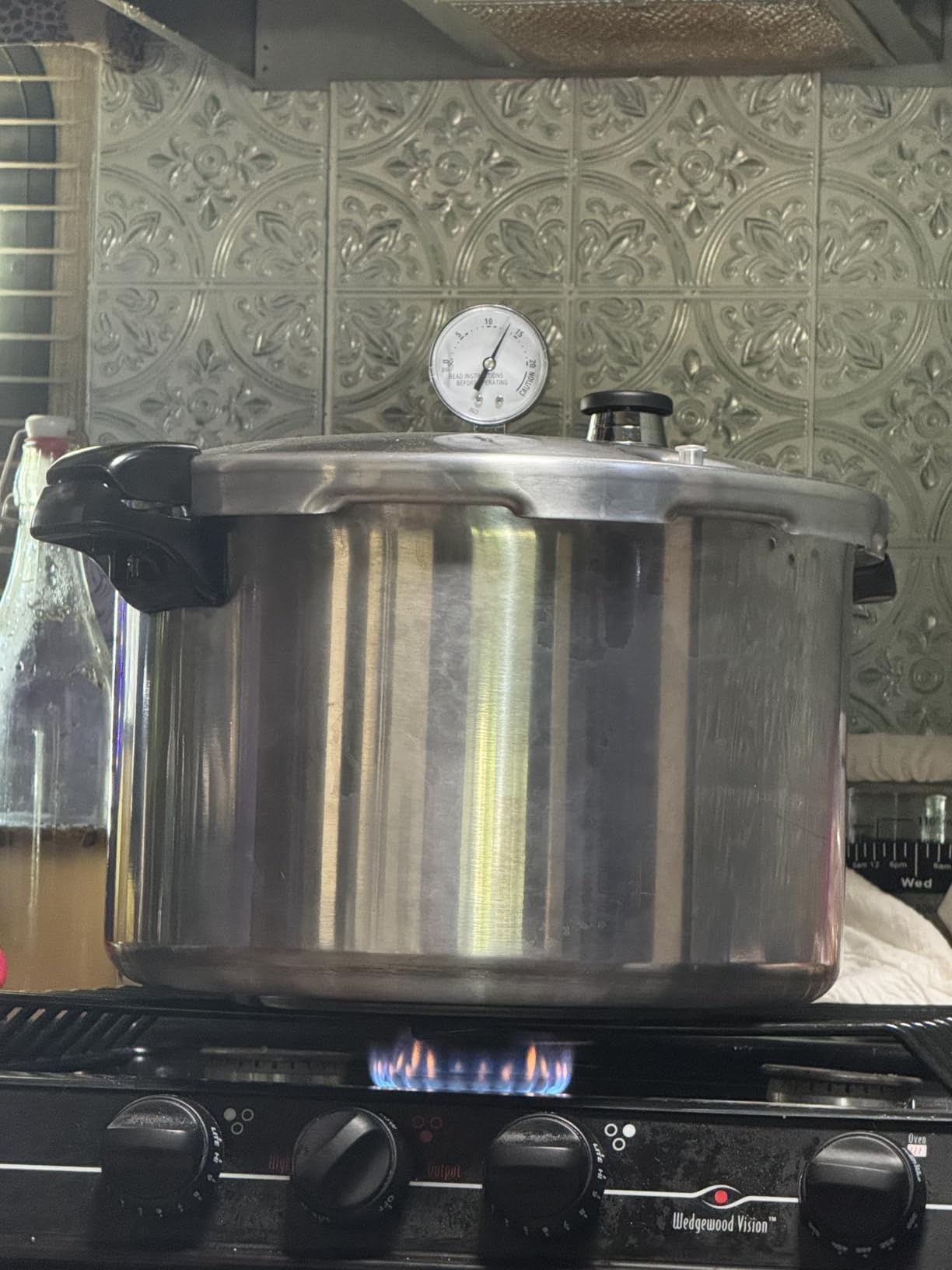
When 16 quarts is genuinely enough?
A household preserving greens, beans, and tomatoes for the year rarely exhausts sixteen quarts in one session. The trade is more stove time and more heat-up cycles, which matters mainly if you are working around a full harvest weekend.
At under twelve pounds it is a canner most people can store on a shelf between seasons rather than haul out, and a lighter pot is easier on your cabinets and your back.
Where it falls short?
The locking lid is the recurring complaint. If you do not grease the sealing surfaces periodically, it can be extremely difficult to remove after a full cycle, and forcing it is how sealing ridges get damaged.
One included 15 lb regulator limits lower-pressure work, and the aluminum base will not respond to an induction burner.
We earn a commission, at no additional cost to you. CERTAIN CONTENT THAT APPEARS ON THIS SITE COMES FROM AMAZON. THIS CONTENT IS PROVIDED 'AS IS' AND IS SUBJECT TO CHANGE OR REMOVAL AT ANY TIME.
6. NESCO NPC-9 Smart Electric Pressure Canner
NESCO NPC‑9 Smart Electric Pressure Canner and Cooker for Home Food Preservation, 9.5‑Quart Stainless Steel with Digital Controls
★★★★★★★★★★9.5-quart removable inner pot
Digital programs and timer
Water bath and steam modes
High-altitude limiting valve
- Automatic pressure regulation removes the guesswork
- Four modes cover canning and everyday cooking
- Quiet and does not heat the kitchen
- Free up the stovetop while a batch runs
- Holds only about 4 quart or 5 pint jars
- Single layer of jars with no second rack
- Top valve markings can fade with use
The NPC-9 is a common recommendation for anyone who finds a stovetop canner intimidating. Digital programs set the pressure and the timer, and the machine holds both without you standing over a burner turning a knob.
It also runs pressure cook, slow cook, steam, and water bath modes from the same 9.5-quart stainless body, so it earns its counter space year-round rather than only during harvest season. Owners consistently describe it as the appliance that made home canning feel approachable.
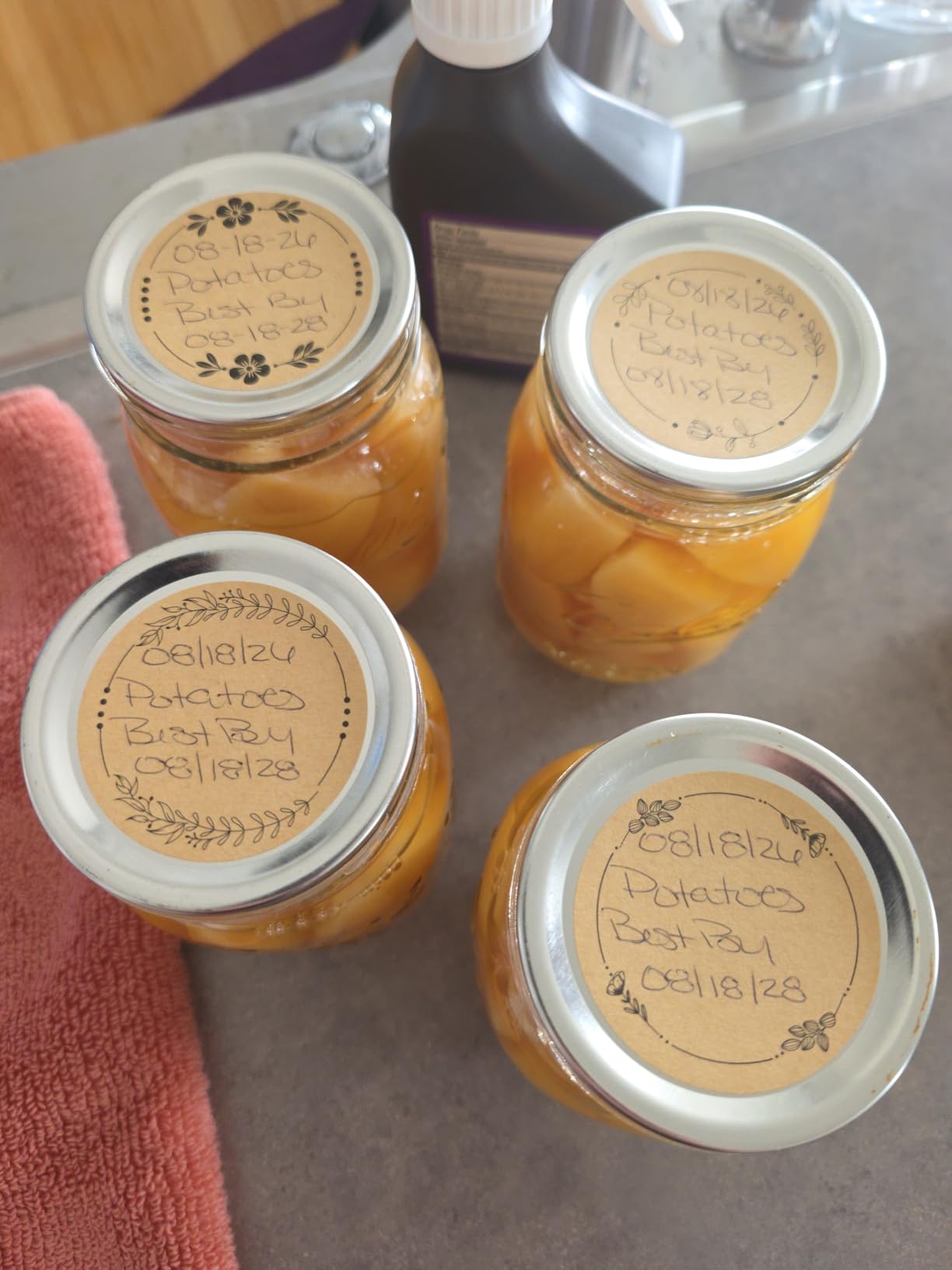
The safety lock lid and automatic float valve prevent opening under pressure, and the removable condensation catcher keeps the steam path clear if you empty it regularly. It is also much quieter than a stovetop canner and does not heat the surrounding kitchen on a hot day.
Being able to use the stove for something else while a batch processes is a genuine quality-of-life gain in a small kitchen. Most owners who outgrow it keep it and add a stovetop canner rather than replacing it.
The included high-altitude limiting valve is a nice touch for anyone above 1000 feet, though you still need to adjust processing times and pressure for your elevation.
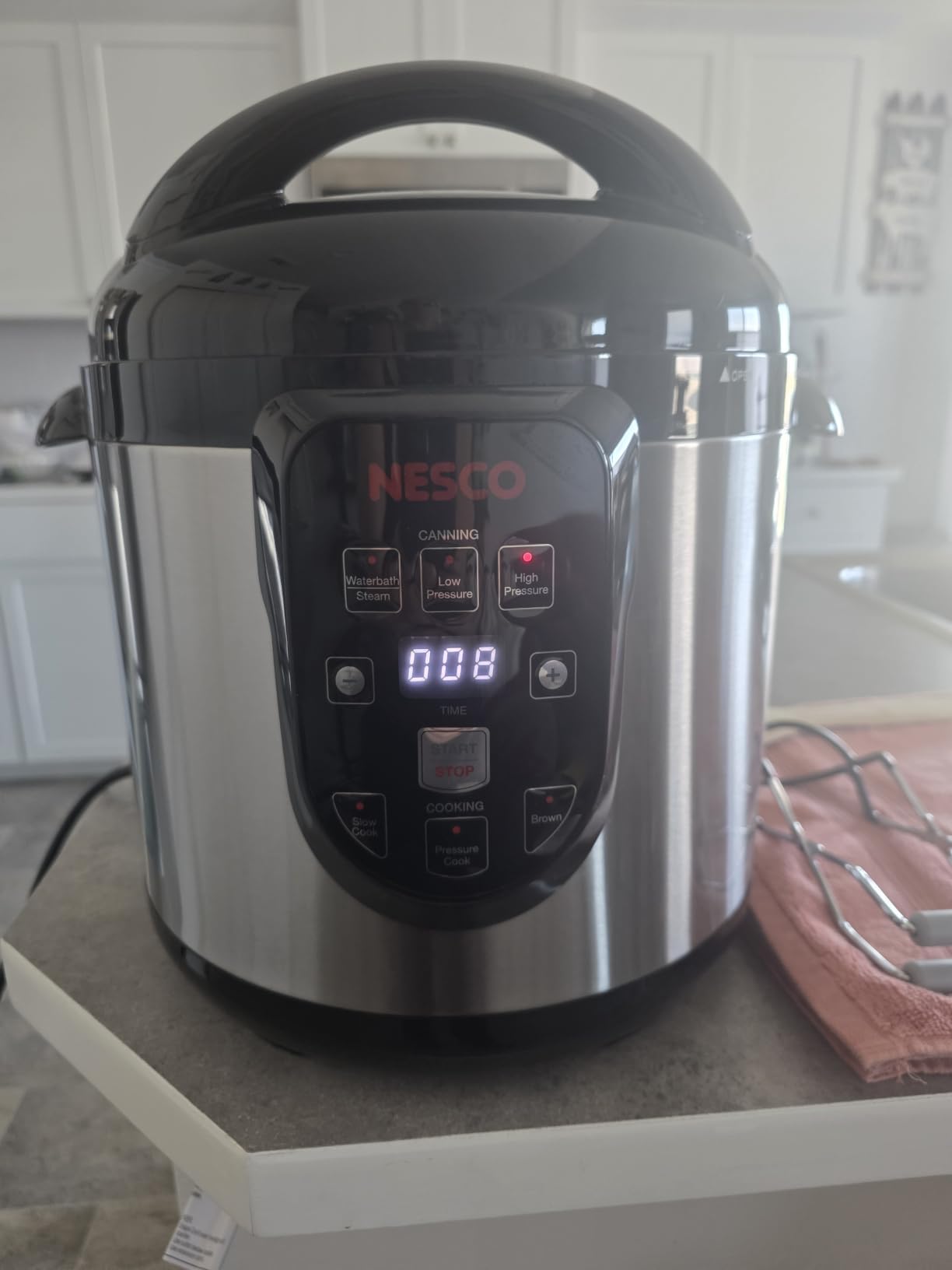
How the automatic cycle works?
You select a program, the machine brings the pot to pressure, and it holds the target there for the set time. You are supervising a timer rather than a flame, which is a meaningful difference in attention and in consistency between batches.
It is not the same as canning in a multi-cooker. Several experienced canners we compared notes with stay skeptical of electric appliances for low-acid food, and the general advice in the canning community is to confirm that your model is sold and approved for pressure canning specifically before trusting it with a full batch of vegetables or meat.
Where it falls short?
Capacity is the deciding limitation. At roughly four quart or five pint jars per load, seasonal harvest volume takes many cycles, and there is no second rack for double-stacking smaller jars.
The printing on the top weighted valve can wear off after repeated use, and the condensation catcher needs regular attention so it does not overflow into the base.
We earn a commission, at no additional cost to you. CERTAIN CONTENT THAT APPEARS ON THIS SITE COMES FROM AMAZON. THIS CONTENT IS PROVIDED 'AS IS' AND IS SUBJECT TO CHANGE OR REMOVAL AT ANY TIME.
7. Granite Ware 20-Quart Pressure Canner, Cooker and Steamer
Granite Ware Pressure Canner/Cooker/Steamer, 20-Quart
★★★★★★★★★★20-quart capacity
Hard anodized aluminum body
5 10 and 15 PSI regulator
Weighs 10.5 pounds
- Anodized interior seals the raw metal away from food
- 5 10 and 15 PSI regulator removes gauge calibration
- Dual pressure release valves plus a lid lock for redundant safety
- Light for its 20-quart size
- Anodized body will not work on induction
- Relatively thin base when used as a pressure cooker
- Included wire rack holds one shallow layer of jars
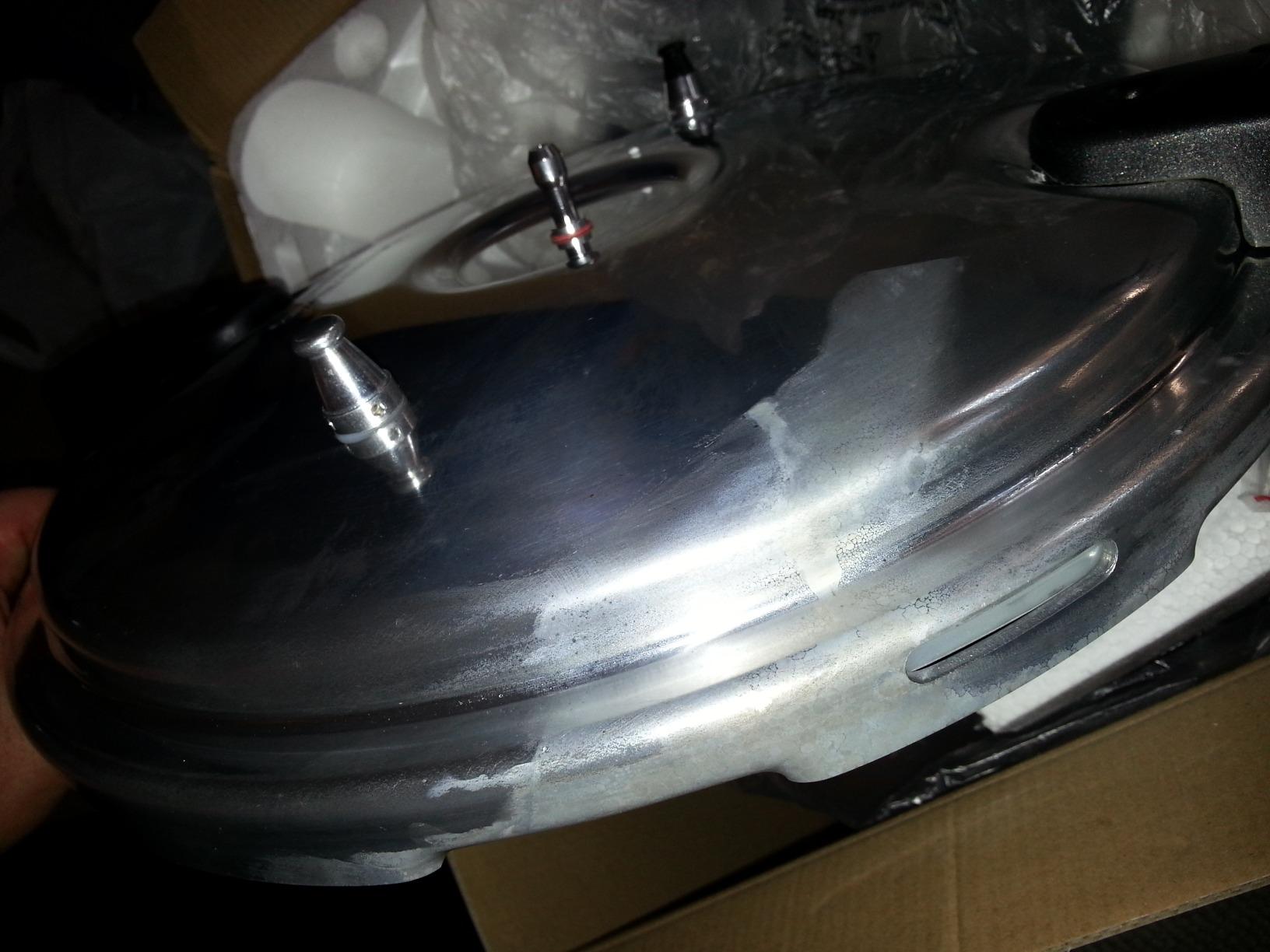
The hard anodized interior is the reason this pot looks different from every raw aluminum canner in this roundup. The metal is sealed away from your food, which means no metallic taste, no interior staining, and far less scrubbing at the end of a session.
The adjustable three-piece regulator is calibrated at 5, 10, and 15 PSI, and because a weighted regulator does not drift, you never face the annual gauge calibration that a dial-gauge canner needs. Owners report original seals and parts still performing after three seasons.
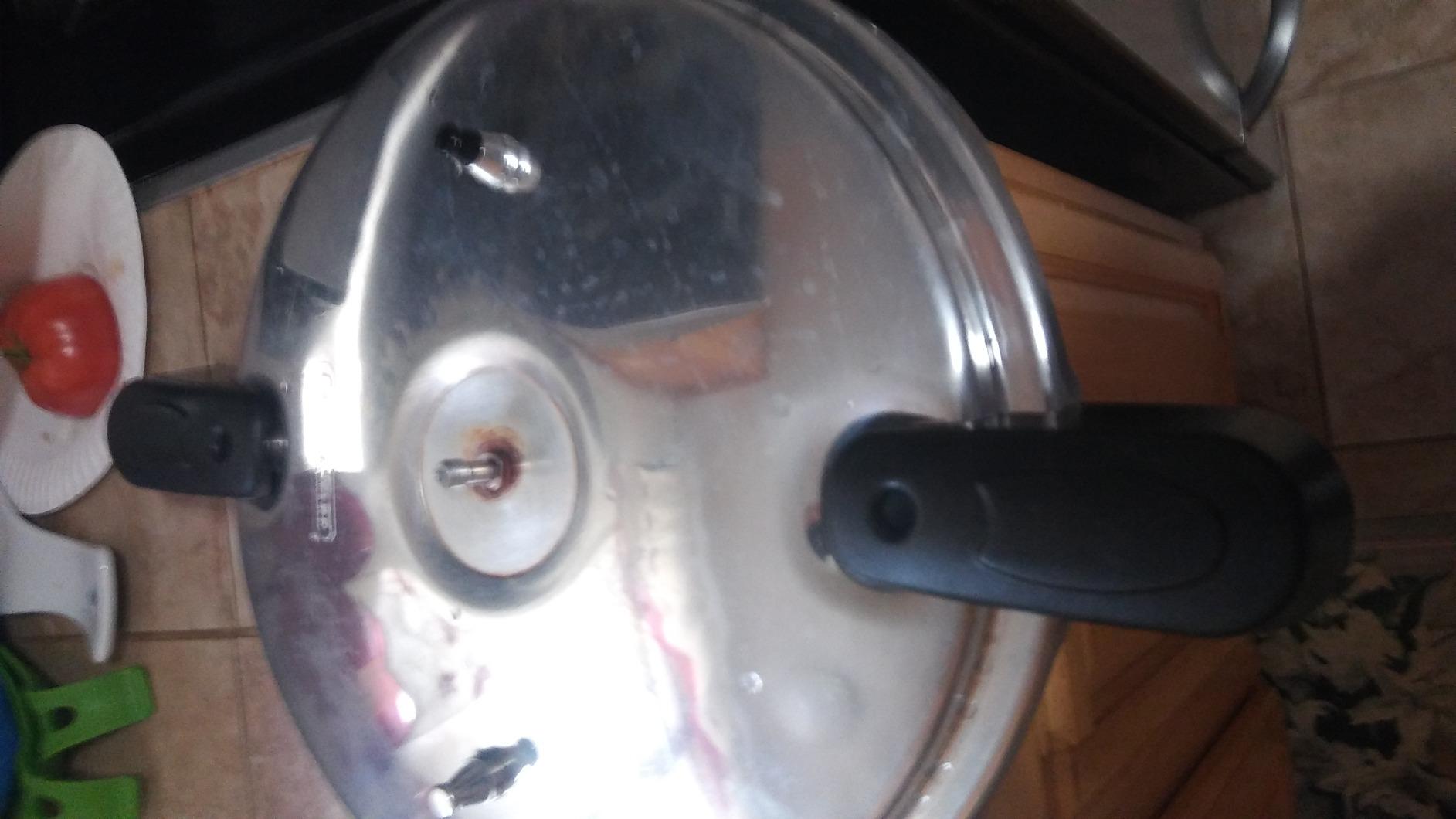
Three independent safety devices back up the regulator: two pressure release valves, a weighted valve, and a pressure lid lock. For a first canner, that redundancy is reassuring, and the 9-inch flat base sits steadily on both smooth-top and gas burners.
At 10.5 pounds for a 20-quart pot, it is notably lighter than a stainless canner of the same size, which matters when you are lifting a full batch off the heat.
The wire rack is the weak point. It supports a single shallow layer of about seven jars, and reviewers note that jars do not always sit perfectly level on it, so plan a second rack if you want real throughput.
Why a weighted regulator saves a chore?
A weighted regulator sits at a set pressure by physics rather than by a spring you have to trust. If it is seated correctly, the pressure is correct, and there is no dial to test at the start of each season.
Having all three settings in the box also means you can move between pressure canning and lower-pressure water-bath work without hunting for a separate weight.
Where it falls short?
An anodized aluminum body will not heat on an induction cooktop, so induction households should look elsewhere on this list.
The base is relatively thin compared with heavier canners, which means it can scorch food when you use the pot for pressure cooking rather than canning. Keep the burner moderate for stews and beans.
We earn a commission, at no additional cost to you. CERTAIN CONTENT THAT APPEARS ON THIS SITE COMES FROM AMAZON. THIS CONTENT IS PROVIDED 'AS IS' AND IS SUBJECT TO CHANGE OR REMOVAL AT ANY TIME.
8. WantJoin 23-Quart Aluminum Pressure Cooker and Canner
Wantjoin Aluminum Pressure Cooker 23Qt Pressure Canner, Pressure Pot with Pressure Control for Home Kitchen or Restraurant, Commercial Pressure Cooker with Gauge
★★★★★★★★★★23-quart capacity
Induction capable composite base
Six safety systems
Storage bag included
- Full 23-quart capacity at an entry-level cost point
- Composite base works on gas and induction
- Six redundant safety mechanisms
- Large batch size suits heavy cooking
- Included tray only reaches halfway down the pot
- Some units discolor heavily after one use
- Support and warranty experience is inconsistent
This is the value entry in the group, and the arithmetic is compelling: 23 quarts with a composite base that works on induction. Few canners at this capacity handle induction directly, and fewer do it at this entry level.
The safety engineering is unusually extensive for an entry-level appliance, with an automatic lock, check valve, pressure limiting valve, safety valve, alarm valve, and anti-blocking cover. As a general pressure cooker for large volumes of stews and beans, it performs respectably.
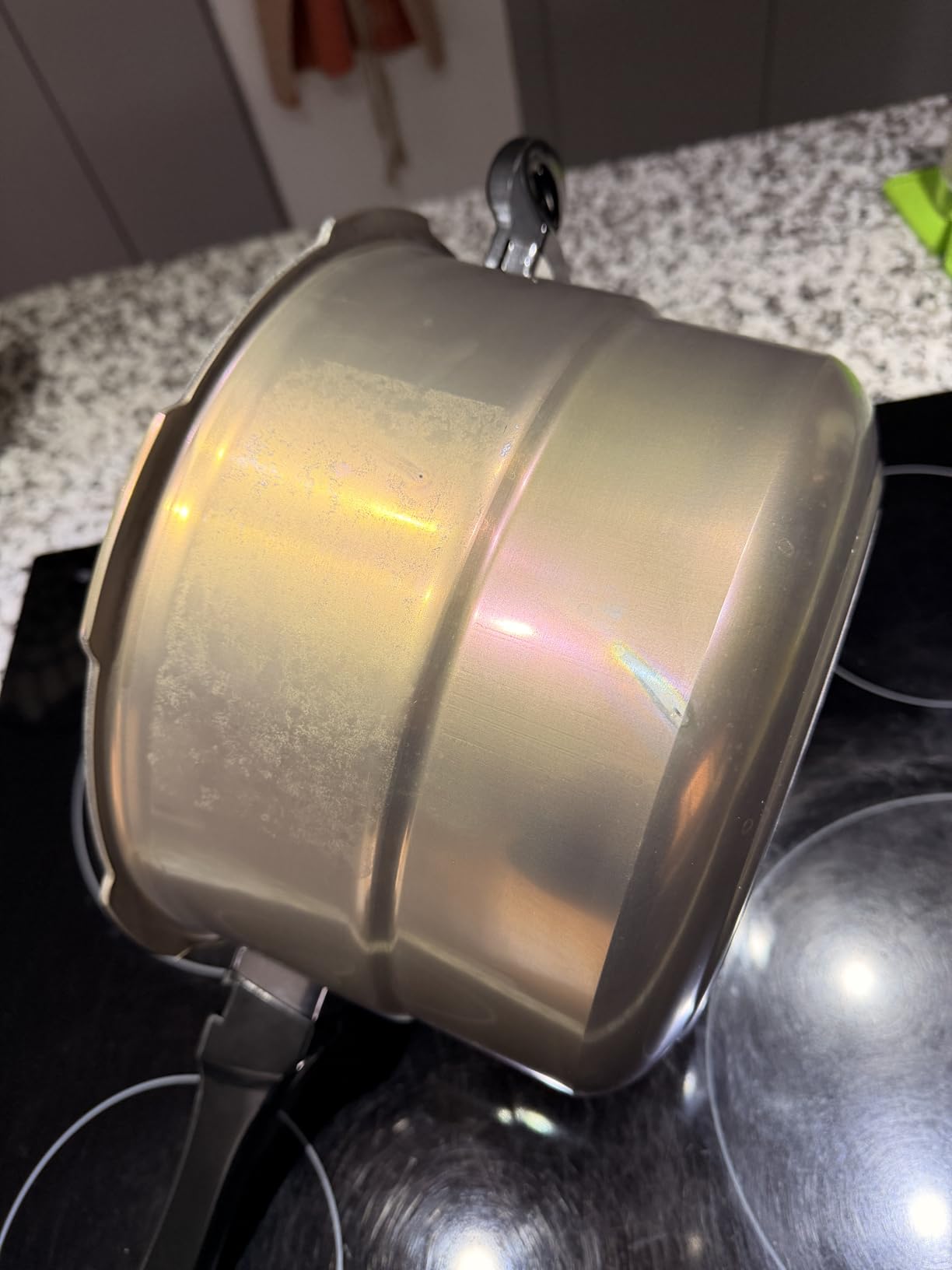
The practical problem for canners is the included tray. It sits about halfway down the pot, which means jars rest directly on the bare aluminum base unless you buy a separate bottom rack. That is a small fix for anyone who knows to make it, and a real one for anyone who does not.
A small number of buyers also report rapid discoloration after a single use, and support responses are described as slow, which is what pulls the rating below the rest of this group.
Be clear-eyed about the trade: this is a large pressure cooker that can be used for canning with the right rack, not a purpose-built canner. If low-acid food safety is the primary goal, a model built around canning is the safer purchase.
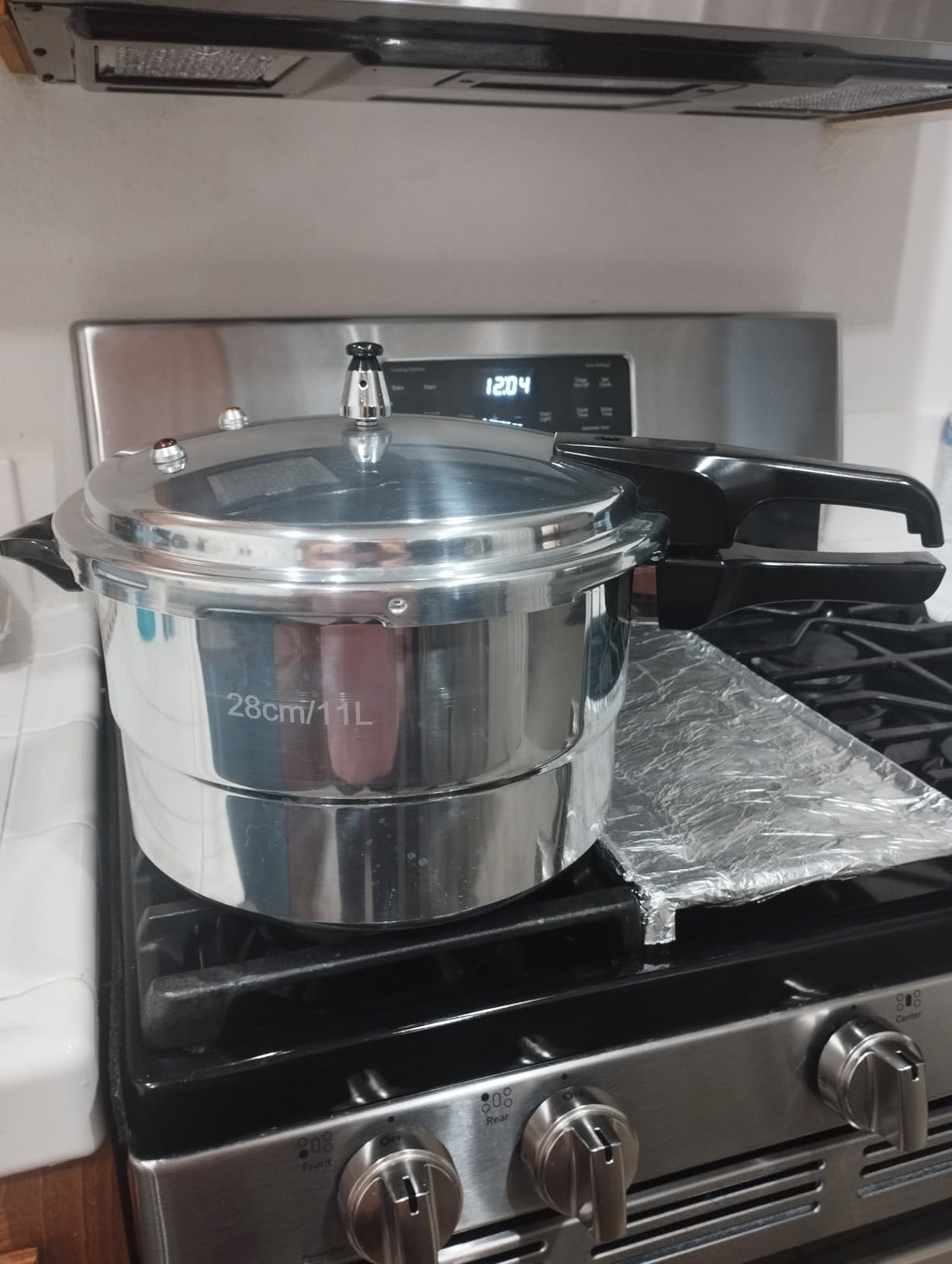
Where a large pot earns its keep?
At 23 quarts with an induction-capable base, this is a strong choice for households that batch cook as much as they can. The capacity handles a large stock pot of chili or stock in a single run.
The storage bag is a small but real convenience for anyone who does not want a 23-quart pot living permanently on the stove.
Where it falls short?
No bottom rack, no canning guide, and no recipe material. You are assembling the canning setup yourself from parts.
The anodized body reacts with acidic foods, which makes it a poorer fit for tomatoes, vinegar, and fruit batches than a raw stainless or uncoated aluminum canner.
We earn a commission, at no additional cost to you. CERTAIN CONTENT THAT APPEARS ON THIS SITE COMES FROM AMAZON. THIS CONTENT IS PROVIDED 'AS IS' AND IS SUBJECT TO CHANGE OR REMOVAL AT ANY TIME.
9. MIRRO 22-Quart Pressure Canner with 5, 10 and 15 PSI Regulators
MIRRO 22 Qt Aluminum Pressure Canner with 3 Regulators, 5, 10 & 15 PSI
★★★★★★★★★★22-quart capacity
Three regulators at 5 10 and 15 PSI
Two racks and cool-touch handles
Dishwasher safe
- All three pressure weights included in the box
- No gauge to watch or recalibrate
- Heats quickly and holds steady pressure
- Reliable seals with little siphoning reported
- No readable pressure gauge
- Regulator takes two firm clicks to seat properly
- Reported to perform poorly on glass-top stoves
The MIRRO is the weighted-gauge option that experienced canners tend to favor. All three regulators are included in the box, so you are not hunting for a 5 or 10 lb weight after you discover you need one, and there is no dial gauge to recalibrate each season.
Once the weight is seated correctly, pressure holds itself. Owners report fast heat-up, steady pressure with very little burner adjustment, and jars that sealed reliably even on high-liquid broth and stock batches where siphoning is usually a problem.
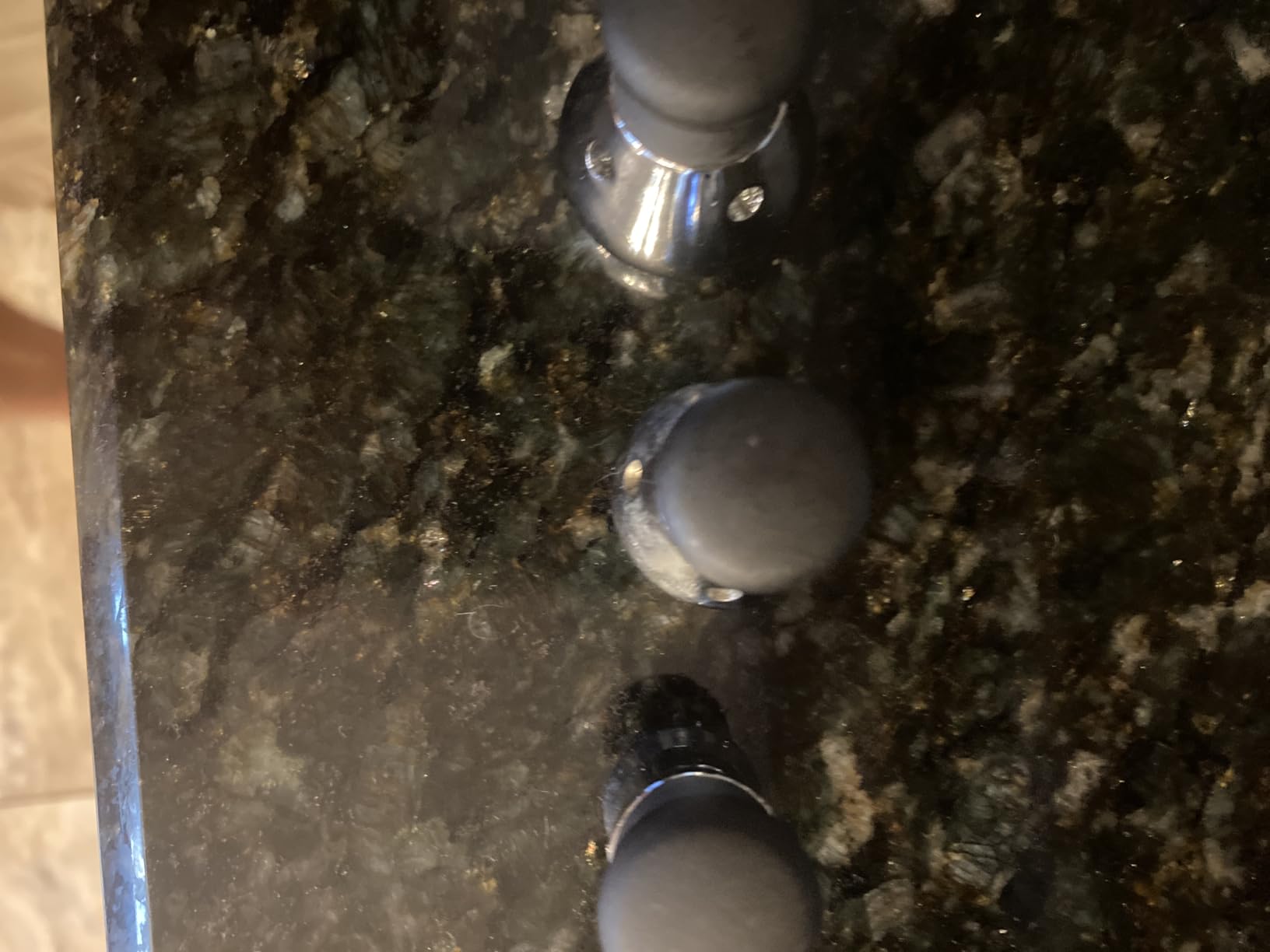
The dual cool-touch handles make a 22-quart pot liftable by two people, which is a genuine improvement over single-handle designs when the pot is full of hot liquid.
Learning curve item: the regulator must be pushed firmly onto the stem until you feel two distinct clicks. A partially seated weight is the first thing to check when a MIRRO will not hold pressure, before you troubleshoot anything else.
The weight also leaves a rust-colored ring around the steam vent, which is cosmetic and permanent. On a glass cooktop, performance is the bigger concern: several owners report it heating poorly there, so check your stove type before choosing it.
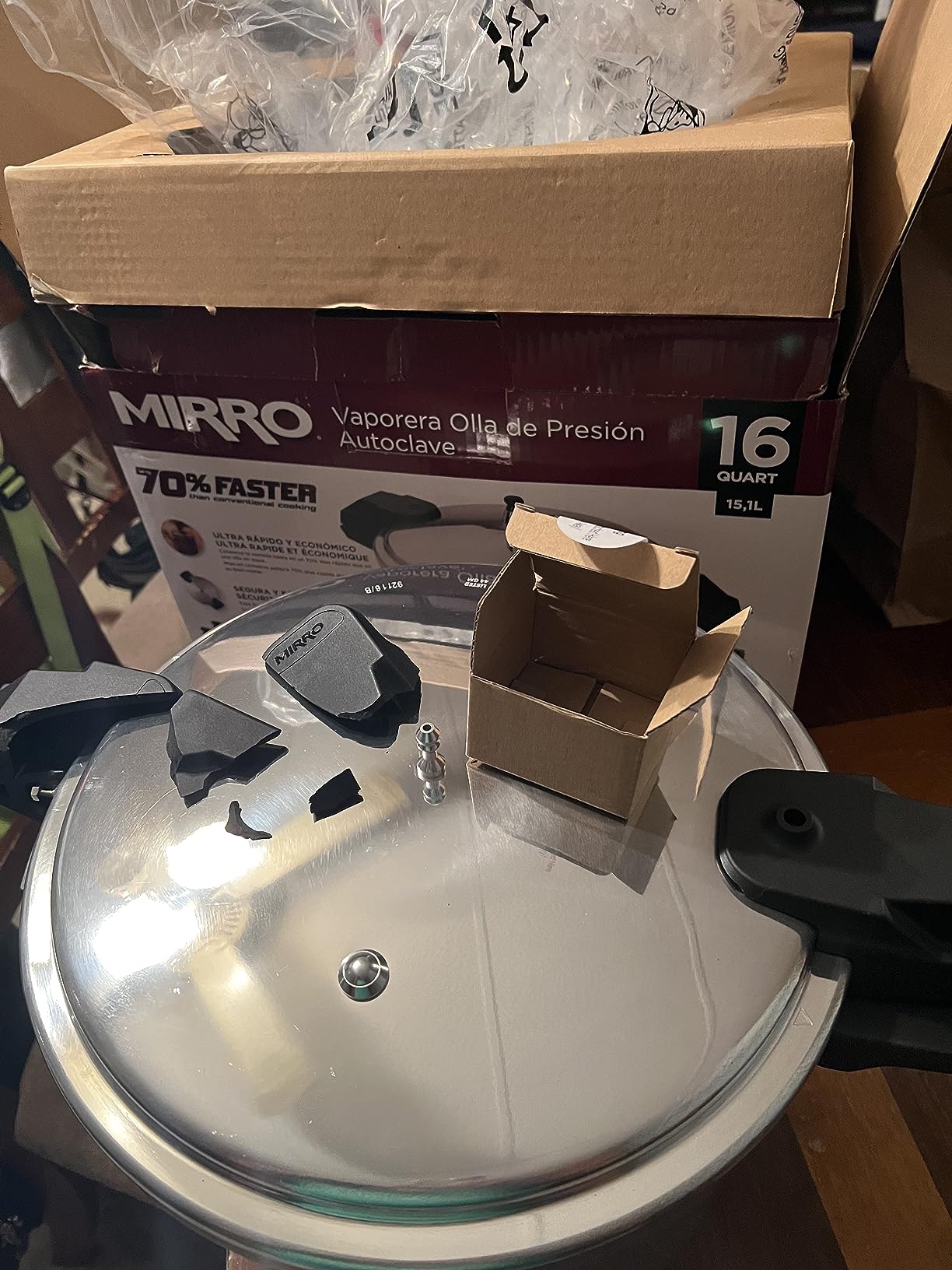
How a weighted gauge changes the workflow?
You stop managing a needle and start managing a sound and a movement. Once the jiggler is rhythmic, you can step back and set a timer, which is a different experience for anyone who does not enjoy watching a gauge.
Because the three weights are in the box, you can also run lower-pressure water-bath work with the same pot, which expands what a single appliance can do across a season.
Where it falls short?
There is no numeric reading, so you cannot tell 12 PSI from 15 PSI without a separate gauge. For a first canner who wants visual confirmation, that is a real drawback.
The aluminum body reacts with acidic foods such as tomatoes and vinegar, and glass-top performance is inconsistent. Use it on gas or coil instead.
We earn a commission, at no additional cost to you. CERTAIN CONTENT THAT APPEARS ON THIS SITE COMES FROM AMAZON. THIS CONTENT IS PROVIDED 'AS IS' AND IS SUBJECT TO CHANGE OR REMOVAL AT ANY TIME.
10. Zavor DUO 8-Piece Pressure Canning Set
Zavor DUO 8-pc Pressure Canning Set – Pressure Cooker 10 Quart w/Complete Pressure Cooker Canning Kit, including Wide Mouth Canning Funnel, Canning Rack & 5 other Essential Canning Tools
★★★★★★★★★★10-quart stainless steel body
15 PSI and 10 PSI settings
Fits 4 one-quart jars
8-piece tool set
- Every essential canning tool in one box
- Stainless steel works on gas electric ceramic and induction
- Two pressure levels for canning and softer foods
- Works for water bath and pressure canning
- Only four 1-quart jars per batch
- Cannot be used with an external pressure gauge
- Slow for seasonal harvest volume
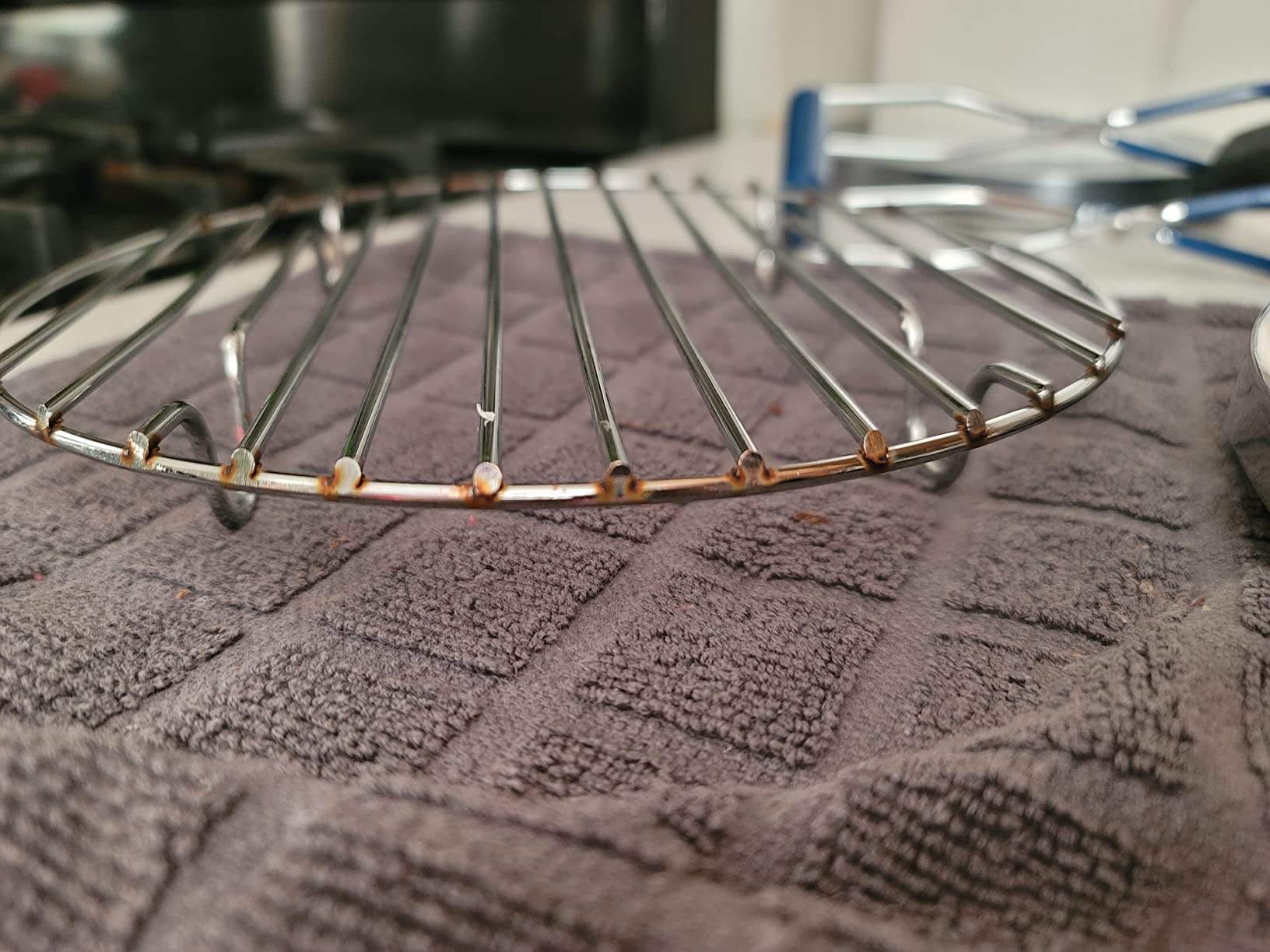
The Zavor DUO is bought as a starter kit rather than a production canner, and the reason is obvious once you open the box. The pot comes with a jar lifter, a wrench, tongs, a bubble freer, a lid lifter, a headspace measurer, a wide-mouth funnel, and a ladle.
Those are exactly the accessories a first batch needs and exactly the accessories people forget to buy. For a household testing whether home canning suits them, it removes the second-order decision entirely.
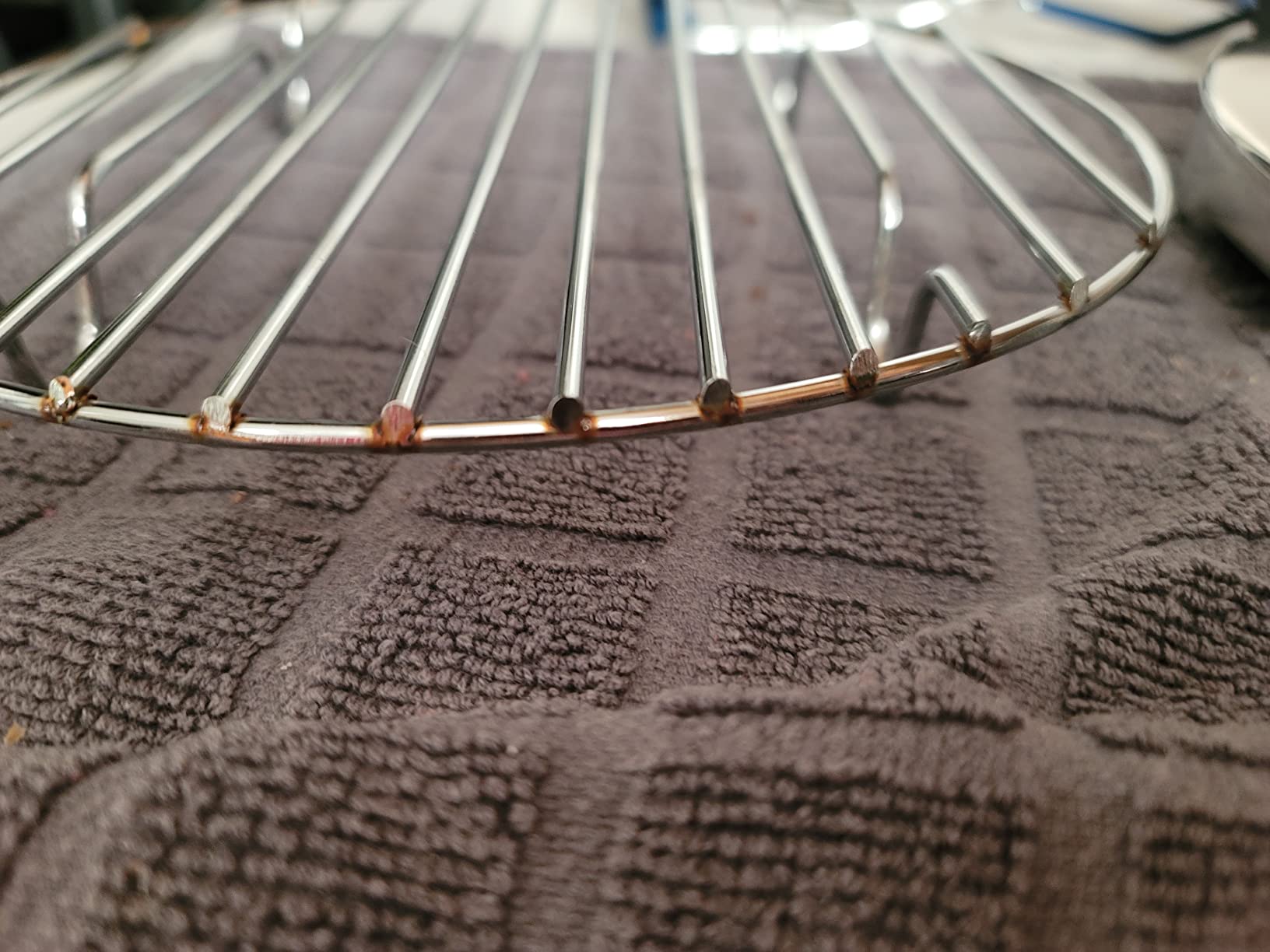
The stainless steel body is the quiet strength here. It works on gas, electric, ceramic, and induction, so unlike most aluminum canners it is not stove-specific, and it will not scratch a glass cooktop the way bare aluminum can.
Two pressure levels are provided: a high 15 PSI position for canning and a low 10 PSI position for softer foods during a normal cooking cycle.
Capacity is the limit. Four one-quart jars per load means a full batch of green beans or tomatoes takes many cycles, and experienced canners find the pace too slow for a harvest weekend.
What the tool kit actually saves you?
A jar lifter, a lid lifter, a headspace tool, and a funnel are the four tools you need on canning day and the four most commonly skipped. Having them in the box removes the moment where a first batch stalls while you look for a ladle.
It also makes the kit a reasonable gift for someone you want to introduce to canning, since nothing else needs to be assembled before the first attempt.
Where it falls short?
It cannot be used with an external pressure gauge, so you have no numeric confirmation of the pressure you are holding. For a beginner working from a printed recipe, that is a genuine safety consideration.
At four jars per batch it is a teaching appliance rather than a harvest appliance. Most owners who outgrow it keep a larger canner alongside it.
We earn a commission, at no additional cost to you. CERTAIN CONTENT THAT APPEARS ON THIS SITE COMES FROM AMAZON. THIS CONTENT IS PROVIDED 'AS IS' AND IS SUBJECT TO CHANGE OR REMOVAL AT ANY TIME.
How to Choose the Best Pressure Canner for Your Kitchen?
Capacity and jar sizing: how many jars per batch?
Start by counting jars, not quarts. A 23-quart canner holds seven quart jars, twenty pints, or twenty-six half-pints in a single load, which is a full season for a family garden. A 10-quart canner holds four quarts or seven pints, which means five loads to match it.
Between 16 and 23 quarts suits most households. Below 15 quarts you will spend more time heating water than processing food; above 23 quarts the loaded pot becomes genuinely difficult to lift and needs to be filled where it sits.
Factor in jar size before you commit. A canner that holds seven quarts may hold only four or five wide-mouth quarts, and wide-mouth pints stack differently from regular pints. The manufacturer’s jar counts are measured with regular Mason jars.
Stovetop compatibility: gas, coil, smooth top and induction
Aluminum does not heat on induction, full stop. That is the entire reason a clad base exists. If you have an induction range or a glass cooktop, your shortlist is Presto 01784, WantJoin 23-quart, and the Zavor DUO, and you should check whether the manufacturer lists induction support before buying anything else.
Most aluminum canners work fine on gas and electric coil, and most work on smooth-top ceramic. The complaints we see about scratching come from sliding a bare aluminum pot across a glass surface, so lift rather than slide.
Dial gauge vs weighted gauge
A dial gauge gives you a number. A weighted gauge, often called a jiggler, gives you a movement and a sound. For a first canner, a dial is the more informative option because you can see pressure drop and respond before a processing time is lost.
The tradeoff is maintenance. A dial gauge should be tested annually, and finding a testing service is not always easy. A weighted regulator needs no calibration because its weight defines the pressure, but it gives you nothing to read.
Altitude pushes dial users toward more capable gauges, since high elevations require higher processing pressure. If you live above 1000 feet, a weighted canner with the right weight is genuinely simpler.
Gasket seal vs metal-to-metal seal
A rubber gasket is cheap, easy to replace, and the part that eventually fails on most aluminum canners. Store the lid loosely, keep the ring out of sunlight, and check it for cracks before each season.
A metal-to-metal seal removes that failure point entirely, at the cost of a higher up-front outlay and no forgiveness on lid alignment. The All American 1930 is the clearest example in this roundup.
Pressure canner vs pressure cooker vs water bath
A water bath canner reaches 212 degrees Fahrenheit, which is safe for high-acid foods like fruit, jams, pickles, and tomatoes with added acid. A pressure canner reaches 240 degrees and above, which is the only safe method for low-acid vegetables, meats, poultry, seafood, stocks, and soups.
A pressure cooker is smaller, faster, and interrupts the process for browning and seasoning. Most pressure cookers cannot hold four or more quart jars, and multi-cookers are not approved for canning. Experienced canners consistently warn against using a multi-cooker for low-acid food.
Altitude adjustments above 1000 feet
At higher elevations water boils at a lower temperature, so processing pressure has to increase. Between 1000 and 3000 feet, the common adjustment is 10 PSI instead of the standard 15 PSI. Between 3000 and 7000 feet, canners use 15 PSI with extended processing times.
Use the current National Center for Home Food Preservation tables rather than any number you find in an article, including this one, because processing times change. This is also the strongest argument for a dial gauge that reads above 15 PSI, since the standard gauge tops out at the low-elevation setting.
A simple maintenance calendar
At the end of each season, wash the pot, the lid, the rack, and the regulator in warm soapy water, dry everything completely, and store the lid loose rather than sealed shut. Add a splash of vinegar to the water during the next batch to limit interior staining on aluminum models.
Once a year, check the gasket for cracks and flattening and replace it if you are unsure. If your canner has a dial gauge, get it tested before the season starts rather than assuming it still reads true.
Grease the sealing surfaces of a metal-to-metal lid lightly with olive oil before reassembly, and oil the threads on threaded gasket lids. It takes a minute and prevents the most common complaint in reviews.
Troubleshooting four common failures
No pressure builds: check the vent pipe and the gasket first, then make sure the lid is aligned and the weighted regulator is seated with a firm push. An unseated weight is the number one cause on jiggler-style canners.
Pressure drops mid-cycle: this is usually a heat problem rather than a canner problem. Turn the burner up, and confirm you are using enough water. Losing a few PSI briefly does not necessarily mean a failed batch, but track what happened for future reference.
Siphoning and liquid loss from jars: headspace that was under-filled, or a cool spot on the burner, causes food to exhaust under the lid. Use a lower flame and follow the recipe’s headspace exactly.
False seals, where a jar appears sealed then unseals in storage: this almost always points to a processing time that was cut short or a pressure that never reached target. Check for a dropped weight, an unseated lid, or a batch processed before the canner came fully to pressure.
The accessories you actually need
Essential: a jar lifter with a firm grip, a wide-mouth funnel, a bubble freer or clean paper towel for air pockets, a headspace tool, a lid storage band, and a towel for lifting hot jars. A canning guide booklet, whether included or printed separately, is worth more than most upgrades.
Optional: a second canning rack for double-stacking small jars, extra canning plates, an adjustable regulator if your canner comes with a single weight, and a jar lifter for wide-mouth jars. If you are also outfitting a garage for a harvest, our guide to the best pressure washers for cars covers the other half of weekend cleanup.
Frequently Asked Questions
Is there a pressure canner that doesn’t require a gasket?
Yes. The All American 1930 uses an exclusive metal-to-metal sealing system with positive-action clamping locks, so there is no replaceable rubber gasket in the lid seal. That removes the most common failure point on aluminum canners, since gaskets dry out and crack between seasons. Some older designs also use a threaded lid with an o-ring rather than a flat gasket, but the metal-to-metal approach is the one designed to outlast them.
Must I use a pressure canner for low-acid foods?
Yes. Pressure canning is the only safe home method for low-acid foods such as vegetables, meats, poultry, seafood, stocks, and soups. Those foods must reach above 240 degrees Fahrenheit to destroy Clostridium botulinum spores, and a boiling water bath only reaches 212 degrees. A water bath is appropriate for high-acid foods like fruit, jams, pickles, and properly acidified tomatoes.
Should I get a water bath or a pressure canner?
Get a pressure canner if you want to preserve vegetables, beans, corn, meat, fish, poultry, or homemade stock. Choose a water bath canner or a boiling-water mode if your preserving is limited to jams, jellies, fruit, pickles, and relishes. Most canners do both, so a single unit usually covers a full season. Buy the pressure canner if low-acid food is on your list at all.
Can I use my pressure canner as a water bath canner?
Yes. Most full-size pressure canners, including the Presto 01781, 01784, and 01755, double as boiling-water canners for fruit, jams, jellies, pickles, and salsa. Simply keep the lid off and let the pot hold a steady simmer with jars submerged. Do not seal the lid, and keep an eye on the water level so jars never sit dry on the bottom.
What’s the best pressure canner on the market?
The best pressure canner overall is the Presto 01781 23-quart model. It holds seven quart jars or twenty pints per load, has a deluxe dial gauge that covers the full processing pressure range, works on gas and smooth-top ranges, and carries a 12-year limited warranty. For induction cooktops, choose the Presto 01784 with its stainless clad base. For a canner built to last decades, the All American 1930 is the durable pick.
Is it worth buying a pressure canner?
It is worth it if you grow vegetables, buy produce in season, raise poultry, or want shelf-stable food without depending on a freezer. A pressure canner pays back quickly across a single harvest once you stop discarding produce. The cost also spreads out because the same pot doubles as a water bath canner and a large pressure cooker for everyday meals.
Final Verdict: The Best Pressure Canners of 2026
The best pressure canners in 2026 come down to three clear winners. The Presto 01781 is our top pick for almost everyone: a 23-quart body, seven quart jars per load, a deluxe dial gauge, and a 12-year warranty at 12 pounds empty. The Presto 01784 is the answer for induction and glass cooktops, and the All American 1930 is the one to buy if you want a canner that outlasts you.
The T-fal 22-quart makes sense as a first canner on a budget, the Presto 01755 fits smaller kitchens, and the NESCO NPC-9 removes the stovetop learning curve entirely for anyone who wants an electric cycle. Whatever you choose, buy a canning guide, follow the published processing times, and give the gasket or seal a minute of attention at the start of every season.