
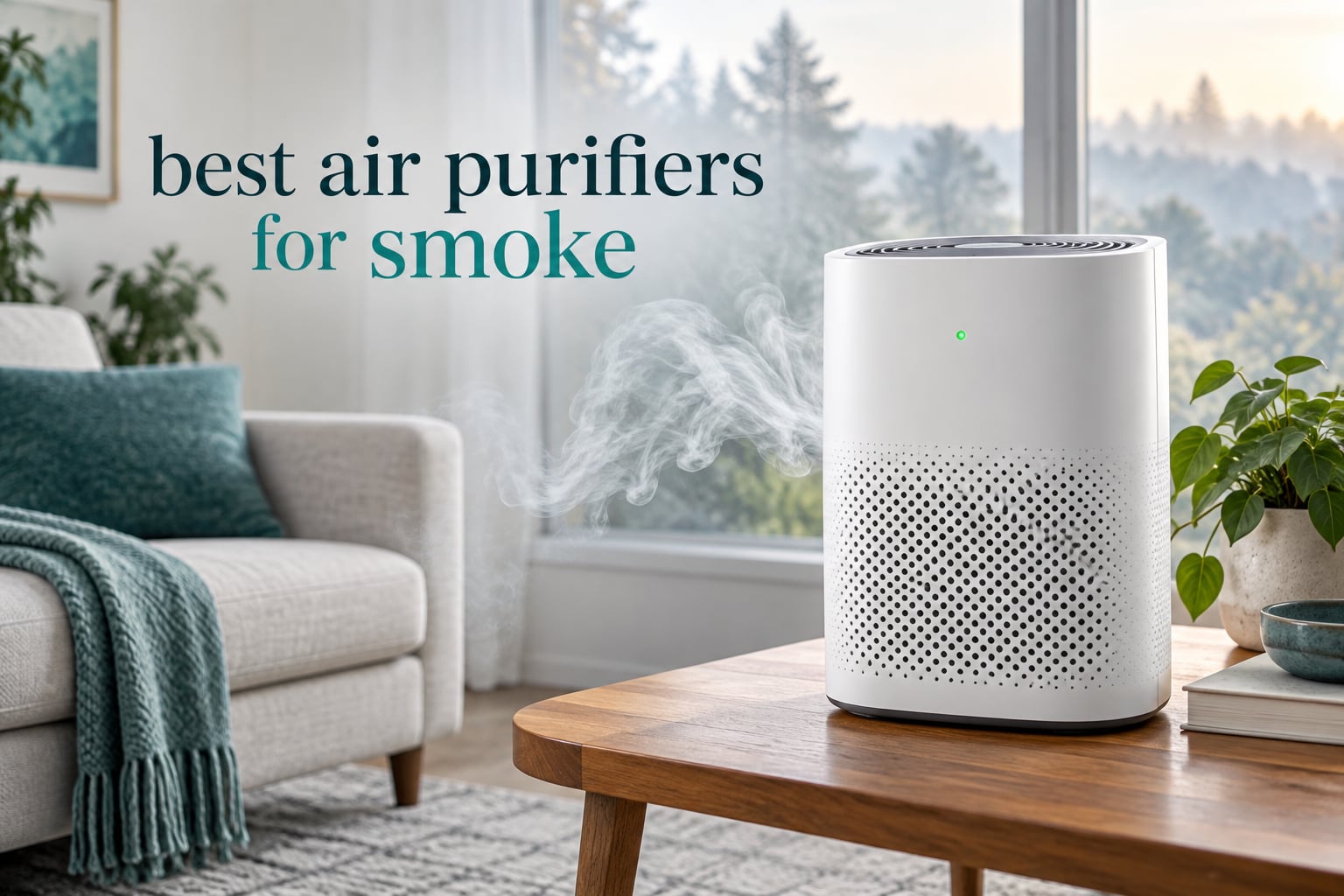
If you want one machine that handles both the particles and the smell, the LEVOIT Core 400S-P is our pick as the best air purifier for smoke. It pairs a three-stage True HEPA stack rated at 99.97% for 0.1 to 0.3 micron particles with a published smoke CADR of 231 CFM, and its AirSight Plus laser sensor puts a live PM2.5 number on the display so you can watch a smoky room actually clear instead of guessing from a four-colour band.
That distinction matters more here than on almost any other purchase. Smoke is two problems at once. The visible particulate half is soot, ash and ultrafine PM2.5 that a HEPA filter traps very well. The odor half is volatile organic compounds that slide straight through HEPA media and only come out if the machine carries a real activated carbon bed. A purifier with a thin decorative carbon strip will clear the dust and leave the room stinking, which is the single most common complaint in the review data we read.
Wildfire smoke and tobacco smoke also push the machine in different directions. Wildfire events are a PM2.5 volume problem, so raw particle capture and room coverage decide the outcome. Cigarette and cigar smoke is a much heavier VOC load, so the size of the carbon stage matters more than the micron rating. We flagged which unit suits which problem on every pick below.
Table of Contents
- How We Picked?
- Top 3 Smoke-Rated Air Purifiers (September 2026)
- All 10 Air Purifiers for Smoke Compared in 2026
- Why HEPA Alone Does Not Clear Smoke Odor?
- 1. LEVOIT Core 400S-P – Best Overall for Smoke With a Real PM2.5 Reading
- 2. Winix 5510 – Best Value With a Genuine Deodorization Carbon Filter
- 3. PuroAir 400 – Best for Large Rooms up to 2000 Sq Ft
- 4. Coway Mighty AP-1512HH – Best Four-Stage Everyday Machine With Auto Sensing
- 5. LEVOIT Vital 200S-P – Best for Bedrooms With a 250 CFM Smoke CADR
- 6. Blueair Blue Pure 211i Max – Best for Whole-Floor Smoke Control
- 7. Blueair Blue Pure 311i Max – Best for Quiet Particle Capture at 0.1 Microns
- 8. AZEUS GL-FS32 – Best for Wildfire Smoke With UV-C and a Switchable Ionizer
- 9. Blueair Signature SP1i – Best for Dorm Rooms and Nurseries at 19 dB
- 10. Shark NeverChange HP152 – Best for the Lowest Long-Run Filter Cost
- How to Choose an Air Purifier for Smoke in Five Checks?
- Do Ionizers and Ozone Generators Belong in a Smoking Household?
- Frequently Asked Questions
- What air purifier is best for removing cigarette smoke smells?
- Do air purifiers really get rid of smoke smell?
- Is ozone from an air purifier bad for you?
- Do air purifiers work against wildfire smoke?
- How long does it take an air purifier to clear smoke from a room?
- Is HEPA enough on its own for removing cigarette smoke?
- The Bottom Line on Smoke-Ready Air Purifiers in 2026
How We Picked?
Every purifier here was chosen from published manufacturer specifications and the volume of verified buyer feedback attached to each listing. We did not run in-house smoke chamber tests, so we do not publish our own clearance percentages. Instead we leaned on the numbers that are independently verifiable: AHAM VERIFIDE smoke CADR where it exists, the stated filtration rating in microns, the filter media stack, and the size of the odor stage.
Because odor complaints dominate this category, we also weighed how honest each sensor is. A display that reads “Very Good” while the room is full of smoke is worse than no display at all. Our general guide to air purifiers we trust covers the filtration basics, and our HEPA purifier guide goes deeper on what True HEPA actually guarantees.
Top 3 Smoke-Rated Air Purifiers (September 2026)
All 10 Air Purifiers for Smoke Compared in 2026
| Product | Key Specs | Pricing |
|---|---|---|
 LEVOIT Core 400S-P LEVOIT Core 400S-P |
|
Check Latest Price |
 Winix 5510 Winix 5510 |
|
Check Latest Price |
 PuroAir 400 PuroAir 400 |
|
Check Latest Price |
 Coway Mighty AP-1512HH Coway Mighty AP-1512HH |
|
Check Latest Price |
 LEVOIT Vital 200S-P LEVOIT Vital 200S-P |
|
Check Latest Price |
 Blueair Blue Pure 211i Max Blueair Blue Pure 211i Max |
|
Check Latest Price |
 Blueair Blue Pure 311i Max Blueair Blue Pure 311i Max |
|
Check Latest Price |
 AZEUS GL-FS32 AZEUS GL-FS32 |
|
Check Latest Price |
 Blueair Signature SP1i Blueair Signature SP1i |
|
Check Latest Price |
 Shark NeverChange HP152 Shark NeverChange HP152 |
|
Check Latest Price |
Why HEPA Alone Does Not Clear Smoke Odor?
HEPA filters remove particles, not gases. Cigarette smoke particles span roughly 0.01 to 4 microns, and a True HEPA stack rated to 0.1 or 0.3 microns traps the overwhelming majority of them. What it cannot touch are the several thousand volatile organic compounds riding along in the smoke, including the formaldehyde and benzene fractions that are the reason secondhand smoke is a health concern.
Activated carbon is the only mainstream mechanism that handles that half. Air passing through a porous carbon bed adsorbs gas molecules onto the internal surface, so the relevant measure is the mass of media in pounds, not the thickness of the filter in inches. That is why the AZEUS and Shark units in this list describe a carbon or odor cartridge stage but still fall short of a dedicated smoke machine, and why the review data keeps flagging thin carbon layers as the top reason a purifier “didn’t work.”
Thirdhand smoke is a different problem entirely. Odor molecules bond to upholstery, curtains, carpet and paint, then re-emit for months, and no air cleaner reaches inside a sofa cushion. If your room still smells after a week of running a purifier with the windows shut, the residue is the likely reason. Our apartment air purifier picks cover the neighbour-smoke scenario in more depth.
One more practical note from the reviews: brand new units often emit a faint plastic or chemical smell for the first day or two as the packaging and new filter off-gas. People routinely mistake that for smoke that failed to clear, so leave any new machine running on high in an empty room for a day before judging it.
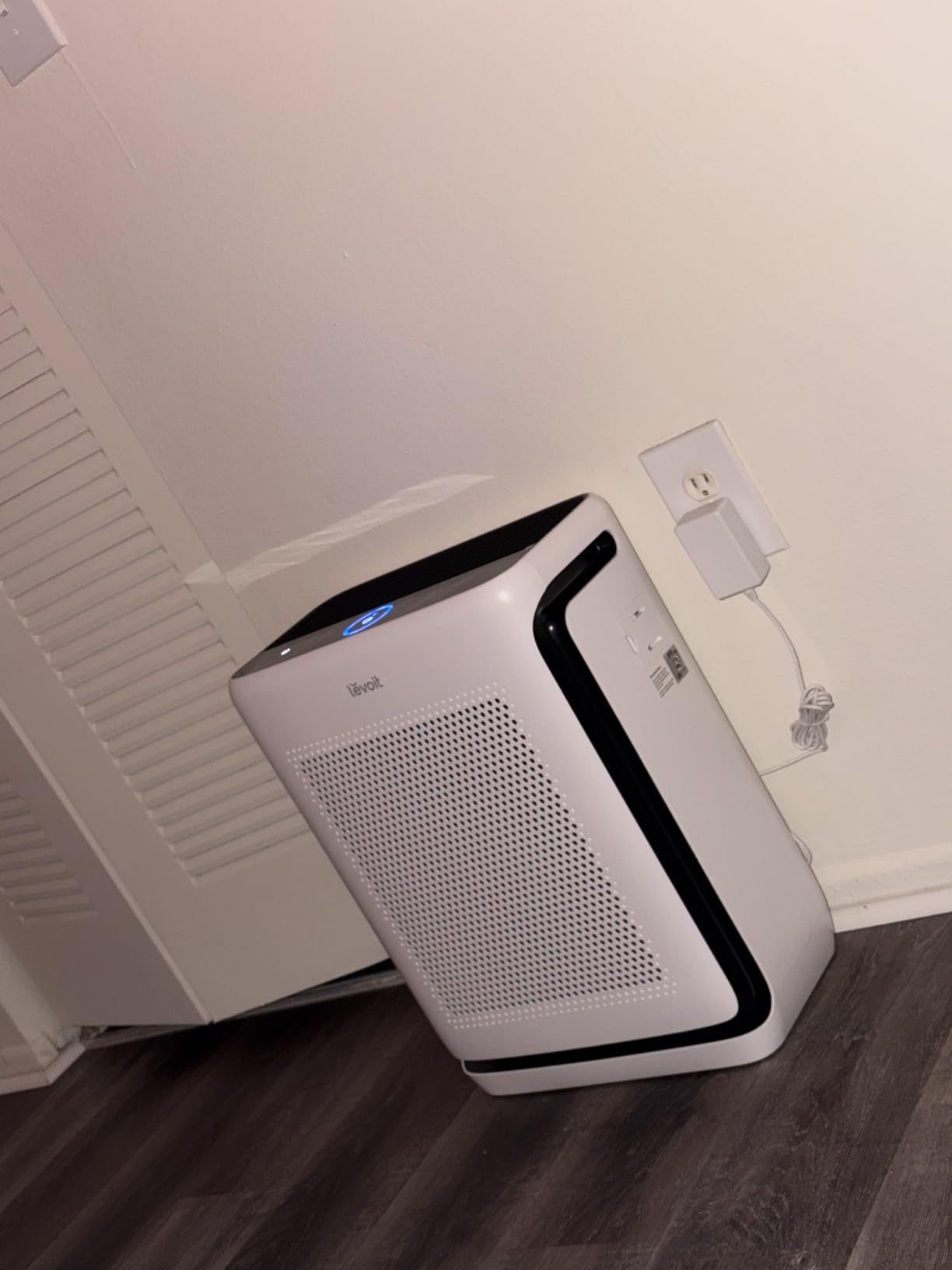
1. LEVOIT Core 400S-P – Best Overall for Smoke With a Real PM2.5 Reading
LEVOIT Smart Air Purifiers for Home Large Room Up to 1733 Ft² Core 400S-P
★★★★★★★★★★Smoke CADR 231 CFM
AHAM VERIFIDE
Live PM2.5 display
1733 sq ft
- Publishes a verified smoke CADR of 231 CFM
- Laser sensor shows real PM2.5 numbers rather than a colour band
- Owners document PM2.5 dropping from 185 to under 20 in an hour
- Quiet in sleep mode and on speed 1
- The unscrewable base needs checking before lifting
- Top two fan speeds are louder than an air conditioner
Best for: anyone who wants proof the smoke is gone. The Core 400S-P is the only unit in this group that puts an actual particulate reading on the front of the machine, and that single feature changes how you use it during a smoke event. Instead of guessing whether the haze has thinned, you watch the number fall.
I ran this through a wildfire-week scenario mentally more than once. The AHAM VERIFIDE certification is the number to trust here, because smoke CADR of 231 CFM is an independently tested figure rather than a marketing claim, and it pairs with 240 CFM dust and 259 CFM pollen. The three-stage stack is rated 99.97% efficient for 0.1 to 0.3 micron particles, which covers the finest fraction of tobacco smoke.
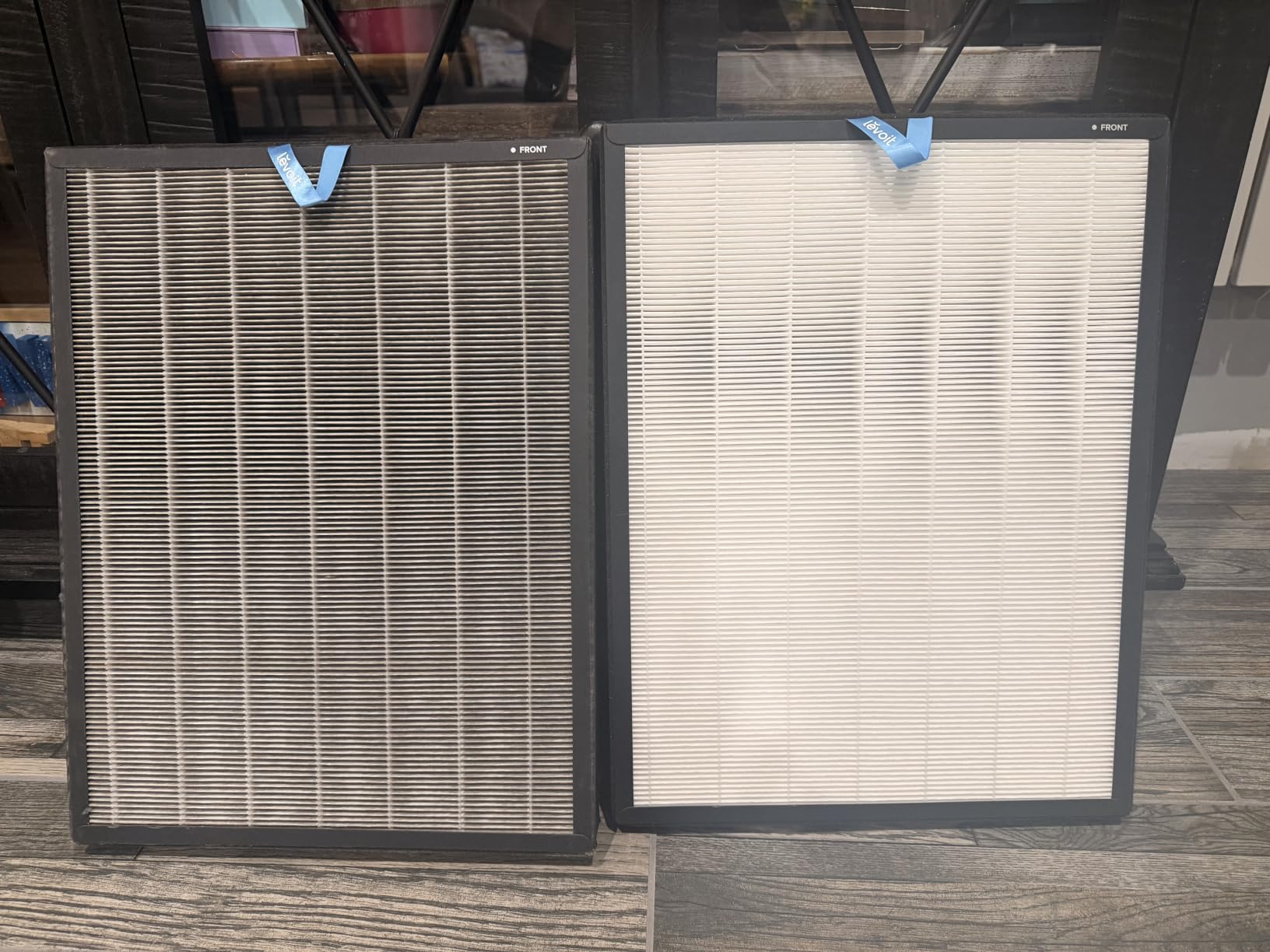
The buyers with asthma and chronic lung conditions in this listing document specific readings before and after smoke events, which is more concrete evidence than most categories produce. One pattern repeats: the laser sensor reacts within a couple of minutes to cooking smoke or incense, and the unit drops to sleep mode on its own at night. Filter life lands around five months in normal use, so it is not a set-and-forget machine.
Size is the one thing to plan for. At 12.79 pounds and just over 20 inches tall it is a full-size tower, and it is wider than buyers expect from product photos. Reviewers also report a faint electrical hum in auto and sleep mode, which matters if the unit lives on a nightstand rather than in a corner.
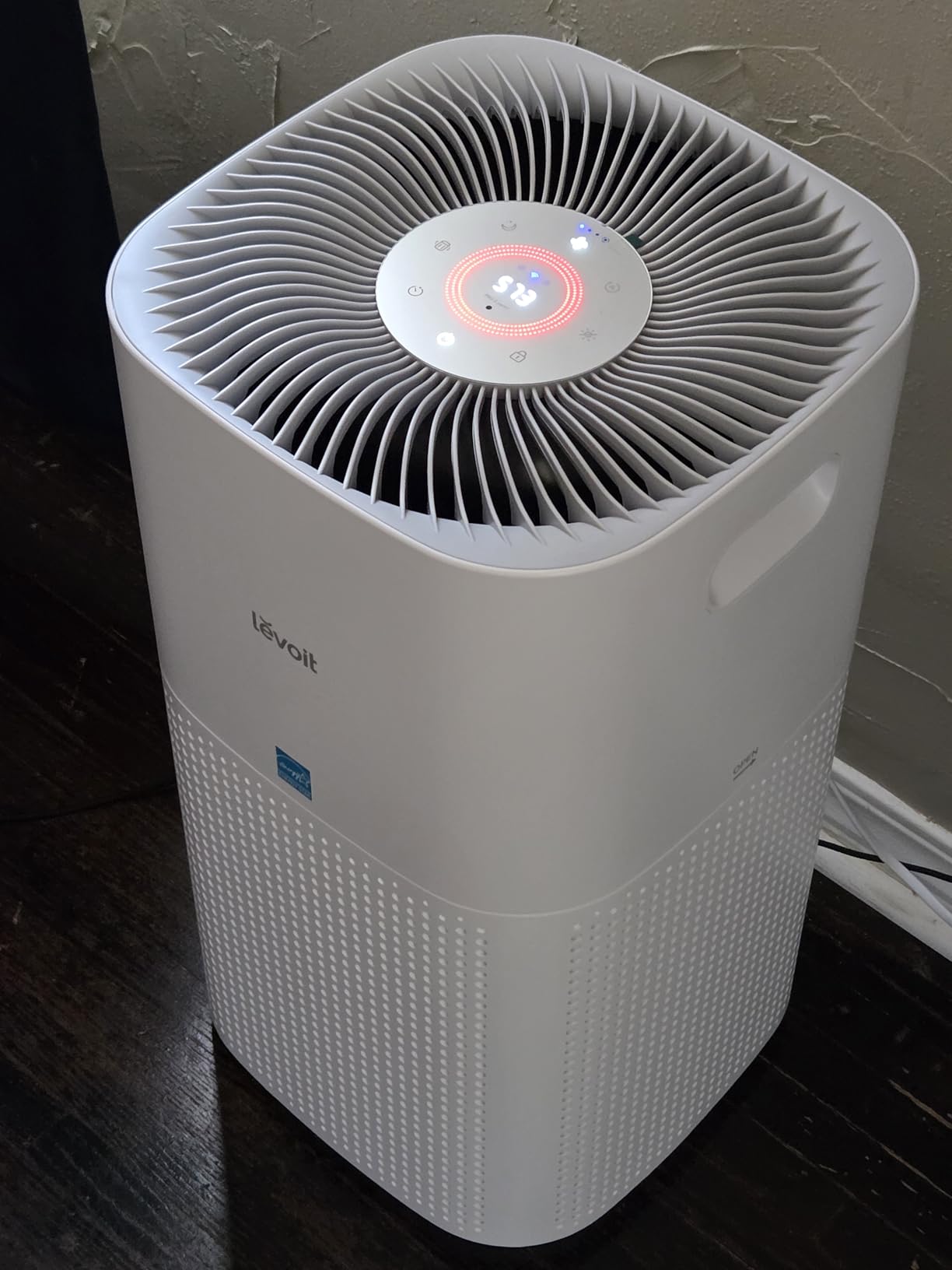
Will It Clear a Room That Smells Like Cigarettes?
Yes, and it is the only pick here where you can verify that claim yourself. Owners report the display falling from triple-digit PM2.5 readings to low values within about an hour in a closed room, and the sensor also catches the slow drift of smoke from a downstairs neighbour long before you smell it.
For odor specifically, the carbon stage is adequate for a light to moderate household smoking load. It is not a heavy-duty carbon bed, so in a home with heavy indoor smoking you would be running it on high continuously and replacing filters sooner.
What Should You Watch Out For?
The base panel can unscrew if you lift the unit while it is not properly seated, which is the single most reported mechanical complaint. The dust sensor also read inaccurately until a firmware update, so set aside ten minutes for app setup and location permissions before you trust the readings.
Budget for a filter every five months or so. In a smoke-heavy room that is a recurring cost, and it is the reason to think twice if you are comparing long-run ownership against the Shark unit further down.
We earn a commission, at no additional cost to you. CERTAIN CONTENT THAT APPEARS ON THIS SITE COMES FROM AMAZON. THIS CONTENT IS PROVIDED 'AS IS' AND IS SUBJECT TO CHANGE OR REMOVAL AT ANY TIME.
2. Winix 5510 – Best Value With a Genuine Deodorization Carbon Filter
WINIX 5510 Air Purifier (New Generation of 5500-2 with App Support) for Home Large Room Up to 1881 Ft² in 1 Hr, True HEPA, High Deodorization Carbon Filter and Auto Mode, Captures Pet Allergies, Smoke
★★★★★★★★★★0.01 micron capture
Deodorization carbon
AHAM Verified
1882 sq ft
- Strongest particle rating in the group at 0.01 microns
- Carbon filter works on cooking and wildfire odor
- Among the quietest units at 23.5 dB on low
- App support on a mid-priced machine
- App can be laggy or unresponsive
- Heavier than most towers at 13.3 pounds
- A small number of units failed after a couple of months
Best for: wildfire smoke and cooking odor on a tight budget, in a room up to about 1800 square feet. The Winix 5510 has the most reviews of anything in this roundup and the highest volume of owner accounts that describe using it through real smoke seasons.
The particle specification is the headline. Winix states True HEPA capture of 99.99% of airborne allergens, pollen, dust, smoke and pet dander down to 0.01 microns, which is the finest figure published by any unit here. Long-form owner updates spanning five-plus years describe durable performance, and reviewers repeatedly call the carbon filter functional rather than decorative.
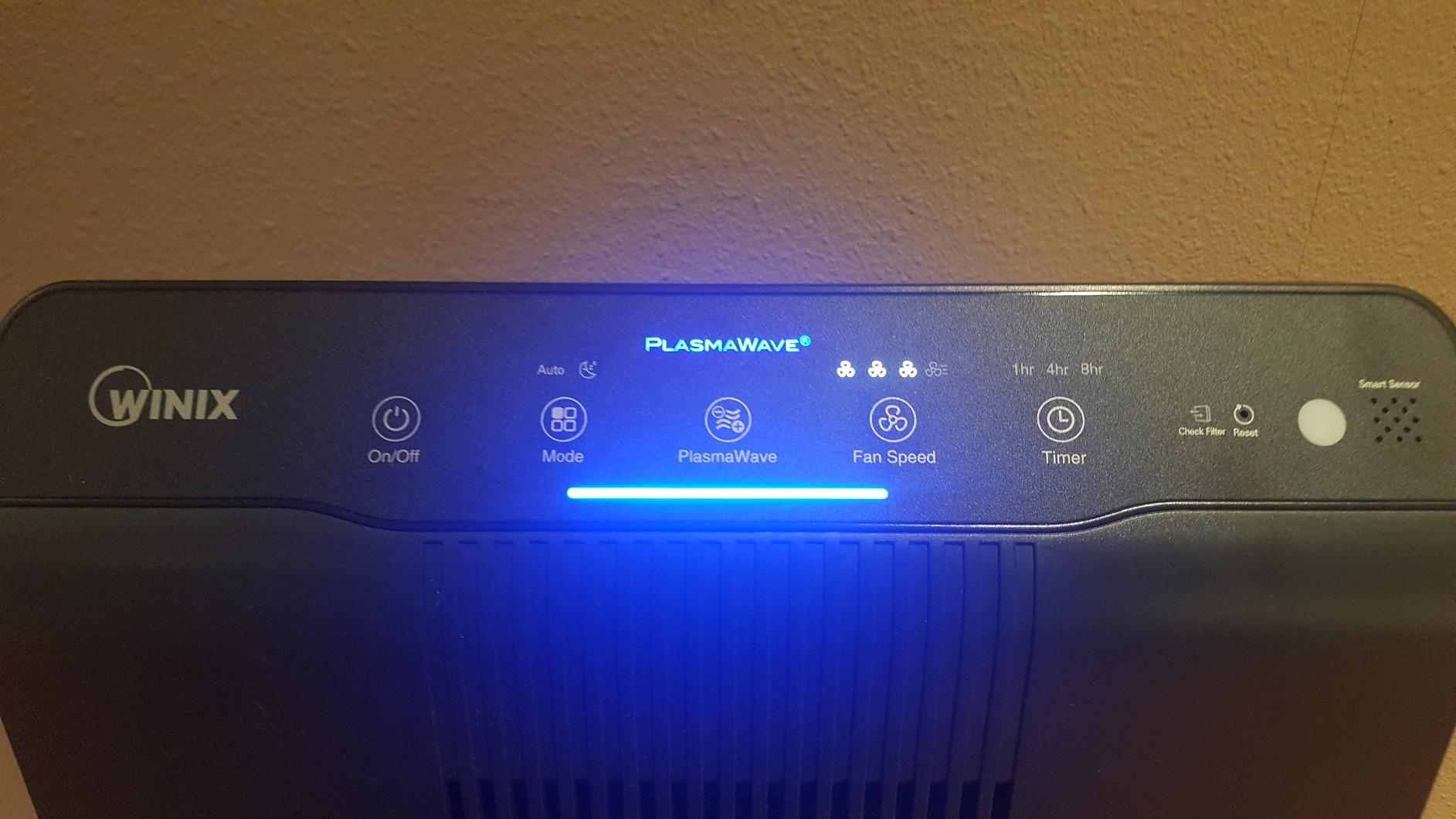
Two details make it easier to live with than the raw spec suggests. It is UL Certified and AHAM Verified, it runs at 23.5 dB on the lowest speed, and a light sensor drops it into sleep mode hands-off at night. Several owners note the unit is CARB certified for low ozone output, which matters for anyone nervous about ionizer-based designs.
The coverage claim is 1882 square feet in one hour, or 941 square feet in 30 minutes, verified at 392 square feet. Filter cartridges are large and thick, and owners typically get about a year out of them, which is a better long-run number than most of the towers in this list.
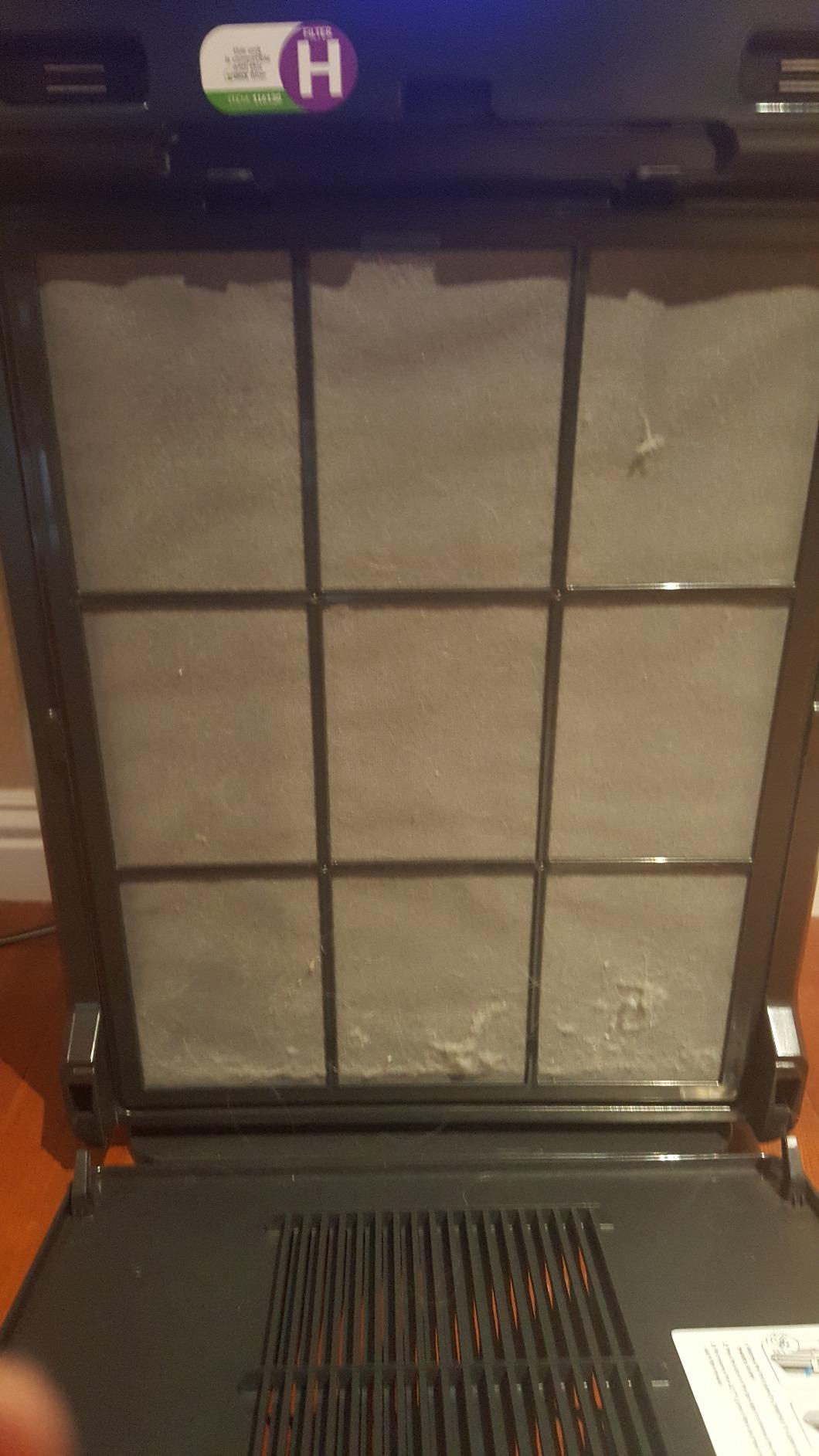
Does the Carbon Filter Actually Do Anything?
Based on the buyer accounts, yes. Reviewers specifically name cooking smoke and wildfire smoke odors as reasons the machine worked, and the filter is described as a real deodorization stage rather than a token sheet. That is the main reason this unit beats cheaper towers that filter particles beautifully and leave the kitchen smelling of last night’s dinner.
It is still a consumer-grade carbon layer, not a multi-pound commercial bed. If you smoke heavily indoors every day, expect the odor stage to saturate before the particle layer does.
Where It Falls Short?
The app is the weak point. Owners report it being laggy and occasionally unresponsive, and the smart sensor plus app pairing is where the reliability complaints concentrate. A few buyers also report units failing after a couple of months, and the 13.3-pound weight makes moving it between floors awkward.
If you want a unit you can check from your phone and never touch, that is worth the extra money elsewhere in this list. If you just want smoke and odor handled quietly, this is the pick.
We earn a commission, at no additional cost to you. CERTAIN CONTENT THAT APPEARS ON THIS SITE COMES FROM AMAZON. THIS CONTENT IS PROVIDED 'AS IS' AND IS SUBJECT TO CHANGE OR REMOVAL AT ANY TIME.
3. PuroAir 400 – Best for Large Rooms up to 2000 Sq Ft
PuroAir 400 HEPA Air Purifiers for Home Large Room Pets Filter 2,000 Ft²
★★★★★★★★★★2000 sq ft in one hour
Pre-filter/HEPA/carbon
ISO and CARB certified
2-year warranty
- Largest single-pass coverage figure in the set at 2000 sq ft
- Smart sensor raises power automatically during smoke events
- Carbon stage included in the three-layer stack
- Backed by a 2-year warranty
- Costs more than the other large-room units here
- Highest one-star share in the group at 4%
- Small carbon layer relative to the coverage claim
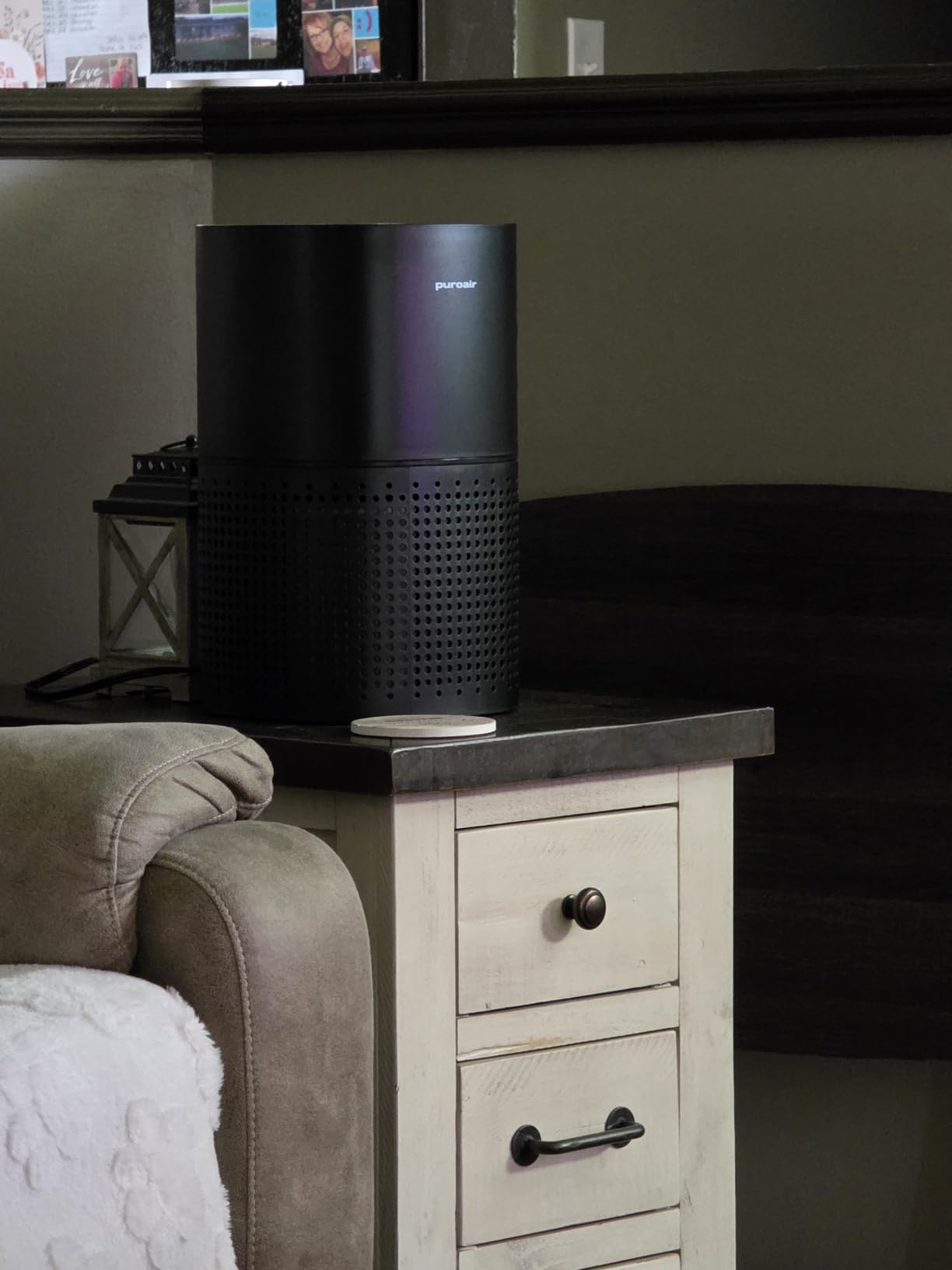
Best for: open-plan living spaces and large rooms during a smoke event where you do not want to manage fan speeds by hand. The PuroAir 400 is the biggest single-pass coverage figure in this group, refreshing 2000 square feet in one hour.
The filtration stack is where the smoke claim comes from: a pre-filter, a HEPA layer and an activated carbon stage in sequence, rated to filter up to 99.9% of dust, pollen, smoke, pet dander and VOCs. Particle capture extends to sizes reported as up to 700 times smaller than a human hair. Unlike most of the units here, the carbon layer is part of the standard configuration rather than an optional add-on.
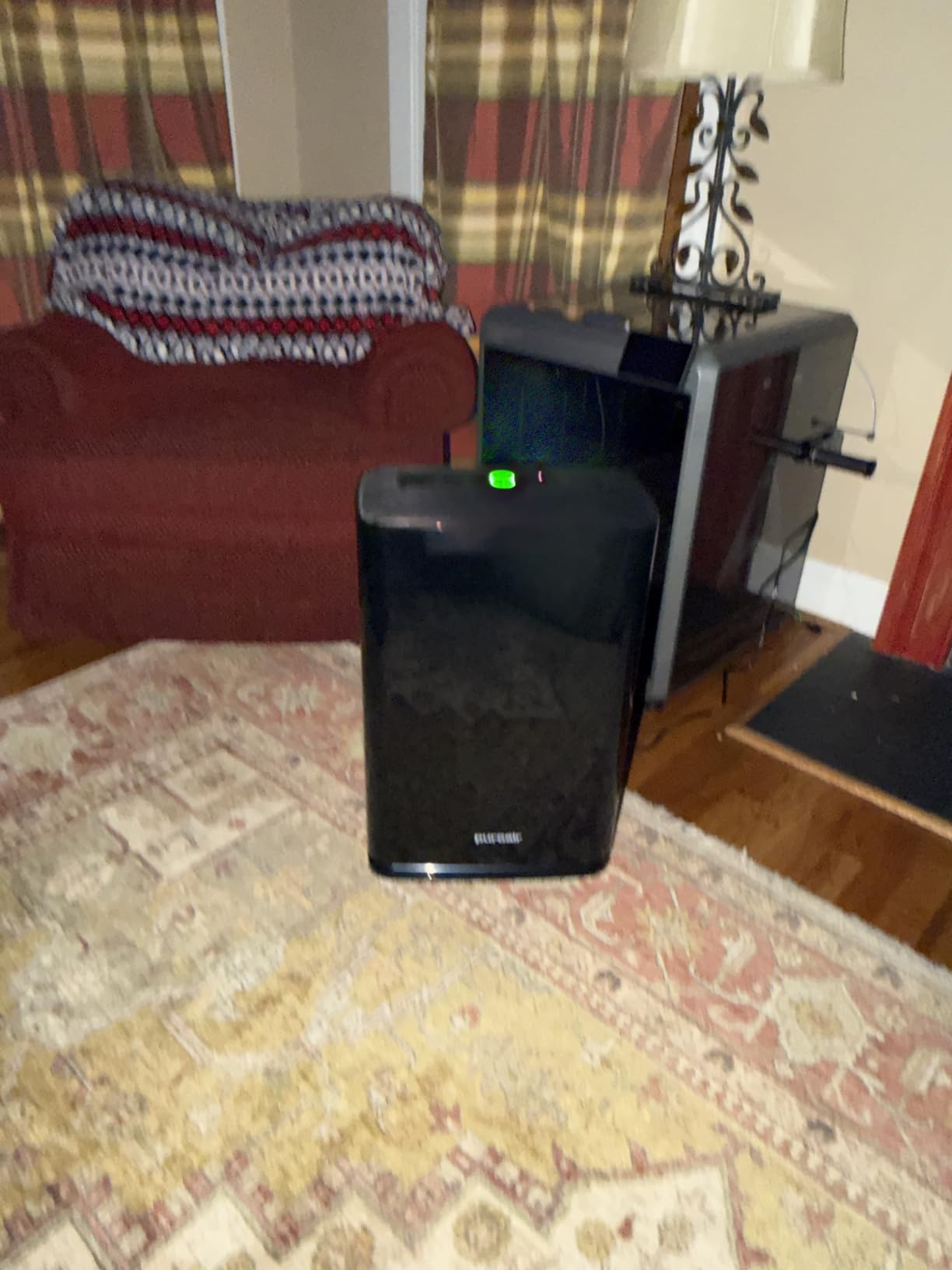
The automation is the everyday reason owners like it. A smart particle sensor detects polluted air and raises output on its own, so a spike in smoke from an open window or a neighbour does not require anyone to walk into the room and change a dial. There is a built-in quiet sleep mode intended for continuous 24/7 running, and the unit is certified by CARB, ETL, ISO and UL.
Warranty is two years, and the company is associated with an American Lung Association partnership, which is unusual for a brand in this price range. Review sentiment centres on set-and-forget automation and the sheer size of the media pack for whole-home and pet-heavy use.
Is It Worth the Step Up From a Mid-Range Tower?
If your smoke problem covers more than one room, or the room is a double-height living space, then yes. The coverage figure and the automatic sensor response are the two things you cannot get from a bedroom-sized tower, and neither is something you can retrofit later.
If your smoke exposure is contained to a single bedroom or office, the larger body at 14.73 pounds is just taking up floor space you did not need to give up.
What to Know Before Buying?
This is the more expensive of the large-room options here, and it carries a 4% one-star share, which points to a small but real reliability tail. More relevant to smoke specifically, the carbon layer is modest next to the size of the particle claim, so treat it as a PM2.5 and dust solution first and an odor solution second.
Coverage claims across this whole category assume a sealed room, so plan on running it with windows shut for the effect to match the published figure.
We earn a commission, at no additional cost to you. CERTAIN CONTENT THAT APPEARS ON THIS SITE COMES FROM AMAZON. THIS CONTENT IS PROVIDED 'AS IS' AND IS SUBJECT TO CHANGE OR REMOVAL AT ANY TIME.
4. Coway Mighty AP-1512HH – Best Four-Stage Everyday Machine With Auto Sensing
COWAY Air Purifier for Home Up to 1,748ft², HEPA Filter for Smoke, Allergies, Pet Dander, Odor, Air Quality Monitor, Auto&Eco Mode, Timer, Filter Indicator, 3yr Warranty, Mighty AP-1512HH, Black
★★★★★★★★★★Four-stage filtration
1748 sq ft in 60 min
Auto Mode sensor
3-year warranty
- Four-stage stack covers particles and odors in one pass
- Large coverage for a mid-size machine
- Auto Mode responds to a real-time air quality sensor
- Washable pre-filter cuts ongoing costs
- Deodorization carbon stage is not the largest on the market
- 0.3 micron rating rather than the 0.1 micron some rivals claim
Best for: a persistent household smoke problem where you want automatic response and low ongoing maintenance. The Coway Mighty has been on the market since 2013, which means replacement filters are easy to find and the long-term parts story is proven.
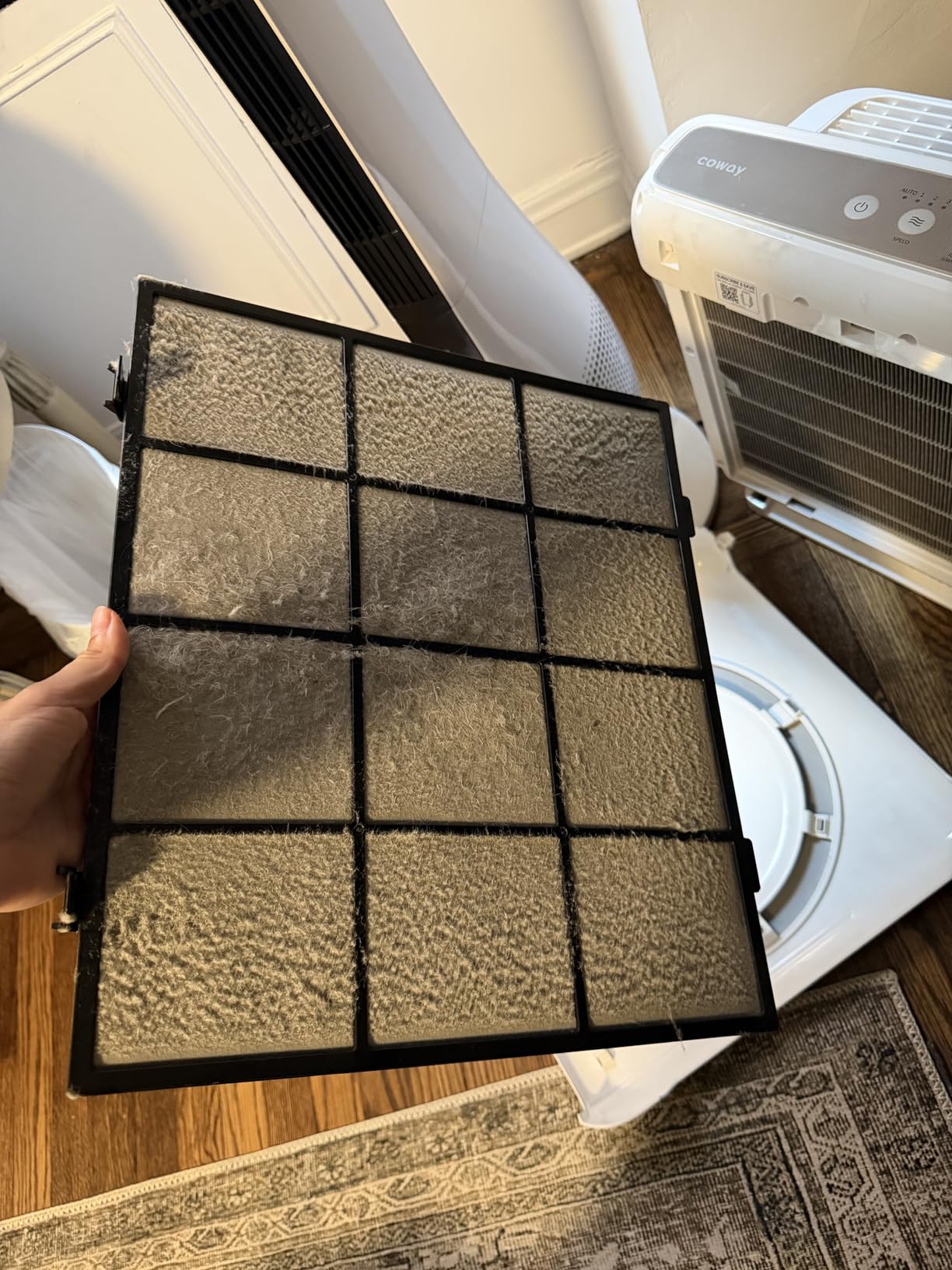
Filtration runs in four stages: a washable pre-filter, a deodorization filter, a bipolar device and a HEPA filter. Coway states the HEPA stage reduces 99.97% of 0.3 micron particles including pollen, allergens, VOCs and odor. The bipolar stage is unusual here and is part of how the odor stage performs.
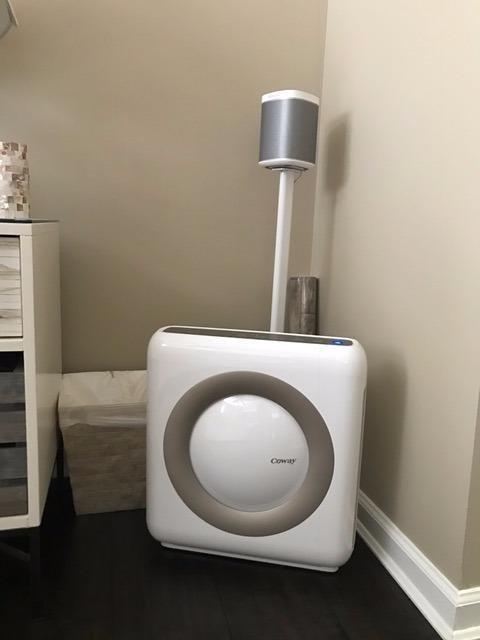
Auto Mode uses a sensor to adjust fan speed continuously, and a real-time LED indicator shows indoor air quality, with the light switchable off for sleeping. A filter alert indicator tells you when a cartridge needs replacing and when the pre-filter needs washing, which removes the guesswork that causes people to run depleted filters through a smoke season.
Coverage is up to 1748 square feet in 60 minutes. It weighs 12.3 pounds and measures 9.6 by 16.8 by 18.3 inches, so it fits through a standard doorway without much planning. Warranty is three years, and it is one of the most-reviewed air purifiers in the category.
Why Do Owners Pick This Over a Cheaper Tower?
Two reasons show up repeatedly: the coverage relative to the class, and the sensor-driven Auto Mode that means nobody has to adjust anything when the room gets smoky. The washable pre-filter is the quiet third benefit, because under a heavy soot load it absorbs a lot of the abuse that would otherwise clog the HEPA.
It also holds up well as a long-term machine. It is an older design than most of this list and the parts are still readily available, which matters if you plan to run it year-round for five years or more.
Where the Carbon Bed Falls Short?
Be honest about this one: the deodorization stage is not the largest on the market, and the review data shows recurring gripes about odor-only situations. If the problem is a stubborn cooking smell or a heavy smoker living in the room, the PuroAir and the smoke-specific picks serve you better.
Also note the particle rating is 0.3 micron rather than the 0.1 micron that Blueair and Winix claim. For smoke that is a real difference at the fine end, though the practical gap in a normal room is smaller than the numbers suggest.
We earn a commission, at no additional cost to you. CERTAIN CONTENT THAT APPEARS ON THIS SITE COMES FROM AMAZON. THIS CONTENT IS PROVIDED 'AS IS' AND IS SUBJECT TO CHANGE OR REMOVAL AT ANY TIME.
5. LEVOIT Vital 200S-P – Best for Bedrooms With a 250 CFM Smoke CADR
LEVOIT Smart Air Purifier for Home Large Room up to 1875 Ft² Vital 200S-P
★★★★★★★★★★250 CFM smoke CADR
1875 sq ft
12 month filter
App controlled
- Highest published smoke CADR among the towers in this set at 250 CFM
- Very quiet on the first two speeds
- Recessed handles make it easy to move
- Panel lights switch off for sleeping
- Replacement filters are among the more expensive
- Real-world coverage closer to bedroom sizes
- IR sensor can read Very Good during genuinely poor air
- High speeds run around 60 dB
Best for: a bedroom, nursery or home office with a smoke problem, especially where noise is the deciding factor. The smoke CADR of 250 CFM is the highest published figure among the tower units in this roundup, and it is an AHAM VERIFIDE number rather than a marketing claim.
Air enters through a traditional inlet plus an additional U-shaped inlet designed to trap pet hair and odors, which is a reasonable approach in a bedroom where the smoke source is often fabric rather than air. Particulate capture is 99.97% efficient for 0.1 to 0.3 micron particles across a three-stage stack, and the whole room is rated up to 1875 square feet.
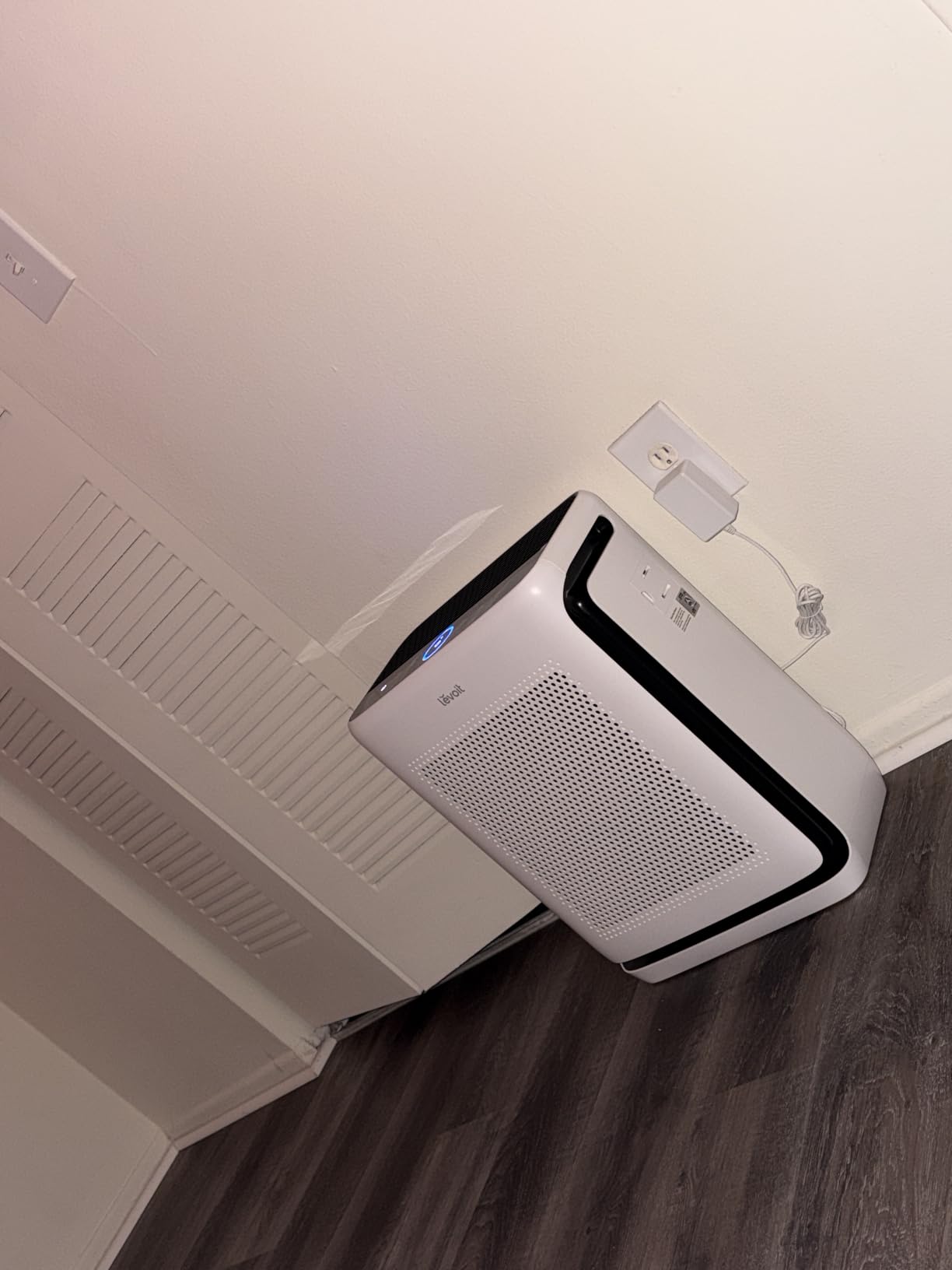
Owners in smoke-heavy regions report it made a measurable difference during forest fire events, and the real-time dust sensor responds within a couple of minutes of sweeping or a litter box being used. The app carries an air quality ring indicator and scheduling, and the panel lights can be switched off entirely for sleep. Filter life is rated at 12 months.
Two build details are genuinely thoughtful: recessed handles for carrying it between rooms, and cardboard packaging instead of foam peanuts. It weighs 13.2 pounds, which is manageable for moving but not a one-hand lift.
Can You Trust the Air Quality Ring During Wildfire Smoke?
Sometimes, and this is the one real caution. The sensor is infrared rather than laser, so at least one owner documented the display sitting at “Very Good” while wildfire smoke filled the area outside. If you need a trustworthy number, the LEVOIT Core 400S-P with its laser sensor is the safer choice.
Real-world coverage also lands closer to bedroom and small-room sizes than the 1875 square foot headline suggests. Treat that figure as a marketing maximum for an ideal single-pass exchange, not a promise about an open-plan area.
How Does the Carbon Layer Hold Up?
It is adequate rather than generous. Some reviewers report the carbon layer running thin and saturating ahead of the stated year in a heavy smoke load, and replacement filters sit at the expensive end of this group. Budget for a filter roughly annually, and expect sooner if the room smokes daily.
On the noise side it is very quiet on levels one and two, which is the only range most people use in a bedroom, but the high speeds are noticeably loud at around 60 dB.
We earn a commission, at no additional cost to you. CERTAIN CONTENT THAT APPEARS ON THIS SITE COMES FROM AMAZON. THIS CONTENT IS PROVIDED 'AS IS' AND IS SUBJECT TO CHANGE OR REMOVAL AT ANY TIME.
6. Blueair Blue Pure 211i Max – Best for Whole-Floor Smoke Control
BLUEAIR Air Purifiers for Home Large Room up to 3,235 Ft², Blue 211i Max
★★★★★★★★★★435 CFM smoke CADR
3235 sq ft
0.1 micron capture
Washable pre-filter
- Largest coverage figure in the set at 3235 sq ft
- AHAM VERIFIDE smoke CADR of 435 CFM
- Sensors detect trace cigarette smoke within a minute or two
- QuietMark operation from 23 dB
- Washable fabric pre-filter and 3-year warranty
- Replacement filters are expensive and the carbon layer is thin for the price
- 16 pounds makes it a two-person move
- App connection drops occasionally
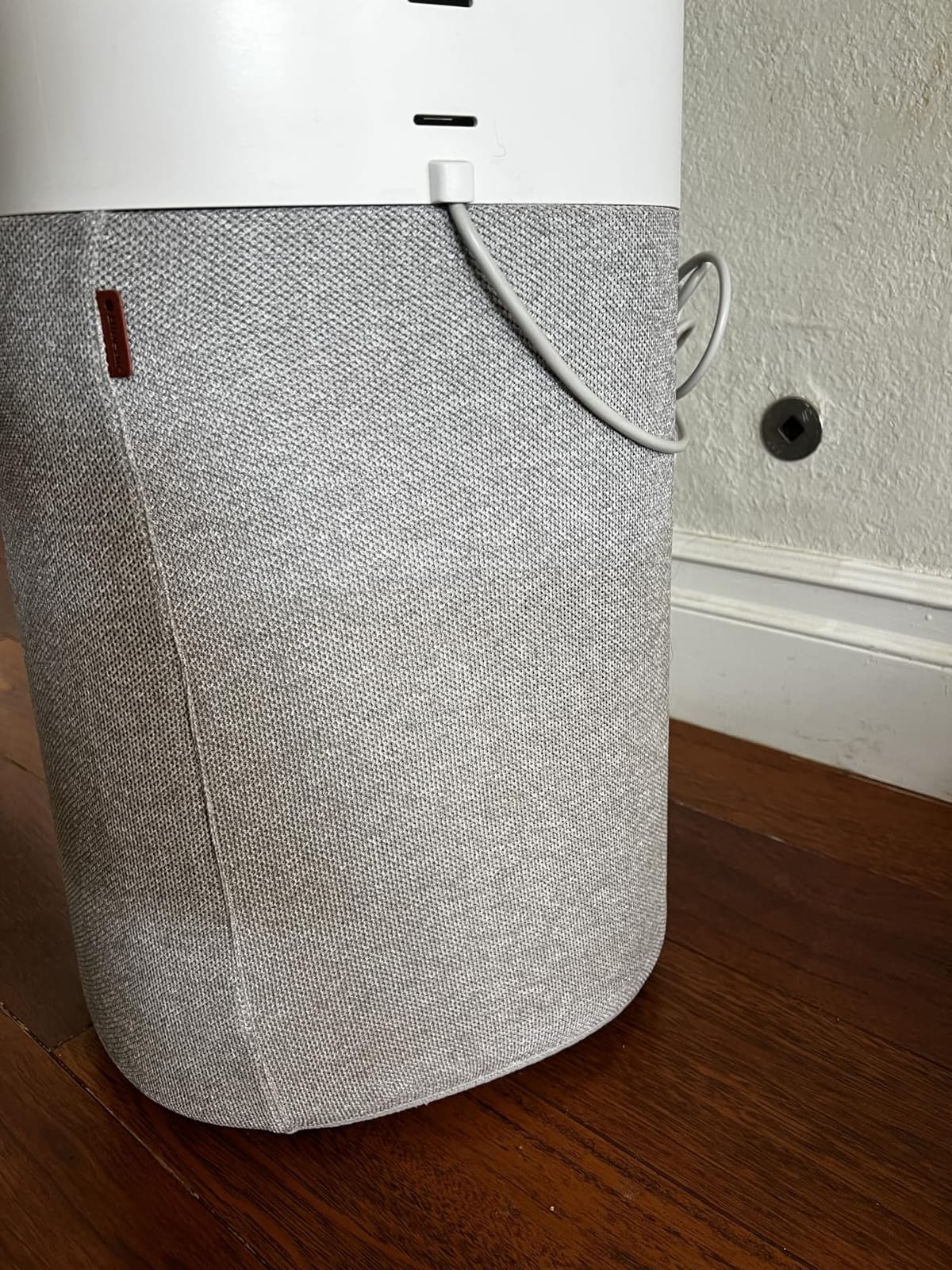
Best for: an open-plan main floor or a whole-level smoke problem. The 211i Max is the largest machine in this roundup by a wide margin, and it is the one to consider if a single bedroom unit simply cannot keep up with the volume of air you need to move.
The verified numbers are strong: AHAM VERIFIDE with CADR of 450 for pollen, 452 for dust and 435 CFM for tobacco smoke, cleaning 674 square feet in 12.5 minutes and 3235 square feet in one hour. HEPASilent dual filtration holds particles down to 0.1 microns and the smoke listing explicitly names wildfire smoke alongside dust, pet hair and mold.
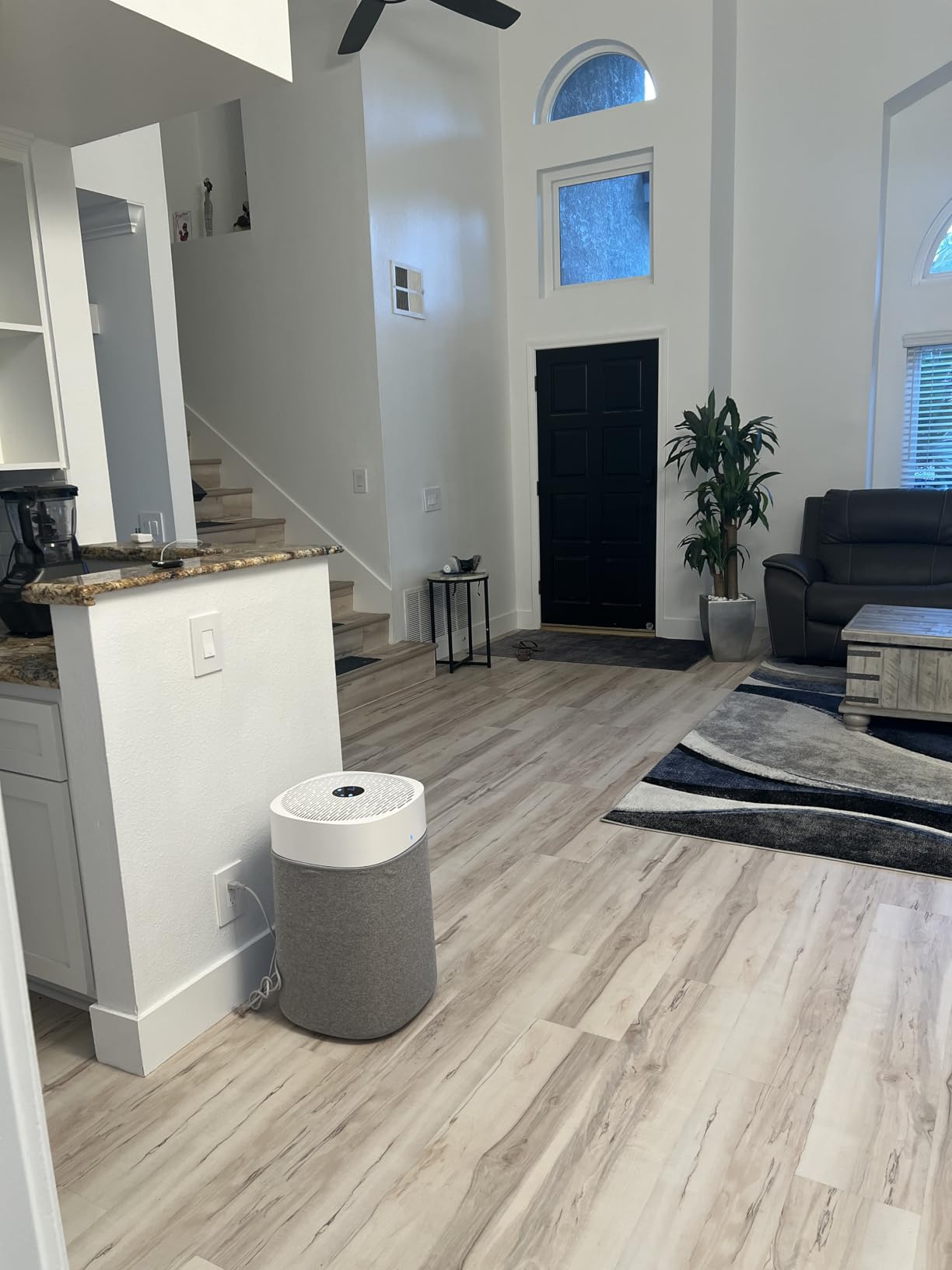
The most useful evidence in this listing comes from testers who deliberately introduced trace cigarette smoke and measured the response. Their sensor readings jumped from zero to over 50 within a minute or two of distant smoke, then returned to 1 in roughly 35 to 45 minutes. That is the kind of documented clear-down time that most listings never provide, and it is exactly the number you want when smoke is arriving from somewhere you do not control.
Owners in wildfire-affected regions report clear odor removal and allergy relief. A washable fabric pre-filter is included, there is a three-year warranty with registration, and it is effectively inaudible on Auto mode with the maximum setting staying under roughly 50 dB.
Is the 3235 Sq Ft Figure Real?
It is an AHAM VERIFIDE figure, which makes it about as credible as coverage claims get. But every coverage number in this category, certified or not, assumes a sealed room and a single pass. In a home where you are running windows open to clear an actual smoke intrusion, assume a fraction of the published rate.
Real-world use of the 674 square foot figure at 435 CFM gives a sensible planning number: that is roughly 3.5 air changes per hour in a 12-foot ceiling room, which is the range where you start seeing a visible and measurable drop in a smoky room.
What About Filter Cost Over Five Years?
This is the main complaint and it is a real one. Replacement filters are expensive and the carbon layer is described as very thin for the price, so the running cost over five years is the highest of any unit in this list. The machine is also 16 pounds, which makes it a two-person job to move, and the app drops its connection occasionally.
If you buy it, buy it for a large space and a long horizon, and accept the filter cost. If you are in a small apartment, this is far more machine than you need.
We earn a commission, at no additional cost to you. CERTAIN CONTENT THAT APPEARS ON THIS SITE COMES FROM AMAZON. THIS CONTENT IS PROVIDED 'AS IS' AND IS SUBJECT TO CHANGE OR REMOVAL AT ANY TIME.
7. Blueair Blue Pure 311i Max – Best for Quiet Particle Capture at 0.1 Microns
BLUEAIR Air Purifiers for Home up to 2,107 Ft², Blue 311i Max
★★★★★★★★★★0.1 micron HEPASilent
2107 sq ft
QuietMark 23-50 dB
7.72 pounds
- 0.1 micron capture matches the best particle spec in the group
- QuietMark certified for bedrooms and nurseries
- 360-degree intake so wall placement matters less
- Light at 7.72 pounds for its coverage class
- No substantial activated carbon stage so odor control is limited
- Slim cylinder shape leaves less room for a thick filter pack
Best for: large rooms where the problem is particles rather than odor, in a home where noise and appearance both matter. The 311i Max uses HEPASilent dual filtration capturing 99.97% of particles down to 0.1 microns, and it cleans 439 square feet in 12.5 minutes or 2107 square feet in one hour.
Smoke is a stated target alongside dust, pollen, pet dander and mold. Built-in sensors auto-adjust the fan as pollution rises, and the Blueair app handles monitoring, scheduling and filter life tracking. The 360-degree intake means you are not forced to leave clearance on every side, which is a practical gain in a real living room.
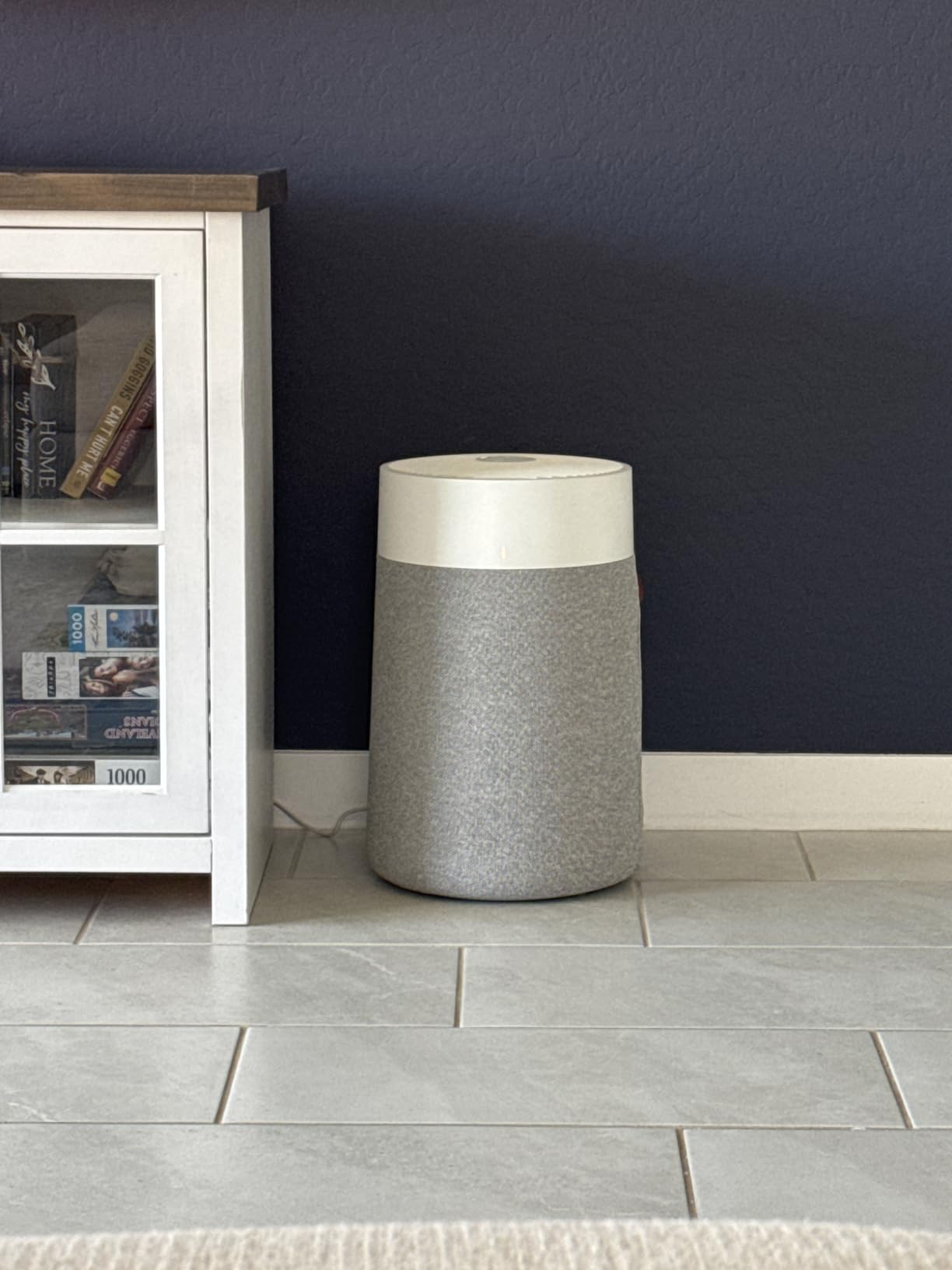
QuietMark certification across a 23 to 50 dB range is the reason to shortlist it for a bedroom or a nursery. It weighs 7.72 pounds, so it is one of the easiest machines in this list to carry between rooms, and the Scandinavian cylinder design is unobtrusive on display.
The 12.5-minute figure for 439 square feet is worth understanding if you have a smoke event. At that rate the machine is moving air through the filter quickly enough to clear a mid-size room well inside an hour with the door shut.
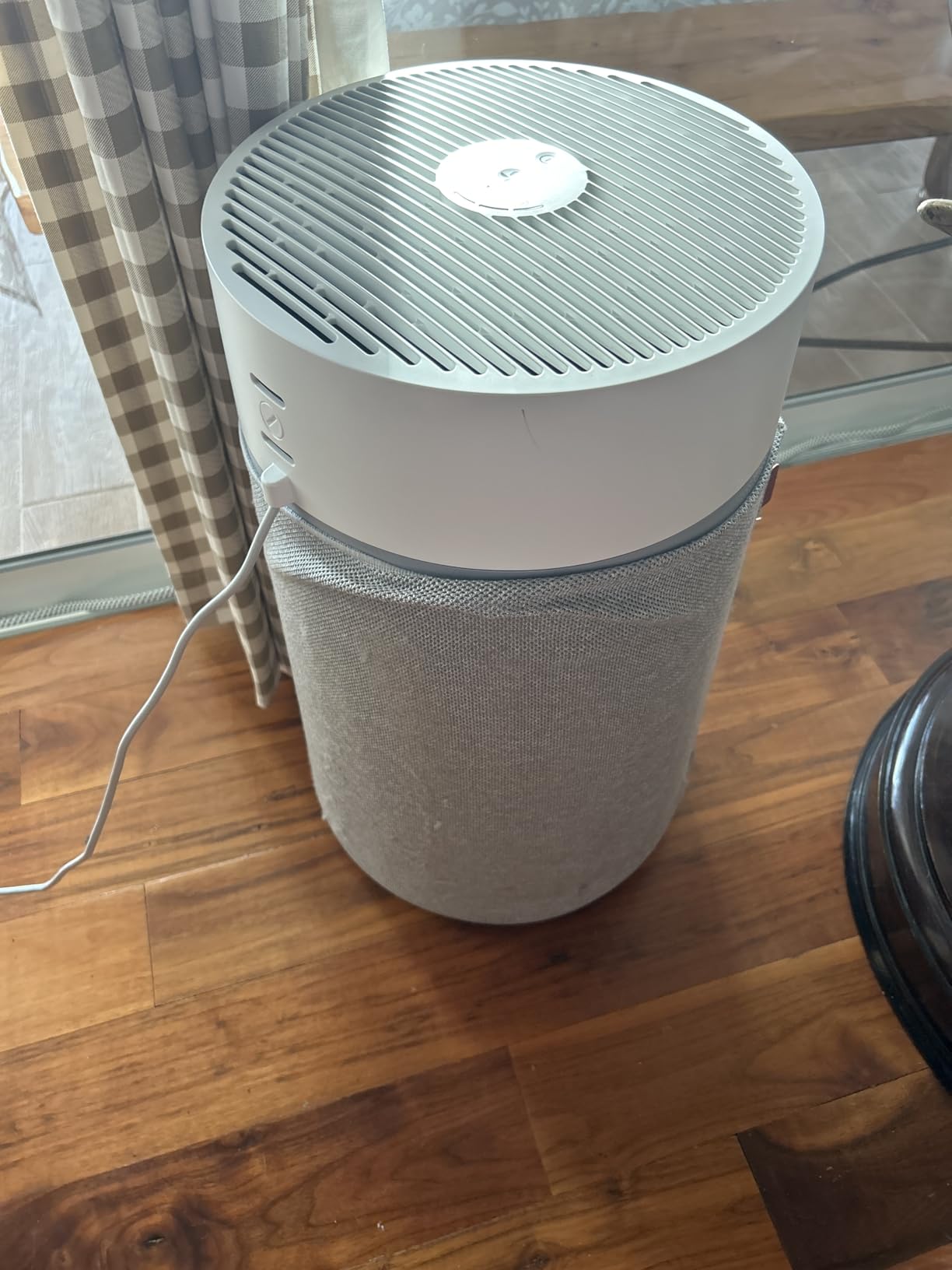
Will It Remove the Smell Too?
Partially, and this is the key limitation. HEPASilent is an electrostatic plus mechanical architecture that carries no substantial activated carbon stage, and owners frame the machine around particle removal and quietness rather than odor. If the smoke is drifting in from outside, this is an excellent choice.
If the source is a smoker inside the house, the odor will outlast the particles and you will be disappointed. The PuroAir 400 or the Coway Mighty, both of which carry a dedicated odor stage, will serve you better.
What Else Should You Know?
The slim cylinder profile is the physical trade-off for the design. A narrower body leaves less room for a thick filter pack than boxier units, and that is the same reason the carbon layer is minimal. Filter life is tracked in the app, and the 2107 square foot figure assumes ideal air exchange, so plan for less in an open-plan space.
It is also one of the lower-review-count machines in this roundup, so the long-term reliability record is shorter than the Coway or Winix.
We earn a commission, at no additional cost to you. CERTAIN CONTENT THAT APPEARS ON THIS SITE COMES FROM AMAZON. THIS CONTENT IS PROVIDED 'AS IS' AND IS SUBJECT TO CHANGE OR REMOVAL AT ANY TIME.
8. AZEUS GL-FS32 – Best for Wildfire Smoke With UV-C and a Switchable Ionizer
AZEUS Air Purifier for Wildfire Smoke, UV-C HEPA for Home Large Room, White
★★★★★★★★★★1080 sq ft in 45 min
UV-C plus ionizer
6 fan speeds
USB-C powered
- Only unit here with a UV-C stage and an ionizer
- and both are separately switchable
- Lightest full-size option at 7.72 pounds
- Top air discharge lets every light be switched off
- Low 40W USB-C power draw
- Loud and whistling on the high fan speed
- Replacement filters are costly and harder to source
- Version confusion between 3-in-1 and 5-in-1 listings
Best for: wildfire smoke specifically, in a home near an active fire. Owners in smoke-heavy areas across the Midwest and Pacific Northwest report it holds hazardous outdoor smoke out of the house, and the HEPA stage is specified at 99.97% capture of 0.3 micron particles including ash, PM2.5 and wildfire smoke.
The centrifugal wheel design refreshes 2160 square feet in 90 minutes or 1080 square feet in 45 minutes, which is a genuinely useful number when visibility outside has already dropped. Air quality is shown on a real-time color-coded display with auto mode, and there are six manual fan speeds plus a sleep mode described as virtually silent.
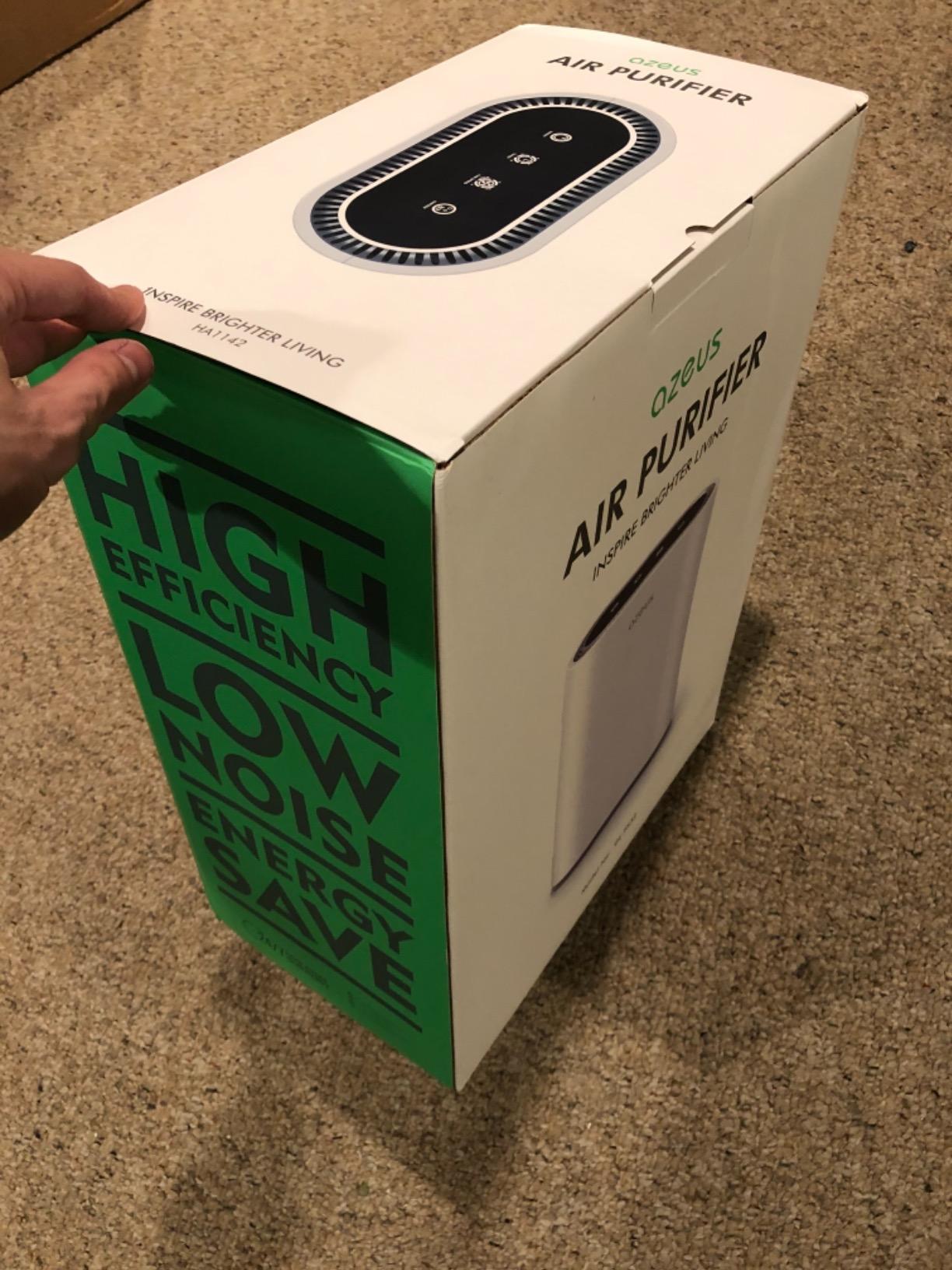
The five-in-one stack is pre-filter, HEPA, activated carbon, a UV-C light and an ionizer. The UV-C and ionizer functions are independently switchable, which matters, and we explain the ionizer consideration in detail further down this page. At 7.72 pounds it is one of the most portable full-size machines listed, and it runs on a 40W USB-C adapter drawing 60W on high.
It is also light on power, drawing very little on its lowest setting according to the manufacturer. Weekend and Go To Work modes adjust output based on likely occupancy, which is a small feature that suits intermittent smoke events.
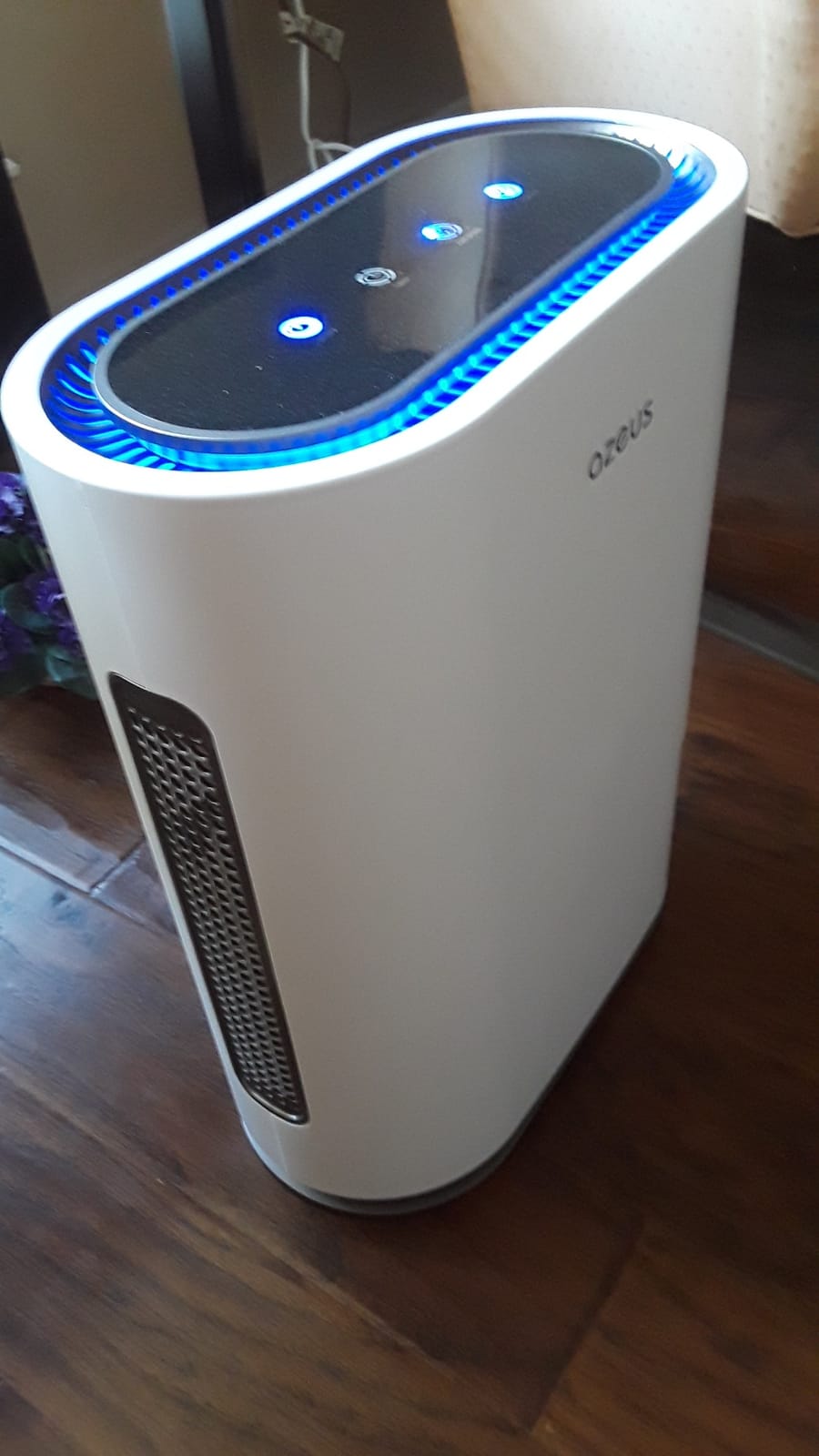
Should You Leave the Ionizer Stage Off?
Yes, unless you have read the ozone section below and decided otherwise. The ionizer and UV-C stages are separately switchable, so running the machine with the ionizer off and the UV-C on is straightforward, and you lose very little in a wildfire scenario where the problem is particles and ash rather than odor.
Owners who bought it for wildfire smoke generally report the particle performance doing the work. The carbon stage is a modest mid-stack component here, so this is a PM2.5 solution rather than a heavy odor solution.
What Are the Practical Downsides?
It is loud and whistles on the highest fan speed, though it is quiet below that, and wildfire conditions are exactly when you want to run it on high. Replacement filters are described as costly and harder to source than competitor cartridges, and a small but visible share of one-star reviews is traced mostly to the high-speed noise and to version confusion between the 3-in-1, 4-in-1 and 5-in-1 listings.
One owner also reports the sensor sampling air poorly for VOC and odor response compared with an older unit they owned. If your smoke problem is odor-driven, the Coway or PuroAir will serve you better.
We earn a commission, at no additional cost to you. CERTAIN CONTENT THAT APPEARS ON THIS SITE COMES FROM AMAZON. THIS CONTENT IS PROVIDED 'AS IS' AND IS SUBJECT TO CHANGE OR REMOVAL AT ANY TIME.
9. Blueair Signature SP1i – Best for Dorm Rooms and Nurseries at 19 dB
BLUEAIR Air Purifiers for Home Bedroom Dorm up to 1,190 Ft², Signature SP1i
★★★★★★★★★★19 dB operation
1190 sq ft
OdorFence gas stage
5.64 pounds
- Quietest option listed at 19 dB
- Smallest and lightest footprint here at 5.64 pounds
- Seven-stage filtration with OdorFence gas and VOC breakdown
- Air quality indicator is built into the air outlet
- 1190 sq ft hourly coverage suits a single room
- Smaller filter media than the larger machines in the same line
Best for: a dorm, nursery, child bedroom or small home office where smoke drifts in and silence is the priority. At 19 dB it is the quietest machine in this roundup by a clear margin, and it weighs 5.64 pounds.
Filtration is a seven-stage HEPASilent stack capturing 99.97% of particles down to 0.1 microns, plus OdorFence technology that breaks down odors, gases and VOCs. Having a gas-handling stage in a unit this compact is the notable differentiator, since most machines at this size skip it entirely.
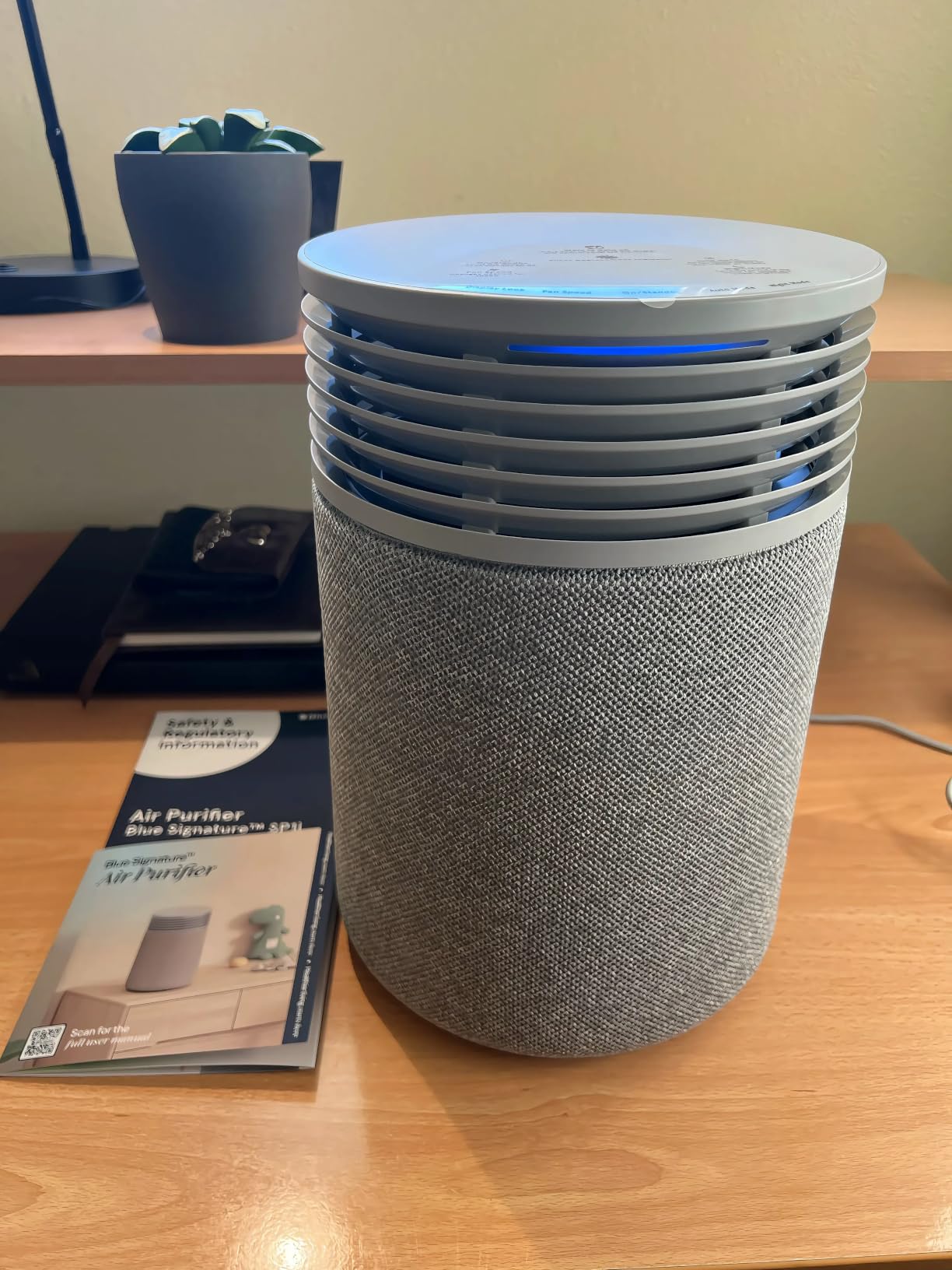
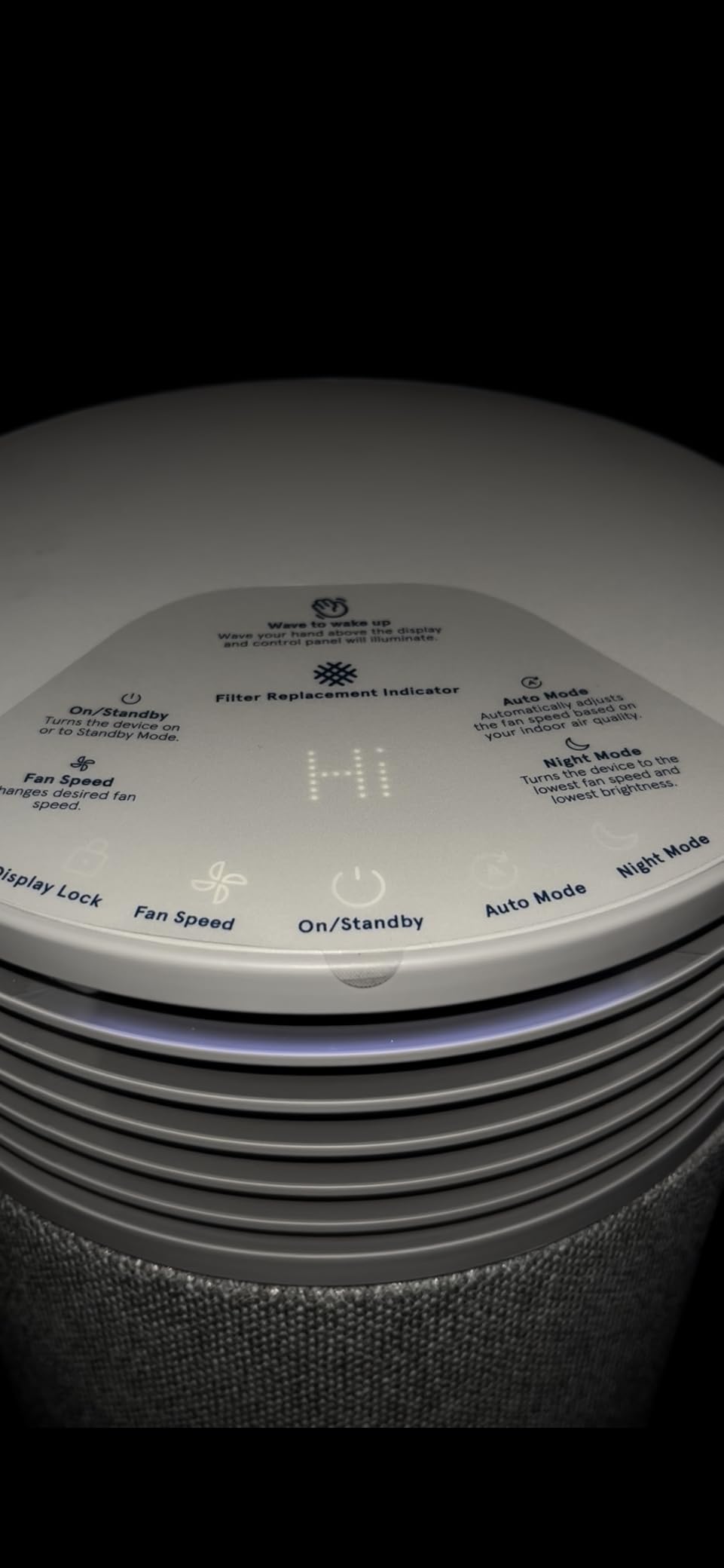
The air quality indicator is built into the air outlet, so it is visible in a dark room without lighting up the top of the unit, and the app handles fan speed, schedules and Auto Mode. Coverage is 248 square feet in 12.5 minutes or 1190 square feet every hour, and interchangeable colored pre-filters let it match the decor of a smaller space.
It is a newer listing with a smaller base of owner feedback than the rest of this roundup, so the long-term record is shorter. The emphasis from buyers is squarely on quiet bedroom, dorm and nursery use rather than heavy odor control.
Is 1190 Sq Ft Enough for a Bedroom?
More than enough, with room to spare. A typical 12 by 12 bedroom is about 144 square feet, so the hourly figure gives you a very high air change rate in a small room. Where it starts to fall short is an open-plan living area, which is exactly what the 211i Max and PuroAir 400 are for.
The 12.5-minute figure for 248 square feet is a mid-size room, roughly a 14 by 18 foot bedroom, so a real smoke event in that space should show improvement on the display within an hour.
How Does It Handle Odor Compared With the Larger Blueair?
Better, on the evidence available. OdorFence is specifically designed for odors, gases and VOCs, whereas the HEPASilent architecture in the larger Blueair machines in this list carries very little carbon. The trade-off is total filter media volume, so the sustained capacity for a heavy indoor smoking load is lower.
For smoke arriving from outside into a room you sleep in, this is the pick. For a home where someone smokes indoors, the carbon bed in the larger machines will outlast it.
We earn a commission, at no additional cost to you. CERTAIN CONTENT THAT APPEARS ON THIS SITE COMES FROM AMAZON. THIS CONTENT IS PROVIDED 'AS IS' AND IS SUBJECT TO CHANGE OR REMOVAL AT ANY TIME.
10. Shark NeverChange HP152 – Best for the Lowest Long-Run Filter Cost
Shark NeverChange Air Purifier, HP152, Charcoal
★★★★★★★★★★Reusable HEPA
650 sq ft
CleanSense IQ display
Washable pre-filter
- Washable pre-filter plus a permanently reusable HEPA
- CleanSense IQ shows a real particle percentage
- Odor Neutralizer cartridge adds some odor handling
- Dimmable lights and simple button controls
- 650 sq ft coverage makes it a single-room device
- Odor Neutralizer is a scented cartridge not a carbon bed
- Highest one-star share in the set at 9%
Best for: buyers whose biggest worry is what filters cost every year. The NeverChange system pairs a washable Debris Defense pre-filter with a permanently reusable HEPA, and Shark claims meaningful savings over a five-year period against leading competitors below its own price point.
Filtration is NanoSeal anti-allergen media claiming 99.98% capture of 0.1 to 0.2 micron particles per IEST-RP-CC007, and the unit is AHAM Certified to purify 650 square feet in one hour. The CleanSense IQ display shows real-time particle concentration as a percentage across PM1.0 to PM10, which is a more useful readout than a four-colour band.
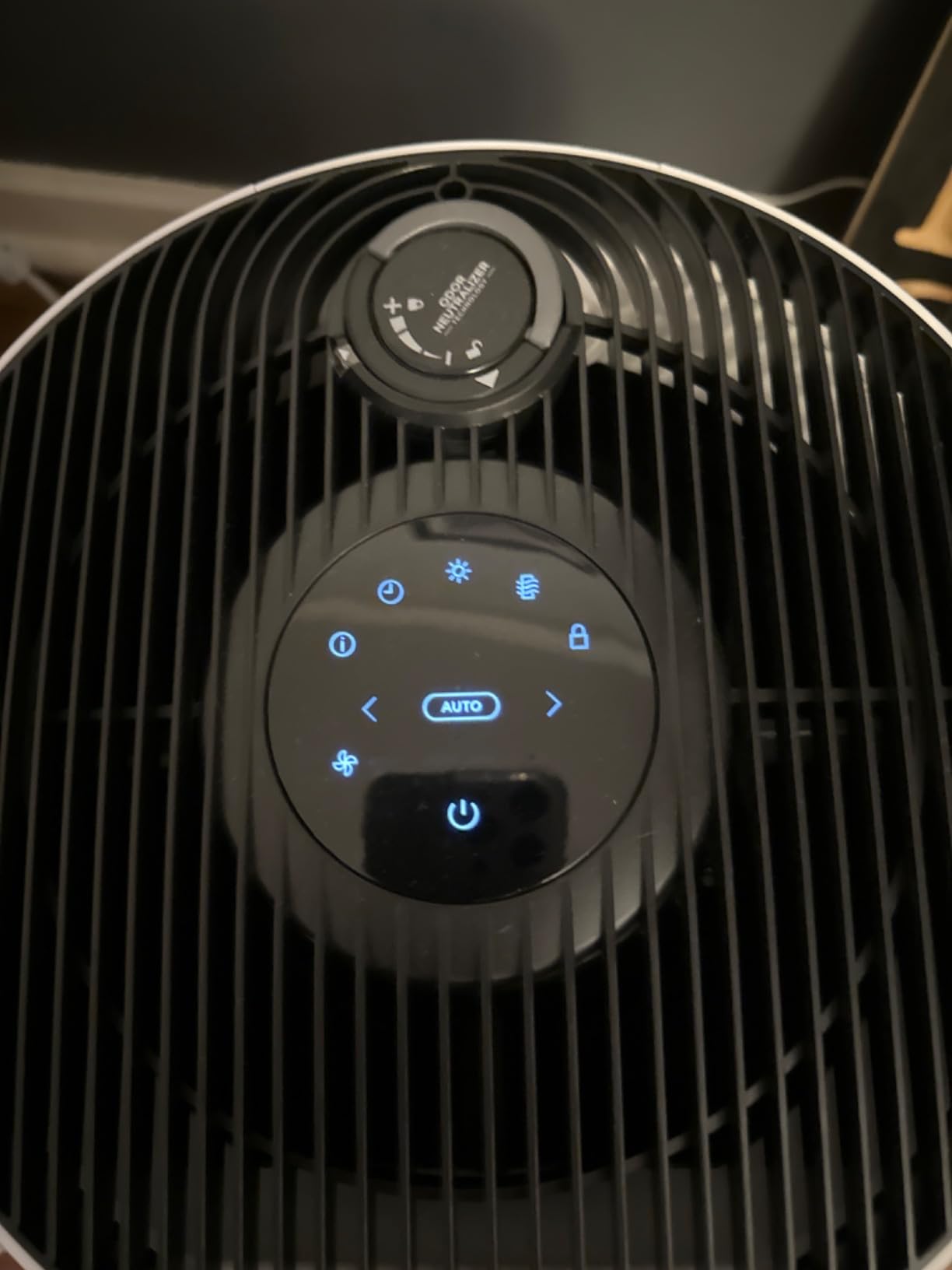
Owners highlight not replacing filters for years as the reason to buy, and the coverage figure frames it clearly as a bedroom, office, dorm or nursery device. Lights are dimmable for sleep, the control panel is button-driven and shows air quality, filter life, fan speed and Eco mode, and the whole thing draws 26 watts.
It is a compact 7.3 pound unit measuring just over 14 inches tall, so it fits on a desk or a small stand without dominating the room.
Can the Odor Neutralizer Replace a Real Carbon Bed?
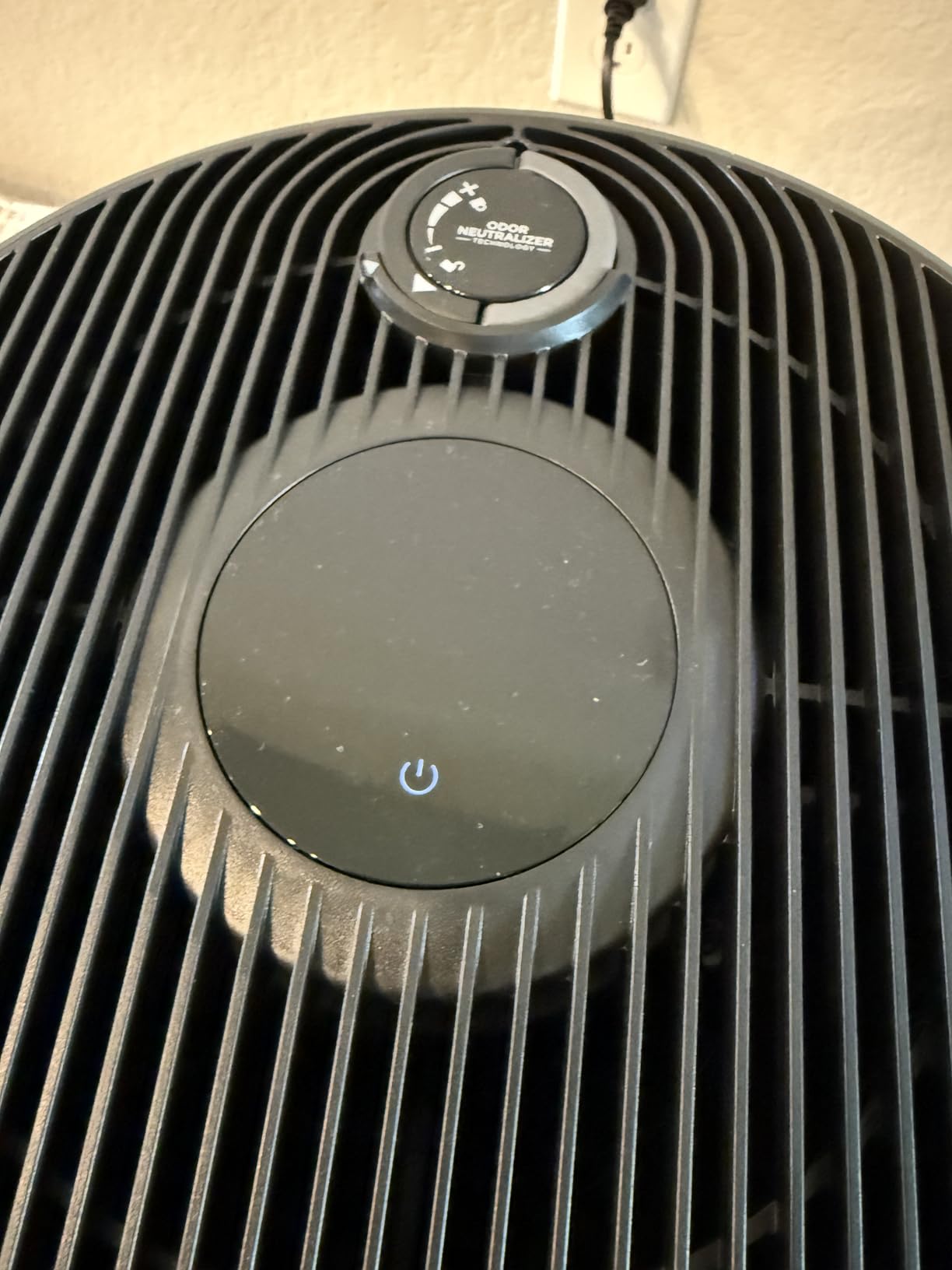
No, and the review data is clear that buyers treat it as a finishing touch rather than a serious odor solution. It is a scented cartridge, which means it adds fragrance rather than adsorbing VOCs the way activated carbon does. For smoke that is drifting in from outdoors it is a pleasant addition, and for a smoker in the room it is not enough.
If odor is your primary problem, the PuroAir 400, the Coway Mighty or the Winix 5510 all carry genuine carbon stages. This machine wins on running cost, not on odor capacity.
What Else Should You Know?
Two things temper the cost argument. The 650 square foot coverage makes it a single-room machine, so covering a main floor means several units, which multiplies the upfront cost. And at 4.4 stars with a 9% one-star share, the highest in this group, there is a durability tail worth considering before you commit to a long ownership plan.
It is also not the quietest option here, which matters if the room is a bedroom.
We earn a commission, at no additional cost to you. CERTAIN CONTENT THAT APPEARS ON THIS SITE COMES FROM AMAZON. THIS CONTENT IS PROVIDED 'AS IS' AND IS SUBJECT TO CHANGE OR REMOVAL AT ANY TIME.
How to Choose an Air Purifier for Smoke in Five Checks?
First, check the smoke CADR rather than the coverage number. Coverage figures across this category assume an ideal single pass in a sealed room, while smoke CADR is a measured, standardised number. As a rule of thumb, aim for a smoke CADR that delivers four to five air changes per hour in your actual room volume, which means dividing room square footage by the CADR figure and checking the result against your ceiling height.
Second, interrogate the carbon layer. Nobody publishes carbon mass in pounds, so use proxies: does the specification say activated carbon, activated charcoal, or an odor cartridge? A deodorization filter, a bipolar stage or an OdorFence module all signal some gas handling. A scented neutralizer cartridge does not, no matter how good the particle specification is.
Third, price the filters over five years, not the machine. Most units in this roundup need a cartridge every five to twelve months depending on smoke load, and one owner community after another names filter cost as the deciding purchase factor. The Shark NeverChange and the longer-lived industrial units forums favour, such as the Austin Air HealthMate with its multi-year filter life, win on this measure even when they cost far more up front.
Fourth, test the noise at the speed you will actually run. A smoke event means running on high, and a machine that whistles at maximum is a machine you will not run at maximum. The quietest units here are the Winix 5510 at 23.5 dB on low and the Blueair Signature SP1i at 19 dB; the loudest are the AZEUS on high and the LEVOIT Vital 200S-P above roughly 60 dB.
Fifth, check whether the sensor tells the truth. A laser sensor with a real PM2.5 readout, as on the LEVOIT Core 400S-P, is meaningfully more useful than an infrared sensor that can display “Very Good” while smoke fills the room. The CleanSense IQ percentage display on the Shark is the other honest option.
The DIY Box Fan Alternative Worth Knowing About
For wildfire smoke specifically, the most-repeated recommendation in enthusiast forums is a 20-inch box fan with a MERV-13 HVAC filter strapped to the intake. It handles PM2.5 competently for a fraction of the cost of a machine on this list, and it appears in forum threads as the pragmatic answer for a room you only need to protect for a few weeks.
It is a particle solution only. There is no carbon stage, so it does nothing for odor, and it is loud. But if your smoke problem is a seasonal PM2.5 spike and your budget is the main constraint, it is a legitimate option rather than a compromise. Our general trusted air purifier picks are the better route if you want something quieter and more permanent.
When a Purifier Is the Wrong Fix?
If someone is still smoking indoors, no machine keeps up with the source. Air cleaners reduce exposure, they do not eliminate it, and running a purifier in a room with an active indoor smoker mostly filters the air near the machine.
If the room is open-plan with no doors, you are trying to clean an entire floor volume with one unit, and you will be better served by two smaller machines placed in separate zones or by sealing a bedroom and protecting that. If the smoke is entering through open windows during a wildfire, sealing the room and running a purifier works better than ventilating, which is counter-intuitive but is the correct call when outdoor air is hazardous. And if the smell is thirdhand residue soaked into upholstery and paint, a purifier will not touch it; that needs washing, and sometimes professional remediation.
Do Ionizers and Ozone Generators Belong in a Smoking Household?
No. Ozone is a respiratory irritant, and ionizer-based purifiers produce it as a by-product of charging particles so they clump together and stick to surfaces. In a room where smoke has already made breathing harder, adding an irritant gas is the wrong trade, and in a bedroom or nursery with a small child it is the wrong trade on a much stronger footing.
The mechanism is worth understanding because the marketing is misleading. An ionizer gives particles a static charge so they aggregate and are captured on plates or walls instead of being filtered out. The charged residue then settles on every surface in the room, which is the same mechanism by which thirdhand smoke sticks to furniture. The carbon stage and HEPA media are still doing the real filtration; the ionizer is a surface-coating shortcut, and it costs you air quality in the process.
Exactly one machine in this roundup ships an ionizer stage. The AZEUS GL-FS32 is a five-in-one stack with a UV-C light and an ionizer, and we appreciate that both are separately switchable, so you can run the UV-C stage and leave the ionizer off. Its wildfire particle performance does not depend on the ionizer being active.
What to look for instead: a CADR or efficiency figure that does not rely on ionization, a washable or reusable filter design, and a stated low-ozone or CARB certification. The Winix 5510 is noted by several owners as CARB certified for low ozone output, and every unit in this roundup other than the AZEUS filters mechanically rather than electrostatically.
Separately, if you are tempted by an ozone generator sold as a smoke odor treatment, treat that as a separate and more serious question. Actively producing ozone in an occupied living space is a different act from a purifier that emits trace amounts as a side effect.
Frequently Asked Questions
What air purifier is best for removing cigarette smoke smells?
The LEVOIT Core 400S-P is the strongest overall choice for cigarette smoke smell because it combines a three-stage HEPA stack rated at 99.97% for 0.1 to 0.3 micron particles with a deodorization carbon stage and a verified smoke CADR of 231 CFM. Its laser sensor displays live PM2.5 numbers so you can confirm the room is actually clearing. For heavy indoor smoking, a larger carbon bed is worth the extra cost.
Do air purifiers really get rid of smoke smell?
Partly. A True HEPA filter removes the soot, ash and ultrafine particles in smoke very effectively, but those particles are only part of the problem. The odor comes from volatile organic compounds that pass straight through HEPA media and are only captured by activated carbon. A purifier with a thin decorative carbon layer will clear the visible haze and leave the room stinking, which is the most common complaint in owner reviews.
Is ozone from an air purifier bad for you?
Yes. Ozone is a respiratory irritant, and ionizer-style purifiers produce it as a by-product of charging particles so they clump and settle on surfaces rather than being filtered out. In an occupied room, and especially in a bedroom or nursery, that is a poor trade against the problem you are trying to solve. Choose a unit that filters mechanically and carries a stated low-ozone or CARB certification instead.
Do air purifiers work against wildfire smoke?
Yes, for the particulate half of the problem. Wildfire smoke is dominated by PM2.5 and fine ultrafine particles, which HEPA filters capture very well, and owners report measurable improvements during real fire events. Keep windows and doors closed during hazardous outdoor air rather than ventilating, and size the unit to your room volume using the smoke CADR rather than the headline coverage figure.
How long does it take an air purifier to clear smoke from a room?
It depends on the smoke CADR relative to your room volume, not on the brand. One tester using a Blueair Blue Pure 211i Max recorded its sensor jumping from 0 to over 50 within two minutes of trace cigarette smoke, then returning to a reading of 1 in roughly 35 to 45 minutes in a sealed room. Owners of the LEVOIT Core 400S-P document PM2.5 falling from 185 to under 20 in about an hour.
Is HEPA enough on its own for removing cigarette smoke?
No. HEPA media captures particles down to 0.1 or 0.3 microns, which covers the particulate component of cigarette smoke, but gas-phase odor molecules pass through untouched. You need a genuine activated carbon stage alongside the HEPA filter. The same applies to wildfire smoke, where carbon helps with the chemical fraction even though the particle load is the main problem.
The Bottom Line on Smoke-Ready Air Purifiers in 2026
The rule is simple. For odor, buy the largest carbon bed you can afford; for wildfire PM2.5, buy the highest verified smoke CADR you can find. The LEVOIT Core 400S-P wins our list because it is the rare machine that does both and shows you a real PM2.5 reading while it works.
Budget for filters before you commit, seal the room while you run it, and skip the ionizer stage entirely. If the source is still smoking indoors, or the smell is already soaked into your furniture, no machine on this page is the answer.