
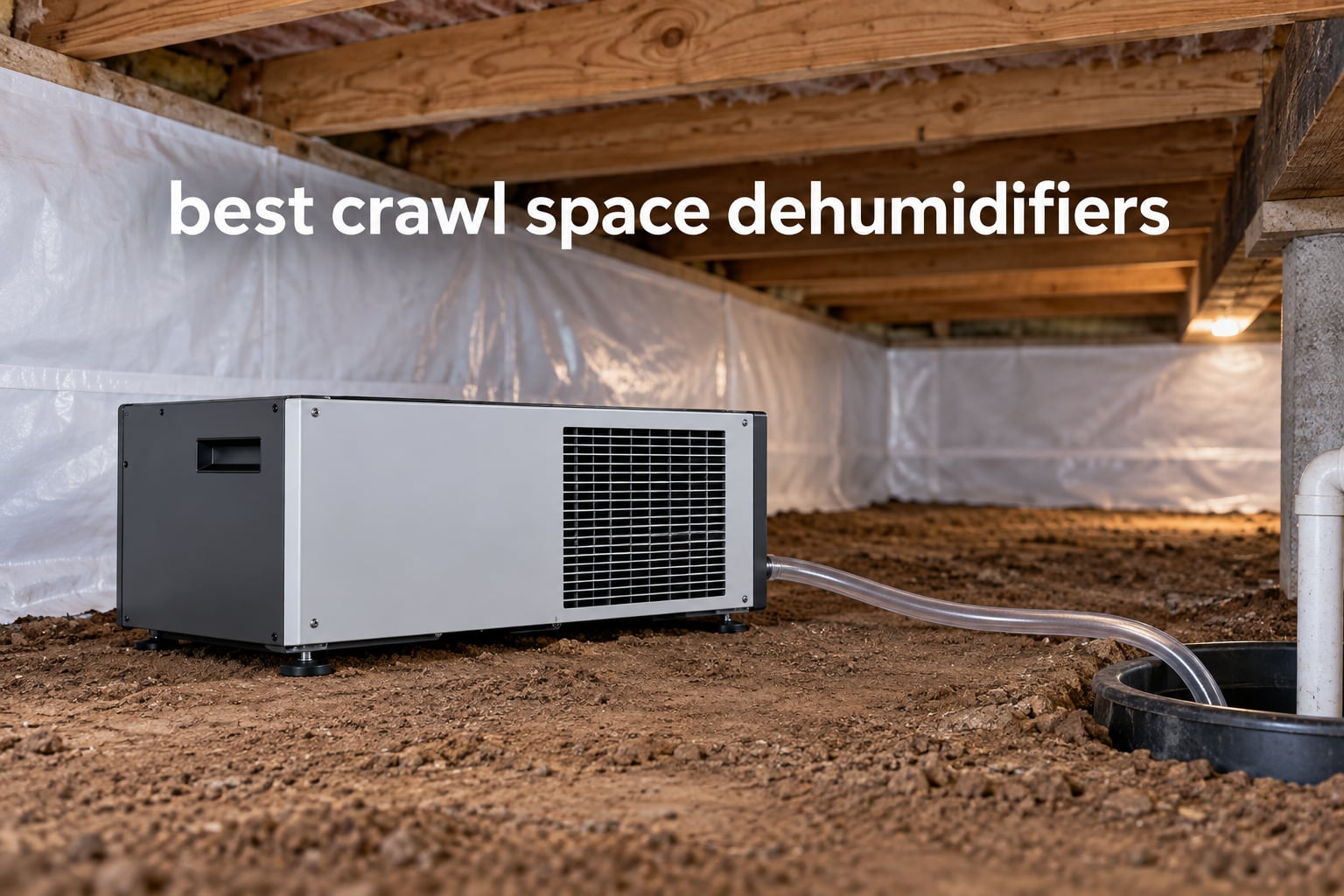
A crawl space dehumidifier is a low-profile, commercial-grade machine built to pull moisture out of the air beneath a house. It draws humid air across cold evaporator and condenser coils, condenses the water, then either gravity-drains or pumps it out so the space stays below 60% relative humidity. That is the short answer, and it is the answer most people searching for the best crawl space dehumidifiers actually need.
Crawl spaces are the least inspected room in most homes, and ground moisture plus warm humid air collect there all year. Left alone, that moisture feeds mold and mildew, soft wood rot in floor joists, termite and rodent pressure, and a musty odor that migrates upstairs through the stairwell. The wood you see up there is framing, not decoration, so anything that softens it is expensive to fix later.
Is a crawl space dehumidifier worth it? If you already see standing water, dripping foundation walls, or musty smells from below, the answer is yes, but the unit is the last step rather than the first. Exterior drainage, gutter discharge, ground grading, and plumbing leak repairs come first, because a dehumidifier working against a broken water source runs constantly and never catches up. We will walk through that order of operations further down, then get to the machines.
Our team pulled the specifications for eight units that span the realistic range, from a compact 70-pint model sized for roughly 1,000 square feet to a 180-pint commercial machine for water damage restoration. We compared airflow, AHAM rated capacity against saturation capacity, drainage type, defrost behavior, warranty length, and the weight you will be lifting through a crawl space access opening. If you are outfitting other tight rooms in your home, we apply the same fit-and-capability method in our space heater guide.
Table of Contents
- Top 3 Best Crawl Space Dehumidifiers (September 2026)
- Crawl Space Dehumidifiers Compared in 2026
- 1. AlorAir Sentinel HD55S 120 Pint – Best Overall
- 2. Aiusevo 130 Pint Pump Unit – Best With a Built-In Condensate Pump
- 3. Waykar 125 Pint Pump Unit – Best Value for Large Crawl Spaces
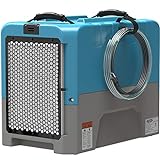
- 4. AlorAir Storm LGR Extreme 180 – Best for Water Damage Restoration
- 5. AlorAir Sentinel HD35P 70 Pint – Best for Small Crawl Spaces
- 6. Moiswell Defender M145 155 Pint – Best Energy Efficient for Large Spaces
- 7. AprilAire E070 Pro 70 Pint – Best for Whole-Home Ducting
- 8. Yaufey AYD1.5D 70 Pint – Best for Lowest Running Cost
- How to Size a Crawl Space Dehumidifier?
- Encapsulate First or Buy a Dehumidifier First?
- Gravity Drain vs Built-In Condensate Pump
- Cold Climates and Coil Freeze-Up
- Running Cost and Energy Star
- What Owners Report After 6 to 24 Months?
- Frequently Asked Questions
- Is a dehumidifier necessary in an encapsulated crawl space?
- What humidity should my crawl space be?
- Can I use a regular dehumidifier in my crawl space?
- Why is my crawl space dehumidifier freezing up?
- Do I need a condensate pump for a crawl space dehumidifier?
- How long should a dehumidifier run in a crawl space?
- The Best Crawl Space Dehumidifiers to Buy in 2026
Top 3 Best Crawl Space Dehumidifiers (September 2026)

AlorAir Sentinel HD55S 120 Pint
- 55 PPD at AHAM
- 1300 sq ft coverage
- 130 CFM airflow
- continuous gravity drain
- auto defrost

Aiusevo 130 Pint Pump Unit
- 130 PPD at saturation
- 265 CFM airflow
- 6500 sq ft coverage
- built-in pump with 16.4 ft hose
- ductable outlet

Waykar 125 Pint Pump Unit
- 125 PPD
- 176 CFM airflow
- 6500 sq ft coverage
- rotary compressor
- dual pump and gravity hoses
Crawl Space Dehumidifiers Compared in 2026
| Product | Key Specs | Pricing |
|---|---|---|
| AlorAir Sentinel HD55S 120 Pint |
|
Check Latest Price |
| Aiusevo 130 Pint Pump Unit |
|
Check Latest Price |
| Waykar 125 Pint Pump Unit |
|
Check Latest Price |
 AlorAir Storm LGR Extreme 180 AlorAir Storm LGR Extreme 180 |
|
Check Latest Price |
 AlorAir Sentinel HD35P 70 Pint AlorAir Sentinel HD35P 70 Pint |
|
Check Latest Price |
 Moiswell Defender M145 155 Pint Moiswell Defender M145 155 Pint |
|
Check Latest Price |
 AprilAire E070 Pro 70 Pint AprilAire E070 Pro 70 Pint |
|
Check Latest Price |
 Yaufey AYD1.5D 70 Pint Yaufey AYD1.5D 70 Pint |
|
Check Latest Price |
1. AlorAir Sentinel HD55S 120 Pint – Best Overall
ALORAIR 120 Pints Energy Star Crawlspace Dehumidifier, Sentinel HD55S
★★★★★★★★★★55 PPD at AHAM
120 PPD at saturation
1300 sq ft
130 CFM
41.7 lb
- Continuous gravity drainage with no tank to empty
- Auto defrost for low-temperature crawl spaces
- Solid metal housing that feels commercial grade
- Energy Star certified
- Largest review base in this group
- 41.7 pounds is awkward to move through a tight access opening
- Gravity drain only so it must be mounted high enough to drain
- Humidity sensor can read a few percent off
- Remote monitoring costs extra
This is the unit we kept coming back to. The Sentinel HD55S pulls 55 pints per day at AHAM conditions and 120 pints at saturation, and it is rated for 1,300 square feet. Over 1,300 reviews it holds a 4.2 average, which is the deepest owner history of any crawl space machine on this list.
What makes it work as a crawl space unit rather than a basement unit is the shape. At 19.2 by 12.2 by 13.3 inches it slides between floor joists without drilling, and the metal cabinet tolerates a dusty, occasionally wet environment better than the plastic housings used on consumer machines. Airflow is 130 CFM, which is high for the class and keeps the coil cold enough to keep pulling moisture as the space dries out.
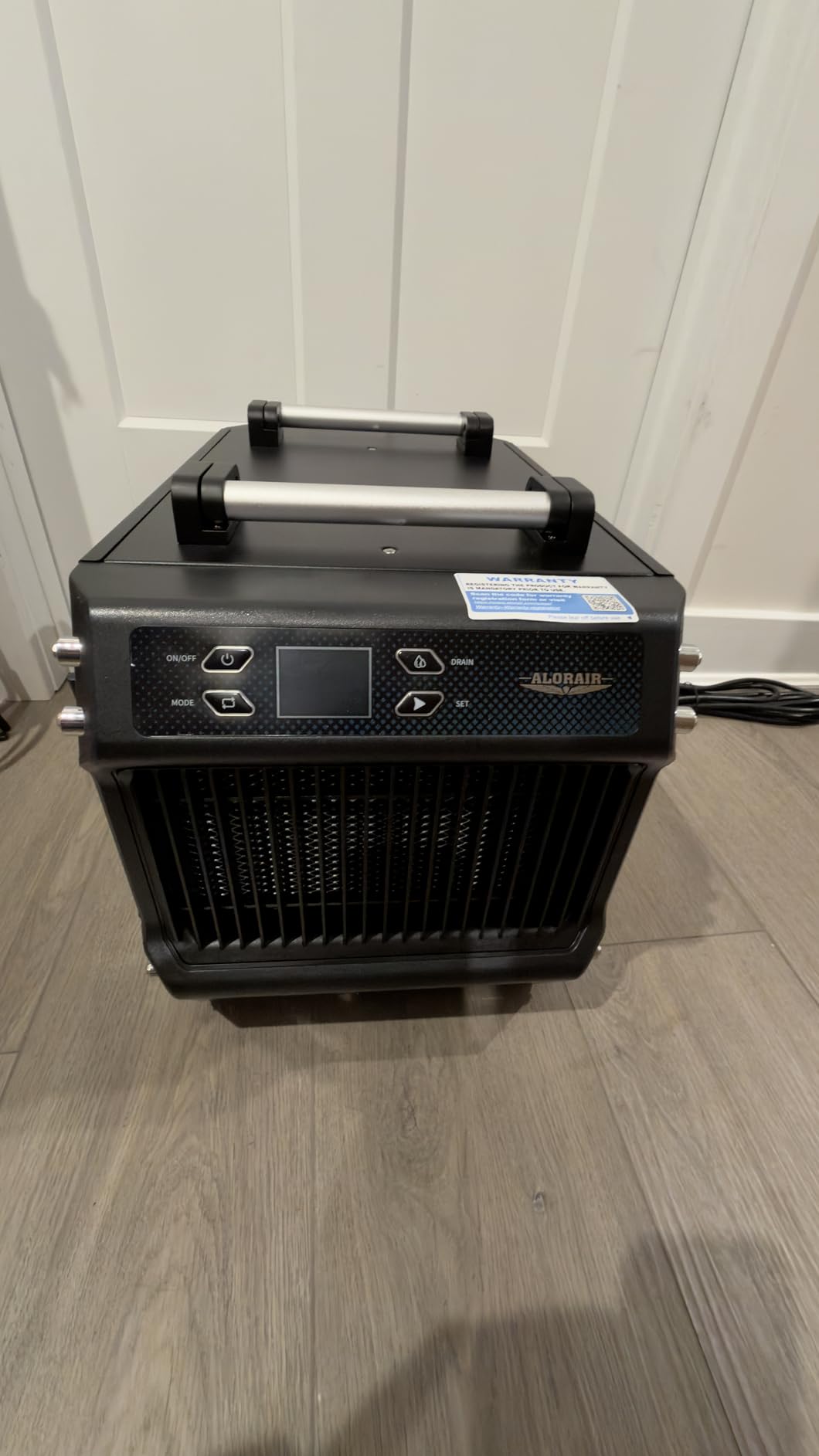
Owners consistently report the same sequence: heavy musty odor disappears within days of start-up, and readings on a cheap hygrometer drop from the high 60s into the low 50s. That tracks with what the auto defrost does in a crawl space that sits at 55 to 60 degrees most of the year. Instead of icing over and shutting down, the defrost pauses the compressor and keeps the fan running, so the unit does not simply stop working in October.
Two numbers deserve attention before you buy. The humidity sensor can read a few percent off, so set the humidistat slightly below your target if you are also using an independent hygrometer. And the drainage is gravity only, which means the unit has to sit higher than whatever it drains into. Mount it near the joist line with a sloped line running to a sump pump, a floor drain, or a condensate line, and this machine will run unattended for years.
Will It Fit Through Your Crawl Space Access?
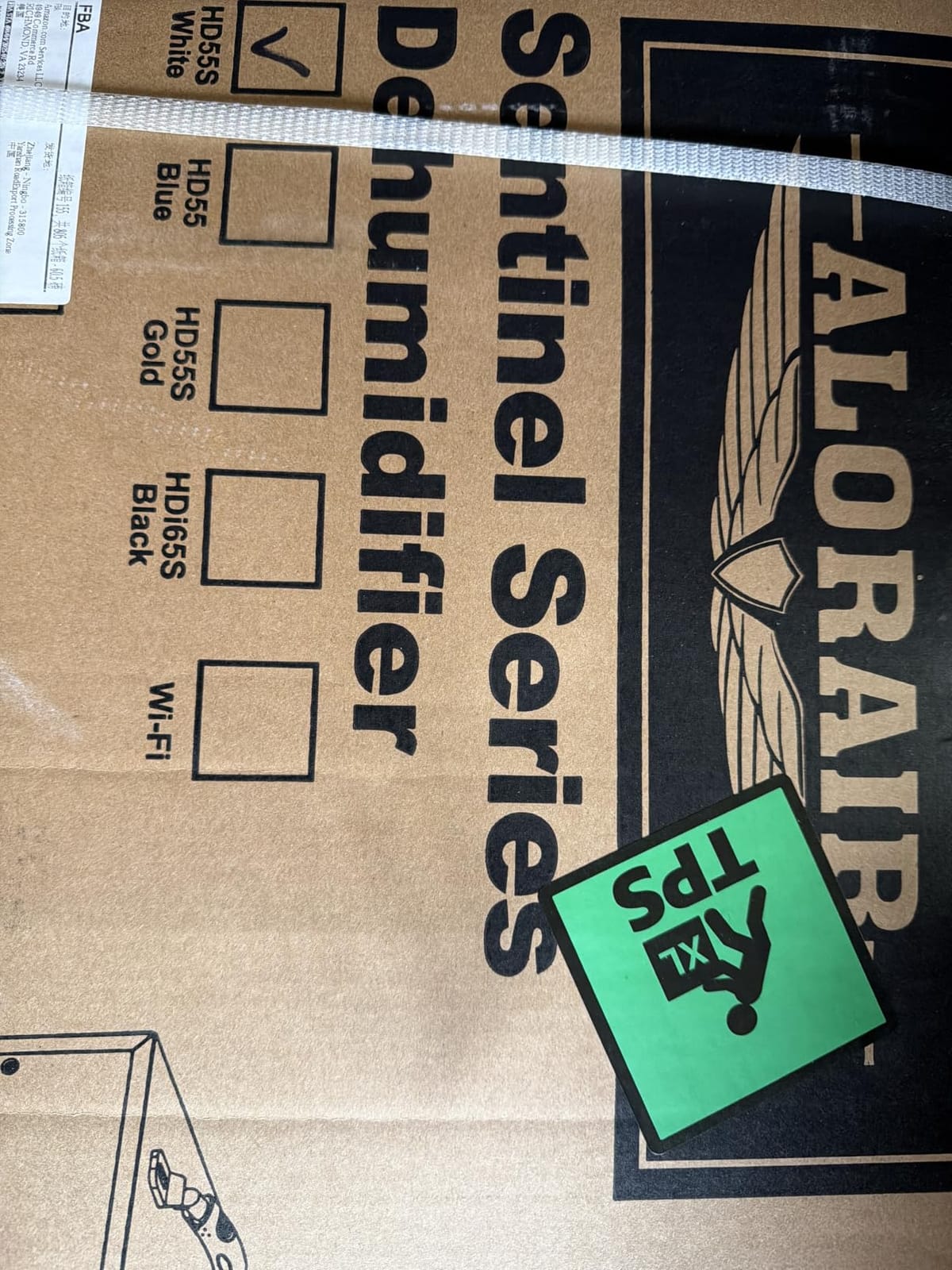
Every crawl space machine fails first on physical fit, so measure the access opening before anything else. This cabinet is 13.3 inches tall and 19.2 inches deep, which clears most standard 16 by 24 inch openings and most 12 by 16 inch ones laid flat. At 41.7 pounds it is manageable for one person on a ramp but genuinely awkward to lift onto a joist.
When Gravity Drain Is the Wrong Choice?
If your crawl space has no floor drain and the lowest point you can pipe to sits above the unit, gravity drainage becomes a problem you solve with plumbing rather than with a purchase. Tapping into an existing air conditioning condensate line is the common homeowner route, and you should flush that line with water first to confirm it actually drains before you commit.
We earn a commission, at no additional cost to you. CERTAIN CONTENT THAT APPEARS ON THIS SITE COMES FROM AMAZON. THIS CONTENT IS PROVIDED 'AS IS' AND IS SUBJECT TO CHANGE OR REMOVAL AT ANY TIME.
2. Aiusevo 130 Pint Pump Unit – Best With a Built-In Condensate Pump
130Pints Crawl Space Dehumidifier with Pump and Drain Hose up to 6500 Sq.Ft
★★★★★★★★★★130 PPD at saturation
265 CFM airflow
6500 sq ft coverage
51 lb
19.3 x 17.8 x 17.5 in
- Built-in pump with 16.4 ft hose handles upward and long-distance drainage
- 265 CFM airflow moves a lot of air for the class
- Touchscreen panel with timer and temperature monitoring
- Auto restart after outages with error code display
- Ductable 6-inch outlet for whole-house distribution
- Settings may not persist across power cycles
- Remote control and duct kit sold separately
- Some buyers report units that would not power on reliably
- Unusually square footprint needs clearance on all sides
If drainage is the thing standing between you and a decision, this is the machine that removes the hardest part of the install. The internal pump pushes water through the included 16.4 foot hose with enough lift that the drain line can run up and away instead of downhill to a sump. Owners in r/basement who install these repeatedly recommend buying the pump version for exactly that reason.
Capacity is generous: 130 pints per day at 95 degrees and 90% relative humidity, moving 265 CFM, rated for spaces up to 6,500 square feet. Reviewers describe cutting a brutally humid space from 90% down under 60% within days. That figure is a saturation number rather than an AHAM rating, so treat the 6,500 square feet as an optimistic ceiling and not a comfort zone.
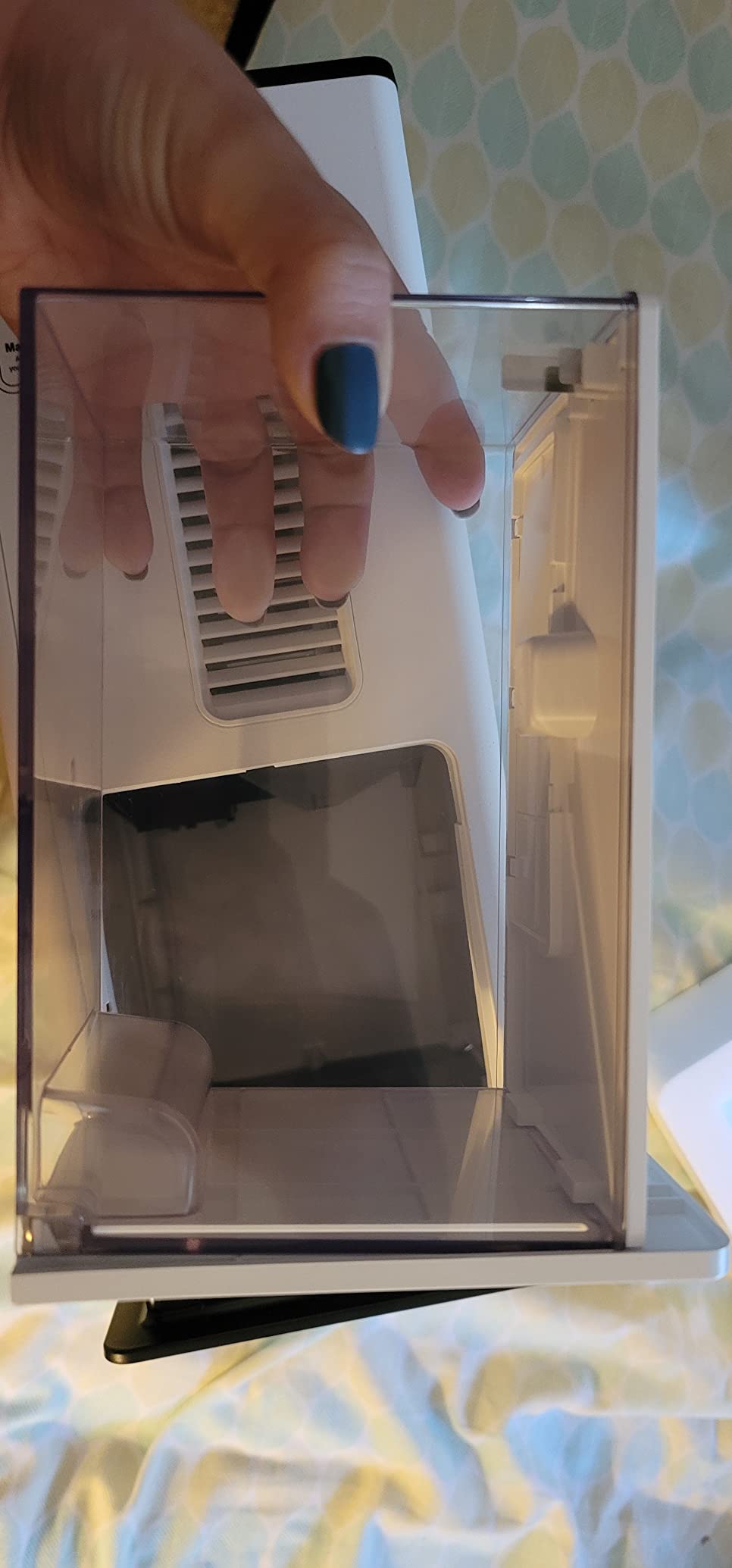
The 19.3 by 17.8 by 17.5 inch footprint is the trade-off for that pump. It is nearly square, so it needs clearance on all four sides rather than sliding into a joist bay the way a slim cabinet does. A 6-inch ductable outlet on the unit also opens a path most crawl space machines do not offer: distributing conditioned air up into the floor system instead of only drying the void below.
Two weaknesses show up repeatedly in the reviews. Settings that reset across power cycles mean the humidistat setpoint can return to default after an outage, which is mildly annoying rather than serious. A minority of buyers report a unit that would not power on until replugged, so a GFCI-protected receptacle in the crawl space is worth the small extra effort.
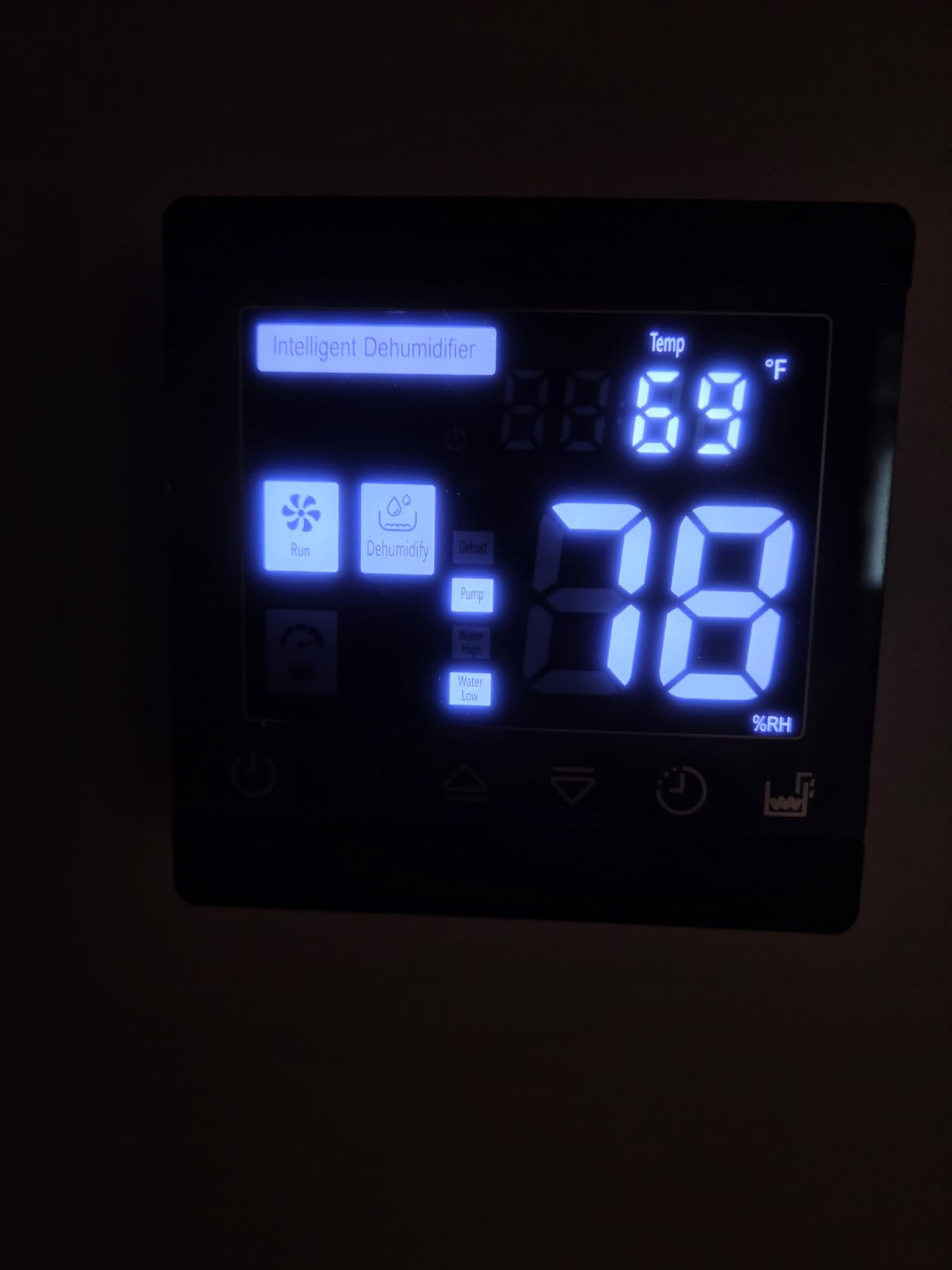
When a Pump Beats Gravity Drainage?
Choose a pump when the nearest drainage point is above the machine, farther than a gravity hose reaches, or absent entirely. That is the majority of crawl spaces. If you do have a working floor drain well below unit height, a gravity-only machine is simpler and has one fewer component that can fail.
How Wide Is the Clearance Requirement?
Plan on at least a foot of working room on the intake and discharge side, plus room to lift the unit into place. At 51 pounds it needs two people or a hand truck. If your access opening is a narrow vent cut into the foundation rather than a full door, measure twice, because this is not a unit you want to wrestle through a tight squeeze.
We earn a commission, at no additional cost to you. CERTAIN CONTENT THAT APPEARS ON THIS SITE COMES FROM AMAZON. THIS CONTENT IS PROVIDED 'AS IS' AND IS SUBJECT TO CHANGE OR REMOVAL AT ANY TIME.
3. Waykar 125 Pint Pump Unit – Best Value for Large Crawl Spaces
Waykar 125 Pint Crawl Space Dehumidifier with Pump & Drain Hose for Basements, Commercial & Water Damage Spaces up to 6500 Sq. Ft., Compact, Strong Dehumidification, 5-Year Quality Coverage
★★★★★★★★★★125 PPD
176 CFM airflow
6500 sq ft coverage
530 watts
49.8 lb
- Rotary compressor instead of a piston type
- Built-in pump lifts water up to 16.4 ft
- Both a 16.4 ft pump hose and a 6.6 ft gravity hose included
- Wide 10% to 90% RH adjustment range
- Adjustable feet cut noise and vibration
- 49.8 pounds is heavy for a single-person install
- Remote control sold separately
- Leveling and hose routing take more care than consumer models
- Highest wattage draw of the mid-size options
The Waykar AFW2.0DPM does the simple version of this job well. It pulls 125 pints per day, moves 176 CFM, and is rated for up to 6,500 square feet, and it ships with both drainage hoses so you can decide the plumbing route after you get the unit in place. The rotary compressor is the detail that separates it from cheaper imports, and reviewers consistently single it out.
Both pump and gravity drainage are in the box. That flexibility matters because the right answer depends on your crawl space, and having both options means a return trip to the house center is not a prerequisite. The touchscreen panel adds a timer, a humidity setpoint, and a service reminder, and auto defrost, auto shutoff, and auto restart are all present.
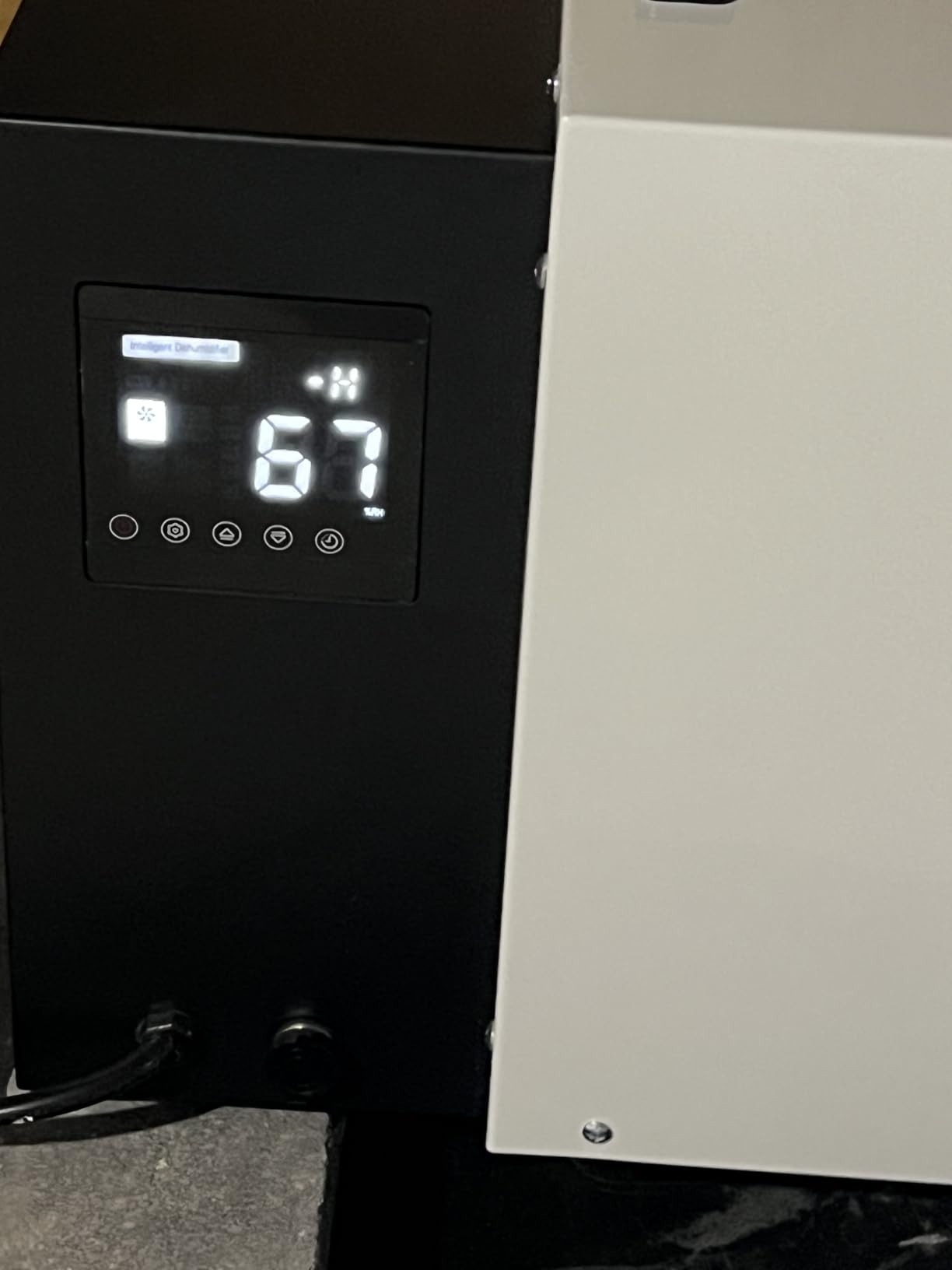
At 530 watts this is one of the higher draws in the group, which matters for a machine expected to run every hour of every day. The adjustable feet are advertised to reduce noise and vibration by up to 30%, and on a joist-mounted install that is a real difference between a hum you notice and one you do not. A 5.9 inch pipe-mounted exhaust vent is supported for ducting the airstream where you want it.
The recurring complaint across reviews is weight and setup fiddliness. Just under 50 pounds means two people, and leveling the cabinet plus routing the pump hose takes more care than a plastic consumer unit. The remote control is an accessory rather than a standard feature, so plan on using the onboard panel.
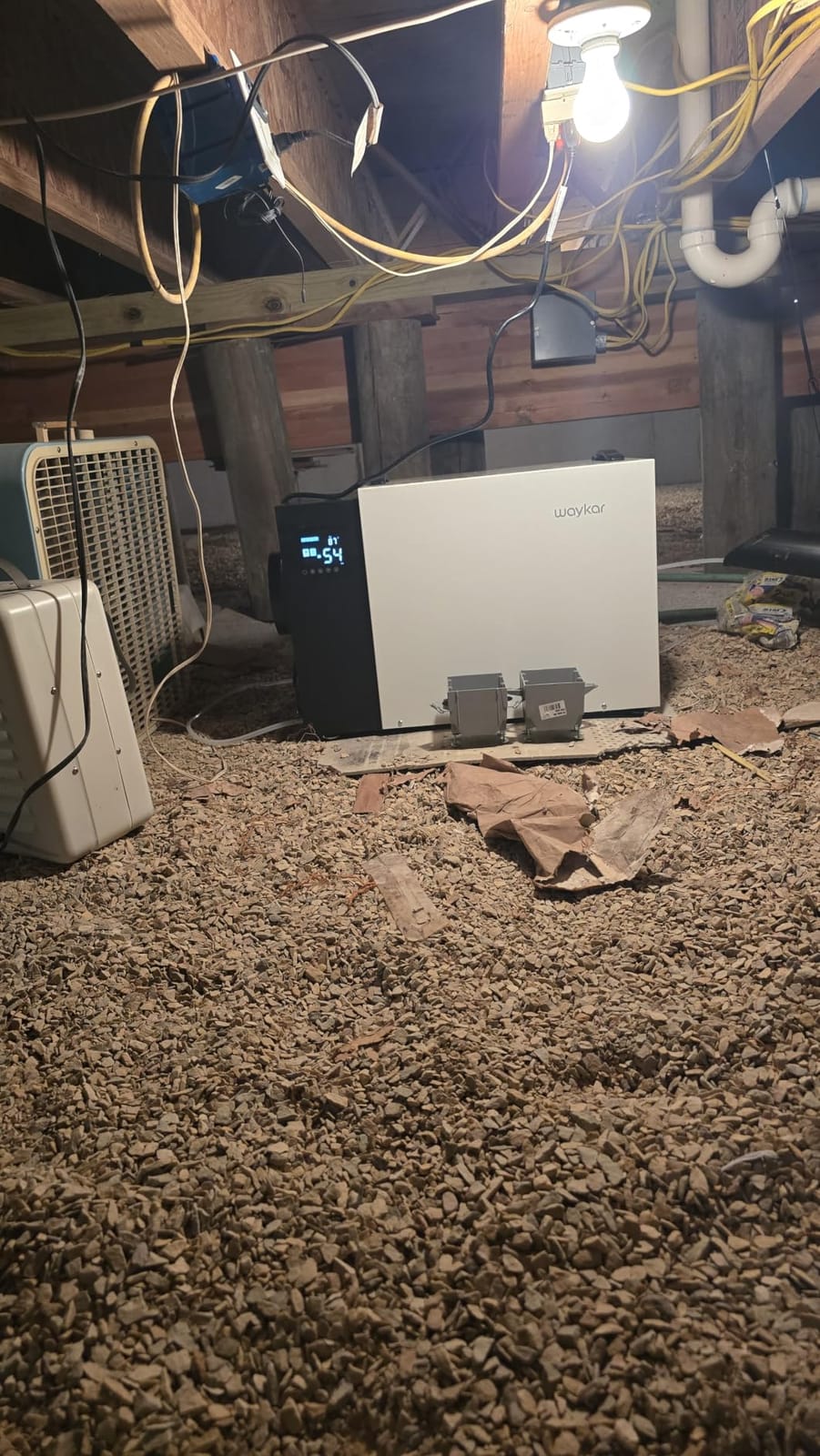
Whether the Extra Watts Are Worth It
You can run the arithmetic yourself with your utility rate. At 530 watts, running 24 hours a day is about 12.7 kilowatt-hours a day, and running on humidistat control for half of that is closer to 6.4. Multiply by your local rate and by 365 for the annual figure, then compare it against a lower-wattage option if electricity is a concern in your area.
How the Pump Changes the Install?
Because the pump handles vertical lift, you are no longer forced to mount the unit high in the joist bay. That frees up floor space, lowers the center of gravity, and makes the 13.58 inch tall cabinet far easier to set down flat. Level it on the adjustable feet first, then run the hose.
We earn a commission, at no additional cost to you. CERTAIN CONTENT THAT APPEARS ON THIS SITE COMES FROM AMAZON. THIS CONTENT IS PROVIDED 'AS IS' AND IS SUBJECT TO CHANGE OR REMOVAL AT ANY TIME.
4. AlorAir Storm LGR Extreme 180 – Best for Water Damage Restoration
ALORAIR 180 PPD Commercial Dehumidifier with Pump, 6-Year Limited Warranty
★★★★★★★★★★85 PPD at AHAM
180 PPD at saturation
210 CFM
2300 sq ft
64.3 lb
- LGR technology pulls moisture at lower humidity levels than typical residential machines
- Built-in pump with 19.6 ft hose and 14.7 ft vertical lift
- Digital readout shows temperature
- humidity
- coil temp
- and GPP
- Auto defrost
- memory start
- and auto restart
- 6-year limited warranty on the refrigeration system
- 64.3 pounds needs two people or a hand truck
- Not quiet
- though reviewers accept the noise for the output
- Internal pump requires periodic disassembly and cleaning
- Some units reported refrigerant leaks and error code faults
This is the one to consider if a pipe has already burst under your house or a flood line went through the structure. LGR technology, which stands for latent gas removal, is the mechanism that lets this machine keep extracting at humidity levels where conventional residential compressors stall out. For restoration work that is the difference between a two-day job and a two-week one.
It rates 85 pints per day at AHAM conditions and 180 at saturation, with 210 CFM airflow over a 2,300 square foot footprint. Note that the 2,300 square foot coverage rating is much more conservative than the 6,000-plus square foot figures on the units built purely for humidity control, and that difference is intentional.
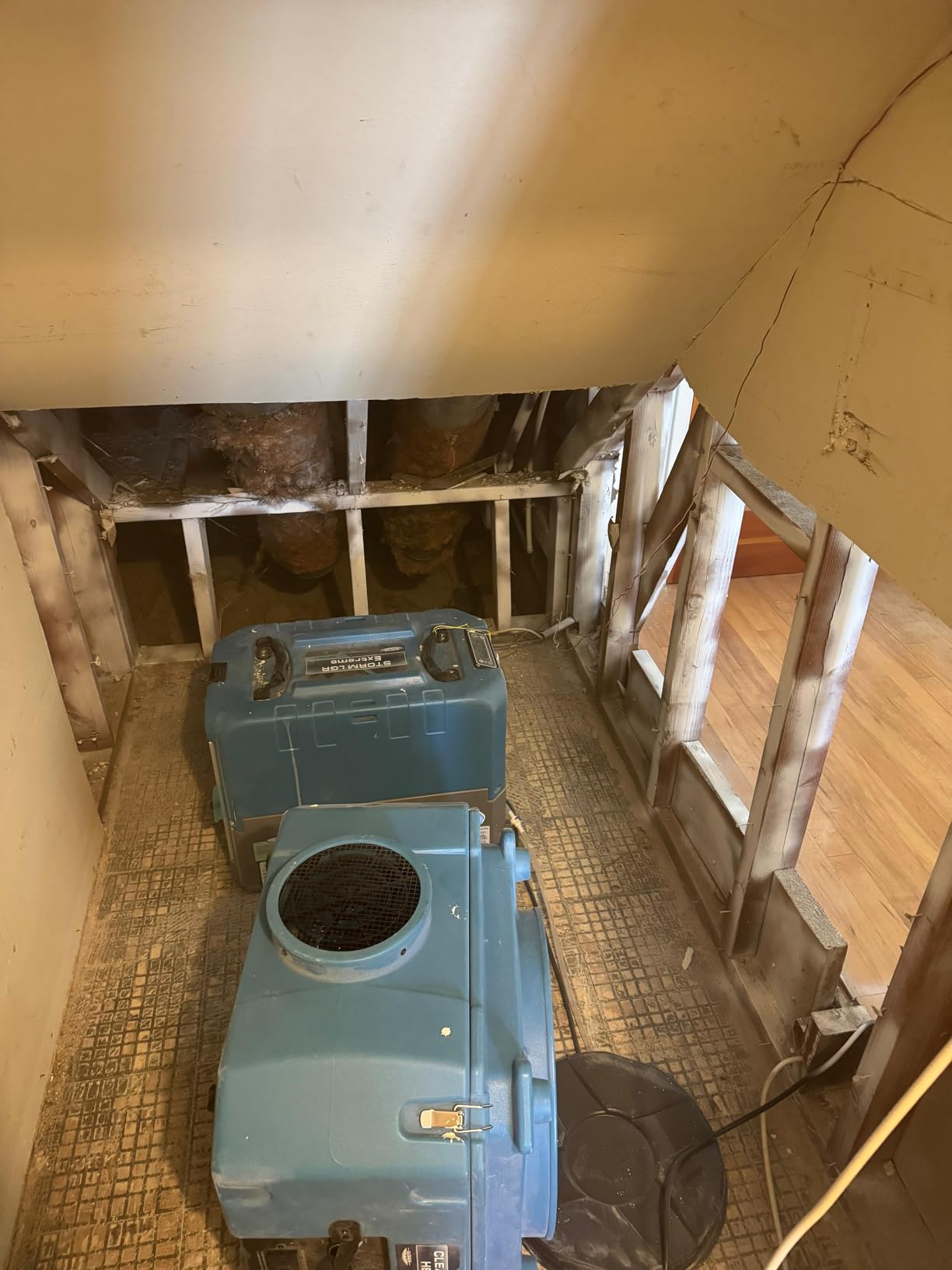
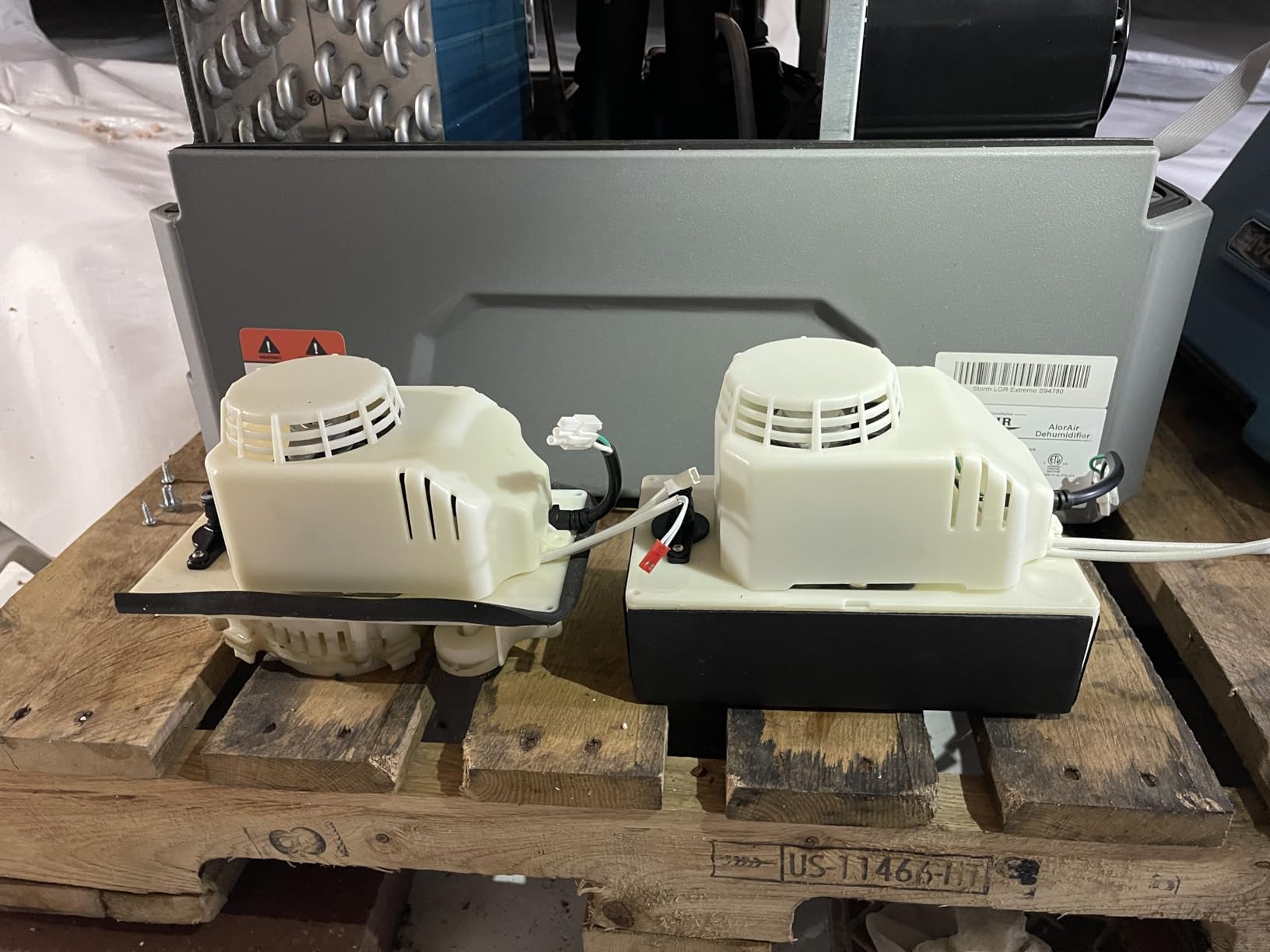
The display is unusually good for a crawl space machine. It shows temperature, relative humidity, coil temperature, and grams per pound, and tracks job hours, which tells you whether the space is actually getting drier or just cycling. The built-in pump lifts 14.7 feet and ships with a 19.6 foot hose. Auto defrost pauses the compressor while the fan keeps moving, so cold conditions slow output without stopping it.
Durability is the mixed part. At 64.3 pounds this is the heaviest machine we tested, and reviewers report that the internal pump needs periodic disassembly to clean. A minority of owners describe refrigerant leaks or error code faults within a year or two, and warranty service is where the friction shows up. The 6-year limited warranty helps, with six years on parts for the refrigeration system.
When LGR Technology Is Worth the Weight?
LGR earns its keep when the goal is getting a space down below about 60% relative humidity rather than holding it at 55%. If you are chasing a mold remediation target or drying wet insulation, extraction at low humidity matters. For steady seasonal humidity control, a lighter machine does the same job with less effort.
Handling a 64-Pound Machine Under a House
Two people or a hand truck, full stop. The 22.8 by 13.7 by 17.3 inch cabinet has dual top carry handles which help, but the real constraint is the access opening. Measure it before committing, and if the opening is tight, the 180 pint output of this category is not worth losing the install over.
We earn a commission, at no additional cost to you. CERTAIN CONTENT THAT APPEARS ON THIS SITE COMES FROM AMAZON. THIS CONTENT IS PROVIDED 'AS IS' AND IS SUBJECT TO CHANGE OR REMOVAL AT ANY TIME.
5. AlorAir Sentinel HD35P 70 Pint – Best for Small Crawl Spaces
ALORAIR 70 PPD Dehumidifier with Pump for Crawl Space and Basement
★★★★★★★★★★35 PPD at AHAM
70 PPD at saturation
1000 sq ft coverage
38.2 lb
Under 50 dB
- Smallest and lightest unit here at 38.2 pounds
- Built-in pump lifts water up to 19.6 ft
- Operates below 50 dB
- Auto defrost and auto restart
- MERV-1 filter protects the coil
- Coverage limited to about 1000 sq ft
- Basic MERV-1 filter rather than high-efficiency media
- Control panel has limited programmability
- Some buyers report warranty service friction
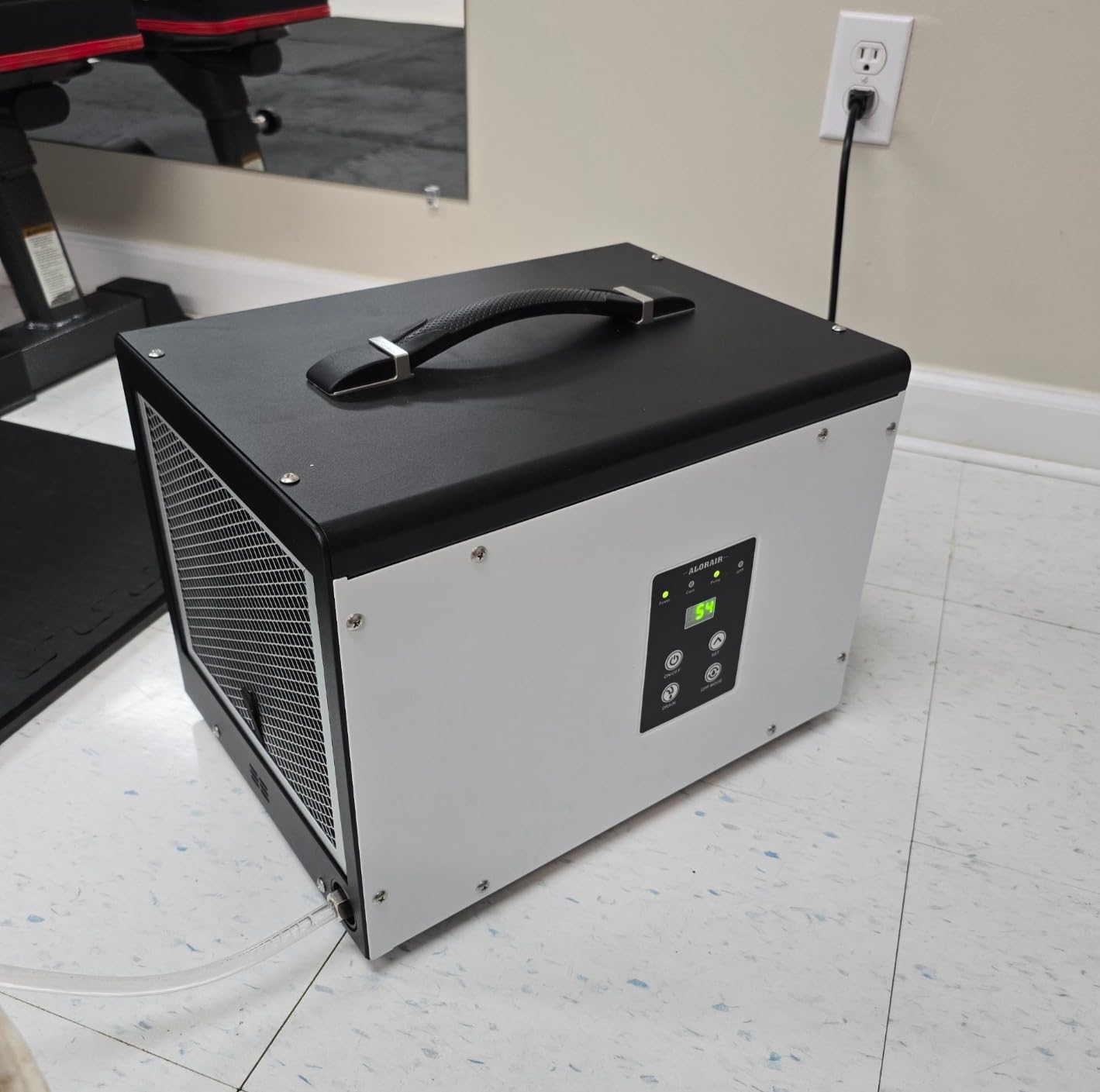
Not every crawl space needs a commercial machine. If yours is roughly 1,000 square feet or smaller, the Sentinel HD35P is the most reasonable way to keep it dry, and at 38.2 pounds it is by a wide margin the easiest of these eight to get through an access opening and position between joists. The 15.2 by 11.2 by 11.4 inch cabinet is the smallest footprint here.
Capacity is 35 pints per day at AHAM conditions and 70 at saturation, with 1000 square feet of rated coverage. The built-in pump lifts water 19.6 feet through the included hose, which is unusually generous for a unit this size and removes the need for a separate pump or a high mount point. It runs below 50 dB, quieter than most machines in this category.
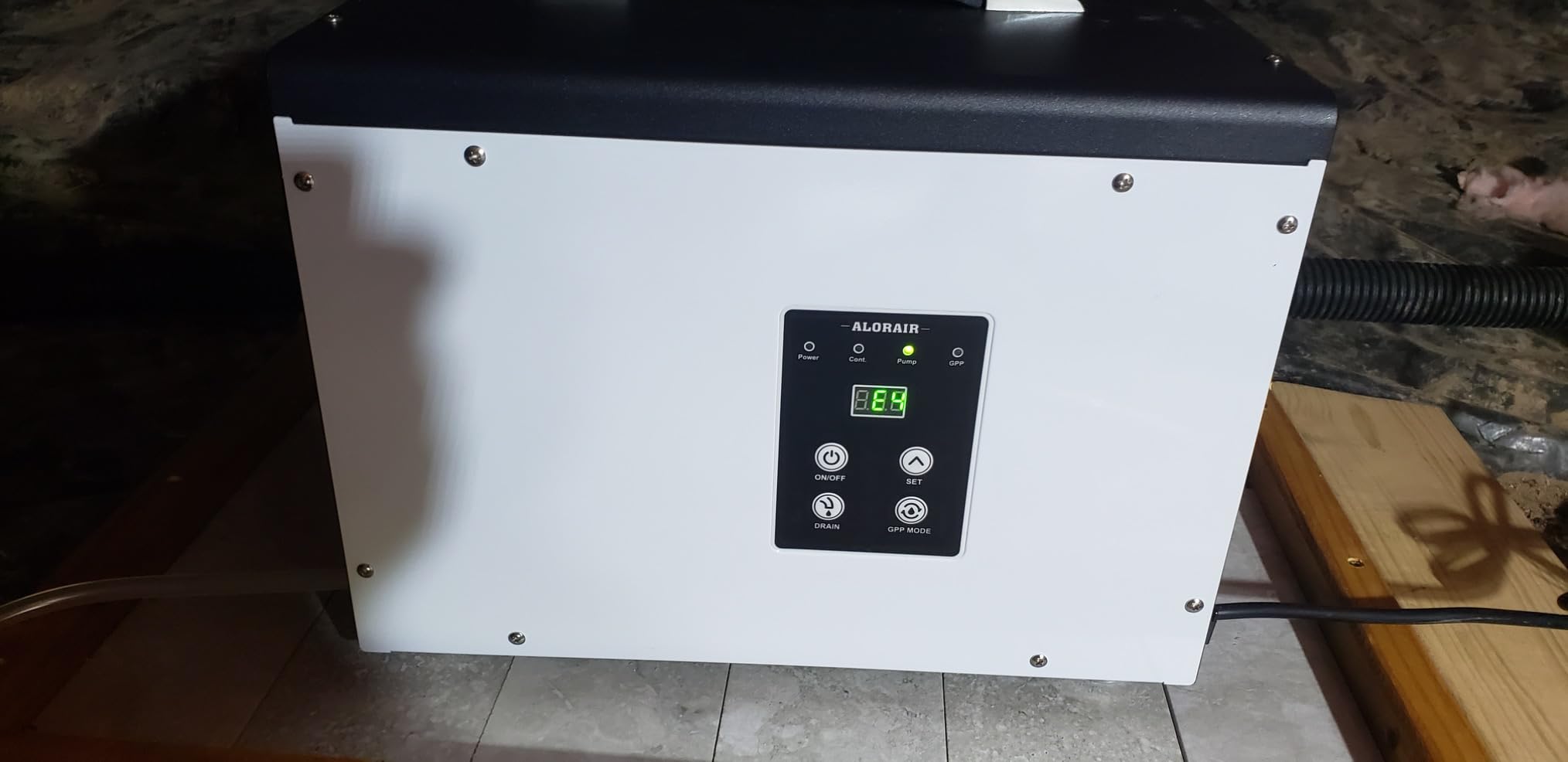
Auto defrost and auto restart are both present, which matters more than the spec sheet suggests in a space you do not visit often. The MERV-1 filter is a basic dust screen rather than a true high-efficiency filter, so plan on pulling it and rinsing it every few months. Control programmability is thin, so you set the humidistat and let it run.
Where buyers push back is coverage and warranty experience. If your space is larger than about 1,000 square feet, this machine will run continuously without catching up, and that is how compressors get cooked. Reviews also include a recurring note of friction on compressor or coil faults going through warranty service.
Matching the Unit to a Small Space
Size down deliberately rather than buying a bigger machine for a small space. A 1,000 square foot crawl space with a working vapor barrier needs far less capacity than 1,000 square feet of bare soil with a leaking supply line, and the second case needs a drainage fix first. Size to the problem you actually have after the moisture sources are addressed.
Why Quiet Operation Matters Down There?
Below 50 dB is meaningful if the space sits under a bedroom or near a stairwell. A louder compressor at the same capacity is fine in a detached garage and genuinely irritating two feet under a living room floor. This is the unit to pick when the crawl space is adjacent to occupied space.
We earn a commission, at no additional cost to you. CERTAIN CONTENT THAT APPEARS ON THIS SITE COMES FROM AMAZON. THIS CONTENT IS PROVIDED 'AS IS' AND IS SUBJECT TO CHANGE OR REMOVAL AT ANY TIME.
6. Moiswell Defender M145 155 Pint – Best Energy Efficient for Large Spaces
Moiswell 155 Pint Commercial Dehumidifier with Drain Hose for Crawl Spaces
★★★★★★★★★★70 PPD at AHAM
155 PPD max
6000 sq ft
265 CFM
Energy Star
- Energy Star certified with 265 CFM airflow
- Slim horizontal cabinet that fits between floor joists
- Auto ON/OFF humidity cycling with 24-hour timer
- Auto drain
- auto defrost
- and auto restart
- Holds the highest average rating of this group
- 63 pounds requires help to position
- Gravity drain only
- so the unit must sit above the drainage point
- 860 watts is a high draw
- Newer brand with a shorter review history
The Defender M145 pairs the highest average rating in this lineup, 4.5 across 500 reviews, with Energy Star certification and serious airflow. It moves 265 CFM, rates 70 pints per day at AHAM conditions and 155 at maximum, and is listed for spaces up to 6,000 square feet. The horizontal form factor at 22.5 by 14 by 14.7 inches is built to go between joists or overhead.
Automated controls cover the bases that matter in a space you cannot easily reach: ON/OFF humidity cycling, a 24-hour timer, auto drain, auto defrost, and auto restart after a power outage. The styling is unusually clean for a commercial machine, which matters if the crawl space has a finished access panel nearby.
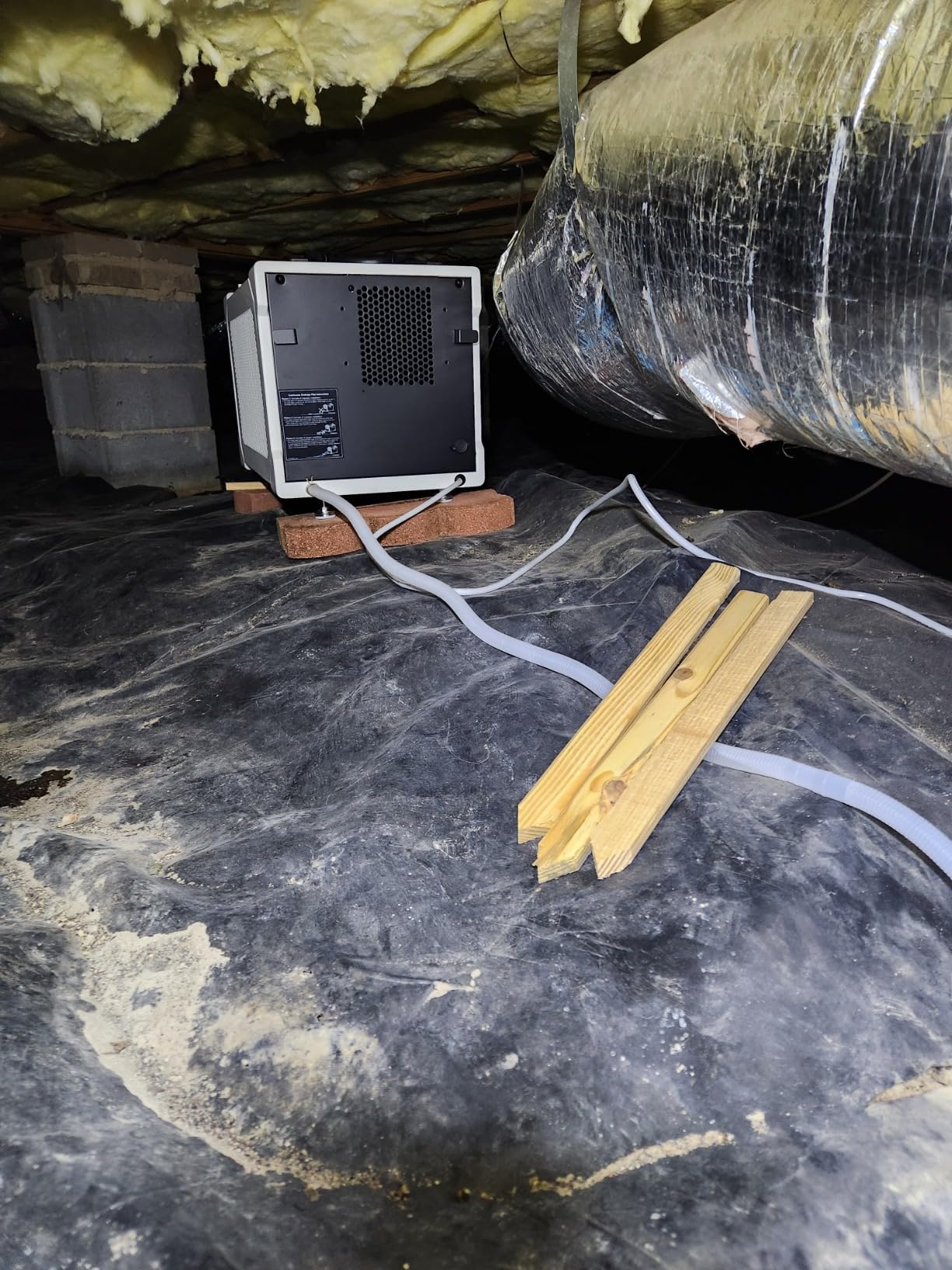
Two honest limitations. It is gravity drain only, so the unit has to be mounted above wherever it drains to, and at 63 pounds you will want a second person or a hand truck. The 860 watt draw is the highest figure in this group, so the running cost math matters more here than on any other unit we looked at. Calculate it against your own utility rate before settling on this for a large space.
The shorter review history is the softer concern. A 4.5 average on 500 reviews is a good signal, but it is less battle-tested than the 1,300-review AlorAir, and this is a newer brand in a category where older names have held on for a long time. If the crawl space is 1,500 square feet or under, the lighter units here do the same work with less electricity.
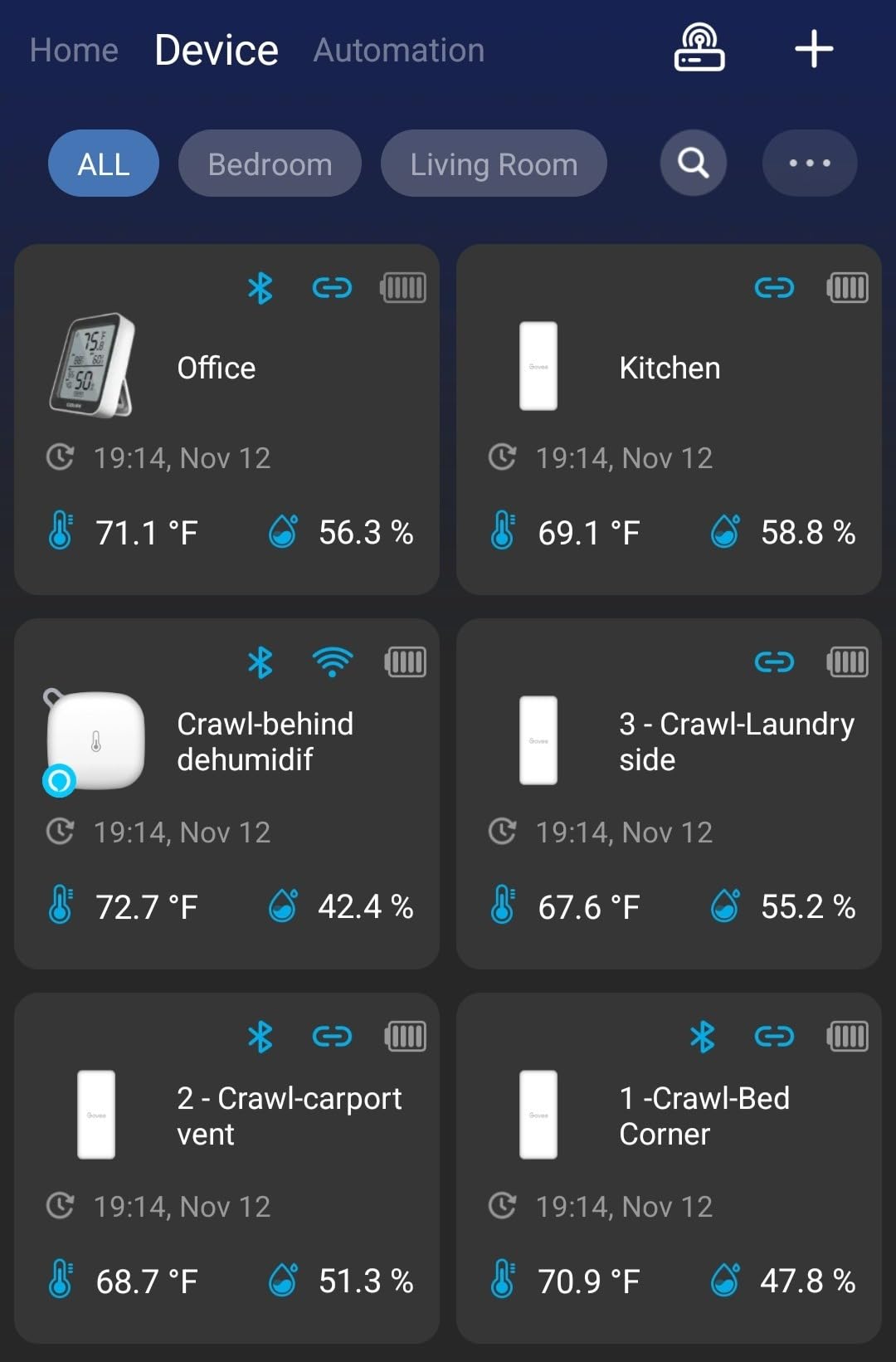
When a 6,000 Square Foot Rating Is Realistic?
Those coverage figures assume a sealed space with a working vapor barrier and a moderate climate. In a loosely sealed crawl space, a 6,000 square foot rating should be read as a hard ceiling rather than a target. Forum consensus treats a unit in this class as adequate up to roughly 1,800 square feet in a space that is only loosely sealed.
Working Around the Gravity Drain Limitation
Plan the drain before the purchase, not after. Measure the height from the crawl space floor to whatever you intend to drain into, and subtract the unit height with a foot of fall on the line. If the numbers do not work, this is the wrong machine for your space and you should move to a pump-equipped option.
We earn a commission, at no additional cost to you. CERTAIN CONTENT THAT APPEARS ON THIS SITE COMES FROM AMAZON. THIS CONTENT IS PROVIDED 'AS IS' AND IS SUBJECT TO CHANGE OR REMOVAL AT ANY TIME.
7. AprilAire E070 Pro 70 Pint – Best for Whole-Home Ducting
AprilAire E070 Pro 70-Pint Crawl Space Dehumidifier with Drain Hose, Commercial-Grade Whole-House Dehumidifier for Crawlspace, Basement, or Whole Home up to 2,200 sq. ft.
★★★★★★★★★★70 PPD
2200 sq ft
200 CFM
56 lb
MERV 8 filter
5-year warranty
- Made in the USA by an established indoor air quality manufacturer
- Corrosion-resistant aluminum coils
- 12.5 inch square body that fits through most crawl space doors
- 8-inch inlet and outlet duct collars included for whole-home distribution
- Washable MERV 8 filter
- 70 pint capacity covers less ground than higher-output machines
- 56 pounds is heavy for the class
- Highest wattage figure among the 70-pint options
- Smaller review base than the budget picks
The AprilAire E070 is the odd one out in this category, and that is why it is worth a look. Most crawl space dehumidifiers sit in the void and dry the void. The 8-inch inlet and outlet duct collars ship in the box, so this unit can be plumbed into the floor system and dry the living space above as well. If your crawl space connects to ductwork, that capability is not something you can add later.
It pulls 70 pints per day with 200 CFM airflow and rates 2,200 square feet of coverage. The 12.5 by 12.5 by 25 inch body is deliberately square in cross-section, which is the design that lets it pass through a standard crawl space access door and then turn to fit along a joist bay. Corrosion-resistant aluminum coils and a washable MERV 8 filter show this is built for a long service life.
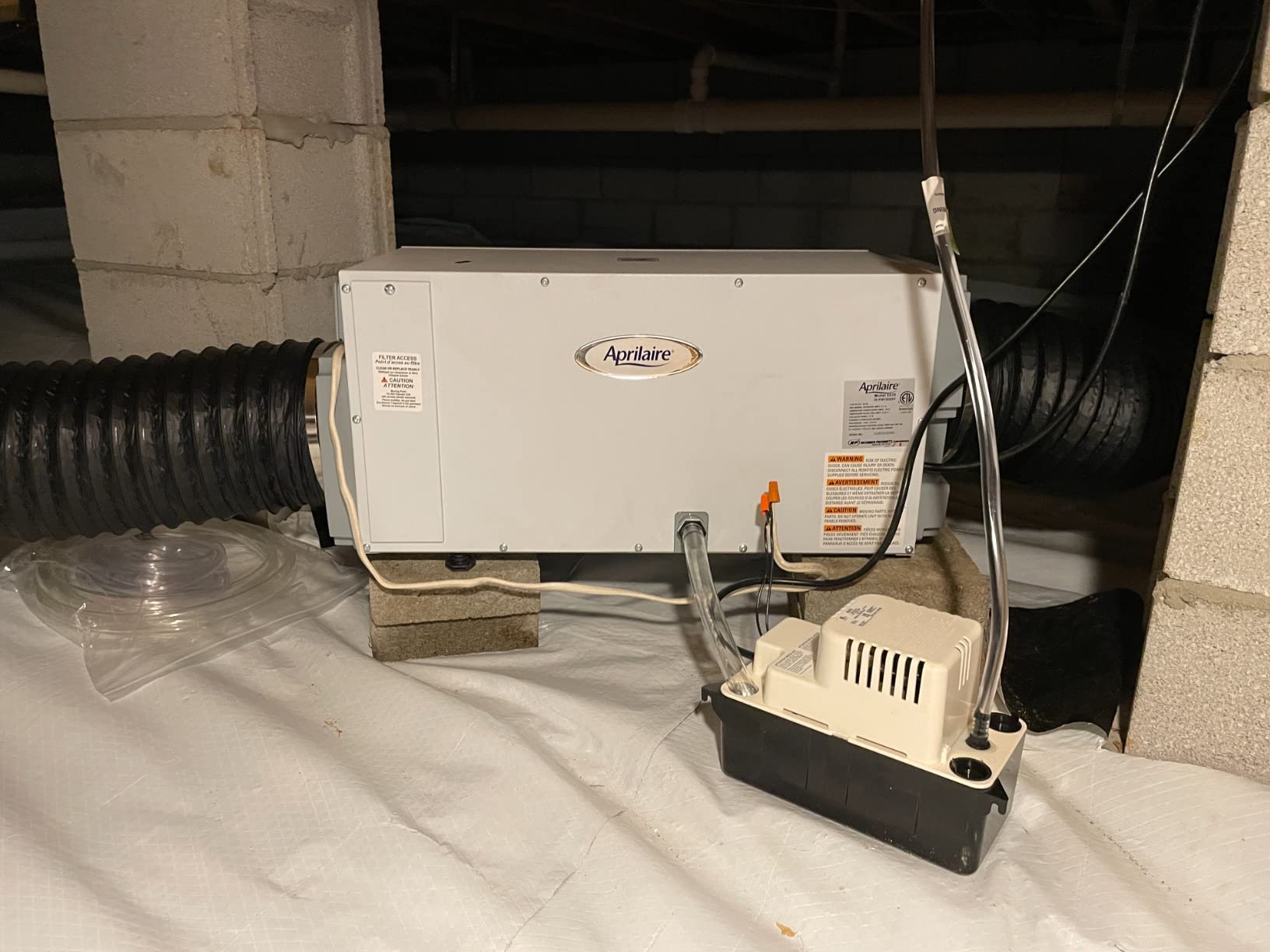
Digital display, adjustable humidity control, automatic defrost, auto restart, and auto shutoff cover unattended operation, and the box includes 10 feet of drain tubing, a barbed drain fitting, leveling feet, and an 8-foot power cord. A 5-year manufacturer warranty is the shortest of the commercial units here, which is a fair thing to weigh against the build quality.
The honest trade-off is capacity against footprint. At 56 pounds and 696 watts, it is heavy and a significant draw for a 70-pint machine, and 2,200 square feet of rated coverage is modest next to the 6,000-plus square foot figures in the mid-size category. With 214 reviews at a 4.5 average, the satisfaction is high but the sample is smaller than the budget picks.
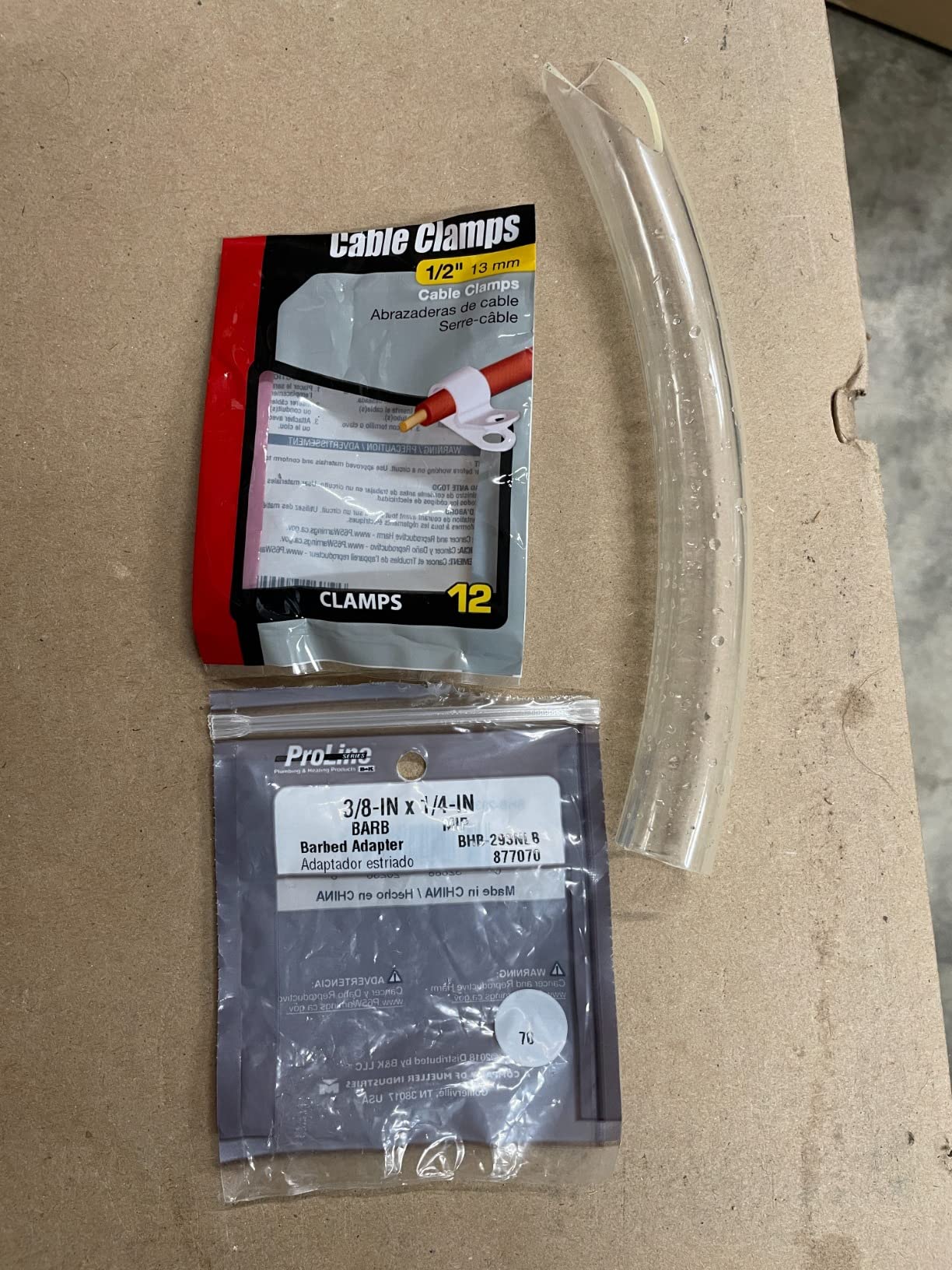
When Ducting Changes the Sizing Math?
If you plan to distribute air into the floor system rather than just dry the crawl space, you are conditioning a larger volume than the square footage suggests and the 2,200 square foot rating becomes conservative. Treat it as a whole-home machine with a crawl space installation, and size the duct run before the unit, not after.
Getting 56 Pounds Through the Door
The cross-section is the selling point, but the weight is the challenge. If your access is a hinged door rather than a removable panel, a ramp and a second person make this a five-minute job instead of a bad afternoon. Measure the opening first, and confirm you have a clear path to the intended mounting spot.
We earn a commission, at no additional cost to you. CERTAIN CONTENT THAT APPEARS ON THIS SITE COMES FROM AMAZON. THIS CONTENT IS PROVIDED 'AS IS' AND IS SUBJECT TO CHANGE OR REMOVAL AT ANY TIME.
8. Yaufey AYD1.5D 70 Pint – Best for Lowest Running Cost
Yaufey 70 Pints Energy Star Commercial Dehumidifier with Drain Hose for 5000 Sq. Ft. Crawl Space, Basement, Industrial, 10-90% RH Humidity Control, 24/7 Continuous Drainage,TUV Certified,5-Yr Coverage
★★★★★★★★★★70 PPD at saturation
5000 sq ft
159 CFM
265 watts
R32 refrigerant
- Lowest wattage draw here at 265 watts
- Energy Star certified with low-GWP R32 refrigerant
- Full metal anti-corrosion housing
- 10% to 90% RH adjustment range
- Continuous gravity drainage supports unattended running
- Gravity-only drainage requires proper downward slope
- Some owners had to relocate the humidity sensor
- Some units needed replacement for freezing or sensing faults
- 42 pounds is heavier than most consumer units
The Yaufey AYD1.5D is the running-cost answer in this lineup. At 265 watts it draws less than half what the largest machines here pull, and it is Energy Star certified using R32 refrigerant, which has a low global warming potential compared with older refrigerants. If you plan to run this every hour of every day, the wattage is the number that matters most.
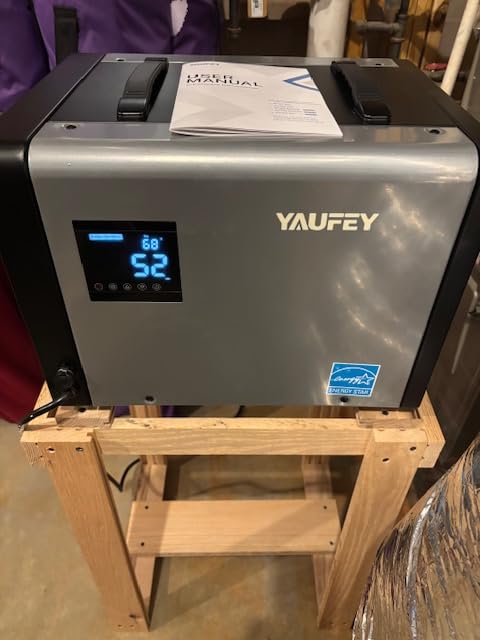
Capacity is 70 pints per day at saturation, 159 CFM airflow, and a listed coverage of 5,000 square feet. The 16.54 by 12.99 by 11.81 inch cabinet is a low profile that can sit freestanding, on a shelf, or joist-mounted, and the 10% to 90% relative humidity range is wider than most household machines offer.
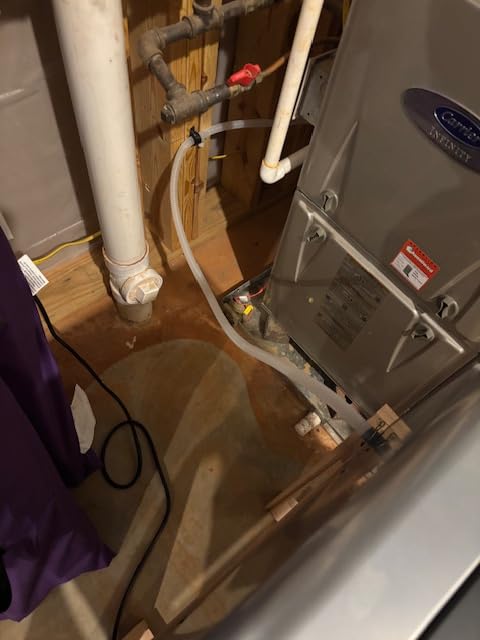
Continuous gravity drainage with the included 6.56 foot hose is the main compromise. There is no pump, so the unit has to sit higher than the drain point and the line needs a consistent fall. Auto defrost is built in, and the digital panel carries a 24-hour timer and a washable filter. Coverage is 2-year general protection with 5-year compressor coverage.
The specific complaint to know about is sensor placement. A minority of owners found the humidity sensor reading inaccurately enough to cause constant cycling, and relocating the sensor to a better position resolved it. Others report units replaced for freezing or sensing faults. With 208 reviews at a 4.2 average, the track record is solid but thinner than the leaders.
Lowest Running Cost Versus Highest Capacity
At 265 watts, running 24 hours is about 6.4 kilowatt-hours a day. Running on humidistat control at roughly half duty, expect closer to 3.2 kilowatt-hours a day. The 860-watt machine on this list draws more than three times as much for the same hours, so if your crawl space is comfortably within a 5,000 square foot rating, the lower draw is the smarter long-term choice.
What to Do About the Sensor Complaints?
Before assuming a fault, run an independent hygrometer next to the unit and compare. If the machine cycles while the space is clearly drier than the setpoint, the sensor position is the first suspect and moving it to open air away from the cabinet wall or a cold surface often fixes it. That is a five-minute adjustment that resolves what looked like a warranty problem.
We earn a commission, at no additional cost to you. CERTAIN CONTENT THAT APPEARS ON THIS SITE COMES FROM AMAZON. THIS CONTENT IS PROVIDED 'AS IS' AND IS SUBJECT TO CHANGE OR REMOVAL AT ANY TIME.
How to Size a Crawl Space Dehumidifier?
What size dehumidifier do you need for a 2,000 square foot crawl space? The most common mistake is sizing on the square footage number printed on the box. That number is a laboratory maximum for a sealed, moderate-climate space, and it is not a real-world figure. A more honest approach is to work from rated AHAM capacity, not the saturation number, because the saturation figure is a laboratory best case at 95 degrees and 90% relative humidity that your crawl space will never see.
Here is the rule of thumb we use. For a fully encapsulated crawl space with a working 6-mil vapor barrier, aim for about 20 pints per day of AHAM rated capacity for every 1,000 square feet. For a loosely sealed or vented space in a humid climate, double that to roughly 40 pints per day of AHAM capacity per 1,000 square feet.
Worked examples. A 1,000 square foot encapsulated space wants about 20 PPD of rated capacity, which the AlorAir Sentinel HD35P handles at 35 PPD. A 1,500 square foot encapsulated space wants about 30 PPD, which puts the AlorAir Sentinel HD55S at 55 PPD in range. A 2,000 square foot loosely sealed space in a humid climate wants about 80 PPD, which is above the AprilAire E070 and into the 85 PPD AHAM range of the AlorAir Storm LGR Extreme.
Two ways to sanity-check the result. If your space is fully sealed, the load drops sharply and you will not need the biggest machine available. If groundwater is actively entering the space, no capacity is enough until the drainage is fixed, and oversizing just raises your electricity bill while the problem persists.
Encapsulate First or Buy a Dehumidifier First?
The order of operations matters more than the model you choose, and this is the most argued question in crawl space forums. The consensus sequence runs from moisture sources inward: fix exterior drainage, then the ground and the walls, then the vents, then the air.
Step one is water coming from outside. Grade the soil away from the foundation, extend downspouts at least six feet with splash blocks, and confirm gutters discharge away from the house. One commenter on r/HomeImprovement put it plainly: make sure you have good exterior drainage as well. A dehumidifier cannot outrun a wet foundation.
Step two is the ground. Laying a 6-mil polyethylene sheet over exposed soil is the middle path that most owners actually implement, and it is genuinely effective. It cuts evaporation from the soil almost entirely and takes far less money and disruption than full encapsulation. Several owners on r/HomeImprovement report that with a sheet down, a standard 70-pint consumer unit is enough.
Step three is the vents. In a humid climate, open foundation vents pull moist outdoor air in and feed the problem. Sealing them is the standard recommendation. In a dry climate the advice flips, and airflow through vents can be the cheaper answer with no dehumidifier at all. The deciding question is whether the outdoor air is wetter than the air you are trying to protect.
Step four is the air, and that is what a dehumidifier handles. Once water is not entering the space from any direction, active dehumidification becomes maintenance rather than rescue. Run it continuously with the humidistat set, and it will idle most of the time.
Gravity Drain vs Built-In Condensate Pump
The drainage decision depends on one thing: what is below the unit, and how far away. Gravity drainage needs a fall of at least a foot across the run, a drain point lower than the outlet, and a route that does not fight you the whole way. A built-in pump needs a destination but not a height relationship.
Choose gravity drainage when you have a floor drain, a sump pump pit, or an air conditioning condensate line that sits well below the unit. Most crawl spaces have none of those within reach, which is why pump-equipped models dominate owner recommendations. Installers on r/basement consistently advise buying the pump version and connecting the line properly.
On the AC condensate route, flush the pipe with water before you connect anything. Homeowners who skipped that step discovered the line was packed with biofilm and never drained at all. A blocked condensate line stops dehumidification completely, and it is the single most common complaint in this category.
Whatever route you pick, use a supported line rather than a loose run across the ground, and secure it to the joists so vibration does not work a joint loose. Owners who suspend a unit from joists to reach a downhill sump report vibration noise, which is a good reason to prefer a pump and a floor-standing mount.
Cold Climates and Coil Freeze-Up
Why is a crawl space dehumidifier freezing up? The evaporator coil is intentionally colder than the air around it, and when the coil drops below freezing, moisture in the air freezes onto it first. The ice then insulates the coil, and the machine can no longer pull water out of the air even though it appears to be running.
Every unit in this lineup lists automatic defrost, and the MERV-1 filter on the smaller AlorAir models is the only filtration here that is closer to a dust screen than a real filter. In practice the defrost system senses a cold coil and pauses the compressor while the fan keeps running, thawing the ice without shutting the machine down. That is why auto defrost is the single most important cold-weather feature for this application.
Will a dehumidifier work in 40 degree weather? A crawl space sitting at 40 degrees is workable with defrost, but the removal rate drops well below the rated figure because the air holds less moisture to begin with. The real risk is a space that regularly drops into the low 30s overnight, where a unit without a frost sensor can accumulate enough ice to be a problem by morning.
For genuinely cold regions, the honest options are a unit rated for low-temperature operation, a heat source in the space, or leaving the vents open and accepting that seasonal condensation is a manageable tradeoff. Not every crawl space in a cold climate needs a dehumidifier, and a commercial-grade unit is often the correct tier for the ones that do.
Running Cost and Energy Star
You will see figures for annual running cost in this category that contradict each other, so here is the model rather than the marketing number. Running cost is wattage divided by 1,000, multiplied by hours per day, multiplied by 365, multiplied by your local electricity rate. Everything except the last term is printed on the unit or in its specifications.
To make that concrete with real numbers from this group. The Yaufey AYD1.5D runs at 265 watts, which is about 6.4 kilowatt-hours a day at continuous operation and closer to 3.2 on humidistat control. The Waykar 125 Pint draws 530 watts, roughly 12.7 kilowatt-hours a day. The Moiswell Defender M145 pulls 860 watts, close to 20.6 kilowatt-hours a day. The AprilAire E070 sits at 696 watts, about 16.7 kilowatt-hours a day.
Those are continuous numbers. A unit with a working humidistat in a sealed space runs far less than 24 hours a day, so multiply by the fraction of the day it actually operates. A crawl space starting at 75% relative humidity will run hard for the first week, then settle into intermittent cycling once it reaches 50 to 55%.
Set the humidistat to 50 to 55% relative humidity. Going lower is wasteful because dehumidifying air below 50% extracts very little additional water for a large amount of compressor time, and it can dry out wood in the framing. Energy Star certification, which several units here carry, is worth a modest efficiency gain over a comparable non-certified model, and the number that matters is the wattage above, not the label.
What Owners Report After 6 to 24 Months?
Long-horizon reliability is the most requested information in this category and the least published, so here is what owners in crawl space and basement forums actually report once a machine has been through a few seasons.
Drain lines are the top failure mode. Owners report condensate lines clogging and backing up, which stops dehumidification until the line is cleared. Some report rusted or leaking drain tubes within the first year. The mitigation is unglamorous: use a supported line, flush it periodically, and check the outlet where the hose meets the unit.
Sensor probes are second. Failed temperature sensor probes after a few months are reported often enough that it is a known pattern, and several owners of the Yaufey resolved what looked like a defect simply by relocating the humidity sensor to a better position. Keep an inexpensive standalone hygrometer in the space so you can tell a sensor problem from a real humidity problem.
Coil freeze-up is the third. In spaces that hit the low 30s, frost accumulates on the coil faster than auto defrost clears it, and the removal rate falls off. A unit with a defrost cycle handles this better than one without, which is a reason the feature is close to standard on every machine we covered.
Weight and mobility come up constantly and are the most under-reported issue in editorial roundups. These machines weigh between 38 and 64 pounds, and moving one for cleaning or a seasonal reposition is a two-person job in most cases. Several owners on r/HomeImprovement describe skipping a purchase entirely because of how awkward a heavy unit was to reposition.
Finally, condensate power loss. If power cuts during an unattended drainage event with no heat in the space, a frozen or spilled mess is a real risk. A float switch that shuts the machine off on overflow, which most of these units have, prevents the worst version of this. If your crawl space is a storage area, add a temperature alarm as well, and treat it the way we treat any other unattended space in the home, the same way we cover storage-friendly gear in our apartment equipment guide.
Frequently Asked Questions
Is a dehumidifier necessary in an encapsulated crawl space?
In a fully encapsulated space with a working 6-mil vapor barrier and sealed vents, a dehumidifier is maintenance rather than rescue. The encapsulation stops new moisture from entering, so a modest unit handles what the space gives off. In loosely sealed or vented spaces, active dehumidification becomes the primary control and you need more capacity. If the humidity is already below about 60% without a unit, most owners get by with a smaller machine on humidistat control.
What humidity should my crawl space be?
Aim for 50 to 55% relative humidity. That is comfortably below the threshold where mold, wood rot, and pests become active, without wasting compressor time pulling water out of air that is already dry. Going lower than 50% extracts little additional moisture for a lot of electricity and can dry out wood framing. Use a standalone hygrometer to check what the unit’s own sensor is telling you.
Can I use a regular dehumidifier in my crawl space?
You can, and many owners do once a 6-mil vapor barrier is down over the soil. A consumer unit lacks the low-temperature defrost a crawl space needs, has a plastic housing that dust and moisture attack, and has no continuous drainage option. If your space is unencapsulated, has a plastic tank only, and never sees temperatures below 50 degrees, a consumer unit will work. Otherwise a crawl space machine is the better tool.
Why is my crawl space dehumidifier freezing up?
The evaporator coil is colder than the surrounding air, so moisture freezes onto it first. Once ice builds, the coil is insulated and the machine runs without removing water. Causes include a crawl space that drops into the low 30s overnight, a unit without an auto defrost cycle, and a blocked or failed fan. Units with automatic defrost pause the compressor while the fan runs to clear the ice, which is why that feature matters more here than anywhere else.
Do I need a condensate pump for a crawl space dehumidifier?
You need one unless you have a drain point below the unit with a consistent downward fall of at least a foot. Most crawl spaces have no floor drain and no gravity route, which is why pump-equipped models are the most common recommendation from installers. A built-in pump can lift water 14 to 19 feet and run the line to a sump, a drain, or a condensate line. If you do use an AC condensate line, flush it with water first to confirm it drains.
How long should a dehumidifier run in a crawl space?
Run it continuously and let the humidistat decide. With the setpoint at 50 to 55% relative humidity, a properly sized unit cycles on when the space is humid and idles once it reaches target, so continuous operation is normal and not a sign of a problem. Running 24 hours a day at full duty means the space is too large for the machine or there is still a moisture source, and you should address one of those before buying a bigger unit.
The Best Crawl Space Dehumidifiers to Buy in 2026
The AlorAir Sentinel HD55S is our pick for the best crawl space dehumidifiers in 2026, because it pairs a 55-pint AHAM rating with 130 CFM airflow, a metal cabinet that fits between joists, auto defrost, and the deepest owner history in the category at more than 1,300 reviews. If drainage is your obstacle, the Aiusevo 130 Pint pump unit solves it outright. For large spaces on a budget, the Waykar 125 Pint covers a lot of square footage with both hose options in the box.
Before any of them go in, fix where the water is coming from and lay a vapor barrier over the soil. A dehumidifier handles the air; it does not handle a leaking supply line or a foundation that is actively weeping, and buying a bigger machine to compensate is the most common expensive mistake in this category. Measure your access opening, decide your drain route, and set the humidistat between 50 and 55% relative humidity.
Where we test other things in the home, we hold to the same fit-and-capability standard, as we do in our compact equipment guide.