
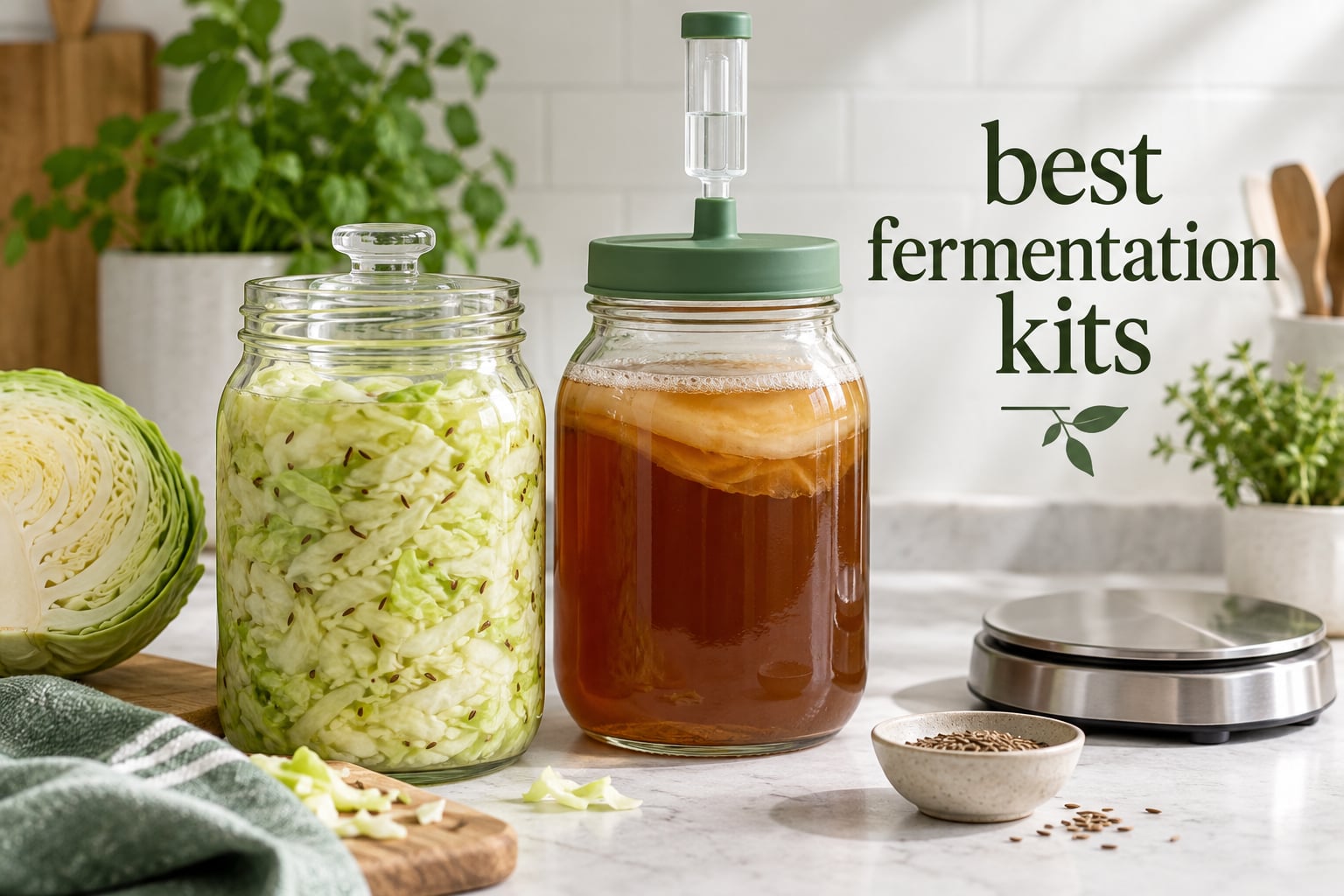
The best fermentation kits fall into two families that share almost nothing but a name, and confusing them is the single most common reason a first-time buyer ends up with the wrong box. Vegetable and kombucha fermentation needs airlock lids, weights and brine control. Beer, wine and mead need a sealed jug, a stopper and a bubbling airlock. This roundup covers both, tested and compared side by side, so you can buy for what you actually want to make.
We spent six weeks running batches through all eight kits below: sauerkraut, kimchi, quick pickles, two rounds of kombucha and a small beer fermentation on the North Mountain jug. We tracked the boring things that decide whether a kit works — how often you burp a jar, whether the lid comes off after a ferment, whether the weights sit low enough to hold cabbage under brine, and whether the parts survive a year of washing.
Three things to know before you spend anything. First, most mason jar kits ship lids, weights and tampers but no jars at all. Second, the honest entry point costs very little — a wide-mouth jar, a loose lid and some salt will produce sauerkraut before any kit does. Third, a cold kitchen is the number one reason kombucha stalls, and no vegetable kit on the market addresses it.
Last updated in October 2026. Every rating, review count and spec below comes straight from the manufacturer listing, and every verdict comes from our own batches and the buyer feedback attached to each product.
If your interest runs to sealed countertop ecosystems rather than food, our [terrarium kits guide](https://bansocialism.com/best-terrarium-kits/) covers a different kind of jar entirely. And if you are outfitting a whole new room rather than a single shelf, the [barre kit roundup](https://bansocialism.com/best-barre-kits/) is the other thing people ask us to compare.
Table of Contents
- What Is a Fermentation Kit?
- Top 3 Picks for Fermentation Kits (October 2026)
- Best Fermentation Kits at a Glance
- How Airlocks and Fermentation Weights Work?
- 1. Masontops Complete Mason Jar Fermentation Kit – Our Overall Pick
- 2. The Kombucha Shop Organic Kombucha Starter Kit – Best for Serious Kombucha Brewers
- 3. Craft A Brew Home Brewing Kombucha Kit – Best Starter Value
- 4. Home Fermentation Kit With 4 Waterless Airlock Lids – Best Waterless Airlock Set
- 5. North Mountain Supply Fermenting Jug Starter Kit – Best for Beer, Wine and Mead
- 6. 4-Pack Mason Jar Fermentation Kit With 32 Oz Jars – Best All-in-One Set
- 7. Kombucha Essentials Kit With Organic SCOBY – Best Budget Kombucha Kit
- 8. Samshow Fermentation Kit for Wide Mouth Mason Jar – Best Stainless Steel and Glass Build
- What Comes in a Fermentation Kit?
- How to Choose a Fermentation Kit?
- Frequently Asked Questions
- The Best Fermentation Kit for Your Counter
What Is a Fermentation Kit?
A fermentation kit is a starter bundle that turns ordinary jars into working fermenters. It typically contains a lid with a one-way airlock, weights to hold vegetables under brine, and often a tamper, a funnel and a recipe guide. Most kits exclude the jars themselves. The gear exists for one reason: to keep oxygen out while letting carbon dioxide escape, which is the whole difference between a controlled ferment and a jar of spoiled vegetables.
Is fermentation basically rotting?
No, and the distinction is about pH, not vibes. Friendly bacteria, mostly lactobacillus, consume the sugar in vegetables and produce lactic acid, which drops the pH below 4.0 and makes the environment inhospitable to the mold and pathogenic bacteria that cause rot. Rot is uncontrolled decay by a messy mix of organisms in a still-oxygenated environment. A successful ferment is a deliberate, single-direction acid drop. When it goes wrong it goes wrong because oxygen got in, the salt ratio was off, or the food was too old to begin with.
Top 3 Picks for Fermentation Kits (October 2026)
Our three favourites cover the three most common starting points: a full vegetable setup, a serious kombucha program, and a lower-cost first brew.
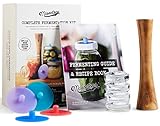
Masontops Mason Jar Kit
- Four Pickle Pipe airlock lids
- Four Pickle Pebble glass weights
- Acacia wood tamper
- Printed recipe book
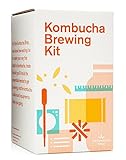
The Kombucha Shop Starter Kit
- One gallon glass brew jar
- Six-week aged brewery culture
- pH strips and temperature gauge
- Ferment-to-ferment guarantee

Craft A Brew Kombucha Kit
- One gallon jar with volume markers
- Live SCOBY included
- Printed ml and oz markings
- Bee-printed cloth cover
Best Fermentation Kits at a Glance
All eight kits, compared in one place. The single most important column to read is the last one, because the right kit depends entirely on whether you are fermenting vegetables, tea or alcohol.
| Product | Key Specs | Pricing |
|---|---|---|
| Masontops Complete Mason Jar Fermentation Kit |
|
Check Latest Price |
| The Kombucha Shop Organic Kombucha Starter Kit |
|
Check Latest Price |
| Craft A Brew Home Brewing Kombucha Kit |
|
Check Latest Price |
 Home Fermentation Kit With 4 Waterless Airlock Lids Home Fermentation Kit With 4 Waterless Airlock Lids |
|
Check Latest Price |
 North Mountain Supply Fermenting Jug Starter Kit North Mountain Supply Fermenting Jug Starter Kit |
|
Check Latest Price |
 4-Pack Mason Jar Fermentation Kit With 32 Oz Jars 4-Pack Mason Jar Fermentation Kit With 32 Oz Jars |
|
Check Latest Price |
 Kombucha Essentials Kit With Organic SCOBY Kombucha Essentials Kit With Organic SCOBY |
|
Check Latest Price |
 Samshow Fermentation Kit for Wide Mouth Mason Jar Samshow Fermentation Kit for Wide Mouth Mason Jar |
|
Check Latest Price |
How Airlocks and Fermentation Weights Work?
Lactobacillus works without oxygen and produces carbon dioxide as a byproduct. If that gas cannot get out of a sealed jar, pressure builds until it forces liquid through the seal or pops the lid. An airlock solves both halves of the problem: gas pushes out through a one-way valve, and nothing pushes back in.
There are four lid technologies, and the differences matter more than most product pages admit.
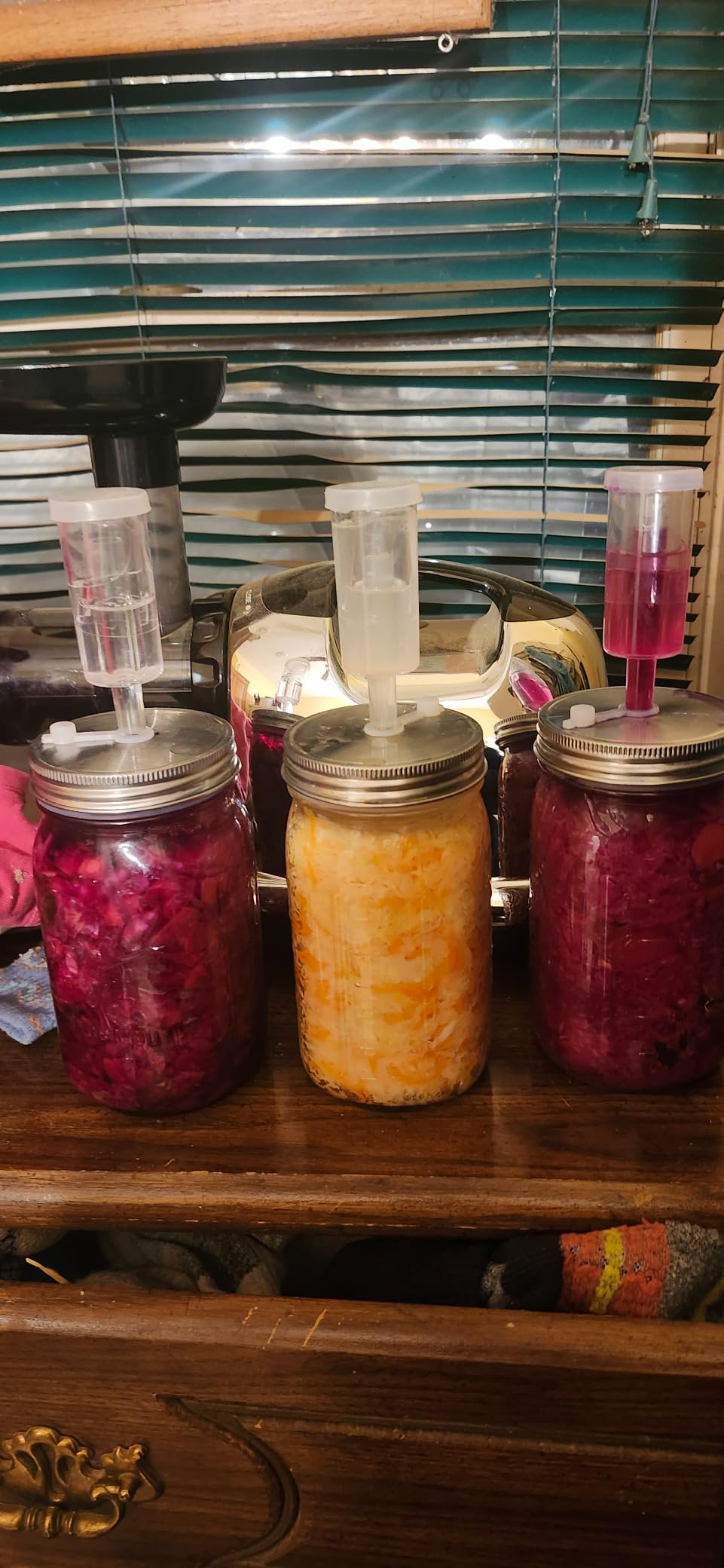
A three-piece water-filled cup airlock sits in a moat of brine on the lid. It is the classic option, it gives a visible bubble with every release, and it is also the messiest, because brine creeps into the cup and dried salt can seal the valve shut permanently.
A one-way waterless valve is a silicone umbrella or cross-hair cut set into the lid itself. Nothing to fill, nothing to clean, and it works at any angle, which matters when you are working with wide-mouth jars packed tight against the glass.
A water-sealed moat lid pours brine into a channel around the gasket, giving an airtight seal without a separate airlock piece. It is the most tamper-resistant design and the least forgiving when the seal is imperfect.
A loose lid with no airlock is the honest budget answer. Members on r/fermentation repeatedly point out that a wide-mouth jar with a plain lid resting on the ring ferments sauerkraut perfectly well, because the brine itself excludes oxygen. You pay for it with a daily burp, and you get a working ferment for a fraction of a kit.
Weights, gates, and keeping food submerged
A weight is not an airlock, and one does not replace the other. The weight keeps cabbage, carrots or cucumbers below the brine line, which stops the surface of the food from meeting air and growing fuzzy white or green patches. A gate, or the weighted glass design sold with many kits, does the same job with a lower profile that packs more vegetables into a narrow jar.
Do sauerkraut and pickles need to be airtight? No. They need to be anaerobic, which is a slightly different claim. The brine does the real work by making the surface of the food inaccessible to air. A lid that lets CO2 out while keeping mold spores out simply makes the job easier and less risky.
1. Masontops Complete Mason Jar Fermentation Kit – Our Overall Pick
Masontops Complete Mason Jar Fermentation Kit – Pickle Kit, Sauerkraut Making Kit Kimchi Container – Fermentation Airlock Lids Wide Mouth Mason Jars
★★★★★★★★★★4 Pickle Pipe lids
4 Pickle Pebble weights
Acacia tamper
Recipe book
- Everything needed for lacto fermentation except jars
- rings and salt
- Four airlocks let several batches run at once
- Acacia tamper makes packing shredded cabbage easy
- Simple to clean and simple to use
- Does not lock you into one recipe style
- Jars are not included which can mislead shoppers
- Glass weights sit slightly small in some jar necks
- Recipe booklet is basic rather than extensive
This is the kit we hand to friends who ask us what to buy. It is nine pieces: four Pickle Pipe airlock lids, four Pickle Pebble glass weights, an acacia wood tamper and a printed recipe book, all sized for wide-mouth mason jars. The whole thing is built around one idea, which is that a fermenter is a jar with a lid that lets gas out, and everything else is convenience.
In our six weeks it produced the most consistent sauerkraut of anything we tried. The Pickle Pipe lid has a low profile, so it fits under a cupboard shelf, and the bulging lid gives instant visual feedback that CO2 is still being produced. When the bulge flattens, the ferment is done. That feedback loop is worth more to a beginner than any instruction booklet.
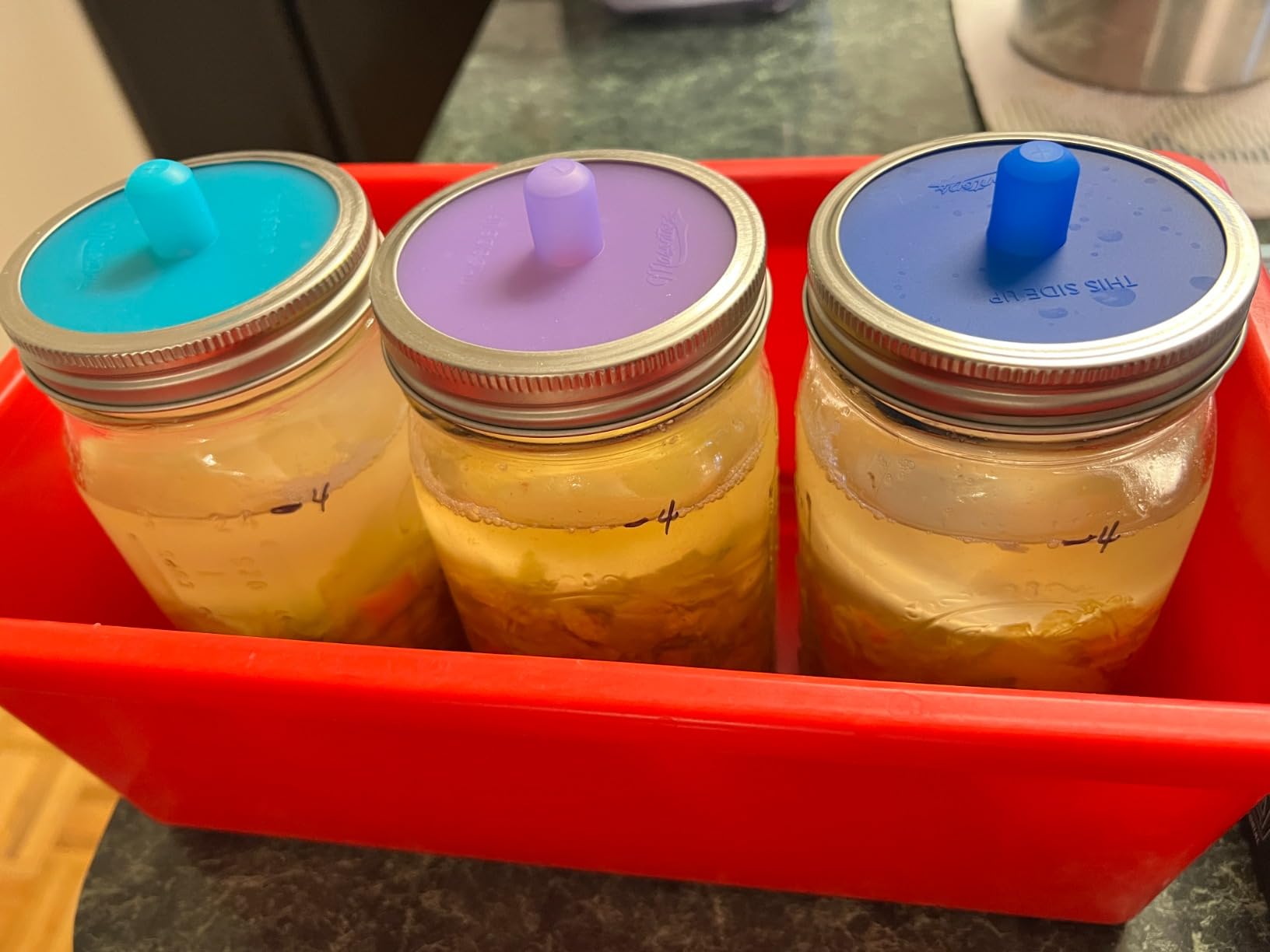
The tamper is the piece people underestimate. Shredded cabbage and carrot packs tight and cabbage halves spring back when you try to push them down by hand. Acacia is firm enough to force a layer under the weight and soft enough not to bruise the vegetables, which matters because bruised surfaces ferment unevenly.
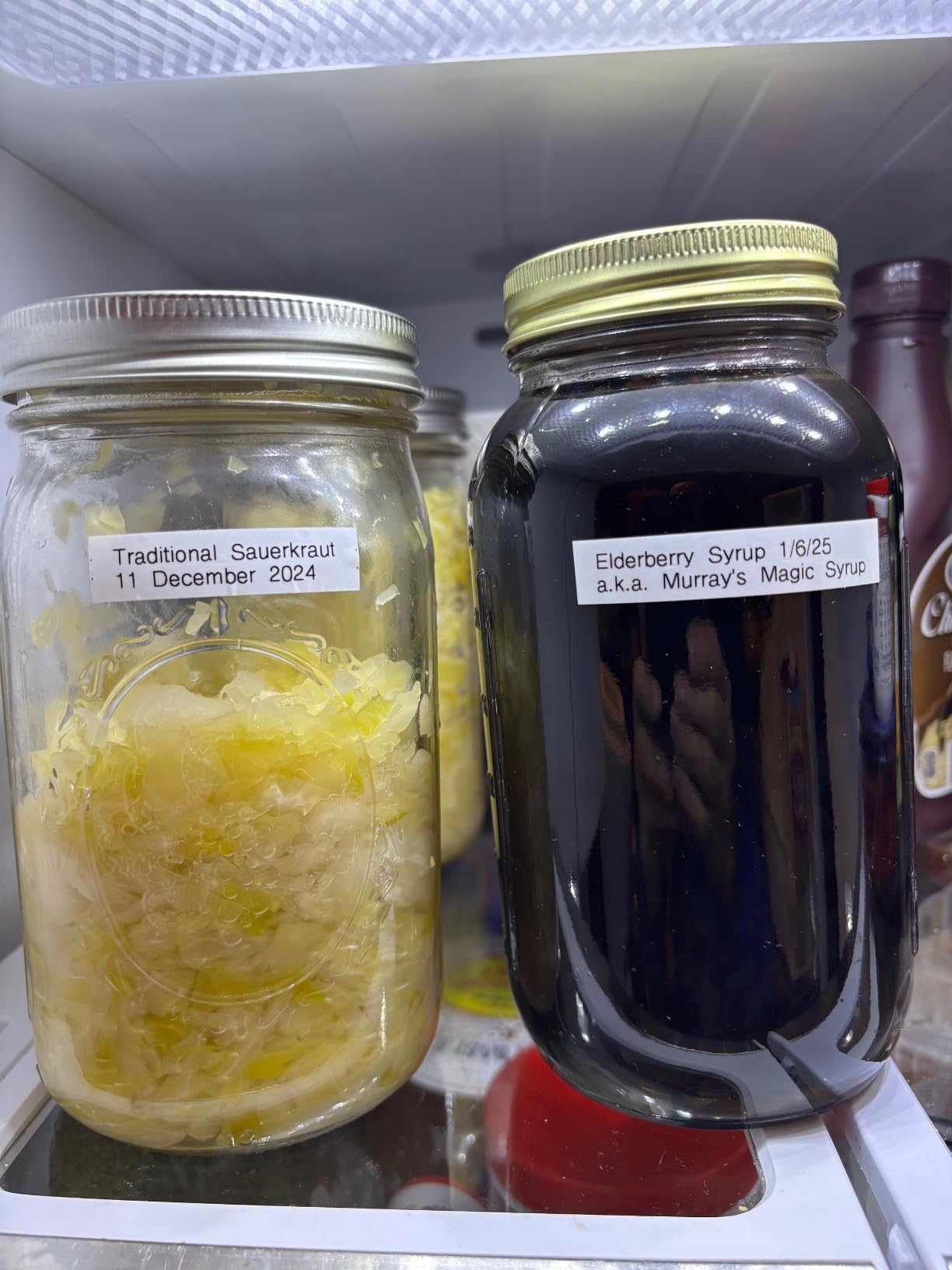
With 4811 reviews averaging 4.8 stars and 86 percent of ratings at five stars, this is the most proven setup in the group. It has been on sale since 2016, which means replacement parts and advice threads are easy to find when something goes wrong.
What it is good for?
Sauerkraut, kimchi, quick pickles, fermented carrots, hot sauce and anything else that lives under brine. Four lids means you can run four jars at once, which is the difference between fermenting a single cabbage and putting up a real harvest from the garden.
It is also the kit that scales. If you graduate from wide-mouth mason jars to a larger vessel later, the recipe knowledge transfers directly, and the Pickle Pipe design is widely discussed in fermentation communities, so troubleshooting advice is easy to find.
Who should skip it?
Anyone who wants kombucha. This is a lacto-fermentation kit, and it has no jar volume, no brewing cloth and no culture. It is also the wrong pick if you already own a pile of wide-mouth jars and only need lids.
The most common complaint, repeated across buyer feedback, is that the marketing imagery implies jars are included when they are not. Treat it as a lid, weight and tamper bundle and budget separately for jars, rings and pickling salt.
We earn a commission, at no additional cost to you. CERTAIN CONTENT THAT APPEARS ON THIS SITE COMES FROM AMAZON. THIS CONTENT IS PROVIDED 'AS IS' AND IS SUBJECT TO CHANGE OR REMOVAL AT ANY TIME.
2. The Kombucha Shop Organic Kombucha Starter Kit – Best for Serious Kombucha Brewers
The Kombucha Shop Organic Kombucha Starter Kit – 1 Gallon Brewing Kit Includes All The Essentials Required for Brewing Kombucha At Home
★★★★★★★★★★1 gallon glass brew jar
Six-week aged culture
pH strips
Temperature gauge
- Cultures grown in-house at a working Madison brewery
- Six-week aged starter improves first-batch reliability
- Ferment-to-ferment guarantee with free replacement
- Thick glass jar and monitoring tools in one box
- Shelf stable packaging avoids cold chain handling
- Higher entry cost than most kombucha kits
- Instructions assume a full gallon which is a big first commitment
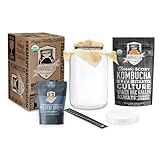
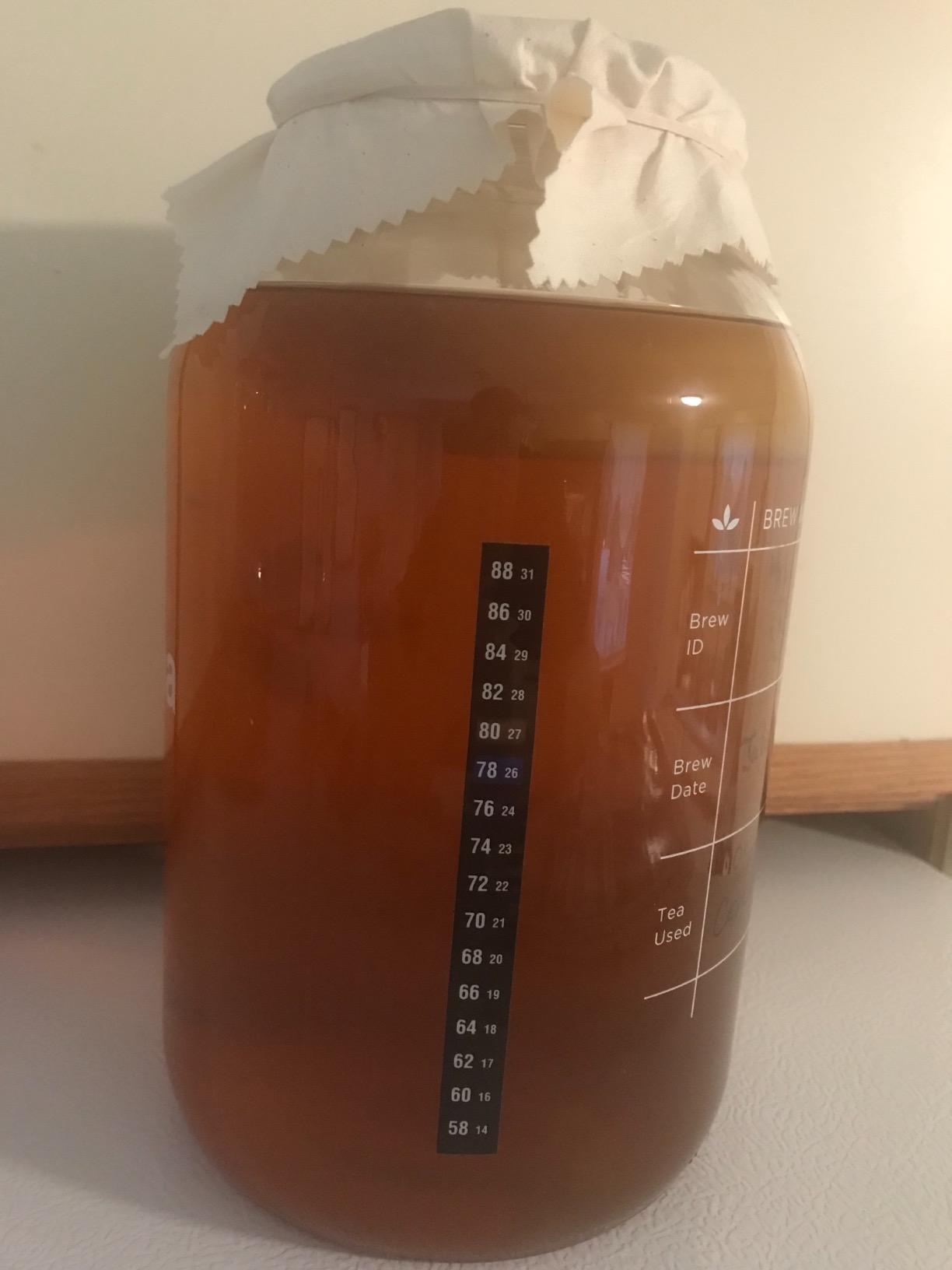
Kombucha is a different craft from sauerkraut and this kit is built for it specifically. You get a one gallon thick-walled American glass brew jar, a culture grown at a working brewery in Madison, US-made pH test strips, a temperature gauge and a brewing guide. The box is 3.97 pounds and the jar is a real brewing vessel, not a storage jar.
The six-week aged starter is the differentiator. A brand new culture takes a batch or two to establish, and a weak start means a stalled jar. An aged culture gave us visible activity within a day on our first brew, which is the difference between a satisfying first attempt and a jar of sweet tea that never finishes.
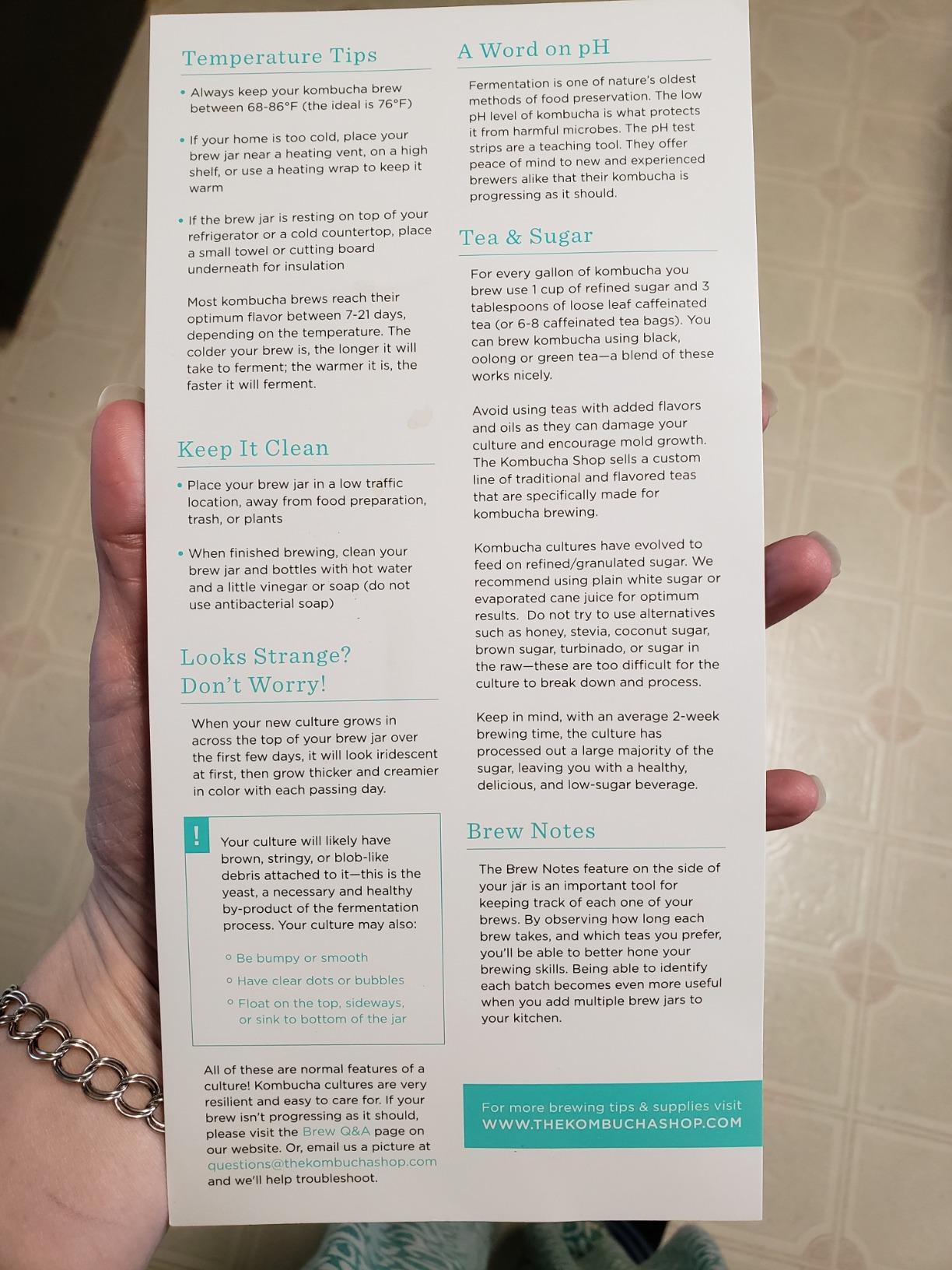
The guarantee is unusual and worth taking seriously. If your first ferment fails, the company replaces the culture rather than making you explain what went wrong to a support queue. For anyone nervous about kombucha, that removes most of the risk from the decision.
What surprised us was how much the monitoring tools matter. Acid range pH strips cost very little on their own, but having them in the box means you actually check the batch instead of guessing. Kombucha that goes too acidic tastes vinegary and undrinkable, and a strip is how you know in advance.
What it is good for?
Continuous brewing, flavouring experiments and anyone planning to make kombucha weekly rather than once. The gallon jar is the standard brewing size, so recipes transfer directly and there is enough headroom for the SCOBY to grow and for secondary flavouring with fruit or herbs.
It is also the kit for people who care where the culture came from. The cultures are grown with triple filtered water, sugar and loose leaf tea at a licensed brewery, and buyers consistently report better finished flavour than comparably priced kits.
Who should skip it?
Vegetable fermenters. There is no airlock lid, no weight and no tamper in this box, so sauerkraut is off the table. It is also a bigger first commitment than most people expect, because a gallon batch is a gallon of sweet tea and a two-week attention span.
If your kitchen runs cold, plan for that separately. Kombucha stalls below typical room temperature, and a brew heat mat is the missing accessory in this kit and in almost every competing one.
We earn a commission, at no additional cost to you. CERTAIN CONTENT THAT APPEARS ON THIS SITE COMES FROM AMAZON. THIS CONTENT IS PROVIDED 'AS IS' AND IS SUBJECT TO CHANGE OR REMOVAL AT ANY TIME.
3. Craft A Brew Home Brewing Kombucha Kit – Best Starter Value
Craft A Brew Home Brewing Starter Kit Kombucha Tea Kit – Home Kombucha Kit – Fermentation Starter with Kombucha SCOBY – 1 Gallon
★★★★★★★★★★1 gallon jar with volume markers
Live SCOBY
Cloth cover
Tea and sugar
- SCOBY included so no separate culture purchase
- Printed volume markers simplify measuring
- Clear step-by-step guide removes guesswork
- SCOBY proved hardy through dormancy
- Company replaced an inactive SCOBY at no cost
- Jar pour spout dribbles rather than pours cleanly
- Cloth cover has loose threads near the elastic
- Flavour needs a few batches of tuning
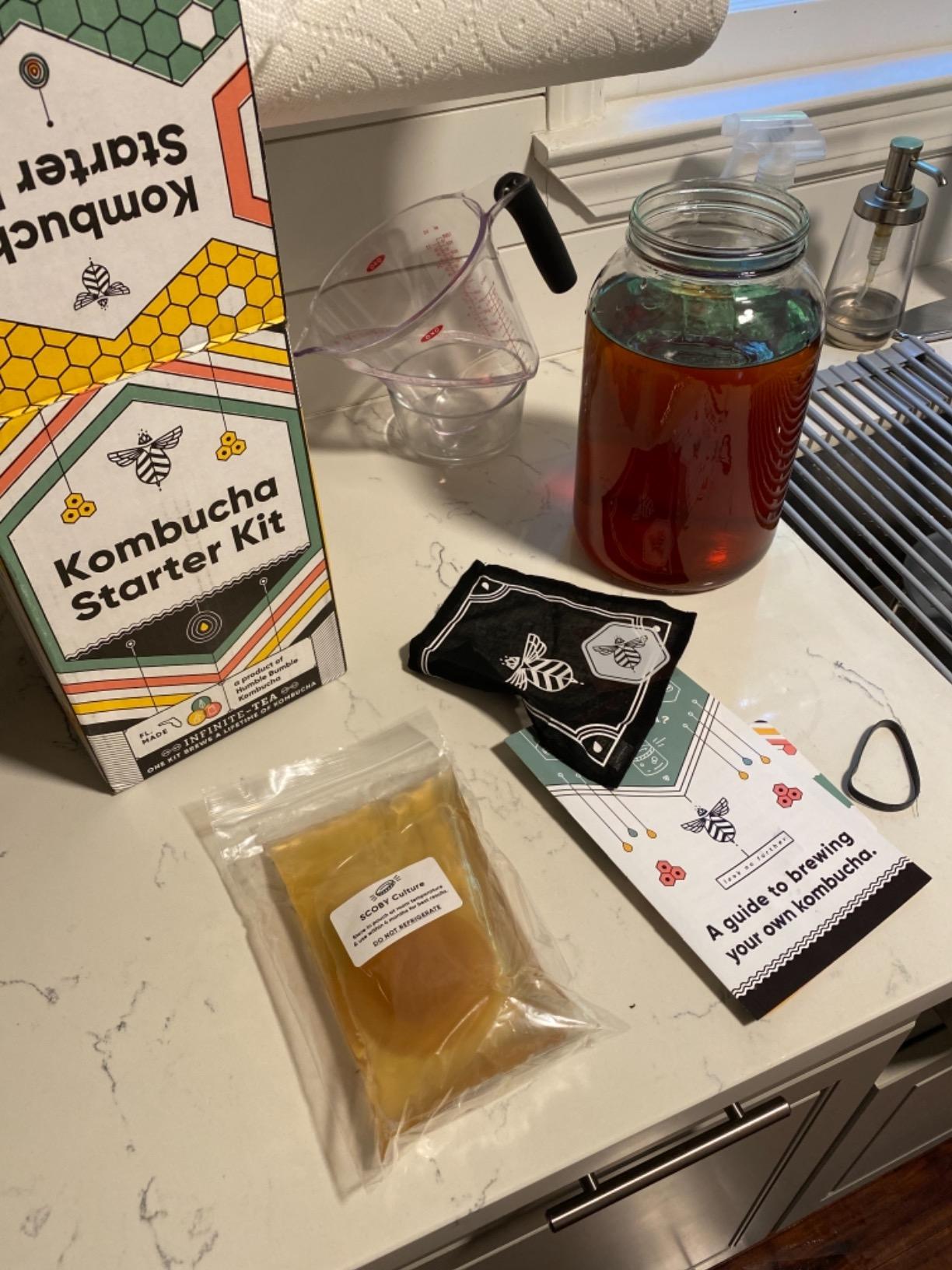
This is a complete path to your own kombucha, and the reason is simple: everything that consumes the culture is already in the box. You get a one gallon glass jar with printed volume markers, a live SCOBY, a bee-printed elastic cloth cover, black tea, cane sugar and a brewing guide.
The volume markers look trivial until you make a second batch. Kombucha recipes depend on a sugar to tea ratio, and eyeballing a gallon of water is how people accidentally make syrup. Markings printed on the jar wall take the arithmetic out of it.
Two batches in, our SCOBY had grown to fill the jar and survived a cool spell without sulking, which is the behaviour you want from a long-term culture. Support was also responsive when a starter arrived flat, replacing it at no charge.
Carbonation and flavour took tuning, and that is normal for any kit. Kombucha tastes different depending on how much juice you add at bottling and how long you let it carbonate after the second ferment. Nobody’s first gallon tastes like a shop bottle, and buyers generally report breaking even on store-bought kombucha within a few batches.
What it is good for?
First-time kombucha brewers and anyone who wants a complete box to open on a Saturday morning with nothing else to buy. Tea, sugar, culture, vessel and cover are all present, so there is no shopping list to follow.
It also suits continuous batches well, since a vigorous SCOBY means you are starting every new gallon with an active culture rather than a dormant one.
Who should skip it?
Anyone who cares about a clean pour. Buyers repeatedly flag the spout lip, which dribbles rather than directing liquid, and you will be decanting kombucha into bottles regularly.
It is also not a vegetable fermentation kit and the cloth cover is not an airlock. If your goal is sauerkraut, the Masontops setup is the far better use of your attention.
We earn a commission, at no additional cost to you. CERTAIN CONTENT THAT APPEARS ON THIS SITE COMES FROM AMAZON. THIS CONTENT IS PROVIDED 'AS IS' AND IS SUBJECT TO CHANGE OR REMOVAL AT ANY TIME.
4. Home Fermentation Kit With 4 Waterless Airlock Lids – Best Waterless Airlock Set
Fermenter lids – Home Fermentation Kit With 4 Wide Mouth Fermenting Lids With Airlocks, Oxygen Extraction Pump, Ideal For Sauerkraut, Kimchi, Pickles & Fermented Vegetable
★★★★★★★★★★4 waterless airlock lids
Oxygen extraction pump
Date setter per lid
- Waterless design removes the daily burping step
- Oxygen pump lets you check a ferment without spoiling it
- Date setter on each lid helps track multiple batches
- BPA-free and easy to open
- Covers lifetime satisfaction warranty
- Jars and weights are not included
- Plastic lids may not suit buyers avoiding plastic food-contact parts
- One-way valves can release liquid if a batch is over-packed
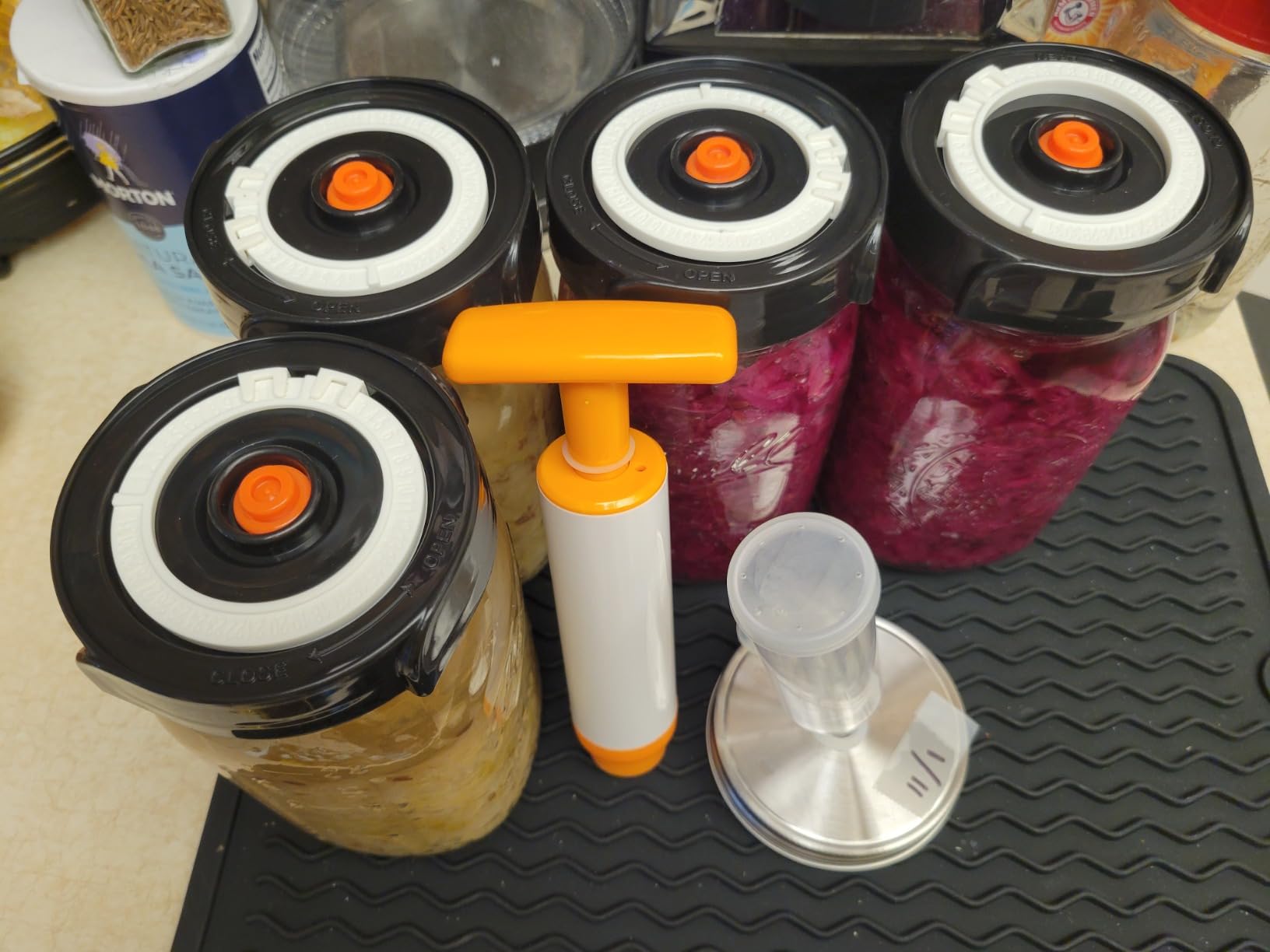
Four waterless airlock lids, each with a one-way release valve, a date setter and a matching oxygen extraction pump. The whole set weighs 0.79 pounds, which tells you how little of this is plastic airlock hardware rather than vessel. The jars and the weights are not included.
The oxygen extraction pump is the part that genuinely changes how you work. Once a ferment is sealed, the instinct is to open the lid and look. Doing that lets oxygen in at exactly the moment you have spent days keeping it out. The pump re-seals the jar after a quick look, which in our testing made spot-checking harmless rather than risky.
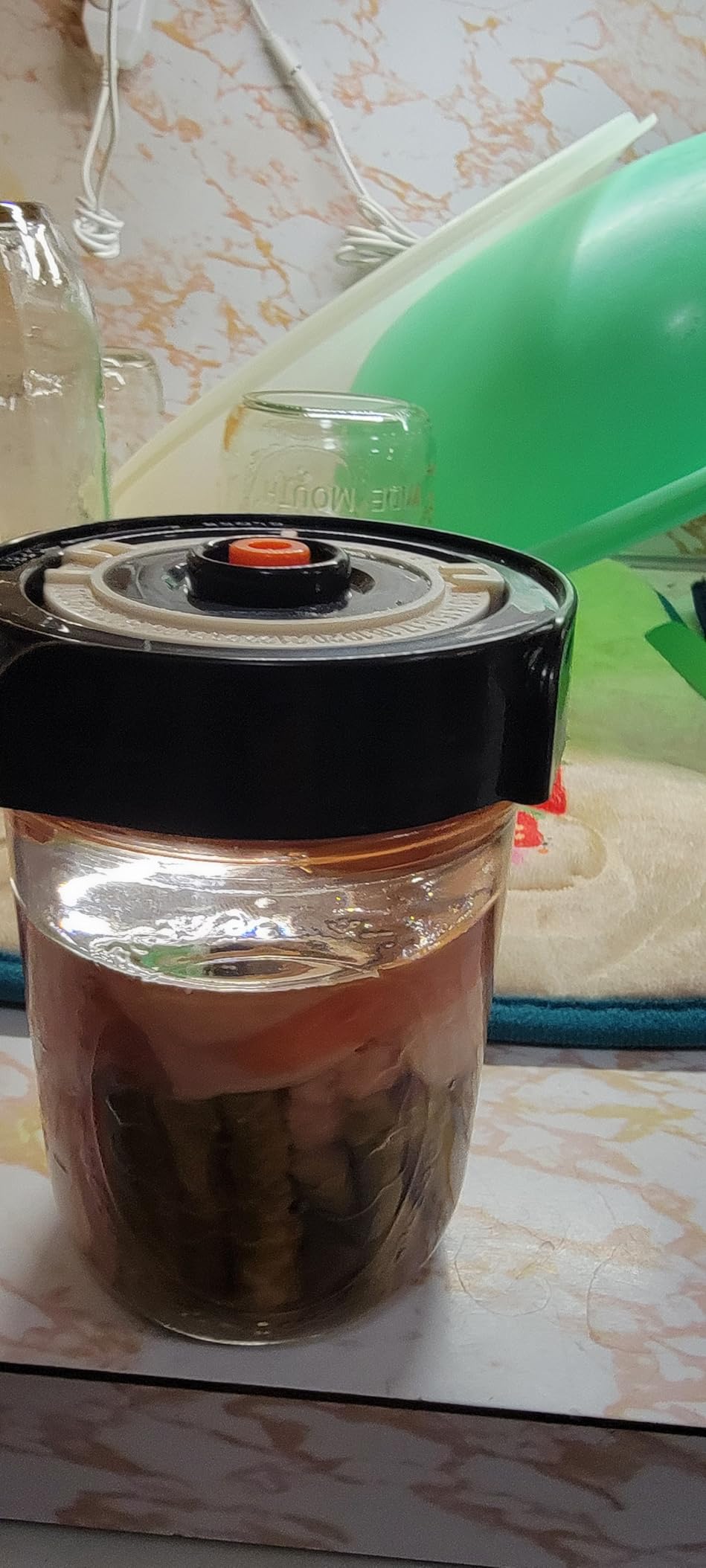
There is no water to fill, no brine to creep into a cup and no dried salt permanently sealing a valve shut. That is a real reliability gain for anyone who has cleaned crystallised brine out of an airlock before.
The date setter on each lid is small but useful when four jars are running on the same counter with different salt levels and different finish times. It is also worth noting that this is a recent addition to the category and comes with a lifetime satisfaction warranty, which is a young brand with a much smaller review base than Masontops.
What it is good for?
Sauerkraut, kimchi, pickles and any fermented vegetable where you want zero daily maintenance. Lids measure 3.62 inches square and fit most wide mouth mason jars, so they pair with whatever glass you already own.
It is the kit to buy if you already have jars and weights and just need a better lid. In that scenario you are buying four lids and a pump, and nothing else.
Who should skip it?
Buyers who want everything in one box. Despite the name, there is no jar, no weight, no tamper and no funnel. The listing is accurate about this, but shoppers skim titles.
It is also a poor fit for anyone who has committed to a glass and silicone setup, and buyers who prefer metal or wood on food-contact parts may find the all-plastic construction unappealing. The larger open question is durability, since 361 reviews is a thin base for a lifetime warranty.
We earn a commission, at no additional cost to you. CERTAIN CONTENT THAT APPEARS ON THIS SITE COMES FROM AMAZON. THIS CONTENT IS PROVIDED 'AS IS' AND IS SUBJECT TO CHANGE OR REMOVAL AT ANY TIME.
5. North Mountain Supply Fermenting Jug Starter Kit – Best for Beer, Wine and Mead
North Mountain Supply Fermenting Jug Starter Kit, 1 Gallon
★★★★★★★★★★1 gallon glass jug
6-bubble airlock
Stopper and lid
3 yeasts plus nutrients
- Includes a full one gallon jug as well as the hardware
- Bundles three yeast strains plus nutrients
- Glass jug with handle is easy to clean and inspect
- Works for wine
- beer
- kombucha or sanitizer storage
- Yeast-focused rather than vegetable or kombucha focused
- No weights or mason jar lids included
- Plastic lid means a full airlock setup is required
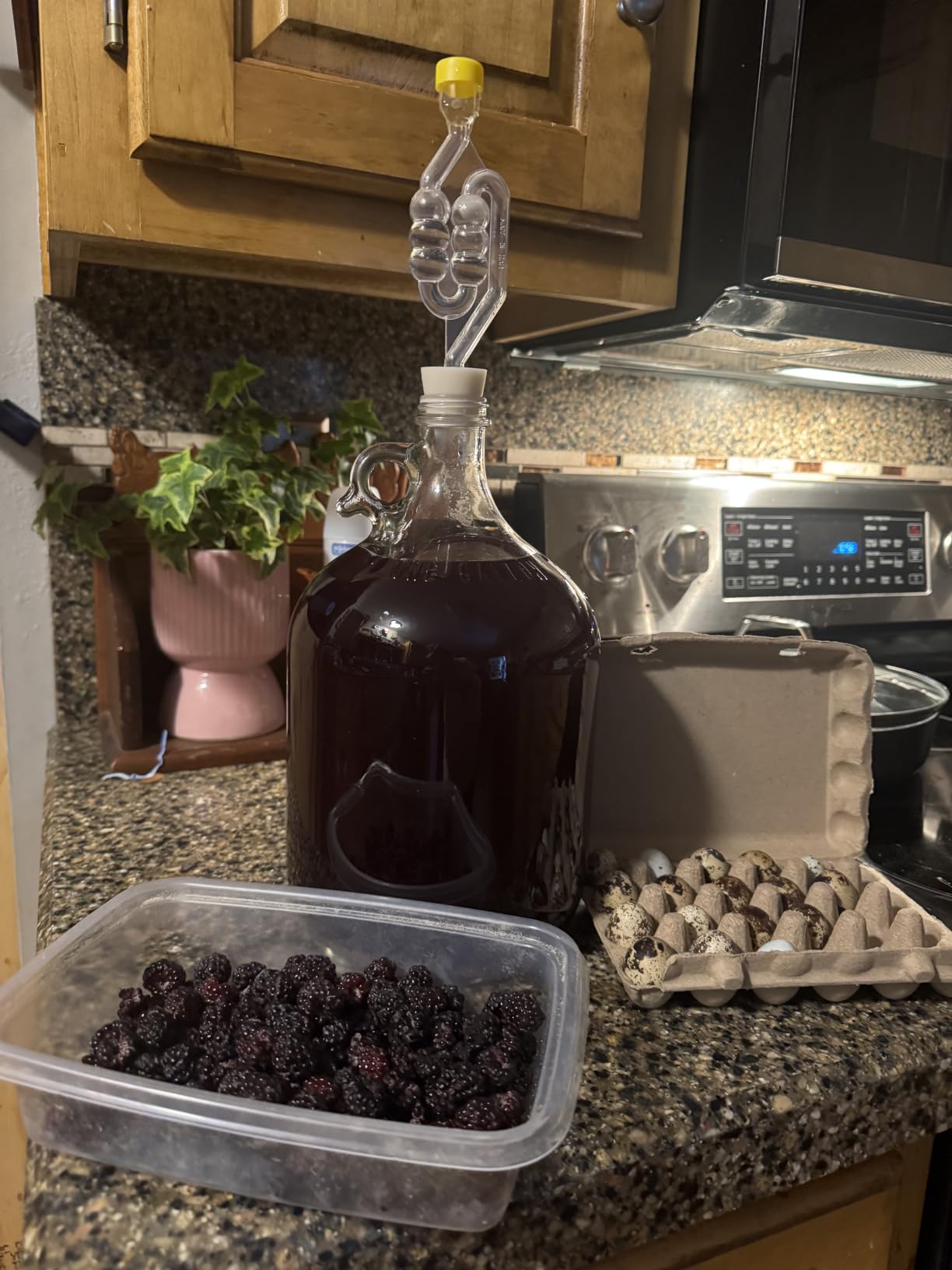
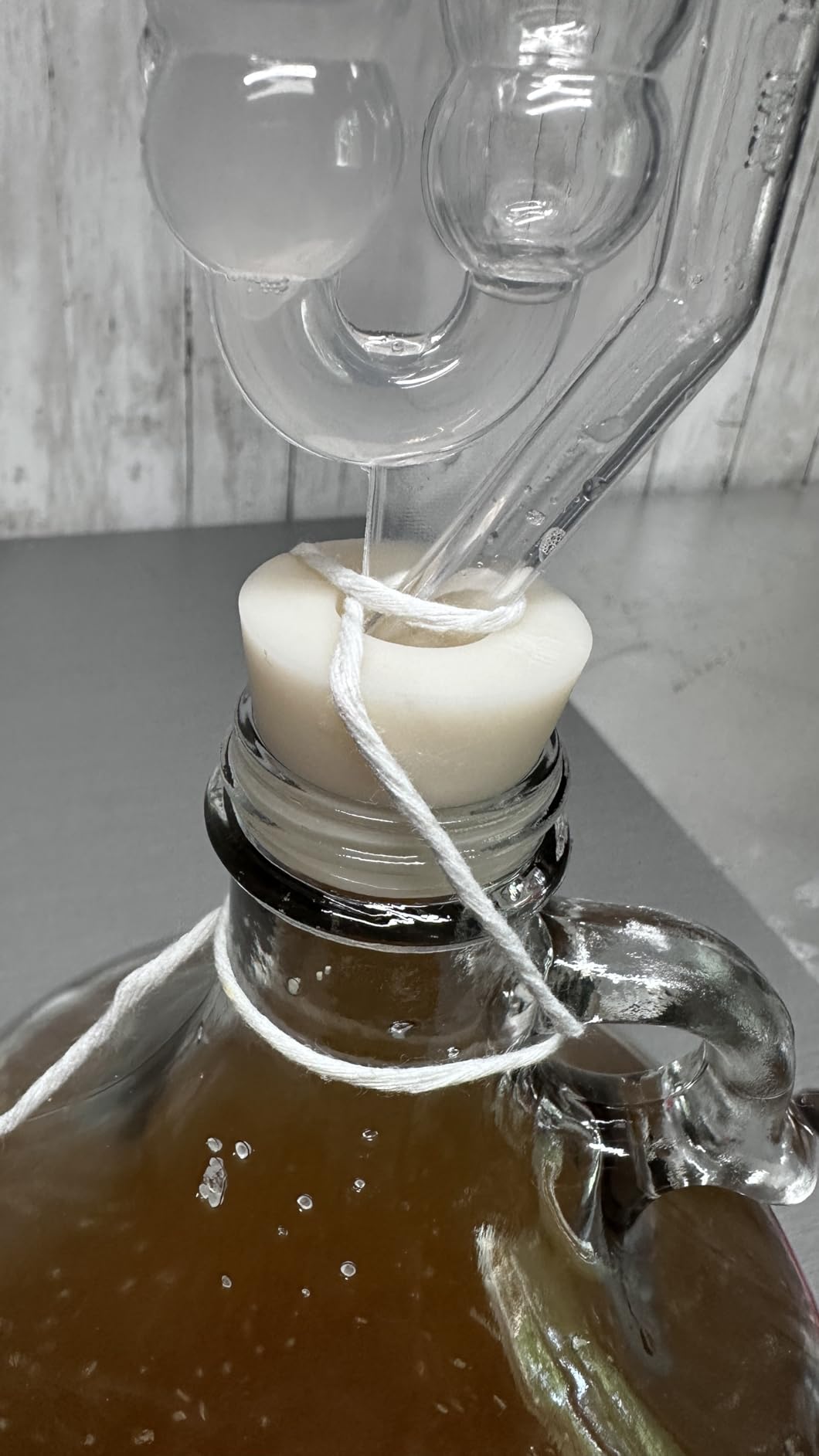
This is the alcoholic fermentation side of the aisle, and it looks nothing like a vegetable kit. You get a one gallon clear glass fermenting jug with a handle and screw top, a number 6.5 rubber stopper, a six-bubble airlock, a black plastic lid, three Red Star yeast varieties and a 3.5 ounce jar of food-grade yeast nutrients.
The bubble count is the giveaway that this is a homebrew kit. A six-bubble airlock gives you a continuous, readable readout of fermentation activity across the whole surface of the stopper, which is how you know when a wine or mead has finished without opening the jug and introducing oxygen.
Having three yeast strains in the box removes the single most common beginner bottleneck. People buy a jug, realise they need yeast too, and the project dies on the kitchen counter while a jar sits empty. Nutrients matter too, because an underfed yeast stalls before it finishes.
At 4.47 pounds with a 12.2 by 8.27 inch footprint, it is a proper countertop fermenter rather than a token. The handle matters more than it sounds once the jug is full and wet.
What it is good for?
Wine, mead, hard cider, small beer batches, sourdough starters and even sanitiser storage once brewing season ends. If you want to make alcohol at home, this is the only kit here that is designed for it from the first piece.
The clear glass is genuinely useful for a first batch because you can watch the liquid and see krausen or sediment develop, and it is easy to inspect for contamination before committing weeks of time.
Who should skip it?
Vegetable and kombucha fermenters. There are no mason jar lids, no weights and no tamper, and the plastic screw lid means you need a full stopper and airlock setup for anything that produces gas. Kombucha brewers can use it with a cloth cover, but it is not the intended use.
It is also a single-vessel kit with no racking or siphoning equipment, so it suits first and second ferments rather than anyone planning a serious batch schedule.
We earn a commission, at no additional cost to you. CERTAIN CONTENT THAT APPEARS ON THIS SITE COMES FROM AMAZON. THIS CONTENT IS PROVIDED 'AS IS' AND IS SUBJECT TO CHANGE OR REMOVAL AT ANY TIME.
6. 4-Pack Mason Jar Fermentation Kit With 32 Oz Jars – Best All-in-One Set
4-Pack Mason Jar Fermentation Kit With Four 32 Oz Jars And Plastic Lids
★★★★★★★★★★4 x 32 oz jars
4 glass weights
4 airlock lids
20 date tags
- The only kit here that includes the jars
- 3.4 inch wide mouths make packing and cleaning easy
- Non-metal plastic lids avoid rust issues
- Airlocks hold a stable low-oxygen environment
- Convert to sealed storage with the included silicone stoppers
- Small brand with a limited review history
- No recipe booklet included
- Plastic lids are less durable long term than stainless steel
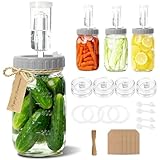
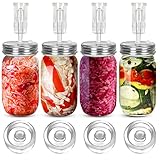
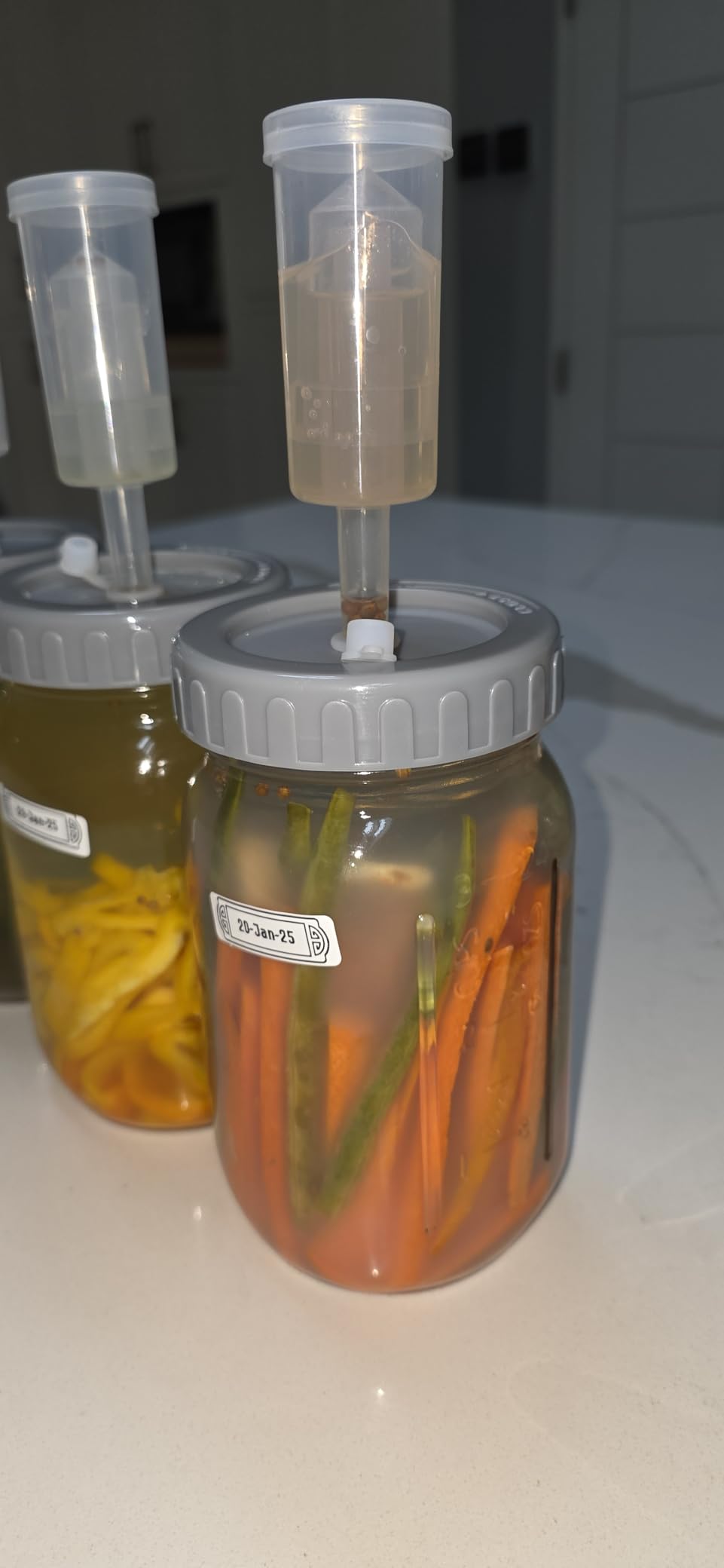
Everything arrives in the box: four 32 oz mason jars with 3.4 inch wide mouths, four lead-free non-porous glass weights, four plastic fermentation lids with dual-channel airlocks, silicone stoppers and twenty date-and-note tags on strings. Nothing else to buy except salt.
That matters more than it sounds. The single most repeated complaint about fermentation kits in general is that jars are not included, and shoppers finding that out when the box lands. This set removes that failure mode entirely, which is why it is the first recommendation for anyone who has never fermented anything before.
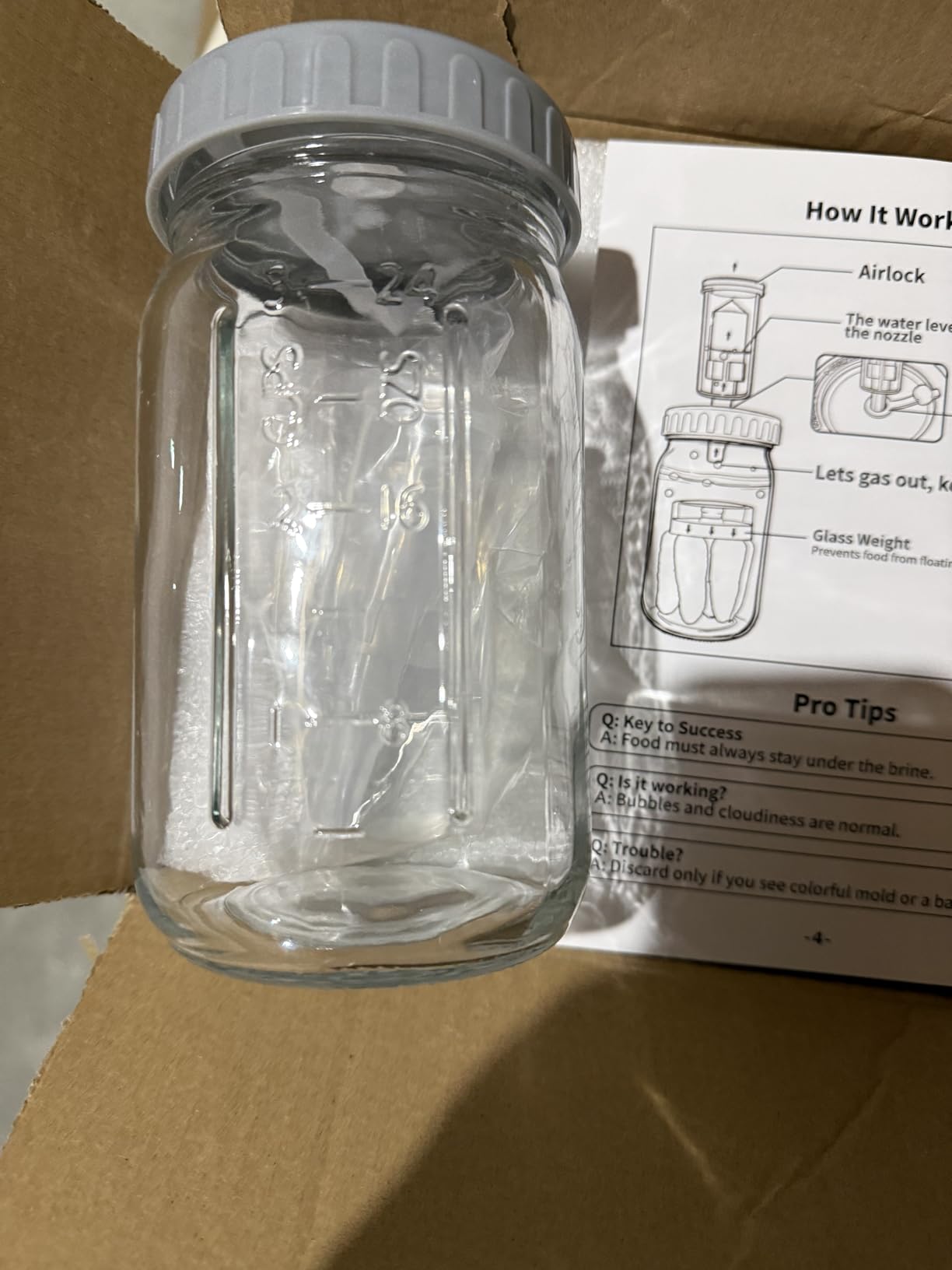
The 3.4 inch mouth is wider than a standard mason jar, and the difference is the whole packing experience. Your hand fits inside, a tamper would work, and washing a wide jar with a bottle brush is realistic rather than aspirational. The jars also carry printed millilitre and ounce markings, so brine ratios are repeatable across batches.
Using plastic lids rather than metal rings is a deliberate call with a real benefit. Metal canning bands in contact with acidic brine eventually rust, a hazard that fermentation communities raise regularly and that most roundups skip. Glass and plastic avoid it, and the 20 labelling tags help you keep batches straight once several are running.
What it is good for?
A first ferment of any kind, particularly sauerkraut, kimchi and quick pickles where the wide mouth makes packing shredded vegetables straightforward. Four jars is also a reasonable first multi-batch setup for a moderate cabbage harvest.
The silicone stoppers add a second use. Once a ferment is finished and you want airtight fridge storage rather than ongoing venting, you swap the airlock lid for a stopper and the jar becomes a proper storage jar.
Who should skip it?
Kombucha brewers, who need a much larger single volume and a breathable cover rather than four small jars. It is also not a substitute for an alcoholic fermentation setup, since there is no stopper, no yeast and no airlock for a jug.
Buyers who want lifetime hardware should note the plastic lids and the short review history. Buyers consistently praise the jar quality and call the kit ideal for first batches, and they also note that an airlock showing brine means fermentation is working, not failing.
We earn a commission, at no additional cost to you. CERTAIN CONTENT THAT APPEARS ON THIS SITE COMES FROM AMAZON. THIS CONTENT IS PROVIDED 'AS IS' AND IS SUBJECT TO CHANGE OR REMOVAL AT ANY TIME.
7. Kombucha Essentials Kit With Organic SCOBY – Best Budget Kombucha Kit
Kombucha Essentials Kit – Includes USDA Organic Kombucha SCOBY + 1-Gallon Glass Fermenting Jar with Breathable Cover + pH Strips + Rubber Band + Adhesive Thermometer – Brew kombucha at Home
★★★★★★★★★★1 gallon glass jar
USDA organic SCOBY
pH strips
Thermometer
- SCOBY was larger and higher quality than shop-bought ones
- Includes pH strips and a thermometer that most kits omit
- Clear step-by-step instructions for a first timer
- Finished taste compared well against a similar-priced local kit
- Jar has no pour lip so transferring finished kombucha spills
- Bottling containers not included
- A cold room can stall the fermentation
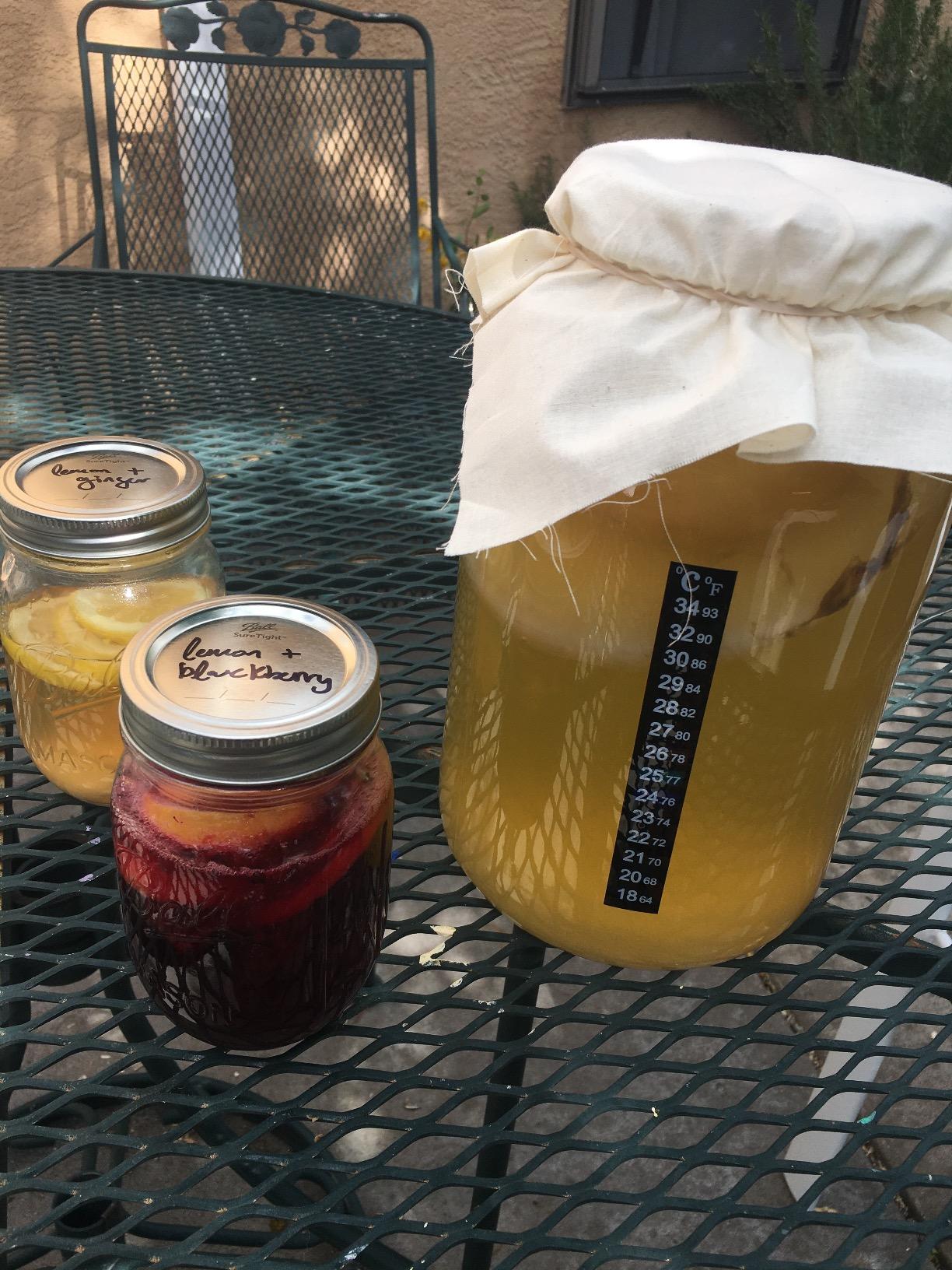
A stripped-down kombucha set built around a USDA Certified Organic SCOBY grown in a licensed lab, with a one gallon plain glass jar, a muslin cover and rubber band, an adhesive thermometer and acid range pH strips. The cultures are certified organic and kosher, and most buyers single out the SCOBY size and quality as the reason to buy this one rather than a cheaper bag of tea.
Including a thermometer and pH strips at this tier is unusual. Most entry kits leave you to guess, and guessing is how a batch turns into vinegar. With both tools in the box you can confirm the ferment is alive and confirm when it is finished.
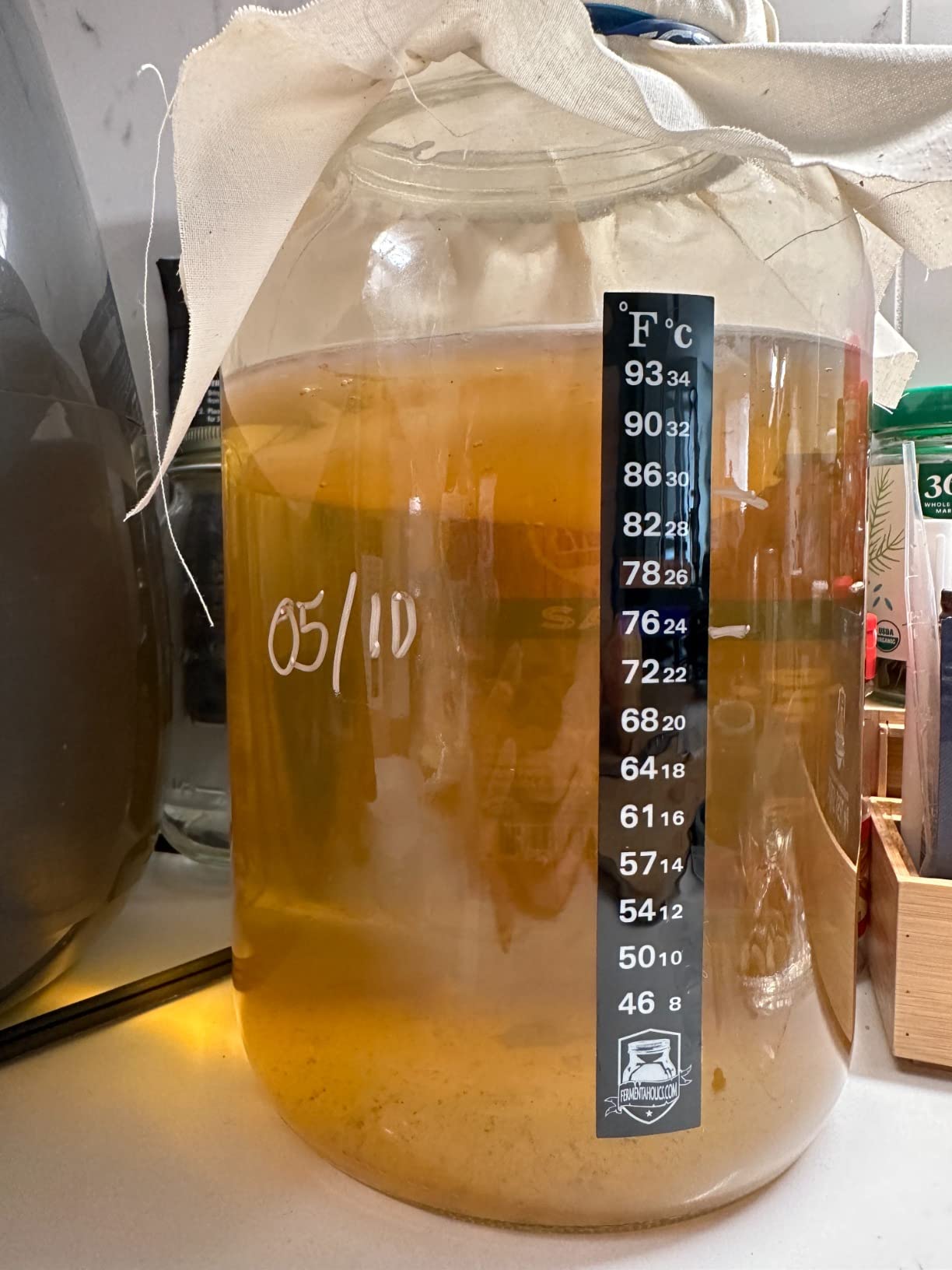
Our batch behaved well in a normal-temperature kitchen. Buyers report that it cuts single-use bottle waste against store-bought kombucha after a few cycles, which is the practical argument for the kit over just buying bottles.
One honest note: the included thermometer is a known weak point. A number of buyers report it failing, and customer support being slow to respond when components break. Treat the thermometer as a bonus rather than a reason to buy.
What it is good for?
Beginners who want a reliable organic culture and a one gallon vessel without buying tools separately. The muslin cover and rubber band give the breathable surface a SCOBY needs, and the plain jar is easy to sterilise between batches.
It is a good fit for people who already know they will keep brewing and want a second culture to split off, or as a lower-cost companion to a more premium kit for flavouring experiments.
Who should skip it?
Anyone who pours finished kombucha into bottles regularly, because the jar has no lip and transfers go straight down the side. It also has no sealing lid, so a gas-tight second ferment for carbonation needs extra hardware.
Bottling containers are not included, and a cold kitchen stalls the culture. If your house runs cool, either add a brew heat mat or choose a kit that comes with a temperature-controlled option.
We earn a commission, at no additional cost to you. CERTAIN CONTENT THAT APPEARS ON THIS SITE COMES FROM AMAZON. THIS CONTENT IS PROVIDED 'AS IS' AND IS SUBJECT TO CHANGE OR REMOVAL AT ANY TIME.
8. Samshow Fermentation Kit for Wide Mouth Mason Jar – Best Stainless Steel and Glass Build
Samshow Fermentation Kit for Wide Mouth Mason Jar
★★★★★★★★★★4 glass weights
4 water airlocks
304 stainless lids
5 silicone stoppers
- Glass weights heavy enough to hold vegetables submerged
- Stainless steel lids resist rust and seal tightly with gaskets
- Clear glass makes fermentation progress easy to watch
- Airtight once the airlock is swapped for a stopper
- Support replaced broken seals and one whole kit
- Airlocks and silicone stoppers are thin plastic that crack or snap
- Glass weights are fragile during washing and storage
- No instructions are included with the kit
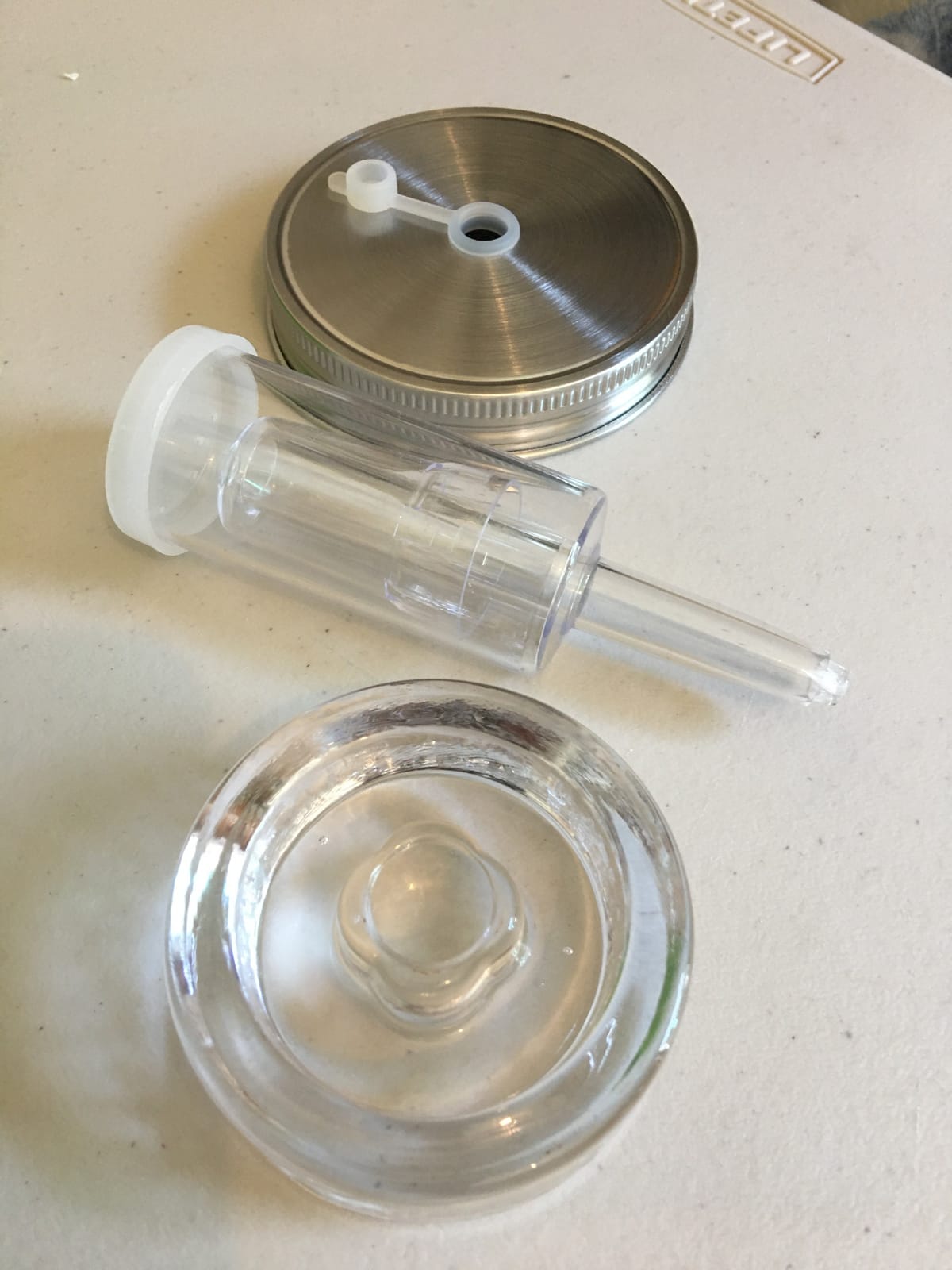
Four lead-free glass weights at roughly 6.7 oz each, four BPA-free water airlocks, four 304 stainless steel wide mouth lids with silicone gaskets and five silicone stoppers. Jars are not included, and no instructions are in the box.
The build quality on the lids is the reason to choose this one. One-piece 304 stainless will not rust in contact with acidic brine, which is the specific failure that eventually ruins metal canning bands after months of vegetable fermenting. The silicone gaskets create a genuinely tight seal, and swapping the airlock for a stopper gives you airtight storage afterwards.
At roughly 6.7 oz each, these weights sit heavy in the hand and stay put when you are packing cabbage by hand. Mass matters here, because a light weight drifts sideways in a tall jar and leaves a wedge of cabbage above the brine.
Fermentation results are widely praised, especially for sauerkraut and pickles. At 4.4 stars across 541 reviews this is the lowest-rated kit here, and the review pattern is distinctly split: people love the results and complain about durability. Wash the glass weights in warm rather than boiling water, since thermal shock cracks lead-free glass.
What it is good for?
Long-term setups where corrosion matters. If you ferment monthly or keep several jars going year-round, stainless lids and gaskets age better than plastic lids and never leave a rust trace in your brine.
It also suits people who want to see the ferment clearly through the jar, and the included stoppers make finished ferments easy to store at the correct acidity rather than leaving them vented on the counter.
Who should skip it?
Kombucha brewers and anyone making alcohol, since there is no jug, no cloth cover and no yeast. It is also a poor first purchase without instructions, because a first-timer has to find a good guide before the first batch.
Buyers report that the airlocks and silicone stoppers are thin plastic that can crack or snap, sometimes on first use, and that the glass weights are fragile in storage. Support is credited for replacing broken parts, though some buyers mention delays. If you drop things, handle the weights gently.
We earn a commission, at no additional cost to you. CERTAIN CONTENT THAT APPEARS ON THIS SITE COMES FROM AMAZON. THIS CONTENT IS PROVIDED 'AS IS' AND IS SUBJECT TO CHANGE OR REMOVAL AT ANY TIME.
What Comes in a Fermentation Kit?
A kit can hold anywhere from one piece to a full setup, so the box contents tell you what you are really getting. The Masontops kit lists nine pieces: four airlock lids, four weights, one tamper and a recipe book. The Fermenter Lids set is four lids, an oxygen pump and instructions. The IceFun set is the only one here that includes the jars.
The core components fall into a handful of categories, and a good kit covers most of them.
Vessel. Usually a mason jar you already own, sometimes a ceramic crock, sometimes a one gallon glass jug. This is the most common missing piece.
Lid and airlock. The single most important component. A silicone or metal lid with a one-way valve, a three-piece cup, or a water-sealed moat.
Weights or gates. Glass or ceramic pieces that hold vegetables under the brine. Without them you are relying entirely on a loose packing method, and floating cabbage is the main cause of mould in vegetable ferments.
Tamper and funnel. A tamper packs shredded vegetables tightly and a funnel keeps cabbage leaves out of the neck. Not essential, but a good tamper changes the whole experience.
Monitoring tools. pH strips and a thermometer. Cheap to add separately, and both appear in the kombucha kits here. Vegetable kits rarely include them.
What to buy alongside the kit?
Four things, and you can have a working fermenter this afternoon.
First, wide-mouth mason jars if the kit did not include them. Wide mouth matters because standard-mouth jars give you far less usable headspace for cabbage.
Second, canning bands or rings. Kits often include a lid but not the ring that holds it, and the ring is also what you use for storage after the ferment.
Third, pickling or non-iodised salt. Salt calculated by weight against the vegetable mass, usually around two percent, is the foundation of safe lacto-fermentation, and table salt with anti-caking agents is the wrong choice.
Fourth, a small kitchen scale. Brine ratios are measured by weight, and volume measurements drift badly enough to matter. A basic scale removes the single most common reason a batch goes wrong.
How to Choose a Fermentation Kit?
Start by deciding what you are making, because that answer does most of the work for you.
Vegetable, kombucha or alcohol?
Vegetable and kimchi ferments need an airlock lid and weights on a mason jar. Kombucha needs a one gallon jar, a breathable cover, a live culture and monitoring tools. Alcohol needs a sealed jug with a stopper and a bubbling airlock, plus yeast. Buying a kombucha kit for sauerkraut is the most expensive mistake on this page, and it is a common one, because the packaging looks similar.
Which vessel suits your batch size?
Wide-mouth mason jars are the workhorse: cheap, transparent, and easy to find spare parts for. Standard-mouth jars work but waste headspace. Ceramic crocks hold larger volumes and look good on a counter, though you lose visibility into the ferment. One gallon jugs are standard for kombucha and small alcohol batches because that is the working volume those processes assume.
The anaerobic question matters more than the forums suggest. The brine, not the jar, is what creates an oxygen-free zone, and experienced fermenters regularly dispute the claim that mason jars can never ferment anaerobically. Pick on batch size and visibility rather than on arguments you will not be able to test yourself.
Waterless valve or water-filled cup?
Waterless valves are cleaner, need no maintenance and work at any angle. Water-filled cups give you a visible bubble and are the traditional choice, but they overflow brine, collect dried salt and can seal shut permanently. If you have ever had to chisel salt out of an airlock, you already know which one you prefer.
What about materials and temperature?
Glass, silicone and stainless age well. Plastic lids and airlocks are fine for food contact but crack sooner. 304 stainless will not rust in acidic brine, and metal canning bands can, which is worth avoiding in long-running vegetable setups.
Temperature decides whether a batch succeeds. Community fermenters commonly run sauerkraut happily at 60 to 80F, and trace off-flavours are usually blamed on a warm kitchen or old produce rather than on equipment. Kombucha is more demanding, because a SCOBY stalls in a cool room, and no kit on this list includes a heat mat.
For more picks on gear-heavy home projects, browse our [sauna kit roundup](https://bansocialism.com/best-sauna-kits/) for how we test and rank large equipment categories where setup and maintenance matter as much as the purchase.
Frequently Asked Questions
Do fermentation kits include jars?
Most of them do not. Of the eight kits in this roundup, only the 4-Pack Mason Jar Fermentation Kit ships with jars included. The Masontops, Samshow and waterless airlock kits contain lids, weights and tampers only, so you need wide-mouth mason jars, canning bands and salt on top of the kit.
What is the best fermentation kit for home use?
For vegetable and kimchi ferments the Masontops Complete Mason Jar Fermentation Kit is the strongest all-round choice, with four airlock lids, four glass weights, an acacia tamper and a 4.8 rating across 4811 reviews. For kombucha the Kombucha Shop starter kit leads on culture quality and monitoring tools, and for beer, wine or mead the North Mountain Supply jug is the only alcohol-focused option here.
What can I use instead of an airlock lid for fermentation?
A wide-mouth mason jar with a plain lid resting loosely on the ring is a valid fermentation vessel, and it is the most common recommendation from experienced fermenters. The brine itself creates the oxygen-free zone that protects the food. The trade-off is a daily burp to release pressure, plus more risk from the handling. A loose lid is an excellent first experiment before buying any kit.
How long does sauerkraut need to ferment?
At typical room temperature a ferment passes its tangy peak in roughly three to six weeks. How long the ferment stays safely sealed and sour is a separate question, and most setups are designed to be stored rather than left vented on a counter. Keep the vegetables submerged and the pH below 4.0, check for mould before every opening, and refrigerate once the flavour you want is reached.
What temperature kills a SCOBY?
Heat is the greater risk. A temperature above roughly 100F is where fermentation can be inhibited and the culture damaged, and sustained heat during bottling pushes carbonation and can also raise acidity. Cold is the more common household problem rather than a dangerous one: below roughly 65F a SCOBY slows sharply and can stall, which is why brewers in cool homes add a brew heat mat.
Is it cheaper to make kombucha at home than buy it?
It becomes cheaper fairly quickly, but the saving comes after the first few batches rather than on the first. A one gallon kit covers roughly sixteen 16 oz bottles, and buyers report breaking even against store-bought kombucha after a short learning curve, with savings growing once you have an established culture and are flavouring your own batches. A better, genuinely cheaper first step is a basic kit plus a plain jar and a loose cover.
The Best Fermentation Kit for Your Counter
The Masontops Complete Mason Jar Fermentation Kit takes the top spot in 2026 because it is the most proven and most flexible option we tested, with the largest review base of any kit in this roundup. Four airlock lids, four glass weights, an acacia tamper, a 4.8 rating and 4811 reviews, and the bulging lid gives you feedback no other vegetable kit here does.
Match it to your ferment. Kombucha brewers should take the Kombucha Shop starter kit for its aged culture and monitoring tools, or the Craft A Brew kit for a lower-cost complete first batch. Home beer, wine and mead makers need the North Mountain Supply jug, because no vegetable kit in this roundup will ferment alcohol properly. If you want one box with everything in it, the 4-Pack Mason Jar kit is the only option that includes jars.
Whichever you pick, buy wide-mouth jars, canning bands, pickling salt and a kitchen scale alongside it, and start with one jar before committing to a full harvest.