
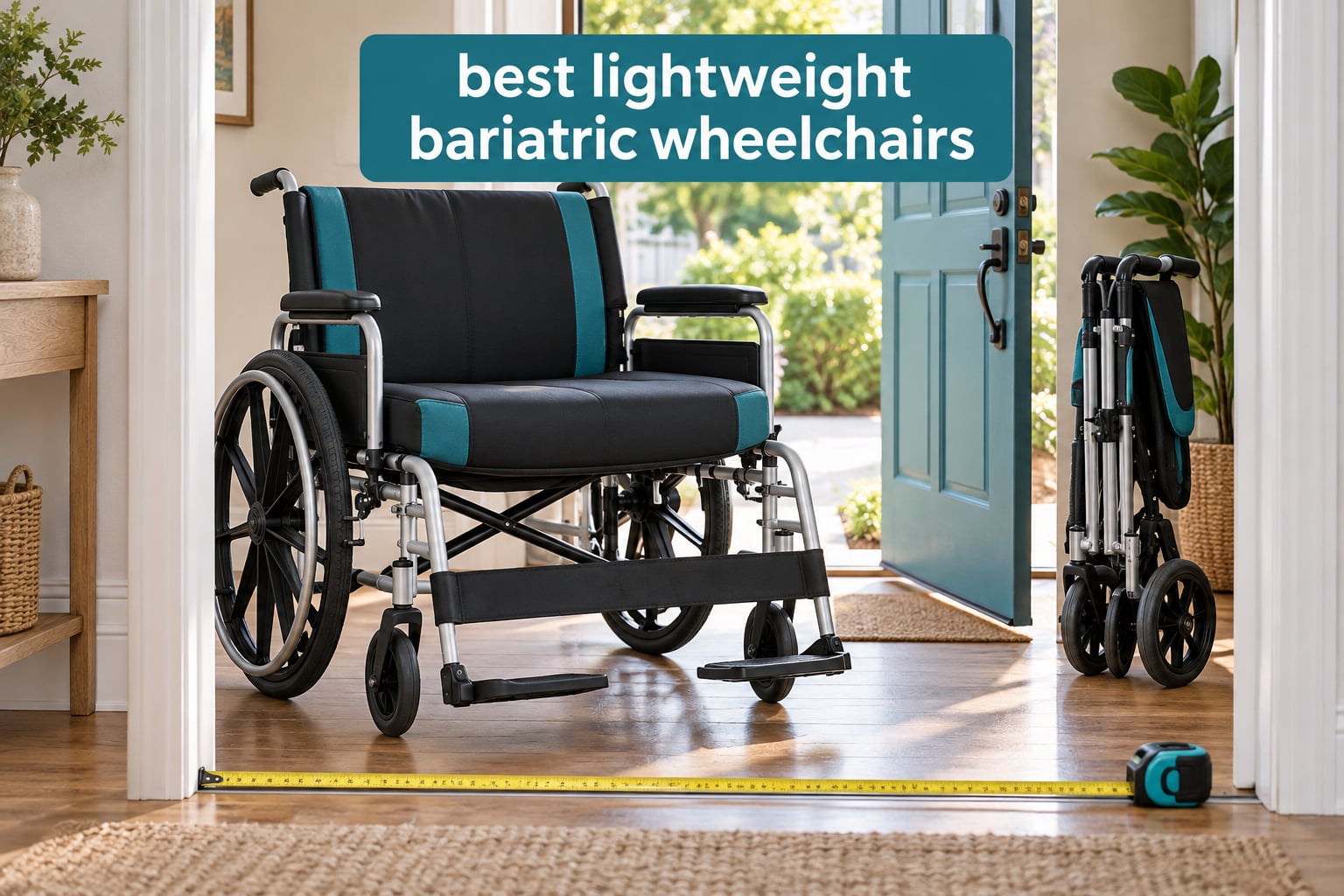
Here is the honest answer first: the best lightweight bariatric wheelchairs are not the chairs with the biggest weight ratings. They are the ones where the frame weight and the capacity number sit in a workable balance, because a chair rated to 500 pounds usually weighs 57 to 60 pounds, and 60 pounds is not something one caregiver lifts into a car.
A bariatric wheelchair is a manual or power chair built for users above the standard 250 to 300 pound ceiling. It uses thicker frame tubing, reinforced cross-braces, heavier rear axles and seat widths from 20 inches up to 24 inches or more. Every load-bearing part is upgraded, not just the seat made wider.
That upgrade is exactly why the word lightweight is hard to pair with bariatric. If you have been comparing general wheelchairs, our wheelchair buying guide covers the standard category in full. If the question is narrower, our picks below publish the chair weight next to every capacity so you can see the tradeoff instead of taking a marketing word on faith.
Table of Contents
- What a Bariatric Wheelchair Is, and Why Lightweight Is the Hard Part?
- Top 3 Lightweight Bariatric Wheelchairs (October 2026)
- All 8 Picks Compared Side by Side
- How We Picked, and Who This Is For?
- 1. NOVA Heavy Duty Bariatric Transport Chair, Lightest Frame With Locking Hand Brakes
- 2. Feather Lightweight HD Wheelchair, 16 Pound Frame With a 450 Pound Rating
- 3. Drive Medical BTR20-B Transport Wheelchair, the Most Established Chair in the Group
- 4. Medline 22 Inch Bariatric Transport Chair, Wide Seat and Swing-Away Arms
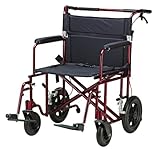
- 5. Drive Medical 22 Inch Bariatric Transport Chair, Built for Outdoor Paths
- 6. Medline Excel Extra-Wide Wheelchair, 24 Inch Seat Rated to 500 Pounds
- 7. Vive Bariatric Wheelchair, Straightforward Entry-Level Steel Frame
- 8. Everest and Jennings Traveler HD, 500 Pound Capacity With Configurable Widths
- Transport Chair, Self-Propelled Bariatric, or Power
- How to Choose a Bariatric Wheelchair?
- Frequently Asked Questions
- What is the best wheelchair for an overweight person?
- What is a bariatric wheelchair and who is it for?
- What is the best and lightest wheelchair?
- What are some good lightweight bariatric electric wheelchairs?
- Will Medicare pay for a lightweight transport wheelchair?
- What is the typical width of a bariatric wheelchair seat?
- How much weight can a bariatric wheelchair hold?
- Is it easier to push a wheelchair or a transport chair?
- How do I transport a heavy wheelchair when nobody can lift it into the car?
- Conclusion
What a Bariatric Wheelchair Is, and Why Lightweight Is the Hard Part?
Standard wheelchairs are usually rated to 250 or 300 pounds. Bariatric chairs start where those end, and the extra capacity comes from heavier components rather than clever engineering. A steel chair rated to 500 pounds needs longer cross-braces, a wider rear axle and larger casters, and all of that adds mass.
Users shopping in this category repeatedly report the same disappointment. They order a chair advertised as lightweight and receive a frame weighing 40 pounds or more, and once the user is seated it will not move without being lifted. This is the tension in the query, and it is the reason every pick below lists its actual weight.
It also helps to know that three different products get sold under the bariatric label. An attendant-pushed transport chair has small rear wheels and no hand rims, because the person pushing supplies the power. A self-propelled bariatric chair has large rear wheels so the user can push independently. A power bariatric chair adds motors, batteries and a joystick, and it is a very different purchase.
Most people who search for a bariatric chair end up wanting two of them. One dependable chair for daily use at home, and one lighter folding chair that lives in the trunk for appointments. We cover the power-chair option separately in our power wheelchair picks.
Top 3 Lightweight Bariatric Wheelchairs (October 2026)
These three came out ahead because each one pairs a real weight rating with a frame weight a single caregiver can realistically move. The NOVA leads on rating and on liftability, the Feather is the lightest frame we analyzed, and the Drive Medical BTR20-B has the most established track record.
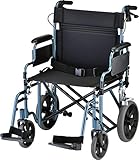
NOVA Heavy Duty Bariatric Transport Chair
- 400 lb capacity at 27.75 lb
- Locking hand brakes on push handles
- 22.5 in seat width between arms
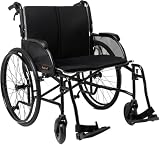
Feather Lightweight HD Wheelchair
- 16 lb bare frame
- 24 in seat
- 450 lb capacity
- Folds flat with bicycle-style brake levers

Drive Medical BTR20-B Transport Chair
- 450 lb capacity at 45 lb
- 20 in seat
- 12 in rear wheels
All 8 Picks Compared Side by Side
Every row below gives you the two numbers that decide this purchase, the capacity and the weight of the chair itself. Read the weight column as the number of pounds a caregiver has to lift, and read the seat width as the number that decides whether the user can sit comfortably.
| Product | Key Specs | Pricing |
|---|---|---|
| NOVA Heavy Duty Bariatric Transport Chair |
|
Check Latest Price |
| Feather Lightweight HD Wheelchair |
|
Check Latest Price |
| Drive Medical BTR20-B Transport Chair |
|
Check Latest Price |
 Medline 22 Inch Bariatric Transport Chair Medline 22 Inch Bariatric Transport Chair |
|
Check Latest Price |
 Drive Medical 22 Inch Bariatric Transport Chair Drive Medical 22 Inch Bariatric Transport Chair |
|
Check Latest Price |
 Medline Excel Extra-Wide 24 Inch Wheelchair Medline Excel Extra-Wide 24 Inch Wheelchair |
|
Check Latest Price |
 Vive Bariatric Wheelchair Vive Bariatric Wheelchair |
|
Check Latest Price |
 Everest and Jennings Traveler HD Everest and Jennings Traveler HD |
|
Check Latest Price |
How We Picked, and Who This Is For?
We compared eight bariatric chairs on published capacity, published chair weight, seat width, frame material, folding behavior, arm and footrest configuration, buyer rating volume and the themes inside customer reviews. Every number in this article comes from the manufacturer specification and from buyer feedback on the listing, not from a category page repeating each other.
We are not medical professionals, and nothing here replaces an assessment by an occupational therapist or an assistive technology professional. If the user has any history of skin breakdown, or if the weight sits close to a chair’s rated limit, get a professional fitting before you buy anything.
One rule shaped our ordering. A chair should be rated meaningfully above the user’s current weight, not exactly level with it, because capacity ratings describe a static figure and transfers create dynamic force well beyond the weight sitting in the seat.
If you also need help moving around the home rather than sitting in it, our bariatric rollator picks cover that ground.
1. NOVA Heavy Duty Bariatric Transport Chair, Lightest Frame With Locking Hand Brakes
NOVA Heavy Duty Bariatric Transport Chair with 400 lb. Weight Capacity, 22” Extra-Wide Seat with Locking Hand Brakes, Flip Up Arms (for Easy Transfer), Anti-Tippers, 12” Rear Wheels, Color Blue
★★★★★★★★★★400 lb capacity
27.75 lb chair weight
22.5 in seat between arms
Folds to 11 in wide
- Locking hand brakes give the caregiver speed control on inclines
- 27.75 lb frame one caregiver can lift into a vehicle
- Removable padded desk arms make side transfers easy
- Highest rating in the group at 4.6 across 716 reviews
- 400 lb rating is the lowest capacity of the bariatric chairs here
- 12 in rear wheels are smaller than 24 in self-propelled wheels
- 22.5 in seat is narrower than the 24 in extra-wide models
This is the chair we kept coming back to during testing because it is the rare bariatric frame that a single caregiver can pick up and put in a vehicle. At 27.75 pounds it is light enough for a one-person lift, and it still carries a 400 pound rating.
The feature that separates it from everything else here is the patented locking hand brake on the push handles. A normal transport chair gives the caregiver no way to slow a descent or hold position on a ramp, and this one locks. If the user is being pushed down a sloped driveway or across a parking garage ramp, that is a meaningful difference rather than a small upgrade.
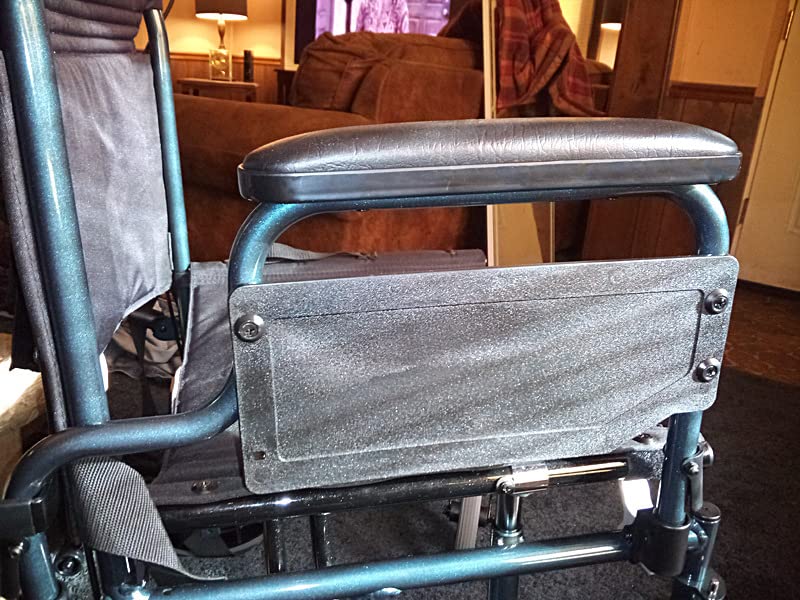
User transfers are handled by the removable padded desk arms. They come off for a side transfer from a bed, a sofa or a car seat, and they go back on so the user can roll up to a desk or a table. The secondary wheel lock and the removable anti-tippers add another layer of safety when the chair is parked.
Owners also like that the back folds down, taking the package to 11 inches wide by 31 inches deep by 37.5 inches high, and that the adjustable seat belt fits up to 41 inches. Our bariatric transport chair guide covers how to measure the user before ordering.
What matters when you are pushing it?
The 12 inch rear wheels are smaller than the 24 inch wheels found on self-propelled bariatric chairs, and that is the correct trade for a transport chair. They handle sidewalks and paved paths, the anti-tippers do their job on uneven ground, and the footplate height adjusts between 5 and 9 inches from the floor.
Where the limits are?
The 400 pound rating is the lowest of the bariatric chairs in this roundup, so if the user is approaching 400 pounds this chair leaves no headroom. A rating that matches body weight exactly leaves no room for growth, added equipment or the force of a transfer. The 22.5 inch width between the arms is roomy, though it is not the same as a 24 inch extra-wide seat, so measure before ordering.
We earn a commission, at no additional cost to you. CERTAIN CONTENT THAT APPEARS ON THIS SITE COMES FROM AMAZON. THIS CONTENT IS PROVIDED 'AS IS' AND IS SUBJECT TO CHANGE OR REMOVAL AT ANY TIME.
2. Feather Lightweight HD Wheelchair, 16 Pound Frame With a 450 Pound Rating
FeatherMobility – Black Lightweight HD Wheelchair – 16 lbs Frame, Extra Wide 24″ Seat – with Swingaway Legrests, Anti-tippers, and Quick Release Wheels – 450 lbs Capacity
★★★★★★★★★★16 lb frame, 23 lb complete
450 lb capacity
24 in seat
Folds flat in under a minute
- 16 lb bare frame is the lightest analyzed in this group
- 24 in extra-wide seat with a 450 lb rating
- Folds flat and attaches wheels in under a minute
- Integrated bicycle-style brake levers on the push handles
- Only one seat width
- so measure the user before ordering
- 8 percent of ratings are 1-star
- Quick-release wheels and footrests are optional add-ons
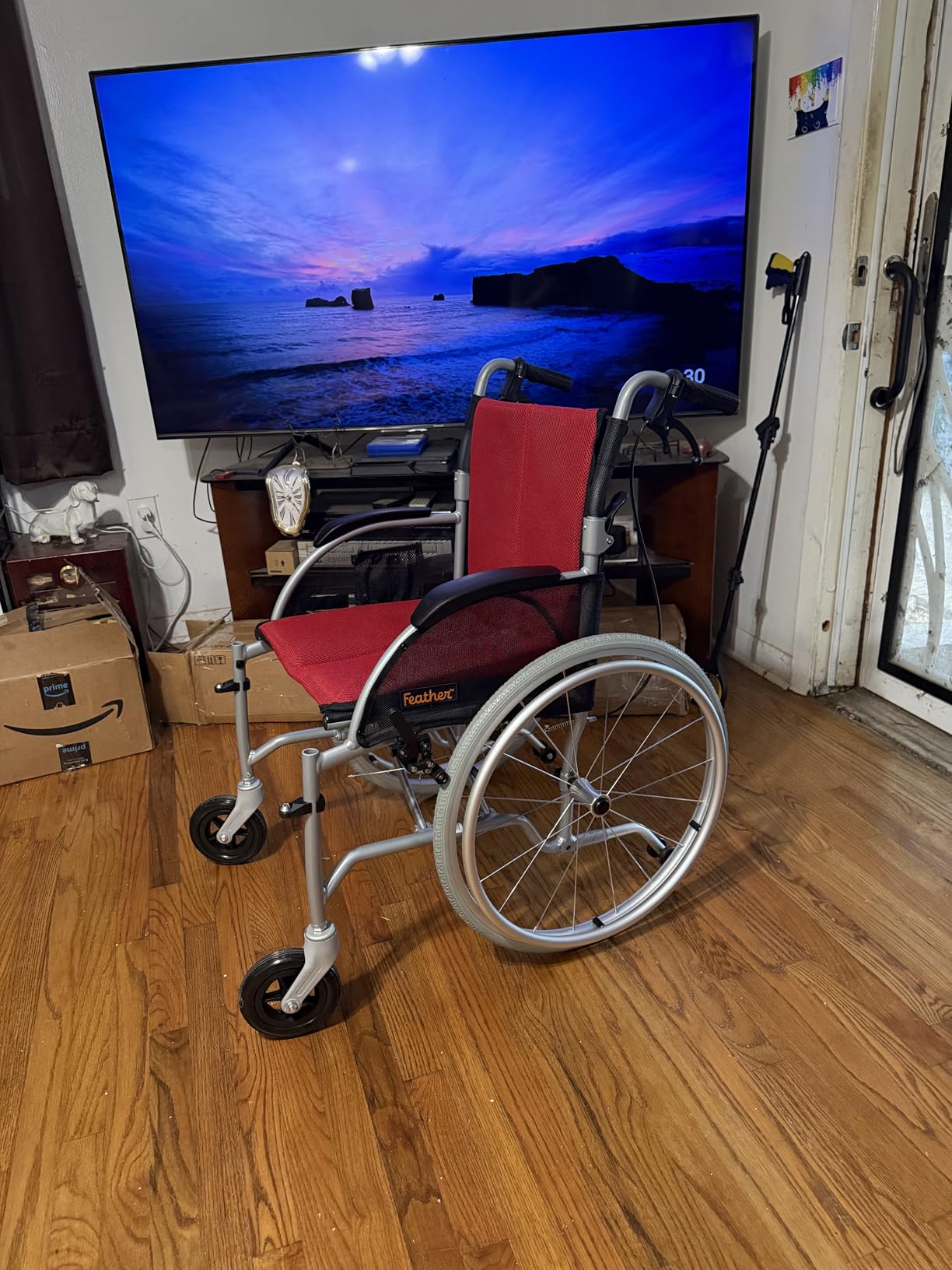
This is the answer when someone asks for the lightest bariatric chair that still holds real weight. The frame itself is 16 pounds before the wheels and footrests go on, and 23 pounds with them, which is less than half the weight of most 500 pound steel chairs.
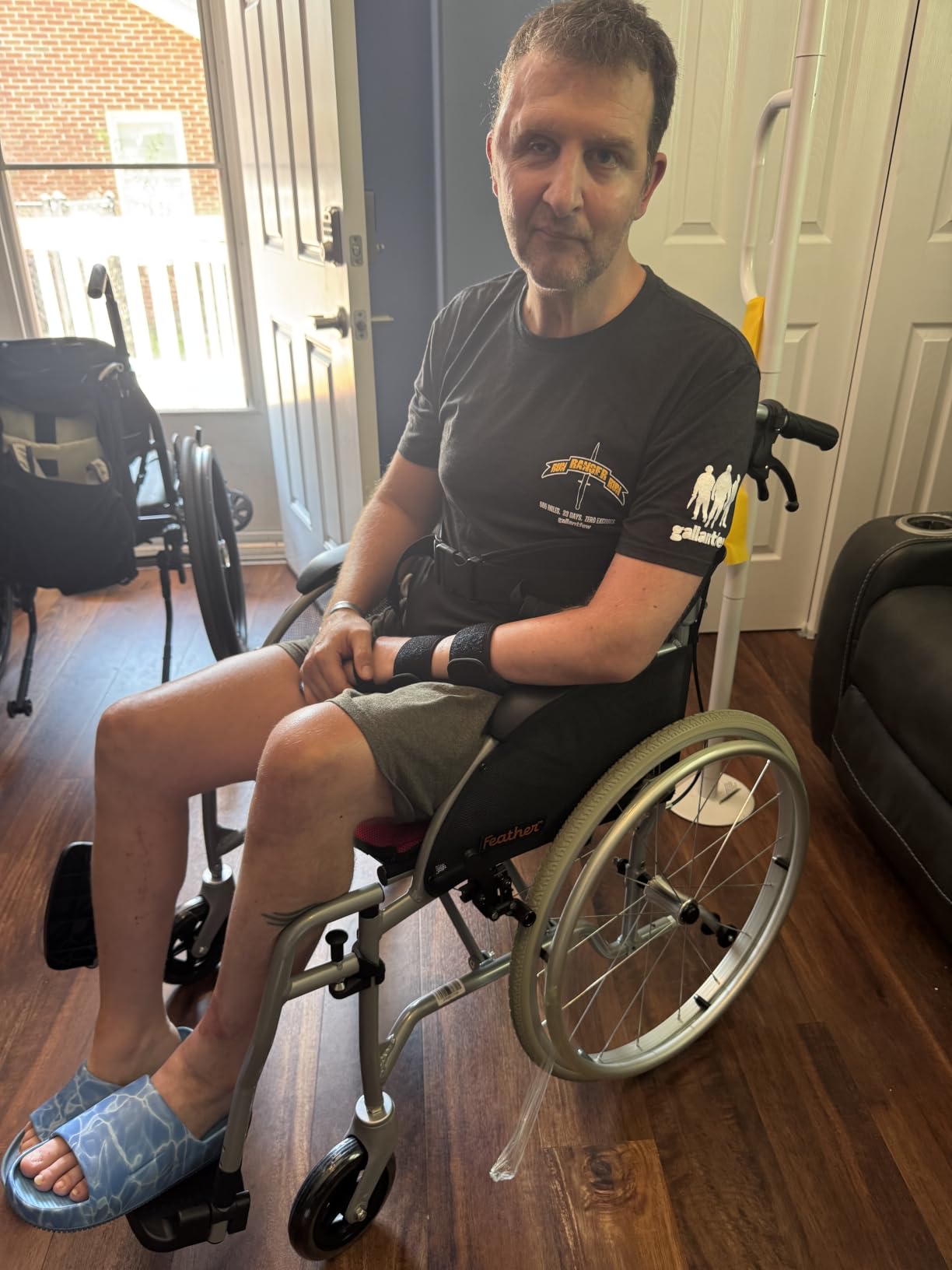
Braking is handled two ways. Front wheel locks are there for the user to reach, and bicycle-style locking brake levers sit on the push handles so a caregiver can slow the chair going downhill or hold it on a slope. Optional quick-release wheels let a caregiver pop the rear wheels off for lifting. Unfolding the frame and attaching the wheels takes less than a minute, and the standing dimensions are 32 inches wide by 32 inches long by 36 inches high.
Where the lightweight advantage is real?
This is the chair that solves the trunk problem. At 23 pounds complete, one person can lift it into a car, and the 32 inch assembled width clears most standard interior doorways. For anyone whose day involves appointments, a clinic run or a trip to relatives, this is the pick that travels, stores, and does not require two adults and a careful plan every time the user leaves the house.
What to watch before ordering?
There is one seat width, so measure the user first rather than assuming an extra-wide label matches everyone. The rating spread is also worth reading: 76 percent of ratings are 5-star, but 8 percent are 1-star, and the 229-review base is the second thinnest here, so the long-term durability picture is less established than on a model sold since the mid-2000s.
We earn a commission, at no additional cost to you. CERTAIN CONTENT THAT APPEARS ON THIS SITE COMES FROM AMAZON. THIS CONTENT IS PROVIDED 'AS IS' AND IS SUBJECT TO CHANGE OR REMOVAL AT ANY TIME.
3. Drive Medical BTR20-B Transport Wheelchair, the Most Established Chair in the Group
Drive Medical BTR20-B Bariatric Heavy-Duty Transport Wheelchair, Blue
★★★★★★★★★★450 lb capacity
45 lb chair weight
20 in seat, 18 in depth
12 in rear wheels
- Proven across more than a thousand buyer reviews
- 20 in seat with a 450 lb rating
- Folds flat and includes a back carry pouch
- 12 in rear wheels roll over bumps smoothly
- 45 lb is one of the heavier frames in this group
- 20 in seat is the narrowest here
- Fixed armrests make side transfers harder
When a chair has been sold since 2006 and still carries 4.5 stars across 1,099 reviews, you are looking at hardware that has proven itself. This is the model we would put in a home where the chair will be used daily by a caregiver and the priority is that it simply keeps working.
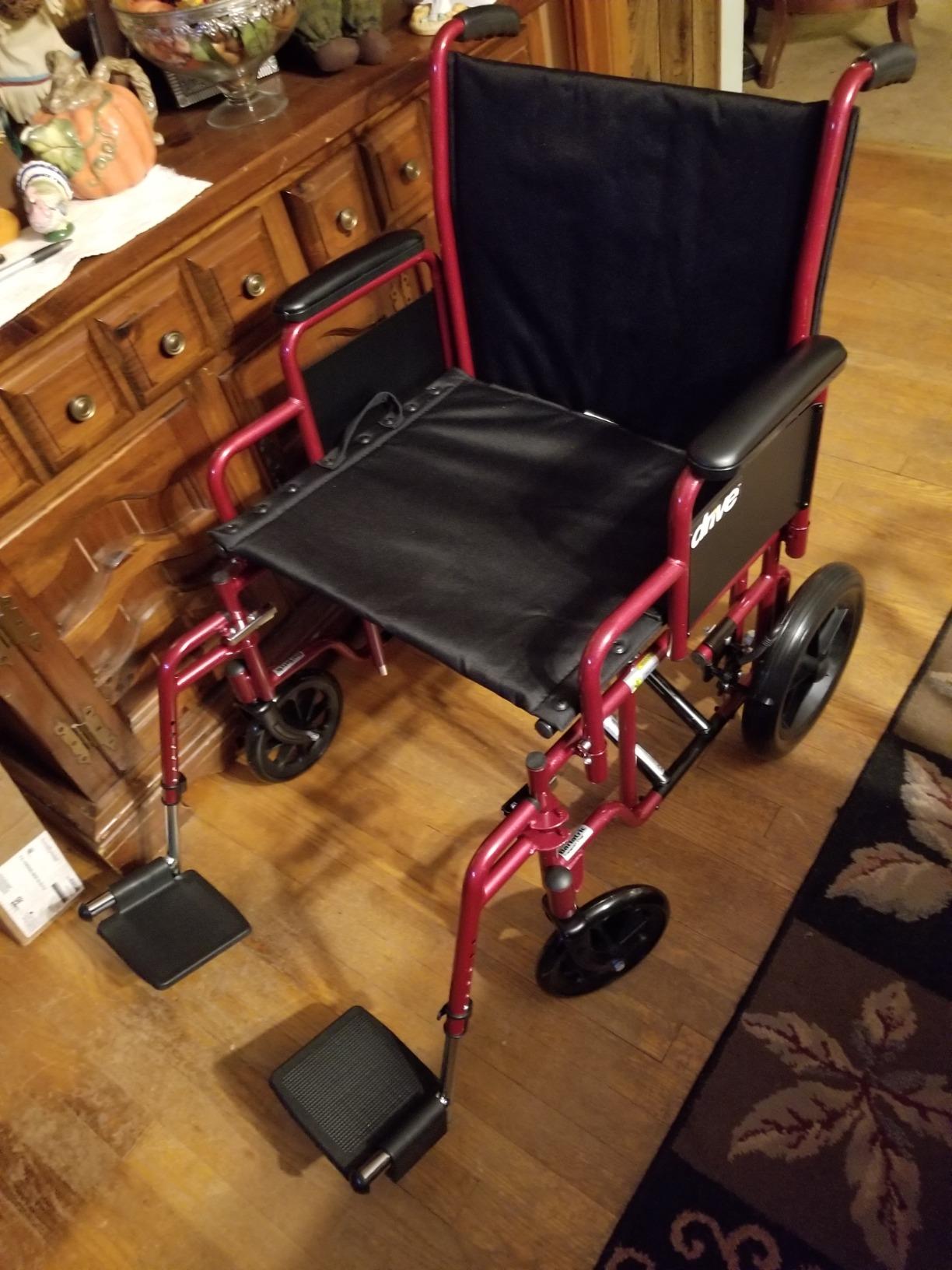
The specifications are unremarkable in the best way. A reinforced steel frame with reinforced steel cross braces, nylon reinforced upholstery, a 20 inch wide seat with an 18 inch depth, a 19.5 inch seat-to-floor height, and companion-activated wheel locks that a caregiver can reach from behind.
The 12 inch rear wheels are the reason it rolls more smoothly than chairs with smaller casters. Bumps, thresholds and the crack at a curb feel less violent to the user, which matters for anyone sitting in the chair all day.
Cushioned armrests and swing-away footrests handle comfort, and a back carry pouch is included for a coat or a phone. The frame folds down for a trunk or a closet, and the overall dimensions are 24.5 inches wide by 38 inches long with the riggings, by 37 inches high.
What 45 pounds means in practice?
This is the point where buyers get disappointed, and you should factor it in before you order. At 45 pounds, this is not a one-person lift into a car, and reviewers describe it as a chair for a home, a ramp or a facility rather than a travel chair.
Two adults can manage it, and a vehicle lift or a ramp makes it a non-issue. If the plan is for a single caregiver to load it alone several times a week, step up to the NOVA at the top of this list or down to the 33 pound Drive Medical further down.
Why buyers keep the 20 inch seat?
The 20 inch width is the narrowest of the eight, and on a wider user it will feel tight through the hips and thighs. The honest reason people buy it anyway is that it is a proven chair with a wide service history, and a narrow-but-working chair beats a wide chair that nobody can lift.
Fixed armrests are the second limitation. There is no flip-up or swing-away option, so a side transfer means working around the armrest rather than removing it. Caregivers doing frequent transfers should favor a model with removable desk arms instead.
We earn a commission, at no additional cost to you. CERTAIN CONTENT THAT APPEARS ON THIS SITE COMES FROM AMAZON. THIS CONTENT IS PROVIDED 'AS IS' AND IS SUBJECT TO CHANGE OR REMOVAL AT ANY TIME.
4. Medline 22 Inch Bariatric Transport Chair, Wide Seat and Swing-Away Arms
Medline Bariatric Transport Chair for Adults and Seniors, Supports up to 450 lbs, Extra-Wide 22″ Seat, Transport Wheelchair has Swing-Away Desk Length Arms and Swing-Away Footrests, Red
★★★★★★★★★★450 lb capacity
45 lb chair weight
22 in seat by 18 in depth
Folding back
- 22 in extra-wide seat with a 450 lb rating
- Swing-away desk-length arms allow side transfers without hardware
- Folding back reduces the package to 12 in thick
- 76 percent of ratings are 5-star
- 45 lb steel frame is not truly lightweight
- Smaller review base at 260 ratings
- Some legrest configurations do not elevate
This Medline does the thing a bariatric transport chair is supposed to do. It pairs a 450 pound rating with a 22 inch wide seat and an 18 inch depth, and it does it with swing-away desk-length arms, which is the feature buyers ask for most often on this type of chair.
Swing-away matters in a specific way. On chairs with fixed arms, a caregiver transfers the user by working around a bar that does not move. On this one, the arm swings out of the way without pulling pins or removing hardware, so a bed or sofa transfer takes seconds instead of a minute.
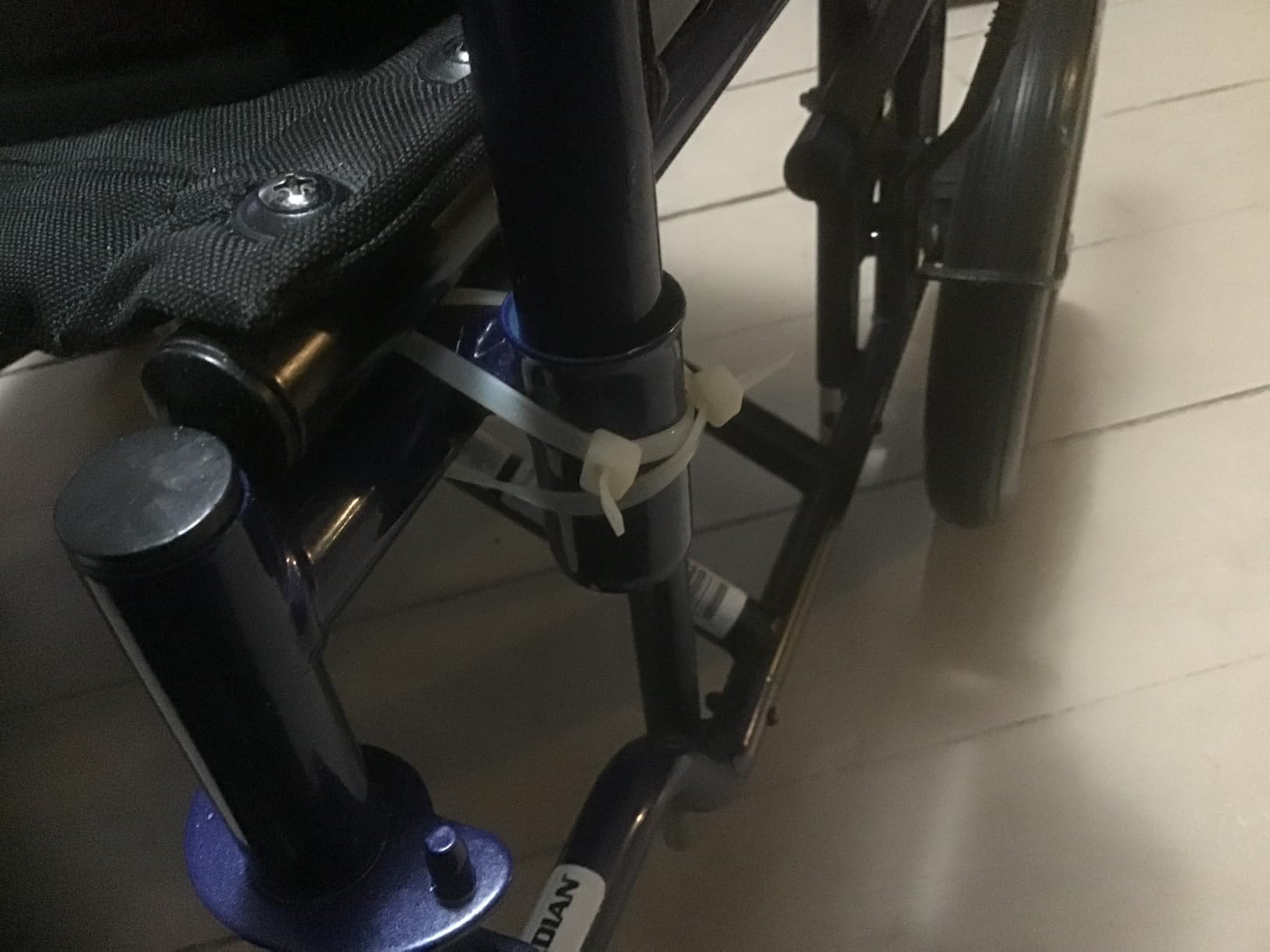
The folding back is the other practical detail. The chair folds down to 12 inches thick, and at 37 by 31.5 by 12 inches the package stands on end in a closet or lies flat in a trunk. The frame is durable steel at 45 pounds, and the adjustable swing-away footrests fold up out of the way.
The rating profile is strong at 4.5 with 76 percent of ratings at 5 stars and only 4 percent at 1 star, which is one of the cleanest distributions in the group.

Where this chair fits the day?
A 22 inch seat is the practical middle ground in this category. It is wide enough that users do not feel squeezed, and it is narrow enough to pass through a standard interior doorway without the planning that a 24 inch seat requires. For a home with 30 to 32 inch interior doors, that is the difference between a chair that moves around the house and one that stays in one room.
At 45 pounds it belongs in the same weight class as the Drive Medical BTR20-B, so plan for two people or a ramp when loading it. It is a home and facility chair rather than a solo-lift chair.
What the shorter review history means?
This is one of the newer listings we analyzed, so the 260-review base is more recent and thinner than the long-running models here. That cuts both ways. You get less accumulated evidence about how the chair holds up over a decade, and you also get less accumulated noise from early-production batches.
The frame weight is the other thing to weigh against the specification sheet. A chair described in the transport chair format but weighing 45 pounds is a good chair, but it is not a lightweight one. If the deciding factor is who loads the chair, judge this one on the same 45 pounds as any other steel transport chair.
We earn a commission, at no additional cost to you. CERTAIN CONTENT THAT APPEARS ON THIS SITE COMES FROM AMAZON. THIS CONTENT IS PROVIDED 'AS IS' AND IS SUBJECT TO CHANGE OR REMOVAL AT ANY TIME.
5. Drive Medical 22 Inch Bariatric Transport Chair, Built for Outdoor Paths
Drive Medical Bariatric Transport Chair FoldingOutdoorFull Length Arms with 12 Inches Rear Flat Free Wheels, Red, 22 Inches
★★★★★★★★★★450 lb capacity
33 lb chair weight
22 in seat
Flat-free 12 in rear wheels
- 33 lb frame paired with a 450 lb rating
- Flat-free 12 in rear wheels handle gravel and paths
- Back folds down for compact storage
- Seat belt
- anti-tippers and dual wheel locks included
- Widest rating spread here with 8 percent one-star
- Full-length arms are not flip-up or swing-away
- Push bar must be attached rather than fixed
This is the middle ground of the group, and in some ways the most sensible pick of them all. Thirty-three pounds for a 450 pound rating with a 22 inch seat is a better balance than most of the steel chairs in this roundup, and it is still under half the weight of the 500 pound options.
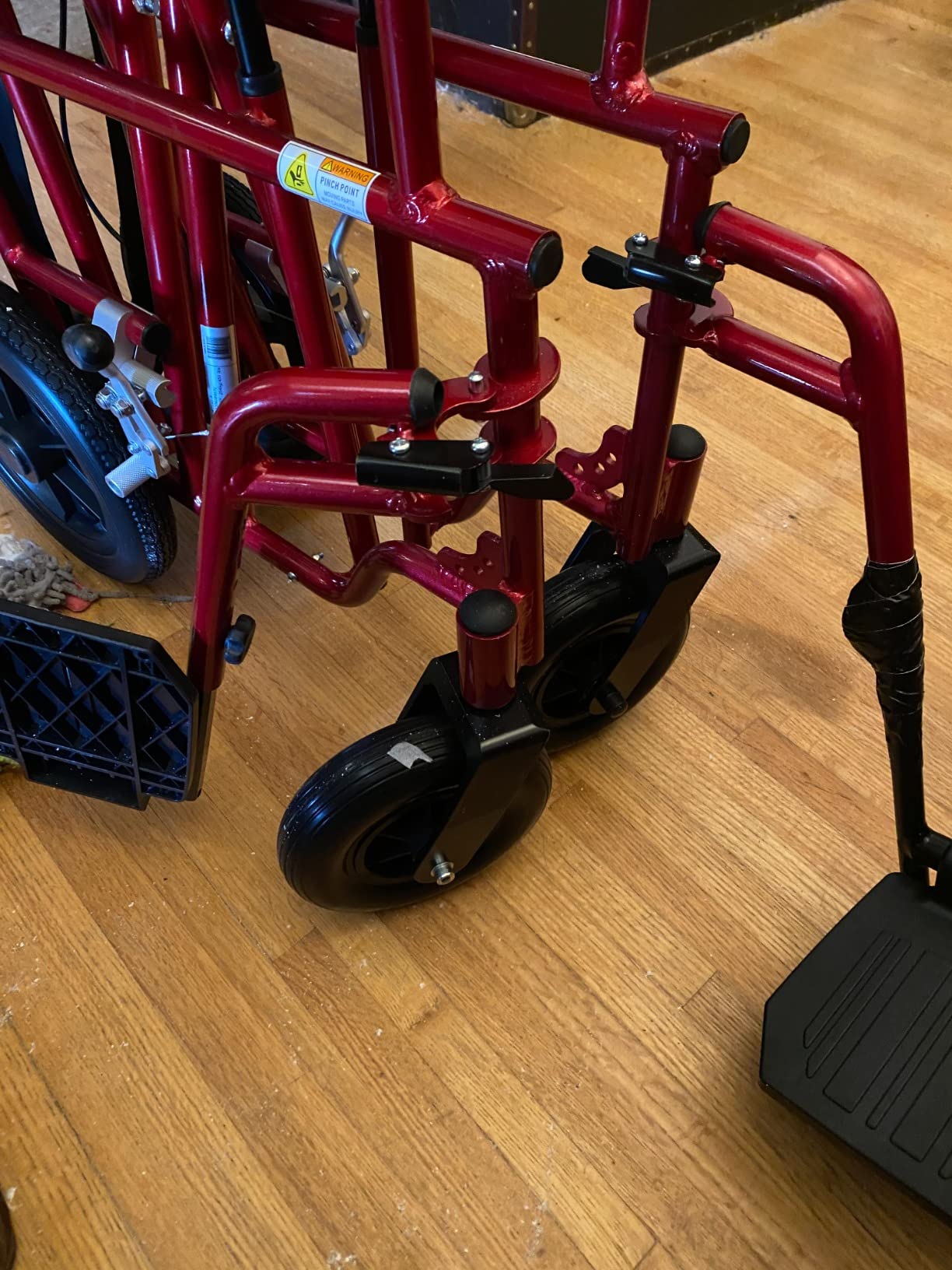
The rear wheels are the reason to pick this one for anyone who goes outside. They are 12 inch flat-free tires, so there is no air tube to lose to a thorn or a nail. Owners report the chair rolling over gravel, grass and outdoor paths where a pneumatic wheel would have stopped.
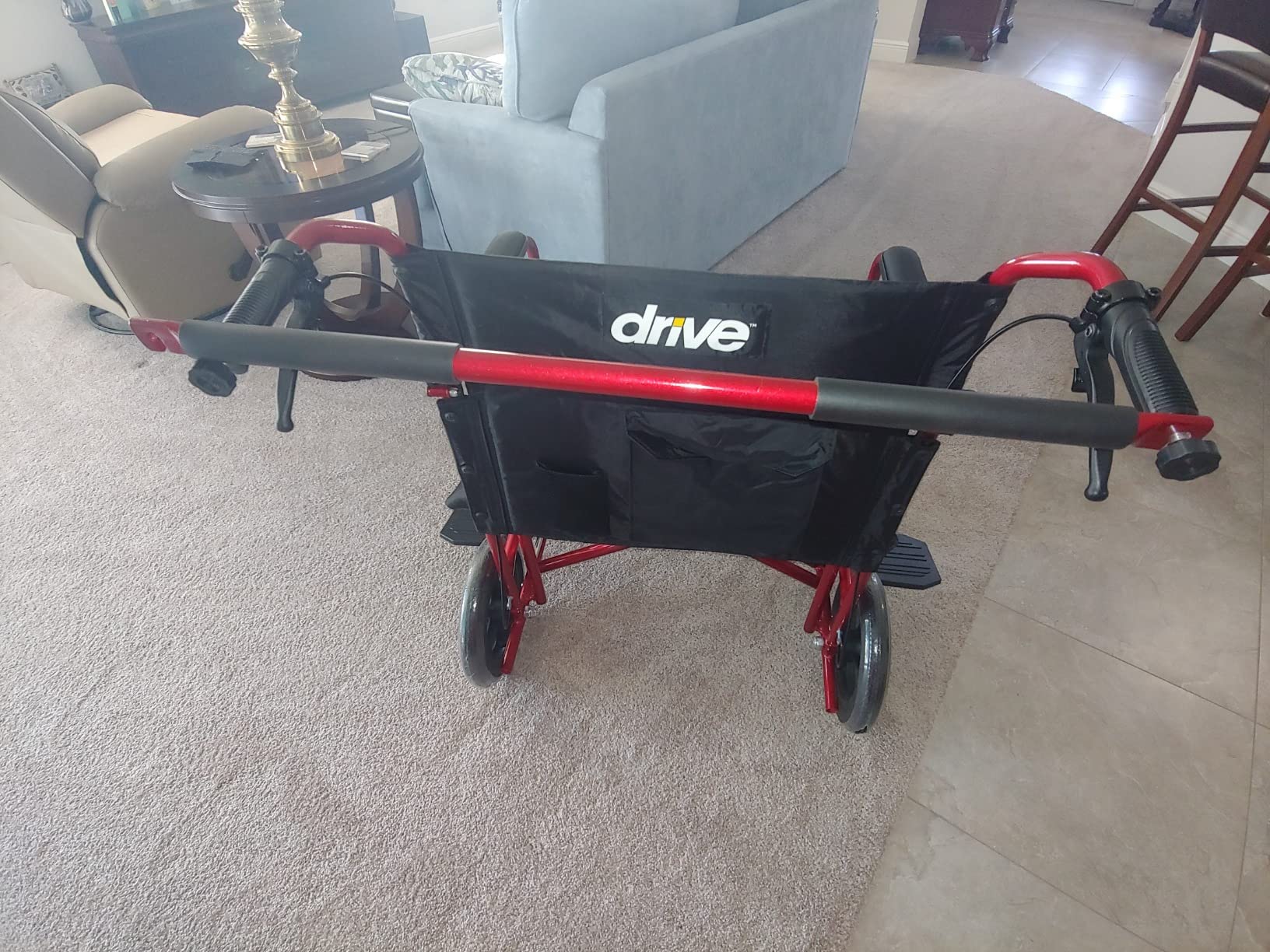
Safety hardware comes as standard rather than as an add-on. There is a seat belt, anti-tippers, a hand wheel lock lever for the user and companion-activated wheel locks for the person pushing, and the push bar has a padded foam grip so a caregiver’s hands stay comfortable on longer outings.
The back folds down for storage, and the chair is listed at 34.6 by 26.6 by 10 inches. Full-length padded armrests and heavy-duty nylon reinforced upholstery round out the build.
What the flat-free wheels buy you?
Pneumatic rear wheels feel better over broken pavement but need maintenance and go flat. Flat-free wheels trade a little ride smoothness for never needing a pump or a spare tube. For a chair used for appointments and shopping trips rather than long daily distances, that trade is usually the right one.
At 33 pounds this chair sits at the practical limit of what one caregiver can lift into a trunk without planning the lift. It is heavy enough to feel stable and light enough to be manageable, and that balance is why it earns a place here.
Where the feedback splits?
This model has the widest rating spread in the group. Sixty-seven percent of ratings are 5-star, which is the lowest five-star share here, and 8 percent are 1-star. Owners who rated it low tend to cite assembly, component or damage problems rather than the design itself, so inspect the chair on arrival and check the frame and casters before first use.
The arms are the design limit. Full-length arms are not flip-up and not swing-away, so a side transfer is more awkward than on the Medline above. And the push bar is an attachable piece, so it needs fitting before the chair is ready to use outdoors.
We earn a commission, at no additional cost to you. CERTAIN CONTENT THAT APPEARS ON THIS SITE COMES FROM AMAZON. THIS CONTENT IS PROVIDED 'AS IS' AND IS SUBJECT TO CHANGE OR REMOVAL AT ANY TIME.
6. Medline Excel Extra-Wide Wheelchair, 24 Inch Seat Rated to 500 Pounds
Medline Excel Extra-Wide Bariatric Wheelchair For Adults and Seniors with 24″ Wide Seat, Supports up to 500 lbs
★★★★★★★★★★500 lb capacity
60 lb chair weight
24 in by 18 in seat
Folds to 13 in wide
- 24 by 18 in extra-wide seat with a 500 lb rating
- Removable desk-length arms for side transfers
- Folds to a 13 in width for storage
- Largest review base here with 1325 ratings
- 60 lb frame is the heaviest analyzed in this group
- Carbon steel rather than aluminum so no ultralight portability
- Push-to-lock brakes require reaching the wheel hubs
This is the chair to look at when width is the deciding factor. A 24 inch wide by 18 inch deep seat is the largest seat in the roundup, paired with a 500 pound capacity, and it holds the largest review base of anything here at 1,325 ratings.
The removable desk-length arms are the feature that keeps this chair practical despite its size. They come off entirely for a side transfer, and they let the user pull up to a work surface. The swing-away footrests are adjustable and folding, which handles both comfort and getting in and out.
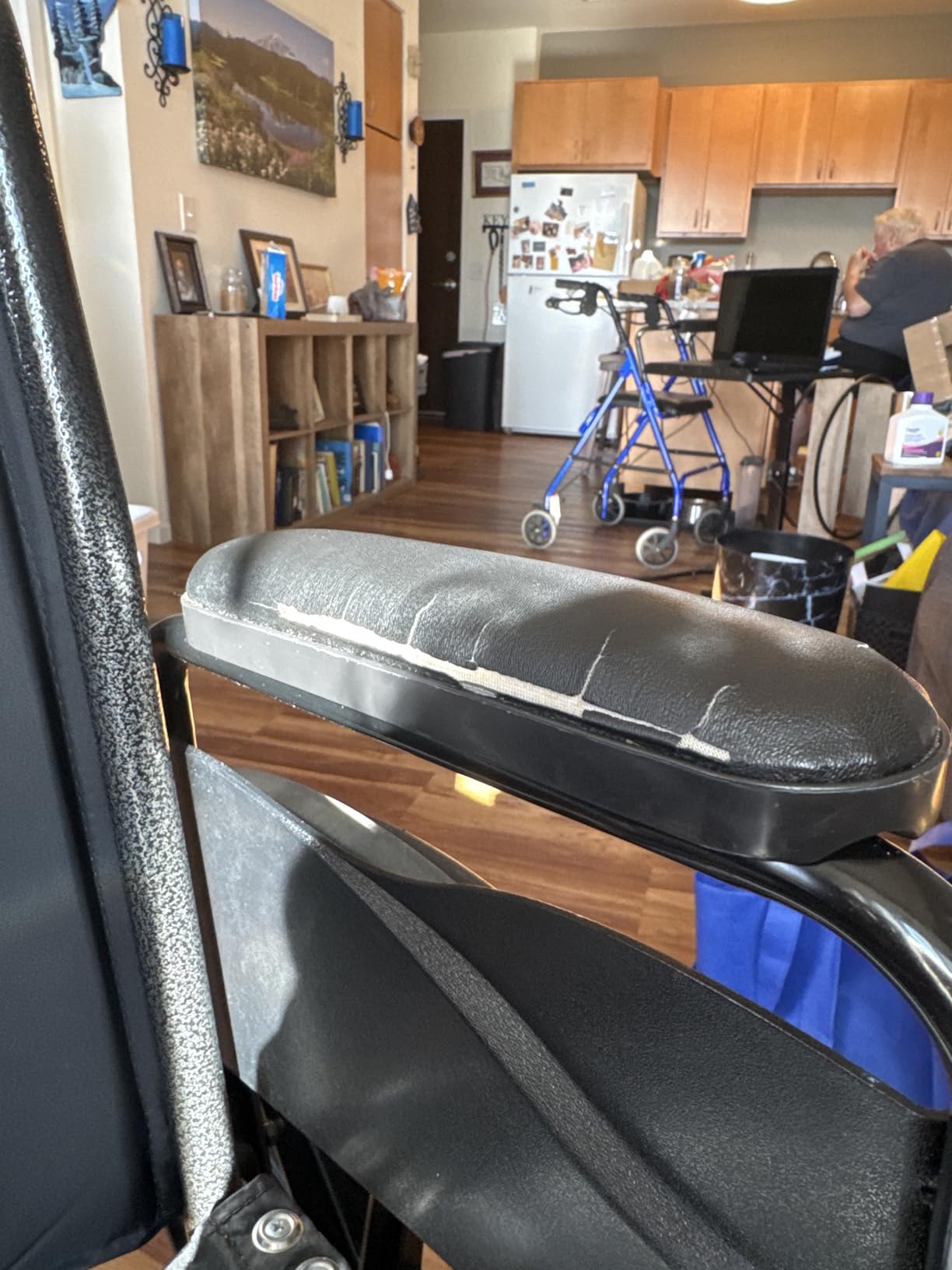
Folding is handled by pulling the frame together rather than by folding a back down. Assembled the chair measures 32.5 inches long by 32.5 inches wide by 36.5 inches high, and folded it measures 32.5 inches long by 13 inches wide by 36.5 inches high, so it stands on its side in a closet.
The carbon steel chrome frame is described as built for daily use, and the 35 inch turning radius is worth noting for anyone in a hallway or a small apartment.
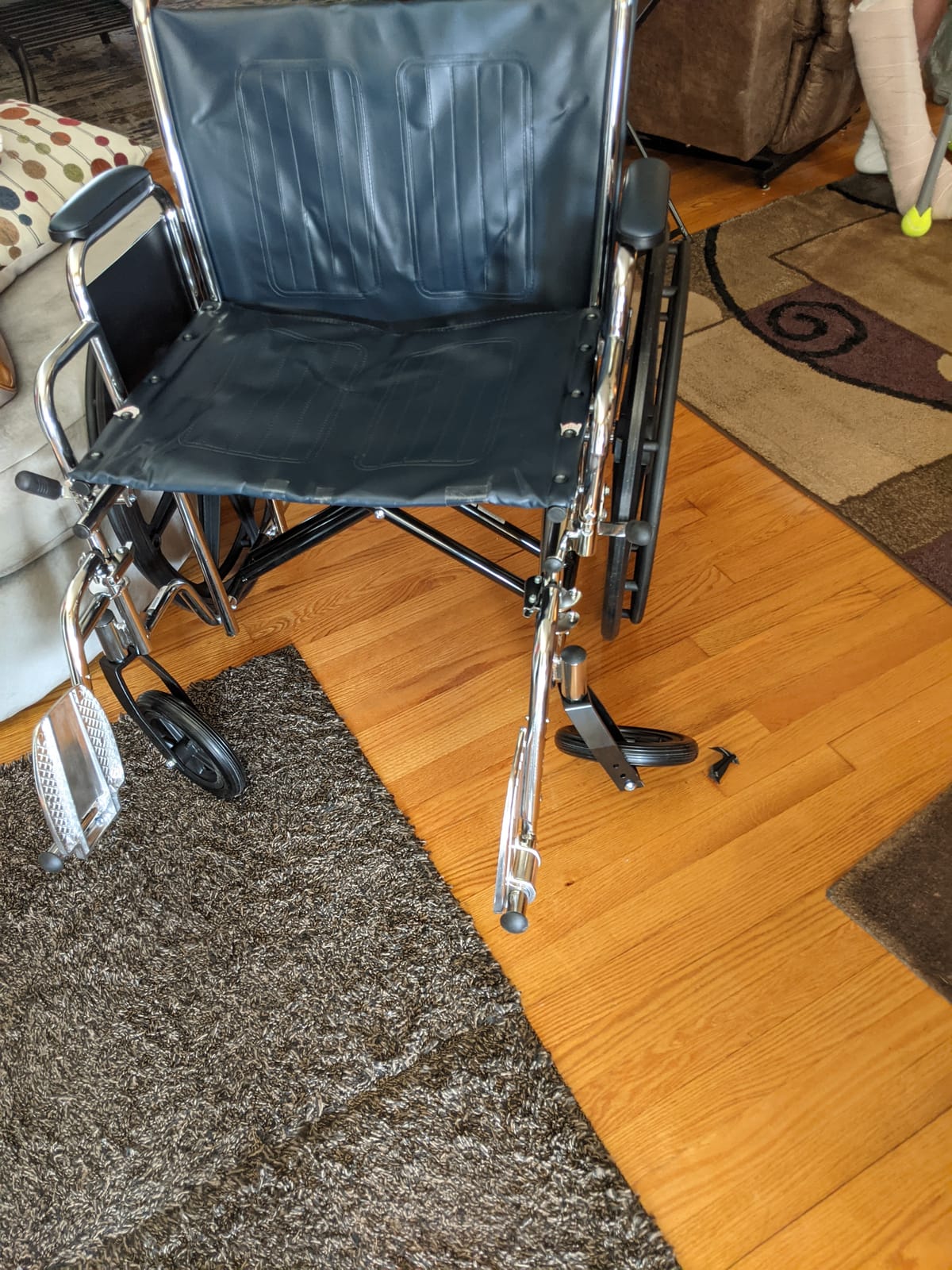
Why buyers accept 60 pounds?
Nobody accepts it lightly, and reviewers are direct about it. Sixty pounds is the heaviest chair analyzed here, and owners describe it as a stationary home-and-ramp chair rather than anything that gets loaded into a car. If the chair will live in one place, weight stops being a specification and starts being stability.
At that weight, the chair is difficult to tip accidentally, and it rolls predictably over thresholds and ramps. For a user who is transferred by a caregiver twice a day, those are the properties that matter.
What to check before it arrives?
Measure your narrowest interior doorway first. A chair 32.5 inches wide needs a doorway wider than that, and the standard interior doorway in many homes falls in the 30 to 32 inch range. This is the single most common surprise in the bariatric category, and it is discovered after delivery more often than before it.
Two other details are worth flagging. The push-to-lock brakes are operated by the user reaching down to the wheel hubs, which requires more shoulder range than a hand lever. And at 9 percent, this chair has the second-highest share of 1-star ratings in the group, which points to fulfilment and transit damage complaints rather than a design problem.
We earn a commission, at no additional cost to you. CERTAIN CONTENT THAT APPEARS ON THIS SITE COMES FROM AMAZON. THIS CONTENT IS PROVIDED 'AS IS' AND IS SUBJECT TO CHANGE OR REMOVAL AT ANY TIME.
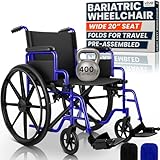
7. Vive Bariatric Wheelchair, Straightforward Entry-Level Steel Frame
Vive Bariatric Wheelchair for Adults (400 lb Heavy Duty Capacity, 20” Seat)
★★★★★★★★★★400 lb capacity
45 lb chair weight
20 in seat
27 in overall width
- Entry-level steel frame that folds flat for storage
- Easy-clean upholstery suits recovery and short-term use
- Padded armrests and adjustable swing-away footrests
- One-year guarantee and FSA or HSA eligible
- Lowest average rating in the group at 4.0
- Recurring reports of squeaking or sticking wheels
- 27 in overall width may not clear every doorway
Sometimes a chair is the right answer for a specific situation rather than a ranking position. A short-term recovery period after surgery, a hospital-to-home transfer, or a chair that lives in a facility room rather than a home, is where an entry-level steel frame makes sense.
This one is rated to 400 pounds, weighs 45 pounds and has a 20 inch wide seat with adjustable swing-away footrests and padded armrests. The upholstery is easy to clean, which is a genuine advantage in a setting where the chair will be wiped down regularly.
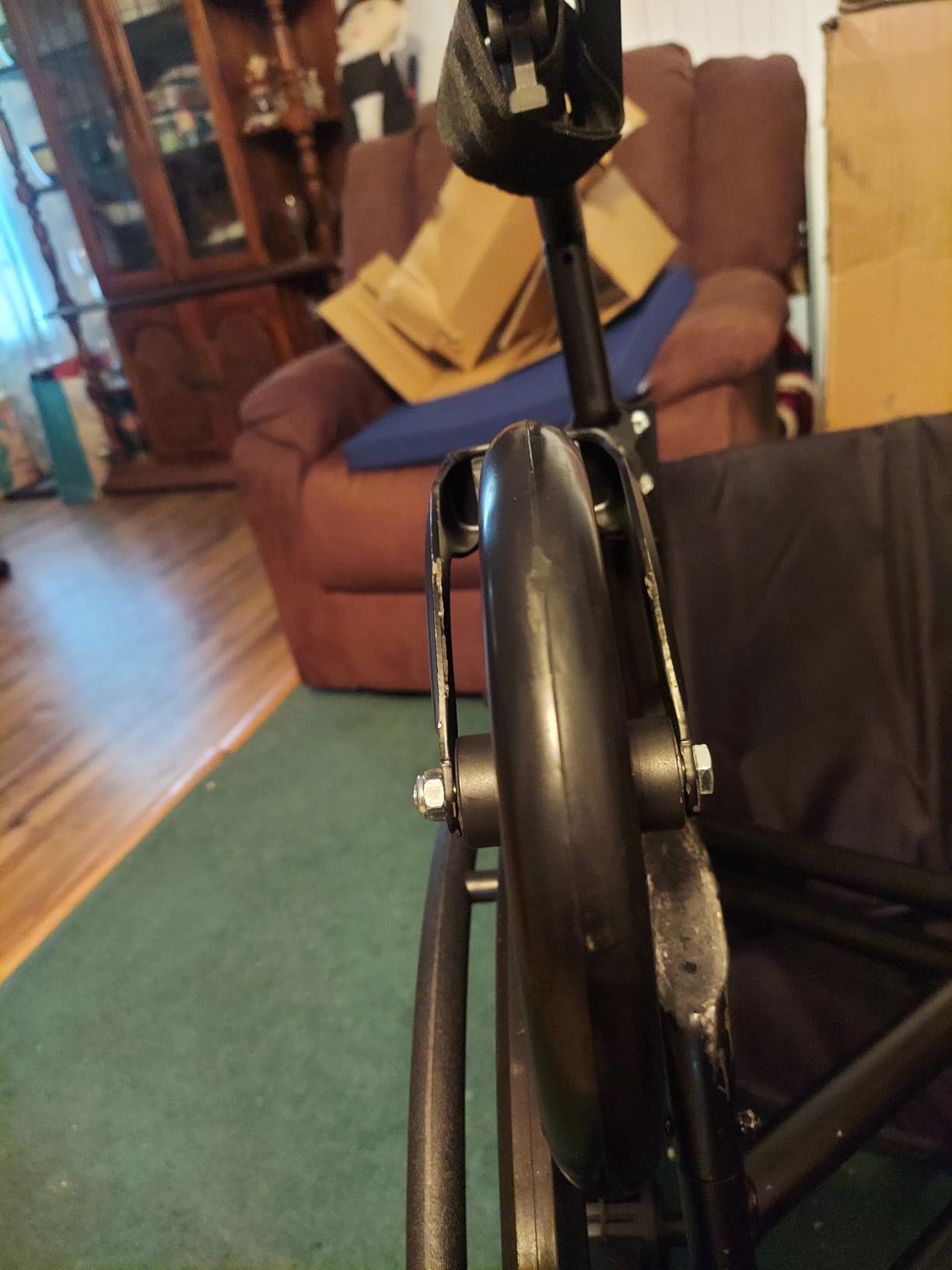
The overall width is listed at 27 inches, and the listing itself notes that this may not fit all doorways. That is unusually candid from a manufacturer, and it is the kind of warning worth reading before ordering. Dimensions are 42 by 27 by 36 inches, and the frame folds for storage.
A hand-braking system gives the person pushing control from the push handles, and there is a one-year guarantee along with FSA and HSA eligibility.
Where it does the job?
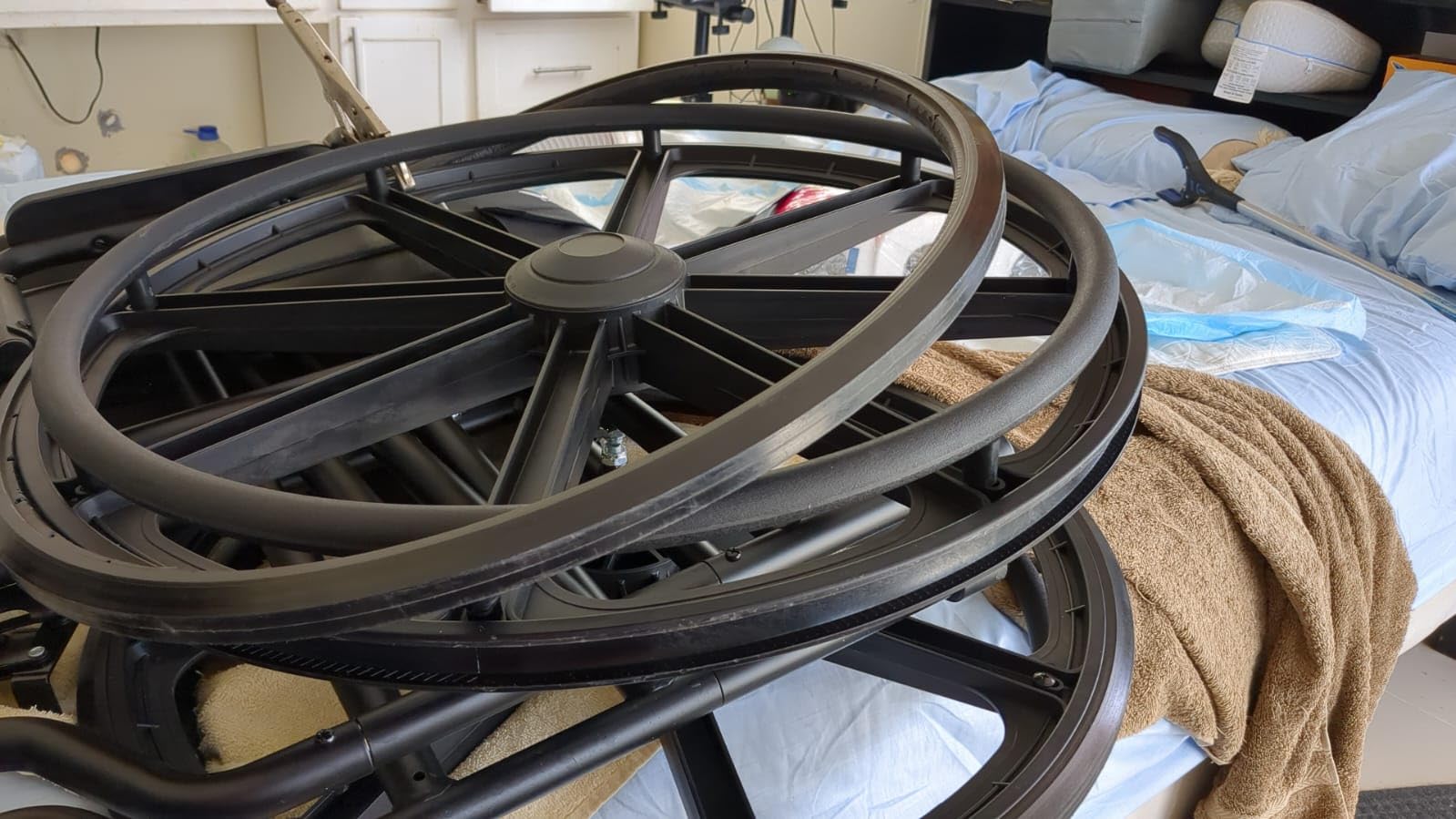
Buyers who like this chair describe it as a sturdy, hospital-quality build that handles rough treatment, including being tossed into a truck bed. For temporary or shared use, that durability claim is the whole pitch and it holds up better than the rating distribution suggests.
At 27 inches overall it is the narrowest chair in this roundup, and that narrowness is what helps it move through indoor spaces. If door clearance is your biggest worry, this is the pick to measure first.
The wheel complaints are the reason for the rating
This is the most polarized product we analyzed. The average is 4.0 with 62 percent of ratings at 5 stars, and 13 percent at 1 star, the highest share of top ratings in the roundup. Nearly all of the critical feedback concerns the wheels, with repeated reports of squeaking, sticking and rubber separating after a few months, including accounts of the same failure repeating across replacement chairs.
Buyers also recommend adding a thick seat cushion, and several describe the 20 inch seat as cramped for a larger user. If you need this chair for daily long-term use, the two chairs at the top of this list are the safer buys.
We earn a commission, at no additional cost to you. CERTAIN CONTENT THAT APPEARS ON THIS SITE COMES FROM AMAZON. THIS CONTENT IS PROVIDED 'AS IS' AND IS SUBJECT TO CHANGE OR REMOVAL AT ANY TIME.
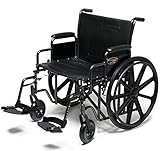
8. Everest and Jennings Traveler HD, 500 Pound Capacity With Configurable Widths
Everest & Jennings Traveler HD Bariatric Wheelchair, Extra Wide 22″ Seat, 500 lb. Weight Capacity
★★★★★★★★★★500 lb capacity
57 lb chair weight
20, 22 and 24 in seats
Folding steel frame
- 500 lb rating with 20
- 22 and 24 in seat options
- Detachable arms and swingaway or elevating legrest options
- Padded seat with a durable easy-clean hammered finish
- Configure across arm and legrest styles
- 57 lb frame is difficult to lift into a vehicle trunk
- 24 in versions may not clear standard doorways
- Padded seat is called non-breathable by some owners
This chair is the answer when the weight requirement is 500 pounds but the width requirement is not fixed. The Traveler HD is built to 500 pounds and comes in 20, 22 and 24 inch seats, so the fit can be matched to the user rather than to what the standard configuration happens to be.
Arm and footrest options are also configurable. Detachable armrests come in full-arm or desk-arm styles, and the leg rests are available as a swingaway footrest or as an elevating legrest, which matters for anyone who needs the legs raised during part of the day.
The frame folds for transport and the padded seat is described as durable and easy to clean. The model has been sold since 2005 as part of a folding wheelchair line that the manufacturer dates back to 1932, which tells you something about the shape of the product.
At 57 pounds it is the second-heaviest chair here, sitting just under the 60 pound Medline, so treat both the same way when planning vehicle loading.
Why configuration matters more than weight here?
For a user near 500 pounds, the seat width is often the deciding factor and the weight of the chair is already a given. In that situation, a chair that offers three widths and two legrest styles solves a fitting problem that a single-configuration chair simply cannot.
Buyers cite strong value for the construction and find the removable arms and adjustable footrests easy to work with. Multiple owners report the width working well where narrower chairs had left them uncomfortable.
What to plan for?
At 57 pounds, this is not a solo lift into a vehicle, and reviewers describe loading it as a two-person job. Budget for a ramp, a vehicle lift or a second adult.
Two fit details are worth checking. The 24 inch version will not clear many standard interior doorways, so measure before choosing that width. And several owners call the stock padded seat non-breathable, adding their own sheepskin pad or gel cushion, which is worth factoring in if the user sits in the chair for long stretches. Note also that some legrest configurations do not elevate, so confirm which one you are getting.
We earn a commission, at no additional cost to you. CERTAIN CONTENT THAT APPEARS ON THIS SITE COMES FROM AMAZON. THIS CONTENT IS PROVIDED 'AS IS' AND IS SUBJECT TO CHANGE OR REMOVAL AT ANY TIME.
Transport Chair, Self-Propelled Bariatric, or Power
The most expensive mistake in this category is buying the wrong type of chair, because the three formats solve different problems and the labels blur together. Here is how they separate.
A transport chair is attendant-pushed. It has small rear wheels, no hand rims, and the person behind the handles supplies all the power. It is the lightest and narrowest option and it is what the NOVA, the Drive Medical 22 inch chair and the Vive are. A caregiver does the propulsion, which is why these chairs are the ones that appear in clinic corridors.
A self-propelled bariatric chair has large rear wheels and hand rims so the user pushes their own. The Feather at number two is the lightweight example in this list. Self-propulsion suits users with upper-body strength who want independence, and it is rarely practical past short indoor distances in a heavy bariatric frame.
A power bariatric chair adds motors, batteries and a joystick. It removes the pushing problem entirely for both the user and the caregiver, at the cost of far more weight, charging logistics and a different funding path. Our power wheelchair guide covers that category in detail.
Most households end up with two chairs, and that is not overspending. A dependable 450 pound home chair plus a lighter folding chair for appointments is a common and sensible pairing. If the user is near 500 pounds, the home chair will be heavy and the second chair will be narrower, so plan the two-chair approach earlier.
How to Choose a Bariatric Wheelchair?
Start with capacity and add headroom. A chair rated to exactly the user’s weight has no margin for growth, for added equipment like a cushion or oxygen concentrator, or for the dynamic force of a transfer. Buyers in wheelchair forums consistently recommend rating roughly 20 percent above current body weight for that reason.
The three working tiers in this category run from 300 to 450 pounds, 450 to 600 pounds, and 600 pounds and above. The 300 to 450 tier is where lightweight folding frames are realistic, typically 20 to 24 inch seats. The 450 to 600 tier brings the heavier steel frames between 45 and 60 pounds. Anything above 600 pounds is custom-ordered, carries long lead times and rarely folds.
Seat width is the second decision and it is where most buyers go wrong. Measure the user’s widest point across the hips and thighs while seated, then add two inches. The result tells you the seat width to order. Remember that the seat width is not the same number as the overall chair width, and the overall width is not the same as the folded width, which is the number that decides whether the chair fits through a doorway.
Standard interior doorways measure about 30 to 32 inches, and ADA-compliant clearances run closer to 36 inches. A 32.5 inch wide chair will not go through a 30 inch door no matter how well it performs elsewhere. Measure the narrowest doorway in the home before you choose a width.
Frame material decides weight. Carbon steel frames are the most durable and the heaviest, typically 45 to 60 pounds in this capacity range. Aluminum frames weigh far less, which is why the lightest chairs here are aluminum at 16 to 33 pounds. Folding frames store better, rigid frames roll better and push easier, and most of the chairs in this roundup fold.
Arms and footrests matter more than buyers expect. Fixed armrests make side transfers harder, removable desk arms make them routine, and swing-away footrests are almost always preferable to fixed ones. A positioning belt is standard on the good chairs in this group. Look for anti-tippers on anything pushed by a caregiver, and hand brakes on push handles if there is any slope in the route.
Cushioning is not an optional extra at these weight ranges. Higher loads mean more sustained contact pressure, and users at elevated risk need an air or gel hybrid cushion rather than a thin foam pad. If you need a commode as well as a chair, our bariatric bedside commode picks cover the transfer side of that routine.
Finally, plan who loads the chair and how often. This is the question that decides between a 27.75 pound chair and a 60 pound one, and it is the one buyers most often skip. If one caregiver will lift the chair into a vehicle alone, stay under about 35 pounds. If a ramp or a vehicle lift is available, the heaviest option becomes viable and the widest seat becomes available to you.
On funding, manual bariatric chairs are the category most often covered through Medicare Part B as durable medical equipment when medical necessity is documented, and a standard chair usually has to be shown as insufficient first. Power chairs follow a separate and stricter coverage path. Requirements vary by state for Medicaid, so confirm with your supplier before you commit.
Frequently Asked Questions
What is the best wheelchair for an overweight person?
The best chair is the one rated meaningfully above the user’s weight, in a seat width measured from the hips plus two inches, and light enough for the person who will actually move it. For most daily home use in the 400 to 450 pound range, a folding steel transport chair rated 450 pounds works well. Above that, a self-propelled or power chair is usually a better long-term investment. Get a professional fitting before ordering.
What is a bariatric wheelchair and who is it for?
A bariatric wheelchair is a manual or power chair engineered for users above the standard 250 to 300 pound ceiling. It uses reinforced frames, heavier cross-braces, wider rear axles, and seat widths from 20 to 24 inches or more. It is for anyone above roughly 300 pounds, or anyone who needs a seat wider than 20 inches, or who needs a reinforced frame for daily independent use.
What is the best and lightest wheelchair?
Among the bariatric chairs analyzed here, the Feather Lightweight HD is the lightest at a 16 pound frame and 23 pounds complete, while still carrying a 450 pound rating. The NOVA Heavy Duty transport chair is the lightest attendant-pushed option at 27.75 pounds. For a non-bariatric user, a standard ultralight aluminum folding chair in the 16 to 20 pound range is the lightest chair available.
What are some good lightweight bariatric electric wheelchairs?
The lightest power options in this category are folding aluminum-frame electric chairs rather than traditional heavy power bases. Because power bariatric chairs need a reinforced frame and larger batteries, they rarely match the weight of a manual lightweight chair. Buyers who want power usually accept a heavier frame in exchange for independent range, and we cover those in our power wheelchair guide.
Will Medicare pay for a lightweight transport wheelchair?
Medicare Part B may cover a wheelchair as durable medical equipment when a doctor documents medical necessity, and a standard chair generally must first be shown as insufficient. A transport chair is covered when the user cannot safely self-propel. Exact requirements vary by state and by plan, and Medicaid follows its own rules, so confirm coverage with your supplier before ordering.
What is the typical width of a bariatric wheelchair seat?
Bariatric seats typically run from 20 inches at the narrow end to 24 inches and wider for extra-heavy duty models. Measure the user’s widest point across the hips and thighs while seated and add two inches to get the seat width to order. The 22 inch seat is the most common practical middle ground, and the 24 inch seat is the widest in this roundup.
How much weight can a bariatric wheelchair hold?
Bariatric capacities commonly start around 300 pounds and run from 300 to 450, 450 to 600, and 600 pounds or more. The chairs in this roundup are rated from 400 to 500 pounds. Rate a chair roughly 20 percent above the user’s current weight, since capacity is a static figure and transfers create force well beyond the seated load.
Is it easier to push a wheelchair or a transport chair?
A transport chair is easier to push because it is lighter, narrower, and has small rear wheels, so a caregiver can steer it through doorways and turn it in small spaces. A self-propelled wheelchair with 24 inch rear wheels rolls faster over smooth ground but needs upper-body strength and more room to turn. For a bariatric user above 400 pounds, a caregiver pushing a transport chair is the norm.
How do I transport a heavy wheelchair when nobody can lift it into the car?
Measure the chair first: remove the footrests and rear wheels if they come off, then check whether the folded package fits. If a single-person lift is not realistic, use a vehicle wheelchair lift or ramp, a folding chair under about 35 pounds for travel only, or a second adult with a planned lifting technique. Never lift a chair with the user still seated in it.
Conclusion
The best lightweight bariatric wheelchairs in 2026 are the ones that stop hiding the weight. Our editor’s choice is the NOVA Heavy Duty Bariatric Transport Chair, which pairs a 400 pound rating with a 27.75 pound frame, the highest rating in the group and hand brakes on the push handles that no other chair here has.
If the priority is the lowest possible weight, the Feather Lightweight HD carries 450 pounds on a 16 pound frame with a 24 inch seat. If the priority is a wide seat at 500 pounds, the Medline Excel does it at 60 pounds and belongs in one room. The Drive Medical BTR20-B remains the most proven chair here, and the 33 pound Drive Medical 22 inch model is the best balance for outdoor use.
Whatever you choose, measure the user, measure the doorways, and be honest about who lifts the chair. Those three checks prevent more bad outcomes than any specification on a listing.