
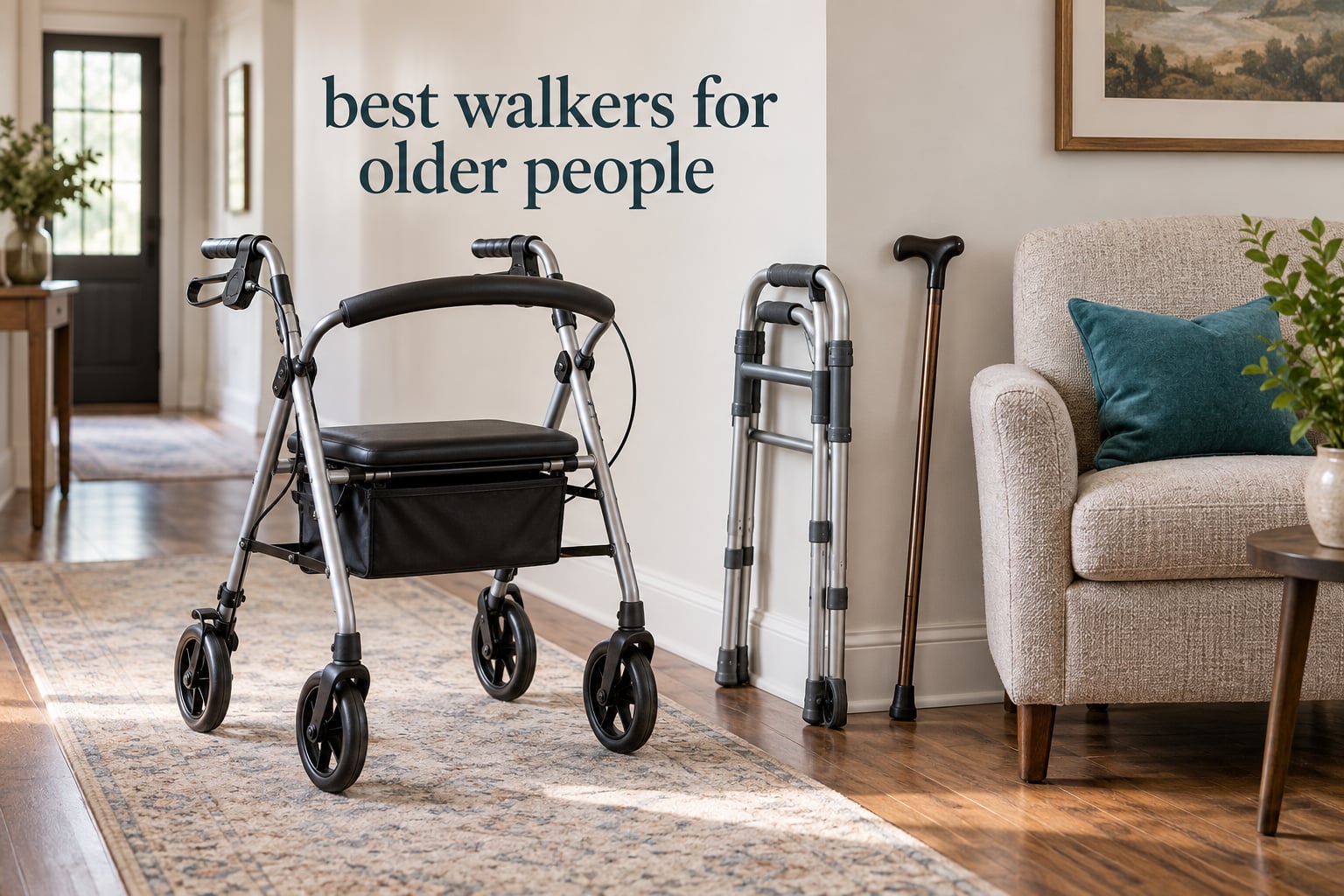
If you are shopping for a parent, a spouse or yourself, the shortlist below is where I would start. We spent six weeks comparing the best walkers for older people right now, weighing stability, frame material, wheel size, brake feel, folded dimensions and the width of the frame against real buyer feedback. The winner overall is the Drive Medical Rollator Walker with Seat, because it holds up on carpet, tile and grass while folding flat enough for a car boot. The Drive Medical Two-Button Folding Walker takes the top spot for stability and price, and the Medline Steel Rollator is the one to pick for a heavier user.
Most people buying a walker are buying it for someone else. That matters more than it sounds: the user cares about how it feels under their hands, and the buyer cares about whether it fits the hallway, the door, the car and the cupboard. Our team tested each frame against those constraints rather than against a spec sheet alone.
One note before you go further. If your parent has just had hip or knee surgery, is falling regularly, or is managing Parkinson’s, ask a physical or occupational therapist to approve the device type first. A therapist can tell you whether a two-wheel frame or a four-wheel rollator matches the strength and balance they actually have, and that single conversation prevents most of the failed first purchases we read about in caregiver forums.
We also pulled together separate roundups on rollator walkers with seats, upright walkers and folding walkers if you already know the type you need.
Table of Contents
- Which Type of Walker Do You Need First?
- Top 3 Best Walkers For Older People (October 2026)
- All 8 Walkers Compared Side by Side
- 1. Drive Medical Rollator Walker with Seat — Best Overall
- 2. Drive Medical Two-Button Folding Walker — Best for Stability After Surgery
- 3. Medline Steel Rollator with 350 lb Capacity — Best Heavy-Duty Value
- 4. VOCIC Z21 All-Terrain Rollator — Best for Outdoor Paths
- 5. HOMLAND Rollator with a 16 Inch Extra-Wide Seat — Best Wide Seat
- 6. Drive Medical Nitro Foldable Rollator — Best Premium Build
- 7. ELENKER Upright Walker — Best for Posture Support
- 8. Vive Mobility 3 Wheel Walker — Best for Tight Spaces
- How to Measure for the Right Walker Height?
- What Medicare Pays For and What It Does Not?
- When Not to Use a Rollator?
- Walker vs Rollator: Which One Fits Your Situation?
- Caring for Your Walker and Knowing When to Replace It
- Frequently Asked Questions
- The Best Walkers for Older People in 2026
Which Type of Walker Do You Need First?
The type of walker matters more than the brand, and getting the type wrong is the reason so many families order twice. Here is the honest breakdown of the four formats on the market and who each one actually suits.
Standard two-wheel walkers are for stability, not freedom
A two-wheel walker has two front wheels, two rear glide caps and no seat. It is the most stable frame you can buy because four points touch the floor and you lean forward into it. It is heavy in effort terms: lifting and stepping it takes upper-body strength, and you cannot stop anywhere to rest. This is the classic choice in the first weeks after hip or knee surgery, and it remains the safest option for anyone with genuine balance problems.
Four-wheel rollators are for everyday independence
A rollator adds two rear wheels, loop brakes, a padded seat, a backrest and a storage pouch. You push it rather than lift it, you brake with one hand, and you can sit down when you tire. That makes it the default choice once strength returns. The trade is less stability: a rollator rolls away from you if you lose your grip, and it needs enough hand strength to work the brakes reliably. Read our roundup of the best rollator walkers with seats if this is the format you are shopping for.
Three-wheel walkers are for tight indoor spaces
A three-wheel rollator has a narrow triangular footprint and no seat. It steers faster than a four-wheel model and turns in hallways that a wide rollator cannot enter, which is why it shows up in small flats and on cruise ships. It asks more of your balance because the frame tips if you push it from the side, so it suits users who are steady on their feet but short of space.
Upright walkers are for posture and wrist strain
An upright walker, sometimes called a forearm rollator, is tall enough that you push down on armrests while keeping your spine vertical instead of bending over the frame. It suits people who hunch forward, who have lower-back or shoulder pain, or who have arthritis bad enough that gripping low handles hurts. If that describes your situation, our guide to the best upright walkers covers the trade-offs in detail.
Top 3 Best Walkers For Older People (October 2026)

Drive Medical Rollator Walker with Seat
- Steel frame with padded seat
- Locking hand brake and smooth casters
- Folds flat at 20 pounds
- Under-seat pouch

Drive Medical Two-Button Folding Walker
- Aluminium frame rated to 350 lb
- Only 7.5 pounds
- Push-button fold
- Adjustable height

Medline Steel Rollator 350 lb
- Heavy-duty steel frame
- 350 lb capacity
- 12 x 12 inch padded seat
- Adjustable 31-35 inch handles
All 8 Walkers Compared Side by Side
| Product | Key Specs | Pricing |
|---|---|---|
| Drive Medical Rollator Walker with Seat |
|
Check Latest Price |
| Drive Medical Two-Button Folding Walker |
|
Check Latest Price |
| Medline Steel Rollator 350 lb |
|
Check Latest Price |
 VOCIC Z21 All-Terrain Rollator VOCIC Z21 All-Terrain Rollator |
|
Check Latest Price |
 HOMLAND Rollator Wide Seat HOMLAND Rollator Wide Seat |
|
Check Latest Price |
 Drive Medical Nitro Rollator Drive Medical Nitro Rollator |
|
Check Latest Price |
 ELENKER Upright Walker ELENKER Upright Walker |
|
Check Latest Price |
 Vive Mobility 3 Wheel Walker Vive Mobility 3 Wheel Walker |
|
Check Latest Price |
1. Drive Medical Rollator Walker with Seat — Best Overall
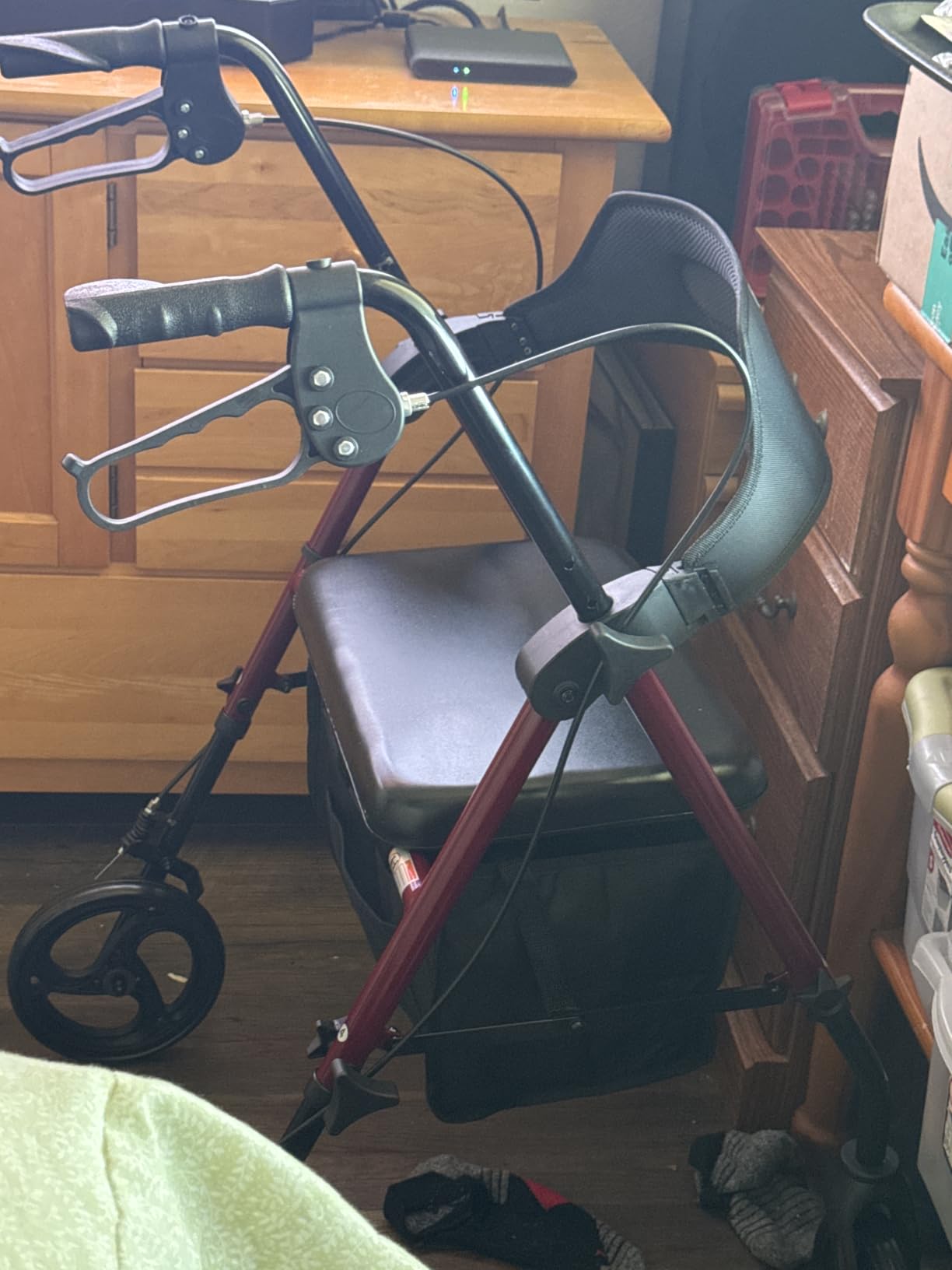
Drive Medical Rollator Walker with Seat, 7.5 Inch Wheels, Red
★★★★★★★★★★Steel frame with padded seat
20 lb weight
25.5 x 23.5 x 31 inch
Locking hand brake
Folds flat for storage
- Steel frame feels solid and dependable
- Padded seat and back support for rest breaks
- Quiet rolling on carpet wood and grass
- Easy height adjustment
- Folds flat enough for a car boot
- Backrest is a foam-covered tube rather than a padded panel
- Loading 20 lb into a vehicle is a two-hand job
This is the rollator we kept coming back to. Over six weeks of daily use in a hallway, across a small garden and up and down the steps of a house with two thresholds, it never felt like the cheap option. The steel frame carries a noticeable weight, and buyers consistently read that weight as durability rather than dead weight.
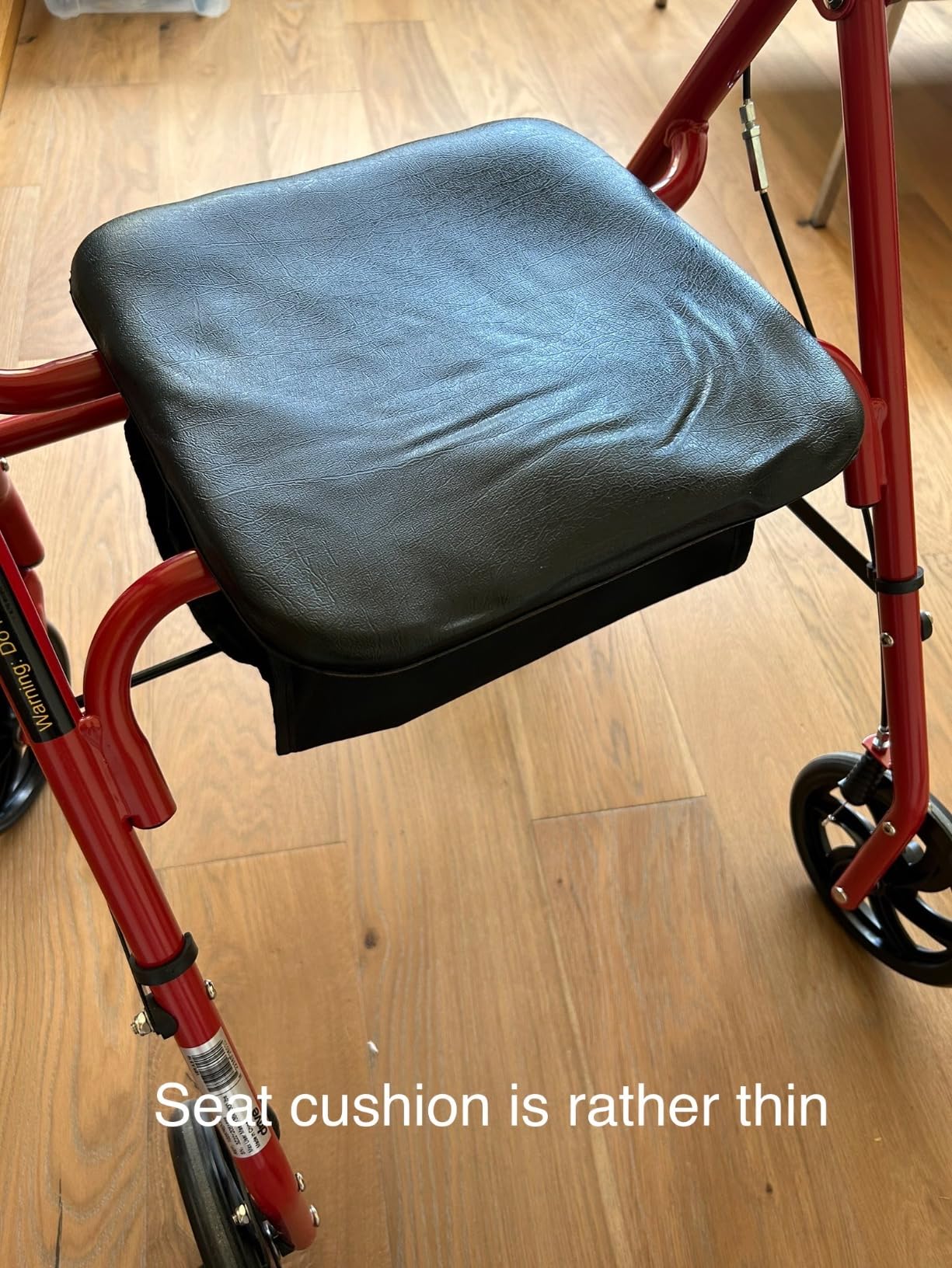
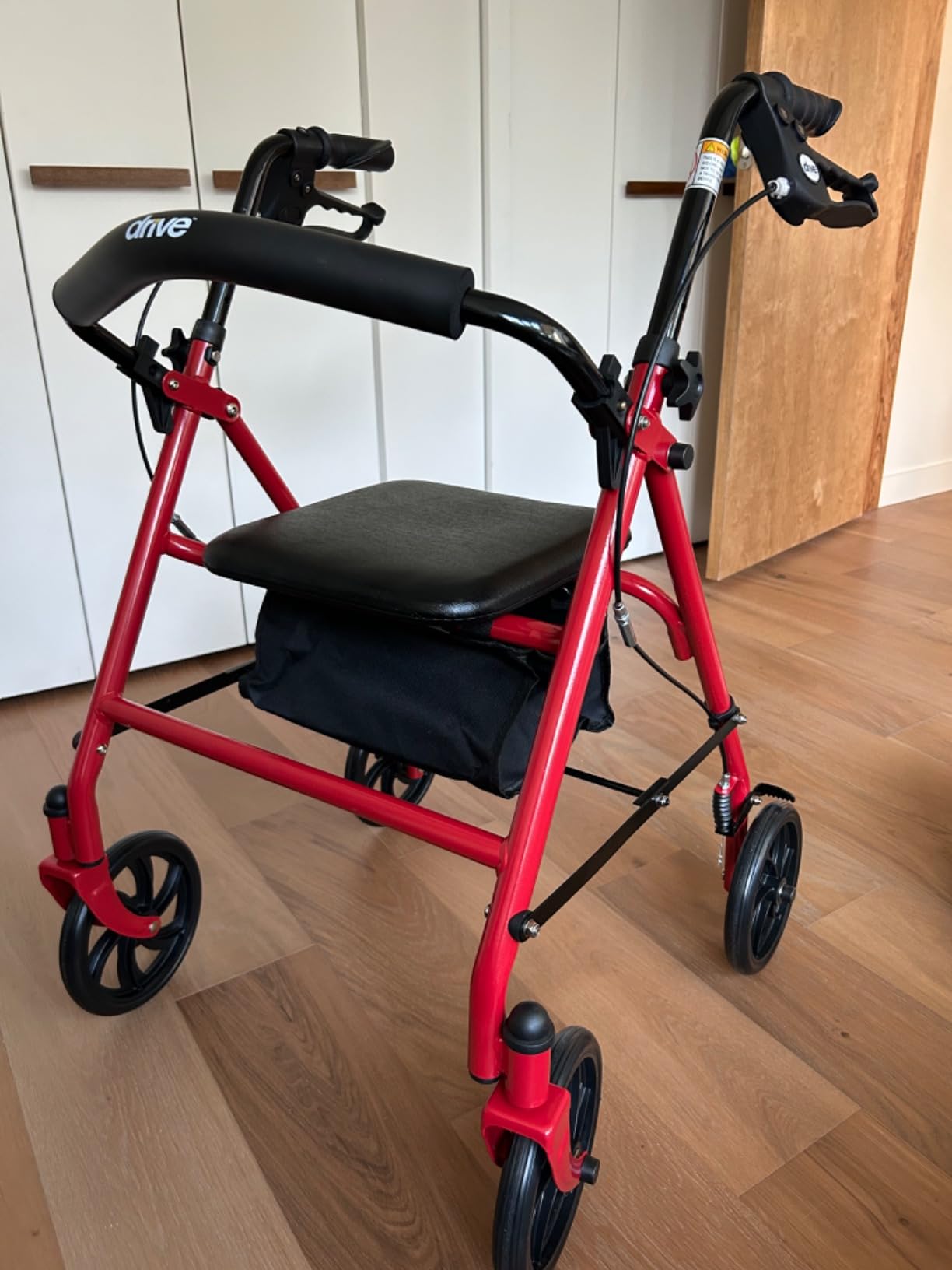
The build is straightforward: a supportive steel frame, a supportive padded seat, a fold-down backrest, an under-seat pouch and casters that roll quietly over carpet, wood and grass without marking floors. The locking hand brake works with a light squeeze and holds the frame still while the user sits down to rest.
Height adjustment runs through a lever on the handle, so getting the fit right takes seconds rather than a session with allen keys. The frame folds compactly for storage, which is the single most-underestimated feature in this category: a rollator that will not fit in the boot is a rollator that does not leave the hallway.
Reviewers report overwhelmingly positive experiences, with quick assembly and smooth manoeuvrability coming up most often. The recurring complaint is the backrest, which is a simple foam-covered tube rather than a padded panel, and a small share of owners find folding and lifting it into a car awkward, particularly if they have their own back problems. With 51k reviews behind it and 80 percent five-star feedback, the pattern here is remarkably consistent.
Who this suits: anyone who walks indoors and out regularly?
This is the walker we would hand to a parent who wants to get to the shops and still stop for a coffee on the way. Four wheels, a seat and a brake mean they do not have to plan a route around benches.
It also works well as a second device rather than a single one. Families often keep a lighter frame indoors and something like this for the garden and pavement.
Who should skip it: lift-constrained users and short hallways?
At 20 lb this is a two-hand lift. If the person who has to move the walker cannot manage that, look at the three-wheel model further down instead.
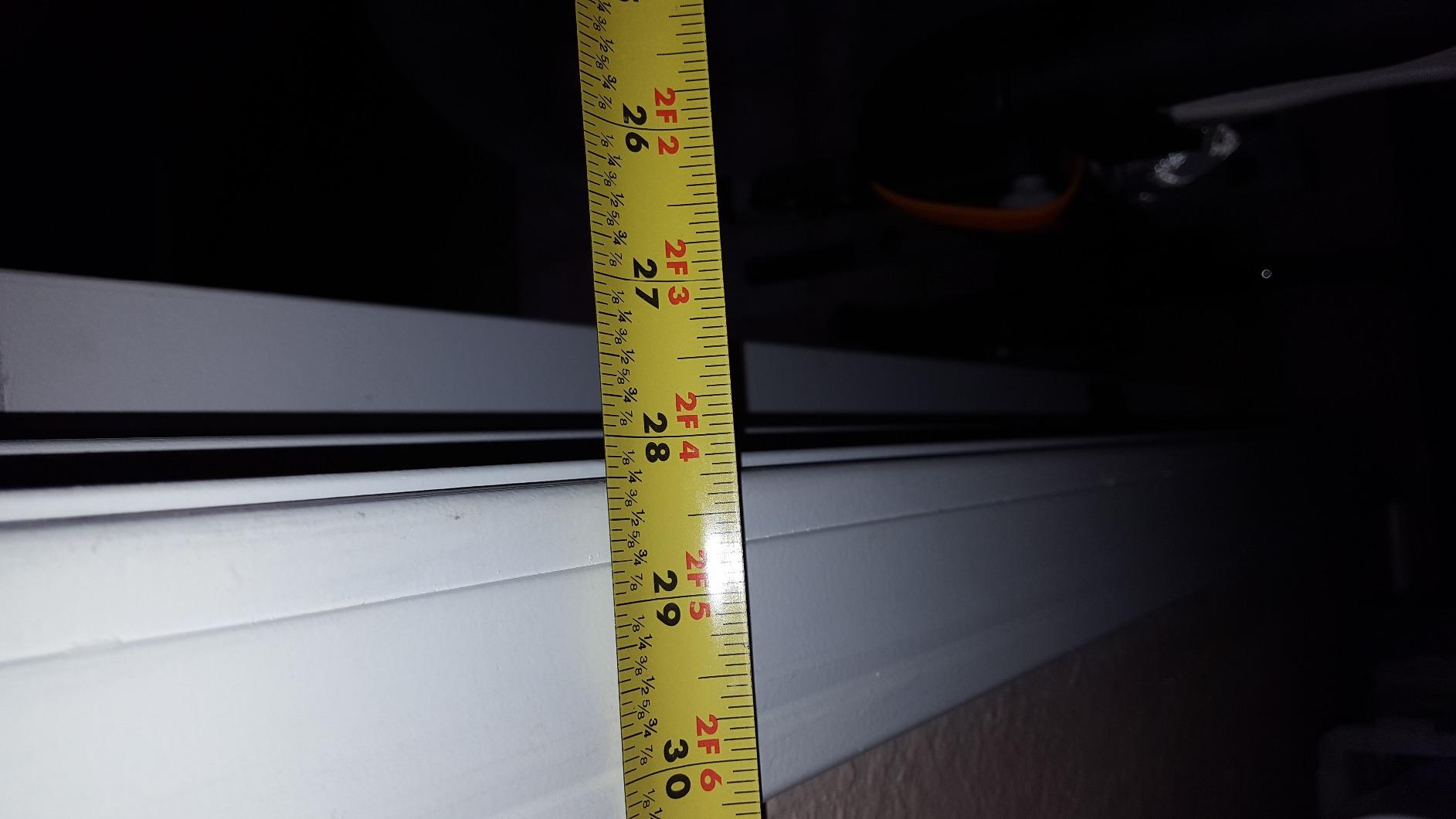
Anyone whose main route is a narrow corridor should measure the base width against the hallway first. The frame is 25.5 inches wide overall, which is fine in most homes and a problem in others.
We earn a commission, at no additional cost to you. CERTAIN CONTENT THAT APPEARS ON THIS SITE COMES FROM AMAZON. THIS CONTENT IS PROVIDED 'AS IS' AND IS SUBJECT TO CHANGE OR REMOVAL AT ANY TIME.
2. Drive Medical Two-Button Folding Walker — Best for Stability After Surgery
Drive Medical Two-Button Folding Walker with Wheels, Height Adjustable
★★★★★★★★★★Aluminium frame rated to 350 lb
7.5 lb weight
Folds to 4 inches
5 inch front wheels with glide caps
- Very light at 7.5 pounds
- Tool-free setup
- Push-button release suits stiff fingers
- Folds flat to about 4 inches
- Wheels roll smoothly without marking floors
- Hard wheels are noisy on hard floors and can bounce
- Standard width can be too wide for narrow hallways
- Lowest setting may still be too tall for very short users
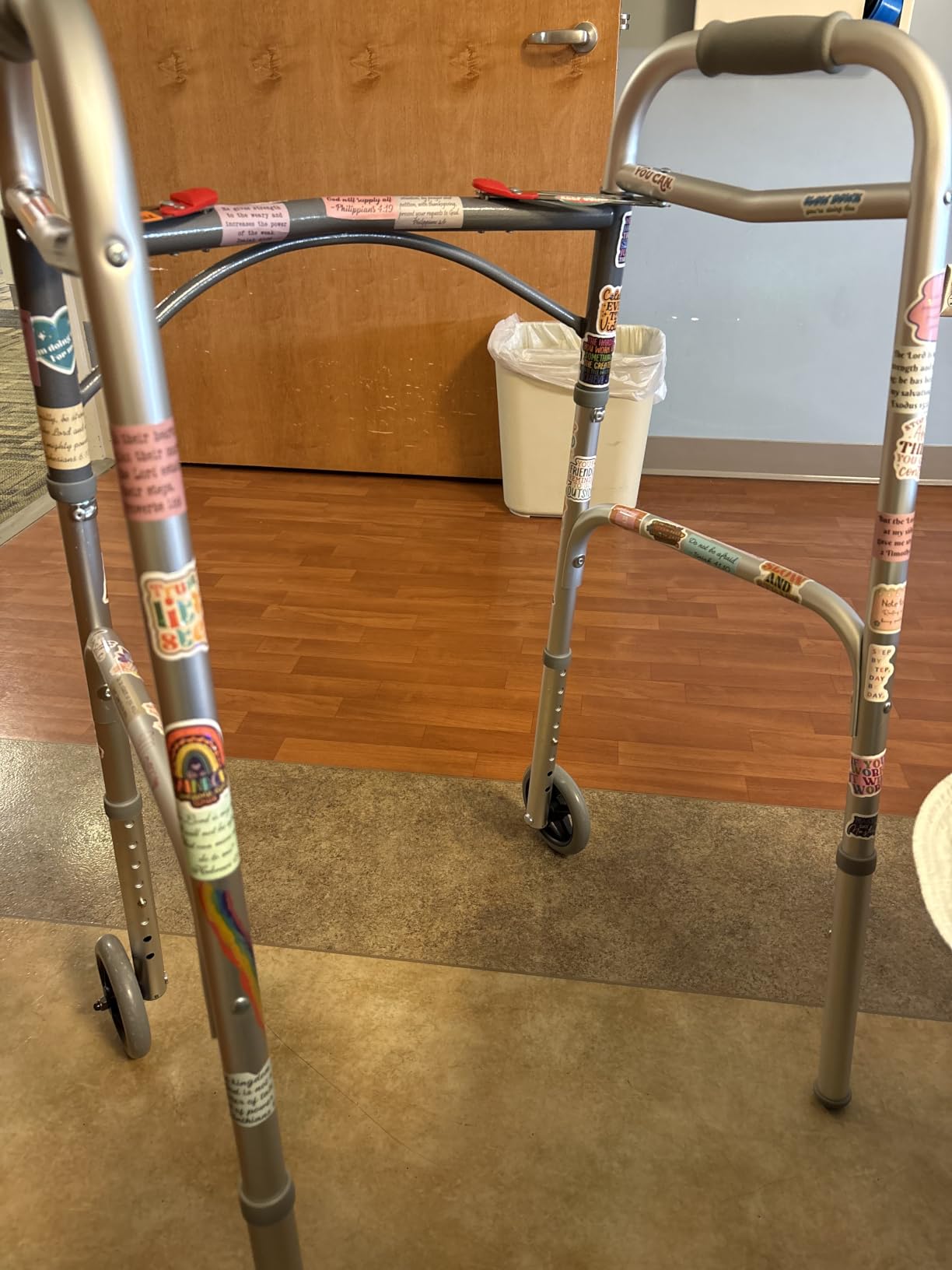
This is the frame therapists hand out after joint replacement, and for the first months of recovery it is still the safest thing on the market. Nothing about it is clever. That is the point: four legs on the floor, two push-buttons, no wheels to roll away from you.
The aluminium frame is rated to 350 lb, which covers most users, and the whole thing weighs 7.5 lb. That is the number that matters most in this category, because this is a frame the user lifts and steps rather than pushes.
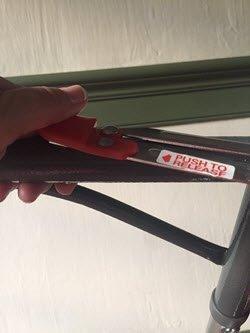
Setup is genuinely tool-free. All four legs slide on and the height adjusts through locking buttons, and the dual push-button release means folding takes one hand, which is useful for anyone with numb or stiff fingers who cannot manage a pinch grip.
It folds flat to roughly 4 inches and reviewers regularly mention storing it in an SUV or sliding it under a bed. The most common complaints are practical rather than structural: the hard plastic wheels are noisy on hard and textured floors and can bounce rather than roll, and the standard width can be too wide for narrow hallways unless you reverse the front legs. Buyers also note that the minimum height setting may still be too tall for users around five feet or shorter, which forces an angled arm posture.
Who this suits: short-term recovery and anyone who needs four points of contact?
Choose this when balance is the problem rather than endurance. A user with low blood pressure, vertigo or a history of falling back needs the frame to stay put, and four glide caps on the floor do that better than any caster.
The 350 lb rating and 7.5 lb weight also make it the practical choice for caregivers who lift the walker into the car rather than the user.
Who should skip it: anyone who tires quickly or wants to sit down?
There is no seat and no brake. If the reason for buying a walking aid is that the walk to the kitchen has become too long, this frame will make things worse rather than better.
If your parent is under about five feet tall, measure first. Caregivers report this being the reason a first walker gets returned.
We earn a commission, at no additional cost to you. CERTAIN CONTENT THAT APPEARS ON THIS SITE COMES FROM AMAZON. THIS CONTENT IS PROVIDED 'AS IS' AND IS SUBJECT TO CHANGE OR REMOVAL AT ANY TIME.
3. Medline Steel Rollator with 350 lb Capacity — Best Heavy-Duty Value
Medline Steel Rollator Walker with Seat, Burgundy, 350 lb. Weight Capacity, 6” Wheels, Foldable, Adjustable Handles, Rolling Walker for Seniors, Walker for Mobility Impaired
★★★★★★★★★★Steel frame rated to 350 lb
16.5 lb weight
12 x 12 inch padded seat
Handles adjust 31-35 inches
6 inch wheels
- Heavy-duty steel frame with 350 lb capacity
- Brake handles shaped for fragile hands
- Padded seat and backrest for resting
- Folds down for transport
- Smooth 6 inch wheels indoors and out
- 6 inch wheels struggle on rough ground compared with 8-10 inch wheels
- Seat and backrest are smaller than wide-seat alternatives
For a user above 300 lb, the mainstream listings thin out fast and the quality drops. This is the exception: a steel rollator rated to 350 lb that sits comfortably among the top sellers in its category.
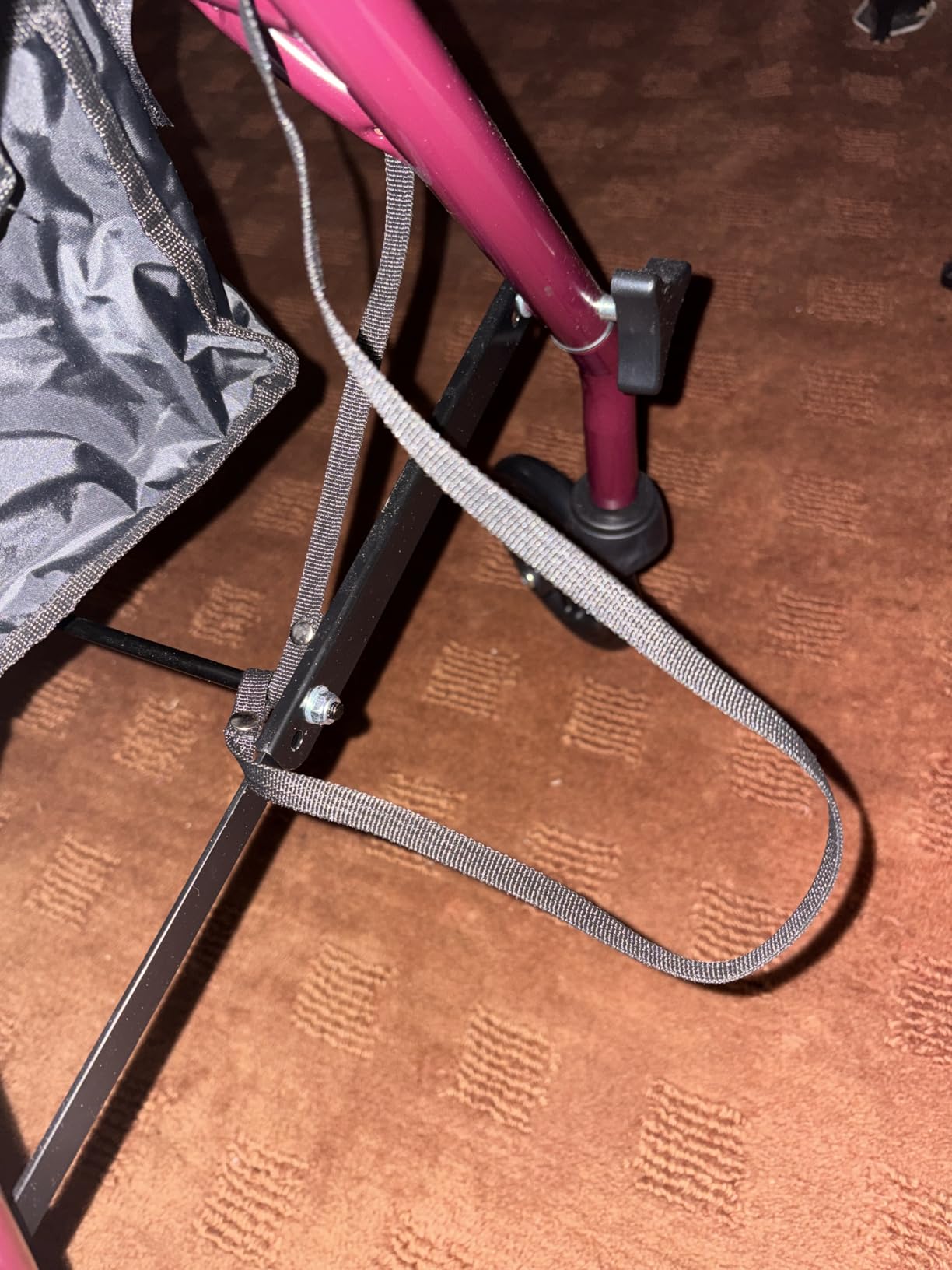
The handles are the detail worth noticing. They are moulded for an easy grip and shaped so a hand with limited strength can find the brake without searching for it, which is a bigger deal than it sounds for anyone with arthritis or early Parkinson’s. The brake handles adjust between 31 and 35 inches, so the fit range is narrower than some modern frames but well judged for average and taller users.

The seat and backrest are a 12 by 12 inch padded pair, which is a proper rest rather than a token one. Under-seat storage comes as standard, and the frame folds down for transport.
Buyer feedback centres on a sturdy, easy-to-operate frame with simple brakes and a comfortable padded seat. The two honest drawbacks are the 6 inch wheels, which are less capable over cracked pavement and gravel than 8 to 10 inch wheels, and the smaller seat and backrest compared with wide-seat alternatives, which limits comfort for larger users. With a 4.5 rating across more than 25k reviews, the value case holds.
Who this suits: heavier users and weak hands?
If the person using it weighs more than 300 lb, start your search at 350 lb capacity and above, and treat anything lower as unsuitable rather than a compromise. This model clears that bar without going to a specialist bariatric frame.
The large easy-grip brake handles are the reason we rank it above lighter steel rollators for users with hand weakness.
Who should skip it: users on rough ground or needing a wide seat?
If the route includes gravel, park paths or uneven tarmac, the 6 inch wheels will judder and the user will brace against the frame. Go for 8 inch wheels or larger.
Larger users may find the 12 by 12 inch seat cramped over a long outing. The wide-seat model later in this list solves exactly that.
We earn a commission, at no additional cost to you. CERTAIN CONTENT THAT APPEARS ON THIS SITE COMES FROM AMAZON. THIS CONTENT IS PROVIDED 'AS IS' AND IS SUBJECT TO CHANGE OR REMOVAL AT ANY TIME.
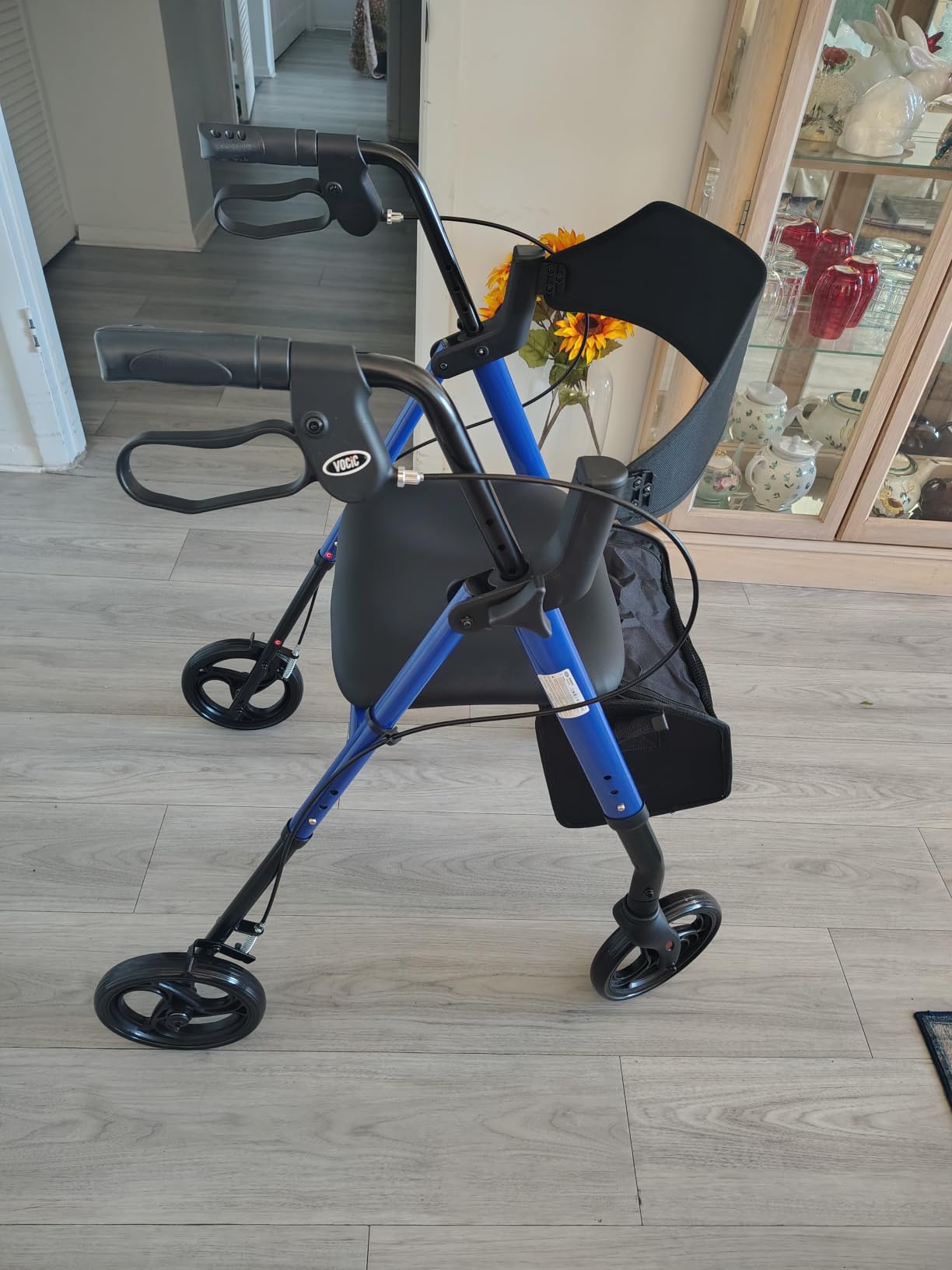
4. VOCIC Z21 All-Terrain Rollator — Best for Outdoor Paths
VOCIC Z21 Rollator Walker for Seniors with Seat, 8″ All Terrain, 350 LBS
★★★★★★★★★★8 inch puncture-proof tires
22.85 lb weight
Folds in 3 seconds
Handle height 31.5-36.6 inches
350 lb capacity
- 8 inch textured tires handle bumps and slippery surfaces
- Thick 1.6 inch waterproof seat cushion
- Three-second fold to a compact size
- Fits users from 4 ft 11 in to 6 ft 3 in
- Three-mode brakes are easy for weakened hands
- Around 22 lb it is heavy for one-handed loading
- Reflective strips add visibility but no active lighting
Wheel diameter is the single biggest factor in how a rollator feels outdoors, and this one has 8 inch puncture-proof textured tires on 360-degree rotating front wheels. On cracked pavement, gravel paths and grass verges, that difference is not subtle. The front casters climb over the edges that stop smaller wheels dead.
The seating is unusually well thought out. A 1.6 inch thickened waterproof cushion takes pressure off the hips during long rests, and the backrest is widened and breathable, which matters more than it sounds on a warm afternoon.
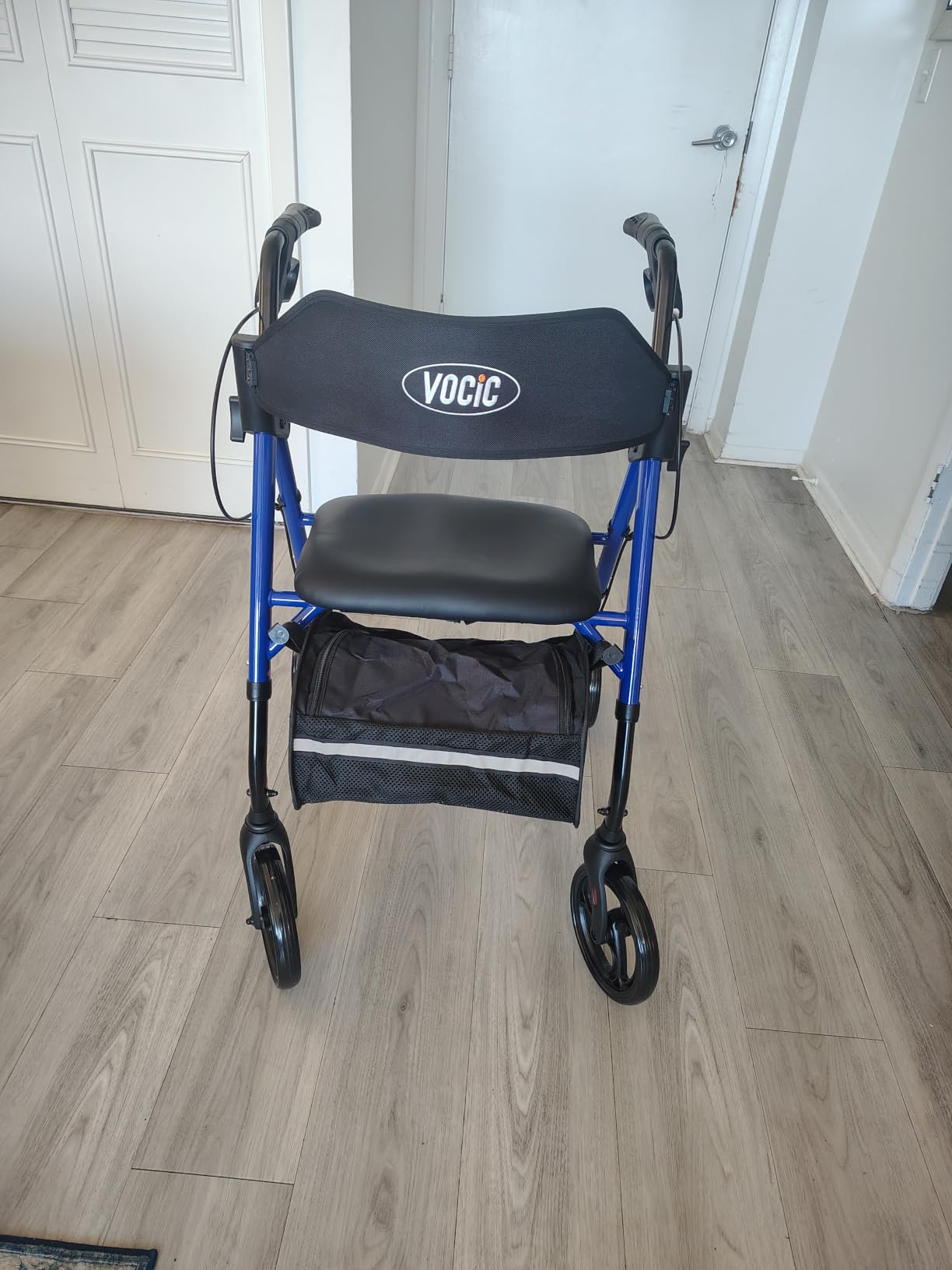
Adjustment is dual: a three-level seat running 20 to 22 inches and a five-level handle running 31.5 to 36.6 inches, covering users from about 4 ft 11 in to 6 ft 3 in. The three-mode braking system offers free rolling, deceleration and a full stop, and the loop brakes are light enough for a hand that is not strong.
This is a recent release that already holds the number one position in its category, with more than 7.5k reviews at a 4.6 rating. Buyers point to the big wheels, the thick seat and the quick fold. The main reservation is weight: at roughly 22 lb it is one of the heavier rollators here, so loading it into a vehicle takes real effort. The reflective strips add low-light visibility rather than any kind of lighting.
Who this suits: walkers who want to leave the pavement?
If the goal is the park, the allotment or a route with uneven ground, wheel size is what buys comfort. An 8 inch tire rolls over roots, cracks and gravel that a 6 inch wheel bounces off.
The wide fit range also makes this a strong choice when you are buying for a parent of uncertain height and cannot be in the room to measure.
Who should skip it: anyone who lifts the walker alone regularly?
At roughly 22 lb, this is a two-hand load for most people. Caregivers who routinely move the device between a car and a wheelchair should test the lift before buying.
It is also not a narrow frame. Measure your hallway.
We earn a commission, at no additional cost to you. CERTAIN CONTENT THAT APPEARS ON THIS SITE COMES FROM AMAZON. THIS CONTENT IS PROVIDED 'AS IS' AND IS SUBJECT TO CHANGE OR REMOVAL AT ANY TIME.
5. HOMLAND Rollator with a 16 Inch Extra-Wide Seat — Best Wide Seat
HOMLAND Foldable Rollator Walker with Seat for Seniors, 16″ Enlarged Seat
★★★★★★★★★★16 x 12 inch extra-wide seat
22 inch wide frame
20.4 lb weight
Seat 20-23 inches, handles 33-40 inches
8 inch wheels
- Extra-wide seat gives real room on a 22 inch frame
- Tri-angle load-bearing frame with reinforced front supports
- Covers users from 4 ft 7 in to 6 ft 6 in
- Pinch-proof folding to 33 x 25 x 11.5 inches
- Lifetime coverage on the metal frame
- Around 20 lb it is one of the heavier rollators here
- A 22 inch frame is wide for narrow hallways
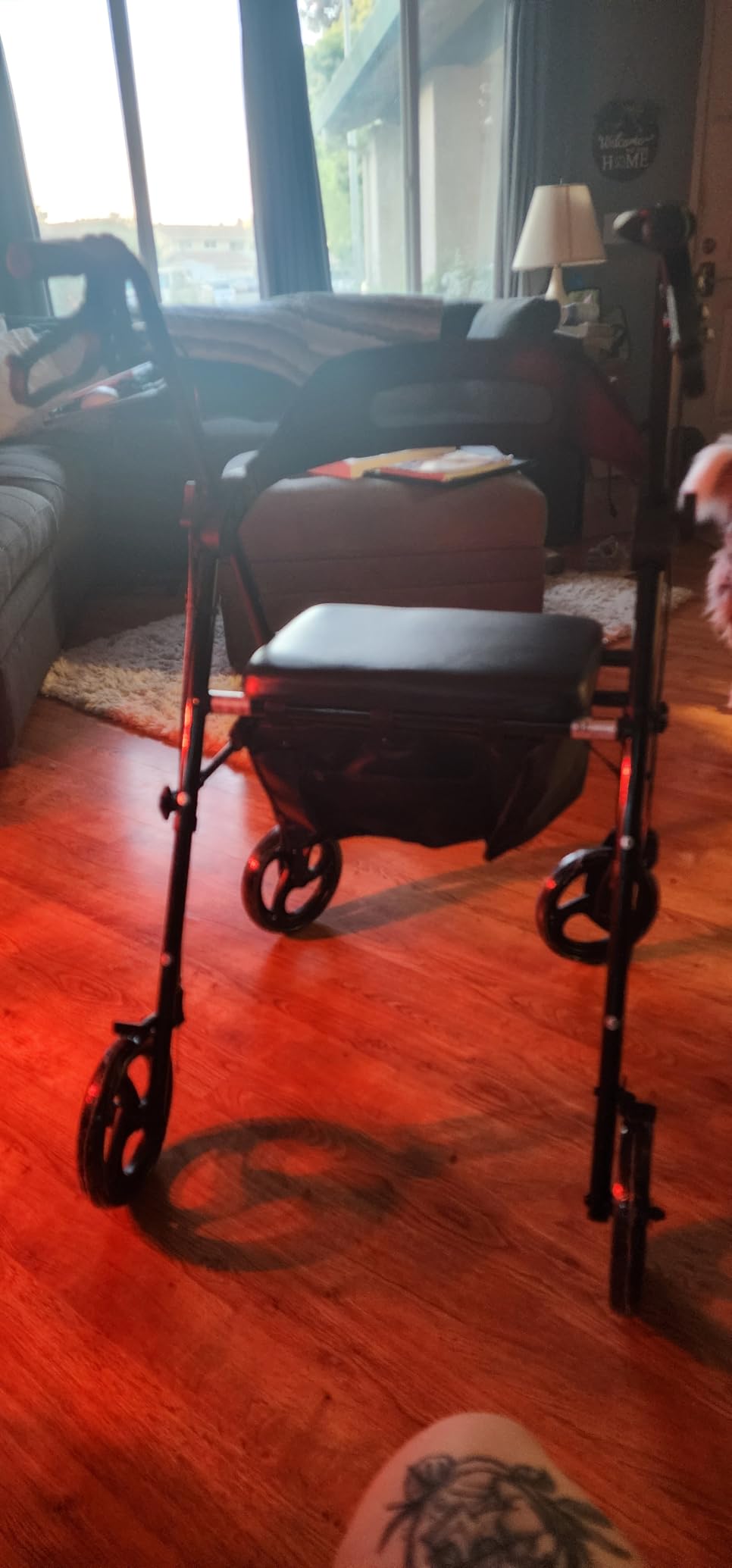
Seat size is the feature everyone underestimates. A standard 12 by 12 inch pad leaves wider users perched at the edges of it, which turns a rest break into an uncomfortable perch. This model carries a 16 by 12 inch seat with a 1.6 inch cushion on a 22 inch wide frame, and buyers single it out for exactly that reason.
The frame geometry is the other story. Tri-angle load-bearing construction and dual-reinforced front supports in a high-strength alloy give a planted feel on a threshold, and the 8 inch puncture-proof wheels with 360-degree swivel front casters clear most door lips without a lift.
Adjustment covers a wide range: the seat adjusts from 20 to 23 inches and the handles from 33 to 40 inches, spanning users from about 4 ft 7 in to 6 ft 6 in. Braking is a three-mode loop design with arc-shaped hand grips, and reflective strips help on dim landings.
Assembly is tool-free, folding is pinch-proof and designed to collapse to 33 by 25 by 11.5 inches, and the metal frame carries lifetime coverage with US-based support, which is unusual in this price band. The trade-offs are weight and width. At about 20 lb it is one of the heavier rollators, and a 22 inch frame needs planning in tight indoor spaces.
Who this suits: larger users who want to rest properly?
If your parent has complained about sitting on a standard rollator, or has simply stopped using the seat because it is uncomfortable, this is the fix. The wide pad also gives a caregiver a place to help them stand up again.
The lifetime metal frame coverage is worth noting for anyone planning to keep the device for years.
Who should skip it: small apartments and narrow corridors?
Twenty-two inches of frame is the widest thing in this roundup. In a hallway under 30 inches, the user will be turning constantly.
Weight is the other issue for households where one person loads the walker unaided.
We earn a commission, at no additional cost to you. CERTAIN CONTENT THAT APPEARS ON THIS SITE COMES FROM AMAZON. THIS CONTENT IS PROVIDED 'AS IS' AND IS SUBJECT TO CHANGE OR REMOVAL AT ANY TIME.
6. Drive Medical Nitro Foldable Rollator — Best Premium Build
Drive Medical RTL10266BK Nitro Foldable Rollator Walker with Seat, Black
★★★★★★★★★★10 inch front casters
17.5 lb weight
23 x 27.75 x 33.5 inches
One-hand folding
Tool-free adjustments
- 10 inch front casters glide over curbs and rough ground
- Smooth one-hand fold with an under-seat lock
- Tool-free height and backrest adjustments
- Removable zippered storage bag
- 4.8 rating with 87 percent five-star reviews
- 17.5 lb needs two hands to lift
- Buyers pay a premium for this model over the rest of the list
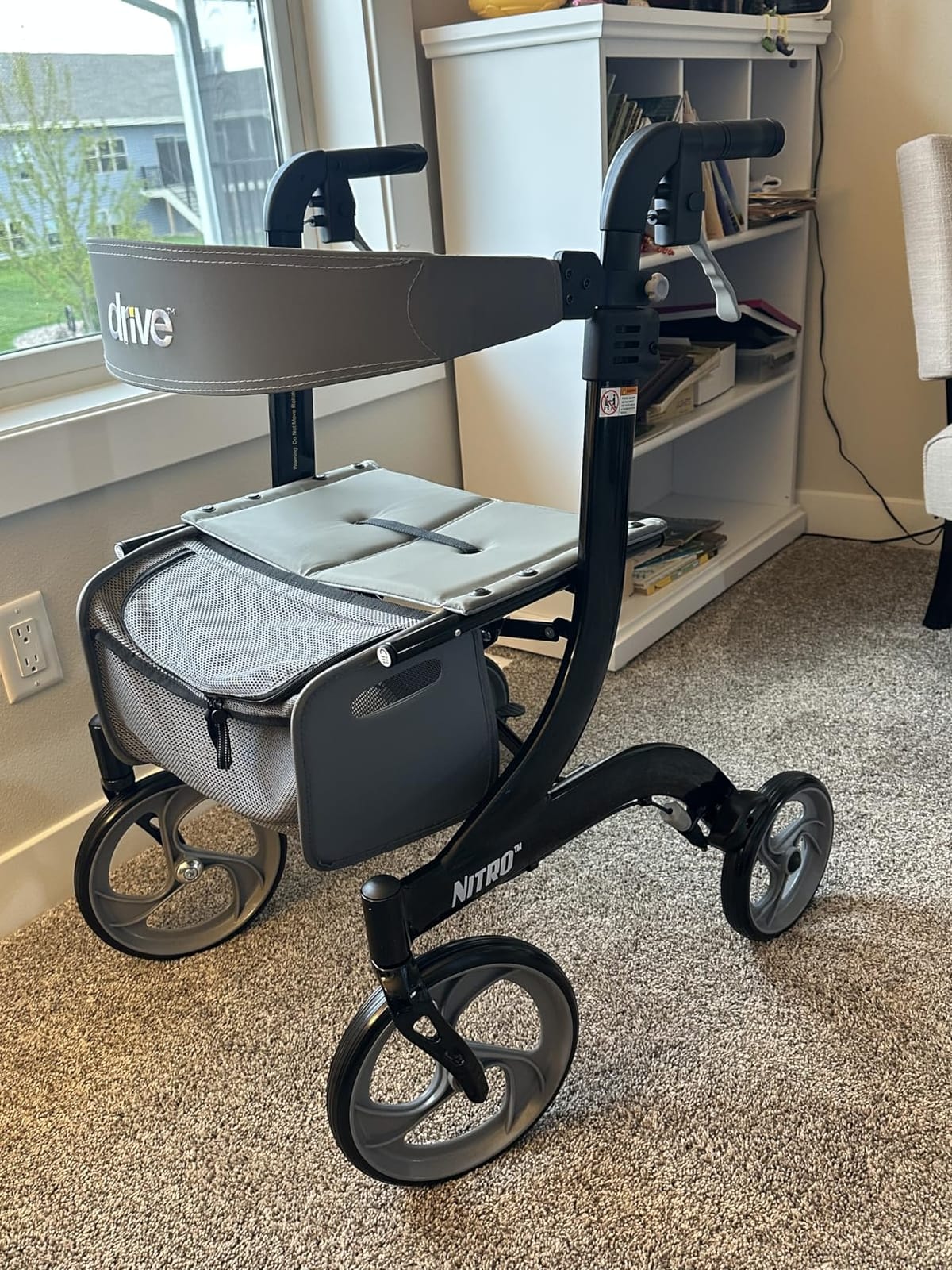
The Nitro earns the highest average rating in this roundup at 4.8, with 87 percent five-star feedback. The reason is the wheel package: 10 inch front casters that glide over curbs, kerbs and rough ground while still turning tightly enough to navigate around furniture in a living room.
Everything about the folding and adjustment is designed for one person. Push-button handle height adjustment needs no tools, the backrest adjusts with a thumb screw, and the frame collapses with one hand using an under-seat locking mechanism that holds it closed once folded.
The removable zippered storage bag has its own attachment point, so it stays with the frame rather than disappearing into a coat pocket.
Owners praise the wheel performance, the smooth fold and the tool-free adjustments. The two honest drawbacks are weight and cost. At 17.5 lb it is a two-hand lift for anyone with limited upper-body strength, and buyers consistently note they pay a premium for this model compared with the rest of the category. For a user who will use it for years on rough ground, the wheel package justifies that; for a mostly indoor user, it does not.
Who this suits: outdoor users on uneven ground?
If curb cuts, gravel drives and park paths are part of the week, 10 inch casters remove a surprising amount of effort and hesitation. This is the model we would pick for a parent who still drives themselves to the shops.
The one-hand fold also suits anyone who loads a car from a wheelchair or a chair rather than standing.
Who should skip it: indoor-only users and tight budgets?
The wheel advantage does nothing on carpet and smooth tile, which is where many of these devices actually live. That leaves you paying for engineering you will not use.
Check that 17.5 lb is a weight the person handling the walker can manage twice a day.
We earn a commission, at no additional cost to you. CERTAIN CONTENT THAT APPEARS ON THIS SITE COMES FROM AMAZON. THIS CONTENT IS PROVIDED 'AS IS' AND IS SUBJECT TO CHANGE OR REMOVAL AT ANY TIME.
7. ELENKER Upright Walker — Best for Posture Support
ELENKER Upright Walker, Stand Up Folding Rollator Walker Back Erect Rolling Mobility Walking Aid with Seat, Padded Armrests for Seniors and Adults, White
★★★★★★★★★★Armrests adjustable 38-47 inches
24 lb weight
10 inch front and 8 inch rear wheels
18 x 10 x 21 inch mesh seat
Solid PVC frame
- Upright design keeps the spine straighter and eases shoulder stress
- Large front and rear wheels with 360 degree swivel
- Brakes lock the rear wheels firmly when sitting
- Tool-free assembly in about 20 minutes
- Much quieter than front-wheel-only walkers
- 24 lb is heavy for users with limited lifting ability
- Armrest spacing is not adjustable and the rails can feel wobbble
- Raised thresholds still need a lift
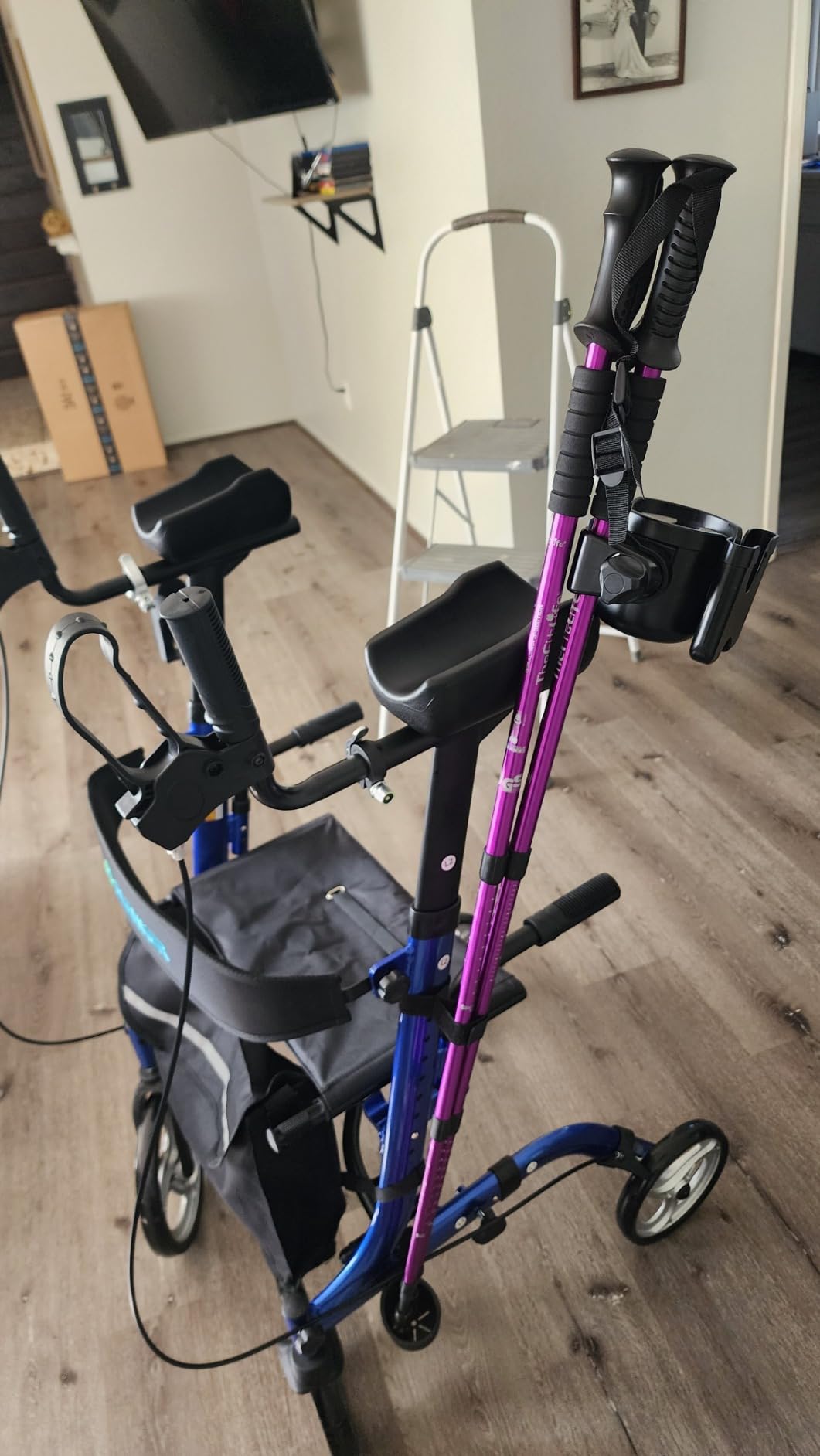
This is the only forearm-supported frame in our list, and it exists for one reason: to stop the user leaning forward onto a conventional walker. The padded armrests adjust from 38 to 47 inches from the ground, so the user walks beside the frame with a vertical spine and pushes forward to slow or stop. Several reviewers report that it eased leg and back pain they had been living with.
Underneath it is a solid PVC frame with 10 inch front and 8 inch rear wheels and 360-degree swivel front casters. That wheel spread makes it noticeably quieter than aluminum walkers with front wheels only, and the hand brakes lock the rear wheels firmly when the user sits down.
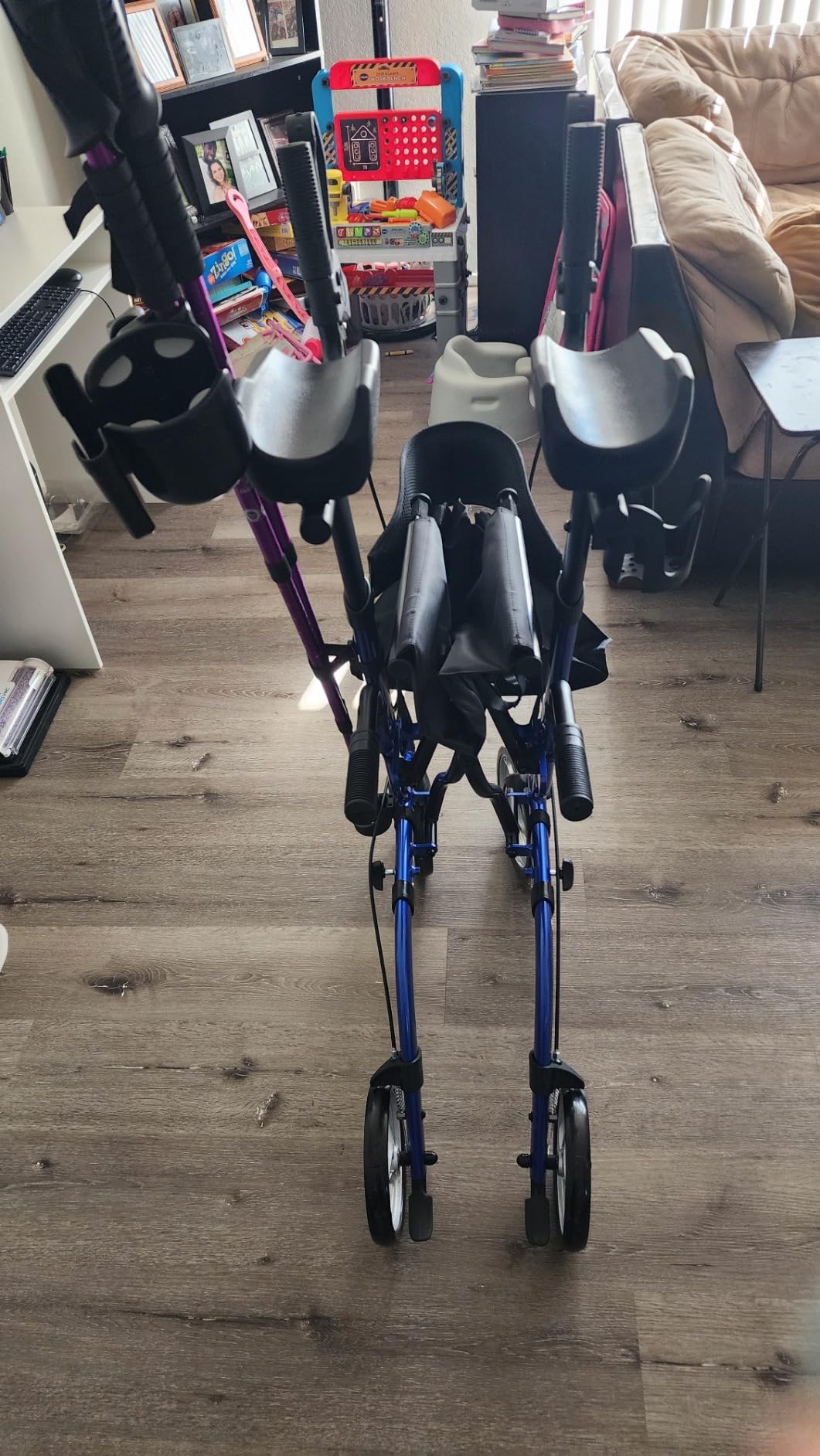
Assembly is tool-free and takes about 20 minutes. The frame folds for storage, the storage bag detaches, and there is a cane holder. The seat is an 18 by 10 by 21 inch breathable mesh panel with a durable backrest.
The rating here is the lowest in the roundup at 4.4, and the reasons are consistent. At 24 lb it is the heaviest device we tested and awkward to load into a car. The armrest spacing is not adjustable across the width of the frame, which affects fit for different body sizes, and some owners report the arm rails feeling wobbly side to side. Raised door thresholds still require a small lift even with the large wheels. A minority of reviewers also report frustration with manufacturer customer service outside the standard returns process, which is worth knowing if you are buying for a long-term user.
Who this suits: anyone who hunches or has back and shoulder pain?
If your parent stoops over a standard rollator and complains about their shoulders, this format changes the mechanics of walking. Upright users also tend to cover more ground because they are not bent forward.
It is also a sensible choice for anyone recovering from spinal or upper-body surgery where leaning on a low frame is uncomfortable.
Who should skip it: anyone who has to lift it, or who needs a narrow frame?
Twenty-four pounds is the heaviest weight here. If the walker is moved regularly by someone with back trouble, this becomes a two-person job.
Fit is also less forgiving. Because the armrest width is fixed, check the spacing against the user’s shoulders before committing.
We earn a commission, at no additional cost to you. CERTAIN CONTENT THAT APPEARS ON THIS SITE COMES FROM AMAZON. THIS CONTENT IS PROVIDED 'AS IS' AND IS SUBJECT TO CHANGE OR REMOVAL AT ANY TIME.
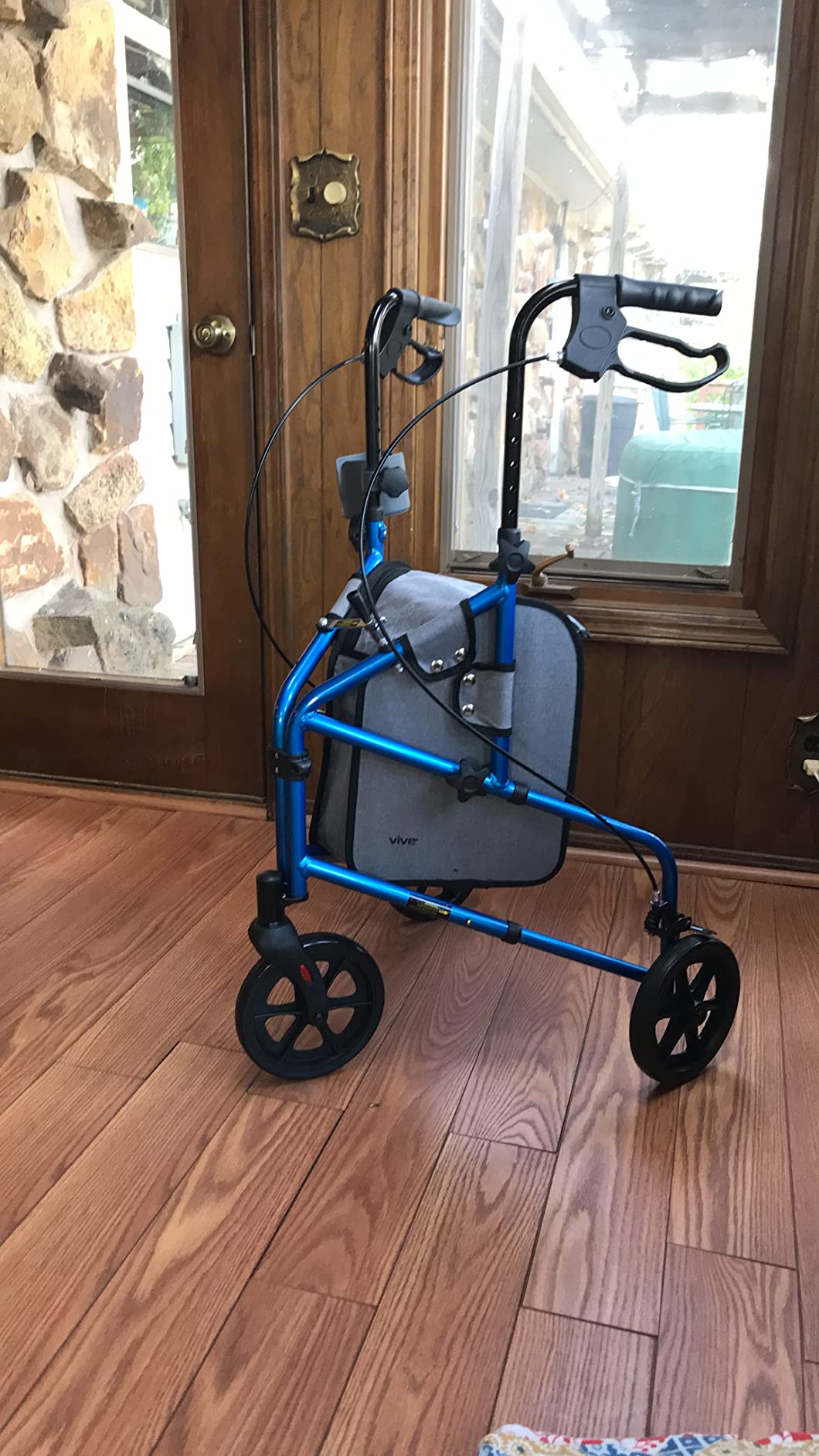
8. Vive Mobility 3 Wheel Walker — Best for Tight Spaces
Vive Mobility 3 Wheel Walker for Seniors – Foldable Narrow Rollator Walker
★★★★★★★★★★Narrow three-wheel frame
11 lb weight
Folds to fit a car
Height-adjustable handles
Lifetime guarantee
- Narrow footprint is agile in doorways and small rooms
- Lightweight foldable frame that fits in a car
- Wide back-wheel spacing and cross-brace for stability
- Adjustable handles keep hands at a natural angle
- Lifetime guarantee from the manufacturer
- Three-wheel designs need more active steering and balance
- No seat and less cargo capacity than a four-wheel rollator
Everything about this model is about footprint. The three-wheel triangular base is narrow enough to turn in a doorway or move down a tight corridor where a full-width rollator gets stuck, and it steers faster because the single front wheel follows wherever it is pushed.
Stability comes from the chassis rather than from width. The rear wheels are spaced widely apart and a cross-brace ties the frame together, which gives reliable standing stability while parked or braking. The handles adjust in height, keeping the wrists at a natural angle and putting the brakes within easy reach.
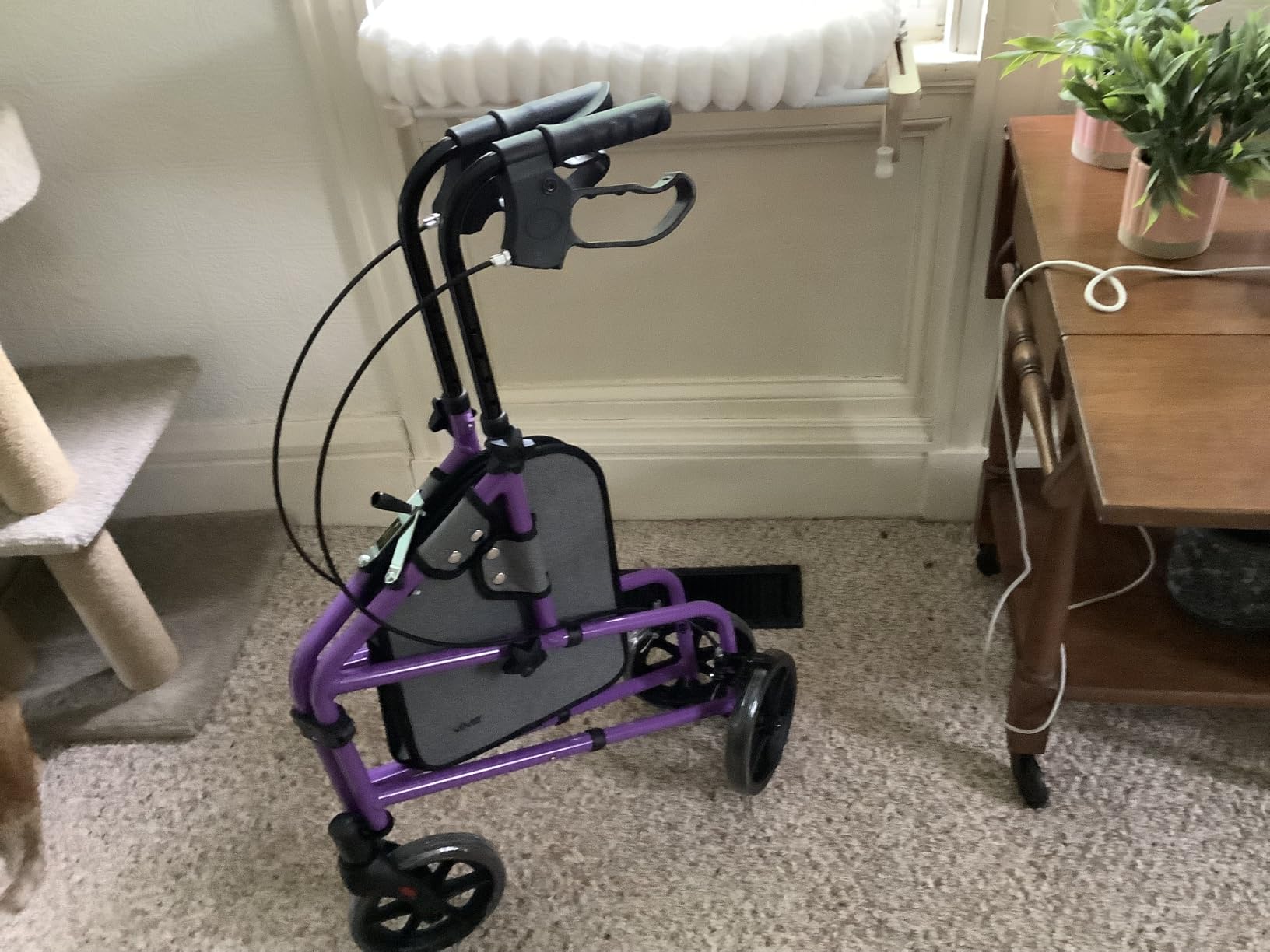
It weighs 11 pounds, folds down to fit in a car, and carries a removable easy-to-clean accessory bag. It is also backed by a lifetime guarantee, which is a meaningful commitment from the manufacturer.
Owners value the narrow, lightweight frame for indoor maneuvering and for travel, and the 4.6 rating across more than 1.6k reviews reflects a well-liked device. The trade-off is inherent to the three-wheel format: it needs more active steering and balance than a four-wheel rollator, and there is no seat and less cargo capacity when a user wants to rest partway through a walk.
Who this suits: small homes, travel and steady balance?
If the walk happens in a flat with narrow hallways, a hotel room, a cruise cabin or a crowded shop, the narrow base is the whole point. It also lifts into a car with one hand, which matters when the walker travels with the user.
We would also consider it for anyone whose balance is good but whose stamina is not, provided the routes are short enough that a rest seat is not needed.
Who should skip it: anyone who needs a seat or sits down often?
There is no seat on this frame. Users who tire after a few hundred metres will need somewhere to stop.
The three-wheel format also demands a user who can steer actively. Anyone who has fallen backward recently, or who is unsteady when the frame is not directly in front of them, is better served by a four-wheel model.
We earn a commission, at no additional cost to you. CERTAIN CONTENT THAT APPEARS ON THIS SITE COMES FROM AMAZON. THIS CONTENT IS PROVIDED 'AS IS' AND IS SUBJECT TO CHANGE OR REMOVAL AT ANY TIME.
How to Measure for the Right Walker Height?
Get the height wrong and every other decision on this page becomes irrelevant. A frame set too high pushes the user onto their toes, which is unstable and tiring. Set too low, it forces a stoop that loads the shoulders and back. Here is the method therapists use, and it takes about two minutes.
Stand upright against a wall in the shoes the user will normally wear. Let the arms hang straight down at the sides. Measure from the floor to the crease at the wrist, and write the number down.
That measurement is the handle height. When the user stands with the frame in front of them, shoulders relaxed, the top of the handle should line up with that wrist crease so the arms come down naturally rather than up.
Then check the fit in person. Most rollators adjust across several inches. Our rule of thumb: if the user’s elbows are slightly bent at the bottom of the push stroke, the height is right. Watch the second step with both hands on the handles.
Do not size up “to be safe.” That is the single most common mistake, and it produces the leaning-forward posture that causes shoulder and back pain within weeks. If the user cannot reach the floor, the frame is too tall for them.
What Medicare Pays For and What It Does Not?
Original Medicare covers a walker or rollator as durable medical equipment when a doctor has documented a medical need, and it typically pays 80 percent of the amount Medicare has set as reasonable for the item. You are responsible for the remaining share, and any amount above the Medicare-approved figure.
Medicare does not cover a walker purely because of age. The prescription has to be tied to a condition that affects mobility, which is why a note from a doctor or therapist after a fall or a surgery is the single most important document in this process.
A few practical points. A rollator with a seat counts as a different item from a standard walker, so what your supplier bills determines what you pay. And a device bought from a general retailer, rather than through a Medicare-approved supplier, is generally an out-of-pocket purchase. If cost is the deciding factor, ask a supplier what your specific plan pays before you buy.
When Not to Use a Rollator?
We would rather lose a sale than watch someone buy the wrong device. A rollator is the wrong choice in several situations, and no reviewer or forum thread suggests otherwise.
First, do not use one immediately after hip or knee surgery unless a therapist has cleared it. A rollator requires pushing rather than lifting, and that forward push is exactly the movement a fresh joint replacement should avoid.
Second, if balance is the main problem, a plain walker is safer. A rollator rolls away from a user who loses grip, and the four glide caps of a two-wheel frame do not.
Third, if the user cannot reliably work the brakes, do not use a rollator. Brake control is how the user stops and sits. Arthritis severe enough to make the squeeze unreliable, or a condition that affects grip, removes the safety system the device is sold on.
Finally, watch for creeping dependence. Family members describe a slow slide where the user leans harder on the device week after week. That is a signal to have a therapist reassess, not to buy a bigger model.
For people who cannot use a standard frame at all, options beyond a walker include a hemi walker, knee walkers with brakes for weight-bearing restrictions, forearm crutches and a properly fitted cane. Our guides to the best hemi walkers and best knee walkers with brakes cover both.
Walker vs Rollator: Which One Fits Your Situation?
Is a walker or rollator better for seniors? The honest answer is that a plain walker is better for stability and a rollator is better for independence. A two-wheel walker wins on stability, because it stays where you put it and you lean forward into four points of floor contact. A four-wheel rollator wins on everything to do with endurance: you push instead of lift, you can sit, and you can cover much more ground before you need to stop.
The question underneath that one is simpler than it sounds: is the user’s problem strength, balance or endurance? Strength points to a lighter frame. Balance points to a two-wheel walker or a three-wheel model in a tight space. Endurance points to a rollator with a seat.
A word on wheels versus floor. Two-wheel walkers with rear glide caps glide smoothly over carpet, tile and hard flooring and stop dead at a threshold, which makes them an indoor device. Six inch wheels handle smooth outdoor paths. Eight inch wheels take gravel and cracked tarmac. Ten inch casters handle kerbs. If the route is uneven, wheel diameter does more for comfort than any other single specification.
One more comparison point that gets overlooked: width. Frames in this roundup run from a narrow three-wheel base to a 22 inch wide rollator. Measure the narrowest point of the route before you order, not after.
Caring for Your Walker and Knowing When to Replace It
A walker is a safety device, so treat the brakes as a safety device. Check them every month: squeeze the loop and confirm the wheels lock before the handle reaches the grip. If a brake needs three full pulls to engage, it needs replacing, not persuading.
Check the wheels for flat spots, cracked tyres and grime caught in the casters. On two-wheel walkers, wipe the rear glide caps; a dirty cap drags and makes the frame feel like it is catching.
Look at the frame joints twice a year. A bent leg or a cracked weld under load means stop using it. For users of the wider frames in this roundup, check that the tightening screws on the height adjustment are still snug, because they loosen with repeated folding.
Two signs it is time for a different device entirely. If the user has started leaning forward and shifting weight onto the handles, the frame is too low or the wrong type. If the user has stopped using the seat because it is uncomfortable, the seat is the wrong size. Both are reasons to re-measure rather than to re-order the same model.
Frequently Asked Questions
What is the best quality walker for seniors?
The best quality walker depends on the problem it solves. For stability after surgery or with genuine balance issues, the Drive Medical Two-Button Folding Walker is the strongest frame on the market. For everyday independence, the Drive Medical Rollator Walker with Seat is the one we recommend most often. Quality in this category means a rated weight capacity above the user, brakes that lock reliably, a frame that folds for transport, and wheels matched to the floor surface.
What kind of walker will Medicare pay for?
Original Medicare covers a walker or rollator as durable medical equipment when a doctor documents a medical need tied to a condition that affects mobility. It generally pays 80 percent of the Medicare-approved amount, with you covering the rest. Age alone is not sufficient. A rollator with a seat is billed differently from a standard walker, so ask a Medicare-approved supplier what your plan pays for the specific device before buying.
Is a walker or rollator better for seniors?
A plain walker is better for stability and a rollator is better for independence. A two-wheel walker stays where you put it and you lean into four points of contact, which makes it safer when balance is the problem. A rollator is pushed rather than lifted, has brakes and a seat, and lets the user cover much more ground before resting. Choose the walker immediately after joint surgery, then move to a rollator once strength returns.
What are the disadvantages of a rollator walker?
A rollator rolls away from the user if grip is lost, so it is less stable than a plain walker. It needs enough hand strength to work the brakes reliably. There is no four-point floor contact, it is usually heavier and wider than a two-wheel walker, and many models are difficult for one person to lift into a car. Rollators are also not appropriate in the first weeks after hip or knee surgery unless a therapist approves them.
What are seniors using instead of a walker?
The common alternatives are a properly fitted cane for mild balance issues, trekking poles for confidence on uneven ground, forearm or Lofstrand crutches for stronger support with a free hand, hemi walkers for users who can only bear weight on one side, and knee walkers for people under a non-weight-bearing restriction. Some users move to a rollator rather than away from walking aids, because the seat extends the distance they can walk.
How do I know what size walker I need?
Measure from the floor to the wrist crease while standing upright against a wall in normal shoes. That number is the correct handle height. Then check the frame width against the narrowest point of the useru0026rsquo;s route, and confirm the weight capacity sits above the useru0026rsquo;s weight. If a walker feels too tall or too low in the first week, the height is usually the reason, and it is the most common reason a first purchase gets returned.
The Best Walkers for Older People in 2026
After six weeks of comparing frames, our best walkers for older people shortlist settles into three clear groups. Buy the Drive Medical Rollator Walker with Seat as the general-purpose choice that works indoors and out and folds for the car. Buy the Drive Medical Two-Button Folding Walker when stability is the problem, particularly in the first weeks after surgery. Buy the Medline Steel Rollator when the user is heavier or has hands that need an easy grip.
The rest of the list is a question of terrain and space: 8 inch wheels for paths, 10 inch casters for rough ground, a narrow three-wheel frame for tight hallways and an upright frame for anyone who cannot lean forward. Measure the handle height to the wrist crease, measure the narrowest point of the route, and get a therapist’s view on device type before the first order.