
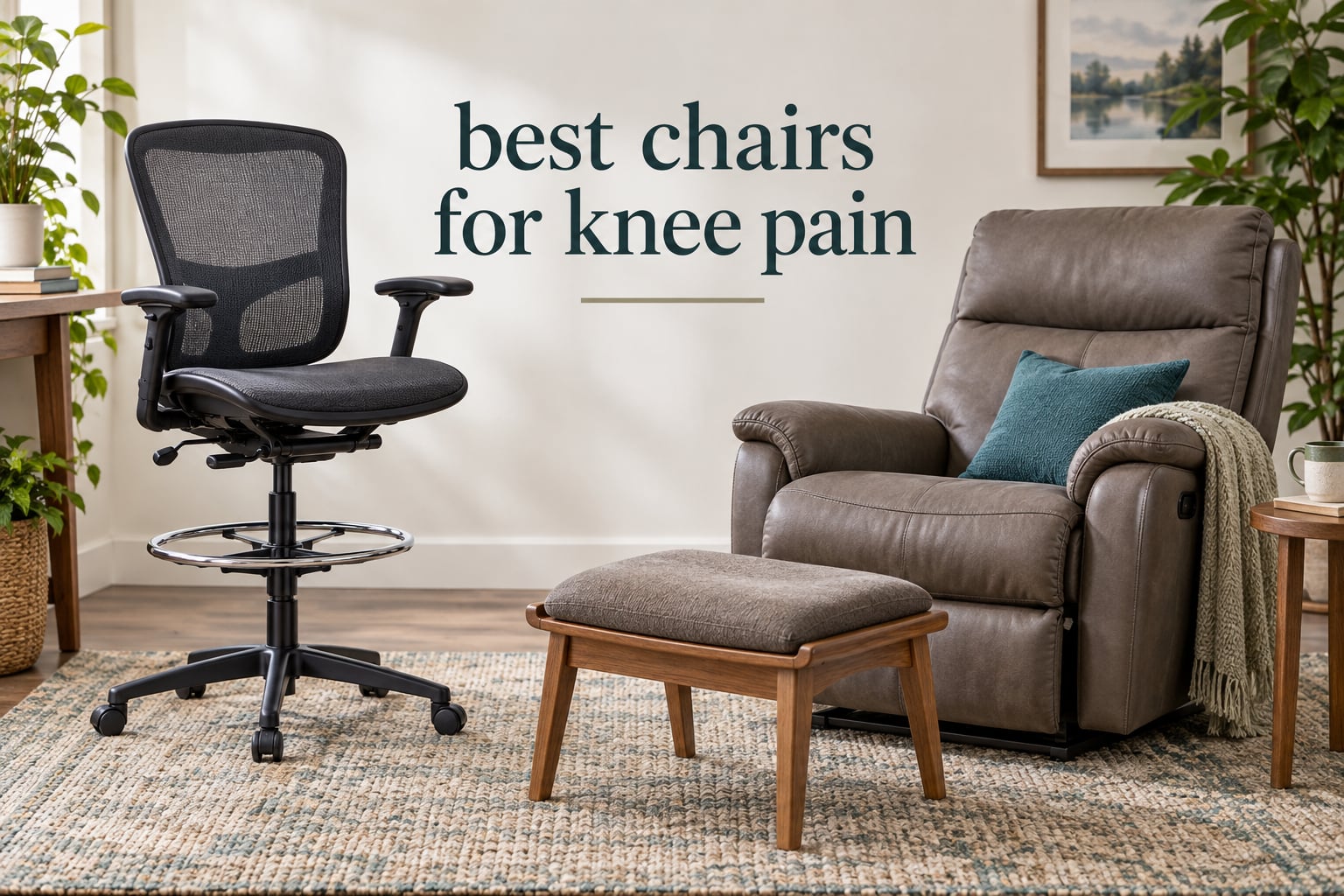
Sitting loads the knee joint far more heavily than standing does. The difference between a chair that eases knee pain and one that makes it worse usually comes down to a few measurable things: whether your hips and knees sit at roughly 90 degrees, whether both feet reach the floor, whether the seat edge presses into the back of your thigh, and whether you can get in and out without twisting. Get those four right and most of the discomfort fades. Get them wrong and eight hours at a desk becomes an eight-hour kneecap ache.
That is why the best chairs for knee pain are not chosen on looks or lumbar support alone. We went through 12 seats across clinical recovery chairs, tall drafting chairs, zero-gravity recliners and kneeling chairs, and picked the ones that solve a specific knee problem. Every pick below has a stated seat height or height range, a defined load capacity, and a documented reason it takes pressure off the joint.
Last updated October 2026. This is a selection guide, not medical advice, and none of us is a physical therapist. If you are recovering from knee replacement, ACL or meniscus surgery, or you have pain that wakes you at night, ask your surgeon or physical therapist what range of motion you are cleared for before you change how you sit.
Table of Contents
- Top 3 Best Chairs For Knee Pain (October 2026)
- All 12 Chairs Compared Side by Side in 2026
- The Chair Types That Help Knee Pain (and Two That Make It Worse)
- How We Picked These Chairs?
- 1. EVER ADVANCED XL Zero Gravity Recliner – Best Overall Chair for Knee Pain
- 2. BOLISS Drafting Tall Office Chair – Best for Tall Users Over 6 Feet
- 3. HYLONE Tall Mesh Drafting Chair – Best for Standing Desks
- 4. Primy Drafting Chair with Flip-Up Arms – Best for Smaller Frames
- 5. ORRSAKER Tall Mesh Drafting Chair – Best for Hot Climates
- 6. SUPERJARE Drafting Chair with Footrest – Best Budget Drafting Chair
- 7. Best Choice Products Zero Gravity Chair – Best for Travel and Patio
- 8. Platinum Health APEX Hip Chair – Best for Knee Surgery Recovery
- 9. Lumex Everyday Hip Chair with Footrest – Best for Caregivers and Small Rooms
- 10. Drive Medical Adjustable Height Stool – Best Budget Pick
- 11. NYPOT Ergonomic Kneeling Chair – Best Kneeling Chair for Posture
- 12. Easyego Kneeling Posture Chair – Best Budget Kneeling Chair
- Why Most Office Chairs Make Knee Pain Worse?
- How to Sit in a Chair With Knee Pain (the 90-90 Rule)?
- Matching Chair Height to Your Body Height
- Footrests, Cushions, and Other Add-Ons
- Buying Guide: What to Check Before You Buy?
- How Often to Stand Up and Move?
- Frequently Asked Questions
- What kind of chair is good for knee pain?
- Why no recliner after knee replacement?
- What chairs do chiropractors recommend?
- What is the best chair for sitting long hours?
- What kind of chair is best for people with knee problems?
- What is the best office chair with knee support?
- Can I sit in a recliner after knee replacement surgery?
- What is the best orthopedic office chair for long hours of comfort?
- Final Thoughts
Top 3 Best Chairs For Knee Pain (October 2026)

EVER ADVANCED XL Zero Gravity Recliner
- 22 inch seat height
- Reclines to 170 degrees with locking
- 350 lb capacity
- Full padding head to foot

BOLISS Drafting Tall Office Chair
- 24.8 to 32.1 inch seat height
- Oversized chrome foot ring
- 400 lb capacity
- 4 inch molded foam seat

HYLONE Tall Mesh Drafting Chair
- Tall seat for standing desks
- Height adjustable foot ring
- Waterfall edge seat
- 300 lb capacity
All 12 Chairs Compared Side by Side in 2026
| Product | Key Specs | Pricing |
|---|---|---|
| EVER ADVANCED XL Zero Gravity Recliner |
|
Check Latest Price |
| BOLISS Drafting Tall Office Chair |
|
Check Latest Price |
| HYLONE Tall Mesh Drafting Chair |
|
Check Latest Price |
 Primy Drafting Chair with Flip-Up Arms Primy Drafting Chair with Flip-Up Arms |
|
Check Latest Price |
 ORRSAKER Tall Mesh Drafting Chair ORRSAKER Tall Mesh Drafting Chair |
|
Check Latest Price |
 SUPERJARE Drafting Chair with Footrest SUPERJARE Drafting Chair with Footrest |
|
Check Latest Price |
 Best Choice Products Zero Gravity Chair Best Choice Products Zero Gravity Chair |
|
Check Latest Price |
 Platinum Health APEX Hip Chair Platinum Health APEX Hip Chair |
|
Check Latest Price |
 Lumex Everyday Hip Chair with Footrest Lumex Everyday Hip Chair with Footrest |
|
Check Latest Price |
 Drive Medical Adjustable Height Stool Drive Medical Adjustable Height Stool |
|
Check Latest Price |
 NYPOT Ergonomic Kneeling Chair NYPOT Ergonomic Kneeling Chair |
|
Check Latest Price |
 Easyego Kneeling Posture Chair Easyego Kneeling Posture Chair |
|
Check Latest Price |
The Chair Types That Help Knee Pain (and Two That Make It Worse)
Ranking the 12 chairs by type is more useful than ranking them by brand, because the chair type decides where your knees end up. Five types reliably reduce knee load, and two reliably increase it.
1. High-seat clinical chairs. A seat at 23 to 27 inches puts your hips level with or above your knees, so the joint never has to open past 90 degrees. This is the workhorse for osteoarthritis, post-surgery recovery and anyone who cannot get out of a low chair without using their arms.
2. Tall drafting chairs with a foot ring. The seat is high enough that your feet would not reach a floor anyway, so the foot ring becomes the support point. When your feet are supported rather than dangling, the load stops pulling on the back of your thigh and the front of your knee.
3. Zero-gravity recliners with a high seat. Reclining raises the knees above the hips, which unloads a compressed joint. The catch is that a low patio chair does the same thing with a seat that is far too low to get out of, so seat height matters more than recline angle.
4. Angled sit-to-stand stools. A slanted seat plus removable armrests turns getting up into a push rather than a lift. These are unglamorous, and they solve the standing-up problem more directly than any other type on this list.
5. Kneeling chairs, used in short blocks. A kneeling chair takes your weight off the seat entirely and loads the shins instead, which gives sore knees a rest. It is a supplement to a normal chair, not a replacement for one, and more on that below.
The two types that tend to make knee pain worse are the deep plush low-seat sofa and the rigid posture-straining perch. A plush seat sinks your hips below your knees and forces the joint well past 90 degrees, and a chair that constantly pulls you into a fixed position creates muscle tension that chronic pain users feel for hours. On Reddit’s r/Thritis, people with chronic pain describe exactly this pattern, reporting that chairs which force a posture leave them tenser than when they started.
How We Picked These Chairs?
Every chair here was evaluated against the same four criteria, using the manufacturer specifications and the pattern in buyer reviews rather than a single flattering write-up.
Seat height and range. We wanted a published height or height range, because a chair that cannot be adjusted means you inherit whatever knee angle the manufacturer chose.
Foot support. Either the floor reaches both feet, or a foot ring or footrest takes the weight. Dangling feet push the load back into the hamstrings and the knee.
Transfer safety. Removable or padded armrests and an angled seat earn credit, because the hardest moment for a painful knee is not sitting, it is standing up.
Honest trade-offs. A chair that only has good points gets downgraded. If buyers report a knee pad that compresses or a foot ring that creeps, that goes in the review.
Forum threads on knee replacement communities set the tone for this list more than any product page. The recurring post-surgery requirement is simple: whatever you pick must be easy to get in and out of. That single requirement reshaped our ranking, because a chair that scores well on ergonomics and scores badly on transfers is not useful to the people most likely to need it.
1. EVER ADVANCED XL Zero Gravity Recliner – Best Overall Chair for Knee Pain
EVER ADVANCED Oversize XL Zero Gravity Recliner Padded Patio Lounger Chair with Adjustable Headrest Support 350lbs (Olive Green)
★★★★★★★★★★22 inch seat height
72 inch full recline length
350 lb capacity
Adjustable headrest pillow
- Seat height of 22 inches makes standing up far easier than a low patio chair
- Reclines to 170 degrees with a working lock so the legs can go above the heart
- XL width fits larger users with little overhang
- Full padding from head to foot spreads load instead of concentrating it
- Spring-loaded mechanism takes real effort to lean back
- Runs short for people over roughly 6 foot 1 to 6 foot 2
- Polyester fabric is firm rather than soft
This is the chair I would put in front of someone who has knee pain and no idea where to start. The number that matters is the 22 inch seat height. Zero-gravity chairs in this style commonly sit at 17 inches, which is still too low for a weak knee, and this one raises the whole problem out of the way.
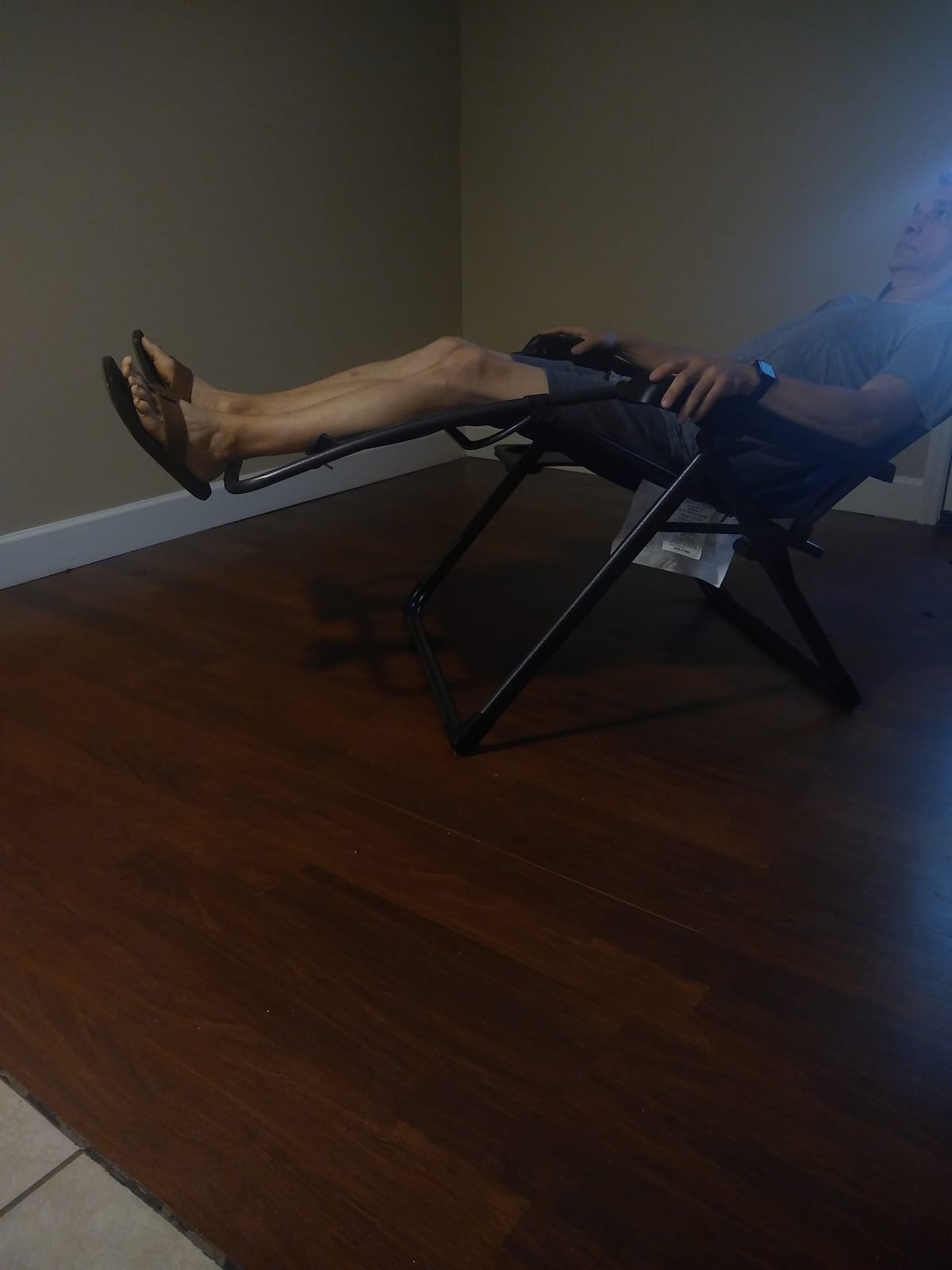
Once you are up at that height, the recline does the therapeutic work. At full extension the chair measures 72 inches end to end and the legs sit well above the heart, which takes weight off a compressed joint in a way that sitting upright never will.
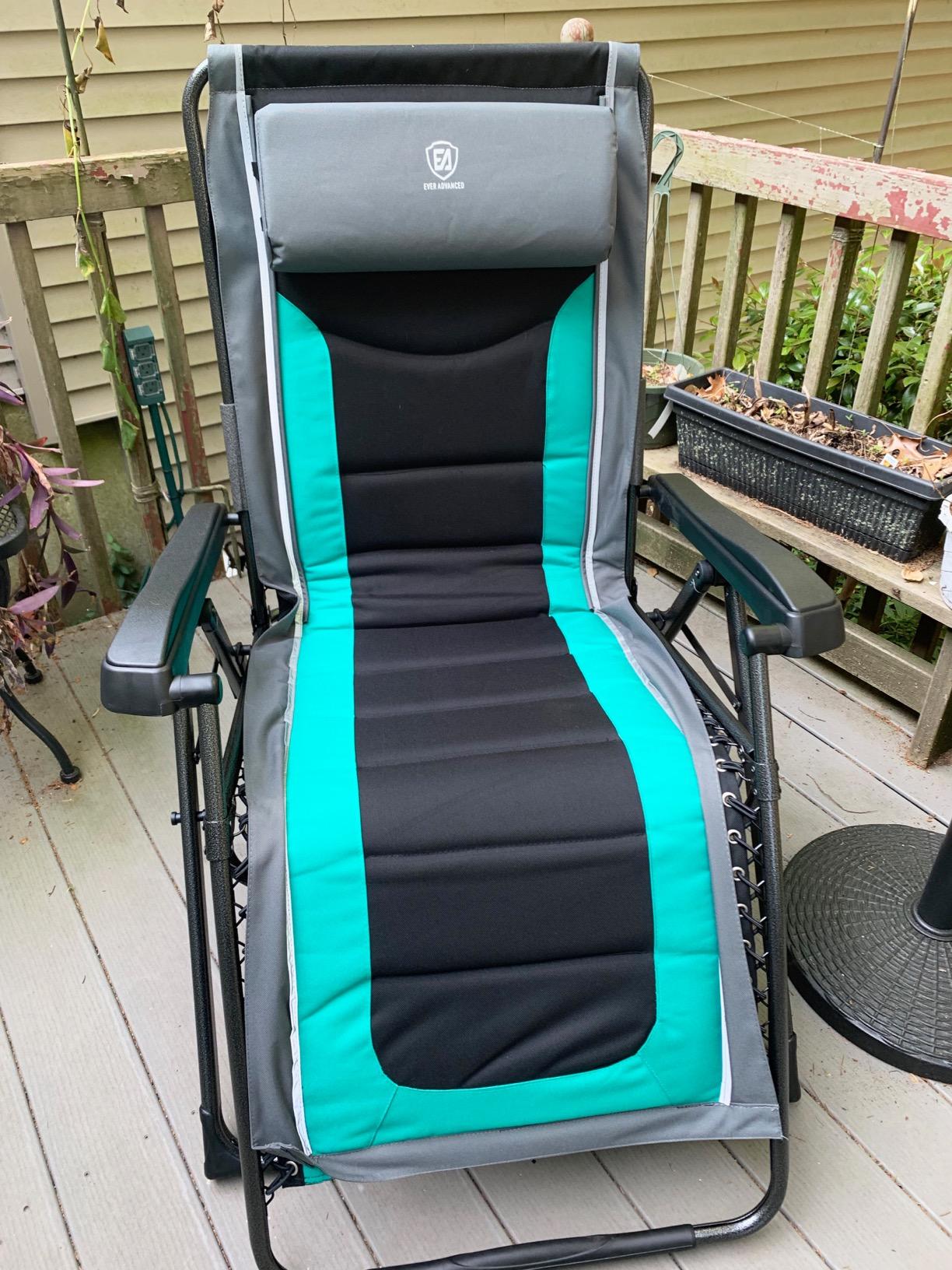
Buyers with back and joint problems describe it as the most comfortable chair they own, which is why it carries the highest rating in this roundup at 4.6. The elevated seat plus near-flat recline is the reason getting in and out is easy. That combination is exactly what post-surgery users describe wanting on BoneSmart, where members say a recliner works if you get one with a few extra inches of hip room.
One practical note: the spring-loaded mechanism fights you a little on the way back, and the padded pillow doubles as both headrest and lumbar support, which is handy because you can slide it to whichever area is complaining.
The load capacity is 350 pounds and the fabric is full polyester with foam fill rather than the flat textilene you see on cheaper models. It weighs close to 20 pounds and folds down to about 7 inches wide, so it moves between a bedroom and a living room without much drama.
What convinced us it is the best of the 12?
It is the chair on this list that solves three problems at once: a high seat, a genuine recline, and a full-length support position. Compare that with tall drafting chairs, which solve the seat height problem but leave you upright, or clinical chairs, which solve the height problem but have no recline.
The combination that matters most for a sore knee is a high seat plus a raised leg position, because it removes both the 90-degree-plus flexion and the downward pull on the joint at the same time.
Where it falls short?
If you are over roughly 6 foot 1 to 6 foot 2, the 72 inch full recline length gets tight and your feet may not have the run-out they need. I would check your height against that number before you commit, because this is a comfort purchase and a poor fit is a poor fit.
It is also a spring mechanism, not a powered lift. If standing from a reclined position is beyond what you can currently manage, look at a high-seat clinical chair with padded arms instead, where the arms are there to push against while you are already upright.
We earn a commission, at no additional cost to you. CERTAIN CONTENT THAT APPEARS ON THIS SITE COMES FROM AMAZON. THIS CONTENT IS PROVIDED 'AS IS' AND IS SUBJECT TO CHANGE OR REMOVAL AT ANY TIME.
2. BOLISS Drafting Tall Office Chair – Best for Tall Users Over 6 Feet
BOLISS Drafting Tall Office Chair 400lbs High Back Standing Desk Chair
★★★★★★★★★★24.8 to 32.1 inch seat range
7.3 inch hydraulic travel
400 lb capacity
4 inch molded foam seat
- Starting seat height of 24.8 inches keeps hips level with or above the knees
- 400 lb capacity and a heavy duty base suit larger users
- Oversized chrome foot ring takes the weight off the backs of the legs
- Flip-up padded arms tuck under a desk and sit low enough for keyboard work
- Backrest has a dipped lumbar valley some users report causes lower back ache on standing
- Plush 4 inch cushion compresses so effective height is lower than listed
- Hydraulic piston may not reach full height unaided
Many drafting chairs start around 20 inches and top out near 26. This one starts at 24.8 and reaches 32.1, which means a 6 foot 2 user can put their feet on the floor or the foot ring with the hips still level with the knees. That is the whole trick for tall users, and it is the reason short chairs make tall people bend their knees up toward their chests.
The 400 pound capacity is the highest listed on the seating side of this roundup and the five-star nylon base is proportionate to it. If you are above the 250 to 300 pound ceiling that limits most ergonomic chairs, that alone narrows your options considerably.
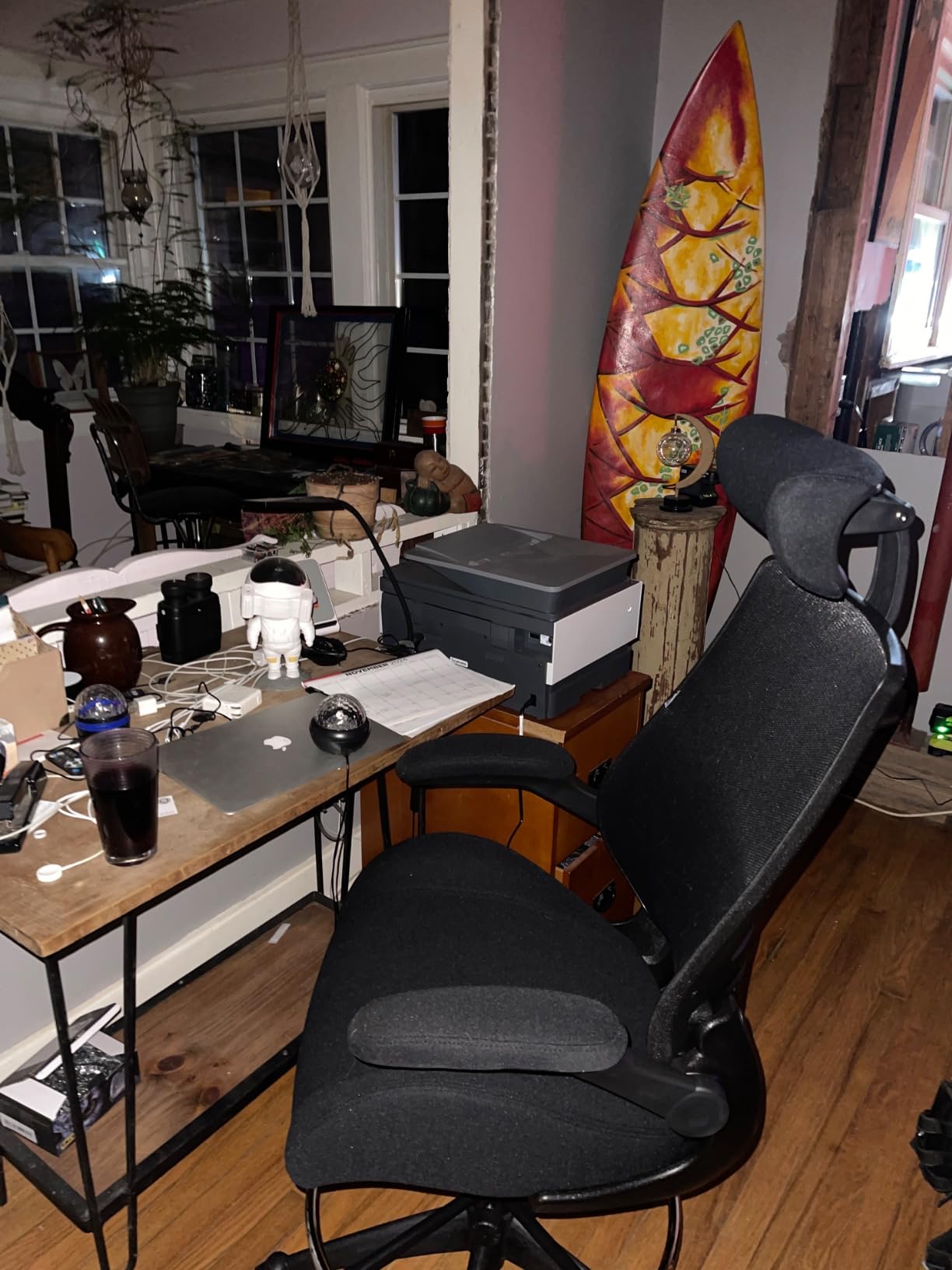
Very tall users rate the height range as the decisive feature, reporting that the hips no longer drop below the knees. The 4 inch molded foam seat and the adjustable lumbar cushion handle long shifts, and the headrest adjusts through four levels.
The foot ring is oversized chrome, not a small plastic hoop, so it holds a heavy foot position without flexing. Several buyers who work at standing desks pair the two and describe the flip-up arms as the feature that lets the chair slide fully under the desk.
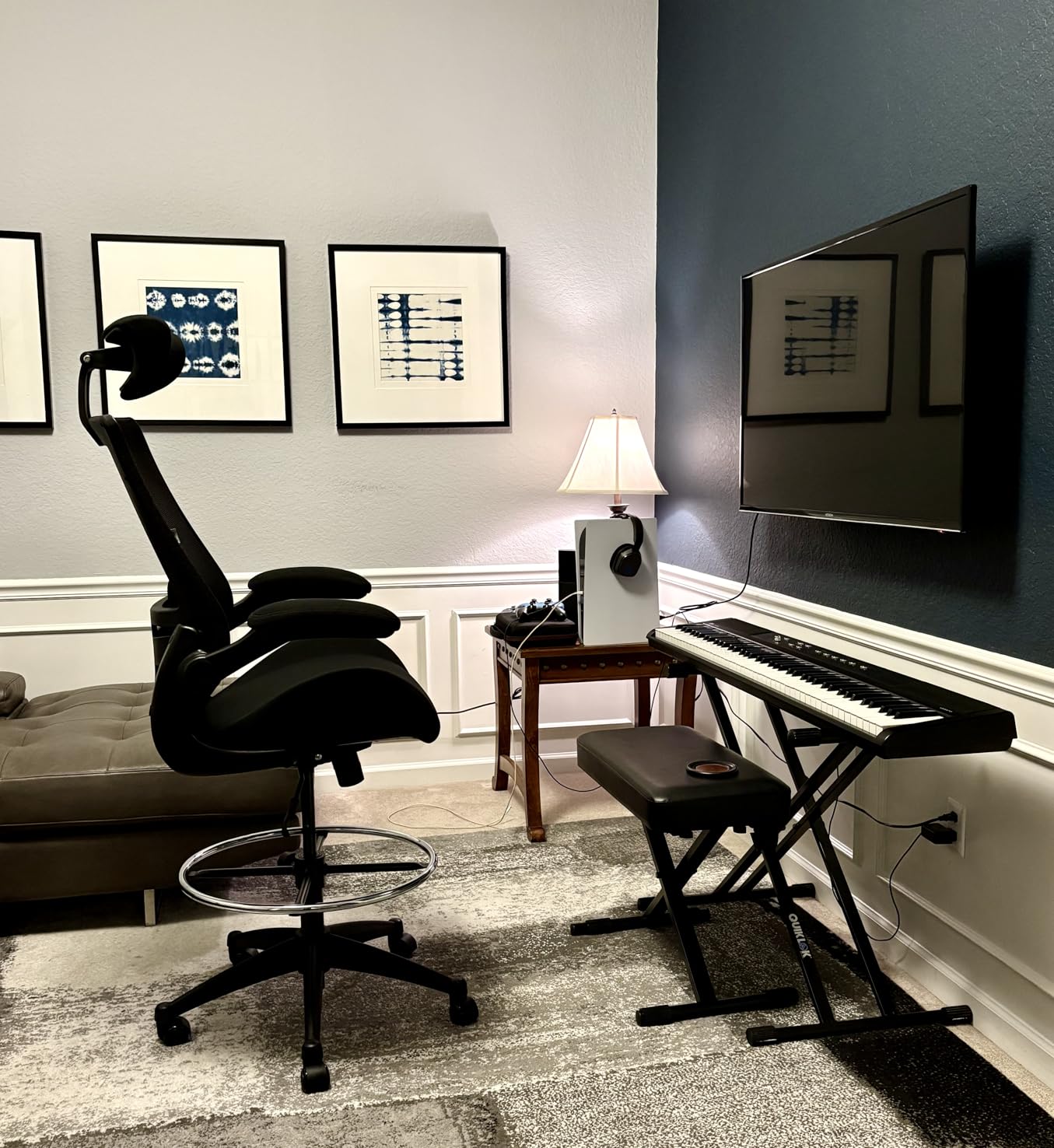
Why tall users should look here first?
The single most common complaint from tall users on chair forums is not back pain, it is that the seat is too short, so the knees end up above the hips and the pressure lands on the kneecap. A 24.8 inch starting height is the direct fix, and it is rare.
The two-year warranty with free replacement parts also matters more here than usual, because drafting chairs put a lot of load through a hydraulic lift over time.
Who should skip it?
Users shorter than about 5 foot 4 will not reach the floor from the lowest setting, so the foot ring becomes mandatory rather than optional. If you are under 5 foot and cannot comfortably rest your feet on a ring, look at a chair with a lower minimum height instead.
Also be aware of the lumbar valley. The curved backrest base drops the lumbar support into a dip, and a few buyers report lower back pain specifically when they stand up out of it.
We earn a commission, at no additional cost to you. CERTAIN CONTENT THAT APPEARS ON THIS SITE COMES FROM AMAZON. THIS CONTENT IS PROVIDED 'AS IS' AND IS SUBJECT TO CHANGE OR REMOVAL AT ANY TIME.
3. HYLONE Tall Mesh Drafting Chair – Best for Standing Desks
HYLONE Drafting Chair Tall Office Chair High-Back Mesh Standing Desk Stool with Adjustable Footrest Ring and Flip-Up Arms Black
★★★★★★★★★★Seat around 23.6 to 31.5 inches
Waterfall edge seat
BIFMA tested lift
300 lb capacity
- Tall enough to keep a standing desk at standing height
- Contoured padded flip-up arms relieve shoulder and neck pressure
- Height adjustable foot ring reduces pressure behind the thighs
- BIFMA tested lift and tilt tension with a waterfall edge seat
- Gas cylinder can fail after a couple of years
- Actual seated height runs a few inches below the listed dimensions
- Foot ring locking knob does not hold and the ring creeps down
This is the chair to look at if your desk is a sit-stand desk and you want to work standing without your feet hanging. The height range goes from about 23.6 inches up past 31, so a desk set to standing height can stay there while your hips remain level with your knees.
The waterfall edge seat is the detail that matters for knee pain specifically. Instead of a hard front lip pressing into the back of your thigh and pushing load forward into the kneecap, the edge rolls off, so pressure spreads rather than concentrates.
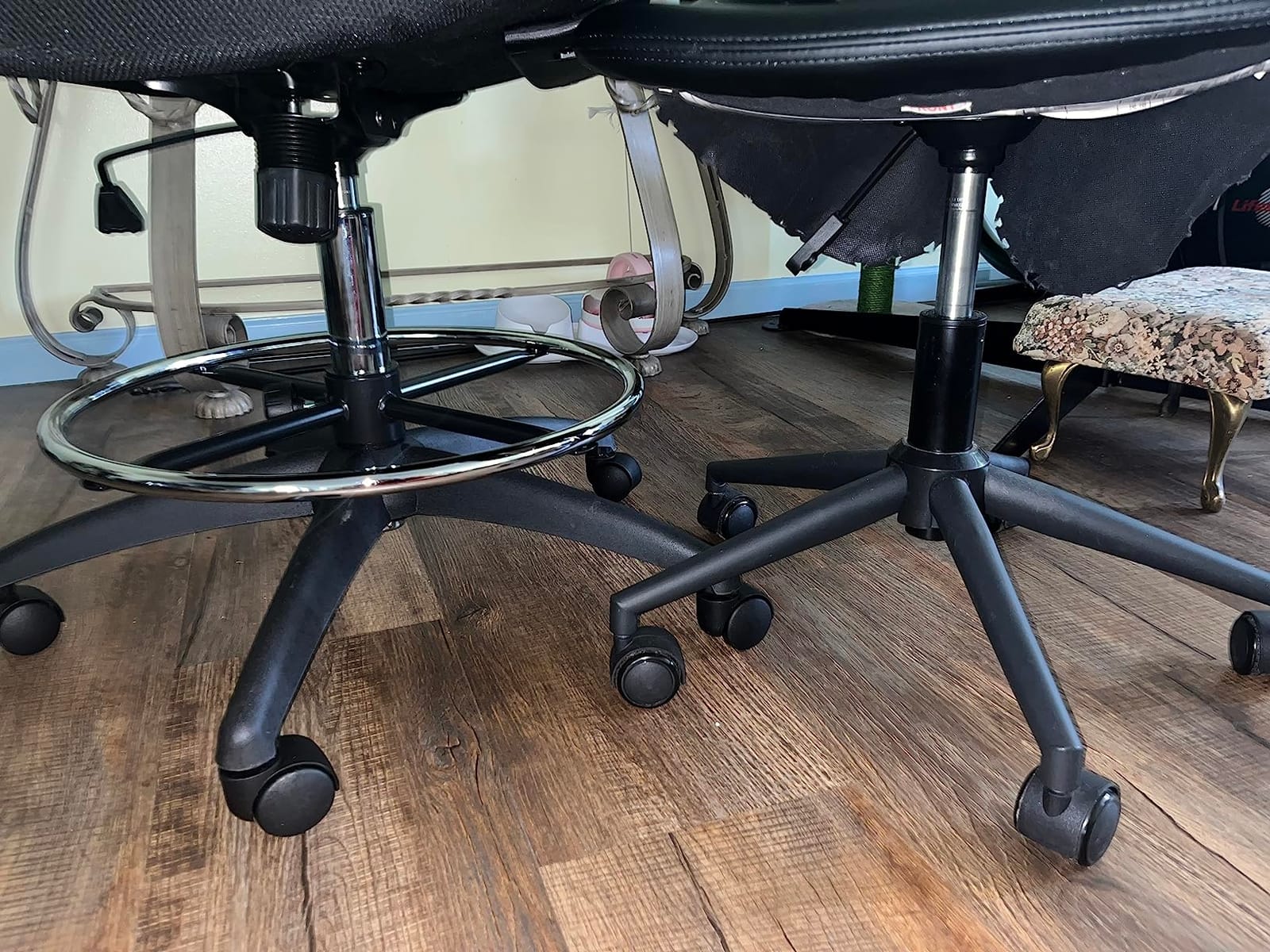
The contoured padded flip-up arms are unusual at this height and they do more than save desk space. They bring your shoulders down and pull you closer to the work surface, which changes the angle at your upper back and reduces the leaning that puts pressure on the front of the knee.
The BIFMA-tested lift and tilt-tension mechanism is a genuine quality marker. Most drafting chairs in this price bracket use untested gas lifts, and the difference shows up in year two.
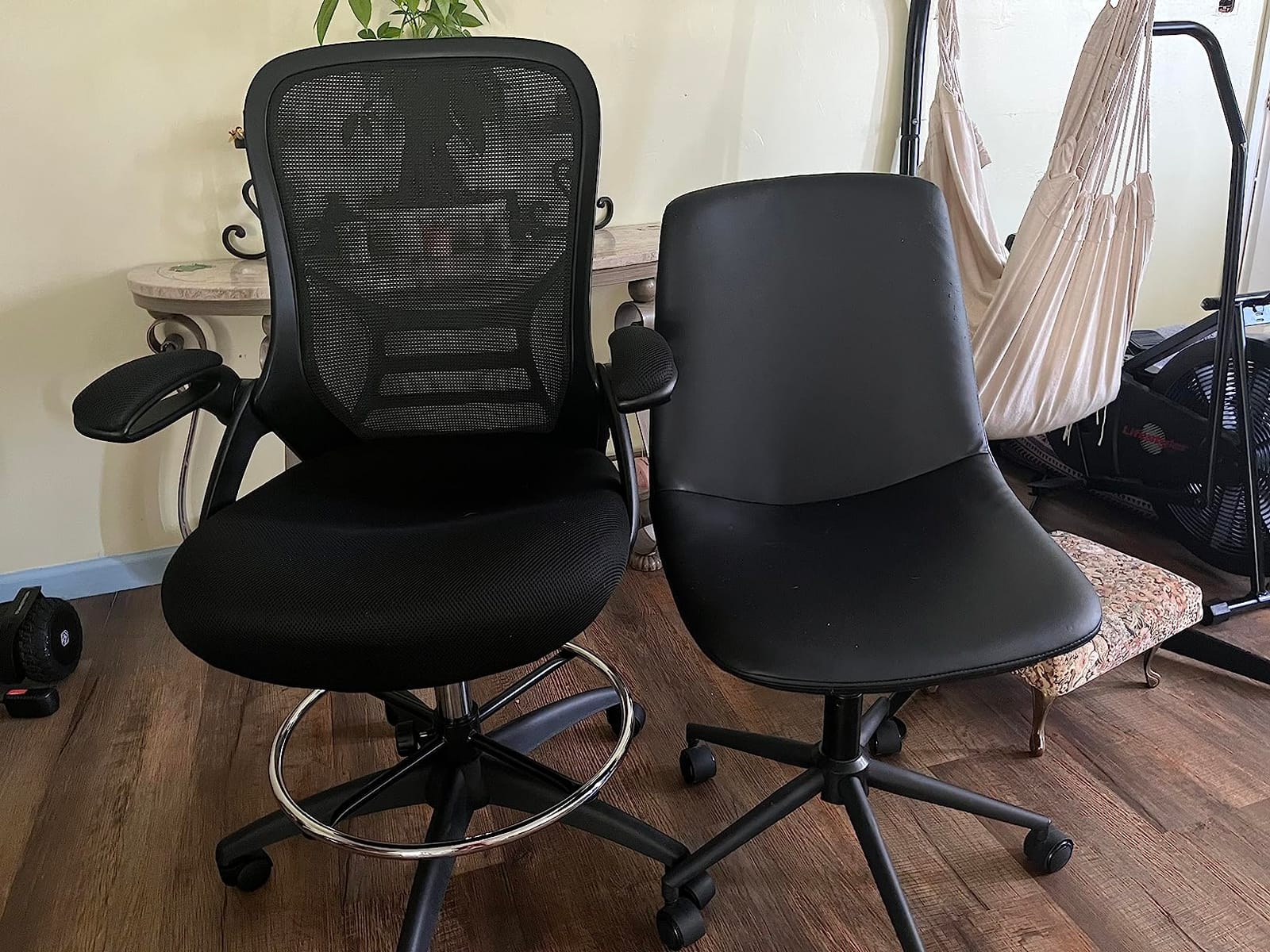
What to check before you buy?
Buyers report that the real seated height runs a few inches below the listed dimensions, so measure your standing desk height and compare it to the actual seat, not the box. If you are right on the boundary, this may be the wrong chair.
The one-year warranty covers free replacement parts, and customer service has replaced failed gas cylinders and base plates, which is reassuring given that the cylinder is the most likely thing to fail.
Where the complaints sit?
The foot ring is the weak point. Several owners report the locking knob will not hold its position and the ring drifts downward over a session, so you end up adjusting it back up repeatedly.
Casters are also stiff on plush carpet, which matters if you are rolling between a desk and a couch all day and want the movement to be quiet.
We earn a commission, at no additional cost to you. CERTAIN CONTENT THAT APPEARS ON THIS SITE COMES FROM AMAZON. THIS CONTENT IS PROVIDED 'AS IS' AND IS SUBJECT TO CHANGE OR REMOVAL AT ANY TIME.
4. Primy Drafting Chair with Flip-Up Arms – Best for Smaller Frames
Primy Drafting Chair Tall Office Chair with Flip-up Armrests Executive Ergonomic Computer Standing Desk Chair with Lumbar Support and Adjustable Footrest Ring (Black)
★★★★★★★★★★Adjustable foot ring
90 degree flip-up arms
3 inch foam seat
250 lb capacity
- Tall seat holds the hips level with or above the knees
- Foot ring lets the feet move and rest instead of dangling
- Flip-up arms slide under a desk
- 3 inch high density foam seat with a breathable mesh back
- Sized for smaller users with a 250 lb ceiling
- Backrest does not recline or tilt at all
- Fold-back armrests loosen and flop forward
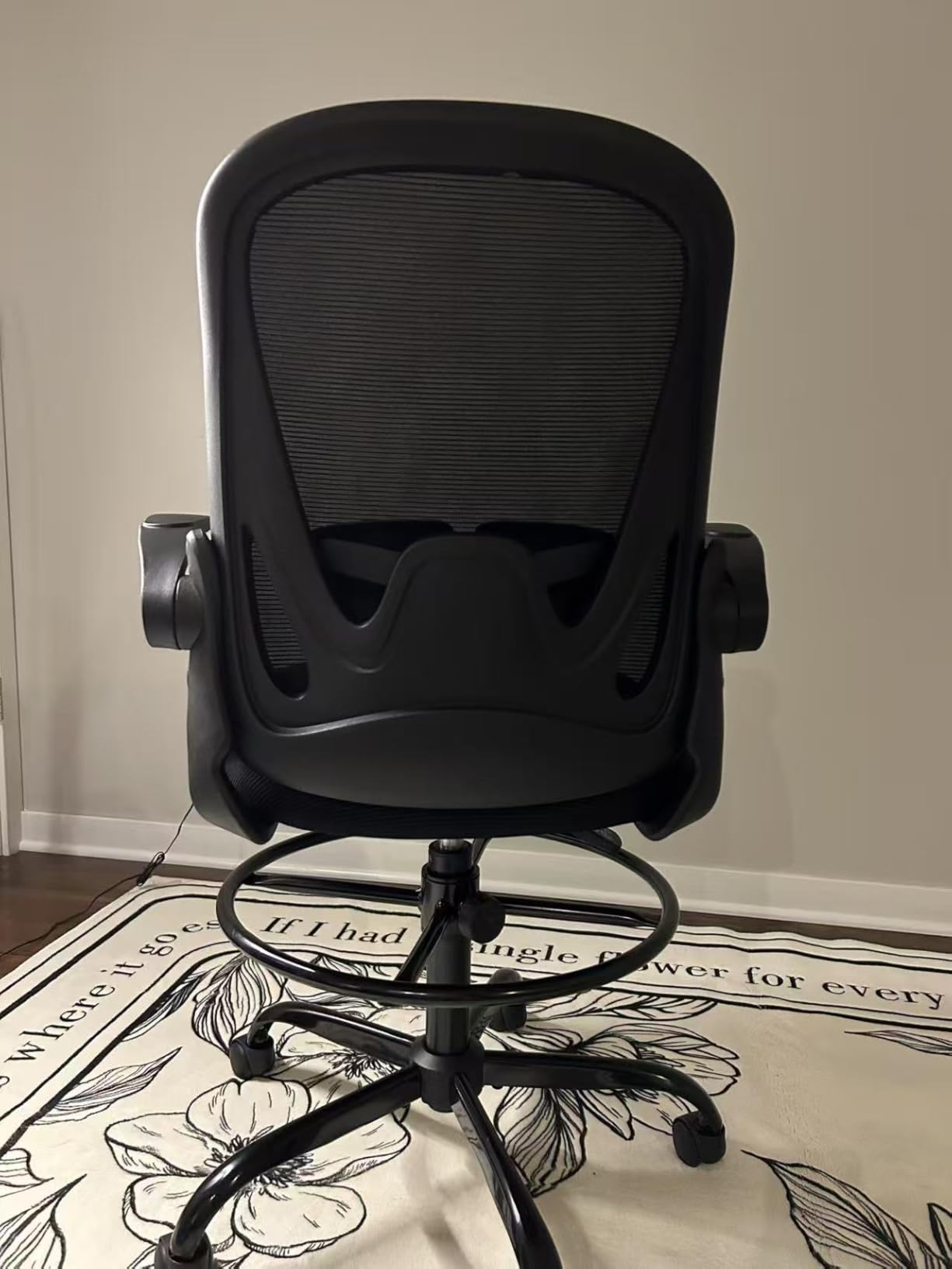
Among chairs with a foot ring, this one skews smaller, which makes it the drafting chair to consider if you are a shorter adult or a smaller-framed user. The 3 inch high-density foam cushion is thick enough to soften the edge of the seat without pushing your effective height out of range.
The foot ring is the knee feature. It lets your feet rest somewhere instead of dangling off a seat that is far too high for the floor, and it lets you move your feet, which keeps the back of the thigh from taking a static load.
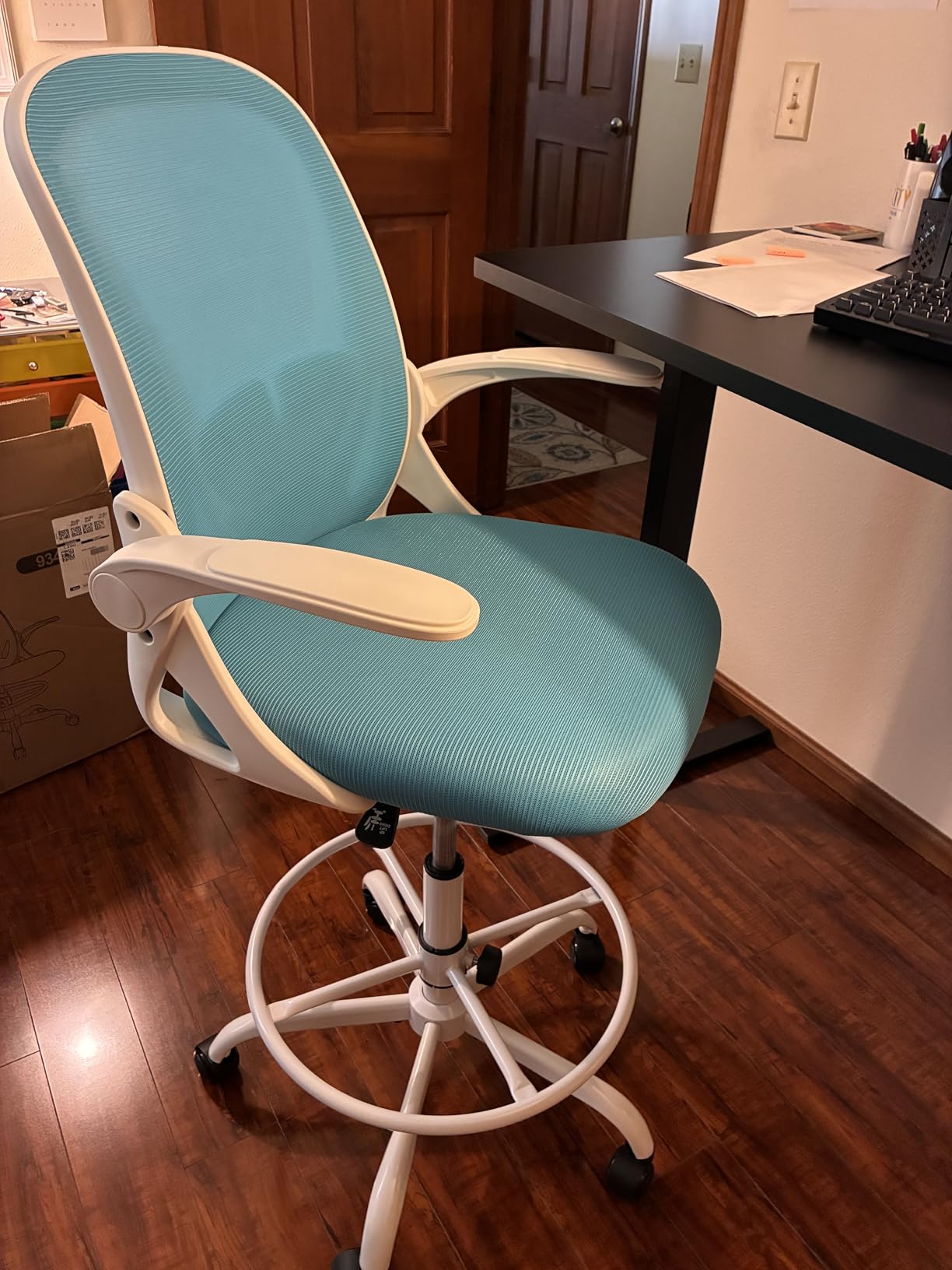
Flip-up armrests are practical rather than decorative here, because they let the chair slide under a desk at a height where a fixed arm would hit the underside. Several users with back or hip problems single that feature out as the reason they can work comfortably.
Owners using standing desks report real relief for back and hip pain, and the five-claw base with smooth casters rolls quietly and resists sliding.
Why smaller-frame users should start here?
Short users get a specific and repeated problem: a seat that is too high leaves the feet dangling and the knee angle around 110 degrees, and the resulting ache is often blamed on their knees rather than on the chair. Our roundup of the best kneeling chairs covers another route to the same fix, and this drafting chair is the office-desk equivalent.
The combination of a moderate footprint and adjustable foot ring means you can dial the support point to your leg length rather than accepting a fixed one.
Where it falls short?
The 250 pound limit is one of the tighter ceilings here, so if you weigh more, cross this one off. The fit also skews small, so taller users will find the foot ring too high even at its lowest setting.
The backrest does not recline or tilt. Only the lumbar piece moves up and down, which means you cannot change your posture through the chair the way you can with a synchro-tilt mechanism.
We earn a commission, at no additional cost to you. CERTAIN CONTENT THAT APPEARS ON THIS SITE COMES FROM AMAZON. THIS CONTENT IS PROVIDED 'AS IS' AND IS SUBJECT TO CHANGE OR REMOVAL AT ANY TIME.
5. ORRSAKER Tall Mesh Drafting Chair – Best for Hot Climates
ORRSAKER Drafting Chair, Tall Office Chair with Flip-up Arms, Mesh Ergonomic Computer Standing Desk Chair with Adjustable Height Foot Ring and Lumbar Support, 300 LBS Capacity, Black
★★★★★★★★★★7.9 inch height adjustment
Adjustable foot ring with lock
300 lb capacity
3 inch high resilience foam
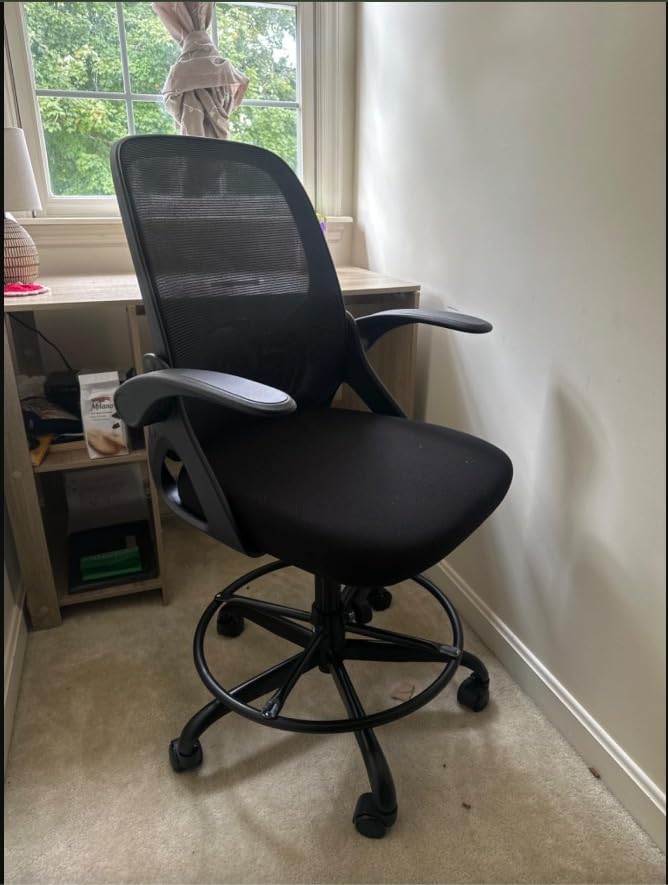
- Tall seat with a 7.9 inch range lifts the hips above the knees
- Height adjustable foot ring supports the legs and reduces fatigue
- X shaped backrest with 2 inch adjustable lumbar contours to the spine
- 90 degree flip-up arms convert it to an armless stool
- Some buyers report the seat tops out nearer 37 inches than the advertised range
- Mesh back offers less padding than a fully upholstered back
- Assembly needs care to align the arm and foot ring pieces
The reason this one earns a place is the dual-layer mesh back combined with 3 inch high-resilience foam. A thick foam seat traps heat, and a foam back makes it worse. This combination stays cool through a long shift while still cushioning the joint, which matters if your knee pain makes you clench rather than relax.
The 7.9 inch of height adjustment lifts the hips above the knees across a wide band, so you can find the position where the seat meets the back of your calf. The reinforced foot ring has an anti-slip locking mechanism, which is better than the drifting rings on some competitors here.
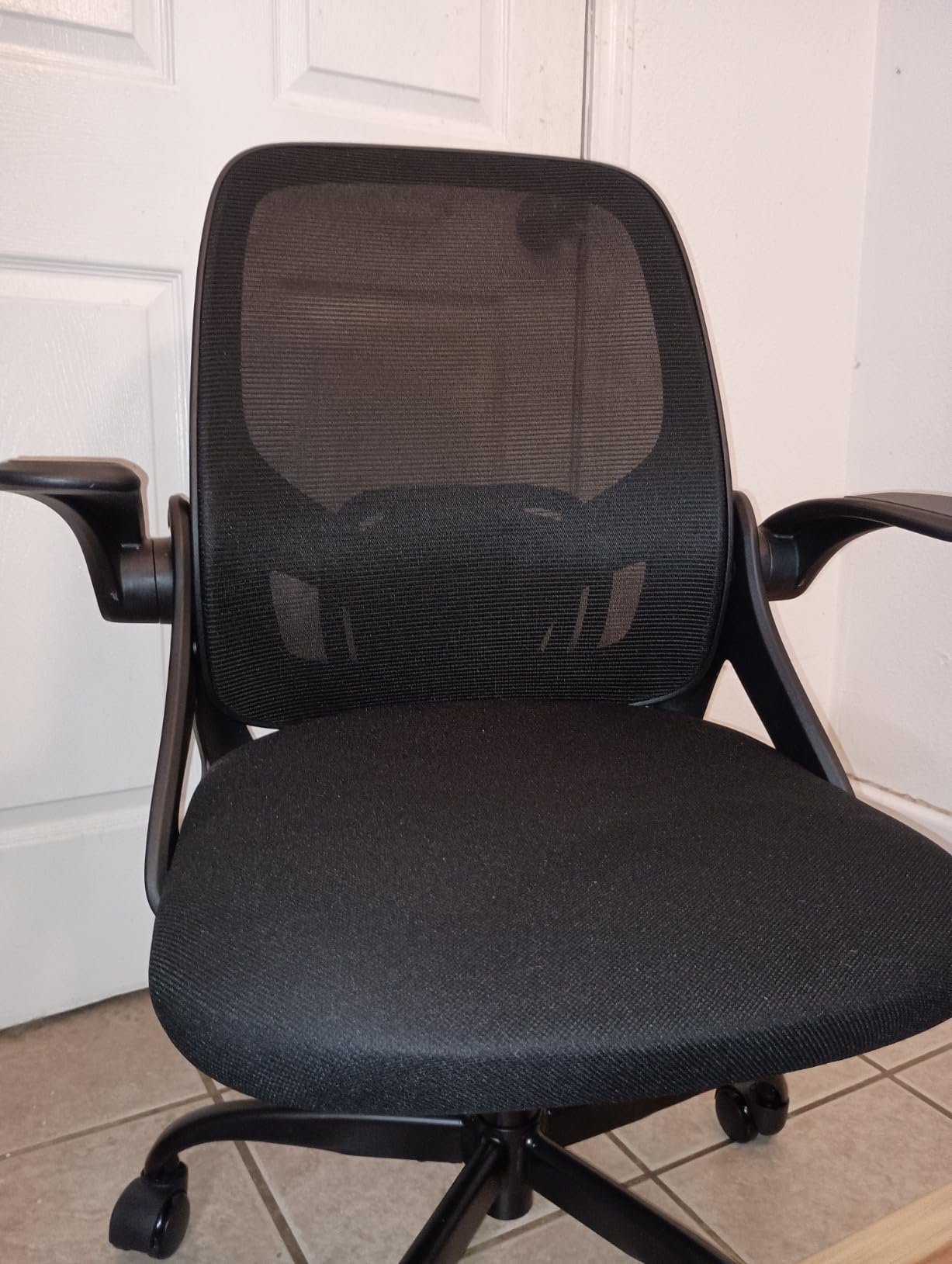
The X-shaped backrest with 2 inch of height-adjustable lumbar support is worth mentioning because the lumbar adjusts along the back rather than pushing forward, so it supports the curve without shoving your pelvis and rounding the lower back.
Flip-up arms convert it to an armless stool when you need to get close to a work surface. The 360 degree swivel and quiet casters glide across floors without marking them.
How the height range helps a sore knee?
When your hips are higher than your knees, the joint sits closer to neutral than the roughly 90 degrees that most office chairs force. The less far you have to open the knee, the less the joint surface is pulled.
Reviewers centre their feedback on the tall adjustable seat, the flip-up arms and the breathable mesh, with relatively few complaints beyond fit and assembly.
What to be careful about?
A number of buyers report the seat tops out nearer 37 inches rather than the full advertised tall range, so measure your desk height against the actual seat top if you are near the limit. The X-shaped backrest also gives less padding than a solid upholstered back over many hours.
Assembly takes about 15 minutes and the arm and foot ring pieces need careful alignment, which is a genuine issue for anyone with hand or joint problems.
We earn a commission, at no additional cost to you. CERTAIN CONTENT THAT APPEARS ON THIS SITE COMES FROM AMAZON. THIS CONTENT IS PROVIDED 'AS IS' AND IS SUBJECT TO CHANGE OR REMOVAL AT ANY TIME.
6. SUPERJARE Drafting Chair with Footrest – Best Budget Drafting Chair
SUPERJARE Drafting Chair with Backrest, Adjustable Foot Rest Rolling Stool
★★★★★★★★★★23.6 to 32.2 inch seat range
Detachable backrest
300 lb capacity
4 inch foam with PU leather
- Wide 8.6 inch stroke matches counters
- drafting tables and workbenches
- Detachable backrest and foot ring relieve leg pressure
- 4 inch high density foam in waterproof oil resistant PU leather
- Quiet dual wheel casters on carpet
- tile and wood
- Backrest tension adjusts but its height is fixed
- Foot ring can sit high and tilt under weight
- Hydraulic cylinder can slowly bleed down
- Assembly needs a fair amount of wrench work
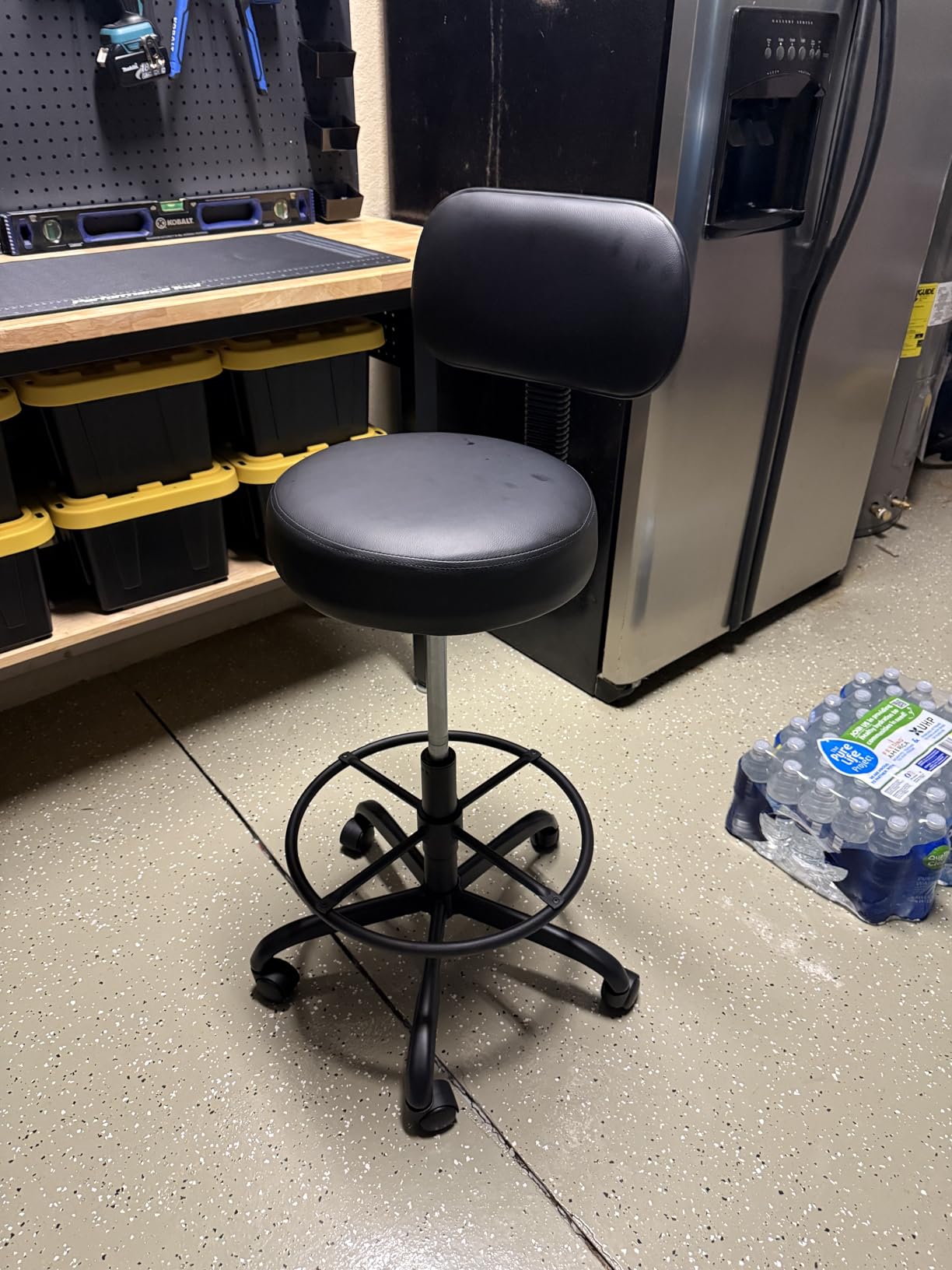
This is the value pick in the tall-seat category, and the height range is the reason. An 8.6 inch stroke from 23.6 to 32.2 inches covers counters, craft tables, workbenches and standing desks in one chair, which means your hips can stay level with your knees across all of them.
The detachable backrest is a feature rather than a gimmick. Take it off and the chair becomes a backless stool that gets you closer to a work surface, which also means the back does not push your pelvis forward into a rounded posture.
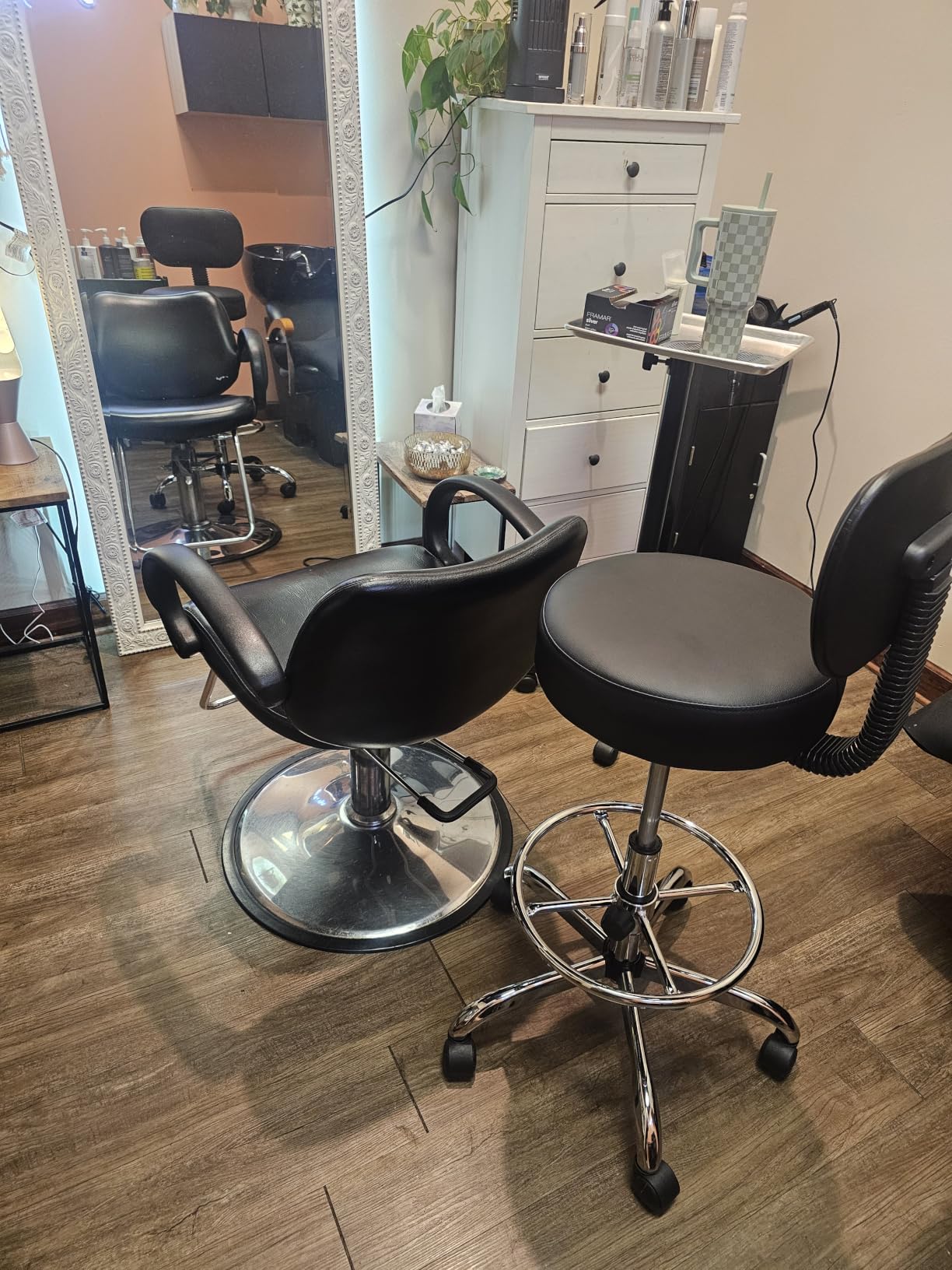
The 4 inch high-density foam cushion in PU leather wipes clean, which matters in a clinic, shop or craft space, and owners cite the tall seat and the foot ring as the features that keep the body upright and off the feet.
Dual-wheel nylon casters glide quietly on carpet, tile and wood without scratching, so the chair moves between rooms without being the reason you avoid moving.
Why the value ranking holds up?
The knee-relevant numbers, seat height range, foot ring and 300 pound capacity, all match or beat chairs costing considerably more. Where the budget shows is in refinement: the foot ring tilts, and the backrest height does not move.
If you are working at a counter or a bench rather than a desk, the tall seat is the feature that keeps pressure off the kneecap, because your feet are supported instead of dangling.
Who should pass?
If you have hand or joint issues, the wrench-heavy assembly is a genuine barrier. Some users also report the hydraulic cylinder slowly bleeding down, so check the lift early rather than discovering it months in.
The foot ring also sits higher than some users want and can tilt under weight, which is worth testing if you are lighter framed.
We earn a commission, at no additional cost to you. CERTAIN CONTENT THAT APPEARS ON THIS SITE COMES FROM AMAZON. THIS CONTENT IS PROVIDED 'AS IS' AND IS SUBJECT TO CHANGE OR REMOVAL AT ANY TIME.
7. Best Choice Products Zero Gravity Chair – Best for Travel and Patio
Best Choice Products Zero Gravity Chair Recliner, Black
★★★★★★★★★★Elastic cord zero gravity recline
Folds to 6 inches
Fits in a car
250 lb capacity
- Elastic cord mechanism glides smoothly into a true zero gravity position
- Arrives nearly fully assembled with only the tray to attach
- Removable padded headrest supports the legs well above the heart
- Folds flat and is light enough to carry to a park
- beach or sporting event
- Textilene fabric and frame joints show surface rust after light rain
- Side tray feels wobbly and shifts
- 250 lb capacity sits at the lower end of the capacities here
- Cheap textilene flattens and creases over time
If your knee pain shows up on long car journeys rather than at a desk, this is the one. It folds to about 6 inches thick, weighs in the low 30s, and needs only the cup holder tray attached, so you can move it from the car to the campsite to the beach without an assembly job.
The elastic cord mechanism is the interesting engineering. The cords self-adjust to your body weight, so the chair finds a true zero-gravity position rather than sitting at a fixed angle you have to fight. That puts the legs above the heart and takes the weight off the knee joint.
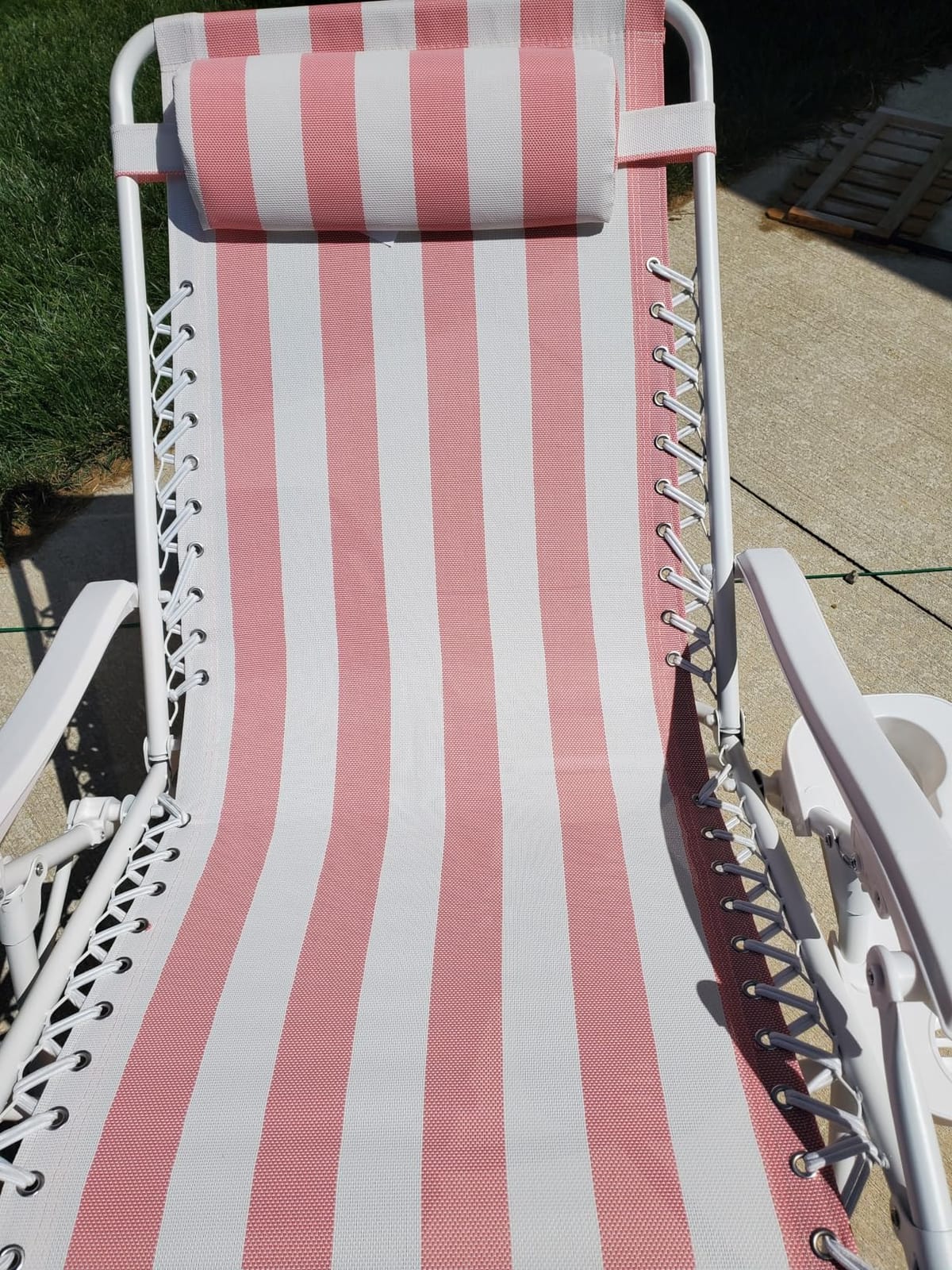
With the removable padded headrest in place, the position genuinely supports the legs high, which is the part that helps a sore knee. The frame is alloy steel, the fabric is PVC-coated polyester, and the capacity is 250 pounds.
Because the recline adapts to your weight rather than a fixed setting, it is one of the few chairs here that suits a wide range of body sizes without adjustment.

Why portability changes the recommendation?
A chair that only works in one room solves one part of the day. If your worst knee pain comes from being folded into a car seat, portability is not a nice-to-have, it is the whole feature, and this is the one on our list that delivers it.
It is also useful as a second chair indoors if you want a recline option without giving up floor space in the main room.
Where it falls short?
Surface rust on the textilene and the frame joints appears after light rain exposure, so this is an indoor or covered-space chair first. The 250 pound capacity is also one of the lower limits in this group, and the side tray is fixed and wobbly.
Over time the cheap textilene flattens and creases, which is the trade-off against padded polyester recliners like the one we picked first.
We earn a commission, at no additional cost to you. CERTAIN CONTENT THAT APPEARS ON THIS SITE COMES FROM AMAZON. THIS CONTENT IS PROVIDED 'AS IS' AND IS SUBJECT TO CHANGE OR REMOVAL AT ANY TIME.
8. Platinum Health APEX Hip Chair – Best for Knee Surgery Recovery
Platinum Health Hip Chair, APEX(tm) Premium, Padded, Height Adjustable, SEAT-Angle Adjustable Hip Chair. Doctor and Rehab Specialist Recommended
★★★★★★★★★★Seat angle 0 to minus 13 degrees
23 to 27.5 inch height range
13 inch seat depth
265 lb capacity
- Adjustable seat angle lets you open the hip past 90 degrees without loading the knee
- Seat height adjusts from 23 to 27.5 inches for patient specific positioning
- Padded seat
- back and removable armrests give a fixed push point for safe entry and exit
- Commercial grade polyurethane foam and an aluminum chassis wipe clean and will not rust
- Clinical styling looks out of place in a living room
- Seat angle and height need re-adjustment as healing progresses
- 13 inch seat depth feels cramped for larger users
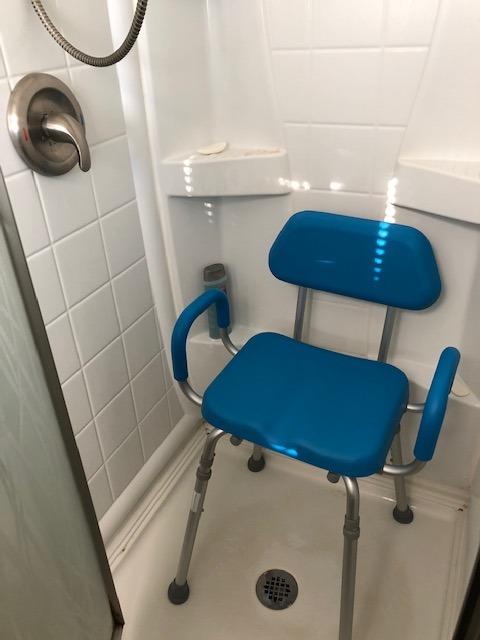
This is the chair we would point someone toward in the first weeks after knee replacement surgery, and the reason is the adjustable seat angle. The seat surface runs from horizontal down to minus 13 degrees with the front lower than the back, which lets you open the hip angle beyond 90 degrees while keeping the knee inside a range your surgeon has cleared.
Height adjusts from 23 to 27.5 inches, so you can set the seat level with a raised bed or a standard chair during the first weeks. Buyers consistently credit these two adjustments with making entry and exit easier while protecting a healing hip or knee.
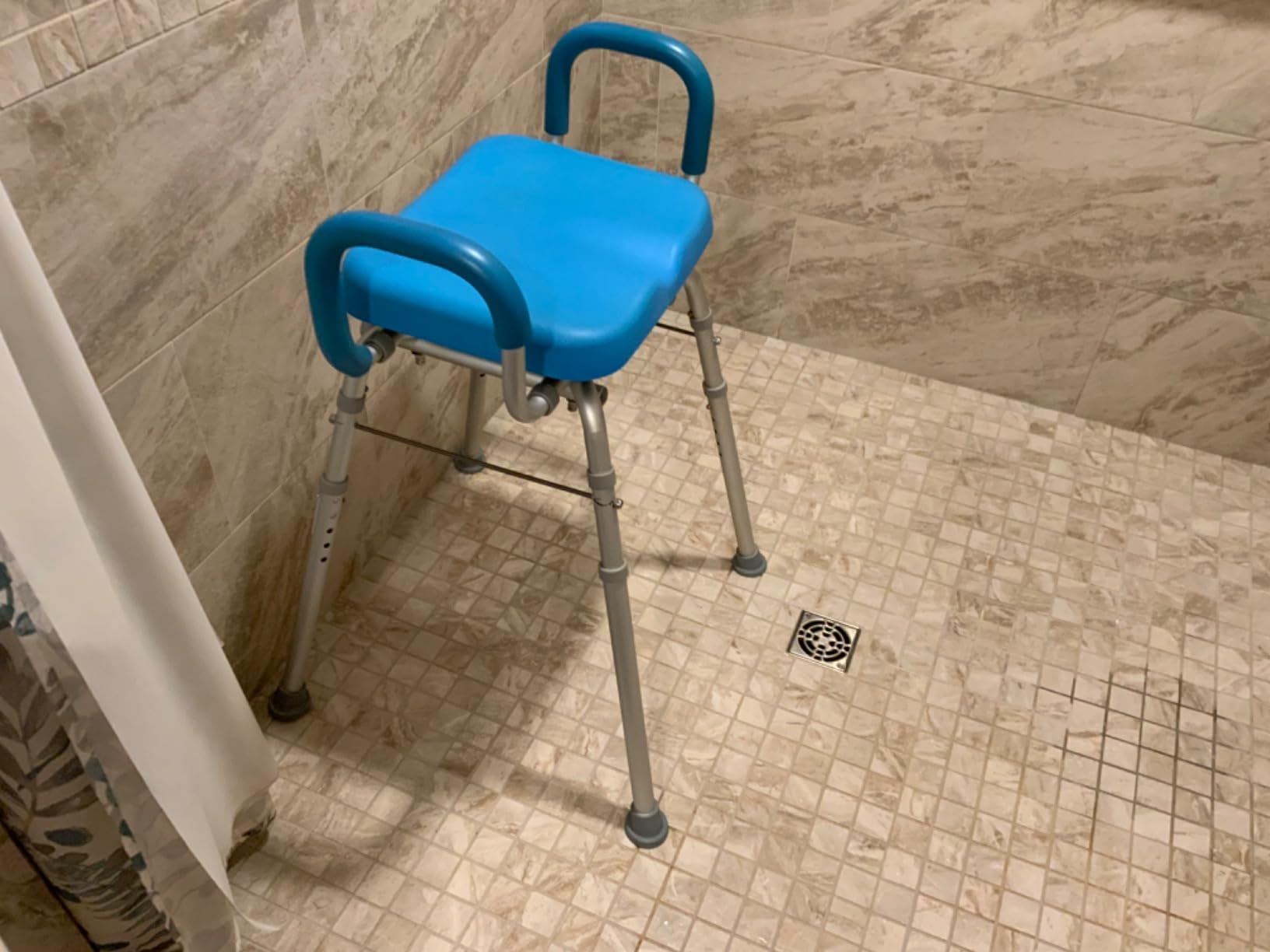
The padded removable armrests are the transfer feature, not a comfort feature. They give you a fixed point to push against, which means standing up is a push through the arms rather than a lift through a damaged knee. That is the single functional requirement post-operative patients describe as non-negotiable.
The commercial grade polyurethane foam and all-aluminum chassis wipe down and disinfect easily and will not rust, which is why this design turns up in rehab settings as much as homes.
Why post-surgery readers should start here?
Recovery seating advice on knee replacement forums converges on one point: it must be easy to get in and out of. This chair is built around that, with padded arms, a high adjustable seat and an angle that opens the hip rather than the knee.
It is also recommended by doctors and rehab specialists for both hip and knee patients, which is why it is rated at 4.3 from 443 reviews with 70 percent five-star.
Who should not buy it?
The therapeutic styling does not look like furniture. If you need a chair that sits in a living room and reads as part of the decor, this is the wrong choice and a standard recliner or high-seat armchair will serve you better.
Also note the 13 inch seat depth. That is on the shallow side, and larger users may feel cramped. Expect to re-adjust the angle and height as healing progresses rather than setting it once.
We earn a commission, at no additional cost to you. CERTAIN CONTENT THAT APPEARS ON THIS SITE COMES FROM AMAZON. THIS CONTENT IS PROVIDED 'AS IS' AND IS SUBJECT TO CHANGE OR REMOVAL AT ANY TIME.
9. Lumex Everyday Hip Chair with Footrest – Best for Caregivers and Small Rooms
Lumex Everyday Hip Chair with Adjustable Footrest for Hip or Knee Surgery Recovery, Rosewood
★★★★★★★★★★27 inch seat height
Height adjustable footrest
43.3 pound frame
Full length padded armrests
- 27 inch seat height reduces joint stress and makes sitting and standing safer
- Full length padded armrests support you when repositioning or transferring
- Height adjustable footrest with an anti-slip strip helps position the legs
- Reinforced metal frame and easy to wipe upholstery suit home and healthcare settings
- Shallow seat leaves petite users around 5 foot 2 uncomfortable
- Heavy and bulky frame that is difficult to move around a room
- Clinical styling that stands out against normal furniture
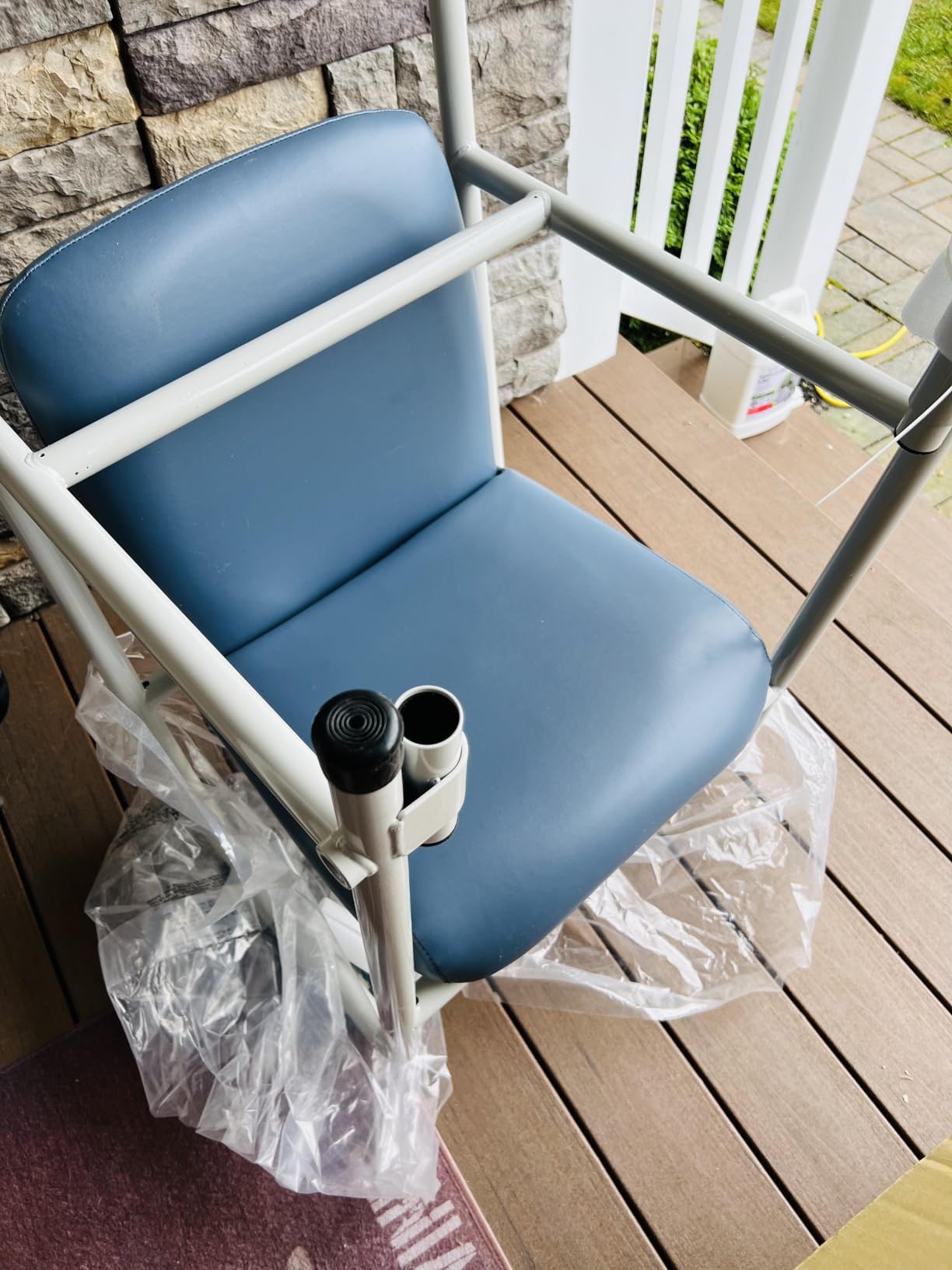
At 27 inches, this has a high fixed seat, and that number does more for a painful knee than any amount of lumbar support. When the hips are level with or above the knees, getting up becomes a push through the full-length padded armrests rather than a lift.
Caregivers of elderly parents and post-hip patients describe it as a practical lifesaver for transfers, and the reinforced metal frame with wipe-clean upholstery suits a home that also has to handle a hospital bed nearby.
The height-adjustable footrest with a textured anti-slip strip is a genuine knee feature. Without it, a 27 inch seat leaves the feet hanging, and dangling feet push load back into the back of the thigh and the front of the knee. With it, the legs are supported at a height that keeps the joint closer to neutral.
It is available in three finishes, and the padded seat and back are high-density foam rated for daily use rather than occasional use.
Why caregivers rank it highly?
When you are helping someone else in and out of a chair several times a day, the armrests and the seat height do the work. This chair is rated 4.1 from 103 reviews, with caregivers most often mentioning how much easier transfers became.
The footrest also means you can position the legs properly rather than letting them dangle, which matters for anyone whose knee is the problem rather than the hip.
Where it does not work?
The most common complaint is the shallow seat, which several reviewers say leaves petite users around 5 foot 2 sitting with their legs unsupported at the front. At 43.3 pounds, it is also a heavy and bulky frame to move between rooms.
Like the other clinical chairs here, the styling reads as medical equipment rather than furniture.
We earn a commission, at no additional cost to you. CERTAIN CONTENT THAT APPEARS ON THIS SITE COMES FROM AMAZON. THIS CONTENT IS PROVIDED 'AS IS' AND IS SUBJECT TO CHANGE OR REMOVAL AT ANY TIME.
10. Drive Medical Adjustable Height Stool – Best Budget Pick
Drive Medical 12455 Adjustable Height Stool with Back and Arms, White
★★★★★★★★★★Angled seat
Push button height adjustment
Removable width adjustable arms
15 pound steel frame
- Angled seat and removable arms make standing up and sitting down easier
- Width adjustable removable arms give a firm push point for transfers
- Powder coated steel frame with non slip rubber feet
- Multi purpose as a kitchen stool
- a hip high chair after surgery
- or an everyday adjustable chair
- Small plain seat with limited cushioning for long sessions
- Push button leg adjustment is less smooth than a lever lift gas cylinder
- Clinical white finish does not blend with home decor
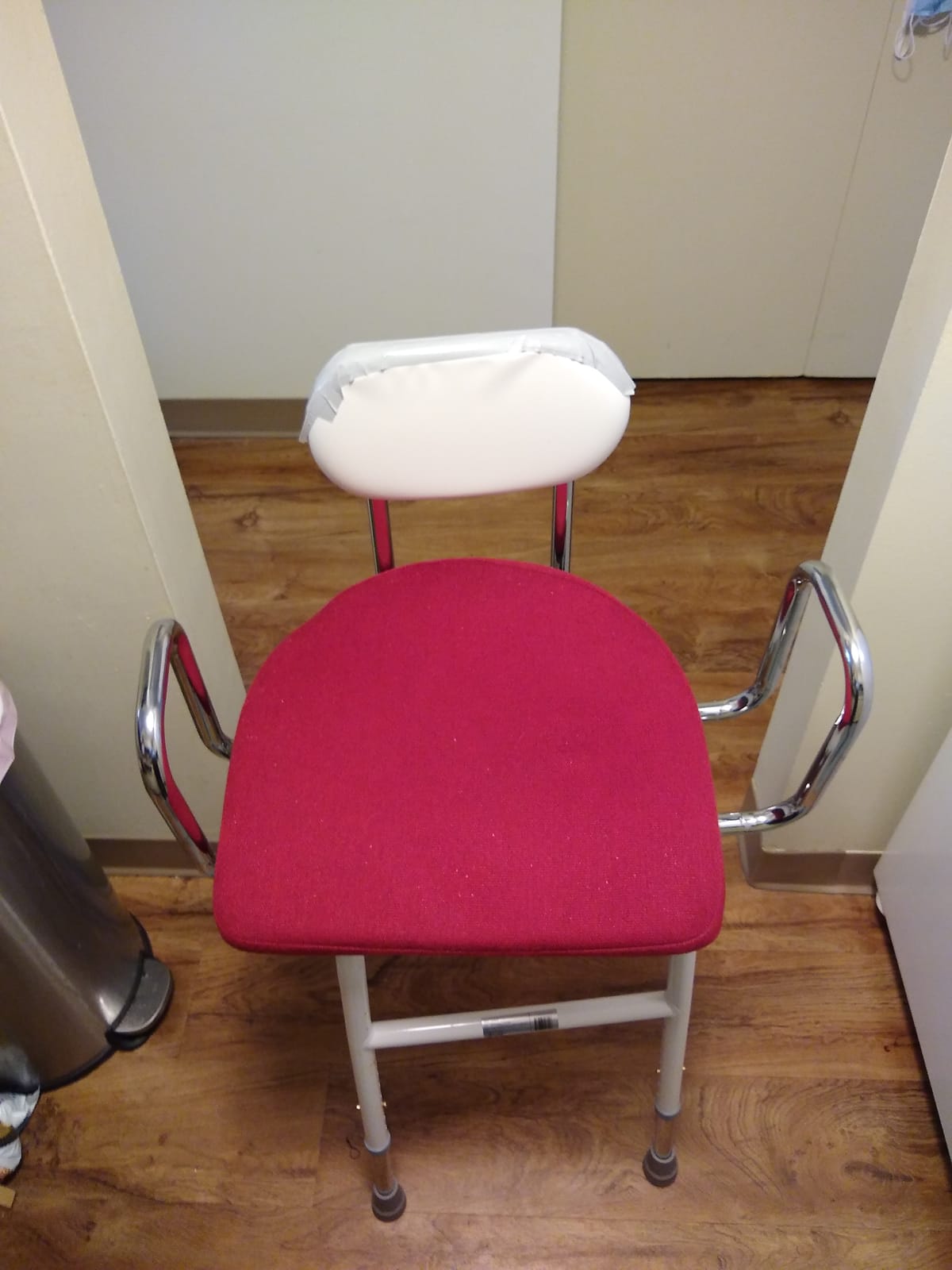
Strip away everything else and this stool solves the two problems that actually matter with a bad knee: it makes sitting down controlled and it makes standing up possible. The angled seat means you slide rather than lower yourself, and the removable width-adjustable arms give you something solid to push against.
It weighs 15 pounds, it has been sold since the mid-2000s, and it is rated 4.4 from more than 1,200 reviews with 72 percent five-star. That combination of age and review volume is unusual and it tells you the design is not going anywhere.
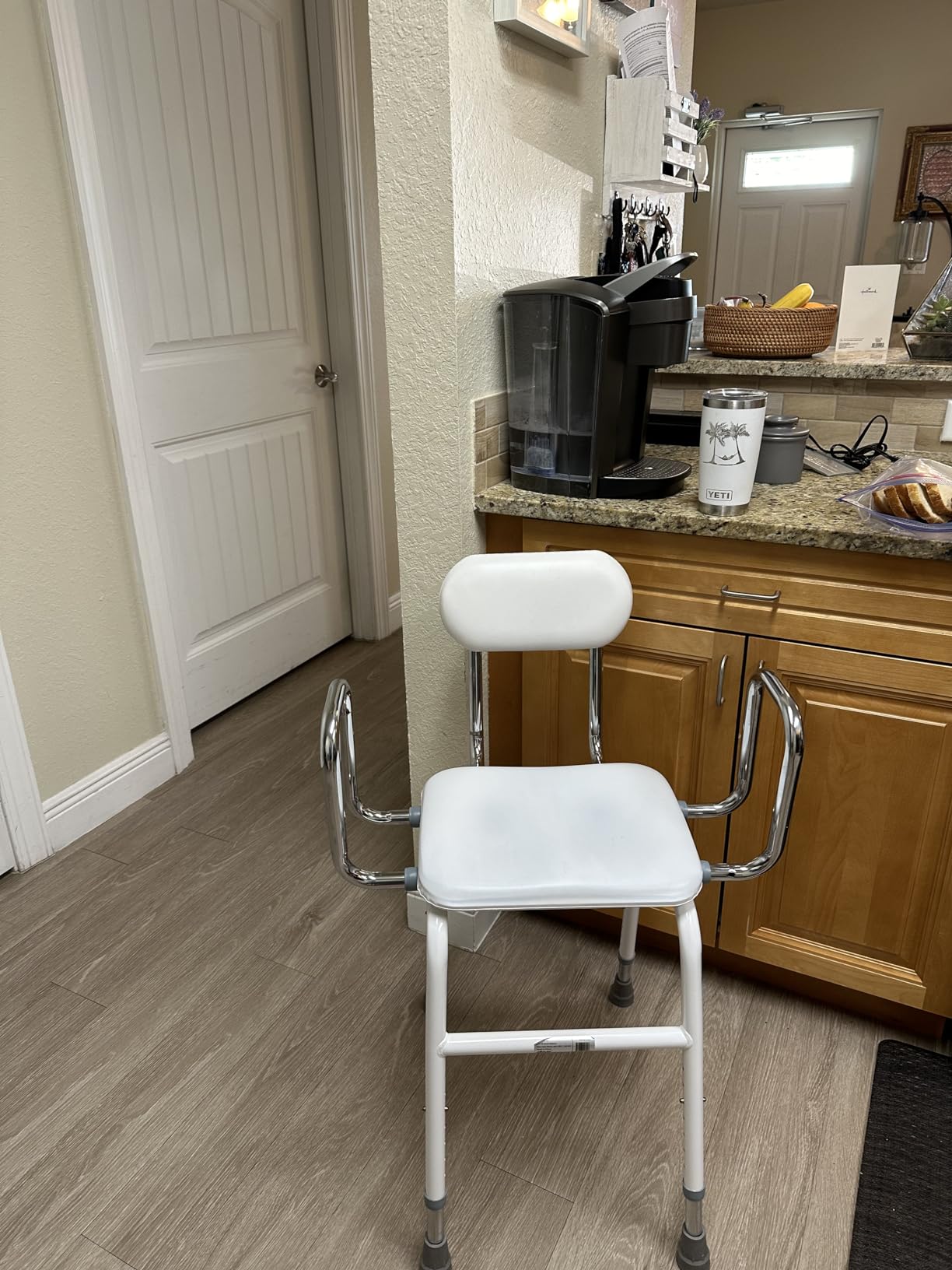
The push-button height adjustment on each leg means you can set the seat for a specific kitchen counter, a workbench or a raised bed, without gas cylinders or mechanisms that need servicing. Buyers treat it as a durable, inexpensive aid for post-surgical or elderly users.
As a kitchen stool for working at a counter it also happens to be a strongly knee-friendly seat, because a counter seat is high and your feet are supported by the floor rather than dangling.
Why it is the budget pick?
Almost everyone searching for the best chairs for knee pain wants a recliner or a kneeling chair. The unglamorous truth is that an angled stool with removable arms at the right height will help more people, faster, for far less, and it weighs 15 pounds so you can move it to wherever the pain is that day.
The angled seat plus removable arms are the features most often credited with easier sit-to-stand transfers in reviews, and that is the whole case for this chair.
Where it stops?
The seat is small and lightly cushioned. This is a chair for sitting in short blocks and for getting in and out of, not for an eight-hour desk session.
The push-button adjustment is also less smooth than a lever-lift gas cylinder, and the white finish reads as clinical in a home setting.
We earn a commission, at no additional cost to you. CERTAIN CONTENT THAT APPEARS ON THIS SITE COMES FROM AMAZON. THIS CONTENT IS PROVIDED 'AS IS' AND IS SUBJECT TO CHANGE OR REMOVAL AT ANY TIME.
11. NYPOT Ergonomic Kneeling Chair – Best Kneeling Chair for Posture
NYPOT Ergonomic Kneeling Chair with Adjustable Seats – Knee Chair for Posture Correction & Kneel Rocking Stool for Desk – Back Pain Relief for Home and Office, Supports 250 pounds – 5 Years Warranty
★★★★★★★★★★3 height positions
Suits desks from 29 to 35 inches
Rocking wood base
250 lb capacity
- Adjustable seat and knee pads let different heights find a working angle
- Rocking base shifts pressure points and reduces stiffness over long sessions
- Open frame keeps the thighs off the seat pressure points
- Wood frame feels solid and includes felt floor protectors
- Customer service shipped a replacement when a part arrived mis drilled
- Knee and shin cushioning is thin and hard
- with soreness reported after 20 to 30 minutes
- Front slat can sit close enough to the toes to pinch them
- Sits higher than a standard chair so a taller desk or monitor arm is often needed
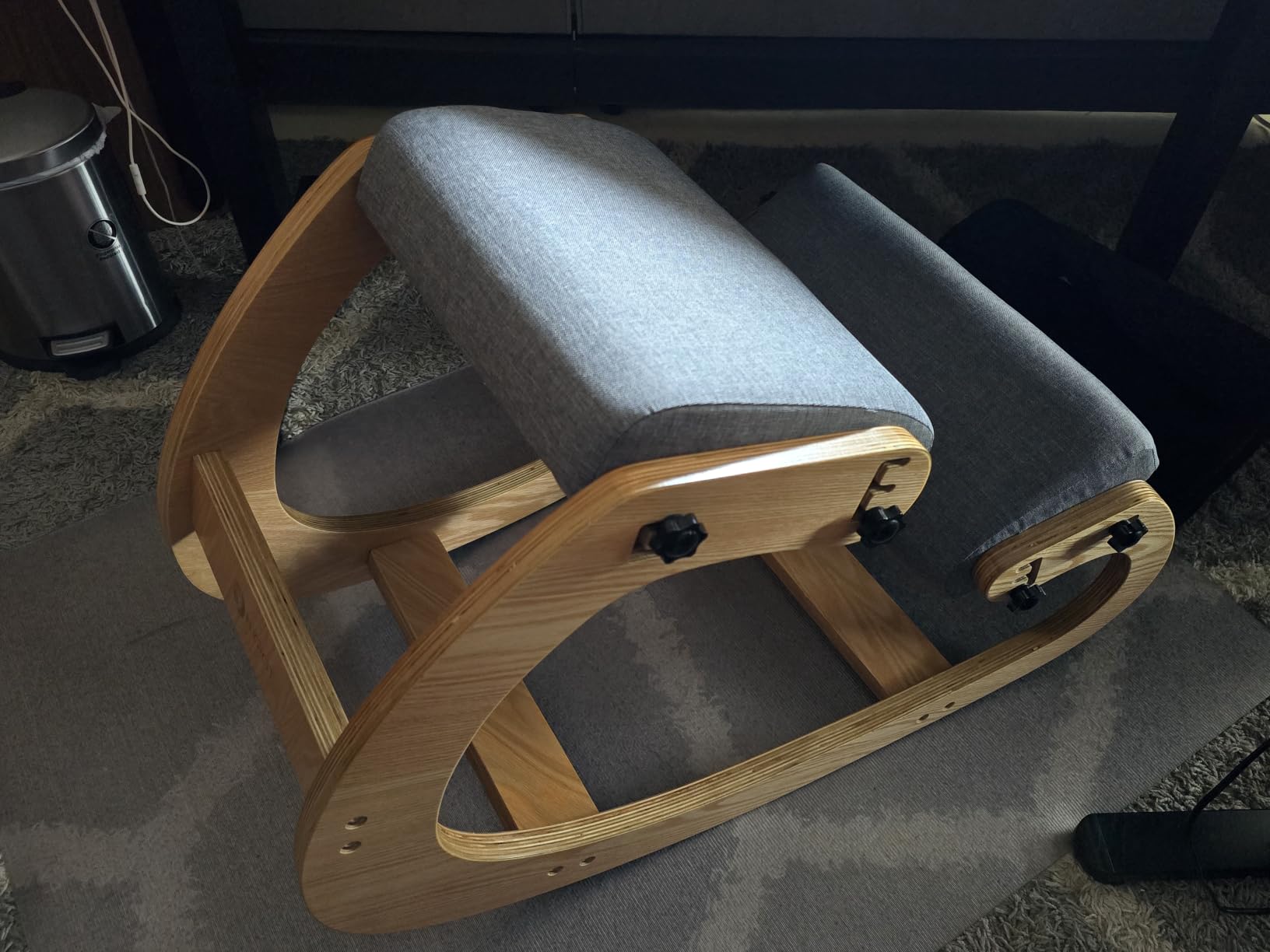
A kneeling chair works by removing your weight from the seat entirely and loading it into the shins instead. For a knee that hurts from compression, that is a genuine rest, and it is why people with desk jobs and knee pain keep coming back to this category despite the discomfort it takes to get there.
This one is the more adjustable of the two kneeling chairs here. Three height positions across a wood frame and a rocking base mean you can match the chair to a desk between 29 and 35 inches, and the gentle rocking motion shifts pressure points rather than holding one position.
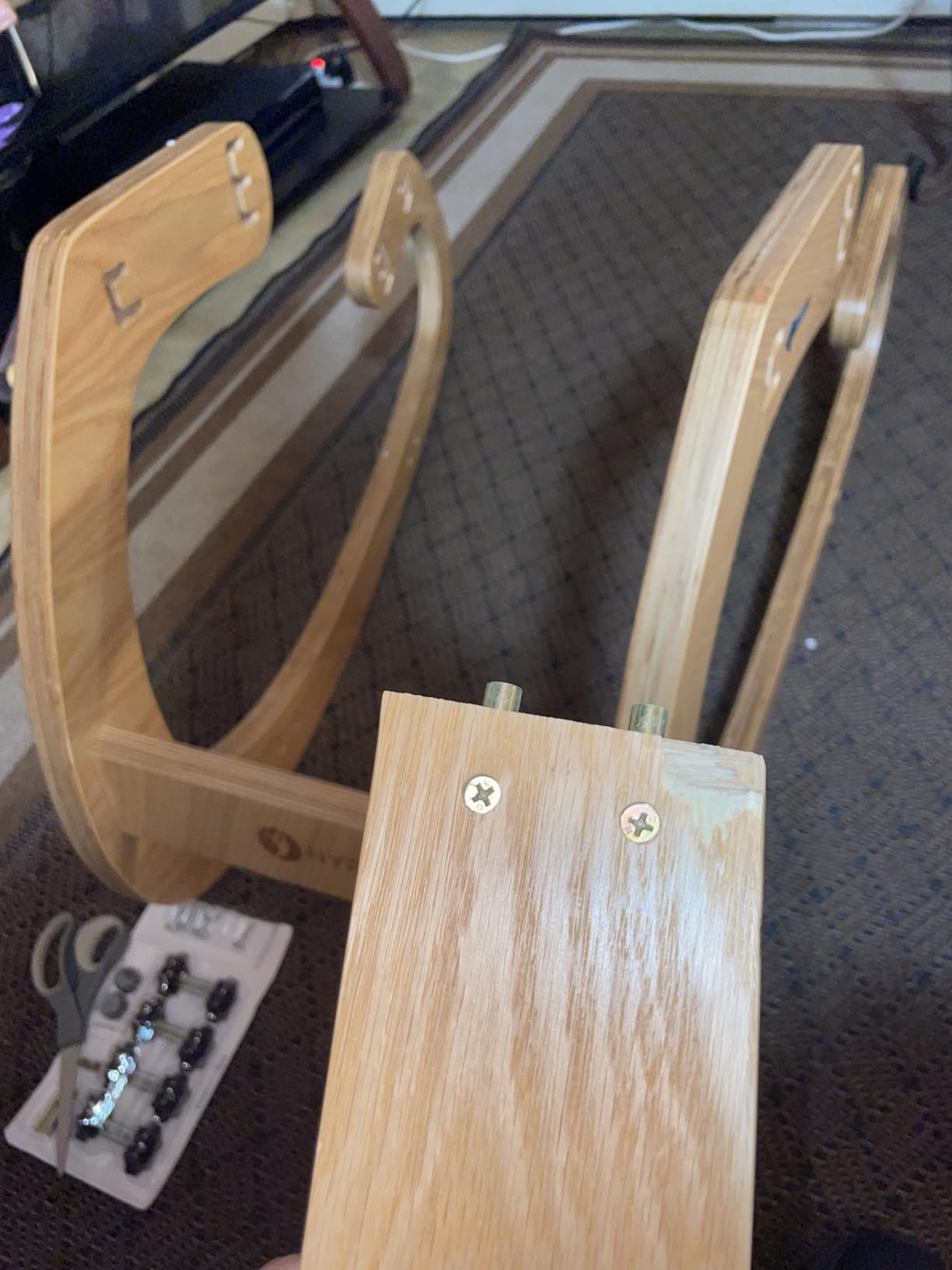
The open frame is the knee feature. Because the seat does not carry your weight, there is no pressure point pushing load into the back of your thigh and forward into the kneecap, which is the mechanism behind most desk-related knee ache.
It is also multifunctional. The same frame works as a cross-legged chair, a meditation seat or a criss-cross seat, so it is not a specialist tool that only works at a desk. The 5-year warranty is the longest stated anywhere in this roundup.
When a kneeling chair is the right answer?
Use it in blocks, not as your only chair. A 20 to 30 minute block gives a sore knee a rest while the rocking base keeps you from holding one static position, and then you switch back to a conventional chair. Our guide to the best kneeling chairs covers the sizing and padding issues in more detail.
This one is worth the adjustment period if your knees are the problem and your back is not. The trade-off is real and users describe it plainly.
The honest trade-off
The single most common theme across 753 reviews is that the knee and shin pads need thicker foam before the chair works for a full day. Out of the box, reviewers report shin soreness or bruising after 20 to 30 minutes, and that is a padding problem rather than a design problem.
Also be careful with the front slat. It can sit close enough to the toes to pinch them, and because the chair sits higher than a standard seat you will often need a taller desk or a monitor arm. On Reddit’s r/Thritis, one user reported that a kneeling chair helped their knees but hurt their back, and now keeps both a kneeling chair and a regular office chair and switches between them. That is the honest version of this recommendation.
We earn a commission, at no additional cost to you. CERTAIN CONTENT THAT APPEARS ON THIS SITE COMES FROM AMAZON. THIS CONTENT IS PROVIDED 'AS IS' AND IS SUBJECT TO CHANGE OR REMOVAL AT ANY TIME.
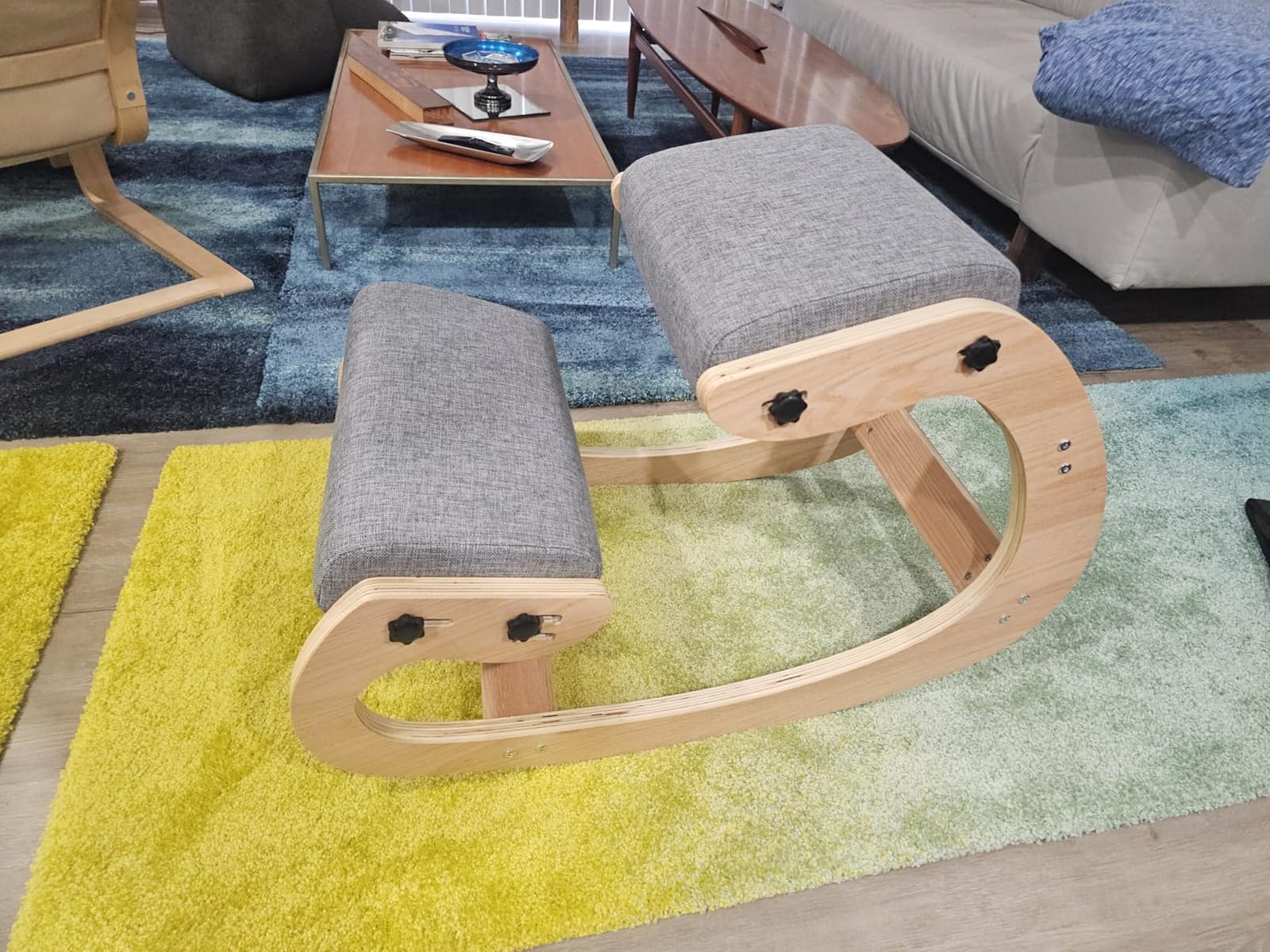
12. Easyego Kneeling Posture Chair – Best Budget Kneeling Chair
Easyego Kneeling Chair Ergonomic Posture Chair – Gray
★★★★★★★★★★10 reclining and height positions
Maintains a 60 to 70 degree thigh to calf angle
300 lb capacity
18.2 pound wood frame
- Seat and knee rest pitch and height both adjust
- so the thigh to calf angle can be tuned
- Solid wood frame rated to 300 pounds with a minimalist look that fits home decor
- Rocking base relieves stiffness and encourages core engagement
- Grip strips included for hard floors and it pushes under a standing desk easily
- Knee pad is not thick or firm enough and heavier users report indentations
- Poorly machined screw sockets make assembly frustrating
- Wood frame flexes side to side when you reach off balance
- Some cushions off gas for several days after unpacking
This is the kneeling chair to try first if the idea of kneeling is new to you, because the pitch and height both adjust. Ten reclining and height positions let you find the thigh-to-calf angle that works, and the frame is designed to hold that angle between 60 and 70 degrees, which is the range that takes pressure off the spine.
The 300 pound rating is the highest of the kneeling chairs here, and the minimalist wood look fits a home office better than a clinical frame.
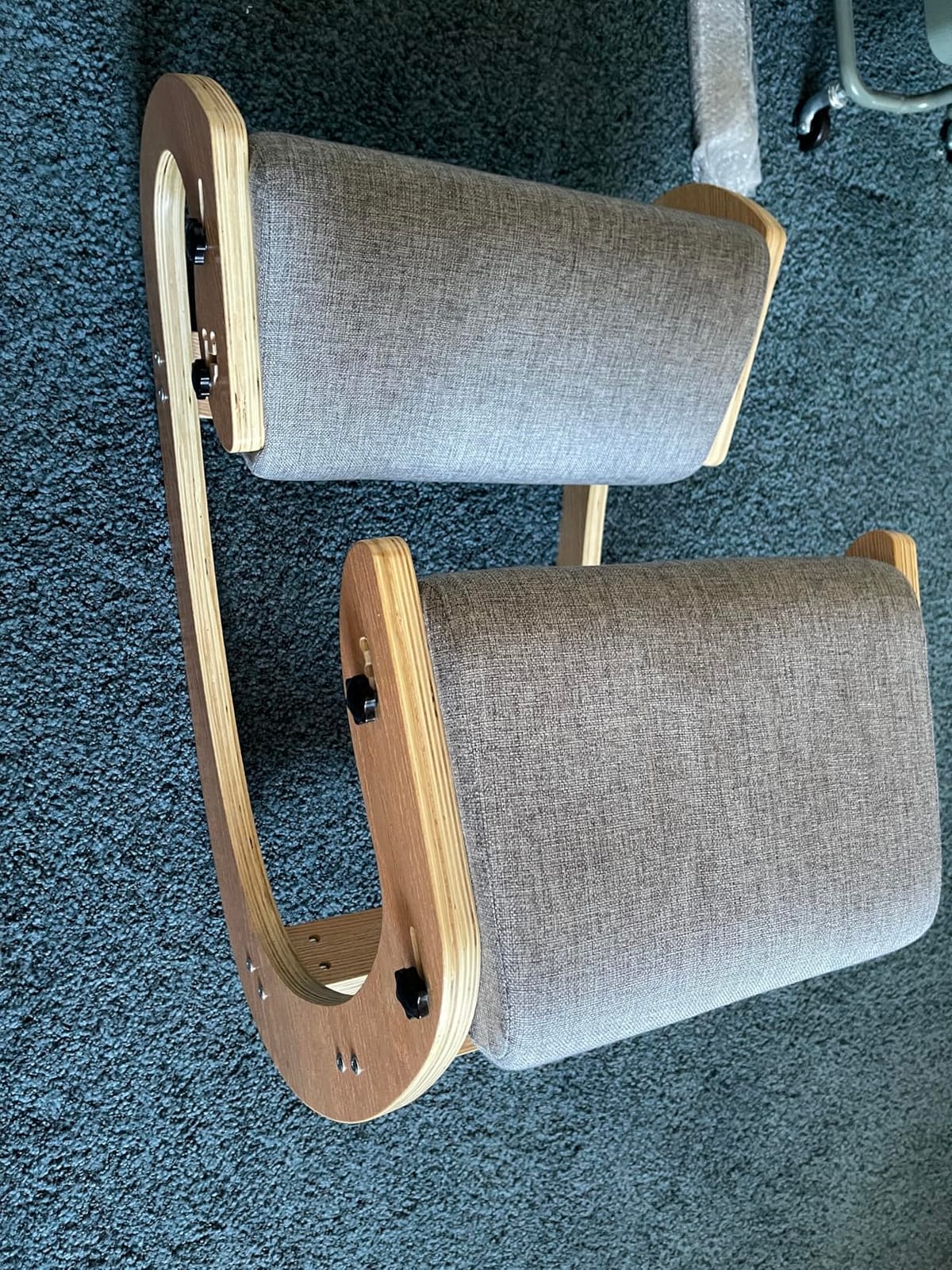
The rocking base helps relieve stiffness and improves circulation, which matters because the position is otherwise static. Grip strips are included for hard floors, and the whole chair pushes under a standing desk easily, so you can alternate between kneeling and standing through the day.
Owners confirm it forces an upright posture and eases lower back strain, and the obtuse seat angle discourages slouching.
What is good about the adjustability?
Being able to change the pitch and the height together is the main reason to prefer this over a fixed kneeling stool. If the thigh-to-calf angle is wrong, pressure goes into the shin and the lower back, and that is where the pain in this category comes from.
It ranks at 4.1 from 144 reviews with 63 percent five-star, and the flexibility of the angle comes up repeatedly in owner reviews.
Who should skip it?
The knee pad is the problem. It is not thick or firm enough, and heavier users report knee pain and visible indentations after a couple of days. If you weigh more, or your knees are already the reason you are reading this, add foam padding before you commit.
The frame also flexes noticeably side to side, so reaching for something off to the side leaves you unsteady, and poorly machined screw sockets make assembly frustrating for anyone with joint issues in their hands.
We earn a commission, at no additional cost to you. CERTAIN CONTENT THAT APPEARS ON THIS SITE COMES FROM AMAZON. THIS CONTENT IS PROVIDED 'AS IS' AND IS SUBJECT TO CHANGE OR REMOVAL AT ANY TIME.
Why Most Office Chairs Make Knee Pain Worse?
The standard office chair is designed for a standard body, and the knee is where that assumption fails first. Three things usually go wrong, and all three are visible if you know what to look for.
The knee angle opens past 90 degrees. A seat that is too high, or too deep, or both, pushes your knees in front of your hips. That is a greater range than many sore knees tolerate, and holding it for hours is a slow, dull ache that builds through the afternoon.
Your feet dangle. When your feet do not reach the floor, your body compensates by pulling on the back of your thigh through the hamstrings, which in turn presses the underside of the thigh into the front of the knee. Dangling feet are the complaint that short users repeat most often on chair forums, and it is a chair fit problem, not a body problem.
The seat edge digs in. A hard front lip on the seat concentrates load into a small area at the back of the thigh, and the knee takes the downstream force. This is why contoured and waterfall edges exist, and why thin seat edges are unusable for people with a bony frame.
There is a fourth, less obvious issue. A chair that forces one fixed posture keeps muscles working to hold you there, and users with chronic pain report that the tension from a rigid posture is worse than the original ache. If you dislike being held in place, a mid-tilt chair that lets you change position is a better choice than a posture-straining perch.
Our picks address these in different ways. The knee support options in this roundup are the chair-side answer; if your pain is activity-related rather than sitting-related, our guide to knee braces for meniscus pain covers the other half of the problem.
How to Sit in a Chair With Knee Pain (the 90-90 Rule)?
The 90-90 rule is simple to state and hard to achieve on a chair that was not designed for it. It means your hips at 90 degrees, your knees at 90 degrees, and your feet level with the floor. Five steps get you there.
1. Set the seat height first. Sit down and slide your feet forward until your knees are level with your hips. If your feet then hang, the chair is too high and you need a footrest or a lower seat, not a slouched posture.
2. Check the seat depth. Your knees should sit a couple of inches behind the front edge of the seat. If they are hanging off the edge, the seat is too deep, which pushes your knees forward and opens the angle past where it should be.
3. Use the backrest for your lower back, not your shoulders. Let the lumbar support take the curve of your lower back so you do not have to lean forward to reach a desk. Leaning forward is what puts your body weight through your arms and unloads your back but overloads your knee position.
4. Keep your feet or your legs supported. Both feet flat, or both calves on a foot ring, or both heels on a footrest. One foot up and one foot down is a pelvic rotation, and pelvic rotation is one of the fastest routes to a one-sided knee ache.
5. Change position before you need to. Do not wait for discomfort. Shift every 20 or 30 minutes, cross your legs, or stand up, because a static load held for an hour is the thing your knee tolerates least.
Chiropractors and physical therapists generally converge on the same advice: support the lower back, get the hips level with or slightly above the knees, support the feet, and avoid holding one position for a long stretch. If you are working on a specific diagnosis, ask your own clinician to check this setup with you rather than taking it from a web page, including ours.
Matching Chair Height to Your Body Height
Height mismatch is the most repeated complaint in every forum thread we read on this topic, so here is a plain mapping. Use the seat height column as a starting point and adjust from there. If you are under 5 foot, also read the short-user row before buying anything tall.
5 foot 0 to 5 foot 2. A chair that bottoms out around 15 to 17 inches is usable, but a fixed-foot chair will leave your feet dangling. Look for the lowest adjustable setting, or pair a taller chair with a footrest. The angled stool and the shorter clinical chairs suit this range better than a drafting chair.
5 foot 3 to 5 foot 6. Most standard office chairs fit, and the water-level test is enough: hips level with knees, both feet flat. A contoured or waterfall seat edge matters more at this height than any extra feature, because the seat depth is proportionally deeper relative to your leg length.
5 foot 7 to 6 foot. The widest range of chairs works. A seat height around 18 to 21 inches with a real lumbar support is the sweet spot, and a foot ring is optional rather than necessary.
6 foot 1 to 6 foot 3. Standard chairs are too short for this range, which is the problem tall users report most often. You need a drafting chair with a starting height around 24 to 25 inches and a full extension past 30, plus a foot ring. A recliner rated for larger people also works if the full recline length is at least your height.
Forum notes on body frame are worth repeating: lightly built users tend to find thin seat edges and hard frames unusable, and they often cannot fully recline into a frame that does not fit them. If you are lightly built, prioritise cushion depth and a waterfall edge over adjustability.
Footrests, Cushions, and Other Add-Ons
A footrest is the cheapest intervention available and one of the most frequently skipped. If your feet do not reach the floor from your current chair, a footrest fixes the most common mechanical cause of desk-related knee ache, and it costs less than replacing the chair.
A footrest helps when your feet need to be supported at roughly 90 degrees to the shin. It hurts when it is too high, because that pushes your knees up and increases the very flexion you are trying to avoid, or when it is a soft surface that lets your legs sink into a new angle.
A gel or memory foam seat cushion helps with pressure, not with angle. It softens a hard seat edge that digs into the back of your thigh, which is genuine relief for a bony frame, but it also raises your effective seat height, so you usually need to lower the chair by the same amount.
A gel knee pad is the most common upgrade for that category, and it is the difference between a 20-minute tolerance and a full working session.
If knee pain is limiting how much you move rather than how you sit, the support side matters too. Our picks for knee scooters keep weight off the joint during recovery, and they pair well with a high chair once you are back on your feet part of the day.
Buying Guide: What to Check Before You Buy?
Before you spend, work through these seven checks. Most of them can be answered from the product specifications, and any of them can be a reason to walk away.
1. Seat height and range. You need a published height, and you need the minimum to be low enough or the maximum high enough for your body. This single check eliminates most wrong purchases.
2. Seat depth. Your knees should land a couple of inches behind the front edge with your back against the backrest. Deep seats push the knees forward and are the usual reason short users dislike a chair.
3. Seat edge shape. Contoured or waterfall edges spread pressure off the back of the thigh. Thin, hard, flat-fronted edges concentrate it, and they are the main reason bony users get uncomfortable.
4. Foot support. Either the floor reaches both feet, or the chair includes a foot ring or footrest. Dangling feet are the enemy, and a foot ring is the feature that solves it in a tall chair.
5. Knee angle at the lowest setting. Some chairs drop low enough to push the knee well past 90 degrees, which is the problem you are trying to avoid. Check this in person if you can.
6. Armrests and transfers. Padded, removable or width-adjustable arms exist for one reason: so you can push yourself up. This matters enormously after knee surgery and it is the requirement post-op patients rank highest.
7. Weight capacity and warranty. Match the capacity to your weight with margin, and prefer a longer warranty on anything with a gas lift, because the lift is the part that fails first.
One last buying consideration specific to chronic pain: if you dislike being held in one position, skip the rigid posture chair. A mid-tilt mechanism that lets you change your angle will serve you better than a chair designed to hold you in one posture, and that preference is common among people with long-standing joint pain.
How Often to Stand Up and Move?
Duration matters as much as the chair. The best chair for knee pain still loads a compressed joint, and the joint tolerates a changing load far better than a static one.
A practical cadence is to move every 30 to 60 minutes, and to change position every 20 to 30 minutes within a longer block. You do not need to walk far. Standing up, taking eight steps, and sitting back down resets the load through the joint and the circulation through the leg.
Set a timer you can see rather than one you can only hear, because a chair task is exactly the kind of work where time disappears. If your job is genuinely sedentary, a sit-stand desk gives you more options than any chair, and the drafting chairs in this roundup are built to pair with one.
If you are in post-surgery recovery, follow the interval your physical therapist gave you rather than a number on a web page, and be clear with them about how long you sit in a single stretch.
Frequently Asked Questions
What kind of chair is good for knee pain?
A chair that supports knee pain relief keeps your hips and knees at roughly 90 degrees with both feet flat on the floor, avoids pressing the kneecap or the underside of the thigh, and lets you change position without strain. The most knee-friendly types are high-seat clinical chairs, tall drafting chairs with a foot ring, and zero-gravity recliners with an elevated seat.
Why no recliner after knee replacement?
Recliners are often discouraged in the first weeks after knee replacement because the knee travels a long way into flexion, and a brand new joint should not be pushed through a large range without your surgeon’s approval. A recliner can be fine later in recovery, particularly one with a high seat, but you should ask your surgeon what flexion limit applies to you and at what point it is safe.
What chairs do chiropractors recommend?
Chiropractors and physical therapists generally converge on the same seating advice: hips level with or slightly above the knees, both feet supported, lower back supported, and no fixed posture held for long. That usually means a chair with real seat height adjustment and a contoured or waterfall front edge rather than a chair chosen for its lumbar support alone.
What is the best chair for sitting long hours?
For long sitting sessions, the deciding features are adjustable seat height, a foot ring or floor contact for both feet, a contoured or waterfall seat edge, and a mechanism that lets you change posture. A high-back drafting chair with a foot ring suits standing-desk users, while a zero-gravity recliner with a 22 inch seat height suits people who want frequent posture changes.
What kind of chair is best for people with knee problems?
A high seat is the most important feature, because it keeps your hips level with or above your knees and makes standing up possible. Add padded or removable armrests for a firm push point and a footrest or foot ring so your feet are supported. Add a contoured seat edge if you have a bony frame and the front edge digs into the back of your thigh.
What is the best office chair with knee support?
The best office chair with knee support is a tall drafting chair with an adjustable foot ring, or a standard office chair paired with a footrest so both feet reach the floor. The knee support comes from the foot ring or footrest taking the weight off dangling feet, and from the elevated seat keeping the knee angle near 90 degrees.
Can I sit in a recliner after knee replacement surgery?
Most people can, but not in the first weeks, and only with your surgeon’s approval. Recliners put the knee into deep flexion, so the timing and your permitted range of motion matter more than the chair itself. A recliner with a high seat, such as one at 22 inches, also makes getting in and out far easier than a low model once you are cleared to use it.
What is the best orthopedic office chair for long hours of comfort?
For long hours, look for an orthopedic style chair with adjustable seat height, a contoured or waterfall seat edge, a real lumbar support, and a mechanism that lets you shift position rather than hold you rigid. Height-adjustable clinical chairs around 23 to 27 inches with removable armrests are the most knee-specific option, while tall drafting chairs suit people who are on a standing desk.
Final Thoughts
If you take one thing from this roundup of the best chairs for knee pain, make it the seat height. Every chair on this list earns its place because it puts your hips level with or above your knees and supports your feet, and almost every chair we rejected failed on one of those two points regardless of how good its lumbar support looked.
Our overall pick is the EVER ADVANCED XL Zero Gravity Recliner, because its 22 inch seat and full recline solve three problems at once. If you are tall or work at a standing desk, the BOLISS and HYLONE drafting chairs are the better fit. If you are recovering from knee surgery, the Platinum Health APEX Hip Chair is built for exactly that window, and if you want a simple solution you can move around the house, the Drive Medical stool is hard to argue with.
Whatever you choose, change position every 20 to 30 minutes and talk to your physical therapist before you alter how you sit around a new joint. That last part is not optional advice, and it applies to us as much as to you.