
If you photograph 500 to 1,500 students in a single afternoon, your camera is not a hobby purchase. It is a piece of production equipment that either keeps a paid day on schedule or quietly costs you money in retakes. Most roundups written for this keyword answer a different question. They tell students which camera to buy for a photography class. This one is built for the operator running the rig.
Let me define the terms first, because they get used loosely. Volume photography, also called high-volume or mass-market portraiture, is the business of photographing large groups of people in a short window and delivering the results as printed or digital packages through an outside lab. School photography in commercial usage means selling those portraits to families and to the school itself, often on a fixed picture-day schedule, which is a different job from yearbook candids and classroom documentation.
A volume studio runs the same fixed capture rig all day. Subjects are seated under continuous or strobe light, the photographer shoots short bursts per pose, results go up on a tethered monitor for parent approval, every file is backed up to a second card, and the day’s folder is pushed to a lab for printing and fulfillment. So when I rank the best cameras for professional school and volume portrait studios, I judge bodies on flash triggering, tethering, card redundancy, throughput and endurance, not on which one produces the prettiest picture in a controlled test.
The short answer to the question most people search with: for a paid picture day, the best camera for school photography is one with reliable off-camera flash triggering, two card slots, a buffer that survives a burst, and a menu you can drive without looking down. The Canon EOS R5 and Sony Alpha 7 IV hit those marks with the deepest feature sets here. The Sony Alpha a6400 is the value workhorse that carries the highest volume of owner feedback in this group, and it is our Editor’s Choice.
Below I go through nine bodies in detail, then the buying criteria that actually decide a volume day, then how many bodies you need for a one, two or three-station operation. Where I have testing, I say so. Where I do not, I say that too, and I rely on owner feedback instead.
Table of Contents
- Top 3 Best Cameras For Professional School And Volume Portrait Studios (October 2026)
- Best Cameras for School and Volume Portrait Studios at a Glance
- What Volume Photography Actually Asks of a Camera Body?
- 1. Sony Alpha a6400 – Best Camera Overall for a Paid Picture Day
- 2. Canon EOS RP with RF 24-105mm f/4-7.1 IS STM – Best Full-Frame Step-Up
- 3. Nikon Z50 II Two-Lens Kit – Best Budget Start for a Volume Studio
- 4. Sony Alpha a6700 – Best Subject Recognition for Non-Sitting Children
- 5. Sony Alpha 7 IV – Best Value Full-Frame Body for a Working Studio
- 6. Canon EOS 90D with EF-S 18-135mm IS USM – Best for Studios With Existing Canon EF Glass
- 7. Nikon Z6 III – Best for Gyms, Auditoriums and Very Low Light
- 8. Canon EOS R5 – Top Rated Body for Detail-Heavy Studio Work
- 9. Nikon Z 8 – Best for Flagship Subject Tracking and Built-In Portrait Tools
- How Many Bodies a Volume Studio Actually Needs?
- Buying Guide for School and Volume Portrait Studios
- Flash and trigger compatibility is the first filter
- Decide on tethered or untethered before you buy
- Throughput: burst rate, buffer and card slots together
- Sensor size and how large the prints really are
- Battery math for a long day
- Menus, card handling and the pace of an appointment
- DSLR or mirrorless for portraits in a volume studio
- 85mm or 70-200mm for portraits
- Used, refurbished or new
- A note on scheduling and pace
- Frequently Asked Questions
- What cameras do professional portrait photographers use?
- What camera do school photographers use?
- What is the best camera for school photography?
- What is the best camera for portrait photography?
- Is DSLR or mirrorless better for portraits?
- Is 85mm or 70-200mm better for portraits?
- Can I use a mirrorless camera with studio strobes?
- Do I need two camera bodies for a portrait studio?
- Final Verdict: Which Camera Keeps Your Picture Day Running?
Top 3 Best Cameras For Professional School And Volume Portrait Studios (October 2026)

Sony Alpha a6400
- 20.1MP APS-C Exmor RS sensor
- Real-time Eye AF with 425 phase-detection points
- 11 fps burst
- 180-degree tilting LCD

Canon EOS R5
- 45MP stacked full-frame sensor
- 12 fps mechanical and 20 fps electronic
- 1053 AF points covering about 100 percent
- Dual CFexpress Type B and SD slots

Sony Alpha 7 IV
- 33MP full-frame Exmor R sensor
- 759-point Fast Hybrid AF with Real-time Eye AF
- Dual CFexpress Type A and SD slots
- 10 fps burst
The three above are the ones I would put on a studio cart without hesitating. The rest of the list covers people starting out, people with existing lenses, and people who need a very bright viewfinder in a dim gym.
Best Cameras for School and Volume Portrait Studios at a Glance
| Product | Key Specs | Pricing |
|---|---|---|
| Sony Alpha a6400 |
|
Check Latest Price |
 Canon EOS RP with RF 24-105mm f/4-7.1 IS STM Canon EOS RP with RF 24-105mm f/4-7.1 IS STM |
|
Check Latest Price |
 Nikon Z50 II Two-Lens Kit Nikon Z50 II Two-Lens Kit |
|
Check Latest Price |
 Sony Alpha a6700 Sony Alpha a6700 |
|
Check Latest Price |
| Sony Alpha 7 IV |
|
Check Latest Price |
 Canon EOS 90D with EF-S 18-135mm IS USM Canon EOS 90D with EF-S 18-135mm IS USM |
|
Check Latest Price |
 Nikon Z6 III Nikon Z6 III |
|
Check Latest Price |
| Canon EOS R5 |
|
Check Latest Price |
 Nikon Z 8 Nikon Z 8 |
|
Check Latest Price |
Nothing in the table above tells you which body has two card slots, so check that row of specs yourself before you commit. Card redundancy is the single cheapest insurance a paid studio can buy, and the difference between bodies in this group is real.
What Volume Photography Actually Asks of a Camera Body?
Volume portraiture is a throughput business. You are paid per finished image, and a focus miss or a stalled buffer is paid labour. That single fact reorders every buying criterion, and it is where this roundup parts company with the student-focused roundups that fill the search results.
Off-camera flash triggering comes first. Nobody runs a portrait studio with an on-camera pop-up or a hot-shoe mounted head pointing at the subject. Every serious rig puts the light off-axis, which means the body has to work with a radio trigger or a hot-shoe mounted trigger in the same shoe as your triggers. This is also the most repeated complaint we found across photography forums: mirrorless bodies and older radio triggers that refuse to fire together, and hot-shoe adapters that behave unpredictably. Test your exact trigger and body combination before a paying day, not during one.
Tethering and live review are the difference between one take and two. Parents will tell you immediately if a portrait is wrong, and a tethered monitor turns a retake conversation into a two-second fix instead of a retake that costs you a slot in the schedule. Live review also lets you judge flash power and white balance on the actual screen rather than guessing from the viewfinder.
Buffer depth and card slots decide whether the day flows. Two slots let you write a second copy of every frame while the first card writes, which protects a day of paid work against a single card failure. A short buffer means you spend a slice of each appointment waiting on the camera instead of photographing the next child.
Silent shutter matters more than the spec sheet suggests. A quiet shutter keeps parents calm in a small gym, and it matters when a live review happens a few feet from a seated family. It also matters for graduation ceremonies where applause would mask the shutter but the resting crowd would not.
Endurance and battery planning close the day. A body that drains a battery every two appointments changes how you pack the bag, and how you handle the family who arrives early. Count batteries per body per day before you commit, and buy third-party spares rather than relying on one proprietary pack.
Menus are a throughput feature. On a picture day you touch the back of the camera hundreds of times. A body with buried settings costs you seconds every time, and photographers repeatedly point out that Canon and Nikon interfaces tend to be quicker to drive than Sony and Fujifilm menus under time pressure. That is a workflow observation, not an image quality one.
Lens reuse decides your real cost. Photographers with a shelf of EF, EF-S or F-mount glass rarely move mounts lightly. Staying inside an existing ecosystem, or using a supported adapter, usually costs less and wastes less time than re-buying glass you already own.
One more framing note. Experienced operators often say that almost any camera from the last decade can do the job once off-camera flash is in play, because the lighting and the workflow dominate the result. That is true, and it is exactly why we judge these bodies on reliability rather than on resolution alone.
1. Sony Alpha a6400 – Best Camera Overall for a Paid Picture Day
Sony Alpha a6400 Mirrorless Camera: Compact APS-C Interchangeable Lens Digital Camera with Real-Time Eye Auto Focus, 4K Video, Flip Screen & 16-50mm Lens – E Mount Compatible – ILCE-6400L/B, Black
★★★★★★★★★★20.1MP APS-C Exmor RS
11 fps burst
425 phase-detection points
180-degree tilting LCD
- Real-time Eye AF holds focus on moving children
- Lightest body in the lineup at 10.3 ounces
- 11 fps suits multi-frame poses
- 16-50mm kit lens included
- No in-body image stabilization
- Single card slot
- Menu system is slow to learn
The a6400 is the body we would hand a photographer who needs a school rig to keep working for years. Its 20.1MP Exmor RS sensor, 11 fps burst and Real-time Eye AF across 425 phase-detection points covering 84 percent of the frame cover the three things a volume day demands: fast focus on children who will not hold still, enough frames per pose to catch one expression, and a body light enough to move between stations.
Owner feedback is where this camera earns its place in a professional context. Across more than a thousand reviews, the recurring theme is that eye autofocus lands on a moving subject and stays there. For a photographer shooting a sibling pair who will not sit still, that single behaviour does more for the finished day than any resolution increase would.
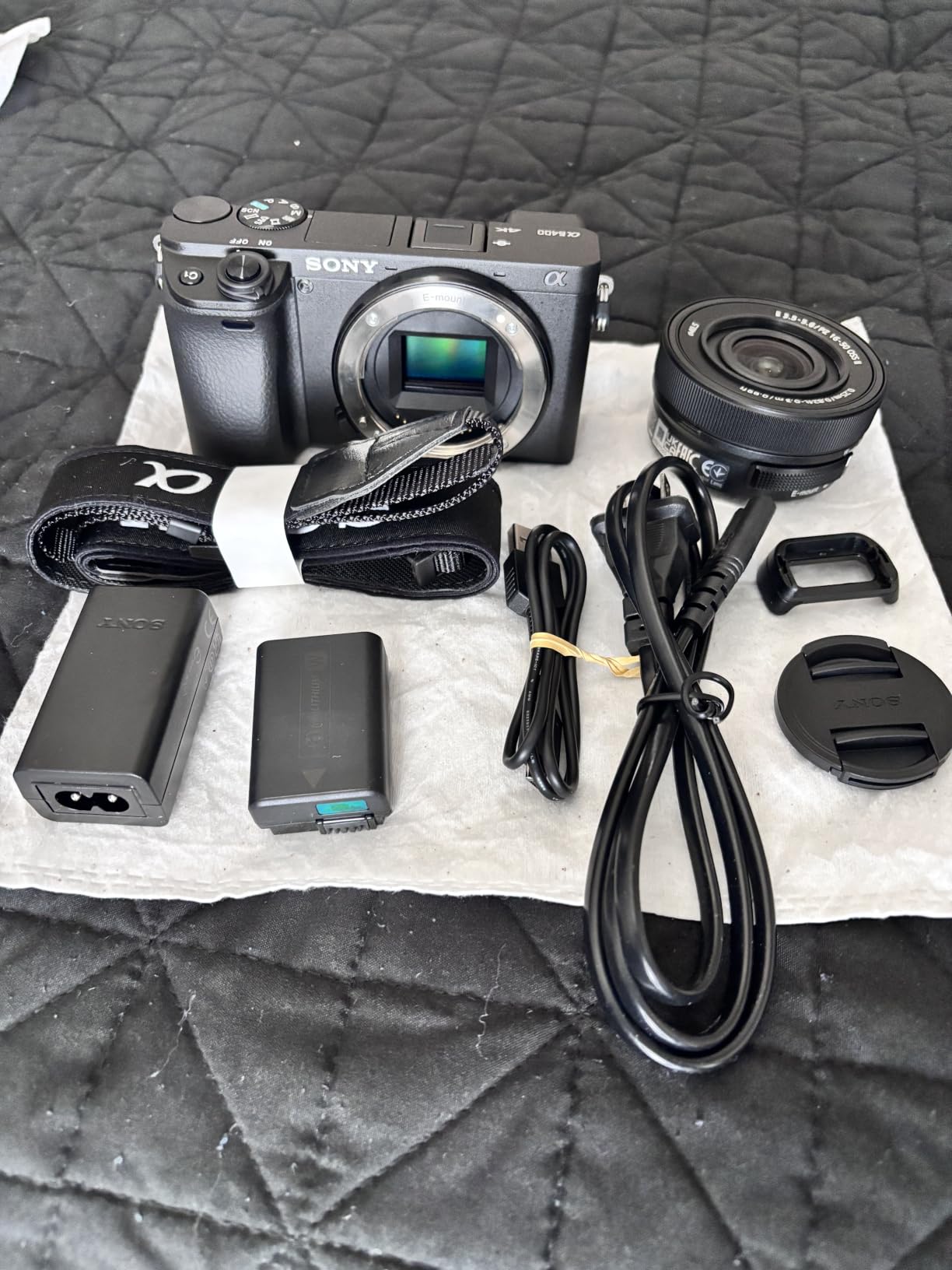
The practical details are good for studio work. The 180-degree tilting touchscreen lets a photographer shooting from low or from a seated position frame without contorting, and the 16-50mm kit lens means the body is usable out of the box while you decide on portrait glass. The 1/4000 second top shutter speed gives plenty of headroom for strobe work.
What gives me pause on a paid day is the single card slot. Every frame from a session writes to one card with no automatic second copy, and I would pair this body with a second body running the same setup as the redundancy plan rather than as an upgrade.
What the a6400 does well on a picture day?
Eye autofocus is the headline and it holds up in owner reports, particularly with children in motion. The tilting screen and light weight matter when your day is not one studio but a gym, a hallway and a cafeteria in sequence. Battery life on this body is generally reported as adequate for a working day rather than outstanding.
Because it is APS-C, it also keeps files small, which speeds up card writes and shortens the post-session transfer to a lab. That is an underrated advantage when you are pushing several thousand frames off a card at the end of a long evening.
Where the a6400 falls short?
No in-body image stabilization means you are dependent on stabilized lenses for any slow-shutter work, which is fine with off-camera flash and a real problem if you are shooting handheld in a dim gym. The single card slot is the bigger issue for paid work, and owners also cite the menu layout and companion app as the most frustrating part of the experience.
One APS-C caveat: the E-mount lens lineup for this format is thinner than rivals, so your portrait focal length options are narrower unless you bring over adapted full-frame glass.
We earn a commission, at no additional cost to you. CERTAIN CONTENT THAT APPEARS ON THIS SITE COMES FROM AMAZON. THIS CONTENT IS PROVIDED 'AS IS' AND IS SUBJECT TO CHANGE OR REMOVAL AT ANY TIME.
2. Canon EOS RP with RF 24-105mm f/4-7.1 IS STM – Best Full-Frame Step-Up
Canon EOS RP Mirrorless Camera RF24-105mm Lens F4-7.1 is STM Lens Kit
★★★★★★★★★★26.2MP full-frame CMOS
Dual Pixel CMOS AF with 4779 points
5 fps burst
16 ounces
- Full-frame low-light performance in a light body
- 4779-point Dual Pixel CMOS AF
- 24-105mm stabilized zoom included
- Clean straightforward menu system
- 5 fps burst is slow for volume work
- No mechanical shutter so the sensor is exposed on lens change
- No in-body stabilization
The RP is the most common answer to how a studio steps up to full frame without changing lens habits overnight. At 16 ounces with a 26.2MP sensor and 4,779 selectable Dual Pixel CMOS AF points, it delivers the low-light headroom and background rendering that a gym or an evening ceremony demands, and it stays comfortable through a long appointment.
The bundled RF 24-105mm f/4-7.1 IS STM is the real story for a new studio. It covers everything from a seated individual portrait to a wider group, and its optical stabilization of up to 5 stops is doing the work the body does not, since the RP has no in-body stabilization. Reviewers consistently praise the menu as easy to navigate, which matters when you are changing settings between every child.
Canon shooters report professional-level results at a step below the price of a full professional body. Low-light improvement over older DSLRs is the most cited upgrade, and that is exactly the scenario in a north-facing gym with no windows and fluorescent fixtures.
The burst rate is the concern for a volume day. At 5 fps the RP will not hold a long run of frames per pose, so you are shooting one or two frames and checking rather than firing a burst and picking the winner.

Why the RP suits a one-station studio?
For a single-station operation that shoots appointments back to back, the RP’s strengths line up well. It is light, the autofocus is dependable with moving subjects, and the included zoom means your framing options are wide from day one without another purchase.
Owners also note the battery is often criticised in reviews, though several report shooting a full day on a single charge. For a paid schedule, we would still pack spares rather than test the limit.
Where the RP falls short for volume work?
The 5 fps burst and the absence of a mechanical shutter are the two flags. With no mechanical shutter the sensor is exposed when you change lenses, which is a real risk in a busy room with children moving around your station. The 4K video is heavily constrained, which matters little for stills work but rules it out if you sell short video clips with portrait packages.
The bundled kit lens is also described by reviewers as soft at the edges and missing an AF and MF switch, so a dedicated portrait prime will pay for itself quickly.
We earn a commission, at no additional cost to you. CERTAIN CONTENT THAT APPEARS ON THIS SITE COMES FROM AMAZON. THIS CONTENT IS PROVIDED 'AS IS' AND IS SUBJECT TO CHANGE OR REMOVAL AT ANY TIME.
3. Nikon Z50 II Two-Lens Kit – Best Budget Start for a Volume Studio
Nikon Z50 II with Two Lenses | Compact mirrorless Stills/Video Camera with Easy Color presets and Wireless Photo Sharing | USA Model
★★★★★★★★★★20.9MP DX sensor
Two VR lenses included
Picture Control button with 31 presets
Built-in pop-up flash
- Two stabilized NIKKOR Z DX lenses in the box
- Dedicated Picture Control button speeds up look matching
- Nine subject types with detection and tracking
- Built-in pop-up flash with Night Portrait mode
- 5 fps burst is slow for volume throughput
- 20.9MP sensor is modest for large studio prints
- Variable aperture kit lenses need light wide open
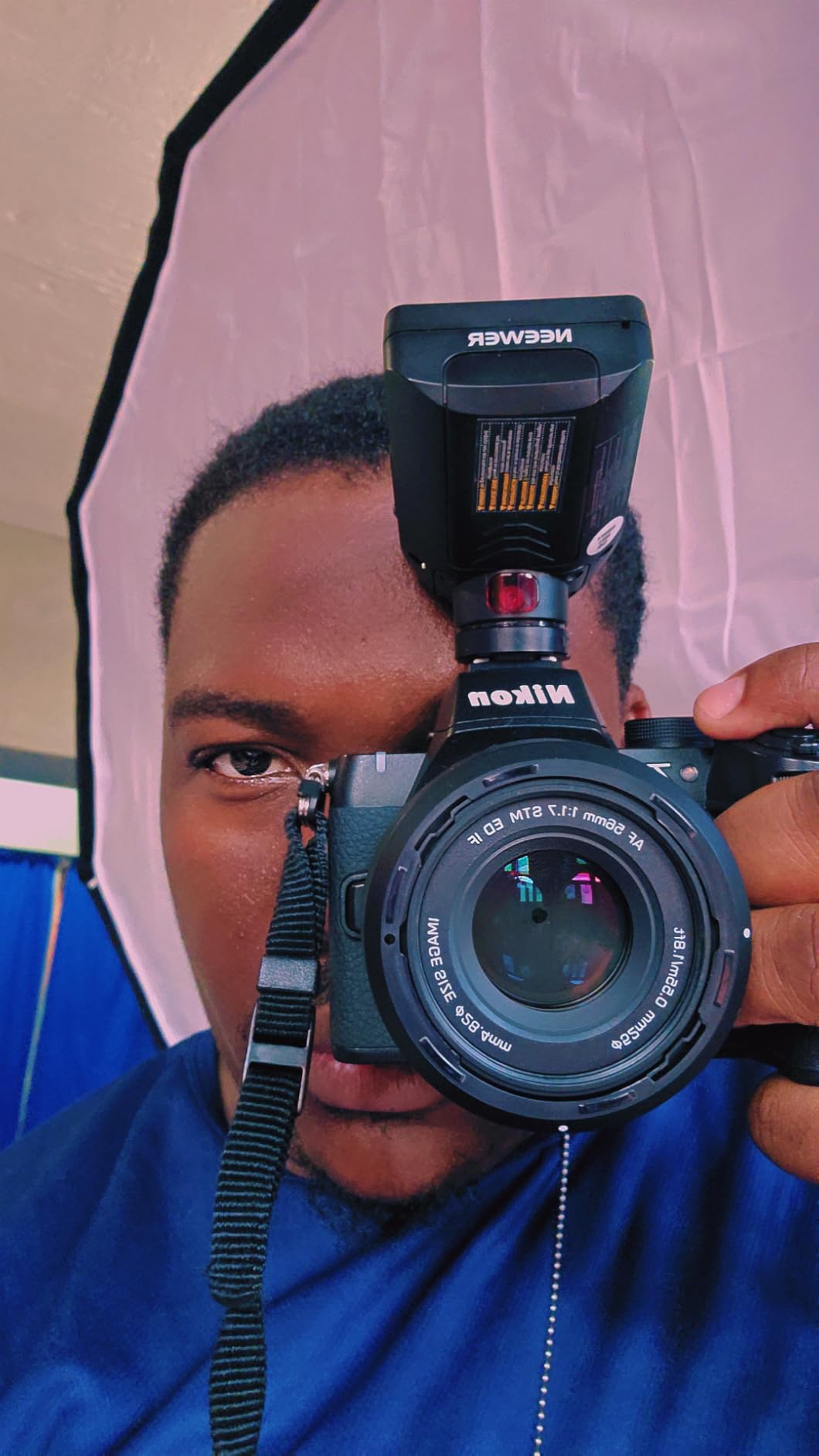
This kit is the lowest-cost credible way into a professional portrait workflow, and the reason is the two lenses. You get the NIKKOR Z DX 16-50mm f/3.5-6.3 VR and the NIKKOR Z DX 50-250mm f/4.5-6.3 VR, which covers a seated portrait and a stage or gym shot without a second purchase.
The Picture Control button with 31 built-in presets is the detail that matters most for volume work. Look matching across hundreds of frames from the same session is the difference between a coherent delivery folder and one where every batch looks different, and one hardware button gets you there faster than a menu tree.

The built-in pop-up flash is unusual in a mirrorless body and it has a specific studio use. With Night Portrait mode it can balance a slow shutter for natural-looking ambient light, which is genuinely useful for a family group taken in a dim hallway on the way out of the gym.
Subject detection covers people, dogs, cats, birds and vehicles with dedicated modes, and owners report it as reliable. SnapBridge handles wireless transfer to a phone or laptop when you are not tethered.
What the Z50 II does well for a starting studio?
Two stabilized lenses in the box is the headline. Most photographers buying into a system at this level spend their next purchase on glass, and this kit removes that decision from the first month. The tilting screen and electronic VR are useful at a seated station.
The 4K UHD at 60p and 120p Full HD slow motion are more than a stills studio needs, but they cover graduation and sports specials where families want short clips alongside portraits.
Where the Z50 II falls short?
At 5 fps and 20.9MP you are giving up burst flexibility and resolution compared with the APS-C bodies a few steps up. For very large wall prints with heavy cropping that ceiling matters, though for standard 8×10 and 5×7 lab packages it is rarely the limiting factor.
The variable aperture kit lenses also need light to reach f/5.6, so a studio lit with a single softbox at f/2.8 will find you stopping down and losing the shallow look that sells a portrait package.
We earn a commission, at no additional cost to you. CERTAIN CONTENT THAT APPEARS ON THIS SITE COMES FROM AMAZON. THIS CONTENT IS PROVIDED 'AS IS' AND IS SUBJECT TO CHANGE OR REMOVAL AT ANY TIME.
4. Sony Alpha a6700 – Best Subject Recognition for Non-Sitting Children
Sony Alpha a6700 APS-C Mirrorless Camera Body 26MP 4K Black
★★★★★★★★★★26.0MP APS-C Exmor R sensor
AI processor with Real-time Recognition
11 fps
5-axis stabilization
- AI-based subject recognition rarely misses in owner reports
- 26MP sensor with good dynamic range and low noise
- Compact premium-feeling body
- Subject tracking works with adapted A-mount lenses
- Single card slot
- Can overheat during long 4K/60p recording in heat
- Complex menu system takes time to learn
The a6700 is the autofocus specialist of this group. The dedicated AI processor and Real-time Recognition system handle people, animals, birds and vehicles, and in owner reports the tracking is described as transformative for shooting children and events, which is the exact scenario on a picture day when the pose is more movement than sitting still.
The 26.0MP APS-C Exmor R sensor backs it up with real image quality. Reviewers cite good dynamic range and low noise, which means you can push ISO in a dim gym and still deliver a clean file to the lab rather than a noisy one they have to retouch.
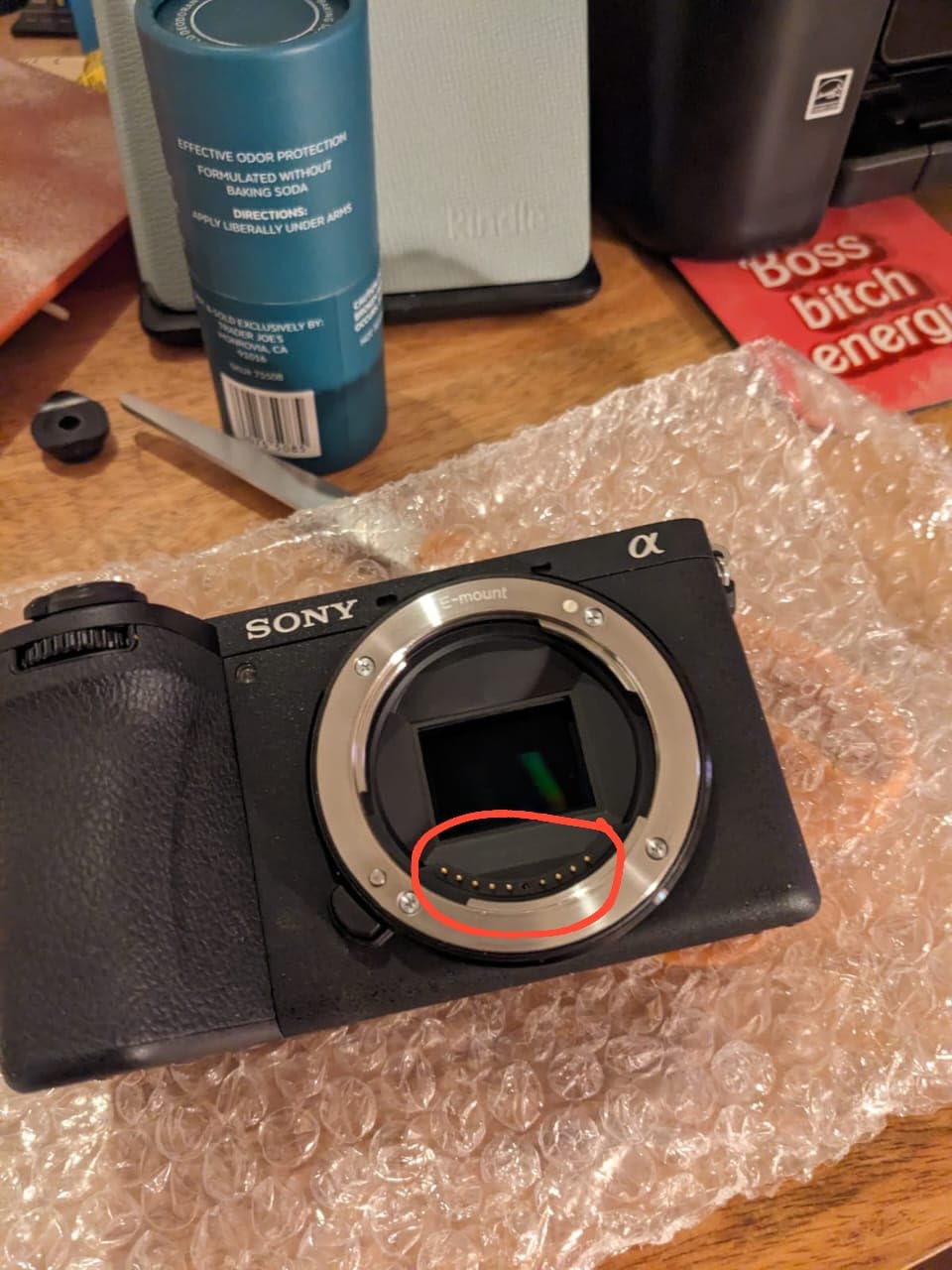
Five-axis sensor-shift stabilization means adapted lenses without stabilization are usable, which is a genuine advantage for a studio that has built up A-mount glass over the years. At 14.5 ounces the body is light enough to carry between stations.
The 1/8000 second top shutter speed gives you wide latitude when you are balancing strobe power against ambient gym light, which is a normal fight on a location day.

Where the a6700 earns its place?
If your hardest problem is focus on moving children, this is the body. The AI recognition combined with 11 fps burst gives you a wide window to catch the frame you want rather than a single attempt per pose. Image quality at 26MP leaves headroom for a lab to crop for framing without losing detail.
Owners also appreciate that the video is genuinely class-leading, with 4K/60p 6K oversampled 10-bit and 4K at 120p, which is useful for family specials packages.
Where the a6700 falls short?
The single card slot is the deal-breaker for a paid operation. Every owner review set mentions it as a limitation for professional paid work, and we agree. It can overheat during extended 4K/60p recording in hot conditions, which matters if you are filming in a non-air-conditioned gym through an afternoon.
The menu system is complex and takes time to learn. Owners flag it as the second most common complaint after the card slot, and on a day when you touch these settings constantly, that is worth weighing against the Canon and Nikon options here.
We earn a commission, at no additional cost to you. CERTAIN CONTENT THAT APPEARS ON THIS SITE COMES FROM AMAZON. THIS CONTENT IS PROVIDED 'AS IS' AND IS SUBJECT TO CHANGE OR REMOVAL AT ANY TIME.
5. Sony Alpha 7 IV – Best Value Full-Frame Body for a Working Studio
Sony Alpha 7 IV Full-frame Mirrorless Interchangeable Lens Camera
★★★★★★★★★★33MP full-frame sensor
759-point hybrid AF with Eye AF
10 fps
Dual CFexpress Type A and SD slots
- Dual CFexpress Type A and SD card slots for redundancy
- 33MP sensor with excellent dynamic range and 14-bit RAW
- 759-point AF with Real-time Eye AF
- 5-axis stabilization supports lenses without IS
- Menu system and button layout are not as intuitive as rivals
- Heavier and bulkier than APS-C bodies
- Bundled package is body only and needs a separate lens
The Alpha 7 IV is the body we would put on two carts and call it solved. It is one of only three picks in this lineup with genuine dual card slots, one CFexpress Type A and one SD UHS-II, which means you can write a second copy of every frame while the first card is still writing.
That single spec changes the risk profile of a paid day. If one card fails at hour six, you have the session on the other. For a business that delivers several hundred finished images per appointment, that redundancy is worth more than any menu feature on this list.

The 33MP full-frame Exmor R sensor with the BIONZ XR engine gives excellent dynamic range and 14-bit RAW output. Owners rate this body consistently as one of the most complete all-rounders available, and the eye autofocus is dependable on portraits in owner reports.
At 10 fps you have a usable burst for multi-frame poses, and the 5-axis SteadyShot stabilization means stabilized lenses are optional rather than mandatory. Video is 4K 60p 10-bit 4:2:2 full pixel readout plus 7K oversampled 4K 30p, which covers short specials clips without a second body.

Why studios pick the Alpha 7 IV?
Card redundancy plus a full-frame sensor plus a reliable eye AF is the volume studio checklist, and this body satisfies all three without moving to the very top of the range. The fast hybrid AF across 693 selectable points with Real-time Eye AF keeps a moving subject tracked through a pose change.
Reviewers note the bulk and the ergonomics as the main drawbacks. If you are setting up two stations in a converted gym, the weight is manageable, but it is a larger body to carry between them.
Where the Alpha 7 IV falls short?
The menu system and button layout are not as intuitive as Canon and Nikon rivals, and photographers consistently rank menu speed as a real factor on a paid appointment. Reviewers also note it is not weather-sealed to the same degree as some pro-grade bodies, which is worth knowing if your gym nights are humid.
The E-mount lens ecosystem carries a premium compared with older EF glass used through an adapter, so budget for glass before you budget for another body.
We earn a commission, at no additional cost to you. CERTAIN CONTENT THAT APPEARS ON THIS SITE COMES FROM AMAZON. THIS CONTENT IS PROVIDED 'AS IS' AND IS SUBJECT TO CHANGE OR REMOVAL AT ANY TIME.
6. Canon EOS 90D with EF-S 18-135mm IS USM – Best for Studios With Existing Canon EF Glass
Canon DSLR Camera [EOS 90D] with 18-135 is USM Lens | Built-in Wi-Fi, Bluetooth, DIGIC 8 Image Processor, 4K Video, Dual Pixel CMOS AF, and 3.0 Inch Vari-Angle Touch LCD Screen, Black
★★★★★★★★★★32.5MP APS-C sensor
10 fps continuous shooting
45-point cross-type AF
Optical viewfinder
- Every existing EF lens works without an adapter
- 32.5MP sensor with crop latitude
- Optical viewfinder shows a real-time exposure display
- Vari-angle touchscreen for low-angle framing
- Single SD card slot
- No built-in image stabilization
- 45-point viewfinder AF is dated next to modern subject detection
If you already own Canon EF or EF-S glass, the 90D is the lowest-friction path into a professional body and the reasoning is simple. Every lens and accessory you have works with no adapter, no autofocus converter and no behaviour change, which means you can run a paid day with the equipment already in your bag.
The 32.5MP APS-C sensor is the highest resolution in the lineup outside the two stacked-sensor flagships, and owners consistently report crop latitude in their reviews. At up to 10 fps continuous shooting, the 90D also beats both full-frame entry bodies here on burst.
![Canon DSLR Camera [EOS 90D] with 18-135 is USM Lens | Built-in Wi-Fi, Bluetooth, DIGIC 8 Image Processor, 4K Video, Dual Pixel CMOS AF, and 3.0 Inch Vari-Angle Touch LCD Screen, Black customer photo 1](https://bansocialism.com/wp-content/uploads/2026/09/B07WHV3HXL_customer_1.jpg)
The optical viewfinder at 0.95x magnification with a bright real-time exposure display is underrated in studio work. It never blacks out between shots, it does not eat battery the way a live viewfinder does across a ten-hour day, and it gives you a continuous view of a flash-lit set while your subject is being repositioned.
Dual Pixel CMOS AF in live view is fast and dependable, and the fully articulating vari-angle touchscreen makes low-angle and high-angle framing straightforward without contorting.
![Canon DSLR Camera [EOS 90D] with 18-135 is USM Lens | Built-in Wi-Fi, Bluetooth, DIGIC 8 Image Processor, 4K Video, Dual Pixel CMOS AF, and 3.0 Inch Vari-Angle Touch LCD Screen, Black customer photo 2](https://bansocialism.com/wp-content/uploads/2026/09/B07WHV3HXL_customer_2.jpg)
Where the 90D wins?
Lens economics and endurance. A photographer who has four or five EF lenses pays nothing extra to bring them into a professional body, and the optical viewfinder with no battery penalty is a genuine advantage during a long day of continuous flash triggering.
Owners call it a capable, reliable workhorse and several note professional-level results at a lower cost than full frame. Reviewers with long ownership histories report the body still serving them reliably, which is the endurance signal that matters most here.
Where the 90D falls short?
The single SD card slot is the same limitation we flagged on the a6400 and a6700, and for a paid studio it is the first thing we would want changed. The 45-point viewfinder AF system is dated next to modern subject detection, so a child who moves during a burst is less reliably tracked than on a mirrorless body with deep-learning recognition.
There is no built-in image stabilization, so you depend on stabilized lenses throughout. It is also bulkier and heavier than comparable mirrorless bodies, which adds up when you are carrying gear between stations.
We earn a commission, at no additional cost to you. CERTAIN CONTENT THAT APPEARS ON THIS SITE COMES FROM AMAZON. THIS CONTENT IS PROVIDED 'AS IS' AND IS SUBJECT TO CHANGE OR REMOVAL AT ANY TIME.
7. Nikon Z6 III – Best for Gyms, Auditoriums and Very Low Light
Nikon Z6 III, Black | Full-Frame Mirrorless Stills/Video Camera with 6K/60p Internal RAW Recording | USA Model
★★★★★★★★★★24.5MP full-frame sensor
4000-nit 5760k-dot EVF
ISO 100-64000
AF to -10EV
- 4000-nit 5760k-dot viewfinder with 120 fps refresh is easy to read in a dark gym
- ISO range and low-light performance hold up well
- Fast shutter with essentially no rolling shutter
- Compact sealed body with in-body stabilization
- 24.5MP limits large-print cropping
- Menu system and button layout take time to master
- Autofocus can struggle at night in difficult lighting
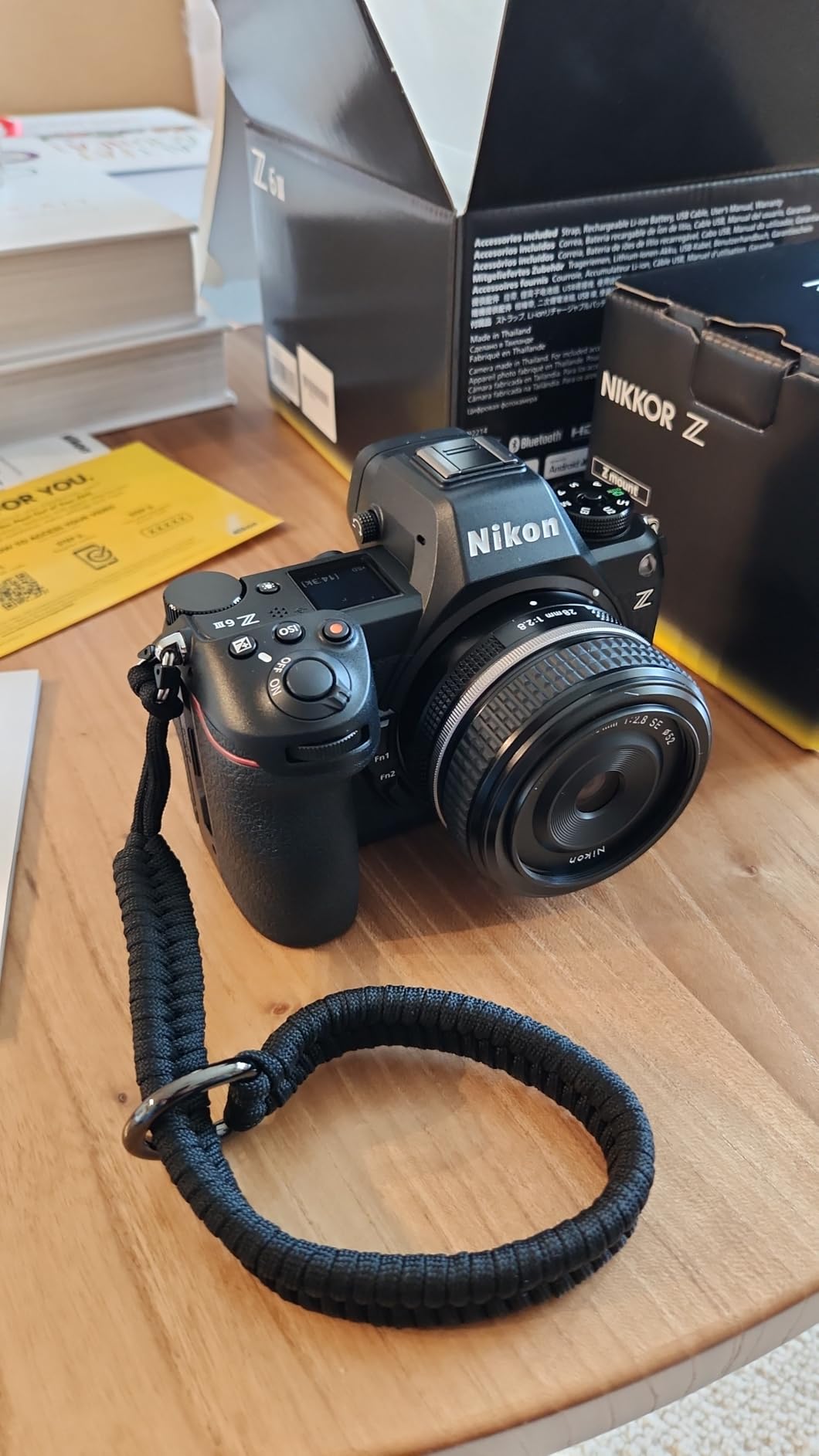
The Z6 III solves a specific volume-studio problem: a north-facing gym with no windows and a mixed fluorescent ceiling. Its 4000-nit, 5760k-dot viewfinder at a 120 fps refresh is the brightest in this group, and in a dark room the difference between a viewfinder you can read and one you are guessing at is the difference between getting the exposure right the first time and doing a retake.
The ISO range of 100 to 64000 expands to an ISO 204800 equivalent, and AF detection reaches down to -10EV with deep-learning multi-subject recognition that can detect human faces as small as about 3 percent of the frame. In practical terms, that means it can find a face in a dim auditorium where smaller sensors would be hunting.
The 1/16000 second top shutter speed and near-absent rolling shutter make it good for movement, and the partially-stacked sensor also handles the 6K/60p internal N-RAW and 4K/120p recording for studios that sell short specials video alongside stills.
Nikon also builds portrait-specific colour tools here through custom Picture Controls created in NX Studio and uploaded to the body, which helps you match a look across sessions.
Where the Z6 III earns its badge?
Low light and live review. If your volume work is at an evening basketball game, an auditorium ceremony or a darkened stage, the viewfinder brightness and the low-light AF are features you will use every single time. The in-body stabilization also lets you use older non-stabilized glass.
Reviewers frequently describe it as the best-value hybrid at this level, citing the viewfinder, low-light results and video formats as the reasons.
Where the Z6 III falls short?
At 24.5MP you have the least stills resolution of the full-frame bodies here, which limits cropping latitude for very large prints. Reviewers also report autofocus can be finicky at night in difficult lighting, which is an odd limitation on a camera whose main argument is low light.
Nikon’s menu system and dial layout take time to master, and the body is compact enough that some users want a battery grip. No charger is included in the box, so budget for one.
We earn a commission, at no additional cost to you. CERTAIN CONTENT THAT APPEARS ON THIS SITE COMES FROM AMAZON. THIS CONTENT IS PROVIDED 'AS IS' AND IS SUBJECT TO CHANGE OR REMOVAL AT ANY TIME.
8. Canon EOS R5 – Top Rated Body for Detail-Heavy Studio Work
Canon EOS R5 Mirrorless Camera (Body Only)
★★★★★★★★★★45MP stacked full-frame sensor
12 fps mechanical and 20 fps electronic
1053 AF points
8K RAW video
- 45MP stacked sensor with outstanding detail and flexible files
- 1053 AF points covering about 100 percent of the frame
- Dual CFexpress Type B and SD card slots
- 5-axis stabilization makes adapted EF glass usable
- 8K RAW and 4K up to 120p internal
- Battery life is shorter than older DSLRs and needs spares
- CFexpress Type B card costs are high
- Electronic shutter can produce a stop-motion effect in fast movement
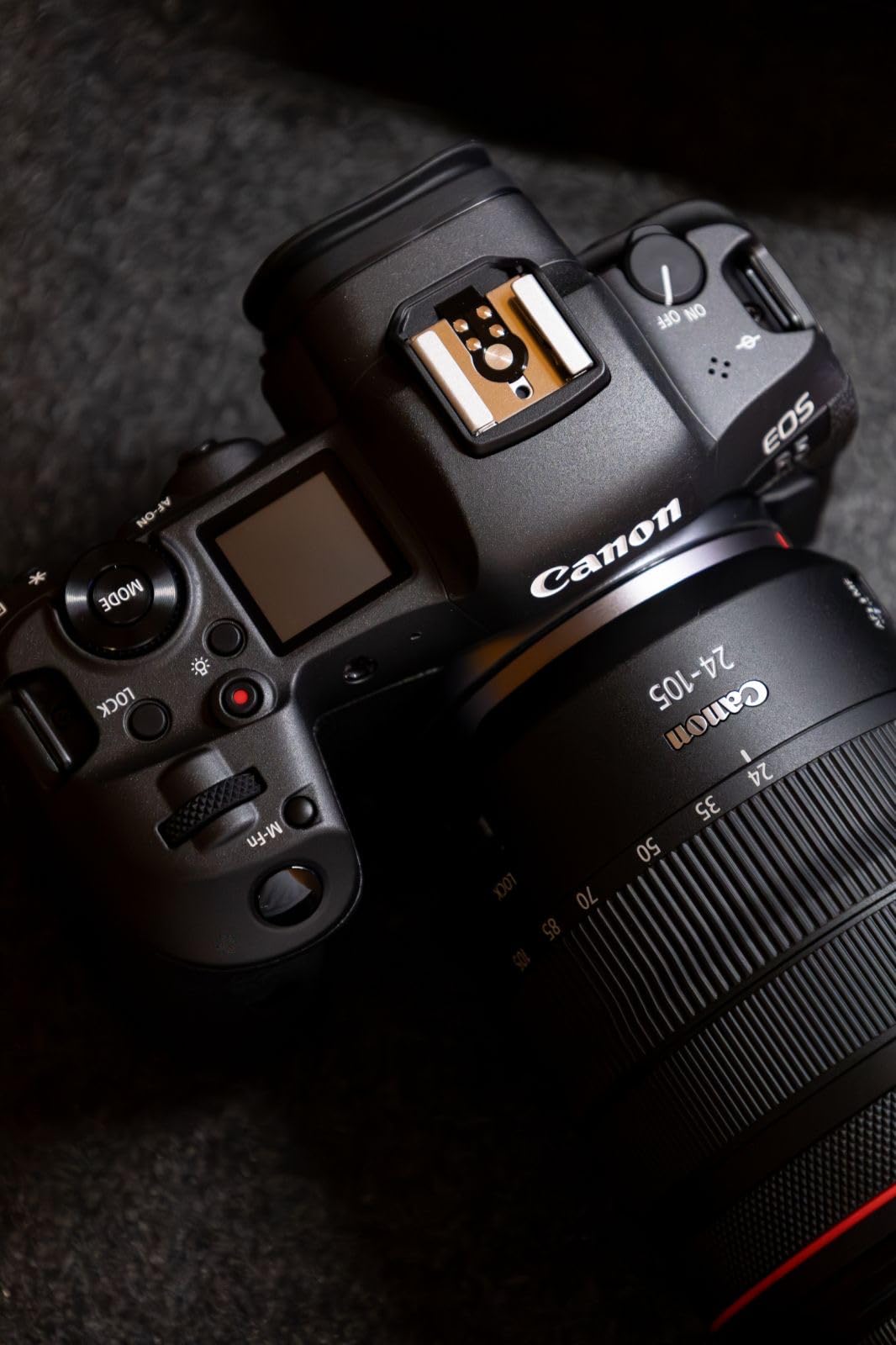
The R5 is the deepest feature set in this lineup and the body we would choose for a studio that sells large-format packages. The 45-megapixel stacked back-illuminated full-frame sensor delivers outstanding detail and flexible files, and Dual Pixel CMOS AF covers roughly 100 percent of the frame with 1,053 AF points.
That coverage matters on a picture day. When a child leans out of the frame area you framed for a standard pose, an AF system that covers almost the entire sensor keeps tracking instead of hunting for the edge of its zone. Deep-learning subject tracking for people, plus Eye Control AF, adds a layer of control that is hard to match at this level.
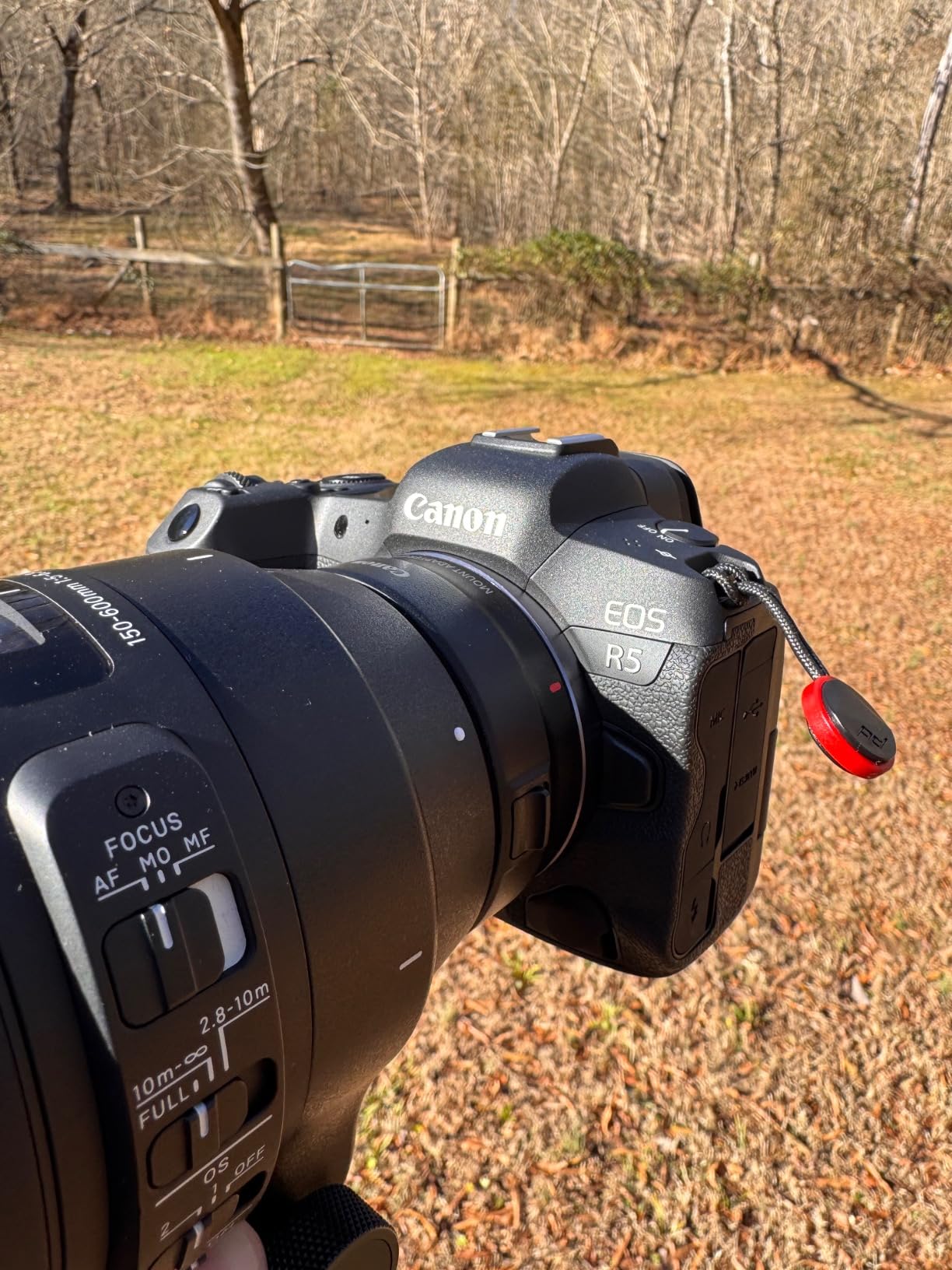
Throughput is the other argument. Up to 12 fps with the mechanical shutter and up to 20 fps electronic gives you a wide burst window per pose, and dual card slots including high-speed CFexpress Type B mean you can mirror every frame while writing. The 5-axis in-body stabilization also makes adapted EF lenses without stabilization usable handheld, which preserves an existing lens investment.
Reviewers treat it as one of the best all-round hybrid bodies available, praising Canon colour science alongside the sensor and autofocus. Early overheating concerns are widely reported as overblown with current firmware.
Why the R5 suits a high-value studio?
If your packages include large prints, wall portraits or heavy retakes that need cropping headroom, 45MP is the differentiator in this lineup. The file flexibility also means one capture can feed several output sizes, which reduces the number of times a family has to sit back down.
For multi-body redundancy, this is an easy pick: the R5 is the body we would duplicate across two stations, so colour and rendering stay identical between them.
Where the R5 falls short?
Battery drain is the dominant complaint in owner reviews, shorter than older DSLRs, which means you plan spares for a long day. CFexpress Type B card costs are high, and for a stills-only studio that spending is hard to justify unless you use the burst rate heavily.
The electronic shutter can produce a stop-motion effect in fast movement, so for active specials you may need to decide which mode you trust before the day starts. It is also heavier than APS-C alternatives and the rear control wheel is small.
We earn a commission, at no additional cost to you. CERTAIN CONTENT THAT APPEARS ON THIS SITE COMES FROM AMAZON. THIS CONTENT IS PROVIDED 'AS IS' AND IS SUBJECT TO CHANGE OR REMOVAL AT ANY TIME.
9. Nikon Z 8 – Best for Flagship Subject Tracking and Built-In Portrait Tools
Nikon Z 8 | Professional Full-Frame mirrorless Stills/Video Hybrid Camera
★★★★★★★★★★45.7MP stacked sensor
20 fps RAW burst
AF to -9 EV
Skin Softening and Portrait Balance
- Flagship deep-learning autofocus with 3D tracking
- 45.7MP stacked sensor holds up well when cropping
- Silent shutter with adjustable artificial shutter volume
- Built-in Skin Softening and Portrait Impression Balance
- High battery consumption means multiple batteries per day
- Only one CFexpress Type B slot with UHS-II SD as the second
- No mechanical shutter and no built-in flash
The Z8 brings flagship-level autofocus and video into a body closer to a standard professional size. The 45.7MP stacked sensor with EXPEED 7 handles 20, 30, 60 and 120 fps continuous shooting options, and deep-learning autofocus detects down to -9EV with subject detection and 3D tracking across nine subject types.
For portrait work specifically, Nikon has built tools into the body rather than leaving them to post-processing. Skin Softening, Portrait Impression Balance and an improved white balance mode are aimed squarely at the kind of colour consistency a volume studio needs when lighting conditions change between a morning gym and an afternoon hall.
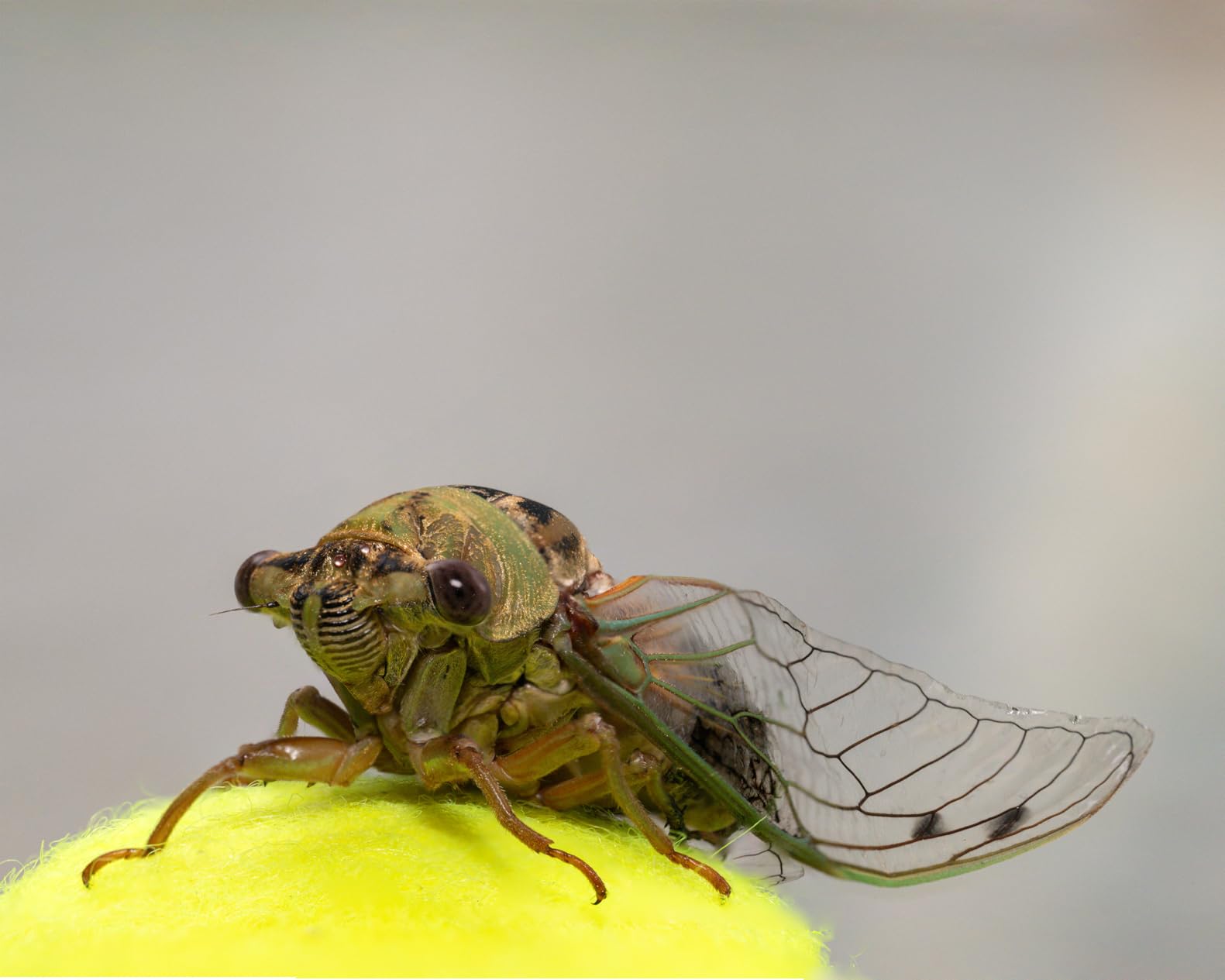
The silent shutter has an adjustable artificial shutter volume, which is a genuinely useful volume-studio feature. You can shoot a live review next to a seated parent without the mechanical noise, and you can reduce the artificial sound for ceremonies where applause would mask it anyway.
Video is flagship class, with internal 8K/60p, 4K/120p, plus internal 12-bit N-RAW and ProRes RAW. If your studio sells graduation or specials video, that covers it without a second body.
Where the Z8 works hardest?
3D tracking and deep-learning recognition are the strongest in this group for a subject who will not hold a pose. The built-in portrait colour tools reduce the retouching load at the end of a long day, which for a volume operator is a time saving rather than a creative one.
The 45.7MP sensor also holds up when cropping, which matters if your lab asks for a tighter framing from the same capture.
Where the Z8 falls short?
High battery consumption means carrying multiple batteries for a full day, which is the most repeated complaint among owners. Only one slot is CFexpress Type B, with the second being UHS-II SD, so your fastest card cannot be mirrored to an equally fast second card.
The smaller body dissipates heat less effectively, giving shorter recording times, and the extensive menu options require real study. There is no mechanical shutter and no built-in flash, so your lighting plan cannot lean on either.
We earn a commission, at no additional cost to you. CERTAIN CONTENT THAT APPEARS ON THIS SITE COMES FROM AMAZON. THIS CONTENT IS PROVIDED 'AS IS' AND IS SUBJECT TO CHANGE OR REMOVAL AT ANY TIME.
How Many Bodies a Volume Studio Actually Needs?
A single body with no backup is the most common mistake we see. On a paid day, a camera failure is not an inconvenience, it is a cancelled family and a reputation problem. One spare body of the same model is the minimum, and for anything above that, matching bodies matter more than better bodies.
One station, one body plus one spare. Run the primary body all day and keep the identical spare in the same bag, charged, with a card in it. Identical matters because a backup with different rendering means your delivery folder has two looks in it, and parents do compare.
Two stations, two matched primaries plus one spare. Two photographers working parallel lines need bodies that behave identically, so the menu settings, the picture control or profile, and the card configuration should match. Two Alpha 7 IV bodies, or two R5 bodies, achieve this cleanly. Mixing an APS-C body and a full-frame body on the same day produces two different looks and two different crop factors on the same pose.
Three stations, three matched primaries plus one spare. At three stations you are running a production line, and the constraint changes from autofocus to card management and handoff. Each station writes to its own cards, and at the end of each rotation the cards change over on a rhythm. If you are also tethering, each station needs its own tether cable and the whole rig needs to be tested as a system before the first family sits down.
Matching bodies also simplify your colour workflow. When two photographers use the same model with the same profile, retakes taken at station two match frames already shot at station one, and the lab receives one consistent look across the whole day.
Station count is also a scheduling decision, not just a hardware one. A busy fall season that includes team gear runs alongside the portrait book, whether that is football arm sleeves for a school program or a fall wood baseball bat order, and every extra station you add is a station that has to be staffed, tethered, backed up and torn down before the lights go off.
Buying Guide for School and Volume Portrait Studios
The bodies above were picked against the criteria in this section. If you are choosing something not on this list, or matching a used purchase to a new one, these are the questions that decide it.
Flash and trigger compatibility is the first filter
Off-camera light is non-negotiable in portrait work, and the compatibility question is about your existing equipment rather than the camera. Ask specifically whether the body works with the radio triggers you already own, and whether a hot-shoe mounted trigger on this body passes the centre pin correctly.
This is the most repeated real-world complaint we found in photography forums: mirrorless bodies and older triggers that fail to fire reliably together, and hot-shoe-to-PC adapters that behave unpredictably. The fix is rarely buying a new body. It is testing the exact combination you intend to use on a real day, with your real strobes, before you rely on it.
Strobe versus continuous light also changes your shutter speed needs. Strobe work usually runs at the camera’s native flash sync speed, while continuous light lets you run fast shutter speeds and freeze movement. Both are legitimate, and the body choice barely changes, but your decision should be made before you buy lenses.
Decide on tethered or untethered before you buy
Tethered shooting gives you live review, immediate parent approval and the ability to judge flash output on a large screen. It also adds cable management, a laptop or a dedicated monitor, and a failure point. If your studio sells packages that reward a parent choosing between two looks, tethering pays for itself in recovered appointments.
Untethered operation is faster per frame and simpler to move between stations, at the cost of no live review. Many volume operations run a hybrid, tethering during individual and family portraits and going untethered for specials and gym work.
Unattached or lightly attached coverage is where shutter speed and low-light autofocus start to matter more than card redundancy. Gym and field specials often sit in the same calendar as portrait packages, whether a family is ordering a new BBCOR baseball bat for the season or a fastpitch softball bat for a tournament weekend, and the body that can cover both a seated portrait and a moving athlete is the one that keeps you off a second camera.
Throughput: burst rate, buffer and card slots together
Burst rate matters when a child is moving and you want options. Buffer depth matters when you want to use them. Card slots matter when a day goes wrong. All three together define how smoothly an afternoon flows.
Two card slots are the priority. Within this lineup, the Alpha 7 IV, the EOS R5 and the Z8 all carry dual slots, while the a6400, a6700, Z50 II, EOS RP and EOS 90D have one. A single slot is workable, but it is the specification we would push hardest on before buying a body for paid work.
Card type follows from that. CFexpress Type A on the Alpha 7 IV gives fast write speeds on the primary slot, while the R5’s CFexpress Type B is faster still at a higher card cost. For a stills-only studio, the extra cost is hard to justify unless the burst rate is in use daily.
Sensor size and how large the prints really are
APS-C bodies are entirely capable for standard lab packages. The 32.5MP APS-C sensor in the EOS 90D and the 26MP sensors in the a6400 and a6700 all produce more than enough for 8×10 and 5×7 prints, and for most parents’ packages.
Full frame earns its place when the package includes large wall portraits, when the lab routinely crops tighter, or when you are shooting in low light and want the ISO headroom. Resolution beyond about 26MP mainly buys you cropping flexibility rather than visible detail at print size.
Battery math for a long day
Count batteries per body, not per camera model. A ten-hour day with continuous live view, a bright viewfinder and frequent burst will drain a battery far faster than a spec sheet suggests, and the mirrorless bodies here are noticeably more demanding than the DSLRs in this group.
Budget for third-party spares rather than a single proprietary pack, and keep a charging station at the station rather than in the bag. Reviewers across this lineup report battery life as the most common long-term complaint on mirrorless bodies.
Menus, card handling and the pace of an appointment
This is the criterion students never think about and paid operators feel every hour. On a picture day you change settings constantly, so a buried menu is a real cost. Canon and Nikon interfaces are widely described as quicker to drive under time pressure than Sony and Fujifilm menus, and that difference shows up most on the busiest days.
Also check how the body handles a full card mid-session. Swapping cards on a busy station should not require navigating a menu, and a card slot you can reach without taking the camera off the tripod or light stand matters.
DSLR or mirrorless for portraits in a volume studio
Mirrorless wins on autofocus, subject detection and live exposure preview. Deep-learning tracking that finds a face in a dim gym is a capability no DSLR in this lineup offers, and the electronic shutter gives you near-silent capture for live review next to a seated family.
DSLR wins on endurance, optical viewfinders and cost per body. An optical viewfinder never blacks out and does not run a live sensor all day, and the EOS 90D works with every EF lens you already own. If your lenses are paid for and your appointments are seated and predictable, the DSLR route is defensible.
Both are still relevant in 2026. What has changed is that the gap is now narrower on stills quality and wider on autofocus. Photographers moving from DSLR to mirrorless report the driver was autofocus and eye detection rather than image quality.
85mm or 70-200mm for portraits
A single 85mm prime is the fastest way to make a studio’s work look consistent. It gives the working distance that flatters faces, it compresses features in a way groups benefit from, and it is one lens to carry between stations.
A 70-200mm gives you reach for gym and auditorium specials where you cannot get close, but it is heavier and slower to reposition. For volume work, the practical answer is a fast prime on the studio station and a zoom in the bag for location work.
For the school setting, working distance also matters because a group of eight siblings needs a different framing than an individual portrait. A 50mm at f/1.8 is a common addition for smaller groups when you need a wider field of view than 85mm allows.
Used, refurbished or new
Used pro bodies are attractive on cost, and owners report long-term reliability from older DSLRs still in service after many years, which supports buying for durability rather than for the newest spec sheet. The risk is shutter count, warranty status and battery condition, and none of those are visible before you buy.
Refurbished units from a dealer with a warranty are the safer version of the same idea. New bodies make sense when you want the warranty to cover a body you will depend on during a contracted season. If you are matching bodies across stations, buy them the same way so their behaviour matches.
A note on scheduling and pace
The body is one part of the day, but the clock is the real constraint. Keeping appointments on time, moving families through the station and giving each one a considered look without rushing is the operational skill that separates a profitable day from a frustrating one. Photographers who track their per-appointment timing find the same thing we have: throughput decisions, like burst rate and tethering, are really pacing decisions.
The best metronomes come up in our scheduling notes for a different reason, but if you are timing appointment lengths to a metronome click during a busy afternoon, the principle is the same as anything else on this page. Measure before you decide.
Frequently Asked Questions
What cameras do professional portrait photographers use?
Professional portrait photographers mostly use full-frame mirrorless bodies with reliable subject-detection autofocus, dual card slots and a hot shoe for off-camera flash triggering. In volume portrait work the body is chosen for throughput and reliability rather than resolution alone, since a focus miss or a stalled buffer costs a retake on a paid day.
What camera do school photographers use?
School photographers overwhelmingly use Canon, Nikon and Sony mirrorless or DSLR bodies with a fast prime lens and off-camera flash. The most common professional choices in this class are the Canon EOS R5 and Sony Alpha 7 IV for full-frame work, with APS-C bodies such as the Sony Alpha a6400 and Canon EOS 90D serving studios that shoot many appointments a day.
What is the best camera for school photography?
For a paid school picture day, the best camera is one with reliable off-camera flash triggering, two card slots and a buffer that survives a burst. The Canon EOS R5 and Sony Alpha 7 IV meet those requirements; the Sony Alpha a6400 is the value pick when budget is tighter and you pair it with a second body for redundancy.
What is the best camera for portrait photography?
The Canon EOS R5 is the strongest all-round choice here, with a 45MP stacked sensor, 1,053 AF points covering roughly 100 percent of the frame and dual CFexpress Type B and SD card slots. The Sony Alpha 7 IV delivers the same card redundancy and dependable eye autofocus at a lower tier, and the Sony Alpha a6400 covers the need on an APS-C budget.
Is DSLR or mirrorless better for portraits?
Mirrorless wins on autofocus, subject detection and live exposure preview, which matters when photographing children who will not hold still. A DSLR wins on endurance, optical viewfinders and cost per body, and the Canon EOS 90D works with every existing EF lens. If your lenses are paid for and your appointments are seated and predictable, the DSLR route is still defensible in 2026.
Is 85mm or 70-200mm better for portraits?
An 85mm prime gives the working distance and compression that flatter faces and keeps a studio’s look consistent across a day. A 70-200mm adds reach for gym and auditorium specials where you cannot get close, at the cost of weight and slower repositioning. Volume studios commonly run a fast prime on the station and carry a zoom for location work.
Can I use a mirrorless camera with studio strobes?
Yes, mirrorless bodies work with studio strobes through a hot-shoe mounted trigger or a radio trigger, and every camera in this roundup has a standard hot shoe. The common problem is not the camera but compatibility between the body and older radio triggers, so test your exact trigger and body combination before a paying day.
Do I need two camera bodies for a portrait studio?
A single body with no backup is the biggest risk in a paid operation, because a failure means a cancelled family. One identical spare body is the minimum, and matching bodies matter more than better bodies, since two different models produce two different looks in the same delivery folder.
Final Verdict: Which Camera Keeps Your Picture Day Running?
After working through nine bodies against paid-studio criteria, the Sony Alpha a6400 is our Editor’s Choice for a working volume studio. Its Real-time Eye AF holds on moving children, it runs 11 fps, and at 10.3 ounces it is the easiest body here to move between stations. Pair it with an identical second body and you have covered the card-slot weakness with redundancy rather than cost.
The Sony Alpha 7 IV is our Best Value pick and the body we would buy first for most studios, because dual CFexpress Type A and SD slots give card redundancy at a mid tier. The Canon EOS R5 takes the Top Rated slot for large-format packages and heavy cropping, with 1,053 AF points covering roughly 100 percent of the frame and 20 fps electronic bursts.
For a studio already loaded with Canon EF glass, the EOS 90D avoids an entire re-buy. For dim gyms and auditoriums, the Nikon Z6 III’s 4000-nit viewfinder is the practical advantage that no spec sheet ranking captures. And for a photographer starting out, the Nikon Z50 II two-lens kit gets two stabilized lenses and a Picture Control button into the bag immediately.
Whatever you choose, buy the trigger before you buy the body, keep one identical spare, and test the combination on a real day before a paying one. That is where the best cameras for professional school and volume portrait studios stop being a spec sheet and start being a business.