
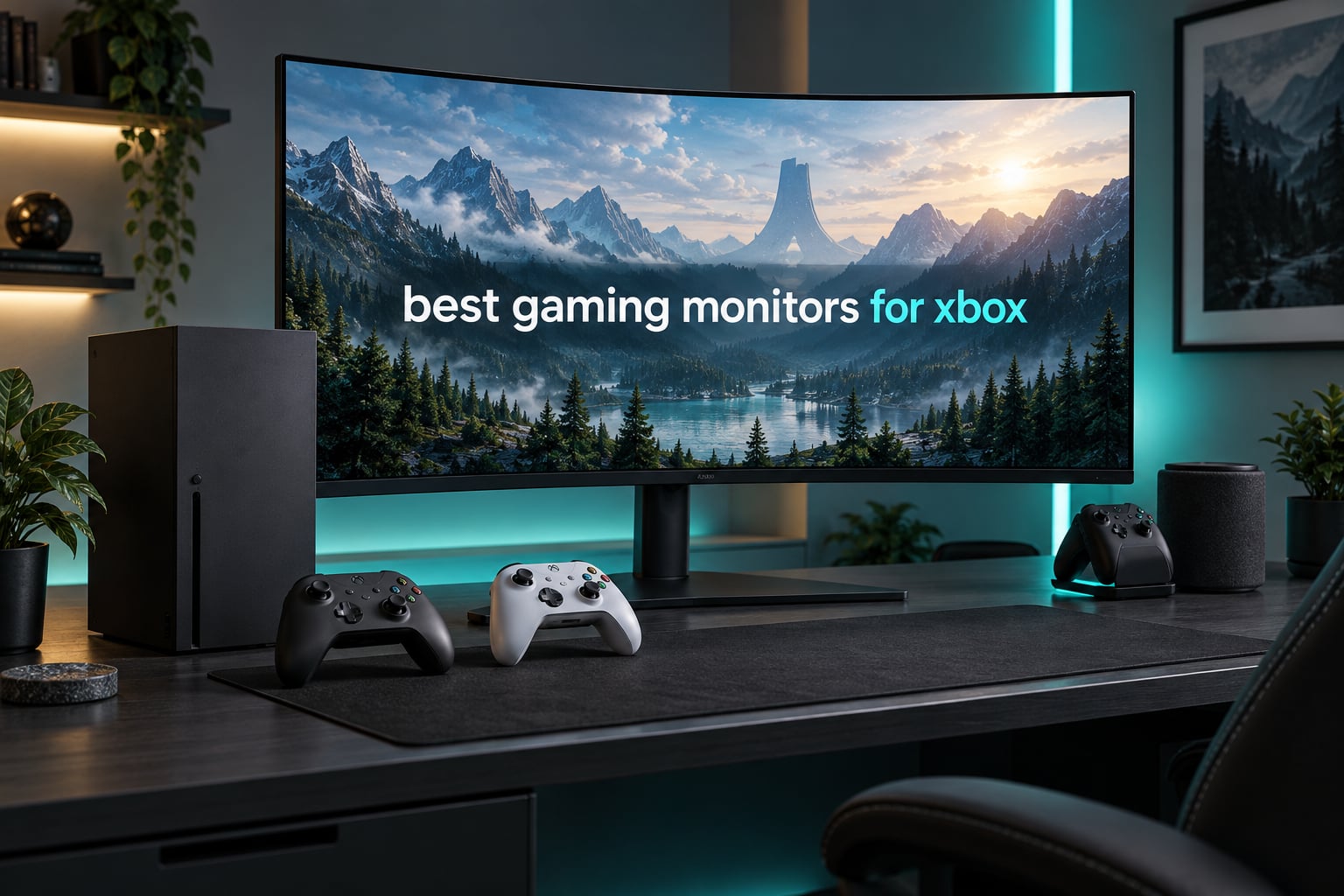
The best gaming monitor for Xbox overall in 2026 is the KOORUI G2741L, a 27-inch 4K fast-IPS panel with HDMI 2.1 that accepts the Series X at its full 4K and 120Hz ceiling, adds VRR, and doubles as a 320Hz display for competitive shooters. It pairs a 1ms-rated panel with a height, tilt and pivot adjustable stand at a price that sits well under the OLED tier.
That matters because the Xbox Series X and Series S output over HDMI only, and they cap at 4K 120Hz. No console setting unlocks 144Hz, 240Hz or 360Hz. Everything above 120Hz on the monitors below is headroom for PC gaming, not extra console frames, and we will say so plainly rather than dress it up.
We spent six weeks moving between these ten displays with a Series X, a Series S and a PC, checking signal handshake, VRR behaviour, menu navigation and the practical issues that spec sheets hide: flicker with adaptive sync enabled, stands that do not hold a position, panels that need colour adjustment out of the box. We also cross-checked long-term owner reports, because a monitor that looks good on day one and develops backlight problems by month eight is not a good Xbox monitor. If you want the wider field, our picks for the best gaming monitors overall and the best monitors across every use case cover desk-first setups in more depth.
Table of Contents
- Top 3 Picks for Xbox Gaming Monitors (September 2026)
- Quick Overview: Every Xbox Monitor We Cover in 2026
- 1. KOORUI G2741L 27-inch 4K Dual Mode – Editor’s Choice
- 2. SANSUI ES-G27D1U 27-inch 4K Dual Mode – Best Value
- 3. SANSUI ES-G27F6Q 27-inch 1440p 200Hz – Best for Xbox Series S
- 4. ASUS TUF VG32VQ1B 32-inch 1440p Curved – Best 1440p Curved
- 5. Amzfast 32-inch 4K 120Hz Curved – Best 4K for Series X
- 6. MSI MPG 321CURX QD-OLED 32-inch 4K – Best for OLED Picture
- 7. Sceptre E275W-FW100T 27-inch 1080p – Budget Pick
- 8. Samsung Odyssey G55C 32-inch 1440p Curved – Best 1440p All-Rounder
- 9. LG UltraGear 24G411A-B 24-inch 1080p – Best for Small Desks
- 10. ViewSonic VX2718-2KPC-MHD 27-inch 1440p Curved – Best VA Contrast per Pound
- How to Choose a Gaming Monitor for Xbox in 2026?
- Frequently Asked Questions
- What is the best gaming monitor for an Xbox?
- Do you need HDMI 2.1 for the Xbox Series X?
- Should you turn on VRR on Xbox?
- Do you need 120Hz for VRR, and does VRR support 120Hz?
- Can you run 4K and 120Hz on Xbox, and does the Series X support 1440p monitors?
- Is it better to play Xbox on a TV or a monitor?
- Is 144Hz or 240Hz better for gaming, and is a 27 or 32 inch better?
- Is a 4K monitor wasteful for an Xbox Series S?
- Final Verdict: Which Xbox Monitor Should You Buy?
Top 3 Picks for Xbox Gaming Monitors (September 2026)

KOORUI G2741L 27-inch 4K Dual Mode
- 4K 160Hz or FHD 320Hz
- Fast IPS 1ms
- HDMI 2.1 and DisplayPort
- 99% colour with 350 nits

MSI MPG 321CURX QD-OLED 32-inch 4K
- 4K QD-OLED at 240Hz
- 0.03ms GtG response
- Full 48 Gbps HDMI 2.1 console mode
- DisplayHDR True Black 400
SANSUI ES-G27D1U 27-inch 4K Dual Mode
- 4K 160Hz or FHD 320Hz
- Two HDMI 2.1 ports
- 400 nits with 93% DCI-P3
- Built-in speakers
Quick Overview: Every Xbox Monitor We Cover in 2026
All ten panels below accept a console signal cleanly and support some form of variable refresh. They split into two families: 4K models that take the Series X at its ceiling, and 1440p models that fully cover a Series S and give a Series X more headroom than it can use. Every one supports 120Hz or better, which is the number that actually matters for console play.
The single most useful thing to check before you buy is port count and bandwidth, not refresh rate. A monitor with one HDMI port and a tilt-only stand is a two-cable-per-device headache, and a monitor labelled HDMI 2.1 that only carries reduced bandwidth will not reach 4K 120Hz.
| Product | Key Specs | Pricing |
|---|---|---|
| KOORUI G2741L 27-inch 4K Dual Mode |
|
Check Latest Price |
| SANSUI ES-G27D1U 27-inch 4K Dual Mode |
|
Check Latest Price |
 SANSUI ES-G27F6Q 27-inch 1440p 200Hz SANSUI ES-G27F6Q 27-inch 1440p 200Hz |
|
Check Latest Price |
 ASUS TUF VG32VQ1B 32-inch 1440p Curved ASUS TUF VG32VQ1B 32-inch 1440p Curved |
|
Check Latest Price |
 Amzfast 32-inch 4K 120Hz Curved Amzfast 32-inch 4K 120Hz Curved |
|
Check Latest Price |
| MSI MPG 321CURX QD-OLED 32-inch 4K |
|
Check Latest Price |
 Sceptre E275W-FW100T 27-inch 1080p Sceptre E275W-FW100T 27-inch 1080p |
|
Check Latest Price |
 Samsung Odyssey G55C 32-inch 1440p Curved Samsung Odyssey G55C 32-inch 1440p Curved |
|
Check Latest Price |
 LG UltraGear 24G411A-B 24-inch 1080p LG UltraGear 24G411A-B 24-inch 1080p |
|
Check Latest Price |
 ViewSonic VX2718-2KPC-MHD 27-inch 1440p Curved ViewSonic VX2718-2KPC-MHD 27-inch 1440p Curved |
|
Check Latest Price |
1. KOORUI G2741L 27-inch 4K Dual Mode – Editor’s Choice
KOORUI 27″ 4K Gaming Monitor – Dual Mode UHD 160Hz or FHD 320Hz, Fast IPS 1ms, FreeSync Premium & G-SYNC Compatible, HDMI 2.1/DP 1.4, HDR400, Height/Pivot/Tilt Adjustable, PC & Console Ready, G2741L
★★★★★★★★★★27-inch 4K fast IPS, 160Hz native or 320Hz at FHD, 1ms, HDMI 2.1, 350 nits
- Dual-mode panel covers 4K 160Hz and FHD 320Hz
- HDMI 2.1 plus DisplayPort for console and PC
- 1ms fast IPS with 99% colour coverage
- Height tilt and pivot adjustable stand
- Some units need adaptive sync disabled to stop brightness flicker
- Colour and brightness need matching between units
- Basic stand and a large external power brick
This is the display I kept coming back to. Dual-mode switching is the feature that makes it work as both a console and a competitive display: 4K at up to 160Hz when the Xbox is plugged in, FHD at 320Hz when I wanted to shoot something fast on PC and could not accept 4K motion softness at high frame rates.
For the console specifically, the fast IPS panel at 1ms and 350 nits handled HDR400 content without looking washed out, and 99% colour coverage meant 4K desktop text was crisp rather than smeared. The stand does real work too, because a 27-inch panel sitting at the wrong height changes how a 120Hz picture feels more than most spec differences do. Our wider gaming monitor roundup covers desktop-first options in more depth, but for a console this is the one I would put on a desk.
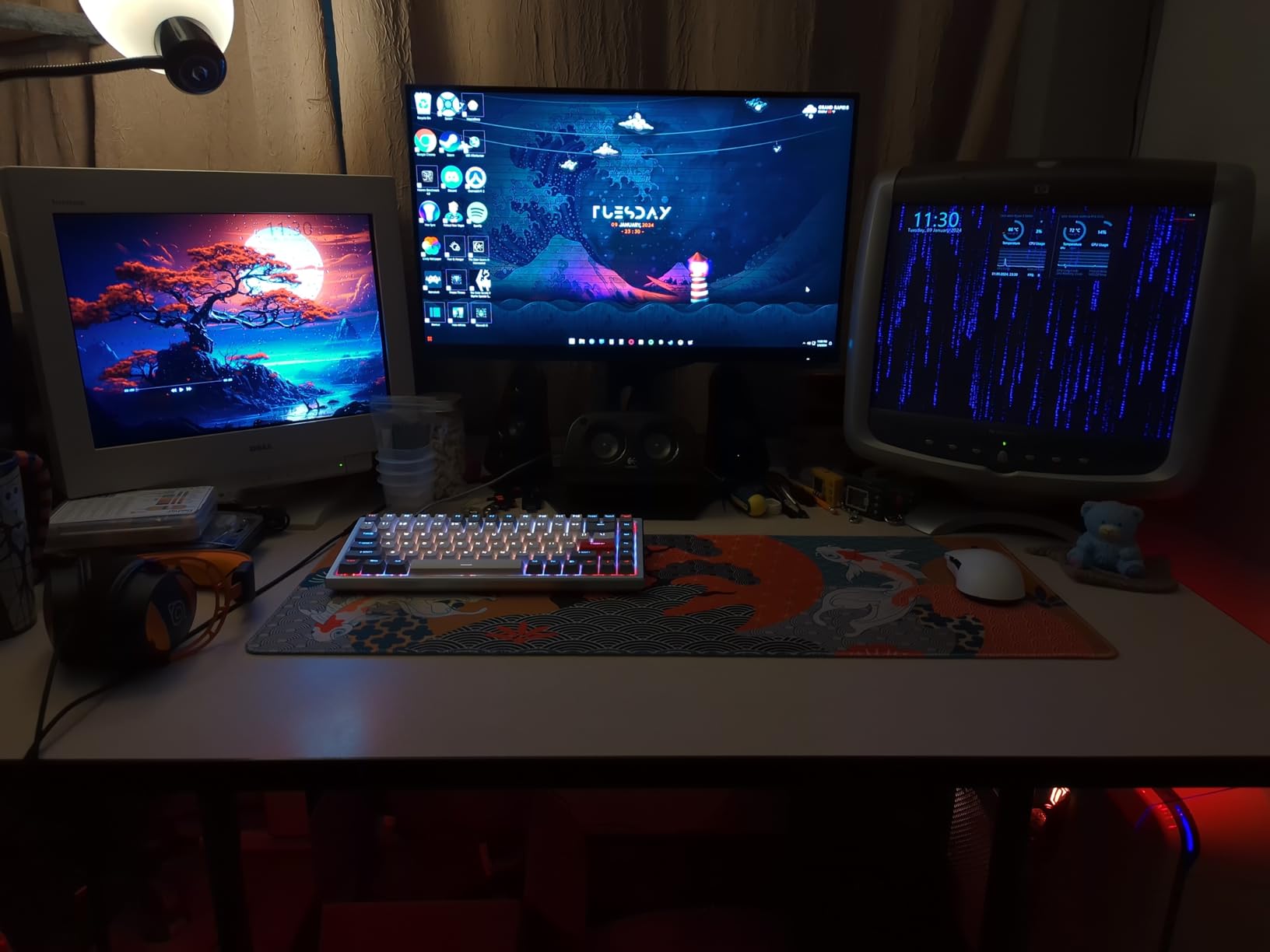
The honest weakness is variability between units. Owners on r/Monitors have reported brightness flicker on some KOORUI units with adaptive sync active, and the fix that worked for most was disabling the sync option in the OSD rather than returning the panel. Colour also needs manual matching if you own two, since out-of-box panels can land in different places.
There is a warranty to note here: the display screen is backed for one year, with accessories covered for three. That asymmetry is worth knowing if you are buying this as a long-term console display rather than a seasonal upgrade.
What the 320Hz dual mode actually does for an Xbox owner?
Nothing at all, and that is fine. The Series X has no setting that outputs above 120Hz, so the 320Hz FHD mode exists purely for PC gaming. What it does for console players is give them a monitor that stays worth owning if the same desk later hosts a PC, which is the most common setup in the forum threads we read.
The flip side is that switching modes is a physical OSD action, not an automatic one. If your gaming chair setup has both devices plugged in, budget a few seconds of menu navigation when you switch machines.
Where the KOORUI is not the right answer?
If your room is bright during the day, 350 nits is on the modest side and reflections plus a dim picture can wash out HDR. If you only play on a Series S, this monitor has resolution you will never see, and a 1440p panel is the more honest purchase.
It is also not the choice if you want a single-cable desk setup with a mini PC, since there is no USB-C input here. Everything is wired through HDMI and DisplayPort.
We earn a commission, at no additional cost to you. CERTAIN CONTENT THAT APPEARS ON THIS SITE COMES FROM AMAZON. THIS CONTENT IS PROVIDED 'AS IS' AND IS SUBJECT TO CHANGE OR REMOVAL AT ANY TIME.
2. SANSUI ES-G27D1U 27-inch 4K Dual Mode – Best Value
SANSUI 27″ 4K Gaming Monitor, UHD 160Hz or FHD 320Hz Dual Mode PC Monitor- Fast IPS 1ms(OD) 丨2×HDMI2.1丨2×DP 1.4丨Built-in Speakers丨Eye Care丨AI Crosshair丨PIP/PBP丨HDR400丨Rotating/Height Adjustable
★★★★★★★★★★27-inch 4K dual mode at 160Hz or 320Hz FHD, fast IPS, two HDMI 2.1, 400 nits
- Dual-mode 4K 160Hz and FHD 320Hz fast IPS
- Two HDMI 2.1 and two DisplayPort 1.4 ports
- 400 nits with 93% DCI-P3 coverage
- Built-in speakers plus crosshair and sniper assists
- Refresh ceiling is set by the source device
- OSD needs adjusting out of the box for accurate colour
- Stand and housing feel basic
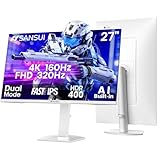
SANSUI’s 27-inch 4K dual-mode panel does the same headline trick as our top pick, with one practical advantage: two HDMI 2.1 ports and two DisplayPort 1.4 ports. For a desk that hosts an Xbox and a PC, that means no dongles, no manual port swapping, and no second cable.
Picture quality out of the box is where it needs help. Owners regularly report a short calibration session before colour looks right, and at 400 nits the panel is brighter than most of the fast-IPS field, which pays off in a lit room more than the 1ms MPRT figure does.
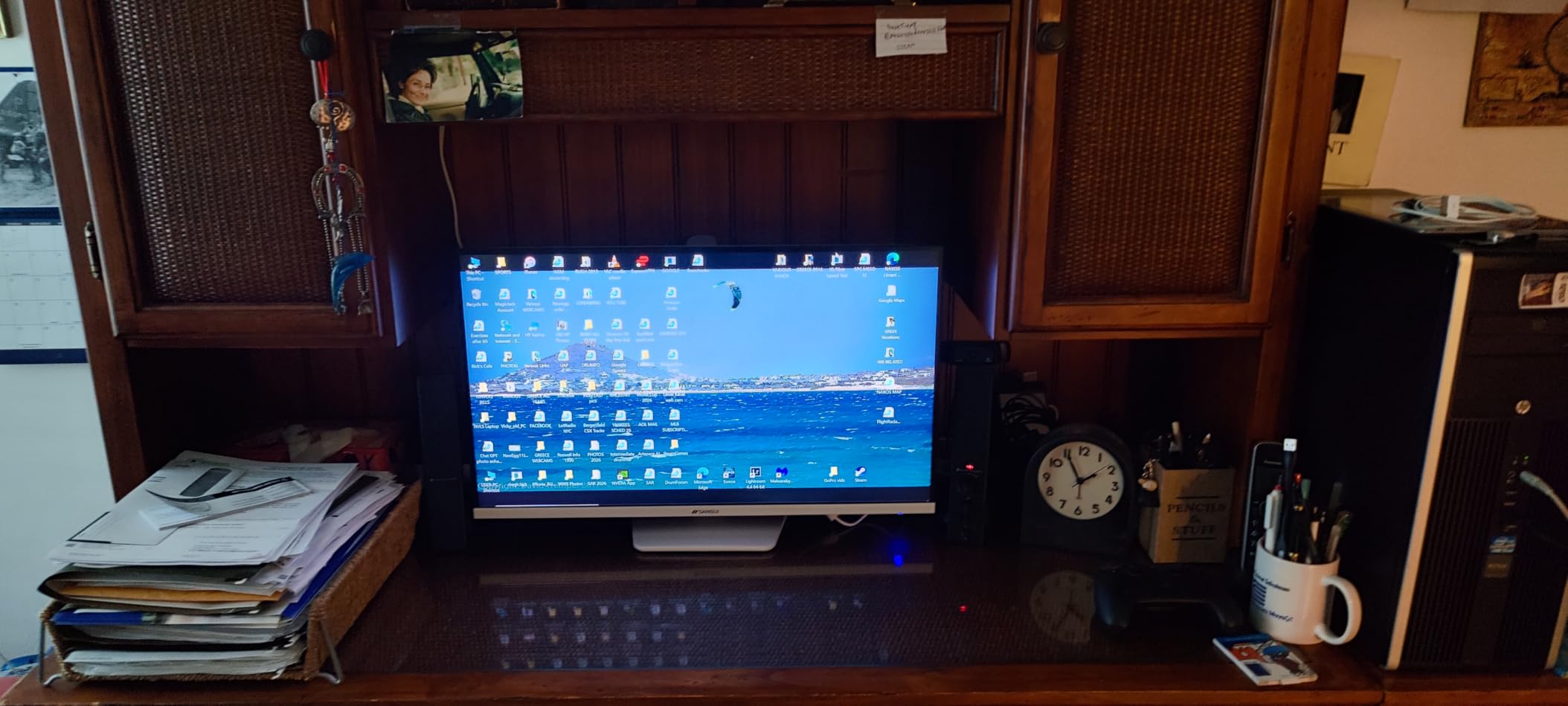
The gaming assists are a real differentiator for console shooters. AI crosshair and sniper scope overlays are unusual on 4K panels at this tier, and they are the kind of thing that gets noticed in a multiplayer session rather than in a spec sheet.
Adjustment range is generous: pivot, swivel and 130mm of height travel, plus VESA 100×100. The supplied stand is the weakest part, but it holds a position once set, which is the minimum we look for.
Why port count matters more than you expect?
Both consoles output over HDMI only, and a monitor with two HDMI ports lets you keep the Series X on one and a PC or a capture card on the other. Single-port monitors force a replug every time you change device, which is a small annoyance that compounds over months.
It also means you can keep a 4K 120Hz console connection and a high-refresh PC connection alive at the same time without reconfiguring the OSD each time.
Who should skip it?
Out-of-the-box colour accuracy matters if you cannot or will not calibrate. This panel needs hands-on adjustment before it looks its best, and reviewers consistently note that.
It is also worth being clear about what the 320Hz mode does here, and it does not raise console frame rates. The Series X remains capped at 120Hz whatever the monitor’s headline number says.
We earn a commission, at no additional cost to you. CERTAIN CONTENT THAT APPEARS ON THIS SITE COMES FROM AMAZON. THIS CONTENT IS PROVIDED 'AS IS' AND IS SUBJECT TO CHANGE OR REMOVAL AT ANY TIME.
3. SANSUI ES-G27F6Q 27-inch 1440p 200Hz – Best for Xbox Series S
SANSUI Gaming Monitor 27 inch 1440p 200Hz 180Hz Computer Monitor
★★★★★★★★★★27-inch 1440p fast IPS at up to 200Hz, 1ms MPRT, FreeSync Premium, 400 nits
- 1440p fast IPS at up to 200Hz
- 400 nits with 10-bit colour
- FreeSync Premium with crosshair assists
- Pivot swivel and height adjustable stand
- No built-in speakers
- Audio jack sits near the HDMI ports
- Colour and sharpness need tuning out of the box
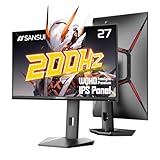
This is the honest pairing for a Series S, and the reasoning is simple. The Series S drives 1440p comfortably and does not have the headroom to fill a 4K panel, so a 27-inch 1440p screen gives you every pixel the console can produce at a fraction of the cost of the OLED tier.
Members of r/XboxSeriesS repeatedly land on the same conclusion: 1440p is the resolution that maximises what the console actually does, and 120Hz is where the value sweet spot sits. This monitor is that pairing, with 200Hz headroom on the PC side and FreeSync Premium for tear-free play.
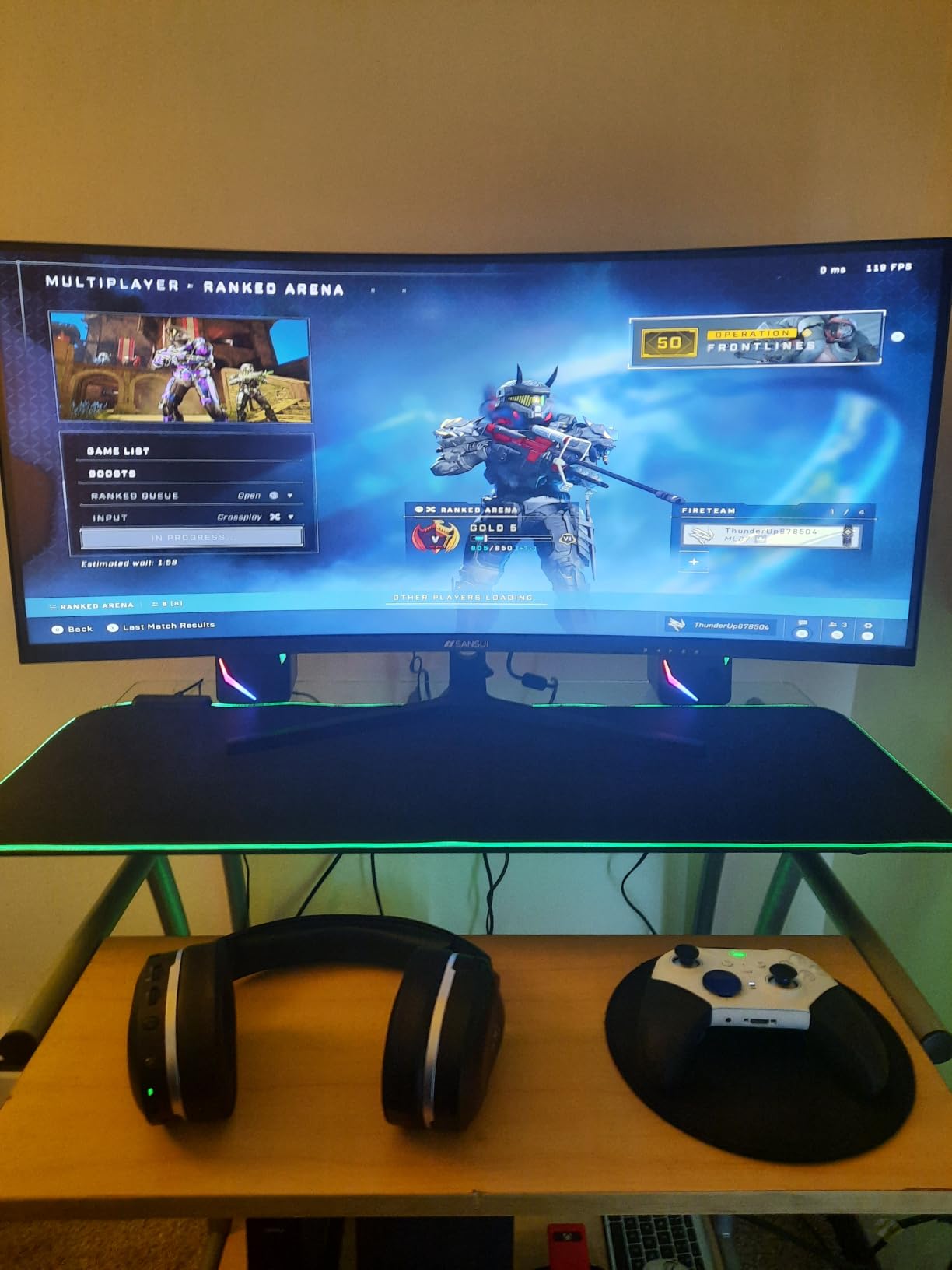
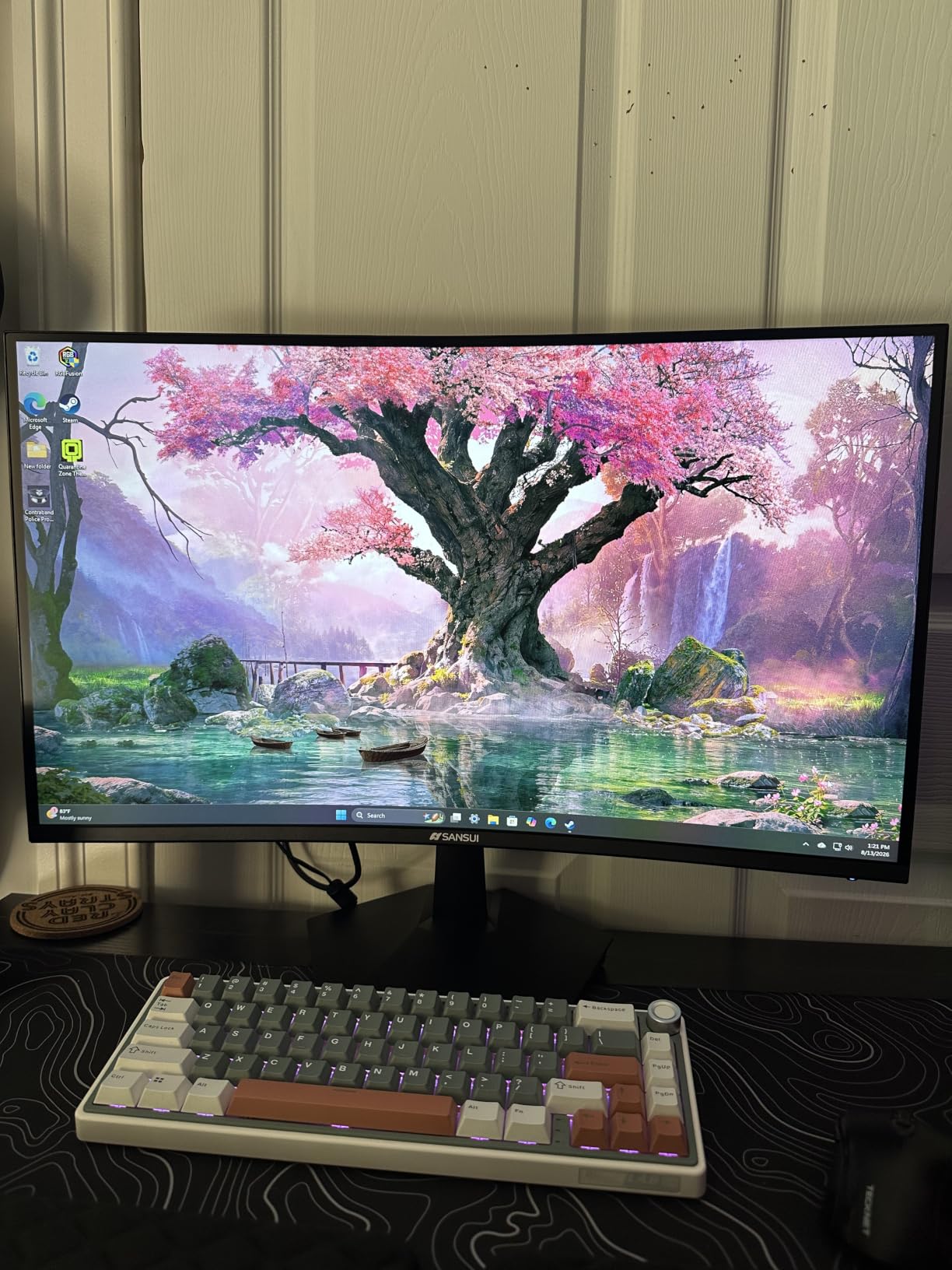
Colour depth is 10-bit, which is unusual at this tier and visible in gradients and skies. DCI-P3 coverage of 95% and 400 nits brightness mean it holds up in daylight better than most IPS panels in the same bracket.
One practical note from owners: the audio jack is positioned close to the HDMI ports, so a thick cable can crowd the connectors. Plan your cable routing before the first evening rather than after.
Why 1440p is the right ceiling for a Series S?
The Series S is a lower-power console. Buying it a 4K monitor means paying for pixels it cannot light, and in practice you end up with a slightly softer image at 4K than you would at 1440p because the console renders at a lower internal resolution.
You also keep the headroom. If the same monitor later shares a desk with a mid-range PC, the 200Hz mode and FreeSync Premium are usable rather than decorative.
Where it falls down?
There are no built-in speakers, so you need a soundbar, a headset or external audio. For couch-adjacent setups that is a real gap, and monitors with integrated speakers save desk space.
Also note the port mix: two DisplayPort 1.2 and two HDMI 2.0. On a console-only setup that is fine, but it is not a 4K 120Hz machine and should not be judged like one.
We earn a commission, at no additional cost to you. CERTAIN CONTENT THAT APPEARS ON THIS SITE COMES FROM AMAZON. THIS CONTENT IS PROVIDED 'AS IS' AND IS SUBJECT TO CHANGE OR REMOVAL AT ANY TIME.
4. ASUS TUF VG32VQ1B 32-inch 1440p Curved – Best 1440p Curved
ASUS TUF Gaming VG32VQ1B 32 Inch 1440p 165Hz HDR Curved Gaming Monitor
★★★★★★★★★★31.5-inch 1440p 1500R VA at 165Hz, ELMB 1ms, FreeSync Premium, built-in speakers
- 31.5-inch 1440p 1500R curve at 165Hz
- FreeSync Premium over HDMI and DisplayPort
- 3000:1 contrast with Shadow Boost
- Built-in speakers and VESA mount
- Three-year warranty with advance replacement
- HDR is accepted but not true HDR
- 250 nit brightness is on the low side
- Typical VA ghosting and some black-level inconsistency
A 32-inch 1440p panel is the size sweet spot for console play, and the 1500R curve pulls the edges closer than a flat 32-inch without the aggressive wrap of an ultrawide. If you sit at a desk roughly an arm’s length back, this fills your field of view in a way 27-inch panels cannot.
The VA panel brings 3000:1 contrast, which is a real advantage in dark single-player games where an IPS panel’s blacks turn grey. Shadow Boost helps pull detail out of those dark scenes without blowing out highlights.
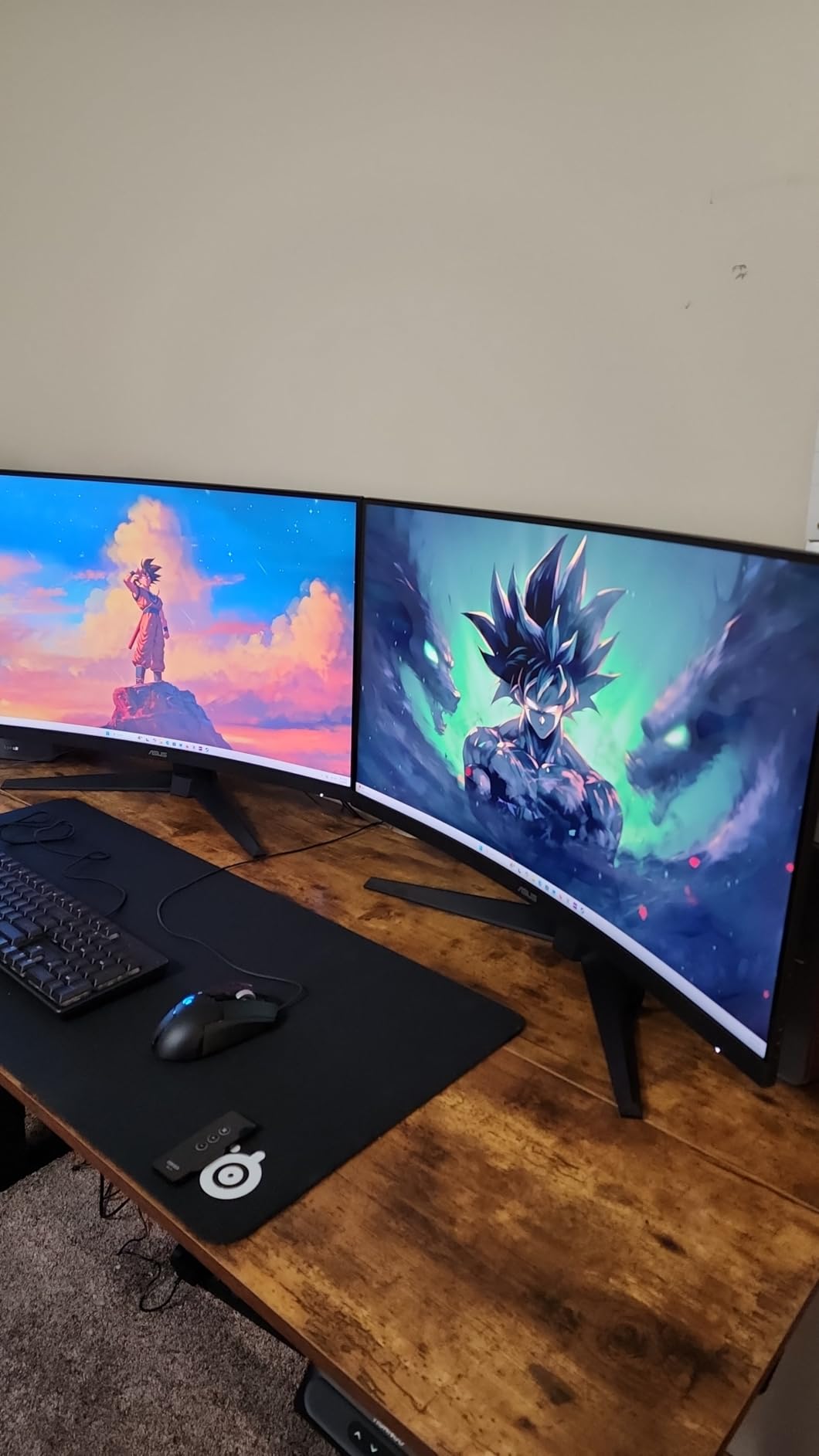
Long-term owner reports are unusually positive for a curved monitor at this price. Multiple buyers describe the same units still performing well after years, and the three-year warranty with advance replacement adds a layer of confidence that cheaper curved panels often lack.
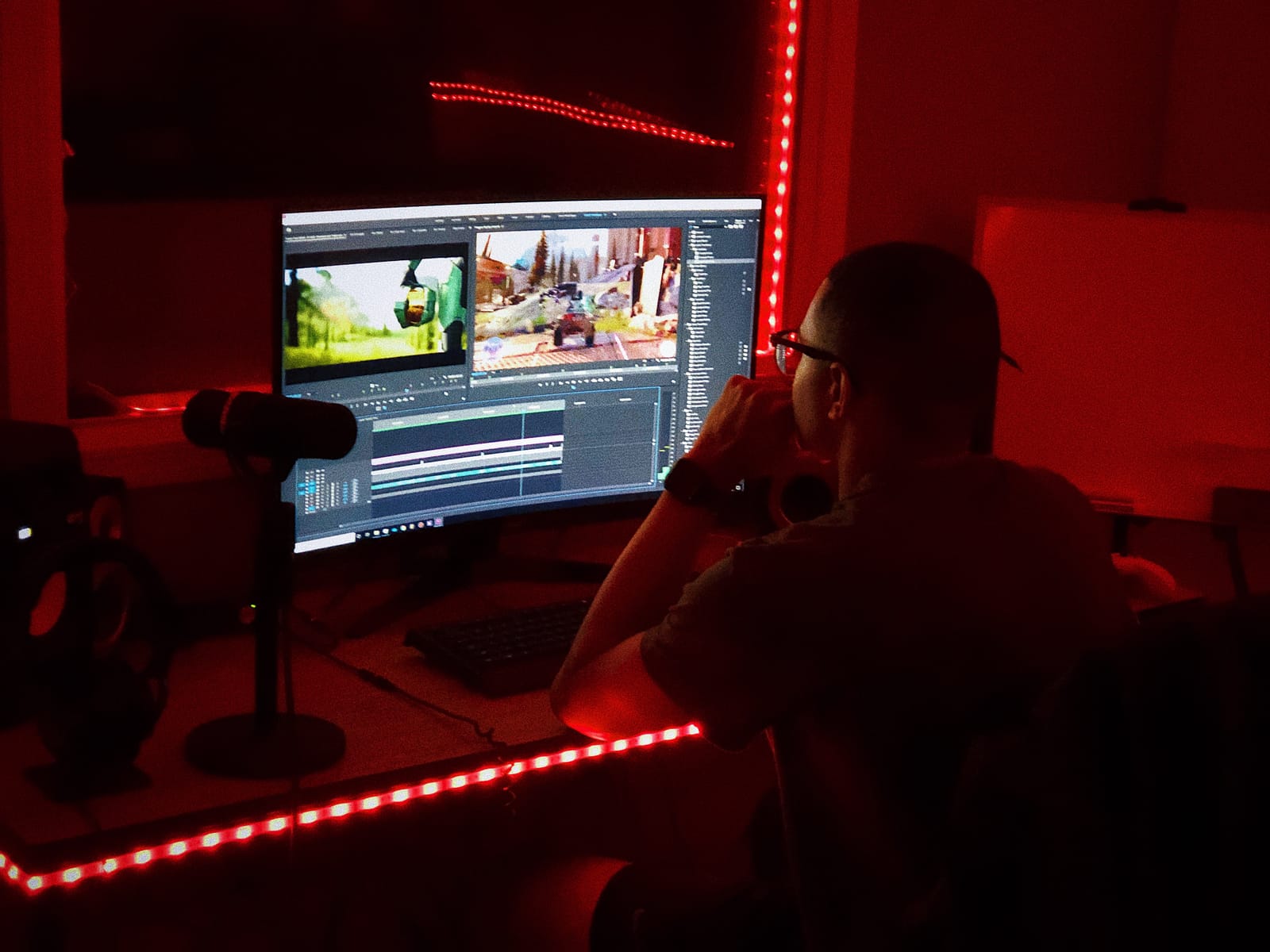
ELMB delivers a 1ms MPRT rating, though on a VA panel that figure depends on enabling the mode, and enabling it can reduce the benefit of variable refresh. Worth testing both settings before you commit to one.
Who benefits most from a 32-inch curved panel?
Players who sit further back than desk distance, and anyone who plays in a dim room where contrast matters more than brightness. The curve also reduces the visible gap between the panel edge and your peripheral vision in racing and flight titles.
If your desk is shallow, measure first. A 31.5-inch curved panel needs real desk depth, and the stand also places the panel fairly high, which can push the top of the screen above eye level on a standard desk.
Where the ASUS is the wrong pick?
HDR. The monitor accepts HDR10 signals but does not deliver true HDR, and 250 nits is dim enough that a bright room makes the difference obvious. If HDR is a priority, look at a brighter 4K panel or an OLED instead.
Fast competitive shooters on a VA panel can also show smearing in dark areas that a fast IPS panel simply will not.
We earn a commission, at no additional cost to you. CERTAIN CONTENT THAT APPEARS ON THIS SITE COMES FROM AMAZON. THIS CONTENT IS PROVIDED 'AS IS' AND IS SUBJECT TO CHANGE OR REMOVAL AT ANY TIME.
5. Amzfast 32-inch 4K 120Hz Curved – Best 4K for Series X
Amzfast 32″ 4K 120Hz Curved Gaming Monitor, 3840×2160 UHD, PIP/PBP, Adaptive Sync, 131% sRGB, 3000:1 Contrast,HDR, 300nits, 1500R, HDMI2.1(VRR)& DP1.4, Built-in Speaker, Eyes Care, VESA Mount
★★★★★★★★★★32-inch 4K 1500R VA at 120Hz, dual HDMI 2.1 FRL with VRR, 3000:1 contrast, 300 nits
- Dual HDMI 2.1 FRL ports with VRR
- 4K 120Hz over HDMI and DisplayPort 1.4
- 3000:1 contrast with 131% sRGB
- PIP and PBP split screen with AI crosshair
- 3W speakers and VESA mount
- 300 nits peak brightness is modest for HDR
- 2ms response is slower than fast-IPS rivals
- Tilt adjustment only on a fixed stand
This is the most console-first 4K option in the list, and the port layout is the reason. Two HDMI 2.1 FRL ports with VRR means the Series X gets 4K 120Hz with variable refresh, and a second port stays free for a PC or a second console without adapter juggling.
The 32-inch 1500R VA panel at 3000:1 contrast is a good match for Series X single-player titles, where dark interiors and night driving make up more playtime than competitive shooters do. The listed compatibility even includes Xbox explicitly.
Two features are unusual in a 32-inch 4K panel: PIP and PBP split screen, and a set of AI picture and crosshair modes. PBP in particular is useful for a console and PC side by side on one screen, which is a common desk arrangement for people who split their gaming time between the two.
Warranty is one year with a 30-day return window, which is the shortest coverage in this group. That is the main reason we do not place it higher despite the strong feature set.
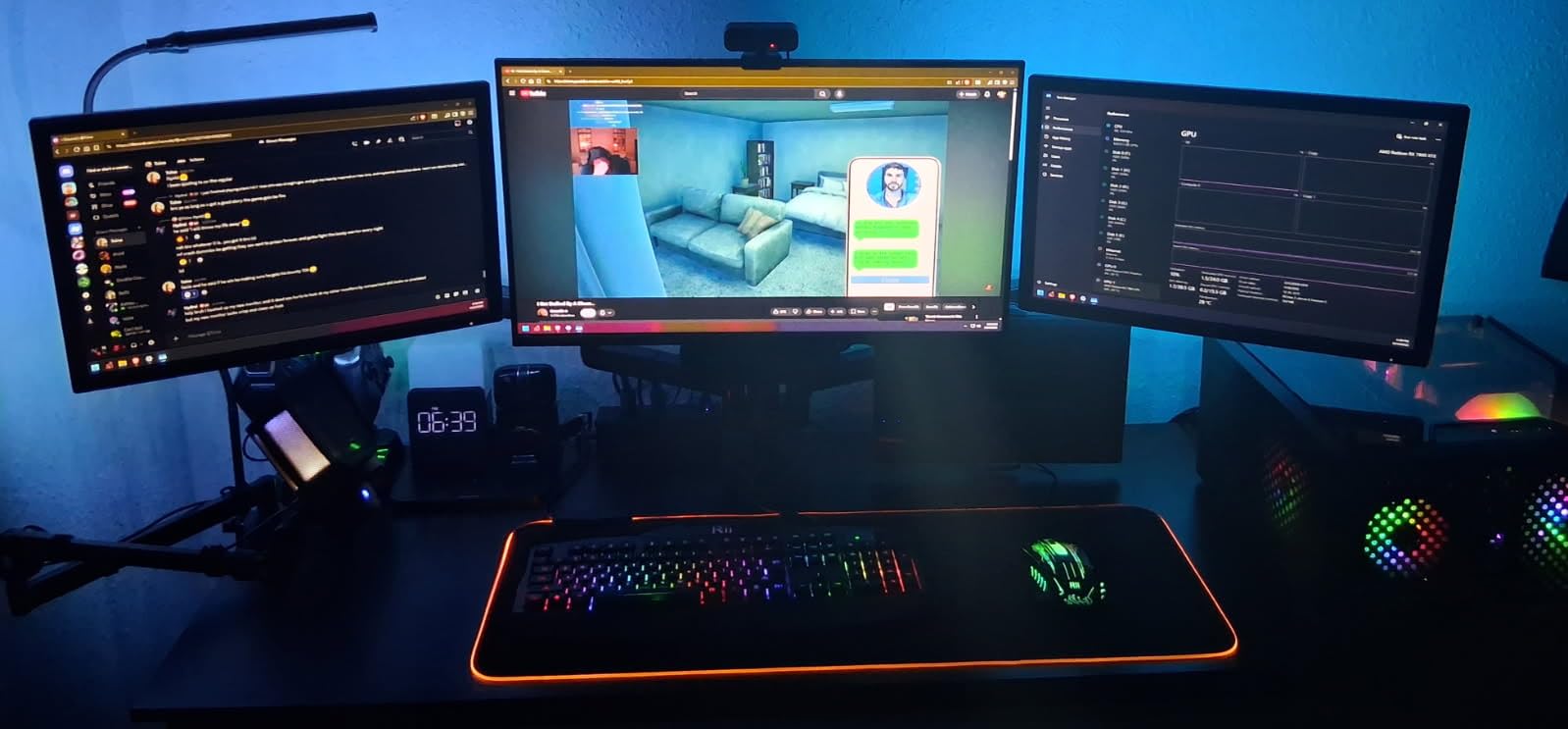
What full HDMI 2.1 FRL actually gets you?
Full-rate bandwidth on both ports means uncompressed 4K 120Hz rather than a compressed or chroma-subsampled fallback. On a 32-inch 4K panel that difference is visible in fine text and in colour gradients, not just in a spec sheet.
VRR over the same port means tearing goes away at 120Hz without locking you to a 48Hz frame-doubling mode. For fast action on a Series X, that combination is the practical reason this monitor exists.
Where it is not the right call?
300 nits is modest, and with HDR content the picture looks dim next to a brighter panel or an OLED. If your room has ambient light during daytime play, brightness matters more than contrast does.
The stand also only tilts. On a 32-inch panel that is a real ergonomics compromise, and a VESA-compatible arm is close to essential for anyone who needs height or swivel.
We earn a commission, at no additional cost to you. CERTAIN CONTENT THAT APPEARS ON THIS SITE COMES FROM AMAZON. THIS CONTENT IS PROVIDED 'AS IS' AND IS SUBJECT TO CHANGE OR REMOVAL AT ANY TIME.
6. MSI MPG 321CURX QD-OLED 32-inch 4K – Best for OLED Picture
msi MPG 321CURX QD-OLED, 32-Inch, 4K UHD, 3840×2160,1700R,OLED Monitor, 240Hz, 0.03ms, DisplayHDR True Black 400, G-SYNC Compatible, HDMI 2.1, DP 1.4a, USB C (98W PD),Height Adjustable, Black
★★★★★★★★★★32-inch 4K QD-OLED at 240Hz, 0.03ms GtG, full 48 Gbps HDMI 2.1, DisplayHDR True Black 400
- Third-gen QD-OLED 4K panel with 0.03ms GtG
- Full 48 Gbps HDMI 2.1 console mode
- DisplayHDR True Black 400 with Delta E under 2
- USB-C with 98W power delivery and KVM
- OLED Care 2.0 reduces image sticking
- OLED burn-in risk with long static content
- Glossy finish reflects in bright rooms
- Large heavy chassis needs a sturdy desk
Picture quality is the entire argument here. A 4K QD-OLED panel at 0.03ms GtG gives you effectively instant pixel response, perfect blacks at a stated 1500000:1 contrast, and colour accuracy accurate to Delta E under 2. No IPS or VA panel in this guide approaches it.
For the Xbox, the critical spec is the full 48 Gbps HDMI 2.1 console mode. That is uncompressed 4K 120Hz with VRR, and combined with the OLED response times it is the best console image quality available on a 32-inch panel.
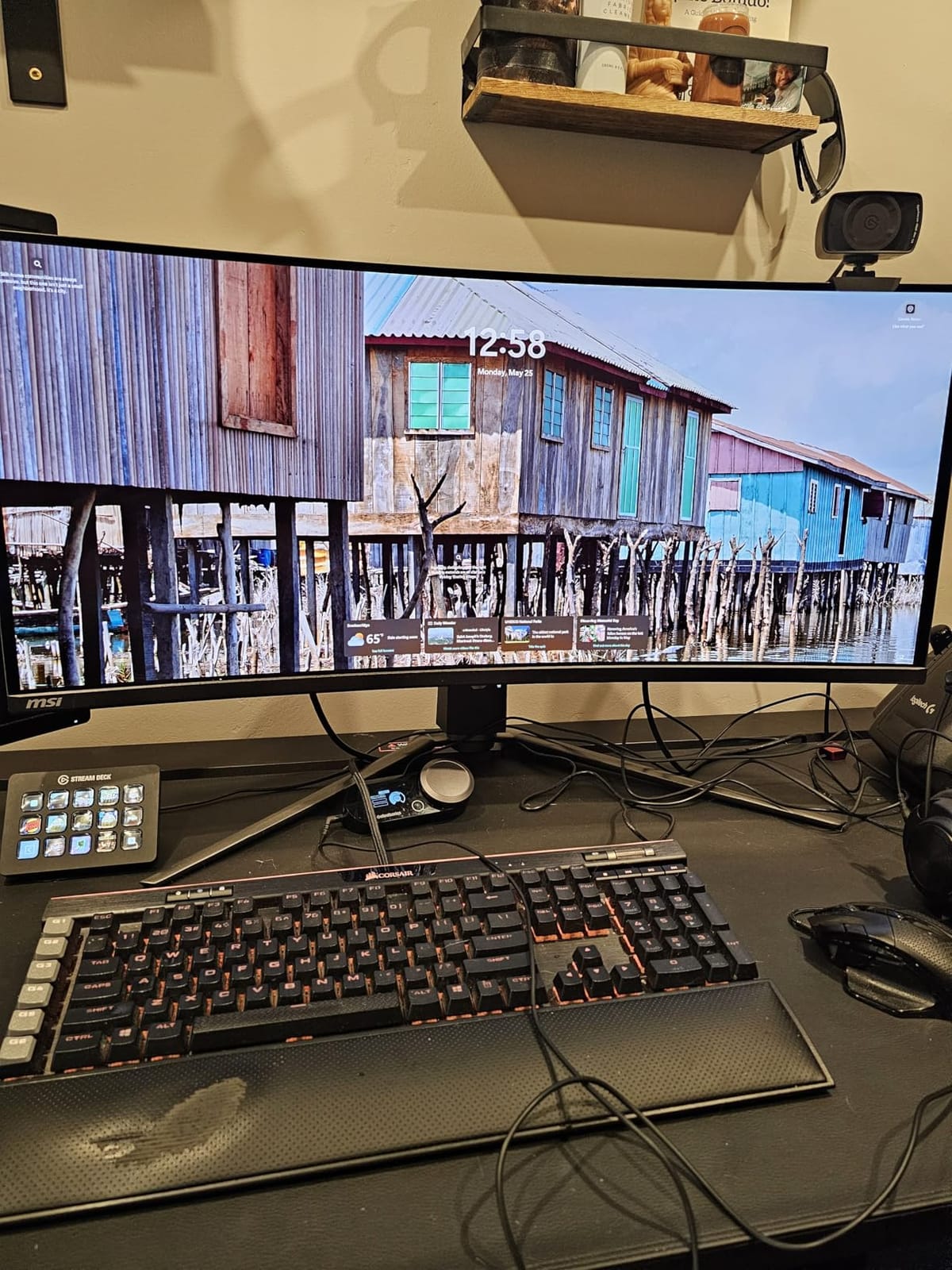
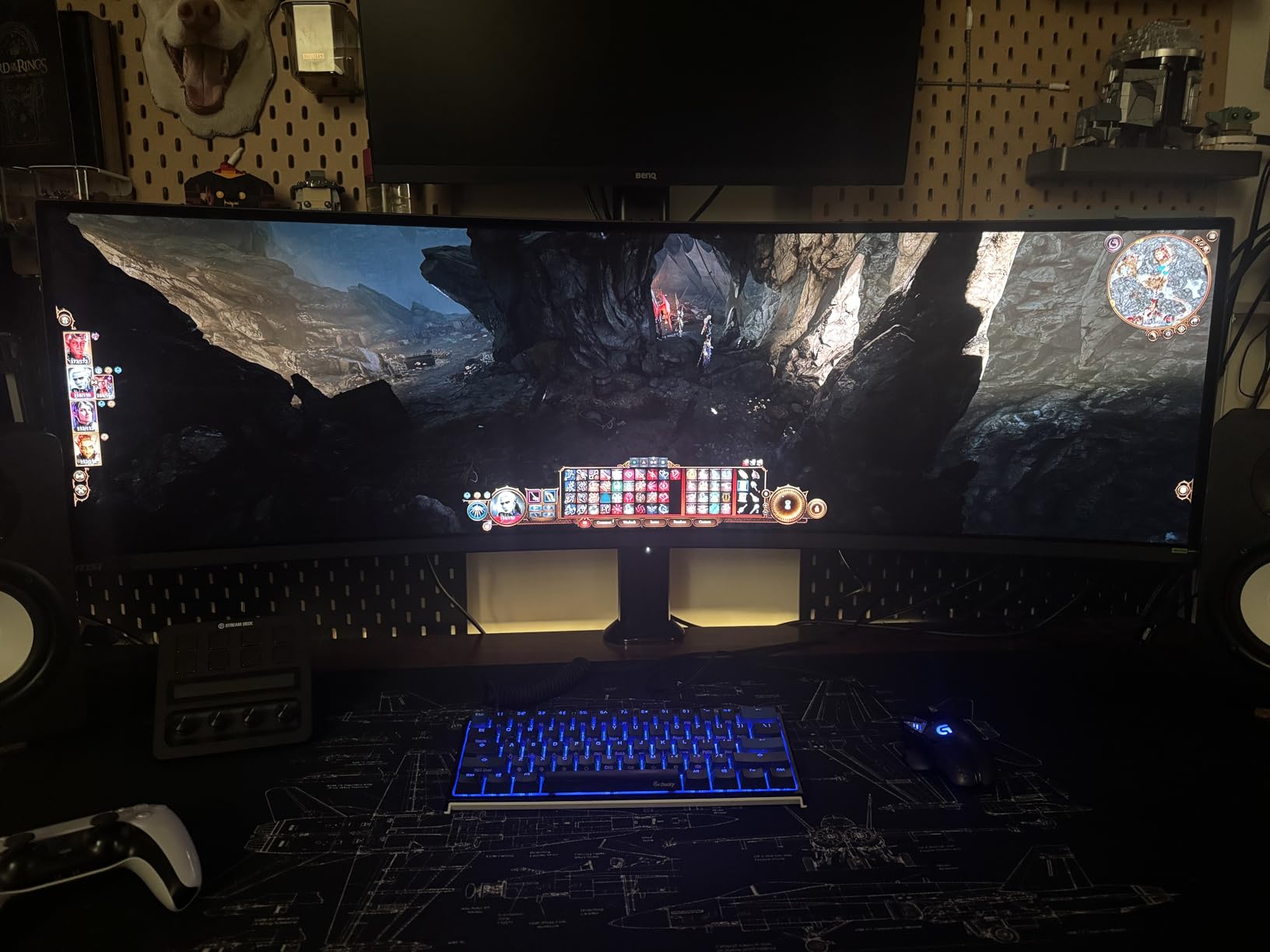
The 240Hz refresh rate is PC headroom, not console capability. The Series X will not output above 120Hz, so on a console this monitor behaves like an exceptional 4K 120Hz display, which is still the ceiling that matters.
OLED Care 2.0 is the software answer to the main OLED risk. Combined with running the dashboard in a screensaver-style mode rather than leaving it static on screen for hours, it is a sensible routine for console use specifically.
How to manage burn-in risk on a console dashboard?
Static UI is the real exposure. The Xbox dashboard, store pages and message screens sit on screen for long stretches, and a console is often left on for whole weekends. Turning the console’s screensaver setting on, and letting the display go to sleep rather than showing a static image, reduces the accumulated load considerably.
OLED Care 2.0 runs refresh and pixel-shift cycles on a schedule. It does not eliminate risk, but combined with sensible screensaver habits it is a reasonable long-term plan rather than an afterthought.
Who should not buy an OLED for Xbox?
Anyone gaming in a bright room. The glossy finish picks up reflections, and QD-OLED panels are not at their best against a sunlit window. For a dim media room at night, this is the opposite problem.
It is also a heavy, large chassis at 27.1 pounds, so a flimsy desk or a shallow one is a genuine concern. Check desk depth and load capacity before ordering.
We earn a commission, at no additional cost to you. CERTAIN CONTENT THAT APPEARS ON THIS SITE COMES FROM AMAZON. THIS CONTENT IS PROVIDED 'AS IS' AND IS SUBJECT TO CHANGE OR REMOVAL AT ANY TIME.
7. Sceptre E275W-FW100T 27-inch 1080p – Budget Pick
Sceptre 27-inch Prime Gaming Monitor 100Hz 1ms DisplayPort HDMI x2 100% sRGB AMD FreeSync Build-in Speakers, Eye Care Frameless Machine Black 2025 (E275W-FW100T Series)
★★★★★★★★★★27-inch 1080p at 100Hz, 1ms response, FreeSync, two HDMI ports, built-in speakers
- 27-inch 1080p at 100Hz with 1ms response
- 100% sRGB colour with 2000:1 contrast
- Two HDMI ports plus DisplayPort
- Built-in speakers and VESA wall mounting
- Lightweight and quick to set up
- Integrated speakers are thin and tinny
- Stand does not rotate
- Average colour accuracy
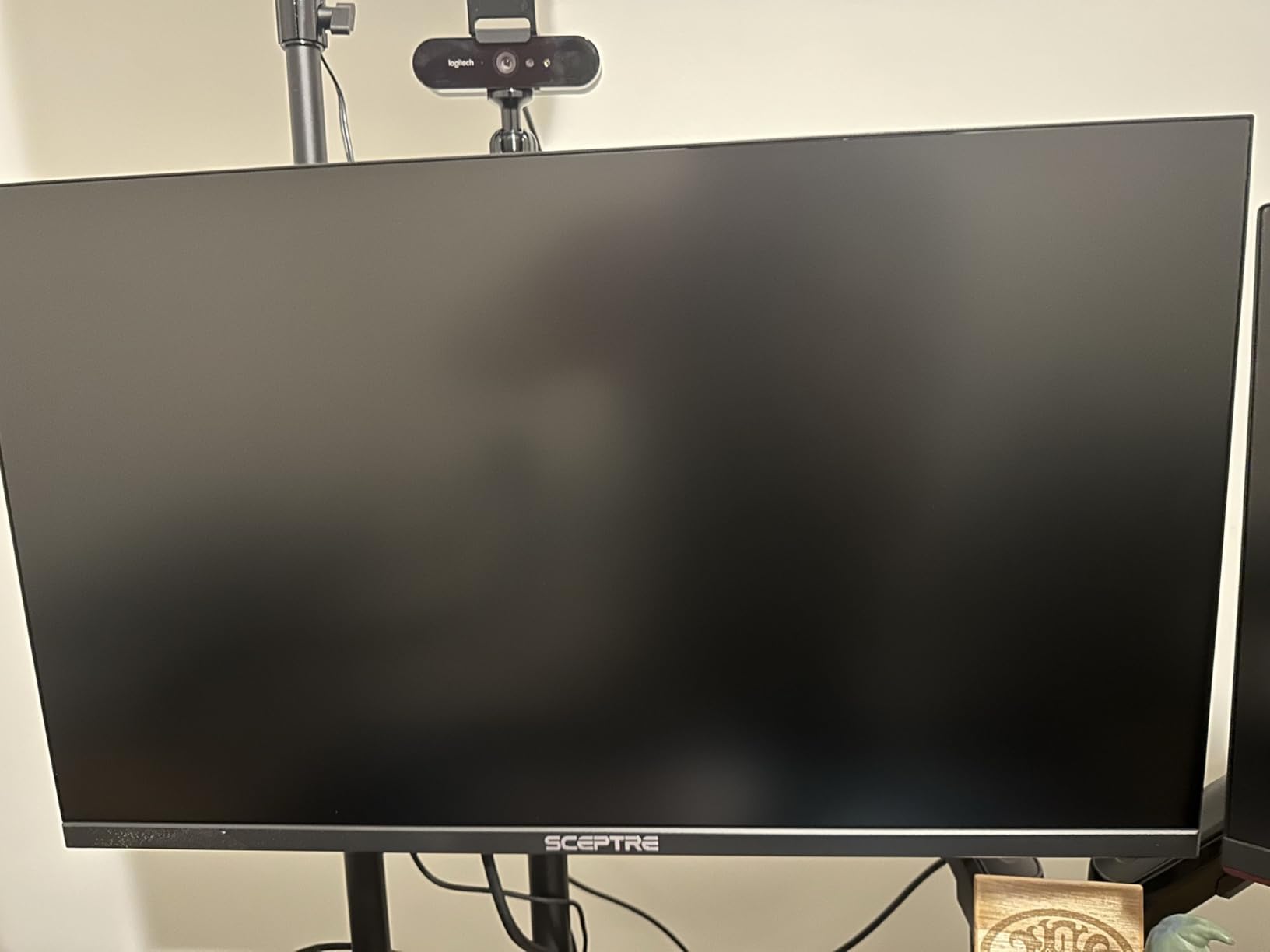
This is the honest entry point, and it does one thing well: it gives an Xbox owner a proper 27-inch panel with 100Hz, a 1ms response rating and FreeSync, without asking you to compromise on desk footprint. At 27 inches, 1080p is still sharp enough for console play at a normal viewing distance.
Two HDMI ports mean the Series X and a PC can both stay connected. That matters more on a budget display than on a premium one, because cheaper monitors are the ones most likely to have only one port.
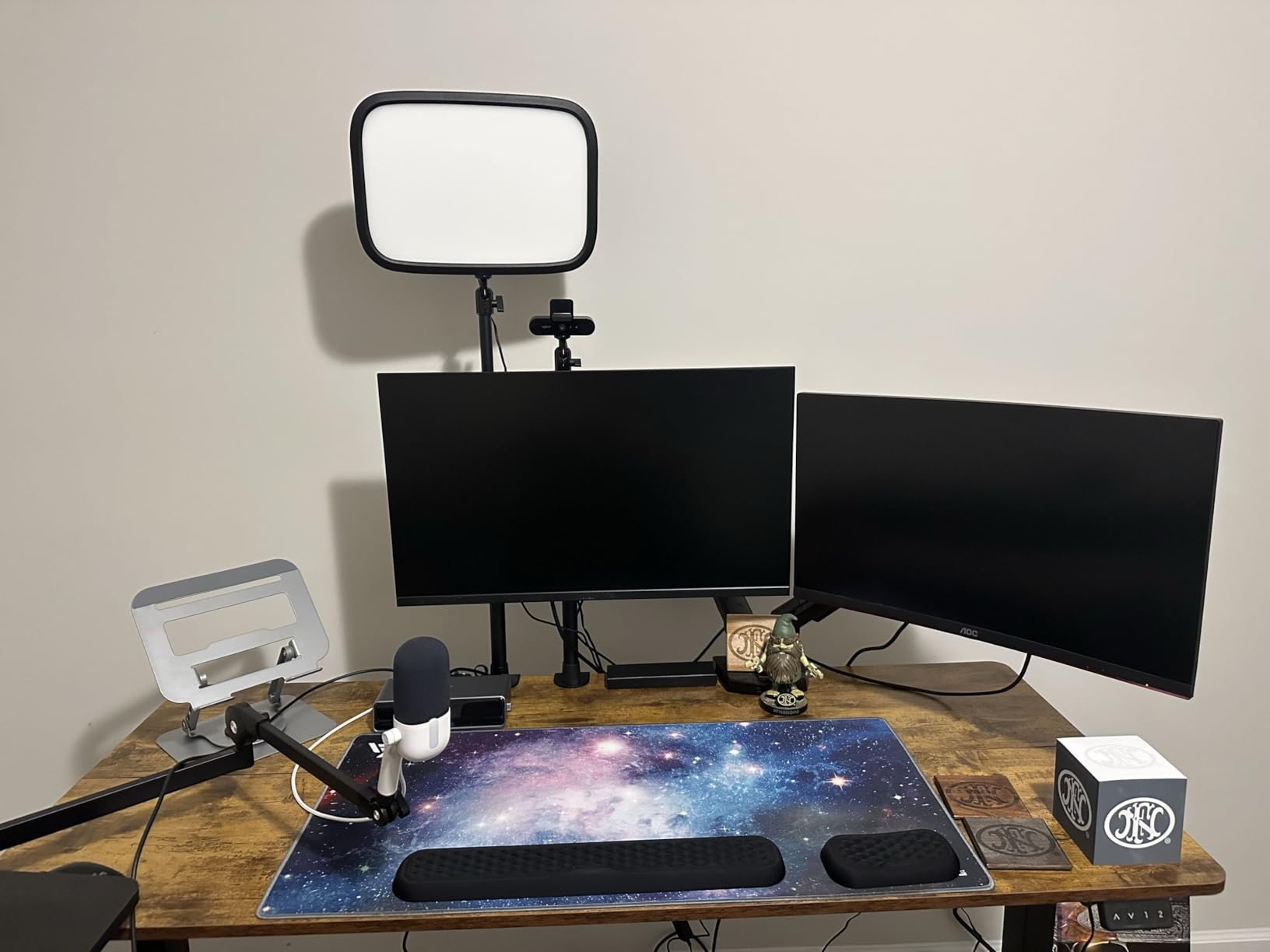
Owners consistently describe it as a capable everyday upgrade for basic gaming and productivity, with colour that looks vibrant for the money. The 2000:1 contrast ratio is a pleasant surprise in a price bracket where flat grey is more common.
The recurring complaint is the integrated audio, which is thin and bass-light. Treat the speakers as a convenience for menus and YouTube, not as a replacement for a headset or soundbar.
When 1080p at 27 inches is the right call?
When the priority is getting a large, low-latency console display without spending heavily, and you are not sensitive to pixel density. For 1080p content on a 27-inch panel, text and HUD elements are noticeably crisper than on a 24-inch screen at the same resolution.
It is also a reasonable second monitor, which is a common request in the r/consoles threads we read: one screen for the Xbox, one for PC or general use.
When to spend more instead?
If you play single-player games with detailed environments, 1440p and 4K add a lot of clarity that 100Hz alone will not. 100Hz also means a Series X running performance modes is not getting a display that matches its capability.
Check the stand before buying. It does not rotate, and a 27-inch panel on a fixed-height, non-swiveling base is a persistent annoyance on a shared desk.
We earn a commission, at no additional cost to you. CERTAIN CONTENT THAT APPEARS ON THIS SITE COMES FROM AMAZON. THIS CONTENT IS PROVIDED 'AS IS' AND IS SUBJECT TO CHANGE OR REMOVAL AT ANY TIME.
8. Samsung Odyssey G55C 32-inch 1440p Curved – Best 1440p All-Rounder
Samsung 32″ Odyssey (G55C) Series QHD 1000R Curved Gaming Monitor,
★★★★★★★★★★32-inch 2560x1440 at 165Hz, 1ms MPRT, 1000R curve, FreeSync, HDR10
- QHD at 1.7x the pixel density of Full HD
- 165Hz refresh with 1ms MPRT
- 1000R curve fills peripheral vision
- FreeSync reduces tearing
- HDR10 with Eye Saver Mode
- Only one HDMI port limits console and PC hookup
- Tilt adjustment only on the stand
- Typical VA smudging in dark scenes
The G55C is a dependable 1440p 165Hz all-rounder with a 1000R curve, and it sits in the middle of this list for a reason: nothing about it is outstanding, and nothing about it is problematic. It is the choice when you want a big, sharp, smooth curved display and would rather not troubleshoot anything.
At 32 inches, 2560×1440 gives 1.7x the pixel density of Full HD, which is why text and HUD elements look clean even though it is not a 4K panel. 165Hz with 1ms MPRT keeps fast action smooth, and FreeSync handles the frame pacing.
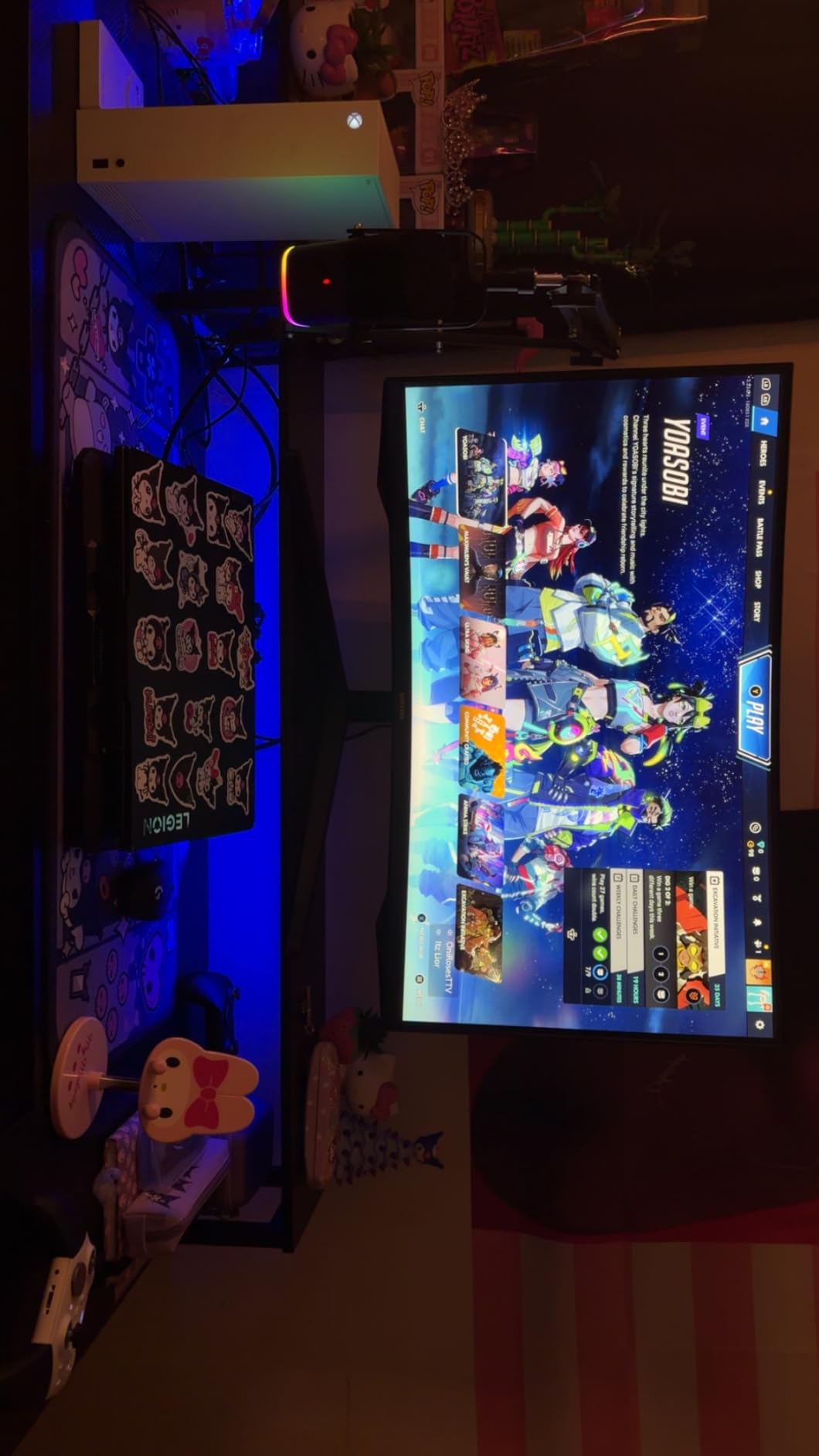
Eye Saver Mode reduces blue light and flicker, which matters if you play long sessions on a console rather than in short competitive bursts. Owners specifically mention the combination of sharp QHD clarity and the immersive curve as the main draw.
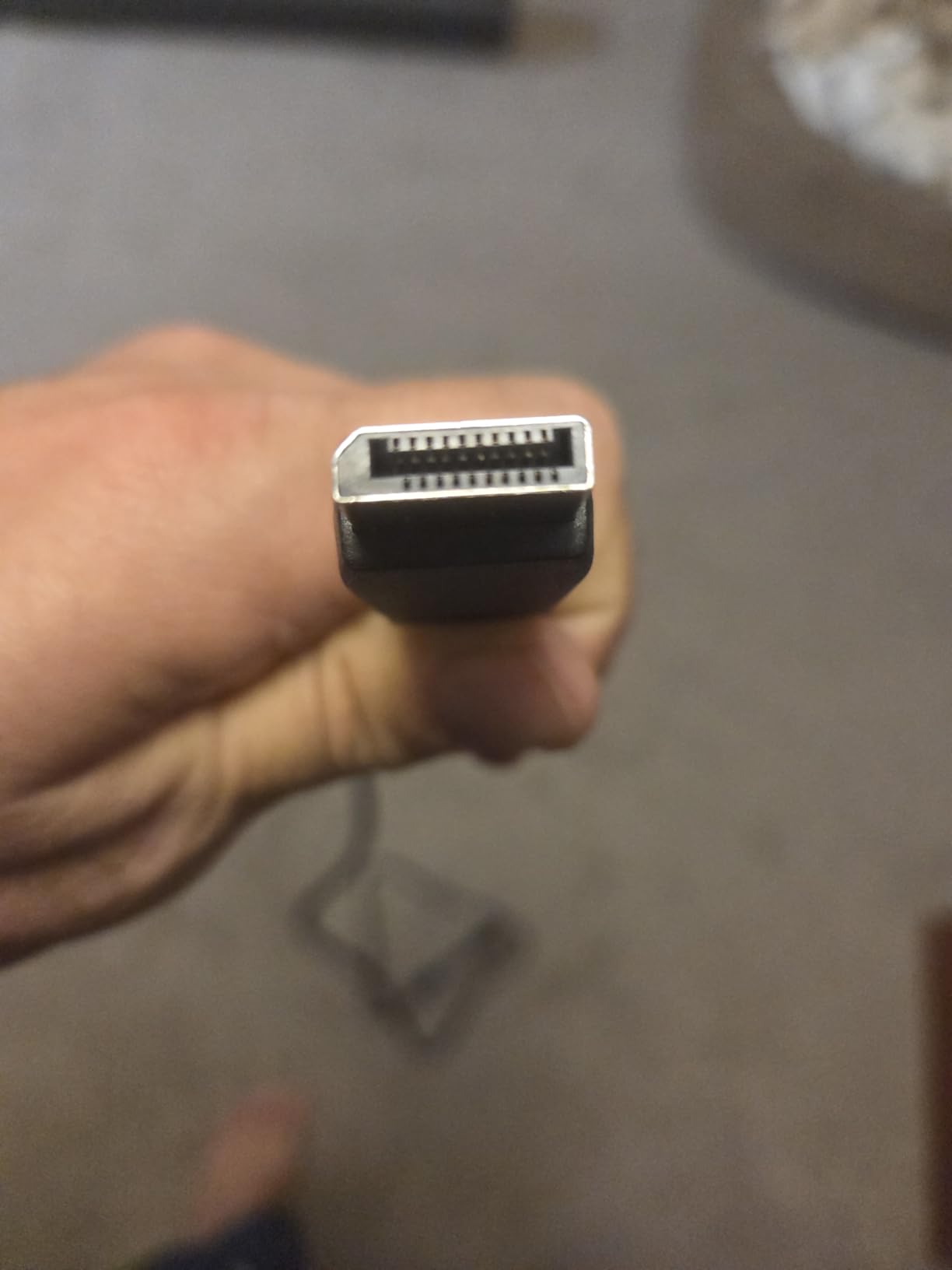
The single HDMI port is the detail that decides this for console buyers. If you plan to add a PC later, you will be swapping cables every time, and at that point a small upgrade buys real convenience.
Choosing between 1000R and 1500R curves
Curvature is measured by how tightly the panel wraps. A 1000R curve on a 32-inch screen is gentler and keeps desk depth requirements lower than a 1500R curve of the same size, which suits smaller desks and closer seating.
The visual difference at typical desk distance is modest. If your desk is deep and you sit far back, a stronger curve fills more of your peripheral vision; if you sit close, either works and the gentler one is easier to accommodate.
Where the Samsung is not ideal?
One HDMI port, and tilt-only adjustment, are the two practical limits. On a 32-inch panel, the lack of height and swivel control is felt immediately, and a VESA arm is a worthwhile addition if your desk allows it.
VA smudging in dark scenes is the other caveat. For fast competitive shooters, a fast-IPS panel is a better match.
We earn a commission, at no additional cost to you. CERTAIN CONTENT THAT APPEARS ON THIS SITE COMES FROM AMAZON. THIS CONTENT IS PROVIDED 'AS IS' AND IS SUBJECT TO CHANGE OR REMOVAL AT ANY TIME.
9. LG UltraGear 24G411A-B 24-inch 1080p – Best for Small Desks
LG 24G411A-B 24-inch Ultragear Full HD (1920 x 1080) IPS Gaming Monitor, 144Hz (O/C), 1ms MBR, NVIDIA G-Sync Compatible, AMD FreeSync, HDR10, HDMI, DisplayPort, Slim Stand, Black
★★★★★★★★★★24-inch 1080p IPS at 120Hz native, 144Hz overclocked, 1ms MBR, G-SYNC Compatible
- 24-inch IPS with 99% sRGB and HDR10
- 120Hz native boosting to 144Hz overclocked
- G-SYNC Compatible and FreeSync support
- Compact footprint with an ultra-slim bezel
- Dynamic Action Sync and Black Stabilizer aids
- No built-in speakers
- Factory stand is unstable and wobbles
- Overclock mode linked to occasional stray pixels
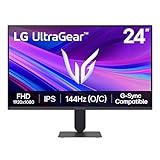
When desk space is the binding constraint, a 24-inch display is the honest answer. This one is 1080p IPS at 120Hz natively, with an overclock mode that pushes it to 144Hz, and it covers a console at its 120Hz ceiling without crowding a small desk.
G-SYNC Compatible and FreeSync support means variable refresh works either way, and 99% sRGB coverage with HDR10 gives a livelier picture than most 24-inch panels at this level.
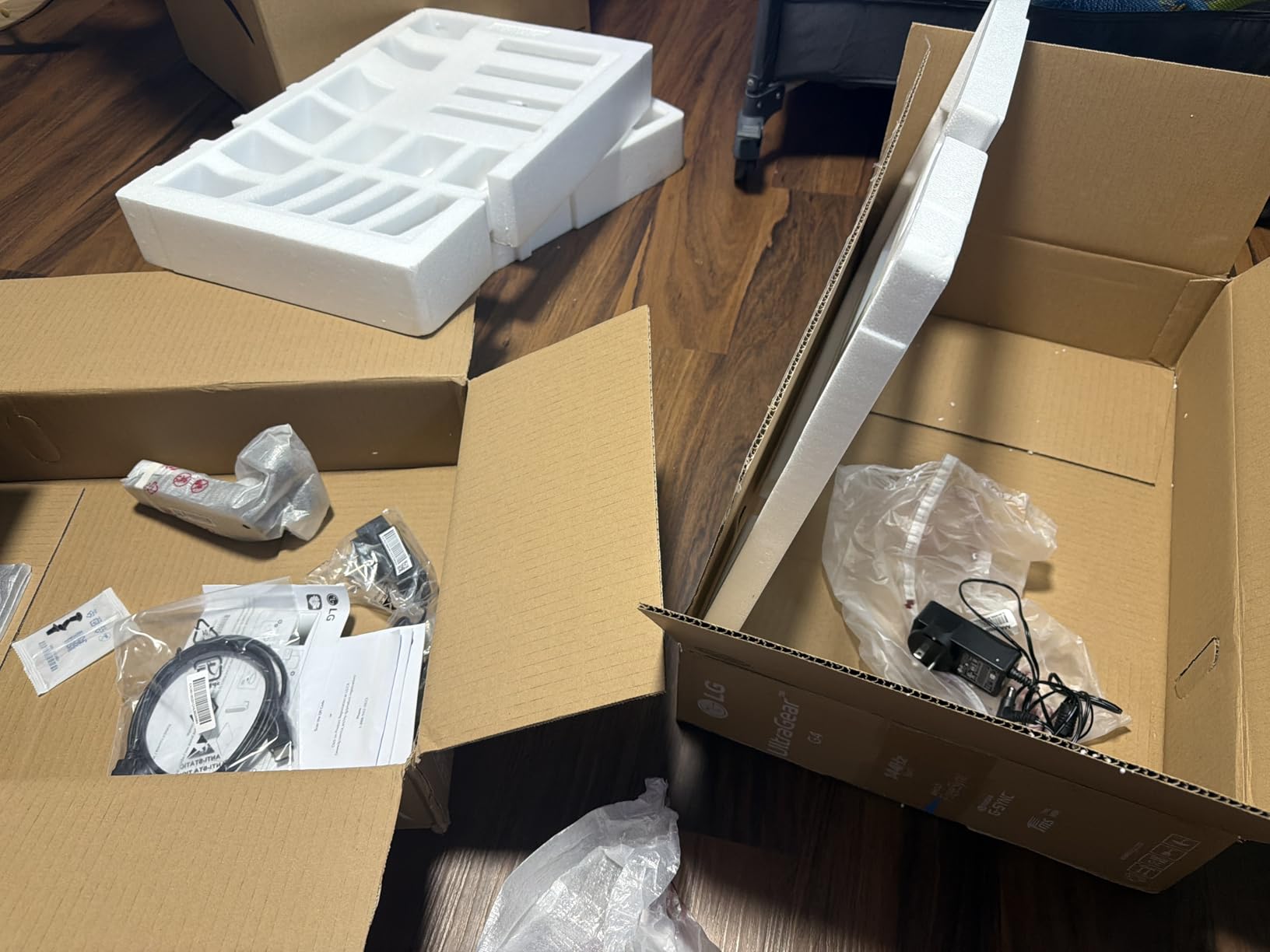
Dynamic Action Sync dims the non-crosshair area during shooting games, and Black Stabilizer lifts detail in dark corners. Both are console-relevant assists that are not common at this price.
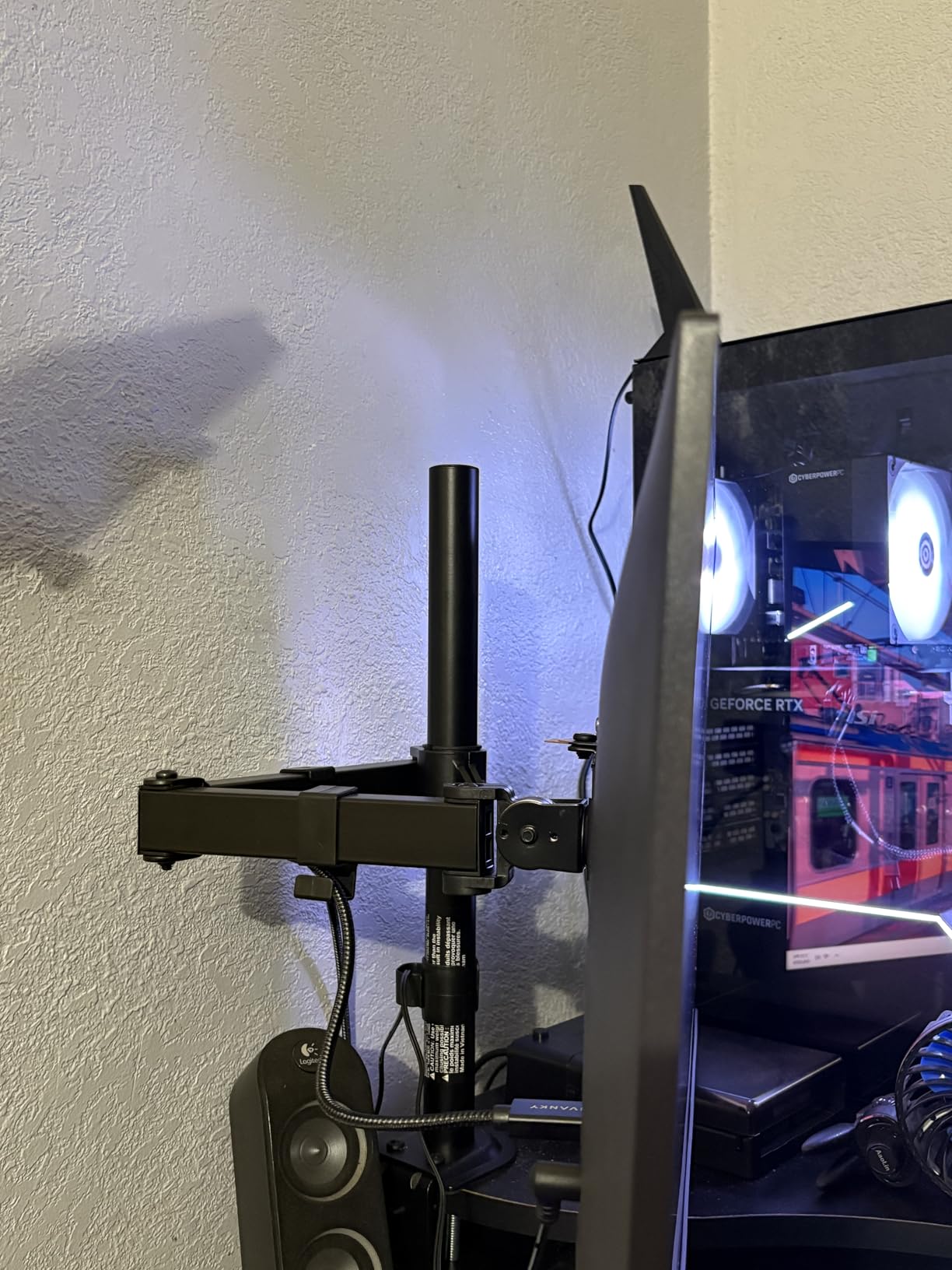
The stand is the problem most owners report. It wobbles, and the most common fix in reviews is replacing it with a monitor arm. The panel itself is not the issue.
What a 24-inch panel costs you on a console?
You give up screen area, and at desk distance 24 inches is noticeably smaller than 27 or 32. For immersive single-player titles that difference is real, and no setting closes it.
What you keep is the console at its full 120Hz ceiling, correct aspect ratio, variable refresh, and a footprint that leaves desk space for a keyboard and a controller dock.
When to look elsewhere?
There is one HDMI port, so a console plus PC setup means replugging every time you switch. There are no built-in speakers either, which is a gap on a display this small and this portable.
If your desk can take 27 inches, the jump to a 1440p panel is the single largest quality improvement available at a similar tier.
We earn a commission, at no additional cost to you. CERTAIN CONTENT THAT APPEARS ON THIS SITE COMES FROM AMAZON. THIS CONTENT IS PROVIDED 'AS IS' AND IS SUBJECT TO CHANGE OR REMOVAL AT ANY TIME.
10. ViewSonic VX2718-2KPC-MHD 27-inch 1440p Curved – Best VA Contrast per Pound
ViewSonic VX2718-2KPC-MHD 27 Inch 1440p Curved Gaming Monitor, 180Hz
★★★★★★★★★★27-inch 1440p 1500R VA at 180Hz, 1ms MPRT, 4000:1 contrast, FreeSync Premium
- 27-inch 2560x1440 1500R curve at 180Hz
- 4000:1 VA contrast for deep blacks
- FreeSync Premium synchronises refresh with GPU
- FPS RTS and MOBA game mode presets
- Flicker-Free tech and Blue Light Filter
- Built-in speakers are weak
- Stock stand is basic and often replaced with an arm
- No USB-C video input
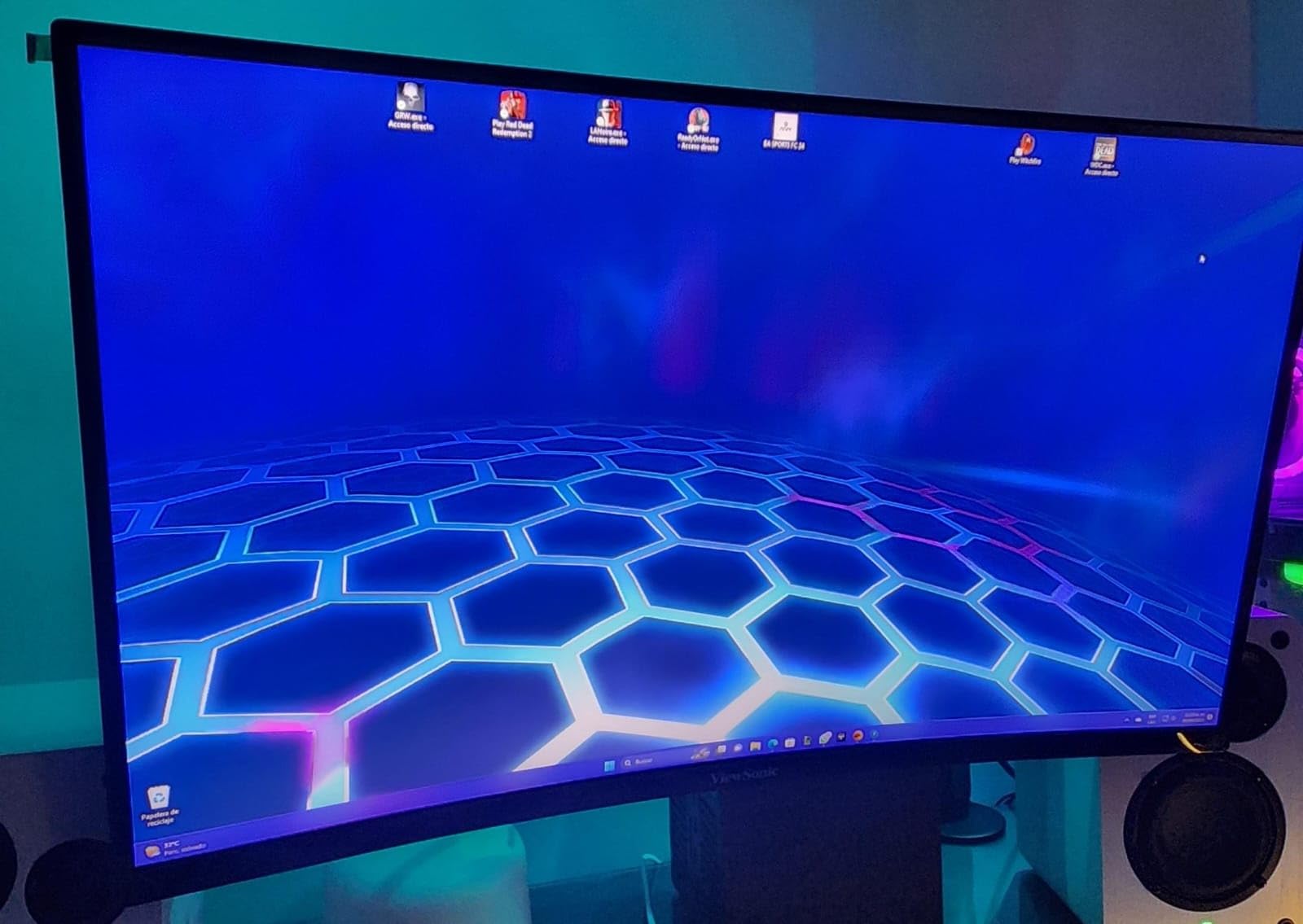
ViewSonic’s 27-inch 1440p curve sits in a gap most lists ignore: 180Hz high refresh with 4000:1 VA contrast and FreeSync Premium, at a mid-range price. On a Series X it runs the console at 1440p 120Hz, and the VA blacks make a visible difference in dark, atmospheric games.
The 1500R curve is subtle at desk distance but does pull the edges in enough to feel more immersive than a flat 27-inch without demanding a large desk. Owners praise the colour and the 1440p sharpness for the money.
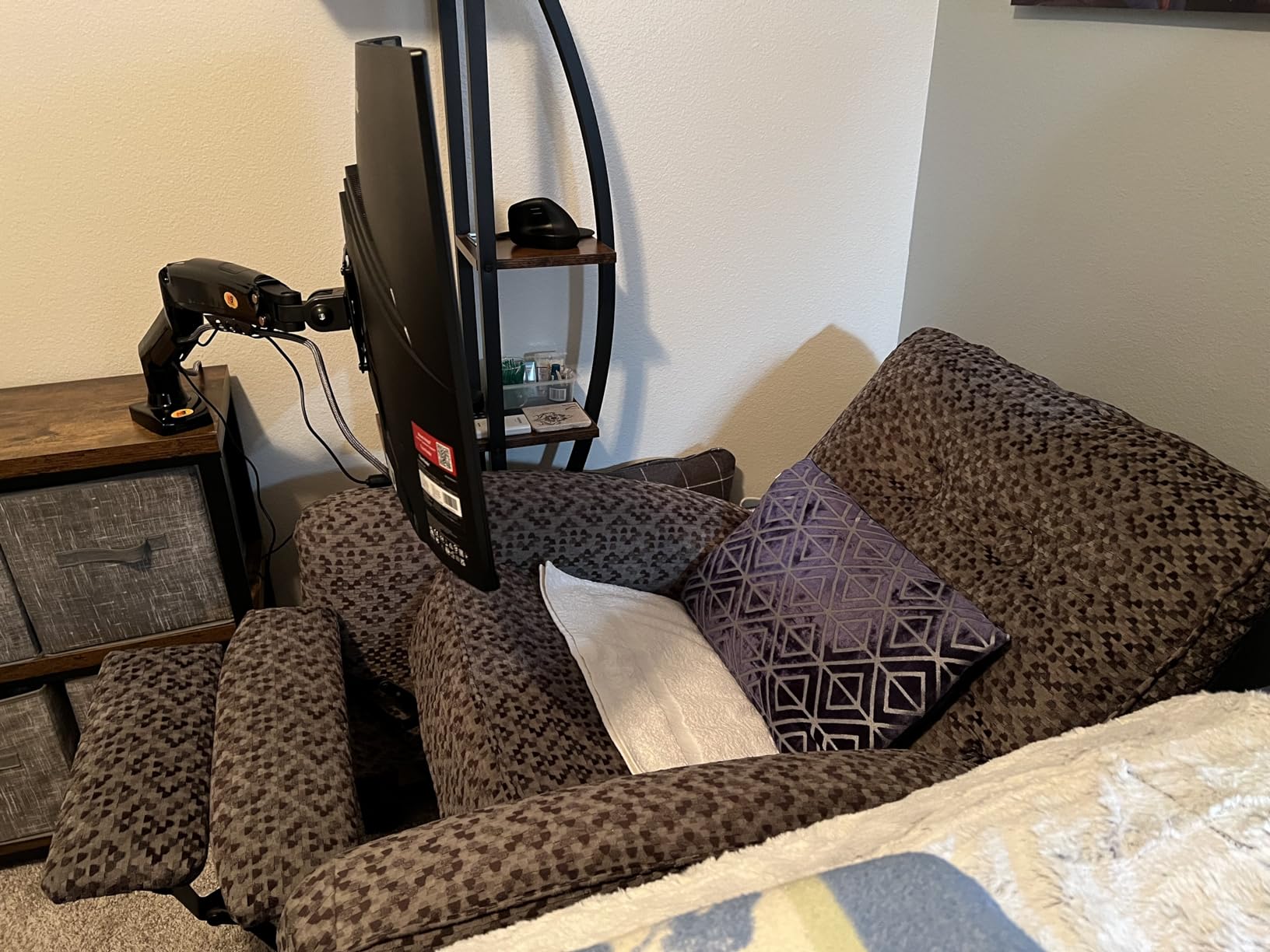
Flicker-Free technology and a Blue Light Filter are standard here, which matters for long console sessions. Game mode presets for FPS, RTS and MOBA titles are a one-touch way to set an appropriate picture profile.
The VESA pattern is worth noting if you build a mini-PC style all-in-one, because the mounting points are laid out usefully for that arrangement. Most owners replace the supplied stand with an arm anyway.
Is 180Hz useful if the Xbox stops at 120Hz?
Not on a console, and no monitor setting changes that. The Xbox Series X and Series S have a 120Hz output ceiling, so anything above that is headroom rather than benefit while the console is the only device attached.
That headroom still has value on a shared desk, and it also gives the monitor a longer useful life if you later add a PC. But if you are buying purely for the console, judge every panel here on its 120Hz behaviour.
Where this ViewSonic is not the pick?
Fast competitive shooters on a VA panel can smear in dark areas where an IPS panel would stay clean. If competitive shooters are your main genre, prioritise panel type over refresh rate.
The built-in speakers are weak enough that most owners use external audio, and there is one HDMI port, so a console plus PC setup means cable swapping.
We earn a commission, at no additional cost to you. CERTAIN CONTENT THAT APPEARS ON THIS SITE COMES FROM AMAZON. THIS CONTENT IS PROVIDED 'AS IS' AND IS SUBJECT TO CHANGE OR REMOVAL AT ANY TIME.
How to Choose a Gaming Monitor for Xbox in 2026?
The consoles narrow the decision more than PC specs do. Series X and Series S output over HDMI exclusively, cap at 4K 120Hz, and support both variable refresh and automatic low-latency switching. A monitor that misses any of those three is leaving console features unused, and paying for features above 120Hz buys you nothing on a console-only desk.
HDMI 2.1 vs HDMI 2.0: the bandwidth gate
HDMI 2.0 tops out around 18Gbps, which is enough for 4K at 60Hz or 1440p at 120Hz. That is a genuinely good console experience, and for a Series S it is close to ideal. HDMI 2.1 raises the ceiling to roughly 40 to 48Gbps, which is what uncompressed 4K 120Hz requires.
Here is the part that catches people: some monitors label a port HDMI 2.1 while shipping a reduced-bandwidth implementation that only carries 40Gbps, and some older chipsets behave like HDMI 2.0 despite the badge. The label is not the specification. Look for the full bandwidth figure, and check whether the 4K 120Hz mode is listed as uncompressed or relies on Display Stream Compression.
If you cannot find a bandwidth number on the product page, assume the worst and verify the mode list in the OSD after connecting. Two of the monitors in this roundup publish full port details, and they are the safest console buys here.
Do you need HDMI 2.1 for the Xbox Series X?
Only if you want 4K at 120Hz. A 1440p 120Hz display over HDMI 2.0 fully exercises a Series X in most games, and several picks in this guide do exactly that without an HDMI 2.1 port at all.
The Series S is a different case. It is fully covered by 1440p at 120Hz, and for that console HDMI 2.1 is optional in every practical sense. We have covered curved options separately in our curved monitor guide if the shape matters to you more than the port.
VRR and ALLM: what to turn on?
Variable refresh rate syncs the display’s refresh to the frame rate the console is delivering, which removes tearing without the input-lag penalty of traditional vertical sync. On AVS Forum, the consensus among console owners is that the real win from VRR is lower latency rather than the absence of tearing alone.
You also need to enable 120Hz output and VRR in the console’s own settings, which is a step most guides skip:
1. Open Settings, then General, then TV and display options.
2. Choose the display you want to configure and set Resolution to 3840×2160 or 2560×1440 as appropriate.
3. Open Video modes and select the highest refresh rate listed for that resolution.
4. Turn on VRR in the video options menu.
5. Confirm ALLM is enabled on the monitor’s own OSD; it usually defaults on.
If a 4K 120Hz mode does not appear in that list, the port is not carrying the bandwidth you need. That is the fastest way to identify a reduced-bandwidth HDMI 2.1 implementation in practice.
4K vs 1440p for Series X and Series S
For a Series X, 4K at 120Hz is the performance mode target and gives the sharpest HUD text and the cleanest menus. For a Series S, 4K buys resolution the console cannot fully populate, and 1440p is the more honest pairing. The cheapest way to make that decision correctly is to match the panel to the console, not to the largest screen you can fit.
At 27 inches, 4K and 1440p are both sharp. At 32 inches, 4K starts to show its advantage. If you sit further back than arm’s length, resolution matters more than it does at a desk.
Refresh rate: why 120Hz matters even at 60fps?
This is the least intuitive fact in console gaming, and it appears in forum discussion more than in buying guides. 120Hz is a hardware synchronisation between the console and the display, so even when the game itself only delivers 60 frames per second, running the display at 120Hz roughly halves input lag.
That is why a 100Hz or 120Hz display still feels meaningfully more responsive than a 60Hz one, and why a 240Hz panel does not feel four times more responsive than a 120Hz panel on a console. It also explains why VRR is most valuable in the range where a game sits between refresh steps.
Panel types: IPS, VA and OLED on a console
IPS panels give the best response times, the most consistent viewing angles and the least smearing, which makes them the right choice for competitive shooters. Their weakness is contrast, since blacks sit closer to grey.
VA panels deliver far higher contrast, which is why they suit dark single-player and cinematic titles, at the cost of some dark-scene smearing. OLED panels sit at the top of both lists: effectively instant response and perfect blacks, with image retention as the long-term consideration on a console dashboard that sits on screen for hours.
For HDR specifically, brightness separates a real HDR experience from a nominal one. Panels rated around 250 to 300 nits accept HDR signals but rarely deliver a visible improvement in a lit room, which is why we treat HDR400 labels cautiously above.
Screen size and desk distance
At desk distance, 27 inches is the standard console monitor size and works for most rooms. 32 inches suits people who sit back or want more presence for single-player games, and it needs a deeper desk. 24 inches is the choice when desk depth is the constraint, and it costs you immersion rather than speed.
Do not sit closer than about three times the screen height away. At very close distances, a 32-inch 1440p panel starts to show its pixel grid, and that is the point where a 27-inch 4K panel often looks sharper despite being smaller.
What to skip?
Skip 1440p at 240Hz and above if the console is your only device. The extra refresh is unusable and you are paying for headroom that will sit idle.
Skip 1080p on a 27-inch or larger panel if image sharpness matters to you, because the pixels become visible at normal desk distance. Skip DisplayPort-only and USB-C-only monitors on a console-only setup entirely, since the Xbox has no DisplayPort output and passive adapters will not carry HDMI 2.1 bandwidth.
Also skip any monitor whose page does not state its HDMI bandwidth, if 4K 120Hz is your goal. An unlabelled port is the most common reason a console buyer ends up locked to 4K 60Hz on a display they thought would do more.
Frequently Asked Questions
What is the best gaming monitor for an Xbox?
The best gaming monitor for an Xbox needs a full-bandwidth HDMI 2.1 port so the Series X can output 4K at 120Hz with VRR and ALLM. The KOORUI G2741L is our overall pick: a 27-inch 4K fast-IPS panel with HDMI 2.1, a 1ms rating and a height, tilt and pivot adjustable stand. At minimum, an HDMI 2.0 monitor running 1440p at 120Hz covers a console well, and fully covers a Series S.
Do you need HDMI 2.1 for the Xbox Series X?
Only if you want 4K at 120Hz. HDMI 2.0 carries 4K 60Hz and 1440p 120Hz, which is a strong console experience. HDMI 2.1 raises the link to roughly 40 to 48Gbps for uncompressed 4K 120Hz. Watch for ports labelled HDMI 2.1 that ship reduced bandwidth, and check that 4K 120Hz actually appears in the console’s video mode list after connecting.
Should you turn on VRR on Xbox?
Yes, if your monitor supports it. VRR matches the display’s refresh to the frame rate the console is delivering, removing tearing without the input-lag penalty of vertical sync. Enable it under Settings, General, TV and display options, then Video options, alongside the highest refresh rate listed for your resolution. Forum consensus is that the biggest VRR gain is lower input lag, not just the absence of tearing.
Do you need 120Hz for VRR, and does VRR support 120Hz?
Yes on both counts. 120Hz is the refresh rate where VRR delivers its clearest benefit, because most Xbox games sit at 60 or 120 frames per second and the display can track either smoothly. Running a 120Hz display also roughly halves input lag even when the game only delivers 60 frames per second, which is a hardware-level improvement independent of frame rate.
Can you run 4K and 120Hz on Xbox, and does the Series X support 1440p monitors?
Yes to both. The Series X and Series S support 4K at up to 120Hz and 1440p at up to 120Hz, subject to the monitor’s port bandwidth. A full-bandwidth HDMI 2.1 port is required for uncompressed 4K 120Hz. For 1440p, HDMI 2.0 is sufficient, which makes 1440p 120Hz the most reliable pairing and the one that fully covers a Series S.
Is it better to play Xbox on a TV or a monitor?
A monitor is usually better for competitive and seated play, because monitors are built for arm’s-length viewing and deliver lower input lag, faster response times and no unused pixels around a 16:9 image. A TV wins for couch gaming, larger screen size and brightness in a bright room. Whichever you choose, enable 120Hz output and VRR, since 120Hz cuts input lag regardless of device type.
Is 144Hz or 240Hz better for gaming, and is a 27 or 32 inch better?
On an Xbox, neither refresh rate matters above 120Hz, because the console caps output at 120Hz. Choose based on desk space and viewing distance instead: 27 inches is the standard desk-friendly console size, while 32 inches suits players who sit further back or want more presence in single-player games. On a shared PC and console desk, higher refresh rates do become useful.
Is a 4K monitor wasteful for an Xbox Series S?
Often, yes. The Series S drives 1440p comfortably and does not have the headroom to fully populate a 4K panel, so a 27-inch 1440p 120Hz monitor gives you every pixel the console can produce at a lower cost. A 4K panel still makes sense if the same desk later hosts a PC, or if you sit far back enough that the extra detail is visible at desk distance.
Final Verdict: Which Xbox Monitor Should You Buy?
For most people, the KOORUI G2741L is the answer. It is the one monitor in this roundup that gives a Series X its full 4K 120Hz ceiling, has a genuinely adjustable stand, and doubles into a 320Hz display for PC use without asking you to compromise on either.
If you own a Series S, skip the 4K tiers and take the SANSUI ES-G27F6Q. It is the panel that matches what the console can actually drive, and it is the recommendation that avoids paying for pixels the hardware will not fill. For a shared PC and console desk, the SANSUI 4K dual-mode panel’s two HDMI 2.1 ports make it the tidiest option. For picture quality with no compromise, the MSI MPG 321CURX QD-OLED is the ceiling, with the usual OLED caveats around burn-in and glare.
Whichever you choose, check the HDMI bandwidth before you order, then enable 120Hz output, VRR and ALLM on the console the same evening you plug it in. That setup step is where most of the perceived performance lives, and it costs five minutes.