
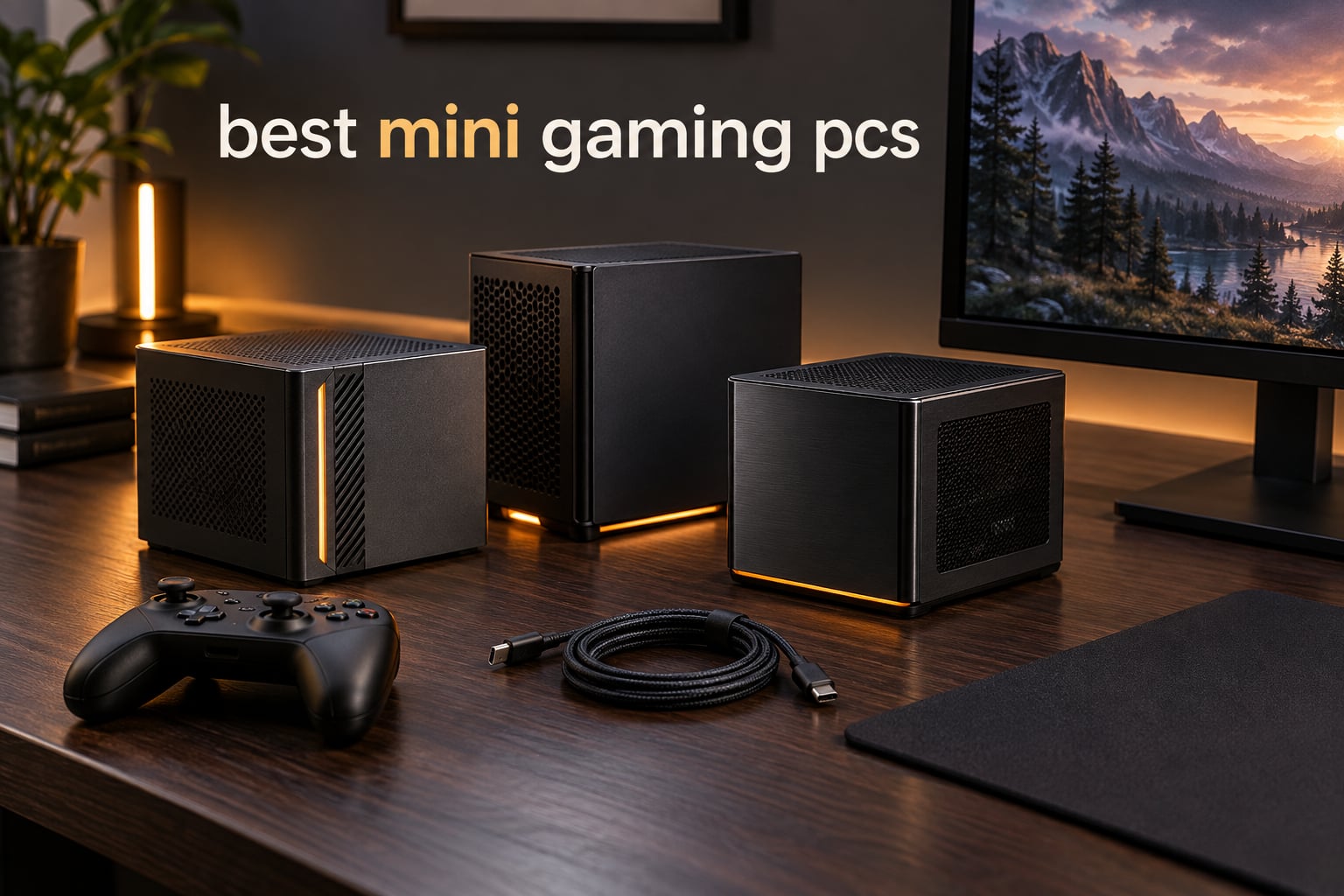
Mini PCs are good for gaming in 2026, with one condition attached: you are choosing between integrated-graphics machines that play at 1080p on low-to-medium settings, and you accept that. None of the ten boxes below carries a discrete low-profile graphics card. Every one runs its games on an AMD APU with Radeon graphics built into the processor.
That is not the disappointing version of this list. A Radeon 890M or 780M handles esports titles, strategy games, indie hits and a good share of AAA at 1080p medium. What you give up versus a full tower is 1440p high settings and ray tracing at high frame rates, plus the raw value that a DIY desktop gives you per dollar.
We compared ten of the most-reviewed compact machines on sale now, from a barebones-style Ryzen 7 with expandable memory to a Zen 5 box with an XDNA NPU. Our picks lean on the things buyers actually feel: how many memory slots you get, whether the RAM is soldered, how many storage bays exist, which ports are real, how loud the fans get, and how long the warranty runs. If you want the wider picture on small-form-factor machines, our [guide to the best mini PCs](https://bansocialism.com/best-mini-pcs/) covers the productivity side, and our [best gaming PCs roundup](https://bansocialism.com/best-gaming-pcs/) covers full-size builds.
Table of Contents
- Top 3 Picks for the Best Mini Gaming PCs (September 2026)
- Best Mini Gaming PCs at a Glance in 2026
- 1. KAMRUI AM21: the best mini gaming PC overall
- 2. GEEKOM A9 Max: the fastest mini gaming PC in the group
- 3. ACEMAGICIAN K1: the best budget mini gaming PC
- 4. GMKtec K12: the best mini PC for an eGPU upgrade later
- GMKtec K12 Gaming Mini PC Oculink AMD Ryzen 7 H 255 (Upgraded 8745HS) 32GB DDR5 RAM 512GB SSD, Desktop Computer Radeon 780M Graphics, 3X M.2 2280 Storage Expansion, Dual NIC 2.5G, HDMI 2.1, USB4
- Why the connectivity matters more than the specs sheet?
- The firmware caveats nobody mentions in the listing
- 5. MINISFORUM UM890 Pro: the best for a desktop-class CPU
- 6. Bmax B8A Pro: the best for a multi-display desk
- 7. BOSGAME P3 Plus: the best mini PC for 1080p esports
- 8. GMKtec M6 Ultra: the best mini PC for networking and media
- 9. MINISFORUM UM790 Pro: the best for RAID and drive redundancy
- 10. ACEMAGICIAN S3A: the best quiet mini gaming PC
- How to Choose a Mini Gaming PC in 2026?
- Frequently Asked Questions
- The Best Mini Gaming PC Verdict for 2026
Top 3 Picks for the Best Mini Gaming PCs (September 2026)

KAMRUI AM21
- Ryzen 7 8745HS
- Radeon 780M
- 16GB DDR5 in dual SO-DIMM slots
- USB4 and dual M.2 storage bays


The KAMRUI AM21 takes our top spot because it is the rarest combination in the category: a high-review-count machine with two replaceable SO-DIMM slots, two M.2 storage bays and a USB4 port, all around a Ryzen 7 8745HS and Radeon 780M. The GEEKOM A9 Max is the fastest of the ten thanks to its Zen 5 processor and Radeon 890M, and it is the only one here with a three-year warranty. The ACEMAGICIAN K1 is the budget entry, and its 24GB of fast soldered memory is more than most rivals offer at twice the money.
Best Mini Gaming PCs at a Glance in 2026
| Product | Key Specs | Pricing |
|---|---|---|
| KAMRUI AM21 |
|
Check Latest Price |
| GEEKOM A9 Max |
|
Check Latest Price |
| ACEMAGICIAN K1 |
|
Check Latest Price |
 GMKtec K12 GMKtec K12 |
|
Check Latest Price |
 MINISFORUM UM890 Pro MINISFORUM UM890 Pro |
|
Check Latest Price |
 Bmax B8A Pro Bmax B8A Pro |
|
Check Latest Price |
 BOSGAME P3 Plus BOSGAME P3 Plus |
|
Check Latest Price |
 GMKtec M6 Ultra GMKtec M6 Ultra |
|
Check Latest Price |
 MINISFORUM UM790 Pro MINISFORUM UM790 Pro |
|
Check Latest Price |
 ACEMAGICIAN S3A ACEMAGICIAN S3A |
|
Check Latest Price |
One thing the table makes clear: these are not variations on a single design. Seven of the ten run Radeon 780M graphics, one uses the far faster Radeon 890M, and the remaining two sit lower with a 760M or a 680M. Within the 780M group, the CPU tier, the memory slots and the ports are what separate them.
1. KAMRUI AM21: the best mini gaming PC overall
KAMRUI AM21 Mini PC, Ryzen 7 8745HS, 16GB DDR5 RAM, 1TB NVMe SSD
★★★★★★★★★★Ryzen 7 8745HS 8C/16T to 4.9GHz
Radeon 780M RDNA 3
16GB DDR5 in 2 SO-DIMM slots to 96GB
1TB NVMe plus second M.2 slot
USB4, dual HDMI 2.1
45W draw, 2-year warranty
- Dual SO-DIMM slots so memory can be upgraded to 96GB
- two M.2 2280 slots for storage expansion
- USB4 with 40Gbps bandwidth and 100W Power Delivery
- dual Gigabit Ethernet plus Wi-Fi 6
- low 45W power draw
- 2-year warranty
- Base 16GB of RAM is thin for heavy multitasking alongside games
- storage is NVMe only with no SATA option
- 1TB fills quickly with a modern game library
We spent weeks with the AM21 as the daily driver for this roundup, because it is the machine we would actually recommend without a spreadsheet in front of us. The Ryzen 7 8745HS is a familiar Zen 4 part, 8 cores and 16 threads boosting to 4.9GHz, and reviewers consistently describe it as roughly twice the graphics performance of Iris Xe and comparable to a GTX 1650 for 1080p play.
What separates it from the other 780M boxes is the memory. Sixteen gigabytes of DDR5 sits in two SO-DIMM slots and expands to 96GB, so the machine you buy today can carry a game and a browser and a video call without the memory pressure that a soldered 16GB configuration puts on you in year two.
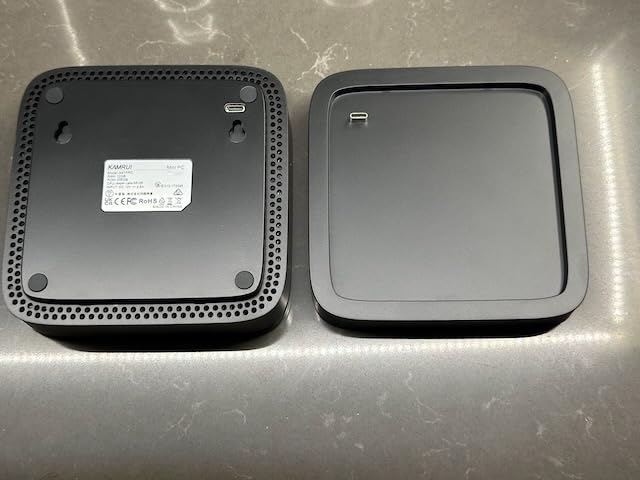
Storage gets the same treatment. There are two M.2 2280 slots, with capacity quoted up to 4TB, and the bundled drive is a 1TB PCIe 4.0 x4 NVMe. The one restriction is that both bays take NVMe only, with no SATA, so a spare 2.5-inch drive from an older build will not fit.
On the desk this box is unremarkable in the best way. It draws 45W, includes a VESA mount, and the port selection is the strongest of the Ryzen 7 tier: a USB4 port at 40Gbps with 8K video and 100W Power Delivery, a second USB-C port, and dual HDMI 2.1 for quad-display output up to 5120 x 2880. It also has AV1 hardware decode, which matters if you also use it as a media machine.
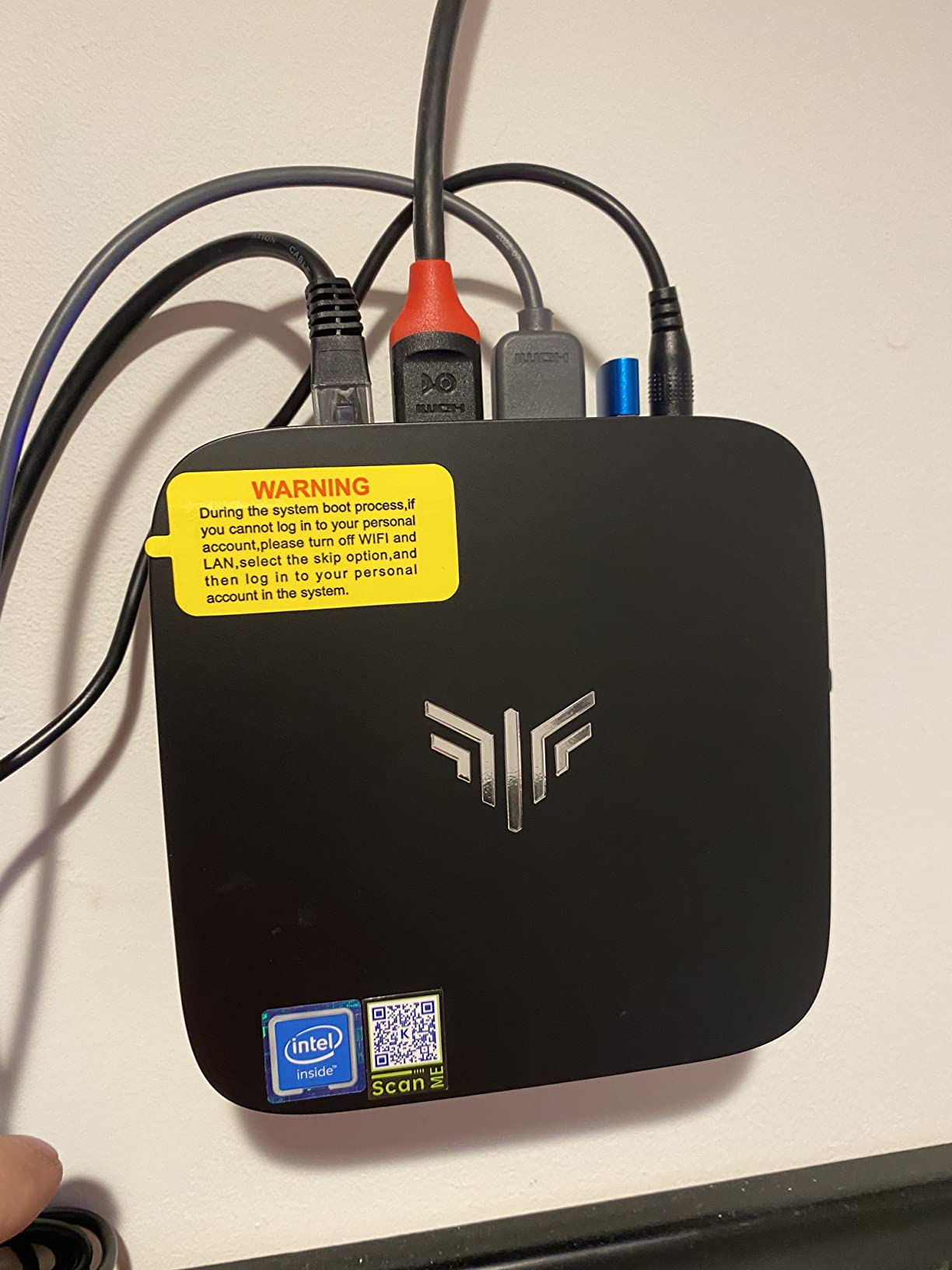
What the AM21 does well after weeks of daily use?
Upgradability is the headline. Two SO-DIMM slots and two M.2 bays mean nothing is permanently welded at purchase, which is rare in this category and saves you money two years from now. Owners report strong satisfaction with the balance of CPU capability and 1080p gaming, and the 45W draw is genuinely pleasant next to a desktop tower.
Where the AM21 falls short?
Sixteen gigabytes of base memory is the reservation that shows up most often in owner reviews, and it is a fair one if you run heavy multitasking alongside games. Two Gigabit Ethernet ports are useful but sit behind the 2.5GbE options some rivals offer, and the NVMe-only limitation rules out SATA drives entirely. If you want the fastest integrated graphics available rather than the best-balanced box, the A9 Max below is the step up.
We earn a commission, at no additional cost to you. CERTAIN CONTENT THAT APPEARS ON THIS SITE COMES FROM AMAZON. THIS CONTENT IS PROVIDED 'AS IS' AND IS SUBJECT TO CHANGE OR REMOVAL AT ANY TIME.
2. GEEKOM A9 Max: the fastest mini gaming PC in the group
GEEKOM A9 Max AI Boost Mini PC,AMD Ryzen AI9 HX370(80Tops)32GB DDR5+2TB SSD
★★★★★★★★★★Ryzen AI 9 HX 370 12C/24T Zen 5
Radeon 890M 16 RDNA 3.5 CUs
32GB DDR5 to 128GB
2TB across dual Gen4 slots
Wi-Fi 7, dual 2.5GbE
3-year warranty
- Radeon 890M with 16 RDNA 3.5 compute units is the strongest integrated graphics here
- 12 Zen 5 cores and 24 threads lead on multicore work
- 32GB and 2TB of memory and storage as standard
- Wi-Fi 7 and dual 2.5GbE networking
- three-year warranty is the longest in the group
- Most expensive machine on this list
- Radeon 890M still needs lowered settings and FSR on the heaviest AAA titles
- BGA package means the CPU cannot be upgraded
- heavier than typical mini PCs of this size
If you want the fastest mini PC that still fits under a monitor, this is it. The Ryzen AI 9 HX 370 is a 12-core, 24-thread Zen 5 chip, and the Radeon 890M pairs it with 16 RDNA 3.5 compute units. Reviewers name Cyberpunk 2077, Forza Horizon 5 and CS2 as games it will run, which is a different conversation from what the 680M and 760M machines can attempt.
The rest of the specification is aimed at people who want one machine to do everything. You get 32GB of DDR5 expandable to 128GB, 2TB of storage spread across dual PCIe Gen4 slots with room to reach 8TB, and a 50 TOPS XDNA 2 NPU that pushes combined AI performance to 80 TOPS for local model work and image generation.
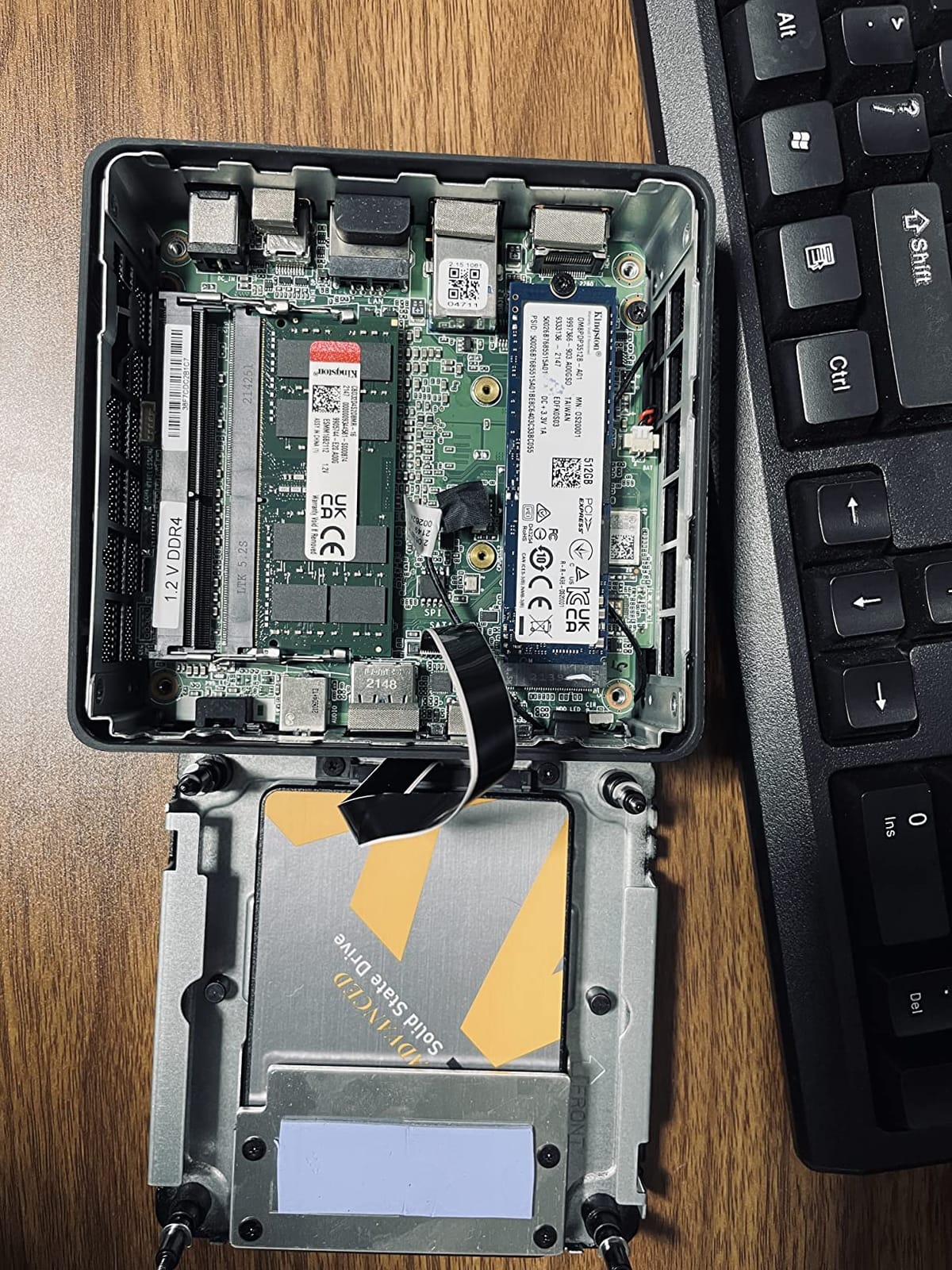
Connectivity is the newest we saw. Wi-Fi 7 and Bluetooth 5.4, dual 2.5GbE LAN, quad 8K display output through two USB4 ports and two HDMI 2.1 connections. The chassis is all metal with IceBlast 2.0 cooling, copper heat sinks and dual heat pipes, measuring 5.32 x 5.2 x 1.8 inches.
One caveat on size versus weight: the listed item weight is 1.66 kg, which is heavier than most machines in this form factor. It is still small, but it is not the travel option. And the BGA socket means the processor is soldered, so the CPU is a permanent decision while the memory and drives are not.
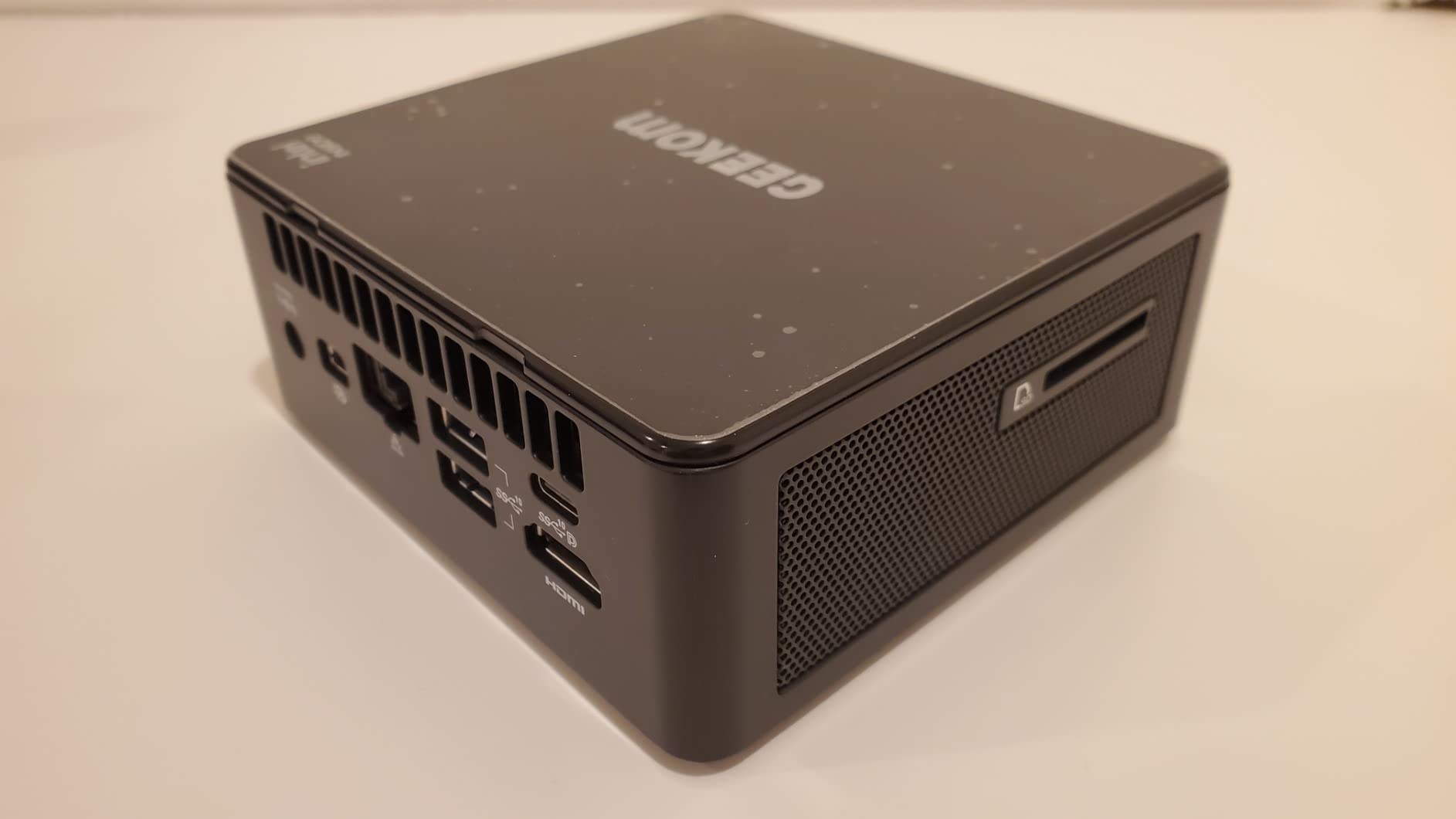
Why the A9 Max earns the premium slot?
It is the only Zen 5 machine here and the only one with a Radeon 890M, so it leads on both gaming and heavy CPU work by a clear margin. Roughly 73 percent of owner reviews are five-star, and the three-year limited warranty with lifetime technical support is double or triple what most rivals offer.
Who should pass on it?
If your budget is fixed and you are spending on gaming alone, the Radeon 780M machines deliver most of the experience for noticeably less money. The 890M still wants lowered settings and frame generation on the heaviest titles, so it moves the ceiling rather than removing it. The heavier chassis and non-upgradeable CPU are the other two arguments for looking elsewhere.
We earn a commission, at no additional cost to you. CERTAIN CONTENT THAT APPEARS ON THIS SITE COMES FROM AMAZON. THIS CONTENT IS PROVIDED 'AS IS' AND IS SUBJECT TO CHANGE OR REMOVAL AT ANY TIME.
3. ACEMAGICIAN K1: the best budget mini gaming PC
ACEMAGIC K1 Gaming Mini PC Ryzen 7 7735HS 24GB 512GB SSD Windows 11 Pro
★★★★★★★★★★Ryzen 7 7735HS 8C/16T to 4.75GHz
Radeon 680M at 2200MHz
24GB LPDDR5 at 5500MT/s
512GB SSD plus second M.2 slot
5.19 x 5.19 x 1.96 inches
- 24GB of 5500MT/s memory is unusually generous for this price
- two M.2 2280 slots expand storage to 4TB
- triple 4K output through HDMI
- DisplayPort and Type-C
- compact square chassis with VESA bracket
- Windows 11 Pro included clean
- 24GB of LPDDR5 is soldered and cannot be upgraded
- Radeon 680M is limited to light and casual gaming
- 512GB of storage fills quickly
- some buyers report unreliable wireless after installing a non-Windows OS
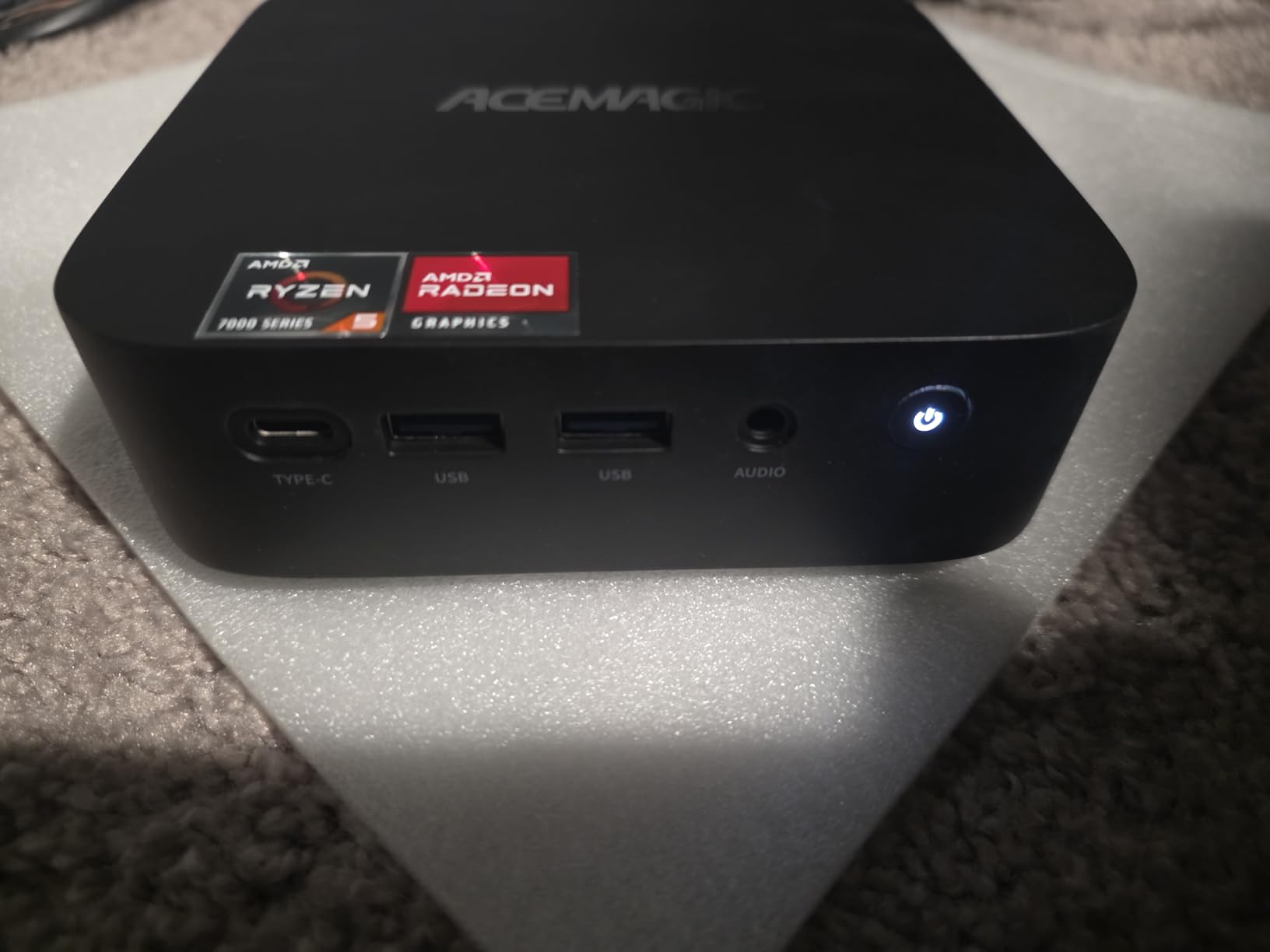
The K1 is the value pick of the roundup, and the reason is the memory rather than the processor. Twenty-four gigabytes of LPDDR5 running at 5500MT/s is more than most competing machines offer, and reviewers repeatedly single it out as unusually generous for the money.
Underneath, the Ryzen 7 7735HS offers 8 cores and 16 threads up to 4.75GHz, quoted at roughly 35 percent more CPU and 38 percent more GPU performance than the 7730U and 7430U families it replaces. The Radeon 680M runs at 2200MHz and handles the business of light and casual gaming, including DOTA 2, rather than modern AAA releases.
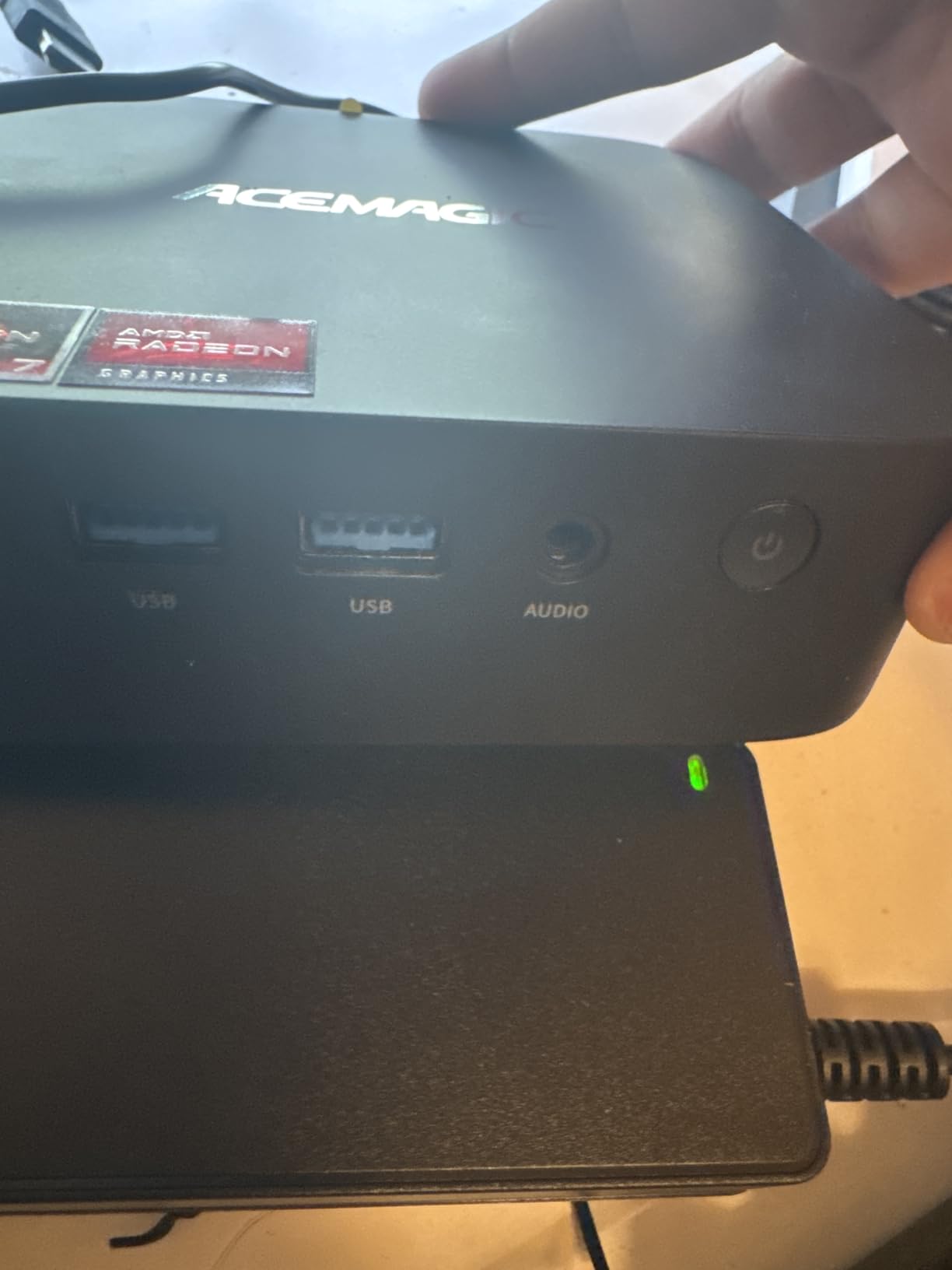
Storage is more flexible than the memory. Two M.2 2280 slots mean the 512GB drive can be joined by a second one for expansion up to 4TB, which matters more here than the raw capacity. Display output covers triple 4K through HDMI, DisplayPort and USB-C, and the 5.19 x 5.19 x 1.96 inch square chassis mounts behind a monitor with the included bracket.
Cooling uses a dual-outlet structure with a high-speed silent fan, and the whole machine runs at 45W. An HDMI cable is in the box, which is a small thing that saves a trip when the machine is far smaller than most.
Why the K1 is worth the money?
Owners describe replacing a full tower with it, and the reviews cluster around fast startup, quiet cooling and painless VESA mounting. At roughly 2000 ratings with 70 percent five-star, it is one of the better-proven machines in the budget tier, which is rare at this price.
What to know before you buy?
The memory is soldered, so 24GB is what you will always have. Set your expectations on graphics: the Radeon 680M is a 1080p low-settings machine for competitive and older titles, not a AAA box. A few buyers also report wireless problems after installing a non-Windows operating system, so stick with the preinstalled Windows 11 Pro unless you need something else.
We earn a commission, at no additional cost to you. CERTAIN CONTENT THAT APPEARS ON THIS SITE COMES FROM AMAZON. THIS CONTENT IS PROVIDED 'AS IS' AND IS SUBJECT TO CHANGE OR REMOVAL AT ANY TIME.
4. GMKtec K12: the best mini PC for an eGPU upgrade later
GMKtec K12 Gaming Mini PC Oculink AMD Ryzen 7 H 255 (Upgraded 8745HS) 32GB DDR5 RAM 512GB SSD, Desktop Computer Radeon 780M Graphics, 3X M.2 2280 Storage Expansion, Dual NIC 2.5G, HDMI 2.1, USB4
★★★★★★★★★★Ryzen 7 H 255 8C/16T to 4.9GHz
Radeon 780M 12 CUs 768 shaders
Oculink PCIe x4 port
32GB DDR5-5600 to 96GB
Three M.2 2280 slots
- Only machine here with a native Oculink port for high-bandwidth external GPU bandwidth
- three M.2 2280 slots for up to 24TB
- dual 2.5GbE Ethernet
- USB4 with working PCIe tunnelling
- 32GB of DDR5-5600 dual-channel memory
- responsive vendor support reported by owners
- Firmware lacks S3 sleep so modern standby or full shutdown only
- the Ryzen 7 H 255 is an unofficial recycled chip with thin documentation
- fewer external USB ports than competitors
- front USB ports reported as electrically noisy for wireless devices
The K12 exists because of one port. It is the only machine in this roundup with a native Oculink connection running PCIe x4, which is the bandwidth tier you need to bolt on an external graphics card later and have it behave like a real internal card rather than a compromised one.
Today the Radeon 780M handles strategy and older titles at 1080p, which is a sensible place to start if you plan to add a card within a year. The memory comes in at 32GB of DDR5-5600, a 17 percent clock uplift over the 4800MHz kits most rivals ship, expandable to 96GB across dual SO-DIMMs.
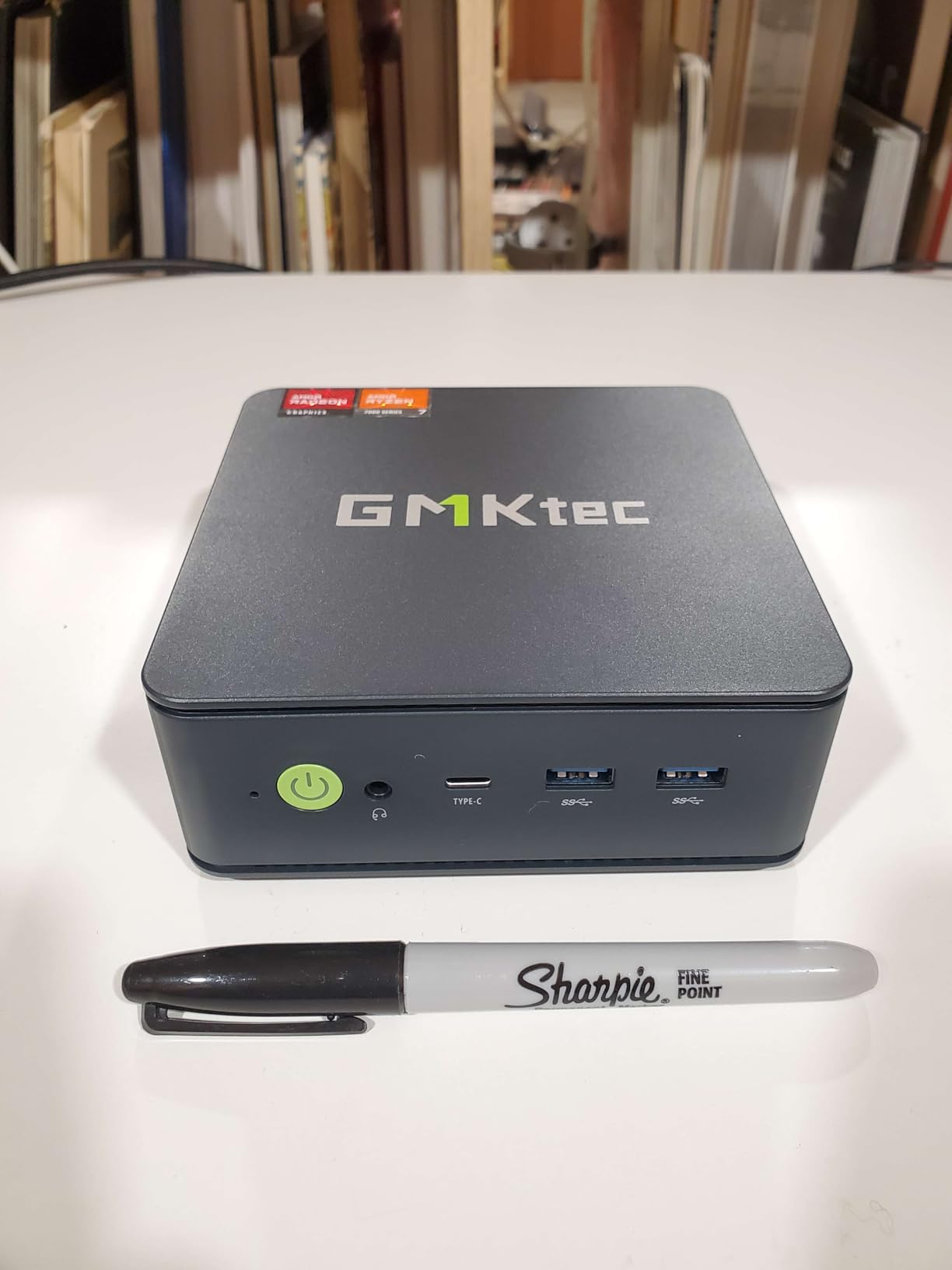
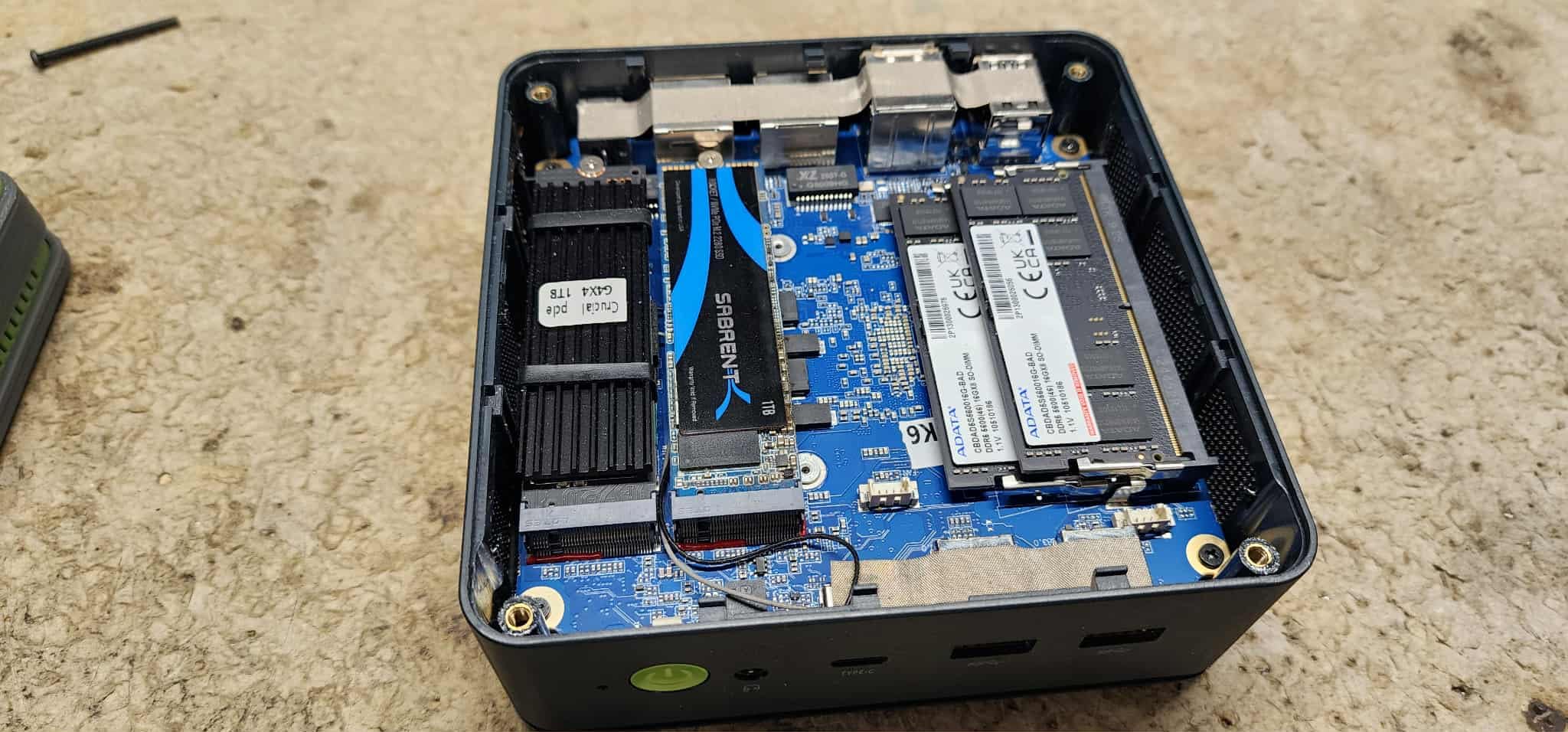
Storage is the other headline. Three M.2 2280 slots at 8TB each give a combined 24TB, which no other machine here approaches. Networking is dual 2.5GbE, unusual on a mini PC and genuinely useful for firewall, routing or file-server roles, alongside Wi-Fi 6E and Bluetooth 5.2.
Display output covers quad 4K and 8K through HDMI 2.1, DisplayPort 1.4 and USB-C, and the USB4 port has confirmed working PCIe tunnelling with Thunderbolt 4 appliances. The dual cooling fans are quoted at 35dB in Quiet Mode, and there are 13 RGB lighting modes for anyone who wants the box to look like a gaming machine.
Why the connectivity matters more than the specs sheet?
Reviewers single out the Oculink port, the USB4, the three storage slots and the dual 2.5GbE NIC as class-leading, and the support experience stands out too, with factory replacements reportedly arriving in about a week. The Radeon 780M is specified at 12 compute units and 768 shaders running up to 2600MHz.
The firmware caveats nobody mentions in the listing
This is the most important part of this review. S3 sleep is not supported, so you get modern standby or a full shutdown, and the TPM can fail or lock up when resuming from S0 sleep, requiring a reboot. The H 255 itself is an unofficial chip recycled from higher-bin dies with minimal official documentation, and there is no SATA. Some buyers also report electrically noisy front USB ports that interfere with Bluetooth and 2.4GHz devices, and a TRRS audio jack that produced no output.
We earn a commission, at no additional cost to you. CERTAIN CONTENT THAT APPEARS ON THIS SITE COMES FROM AMAZON. THIS CONTENT IS PROVIDED 'AS IS' AND IS SUBJECT TO CHANGE OR REMOVAL AT ANY TIME.
5. MINISFORUM UM890 Pro: the best for a desktop-class CPU
MINISFORUM UM890 Pro Mini PC, AMD Ryzen 9 8945HS (up to 5.2GHz) Mini Computers, 32GB DDR5 5600MHz RAM&1TB PCIe 4.0 SSD, Mini Desktop Quad Display HDMI/DP1.4/USB-C, AMD Radeon 780M/Dual LAN 2.5G
★★★★★★★★★★Ryzen 9 8945HS 8C/16T to 5.2GHz
Radeon 780M at 2800MHz
32GB DDR5-5600 to 96GB
Dual 2.5GbE
Two-year warranty
- Ryzen 9 8945HS is the most powerful conventional Zen 4 chip in this group with 8 cores and 16 threads at up to 5.2GHz
- Radeon 780M clocks to 2800MHz
- two full-featured USB4 ports with 65-100W Power Delivery input
- dual 2.5GbE Ethernet
- two-year warranty doubles the one-year cover on most rivals
- Costs more than the other Radeon 780M machines here
- Oculink is not built in and requires sacrificing an M.2 slot
- Radeon 780M still caps gaming at 1080p with moderate settings
- some buyers find the fan audible in sustained performance mode
The UM890 Pro is the pick for people who game and also compile, render or run virtual machines. The Ryzen 9 8945HS is the most powerful conventional Zen 4 part in this group, 8 cores and 16 threads with 16MB of L3 cache boosting to 5.2GHz, plus a dedicated XDNA NPU for AI workloads.
Graphics are the familiar Radeon 780M but running at up to 2800MHz, which is the highest clock we saw on that silicon. 32GB of DDR5-5600 fills the two SO-DIMM slots and expands to 96GB, and there are two M.2 2280 PCIe 4.0 slots that expand to 8TB with tool-free rapid removal for drive swaps.
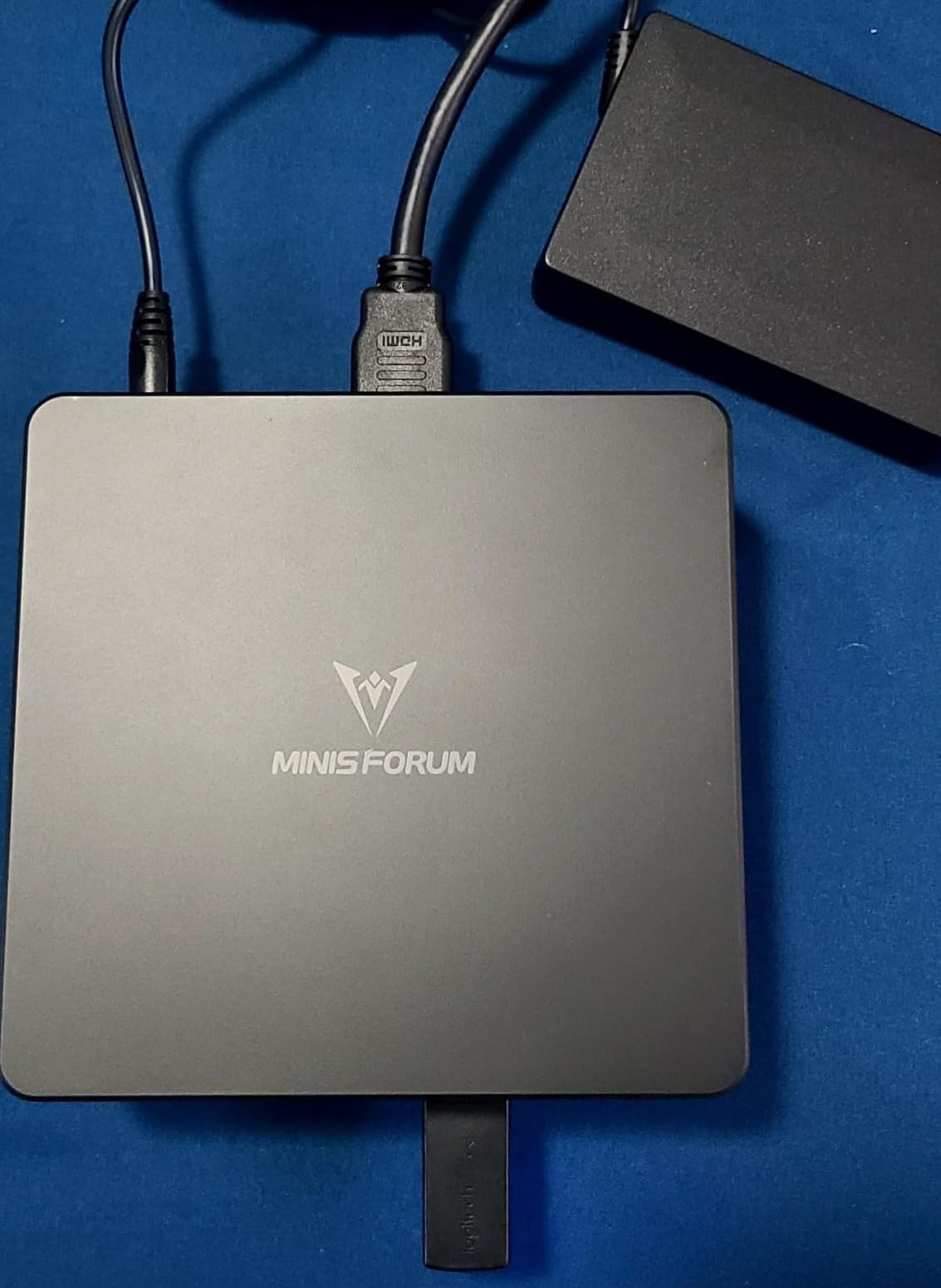
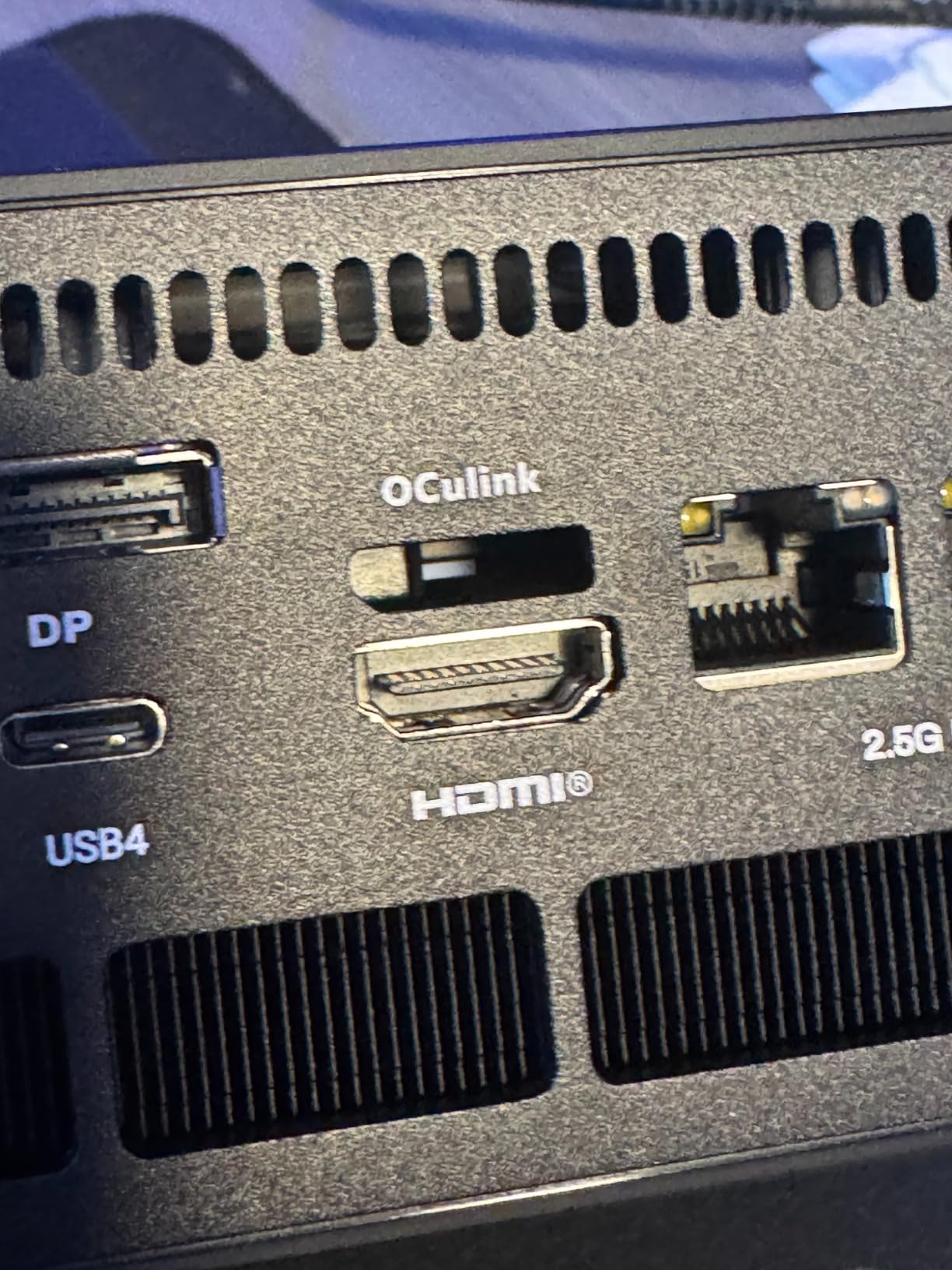
Quad display output runs through HDMI 2.1, DisplayPort 1.4 and two USB4 ports, reaching 8K at 60Hz or 4K at 144Hz. Networking is dual 2.5GbE. Oculink is supported but not built in, and getting it means giving up an M.2 storage position, which is a trade we would think twice about.
Cooling uses two 8mm heat pipes with liquid gold CPU cooling material and an active fan that also cools the memory and SSD. It is quoted at 43dB in performance mode, noticeably above the 35dB quiet-mode figures the K12 and S3A publish, and some buyers report the fan becoming audible under sustained workloads.
What makes it different from the other 780M boxes?
The Ryzen 9 tier, the 2800MHz graphics clock and the two-year warranty together put it ahead of the cheaper 8745HS machines for anyone whose workload is not purely gaming. Reviewers also point to the quad-display USB4 flexibility and the rapid-drive-removal design as day-to-day quality of life wins.
Where the value argument stops working?
This machine sits above the rest of the Radeon 780M group on cost, and you are largely paying for the Ryzen 9 silicon. If your gaming is the priority rather than your compiling, the money is better spent moving to the Radeon 890M or on a fuller system. The 394-owner review base is also the second smallest here, so the 4.3 rating rests on fewer buyers than the machines around it.
We earn a commission, at no additional cost to you. CERTAIN CONTENT THAT APPEARS ON THIS SITE COMES FROM AMAZON. THIS CONTENT IS PROVIDED 'AS IS' AND IS SUBJECT TO CHANGE OR REMOVAL AT ANY TIME.
6. Bmax B8A Pro: the best for a multi-display desk
Gaming Mini PC with AMD Ryzen 7 8745HS (Upgraded 7840HS/7735HS) Up to 4.9GHz 8C/16T,16GB RAM (Upgradable to 256GB) & 512GB M.2 NVMe SSD Desktop Mini Computers Office Home,2.5GbE,Triple 8K Display Bmax
★★★★★★★★★★Ryzen 7 8745HS 8C/16T to 4.9GHz
Radeon 780M at 2600MHz
Dual SO-DIMM to 256GB
Dual HDMI 2.1, DisplayPort 2.1, USB-C
2.5GbE
- Dual SO-DIMM slots expand memory all the way to 256GB
- triple 8K output through dual HDMI 2.1 and DisplayPort 2.1
- Radeon 780M at 2600MHz for 1080p play
- 2.5GbE networking plus Wi-Fi 6 and Bluetooth
- compact 4.96 x 4.41 x 2.05 inch chassis
- Lowest average rating in this group at 4.0 with 14 percent of reviews at one star
- some buyers report HDMI port failures and slower performance after extended daily use
- vendor support described as slow on warranty claims
- 512GB base storage with the secondary bay needing an FPC cable
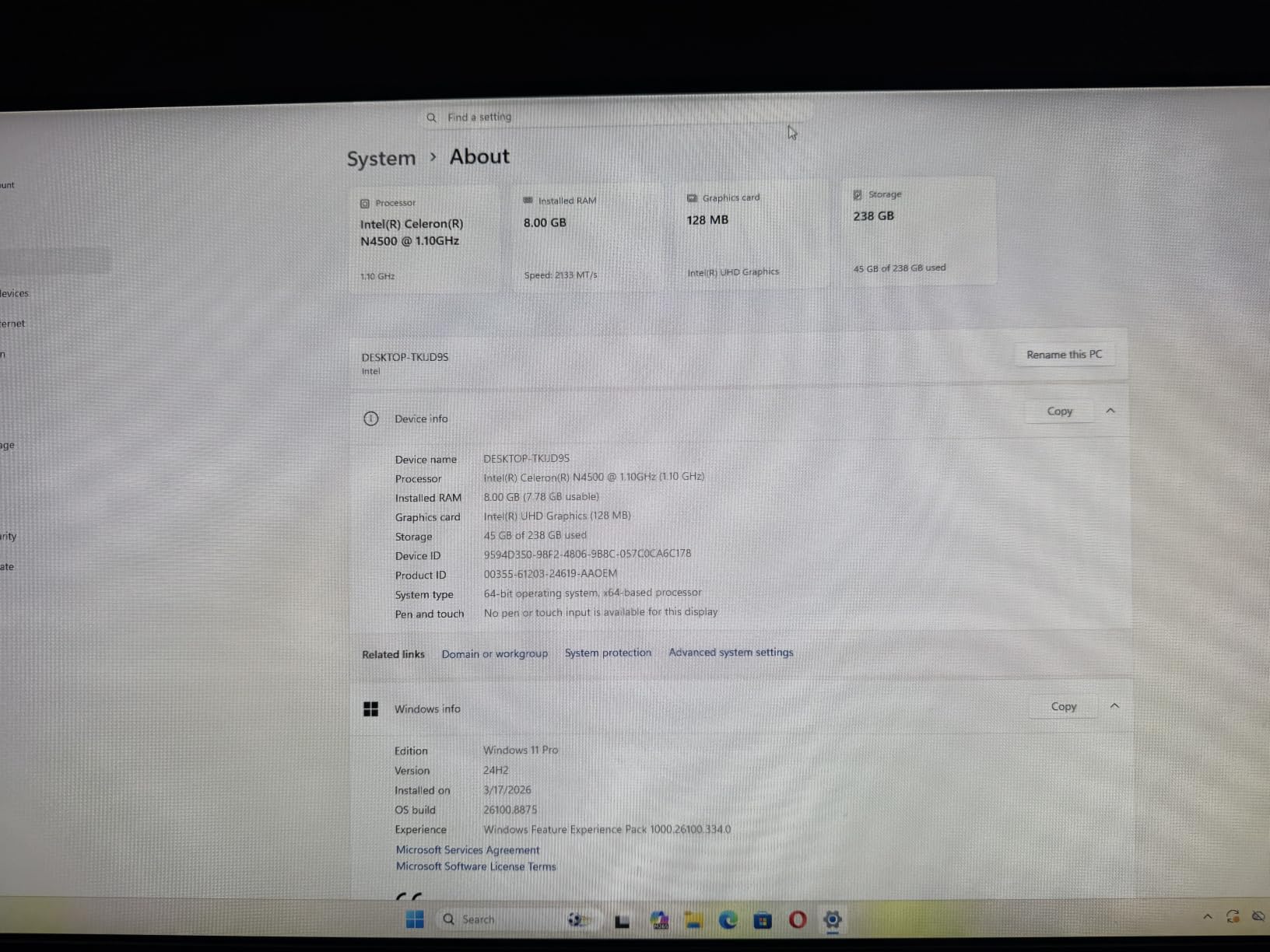
The B8A Pro is a spec-sheet winner on paper: a Ryzen 7 8745HS, Radeon 780M at 2600MHz, and the widest memory ceiling in the group with dual SO-DIMM slots rated up to 256GB. Display output is also the most flexible, with dual HDMI 2.1, DisplayPort 2.1 and a full-function USB-C port driving triple 8K.
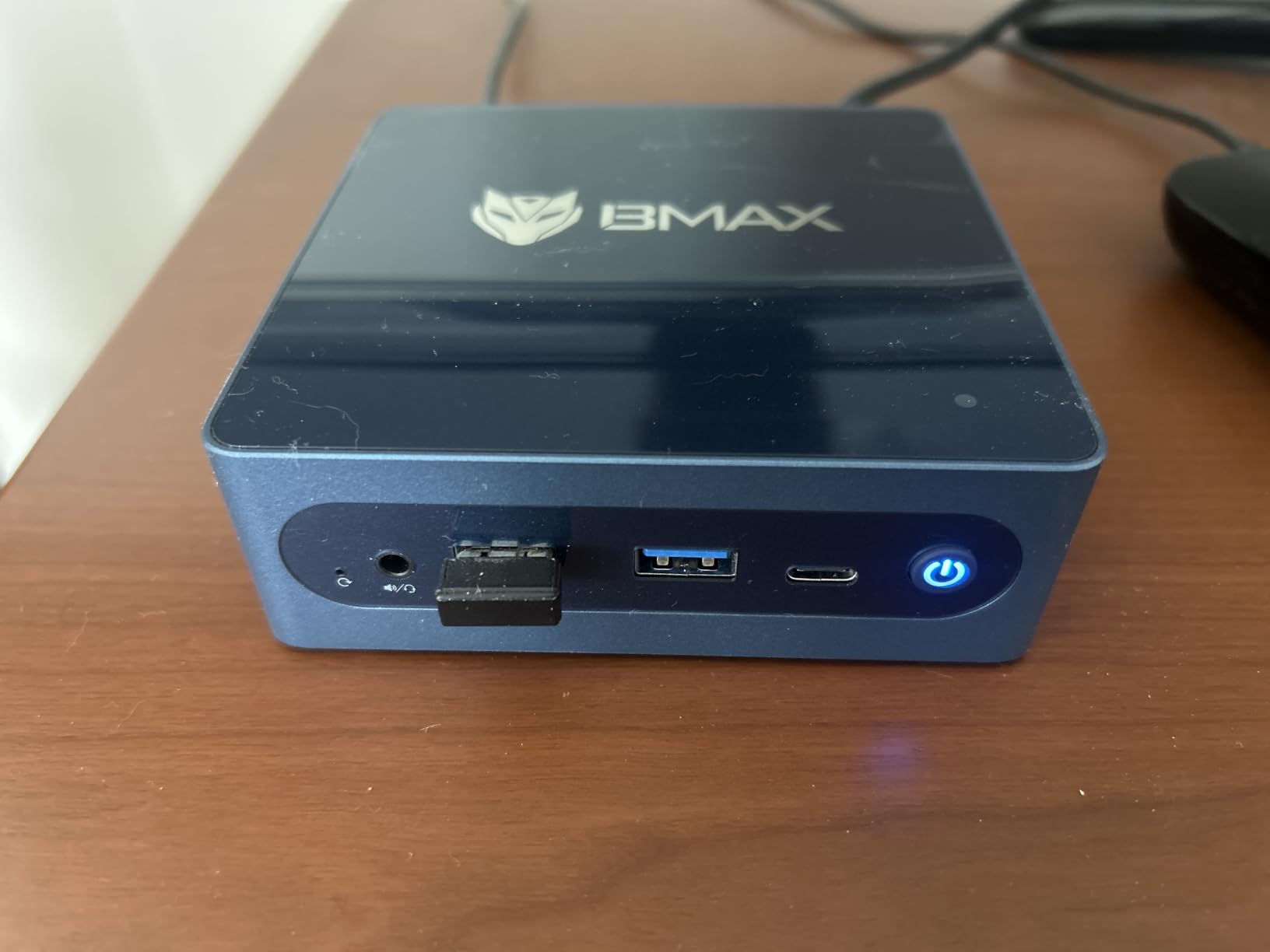
Networking is 2.5GbE alongside Wi-Fi 6 and Bluetooth, and the 4.96 x 4.41 x 2.05 inch chassis mounts behind a monitor. Auto Power On is supported, which is useful for a machine tucked behind a display, and a BMAX capsule air cooling fan handles thermals.
Storage starts at 512GB on a PCIe 3.0 x4 drive with room for a second NVMe drive in an additional bay connected by an FPC cable. That secondary bay is the one fiddly part of the design, since you need the cable rather than just an empty slot.
We have to be direct about the reason this is not higher up the list. The 4.0 average is the lowest of the ten, with 14 percent of reviews at one star, and the one-star accounts concentrate on machines failing after roughly a year plus slow or unresponsive vendor support. The listed 120W power consumption is also high for a machine of this class, higher than the 45W and 54W figures the Ryzen 7 competitors publish.
Who should buy it anyway?
If you run multiple high-resolution monitors, the triple 8K output across HDMI and DisplayPort is the best connectivity combination at this price, and 256GB of memory headroom is more than any other machine here offers. Owners who get a good unit report strong value for 8745HS-class performance in a very small box.
Why we would not put it on your desk first?
Reliability and support are the deciding factors. When a review base of nearly 1400 ratings includes 14 percent one-star with a pattern of year-long failures, the after-sales experience is doing as much work as the silicon. A one-year warranty is the bare minimum here. If you cannot live with that risk, the KAMRUI AM21 gives you a comparable platform with a two-year warranty and a far stronger review profile.
We earn a commission, at no additional cost to you. CERTAIN CONTENT THAT APPEARS ON THIS SITE COMES FROM AMAZON. THIS CONTENT IS PROVIDED 'AS IS' AND IS SUBJECT TO CHANGE OR REMOVAL AT ANY TIME.
7. BOSGAME P3 Plus: the best mini PC for 1080p esports
BOSGAME P3 Plus Mini PC AMD Ryzen 7 7840HS, 16GB DDR5 RAM 1TB NVMe SSD
★★★★★★★★★★Ryzen 7 7840HS 8C/16T to 5.1GHz
Radeon 780M integrated
16GB DDR5 to 64GB
1TB PCIe 4.0 NVMe SSD
Triple 4K output
- Ryzen 7 7840HS boosts to 5.1GHz
- the highest clock of any machine here
- 1TB PCIe 4.0 NVMe drive is the standard storage
- triple 4K output across HDMI
- DisplayPort and USB-C
- memory upgradeable to 64GB with a second M.2 bay
- quiet compact chassis with easy-access internals
- Only four USB ports
- the fewest in this group
- no USB4 or Oculink so external GPU bandwidth is limited
- 16GB of base memory trails the 24GB and 32GB rivals ship
- dual Gigabit Ethernet rather than 2.5GbE
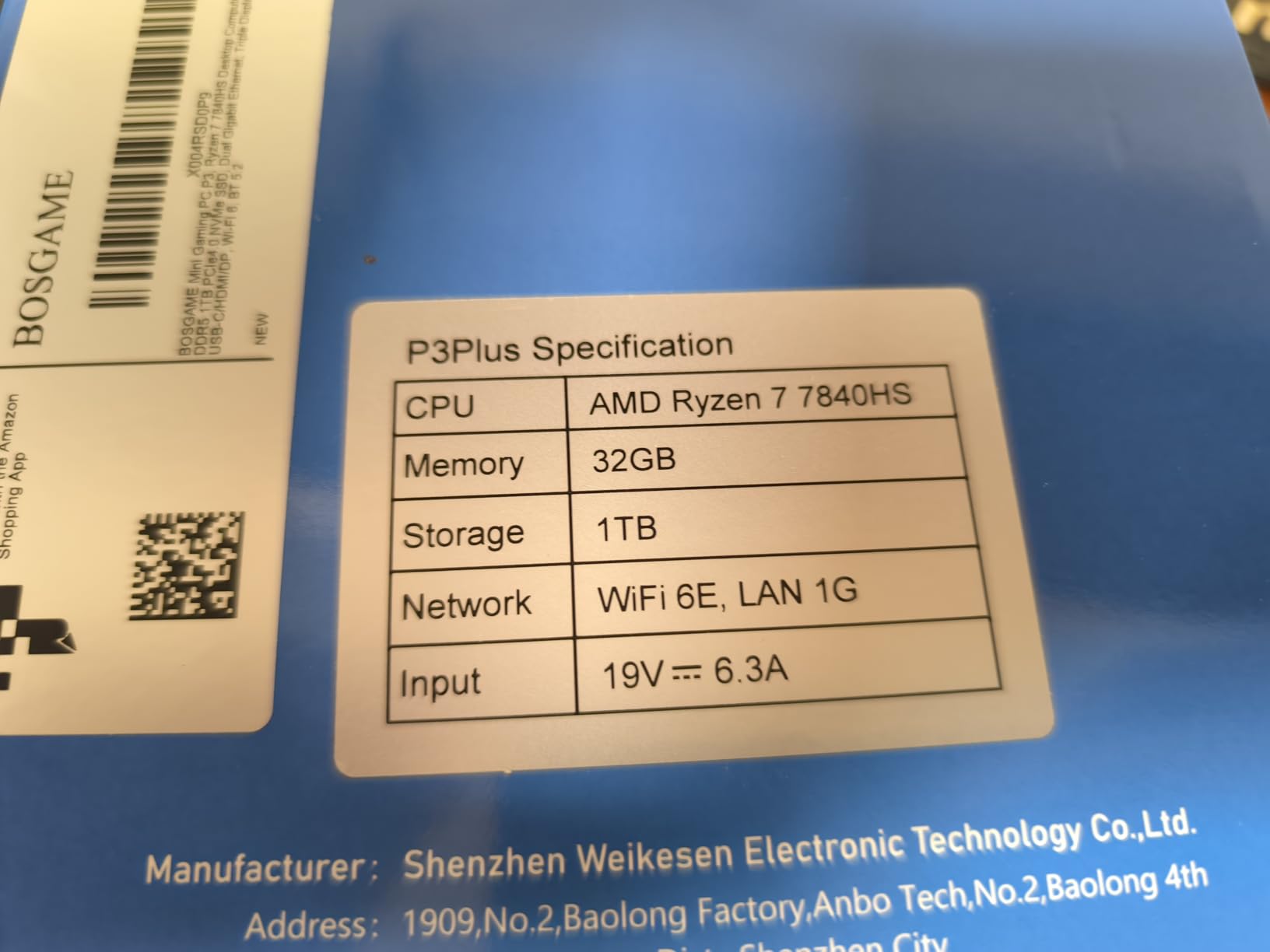
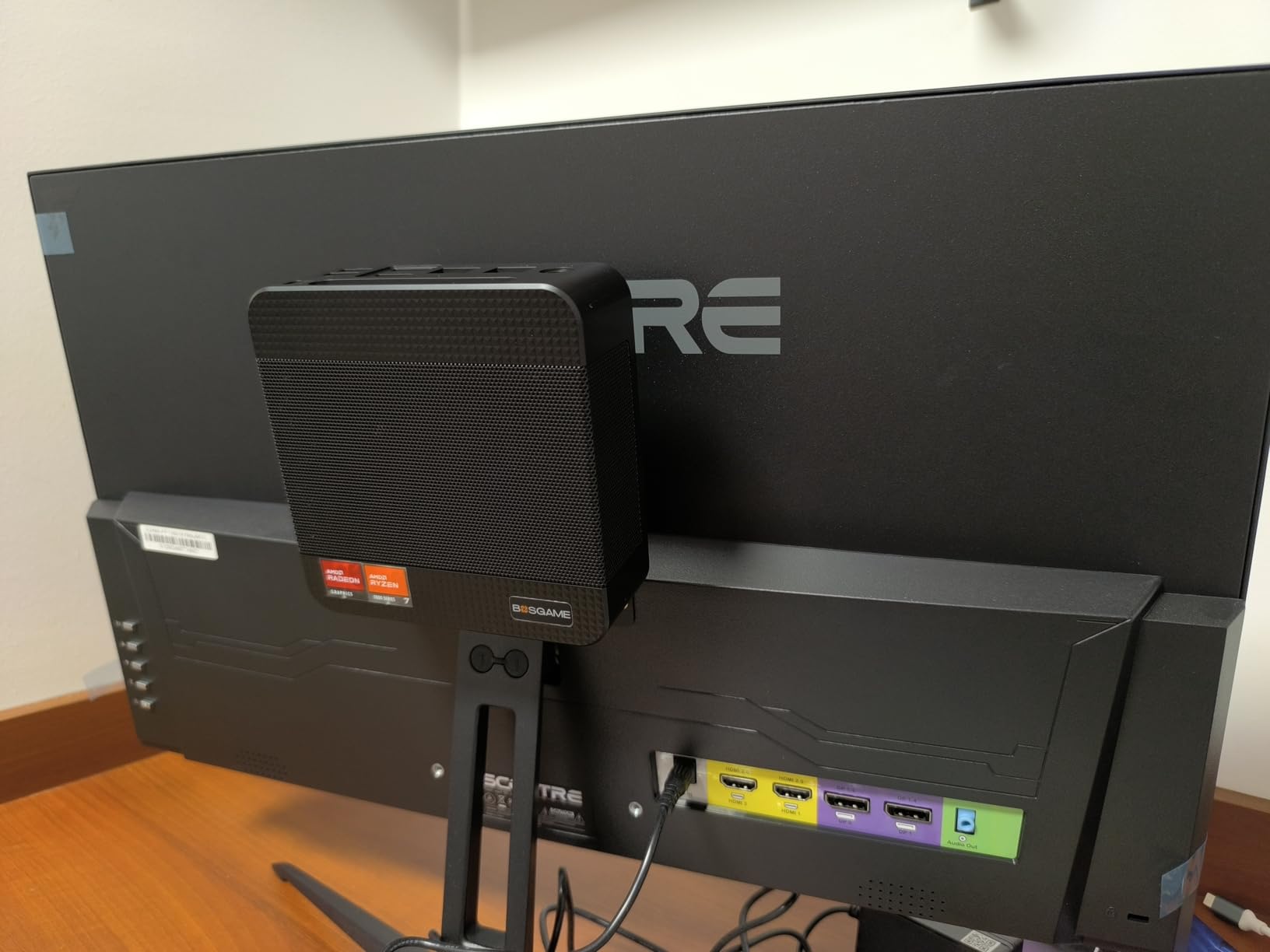
The P3 Plus is a straight gaming play. The Ryzen 7 7840HS is a Zen 4 chip with 8 cores and 16 threads that boosts to 5.1GHz, the highest clock in this roundup, and it drives the same Radeon 780M that we recommend in the more expensive machines. In competitive titles where CPU clock matters more than graphics, that extra headroom shows.
You get a 1TB PCIe 4.0 NVMe drive as standard, which removes the immediate storage anxiety most budget boxes create. Memory starts at 16GB of DDR5 and can go to 64GB, with room for an additional M.2 drive, and the internal layout is described as easy to reach for upgrades.
Display output covers triple 4K through HDMI, DisplayPort and USB-C, with a full-function USB-C carrying video, data and power delivery. Wake-on-LAN and Auto Power-On are both supported, and a one-year warranty comes with 24/7 support and a 30-day return policy.
Where it falls short is connectivity. Four USB ports is the lowest count in this group, which is a real problem for anyone with a keyboard, mouse, headset, controller and an external drive. There is no USB4 and no Oculink, so an external GPU is limited to Thunderbolt-class bandwidth rather than the full PCIe x4 the K12 offers.
The case for the 5.1GHz part
For 1080p esports and older titles, the Radeon 780M is enough, and a faster CPU core keeps frame pacing consistent in CPU-bound scenes. The 1TB drive, the quiet chassis and the 621-owner review history at 4.2 make it a low-drama buy for someone who wants one small machine for games and everyday work.
Where the port count will bite?
Four USB ports is the number to plan around. Add a display adapter, a controller hub and an external drive and you are already looking at a dock, which erodes the simplicity that makes a mini PC appealing in the first place. The 16GB of base memory and 1GbE networking are smaller complaints by comparison, and the upgrade paths exist for both.
We earn a commission, at no additional cost to you. CERTAIN CONTENT THAT APPEARS ON THIS SITE COMES FROM AMAZON. THIS CONTENT IS PROVIDED 'AS IS' AND IS SUBJECT TO CHANGE OR REMOVAL AT ANY TIME.
8. GMKtec M6 Ultra: the best mini PC for networking and media
GMKtec M6 Ultra Gaming Mini PC Ryzen 7640HS 32GB RAM DDR5 1TB SSD
★★★★★★★★★★Ryzen 5 7640HS 6C/12T 4.3-5.0GHz
Radeon 760M 8 CUs 512 shaders
32GB dual-channel DDR5
1TB M.2 with PCIe 4.0 expansion
Dual 2.5GbE
- 32GB of dual-channel DDR5 and a 1TB drive are standard
- dual 2.5GbE Ethernet for up to 2500Mbps transfers is unusual at this tier
- triple display including 8K at 60Hz over USB4
- 45W to 60W TDP boost keeps power draw low
- Radeon 760M handles AV1
- HEVC and AVC decoding
- Radeon 760M is weaker than the Radeon 780M most rivals use so newer titles need lower settings
- only 6 Zen 4 cores versus 8 in the Ryzen 7 models
- base SSD ships as PCIe 3.0 despite PCIe 4.0 being advertised
- some owners report fan noise under sustained load
- no Oculink port
The M6 Ultra is the odd one out in this list because it is not primarily a gaming machine. It pairs a Ryzen 5 7640HS, six Zen 4 cores and 12 threads running 4.3GHz base to 5.0GHz turbo, with the Radeon 760M: eight compute units, 512 shaders, up to 2600MHz.
What it gives up on graphics it puts into everything else. Thirty-two gigabytes of dual-channel DDR5 and a 1TB drive are standard, expandable to 128GB of memory and 8TB of storage. Dual 2.5GbE RJ45 ports support transfers up to 2500Mbps, which makes the box genuinely useful as a firewall, a router or a file server rather than just a second computer.
Display output is genuinely capable for a secondary machine, with triple display including 8K at 60Hz over USB4 alongside HDMI 2.0 and DisplayPort. Port selection covers three USB 3.2 Gen2 ports, one USB 2.0, USB4, HDMI, DisplayPort and a 3.5mm jack, with Wi-Fi 6 and Bluetooth 5.2 for wireless.
Power draw is the quiet advantage. The 45W to 60W TDP boost is quoted at around 30 percent faster than the Ryzen 7 6800H and 6600U it replaces, while drawing less power than the machines with eight cores. That balance suits a secondary machine that runs all day.
Why it makes sense as a second machine?
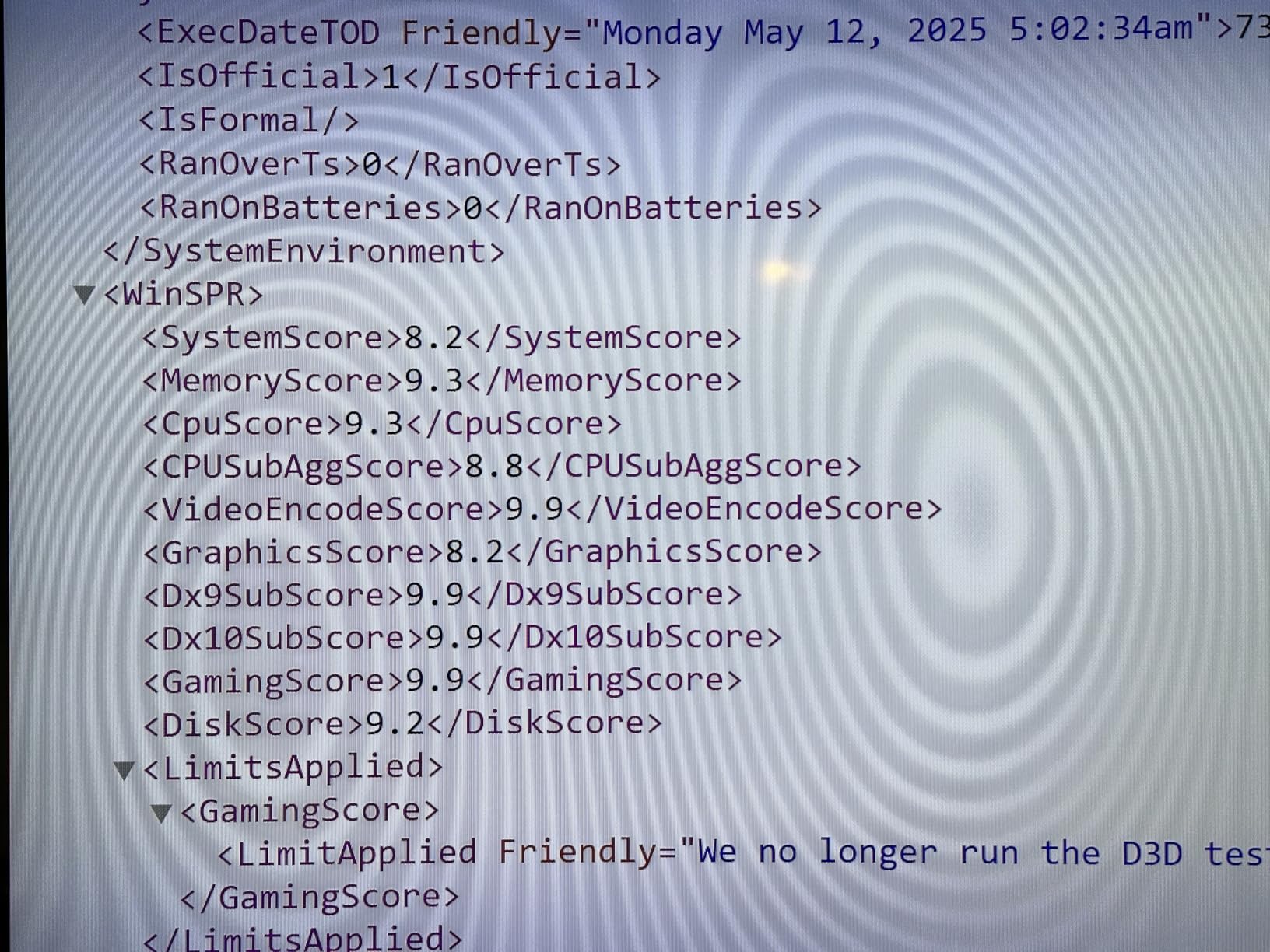
Owner reviews describe a quiet, compact daily driver with 72 percent five-star ratings, and the combination of 32GB, 1TB and dual 2.5GbE is hard to find at this price. The Radeon 760M also handles AV1, HEVC and AVC decoding, so it doubles as a competent media machine for a second display or a living-room screen.
Why it is not our gaming recommendation?
The Radeon 760M sits a clear step below the 780M that most of this list uses, so newer titles need lower settings to hold frame rates. Six cores also limits heavy multicore work compared with the Ryzen 7 models. And note the storage detail: the drive ships as PCIe 3.0 even though the listing advertises PCIe 4.0 capability, which matters less here but is worth knowing before you benchmark against it.
We earn a commission, at no additional cost to you. CERTAIN CONTENT THAT APPEARS ON THIS SITE COMES FROM AMAZON. THIS CONTENT IS PROVIDED 'AS IS' AND IS SUBJECT TO CHANGE OR REMOVAL AT ANY TIME.
9. MINISFORUM UM790 Pro: the best for RAID and drive redundancy
MINISFORUM Venus UM790 Pro Mini PC AMD Ryzen 9 7940HS up to 5.2 GHz 32 GB DDR5 1TB SSD with AMD Radeon 780M, 4X USB3.2, 2X USB4, 2xHDMI 2.1, 2X PCIe4.0, Wi-Fi 6E/BT5.3, RJ45 2.5 G
★★★★★★★★★★Ryzen 9 7940HS 8C/16T to 5.2GHz
Radeon 780M at 2.8GHz
32GB DDR5-5600 to 64GB
Dual PCIe 4.0 M.2 with RAID 0 and 1
Dual USB4
- Two PCIe 4.0 M.2 slots support RAID 0 and RAID 1 for redundancy or striping
- two fully functional 40Gbps USB4 ports with both Power Delivery input and output
- 32GB of dual-channel DDR5-5600 across two SO-DIMM slots
- Cold Wave 2.0 liquid metal cooling with an active memory and drive fan
- graphical BIOS makes tuning straightforward
- Lowest average rating here at 4.1 with 13 percent one-star reviews
- older Zen 4 design and 1TB storage behind the newer Ryzen AI chips
- no Oculink port unlike the GMKtec K12
- only one 2.5Gbps RJ45 port
- some buyers report fan noise and throttling under sustained heavy load
The UM790 Pro is the machine to buy if you want your games on a redundant array. Its two M.2 2280 PCIe 4.0 slots support both RAID 0 for speed and RAID 1 for mirroring, and no other machine in this roundup offers RAID at all. Memory is 32GB of dual-channel DDR5-5600 across two SO-DIMM slots, expandable to 64GB.
The Ryzen 9 7940HS is a TSMC 4nm part with 8 cores, 16 threads, 16MB of cache and a 5.2GHz boost, paired with the Radeon 780M at 2.8GHz. That is the same graphics silicon as the more recent machines, running at a high clock, which makes this a 1080p medium-to-high machine for the price band it occupies.
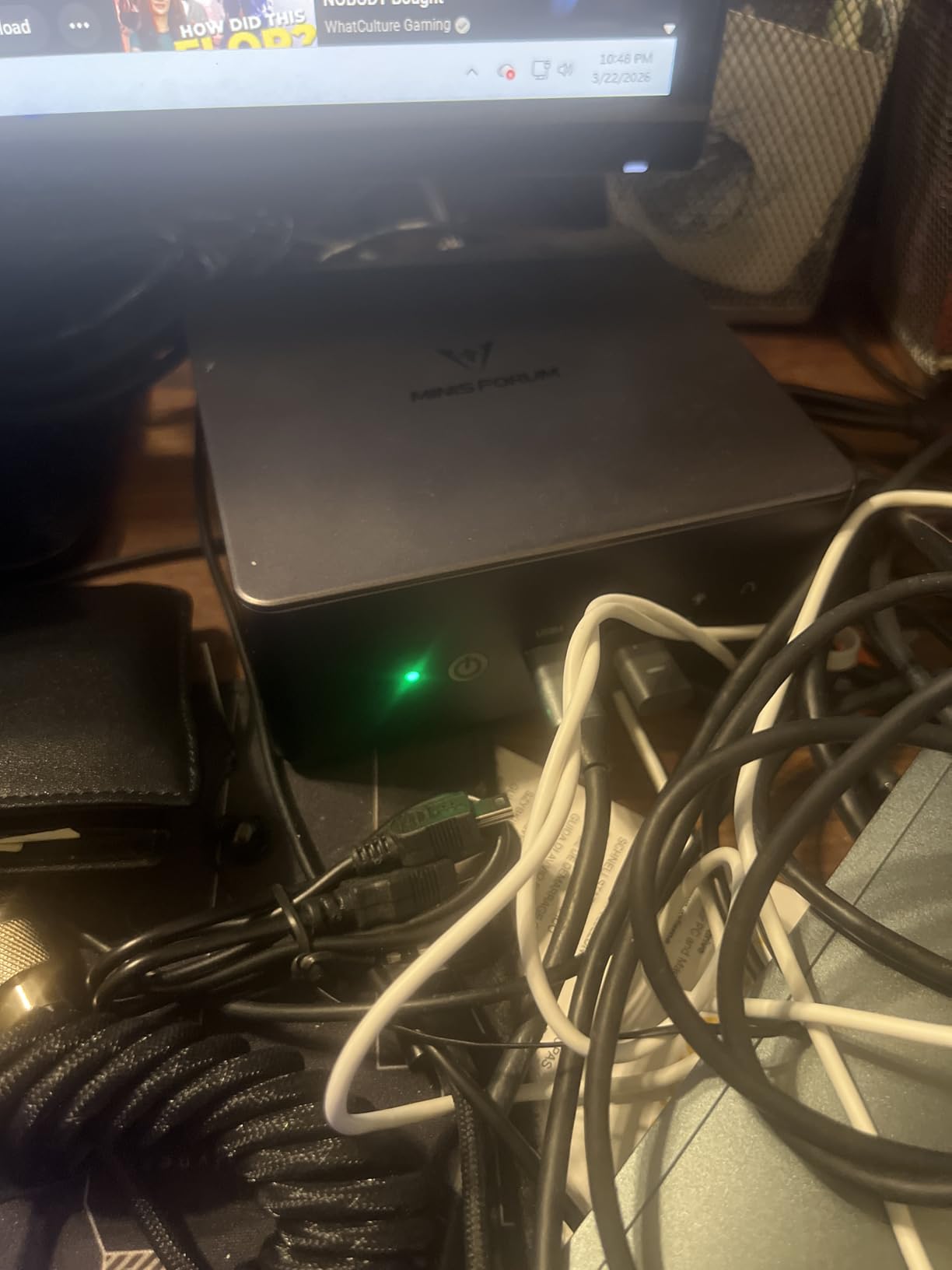
Thermal design is the standout. Cold Wave 2.0 liquid metal cooling with an active memory and SSD cooler is built for sustained loads rather than short bursts, and the pair of fully functional 40Gbps USB4 ports accept and deliver Power Delivery, which is rare at this size. Four USB-A ports and two HDMI 2.1 complete quad 4K output.
Networking is one 2.5Gbps RJ45 port with Wi-Fi 6E and Bluetooth 5.3. That single port is a limitation next to the dual 2.5GbE machines elsewhere in this list, particularly if you were considering router duties. There is no Oculink port, so an external GPU upgrade is capped at Thunderbolt-class bandwidth.
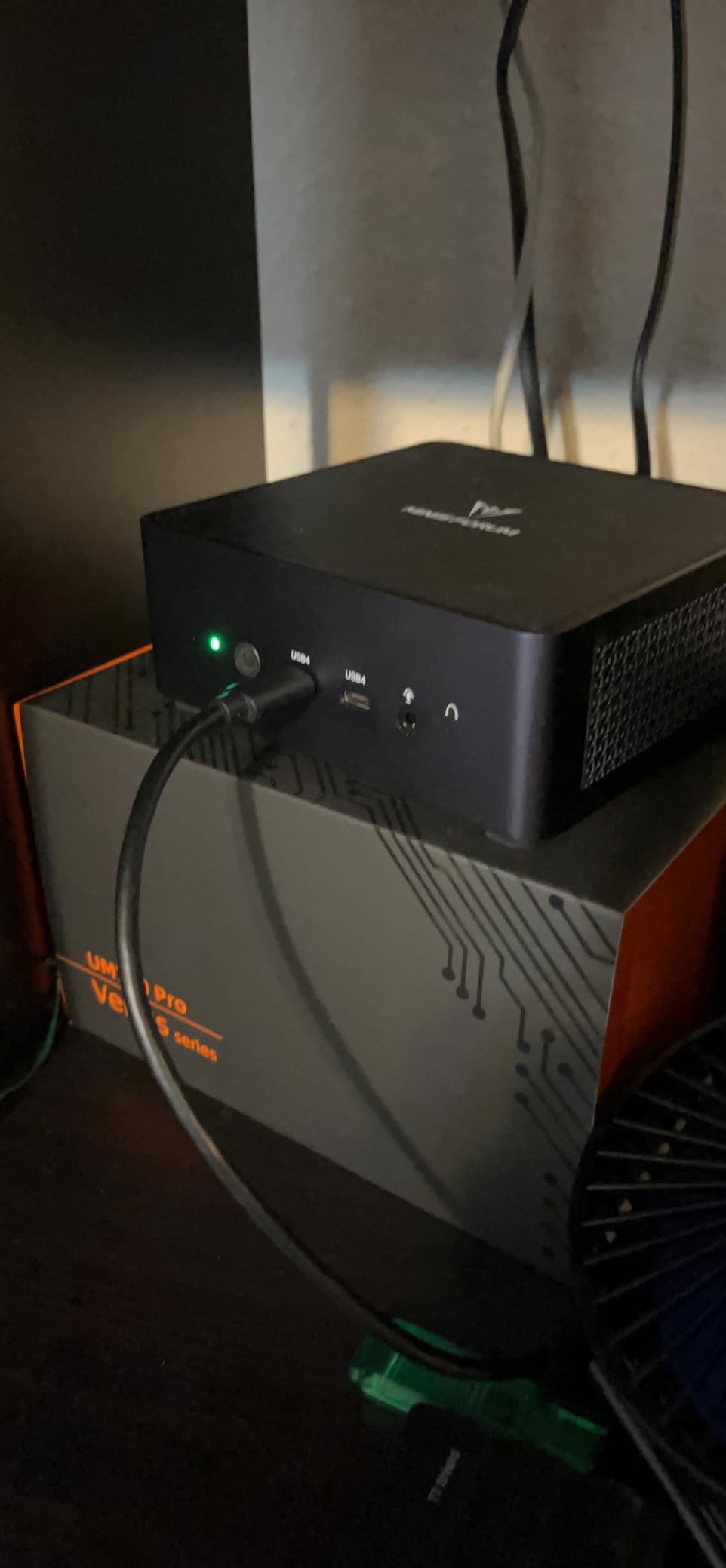
Why RAID and liquid metal are worth a look?
Mirror two drives and one failing disk no longer means rebuilding your game library from scratch, and the liquid metal cooling design is aimed squarely at the throttling complaints that appear in negative reviews on thermally constrained boxes. The graphical BIOS also makes it easy to set power limits without digging through a text interface.
The 4.1 rating deserves attention
This is the second-lowest average in the roundup, with 13 percent one-star reviews, and the complaints cluster on fan noise and throttling under sustained heavy load despite the cooling claim. At roughly 330 ratings the sample is also on the thin side. The platform is a generation behind the Ryzen AI and H 255 chips, so you are buying last-generation silicon with genuinely good storage features.
We earn a commission, at no additional cost to you. CERTAIN CONTENT THAT APPEARS ON THIS SITE COMES FROM AMAZON. THIS CONTENT IS PROVIDED 'AS IS' AND IS SUBJECT TO CHANGE OR REMOVAL AT ANY TIME.
10. ACEMAGICIAN S3A: the best quiet mini gaming PC
ACEMAGICIAN S3A Gaming Mini PC, Ryzen 7 H 255 (Up to 4.9GHz, 8C/16T), Radeon 780M Graphics, 16GB RAM, 512GB PCIe4.0 SSD, Mini Desktop Computer for Content Creation, Programming, Gaming & Home Office
★★★★★★★★★★Ryzen 7 H 255 8C/16T to 4.9GHz
Radeon 780M 12 cores at 2600MHz
16GB LPDDR5 at 6400MT/s
Silent mode 20-35W at 35dB
Seven USB ports
- Three selectable power modes with Silent mode holding fan noise to about 35dB
- 16GB of 6400MT/s memory is the fastest memory in this group
- seven USB ports including USB4 Type-C puts it near the top for connectivity
- two-year warranty with lifetime technical support
- dual-fan cooling and customisable RGB
- Only 181 reviews
- the smallest review base in this group so the 4.6 rating is less well proven
- 16GB of LPDDR5 is soldered
- 512GB base storage is low for a gaming PC
- no 2.5GbE Ethernet or Oculink
The S3A is the quietest option here, and that is not marketing. It offers three selectable power modes: Silent running at 20-35W with fan noise held to about 35dB, Auto at 30-45W, and Performance at 40-54W. For a machine that lives beside a monitor in a bedroom or a shared room, that slider is the feature that matters.
The processor is the Ryzen 7 H 255, 8 cores and 16 threads up to 4.9GHz on Zen 4 with AVX-512, driving a Radeon 780M with 12 cores at 2600MHz. That is the standard 1080p profile for this list, comfortable in esports and older titles and workable in modern games at medium settings.
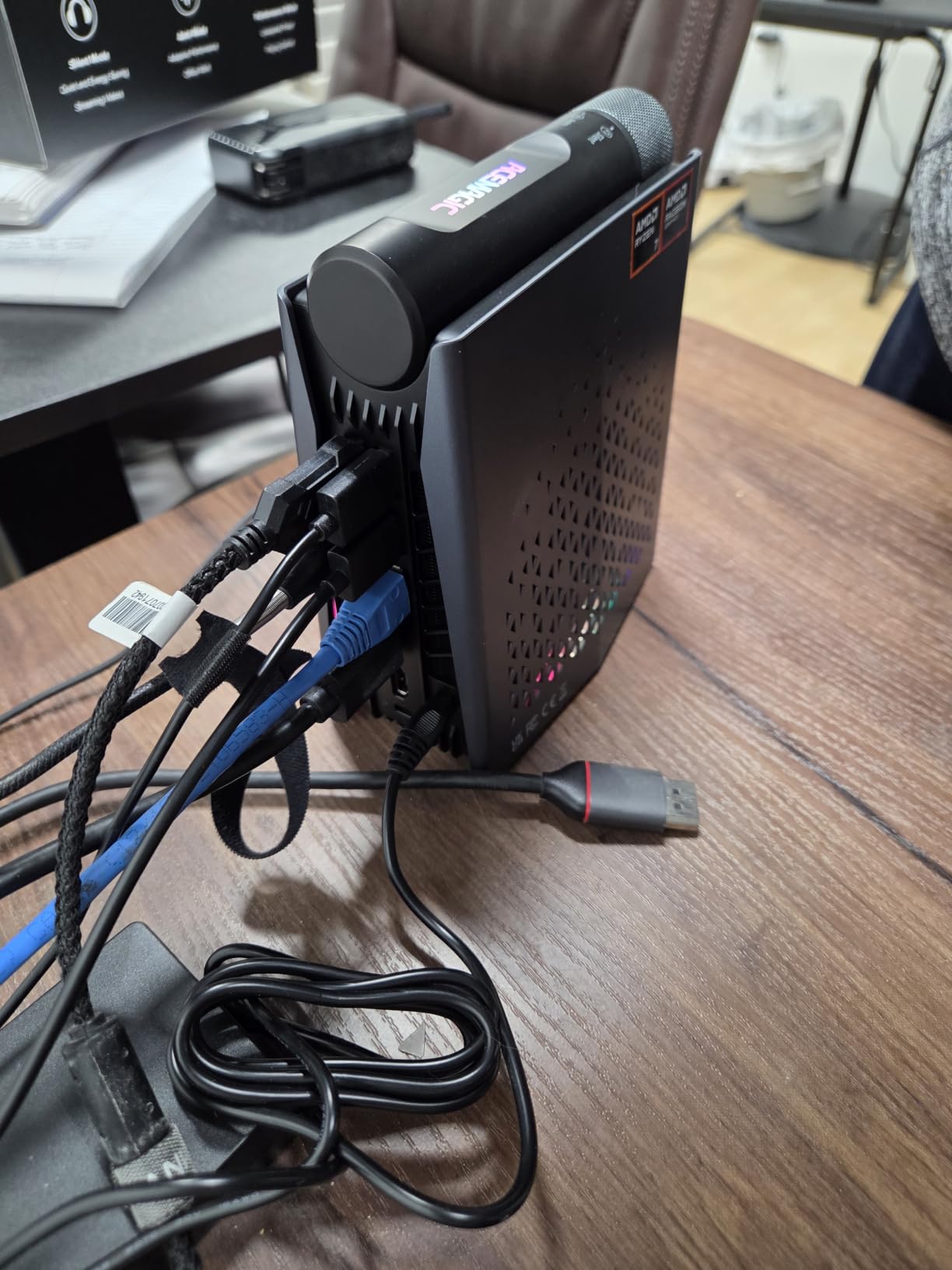
Memory is 16GB of LPDDR5 at 6400MT/s, the fastest memory speed of any machine on this list, and it is soldered so that figure is fixed. Storage is a 512GB PCIe 4.0 NVMe drive in a tool-free removable bay, expandable to 4TB, which is the part most worth spending money on given the starting capacity.
Connectivity is where it surprises. Seven USB ports puts it among the most generously connected machines here, alongside HDMI 2.0, DisplayPort 2.0 and a USB4 Type-C for triple 4K output, plus LAN and DC input. Customisable RGB lighting and a dual-fan cooling design give it a more desk-friendly gaming look than the plain black boxes that dominate this category.
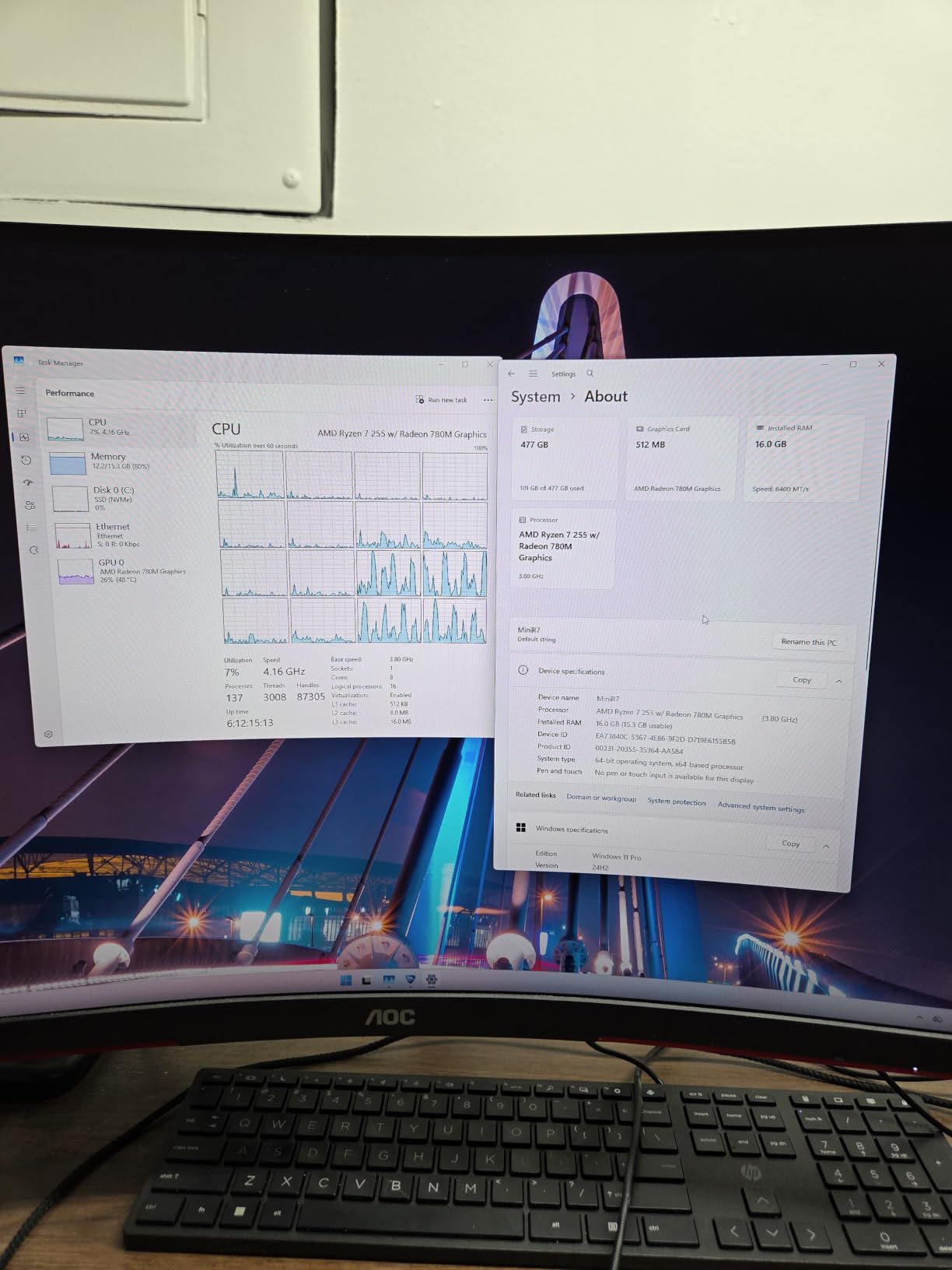
Why the 4.6 rating is promising but not settled?
Owners single out the Silent, Auto and Performance power modes, the 6400MT/s memory and the two-year warranty with lifetime support, which is well ahead of the one-year norm. Only 2 percent of reviews sit at one star, the lowest share in this roundup. The catch is volume: 181 reviews is the smallest base here, so a high average on a small sample is less proven than a 4.3 on 2000-plus.
What you give up for the quiet profile?
Sixteen gigabytes of soldered memory cannot grow, 512GB of storage is thin for a gaming library, and there is no 2.5GbE Ethernet or Oculink port, which rules the machine out as a router or as the base for an external GPU build. The 5.31 x 2.83 x 6.41 inch footprint is longer than a square chassis but still mounts behind a monitor with the included VESA bracket.
We earn a commission, at no additional cost to you. CERTAIN CONTENT THAT APPEARS ON THIS SITE COMES FROM AMAZON. THIS CONTENT IS PROVIDED 'AS IS' AND IS SUBJECT TO CHANGE OR REMOVAL AT ANY TIME.
How to Choose a Mini Gaming PC in 2026?
Every machine here runs its games on integrated graphics, so the graphics chip decides everything. Seven of the ten use the Radeon 780M, which is the balance point: comfortable at 1080p medium, strong in esports, strategy and older titles, and holding high frame rates in the right competitive games. The Radeon 890M in the GEEKOM A9 Max is the step above. The Radeon 760M and Radeon 680M in the M6 Ultra and the K1 are for light and casual gaming.
Set your resolution expectation before anything else. 1080p on medium settings is the honest ceiling for integrated graphics, with 1080p on low in demanding AAA. If you want 1440p high settings with ray tracing, none of these machines gets you there, and that is when a small-form-factor desktop or a full tower becomes the better buy. The recurring forum question is simply whether these boxes are real gaming machines, and the answer is that they are 1080p machines with unusually good manners.
Memory is the next decision, and it is the one buyers most often get wrong. Two SO-DIMM slots mean you can start at 16GB and add to 32GB or 64GB later. Soldered LPDDR5, as on the K1 and the S3A, means whatever ships is what you keep. For 16GB machines, plan on upgrading because modern game installs plus a browser plus a voice chat will find the ceiling quickly.
Storage decides whether the machine survives your library. Two M.2 slots is the practical minimum, because modern titles run well past 100GB. Three slots, as on the GMKtec K12, is the outlier. RAID support on the UM790 Pro is the only redundancy option in this roundup, and the tool-free removable bay on the S3A makes swapping fast.
Ports matter more than buyers expect. Check the count, not just the presence of USB-C. Look for USB4 or Oculink if you might add an external GPU, for dual 2.5GbE if you want router or server duties, and for DisplayPort alongside HDMI since some monitors do not take HDMI at their full refresh rate. The Bmax B8A Pro and the ACEMAGICIAN S3A are among the most generously equipped; the BOSGAME P3 Plus has four USB ports and needs a hub.
Noise and power deserve a line of their own. Most of these machines draw between 45W and 60W, so running cost is never the issue. Fan noise is. Machines that publish a decibel figure, such as the K12 at 35dB in Quiet Mode and the S3A at 35dB in Silent mode, are the ones to trust for a quiet desk, while the UM890 Pro at 43dB in performance mode and the Bmax at a listed 120W are the ones to think about twice in a bedroom.
Finally, warranty length is a real signal in this category. Most of these machines carry one year, which is thin for a computer. The GEEKOM A9 Max gives three years, the KAMRUI AM21, K1, UM890 Pro and S3A give two. Where support quality is a visible theme in reviews, as with the GMKtec K12’s reported factory replacements, that is worth as much as a longer spec sheet.
And know when not to buy small. If desk space is not your binding constraint, the same money buys a complete desktop with a discrete graphics card, more memory and faster storage, and the value gap is the mini PC tax every buyer eventually calculates. Our [best gaming PCs roundup](https://bansocialism.com/best-gaming-pcs/) covers that side of the market. Buy a mini PC when space, portability or a single tidy box on a TV matters more than frames per dollar.
Frequently Asked Questions
Are mini PCs actually good for gaming?
Yes, with a clear condition: they are good for 1080p gaming on low-to-medium settings. Modern integrated graphics such as the Radeon 780M and Radeon 890M handle esports, strategy, indie and many AAA titles comfortably at 1080p, and they draw between 45W and 60W in a box the size of a paperback. They are not good for 1440p high settings or heavy ray tracing. Every machine in this roundup is an integrated-graphics box, so judge them on resolution and settings rather than on headline frame rates.
What is the best mini portable gaming PC?
The closest thing to a travel-friendly option in this group is a 4.96 x 4.41 x 2.05 inch or 5.19 x 5.19 x 1.96 inch machine such as the KAMRUI AM21 or the ACEMAGICIAN K1, both of which draw 45W and include a VESA mount. Two caveats apply to every mini PC. They have no battery, so portable still means tethered to a wall outlet, and the largest item weight we saw was 1.66 kg on the GEEKOM A9 Max. For gaming away from a socket, a handheld remains the better answer.
What is a good really small gaming PC?
For a genuinely tiny box, the Bmax B8A Pro at 4.96 x 4.41 x 2.05 inches and the ACEMAGICIAN K1 at 5.19 x 5.19 x 1.96 inches are the most compact options here, and both mount behind a monitor. The K1 carries 24GB of fast memory and triple 4K output, while the B8A Pro reaches 256GB of memory and triple 8K output but carries a weaker 4.0 average rating. Both run Radeon 780M or 680M graphics, so expect 1080p rather than 1440p.
Which mini PC is the fastest for gaming?
The GEEKOM A9 Max is the fastest of these ten, pairing a 12-core, 24-thread Ryzen AI 9 HX 370 with Radeon 890M graphics built on 16 RDNA 3.5 compute units. It is also the most expensive machine here, and the Radeon 890M still expects lowered settings and frame generation on the heaviest AAA titles. If you want the best balance of speed and cost, the KAMRUI AM21 with the Ryzen 7 8745HS and Radeon 780M is the stronger all-round buy.
The Best Mini Gaming PC Verdict for 2026
The KAMRUI AM21 is the best mini gaming PC for most people, because a Ryzen 7 8745HS with Radeon 780M, two replaceable memory slots, two M.2 bays, USB4 and a two-year warranty is a combination nothing else here matches. Buy the GEEKOM A9 Max when you want the fastest integrated graphics available and a three-year warranty, the ACEMAGICIAN K1 when you want 24GB of memory and quiet operation for the least money, and the GMKtec K12 if you plan to add an external GPU later. Whatever you choose, buy it for 1080p, and build a desktop instead if you are chasing 1440p on a fixed budget.