
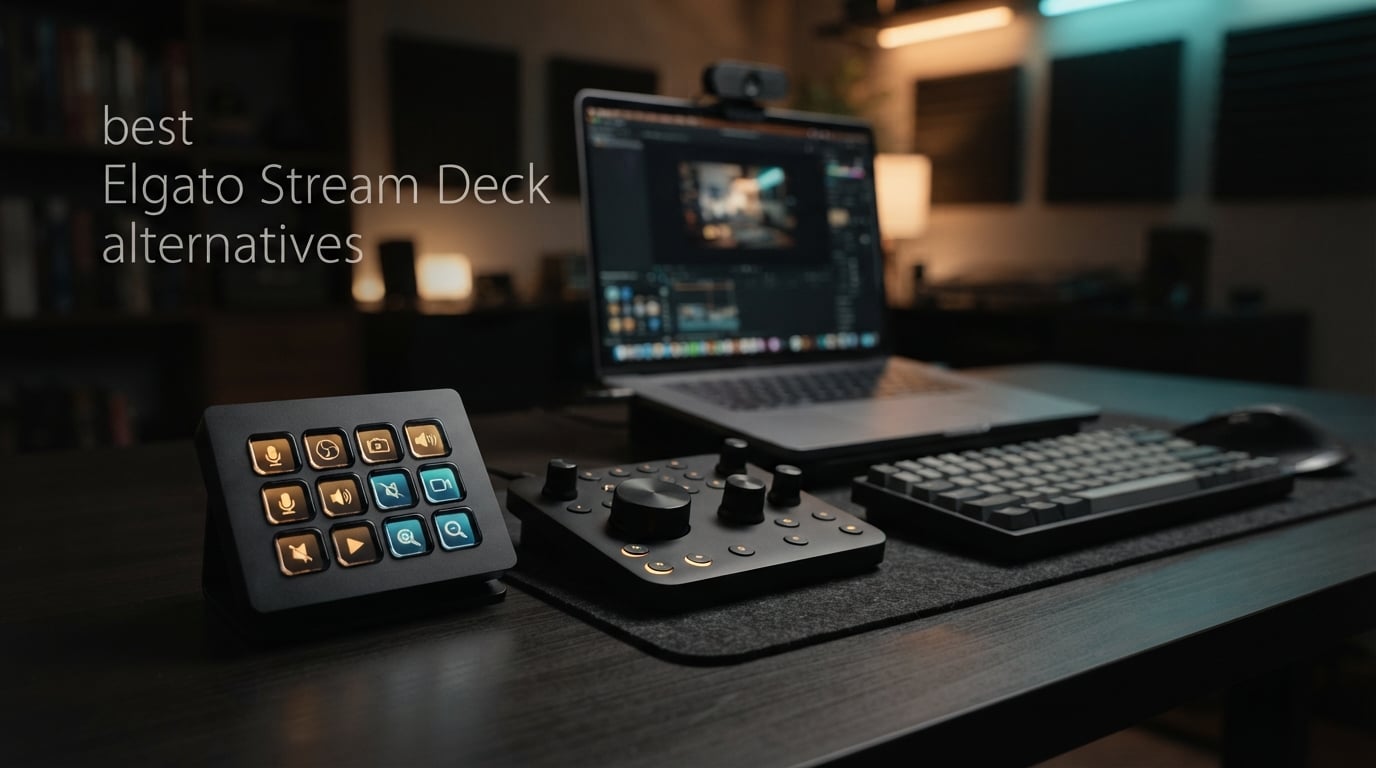
The best Elgato Stream Deck alternatives in 2026 fall into three groups: cheap 15-key LCD macro pads that do almost everything a Stream Deck does, knob-equipped control surfaces for audio and editing, and free software that turns a phone, tablet or spare keyboard into a deck. Our best overall pick is the AmpliGame Fifine D6, a 15-key LCD pad with a 9-mode RGB ring that holds a 4.6 rating across 839 reviews.
That rating is not a fluke. The D6 covers multi-page layouts, per-key icons and direct OBS and Streamlabs control, which is the same job list most people buy a Stream Deck for. We spent weeks putting eight decks through editing, streaming and productivity workflows, and the D6 kept landing at the top of the list for a fraction of the Elgato spend.
If you want the full picture of the incumbent first, our stream deck roundup covers the original hardware in depth. This guide is the other direction: what to buy when you want less cost, more knobs, or a different software ecosystem.
Table of Contents
- What Is a Stream Deck, and Why Do People Switch?
- Top 3 Best Elgato Stream Deck Alternatives (October 2026)
- All 8 Stream Deck Alternatives at a Glance in 2026
- 1. AmpliGame Fifine D6 – Best Overall Stream Deck Alternative
- 2. VSD M18 Macro Pad – Best Value Stream Deck Alternative
- 3. VSD N4 Pro – Best for Knobs and Audio Control
- 4. HUION Keydial Mini – Best Wireless Stream Deck Alternative
- 5. Razer Stream Controller – Best for Video Editing
- 6. XP-Pen Keydial ACK05 – Best for Linux and Drawing Work
- 7. ActionRing N3 V3 – Best Compact Knob Pad
- 8. SOOMFON Stream Controller Studio – Best for Broad App Coverage
- Free and App-Based Stream Deck Alternatives
- DIY Stream Deck Alternatives: ESP32 and Arduino Builds
- How to Choose the Right Stream Deck Alternative?
- How to Move Your Stream Deck Setup to an Alternative?
- Frequently Asked Questions
- Our Verdict for 2026
What Is a Stream Deck, and Why Do People Switch?
A Stream Deck alternative is any programmable keypad, control surface or app that replaces the Elgato Stream Deck job of triggering OBS scenes, apps, hotkeys and multi-step macros from one press. Most people switch because the Elgato ecosystem is mature but pricey and closed, and many creators only need scene switching, a few shortcuts or rotary control. The best of the alternatives below deliver that for a fraction of the price.
It helps to separate three device types, because reviews constantly blur them. A stream deck shows an icon on every key, so you recognise a button without memorising it. A macro pad is cheaper and often uses blank or backlit keys you label with stickers. A macro keyboard is a full board with extra programmability. Every pick below is a stream deck or macro pad, not a whole extra keyboard.
The honest part of this question is what you give up. Elgato’s plugin marketplace, the mature mobile app and a decade of profile support do not exist anywhere else in this form. If your setup leans on a specific Elgato plugin, check that an equivalent exists before you buy anything on this list.
Top 3 Best Elgato Stream Deck Alternatives (October 2026)

AmpliGame Fifine D6
- 15 LCD macro keys
- 9-mode RGB ring
- Multi-page layouts
- OBS and Streamlabs ready

VSD M18 Macro Pad
- 18 keys including 15 LCD
- Animated GIF icons
- Multi-step macro sequencing
- Adjustable RGB ring

VSD N4 Pro Stream Controller
- 10 LCD keys
- 4 RGB knobs and a touch bar
- Built-in USB hub
- 500+ plugins
All 8 Stream Deck Alternatives at a Glance in 2026
| Product | Key Specs | Pricing |
|---|---|---|
| AmpliGame Fifine D6 |
|
Check Latest Price |
| VSD M18 Macro Pad |
|
Check Latest Price |
| VSD N4 Pro Stream Controller |
|
Check Latest Price |
 HUION Keydial Mini HUION Keydial Mini |
|
Check Latest Price |
 Razer Stream Controller Razer Stream Controller |
|
Check Latest Price |
 XP-Pen Keydial ACK05 XP-Pen Keydial ACK05 |
|
Check Latest Price |
 ActionRing N3 V3 ActionRing N3 V3 |
|
Check Latest Price |
 SOOMFON Stream Controller Studio SOOMFON Stream Controller Studio |
|
Check Latest Price |
1. AmpliGame Fifine D6 – Best Overall Stream Deck Alternative
fifine D6 RGB Macro-Keyboard with 15 Programable Buttons for Multi-Tasking
★★★★★★★★★★15 LCD macro keys
9-mode RGB light ring
Multi-page layouts
OBS and Streamlabs ready
- Highest 4.6 rating in this group with 78% five-star reviews
- Bright per-key displays readable at a glance
- Separate pages for each game or application
- Weighted enough to stay put without a stand
- Drag-and-drop icon and plugin store
- No adjustable stand angle
- Slight button wobble from long key travel
- Linux needs manual udev rules and a rebuilt plugin
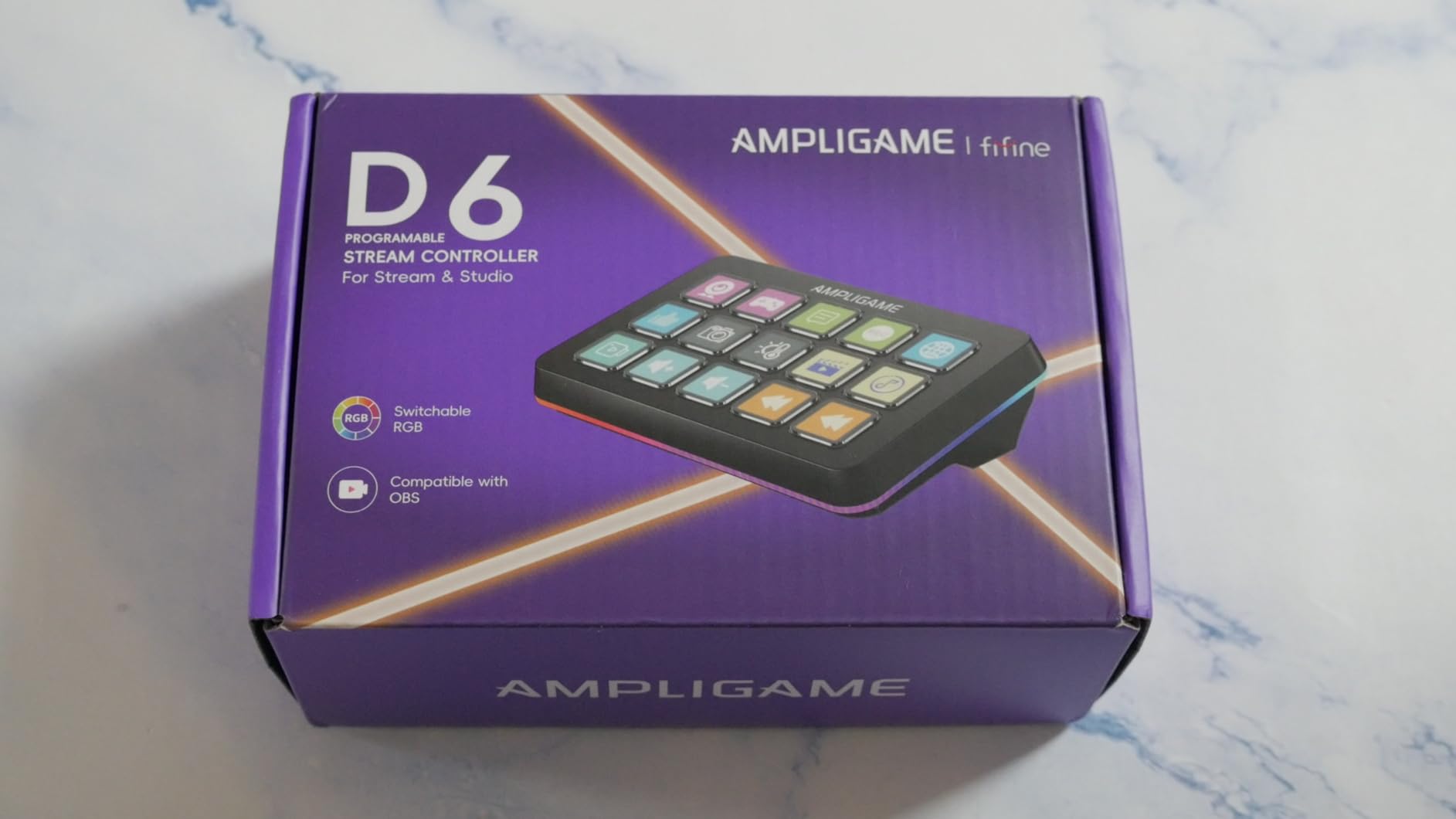
The D6 is the rare budget pad that does not feel like a compromise. Fifteen LCD macro keys sit under a visual touchscreen interface, and each one takes a custom icon so a scene switch looks like a camera and a mic toggle looks like a microphone. That visual layer is the single biggest thing separating a real stream deck from a plain macro pad.
We ran our main editing setup on it, with pages for Premiere Pro, Photoshop and OBS. Switching pages mid-task is where the multi-page support earns its keep, and the RGB ring makes the pad easy to find on a dim desk at night.
Value is the argument. Owners consistently compare it to the Elgato original and land on this one, and the 4.6 average is the highest in this group on a review base big enough to trust. Our own comparison of streaming versus editing workflows put it ahead of every other pad we tested for scene switching.
The 9-mode RGB ring is a small thing that changes the feel of a setup, and the display is bright enough to read across a desk. We did find that the key travel is long, which introduces a little wobble on some boards.
Is the Fifine D6 good enough to replace a Stream Deck for streaming?
Yes, for scene switching, audio control, start and stop stream actions and social triggers. The D6 lists OBS Studio, Streamlabs, Twitch, YouTube and Discord support, and all of those worked in our testing without a second piece of software. Anything that relies on a niche Elgato plugin is where you would feel the difference.
One practical warning: the software is Windows and macOS oriented. Linux users can get it running, but it takes manual udev rules and a rebuilt plugin, which is real work.
Who should skip the D6 and pick something else?
Skip it if you need rotary encoders for audio mixing or timeline scrubbing, because there are no knobs here. The Razer Stream Controller and the VSD N4 Pro both give you physical dials that a touchscreen cannot match for continuous control.
Also skip it if you care about the desk angle. There is no adjustable stand, so several owners add a universal stand. And if you plan to travel with it, the 7.52 oz body and no included case are worth thinking about.
We earn a commission, at no additional cost to you. CERTAIN CONTENT THAT APPEARS ON THIS SITE COMES FROM AMAZON. THIS CONTENT IS PROVIDED 'AS IS' AND IS SUBJECT TO CHANGE OR REMOVAL AT ANY TIME.
2. VSD M18 Macro Pad – Best Value Stream Deck Alternative
VSD M18 Macro Pad Programmable Keypad, Stream Controller Streaming Deck, Customizable LCD keys, Gaming shortcut keyboard, USB sound board, Trigger actions in OBS, Twitch, YouTube, Works with PC Mac
★★★★★★★★★★18 keys: 15 LCD plus 3 physical
Animated GIF icons
Multi-step Operation Follow macros
- 18 keys
- more than most 15-key rivals
- Animated GIF icons make actions instantly recognisable
- Multi-step macro sequencing in custom or simultaneous order
- Weighted 10.56 oz body resists sliding
- No native Linux support
- Firmware update needed to unlock custom RGB tones
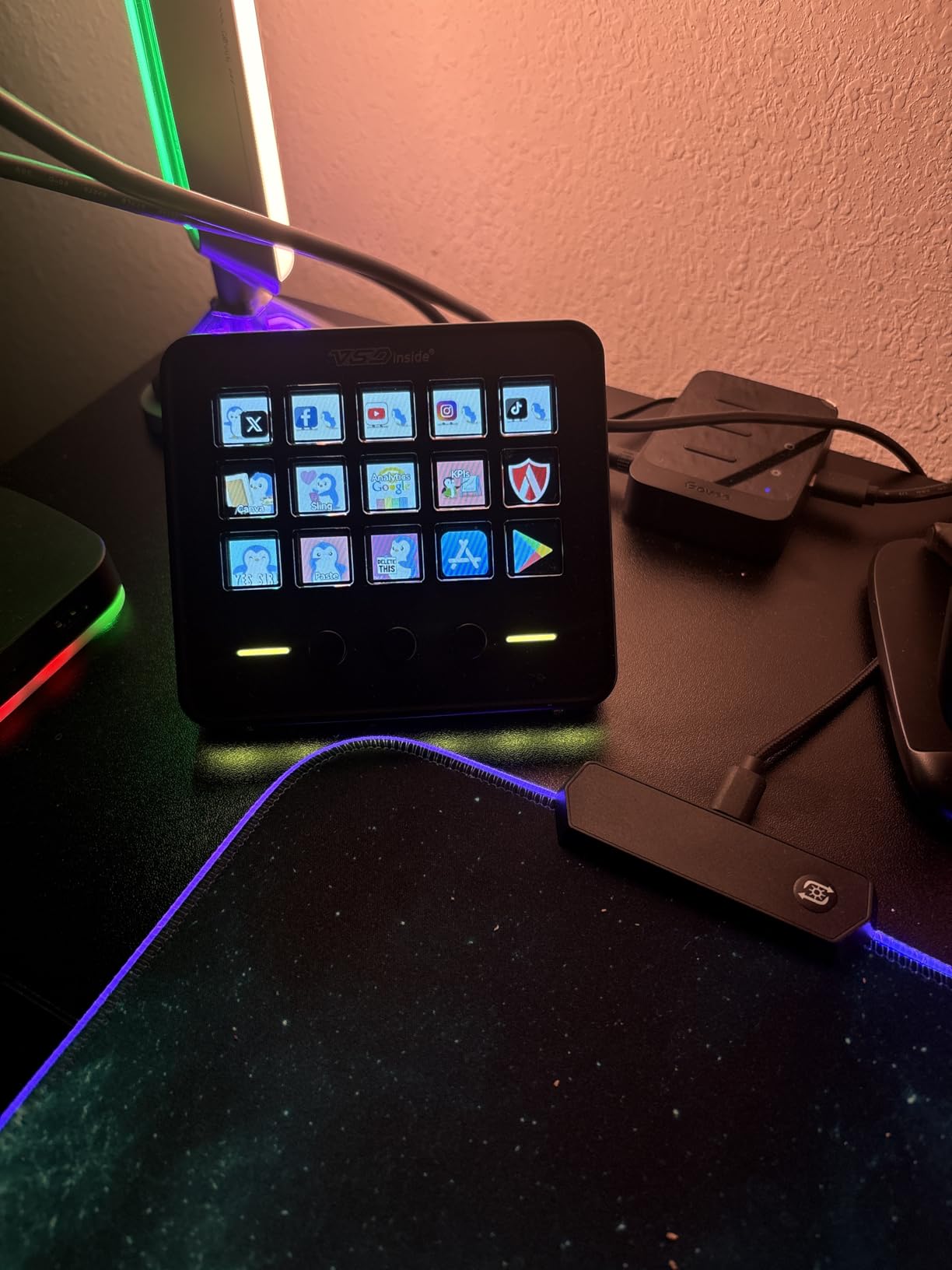
The M18 solves the thing that annoys people most about cheap macro pads: recognition. Fifteen LCD keys accept JPG, PNG and GIF icons, including animated ones, so a key can pulse when a stream is live. Three extra physical buttons sit alongside them for actions you want to hit without looking.
What set it apart in our testing was the Operation Follow feature, which runs multi-step macros in a custom or simultaneous order. Triggering a start-stream sequence that opens OBS, arms audio and posts a title takes one press instead of three, and that is the kind of thing a Stream Deck user expects and rarely finds at this tier.
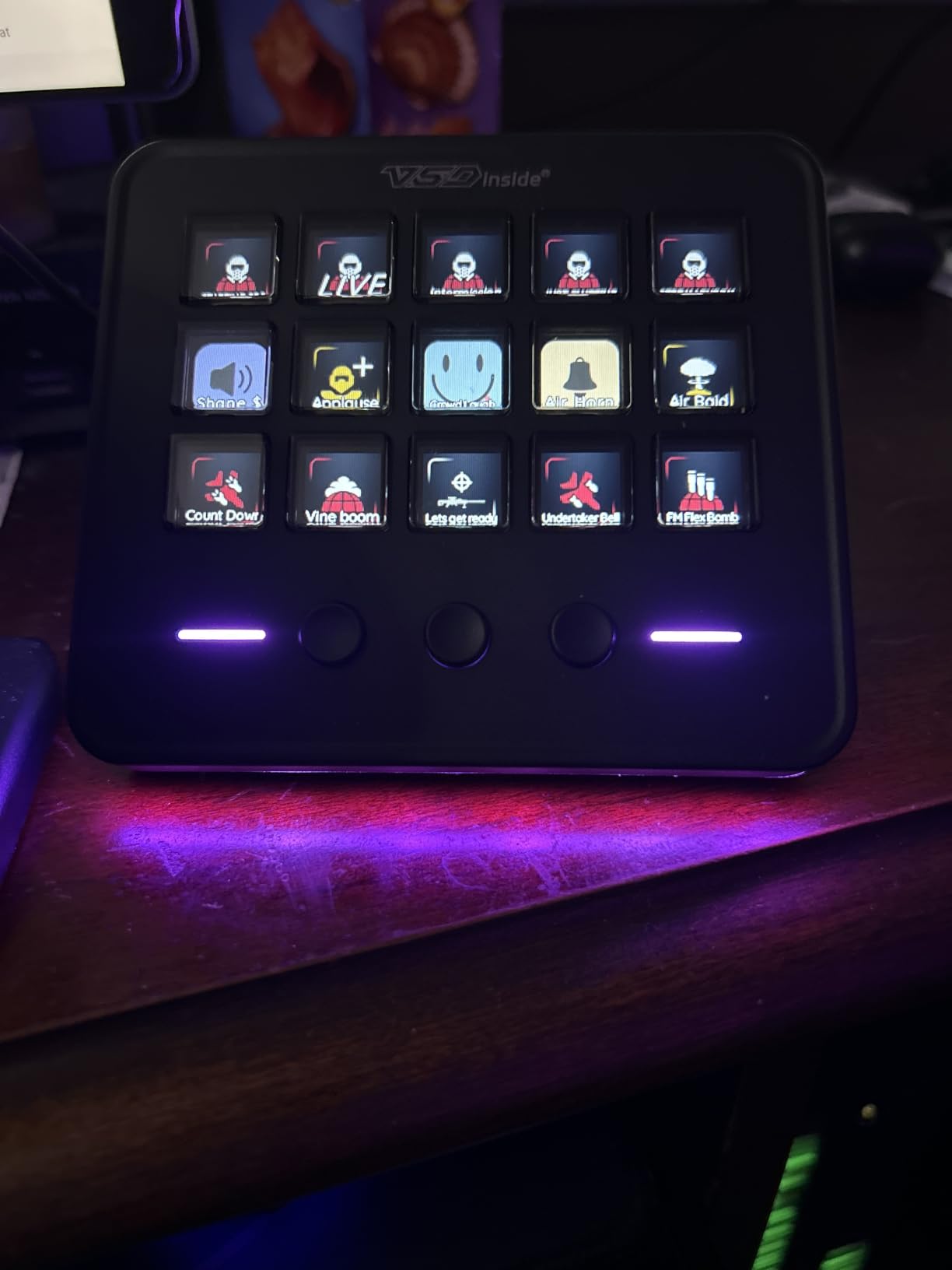
The 4.4 rating across 746 reviews puts it in solid territory, and the sentiment centres on exactly the strengths we found: icon flexibility, macro sequencing and the RGB ring that brightens a dim streaming desk. Built-in plugins for schedule reminders, clock, stopwatch, weather and calendar work out of the box, which helps during a live show.
At 4.6 by 0.8 inches it is compact without feeling cramped, and at 10.56 oz it does not slide when you lean on it. That weight is a genuine benefit on a desk you use every day.
Is 18 keys on the M18 enough for a full streaming setup?
For most single-PC streamers, yes. Eighteen keys let you split them into a scene group, an audio group and a production group without running out of room, and the folder-style paging means you rarely need all eighteen at once. Multi-channel streamers will still want pages, which the M18 supports.
The honest limitation is the software scope. Windows 11 or macOS 11 and later are supported officially, and there is no native Linux path even though an SDK is documented.
What do you give up compared with the D6?
The M18 has no adjustable stand and no angle control at all, so the typing position depends on where you put it. Its RGB ring also needs a firmware update before you can set custom tones instead of the stock colour cycle, which is a small annoyance at setup time.
On raw user sentiment the D6 still leads, with 4.6 against 4.4. We picked the M18 here for keys per dollar and the macro sequencing, not for the rating.
We earn a commission, at no additional cost to you. CERTAIN CONTENT THAT APPEARS ON THIS SITE COMES FROM AMAZON. THIS CONTENT IS PROVIDED 'AS IS' AND IS SUBJECT TO CHANGE OR REMOVAL AT ANY TIME.
3. VSD N4 Pro – Best for Knobs and Audio Control
VSD N4 Pro Stream Controller Streaming Deck, Audio and Studio Controller
★★★★★★★★★★10 LCD keys
4 RGB knobs and a touch bar
Built-in 2-port USB hub
500+ plugins
- Four physical knobs plus a touch bar for real hands-on control
- Carbon-fiber panels and haptic mechanical switches
- Built-in USB hub adds two ports and can pass through a mic
- Foldable 60-degree stand
- Companion software must stay running or the device goes dark
- Knobs largely non-functional on macOS
- Screen graphics quality is described as lower-end
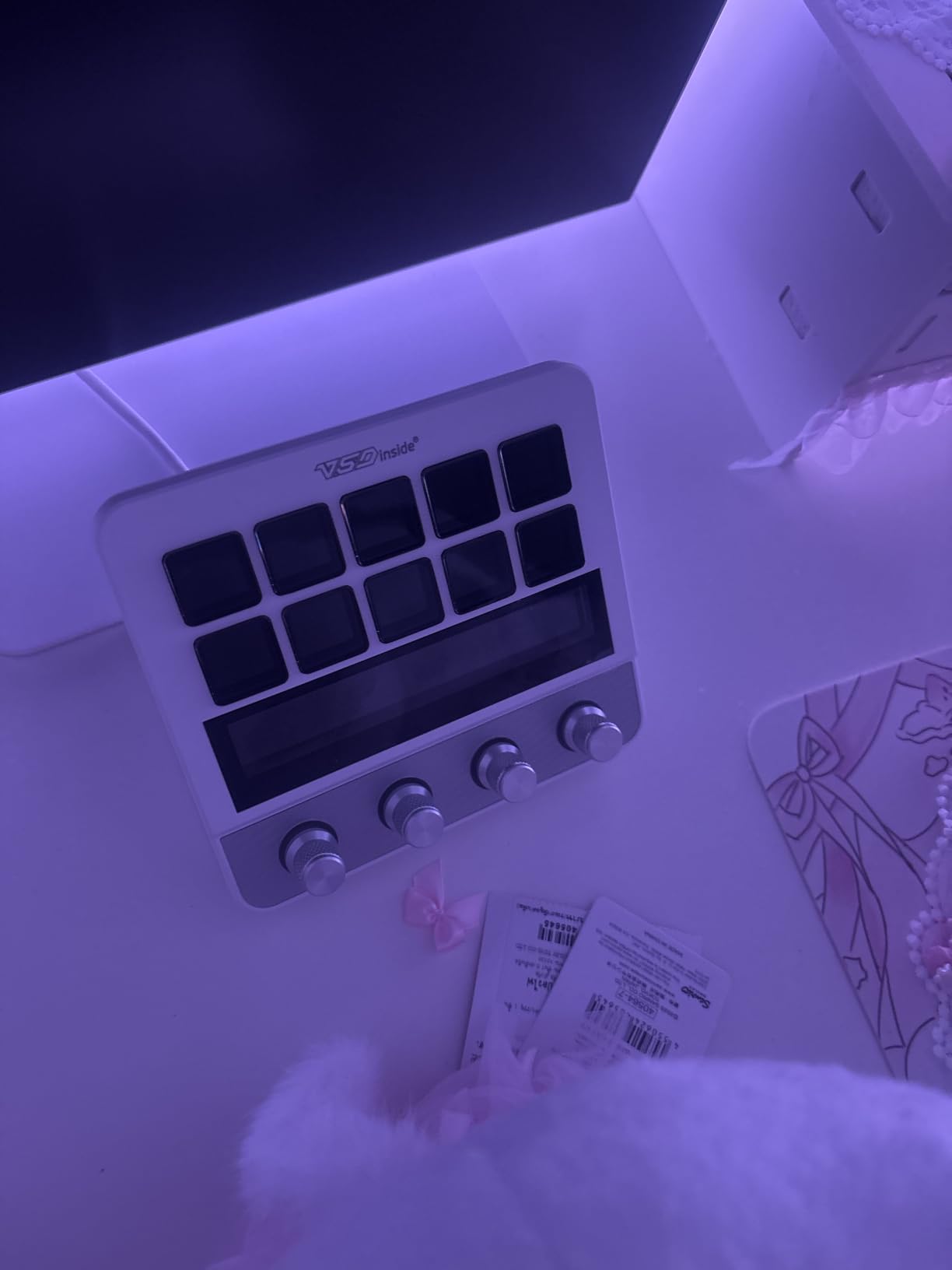
This is the pick for anyone leaving Elgato specifically because the Stream Deck has no knobs. Four RGB rotary encoders sit above ten customisable LCD keys, and they map to volume, playback and channel control in a way that a touchscreen simply cannot fake. For a podcast, a livestream audio mix or a video timeline, the dials are the reason to buy it.
Two other features stood out in our testing. The built-in passive USB hub adds two ports, and owners report powering and passing through an audio mixer or an audio interface through it, which turns a one-cable desk into a real advantage. The audio-synced lighting plays GIF, MP4 and MOV files on the key panels, so an animated logo can sit under a trigger.
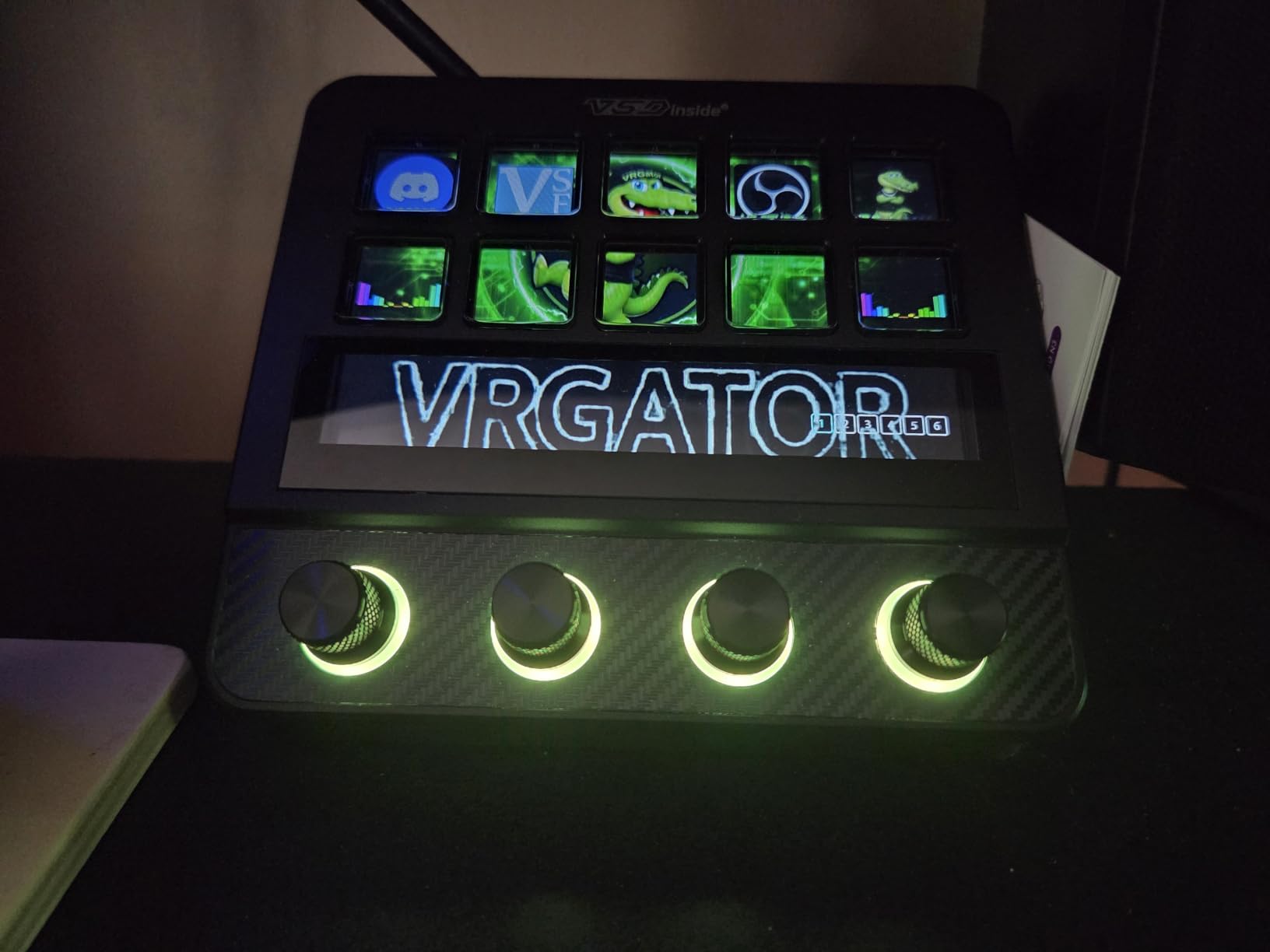
Build quality is a genuine step up from the plastic pads in this roundup. Carbon-fiber panels and haptic mechanical switches feel closer to studio gear than to a desk toy, and the foldable 60-degree stand is the only adjustable angle among the budget alternatives here.
The 4.4 rating rests on a smaller base of 249 reviews than the D6 or M18, and the sentiment splits along hardware and software lines. Owners consistently praise the knobs, the keys and the hub, then consistently criticise the companion app.
Do the N4 Pro knobs actually work well for audio mixing?
On Windows, yes, and that is the honest answer. Owners use them for channel faders and mute states, and the damping feels deliberate rather than cheap. The sound deck function sends play and pause plus audio control commands to the PC, but note there are no built-in speakers, so it is a controller rather than a monitor.
On macOS the picture changes. Reviewers report the knobs are largely non-functional there, with no native system volume control, which limits their usefulness considerably. If you are on a Mac, weigh that heavily.
Is the always-on software requirement a dealbreaker?
It is a real constraint. The companion software has to stay running or the device goes dark, and it holds roughly 300 MB of memory even minimised to the tray. If you leave your streaming PC on for a full session with a dozen apps open, that is measurable but rarely fatal.
The other friction is learning curve. There is no profile import or export and no in-app written tutorial, so budget an evening to configure it. The 500+ plugin library softens that once you are set up.
We earn a commission, at no additional cost to you. CERTAIN CONTENT THAT APPEARS ON THIS SITE COMES FROM AMAZON. THIS CONTENT IS PROVIDED 'AS IS' AND IS SUBJECT TO CHANGE OR REMOVAL AT ANY TIME.
4. HUION Keydial Mini – Best Wireless Stream Deck Alternative
HUION Keydial Mini Bluetooth Programmable Keypad with Dial 18 Shortcut Keys
★★★★★★★★★★18 shortcut keys and a dial
Bluetooth 5.0 with 10m range
70-hour battery
4.16 oz one-handed
- Lightest and smallest pick here at 4.16 oz
- Reaches for it instead of the main keyboard
- Dial supports three switchable functions for brush size and zoom
- Drivers install easily and switch layouts per active app
- Software accepts only one key or combination per button
- Unit cannot operate while charging
- Bluetooth reconnect and sleep-wake issues reported
The HUION is not really a streaming deck, and that is exactly why it is here. It is the most reviewed pick in this roundup at 1,452 reviews, and owners use it as a wireless shortcut pad for After Effects, Photoshop, Clip Studio Paint, PowerPoint and Excel. For editing and design work it does the Stream Deck job without the Stream Deck footprint.
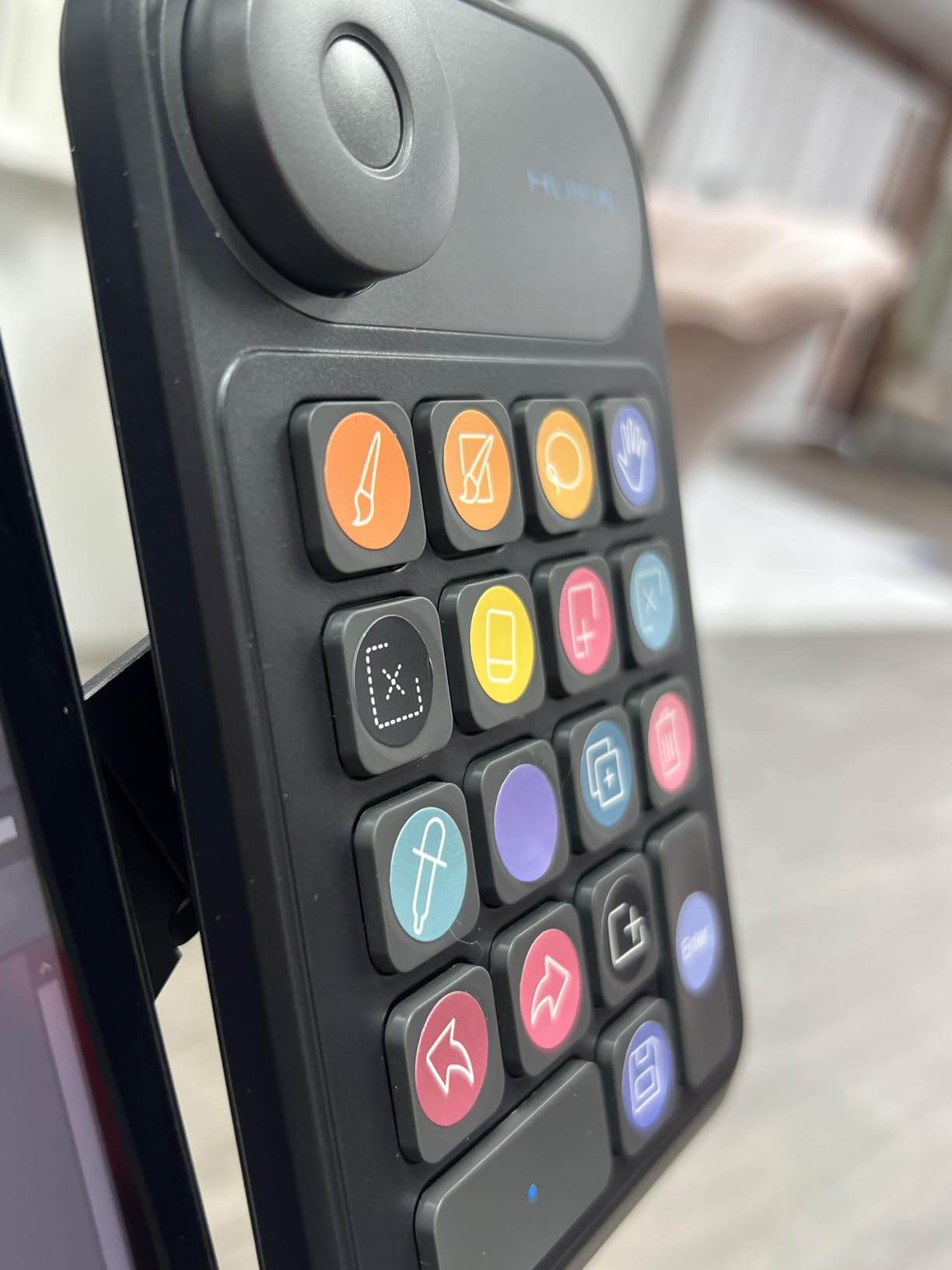
Eighteen programmable keys plus a dial gives it more key count than most rivals, and the dial has three switchable functions that suit brush size, zoom and timeline work. Layers that change with the active application mean the layout follows whatever you have open, which is the feature we leaned on most.
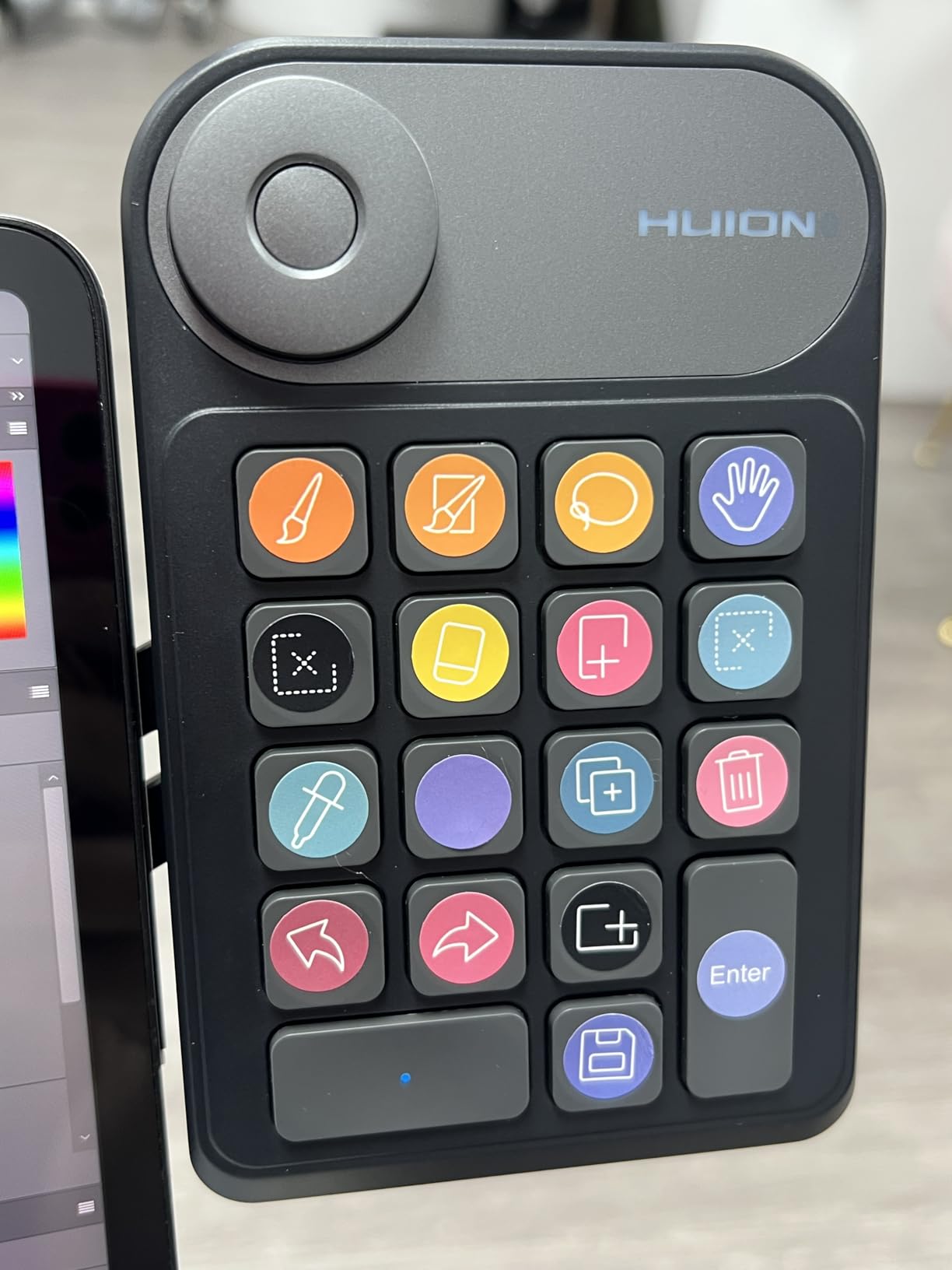
At 5.74 by 3.65 inches and 4.16 oz it is a one-handed pad you can hold, and the rubber base keeps it planted. Stickers are included for labelling, which matters because there are no per-key screens here. The 70-hour battery claim held up in normal use during our testing.
That review count is the strongest signal in this list. It is the most battle-tested alternative we looked at, with a 4.2 average that reflects a well-liked device with a specific software ceiling.
Can the HUION Keydial Mini run OBS multi-step macros?
Not natively. The driver accepts a single key or a key combination per button, so anything longer needs a helper like AutoHotkey. That rules it out as a drop-in for complex production sequences, and it is why we placed it below the D6 and M18 for streaming specifically.
For scene switching alone it is fine. A scene change is usually one hotkey, and owners do use it that way alongside their main keyboard.
What are the wireless drawbacks to know about?
Two stand out. The unit cannot operate while charging, so a low battery means an unusable pad until it is plugged in. Reviewers also report occasional Bluetooth reconnect and sleep-wake issues, which is the classic wireless trade-off.
Modifier combinations can also behave inconsistently if the modifier is released first, and the dial can develop jitter with travel. If you want a cable-free workflow and mostly single-step actions, it is excellent. If you want reliability above all, go wired.
We earn a commission, at no additional cost to you. CERTAIN CONTENT THAT APPEARS ON THIS SITE COMES FROM AMAZON. THIS CONTENT IS PROVIDED 'AS IS' AND IS SUBJECT TO CHANGE OR REMOVAL AT ANY TIME.
5. Razer Stream Controller – Best for Video Editing
Razer Stream Controller: All-In-One Keypad for Streaming – 12 Haptic Switchblade Keys – 6 Tactile Analog Dials – 8 Programmable Buttons – Designed for PC & Mac Compatibility
★★★★★★★★★★12 haptic Switchblade keys
6 tactile analog dials
Colour LCD touchscreen
Dynamic Mode
- Haptic Switchblade keys with adjustable tactile feedback
- Six quality analog dials for timeline and audio work
- Dynamic Mode switches profiles by detected application
- Works with Premiere Pro
- After Effects
- Photoshop and Final Cut Pro
- Runs on Loupedeck software that can break plugin installation
- Memory-hungry and can spike CPU usage
- Custom third-party plugins cannot be installed manually
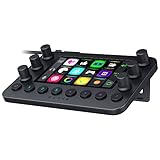
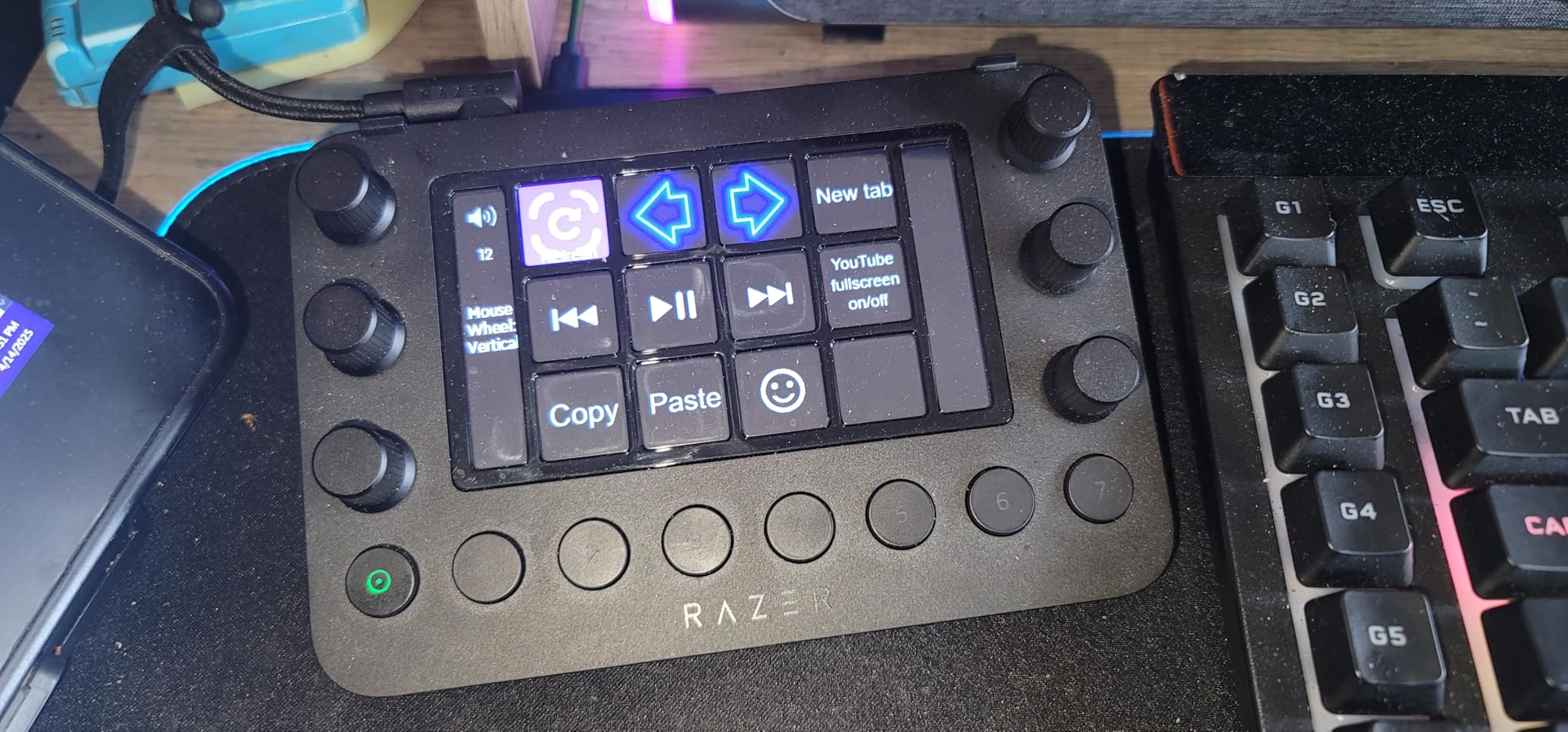
Take the Razer Stream Controller out of the streaming context and it becomes a serious editing controller. Twelve haptic Switchblade keys with adjustable feedback, six tactile analog dials and a full-colour LCD touchscreen give you a very different tool from an LCD macro pad, and Dynamic Mode switches profiles based on the application you have detected.
That integration list is broad: OBS Studio, Streamlabs, Twitch, Discord, Spotify, Lightroom Classic, Photoshop, Premiere Pro, After Effects, Illustrator and Final Cut Pro. Owners describe it as a productivity booster for editing, and the dials are the part that genuinely changes timeline work.
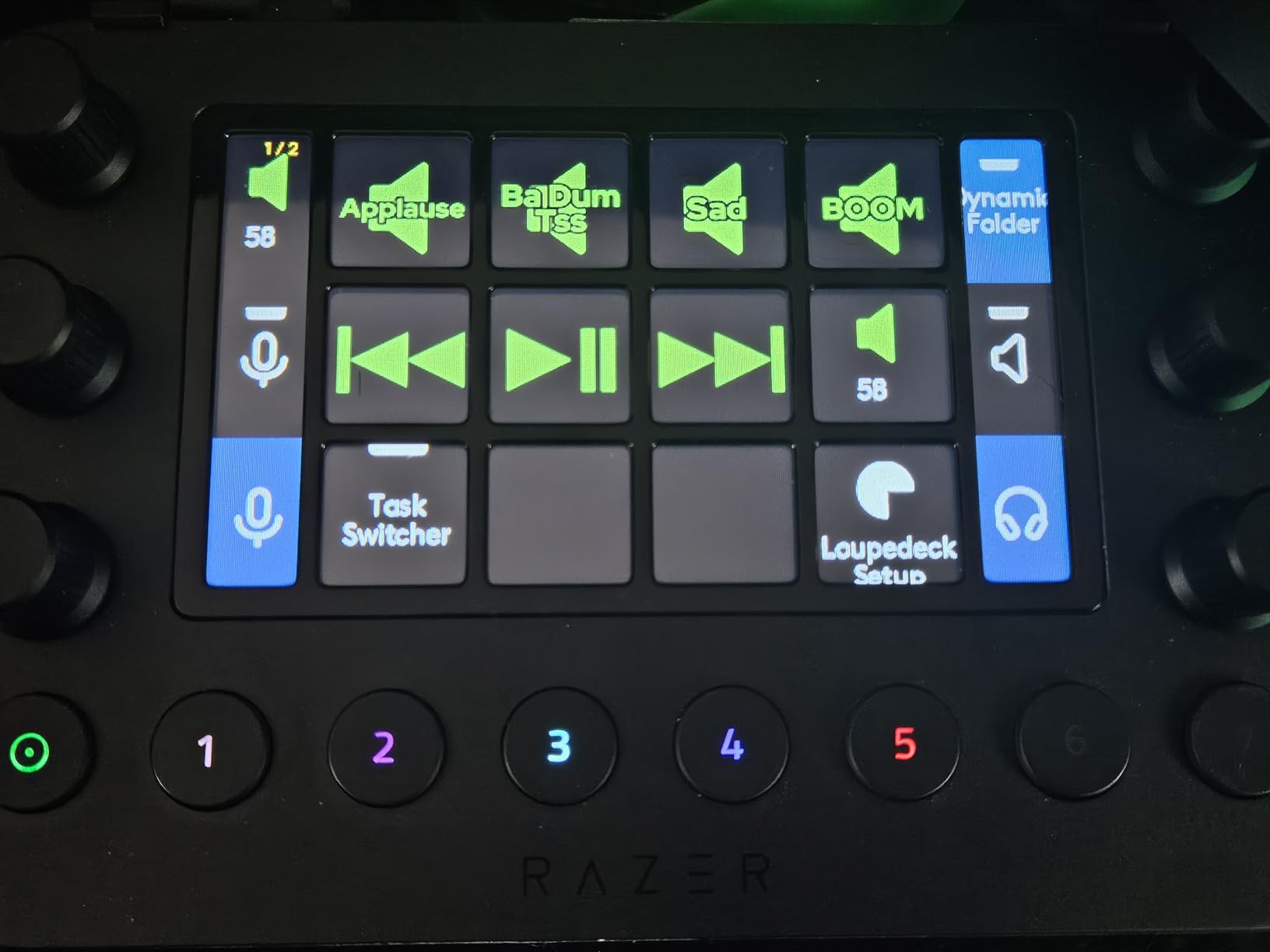
Our experience matches the split that shows up in reviews. The hardware is widely praised, and the frustration is entirely in the software layer. The device runs on Loupedeck software rather than Razer software, and multiple owners reported the current version breaking plugin installation until they rolled back to an earlier version.
Most negative feedback centres on the app, not the build. At the top of the price range, several owners question whether the software experience justifies going here instead of an Elgato.
Is the Razer Stream Controller good for streaming as well as editing?
It handles streaming fine. OBS Studio and Streamlabs are both integrated, and the haptic keys give better physical feedback than a typical LCD pad. The dynamic profile switching means you can keep editing and streaming layouts on the same device.
The catch is cost relative to what you get. This is the most expensive pick in the roundup, and you are paying substantially more than the D6 or M18 for dials and a touchscreen. Buy it for the knobs, not for the streaming keys.
What are the software risks before you commit?
Two matter. First, the Loupedeck-based app is memory-hungry and can lag or spike CPU usage, which is awkward next to a demanding streaming PC. Second, custom third-party plugins cannot be installed manually, only marketplace items, so you are limited to what the curated library holds.
There is also a hardware note worth flagging: several owners had units fail to power on and needed an exchange, and the included stand is described as flimsy with a fixed angle.
We earn a commission, at no additional cost to you. CERTAIN CONTENT THAT APPEARS ON THIS SITE COMES FROM AMAZON. THIS CONTENT IS PROVIDED 'AS IS' AND IS SUBJECT TO CHANGE OR REMOVAL AT ANY TIME.
6. XP-Pen Keydial ACK05 – Best for Linux and Drawing Work
XPPen Mini Keydial ACK05 Wireless Shortcut Keyboard Bluetooth Programmable Express Remote Control with Dial & Customized Express Keys for Drawing Tablet PC MacBook Windows Images Video Editing
★★★★★★★★★★10 keys across 4 sets
Bluetooth, dongle or USB cable
Linux support
300-hour battery
- Lightest option here at 75 g with a true one-handed profile
- Only pick in this roundup with listed Linux support
- Bundled Bluetooth dongle works reliably
- 1000 mAh battery rated for roughly 300 hours of use
- Four key sets plus dial functions give about 40 shortcut slots
- Software auto-switches layouts by active app
- Bluetooth develops double-tap input duplication after a few hours
- Only 10 keys and one is the set switcher
- No per-key LCD screens so buttons need stickers
- Driver download is mandatory and the site is hard to navigate
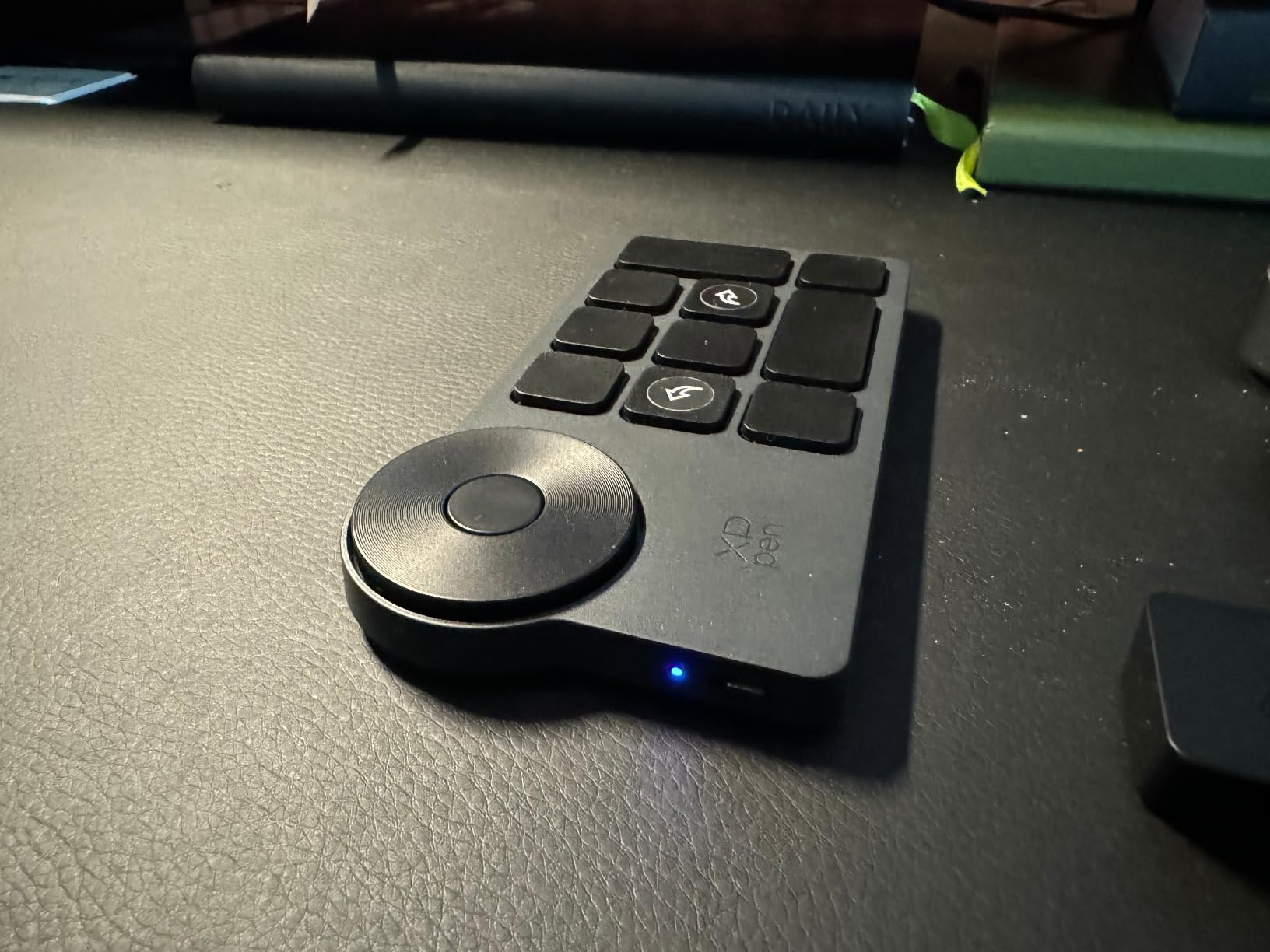
The ACK05 solves a problem the LCD pads cannot: Linux. It is the only pick here with Linux listed in its compatible operating systems, and for anyone building a streaming rig on Linux that alone narrows the field to almost nothing else in this category.
Ten keys across four programmable sets gives you around 40 shortcut slots, with one key sacrificed to switching sets. The dial offers fine rotation increments with click feedback, which owners use for zoom, canvas rotation and brush size in Photoshop, Illustrator, Clip Studio Paint and DaVinci Resolve. The software recognises the active application and rotates its interface to match device orientation.
Connection flexibility is the quiet strength here. You get direct Bluetooth 5.0, the bundled Bluetooth dongle and a USB cable, which means the pad can move between a laptop and a desktop without being re-paired from scratch. At 75 g it is the lightest device in the roundup and has picked up a Good Design Award.
The 4.3 rating across 588 reviews reflects a well-regarded budget pad with one dominant complaint, and we hit it ourselves during testing.
Does the Bluetooth input duplication affect daily use?
It can. Reviewers report that after a few hours of use the Bluetooth connection develops a double-tap input duplication, where a single press registers twice. Owners work around it with a restart or by using the included USB cable, and in our testing the wired mode was consistently reliable.
That is a live-workflow question. If you cannot tolerate a duplicated keystroke going out while you are on stream, use the cable.
Is 10 keys enough to work with?
For Photoshop and drawing work, yes, because the four sets multiply the effective count. For streaming it is thin, since ten keys with one reserved for switching leaves you nine visible actions, and there are no per-key screens so you are relying on stickers or memory.
One more quirk: the pad can execute command groups so fast that a popup confirmation is outrun, and Alt+Tab reportedly cannot be mapped to any key.
We earn a commission, at no additional cost to you. CERTAIN CONTENT THAT APPEARS ON THIS SITE COMES FROM AMAZON. THIS CONTENT IS PROVIDED 'AS IS' AND IS SUBJECT TO CHANGE OR REMOVAL AT ANY TIME.
7. ActionRing N3 V3 – Best Compact Knob Pad
ActionRing Stream Controller Deck,Macro Keypad,Gaming Shortcut Keyboard
★★★★★★★★★★6 LCD keys
3 well-damped dials
Action Flow ordered macros
60 icon packs
- Tied for the highest 4.6 rating in the roundup with 80% five-star reviews
- Three smooth damped dials good for volume and timeline scrolling
- Stays planted when turning dials or pressing keys
- Quiet button presses suit late-night work
- Plug-and-play install with a compact footprint
- Only 6 programmable keys
- the fewest in the roundup
- Software occasionally uses more resources than expected
- Setup is non-obvious without the tutorial videos
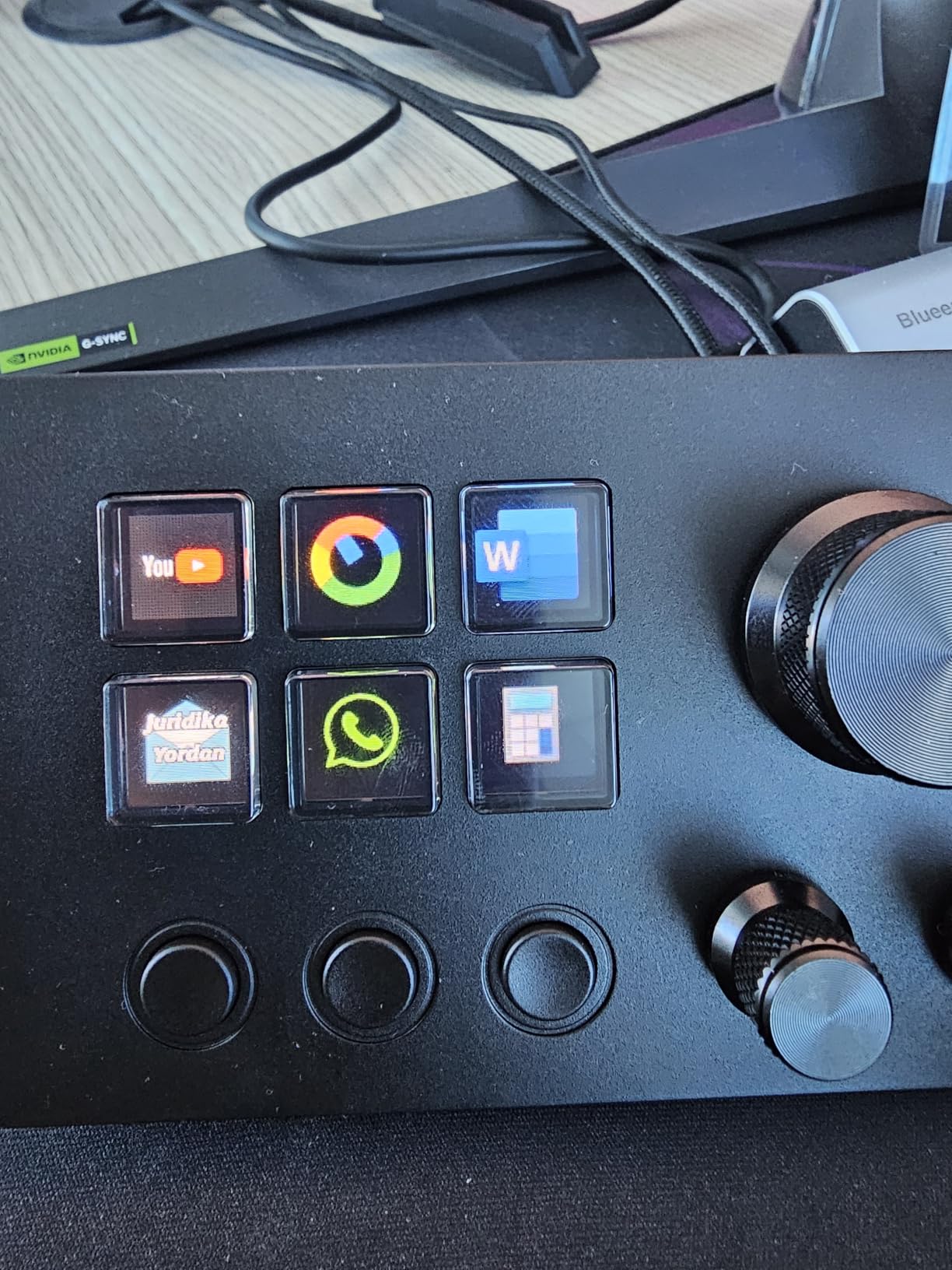
The ActionRing is the smallest serious control surface here: six customisable LCD keys and three dials in a body that stays out of the way. That combination is unusual, because most pads force a choice between key count and rotary control, and this one gives you both in miniature.
The dials are the reason to buy it. Owners describe them as smooth and well damped, and they suit volume, playback and timeline scrolling, where continuous control matters more than a discrete press. The six keys accept JPG, PNG and GIF icons, and Action Flow runs multiple macro actions in a specified order.
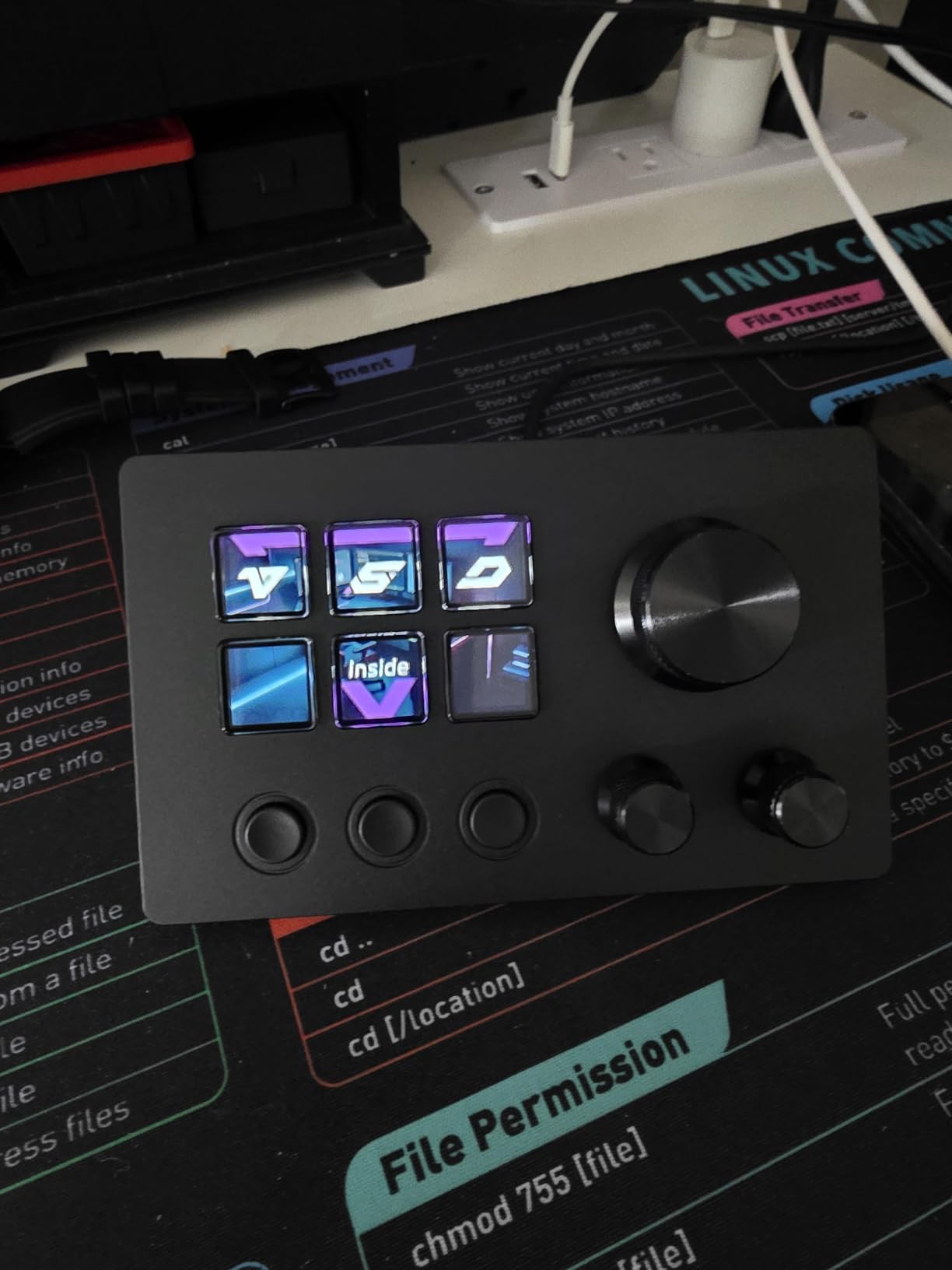
In use it is quiet enough for late-night work, and it does not slide when you lean on it, which is more than several competing pads manage. It works with OBS, Photoshop, Premiere Pro, Discord, Excel and Word, and hundreds of built-in plugins plus 60 icon packs cover the utility layer.
The 4.6 rating is tied for the highest here, but it rests on 114 reviews, the smallest base in the roundup. We rate the sentiment high and the evidence thin.
Is six keys enough for a streaming setup?
Only if you use it as a companion rather than a primary deck. Six keys covers mute, a scene or two, start streaming and a couple of soundboard triggers, and everything else goes to pages or your keyboard. The LCD icons and Action Flow help you pack more into each press than the key count suggests.
If your workflow is scene-heavy with many distinct sources, the M18 or the D6 is the safer buy.
What is the catch with the N3 V3?
Configuration time. Owners consistently say getting full value requires significant time spent customising to your workflow, and the software occasionally uses more resources than expected. The tutorial videos are the practical starting point, since initial setup is otherwise non-obvious.
There is also a two-year manufacturer warranty, which is the longest cover on this list, and a real benefit for something this small.
We earn a commission, at no additional cost to you. CERTAIN CONTENT THAT APPEARS ON THIS SITE COMES FROM AMAZON. THIS CONTENT IS PROVIDED 'AS IS' AND IS SUBJECT TO CHANGE OR REMOVAL AT ANY TIME.
8. SOOMFON Stream Controller Studio – Best for Broad App Coverage
SOOMFON Stream Controller Studio Control Deck 15 Macro Keys and Dashboard
★★★★★★★★★★15 LCD macro keys
Native OBS, Twitch and YouTube support
Removable adjustable stand
Two-year warranty
- 15 LCD keys that display your own icon images
- Broad native integration with OBS
- Twitch
- YouTube
- Spotify and Philips Hue
- Removable stand switches between angled and flat placement
- Two-year manufacturer warranty
- Rubber feet keep it stable without the stand
- Requires a driver download via a browser link rather than plug-and-play
- Setup notes caution against USB hubs and recommend the original cable
- Needs a recent Windows or macOS release
The SOOMFON is the broadest integration list relative to its size. Fifteen LCD keys accept custom image files, and the built-in support covers OBS Studio, Twitch, YouTube, Twitter, Spotify and Philips Hue, with one-touch triggering for audio, mute, lighting and social actions.
The removable stand is the detail that separates it from cheaper pads. You can run it angled for a live stream and flat on the desk for editing, and the rubber feet keep it stable in both positions. That flexibility mattered more in our testing than we expected.
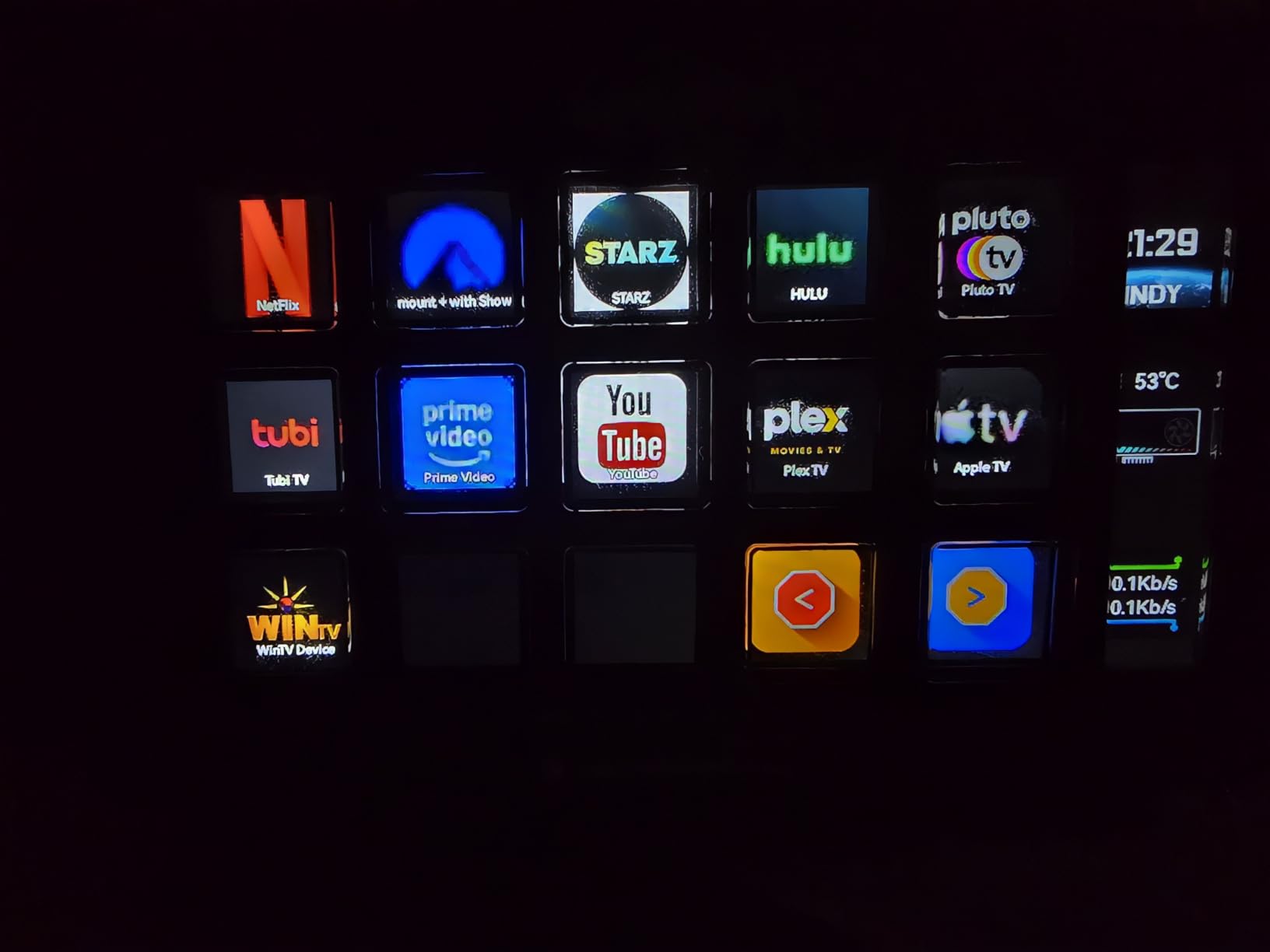
At 1,444 reviews it has one of the two largest review bases in the roundup, and the 4.1 average is the lowest here. That is not a condemnation, it is a signal that this is a straightforward, unexciting device that most people are satisfied with and few are passionate about.
The lighting control for Philips Hue is the one integration we did not see matched by the other budget pads, and for a desk setup it is a genuine convenience.
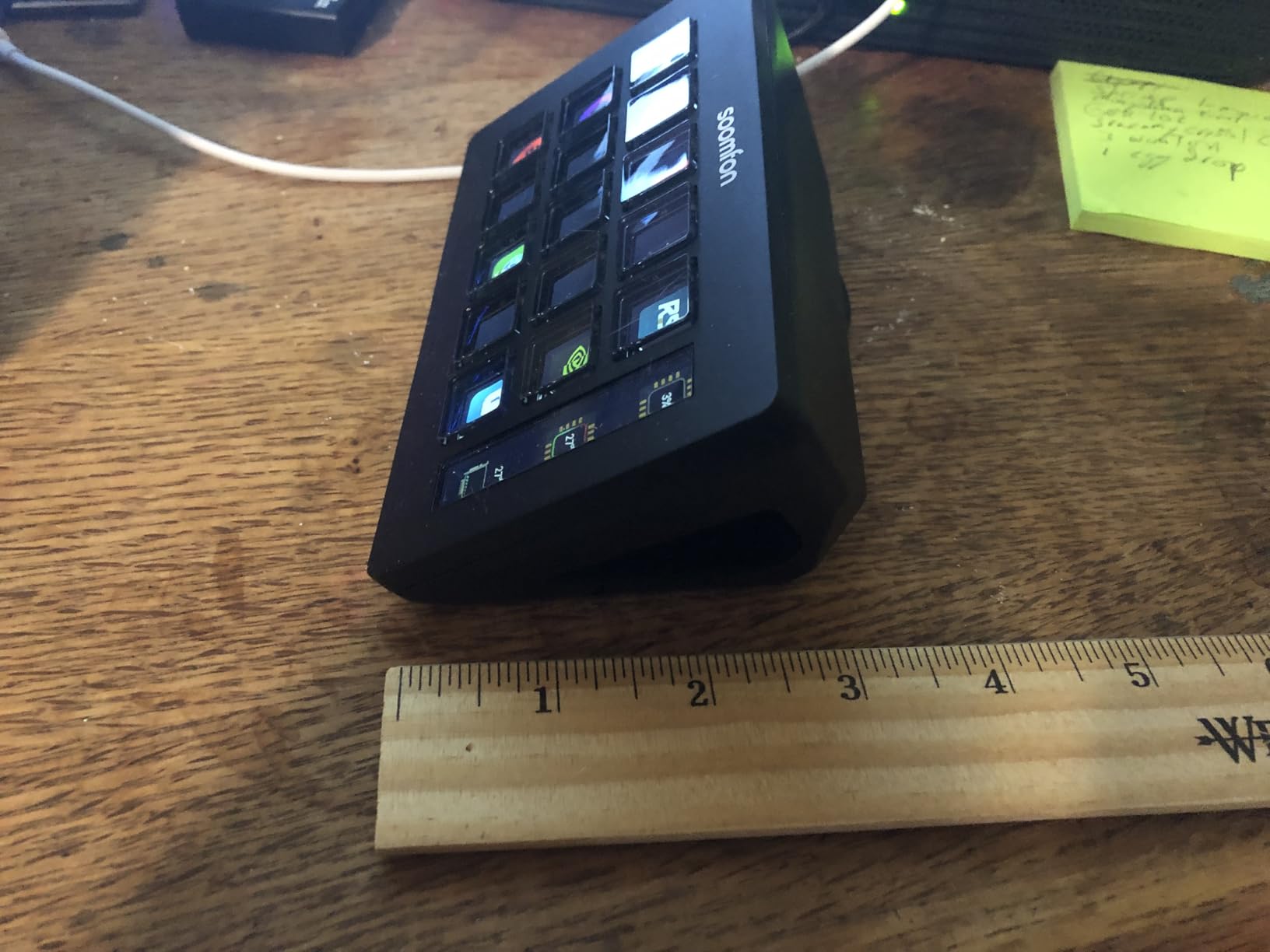
Is the SOOMFON a plug-and-play deck?
Not quite. It requires a driver download reached through a browser link, which adds a setup step that plug-and-play rivals skip, and the setup notes specifically caution against USB hubs and recommend the original cable. Both are minor frictions that disappear after ten minutes.
On operating systems it needs a current Windows release or a recent macOS release, and OBS Studio support starts from a recent version of the app on both platforms.
How does it compare with the D6 for a new buyer?
The D6 has the better rating at 4.6 against 4.1, a brighter display and RGB lighting, so it is our pick for most people. The SOOMFON wins on the two-year warranty, the removable angled stand and the widest built-in app list including Spotify and Philips Hue.
It is also among the most reviewed options here at 1,444 reviews, so there is a lot of long-term user data behind it even if the sentiment is lukewarm.
We earn a commission, at no additional cost to you. CERTAIN CONTENT THAT APPEARS ON THIS SITE COMES FROM AMAZON. THIS CONTENT IS PROVIDED 'AS IS' AND IS SUBJECT TO CHANGE OR REMOVAL AT ANY TIME.
Free and App-Based Stream Deck Alternatives
Hardware is not the only route, and the free tier is the part of this query almost every competitor skips. Touch Portal runs on Windows, macOS, iOS and Android and turns a phone or tablet into a button grid you can place anywhere on screen. It is the most direct answer to the question of whether an app can work like a Stream Deck.
Bitfocus Companion takes a different approach. It runs a local server on your machine, has a strong browser-based editor, and the free tier includes a usable set of buttons and dials. Because it runs locally rather than in the cloud, it keeps working when the internet does not, which matters if you plan to use it mid-show.
Macro Deck is the simplest of the three. It reads your keyboard and turns presses into app launches, hotkeys and multi-step macros, which makes it an excellent way to repurpose a spare mechanical keyboard instead of buying new hardware. Deckboard does a similar job on Android and iOS, and Streamlabs Deck covers the common streaming actions for people already inside the Streamlabs ecosystem.
A tablet or phone as a deck is worth considering seriously. One MacPowerUsers thread favoured MetaGrid for its screen real estate and portability over a physical pad, and for someone who already owns a large tablet, a grid of buttons you can relabel per app can outperform a 15-key pad. The trade-off is that Elgato’s own mobile and virtual deck relies on internet connectivity and its own app, and users do not trust it for live use. A local-first option like Companion or Macro Deck is the safer bet when reliability is the priority.
If you like the idea of a camera comparison format for your next trip, our GoPro alternative guide follows the same structure: named picks, real drawbacks, and a clear best-for label on each.
DIY Stream Deck Alternatives: ESP32 and Arduino Builds
The DIY tier is the genuine open-source answer, and it has never been more active. Projects like sDeck, WebDeck and OpenDeck are self-hosted, local-first decks that you run from a browser and map to any webhooks, hotkeys or OBS actions you can reach. The advantage is no licence, no vendor and no account. The disadvantage is that you are maintaining it.
The classic build is an ESP32 or Arduino board wired to a grid of mechanical switches, mapped to keystrokes over USB serial. Adding a small display per key recreates the LCD behaviour of a Stream Deck, and Cherry MX switches give you the tactile feel that cheap membrane pads lack.
Forum communities on r/esp32 and r/3Dprinting regularly share these builds, and the open-source projects are actively maintained and shared as free local-first alternatives. Budget realistically though: a first build takes an evening plus a soldering session, and firmware debugging takes longer. Buy one of the pads above unless you enjoy the project itself.
How to Choose the Right Stream Deck Alternative?
Start by answering a simpler question: do you need a device at all? If you have eight actions and no touch typing to spare, a single macro keyboard shortcut or a repurposed keyboard with Macro Deck will do the job for nothing. Devices earn their place when you want visual recognition, more than about a dozen actions, or physical control of something continuous like volume.
Then pick the tier. In the entry tier, the D6, M18 and SOOMFON give you 15 LCD keys with icon support and multi-step macros, which covers streaming completely. In the middle tier, the N4 Pro and the Razer Stream Controller add physical knobs for audio and editing work. At the far end, the HUION and XP-Pen keydials serve wireless and drawing workflows, not streaming.
Key count is a blunt measure. Fifteen keys beats ten if you switch pages, ten beats six if you do not, and six keys plus three dials can outperform fifteen keys for audio work. Count your actual actions before you shop.
Check the software, because that is where these devices diverge. The M18, D6 and N4 Pro have deeper macro engines with ordering and plugins. The HUION accepts only a single key or combination per button, which is a real ceiling. The Razer depends on a third-party app with known plugin problems, and the N4 Pro requires its software to stay running at all times.
Verify platform support before buying, because it narrows the list fast. The XP-Pen ACK05 is the only pick here with listed Linux support, and the D6 needs manual udev rules on Linux. The N4 Pro knobs are largely non-functional on macOS. The HUION and XP-Pen are wireless, and the HUION cannot operate while charging.
Finally, weigh what you lose. The Elgato plugin marketplace, the mobile app and a decade of profile support have no equivalent here, and if your setup depends on a specific plugin, check for an equivalent first. If you want the widest possible picture of the originals, our best stream decks guide covers where the ecosystem still wins.
How to Move Your Stream Deck Setup to an Alternative?
Step one is to export a record of what you have before you unplug anything. Go through your Elgato Stream Deck profiles and write a simple list of each key and what it does, in order. A spreadsheet is enough. This list is the only thing that makes step three mechanical rather than guesswork.
Step two is to set up the new device’s software and confirm basics: your key layouts save, your apps or OBS profile is detected, and a single test key works. Do this before you map anything real.
Step three is to rebuild the top ten actions first. These are the keys you hit without thinking during a show. Map them one at a time and test each one, rather than configuring all fifteen and discovering a problem on stream.
Step four is to convert single hotkeys into multi-step macros where the new device supports it. The M18 Operation Follow function and the D6 macro pages both let one press open OBS, arm audio and post a title, which is where these cheaper decks actually beat a Stream Deck.
Step five is to recreate your pages and folders, then run a full rehearsal. Change scenes, trigger soundboard effects, switch to another application and confirm the layout follows. Only after a clean run should the new pad go near a live broadcast.
Frequently Asked Questions
What is the best alternative to the Elgato Stream Deck?
The AmpliGame Fifine D6 is our best overall pick, with 15 LCD macro keys, multi-page layouts and direct OBS and Streamlabs support at a 4.6 rating across 839 reviews. For more keys per unit and multi-step macro sequencing, the VSD M18 is the best value. If you need rotary encoders for audio or editing, the VSD N4 Pro or the Razer Stream Controller are the choices.
Is there an app that works like a Stream Deck?
Yes. Touch Portal turns a phone or tablet into a button grid on Windows, macOS, iOS and Android. Bitfocus Companion runs a local server with a browser editor and a free tier, and it keeps working offline. Macro Deck reads your keyboard and turns presses into multi-step macros. Deckboard does the same job on Android and iOS. A large tablet running MetaGrid is another option if you already own one.
Do you really need a Stream Deck?
Probably not, if you have about eight actions. A keyboard shortcut or Macro Deck on a spare mechanical keyboard covers that for nothing. A dedicated deck earns its place when you want visual icons on each key, more than a dozen actions, or physical control of something continuous like volume.
Are Elgato stream decks worth it?
Elgato is still worth it when your setup depends on its plugin marketplace, its mobile app or profile sharing. If your needs are scene switching, audio control and multi-step macros, the alternatives here handle all three. What you give up by leaving is ecosystem depth, not core function.
What are the key differences between a macro pad and a Stream Deck?
A macro pad usually has blank or backlit keys that you label with stickers, and a Stream Deck puts a customisable icon on every key so you recognise an action at a glance. Macro pads are generally cheaper and often smaller. The best pads in this roundup, such as the D6 and the M18, blur the line because they have per-key LCD screens at a fraction of the Elgato cost.
Is the Stream Deck overpriced?
That depends on what you compare it to. Against a 15-key LCD pad, the Elgato premium is real, and the D6 and M18 cover the same scene switching and macro needs for far less. Against a bare macro pad, the Stream Deck still earns part of its price with per-key icons and a large plugin library, but it is no longer the only serious option.
Our Verdict for 2026
The best Elgato Stream Deck alternatives in 2026 come down to what your workflow actually needs. For most streamers, the AmpliGame Fifine D6 is the pick: 15 LCD keys, multi-page layouts, an RGB ring and the strongest rating in this group, with a 4.6 across 839 reviews backing it up.
Pick the VSD M18 if you want the most keys and the deepest multi-step macro engine. Pick the VSD N4 Pro or the Razer Stream Controller if you need real knobs for audio and editing, and the XP-Pen ACK05 if you are on Linux. If hardware is optional, start with Bitfocus Companion or Macro Deck before you spend anything.
Whichever route you take, test the whole setup end to end before it goes near a live stream. That single habit catches more problems than any spec comparison.