
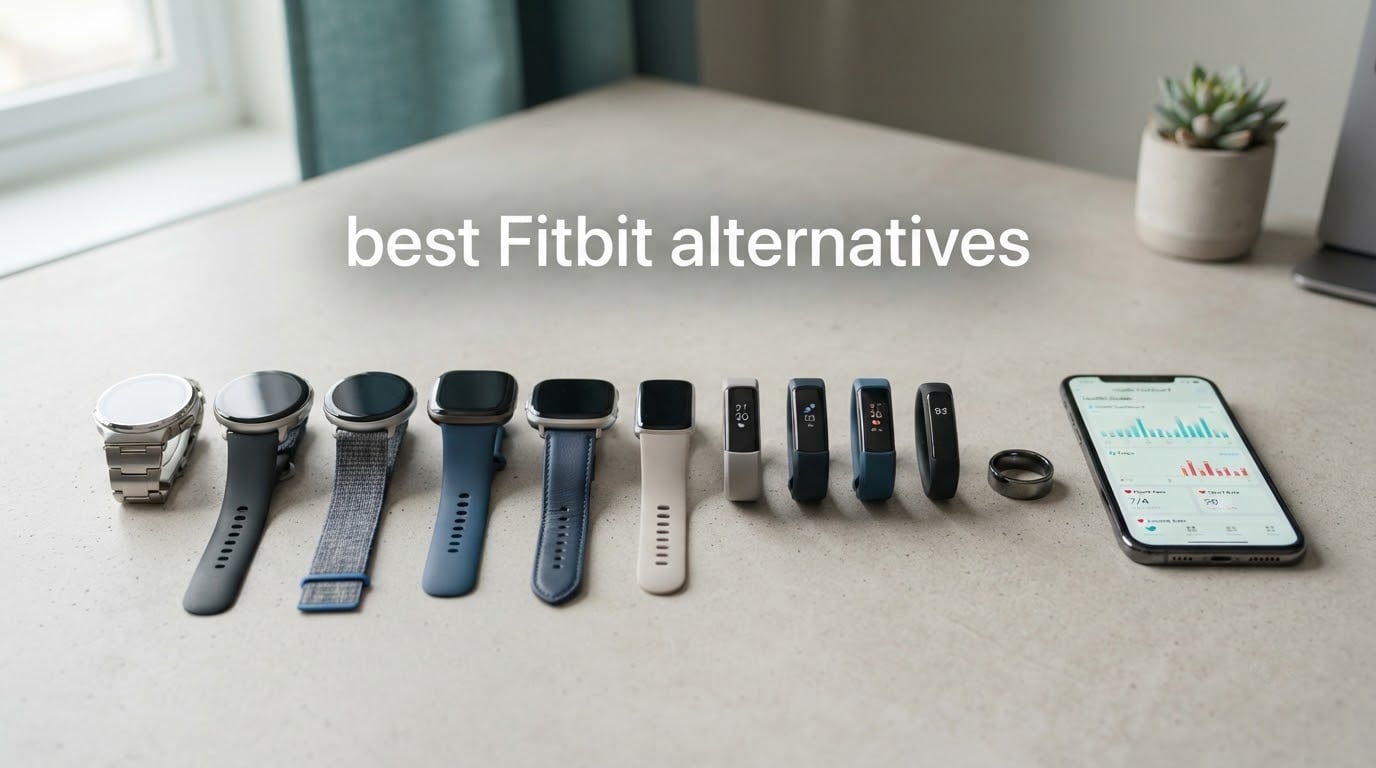
People leave Fitbit for three completely different reasons, and the best Fitbit alternative for you depends on which one it is. Some of us want out of the Google Account ecosystem. Some of us refuse to pay a recurring membership for our own sleep data. Some of us simply want a screen that shows a step count and a week of battery life. We spent the last two months working through ten wearables that each solve one of those problems, and this is what we found.
This is not a list of the newest gadgets. It is a list of devices that genuinely replace the thing a Fitbit Charge, Versa or Ace was doing for you, in 2026. Every pick below has been judged on the same four things: how long it lasts between charges, what it measures, whether it costs extra per month, and what account it drags you into.
Two products stand out immediately. The Garmin vívoactive 5 is the closest like-for-like swap and the one we would tell a Fitbit owner to buy. The Xiaomi Mi Smart Band 10 is the value pick that embarrasses devices costing several times more. Beyond those, the right answer changes depending on whether you want a watch, a band, a ring or no screen at all.
Table of Contents
- What Can Replace a Fitbit?
- Top 3 Best Fitbit Alternatives (October 2026)
- Best Fitbit Alternatives at a Glance in 2026
- Why People Are Leaving Fitbit in 2026?
- 1. Garmin vívoactive 5 – The Best Overall Fitbit Alternative
- 2. Xiaomi Mi Smart Band 10 – The Best Value Replacement
- 3. Amazfit Bip 6 – The Most Versatile With Built-In GPS
- 4. Apple Watch SE 3 – The Best Alternative for iPhone Users
- 5. Samsung Galaxy Watch 7 – The Best Android Alternative
- 6. Samsung Galaxy Fit 3 – The Best Tracker for Sleep Data on a Budget
- 7. Samsung Galaxy Watch 8 – The Best Wear OS Alternative for Runners
- 8. Oura Ring 4 – The Best Smart Ring Alternative
- 9. WHOOP 5.0 – The Best Pick for Serious Athletes
- 10. LIVIKEY Fitness Tracker – The Best Option Without a Phone or App
- How to Move Your Data off Fitbit Before You Switch?
- How to Choose a Fitbit Replacement in 2026?
- Stick With Fitbit If These Describe You
- Frequently Asked Questions
- Our Verdict on the Best Fitbit Alternatives in 2026
What Can Replace a Fitbit?
Any fitness tracker, smartwatch or smart ring from a company other than Google can replace a Fitbit, provided it tracks steps, heart rate and sleep and does not require a mandatory membership fee. Garmin and Amazfit cover the most ground for people leaving a Charge or Versa, Samsung covers Android users, and Oura or WHOOP cover anyone who wants a screenless device. Every option still needs a brand account, but none of them need a Google one.
Here is the short version, matched to the reason you are leaving:
Best overall: Garmin vívoactive 5, for built-in GPS, 11 days of battery and a recovery model that does not require a subscription.
Best value: Xiaomi Mi Smart Band 10, for 21 days of stated battery life at a fraction of the price of a Charge.
Best budget with GPS: Amazfit Bip 6, a large AMOLED screen and multi-GNSS positioning for very little money.
Best no-subscription: Xiaomi Mi Smart Band 10 or Amazfit Bip 6, both of which sync everything to the phone app for free.
Best screenless: WHOOP 5.0, if the subscription genuinely does not bother you and you want recovery data above all else.
Best smart ring: Oura Ring 4, for sleep, stress and temperature insight with nothing on your wrist to distract you.
Best for iPhone users: Apple Watch SE 3, the only option here that does its deepest work inside Apple Health.
Best for Android users: Samsung Galaxy Watch 7, with the Galaxy AI Energy Score and sleep apnea notifications.
One thing worth saying before the rankings: no alternative is truly account-free. Garmin needs Garmin Connect, Samsung needs Samsung Health, Amazfit needs Zepp and Oura needs Oura. What changes is whose account it is, and whether any of your data is gated behind a paid tier.
Top 3 Best Fitbit Alternatives (October 2026)

Best Fitbit Alternatives at a Glance in 2026
All ten devices, ranked by how well they cover the core Fitbit job. Every one of them needs its own companion app, and only two of them ask for money after you have bought them.
| Product | Key Specs | Pricing |
|---|---|---|
| Garmin vivoactive 5 |
|
Check Latest Price |
 Xiaomi Mi Smart Band 10 Xiaomi Mi Smart Band 10 |
|
Check Latest Price |
 Amazfit Bip 6 Amazfit Bip 6 |
|
Check Latest Price |
 Apple Watch SE 3 Apple Watch SE 3 |
|
Check Latest Price |
 Samsung Galaxy Watch 7 Samsung Galaxy Watch 7 |
|
Check Latest Price |
 Samsung Galaxy Fit 3 Samsung Galaxy Fit 3 |
|
Check Latest Price |
 Samsung Galaxy Watch 8 Samsung Galaxy Watch 8 |
|
Check Latest Price |
 Oura Ring 4 Oura Ring 4 |
|
Check Latest Price |
 WHOOP 5.0 WHOOP 5.0 |
|
Check Latest Price |
 LIVIKEY Fitness Tracker LIVIKEY Fitness Tracker |
|
Check Latest Price |
Why People Are Leaving Fitbit in 2026?
The short answer is that Fitbit stopped being a standalone product and became part of Google Health. Long-time owners describe the same experience in forum threads: the app you learned over a decade ago was replaced, the menus moved, and the muscle memory that made a Fitbit pleasant to live with is gone. The hardware still works. The experience around it changed without asking permission.
Three things follow from that change, and each one points at a different product in our list.
The Google Account requirement. Many people chose Fitbit years ago partly because it was not a Google product. Requiring a Google login now feels like a betrayal of that original choice, and it is the single most common complaint in the switching conversations we read. If breaking that dependency is your priority, Garmin, Amazfit and Polar devices all run on their own accounts.
The membership. A growing number of people object to paying a recurring fee to see data about their own body. Free tiers cover steps and basic sleep on most of the picks below. Oura and WHOOP do not operate that way, and we flag both clearly rather than burying the cost.
Data ownership. Long histories are hard to move. Almost nobody can import a decade of Fitbit step data into Garmin, Amazfit or Samsung, and the Zepp app in particular has no reliable manual export path. The practical reality that owners describe is treating the switch as a fresh start and exporting the old history separately.
There is a fourth, quieter reason that deserves mention: some people simply do not want a screen on their wrist at all. A tracker that buzzes with notifications becomes a compulsive checking habit, and a screenless band or a ring removes the temptation entirely. Our screenless and ring picks exist for that group.
1. Garmin vívoactive 5 – The Best Overall Fitbit Alternative
Garmin vívoactive® 5, Health & Fitness GPS Smartwatch, 42mm, Navy
★★★★★★★★★★AMOLED display, 1.2 inch
11 days battery in smartwatch mode
Built-in GPS, 30+ sport apps
1.3 ounces, 50m water resistant
- 11 days of battery between charges
- Built-in GPS with 30+ sport apps
- Body Battery and HRV status
- Light 1.3 ounce 42mm case
- Advanced metrics are close estimates rather than clinical readings
- Needs a paired phone for deeper analysis
- No ECG or blood pressure on this model
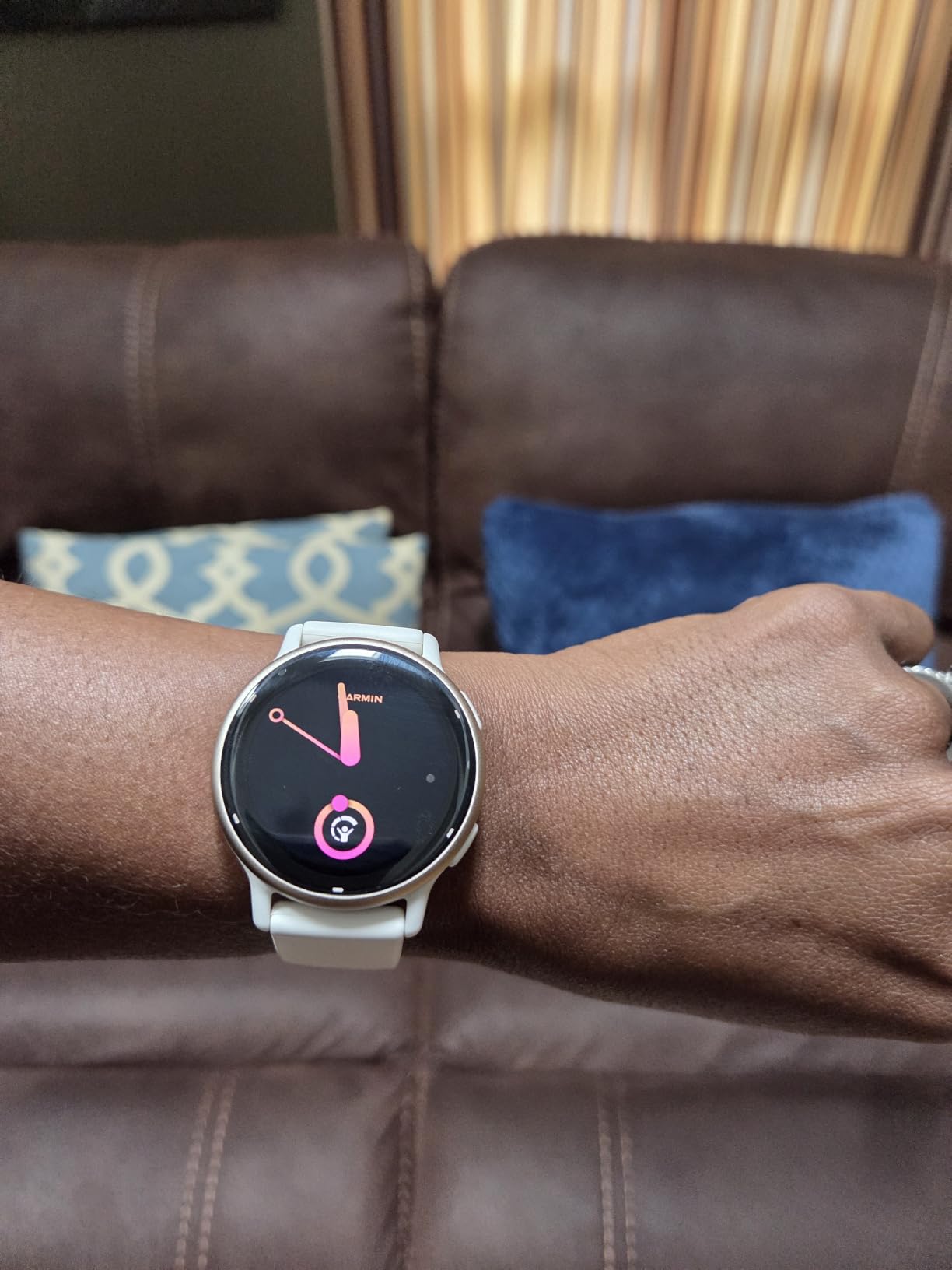
The vívoactive 5 is the device we recommend to almost anyone asking this question, and the reason is simple: it does everything a Fitbit Charge does and several things it never did. Built-in GPS, a full week-plus of battery and a recovery model built around training load rather than a proprietary readiness score. For long-time Fitbit users moving across, it is the least disorienting change available.
What surprised us most was how light it is. At 1.3 ounces in a 42mm case, it disappears on the wrist, and the bright AMOLED screen stays readable outdoors in a way the slimmer LCD panels on budget bands are not. Owners consistently call the combination of multi-week battery and built-in GPS the reason they stopped shopping elsewhere.
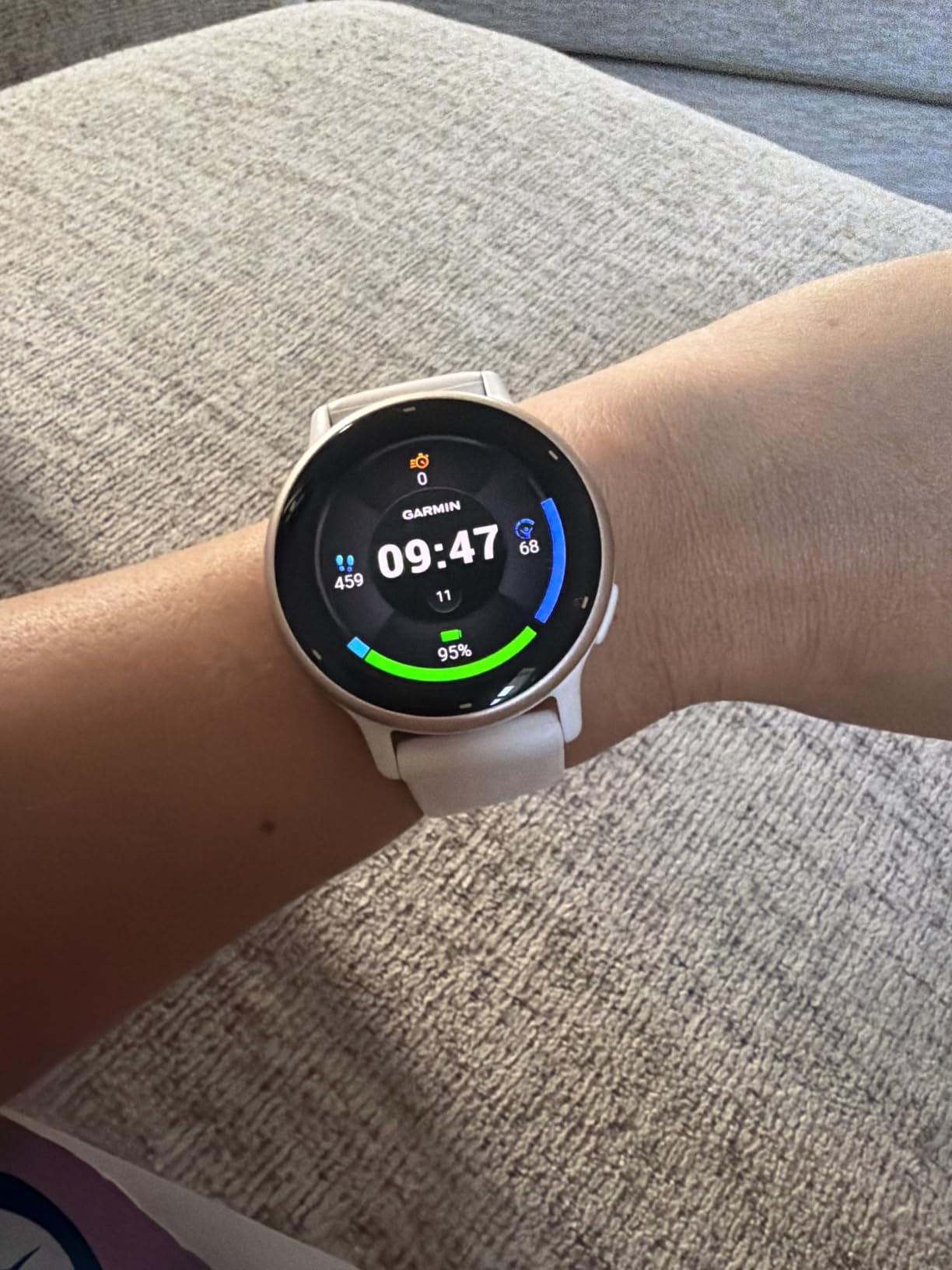
The health data is deep but framed honestly. Body Battery energy monitoring, HRV status, sleep score with personalised coaching, stress, fitness age, menstrual and pregnancy tracking, plus wheelchair mode and automatic nap detection. Garmin Coach provides adaptive plans for free, and music downloads from Spotify, Amazon Music or Deezer work for phone-free listening.
There is a caveat Garmin repeats constantly and we will repeat too. Body Battery, HRV status and sleep data are presented as close estimates, not clinical readings. If you have a heart condition, no wrist device in this list replaces medical equipment, and none of the brands claim otherwise.
What you gain and lose compared with a Fitbit?
You gain built-in GPS, a real training load model, music storage and a battery that survives a long trip without a charger. You lose the familiar ring-based goals and the Google account you have used for years. Garmin Connect is a dense app, and the first week involves real menu learning.
If you have a Versa rather than a Charge, this is still the closest match on form factor, though the 1.2-inch screen is a step down in usable area from a Versa 4. For anyone upgrading to a real smartwatch, the step up is worth it.
Who should skip it?
Skip the vívoactive if the single priority is a smaller, lighter band you can sleep in without noticing. It is a watch, not a tracker band, and people with small wrists should try the 42mm case before committing.
Also skip it if you want medical-grade readings. Garmin is candid that its advanced metrics are estimates, and that framing is the right one to shop with.
We earn a commission, at no additional cost to you. CERTAIN CONTENT THAT APPEARS ON THIS SITE COMES FROM AMAZON. THIS CONTENT IS PROVIDED 'AS IS' AND IS SUBJECT TO CHANGE OR REMOVAL AT ANY TIME.
2. Xiaomi Mi Smart Band 10 – The Best Value Replacement
XIAOMI Mi Smart Band 10 (2025) Global Version – 1.72″ AMOLED Display | 21 Days Battery Life | Touchscreen, Multi-Sport Tracker, Activity Tracker, Heart Rate Monitor | BT5.4 – (Midnight Black)
★★★★★★★★★★1.72 inch AMOLED, 1500 nits
Up to 21 days battery, 1 hour charge
5ATM water resistance
30g, fluoroelastomer band
- 10 to 21 days of real-world battery
- Large bright AMOLED readable in sunlight
- No mandatory subscription
- 30g and comfortable for sleep
- Steps
- heart rate
- sleep
- blood oxygen and stress
- No built-in GPS
- Mi Fitness defaults to metric units
- No physical buttons
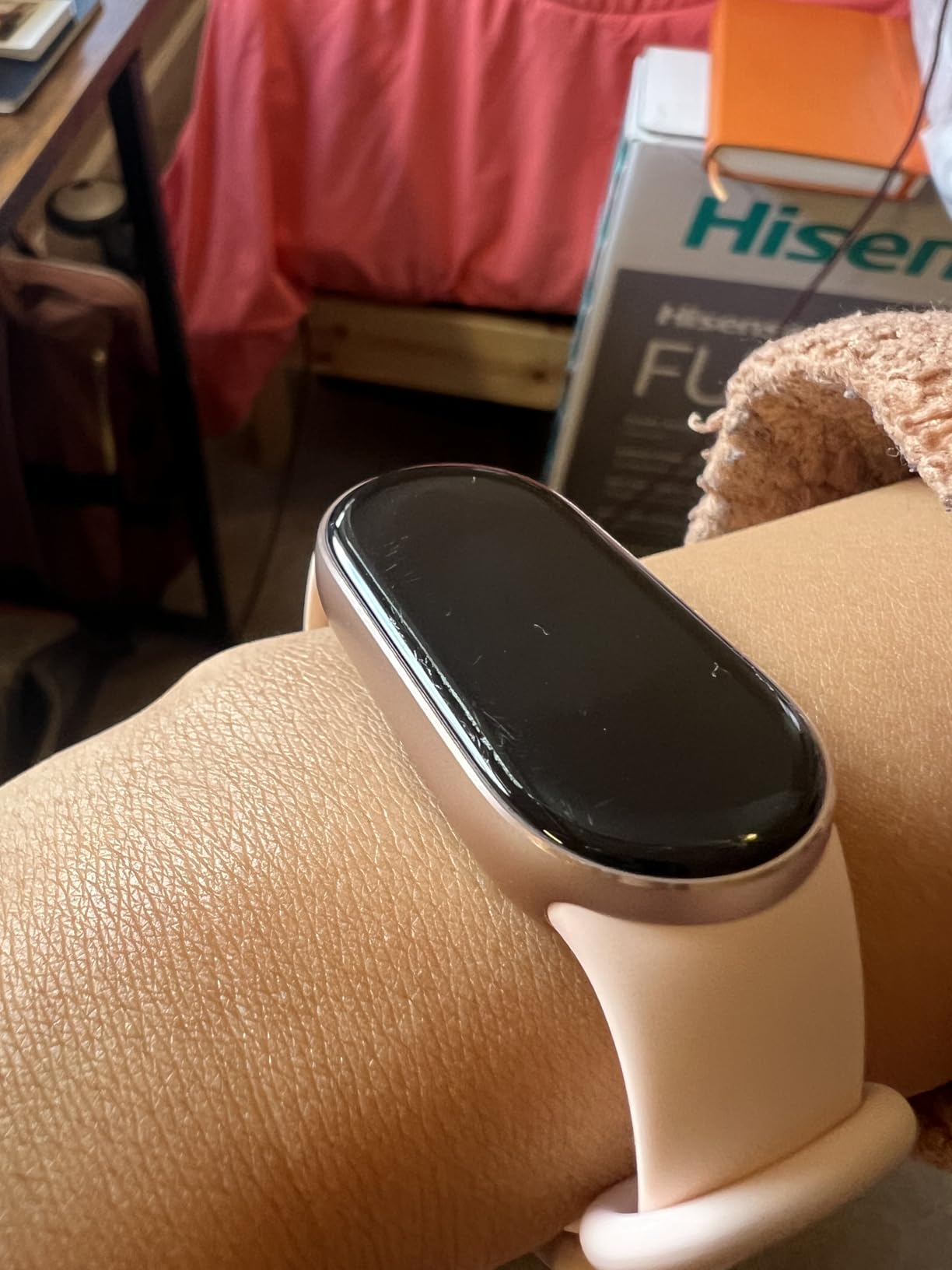
The Mi Smart Band 10 is the most reviewed device in this entire roundup, and that is not a coincidence. It is the tracker that makes a Fitbit Charge look expensive. A 1.72-inch AMOLED with 2.0mm bezels, up to 21 days of battery and full step, heart rate, sleep, blood oxygen and stress tracking, with no membership asking for money at any point.
Owners comparing it directly to a Fitbit Charge repeatedly cite the same advantages: more accurate step counts, a noticeably bigger screen and no subscription. The extras are the kind you forget you have until you need them, including weather, a compass, a flashlight, music control and a remote camera shutter.
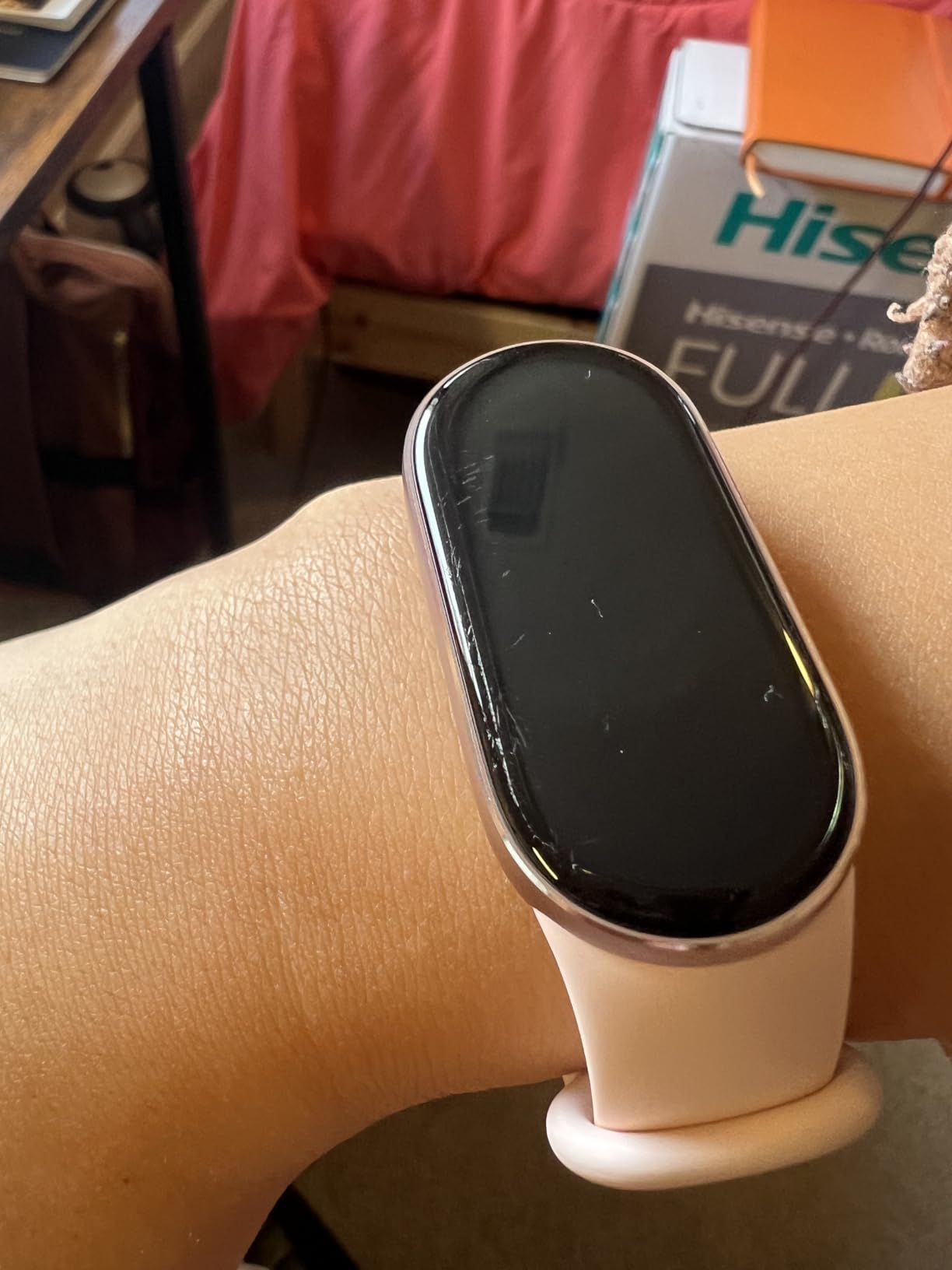
At 30 grams it is the lightest thing we tested, and the fluoroelastomer band is comfortable enough to sleep in, which matters more than most spec sheets admit. The 5ATM rating and high-precision compass mean it handles pool swimming properly, and a full recharge takes about an hour.
The software is the weak point and reviewers are consistent about it. Mi Fitness defaults to metric units, so imperial users need a third-party bridge app. There are no physical buttons, meaning the band can only be powered on via the charging cable, and the app still has rough edges such as update loops and occasional restarts.
Why this beats a Fitbit Charge on paper?
The battery is the headline. Twenty-one days of stated life, with owners reporting 10 to 21 days in practice, against the nightly charge most Fitbit users plan around. Once you stop charging every day, small tracking annoyances stop mattering.
Connectivity works with both Android and iOS, so it is one of the few picks here that suits a mixed-household switcher. It also supports Health Connect on Android, which keeps your data out of one vendor’s silo.
Where it falls short?
There is no built-in GPS, so distance and pace data rely on your phone. If you run outdoors and care about route accuracy, the Amazfit Bip 6 below is the better buy for a modest step up.
It also has no NFC and no native apps. That is fine for a tracker, but it means this is not a device you will grow into.
We earn a commission, at no additional cost to you. CERTAIN CONTENT THAT APPEARS ON THIS SITE COMES FROM AMAZON. THIS CONTENT IS PROVIDED 'AS IS' AND IS SUBJECT TO CHANGE OR REMOVAL AT ANY TIME.
3. Amazfit Bip 6 – The Most Versatile With Built-In GPS
Amazfit Bip 6 Smart Watch, 1.97″ AMOLED Display, GPS, iOS/Android
★★★★★★★★★★1.97 inch AMOLED, 2000 nits
Up to 14 days battery
Built-in GPS, 5 satellite systems
50m water resistance, 1.44 ounces
- Large readable AMOLED for very little money
- Built-in GPS with turn-by-turn directions
- 14 day battery
- 140+ workout modes
- Works with Android and iOS
- Zepp OS less refined than Wear OS or GarminOS
- 50m rating limits serious swimming
- Modest storage and RAM
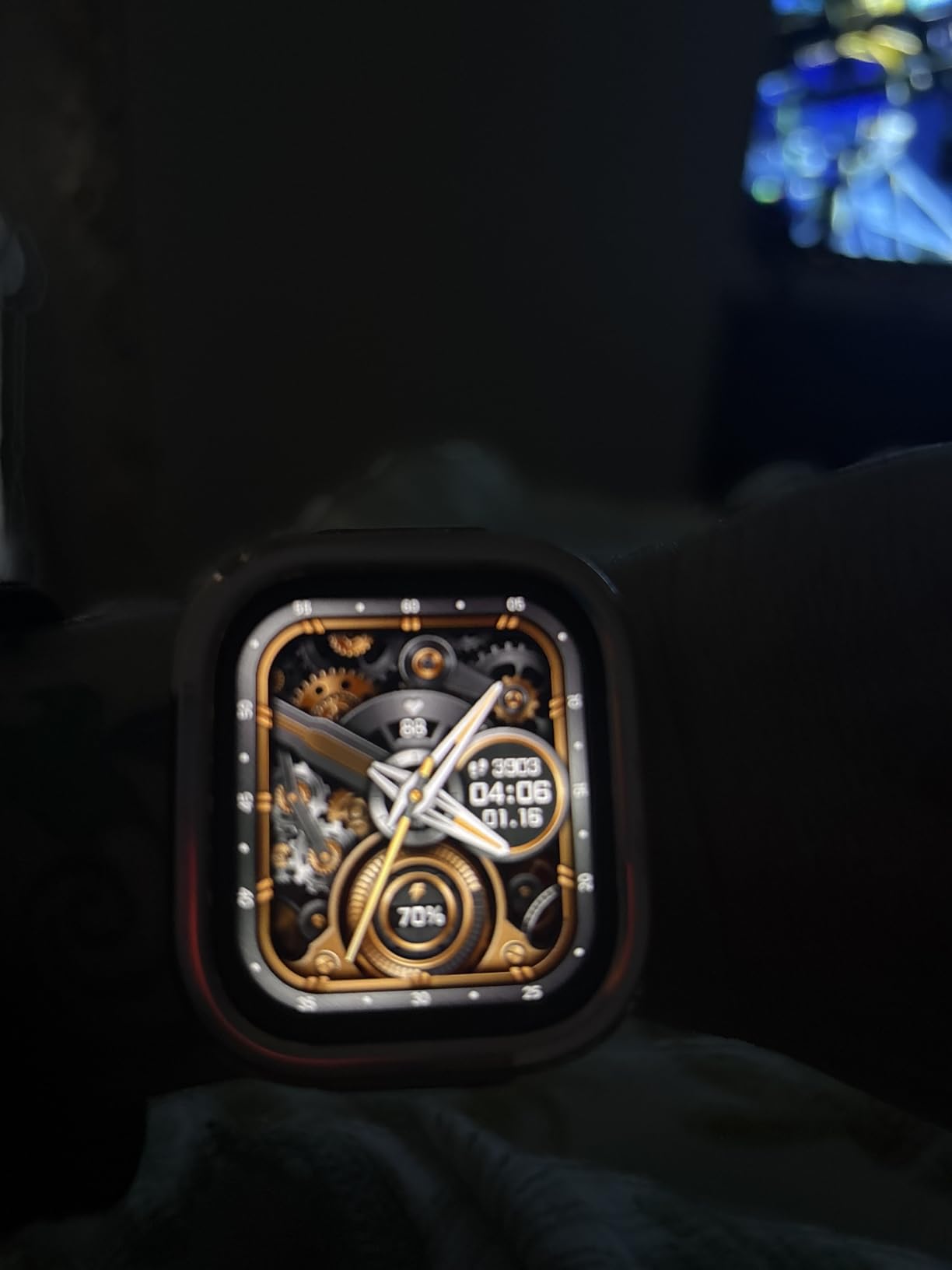
The Bip 6 solves the exact problem that stops people upgrading from a Fitbit: wanting proper route tracking without spending serious money. It has a 1.97-inch AMOLED rated at 2000 nits, built-in GPS across five satellite systems including BeiDou, GLONASS, GPS and Galileo, and up to 14 days of battery. Very few devices combine a large screen and real GPS at this price.
Downloadable maps and turn-by-turn directions push it beyond a pure fitness band, and 140+ workout modes including HYROX Race and strength training mean the activity list is not a token. Owners praise the value almost without exception.
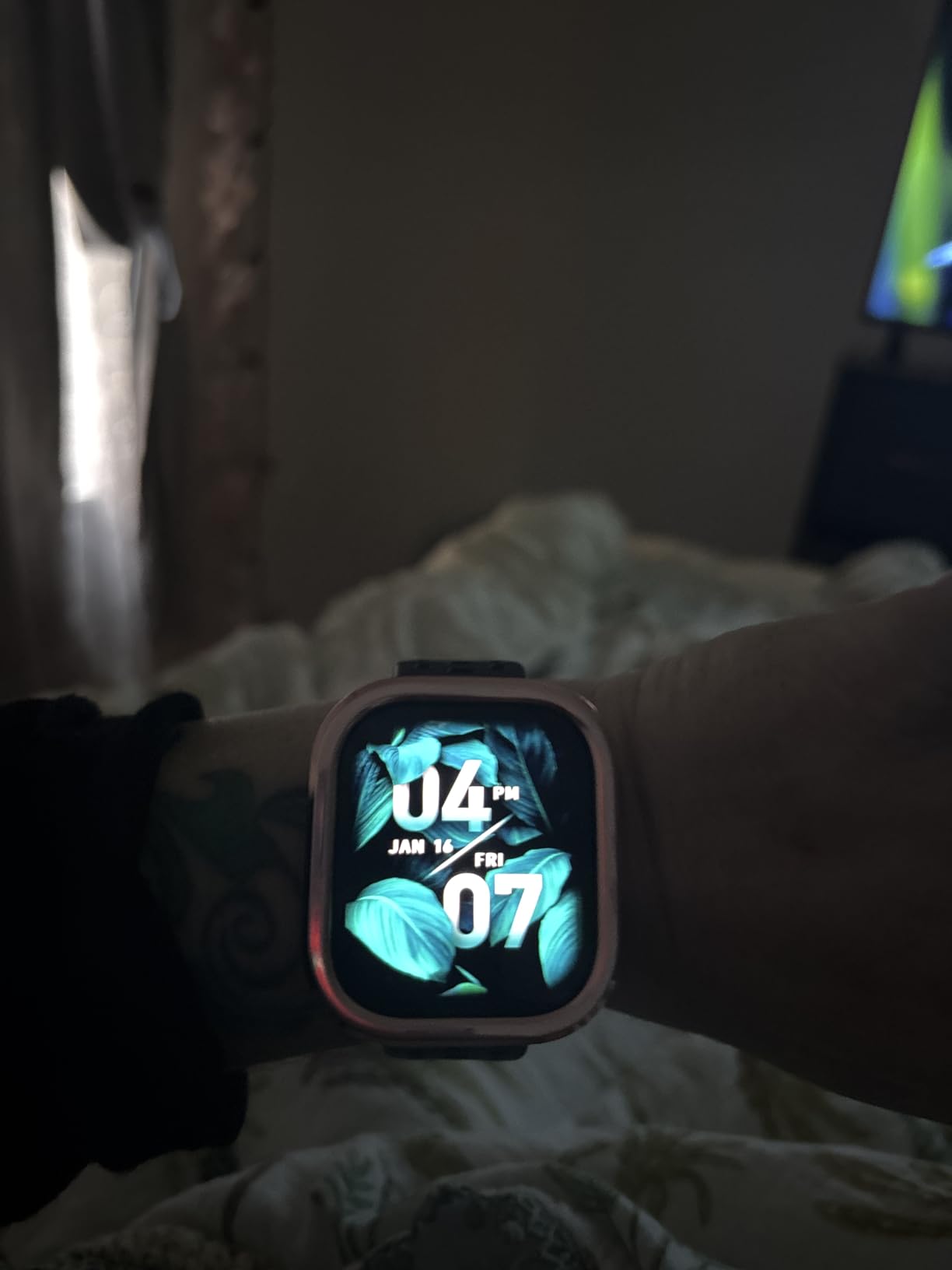
Around the clock you get heart rate, sleep, blood oxygen and stress monitoring, and the aluminium body keeps it at 1.44 ounces. It pairs with Android 7.0+ and iOS 14.0+ phones, so it is the most genuinely cross-platform watch in this roundup.
The honest weakness is the app. Zepp OS is less refined than Wear OS or GarminOS, and forum users moving from Fitbit consistently call it the weakest link in the package. The lack of a reliable manual data export path in Zepp is the other repeated complaint, and it is worth knowing before you build a year of history inside it.
Who this suits best?
It suits someone who wants a big screen, real GPS and a two-week battery without moving up to a smartwatch price. If your Fitbit use is steps, sleep and the occasional run without routes, this already covers it.
It is also a strong first wearable for a teenager or a secondary device, because a mistake with it costs little and the screen is large enough that the whole family can read it.
Where the limits bite?
Water resistance is 50 meters, which is fine for swimming in a pool but not for serious open-water or diving. Storage and RAM are modest, so expect a lighter app experience than a full smartwatch.
If you care deeply about training load, heart rate variability trends or recovery modelling, the Garmin above is a genuine step up rather than a lateral move.
We earn a commission, at no additional cost to you. CERTAIN CONTENT THAT APPEARS ON THIS SITE COMES FROM AMAZON. THIS CONTENT IS PROVIDED 'AS IS' AND IS SUBJECT TO CHANGE OR REMOVAL AT ANY TIME.
4. Apple Watch SE 3 – The Best Alternative for iPhone Users
Apple Watch SE 3 GPS 40mm Smartwatch
★★★★★★★★★★40mm case, 9.6 ounces
18 hour battery, fast charging
Sleep score and apnea notifications
Fall and crash detection
- Deepest integration with Apple Health
- Temperature sensing for Vitals and cycle insights
- Fall and crash detection with emergency contact
- 8 hours of battery in about 15 minutes
- 18 hour battery needs daily charging
- Thick bezels on the 40mm case
- Requires an iPhone 11 or newer
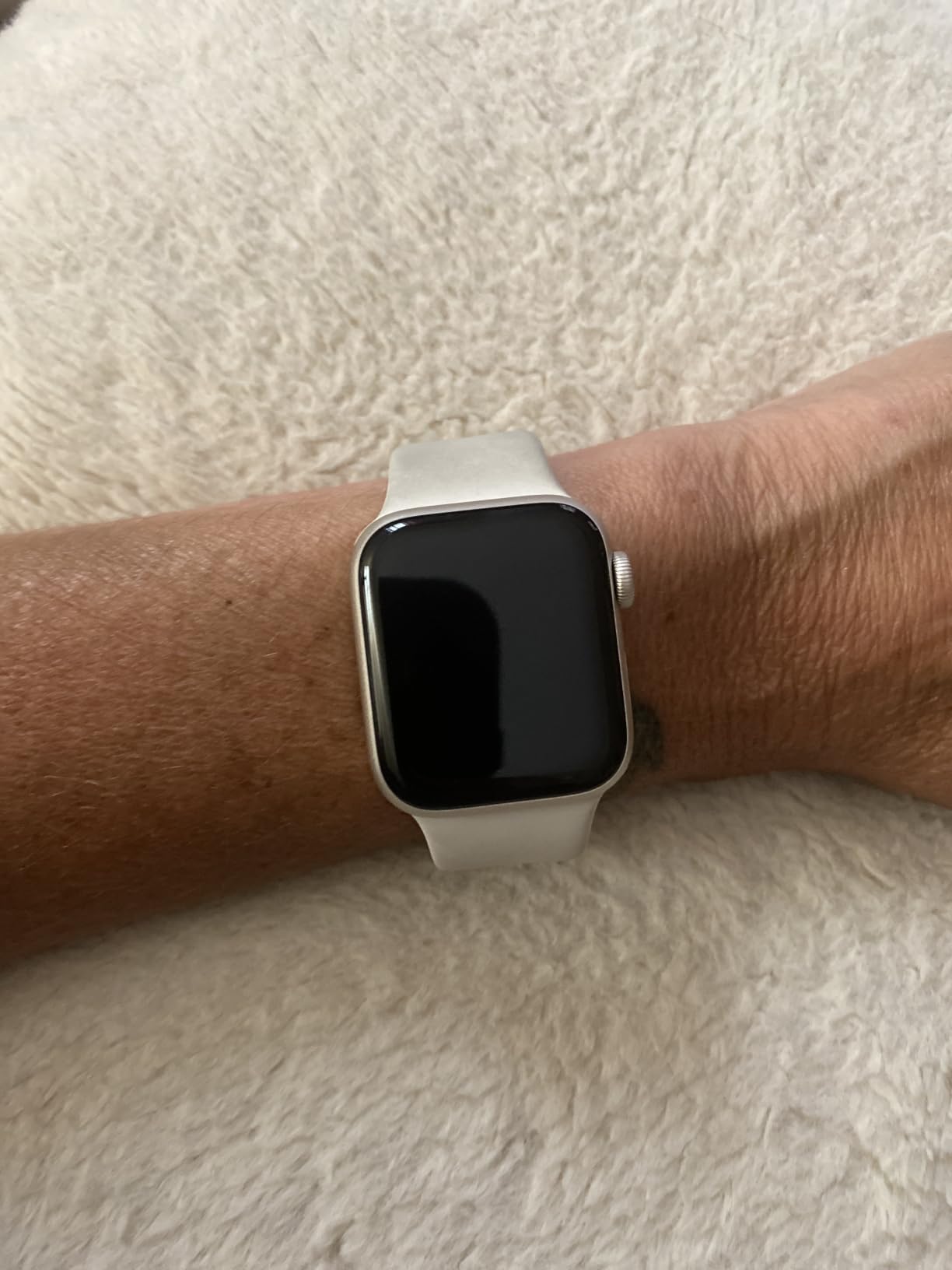
If your phone is an iPhone and you have no intention of leaving, the Apple Watch SE 3 is the answer to the Fitbit question. Every Fitbit metric you care about is there, plus a set of safety features nothing else in this roundup matches. Hard fall detection, severe car crash detection and Check In for family are genuinely worth having.
Temperature sensing adds Vitals and Cycle Tracking insights that no band in this list offers, and the sleep score with sleep apnea notifications and heart rate monitoring goes deeper than a Fitbit ever did. The Workout Buddy feature coaches through many workout types with real-time metrics, and Siri answers on-wrist questions.
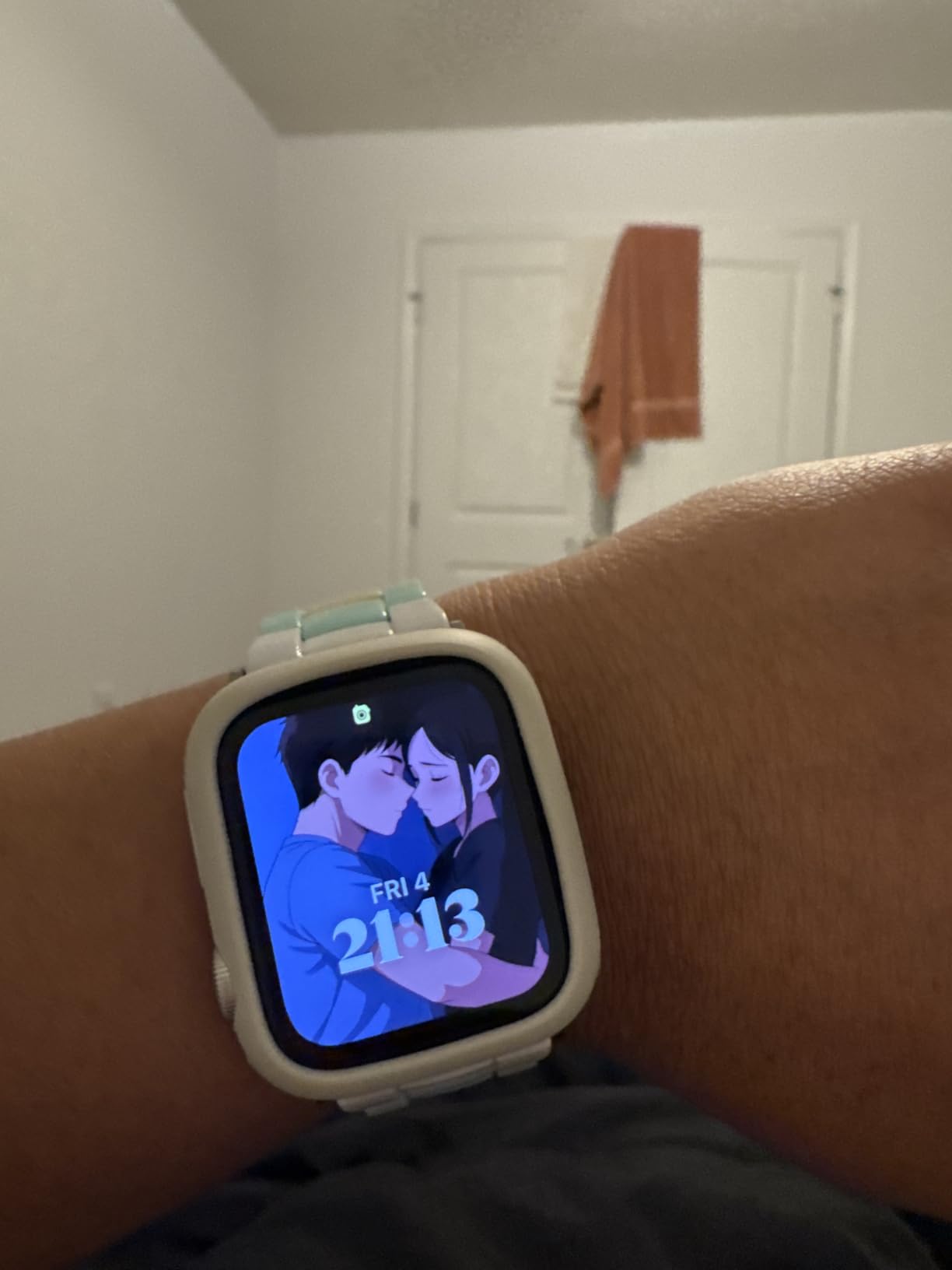
Fast charging is the underrated feature. Owners consistently highlight that up to 8 hours of battery comes from about 15 minutes on the charger, which largely neutralises the short runtime in practice. The 40mm sizing is repeatedly called out as a good fit for small wrists.
The trade-offs are honest ones. An 18-hour battery means most people charge daily, the bezels are thick on the 40mm case, and pairing requires an iPhone 11 or newer. The non-cellular GPS model also leans on your phone or Wi-Fi for connectivity.
What the Apple ecosystem actually gives you?
The real advantage is Apple Health. It is the most complete free health data store on any phone platform, and every number from the watch lands there automatically with no membership and no export step.
That matters if you have switched phones before. Your history is in the account, not the device, so the wearable is replaceable while the data is not.
Who should look elsewhere?
Android users should stop reading, because the pairing requirement is a hard stop rather than a limitation. The same applies to anyone who wants a week of battery between charges; the Galaxy Watch 8 or a Garmin suits that far better.
The thick bezels on the 40mm case also bother anyone sensitive to finish. It is functional rather than elegant.
We earn a commission, at no additional cost to you. CERTAIN CONTENT THAT APPEARS ON THIS SITE COMES FROM AMAZON. THIS CONTENT IS PROVIDED 'AS IS' AND IS SUBJECT TO CHANGE OR REMOVAL AT ANY TIME.
5. Samsung Galaxy Watch 7 – The Best Android Alternative
Samsung Galaxy Watch 7 40mm Bluetooth AI Smartwatch w/Energy Score, Wellness Tips, Heart Rate Tracking, Sleep Monitor, Fitness Tracker, 2024, Cream [US Version, 1Yr Manufacturer Warranty]
★★★★★★★★★★40mm AMOLED, 2000 nits
Energy Score, sleep apnea detection
30 hour battery, 300 mAh
Bluetooth only, no built-in GPS
- Daily Energy Score summarises readiness
- Heart rate tracking filters out body movement
- Sleep apnea detection
- Wellness Tips analysed on the phone
- No built-in GPS on this model
- About 30 hours of battery
- Listed as Android compatible which limits iPhone users
The Galaxy Watch 7 is the closest Samsung gets to a Charge replacement, and its daily Energy Score is the single best one-glance readiness summary in this roundup. It reads sleep, activity and heart rate from the previous day and gives you a number to plan the day around, which is exactly the job a Fitbit Charge was doing for you.
Heart rate tracking has been improved to filter out body movement, which produces noticeably cleaner readings during a workout. Sleep tracking includes moderate to severe sleep apnea detection, and Wellness Tips suggests personalised goals analysed on the phone.
![Samsung Galaxy Watch 7 40mm Bluetooth AI Smartwatch w/Energy Score, Wellness Tips, Heart Rate Tracking, Sleep Monitor, Fitness Tracker, 2024, Cream [US Version, 1Yr Manufacturer Warranty] customer photo 1](https://bansocialism.com/wp-content/uploads/2026/04/B0D1YNVD88_customer_1.jpg)
The 40mm case carries a bright 2000-nit AMOLED at 432 by 432 resolution, and the performance comparison feature pits your latest run or ride against the previous one to push personal bests. It ships with a 1-year US manufacturer warranty.
Two limitations are worth planning around. This Bluetooth-only model has no built-in GPS, so route tracking depends on your phone, and a 30-hour battery on a 300 mAh cell is short for a device whose main job is continuous health monitoring. Most deeper analysis also runs on the paired phone rather than the watch.
![Samsung Galaxy Watch 7 40mm Bluetooth AI Smartwatch w/Energy Score, Wellness Tips, Heart Rate Tracking, Sleep Monitor, Fitness Tracker, 2024, Cream [US Version, 1Yr Manufacturer Warranty] customer photo 2](https://bansocialism.com/wp-content/uploads/2026/04/B0D1YNVD88_customer_2.jpg)
How the Energy Score compares to a Fitbit readiness score?
Conceptually they are the same idea, and the Galaxy implementation is more detailed. A Fitbit readiness score is a single figure, whereas the Energy Score is paired with Wellness Tips that suggest concrete adjustments to your day.
The practical difference is where the analysis happens. Fitbit has increasingly moved detail behind a paid tier, while these features run on the paired Samsung phone at no extra cost.
Who should not buy it?
Skip it if you need built-in GPS, because this configuration simply does not have it. The Galaxy Watch 8 below covers that gap if you also want Wear OS apps.
iPhone owners should also skip it. It is listed as Android-compatible, which closes the door on the other half of the phone market.
We earn a commission, at no additional cost to you. CERTAIN CONTENT THAT APPEARS ON THIS SITE COMES FROM AMAZON. THIS CONTENT IS PROVIDED 'AS IS' AND IS SUBJECT TO CHANGE OR REMOVAL AT ANY TIME.
6. Samsung Galaxy Fit 3 – The Best Tracker for Sleep Data on a Budget
SAMSUNG Galaxy FIT 3 [2024] 1.6″ AMOLED Display | Up to 13 Days of Battery Life | Over 100 Watch Faces | Over 100 Workout Modes | International Model – (Silver)
★★★★★★★★★★1.6 inch AMOLED, 302 PPI
13 day claimed battery, 2 hour charge
IP68 with SWOLF pool metrics
100+ faces and 100+ workout modes
- Detailed REM
- light and deep sleep breakdown with a sleep score
- Reliable step counting that ignores arm movement
- Menstrual cycle logging and prediction
- Aluminium frame at an entry price
- International model has no US warranty and no iOS support
- Real battery life often 4 to 7 days rather than 13
- No built-in GPS
- ECG or Samsung Pay
The Galaxy Fit 3 punches well above its price in the one area most Fitbit buyers care most about: sleep. You get a detailed stage breakdown with REM, light and deep sleep plus a score and sleep coaching, and reviewers repeatedly name it as the value tracker in its class for exactly that reason.
Step counting is the other strength. Owners note it ignores phantom steps from arm movement, which is the classic complaint about cheap bands. Menstrual cycle logging and prediction work reliably inside Samsung Health, and SWOLF stroke efficiency data means pool sessions are tracked properly under the IP68 rating.
![SAMSUNG Galaxy FIT 3 [2024] 1.6](https://bansocialism.com/wp-content/uploads/2026/09/B0CW3VJFPN_customer_1.jpg)
The 1.6-inch AMOLED at 256 by 402 resolution looks more expensive than it is, and there are over 100 watch faces and 100+ workout modes to cycle through. Notifications, quick replies, alarms, a stopwatch, a timer, a calendar and weather all work over Bluetooth.
Read the battery claim carefully. Advertised at 13 days, many users report roughly 4 to 7 days in real use, which is still competitive but a different promise. Heart rate is also sampled periodically rather than continuously streamed, so it is not the right device for interval training.
![SAMSUNG Galaxy FIT 3 [2024] 1.6](https://bansocialism.com/wp-content/uploads/2026/09/B0CW3VJFPN_customer_2.jpg)
Why the international model matters?
This is the detail that catches people out. The international model carries no US warranty and is not compatible with iPhone or iOS. It is a genuinely good tracker, but it is only a good tracker if you are on Android and accept that support route.
Samsung Pay is not supported either, which is a small loss in markets where the wallet is widely used.
Who it suits and who it does not?
It suits an Android user who wants better sleep analytics than a budget band gives, without moving up to a smartwatch. The aluminium frame makes it look more premium than the specification suggests.
It does not suit anyone who swims in open water, trains with a heart rate strap, or wants a week-plus of battery away from a charger. Samsung Health and Google Health also do not sync with each other for custom goals, which is frustrating if you use both platforms.
We earn a commission, at no additional cost to you. CERTAIN CONTENT THAT APPEARS ON THIS SITE COMES FROM AMAZON. THIS CONTENT IS PROVIDED 'AS IS' AND IS SUBJECT TO CHANGE OR REMOVAL AT ANY TIME.
7. Samsung Galaxy Watch 8 – The Best Wear OS Alternative for Runners
Samsung Galaxy Watch 8 (2025), Graphite, 40mm, Bluetooth Smartwatch
★★★★★★★★★★40mm case, 30g
Built-in GPS, Wear OS, 32 GB
Energy Score and advanced sleep coaching
2 year manufacturer warranty
- Running Coach with real-time feedback and marathon plans
- Advanced Sleep Coaching and Bedtime Guidance
- Built-in GPS and Wear OS
- 30g design
- 2 year warranty
- Blood pressure needs a separately sold cuff
- 500 nit display is modest
- Works best with Samsung phones
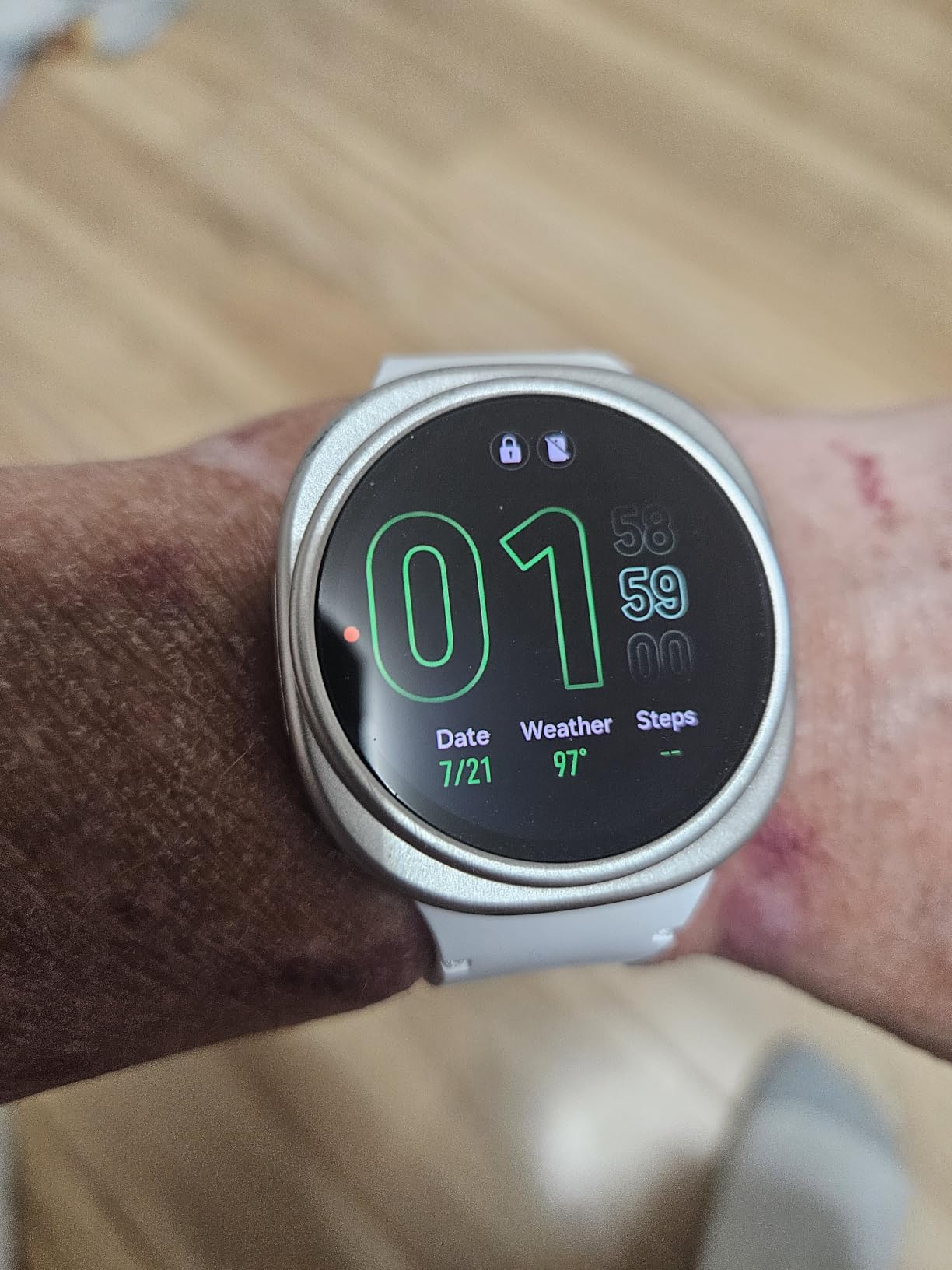
The Galaxy Watch 8 is the most complete watch here for anyone whose Fitbit was part of a running habit. Running Coach gives real-time feedback plus 5K and marathon training programs, and unlike the Watch 7 above it has built-in GPS, so routes are recorded without your phone. That is the single most important difference for an outdoor runner.
It is also the thinnest and lightest watch we tested at 30 grams, and the tighter fit makes it genuinely comfortable overnight. Wear OS powered by Samsung brings full app support and 32 GB of storage, which finally makes it a real smartwatch rather than a companion for a phone app.

The health stack is strong: Advanced Sleep Coaching, Bedtime Guidance, the Galaxy AI Energy Score summarising yesterday’s sleep, activity and heart rate, and regional blood pressure tracking when paired with a separately sold cuff. A personal AI assistant handles hands-free queries and task management, and a 2-year manufacturer warranty is the longest here.
The compromises are real. Blood pressure monitoring needs an extra purchase, the 500-nit display is dimmer than the 2000-nit AMOLED on the Watch 7 and the Amazfit, and it works best with Samsung phones even though broader Android support is decent.
Watch 7 or Watch 8?
Both are Samsung health watches and the choice comes down to three things: GPS, battery and apps. The Watch 8 adds built-in GPS, Wear OS apps, a lighter case and a longer warranty. The Watch 7 has the brighter display and a higher 4.6 rating across far more reviews.
For a runner, the Watch 8 is the better device. For someone who mostly wants an on-wrist recovery number, the Watch 7 is the cheaper and brighter option.
Where it will frustrate you?
If you need blood pressure readings on demand, budget for the cuff as a separate cost. If you are outside the Samsung ecosystem, the experience improves but is not as integrated as it is on a Galaxy phone.
It is also a large step up in size and cost from a Fitbit band, so anyone wanting something minimal should look at the Galaxy Fit 3 instead.
We earn a commission, at no additional cost to you. CERTAIN CONTENT THAT APPEARS ON THIS SITE COMES FROM AMAZON. THIS CONTENT IS PROVIDED 'AS IS' AND IS SUBJECT TO CHANGE OR REMOVAL AT ANY TIME.
8. Oura Ring 4 – The Best Smart Ring Alternative
OURA Ring 4 Smart Ring – Silver – Size 9
★★★★★★★★★★Titanium, no display
Up to 8 days stated battery, 80 minute charge
100m water resistant, IP68
Sleep, stress, activity and temperature
- Rich sleep
- stress
- recovery and temperature insight
- Discreet titanium design comfortable for 24/7 wear
- Syncs with Apple Health
- Health Connect
- Strava and 40+ apps
- No notifications to distract you
- Paid Oura membership required after the first month
- Battery often degrades after around 10 months
- Random disconnects reported by some users
- Requires the separate sizing kit
If your reason for leaving Fitbit is that you check your screen too much, the Oura Ring 4 is the most direct answer available. There is no display, no vibration and no notification queue, so the compulsive checking simply has nowhere to go. What you get instead is the deepest sleep, stress and temperature dataset in this roundup.
Smart Sensing technology tracks over 50 health metrics, and owners who get value from it credit the ring for genuinely useful sleep, stress and cycle data. The titanium build is light enough to forget, and it is water resistant to 100 meters, so swimming and workouts are not a problem.
Integration is a genuine strength rather than a checkbox. It syncs with Apple Health, Health Connect, Strava and over 40 other apps, and it runs on both iOS and Android, which very few health wearables do. The first month of membership is included with the hardware before the paid tier begins.
The long-term reliability theme is the thing to weigh before buying. Multiple year-long reviewers describe battery collapse and random disconnects around the 10-month mark, and support is largely handled by an AI assistant with slow escalation. The interface is also wordy and opinionated rather than showing you raw data.
Do you need the sizing kit first?
Yes. The Oura Ring 4 Sizing Kit is required before purchase, and getting the size wrong is the most common reason rings are returned. The ring itself measures just over an inch across and a fraction of an inch thick, so it is genuinely unobtrusive to sleep in.
Order the sizing kit first, wear it overnight for a day to check for swelling, and only then buy the ring itself.
Who should skip a ring?
Skip it if you want workout heart rate in real time, because a ring is a poor place to read a pulse mid-run. It also makes no sense for anyone unwilling to accept a membership, since the hardware purchase alone does not unlock the full data set.
Finally, skip it if you lift weights or play a sport where a ring on the finger is a liability. Many athletes pair a ring with a chest strap for exactly this reason.
We earn a commission, at no additional cost to you. CERTAIN CONTENT THAT APPEARS ON THIS SITE COMES FROM AMAZON. THIS CONTENT IS PROVIDED 'AS IS' AND IS SUBJECT TO CHANGE OR REMOVAL AT ANY TIME.
9. WHOOP 5.0 – The Best Pick for Serious Athletes
WHOOP Peak – 12 Month Membership -24/7 Activity and Sleep Tracker, Personalized Coaching, Menstrual Cycle Insights – 14+ Days Battery Life
★★★★★★★★★★Screenless, 4 ounces
14+ day battery
Nylon SuperKnit band included
12-month membership bundled
- Screenless design with no distractions
- 14+ days of battery
- Heart rate sampled every second
- Healthspan and Pace of Aging metrics
- WHOOP Journal logs 300+ behaviours
- 12-month membership is bundled and non-optional
- No display for glanceable step count or notifications
- Oriented to training load rather than convenience
The WHOOP 5.0 is not a Fitbit replacement for most people, and we want to be clear about that. It is a training and recovery tool for people who want to know how hard they are working and how quickly they can work again. If that is your interest, nothing else in this roundup goes as deep.
It samples heart rate every second of the day and runs 140+ metrics through WHOOP AI, which adapts its coaching over time. The WHOOP Journal captures over 300 daily behaviours to explain why your Recovery score moved, which is the most interesting idea in wearable software right now.
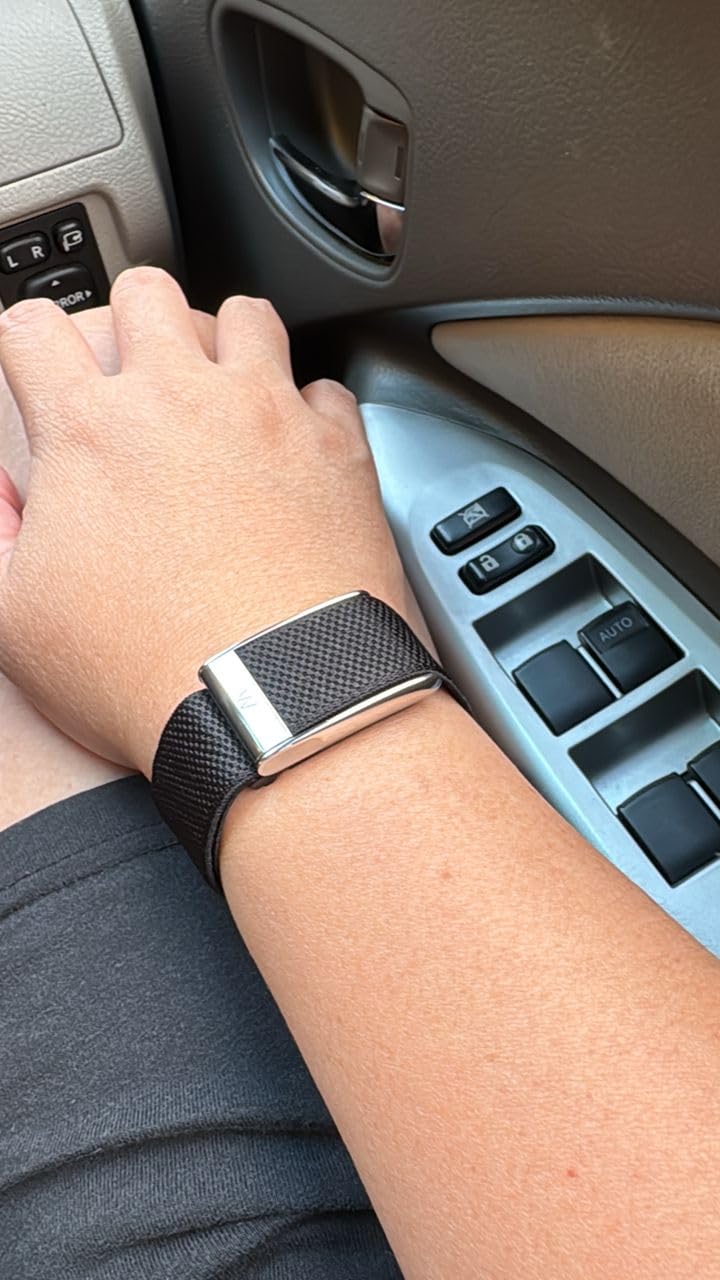
Healthspan and Pace of Aging add a long-horizon view of biological aging that no Fitbit provides. The battery is the headline number: 14+ days between charges, screenless, at 4 ounces with a nylon SuperKnit band and a waterproof wireless PowerPack in the box. A lifetime warranty is included.
The catch is structural, not a preference. A 12-month membership is bundled with the device, so the wearable is tied to a subscription model from day one, and there is no display, so no glanceable step count or notification. Integration with Apple Health, Health Connect, Strava and Natural Cycles is solid.
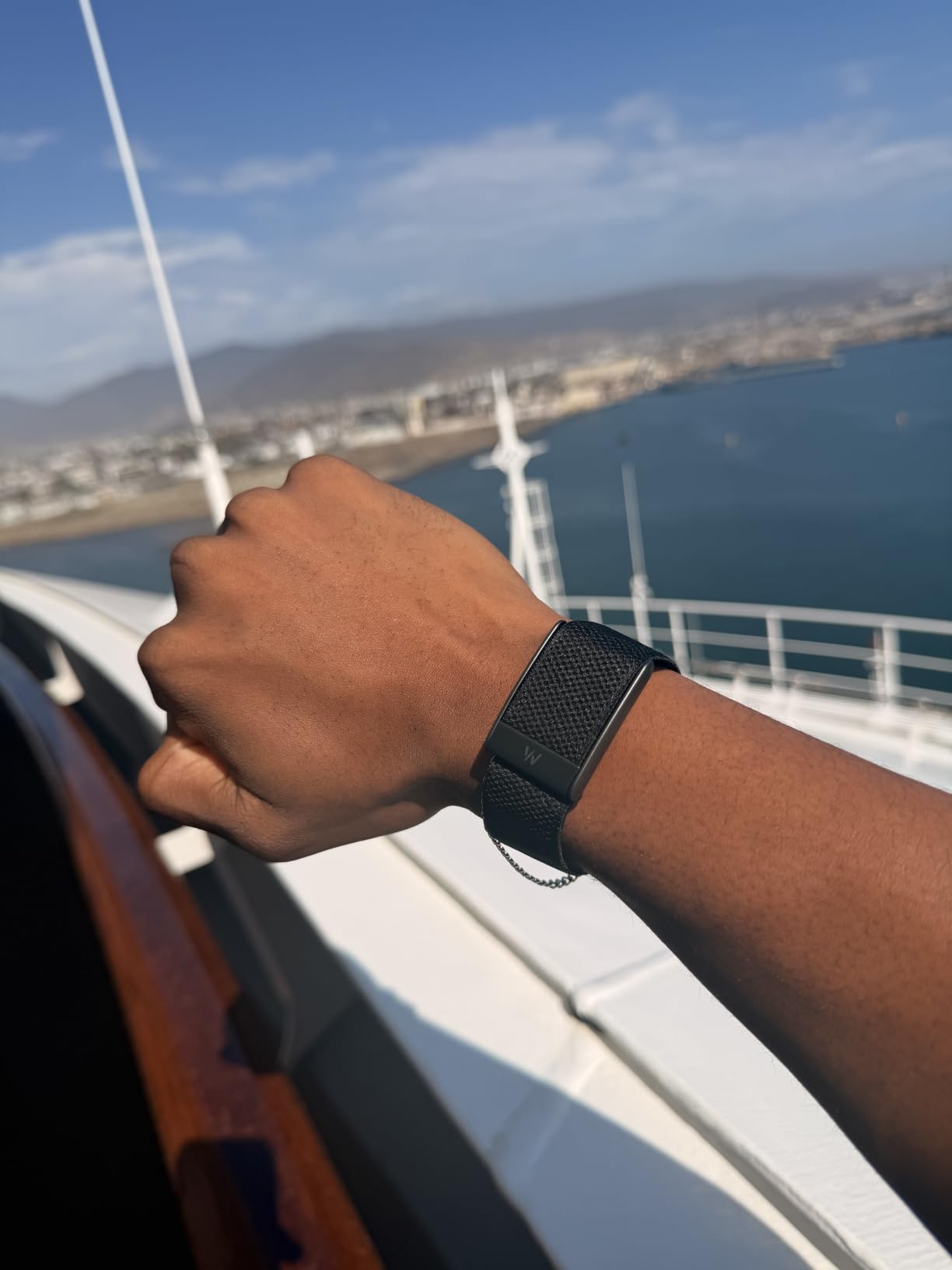
What Strain and Recovery actually tell you?
Strain is a 0 to 21 score for how hard you pushed that day, and Recovery summarises the following morning on the same scale. Together they answer one question: should you train hard today or take a recovery day, which is a question a Fitbit Charge never tried to answer.
The Journal is what makes those scores useful. Logging 300+ behaviours a day lets you correlate a bad recovery night with something specific instead of guessing.
Who it is not for?
Skip WHOOP if you want a step count, a wrist screen or the reassurance of a one-off purchase. The subscription is the model, not an add-on, and the app is the product.
It also makes little sense as a casual tracker. You would be paying annually for insight that only pays off if you are already training several times a week.
We earn a commission, at no additional cost to you. CERTAIN CONTENT THAT APPEARS ON THIS SITE COMES FROM AMAZON. THIS CONTENT IS PROVIDED 'AS IS' AND IS SUBJECT TO CHANGE OR REMOVAL AT ANY TIME.
10. LIVIKEY Fitness Tracker – The Best Option Without a Phone or App
Fitness Tracker Watch with Heart Rate, No App No Phone Required, Pedometer
★★★★★★★★★★1.3 inch LCD, stainless steel case
5 to 7 day battery, 2 hour charge
IP68 waterproofing
Works without a required app
- Usable with no phone or app at all
- Very low entry cost
- Automatic all-day heart rate monitoring
- Sleep breakdown into deep
- light and awake
- 9 sport modes
- IP68 handles sweat and rain
- Cannot make or answer calls
- Some settings and step goals still need the app
- Basic 240x240 screen
- Not compatible with tablets or computers
The LIVIKEY tracker exists for a specific person: someone who wants steps, heart rate and sleep, and does not want an account, an app or a company holding their health data. It works straight out of the box with no required app or smartphone connection, which makes it the only pick on this list that genuinely escapes the ecosystem problem.
It also has practical value as a second device. Give it to a parent or an older relative who will not install anything, put it on the wrist, and it quietly records automatic all-day heart rate, sleep broken into deep, light and awake time, steps, calories, distance and active time across 9 sport modes.
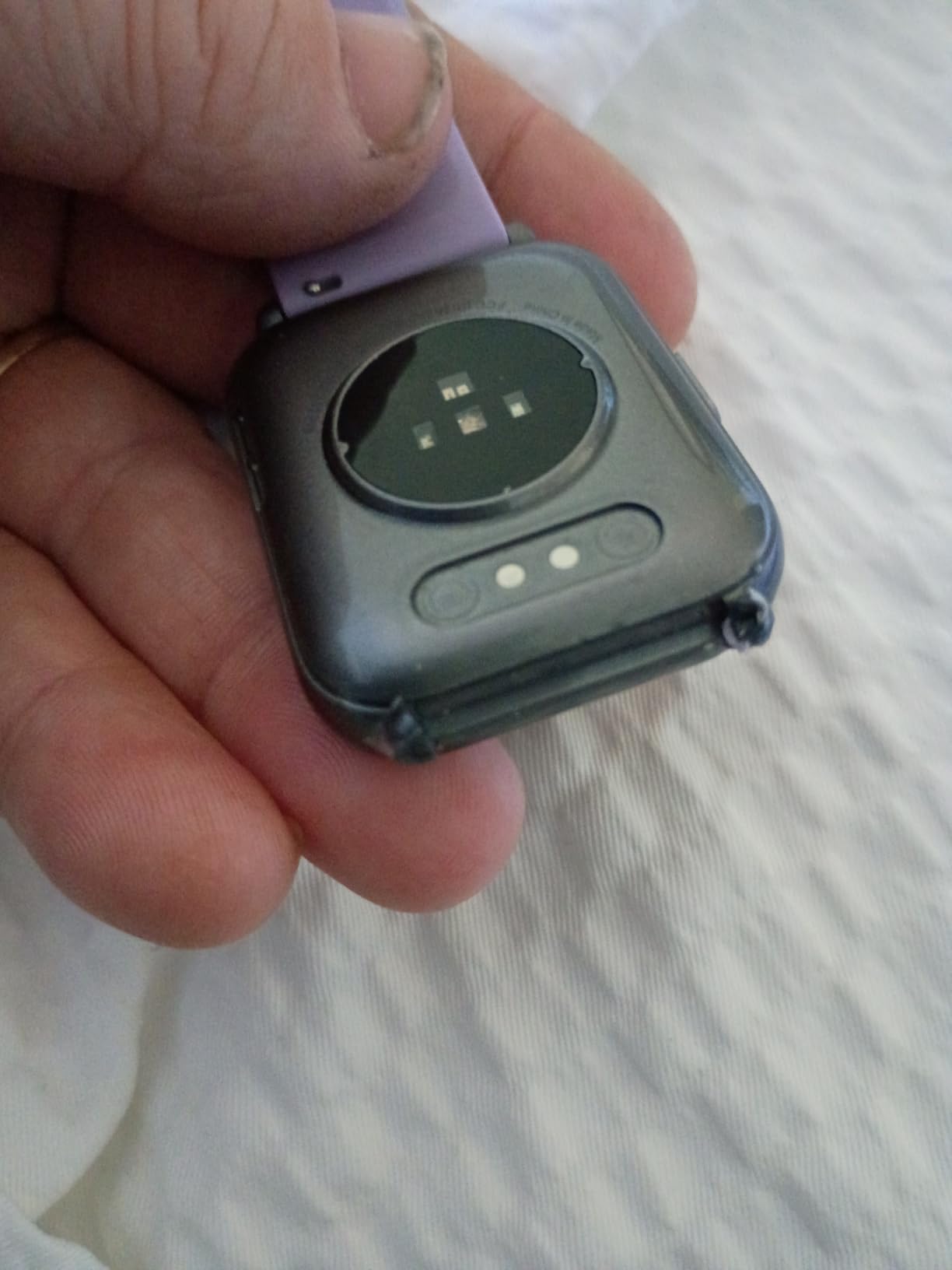
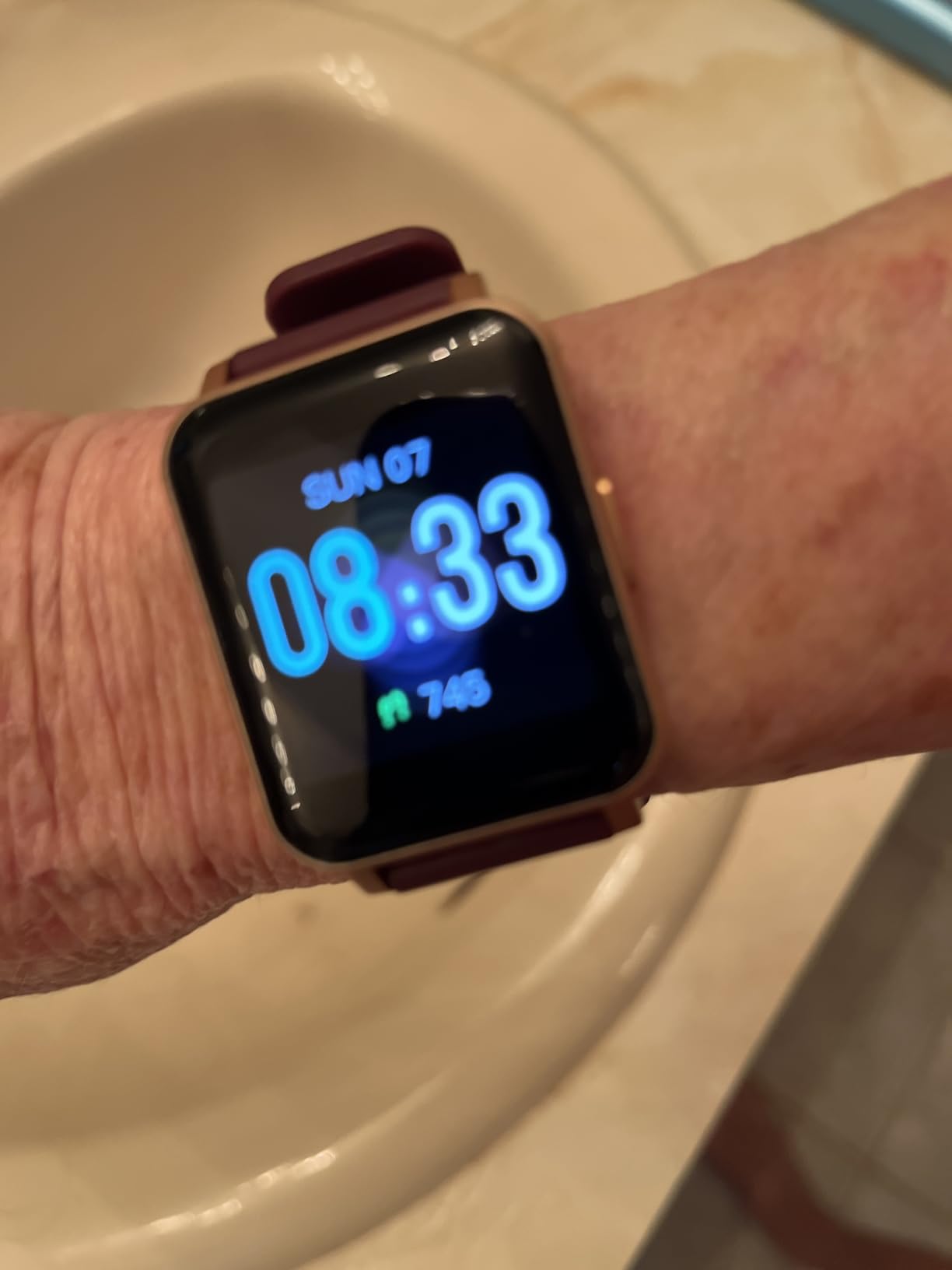
Notifications for SMS and social apps do arrive on the wrist, though they are read-only. Battery life is 5 to 7 days on about 2 hours of charging, and IP68 waterproofing handles sweat, hand washing and rain without worry. A stopwatch, alarm, breathing guide and sedentary alert round out the basics.
The limits are obvious and reviewers accept them. No calls can be made or answered, some advanced settings and step goals still need the companion app, the 240 by 240 screen is basic, and it will not pair with tablets or computers.
Who this is genuinely the best choice for?
Seniors and anyone without a smartphone are the clearest fit. A tracker that works with no login and no app removes the single biggest reason people in those groups end up with a device that stops being used after a fortnight.
It is also a reasonable gift for a child who wants a fitness tracker, since there is no account to create, no personal data to collect and nothing to pay for later.
Where you will feel the compromise?
There is no built-in GPS, so distance is derived from movement rather than a route. The display is small and low-resolution, and you will not get readiness scores, sleep staging analytics or coaching of any kind.
Treat it as a dependable step and heart rate counter, which is exactly what the listing says, and it delivers on that promise without any of the overhead.
We earn a commission, at no additional cost to you. CERTAIN CONTENT THAT APPEARS ON THIS SITE COMES FROM AMAZON. THIS CONTENT IS PROVIDED 'AS IS' AND IS SUBJECT TO CHANGE OR REMOVAL AT ANY TIME.
How to Move Your Data off Fitbit Before You Switch?
Here is the part nobody tells you: you cannot move your Fitbit history into a replacement. Garmin Connect, Zepp, Samsung Health and Oura all start from zero. Your years of step history, sleep stages and route data have to be exported and kept separately, and the export happens through Google Takeout.
The process is straightforward once you know it exists.
Step 1. Sign in to the Google Takeout page with the account linked to your Fitbit profile.
Step 2. Select Fitbit from the product list and confirm that you want its data included.
Step 3. Choose the export format. JSON keeps the full detail for anyone who wants to read it later.
Step 4. Choose a delivery method, which is usually an email link to a downloadable archive.
Step 5. Download the archive and store it somewhere outside Google before you close the account.
One extra warning. Zepp, the app behind the Amazfit Bip 6, has no reliable manual export path, so if you are moving to Amazfit, keep the Takeout archive as your permanent record. Forum users describe this as the practical blocker in a switch, not the hardware, and their workaround is the same one above: treat the new device as a fresh start.
Our broader testing guides cover this kind of switching friction in more detail for other gear categories, including our action camera alternatives guide and our picks for smart bike alternatives to Peloton. The pattern is identical in both cases: check the export path before you commit.
How to Choose a Fitbit Replacement in 2026?
Match the form factor to what you actually look at
Most people are replacing a small band, and the smallest reasonable options are the Galaxy Fit 3, the Mi Smart Band 10 and the LIVIKEY tracker. If you want a screen you can read properly while moving, the Amazfit Bip 6 is noticeably larger. If you want a full smartwatch, you are moving up a category rather than sideways.
Screenless is a real category rather than a compromise. Both the Oura Ring 4 and the WHOOP 5.0 remove notifications entirely, and both are stronger choices for people whose problem is compulsive checking.
Understand what no subscription actually means
Every device in this roundup has a free core tier except Oura and WHOOP, where the membership is part of the model. The Oura Ring 4 includes the first month and then bills monthly. The WHOOP 5.0 bundles twelve months with the hardware.
Everything else, including the Garmin, Amazfit, Xiaomi, both Samsung watches, the Apple Watch SE 3 and the LIVIKEY, delivers your core sleep and activity data at no recurring cost. The optional paid tiers in those ecosystems add coaching and analysis rather than unlocking basic data, which is the distinction that matters when you are trying to avoid a surprise bill.
Check the account requirement before anything else
Moving away from a Google Account is a stated reason for switching for many owners, so confirm the destination does not lead you straight back. Garmin uses Garmin Connect, Amazfit uses Zepp, Samsung uses Samsung Health, Xiaomi uses Mi Fitness, and all of them are separate from Google.
The Apple Watch SE 3 is the exception in the other direction, because it requires an iPhone 11 or newer. If you are leaving Google, you are almost certainly fine there.
Decide whether you need real GPS
Built-in GPS appears on only three picks: the Garmin vívoactive 5, the Amazfit Bip 6 and the Samsung Galaxy Watch 8. The Bip 6 supports five satellite systems including BeiDou, GLONASS, GPS and Galileo, with downloadable maps and turn-by-turn directions, which makes it the cheapest genuine GPS option here.
Everything else relies on your phone. For step counting and sleep that is irrelevant. For a runner who wants a route map without a phone present, it is decisive.
Treat health scores as estimates
Body Battery, HRV status, Energy Scores and readiness figures are all derived rather than measured directly. Garmin states plainly that its advanced metrics are close estimates, and no brand on this list claims medical accuracy. If you have a diagnosed condition, none of these devices replaces clinical equipment, and a cardiologist would not tell you otherwise.
Worth noting for anyone comparing sleep scores across brands: no two of these companies use the same algorithm, so a higher number on one device does not mean better sleep.
Battery life changes how you use the device
This is the quiet factor that decides satisfaction. A 21-day battery means you stop thinking about the tracker at all. An 18-hour battery, as on the Apple Watch SE 3, means charging is a daily habit you will either accept or resent.
Real-world numbers differ from the claim. The Galaxy Fit 3 is advertised at 13 days and users commonly report 4 to 7, while the Oura Ring 4 is stated at up to 8 days but reviewers describe degradation around the 10-month mark. Read the claim, then read the reviews, which is what we have done in every entry above.
How we picked these ten?
We compared every device on the same criteria rather than ranking on price or novelty. Battery life was taken from the stated figure and cross-checked against what owners report. GPS capability, water resistance, phone compatibility and account requirements came from the specification data, with reviewer complaints used to test how well that data matches reality.
Where a product required a membership, we said so plainly rather than treating it as a footnote. Where reviews consistently raised the same problem, such as Zepp export paths or the Galaxy Fit 3 battery claim, we repeated it instead of smoothing it over.
Stick With Fitbit If These Describe You
We would not recommend a switch to everyone, and pretending otherwise would not be useful. A Fitbit is still the right call in a few specific situations.
Stay with Fitbit if you are already paying for a Google plan that bundles the premium tier, because the marginal cost of the membership is then effectively zero and switching buys you very little. Stay if your only needs are steps, basic sleep and heart rate, and your current device still syncs properly, because the alternatives are improvements for specific reasons rather than across the board.
Stay if you have already invested years of data and you care about continuity more than features, since no brand on this list will import that history. And stay if someone in your household is happy with the current setup, because a mixed ecosystem is more annoying than a suboptimal one.
Otherwise, the switch is easier than the forums suggest. Pick the reason you are leaving, choose the pick that matches it, and export your history before you start.
Frequently Asked Questions
Why is Google phasing out Fitbit?
The Fitbit app became Google Health, which required a Google Account for Fitbit users and moved the menus and features people had relied on for years. Many long-time owners chose Fitbit partly because it was not a Google product, so the change felt like a loss of independence rather than a simple rebrand. Premium features increasingly moved behind a paid tier as well, which pushed a second group of owners toward alternatives.
What can replace a Fitbit?
Any fitness tracker, smartwatch or smart ring from another company can replace a Fitbit, provided it tracks steps, heart rate and sleep. The Garmin vivoactive 5 is the closest like-for-like swap with built-in GPS, the Xiaomi Mi Smart Band 10 is the best value, the Amazfit Bip 6 is the cheapest option with real GPS, and the Oura Ring 4 or WHOOP 5.0 suit anyone who wants no screen at all. Each requires its own brand account, but none requires a Google one.
Can I move data from Fitbit to Garmin?
Not directly. No alternative brand imports your Fitbit history, so you need to export it yourself first using Google Takeout. Sign in with the Google account linked to your Fitbit profile, select Fitbit from the product list, choose an export format and download the archive before you start using the new device. The Zepp app behind Amazfit has no reliable manual export, so keep the Takeout archive as your permanent record.
Which one is better, Fitbit or Garmin?
For step counting, sleep staging and heart rate on a daily basis, a modern Fitbit and a Garmin vivoactive 5 produce comparable data. The differences appear elsewhere: the Garmin has built-in GPS, a training load and recovery model, music storage and up to 11 days of battery, while Fitbit keeps a simpler interface and deeper integration with Google services. Pick Garmin if you train or travel, and stay with Fitbit if you want the least change.
What is the best fitness tracker other than Fitbit?
The Garmin vivoactive 5 is the best overall alternative, with built-in multi-GNSS GPS, an AMOLED display, up to 11 days of battery and over 12,000 reviews behind it. The Xiaomi Mi Smart Band 10 is the best value pick with up to 21 days of battery, and the Amazfit Bip 6 is the best budget option that includes real GPS across five satellite systems.
Is there a Fitbit alternative with no subscription?
Most of them. The Garmin vivoactive 5, Xiaomi Mi Smart Band 10, Amazfit Bip 6, Samsung Galaxy Watch 7, Samsung Galaxy Fit 3, Samsung Galaxy Watch 8, Apple Watch SE 3 and the LIVIKEY tracker all deliver core sleep and activity data at no recurring cost. The two exceptions are the Oura Ring 4, which bills monthly after the first included month, and the WHOOP 5.0, which bundles a 12-month membership with the hardware.
Our Verdict on the Best Fitbit Alternatives in 2026
The best Fitbit alternative in 2026 is the Garmin vívoactive 5, and it wins for the simple reason that it does everything a Fitbit did and three things it never did. Built-in GPS, 11 days between charges and a recovery model that does not need a membership. For anyone moving from a Charge or a Versa, it is the least disorienting change on this list.
Match the rest to your reason for leaving. Out of the Google ecosystem, every pick here already qualifies. Against a subscription, take the Garmin, Xiaomi, Amazfit or Samsung. Against the screen, take the Oura Ring 4 or WHOOP 5.0 and accept the membership or the lack of it with eyes open.
One last job before you order anything: export your Fitbit history through Google Takeout. Nobody else is going to do it for you, and ten years of step data is not something you can get back once the account is closed.