
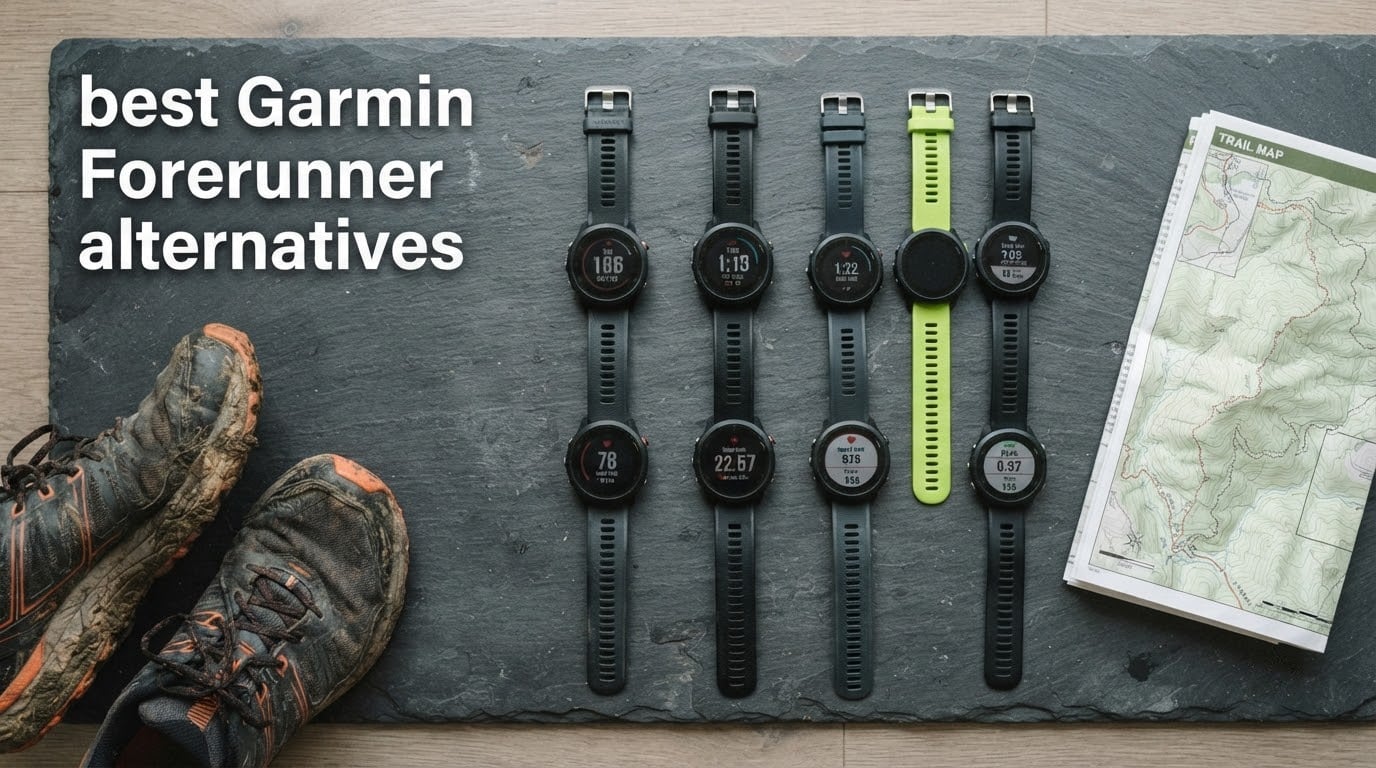
A Garmin Forerunner alternative is any GPS running or multisport watch from a brand other than Garmin. Most of them are COROS, Polar, Suunto, or Amazfit models that track pace, distance, heart rate, and training load well below the price Garmin asks for its mid-tier AMOLED watches, without asking you to pay for a touchscreen you will not use in the rain.
We have spent the last several months cycling through the eight watches in this list against the same set of questions: does the GPS hold a track through a high-rise canyon, how many days pass between charges when the always-on display is actually on, and does the companion app make you want to look at the data or avoid it. The short version is that the gap between the Forerunner and its rivals has almost vanished on hardware, while the price gap has not.
The two triggers we hear most often from Forerunner owners are battery anxiety and ecosystem fatigue. Runners putting in a high weekly mileage report charging an AMOLED Forerunner every few days, which is a real problem when GPS is always listening, and plenty of switchers tell us plainly that Garmin Connect is the reason they are shopping elsewhere rather than the hardware. Those are the two things to weigh first, along with one thing almost no roundup mentions: what you actually lose on the way out.
A word on who should not read further. If you use Connect IQ data fields daily, if you rely on full-color onboard maps for ultra navigation, or if your multisport programming spans triathlon transitions, the Forerunner ecosystem is not easily replaced and a Fenix is a better spend than any watch on this list. We cover that properly in the section on who should stick with Garmin, because an honest roundup has to have a case for staying put.
Table of Contents
- Top 3 Garmin Forerunner Alternatives (October 2026)
- All 8 Garmin Forerunner Alternatives Side by Side in 2026
- 1. COROS PACE Pro – The Most Complete Forerunner Substitute
- 2. COROS PACE 3 – Best Value for Runners Who Want Almost Nothing Extra
- 3. Amazfit Active Max – Best for Runners Who Still Want a Smartwatch
- 4. Amazfit Bip Max – Most Versatile With Maps and a Huge Screen
- 5. POLAR Pacer Pro – Best for Training Analytics and Recovery Detail
- 6. SUUNTO 9 Peak Pro – Best for Ultra Endurance and Durability
- 7. POLAR Grit X Pro – Best for Rugged Trail and Outdoor Use
- 8. Amazfit Bip 6 – The Least Expensive Entry Into Real GPS Tracking
- What You Actually Lose When You Leave Garmin?
- Who Should Stick With the Garmin Forerunner?
- How to Choose a Garmin Forerunner Alternative?
- Frequently Asked Questions
- Is Coros better than Garmin for runners?
- Will I lose my training history if I switch from Garmin?
- Do Garmin alternatives have accurate GPS?
- Is Amazfit or Garmin better?
- Which is better, Coros or Garmin or Suunto?
- Is Suunto better than Apple Watch?
- Who is Garmin’s biggest competitor?
- Which smart watch is the most accurate?
- Final Verdict: Which Garmin Forerunner Alternative Should You Buy in 2026?
Top 3 Garmin Forerunner Alternatives (October 2026)
If you only read one screenful, read this one. The COROS PACE Pro is the most complete substitute for a Forerunner 265 or 965 we tested, the COROS PACE 3 is the value pick that most first-time upgraders should buy, and the Amazfit Active Max is the only watch here that doubles as an everyday smartwatch with a speaker, maps, and calls.


Amazfit Active Max
- 3000-nit AMOLED
- Up to 25 days battery
- 4GB with offline maps
- Speaker and mic
All 8 Garmin Forerunner Alternatives Side by Side in 2026
Every watch below tracks pace, distance, and optical heart rate, so the useful comparison is not the feature checklist but the trade. Note the battery column carefully: the figures manufacturers publish mix smartwatch mode with GPS mode, and the GPS numbers differ wildly depending on whether multi-band or dual-frequency mode is switched on.
| Product | Key Specs | Pricing |
|---|---|---|
| COROS PACE Pro |
|
Check Latest Price |
 COROS PACE 3 COROS PACE 3 |
|
Check Latest Price |
| Amazfit Active Max |
|
Check Latest Price |
 Amazfit Bip Max Amazfit Bip Max |
|
Check Latest Price |
 POLAR Pacer Pro POLAR Pacer Pro |
|
Check Latest Price |
 SUUNTO 9 Peak Pro SUUNTO 9 Peak Pro |
|
Check Latest Price |
 POLAR Grit X Pro POLAR Grit X Pro |
|
Check Latest Price |
 Amazfit Bip 6 Amazfit Bip 6 |
|
Check Latest Price |
1. COROS PACE Pro – The Most Complete Forerunner Substitute
COROS PACE Pro GPS Sport Watch, 1.3-inch AMOLED Touchscreen- Grey
★★★★★★★★★★1.3 inch Always-On AMOLED
38 hrs outdoor GPS / 31 hrs dual-frequency
32GB storage
49g, 22mm band
- Best GPS accuracy in the set with a new satellite chipset
- 38 hours outdoor GPS plus 20 days of typical use
- 32GB storage for maps and media
- Route planner with topographic maps and turn-by-turn navigation
- Costs more than lighter mid-range running watches
- COROS app is listed as optimized for iPhone
- Always-On display cuts the 20-day claim to about six days
The COROS PACE Pro is the watch I hand to someone who owns a Forerunner 265 or 965, runs a structured plan, and a similar experience for much less money. It is the most complete swap on this list: dual-frequency GPS, an always-on AMOLED, offline topographic maps, and 32GB of storage in a 49g case.
Where it beats the Forerunner immediately is battery life, and the gap is not marginal. COROS quotes 38 hours of outdoor GPS, 31 hours with dual-frequency mode enabled, and 20 days of typical non-GPS use, plus six days if you run the always-on display. For a runner who trains twice a day and leaves GPS on, that is the difference between charging every few days and charging once a week.
The second thing you notice is the processor. COROS claims more than twice the performance of its previous generation and triple the zoom speed, and it shows in the menus. Scrolling through 30-plus data fields, opening EvoLab, and starting a navigation session all feel immediate on a watch that sits well below the mid-tier Forerunner in cost.
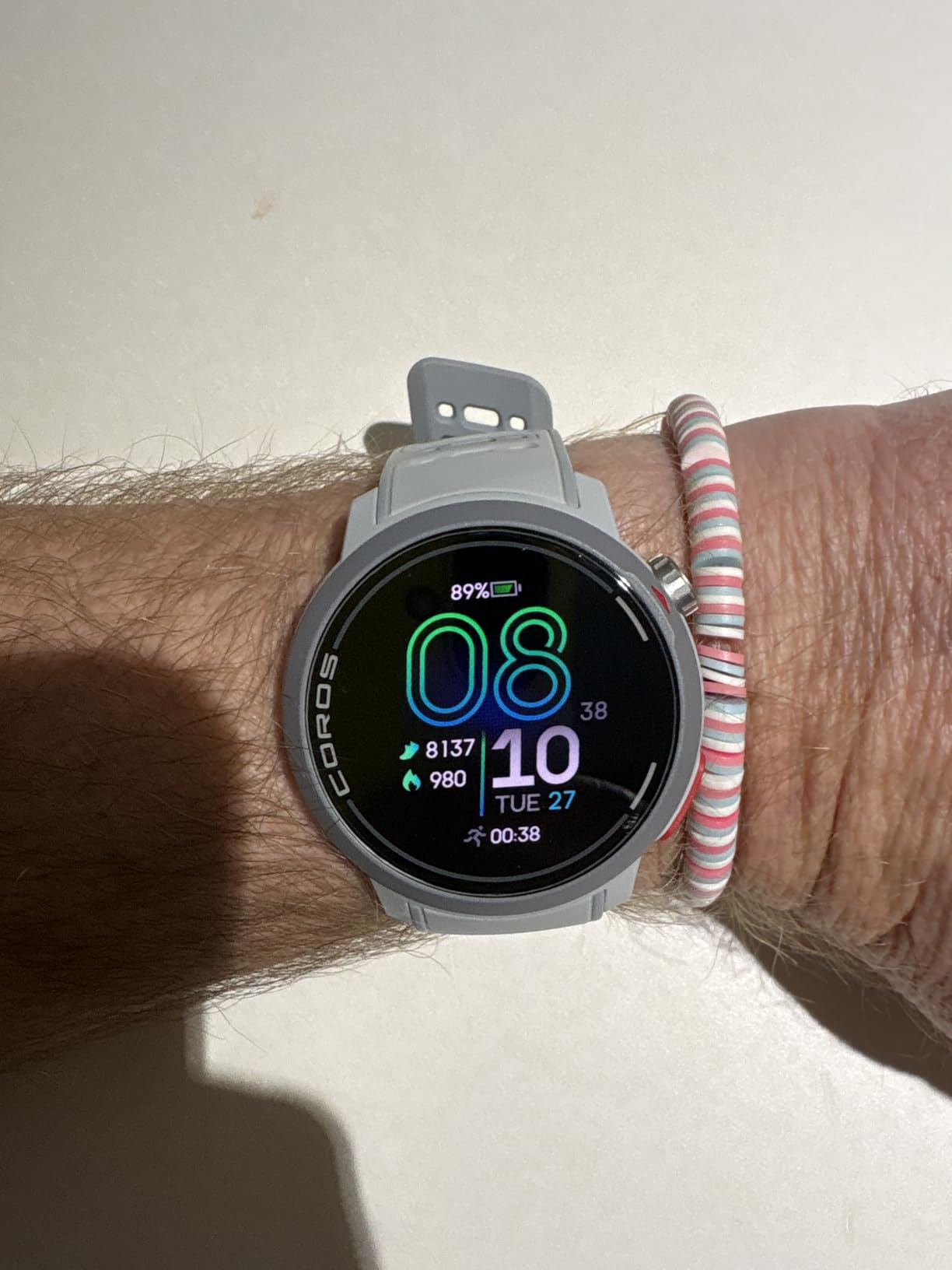
The route planner is the feature Forerunner 265 owners miss most. You build a course with topographic maps in the app, push it to the watch, and get turn-by-turn guidance for the whole run. Trail runners who were eyeing a 965 for the maps alone can get most of that job done here.
Where Garmin still wins is the ecosystem. Connect IQ remains the best third-party data field platform in running, the music setup is smoother, and if your training is coached through Garmin’s own tools you will be rebuilding habits. COROS also lists its app as optimized for iPhone, so Android users should test pairing early.
What you get for the money?
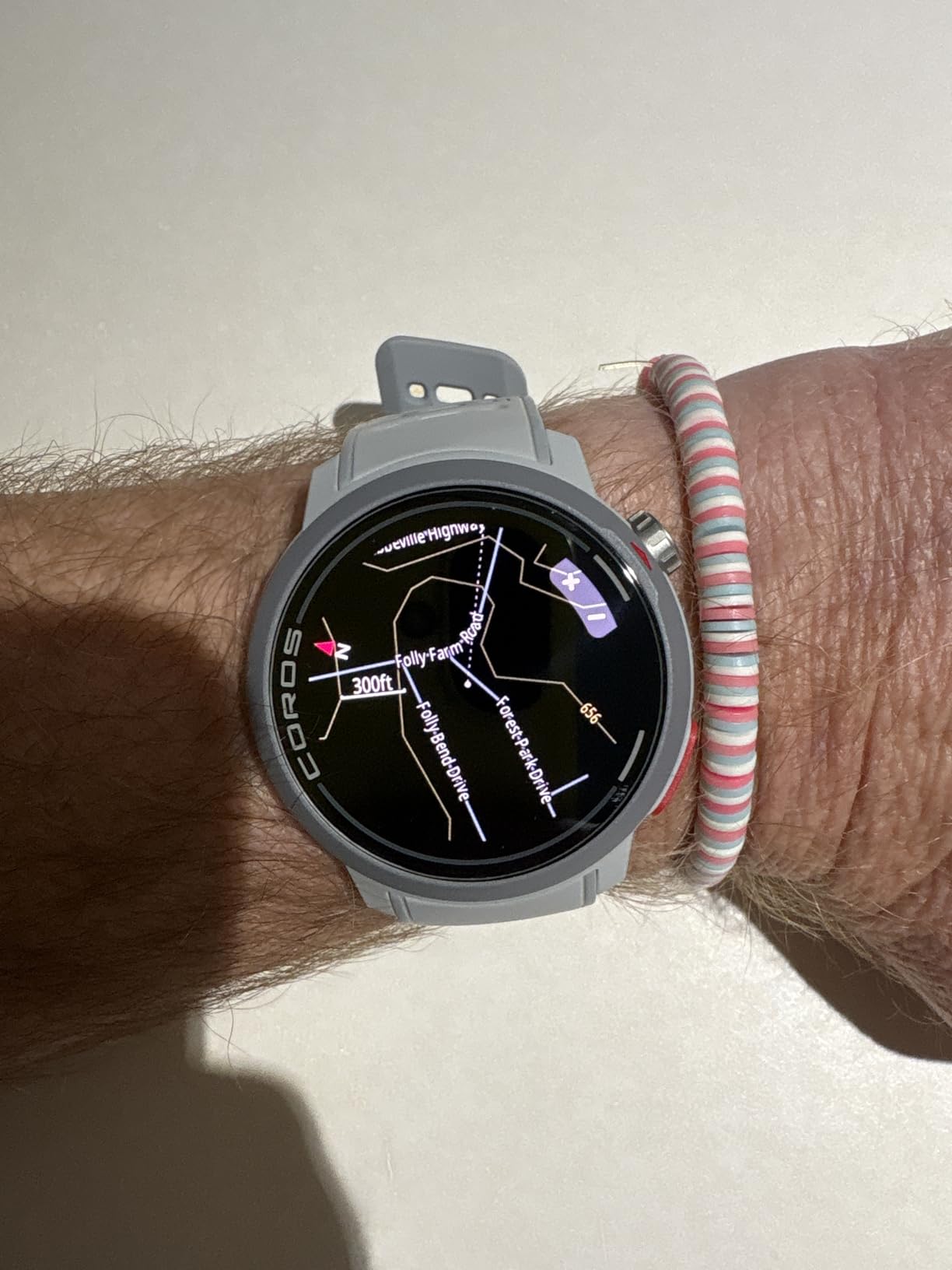
You get Training Status, structured custom workouts, detailed activity summaries, and overnight sleep analysis inside COROS EvoLab, which is free. Owners switching down from higher-priced Garmin watches generally report no functional loss for road training, and the 879 reviews here average 4.6 with a notably small share of one-star ratings.
Storage is the quiet hero. At 32GB there is room for a full offline map set plus music, more than any other watch in this roundup.
Where it falls short?
It sits in the middle of the weight range here at 49g, lighter than the Suunto 9 Peak Pro and the Polar Grit X Pro but heavier than the 41g Pacer Pro and the 30g PACE 3, which matters on smaller wrists. It also costs more than the running-first alternatives you would consider at the value tier. Turn the always-on display on and the headline battery figure drops from 20 days to roughly six, so configure the backlight deliberately.
We earn a commission, at no additional cost to you. CERTAIN CONTENT THAT APPEARS ON THIS SITE COMES FROM AMAZON. THIS CONTENT IS PROVIDED 'AS IS' AND IS SUBJECT TO CHANGE OR REMOVAL AT ANY TIME.
2. COROS PACE 3 – Best Value for Runners Who Want Almost Nothing Extra
COROS PACE 3 GPS Sport Watch, Lightweight Running Watch – Chalk Nylon
★★★★★★★★★★30g with nylon band
38 hrs GPS or 24 days use
Dual-frequency GPS
1.2 inch transflective LCD
- Extremely light at 30g with an 11.7mm profile
- 38 hours continuous GPS or 24 days of daily use
- Dual-frequency chipset holds accuracy in high-rise cities
- Route planner with breadcrumb navigation and elevation data
- Transflective LCD is dimmer than AMOLED rivals in sunlight
- Only 3GB of onboard storage
- No music storage or speaker for calls
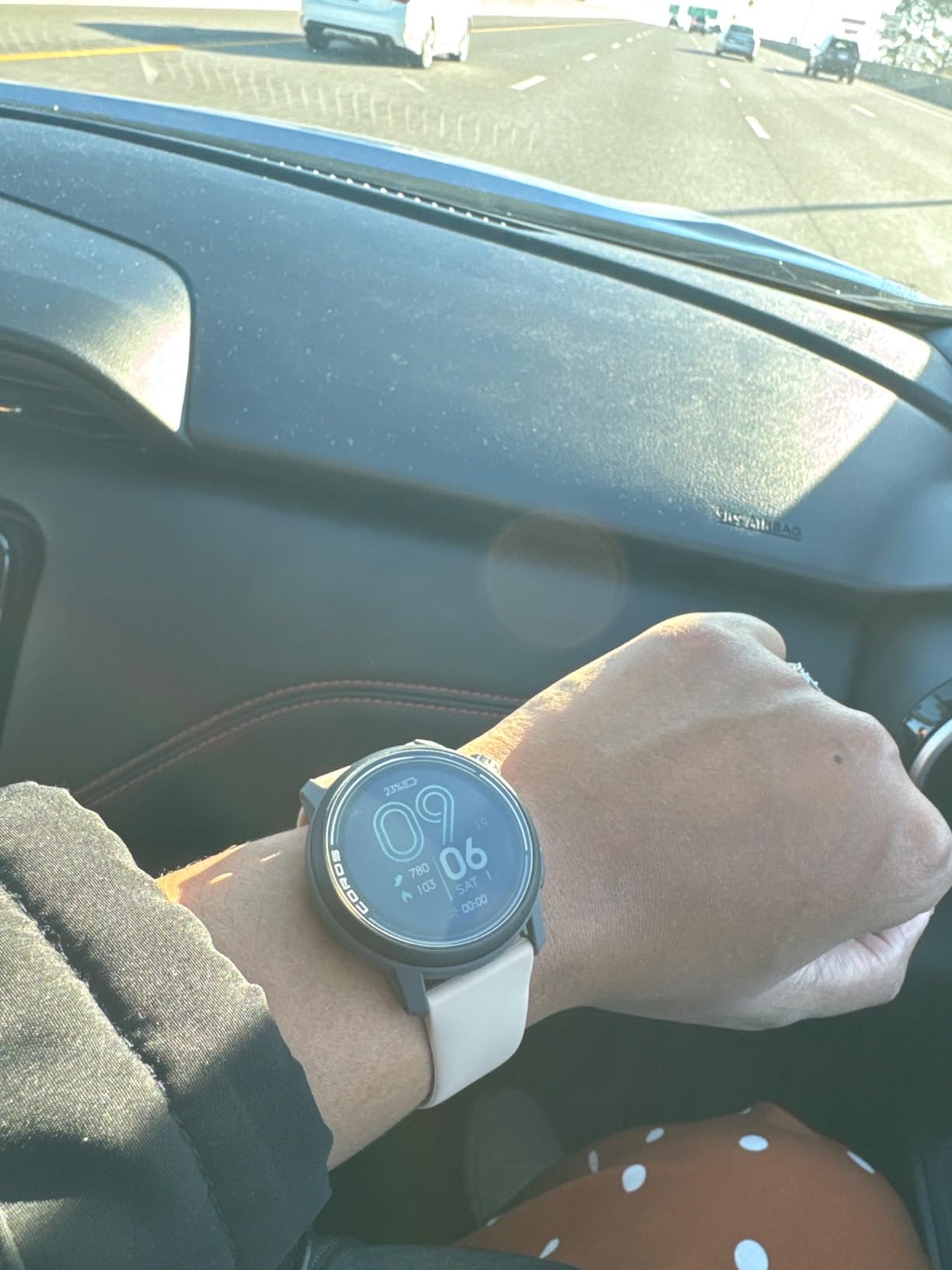
The COROS PACE 3 is the best value Garmin Forerunner alternative for a runner who wants accurate tracking and long battery life and genuinely does not care about music, maps, or apps. At 30g it is the lightest watch in this roundup by a wide margin, and it disappears on the wrist overnight.
The dual-frequency satellite chipset is the part that matters. It is built to hold a track in exactly the conditions Garmin users worry about most: high-rise cities, where a single-frequency chip can record your run a block away from where you actually ran. Elevation gain and air pressure are recorded as well, which trail runners appreciate.
Battery is the headline reason people switch. COROS quotes 38 hours of continuous GPS or 24 days of daily use on one charge, and the 606 reviews here repeatedly single out the 30g weight and the multi-week endurance as the reasons to buy this instead of a pricier Forerunner.
The transflective touchscreen runs three backlight modes, including Always On, so you can decide how much the screen costs you. Activity modes cover run, trail run, bike, swim, strength, snowboard, ski, and XC ski, and the breadcrumb navigation keeps your route line visible without hiding the rest of your data fields.
Where Garmin still wins is screen quality and storage. The 1.2-inch transflective LCD is dimmer and less vibrant than an AMOLED in direct sun, and 3GB of storage is thin next to the PACE Pro’s 32GB. Water resistance is rated 50m, so this is not an open-water swimming watch.
Who this suits best?
It suits runners replacing a Forerunner 55 or 165 who are annoyed by charging every two days and want a watch they can sleep in. It also suits anyone who runs with a Garmin out of habit but has never opened Connect IQ.
Beginner runners asking for nothing more than accurate GPS and heart rate get everything they need here, and the screen customization options let you hide the metrics you do not care about, which matters more than it sounds when you are new to pace data.
Where it falls short?
There is no music storage and no speaker, so it will not replace your phone on a long trail run. Reviewers who want a bright color screen for outdoor readability or a calling feature should step up to the PACE Pro or the Amazfit Active Max instead.
We earn a commission, at no additional cost to you. CERTAIN CONTENT THAT APPEARS ON THIS SITE COMES FROM AMAZON. THIS CONTENT IS PROVIDED 'AS IS' AND IS SUBJECT TO CHANGE OR REMOVAL AT ANY TIME.
3. Amazfit Active Max – Best for Runners Who Still Want a Smartwatch
Amazfit Active Max Smart Watch, 1.5″ AMOLED Display, GPS, iOS/Android
★★★★★★★★★★1.5 inch 3000-nit AMOLED
Up to 25 days battery
4GB with offline maps
50m water resistance
- Very bright 3000-nit AMOLED on a large 1.5 inch screen
- Real-world battery of roughly three to four weeks
- 4GB storage for downloadable maps and offline music
- Speaker and mic for Bluetooth calls and voice control
- App ecosystem is narrower than Garmin Connect or Apple Watch
- Some advanced health metrics can read inaccurately
- Included silicone band can irritate sensitive wrists
At 943 reviews and a 4.5 average, it carries the second-highest rating in this group behind the COROS PACE Pro, and owners frame it as a capable stand-in for higher-priced Forerunner models.
Display quality is the first thing owners mention. A 1.5-inch AMOLED at 3000 nits stays readable in direct sunlight, which is exactly the complaint we heard most about the transflective COROS screen. The watch also ships with 4GB of storage for free downloadable terrain and ski maps, plus offline music.
Battery is where it embarrasses most Forerunner models. Amazfit quotes up to 25 days, and owners report three to four weeks of real-world use, with GPS locking within seconds and holding through a full run.
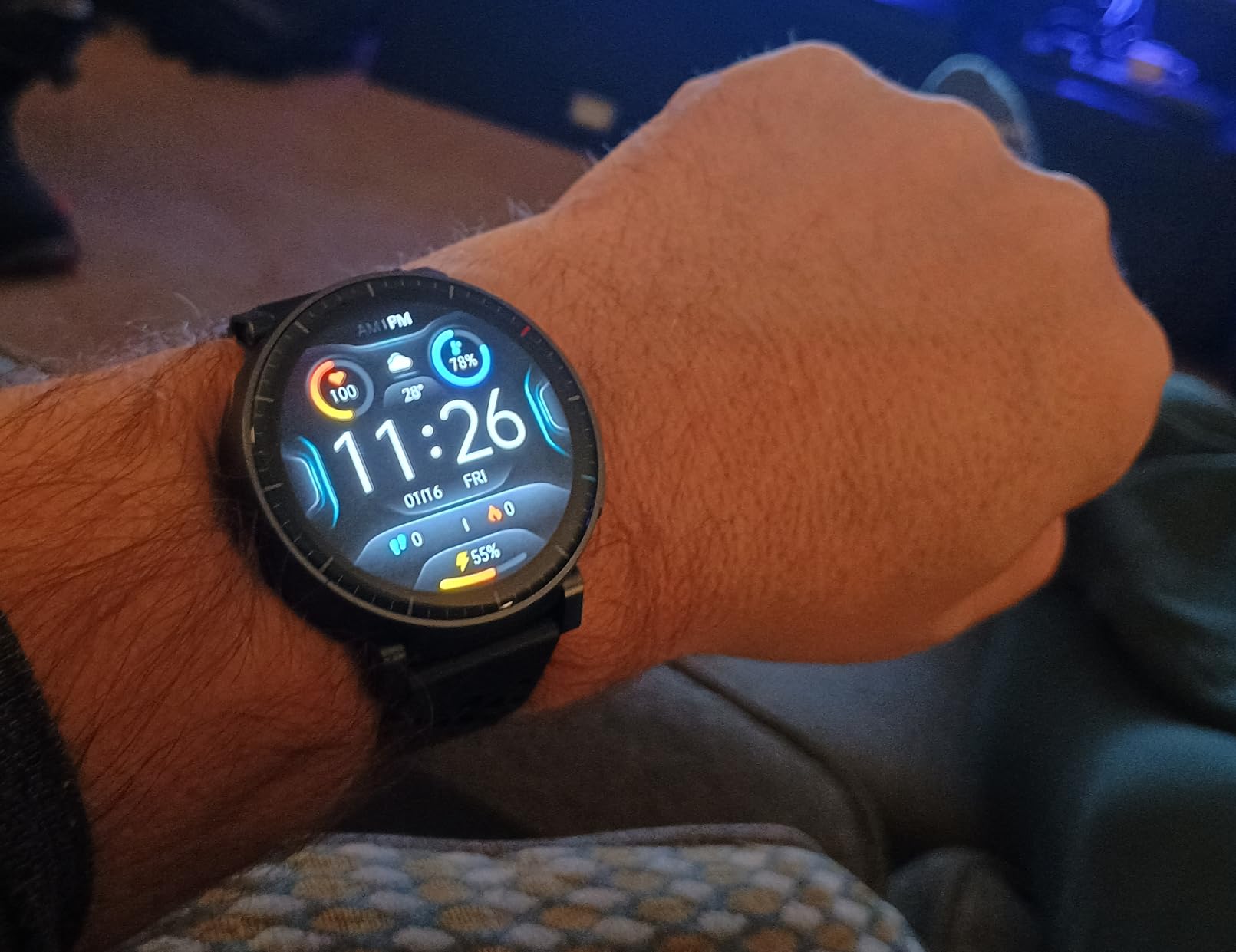
Training features are respectable rather than deep. There are 170+ workout modes, Zepp Coach plans from 3K through full marathon, and a BioCharge score that adjusts based on your training and stress to tell you when to push and when to rest. It is a decent structure for a beginner or a casual marathoner.
Where Garmin still wins is analytics depth and the app. Zepp covers the core functions, but reviewers repeatedly describe distance, heart rate, and calorie accuracy as matching or beating pricier watches while noting that the ecosystem is narrower than Garmin Connect or Apple Watch, and that some advanced health metrics can read inaccurately.
Why runners pick it over a Forerunner?
The Amazfit Active Max is the best Garmin Forerunner alternative for a runner who never takes off the watch and wants a real smartwatch rather than a running tool: a built-in speaker and microphone, Bluetooth calls, notifications, and a bright screen.
It is the only watch here with a speaker and microphone, so you can take calls from a trail and reply to quick messages hands-free when paired with an Android phone. The Zepp Coach plans cover the popular race distances, which is more guidance than most budget alternatives offer.
Built-in positioning with five satellite systems ensures a fast lock, and the maps download directly to the watch for offline navigation. Some users report occasional battery drain anomalies that required a replacement watch, and the included band irritates sensitive wrists, so swap the strap early.
Where it falls short?
The Zepp ecosystem is the trade-off, and it is the same trade-off runners hit with Garmin. If your training runs through Connect IQ, a structured Garmin plan, or a coach who reads Garmin exports, this is not a clean move. Reviewers who upgraded from a Forerunner also flag less depth in training load and recovery detail than Garmin provides.
We earn a commission, at no additional cost to you. CERTAIN CONTENT THAT APPEARS ON THIS SITE COMES FROM AMAZON. THIS CONTENT IS PROVIDED 'AS IS' AND IS SUBJECT TO CHANGE OR REMOVAL AT ANY TIME.
4. Amazfit Bip Max – Most Versatile With Maps and a Huge Screen
Amazfit Bip Max Smart Watch, 2.07″ AMOLED Display, GPS, iOS/Android
★★★★★★★★★★2.07 inch AMOLED at 3000 nits
Up to 20 days battery
4GB with offline maps
50m water resistance
- Largest display in the group at 2.07 inches
- Up to 20 days of typical-use battery
- 4GB storage for free offline maps with off-track alerts
- VO2 Max
- Training Load
- and Training Effect via Zepp Coach
- Large square case feels bulky on smaller wrists
- No speaker or microphone so no calls or voice assistant
- 50m rating rules out diving
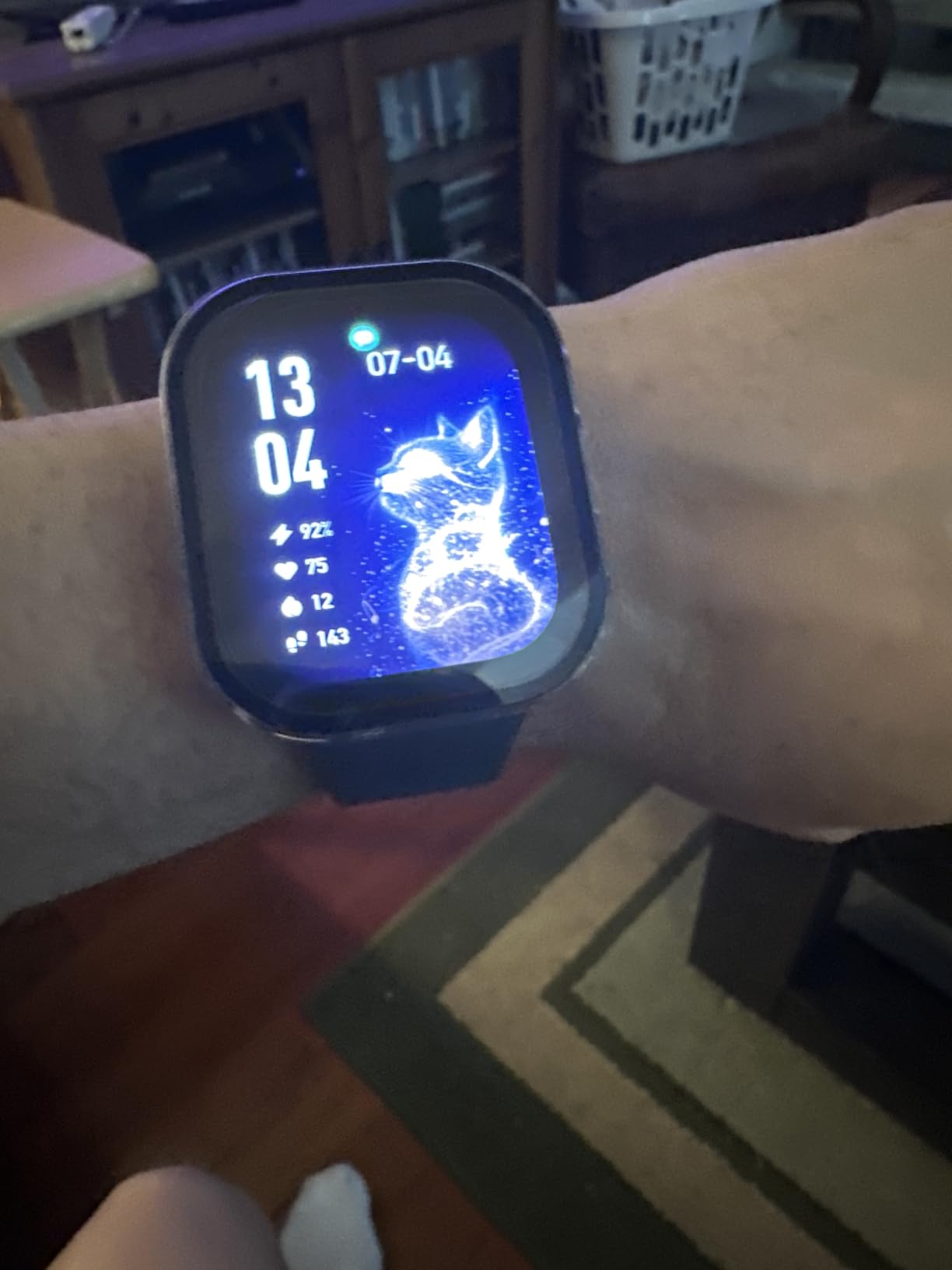
The Amazfit Bip Max is the budget pick among the larger-screen options: a 2.07-inch AMOLED, offline maps, and roughly three weeks of typical-use battery. For a beginner runner replacing a Forerunner 55, it covers the same ground at a level that is hard to argue with.
The screen is the largest in this roundup and hits 3000 nits, so it is genuinely usable in daylight. Battery is quoted at up to 20 days of typical use, and the 4GB of storage holds free downloadable maps from the Zepp app with turn-by-turn directions and off-track alerts.
Training metrics are better than the price suggests. Zepp Coach provides VO2 Max, Training Load, and Training Effect across 150+ sport modes, with built-in workouts and a training library for building consistency. Gear mileage tracking for running shoes and bikes is a simple touch that runners appreciate.
Where Garmin still wins is ecosystem depth and the third-party app store. Zepp is subscription-free, which is a genuine advantage over the direction Garmin Connect is heading, but it is a smaller platform. If you rely on Connect IQ apps, live biometric data fields, or a coach who speaks Garmin, this is not a substitute.
It is also worth pairing with our Garmin cycling watch guide if you ride as well as you run, since the same ecosystem trade-offs apply to both sports.
Best for budget-first runners
It suits anyone starting out on a first real GPS watch, and owners report it covering the same core fitness and health functions as far more expensive devices. Brightness, battery, and maps at this level are rare, and roughly 75% of its 611 reviews are five-star.
Zepp Coach running plans mean you are not training blind while learning what a threshold run is. Sleep, stress, and heart rate tracking run 24/7, and the BioCharge recovery score adapts to your sleep and recent workload.
Where it falls short?
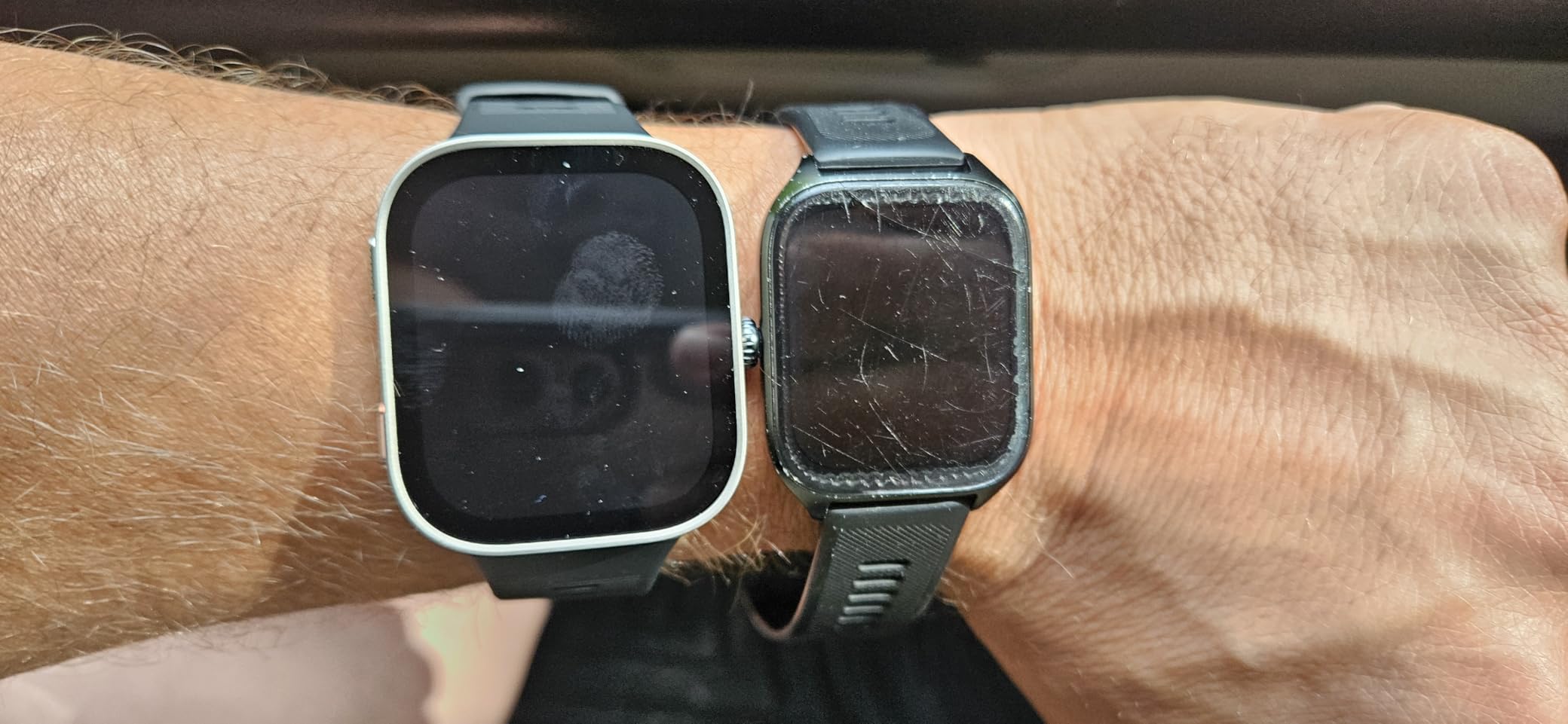
The square 2.07-inch case feels bulky on smaller wrists, and reviewers who came from slimmer Garmin watches noticed it immediately. There is no speaker or microphone, so no calls and no voice assistant, and 50m water resistance rules out diving. The Zepp app ecosystem is also narrower than Garmin’s.
We earn a commission, at no additional cost to you. CERTAIN CONTENT THAT APPEARS ON THIS SITE COMES FROM AMAZON. THIS CONTENT IS PROVIDED 'AS IS' AND IS SUBJECT TO CHANGE OR REMOVAL AT ANY TIME.
5. POLAR Pacer Pro – Best for Training Analytics and Recovery Detail
POLAR Pacer Pro Advanced Ultra-Light GPS Fitness Tracker Smartwatch for Runners with Training Program & Recovery Tools; S-L, for Men or Women, Grey-Black
★★★★★★★★★★41g ultra-light
35 hrs training,100 hrs power save
Polar optical HR
1.2 inch color LCD
- Exceptionally light at 41g
- Up to 35 hours of training-mode battery and 100 hours power-save
- Polar Precision Prime optical heart rate with sleep and recovery tools
- Training tools for 150+ sports
- Two wristband sizes and 20mm adapters in the box
- 1.2 inch LCD is hard to read in direct sunlight
- Button-only interface with no touchscreen
- IPX3 water rating limits swimming
- No music storage or offline maps
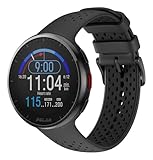
The POLAR Pacer Pro is the best Garmin Forerunner alternative for a runner who cares more about training analytics than screen quality. Polar has a long-standing reputation for physiological data, and this watch brings that sensor package to a 41g chassis built for running and sleep wear.
It is the most capable all-round substitute in the group, and the second-largest sample in this roundup sits behind the Amazfit Bip 6. Polar quotes up to 35 hours in training mode, 100 hours in power-save mode, and 7 days as a watch.
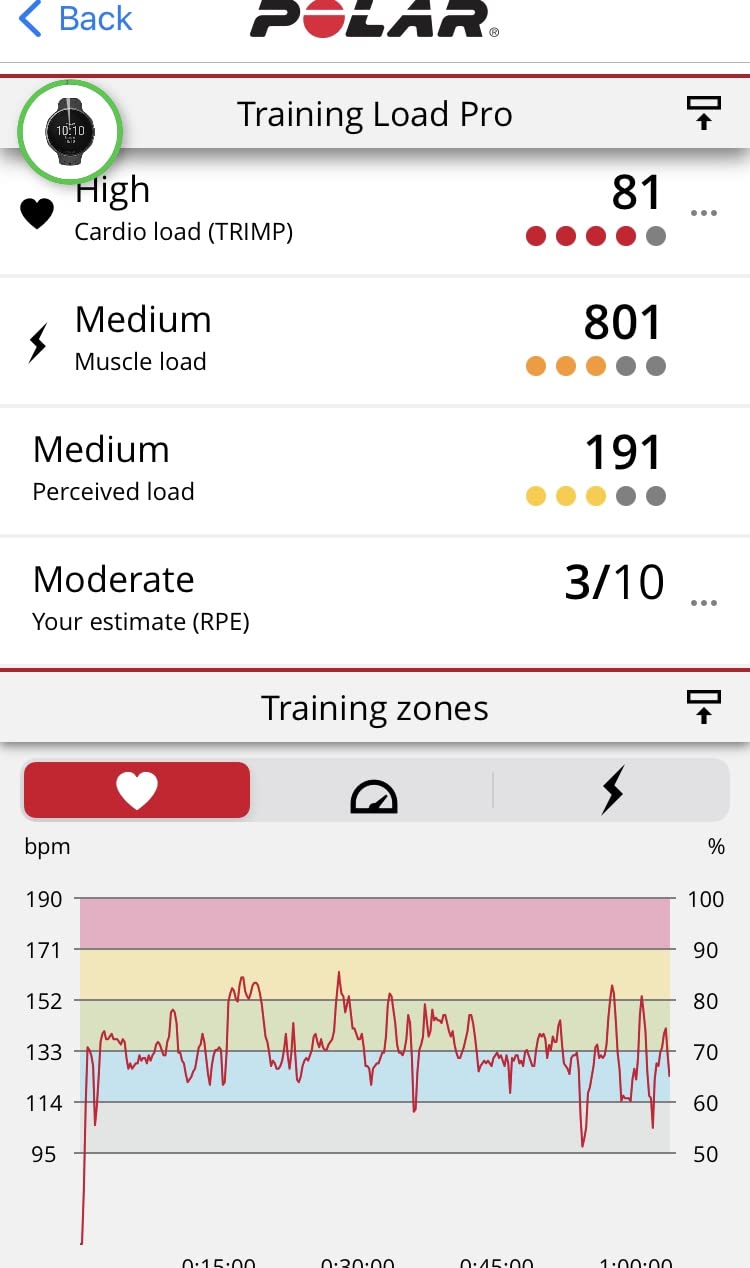
Polar Precision Prime optical heart rate monitoring, sleep tracking, and recovery tools are the core of the watch, with training tools covering more than 150 sports. Polar Flow is free and gives well-explained post-activity analysis, and the box includes a second wristband in size S plus adapters for standard 20mm bands.
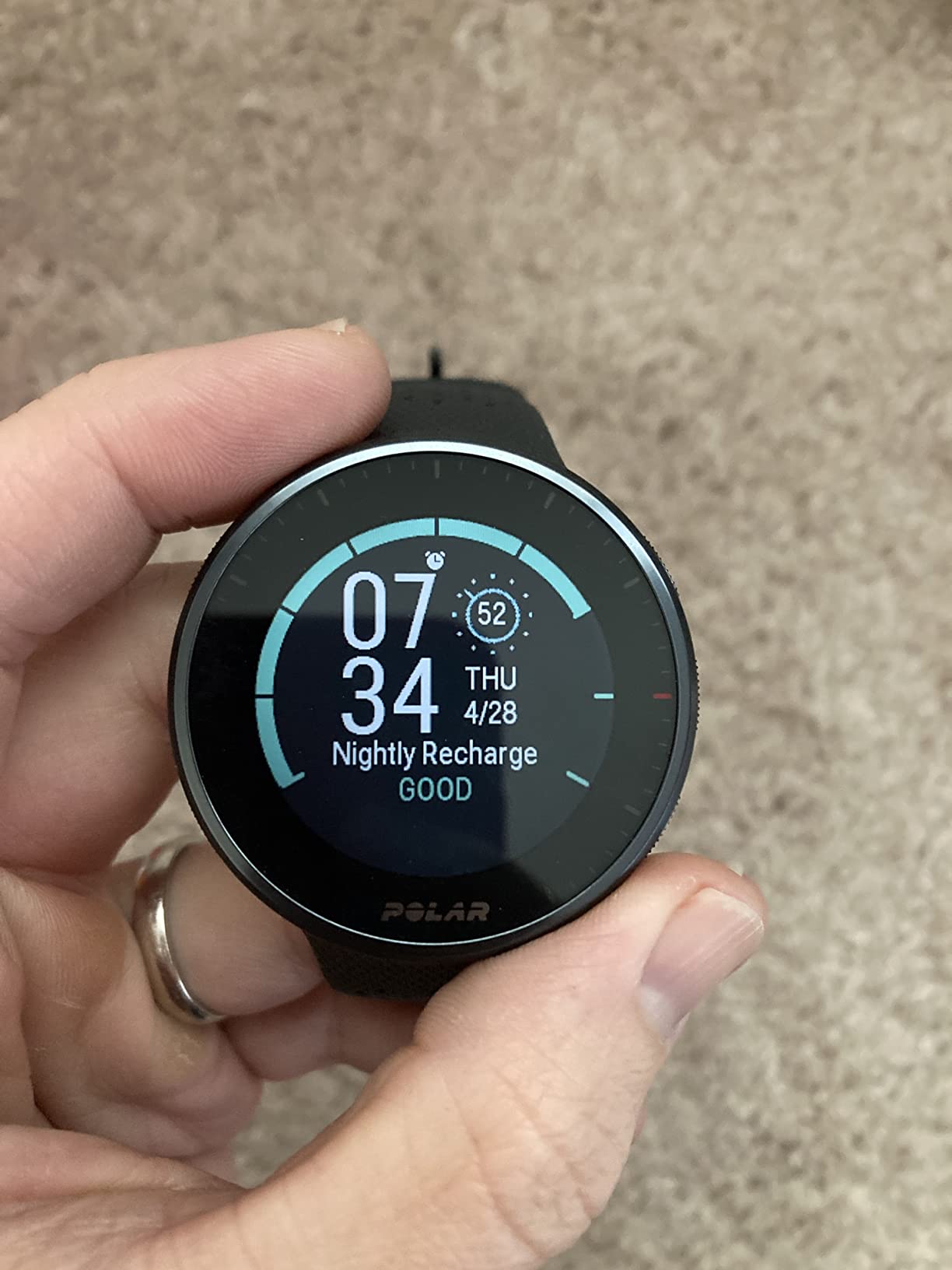
Where Garmin still wins is the display and the interface. The 1.2-inch color LCD is less readable in direct sunlight than any AMOLED on this list, and the button-driven interface with no touchscreen means slower navigation when you want to start a workout mid-stride. There is no music storage and no offline maps.
The IPX3 water rating, rated to 0.5m, is also the weakest in this group, so this is a running watch rather than a swim watch. About one in ten of its one-star reviews would step up to a full smartwatch for the broader feature set.
Why the Polar sensor matters?
Polar has built its reputation on wrist-based optical heart rate accuracy, and that is why runners chasing reliable interval data gravitate here. The optical sensor pairs with sleep and recovery metrics so you can see whether a hard session was absorbed, not just whether your watch recorded it.
The trade is that you give up screen real estate and modern interaction to get it. At 41g the watch is light enough to sleep in, which makes overnight recovery tracking practical, and the high-speed processor keeps pace, distance, and laps clear on a color display.
Where it falls short?
If you run in bright sun, hate button menus, or want maps and music on the wrist, this is the wrong watch. The small screen and no-touchscreen design are the two criticisms that recur most, and the low water rating rules out any serious swimming use.
We earn a commission, at no additional cost to you. CERTAIN CONTENT THAT APPEARS ON THIS SITE COMES FROM AMAZON. THIS CONTENT IS PROVIDED 'AS IS' AND IS SUBJECT TO CHANGE OR REMOVAL AT ANY TIME.
6. SUUNTO 9 Peak Pro – Best for Ultra Endurance and Durability
SUUNTO 9 Peak and Peak Pro Sports GPS Watch for Demanding, Performance Driven Athletes and Adventurers
★★★★★★★★★★Titanium, steel and sapphire
40 hrs best GPS,70 hrs endurance
100m waterproof
1 hour full charge
- Titanium
- stainless steel and sapphire glass with 100m waterproofing
- 40 hours best GPS plus 70 hours endurance and 300 hours tour
- One-hour full charge with 2 hours of GPS from a 10-minute top-up
- 97 sport modes with turn-by-turn navigation and avalanche maps
- Suunto app connects to Strava
- TrainingPeaks and 200 other apps
- A sports watch
- not a general-purpose smartwatch
- Firmware updates reported to shorten battery substantially
- Heart rate can be unreliable on stationary activities
- Included 22mm strap is short
- Watch face customization locked behind a subscription
The SUUNTO 9 Peak Pro is the best Garmin Forerunner alternative for ultra runners and anyone who values a physical build over a feature list. Titanium, stainless steel, and sapphire glass, 100m water resistance, and battery options that run to 300 hours in tour mode.
The charging story is unusually good. A full charge takes one hour, and a 10-minute quick charge gives you two hours of GPS training, which makes a spare power bank far less critical on a multi-day race. Battery options are 40 hours in best GPS mode, 70 hours in endurance mode, and 300 hours in tour mode.
GPS uses four satellite systems for fast connectivity, and the sport library covers 97 modes with turn-by-turn navigation, weather alerts, and avalanche maps. The Suunto app supports structured workouts, goals, real-time guidance, activity journals, sleep and recovery analysis, and connects to Strava, TrainingPeaks, and 200 other fitness apps.
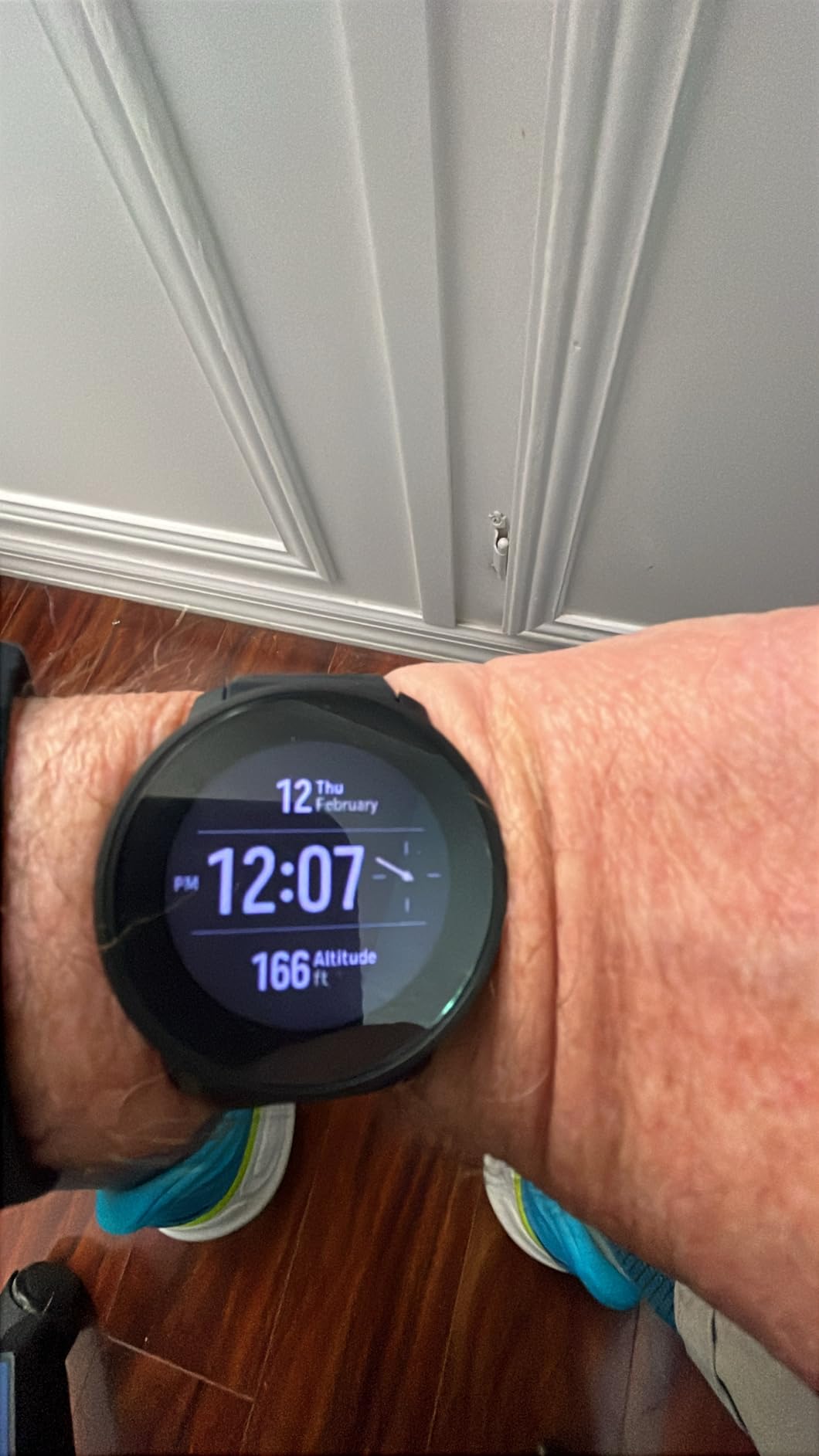
Where Garmin still wins is heart rate. This is the biggest weakness on the card: optical readings can be unreliable, particularly on stationary activities like a stair machine, and some users report the sensor stopping after updates. Reviewers also report that recent firmware updates have shortened battery life substantially, sometimes to near-nightly charging. The included 22mm strap is short, and watch face customization beyond the standard options sits behind a subscription.
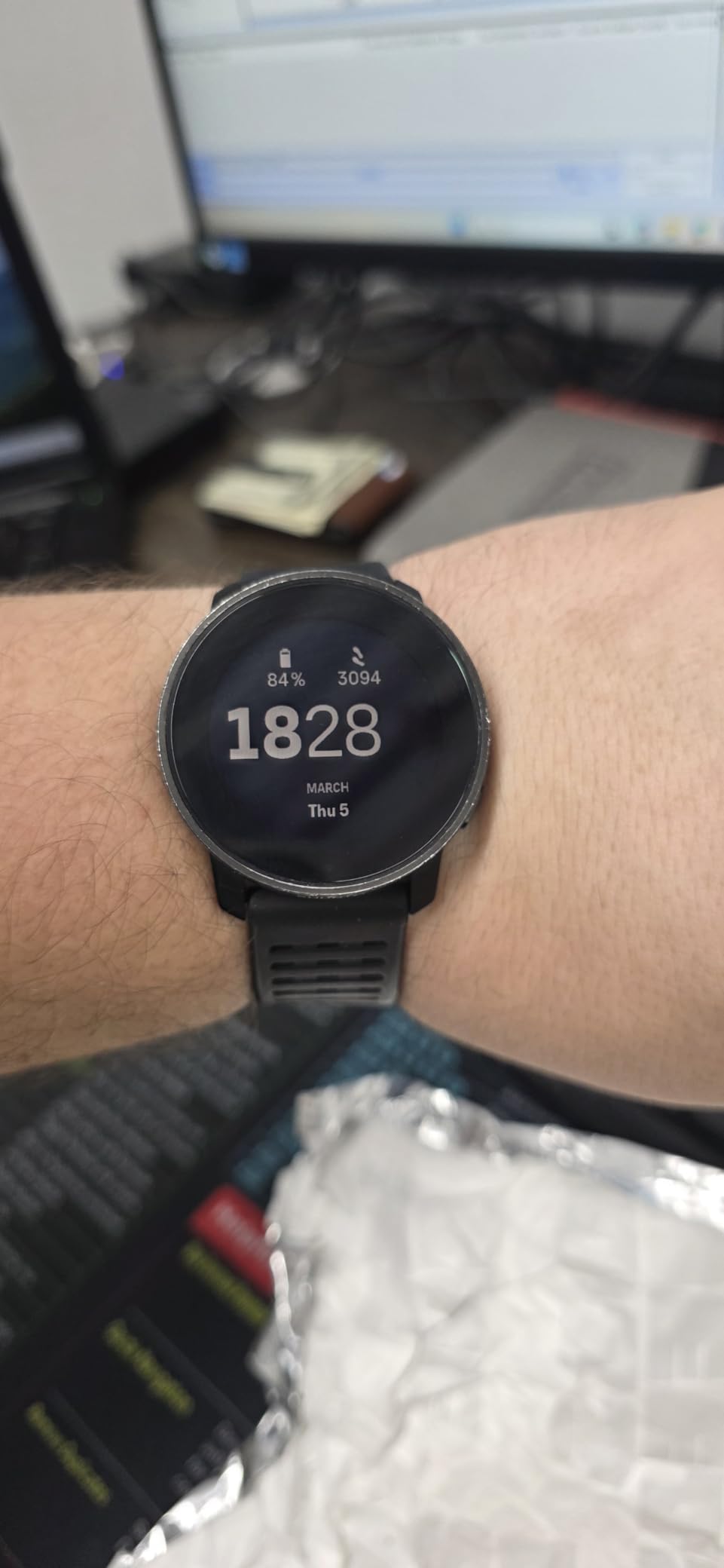
Best for long efforts and rough terrain
Physical buttons are the underrated feature here. They are easy to operate with gloves on or mid-swim, which is exactly when a touchscreen fails you. Many owners who came from Fitbit, Garmin, Samsung, or Apple wearables describe it as the best sports watch they have owned, specifically for the display, endurance mode, buttons, and clean app feed.
The 868 reviews here carry the widest spread in this roundup, from one-star to five-star, and that polarization is the honest summary: the build and battery are loved, the sensor and post-update behavior are not.
Where it falls short?
This is a sports watch, not a general-purpose smartwatch, so on-wrist computing and app interaction are limited. Runners who want a bright AMOLED for running at night, or a speaker for calls, should look elsewhere in this list. Do your own research on similar models too, because Suunto’s lineup changes often.
We earn a commission, at no additional cost to you. CERTAIN CONTENT THAT APPEARS ON THIS SITE COMES FROM AMAZON. THIS CONTENT IS PROVIDED 'AS IS' AND IS SUBJECT TO CHANGE OR REMOVAL AT ANY TIME.
7. POLAR Grit X Pro – Best for Rugged Trail and Outdoor Use
POLAR Grit X Pro – GPS Multisport Smartwatch – Military Durability, Sapphire Glass, Wrist-Based Heart Rate, Long Battery Life, Navigation – Ideal for Outdoor Sports, Trail Running, Hiking, Black
★★★★★★★★★★MIL-STD-810G with sapphire
40 hrs GPS training
100m water resistance
74g with FKM band
- MIL-STD-810G build with sapphire glass and 100m water resistance
- Up to 40 hours of full GPS and heart rate training
- Polar wrist-based optical heart rate with H10 chest strap support
- Turn-by-turn Komoot navigation with trackback and elevation data
- Automatic overnight recovery and sleep measurement
- Heaviest watch here at 74g and bulky on smaller wrists
- Single-band GPS only with no offline map support
- Touchscreen is slow and disabled during activities
- Dim 700-nit display
- Basic notifications with no wrist replies
The POLAR Grit X Pro is the best Garmin Forerunner alternative for trail runners and mountain bikers who break watches. It is built to MIL-STD-810G with scratch-resistant sapphire glass, FKM fluoroelastomer bands, and 100m water resistance, and it sits at the top of this list on physical survival. If the mountain biking is the bigger half of your sport, our action camera guide for mountain biking covers the other half of the kit.
Battery is the quiet star: up to 40 hours of training with full GPS and heart rate, 100 hours with power saving, and 7 days in watch mode with 24/7 heart rate tracking. For a runner who leaves GPS on for a whole day in the mountains, that is a comfortable margin.
Navigation runs through Komoot, giving real-time turn-by-turn guidance on the wrist plus trackback, elevation, and grade data. Recovery measurement is fully automatic overnight, tracking sleep behavior and how well you recovered from training so you can make better decisions the next day.
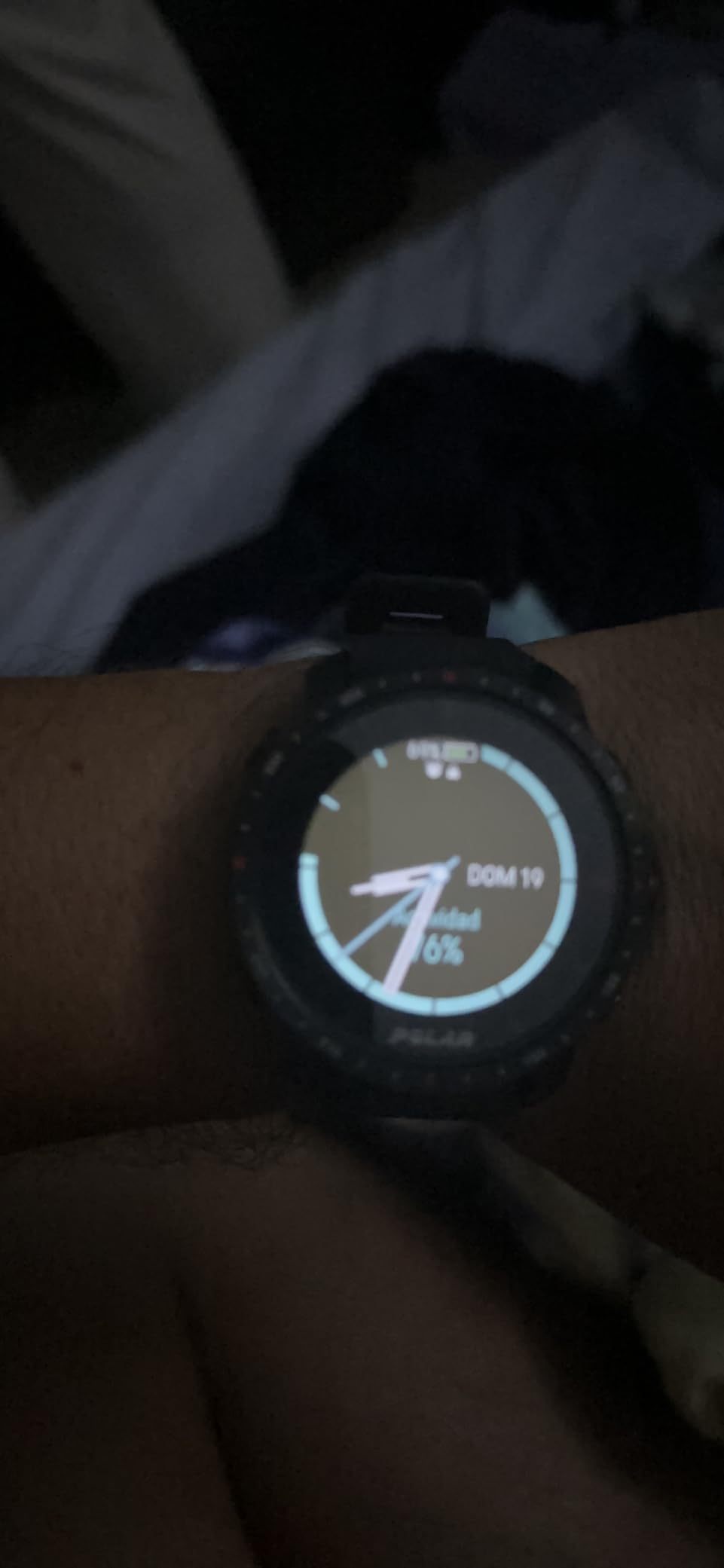
Where Garmin still wins is GPS and maps. This watch is single-band GPS only, with no dual-frequency mode and no full offline map support, which is a real limitation compared with the COROS PACE Pro. The 1.2-inch 700-nit OLED is dim at certain angles, the touchscreen is slow on first touch with no back gesture and is disabled during activities, and smartwatch notifications are basic with no wrist replies.
Best for rough terrain and long days
Long-term owners report two years of regular use with no physical damage, an accurate compass, and navigation that has rescued them on trails, plus consistently accurate heart rate data, especially paired with a Polar H10 chest strap. The FKM band is breathable and quick-drying, which matters on long sessions.
The Polar optical sensor is the reason most runners pick this brand, and pairing it with the H10 chest strap gives you the accuracy you want for intervals and HRV work. It is the closest thing in this roundup to a Fenix for pure toughness.
Where it falls short?
At 74g it is the heaviest watch here by a wide margin, bulky on smaller wrists and prone to bouncing during high-impact sports, which is when the optical sensor is least reliable. If you need bright sunlight readability, wrist notifications you can reply to, or offline maps, this is not it.
We earn a commission, at no additional cost to you. CERTAIN CONTENT THAT APPEARS ON THIS SITE COMES FROM AMAZON. THIS CONTENT IS PROVIDED 'AS IS' AND IS SUBJECT TO CHANGE OR REMOVAL AT ANY TIME.
8. Amazfit Bip 6 – The Least Expensive Entry Into Real GPS Tracking
Amazfit Bip 6 Smart Watch, 1.97″ AMOLED Display, GPS, iOS/Android
★★★★★★★★★★1.97 inch AMOLED at 2000 nits
Up to 14 days battery
140+ workout modes
Five satellite systems
- Up to 14 days between charges
- Bright 2000-nit AMOLED readable in direct sunlight
- Lightweight aluminum build comfortable for all-day and sleep wear
- 140+ workout modes including HYROX Race and strength training
- Support for BeiDou
- GLONASS
- GPS
- and Galileo
- 512 MB of storage limits offline music and maps
- Zepp OS ecosystem is narrower than Garmin or Apple
- Advanced health metrics can be inconsistent in high-intensity sessions
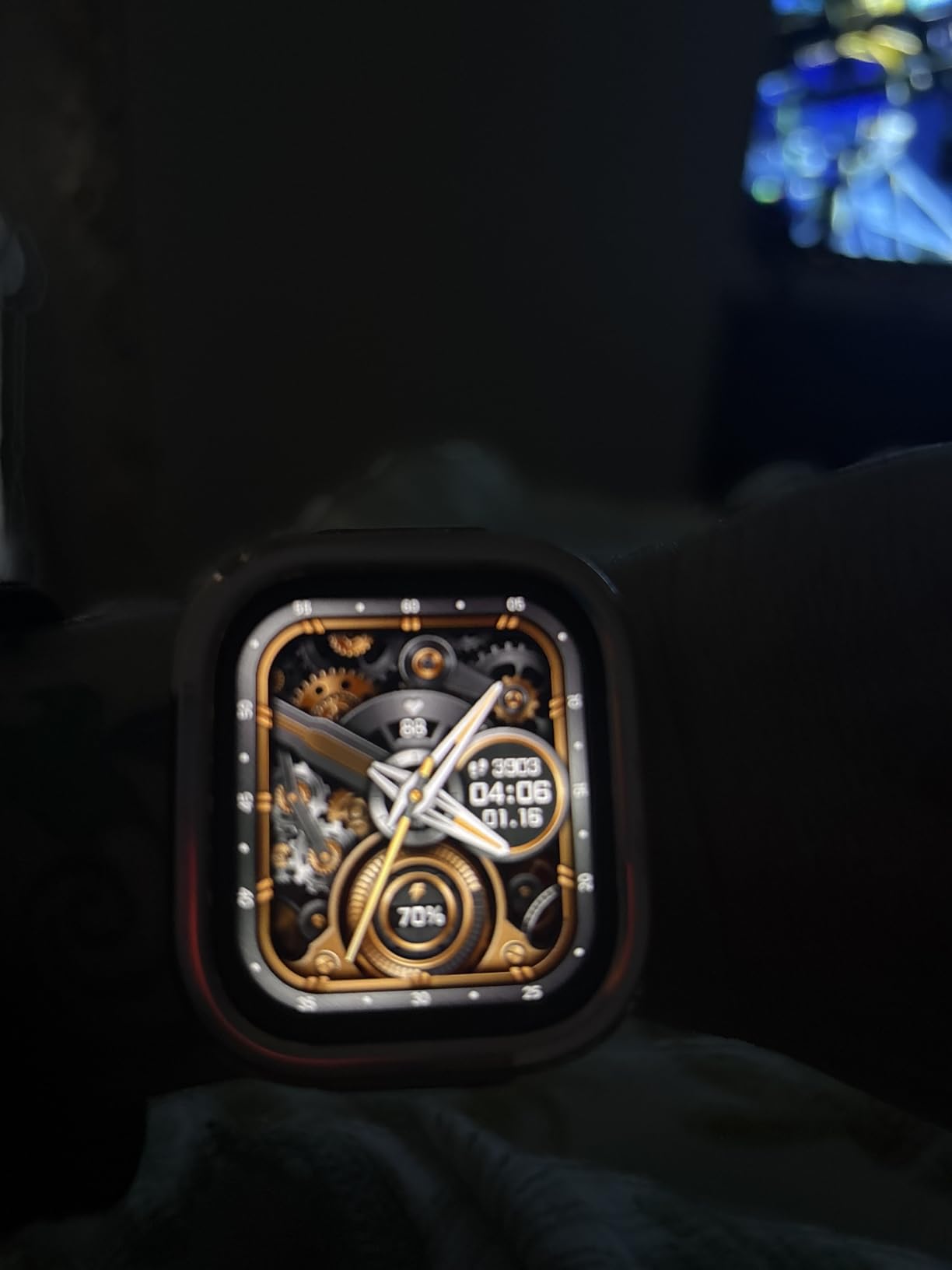
The Amazfit Bip 6 is the least expensive way into a real GPS running watch, and the 7157 reviews here make it the most widely owned watch in this roundup. If you are leaving a Forerunner 55 behind because the price no longer made sense, this is the honest floor.
Battery is the headline. Up to 14 days between charges means you can go on a training block without thinking about the charger at all, which is the first thing runners switching from a four-day AMOLED Forerunner notice. The 1.97-inch AMOLED hits 2000 nits and stays readable in direct sunlight.
GPS covers four named satellite systems, BeiDou, GLONASS, GPS and Galileo, with free downloadable maps and turn-by-turn directions. There are 140+ workout modes including HYROX Race and strength training, plus AI-assisted coaching and 24/7 tracking of heart rate, sleep, blood oxygen, and stress.
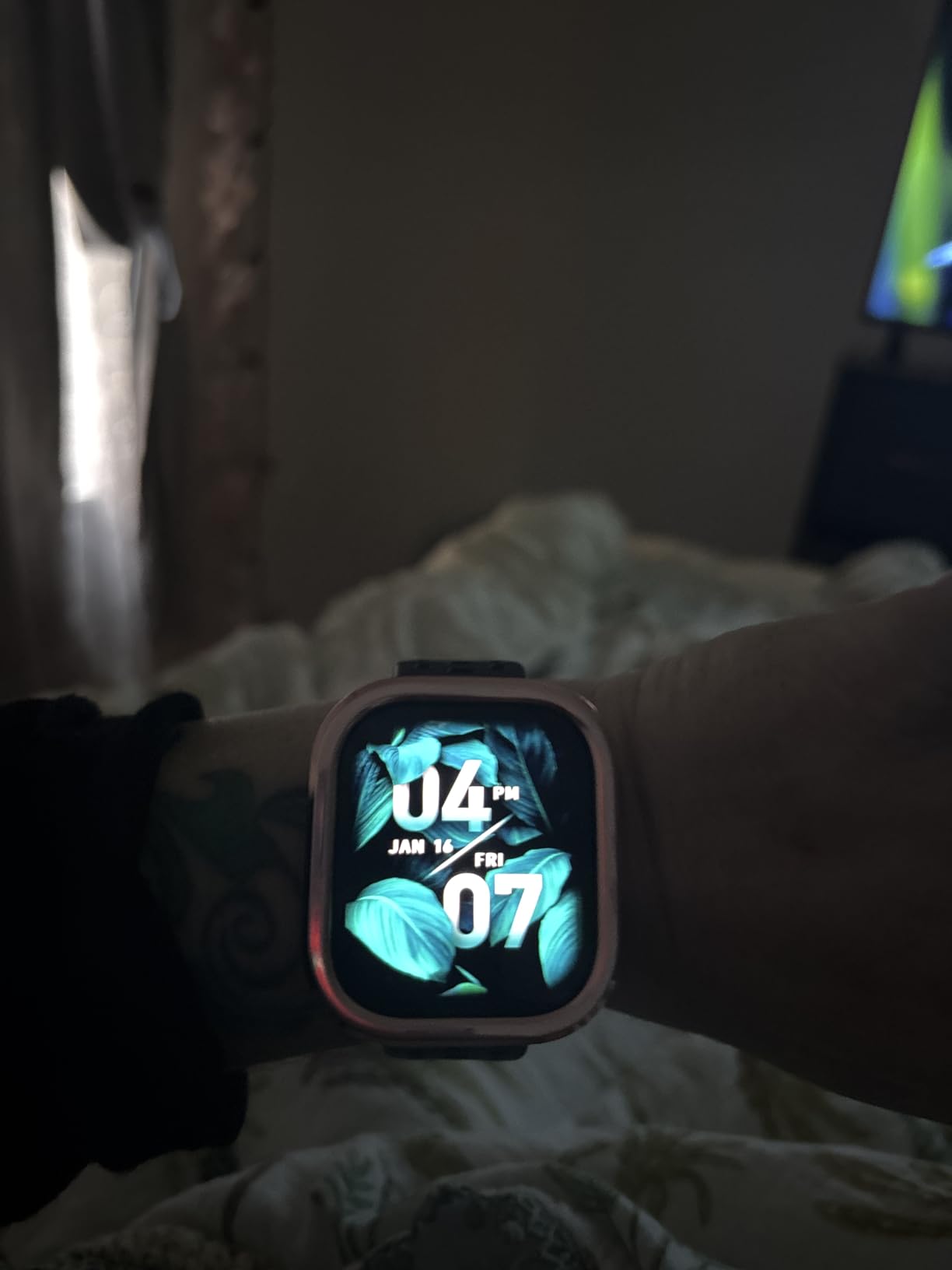
Where Garmin still wins is everything to do with depth. 512 MB of storage is the smallest here and limits offline music and map capacity, the Zepp OS ecosystem is narrower than Garmin or Apple, and some advanced health metrics report inconsistent values in high-intensity sessions. Roughly one in ten of its ratings is one-star, reflecting occasional sync or metric-accuracy complaints.
It is also worth weighing against other budget routes in our smart bike and fitness alternatives guide, since the same price-versus-ecosystem logic applies to any switch away from an established brand.
Best for a first serious watch
Beginner runners in forum threads ask for one thing: accurate GPS and heart rate monitoring, nothing more. This delivers that well below any Forerunner tier, with a screen size that suits small wrists far better than the 2.07-inch Bip Max.
The lightweight aluminum build is comfortable enough to sleep in, which helps the sleep and blood oxygen tracking do its job, and the 1-year manufacturer warranty is the shortest here, so factor that in.
Where it falls short?
It is a fitness tracker with GPS rather than a running watch, and the difference shows in storage, app depth, and metric consistency. If you are already running structured mileage and care about training load trends, move up to the Amazfit Bip Max or the COROS PACE 3.
We earn a commission, at no additional cost to you. CERTAIN CONTENT THAT APPEARS ON THIS SITE COMES FROM AMAZON. THIS CONTENT IS PROVIDED 'AS IS' AND IS SUBJECT TO CHANGE OR REMOVAL AT ANY TIME.
What You Actually Lose When You Leave Garmin?
This is the part of the switch nobody covers, and it matters more than any spec. Your training history is not at risk, but your workflow is, and the difference between a smooth transition and a frustrating one usually comes down to four things.
Your activity history is fine. Garmin exports your activities as FIT files, and all of these watches sync to Strava, so the historical record you have already built stays where it is. If you use TrainingPeaks, the Suunto app supports it directly and the others sync through their own ecosystems, but check your specific workflow before you retire your Garmin.
Connect IQ is the real loss. The third-party data field store is still deeper on Garmin than on any alternative here, and if you have spent time installing a custom field layout, that work does not transfer. The Amazfit, COROS, and Polar apps each offer their own data field customization, but they are not the same platform.
Garmin Coach and structured plans are not portable. If your training block is built in Garmin Coach, you will need to rebuild it. The Zepp Coach on the Amazfit watches covers training plans from 3K through full marathon, which is the closest equivalent, and the COROS PACE Pro supports custom workouts in the COROS app.
Setup and onboarding friction is real. Forum threads show users who tried COROS and could not get past the app and setup experience, which is why we suggest living with any new watch for a week of easy runs before you retire your Forerunner. Regional after-sales support also varies by brand more than most roundups admit.
Who Should Stick With the Garmin Forerunner?
Some of you should not switch, and an honest roundup has to say so. If any of the following describe you, Garmin remains the better buy and the alternatives on this list will not solve your problem.
Connect IQ power users should stay. Custom data fields, third-party apps, and the widget ecosystem remain deeper on Garmin than anywhere else, and rebuilding your setup costs more time than the money you save.
Triathletes and multisport athletes should stay or move up to a Fenix. The Forerunner line handles multisport, but the broader Garmin ecosystem handles transitions, power meters, and bike sensors with more consistency than any watch here.
Map-dependent ultra runners should stay or go up. The PACE Pro closes some of the gap with offline topographic maps, but the Grit X Pro is single-band with no offline map support, and nothing here replaces a full Fenix or Enduro for a multi-day race where navigation failure is not an option.
People with a working setup should stay. Garmin’s own ecosystem has well-documented weaknesses, including a basic app store and limited native mapping on some models, but if your current watch charges when you need it to and your app does not annoy you, switching solves a problem you do not have. Forum consensus in Garmin communities is exactly this: modern Garmin heart rate and algorithms are widely considered accurate, and many owners recommend stepping up within the brand rather than out of it.
Is Garmin discontinuing the Forerunner series? No. The line continues to be updated, and the current generation is actively sold. What is changing is pricing, and the direction of Garmin’s subscription ecosystem, which is the more legitimate reason to look at alternatives.
How to Choose a Garmin Forerunner Alternative?
Seven criteria decide this purchase, and only two of them are the ones most roundups lead with. Work through them in this order and the choice makes itself.
Battery by mode, not by headline. Every manufacturer mixes smartwatch mode and GPS mode in the same sentence. The PACE Pro gives you 38 hours of outdoor GPS, 31 hours with dual-frequency on, and 20 days of typical use; the Suunto offers 40 hours best GPS, 70 hours endurance, and 300 hours tour. Only compare like modes, because dual-frequency and multi-band GPS always cost battery.
GPS accuracy in your conditions. Do Garmin alternatives have accurate GPS? Yes, when they have a multi-band or dual-frequency chipset. The PACE 3 and PACE Pro both use redesigned dual-frequency chips designed to hold a track in high-rise cities, the Amazfit Active Max and Bip 6 list BeiDou, GLONASS, GPS and Galileo support, while the Bip Max is marketed around five-satellite support. The Polar Grit X Pro is single-band only, which is the one clear accuracy compromise in this list.
Heart rate accuracy by sport. Polar’s wrist-based optical sensor has the strongest reputation in this group, and it pairs with a chest strap for interval work. Amazfit and COROS sensors are reported as matching pricier watches for distance, heart rate, and calories, though some advanced health metrics read inconsistently at high intensity, and the Suunto is the weakest of the eight on stationary activities.
Training analytics depth. Training load, training readiness, recovery time, and aerobic training effect are Garmin’s home ground. The COROS PACE Pro and Polar watches come closest on structured analysis, while the Amazfit Zepp Coach layer is strongest for beginner and marathon-distance plans.
Maps, music, and the phone-free test. If you run without your phone, storage decides. The PACE Pro has 32GB, the Amazfit Active Max and Bip Max have 4GB with free downloadable maps and offline music, the PACE 3 has 3GB, and the Polar and Suunto watches here offer no music storage or offline maps.
Coros, Garmin, or Suunto? COROS wins on battery, storage, and price per feature. Garmin wins on ecosystem, coaching, and third-party apps. Suunto wins on build quality and endurance modes. That three-way split is the fastest way to narrow a shortlist.
Cost over three years. The right way to frame the price of a watch is per year of use, and on that basis the budget Amazfit models and the COROS PACE 3 win comfortably, while the Suunto 9 Peak Pro and Polar Grit X Pro only make sense if you will use the durability. A smartwatch-first alternative such as the Apple Watch is a different category entirely, and it makes sense only if you want a phone on your wrist rather than a running tool.
Frequently Asked Questions
Is Coros better than Garmin for runners?
COROS is better than Garmin for runners who want longer battery life, offline maps, and more storage per dollar. The PACE Pro gives you 38 hours of outdoor GPS, 31 hours with dual-frequency enabled, and 32GB of storage for less than a mid-tier Forerunner. Garmin is better if you rely on Connect IQ apps, structured coaching tools, or the depth of its training analytics, because that ecosystem is still deeper than anything COROS offers.
Will I lose my training history if I switch from Garmin?
No. Garmin exports your activities as FIT files, and all of the watches in this roundup sync to Strava, so your existing history stays where it is. What you do lose is workflow rather than data: Connect IQ data fields, Garmin Coach training plans, and any custom screen setup you built, none of which transfer to another platform.
Do Garmin alternatives have accurate GPS?
Yes, as long as the watch has a multi-band or dual-frequency chipset. The COROS PACE 3 and PACE Pro both use redesigned dual-frequency chips that hold a track in high-rise cities, and the Amazfit models support five satellite systems. The exception in this list is the Polar Grit X Pro, which is single-band only.
Is Amazfit or Garmin better?
Amazfit is better for value, battery, and smartwatch features, with bright AMOLED screens, 4GB of storage, and multi-week battery life at a fraction of the cost. Garmin is better for training analytics depth, Connect IQ, and structured coaching. Most runners who leave a Forerunner for an Amazfit do it for the battery and the screen, not for the data.
Which is better, Coros or Garmin or Suunto?
COROS wins on battery life, storage, and price per feature. Garmin wins on ecosystem, coaching tools, and third-party apps. Suunto wins on build quality, physical buttons, and endurance battery modes. For most road runners COROS is the strongest overall substitute, for ultra and adventuring Suunto is the tougher build, and for Connect IQ users Garmin remains the only real answer.
Is Suunto better than Apple Watch?
For training and navigation, yes. The SUUNTO 9 Peak Pro offers 40 hours of best-mode GPS, 70 hours endurance, 300 hours tour mode, and turn-by-turn navigation in a titanium, steel, and sapphire case rated to 100m. An Apple Watch is the better general-purpose smartwatch, but it is iPhone-only, costs more, and is not built for the long endurance modes a trail runner wants.
Who is Garmin’s biggest competitor?
For running watches specifically, COROS is Garmin’s biggest competitor, with PACE models that match Garmin on dual-frequency GPS accuracy and beat it on battery life and storage while costing less. Polar competes hardest on heart rate accuracy and training analytics, and Amazfit competes on price and display brightness. Apple is the competitor in general-purpose smartwatches rather than in running.
Which smart watch is the most accurate?
Accuracy depends on what you measure. For wrist-based optical heart rate, Polar has the strongest reputation in this group, and pairing its watches with an H10 chest strap gives the cleanest interval data. For GPS track accuracy, the dual-frequency COROS PACE 3 and PACE Pro are the most reliable here. For heart rate during high-intensity sessions, Amazfit and COROS report results matching pricier watches, with some advanced health metrics reading inconsistently.
Final Verdict: Which Garmin Forerunner Alternative Should You Buy in 2026?
Buy the COROS PACE Pro if you want the closest single replacement for a Forerunner 265 or 965: dual-frequency GPS, 38 hours of outdoor battery, 32GB of storage, and offline maps, all in a 49g case. It is our editor’s choice, and it holds the highest rating of the eight watches we reviewed.
Buy the COROS PACE 3 if weight and battery are what you care about. At 30g with 24 days of daily use, it is the watch to sleep in, and dual-frequency GPS holds up in city centers. Buy the Amazfit Active Max if you want a wearable that is also a real smartwatch, with a 3000-nit screen, four weeks of battery, offline maps, and calls. Buy the POLAR Pacer Pro if heart rate accuracy and training analytics are your training life.
Buy the SUUNTO 9 Peak Pro for ultra endurance and physical durability, and the POLAR Grit X Pro for trail and mountain durability, accepting single-band GPS in exchange for a sapphire, military-spec build. Buy the Amazfit Bip Max for the best maps-per-dollar combination, and the Amazfit Bip 6 as a genuinely cheap first GPS watch.
And if you use Connect IQ daily, rely on onboard maps for racing, or your current setup already works, the best Garmin Forerunner alternative is the Forerunner model you already own. Check the current details on any of these before you buy, and run an easy week with the new watch before you retire the old one.