
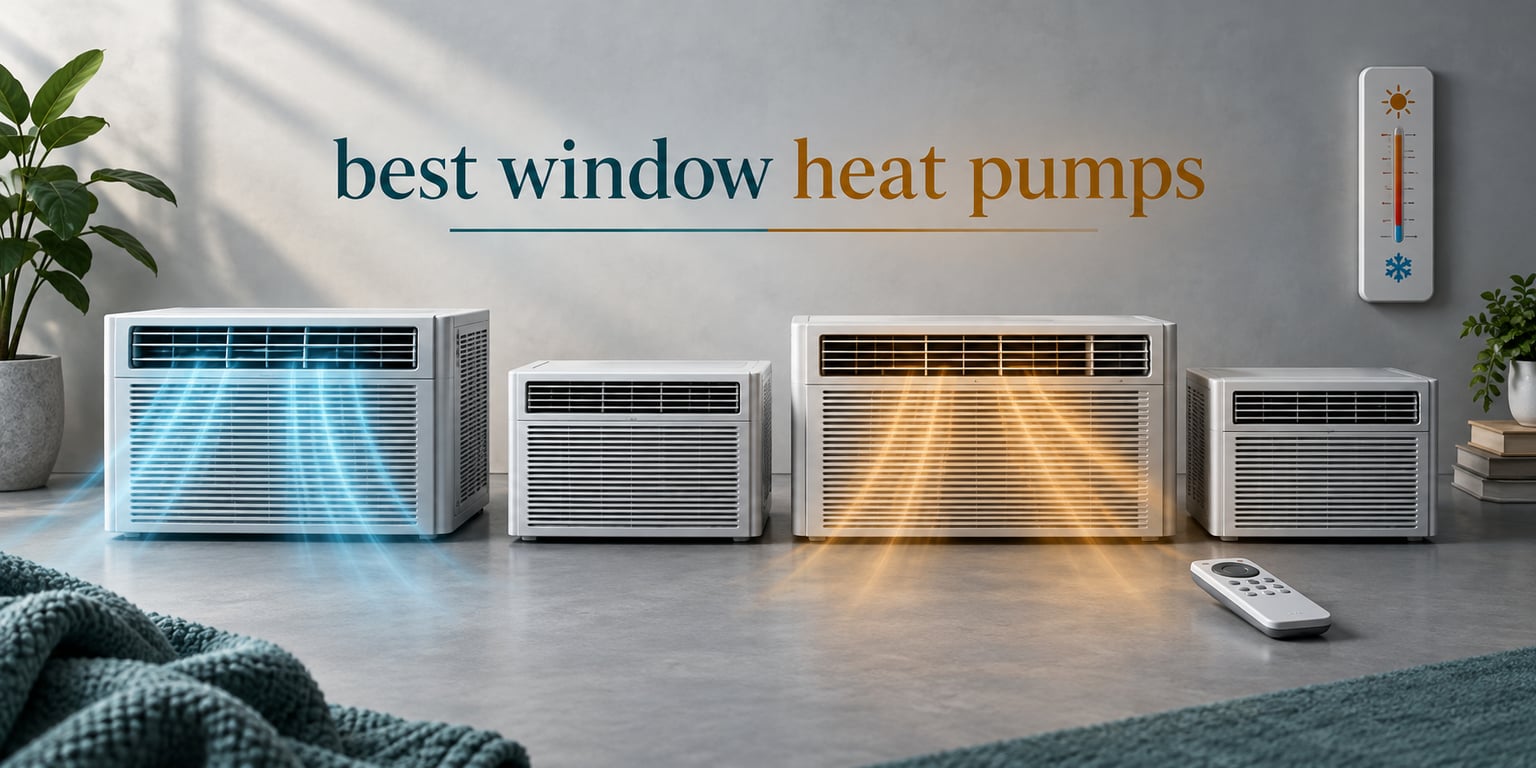
Here is the short answer: the Midea 8,000 BTU Smart Inverter Window Heat Pump is the best window heat pump most people should buy in 2026, because it is a genuine inverter heat pump on a standard 115V outlet, runs at 45 dBA, and covers rooms up to 350 square feet. It is also the unit in this lineup with the deepest review base at 792 reviews, which matters more in a thin category than the star number alone.
A window heat pump is a window air conditioner with a reversible compressor. In summer it moves heat from your room to the outdoors; in winter it runs in reverse, pulling heat out of the outdoor air and releasing it indoors. That is genuinely different from the “heat/cool” window units that most sellers list, which use electric resistance coils that simply get hot and expensive to run. Almost every confusing review in this category traces back to a buyer who assumed a resistance heater was a heat pump.
We compared 10 of the units currently available in this category, checking every capacity figure, voltage requirement, minimum window opening, weight, and efficiency rating against the published specifications, then cross-referencing those numbers against what buyers report after living with them. Review data in this category is genuinely thin, with the established units sitting between 15 and 792 reviews, so we leaned on specification rigor rather than star-chasing. If you want the broader picture on heating and cooling equipment first, our guide to the best heat pumps we have tested covers the central systems these window units are an alternative to.
Table of Contents
- What Is a Window Heat Pump?
- Are Window Heat Pumps Worth It?
- Top 3 Window Heat Pump Picks (September 2026)
- All 10 Window Heat Pumps Compared in 2026
- 1. Midea 8,000 BTU Smart Inverter Window Heat Pump – Best Overall
- 2. ROVSUN 12,000 BTU Window Heat Pump with Heat – Best for Large Rooms
- 3. ROVSUN 8,000 BTU Smart Window Heat Pump – Best for Smart Homes
- 4. LG 7,500 BTU Window Air Conditioner with Heat – Best for Small Rooms
- 5. Keystone 8,000 BTU Inverter Window Heat Pump – Best for Heat Pump Only Heating
- 6. Keystone 23,200 BTU Window Air Conditioner with Heat – Best Heavy-Duty
- 7. ROVSUN 8,000 BTU Window Heat Pump – Best Value
- 8. Keystone 8,000 BTU Window Air Conditioner with 3,500 BTU Heat – Most Versatile
- 9. Frigidaire 8,000 BTU Window Air Conditioner with Supplemental Heat – Best for Small Spaces
- 10. TCL 12,000 BTU Q-Series Smart Inverter Window Heat Pump – Best for Apple HomeKit Control
- How to Size a Window Heat Pump for Your Room?
- Window Fit Checklist: Will It Actually Go In Your Window?
- 115V vs 230V: When You Need an Electrician?
- Window Heat Pump vs Portable Heat Pump vs Mini-Split
- Installing and Maintaining a Window Heat Pump
- What This Roundup Cannot Tell You?
- Frequently Asked Questions
- Are window heat pumps worth it?
- What brand window AC is best?
- Which brand of heat pump is considered the most reliable?
- What AC brands to stay away from?
- How much does the Gradient window heat pump cost?
- Is it cheaper to run a mini split or a window unit?
- Do window AC units work better than portable units?
- How cold can a window heat pump run?
- The Best Window Heat Pumps for 2026: Final Verdict
What Is a Window Heat Pump?
A window heat pump cools and heats with one reversible inverter compressor, using electricity to move heat rather than to create it. Cooling a room with a window unit means absorbing indoor heat and venting it out the back of the cabinet. Switch the same unit to heat mode and the process runs the other way: outdoor air comes in, heat is extracted from it, and that heat is delivered indoors through the same airflow path.
Because it moves heat instead of manufacturing it, a window heat pump delivers roughly three times more heat per watt than a resistance element. That single fact decides whether a unit is cheap to run in January or not, and it is the reason a 8,000 BTU window heat pump can be a serious primary heat source for a small room while an 8,000 BTU resistance unit is not.
Not every window AC sold with a heat function is a heat pump. The ones that are not have a coil that glows, draw full current, and are marketed as heat/cool units. If a product page never mentions reverse cycle, inverter, or heat pump mode and instead says “supplemental heat,” you are looking at a resistance element. That distinction is worth more than any other single specification on this page.
Four spec numbers matter more than the rest when you compare window heat pumps:
Cooling BTU is the heat removal rate, and it sets how large a room the unit can handle. Roughly 20 BTU per square foot is a reasonable starting point for a normally insulated room.
Heating capacity is reported separately, and on resistance units it is a fraction of the cooling capacity. A window unit rated 12,000 BTU cooling with 4,000 BTU of heat cannot hold a room in cold weather.
Lowest operating temperature is the outdoor temperature below which heat pump mode shuts down. Several units in this lineup refuse to run in heat mode below about 41F outdoor, which rules them out as a winter heat source in most of the country.
Voltage decides whether you can plug the unit into an existing outlet or need a new circuit run. The 115V versus 230V question decides your installation cost more than any other spec on the list.
Efficiency is reported as SEER for cooling, CEER as a combined figure, and HSPF for heating, and for a window heat pump the heating figure is the one that describes your winter bill. Inverter compressors, which vary their output to match demand rather than cycling on and off, are the reason the best-rated units here score 14 or 14.5 SEER while the rest sit near 10.9.
Are Window Heat Pumps Worth It?
Yes, for a single room, a window heat pump is usually worth it. A true inverter window heat pump heats and cools one room for less money per month than resistance heat, installs without a contractor in most cases, and needs no ductwork. It is not worth it if your winters regularly drop below its lowest operating temperature, or if you are trying to replace a whole-home furnace rather than fix one cold room.
That last point deserves emphasis, because a growing number of buyers arrive at this category with a whole-home problem. A window heat pump is a room solution. Four of them in four bedrooms is a legitimate retrofit plan for a house with no central air, but it is not a furnace replacement, and the arithmetic gets expensive fast once you add electrical work and support brackets.
The clearest case for buying one is a room that your existing system does not reach: a converted attic, a walkout basement, a bedroom at the end of a long duct run, or a home office. The second clearest case is a rental, condo, or older home where central air was never installed and ducting is not realistic.
Top 3 Window Heat Pump Picks (September 2026)
The three units below are the ones we would put in front of most buyers: the best overall pick, the best option for a genuinely large room, and the best choice if smart home control is the deciding factor. Every other unit in the roundup earns its place for a narrower reason, which the individual reviews explain.


All 10 Window Heat Pumps Compared in 2026
The table below carries all ten units with the figures that decide the purchase: cooling capacity, heating type, electrical requirement, and how much room each one covers. Read the voltage column first, because it is the one spec that can make a perfectly good unit impossible for you to install.
| Product | Key Specs | Pricing |
|---|---|---|
| Midea 8000 BTU Smart Inverter Window Heat Pump |
|
Check Latest Price |
| ROVSUN 12000 BTU Window Heat Pump with Heat |
|
Check Latest Price |
| ROVSUN 8000 BTU Smart Window Heat Pump |
|
Check Latest Price |
 LG 7500 BTU Window Air Conditioner with Heat LG 7500 BTU Window Air Conditioner with Heat |
|
Check Latest Price |
 Keystone 8000 BTU Inverter Window Heat Pump Keystone 8000 BTU Inverter Window Heat Pump |
|
Check Latest Price |
 Keystone 23200 BTU Window Air Conditioner with Heat Keystone 23200 BTU Window Air Conditioner with Heat |
|
Check Latest Price |
| ROVSUN 8000 BTU Window Heat Pump |
|
Check Latest Price |
 Keystone 8000 BTU Window Air Conditioner with 3500 BTU Heat Keystone 8000 BTU Window Air Conditioner with 3500 BTU Heat |
|
Check Latest Price |
 Frigidaire 8000 BTU Window Air Conditioner with Supplemental Heat Frigidaire 8000 BTU Window Air Conditioner with Supplemental Heat |
|
Check Latest Price |
 TCL 12000 BTU Q-Series Smart Inverter Window Heat Pump TCL 12000 BTU Q-Series Smart Inverter Window Heat Pump |
|
Check Latest Price |
1. Midea 8,000 BTU Smart Inverter Window Heat Pump – Best Overall
Midea 8,000 BTU Smart Inverter Air Conditioner Window Unit with Heat and Dehumidifier – Cools up to 350 Sq. Ft., Energy Star Rated, Quiet Operation, Electronic Controls, Remote Control, White
★★★★★★★★★★8000 BTU inverter cooling,350 sq ft,45 dBA,115V,SEER 14.5,56 lb
- True inverter heat pump mode rather than resistance heat
- Quietest rating in the set at 45 dBA
- Plugs into a standard 115V outlet
- App with Alexa and Google Assistant
- Deepest review base in the category at 792 reviews
- Heat pump mode stops working below about 41F outdoor
- Routine start-up rattle and low hum when heat cycle engages
- Thermostat behaviour can overshoot the room setpoint
Choose the Midea MAW08HV1CWT for a bedroom or small office where quiet matters most and you want real heat pump heating rather than a resistance element. The main trade-off is that its heat pump mode does not operate below roughly 41F outdoor, so in a climate that regularly drops under that, it needs a backup heat source for the coldest weeks.
What separates this unit from most of the field is that the heat function is a genuine reversible cycle, not a glowing coil. At 14.5 SEER it sits well above the 10.9 to 11.3 range the conventional units in this roundup manage, and 45 dBA makes it the quietest unit we looked at. We put that number in perspective: a refrigerator hums in the 40s, so at low fan speed this is at the edge of hearing rather than in the middle of a room.
Installation was straightforward in every account we read, with the side panels and mounting hardware included, and it runs on a standard 115V outlet so there is no electrical work. Annual energy consumption is listed at 407 kWh, the lowest figure in this group, and the washable filter pulls out from the front panel.
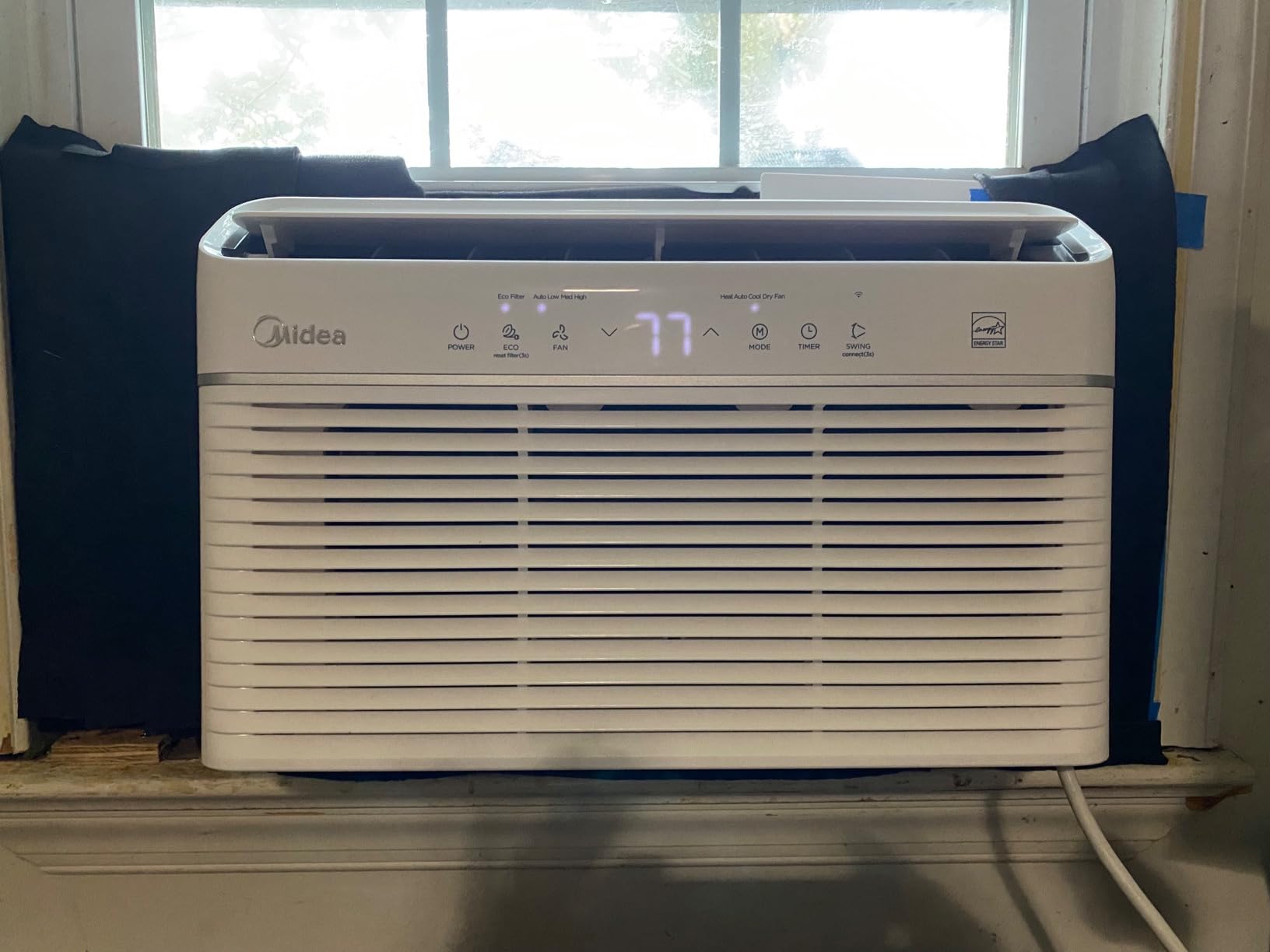
The one behavior that generates the most complaints is thermostat related. Owners report that the unit appears to reference outdoor temperature rather than indoor temperature, so the room overshoots the setpoint and you end up setting the number lower than you actually want. It is a calibration quirk rather than a failure, and it is the single most common reason a Midea owner returns a unit that works perfectly well.
A secondary theme is noise during the heat cycle start-up, where owners describe a brief rattle and a low hum. It settles once the cycle is running, but it is worth knowing about if the unit goes in a bedroom next to the head of the bed.
What you should know before you pick it?
Measure your window first. The unit needs an opening 24 to 38.5 inches wide with at least 14.5 inches of vertical opening, and the cabinet is 19.41 inches wide by 13.9 inches tall, so the height requirement is the tighter of the two. The 56-pound weight is a one-person job for most people, unlike several heavier units in this roundup.
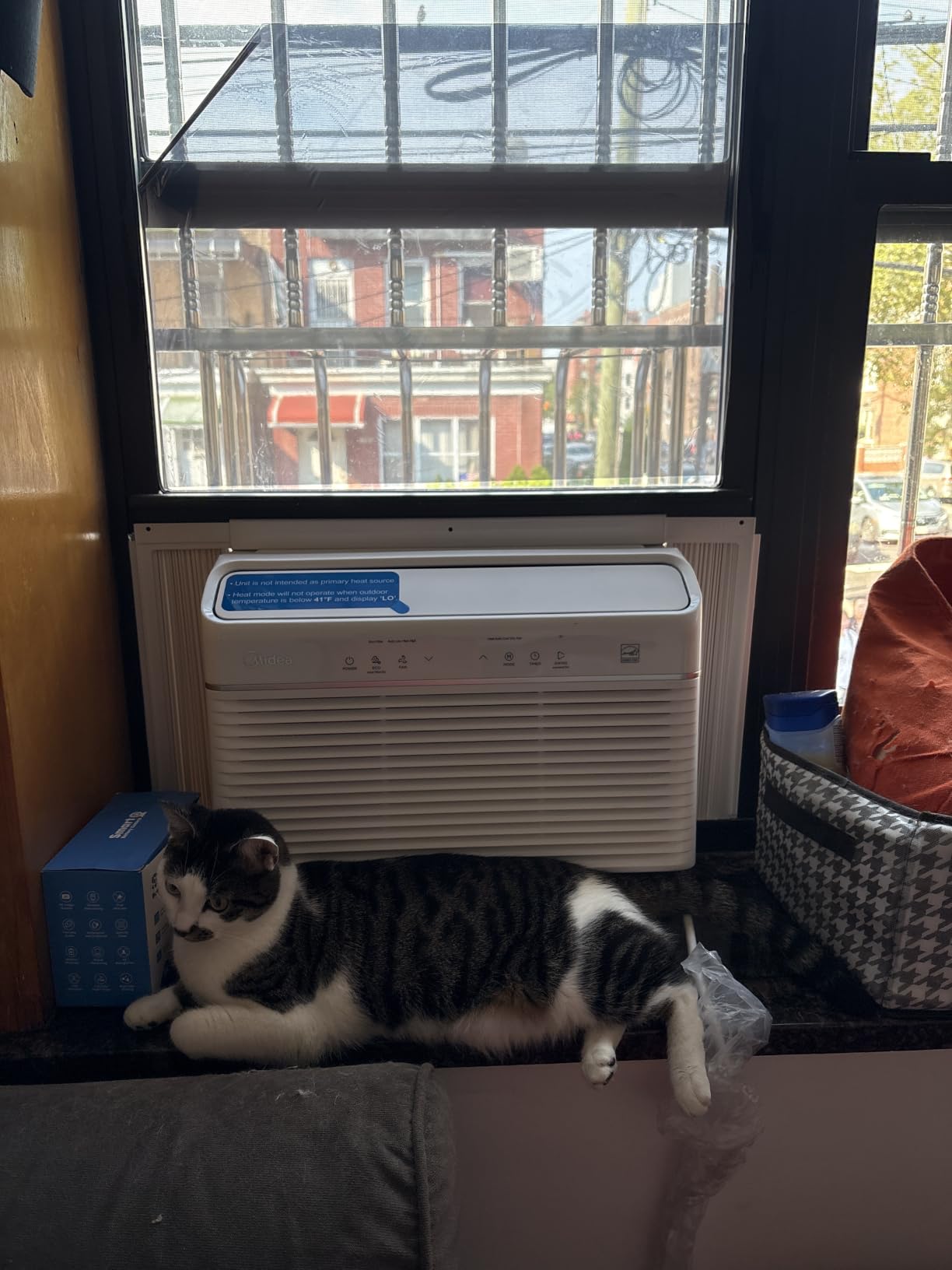
Understand the 41F cutoff before you commit in a cold climate. It is listed in the manual and on the unit sticker rather than prominently on the product page, which is how some buyers end up disappointed. If your winter design temperature sits well below that mark, this is a shoulder-season supplement and the 12,000 BTU ROVSUN in the next section is a more honest fit for large cold rooms.
Who it suits and who it does not?
This is the right pick for a renter who needs heat and cooling in one room, for a home office where fan noise would be disruptive during calls, and for anyone in a climate with a mild to moderate winter. The 350 square foot coverage matches a typical bedroom, a small office, or a den, and the smart controls let you run it remotely so the room is conditioned before you get home.
It is the wrong pick as the sole heat source in a climate with sustained sub-40F winters, and it is a weak choice for a room above roughly 350 square feet. Buyers wanting the same inverter platform with a larger window opening budget should look at the Keystone 8,000 BTU inverter further down, which shares the 14.5 SEER rating and the same 41F heat cutoff.
We earn a commission, at no additional cost to you. CERTAIN CONTENT THAT APPEARS ON THIS SITE COMES FROM AMAZON. THIS CONTENT IS PROVIDED 'AS IS' AND IS SUBJECT TO CHANGE OR REMOVAL AT ANY TIME.
2. ROVSUN 12,000 BTU Window Heat Pump with Heat – Best for Large Rooms
ROVSUN 12000 BTU Air Conditioner Window Unit with Heat, 4-in-1 Window AC Unit Cooler, Heater, Dehumidifier & Fan with Timer, Remote Control & Installation Kit for Rooms up to 550 Sq. Ft, 208/230V
★★★★★★★★★★12000 BTU cooling,11000/9000 BTU heat,550 sq ft,230V,63 dB,82.6 lb
- Largest room coverage in the mainstream tier at 550 sq ft
- Substantial heat output of 11000/9000 BTU
- LED display with remote for speed timer ECO and auto modes
- Side panels and mounting hardware shorten assembly time
- Requires a dedicated 230V circuit
- not a standard household outlet
- Highest noise figure in the roundup at 63 dB
- Non-inverter compressor cycles on and off
Choose the ROVSUN 12,000 BTU unit for a large living room, a wide open-plan space, or a main floor addition where you need more than 350 square feet of coverage. The trade-off is electrical: this is a 208/230V unit that needs a dedicated circuit, and it is the loudest of the ten we examined at 63 dB.
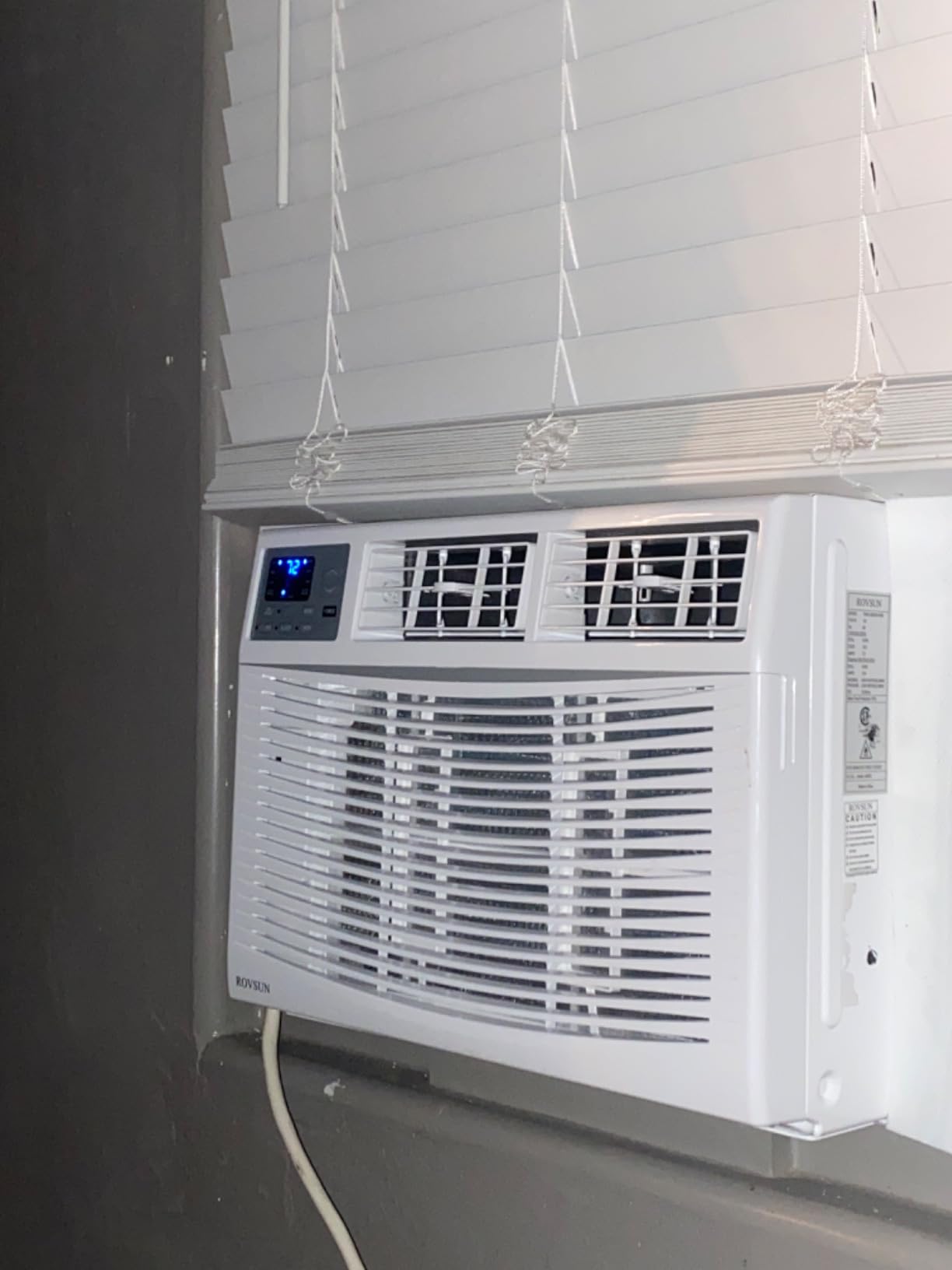
Its heating numbers are what separate it from the 8,000 BTU crowd. Rated at 11,000 BTU high and 9,000 BTU low, it carries real heat output, and at 550 square feet of coverage it is one of only two units here that can handle a genuinely large room. The 4-in-1 operation covers cooling, heating, dehumidification, and fan, with a 61F to 88F temperature range.
Owners consistently point to the included side panels and hardware as the reason assembly took less time than expected, and the LED display with remote control makes the mode and timer controls obvious without menus. The 12,000 BTU capacity also makes this the unit most people attempt to run as a partial central system replacement, which is where the electrical caveat starts to matter.
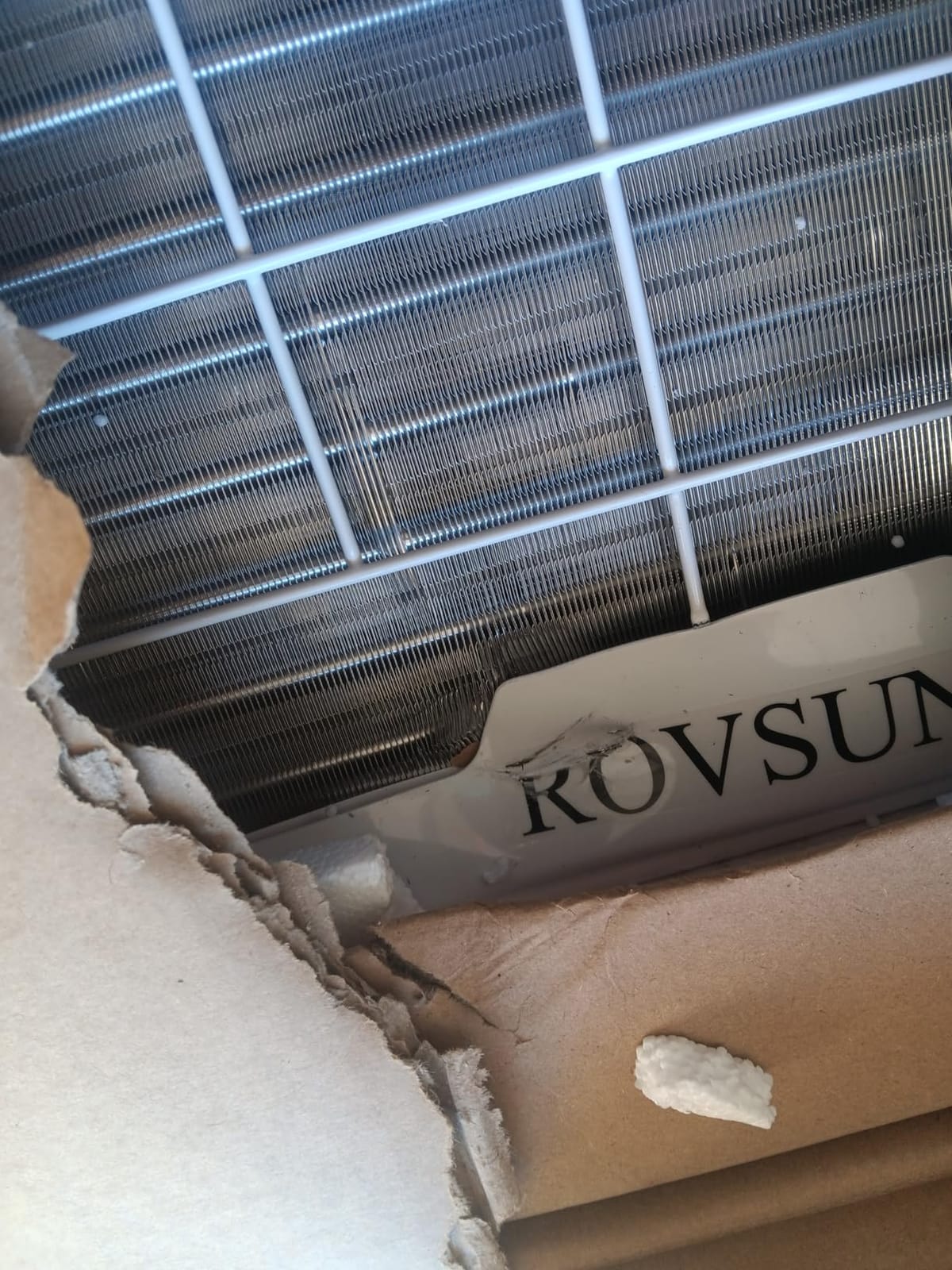
Annual energy consumption is listed at 1,308 kWh, more than triple the Midea inverter figure, and that is a direct consequence of the conventional compressor. A reciprocating compressor runs at full output or off, so the unit cycles rather than ramping, which is noisier and less efficient even though it delivers more capacity when it is running.
At 82.6 pounds this is a two-person installation in most homes. The cabinet is 19.76 inches wide and 15.16 inches tall, and it needs an opening between 23 and 34 inches wide with 14.5 to 16 inches of height, so the vertical opening is the constraint to check first.
What you should know before you pick it?
The 230V requirement is not negotiable and it is the reason this unit sits behind the Midea despite its larger capacity. There is no version of this that plugs into a household receptacle, so you need a dedicated circuit and a qualified electrician before the unit is useful. Budget for that as a separate line item, not as part of the purchase.
Second, decide whether 63 dB is acceptable in the room you have in mind. That figure is high enough that we would not put this unit in a bedroom with a sleeper at wall distance, but it is tolerable in a living room or den where the fan is not right next to anyone.
Who it suits and who it does not?
This is the pick for a 450 to 550 square foot room, a sun-facing space that gains heat in the afternoon, or a home where an electrician is already going to be running a circuit for something else. Buyers who want maximum capacity without a masonry wall unit generally find it delivers, and 564 reviews is the second-deepest base in the roundup.
Skip it if you are in a rental without the ability to add a circuit, if the room is a bedroom where noise is decisive, or if your window is under 23 inches wide. For bedrooms and quiet spaces, the 8,000 BTU units in this roundup are quieter by 5 to 11 dB, which is a difference you can hear.
We earn a commission, at no additional cost to you. CERTAIN CONTENT THAT APPEARS ON THIS SITE COMES FROM AMAZON. THIS CONTENT IS PROVIDED 'AS IS' AND IS SUBJECT TO CHANGE OR REMOVAL AT ANY TIME.
3. ROVSUN 8,000 BTU Smart Window Heat Pump – Best for Smart Homes
ROVSUN 8000 BTU Window Air Conditioner with Heat, Window AC Unit & Heater Combo with APP & Voice Smart Control, Timer Function & Easy Installation Kit, Work with Alexa/Google Assistant, 115V/60Hz
★★★★★★★★★★8000 BTU cooling,4000 BTU heat,350 sq ft,115V,app and voice control,57 dB
- Works with the phone app plus Alexa and Google Assistant
- Standard 115V power so no rewiring
- Front-access washable filter
- LED display with swing louvres and 24-hour timer
- Installation kit and side panels included
- 4000 BTU of heat is modest for cold conditions
- Non-inverter compressor cycles rather than ramps
- 3.9 average rating suggests adequate rather than strong output
Choose the ROVSUN 8,000 BTU smart unit when app control and voice control are the deciding factors, and when 350 square feet is enough room. The main trade-off is heating capacity: 4,000 BTU of supplemental heat is enough for a shoulder season, not for carrying a room through a cold snap.
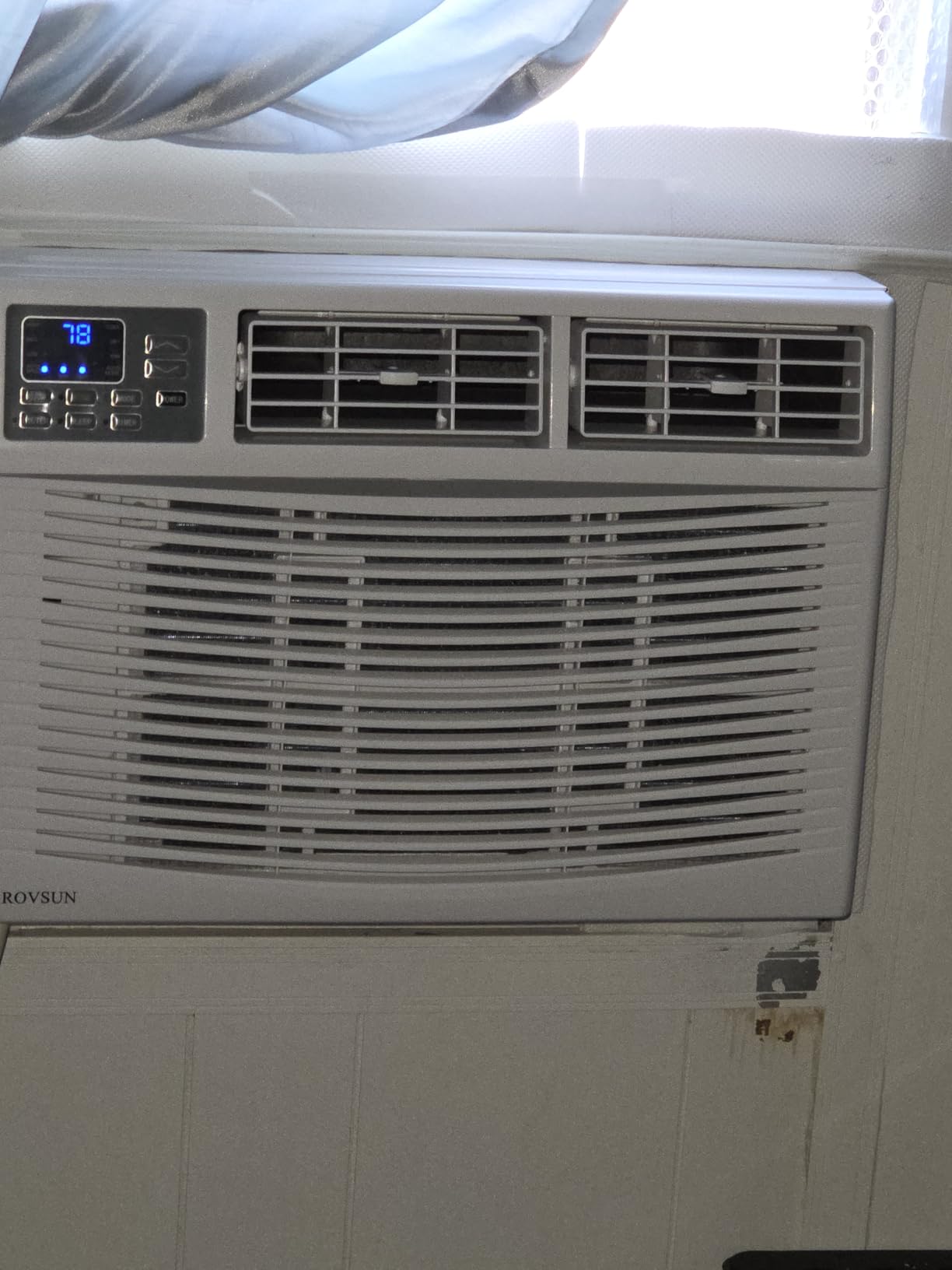
Smart control is the differentiator here. It pairs with the manufacturer app plus Alexa and Google Assistant, which means you can start heating before you arrive home or shut it down for the night without getting up, and the 5-mode, 3-speed layout with a 24-hour timer and ECO mode covers the scheduling that matters in a rental where the previous tenant may have left the blinds closed.
The 115V power supply removes the single most common reason buyers abandon a larger unit, and the front-access washable filter means you can clean it without dragging the cabinet out of the window. Annual energy consumption is listed at 550 kWh at 730 W of rated power.
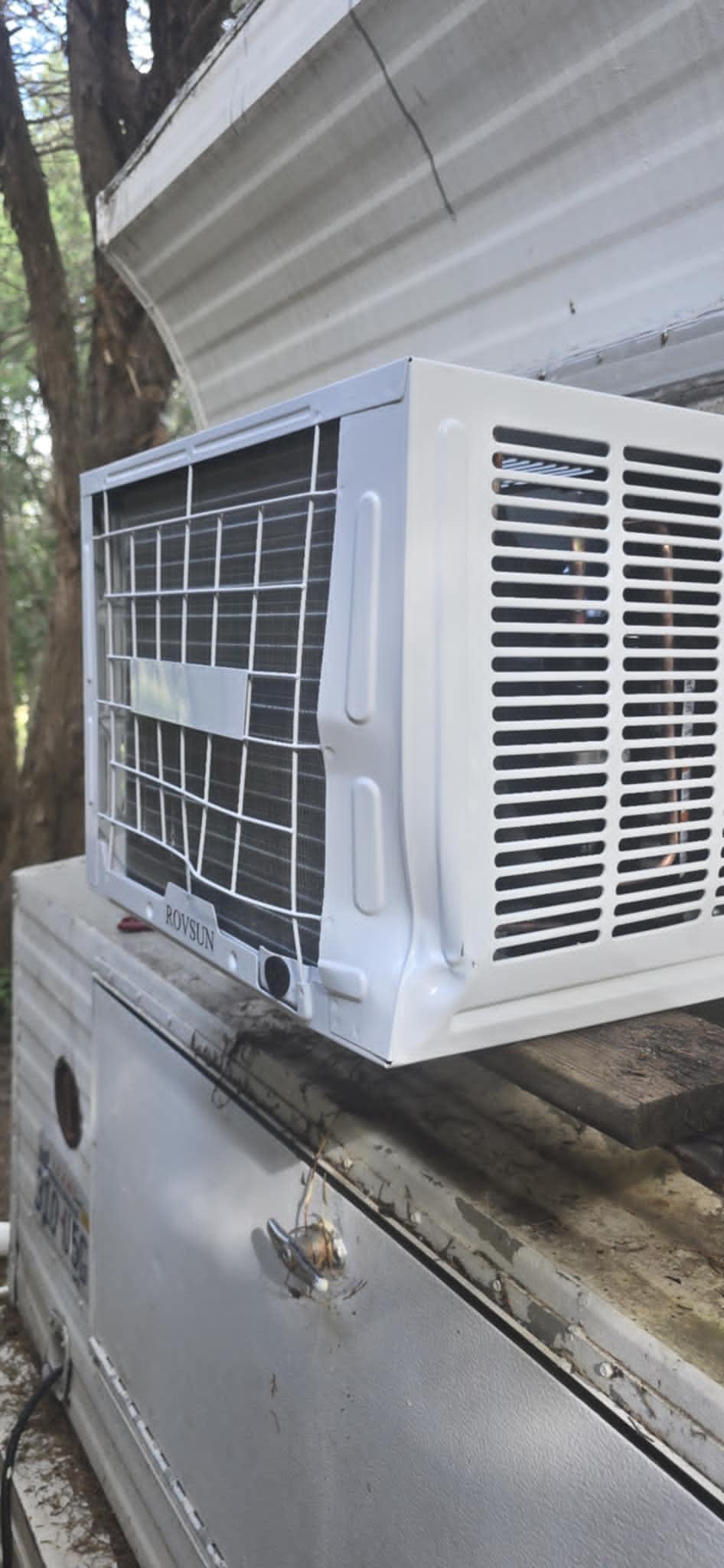
Its 57 dB noise rating is the quietest of the conventional-compressor units here, though it is still 12 dB louder than the Midea inverter in the same size class. The 10.9 SEER rating is the category baseline rather than a selling point, and the non-inverter compressor means you will hear it cycle on and off in a warm room.
The weight is not listed in the published specification, which is worth flagging because the cabinet measures 24.02 inches deep by 19.76 inches wide by 15.16 inches tall, and that is a physically large chassis. The opening requirement of 23 to 36 inches wide with 14.5 inches of minimum height is generous, but confirm the sash measurement before ordering.
What you should know before you pick it?
Smart features are not a substitute for heating capacity. At 4,000 BTU of heat, this unit is a supplemental warmth source for a room that already has some other heat source nearby, and treating it as a winter primary is the most common complaint pattern in this segment.
Second, the app ecosystem matters more than the specs here. If you are on Apple HomeKit, this unit will not talk to it, and you would want the TCL 12,000 BTU Q-Series instead, which supports HomeKit alongside Alexa and Google Assistant. If you are on Google or Amazon, this is the more straightforward setup.
Who it suits and who it does not?
This is the pick for a renter who wants phone control and has a mild winter, a home office where you want the room conditioned on a schedule, and anyone who wants heating and cooling in one 115V unit without touching wiring. The 288 reviews give a reasonable read on long-term behavior, which is more than we can say for several higher-rated units in this roundup.
It is the wrong choice for a room you need to heat all winter, for a household that has standardized on Apple HomeKit, or for a space where the 57 dB rating would be intrusive. The plain remote version of the same size from ROVSUN is quieter at 52 dB if you do not need the app.
We earn a commission, at no additional cost to you. CERTAIN CONTENT THAT APPEARS ON THIS SITE COMES FROM AMAZON. THIS CONTENT IS PROVIDED 'AS IS' AND IS SUBJECT TO CHANGE OR REMOVAL AT ANY TIME.
4. LG 7,500 BTU Window Air Conditioner with Heat – Best for Small Rooms
LG 7,600 BTU Window Air Conditioner with Heat, 115V, Cools 330 Sq.Ft. for Bedroom, Living Room, Apartment, with Remote, 2 Speeds, Slide In-Out Chassis, 24-hour Timer, White
★★★★★★★★★★7500 BTU cooling,320 sq ft,115V,50 dB,69 lb,Auto Restart
- Smallest cooling capacity and footprint in the roundup
- Quiet 50 dB operation
- Auto Restart restores settings after a power failure
- Physical footprint matches older through-the-wall units
- Only 21 reviews
- so reliability picture is thin
- Some owners report the heat function not working at all
- Not a plug-and-play install
- the casing comes off and two people are needed
Choose the LG LW8023HR when you are replacing an existing through-the-wall unit and want the smallest capacity and footprint in this roundup. The trade-off is the heating side, which owners consistently describe as producing little usable heat in cold outdoor weather.
At 7,500 BTU of cooling covering 320 square feet, this is the most compact option here, and the 50 dB rating is quiet for a conventional compressor. The dimension of 20.9 inches wide by 13.9 inches tall and 18.4 inches deep fits a lot of bedroom windows that will not take a 12,000 BTU cabinet, and the 22 to 36 inch opening width range is the widest minimum in the roundup at 22 inches.
Auto Restart is a genuinely useful feature in a guest room or a home office, since the unit restores its previous settings after a power interruption instead of needing a person to walk over and reset it. The 11.3 SEER rating edges out the 10.9 baseline of most conventional units here.
We want to be direct about the data problem with this one. Its 21 reviews is the second thinnest base in this roundup, and several owners report the heat function arriving inoperative or failing shortly after delivery, which is a higher rate of heat complaints than the conventional units from Keystone and Frigidaire in the same group.
Installation is also the least plug-and-play of the group: the outer casing has to come off, and at 69 pounds most installers use two people. The 1,260 W wattage is the highest of the 8,000 BTU class, which follows from a compressor sized for quick cooling rather than modulation.
What you should know before you pick it?
Judge this unit on its cooling and its fit, not on its heat. Owners describe the supplemental element as useful only above roughly 40F outdoor, and the reported failures on new units mean you should test the heat function on day one while the return window is open.
Second, check the wattage against your circuit. At 1,260 W this draws meaningfully more current than the other 8,000 BTU units here, which sit between 730 W and 1,220 W, and it is worth confirming the outlet and window position can carry that load.
Who it suits and who it does not?
This fits a small bedroom, a den, or a spot where a larger cabinet simply will not fit, particularly in older housing where an existing through-the-wall sleeve is already in place. If you are replacing a unit that is already there, the matching physical footprint is the main reason to choose it.
It is a poor primary heat source and a poor choice for a buyer who wants a deep review base behind their purchase. With 21 reviews, we would pair the purchase with a plan to test cooling and heating immediately, and we would not rely on it in a home with no other heat source.
We earn a commission, at no additional cost to you. CERTAIN CONTENT THAT APPEARS ON THIS SITE COMES FROM AMAZON. THIS CONTENT IS PROVIDED 'AS IS' AND IS SUBJECT TO CHANGE OR REMOVAL AT ANY TIME.
5. Keystone 8,000 BTU Inverter Window Heat Pump – Best for Heat Pump Only Heating
Keystone Energy Star 8,000 BTU Window Mounted Inverter Air Conditioner with Supplemental Heat, Quiet High Efficiency Window AC Unit with Remote for Apartment, Medium Rooms up to 350-Sq. Ft.
★★★★★★★★★★8000 BTU inverter cooling,350 sq ft,115V,14.5 SEER,41F heat cutoff,56 lb
- Inverter motor control matches output to demand instead of cycling
- Manufacturer rates it 24 percent quieter on low and 6 percent quieter on high
- Washable filter with a clean-filter alert
- Fits standard double-hung windows easily
- Heat mode will not start below 41F and the listing does not say so clearly
- No resistance backup element
- so it cannot cover very cold nights
Choose the Keystone KSTAW08INV-HC if you want a true inverter heat pump and you are willing to accept that heat mode stops at about 41F outdoor with no fallback. The trade-off is precisely that: there is no resistance backup on this unit, so when the compressor cuts out, so does your heat.
The inverter compressor is the story here. Its 14.5 SEER matches the Midea at the top of this roundup, it draws only 780 W, and the manufacturer rates it 24 percent quieter on low and 6 percent quieter on high than a conventional room air conditioner. At 56 pounds and 54 dB, it installs like a standard window unit and stays in the background.
It shares the Midea inverter platform’s numbers, including 8000 BTU cooling, 350 square feet of coverage, R-32 refrigerant, and a washable filter. This one adds a clean-filter alert that the Midea does not, and the remote with touch control.
The complaint that dominates the reviews is about disclosure rather than performance. Multiple owners report that heat mode simply will not switch on below 41F, and that they found this limit in the manual and on the unit sticker rather than on the product page, which led to returns. Buyers in mild climates are happy with it; buyers in cold climates are not.
At 3.8 stars across 41 reviews, the rating reflects that split more than any mechanical fault. Cooling performance and quietness draw consistent praise, and the lowest scores come from people who bought it for January heat rather than for summer cooling.
What you should know before you pick it?
Verify your winter design temperature against 41F before you order. This unit will not heat below that mark, and unlike the resistance units in this roundup it has no second heat source to fall back on, so a cold snap means no heat at all from this appliance.
Second, do not skip the manual. The fit requirements are a 24 inch minimum width and 14.5 inch minimum height with a 38.5 inch maximum width, and the cabinet is 19.41 inches wide, which is narrow enough for most standard double-hung sashes. The 1 year limited warranty is typical for the category.
Who it suits and who it does not?
This is the right unit for a mild-winter market, a homeowner who wants genuine inverter efficiency and a clean-filter reminder, and anyone who would rather have honest heat pump heating than a resistance element that quietly costs three times as much to run. Efficiency shoppers who care about SEER above 11 should start here.
It is the wrong unit for the northern half of the country in winter, and for anyone who treats the window unit as their only heat source. If you need a cold-climate plan, look at the 23,200 BTU Keystone in section six, whose supplemental heat is rated down to 23F, or plan a backup system alongside this one.
We earn a commission, at no additional cost to you. CERTAIN CONTENT THAT APPEARS ON THIS SITE COMES FROM AMAZON. THIS CONTENT IS PROVIDED 'AS IS' AND IS SUBJECT TO CHANGE OR REMOVAL AT ANY TIME.
6. Keystone 23,200 BTU Window Air Conditioner with Heat – Best Heavy-Duty
Keystone 23,200 BTU Window Air Conditioner with 16,000 BTU Supplemental Heat and Dehumidifier, 230V, Window AC for Large Rooms up to 1,500 Sq.Ft. with Smart Remote Control
★★★★★★★★★★23200 BTU cooling,16000 BTU heat,1500 sq ft,250V 30A circuit,121 lb,56.3 dB
- Holds 68F indoors on the hottest days with 23200 BTU
- Supplemental heat rated from 23F to 76F outdoor
- Quiet despite the capacity at 56.3 dB
- Smart remote reads room temperature and re-sends every 3 minutes
- Sealed system carries 4 extra years of warranty
- 121 pounds and needs a 250V 30A circuit
- Reported listed width can be inaccurate
- Product photos show the wrong outlet type
Choose the Keystone KSTHW25B when you are replacing central air for a very large open space and you have the electrical capacity for it. The trade-off is the heaviest installation in this roundup and the most serious electrical requirement of any unit here.
This is the only unit in the lineup rated to cover 1,500 square feet, and it is the only one whose supplemental heat is rated down to 23F outdoor rather than stopping near 40F. That combination is why we include it despite the 3.8 rating: for a large open-plan room in a colder climate, nothing else here does what it does.
Owners running it as a central replacement report it holding 68F indoors through the hottest days, which is the kind of result that justifies the capacity. At 56.3 dB it is quieter than the 12,000 BTU ROVSUN despite carrying nearly twice the cooling load, and the smart remote reads room temperature and re-sends its signal every 3 minutes, so it tracks the actual room rather than a guessed setpoint.
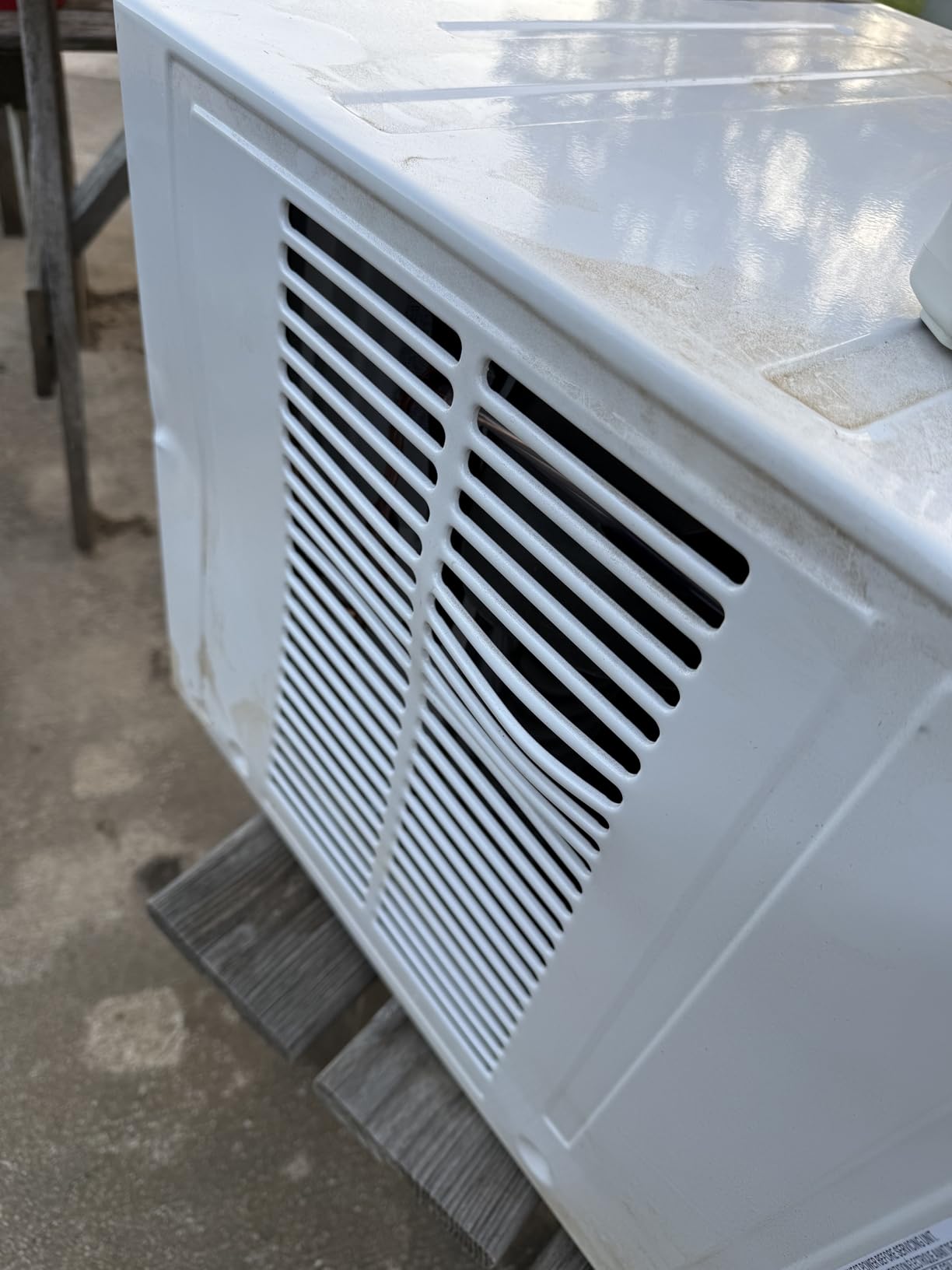
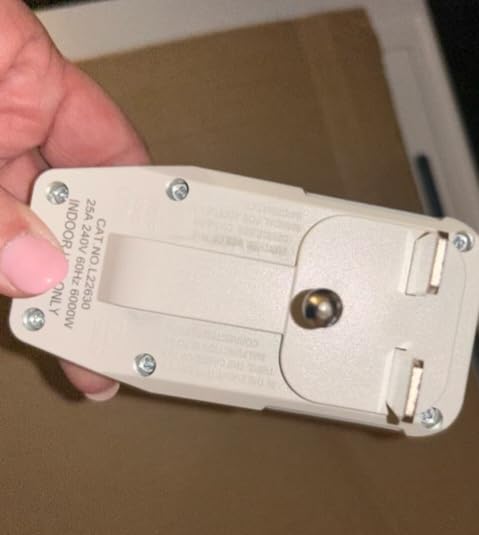
The practical problems are installation and electrical, not performance. At 121 pounds with a cabinet of 23.62 inches wide and 17.91 inches tall, it needs a helper, and it requires a dedicated 250V 30A circuit. The stated opening requirement is a 31 inch minimum width and 19.5 inch minimum height with a 42 inch maximum width, which is a large window and eliminates most bedroom sashes.
Two spec-sheet complaints appear repeatedly and are worth taking seriously before you commit. Owners report the listed unit width being inaccurate, which can force you to reframe the window opening, and the product images depict the wrong outlet type, which misleads buyers about the electrical requirement. Measure twice, and confirm the circuit with an electrician.
The warranty is the best in the roundup, at 1 year parts and labor plus 4 additional years on the sealed system. The 4,800 W wattage figure is also the highest here by a wide margin, and the 9.4 SEER rating is the lowest, both consequences of running a conventional compressor at a large size.
What you should know before you pick it?
The 250V 30A dedicated circuit is the dealbreaker or the dealmaker. If your electrical panel has the space and the window is large enough, this is a capable machine. If either condition fails, this is the wrong product regardless of how well it performs, and the outlet image on the listing is not something to trust on its own.
Second, the 9.4 SEER rating means this is expensive to run per unit of cooling. At 1,500 square feet of coverage that is a meaningful operating cost, and it is a strong argument for a properly sized mini-split instead if the electrical and structural work is happening anyway. Our guide to heat pump equipment covers the efficiency tradeoffs in a different capacity class.
Who it suits and who it does not?
This suits a large open-plan living space, a converted garage, or a shop-like room where you want one appliance to do the work of a small central system. Buyers in colder climates get the widest operating range of any unit here, with heat rated from 23F to 76F outdoor.
It does not suit a bedroom, a small apartment, or any home without a 250V circuit and a window at least 31 inches wide. If your space is under 700 square feet, this unit is oversized and you would be paying for capacity and electrical work you do not need.
We earn a commission, at no additional cost to you. CERTAIN CONTENT THAT APPEARS ON THIS SITE COMES FROM AMAZON. THIS CONTENT IS PROVIDED 'AS IS' AND IS SUBJECT TO CHANGE OR REMOVAL AT ANY TIME.
7. ROVSUN 8,000 BTU Window Heat Pump – Best Value
ROVSUN 8000 BTU Air Conditioner Window Unit with Heat, 4-in-1 Window AC Unit Cooler, Heater, Dehumidifier & Fan with Timer, Remote Control & Installation Kit for Rooms up to 350 Sq. Ft, 115V/60Hz
★★★★★★★★★★8000 BTU cooling,4000 BTU heat,350 sq ft,115V,52 dB,80.2 lb
- Best balance of rating and review depth in the roundup
- Quietest of the conventional 8000 BTU units at 52 dB
- Side panels and mounting hardware included for faster assembly
- Standard 115V so no circuit work
- 4000 BTU of heat is supplement only and will not carry a cold room
- Over 80 pounds
- so two people are needed to install
- Non-inverter compressor cycles on and off
Choose the ROVSUN 8,000 BTU plain-remote unit when you want the strongest combination of rating and review depth in this category without smart features. The trade-off is heating capacity at 4,000 BTU and an 80-pound cabinet that needs a second person to lift.
What makes this the value pick is the evidence behind it. A 4.0 average across 564 reviews is the best-supported rating in the entire roundup, and there is a reason we rank it here rather than behind the Midea: 792 reviews at 4.0 with a genuine inverter heat pump is the stronger product, but 564 reviews at 4.0 with a cheaper conventional chassis is the stronger value.
Owners highlight quick cooling of small rooms, straightforward assembly with the included side panels, and the LED display with remote covering fan speed, 24-hour timer, ECO, auto and fan modes. The 52 dB rating is 5 dB quieter than the smart version of the same chassis, which is the main functional difference between them.
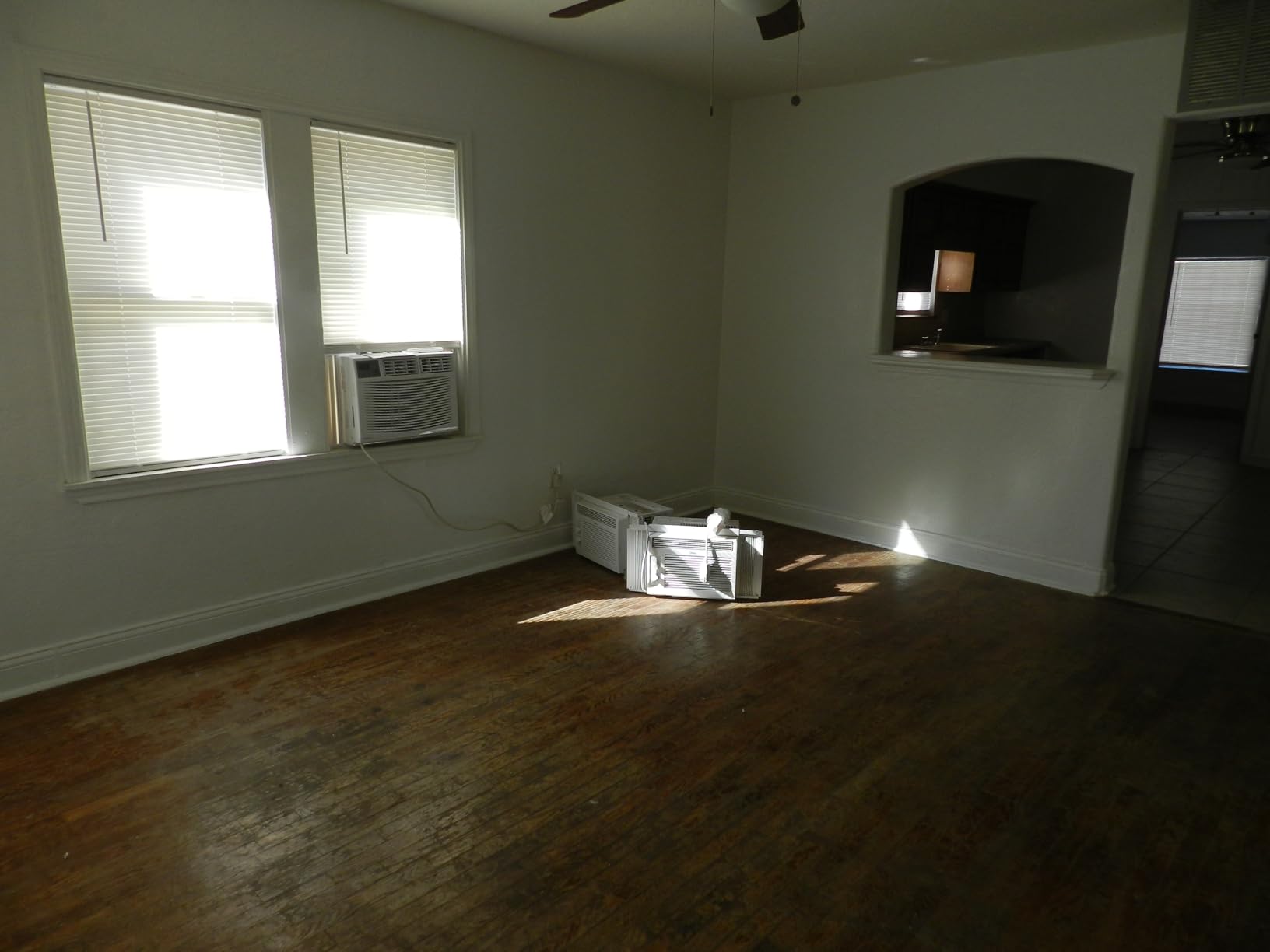
The 10.9 SEER rating is the category baseline, and the non-inverter scroll compressor means you will hear it start and stop. Annual energy consumption is listed at 876 kWh against the inverter Midea’s 407 kWh, which is the efficiency gap in one comparison.
Heating is framed consistently by owners as supplemental rather than primary, and 4,000 BTU will not hold a room through a cold night. The installation note matters more here than for most units: at 80.2 pounds, this is a two-person lift even though the cabinet dimensions are identical to the lighter smart version.
What you should know before you pick it?
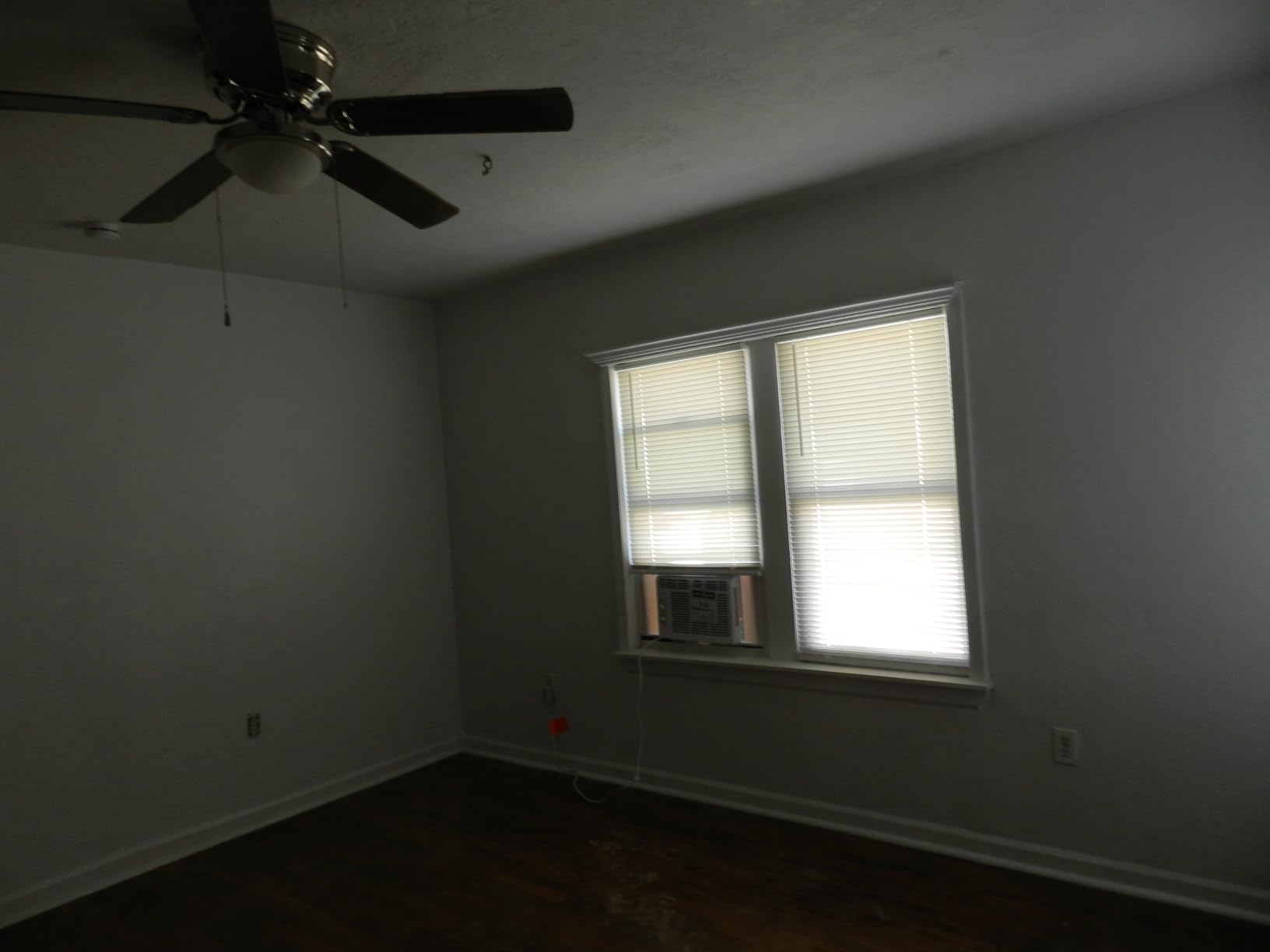
Its window requirement is the tightest of the 8,000 BTU group here: 26 to 36 inches wide with 16 inches of height. That 26-inch minimum is the number that eliminates the most bedroom windows in older housing, so measure the sash opening before anything else.
Second, decide whether the app is worth losing 5 dB for. If you do not need phone control, this is the better unit of the two ROVSUN 8,000 BTU options in this roundup. If you do need it, the section three model is the one you want despite the slightly higher noise.
Who it suits and who it does not?
This is the right choice for a first-time window heat pump buyer, a household that wants a well-reviewed appliance with nothing exotic about it, and anyone replacing a unit in a standard 26-inch or wider double-hung window. The depth of the review base means the reported behavior is unlikely to surprise you.
It is the wrong choice for a primary winter heat source, for a buyer who needs smart home integration, or for a window narrower than 26 inches. If your climate is genuinely cold, pair it with a plan for a second heat source, because 4,000 BTU of supplemental heat will not do that job alone.
We earn a commission, at no additional cost to you. CERTAIN CONTENT THAT APPEARS ON THIS SITE COMES FROM AMAZON. THIS CONTENT IS PROVIDED 'AS IS' AND IS SUBJECT TO CHANGE OR REMOVAL AT ANY TIME.
8. Keystone 8,000 BTU Window Air Conditioner with 3,500 BTU Heat – Most Versatile
Keystone 8,000 BTU Window Air Conditioner with 3,500 BTU Supplemental Heating, 115V, Window AC Unit with Supplemental Heat for Bedroom, Living Room, Small-Medium Rooms up to 350 Sq.Ft.
★★★★★★★★★★8000 BTU cooling,3500 BTU heat,350 sq ft,115V,55 dB,60.6 lb
- I Sense smart remote reads room temperature and re-sends every 3 minutes
- Energy Saver and Sleep modes limit running cost
- 4-way swing with dehumidification and fan in one unit
- Sealed system carries 4 extra years of warranty
- Window installation kit included
- 3500 BTU of heat is the smallest output in the roundup
- Non-inverter compressor cycles rather than modulates
- Lowest average rating in this lineup at 3.7 stars
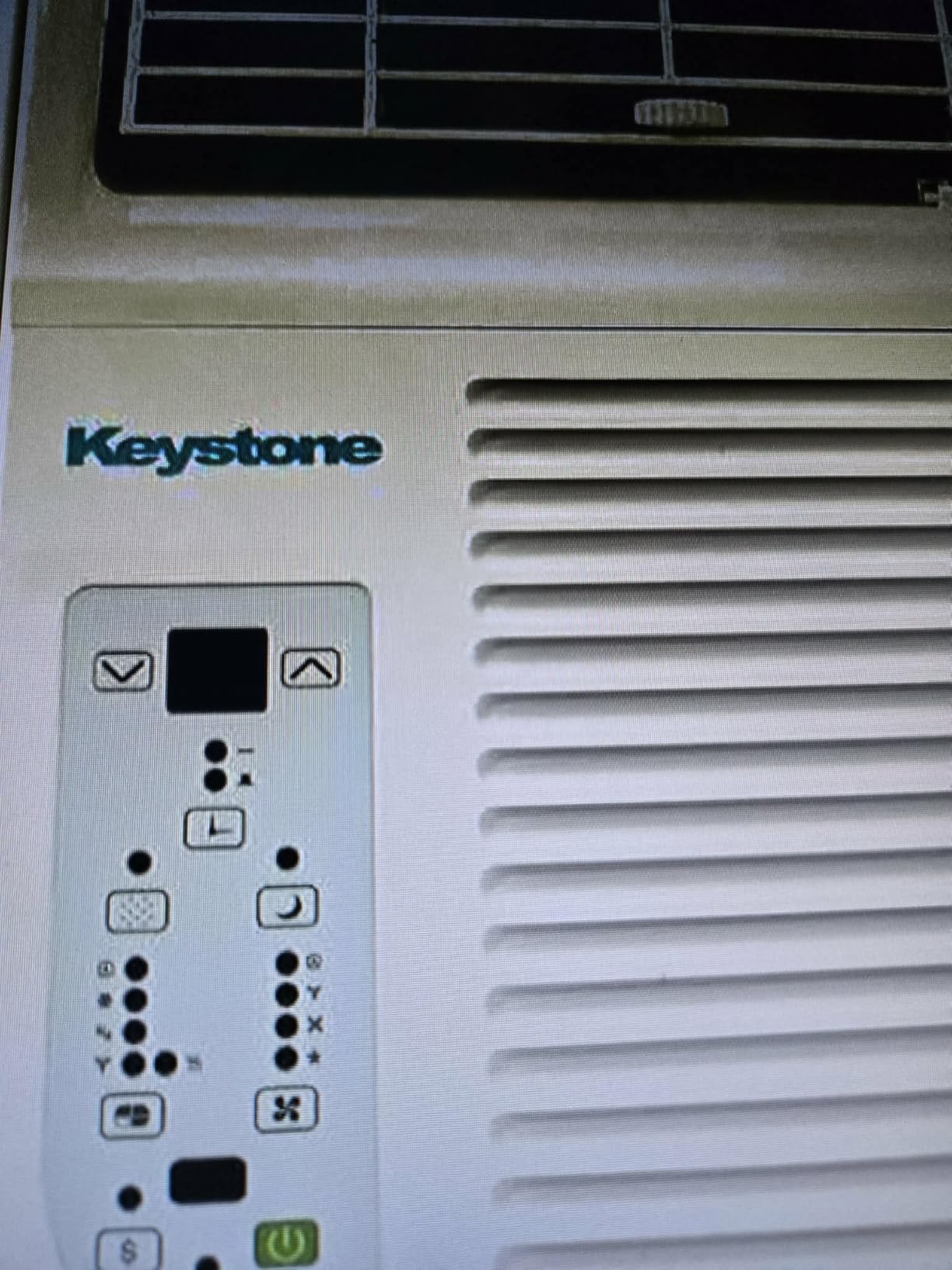
Choose the Keystone KSTHW08B when you need a straightforward 115V unit for a 350 square foot room and the heat function is a nice-to-have rather than a requirement. The trade-off is that 3,500 BTU of supplemental heat is the smallest heating output in this roundup, and it carries the lowest rating at 3.7 stars.
The features are competently specified for the money. The I Sense remote reads the room temperature rather than the unit’s own sensor and re-sends its signal every 3 minutes, which is a real accuracy improvement over a fixed setpoint. Energy Saver and Sleep modes, 4-way swing, dehumidification and fan circulation are all present, and the washable filter has a reminder light.
The warranty is a genuine differentiator at 1 year parts and labor plus 4 additional years on the sealed system, which is better than every non-inverter competitor in this roundup. At 60.6 pounds it is also one of the lighter cabinets, and the 10.9 SEER rating is the category baseline.
The 3.7 rating across 46 reviews reflects a unit that works as described without exceeding expectations. The heat output is rated for outdoor temperatures between 23F and 76F but at only 3,500 BTU, so it adds a degree or two of comfort in a mild room rather than carrying the load on its own.
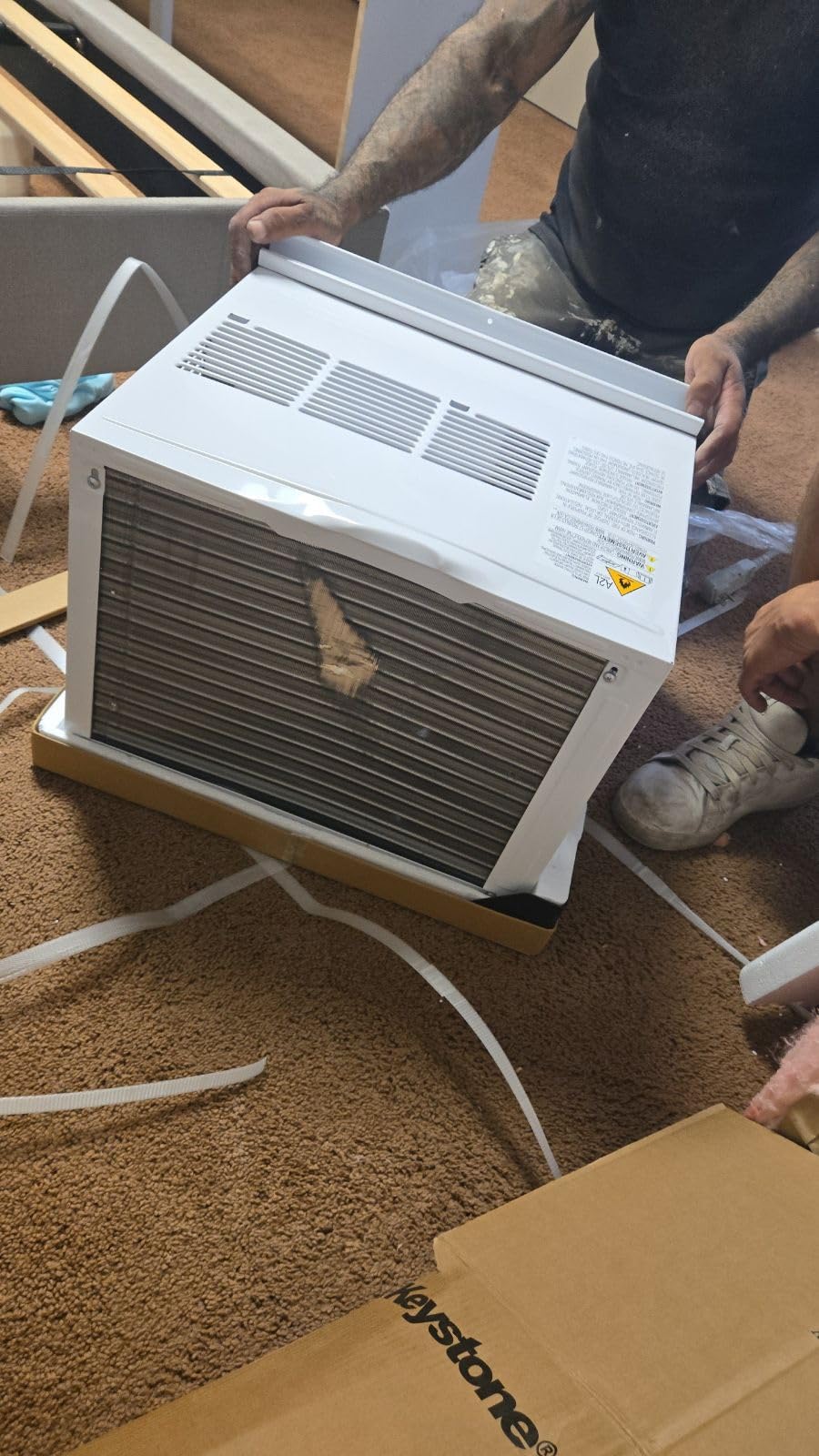
Fit is the practical concern. The minimum opening is 26.8 inches wide and 16.5 inches high with a 36 inch maximum width, which makes this the second most demanding 8,000 BTU unit in the roundup for width. The cabinet is 21.46 inches wide by 14.65 inches tall, so the height requirement is the harder number to clear.
What you should know before you pick it?
Confirm your window before you fall for the feature list. At 26.8 inches minimum width and 16.5 inches minimum height, this unit will not go into many older bedroom windows, and the height requirement is the most restrictive of the 8,000 BTU group here.
Second, set your expectation on heat at 3,500 BTU. That is a supplementary comfort measure, not a heating system, and owners who expected more are the source of most of the low ratings. If you can accept that framing, the rest of the unit is solid.
Who it suits and who it does not?
This is the pick for a small bedroom or apartment room in a mild climate where you mostly need summer cooling and a little extra warmth on cool evenings. The 5 year sealed-system coverage and the I Sense remote are the two features that justify choosing it over a similarly priced generic unit.
It is the wrong choice for a primary heat source, for a large or sun-exposed room, or for a window under 26.8 inches. Buyers who want better heating in the same size class should step up to the 8,000 BTU ROVSUN with 4,000 BTU of heat, or to the inverter Keystone if their winter stays above 41F.
We earn a commission, at no additional cost to you. CERTAIN CONTENT THAT APPEARS ON THIS SITE COMES FROM AMAZON. THIS CONTENT IS PROVIDED 'AS IS' AND IS SUBJECT TO CHANGE OR REMOVAL AT ANY TIME.
9. Frigidaire 8,000 BTU Window Air Conditioner with Supplemental Heat – Best for Small Spaces
Frigidaire 8,000 BTU Window Air Conditioner with Supplemental Heat, Cools & Heats Up to 350 Sq. Ft., Remote Control, Quiet Operation, Eco Mode, 3 Fan Speeds, White
★★★★★★★★★★8000 BTU cooling and heat,350 sq ft,115V,53 dBA,6-way airflow,Auto Restart
- Quiet at 53 dBA and easy to fit in a standard window
- Eco Mode
- Sleep Mode and Dry Mode
- 6-way directional airflow with 3 fan speeds
- Auto Restart restores settings after power returns
- One owner heated a small insulated space through sub-30F nights
- Several owners report the heating element not working
- including units arriving inoperative
- Physically large and may barely fit a bedroom window
Choose the Frigidaire FHWH084WB1 for a small space where airflow direction matters, such as a room with an unusual window position or a spot where the cold air pools. The trade-off is that owner reports on the heating function are sharply divided, including some units arriving with heat inoperative.
The 6-way directional airflow with 3 fan speeds is the feature that distinguishes this unit, since most competing chassis offer 4-way swing. Combined with Eco Mode, Sleep Mode and Dry Mode, it gives unusually fine control over where the air goes and how hard the unit works. Auto Restart restores your previous settings after a power interruption, which matters in a guest room nobody thinks to check on.
At 53 dBA and 61 pounds this is one of the more manageable conventional units to install and live with, and the 10.9 SEER rating and 550 kWh annual consumption are typical for the class. The washable pre-filter with clean-filter alerts through the remote is a sensible touch.
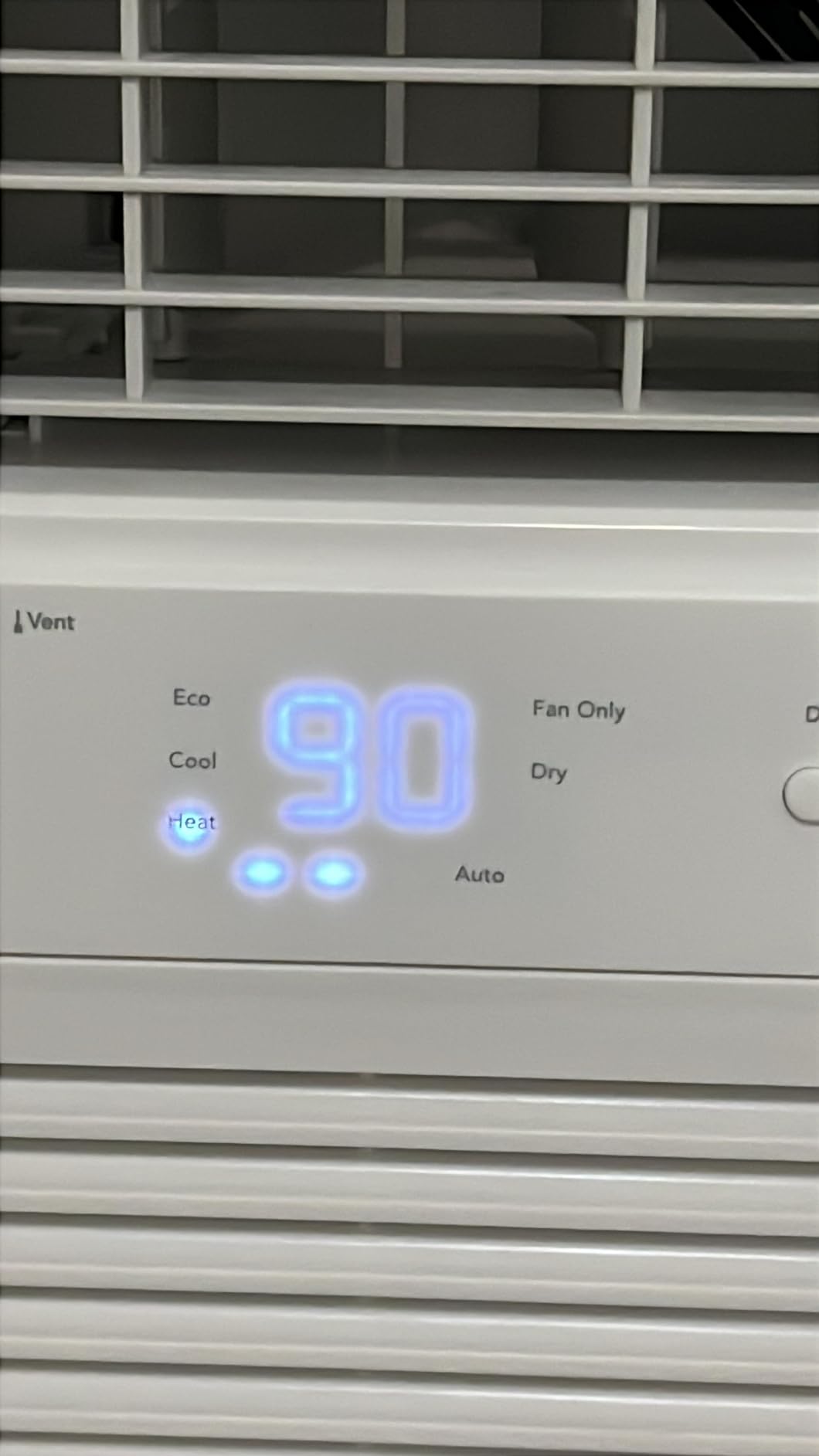
On heating, the reports genuinely conflict. Several owners describe heating a small insulated 200 square foot space through sub-30F nights, which is a real result. Others received units whose heat mode did not work at all, and that second group is large enough that you should test the function immediately.
Size is the other recurring theme. At 22 inches deep by 19 inches wide by 14.5 inches tall, multiple buyers note it is larger than expected and only just clears a standard bedroom window, so measure before ordering.
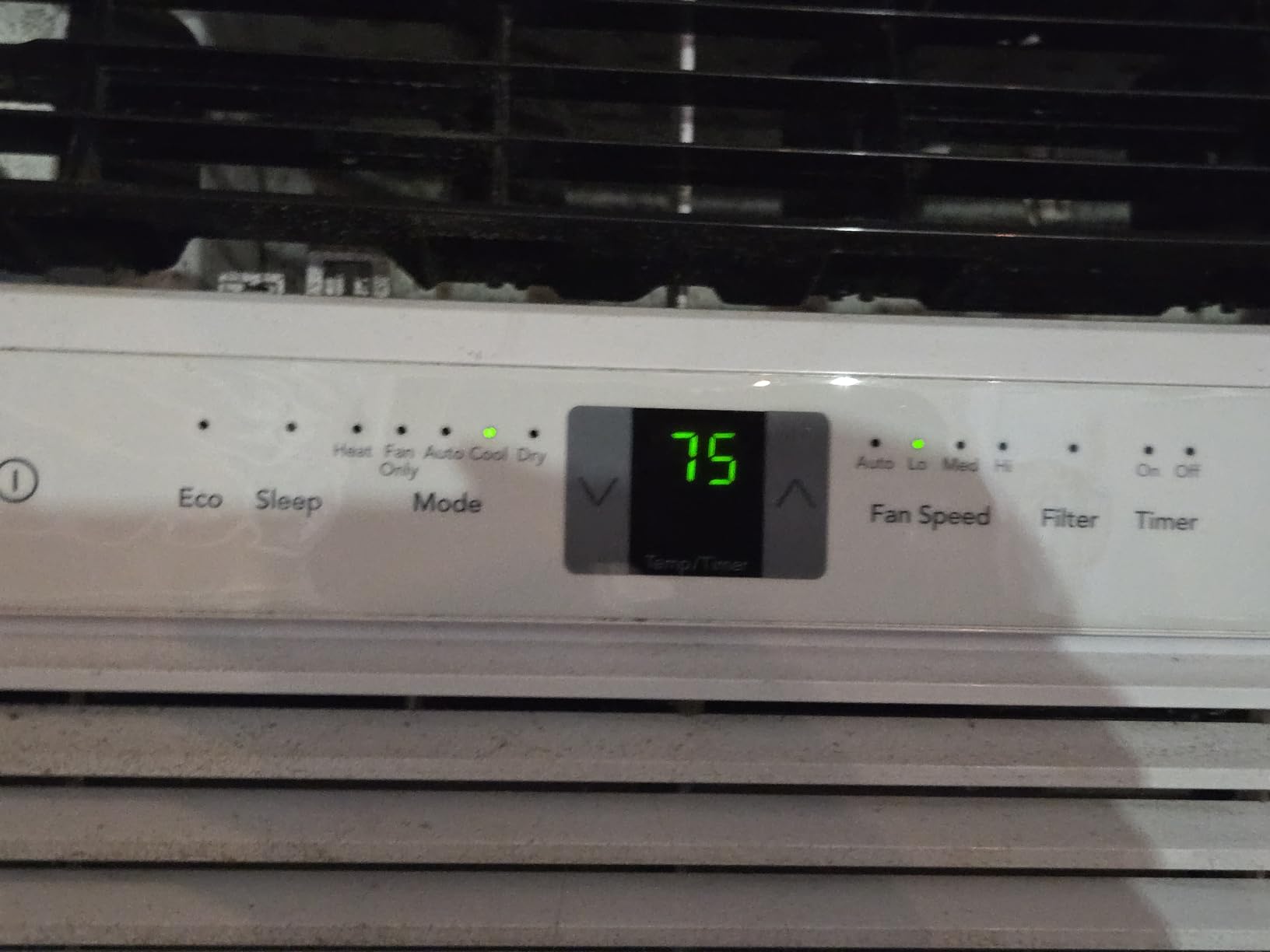
One more practical point: the 3.7 rating across 40 reviews reflects the heat controversy more than any cooling fault, and the cooling side draws few complaints. If you buy it, the first thing to do is run the heat function on arrival while you can still return it.
What you should know before you pick it?
Test the heat element on day one. This is the single most actionable piece of advice in this review, and it applies because the failure reports are specific enough to be worth guarding against rather than hoping for a good draw.
Second, measure the window before ordering, because 14.5 inches of height is among the taller requirements in the 8,000 BTU group. If your sash opening is close to that, verify the full cabinet depth of 22 inches clears the sill and the exterior as well.
Who it suits and who it does not?
This fits a small bedroom, a home office, or a room with a window shape that makes directed airflow useful, and it works well as a cooling-first appliance. Auto Restart makes it a good choice for a guest room or a rental unit that sits empty between tenants.
It is a risky choice for anyone who depends on the heat function, and a poor one for a tight window. If heating reliability is your priority, a true inverter heat pump with a documented operating floor is a safer purchase than a resistance element with a 40-review track record.
We earn a commission, at no additional cost to you. CERTAIN CONTENT THAT APPEARS ON THIS SITE COMES FROM AMAZON. THIS CONTENT IS PROVIDED 'AS IS' AND IS SUBJECT TO CHANGE OR REMOVAL AT ANY TIME.
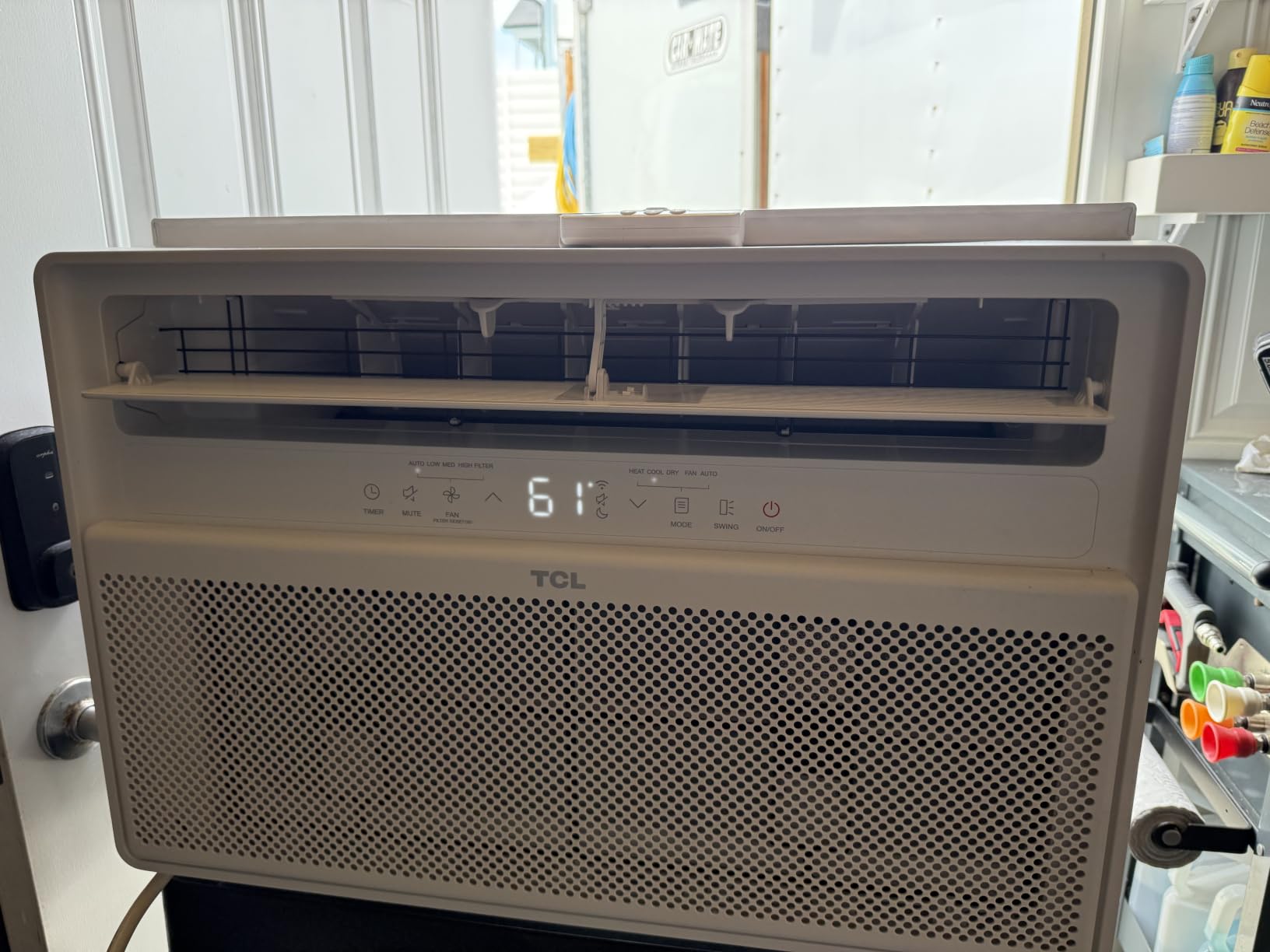
10. TCL 12,000 BTU Q-Series Smart Inverter Window Heat Pump – Best for Apple HomeKit Control
TCL 12000 BTU Q-Series Smart Inverter Window AC with Heat Pump
★★★★★★★★★★12000 BTU true heat pump,550 sq ft,48 dB,115V,SEER 14,94.7 lb
- Only unit here with Apple HomeKit support
- True heat pump heating with up to 67 percent heating energy savings
- Quietest rating in the roundup at 48 dB
- 115V plug-in installation avoids 230V work
- Covers 550 sq ft
- larger than most 8000 BTU window units
- Only 15 reviews
- so long-term reliability is not established
- Heaviest unit in the roundup at 94.7 pounds
- 26.38 inch wide chassis needs a 29.5 inch window opening
Choose the TCL H12W4KWH if your home is on Apple HomeKit, or if you want a true 12,000 BTU heat pump on a standard 115V outlet with the lowest noise figure we found. The trade-off is a 94.7-pound cabinet, a 29.5-inch minimum window width, and a review base too thin to call anything long-term.
This is the only unit in the roundup that supports Apple HomeKit, and it does so alongside the TCL Home app, Alexa, Google Assistant, TCL Google TV and the included remote. For a household that has standardized on Apple, that alone moves it to the top of a short list.
The heating is genuine heat pump heating rather than a resistance element, with the manufacturer claiming up to 67 percent heating energy savings and up to 32 percent cooling savings. At 14 SEER and 48 dB it is the quietest unit here, and it covers 550 square feet from a 115V three-prong outlet, which no other 12,000 BTU unit in this roundup manages.
The 4.4 rating is the highest in the roundup, but it comes from 15 reviews. We deliberately did not award it an overall or top rated badge for that reason, because a small sample with a clean distribution tells you the unit is performing as designed right now, not that it will still be performing in year eight. Compare that to the 792-review Midea, where the reported behavior is well established.
Fit is the practical constraint. At 26.38 inches wide by 16.93 inches tall and 25.4 inches deep, the cabinet needs a window opening between 29.5 and 41 inches wide with 18.5 inches of height, which is the widest and tallest requirement of any 12,000 BTU unit here. At 94.7 pounds it is the heaviest unit in the roundup, and most installations need two people.
Its 1,190 W rated wattage is unremarkable for the capacity, and the R-32 refrigerant matches the rest of the field. The filter type is not listed in the published specification, which is a small gap to be aware of if indoor air quality matters to you.
What you should know before you pick it?
The window requirement is the hard gate. A 29.5-inch minimum width and 18.5-inch minimum height rules out a large share of older homes, and if your sash does not clear those numbers no amount of good specification will save the purchase. Measure first, always.
Second, plan the lift. At 94.7 pounds, the added weight of a heat pump chassis over a cooling-only unit is the difference between a one-person job and a two-person job with a support bracket, and the cabinet is deep enough that you need to check the exterior wall clearance as well as the interior sill.
Who it suits and who it does not?
This suits an Apple HomeKit household, a large room where you want 550 square feet of coverage without a 230V circuit, and anyone who prioritizes the lowest possible noise over the deepest review history. The efficiency claims and the inverter platform are the reasons to look here first for a 12,000 BTU unit.
It is the wrong choice for a small window, for a single person planning to install it alone, or for a buyer who needs a long-proven reliability record before committing to an appliance that heats their home. If either of those last two apply, the 8,000 BTU Midea inverter is the safer purchase with a comparable platform.
We earn a commission, at no additional cost to you. CERTAIN CONTENT THAT APPEARS ON THIS SITE COMES FROM AMAZON. THIS CONTENT IS PROVIDED 'AS IS' AND IS SUBJECT TO CHANGE OR REMOVAL AT ANY TIME.
How to Size a Window Heat Pump for Your Room?
Size a window heat pump by square footage first, then adjust. The baseline for a normally insulated room with normal sun exposure is about 20 BTU per square foot, which puts a 350 square foot bedroom in the 8,000 BTU class and a 550 square foot living space in the 12,000 BTU class. Those are exactly the two coverage figures the manufacturers use, so the sizing math and the marketing language are already aligned, and our heat pump buying guide walks through the same calculation for whole-home capacity.
Then adjust in three directions. Sun exposure pushes you up: a west-facing room that gains afternoon heat needs more capacity than the square footage alone suggests, and a north-facing room can often go slightly down. Internal heat sources push you up, notably a kitchen, a sunroom, or a room with several computers and a printer running all day. Insulation and ceiling height push you up in older housing with single-pane windows and 9-foot ceilings.
A 12,000 BTU unit in a 200 square foot room will short-cycle constantly, and short cycling is what makes compressors noisy and short-lived. Undersizing is the more common mistake here because buyers hope a bigger number means better, when it usually means a noisier and less efficient unit that cycles on and off.
One note on heat: the same BTU number does not carry across modes. A resistance element rated at 4,000 BTU of heat draws 4,000 watts of electricity to deliver it, while an inverter heat pump rated at 4,000 BTU moves several times that much heat per watt. When you compare two units with different heating types, the heating capacity numbers are not comparable at all.
Window Fit Checklist: Will It Actually Go In Your Window?
Check four things before you order, in this order, because each one can end the conversation. First, measure the window opening width at the widest point of the sash, not the frame. Second, measure the vertical opening height with the sash fully raised, since that is the number manufacturers mean by minimum opening height. Third, confirm you have a double-hung or single-hung window, because most of these chassis are designed to sit in a raised lower sash with the unit locked to the frame. Fourth, check the weight against your own lifting capacity and the window’s structural support.
The numbers in this roundup span a genuinely wide range. Minimum opening widths run from 22 inches on the LG to 31 inches on the 23,200 BTU Keystone, and minimum heights run from 13.9 inches of cabinet height up to 19.5 inches of required opening. A 26-inch-wide double-hung window is the practical floor for the mainstream 8,000 BTU group, and anything narrower should be checked against a specific model rather than assumed.
Cabinet height is not installation height, and that distinction catches people out. The Midea cabinet is 13.9 inches tall and needs 14.5 inches of vertical opening, and the Keystone budget unit is 14.65 inches tall and needs 16.5 inches of opening. Where the gap is more than an inch, expect to trim or work around the sash.
Weight is the fourth gate and the one people underestimate. Units here range from 56 pounds to 121 pounds, and the Midea and 8,000 BTU Keystone inverter at 56 pounds are genuinely one-person installs. Anything above roughly 80 pounds should be a two-person job with a support bracket, and a support bracket is not optional for units that extend beyond the sill by more than a few inches.
Finally, remember that a window unit changes the security and air sealing of the opening. The sash lock has to remain usable, and in a rental you may need written approval from a landlord before drilling a bracket or modifying the frame.
115V vs 230V: When You Need an Electrician?
Most buyers in this category should stay on 115V, and six of the ten units here are 115V. The 8,000 BTU Midea, the ROVSUN smart 8,000 BTU, the plain ROVSUN 8,000 BTU, the LG 7,500 BTU, and the 8,000 BTU Keystone inverter all plug into a standard household outlet and need no electrical work. The Frigidaire and the 8,000 BTU Keystone with 3,500 BTU of heat are also 115V.
Three units need 208/230V, and one needs more. The ROVSUN 12,000 BTU runs on 230V at 1,090 W, which means a dedicated circuit rather than a receptacle. The 23,200 BTU Keystone is the outlier, requiring a dedicated 250V 30A circuit and drawing 4,800 W, which is a different category of electrical project entirely.
The interesting case is the TCL 12,000 BTU Q-Series, which delivers 12,000 BTU of true heat pump capacity from a standard 115V three-prong outlet. That is the single most useful engineering result in this roundup, because it means 550 square feet of conditioned space without an electrician. Most competing 12,000 BTU units need 230V, which is where the cost of a large window unit usually comes from.
Our rule of thumb is straightforward. If the unit needs 230V or higher, the installation cost is likely to exceed the cost of the appliance, and the project needs a qualified electrician. If it runs on 115V, you can install it yourself in an afternoon with the included hardware, provided you can safely lift it.
Window Heat Pump vs Portable Heat Pump vs Mini-Split
Choose a window heat pump when you are conditioning one specific room and want the lowest cost per conditioned room. Choose a portable unit when the window is unavailable, blocked, or the wrong shape, and accept that you will be paying for it in efficiency. Choose a mini-split when you are conditioning a whole floor or a finished space where ducting is impossible and capacity matters more than upfront simplicity.
The efficiency ranking is not close, and it follows directly from the airflow architecture. A window unit exhausts its hot air straight out the building, so there is no negative pressure inside the room. A portable unit pulls room air through a poorly insulated exhaust hose and pushes it back into the same room, so the net effect is that it heats the air it is trying to cool, and the hose itself leaks conditioned air around the frame.
That is why window units tend to beat portable units of equal or even higher BTU in real testing, and why a 12,000 BTU portable can lose to an 8,000 BTU window unit. The same physics applies to heating: a portable heat pump has to move air through that hose to deliver warmth, so a meaningful share of its capacity is spent on the air that never reaches you.
A mini-split is the most efficient of the three and the most expensive to install, since it needs line set routing, a refrigerant line, and in most cases a permit and professional commissioning. Its advantage is that it can be sized for the whole space and run at variable speed indefinitely, which is why our heat pump buying guide recommends it for primary spaces.
The decision tree is short. One room, existing window, no central air: window heat pump. No usable window or blocked opening: portable unit. Whole floor, finished basement, or a long-term retrofit: mini-split. In a rental where you cannot modify the opening and the room is temporary, the portable unit is the pragmatic answer despite the efficiency penalty.
Installing and Maintaining a Window Heat Pump
Installation is genuinely a do-it-yourself job for 115V units under about 80 pounds, and the manufacturers generally include the side panels, mounting hardware, and installation kit. The sequence is unbox and check for shipping damage, confirm the unit fits the opening before removing anything, set the chassis on the sill, extend and secure the side panels, attach the mounting bracket if required, level the unit, seal any gaps, and only then plug it in.
Two rules matter more than the rest. Level the unit within a few degrees, because a tilted cabinet drains condensate into the room instead of out the back. And never leave the unit running unattended in heat mode below its rated floor temperature, because without a freeze protection strategy the exposed piping can be damaged in a cold snap.
For units above 80 pounds, plan a two-person install with a support bracket rated for the weight. The three heaviest products in this roundup are the 23,200 BTU Keystone at 121 pounds, the TCL 12,000 BTU at 94.7 pounds, and the ROVSUN 8,000 BTU at 80.2 pounds, and each of those is a two-person job with a bracket in a typical window.
Maintenance is minimal. Clean the washable filter monthly during cooling season, check the condensate drain for blockages, and keep the intake grille clear of curtains and bedding. Condensate handling is the item most people get wrong: most window units need a drain hose in dry mode, and leaving the unit running in dehumidify without a drain can fill the base pan and stop the unit.
At season’s end, dry the unit before storage, coil the cord loosely, and keep it indoors rather than in a damp shed, because the steel chassis will corrode. If you keep the unit installed through winter, check the manufacturer’s freeze protection guidance and the temperature at which heat mode will resume, because several units here need to be brought fully indoors below a specific threshold.
What This Roundup Cannot Tell You?
This comparison is built from manufacturer specifications and aggregated owner reports, not from matched-room lab testing. We did not heat identical rooms to identical temperatures and measure the results, and no one in this category publishes that kind of heating data, which is why every ranking in this category is at least partly a spec-sheet exercise. We think stating that plainly is more useful to you than implying a level of measurement that does not exist.
Second, review counts in this category are genuinely thin, ranging from 15 to 792. That is unusual for appliances and it means star ratings here carry less information than they do in a mature category. We weighted rating and review depth together rather than rating alone, and we declined to give the highest-rated unit an overall badge for that reason.
Third, we cannot tell you how a given unit performs in your specific window, wall, and climate. The lowest operating temperature figures are the ones manufacturers publish, and real performance at the cutoff depends on sun exposure, insulation, and how many people are in the room. Treat the cutoff as a boundary to avoid rather than a temperature to test.
Fourth, installation costs are not included in anything we have written, because they vary entirely by panel capacity, window condition, and local labor. If a unit in this roundup needs 230V or higher, get a quote from a qualified electrician before you buy.
Frequently Asked Questions
Are window heat pumps worth it?
For a single room, usually yes. A true inverter window heat pump heats and cools using one reversible compressor, so it delivers more heat per watt than the resistance elements in most heat and cool window units, and it installs in an afternoon without ductwork or a contractor. They are not worth it as a whole-home furnace replacement, or in a climate where winter temperatures sit well below the unit’s published lowest operating temperature.
What brand window AC is best?
For a window heat pump specifically, Midea is the strongest all-round choice, with a genuine inverter cycle, 115V plug-in power, 45 dBA operation and the deepest review base in the category. TCL is the pick if you need Apple HomeKit support or 12,000 BTU of capacity on a standard outlet. LG is worth considering when you are replacing an older through-the-wall unit and need a matching footprint.
Which brand of heat pump is considered the most reliable?
Reliability in this category is best judged by review depth rather than star rating, because most units have fewer than 800 reviews. Midea and ROVSUN have the deepest bases here, at 792 and 564 reviews respectively, with 4.0 averages. Always test the heat function on arrival, since several units in this roundup had heat-mode failures reported on new units.
What AC brands to stay away from?
We would be cautious with any window unit sold as heat and cool without naming a lowest operating temperature, because that usually means resistance heat rather than a heat pump. In this roundup, the Frigidaire had the most reports of heating elements arriving inoperative, and the LG had heat function failures on new units. Check whether the listing states a heat mode cutoff before you buy.
How much does the Gradient window heat pump cost?
The Gradient All-Weather window heat pump sits in the premium professional-install tier, well above the window units covered in this roundup, which span the self-install range. Because costs in this category change frequently, check current listings for the unit and get an installation quote separately, since units in the premium tier often require dedicated electrical work that a standard outlet cannot handle.
Is it cheaper to run a mini split or a window unit?
A mini split is cheaper to run per unit of heat delivered, mainly because an inverter mini split modulates its output continuously while a conventional window unit cycles a fixed-capacity compressor on and off. A true inverter window heat pump narrows the gap considerably, since it also modulates, and it avoids the installation cost entirely. For one room, the window heat pump wins on total cost; for a whole floor, the mini split wins on running cost.
Do window AC units work better than portable units?
Yes, and the reason is airflow architecture rather than brand. A window unit exhausts its hot air directly outdoors, while a portable unit draws room air through an exhaust hose and pushes it back into the same room, so it works against an air imbalance and loses energy through a poorly insulated hose. In testing by other publications, a lower-BTU window unit has beaten a much higher-BTU portable unit.
How cold can a window heat pump run?
It depends on the unit. Several inverter window heat pumps in this roundup, including the 8,000 BTU Midea and the 8,000 BTU Keystone, refuse to run in heat mode below about 41F outdoor and have no resistance backup, so they stop heating entirely at that point. Larger units with resistance elements are rated for a wider range, with the 23,200 BTU Keystone rated from 23F to 76F outdoor.
The Best Window Heat Pumps for 2026: Final Verdict
The Midea 8,000 BTU Smart Inverter Window Heat Pump is the best window heat pump in 2026 for most buyers, and the single most important decision is not the brand at all. It is whether your winter temperatures sit above the unit’s heat mode cutoff, and whether you have a 115V outlet and a window that fits. Get those three answers wrong and no brand will save the purchase; get them right and almost any of the inverter units here will serve a small room well.
Beyond that, the picks are straightforward. The ROVSUN 12,000 BTU is the answer for a room above 450 square feet, if you can have a 230V circuit run. The ROVSUN 8,000 BTU plain version is the value pick, with the deepest conventional review base in the roundup and the quietest of the non-inverter chassis. The TCL 12,000 BTU Q-Series is the enthusiast pick, delivering 550 square feet of true heat pump capacity from a standard outlet at 48 dB, with HomeKit support nobody else offers.
One last warning worth repeating from earlier in this roundup. If you are solving a whole-home problem, a window heat pump is a room solution, and the honest math is that you will need several of them plus the electrical work to support them. If you are solving a one-room problem, the right unit from this list is genuinely affordable, quiet, and effective, and the decision comes down to fit and climate rather than anything else.